



JEE Main Elastic and Inelastic Collisions PYQ PDF is a free, 19-page resource containing 58 questions from the 2005-2026 papers. The topic recorded 2 questions across the 2026 papers, with a reported weightage of 0.42% in the referenced database.
The PDF includes 47 MCQs alongside 11 numerical-value questions, with 4 statement-based questions and 12 questions that refer to a figure or graph. Questions are arranged from newest to oldest to help students practise recent exam patterns and revise key concepts.
The PDF Contains:
| 58 Questions | 19 Page | 0.42% ↓0.21% Weightage in 2026 | 2005-2026 years covered |
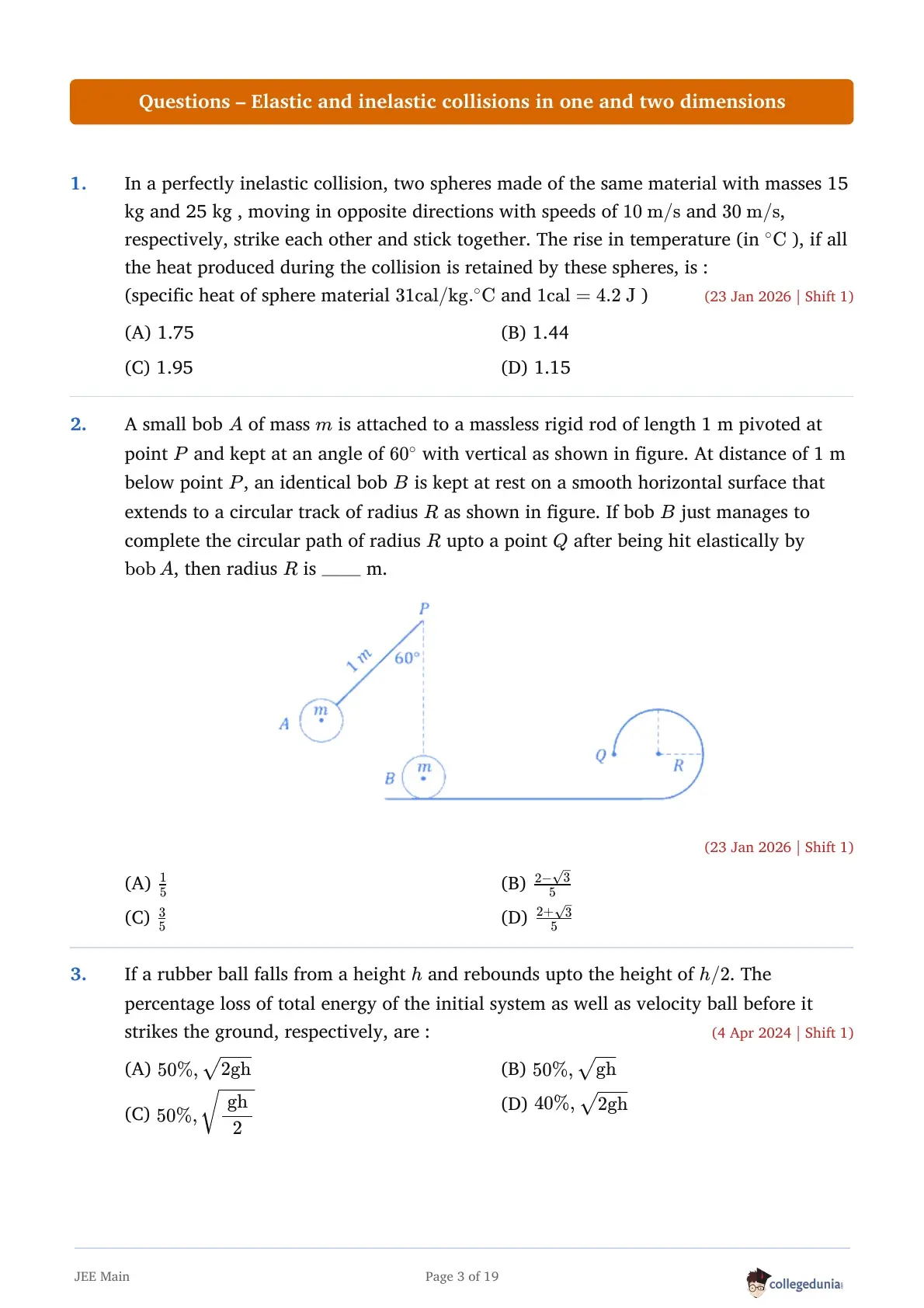
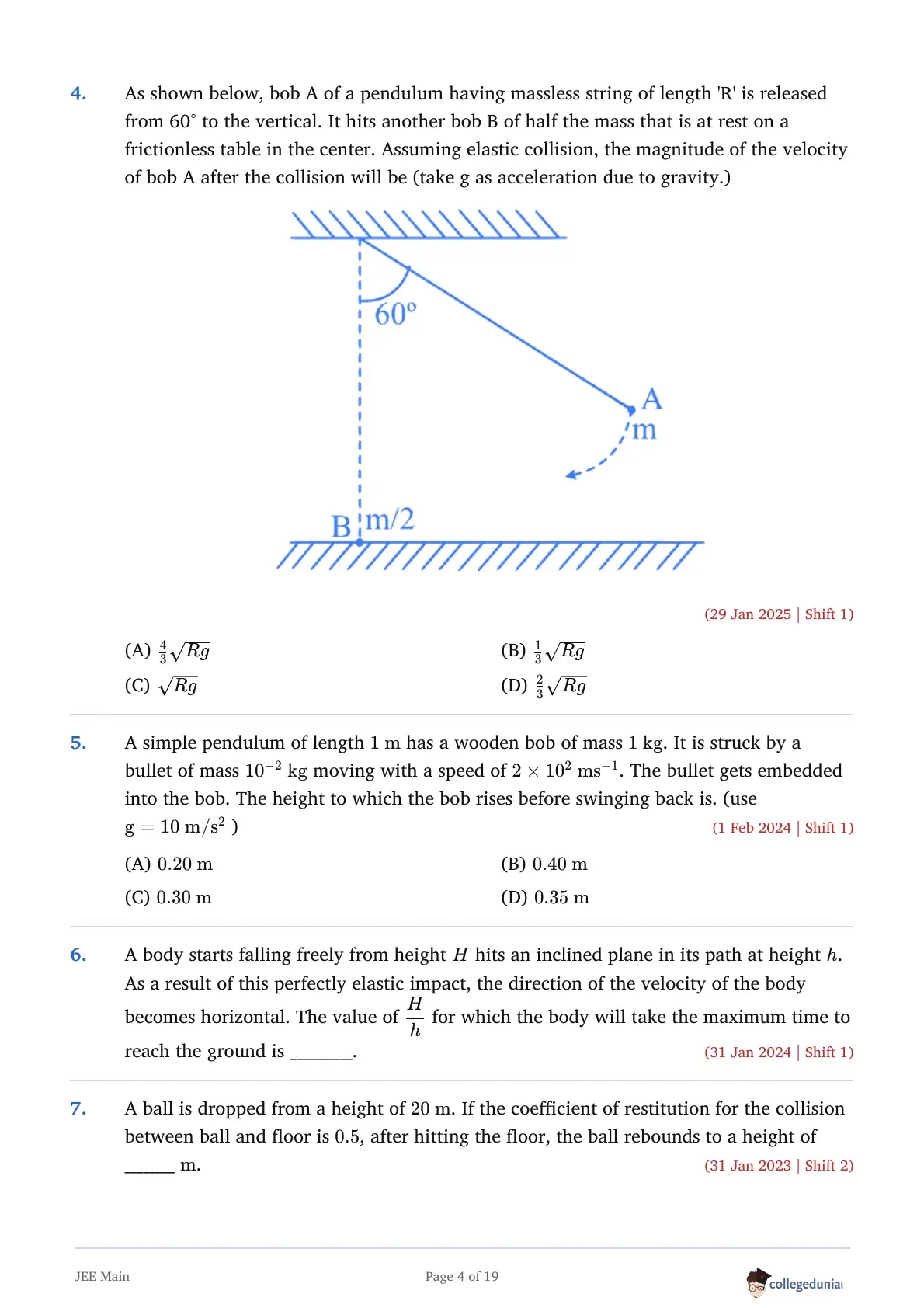
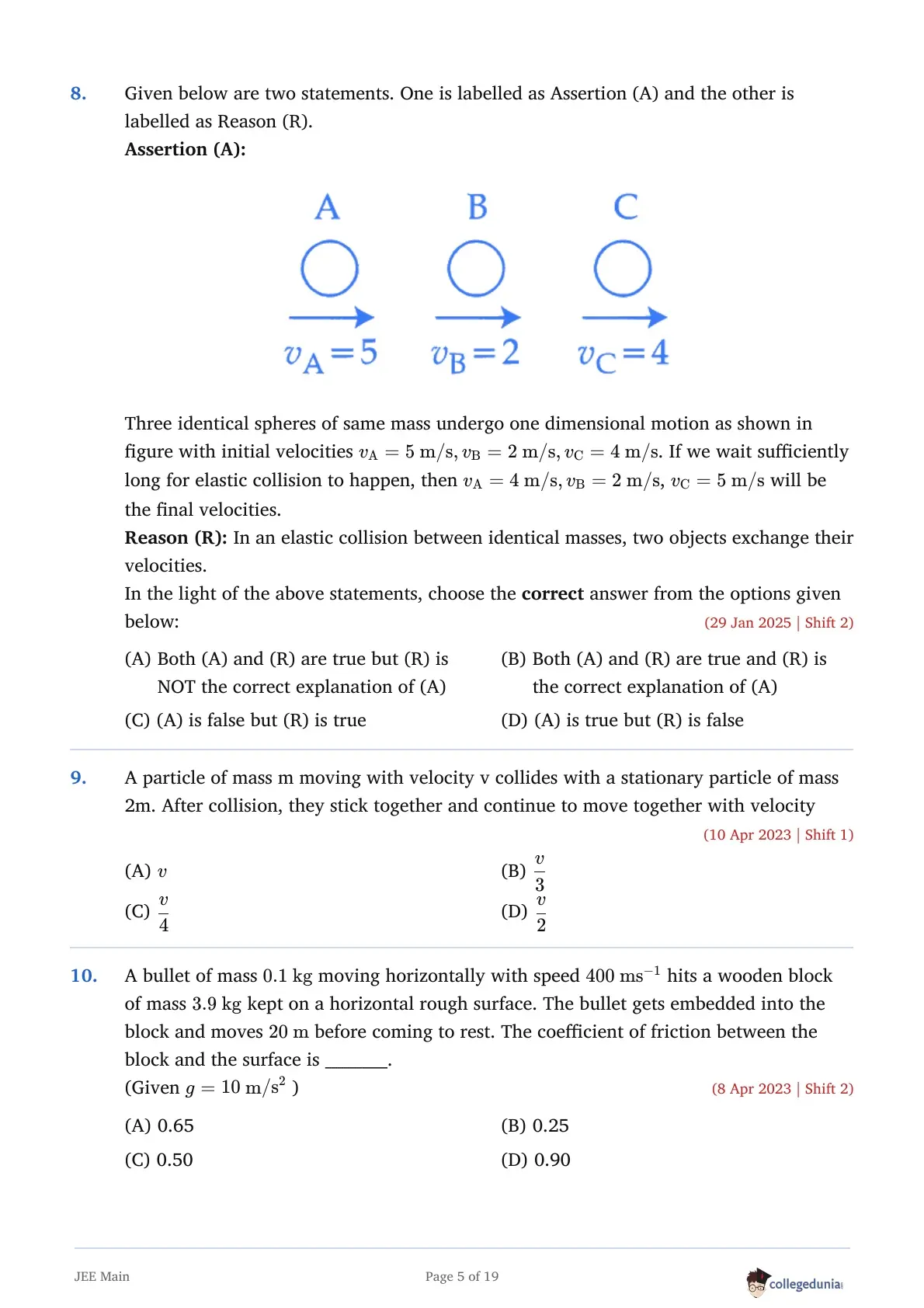
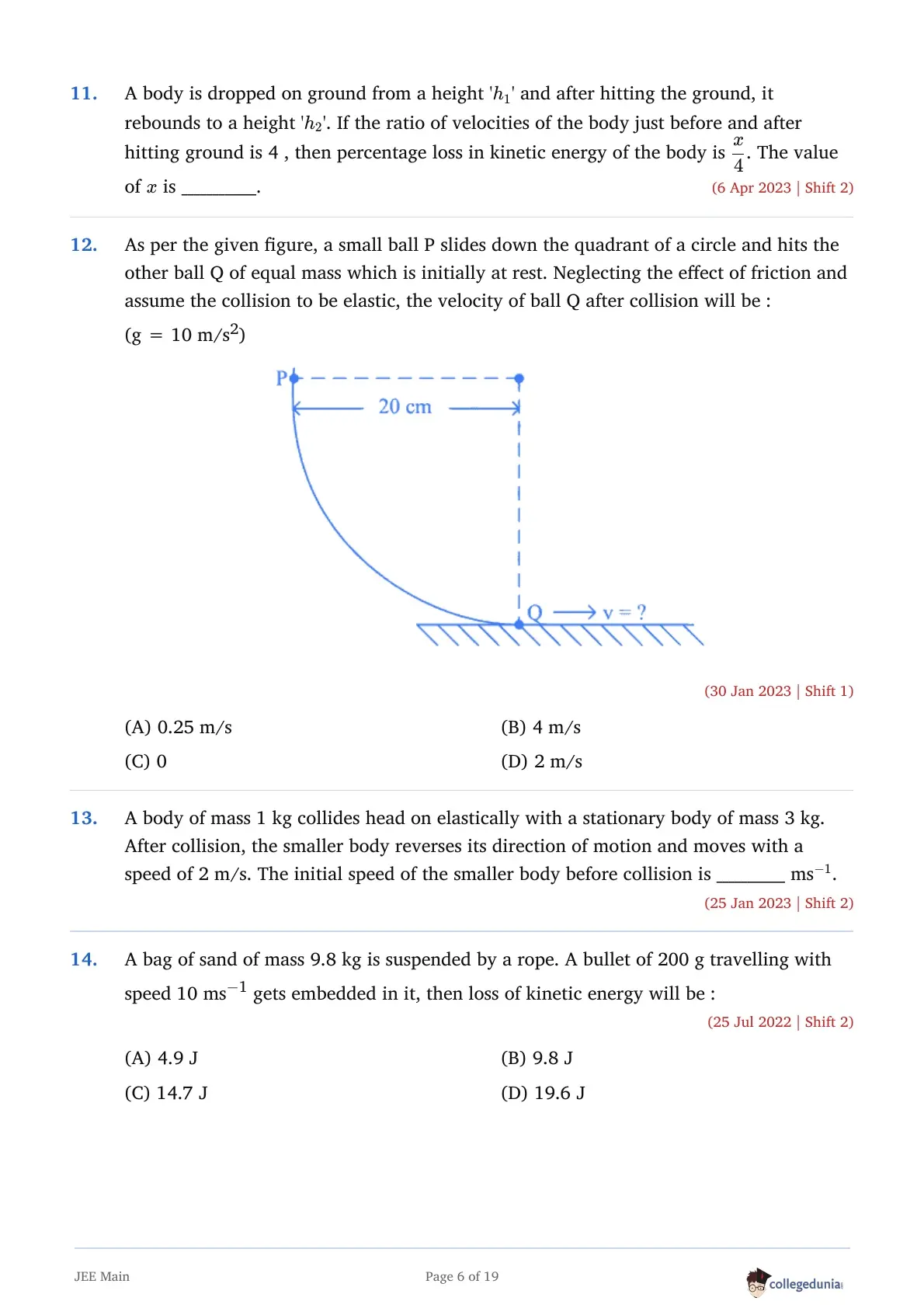
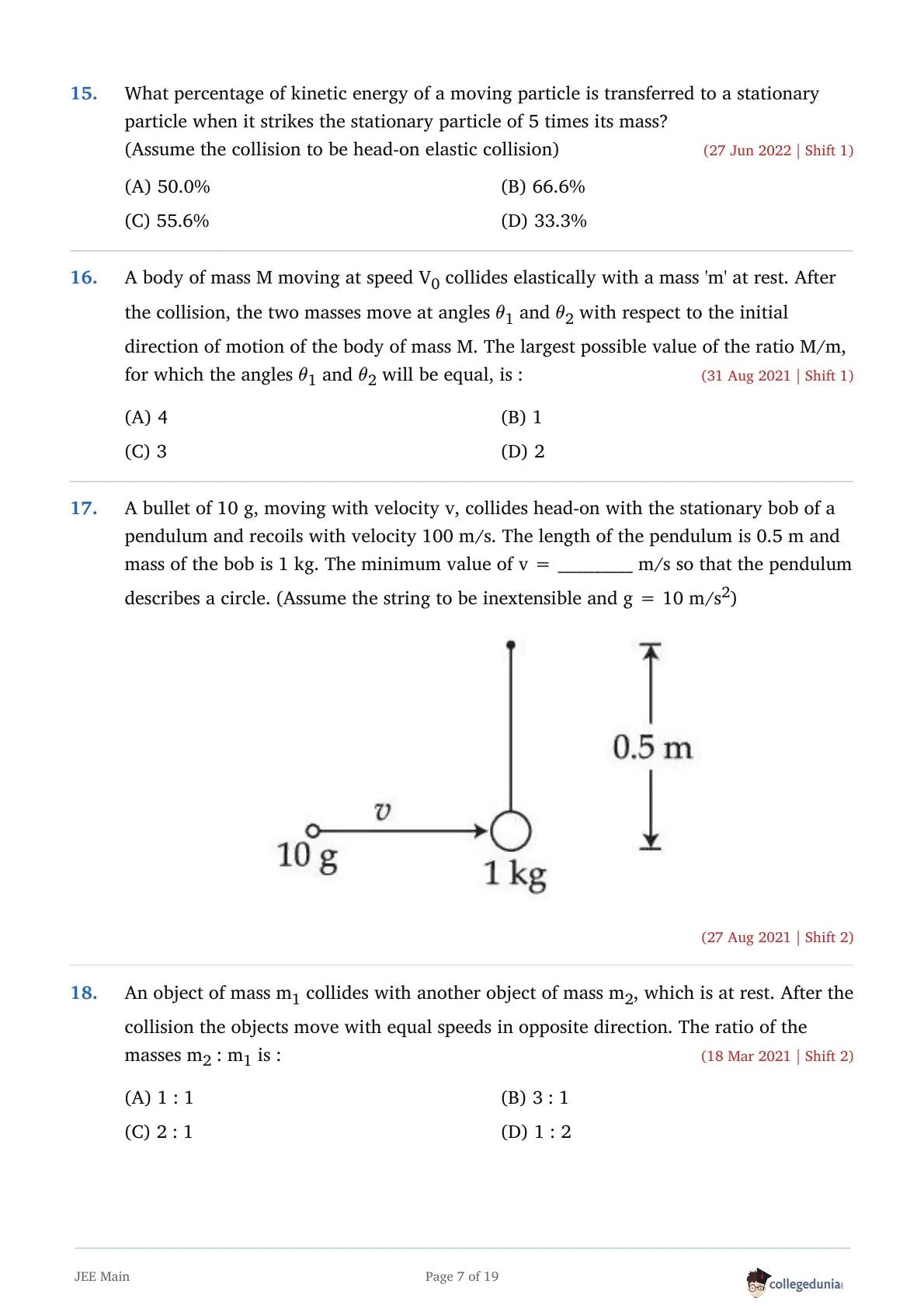
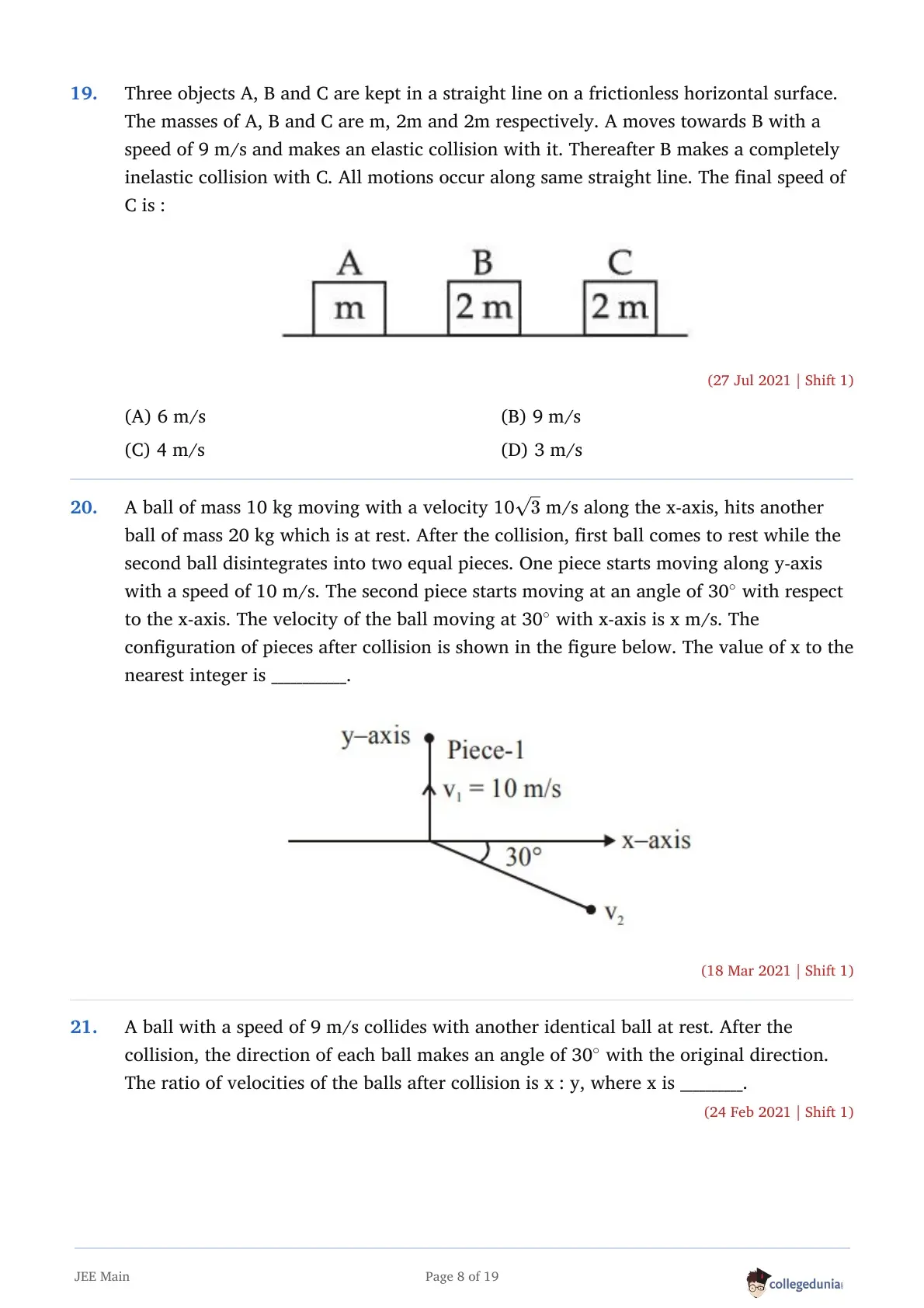
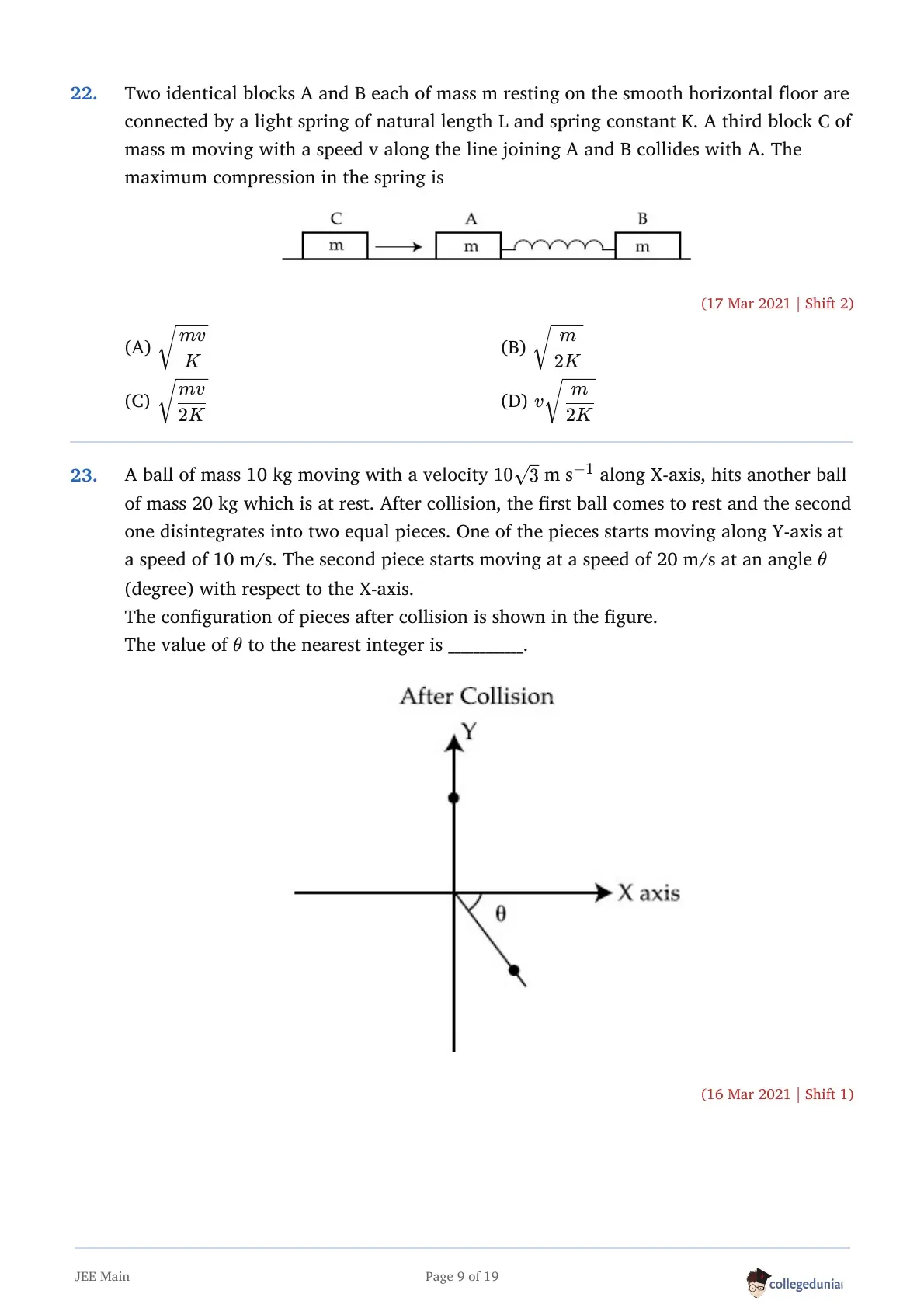
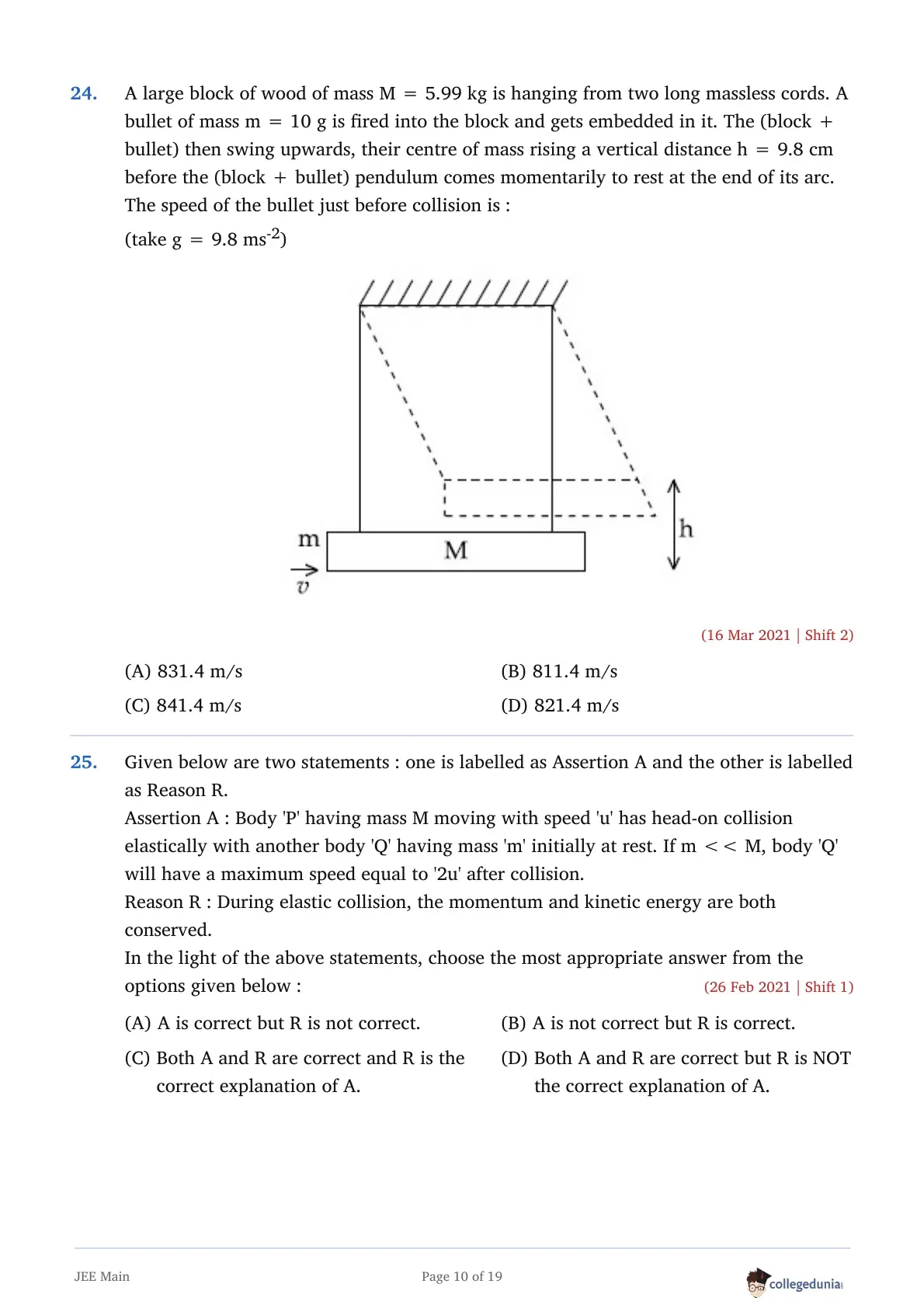
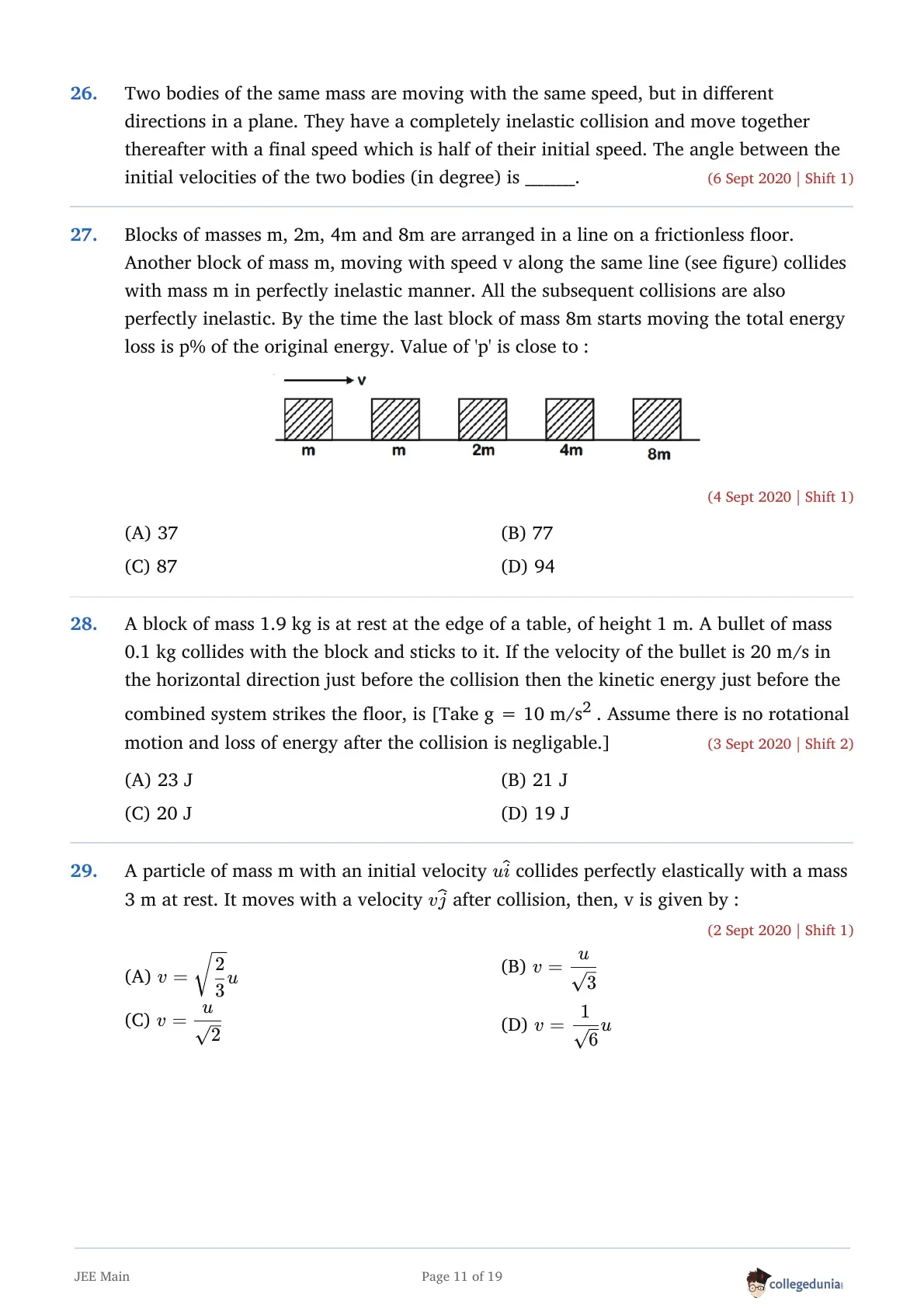
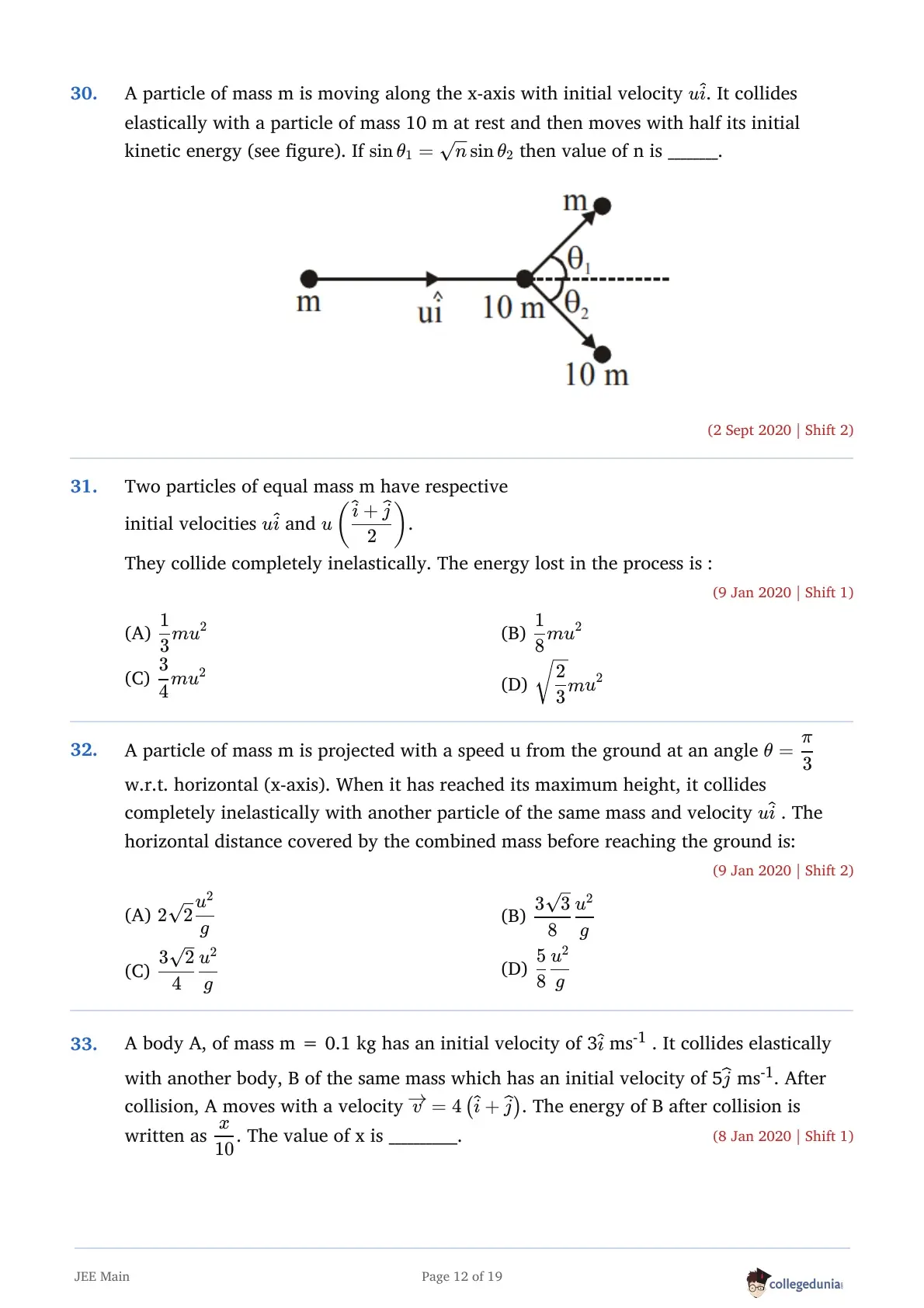
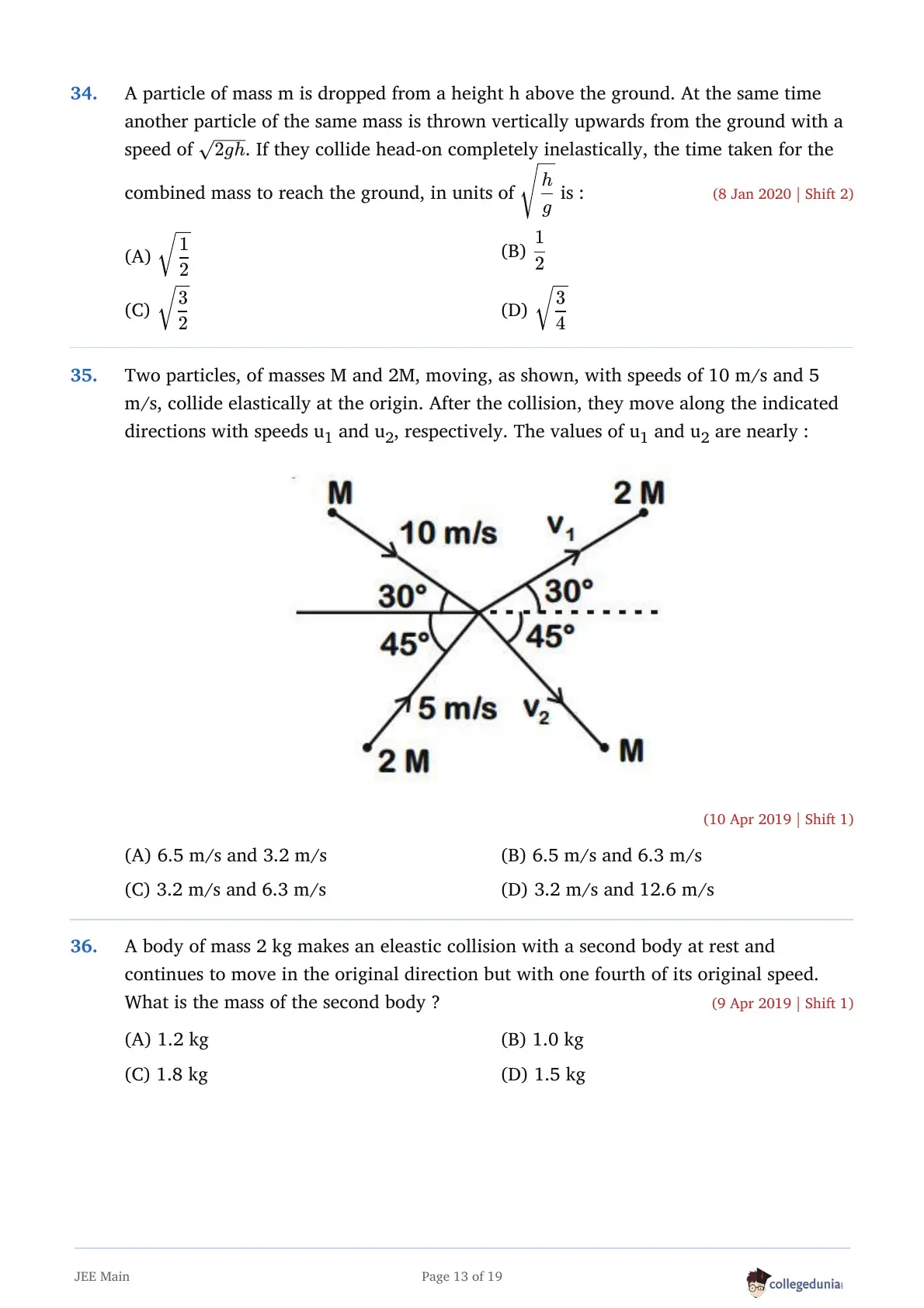
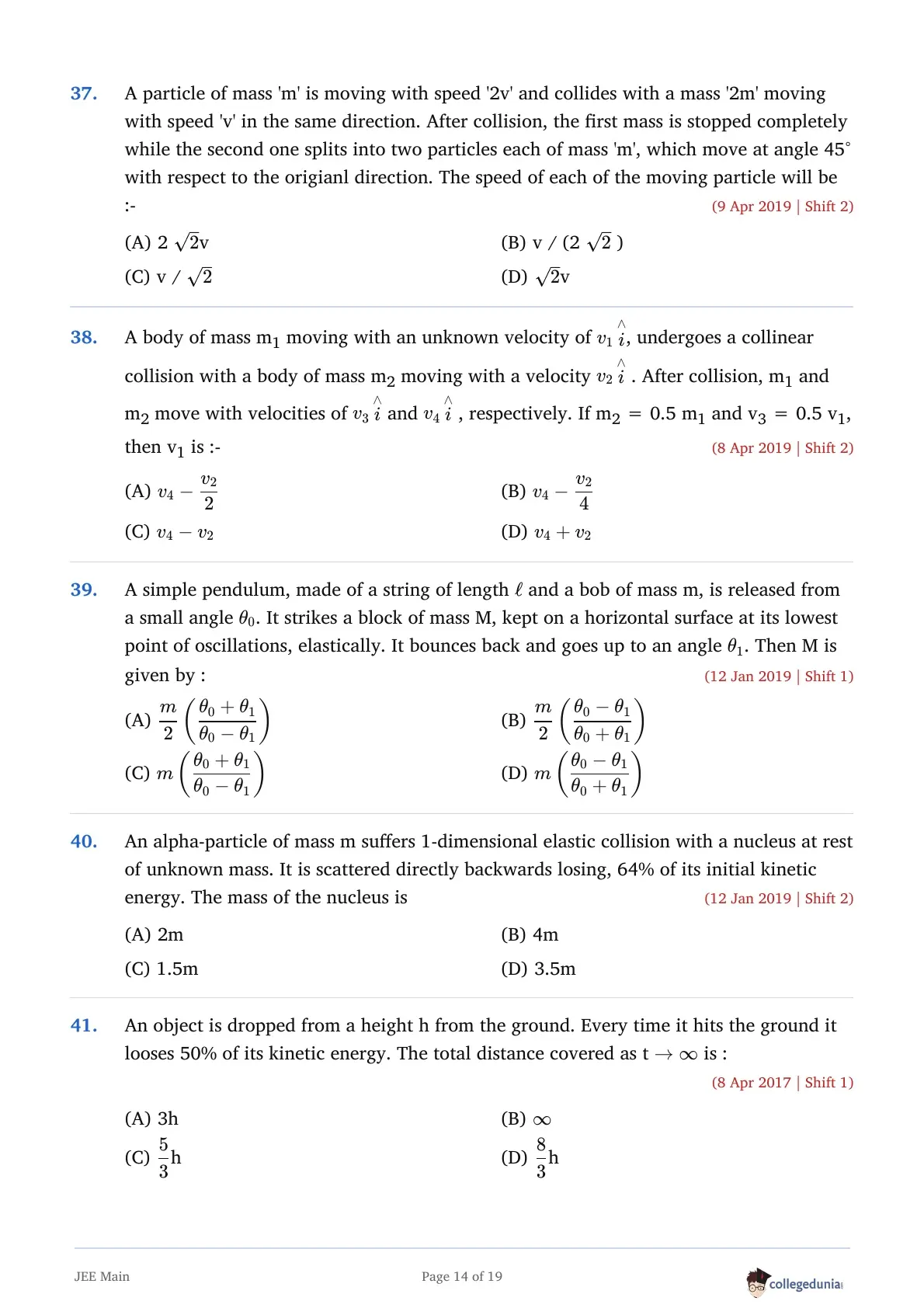
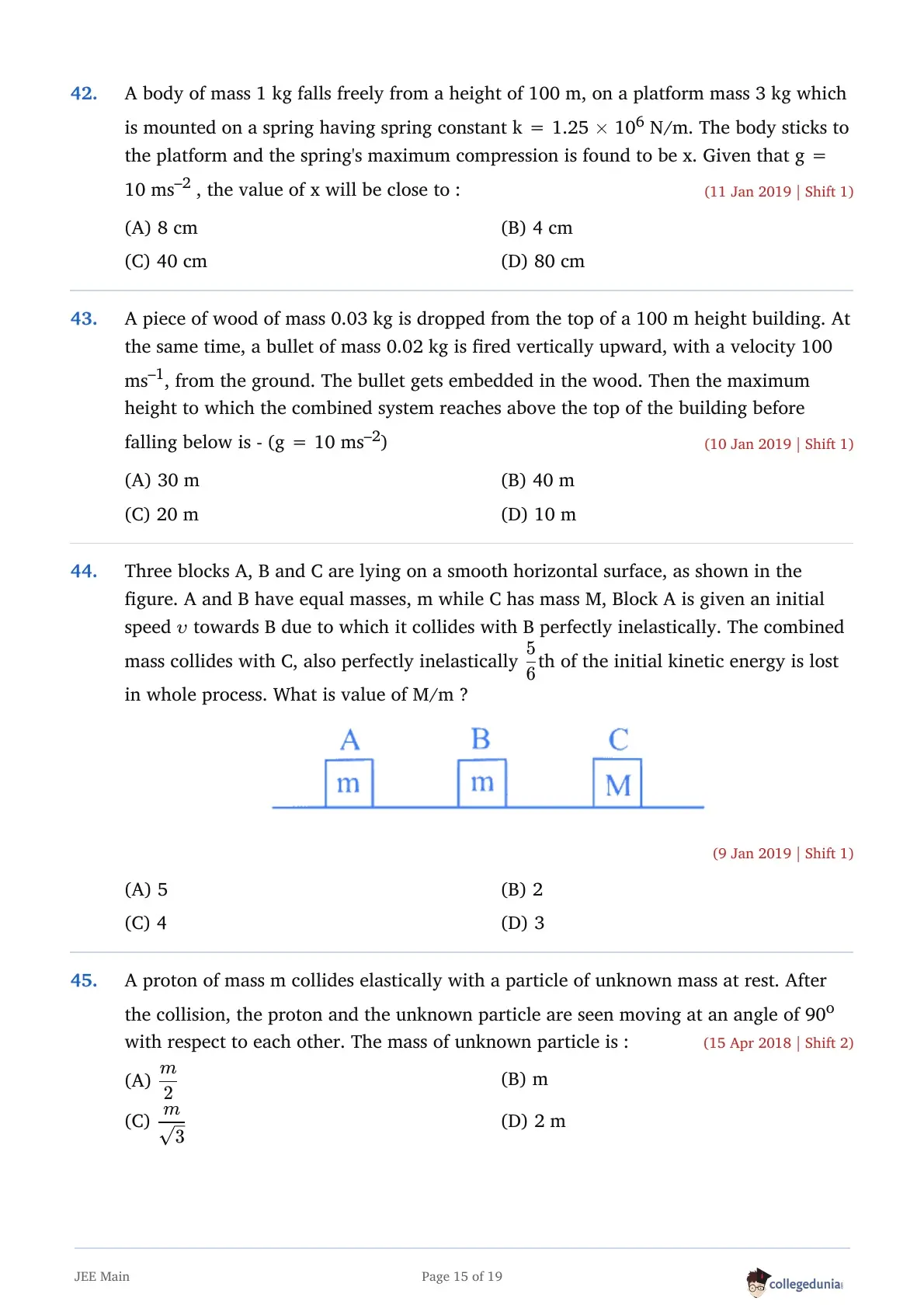
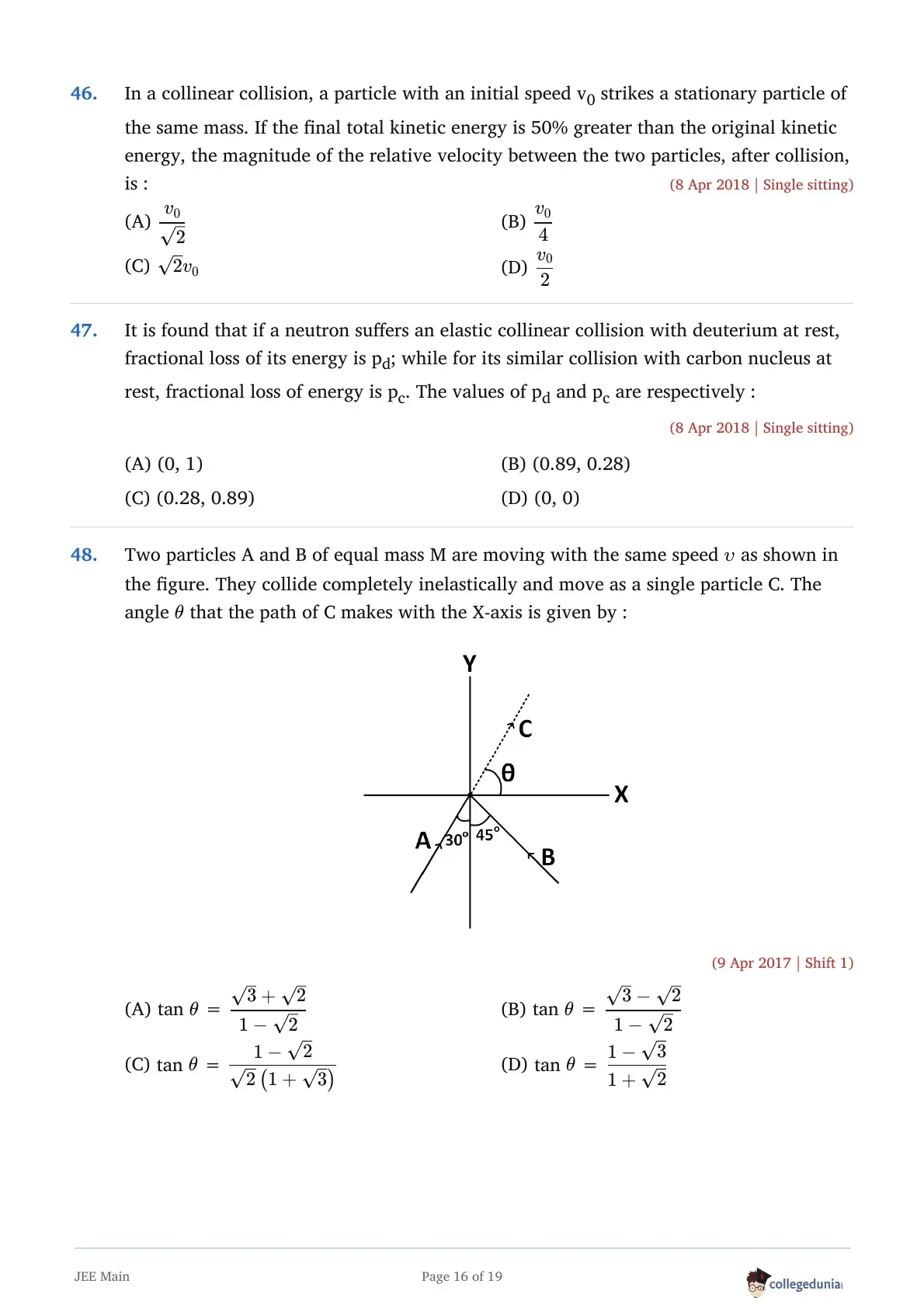
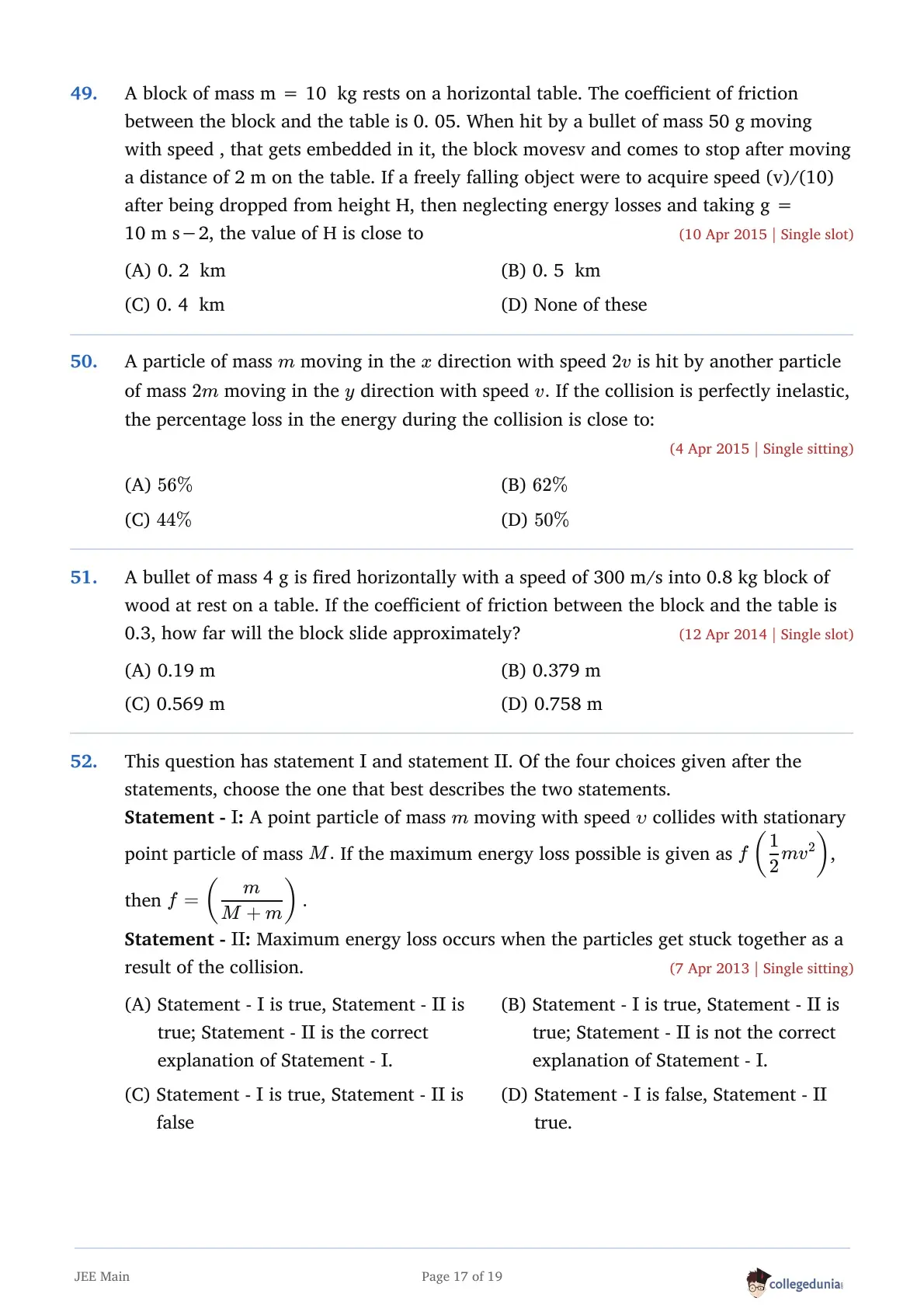
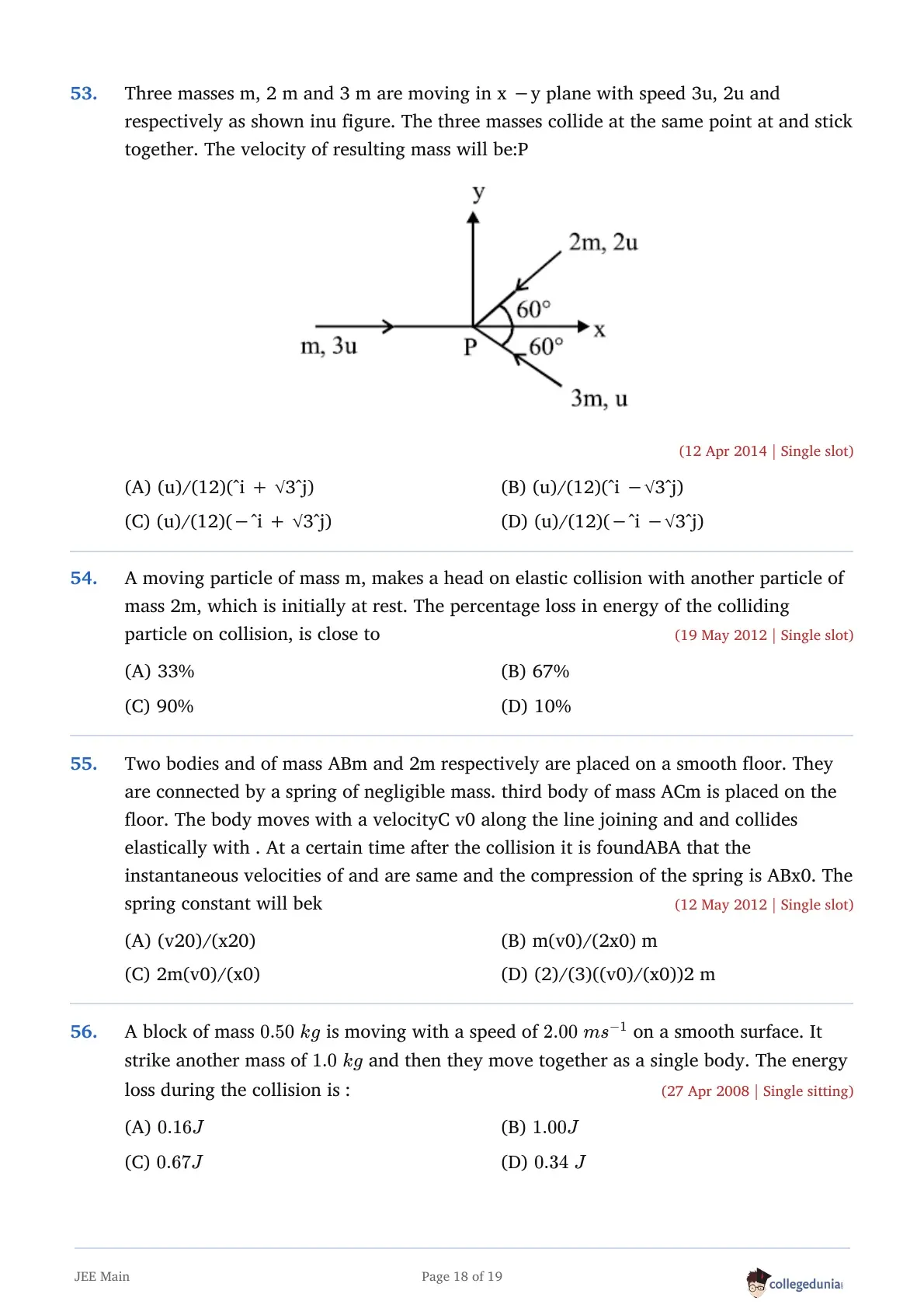
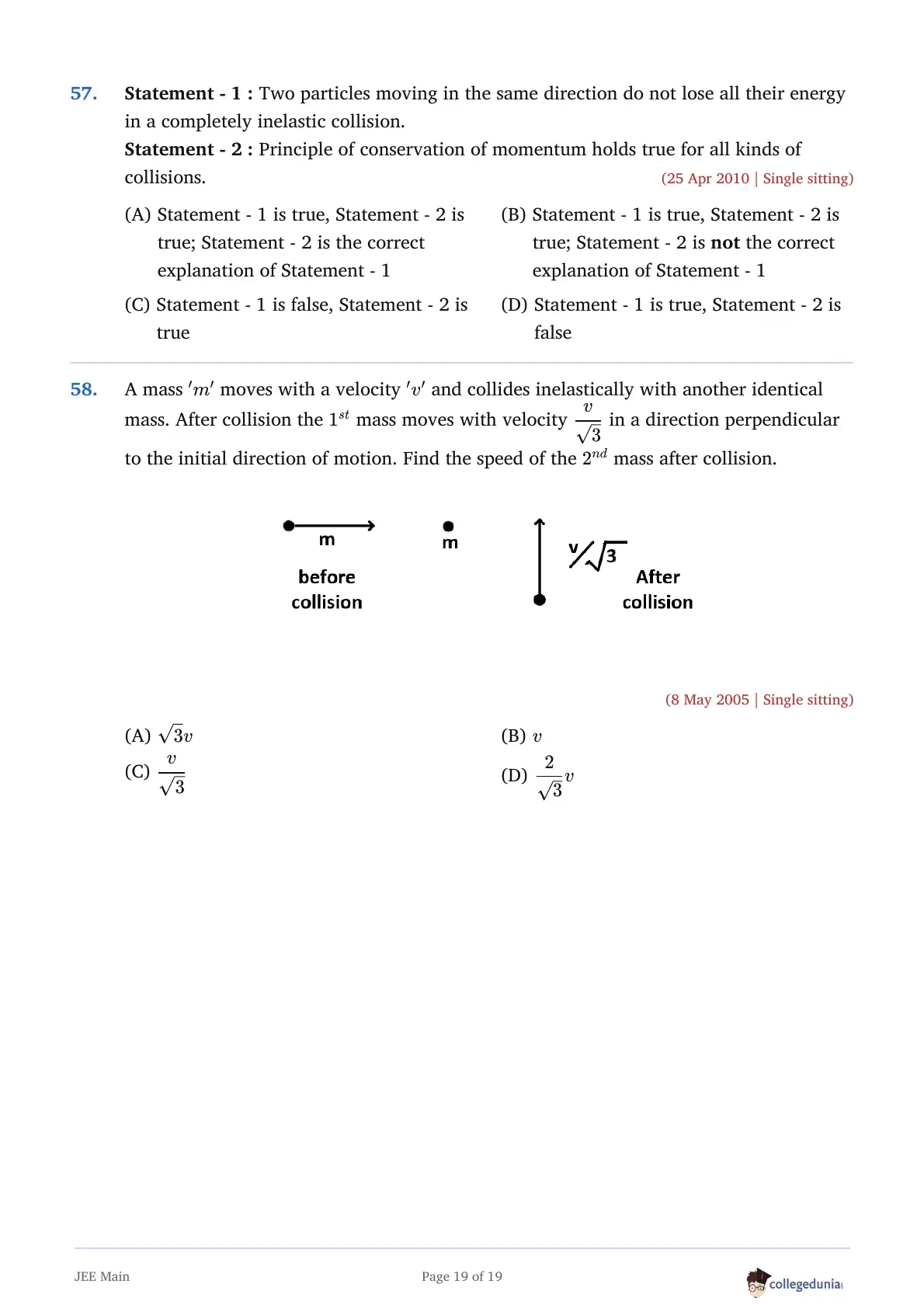
Elastic and Inelastic Collisions is a topic in the Class 11 Physics chapter Work, Energy and Power. Every question carries its exam date and shift. The PDF holds questions only, with options as printed and no answer key.
JEE Main Elastic and Inelastic Collisions Weightage by Year
As per JEE Main elastic and inelastic collisions weightage from past years, students can expect 2 to 6 questions from this topic in a year in recent papers. The 2026 papers had 2.
| Year | Questions | Average per Shift | Weightage in Physics | Change in Weightage |
|---|---|---|---|---|
| 2026 | 2 | 0.11 | 0.42% | −0.21% |
| 2025 | 2 | 0.11 | 0.42% | −15.89% |
| 2024 | 3 | 0.15 | 0.50% | −39.80% |
| 2023 | 6 | 0.25 | 0.83% | +187.50% |
| 2022 | 2 | 0.09 | 0.29% | −77.39% |
The 2021 papers add 10 more questions, and the years before that add 33. Weightage is the topic's share of all Physics questions in the bank for that year.
Question Formats in JEE Main Elastic and Inelastic Collisions PYQs
The 58 questions in this PDF are split between multiple-choice and numerical-value questions. Of the 58, 4 are statement-based and 12 refer to a figure or graph.
| Question Type | Questions | Share |
|---|---|---|
| MCQ | 47 | 81.0% |
| Numerical value | 11 | 19.0% |
| Total | 58 | 100% |
How to Practise Elastic and Inelastic Collisions
Start with conservation of momentum in one dimension and the final velocities in an elastic collision, then compare a perfectly inelastic collision where the bodies move together and kinetic energy is lost. The coefficient of restitution is 1 for an elastic collision and 0 for a perfectly inelastic one.
Finish with collisions in two dimensions and the questions on energy lost in a collision.
Related JEE Main Physics Resources
| Resource | Link |
|---|---|
| Work, Energy and Power JEE Main PYQs: full chapter page | Read and download |
| JEE Main PYQs on Power | Read and download |
Video: Elastic and Inelastic Collisions PYQs
Source: Gyaanist



Comments