



JEE Main Motion in a Plane handwritten notes, free to download as a 22-page PDF. The topic is worth about 8 to 12 marks each year and takes roughly a week to learn, so it is one of the first worth finishing.


The notes are written the way a student revises kinematics: resolve first, then let each axis run as its own one-dimensional problem. Nine hand-drawn diagrams carry the geometry that the algebra hides.
Why This Topic Repays the Time
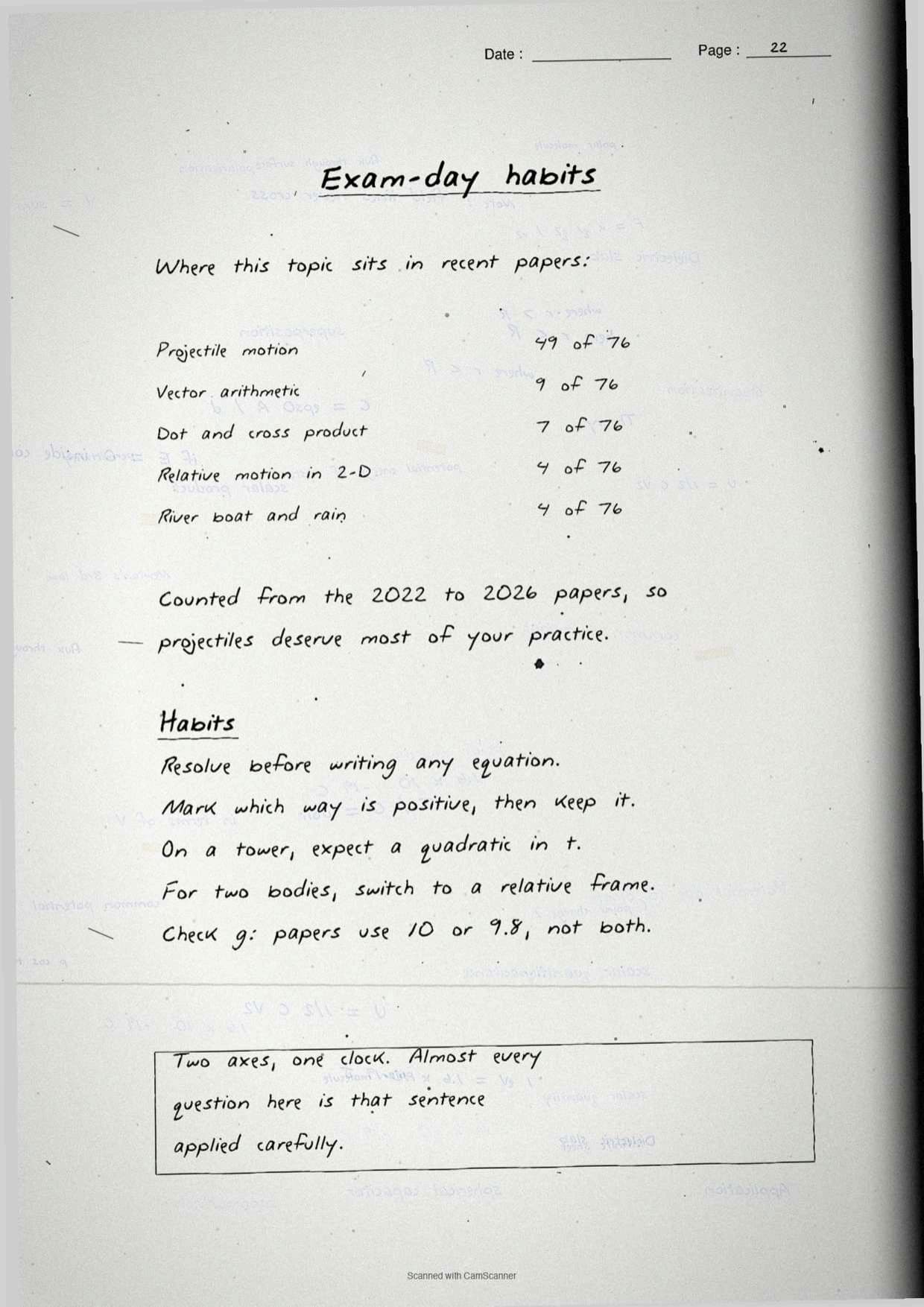
Unit 2 of the JEE Main syllabus is Kinematics, and motion in a plane is the larger half of it. Across the 2022 to 2026 papers this chapter has produced a steady stream of questions, most of them projectiles.
- Projectile motion: 49 of the 76 recent questions
- Vector arithmetic: 9 questions
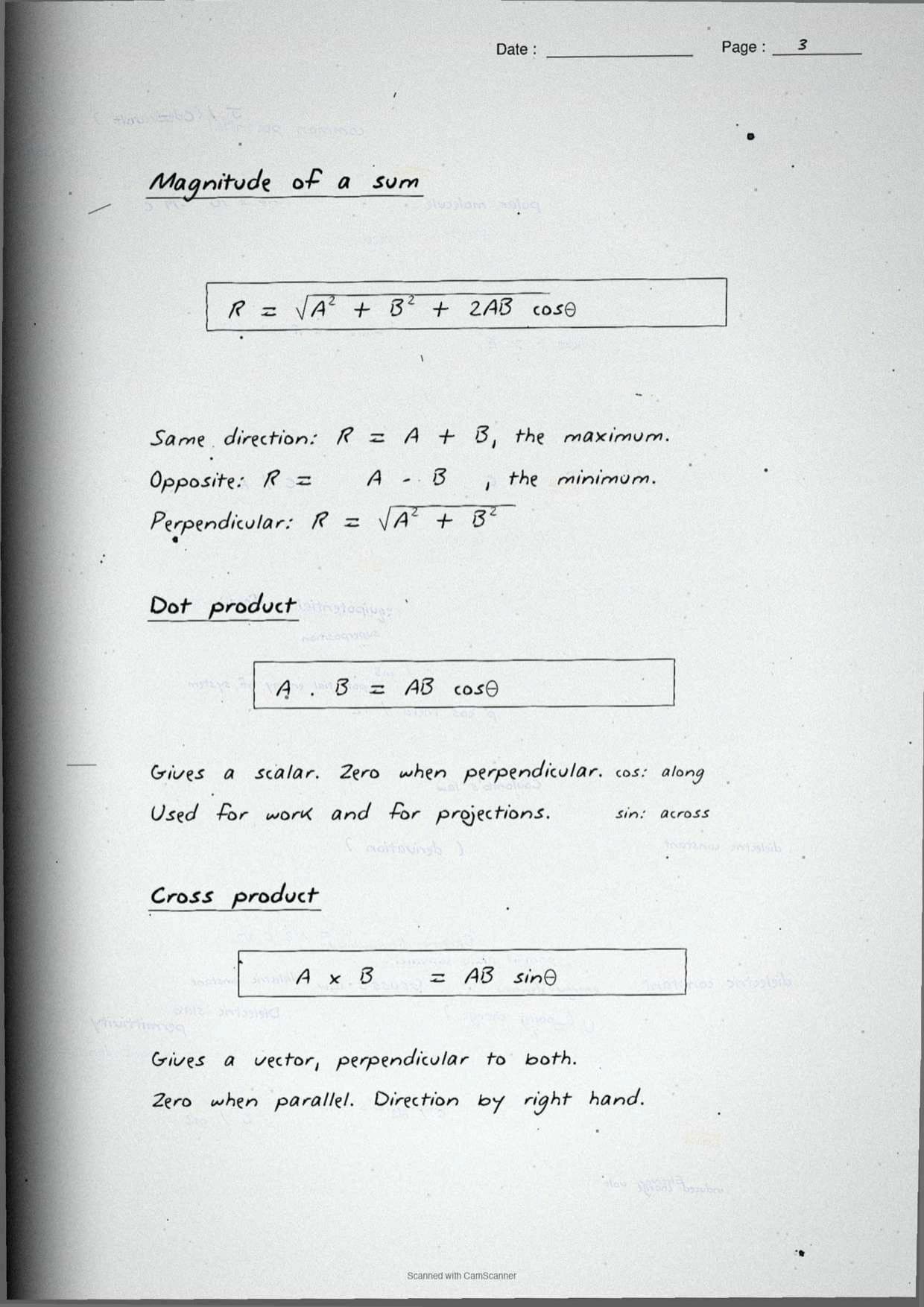
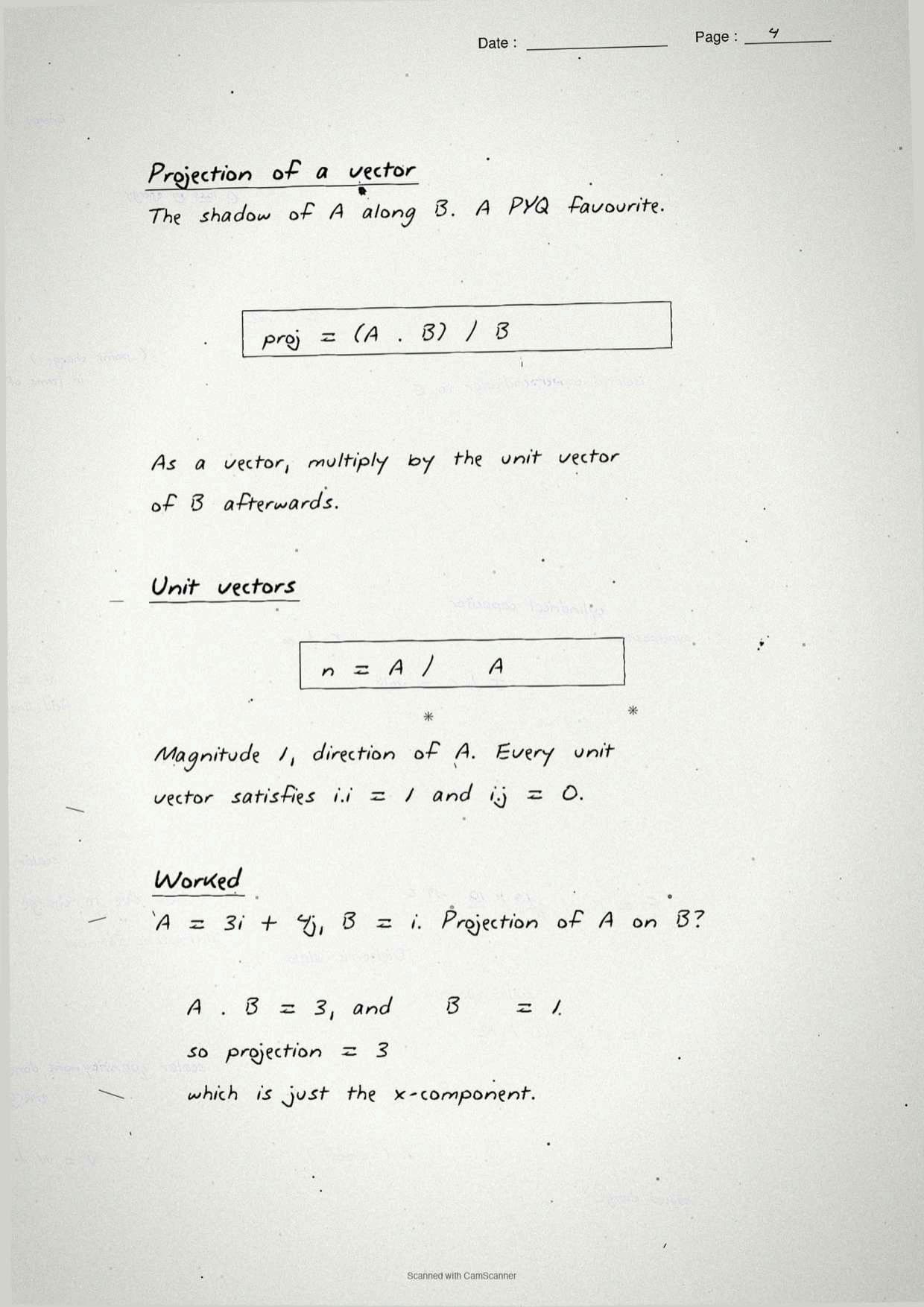
- Dot and cross product: 7 questions
- Relative motion in two dimensions: 4 questions
- River boat and rain problems: 4 questions
That distribution is the reason the notes spend most of their pages on projectiles and treat vectors as the tool rather than the destination.
The One Move Everything Rests On
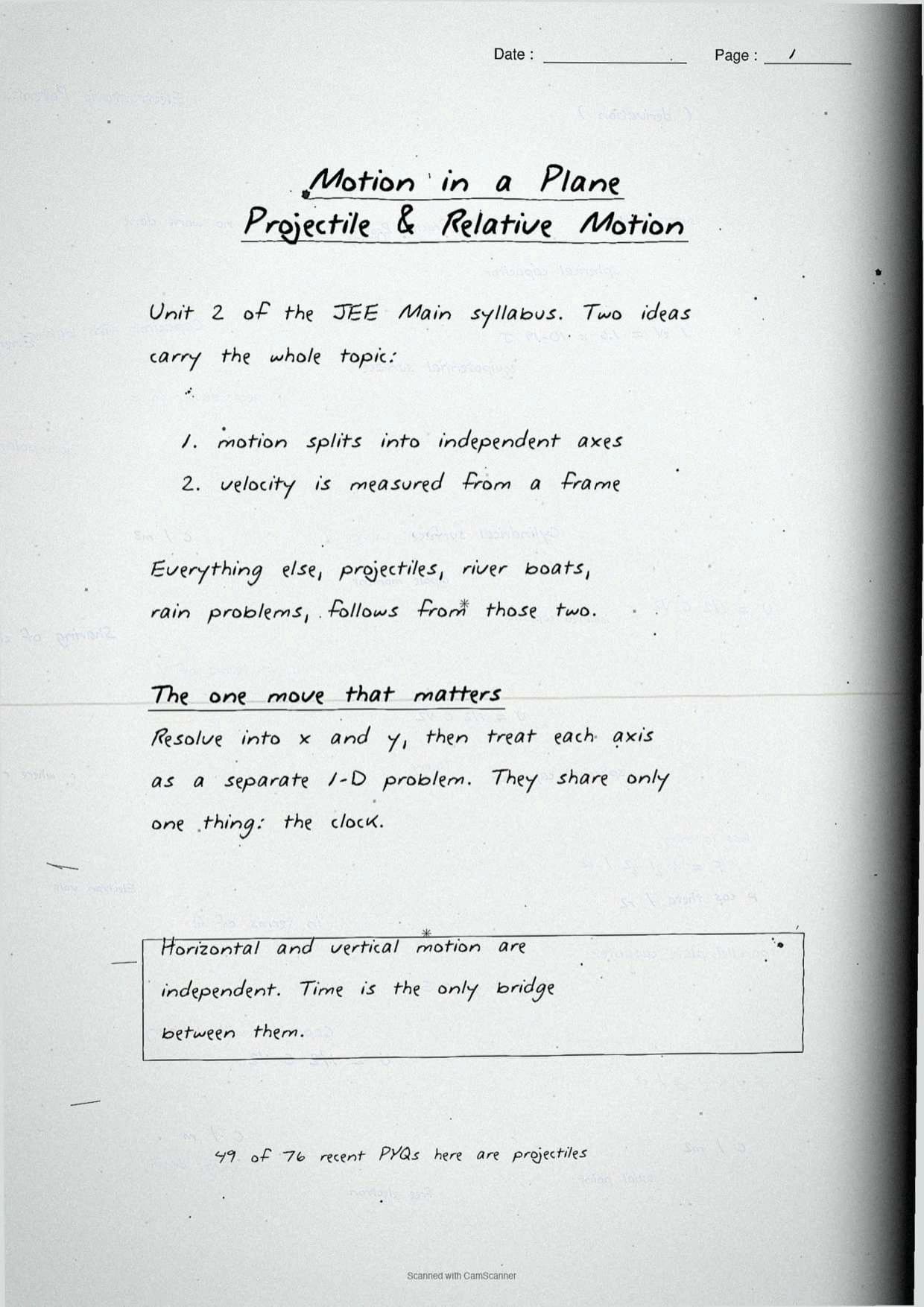
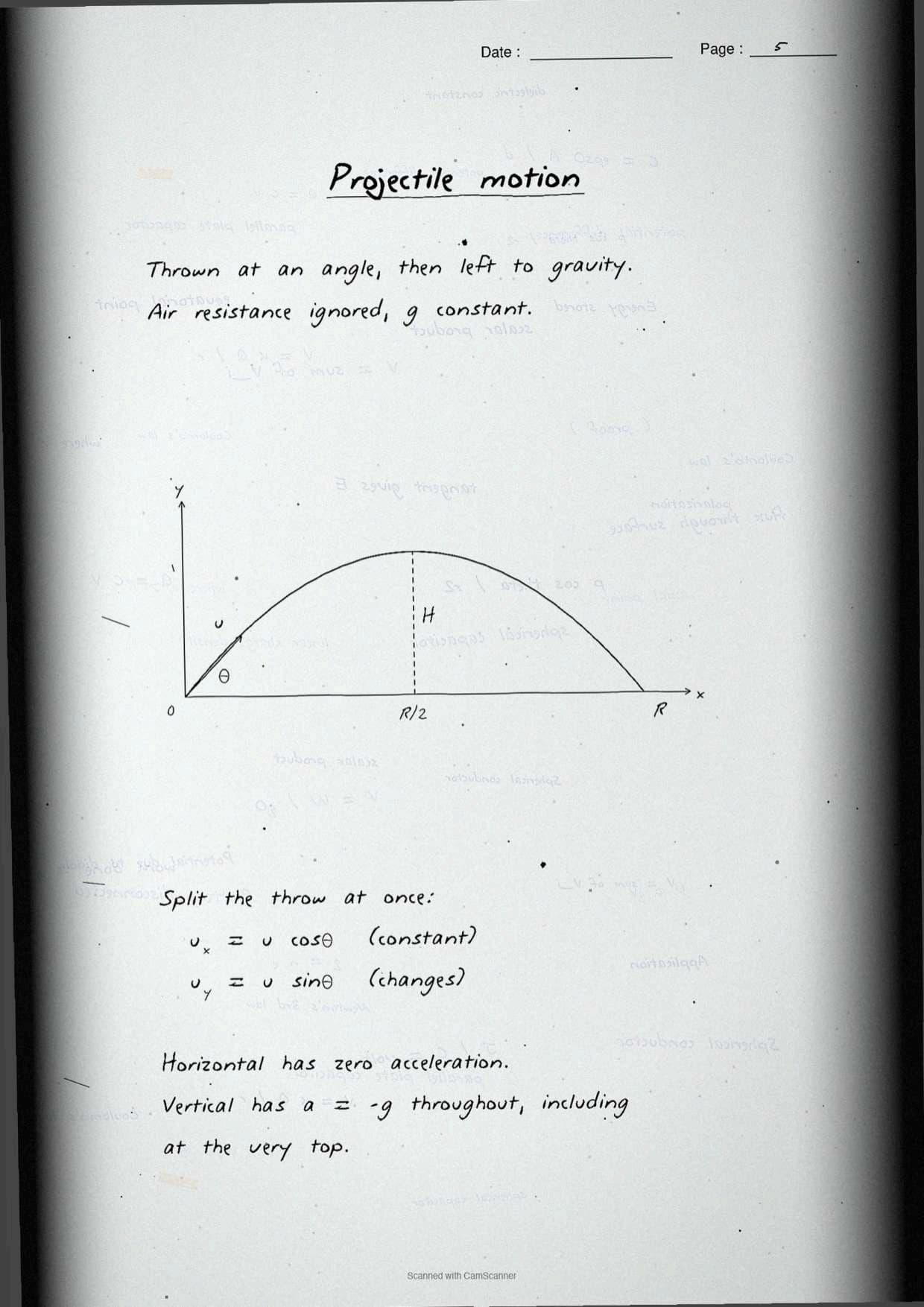
Horizontal and vertical motion are independent. They share exactly one quantity, the clock, and nothing else passes between them.
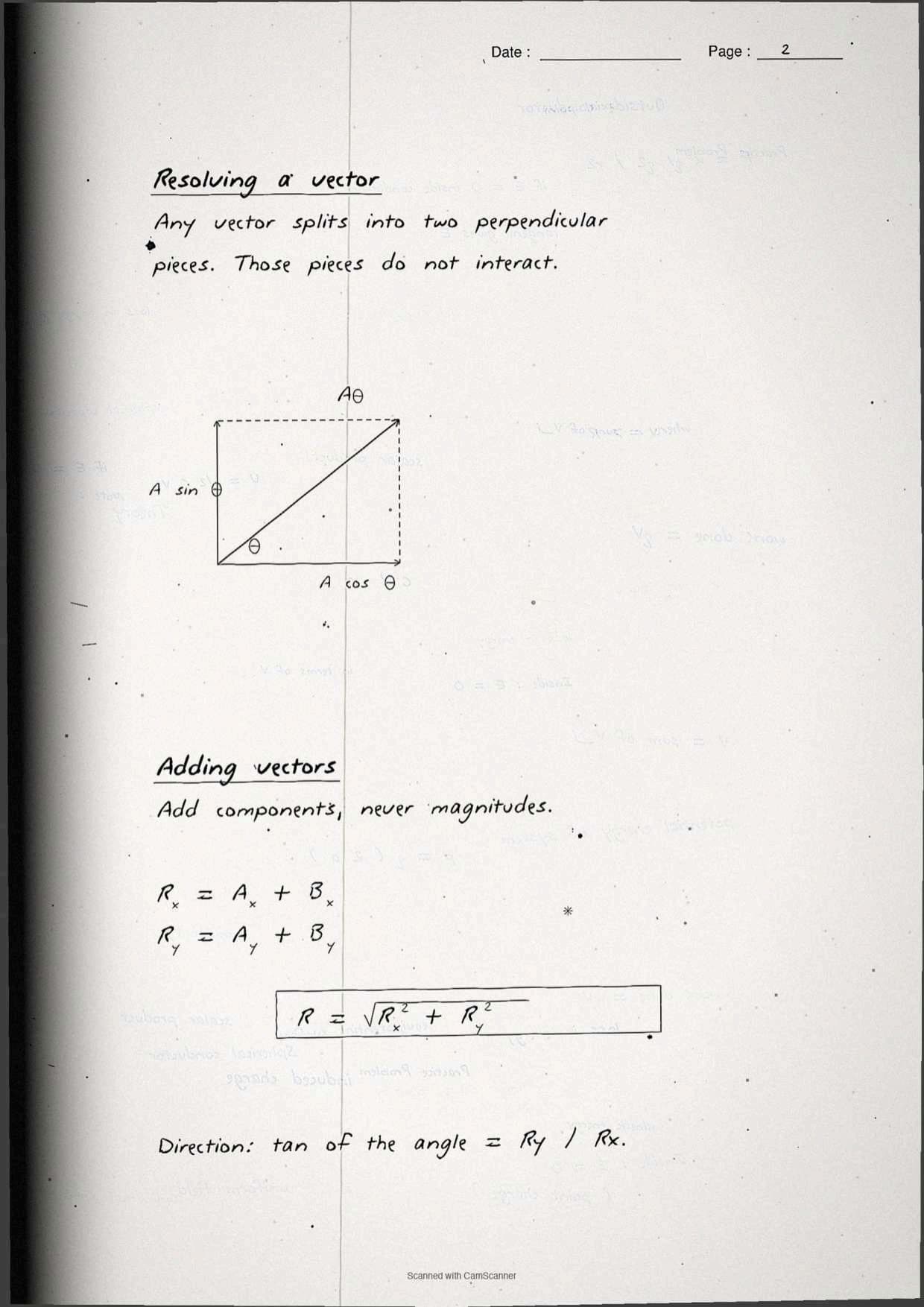
Resolve the launch once, write u cos for the horizontal and u sin for the vertical, and the rest of the chapter is two separate one-dimensional problems solved side by side.
- Horizontal acceleration is zero, so that component never changes
- Vertical acceleration is g downward at every instant, including at the top
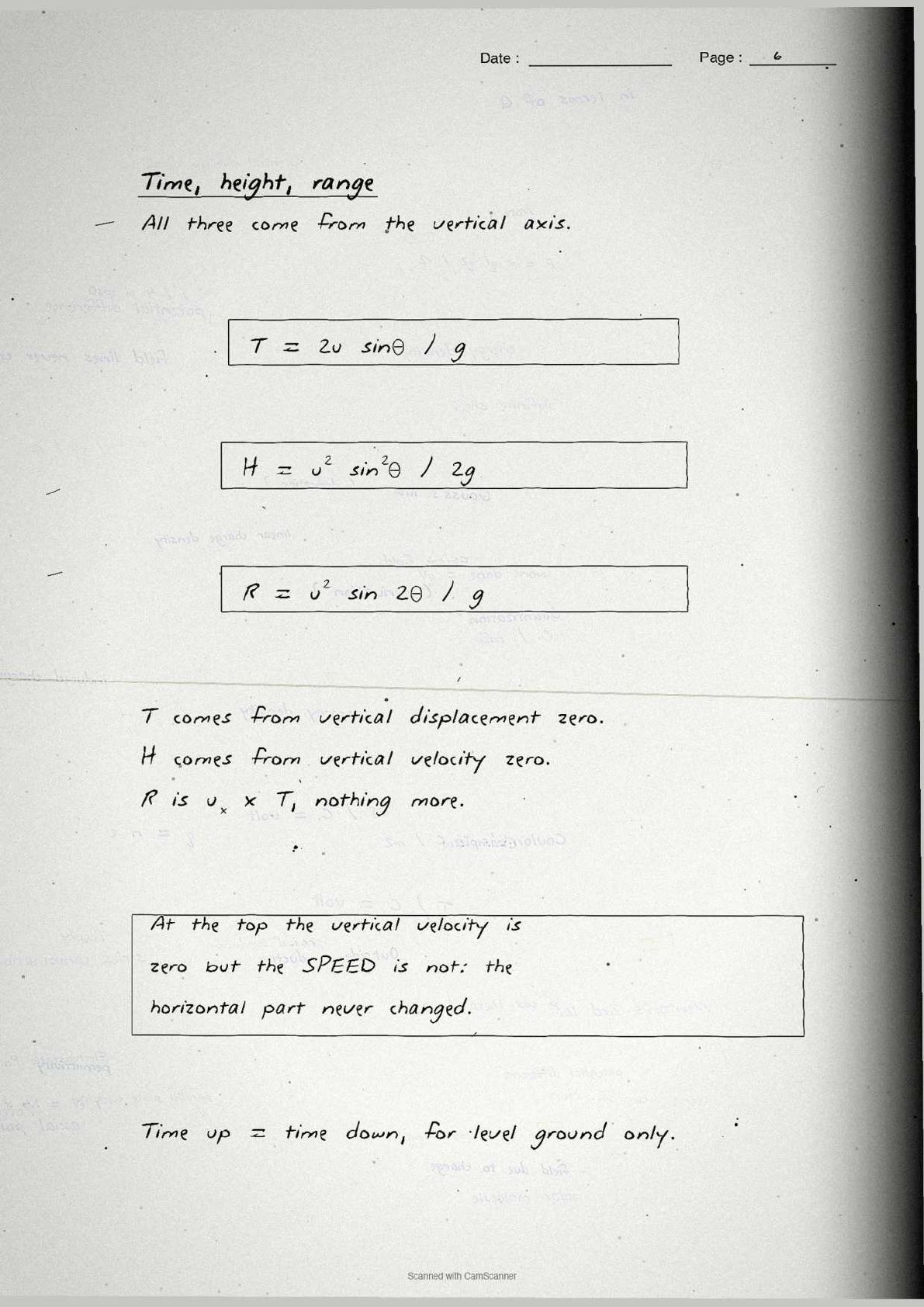
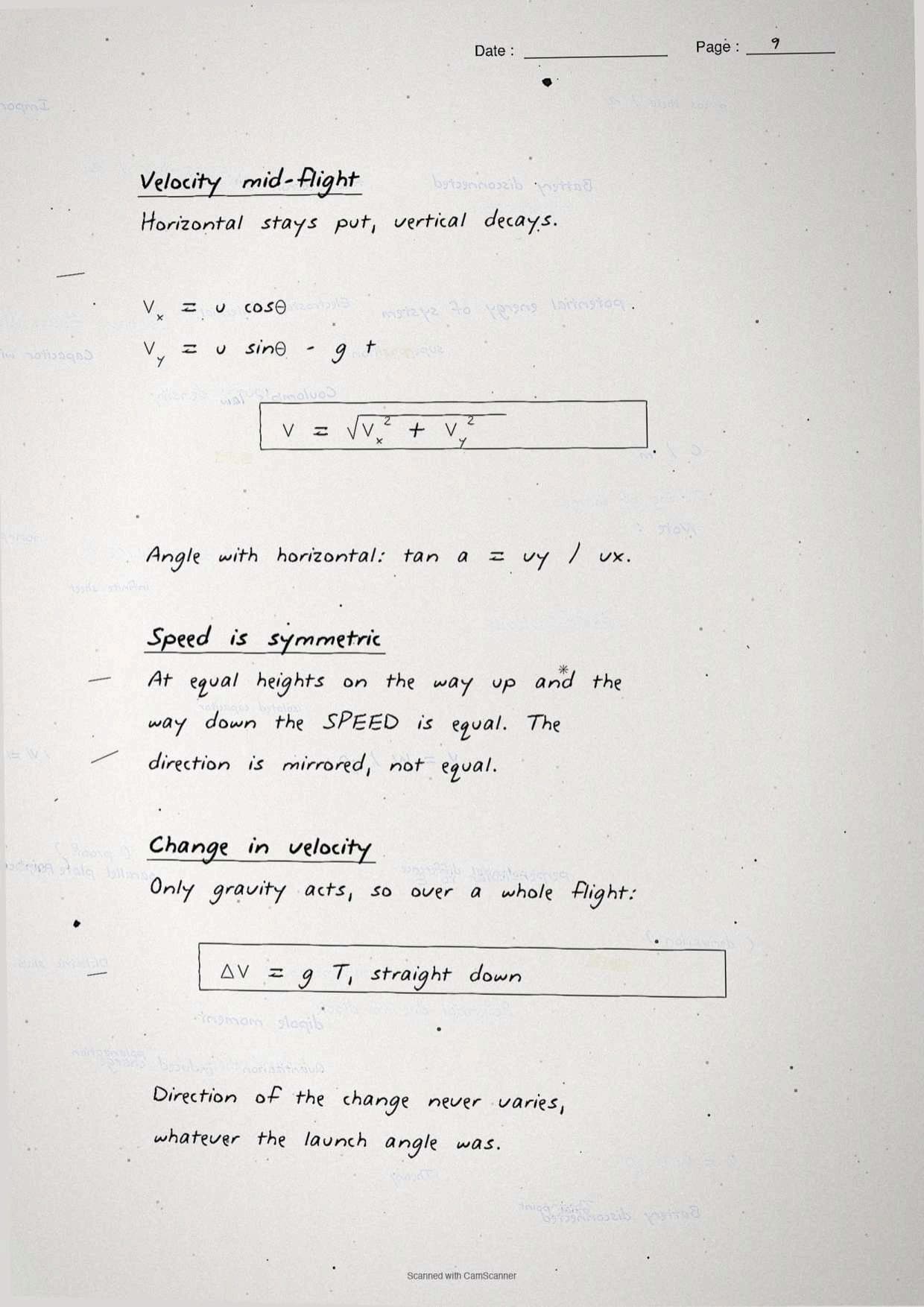
- At the highest point the vertical velocity is zero but the speed is not
Time, Height and Range
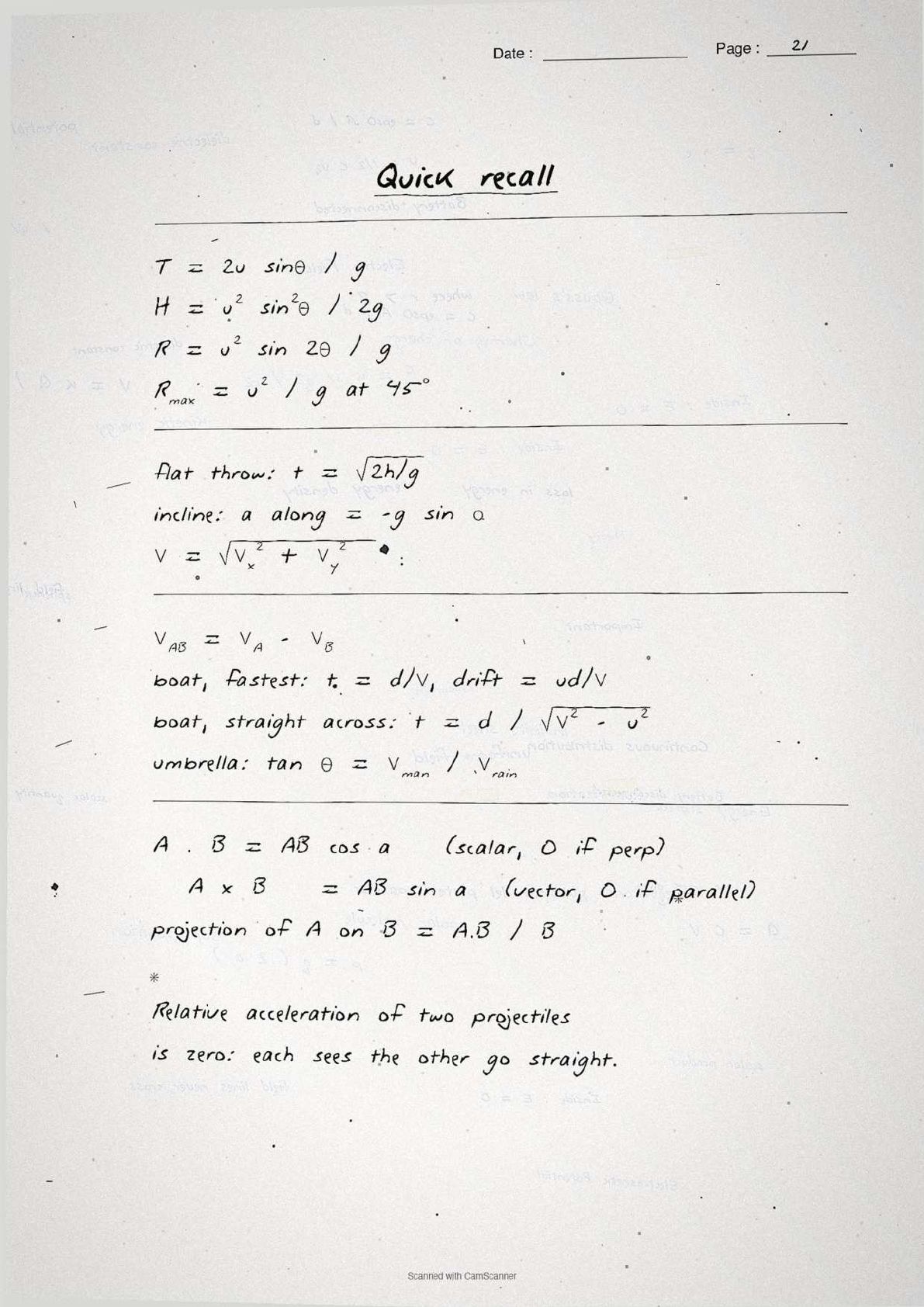
All three standard results come off the vertical axis, and the notes derive each one rather than listing it.
- Time of flight follows from vertical displacement returning to zero
- Maximum height follows from vertical velocity reaching zero
- Range is nothing more than the horizontal velocity times the time of flight
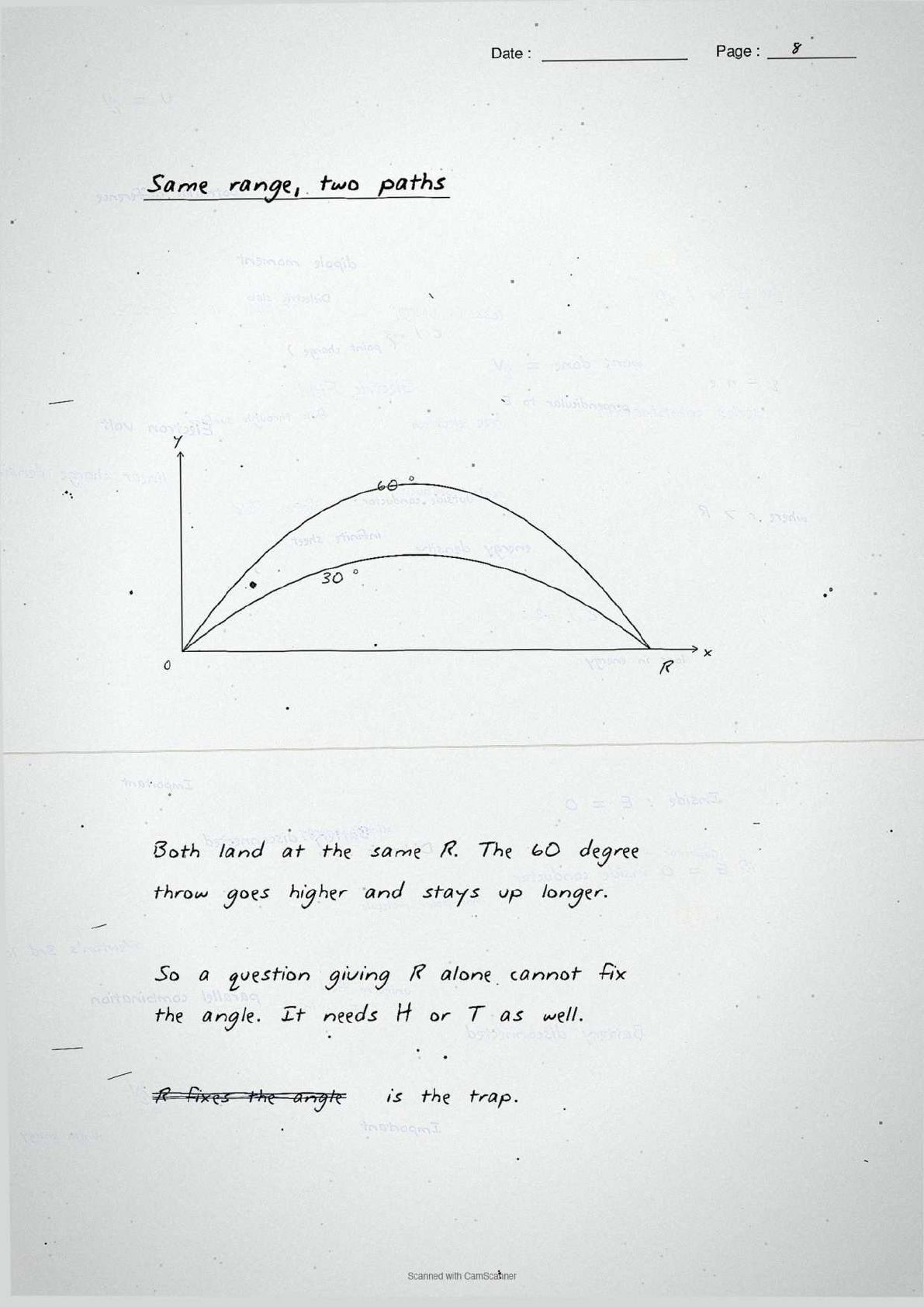
Maximum range comes at 45 degrees, and two angles adding to 90 degrees give the same range with different times. That last fact is a standing trap: a question giving the range alone cannot fix the angle, so it must also give a height or a time.
Thrown From a Height
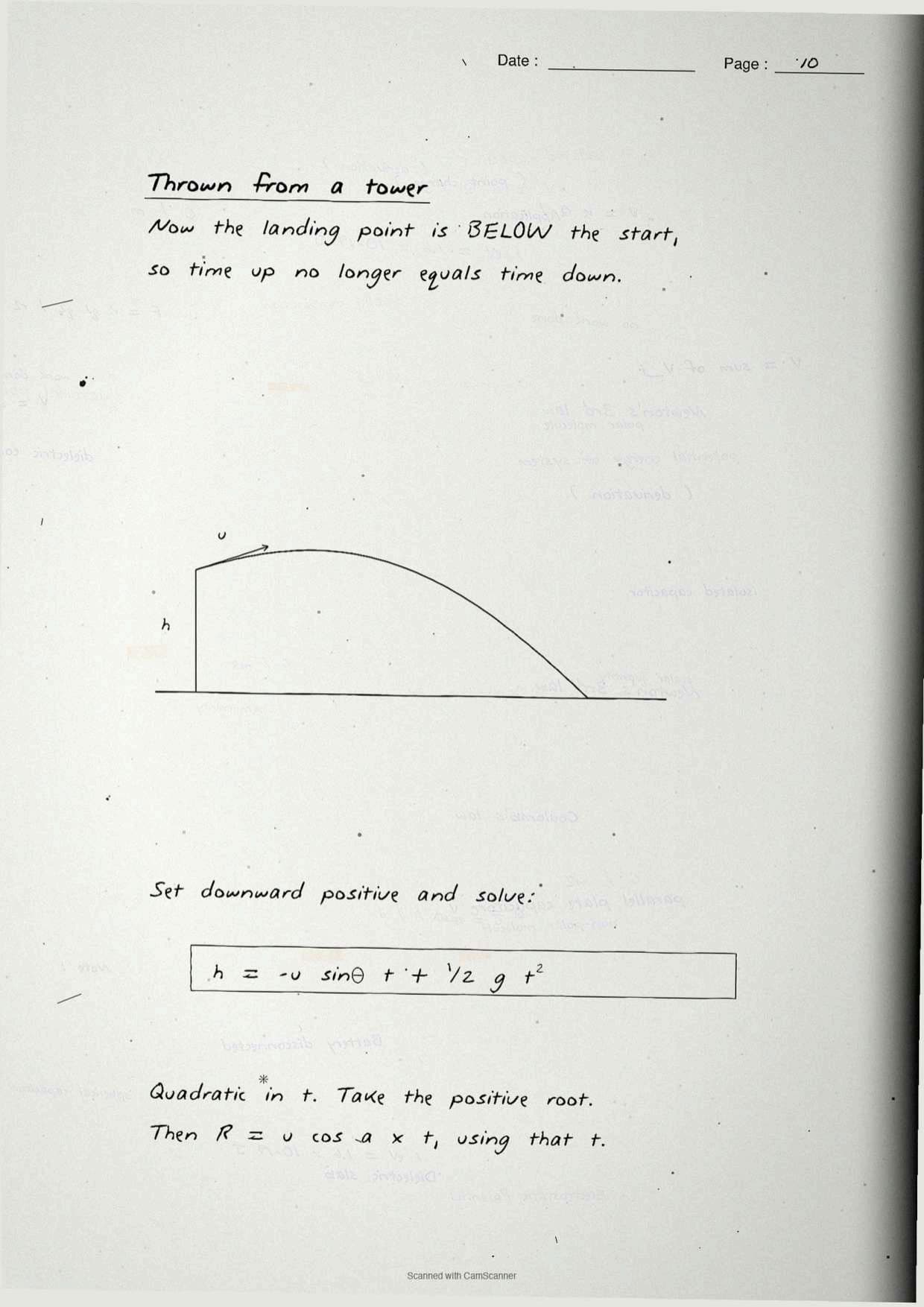
Once the landing point sits below the launch point, time up no longer equals time down. The vertical equation becomes a quadratic in time and only the positive root is physical.
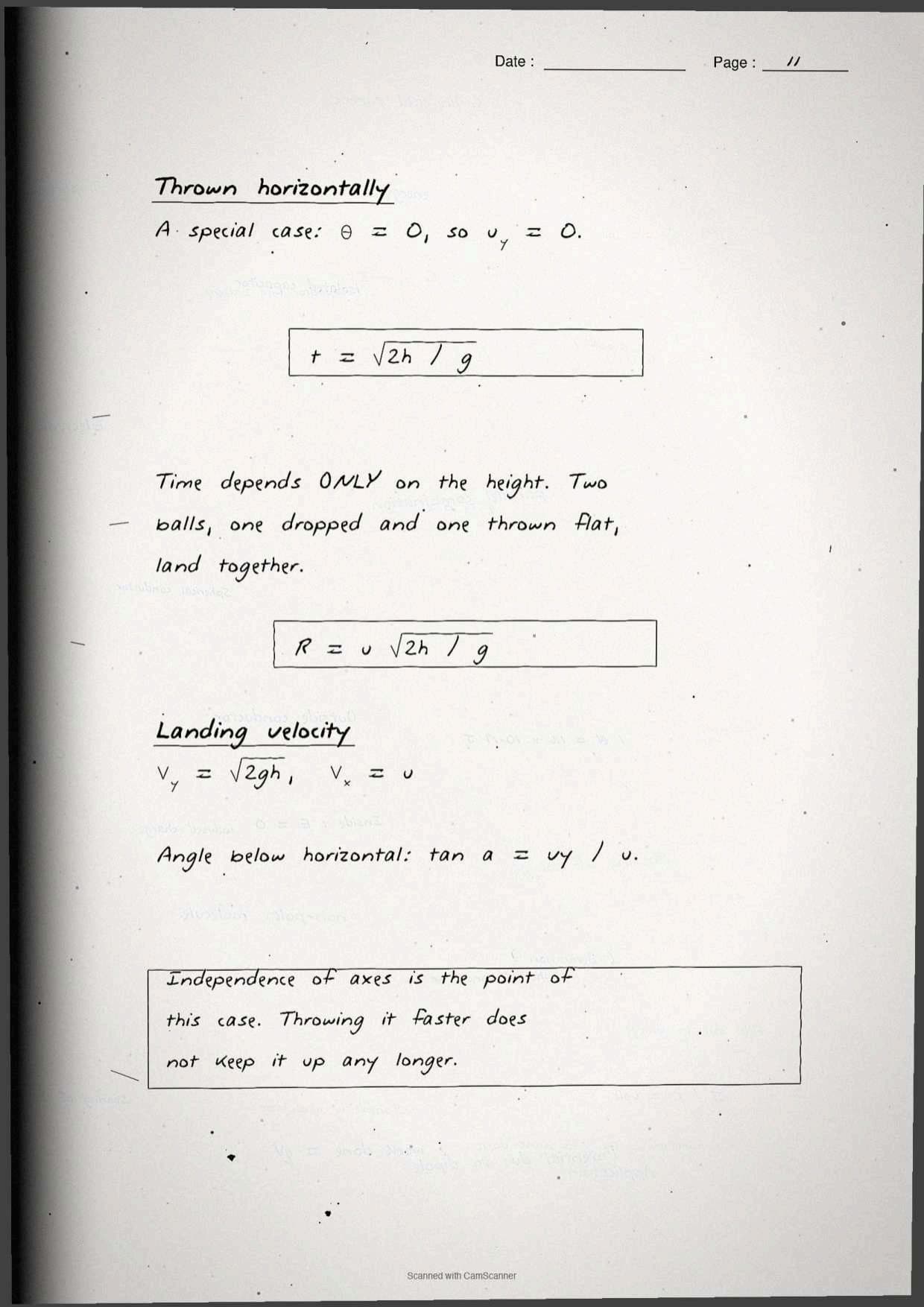
The purely horizontal throw is the clean special case. Its time of flight depends on the height alone, which is why a ball dropped and a ball thrown flat from the same roof land together.
Relative Motion, and Why It Simplifies Things
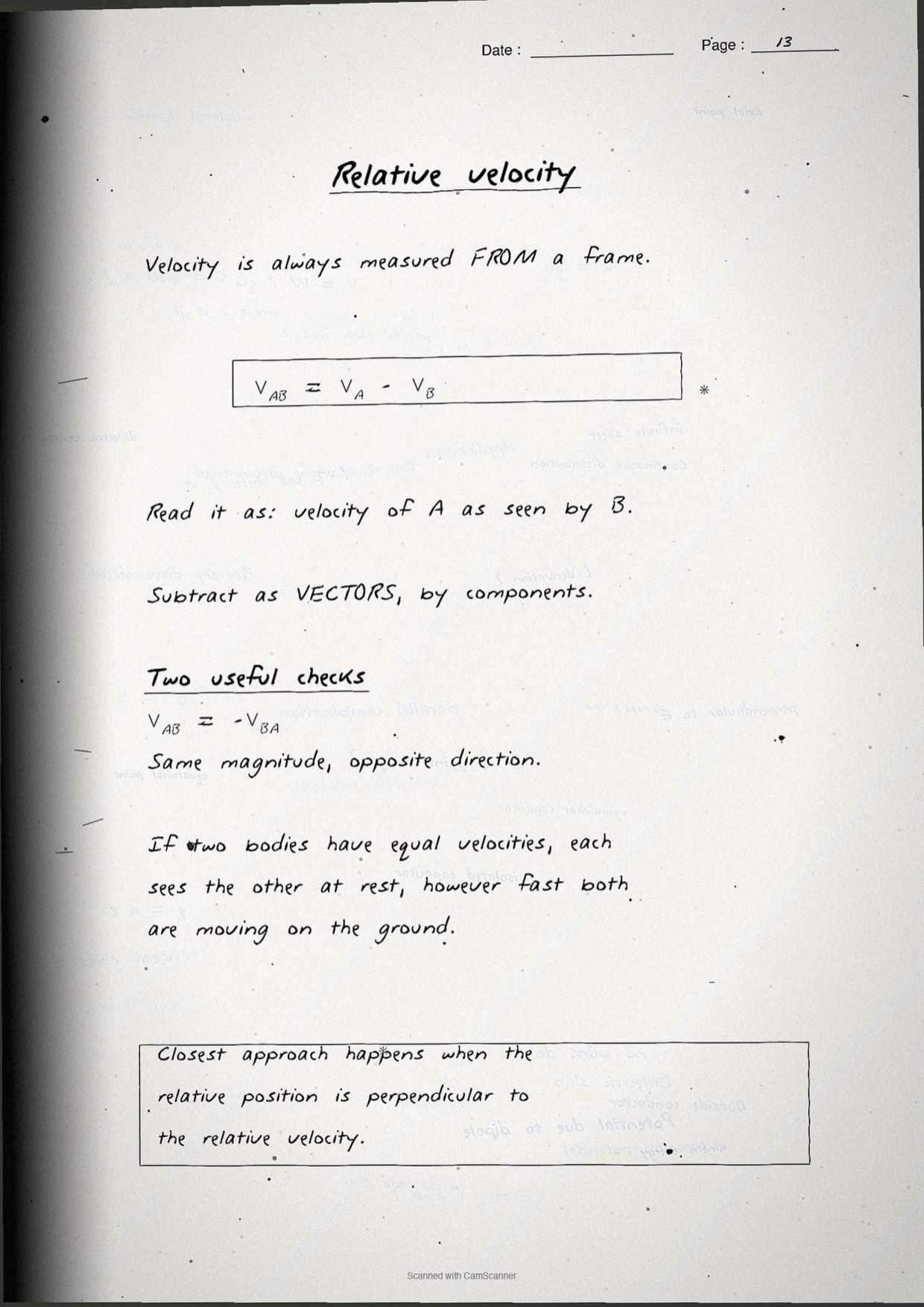
Velocity is always measured from a frame, and subtracting one velocity from another is done by components rather than by magnitudes.
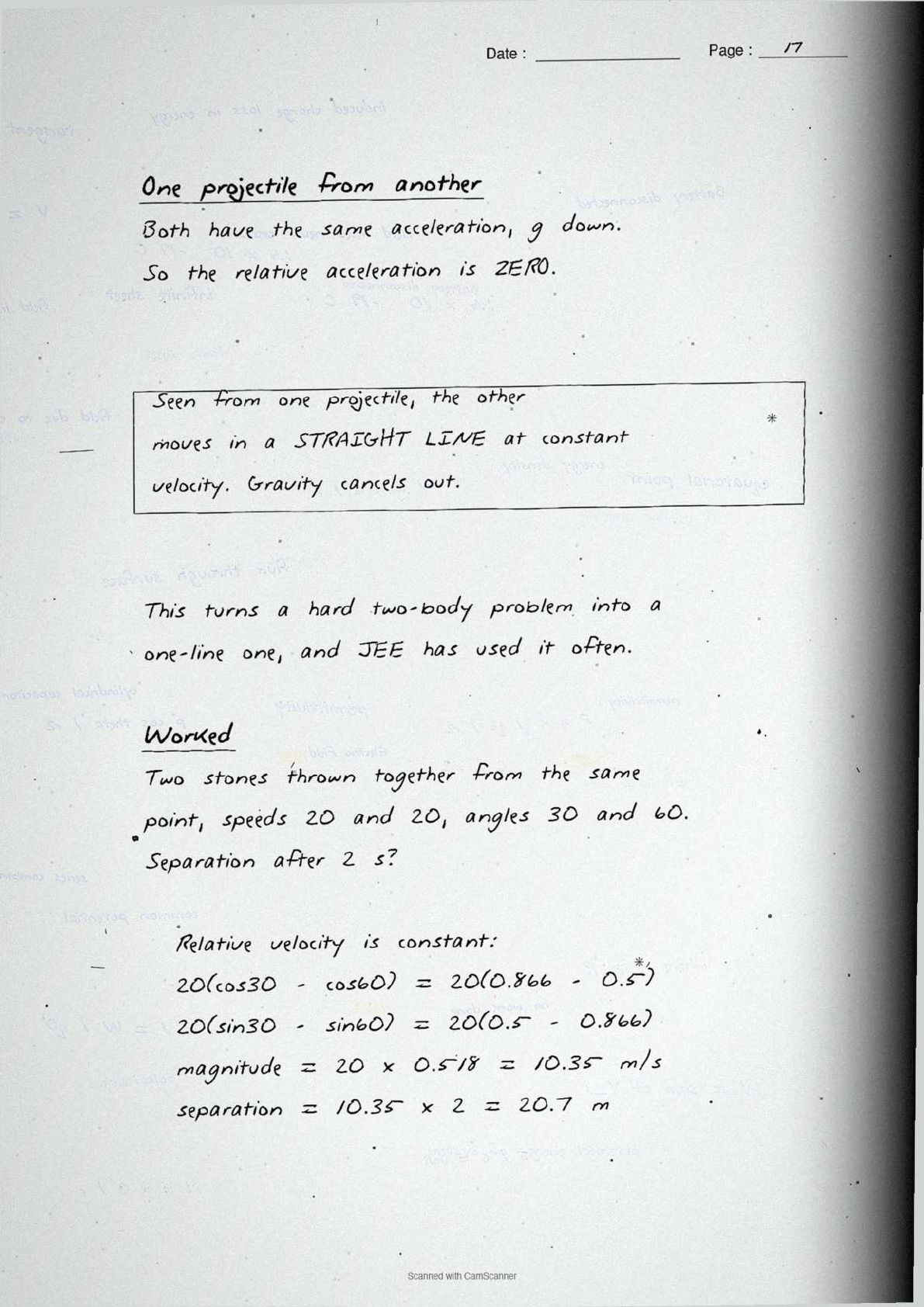
The most useful consequence in this chapter: two projectiles share the same acceleration, so their relative acceleration is zero. Seen from one, the other travels in a straight line at constant velocity, which collapses a hard two-body question into a single line.
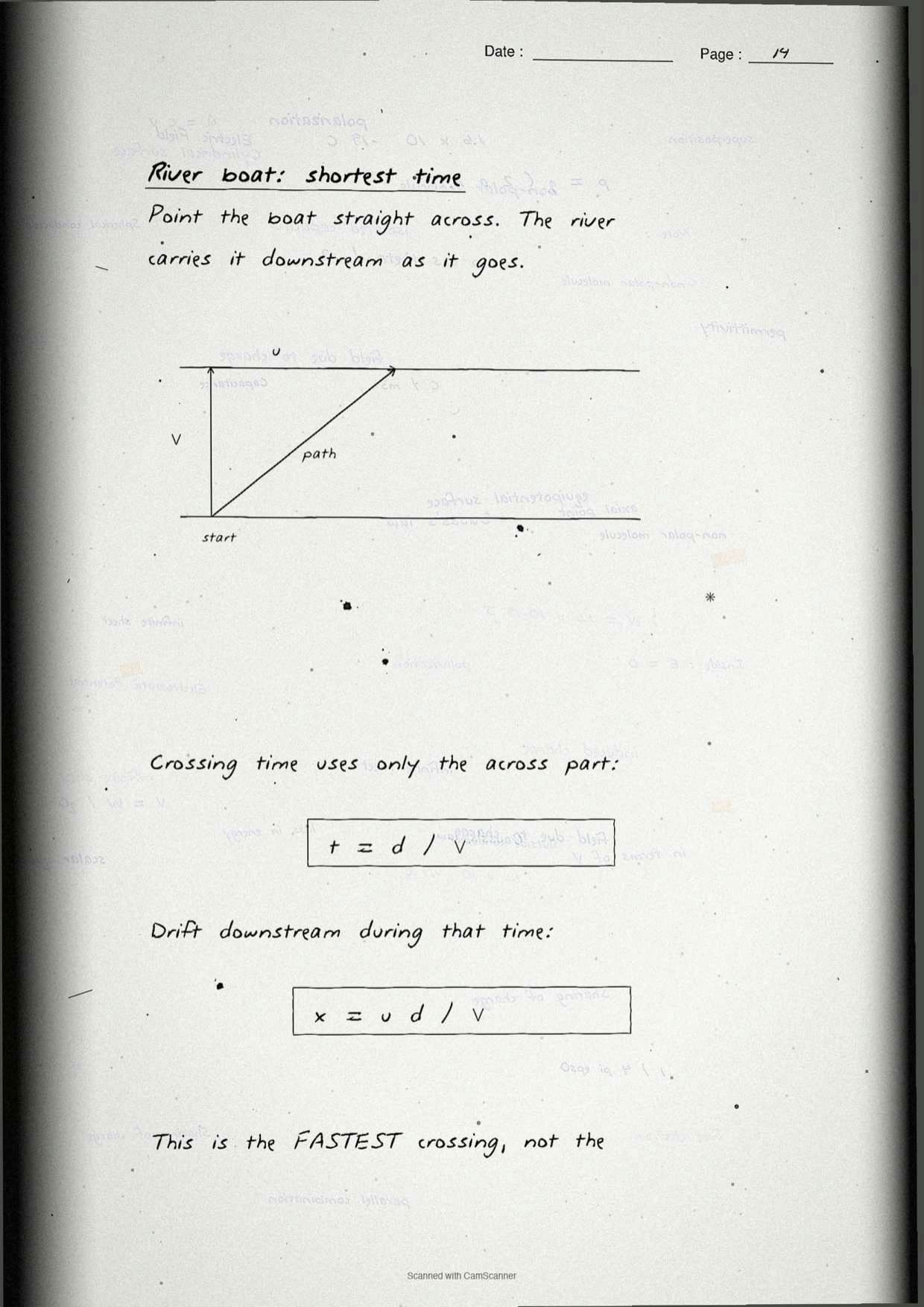
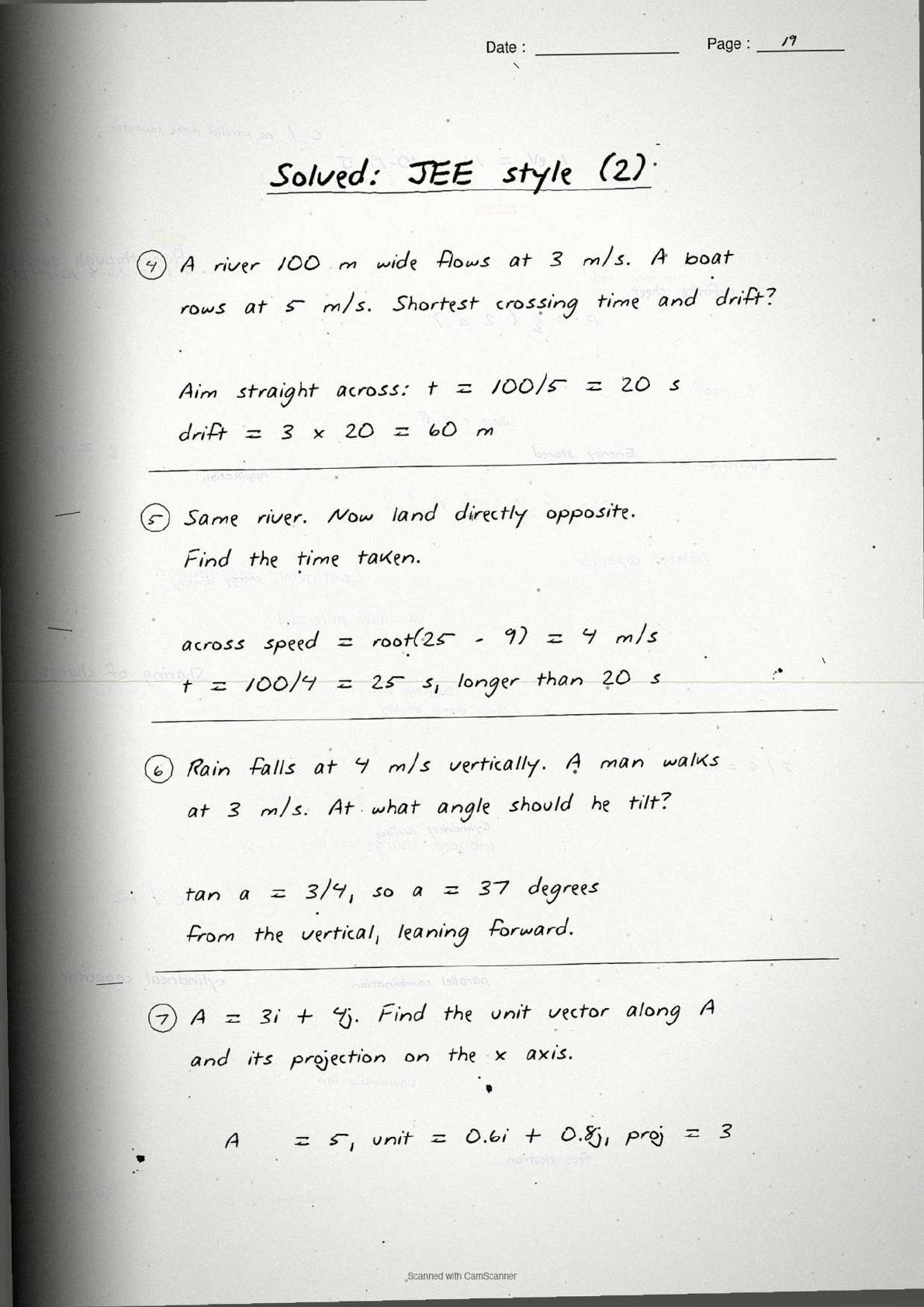
- River boat, fastest crossing: aim straight across, then account for drift
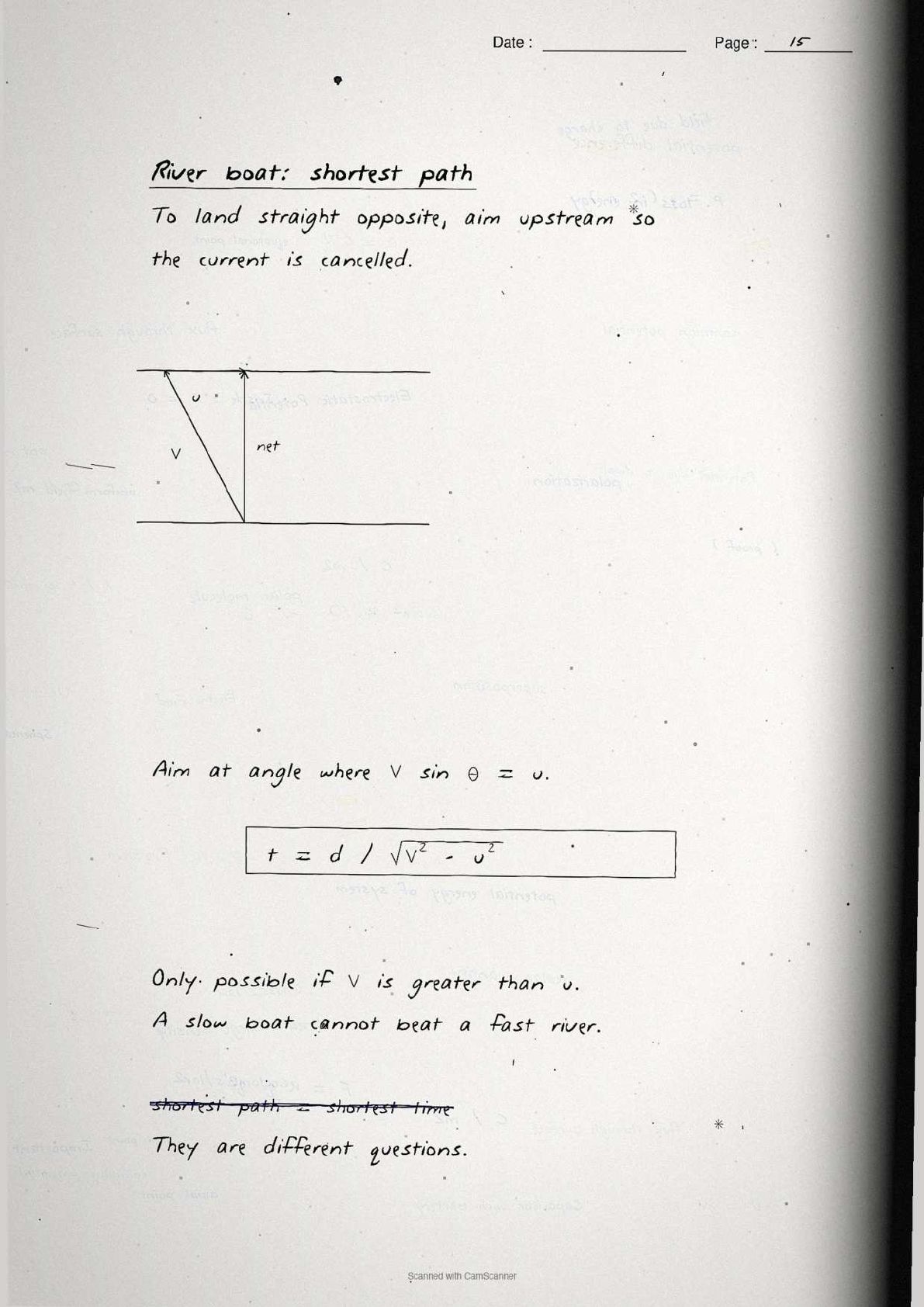
- River boat, straight opposite: aim upstream to cancel the current, and it only works if the boat outpaces the river
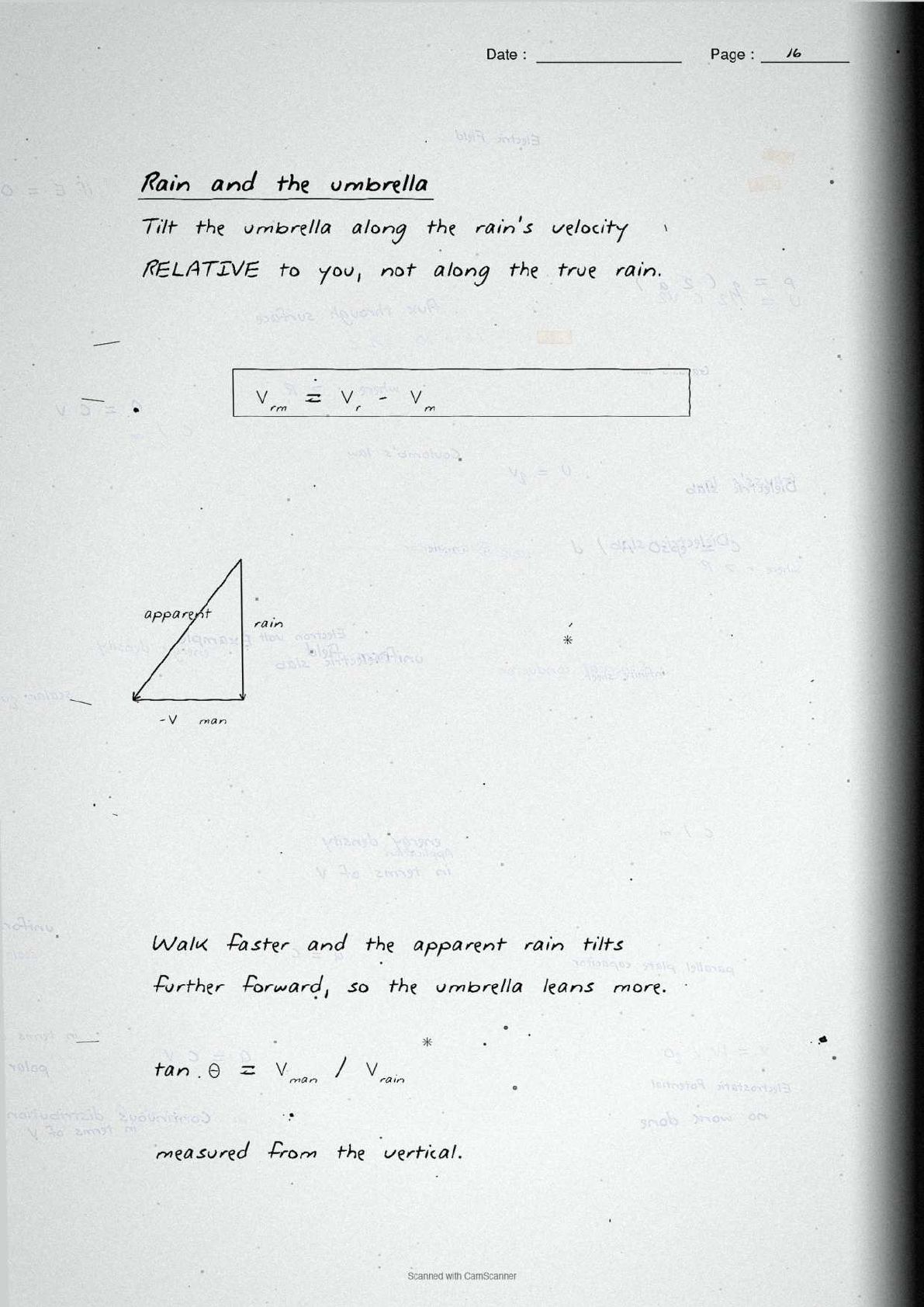
- Rain and umbrella: tilt along the apparent rain, not the true rain
Watch Projectile Motion Worked on a Board
Source: JEE Wallah
Where Students Lose Marks Here
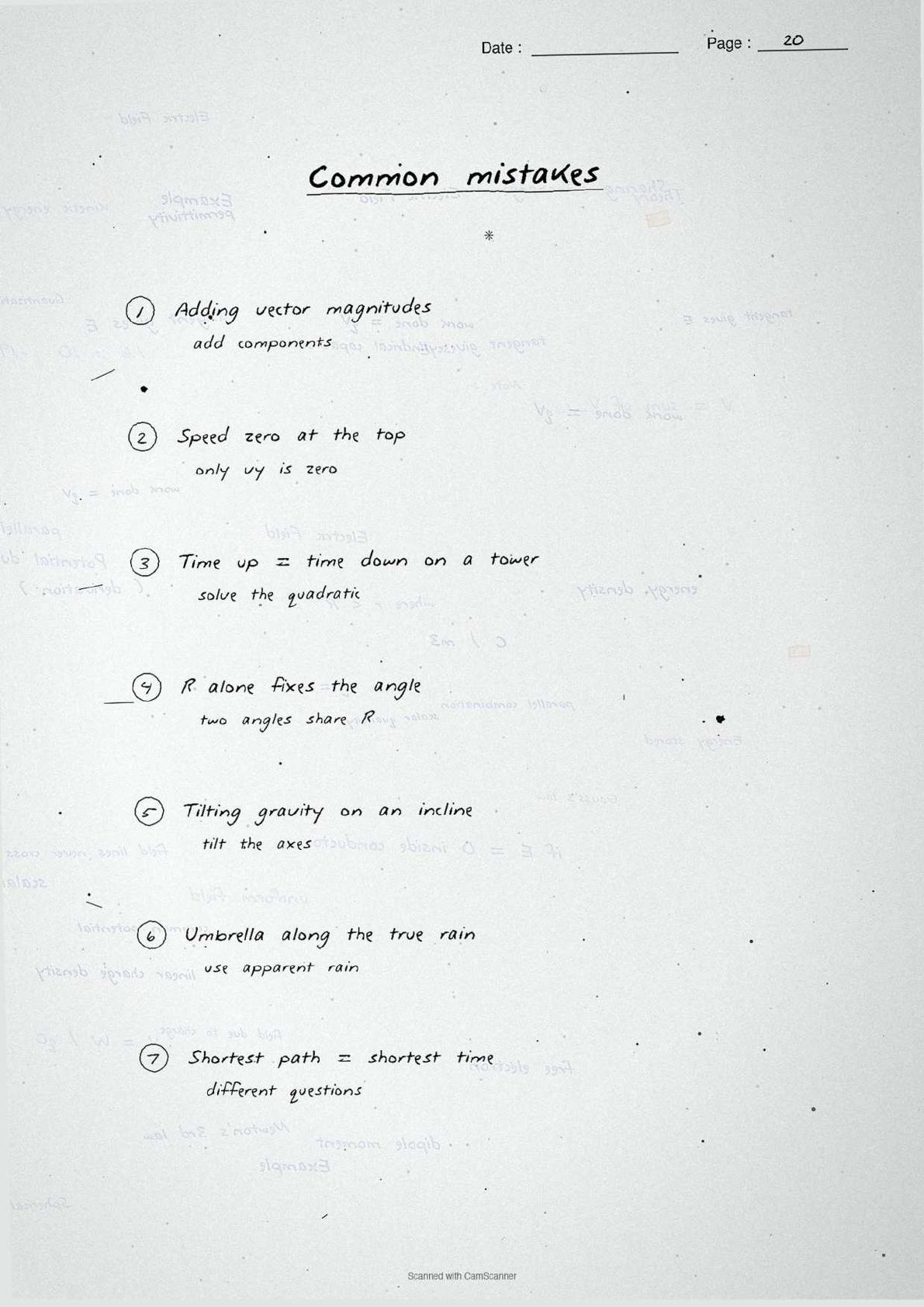
Each of these is written into the notes as a correction beside the rule it breaks.
- Adding vector magnitudes instead of components
- Believing the speed is zero at the top of the flight
- Using time up equals time down when throwing from a tower
- Assuming the range alone fixes the angle
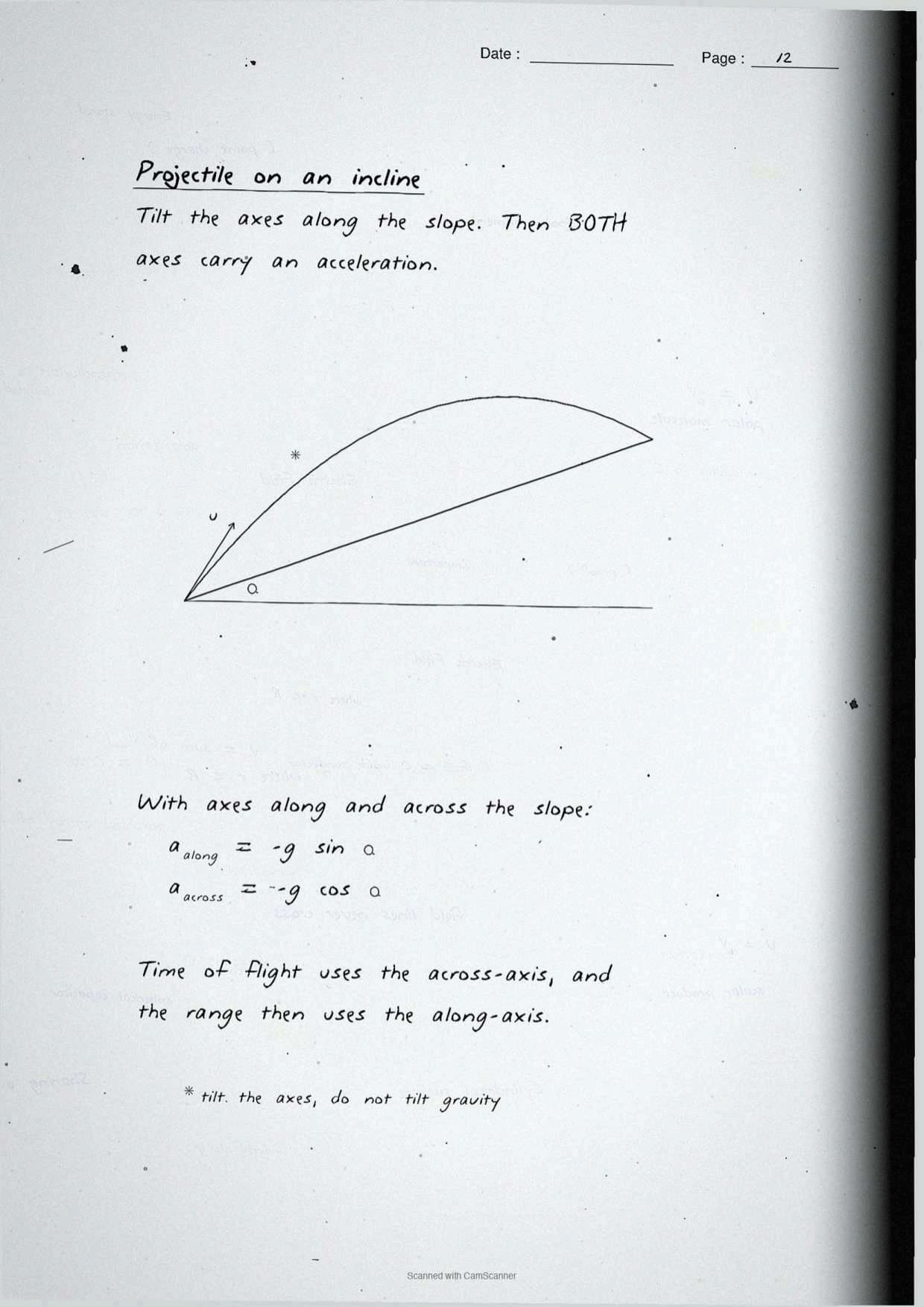
- Tilting gravity on an incline instead of tilting the axes
- Pointing the umbrella along the true rain rather than the apparent rain
- Treating shortest path and shortest time as the same crossing
How to Use These Notes
Read once slowly, then keep the quick recall page as the revision set. The seven solved questions are worked in the same order the notes introduce the ideas.
- Resolve before writing any equation
- Mark which direction is positive and keep it for the whole question
- On a tower, expect a quadratic in time
- For two moving bodies, switch to a relative frame first
- Check whether the paper wants g as 10 or 9.8
Almost every question in this chapter is two axes and one clock, applied carefully.
JEE Main Motion in a Plane Handwritten Notes FAQs
Ques. How many questions come from motion in a plane in JEE Main?
Ans. Across the 2022 to 2026 papers this chapter produced 76 questions, of which 49 were projectile motion. That works out to roughly 8 to 12 marks a year, making it one of the higher-yield chapters in mechanics.
Ques. Is the speed of a projectile zero at the highest point?
Ans. No. The vertical component of velocity is zero there, but the horizontal component never changed, so the speed equals u cos of the launch angle. This is one of the most frequently set traps in the chapter.
Ques. Why do two different angles give the same range?
Ans. Because range depends on the sine of twice the angle, and that value is unchanged when the angle is replaced by its complement. So 30 and 60 degrees share a range, though the steeper throw goes higher and stays up longer.
Ques. What is the quickest way to handle two projectiles at once?
Ans. Switch to a relative frame. Both bodies have the same acceleration, so the relative acceleration is zero and each sees the other move in a straight line at constant velocity. The separation then grows linearly with time.
Ques. Can the notes be downloaded for free?
Ans. Yes. The full 22 page PDF can be read on this page and downloaded at no cost, so it can be printed or kept on a phone for revision.



Comments