



JEE Main Motion in a Plane PYQ, free to download as a 113-page PDF. The bank carries 75 solved questions from the 2022 to 2026 papers and takes roughly ten days to work through, so split it by sub-topic.
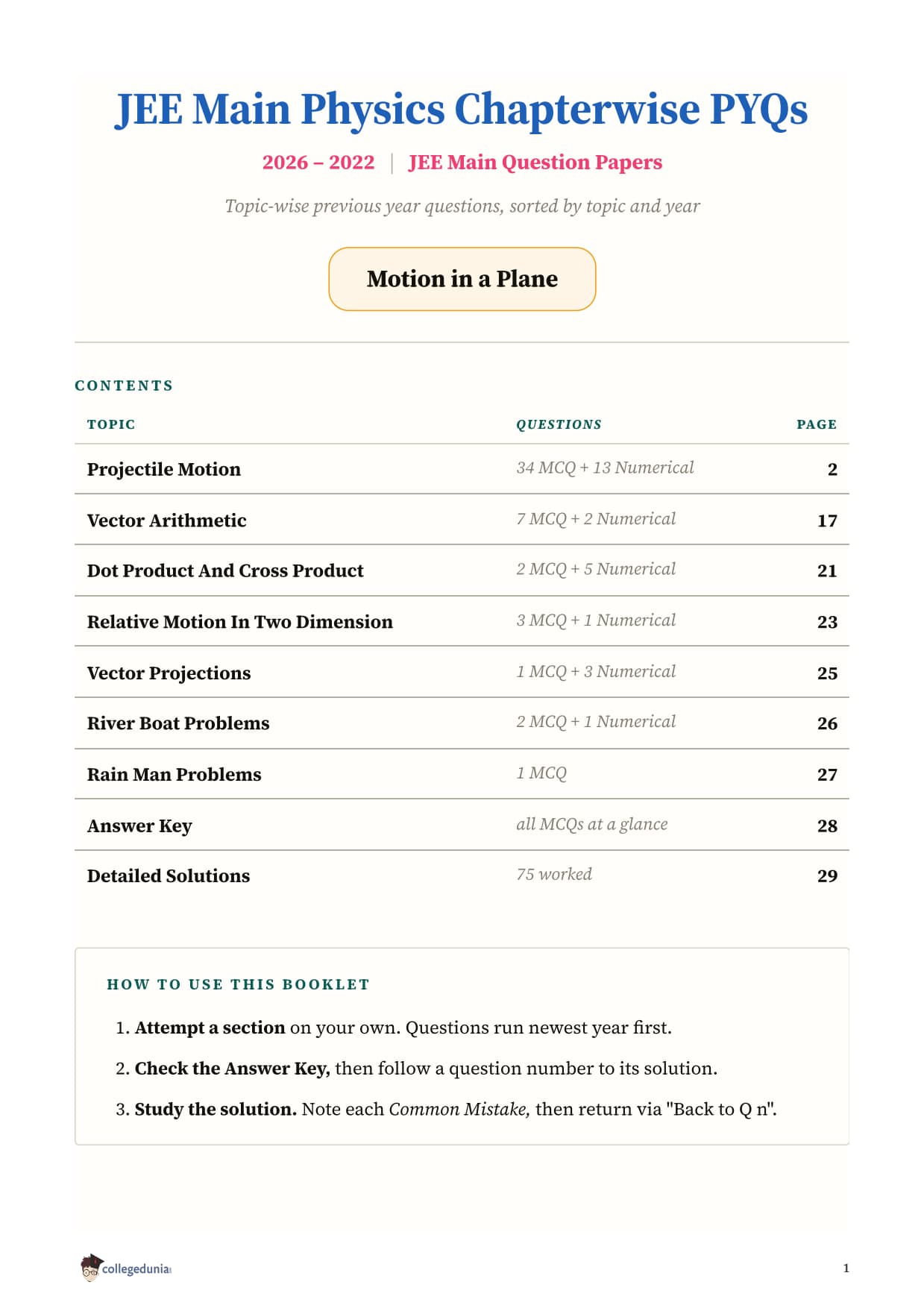
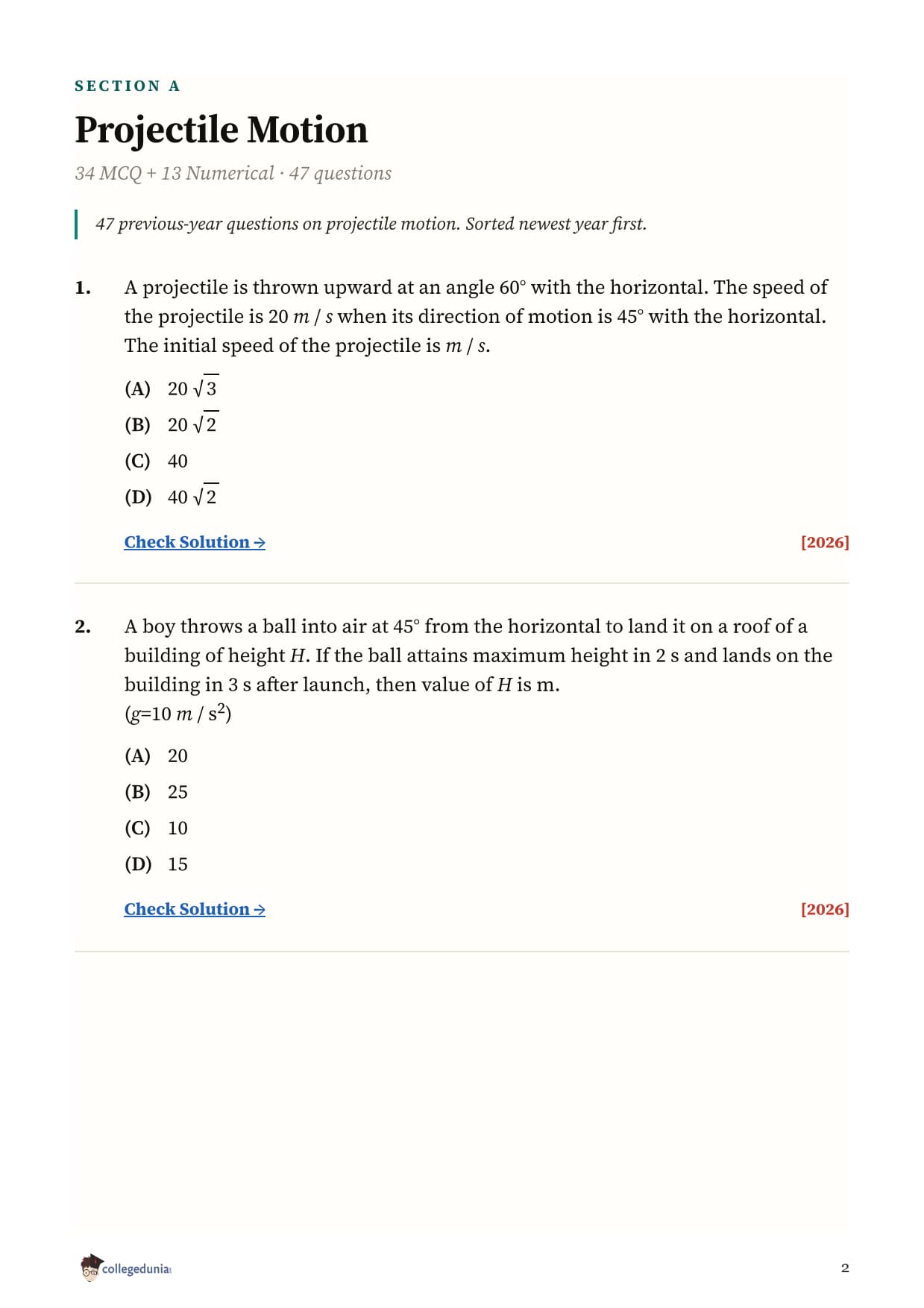
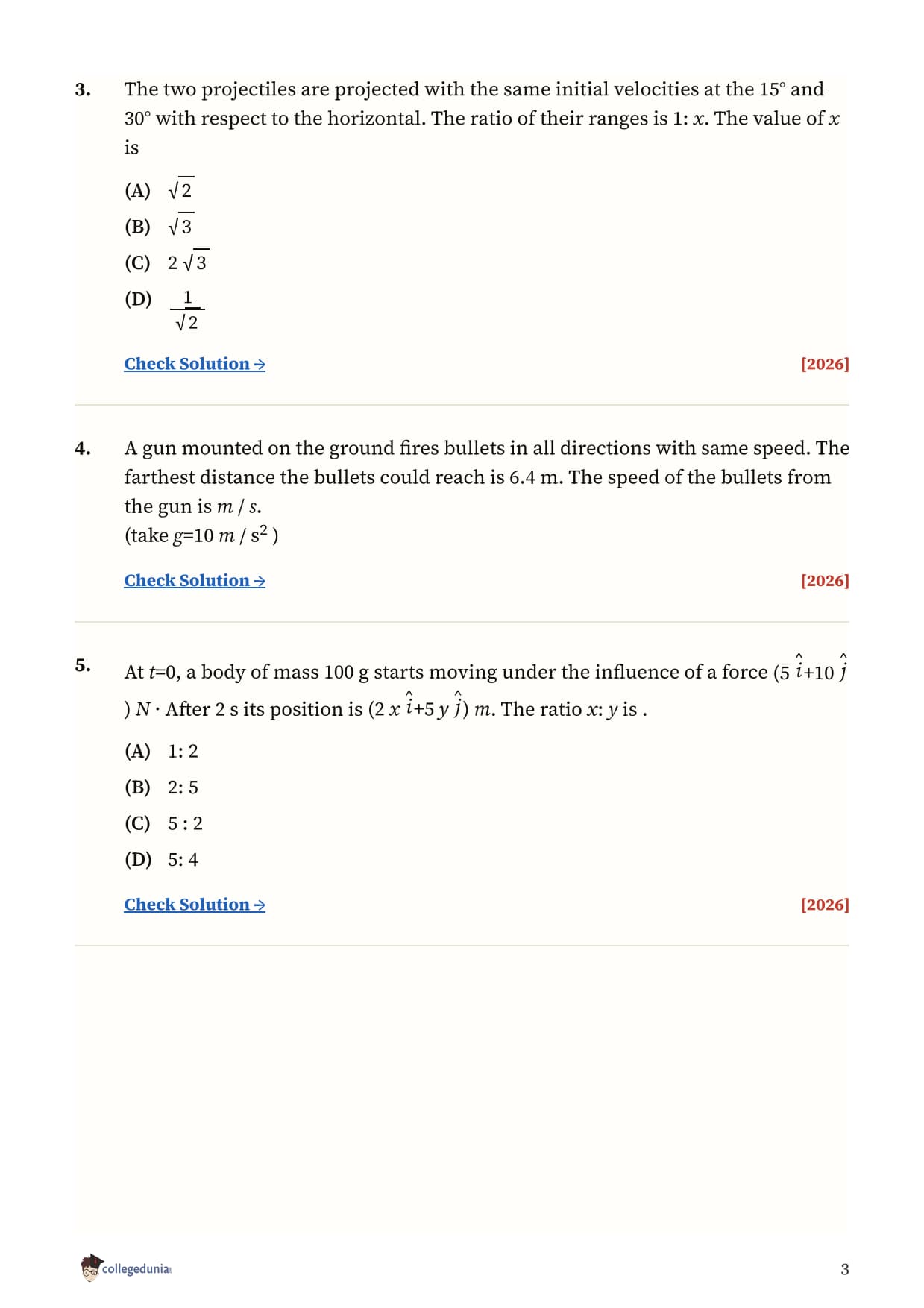
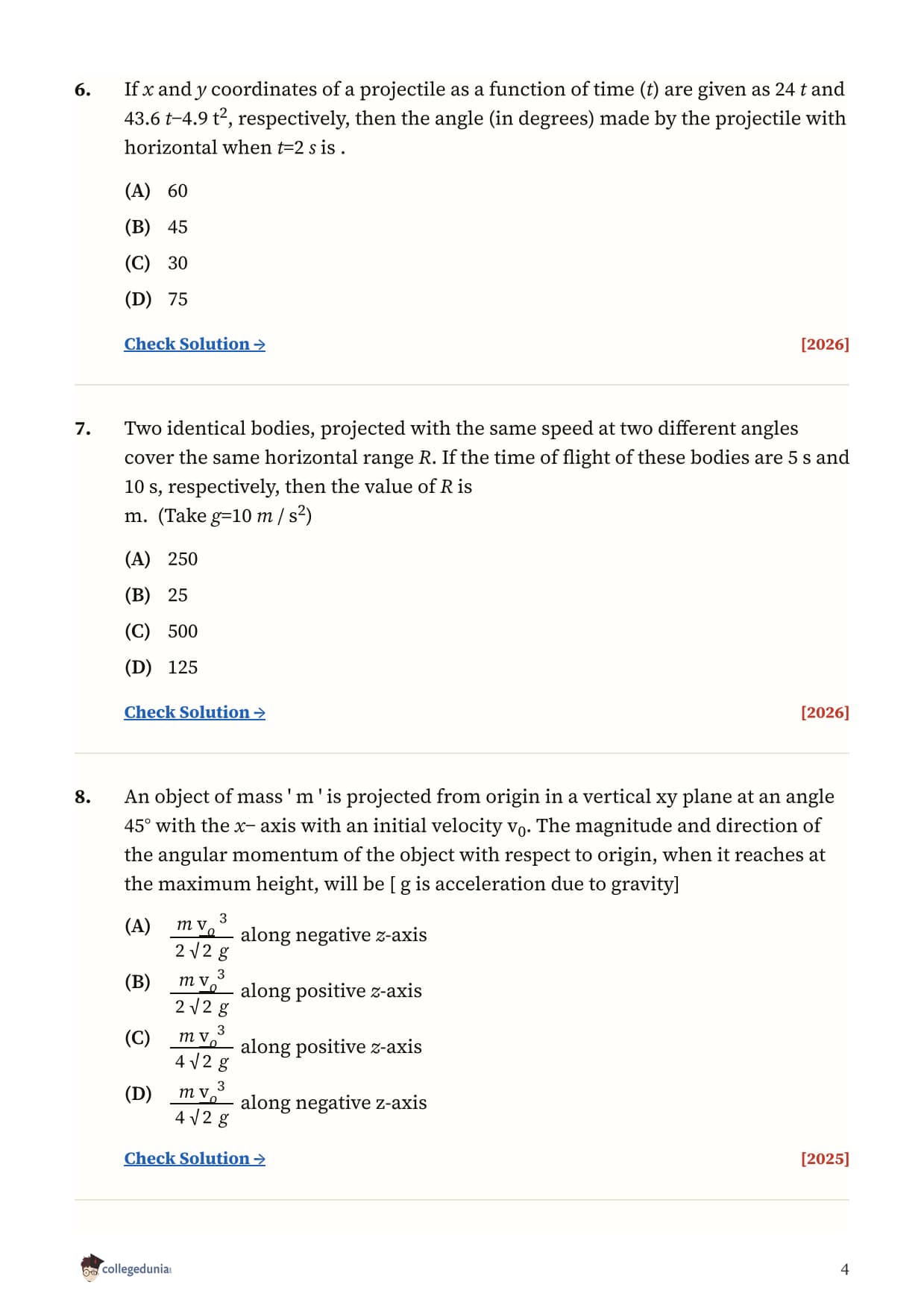
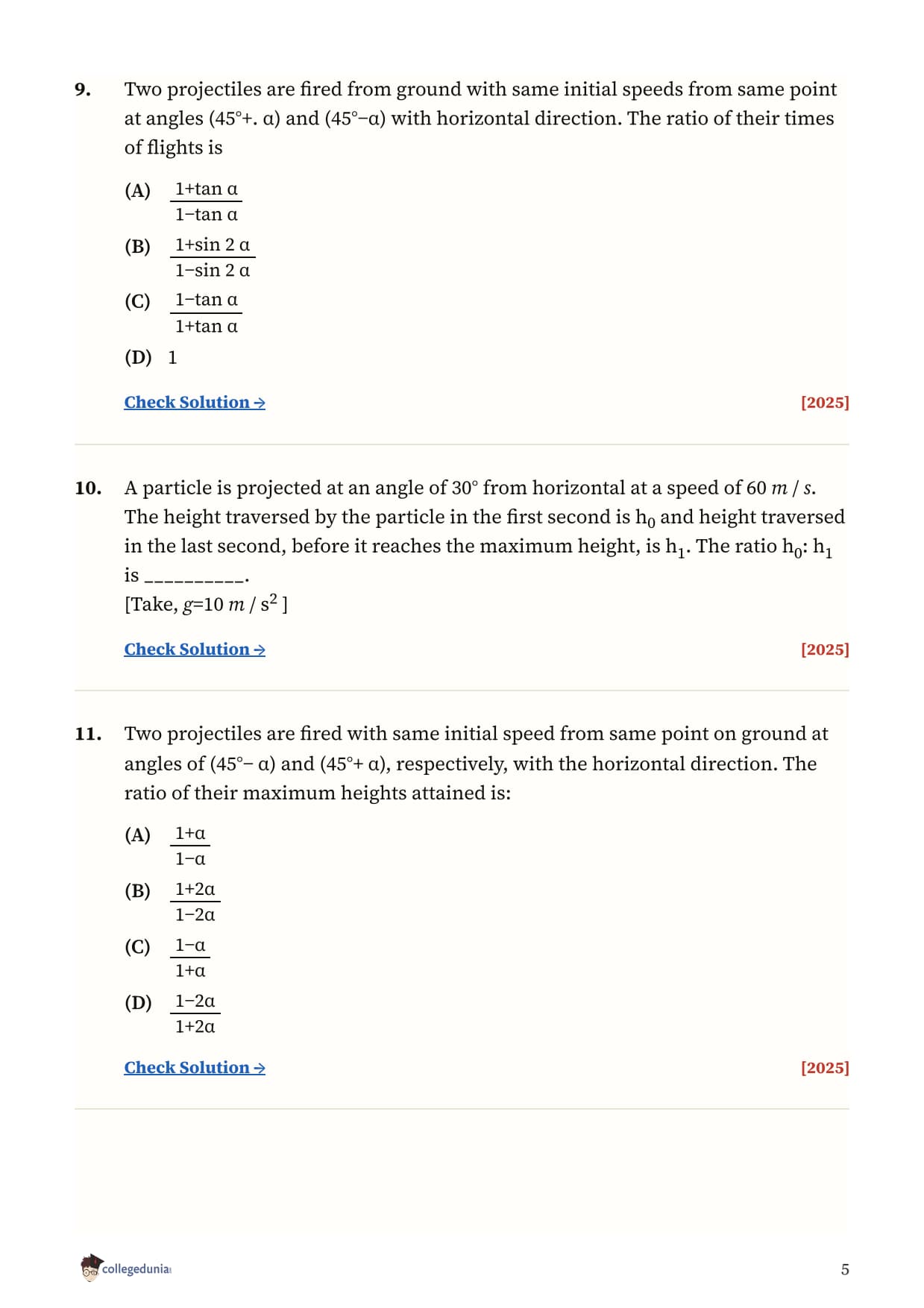
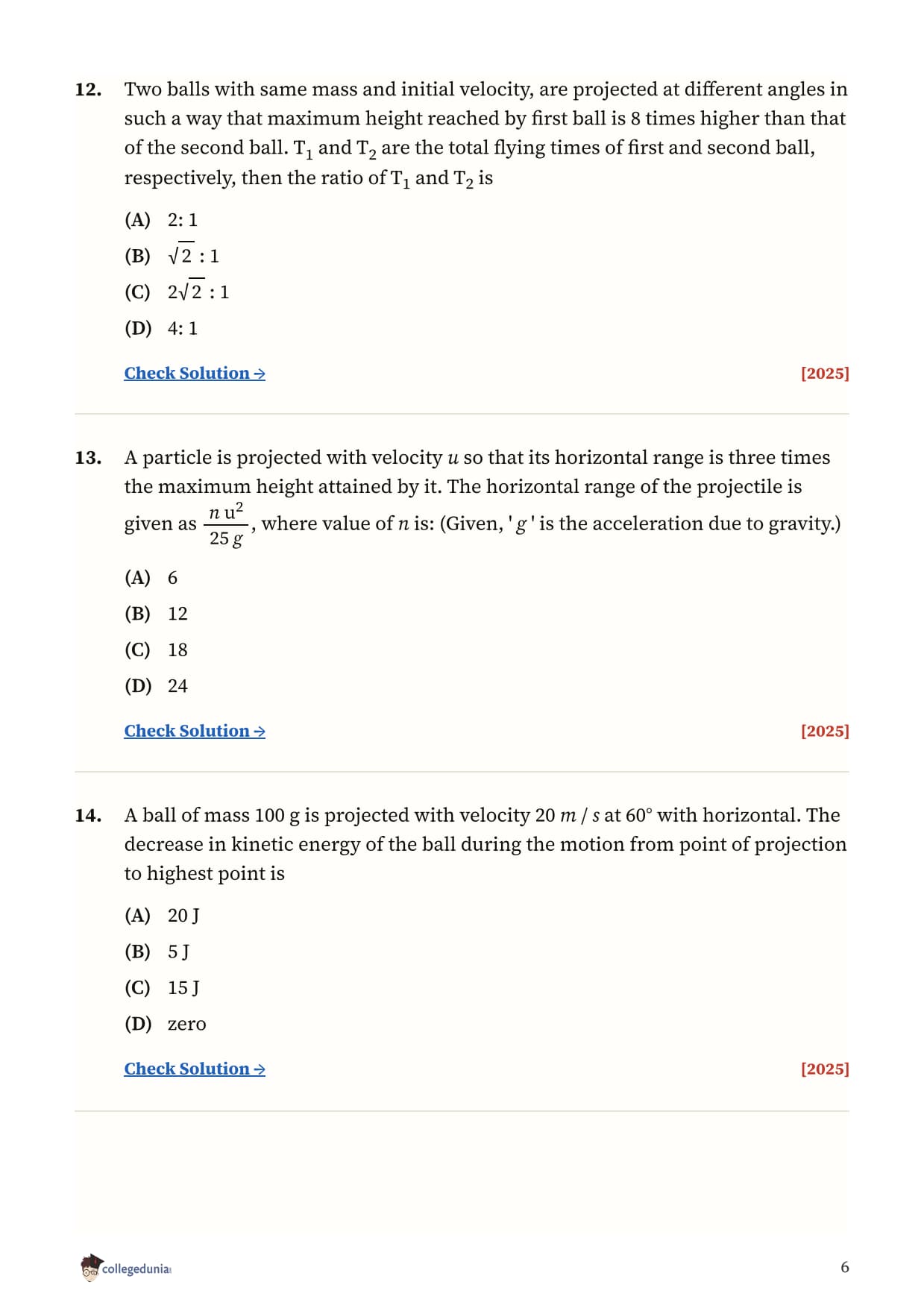
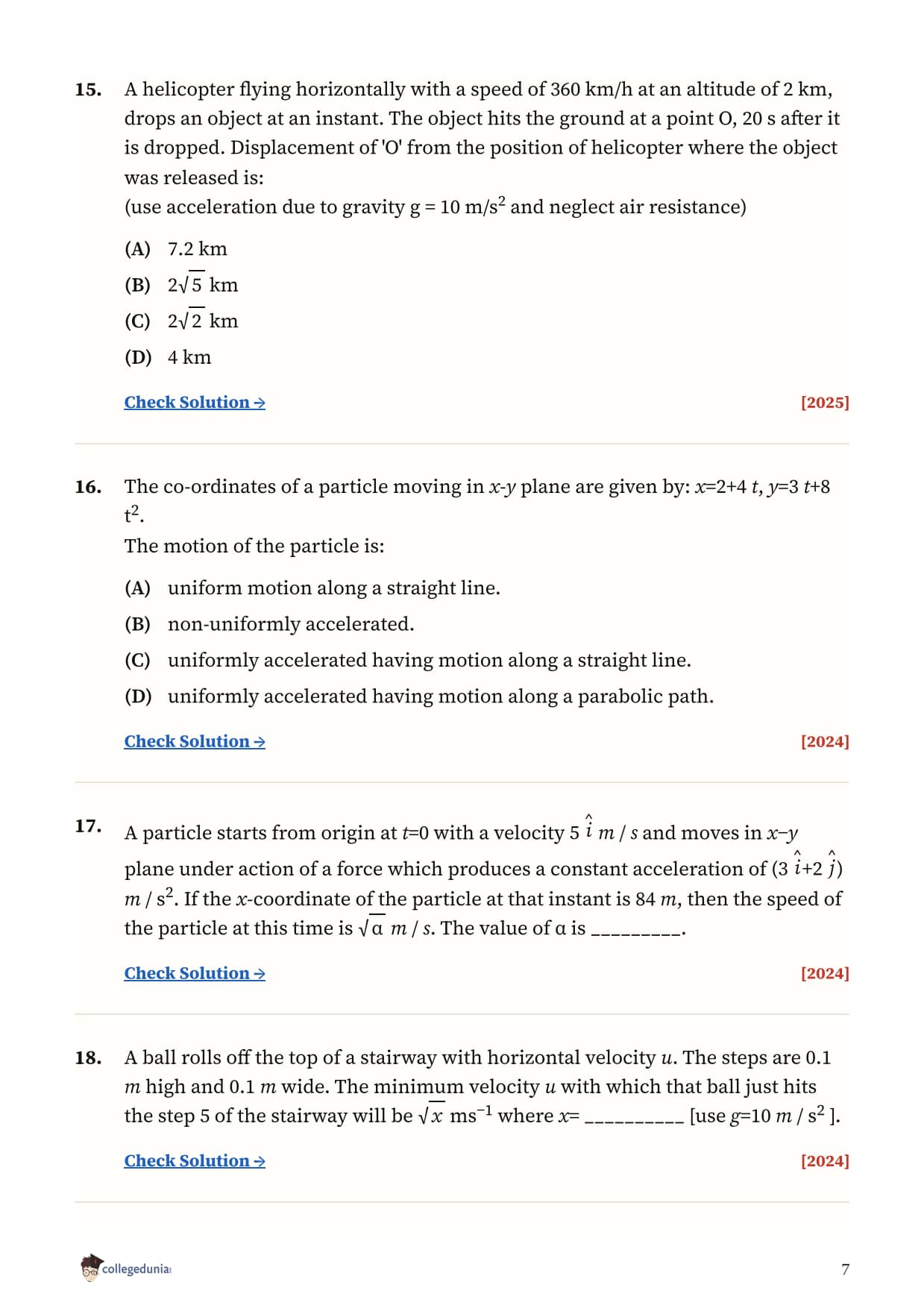
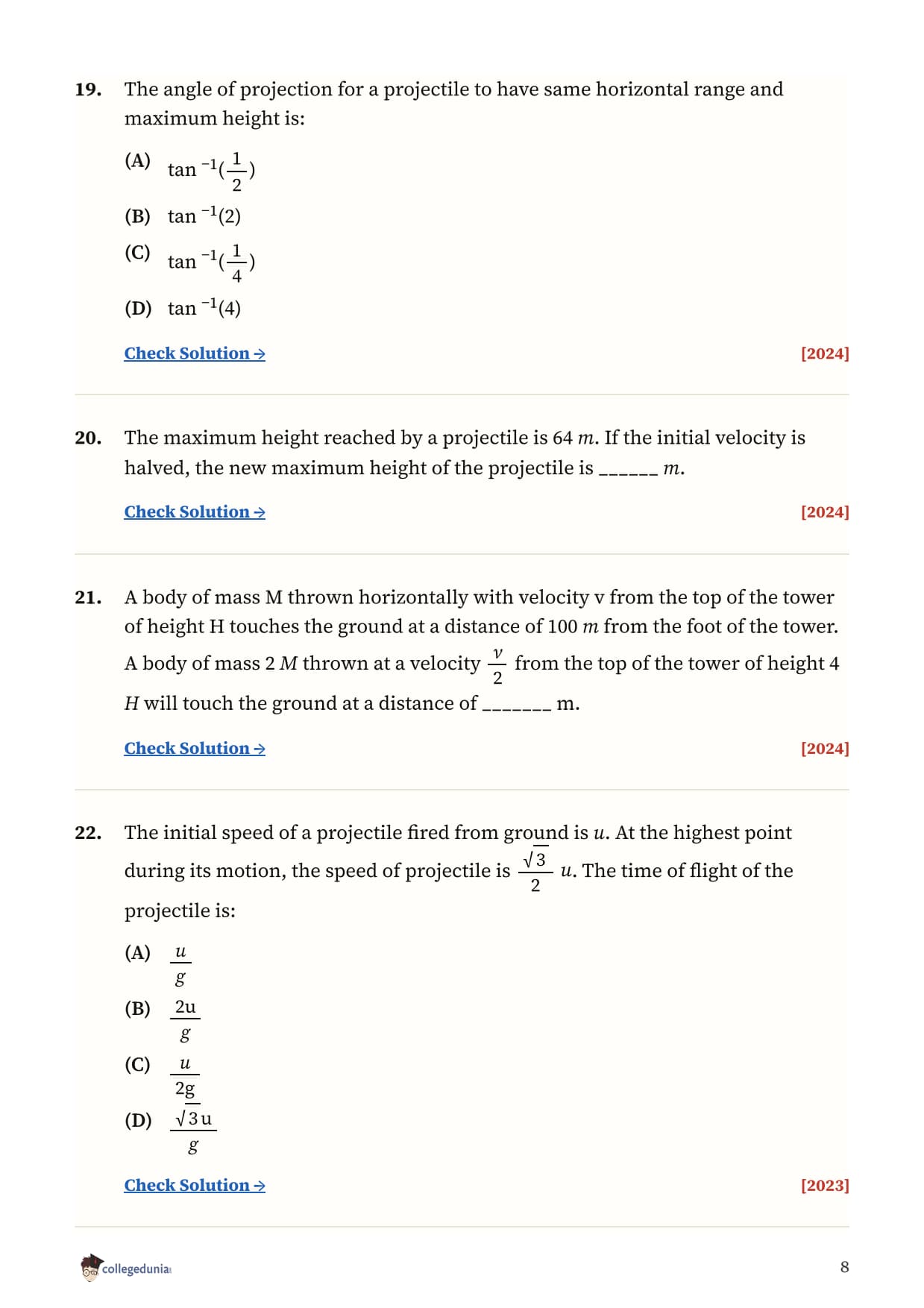
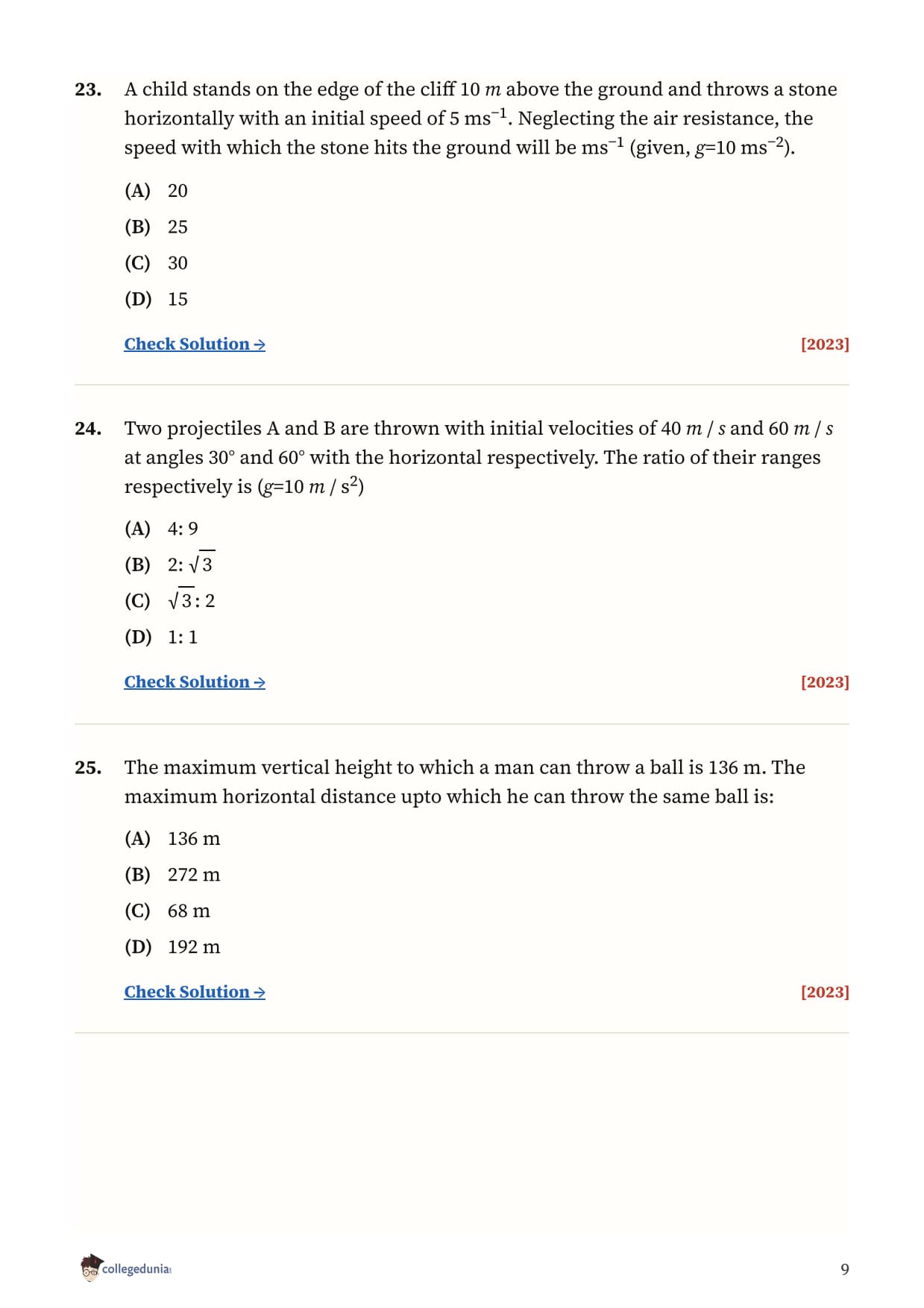
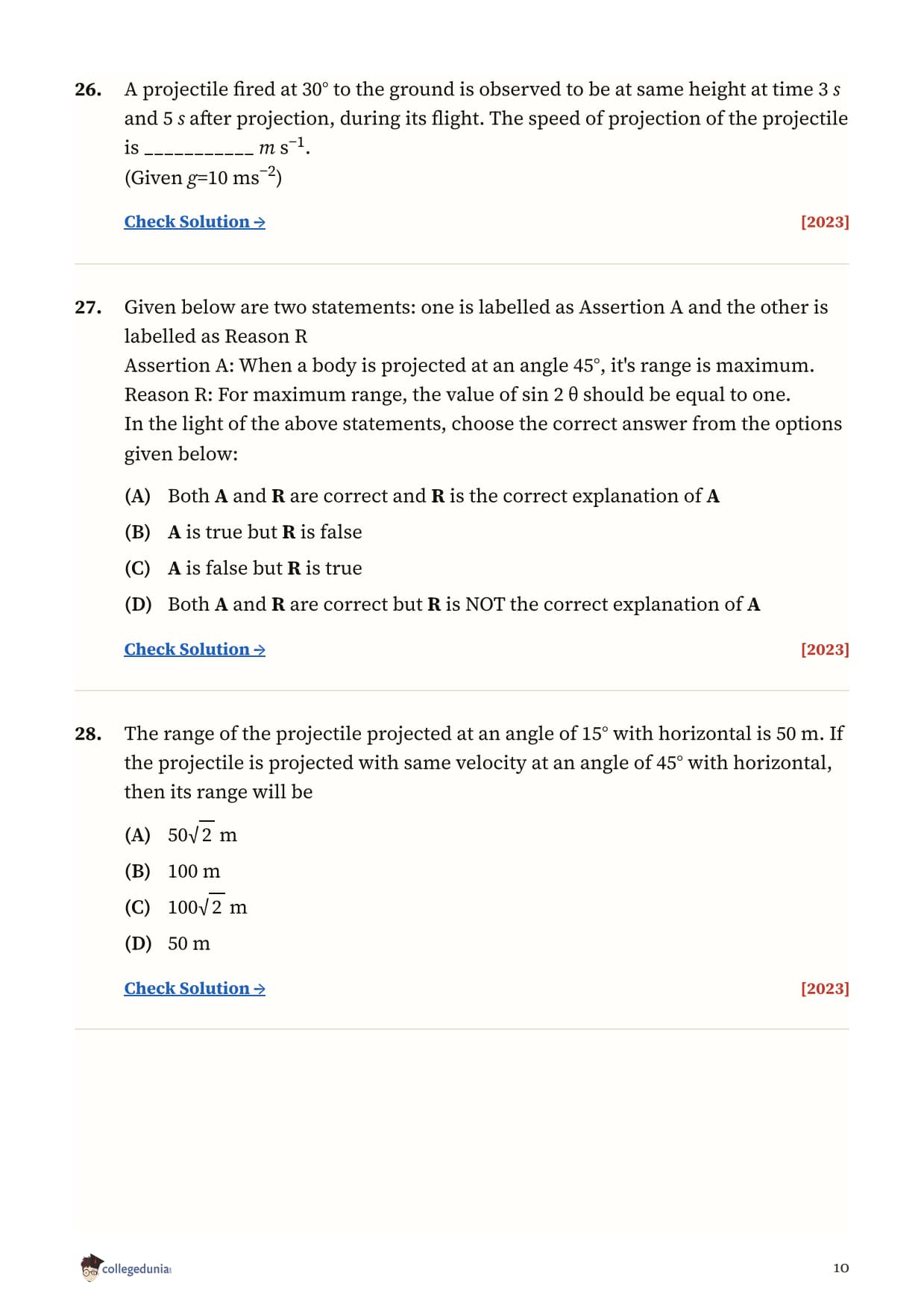
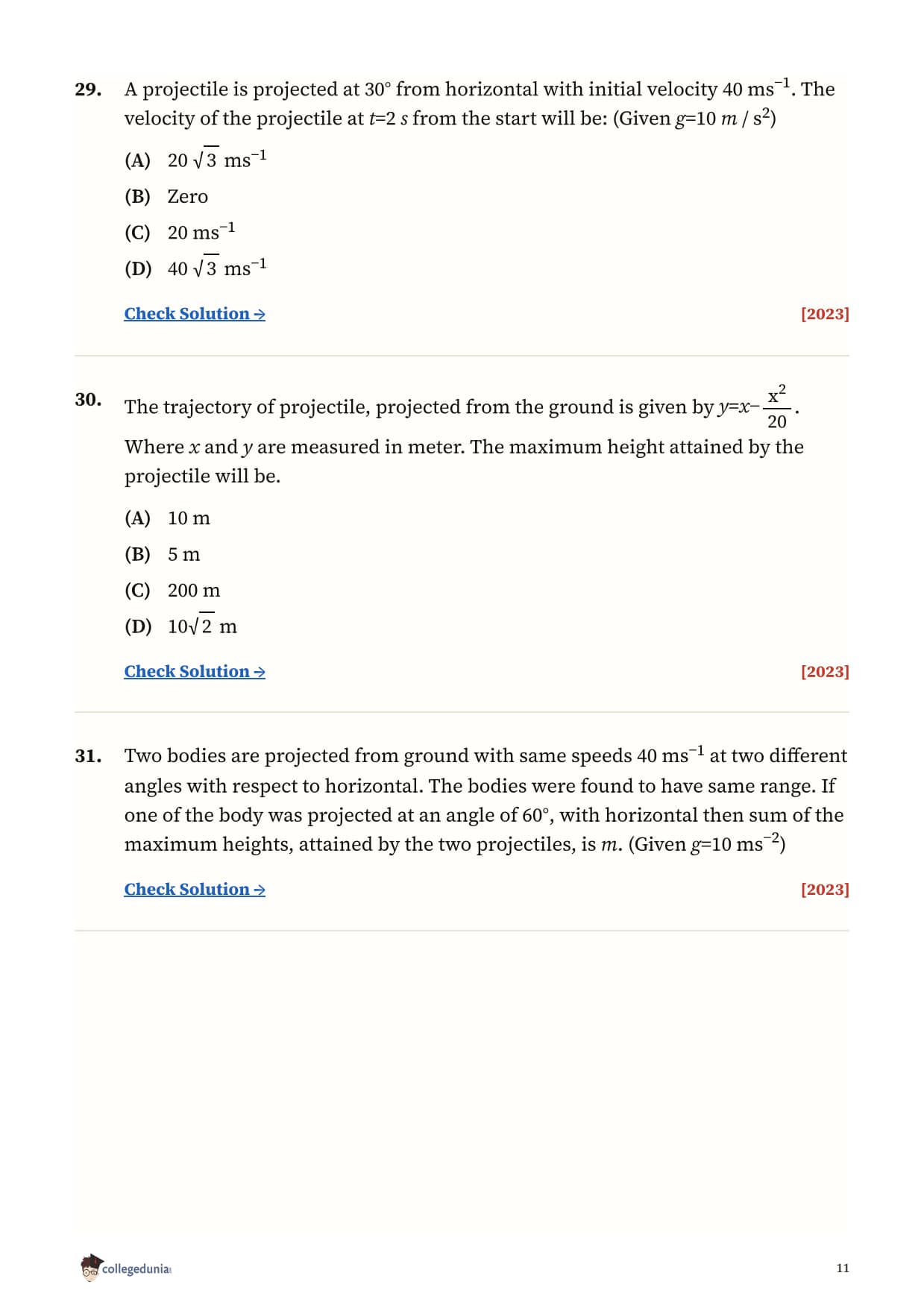
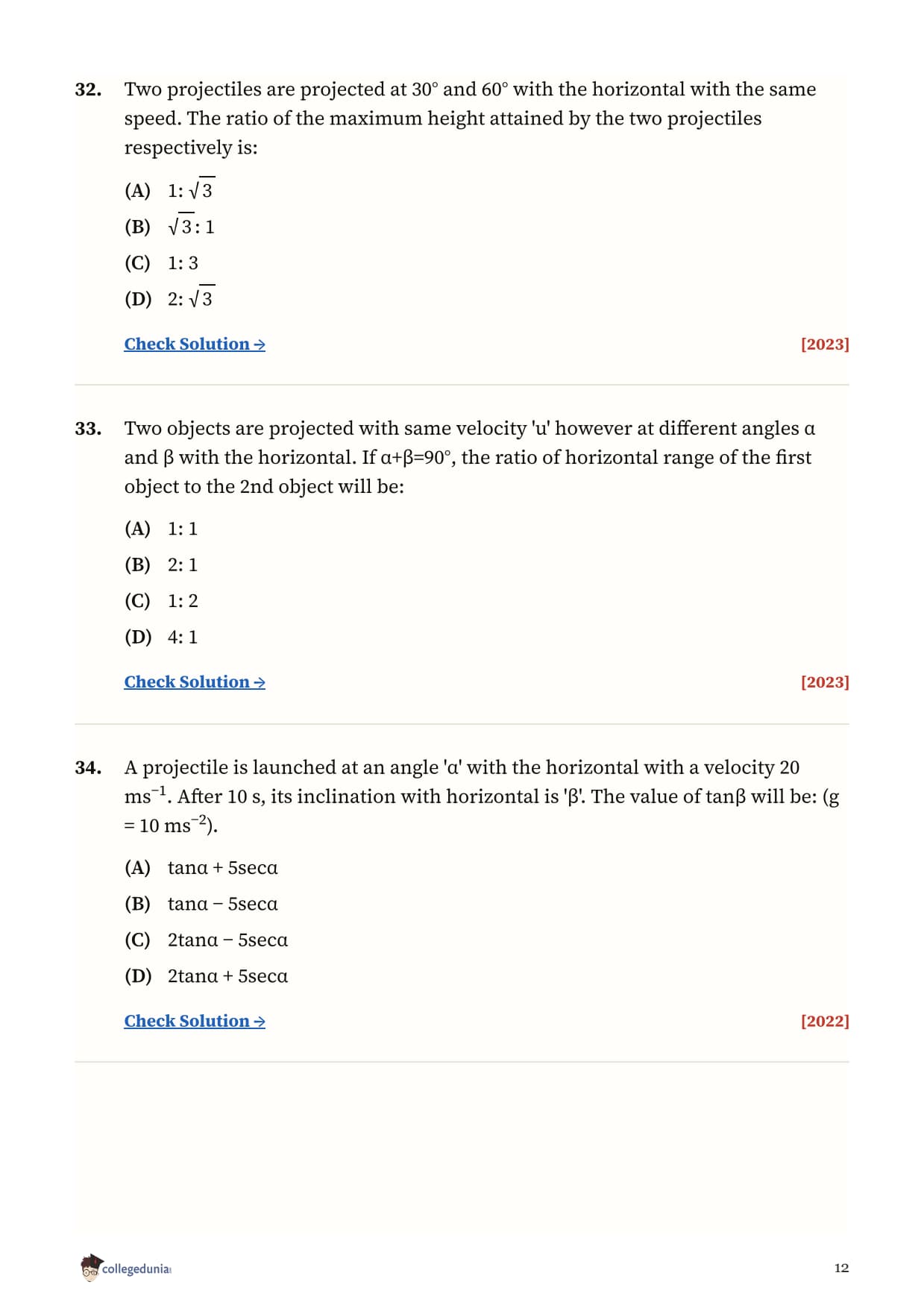
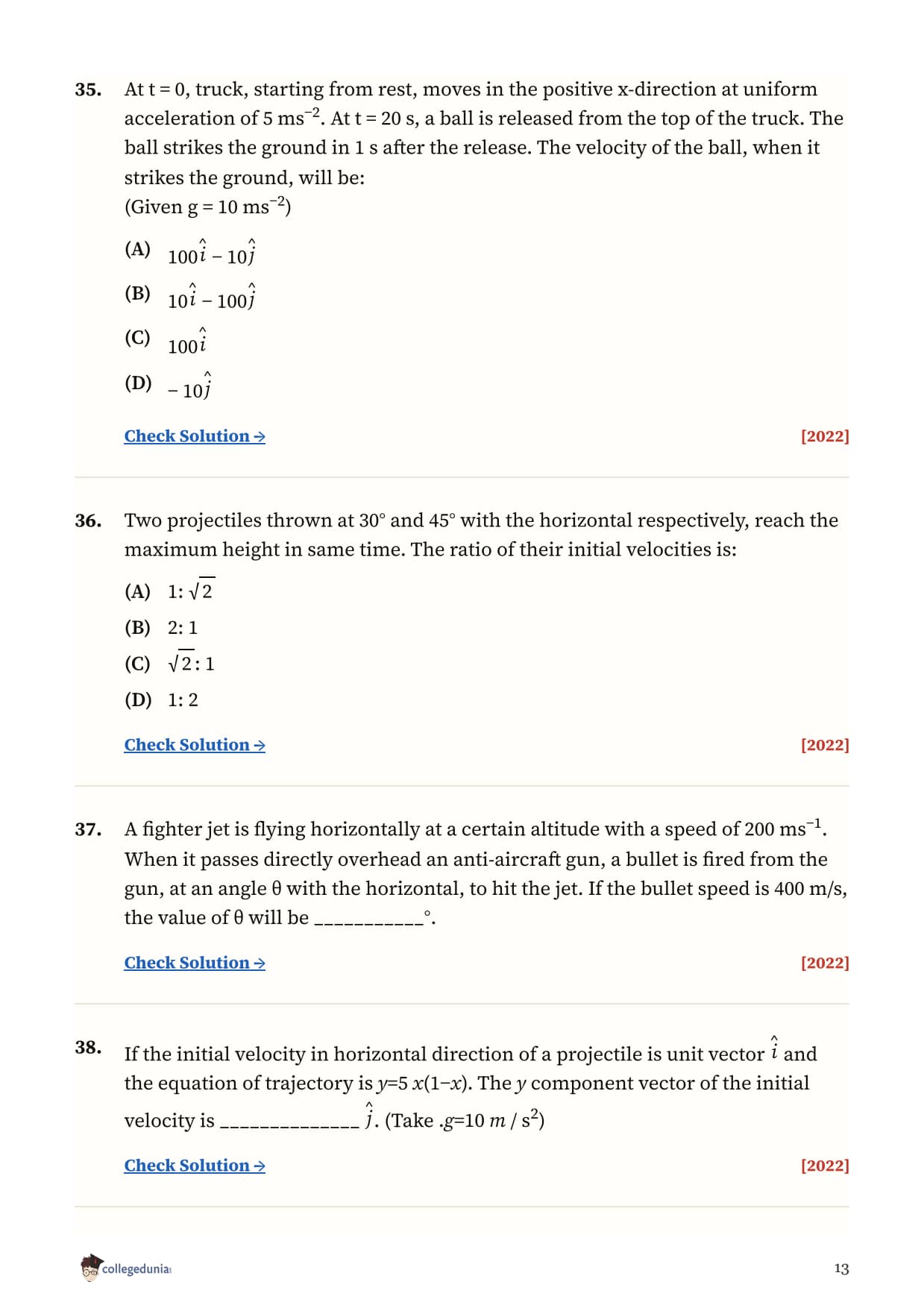
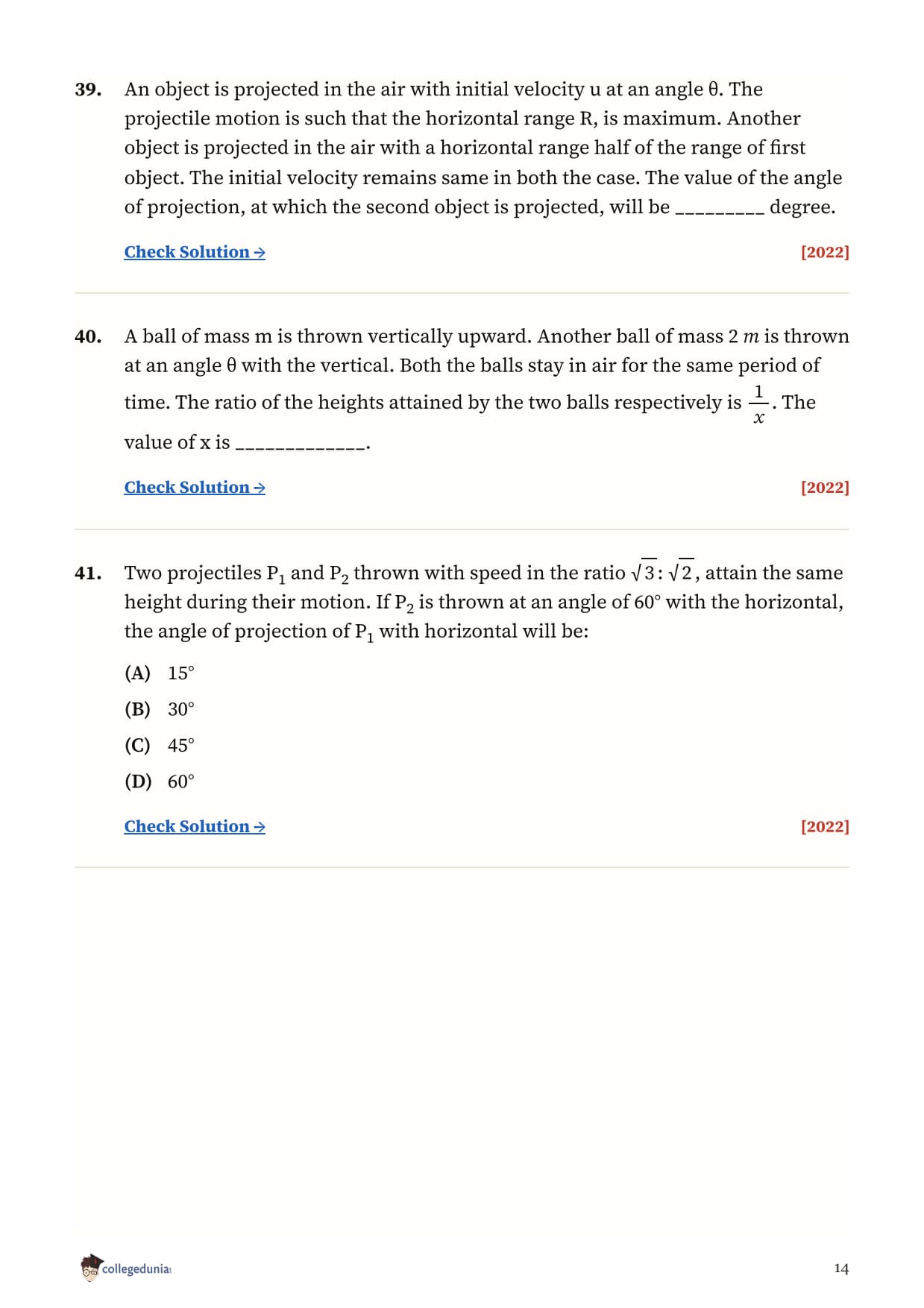
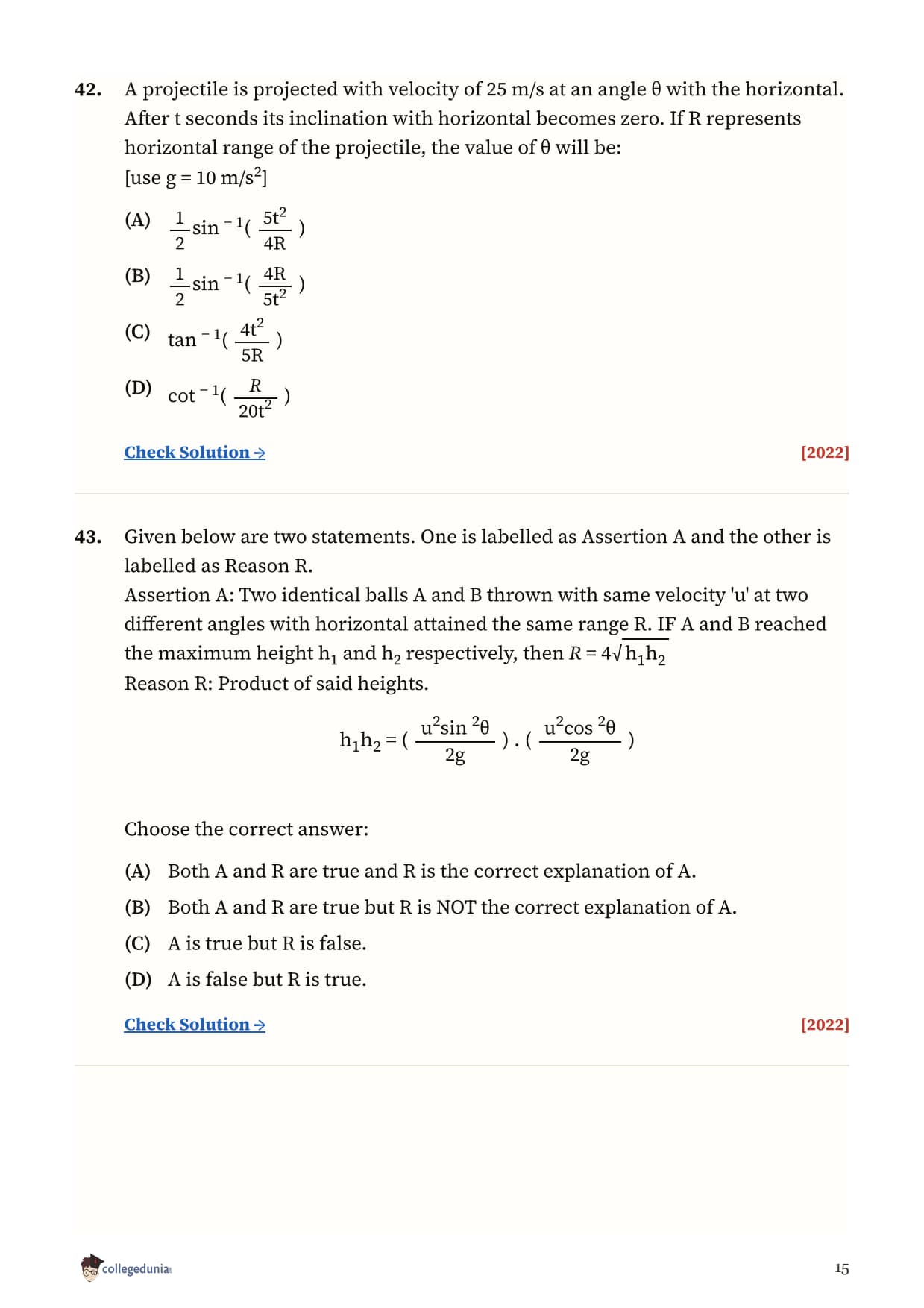
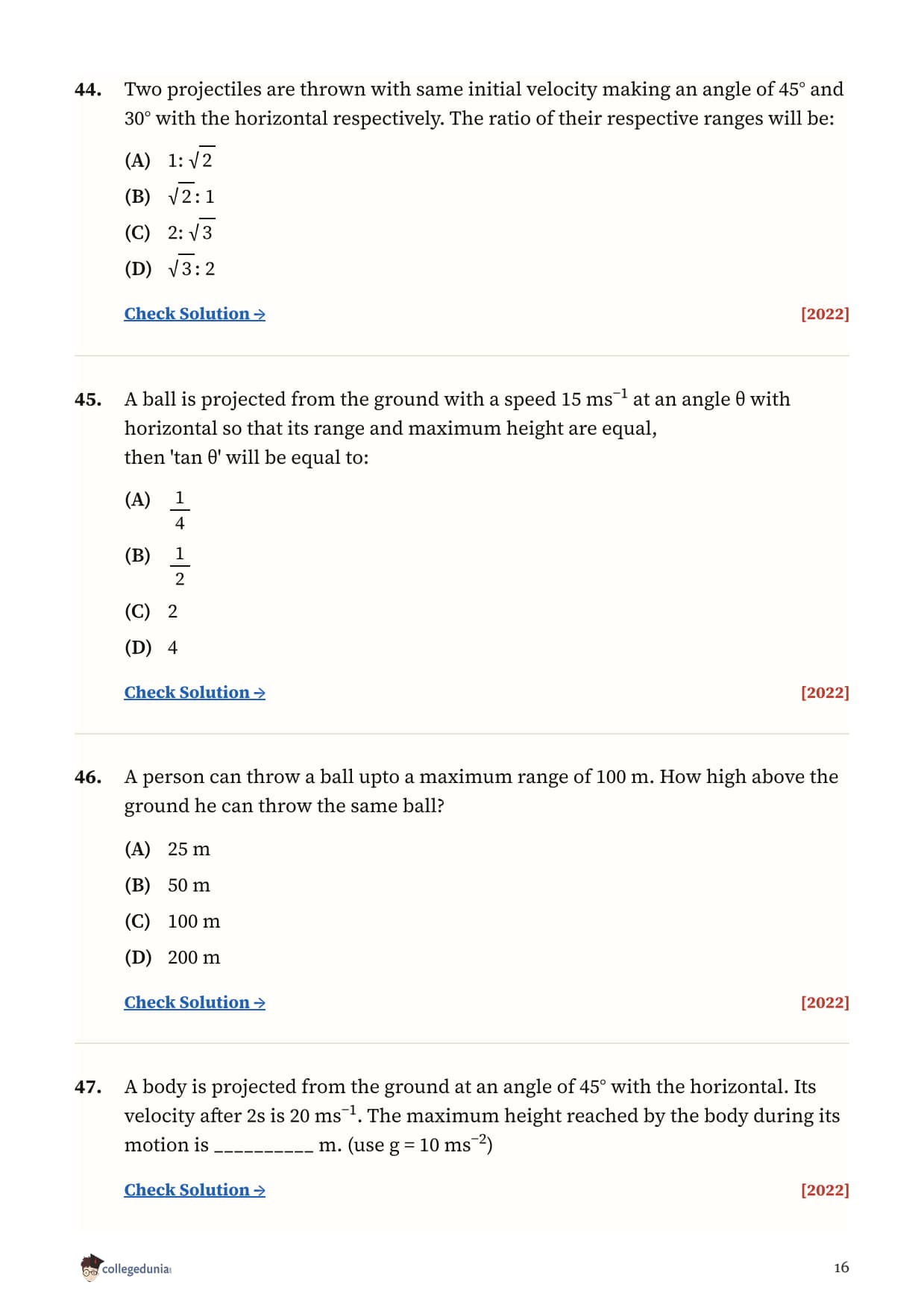
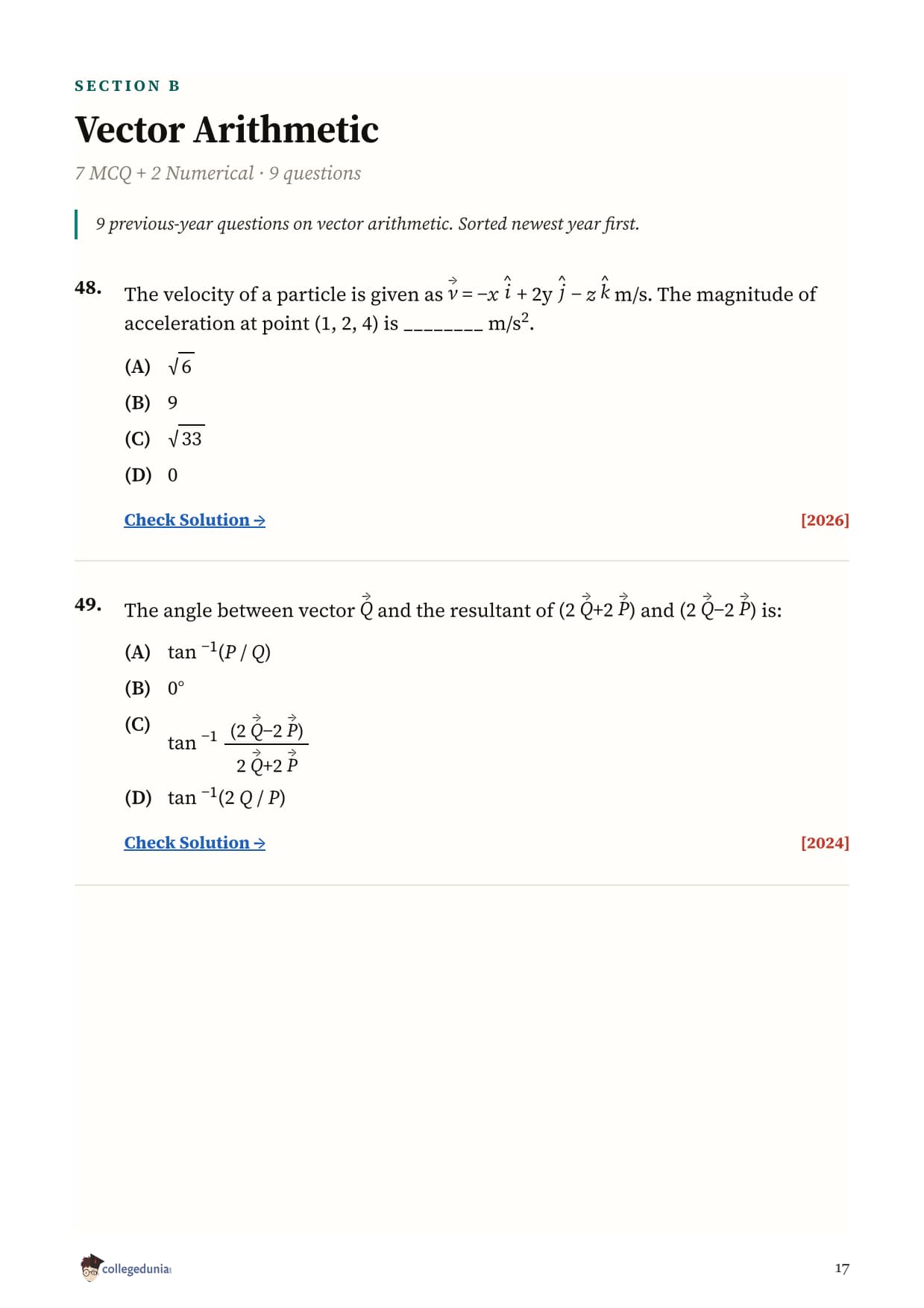
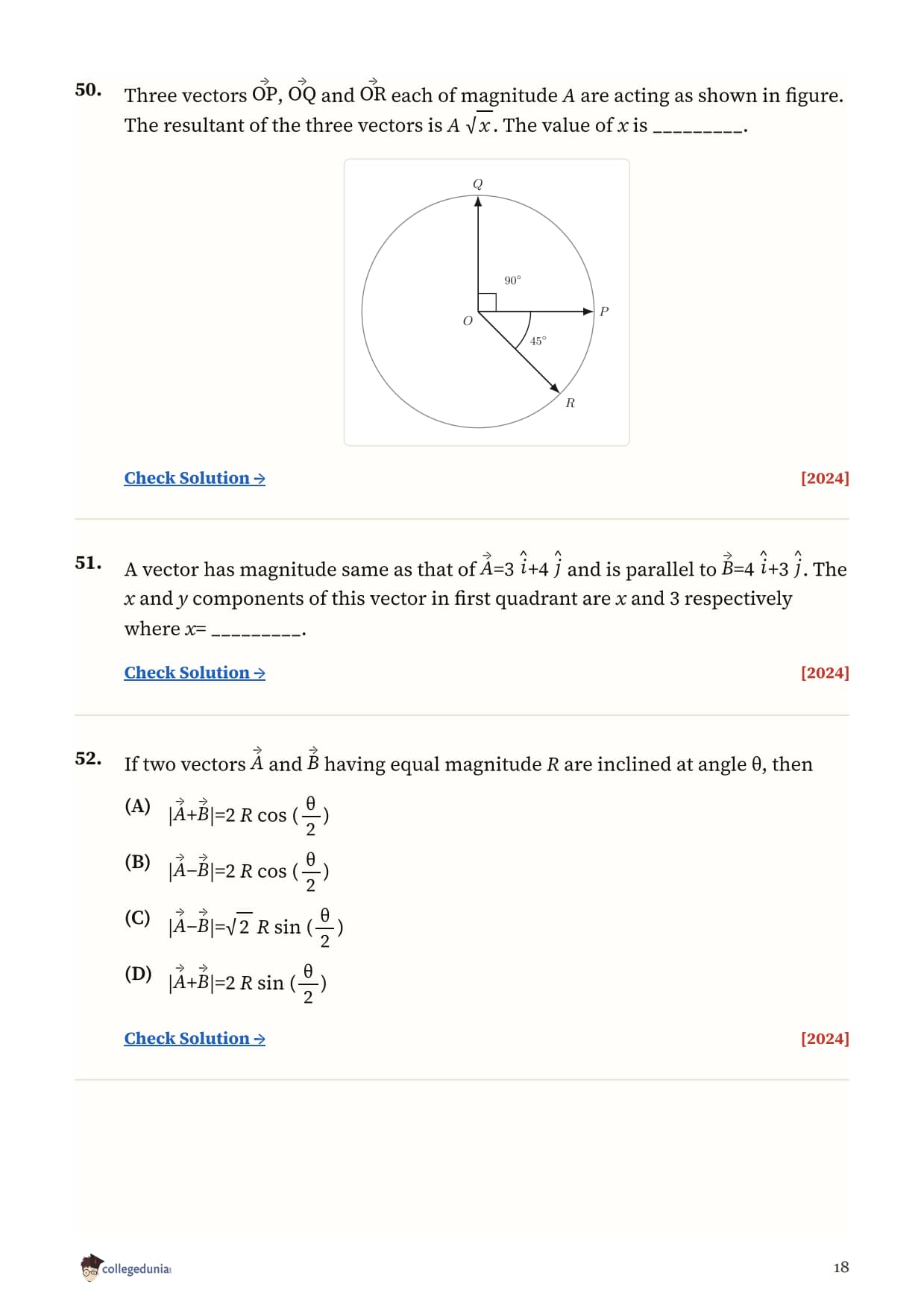
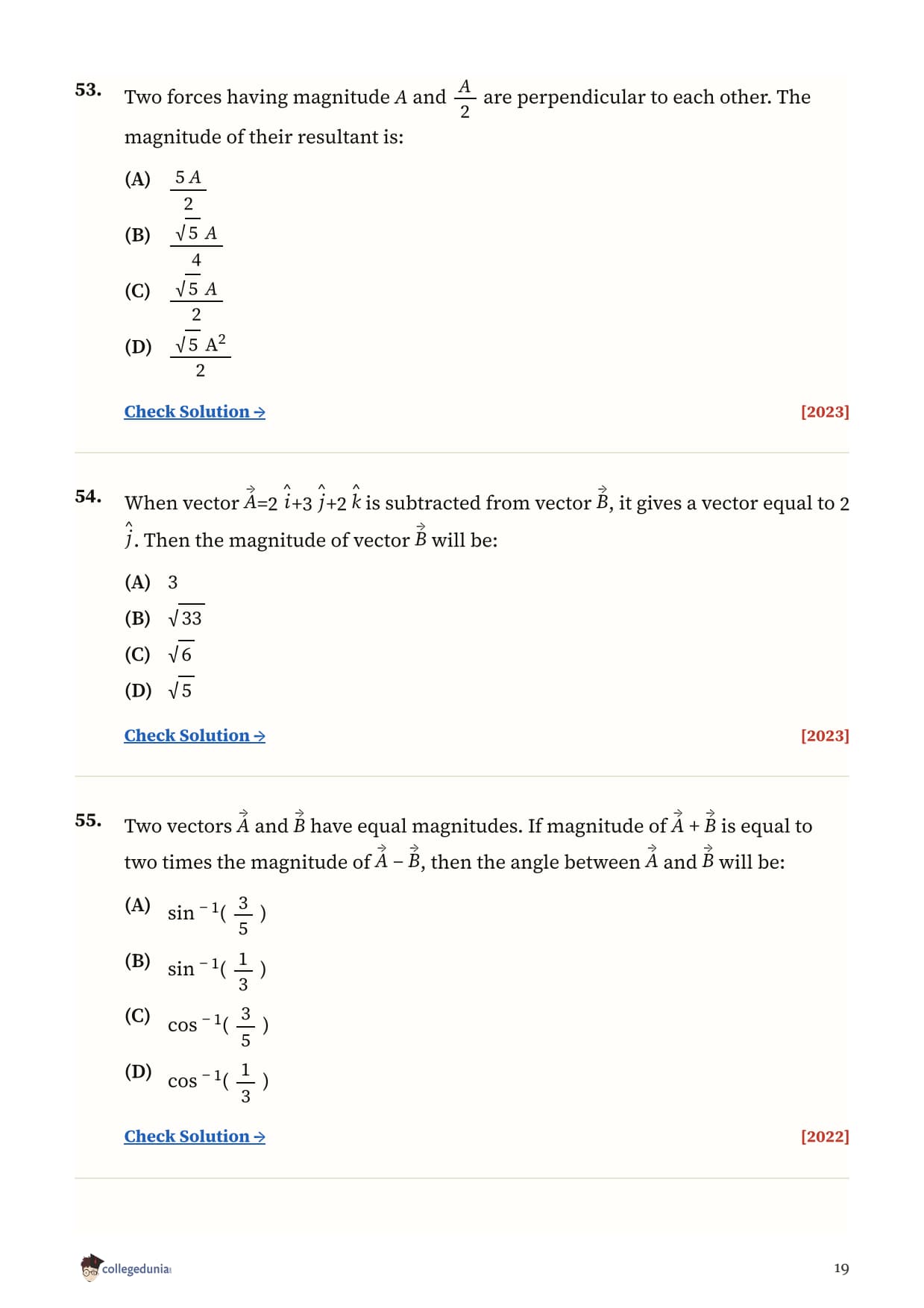
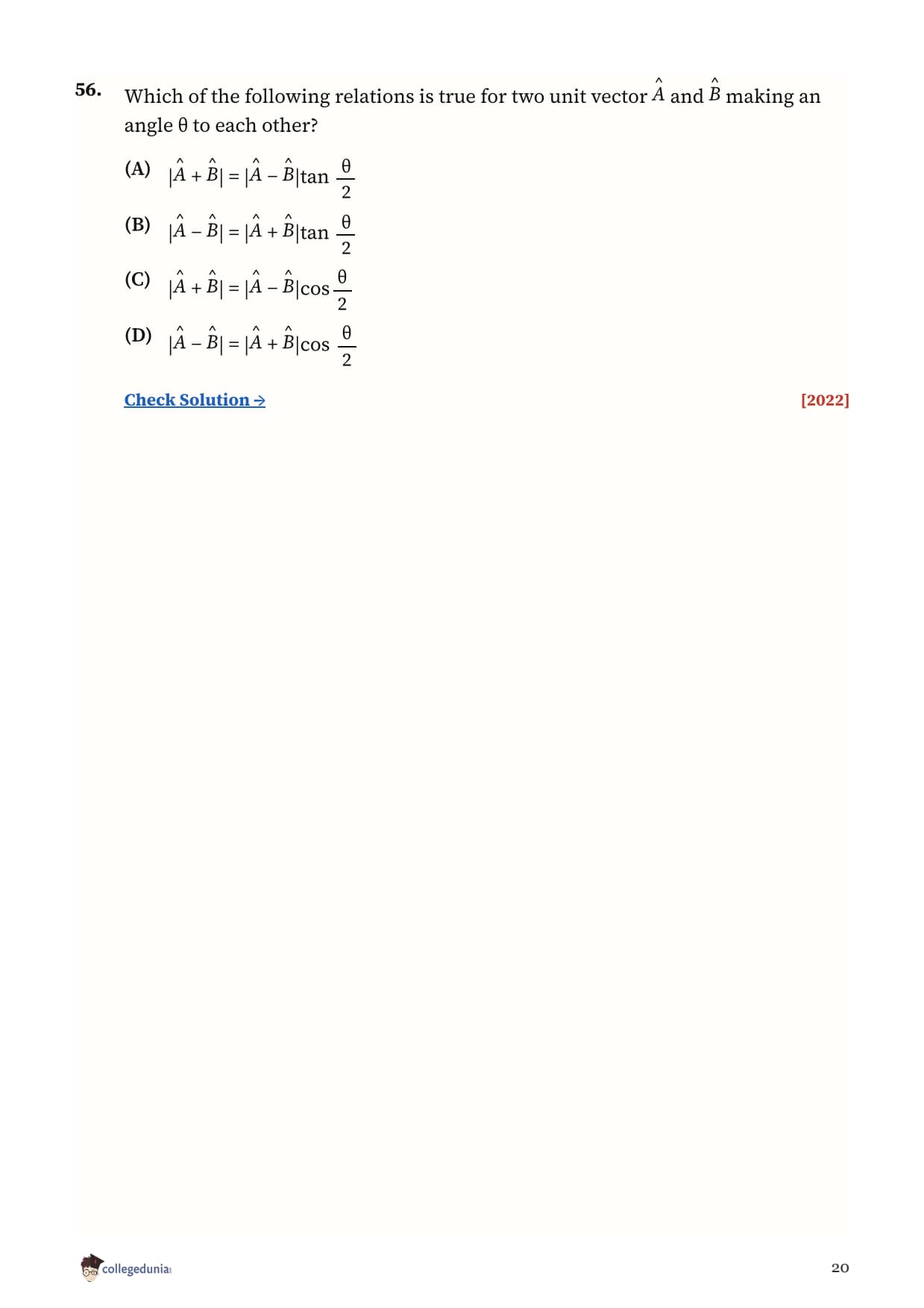
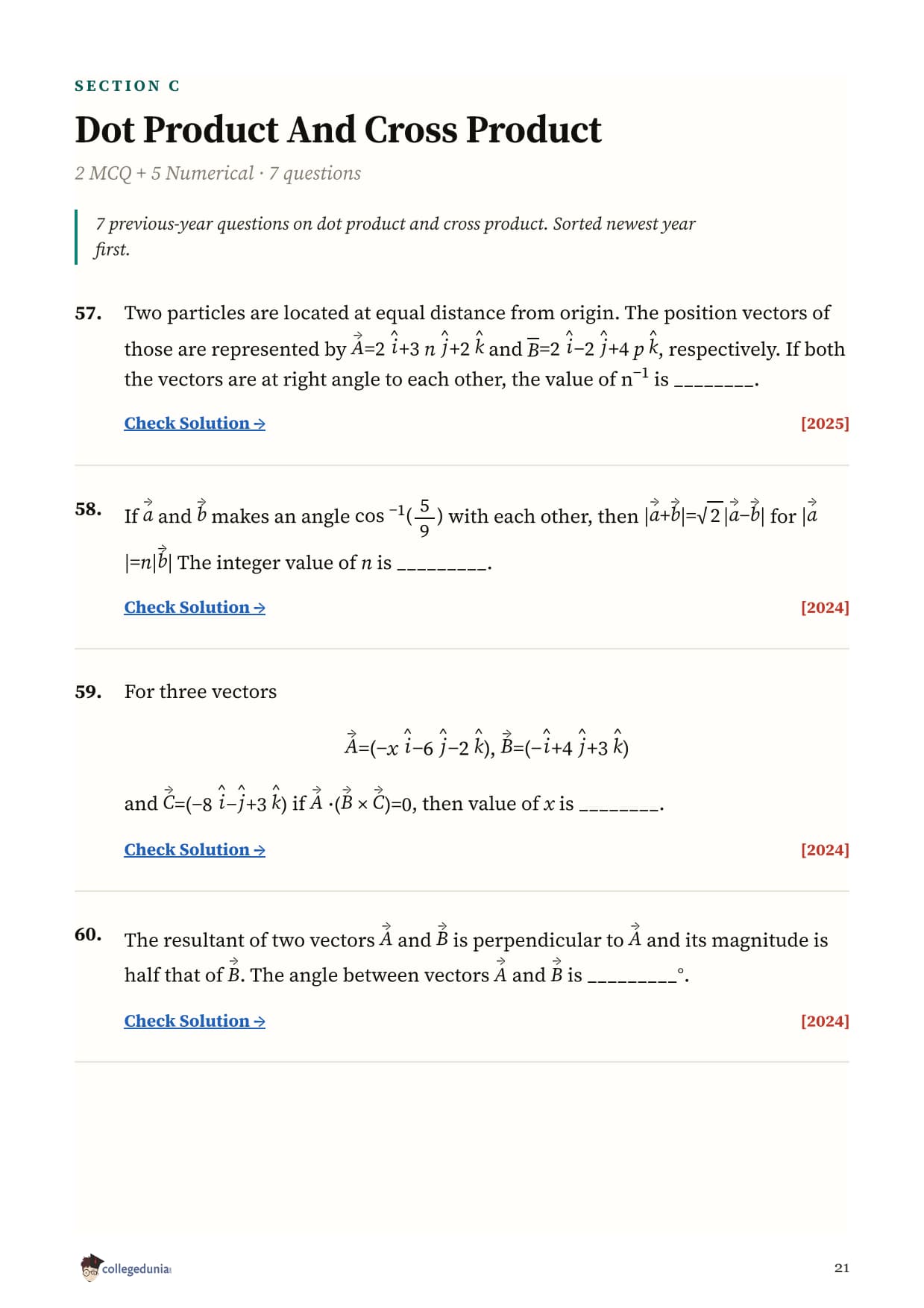
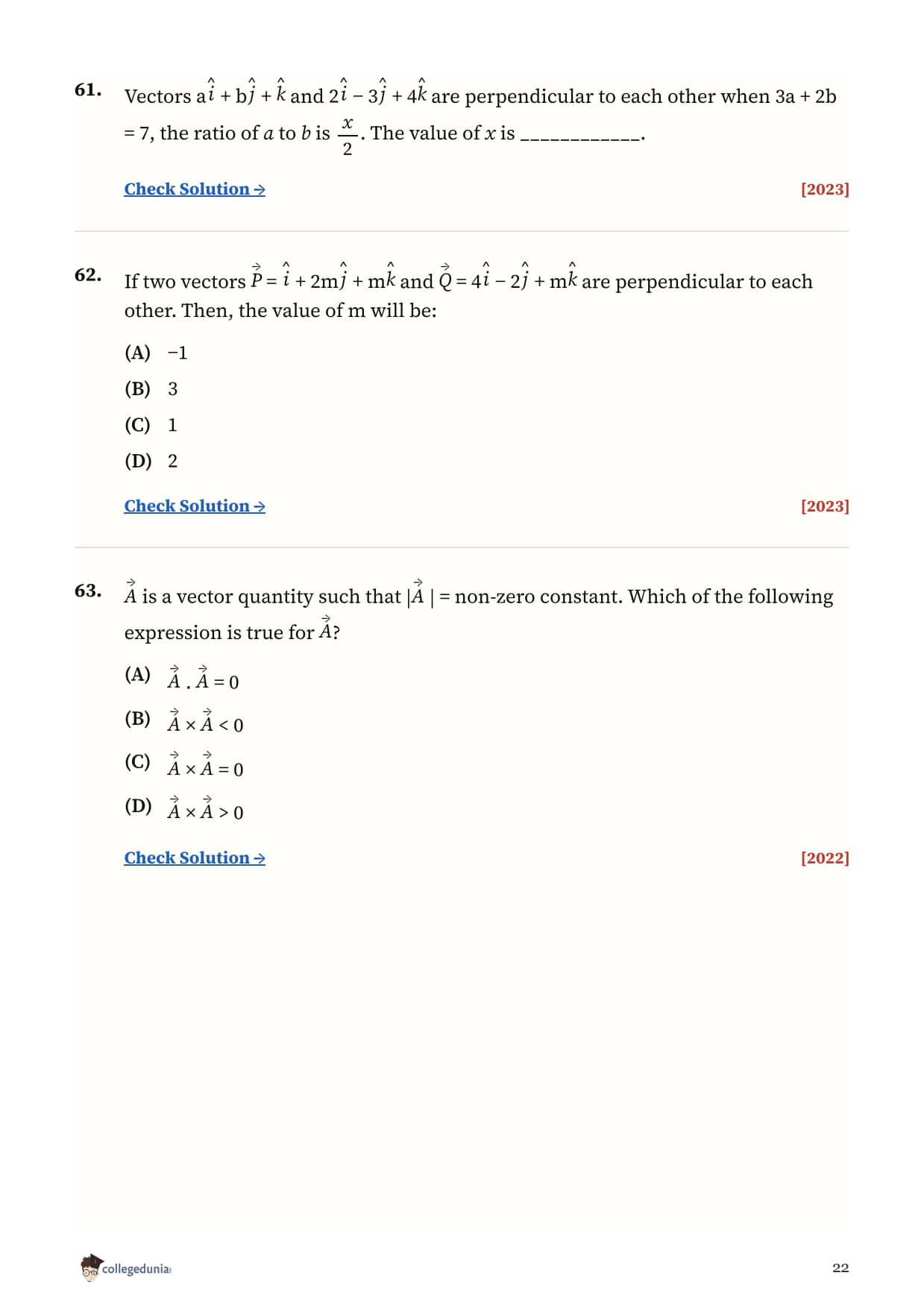
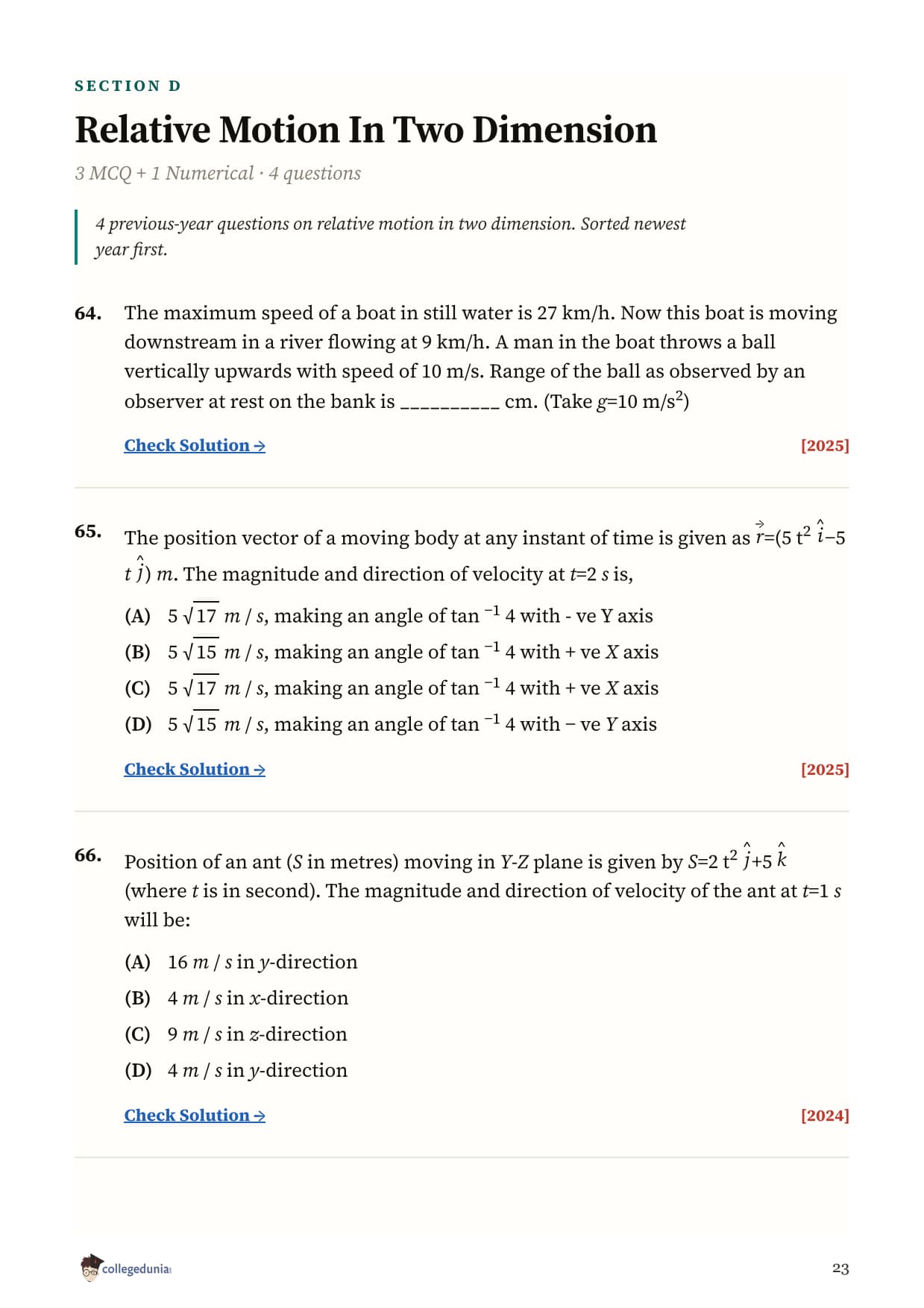
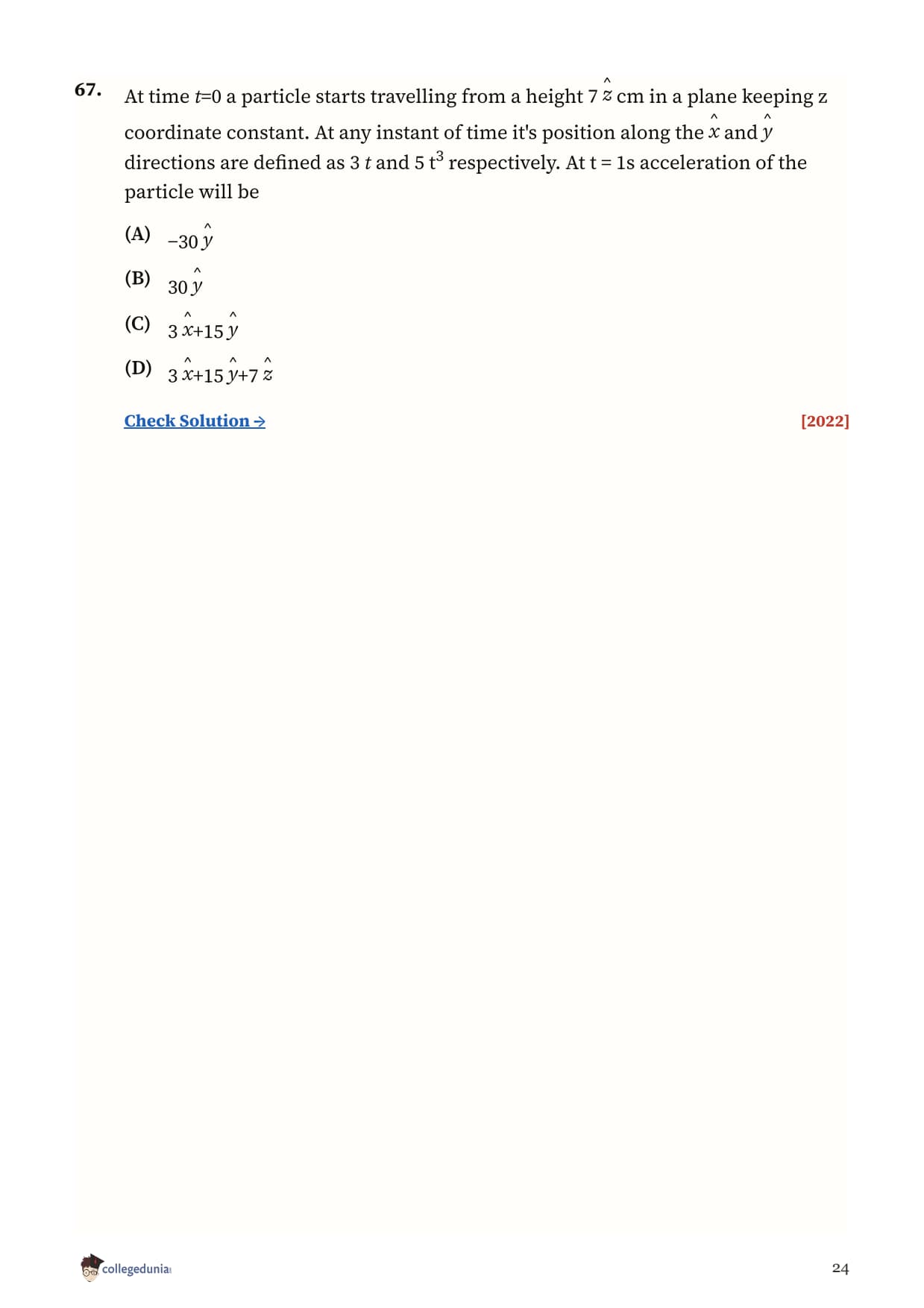
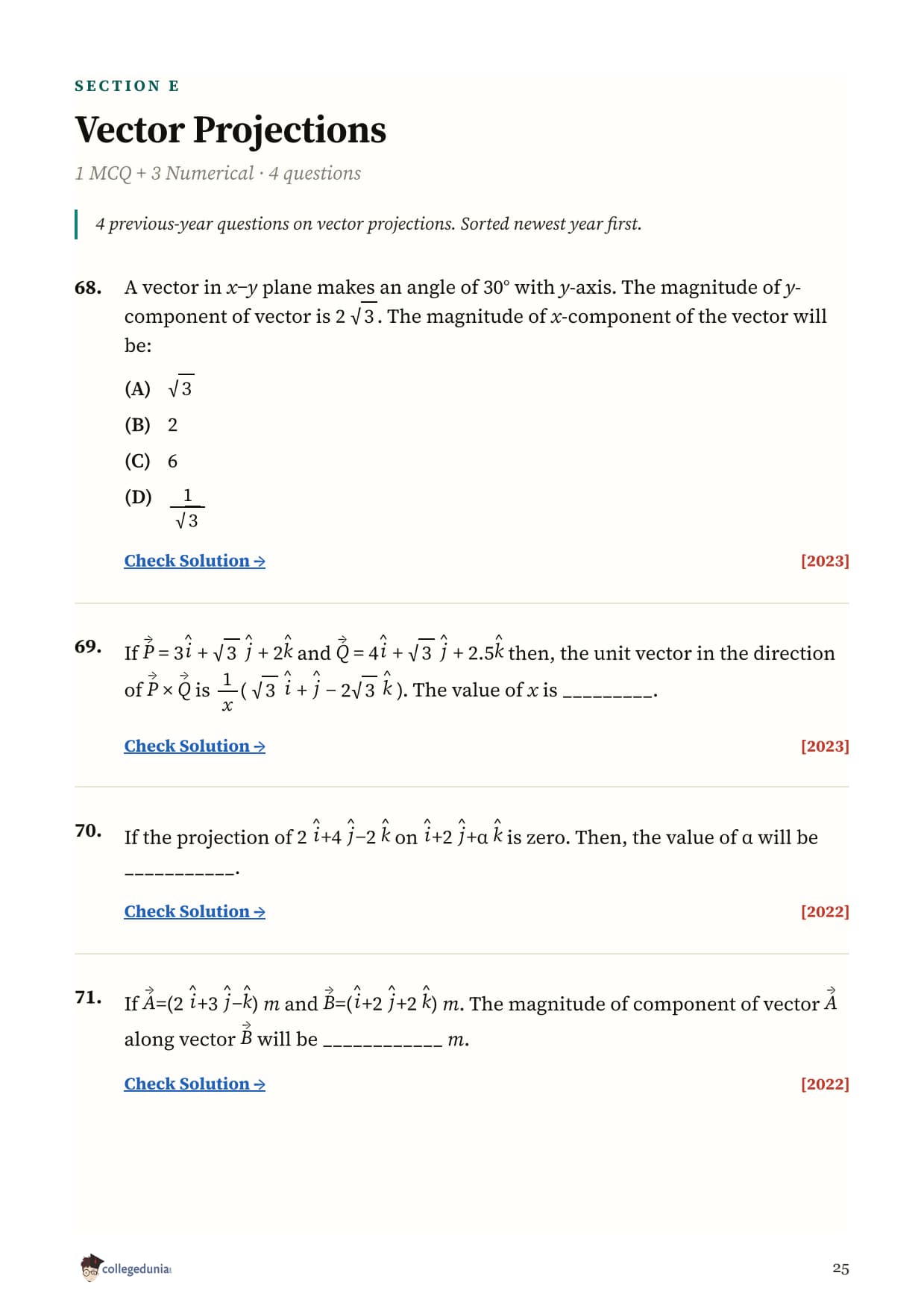
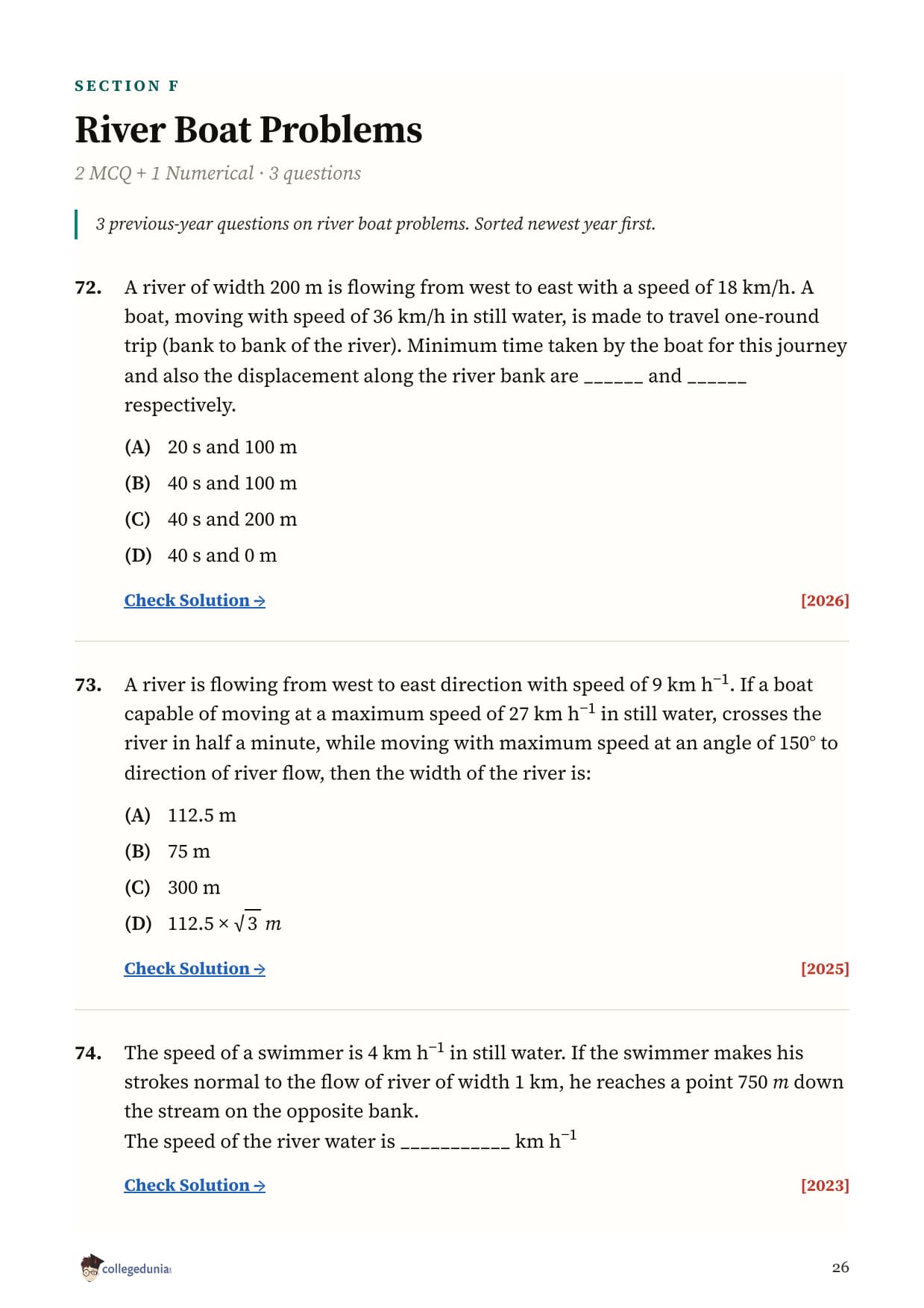
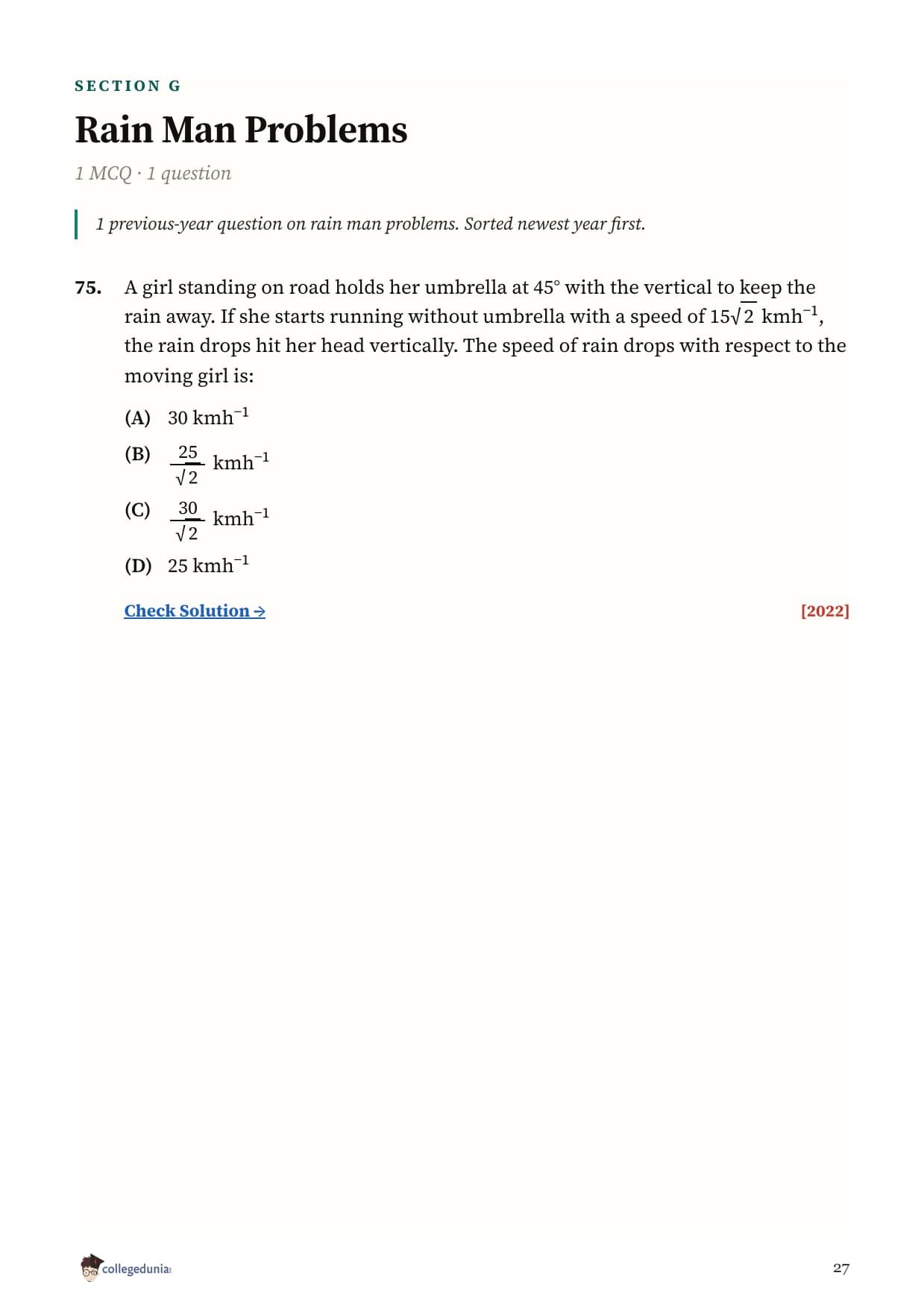
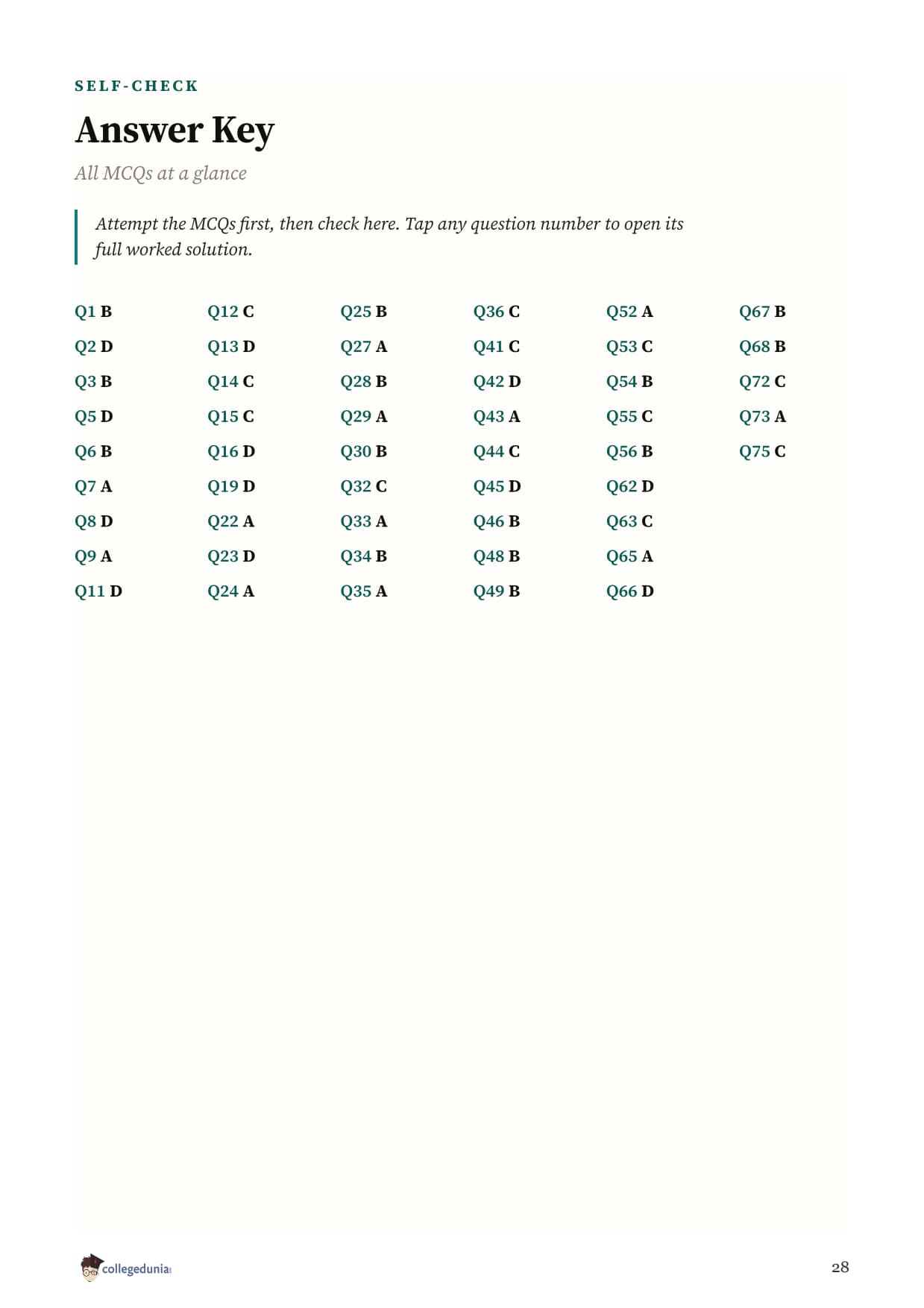
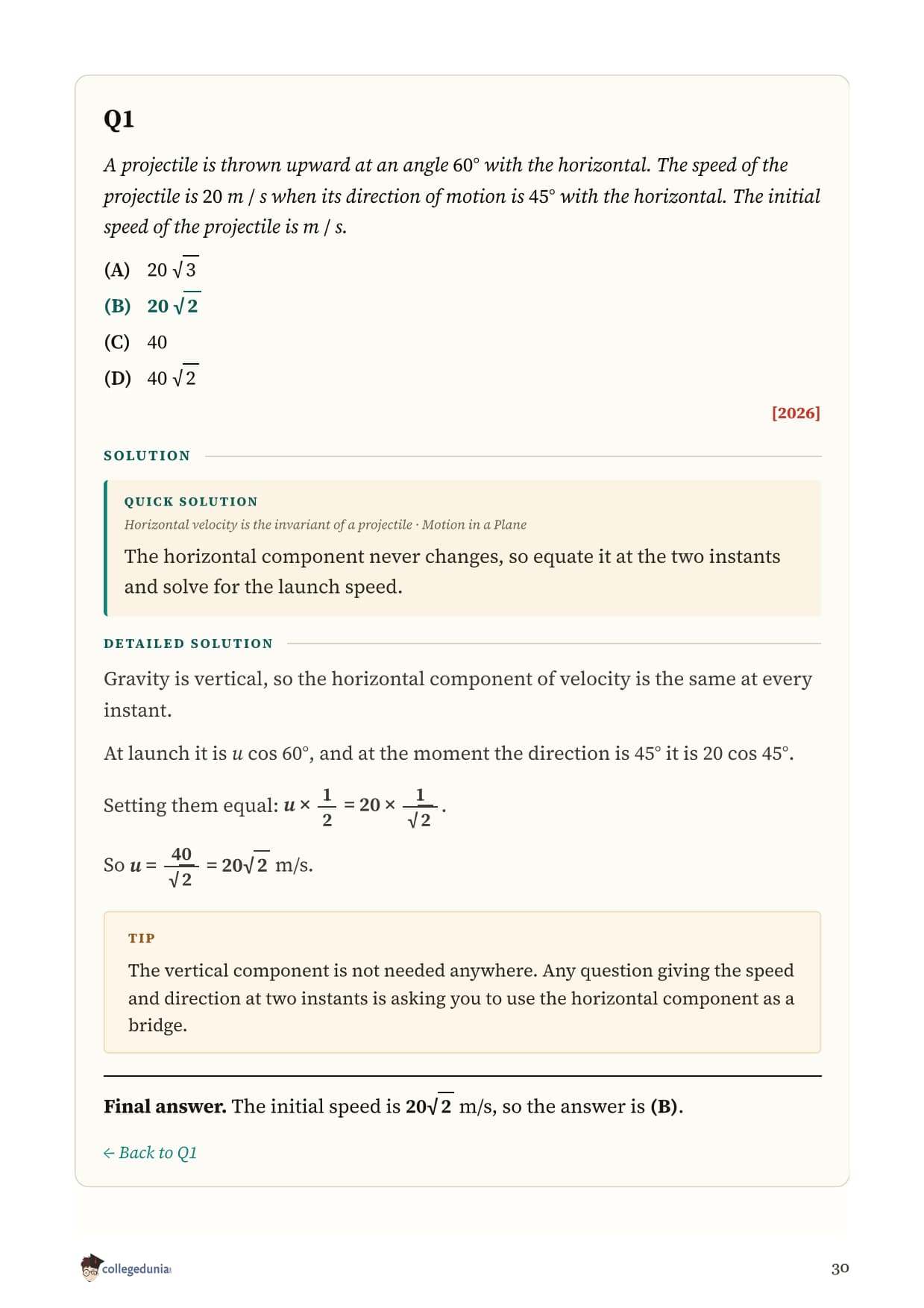
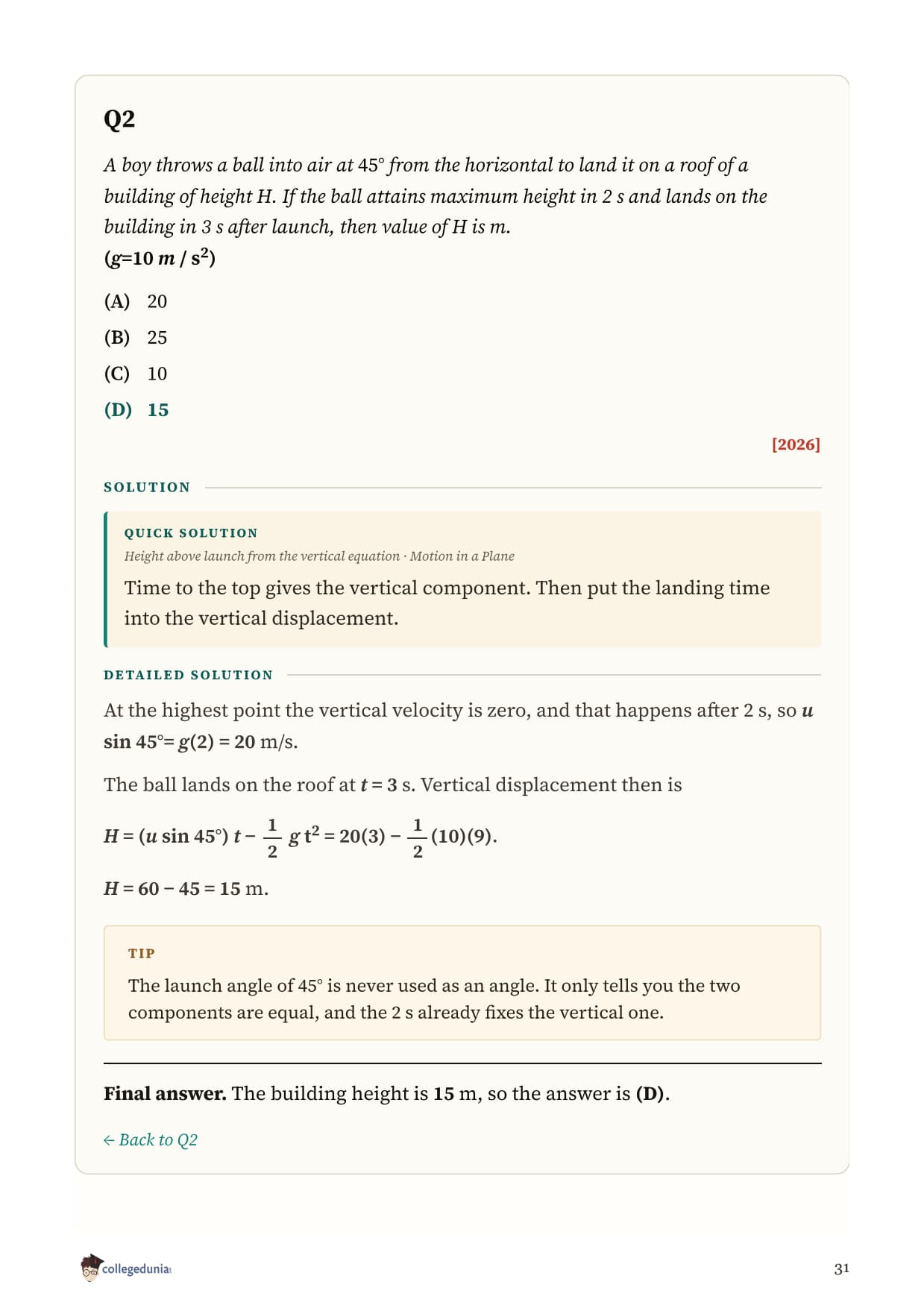
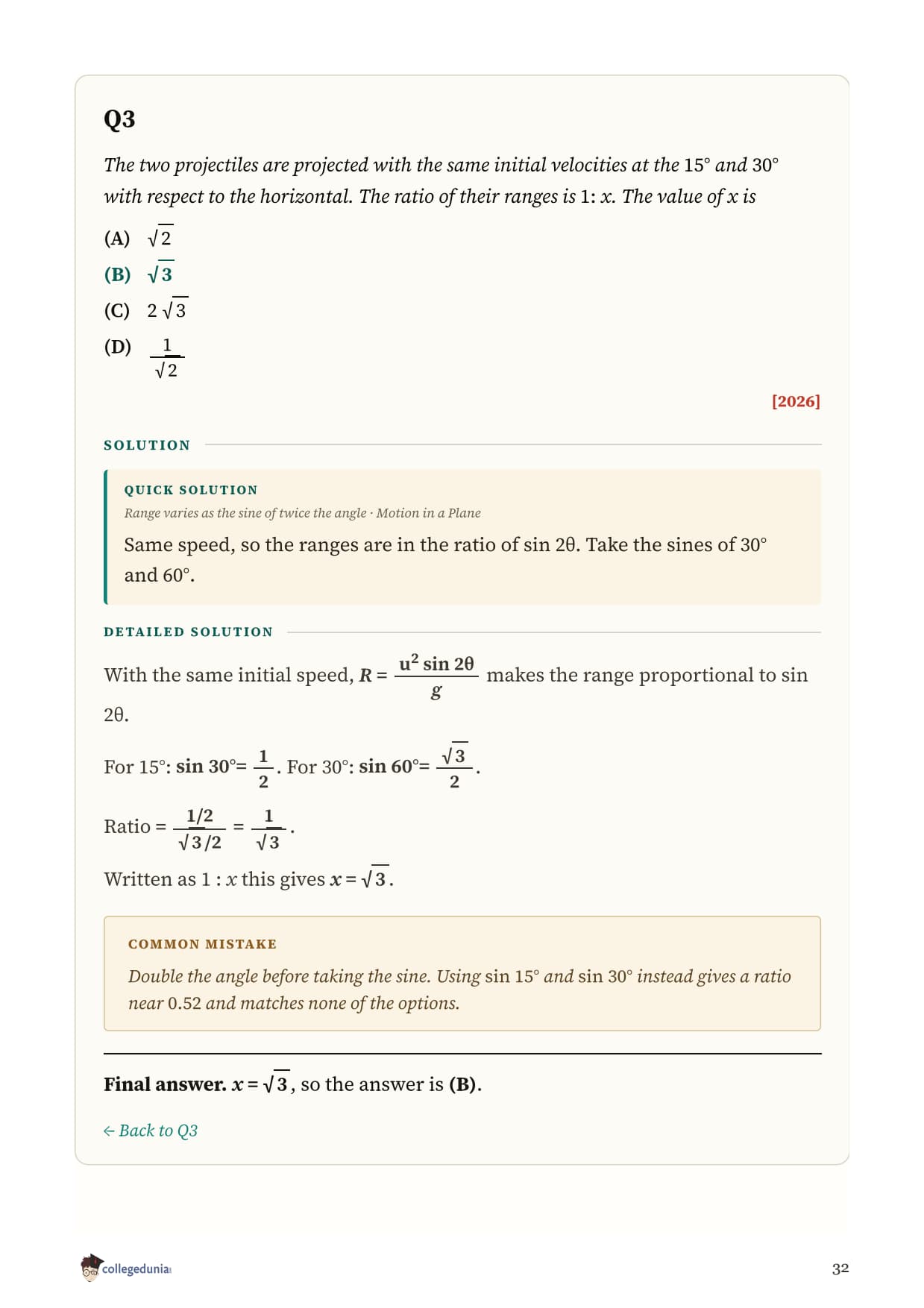
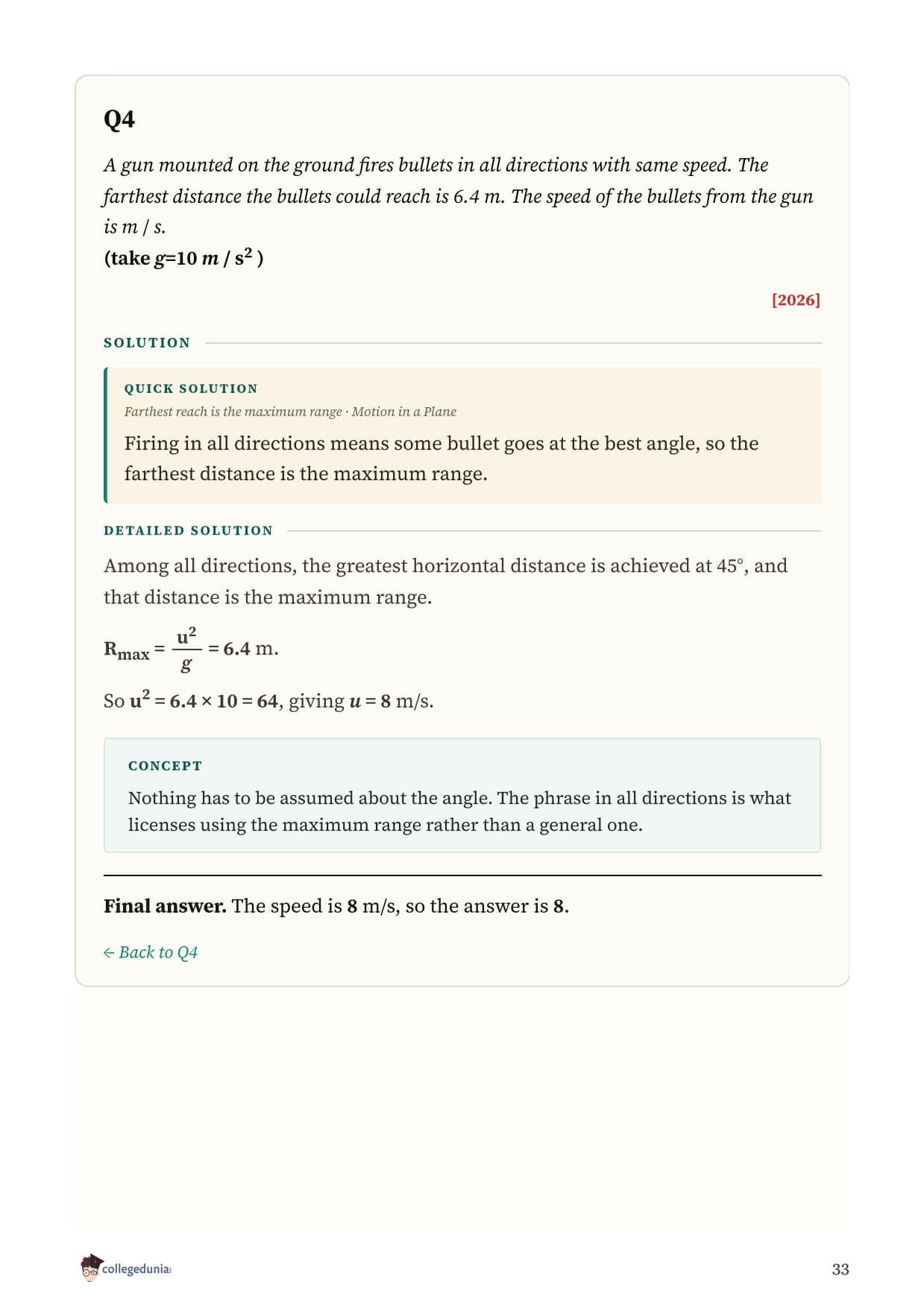
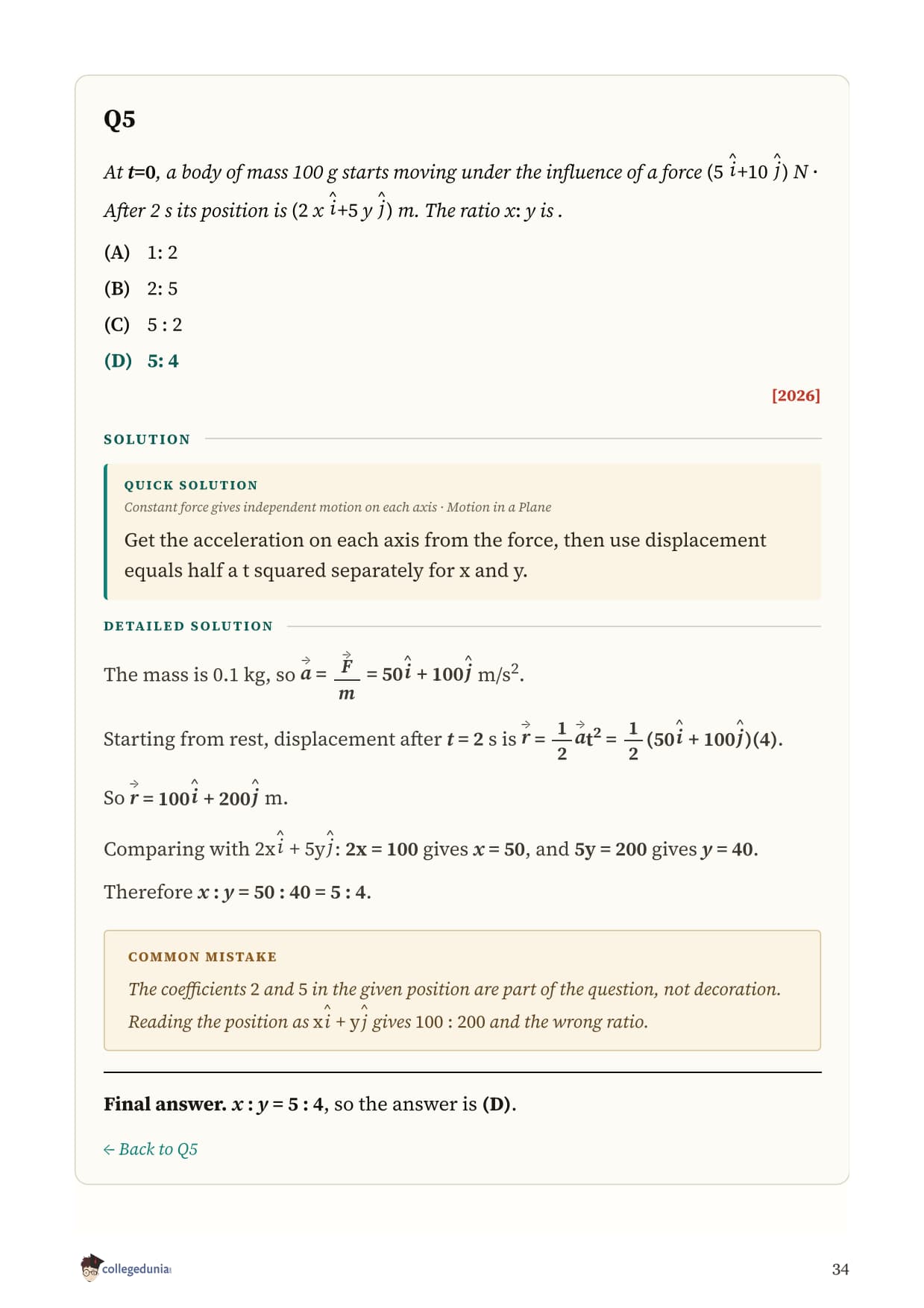
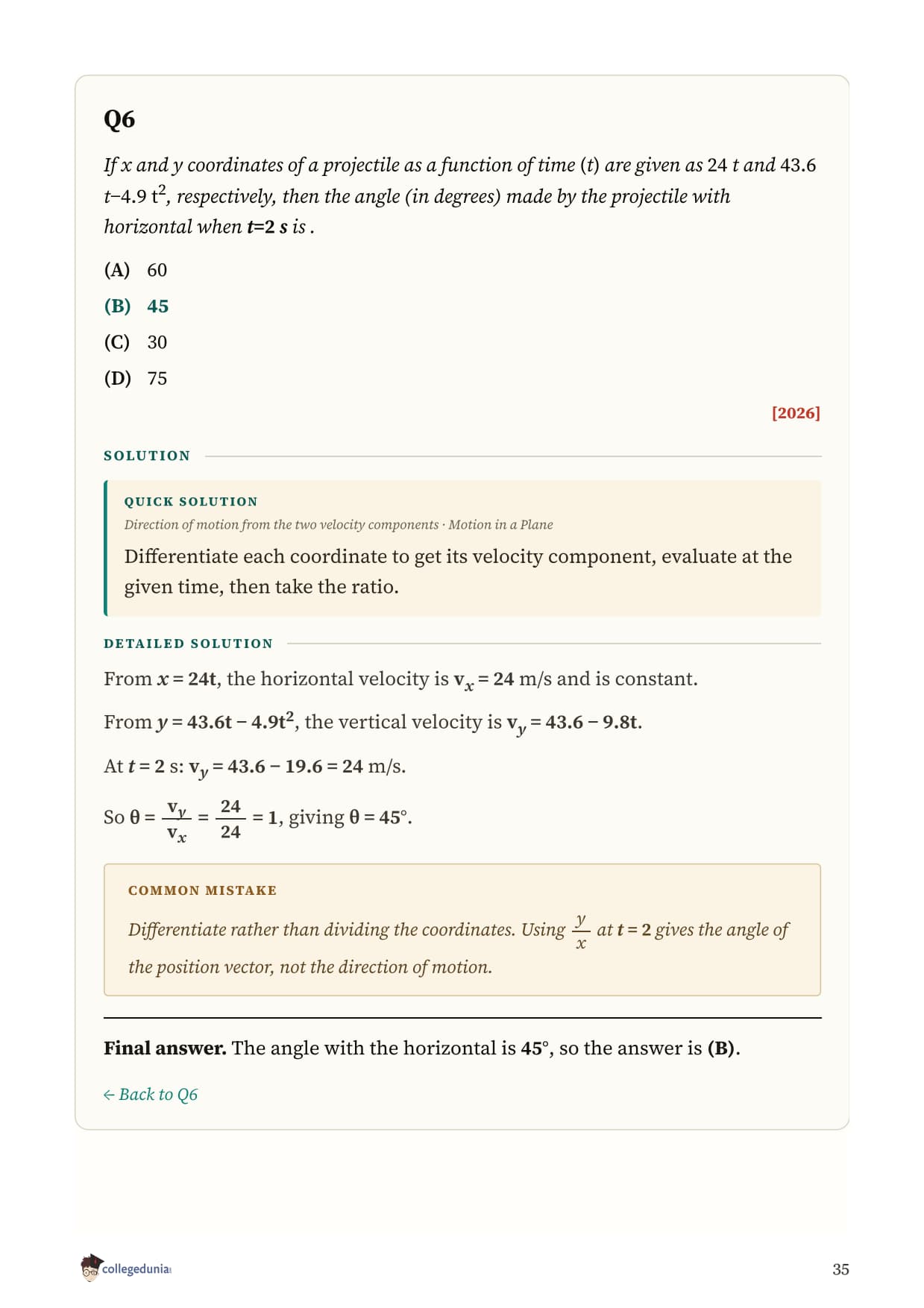
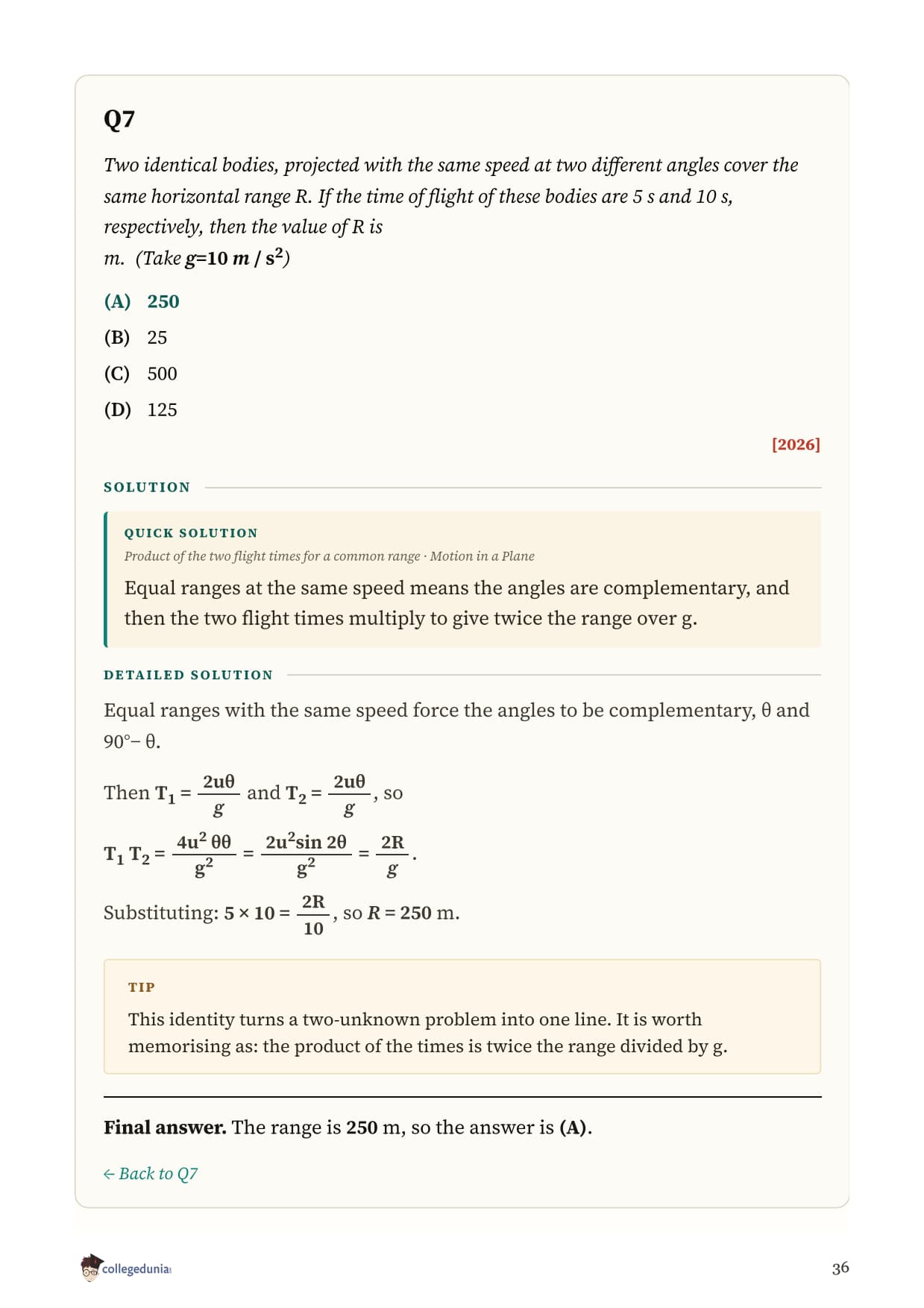
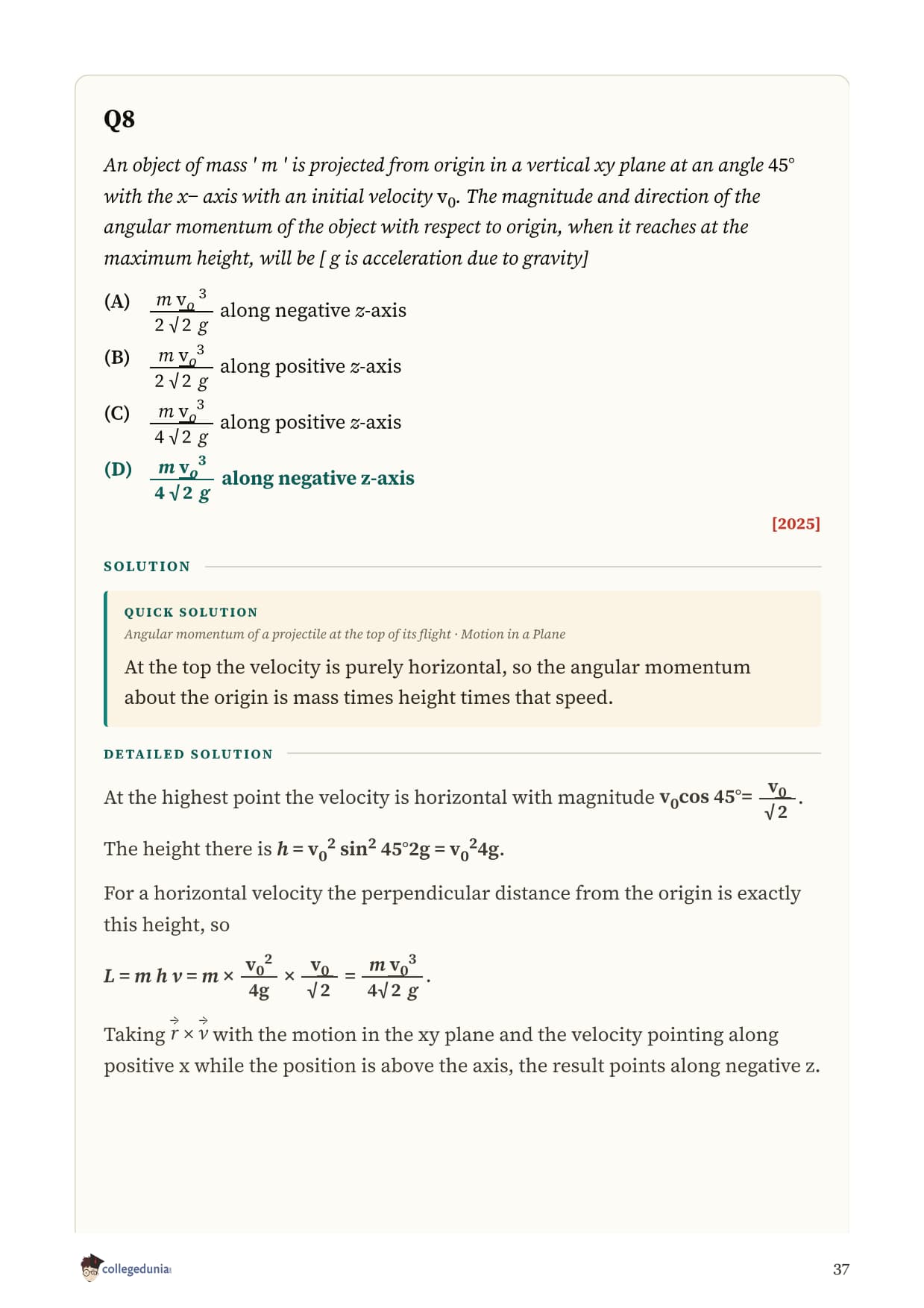
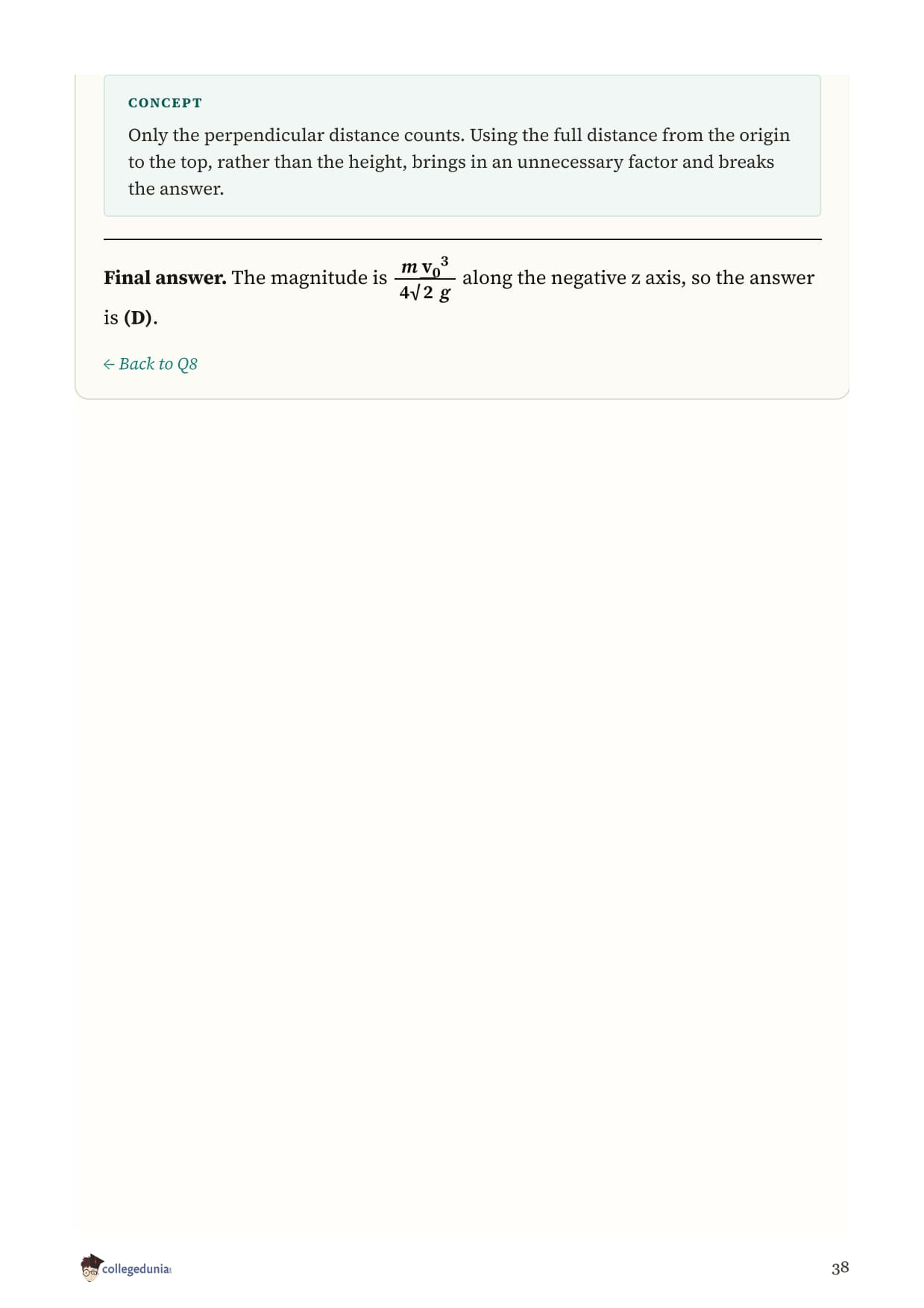
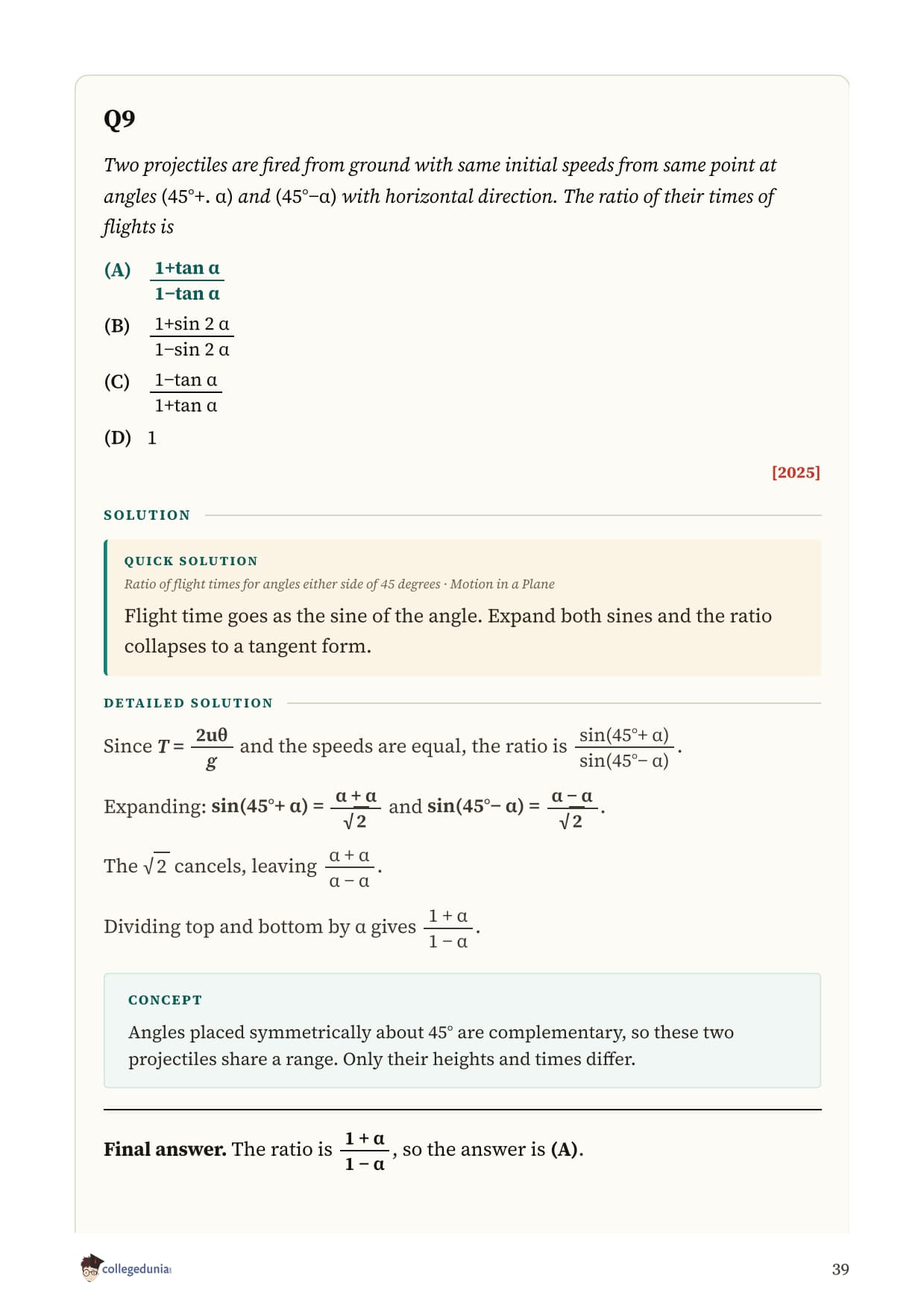
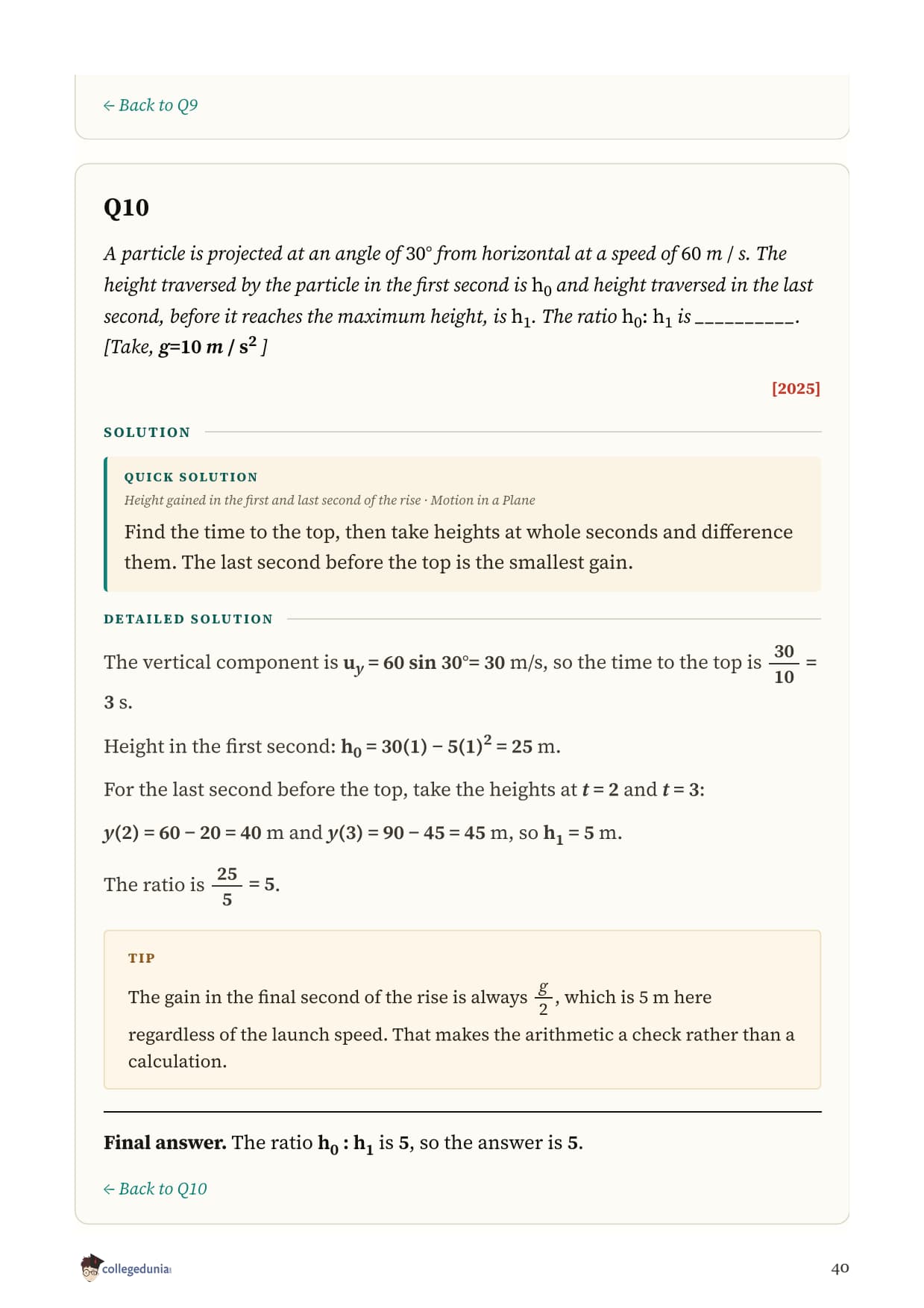
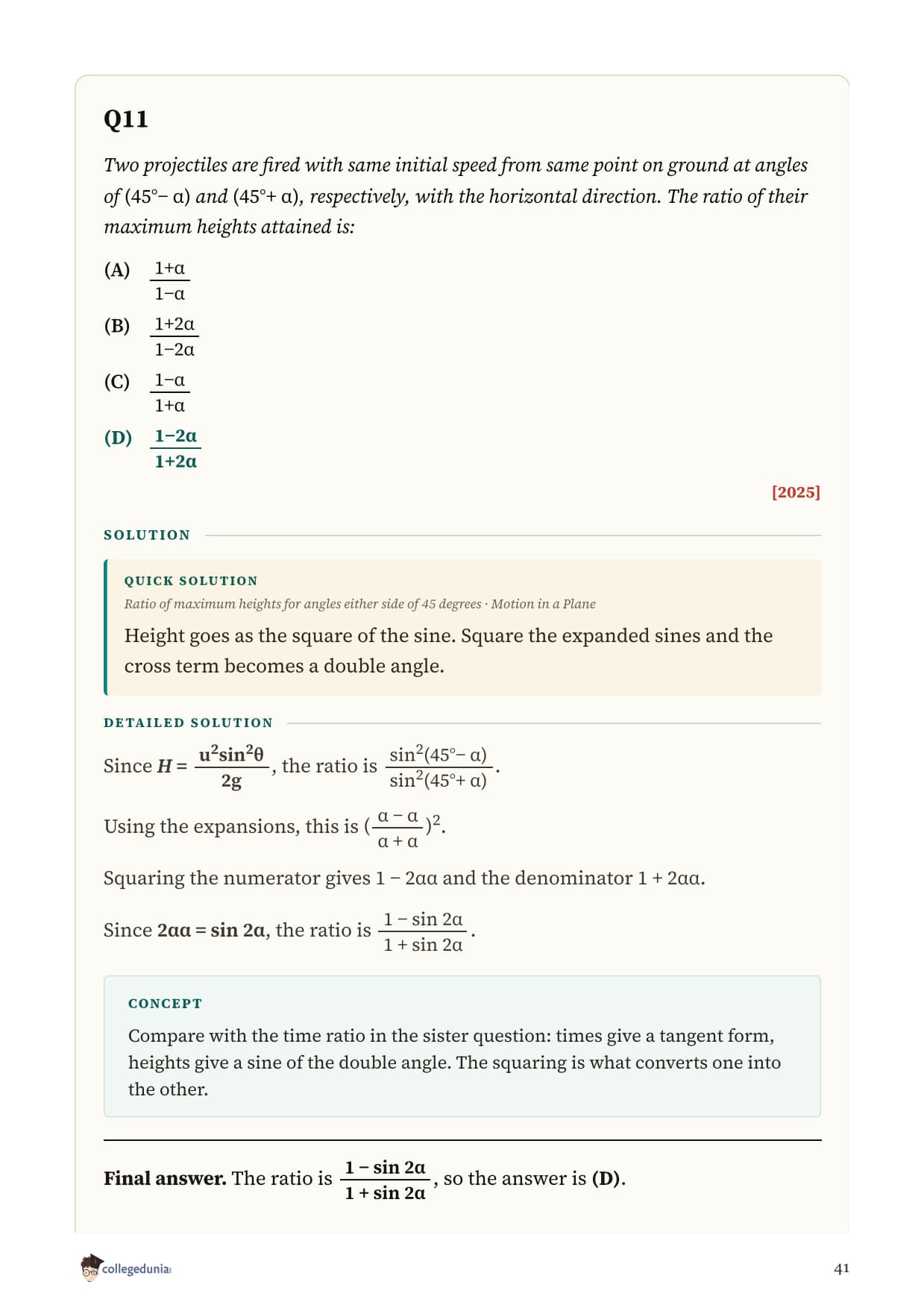

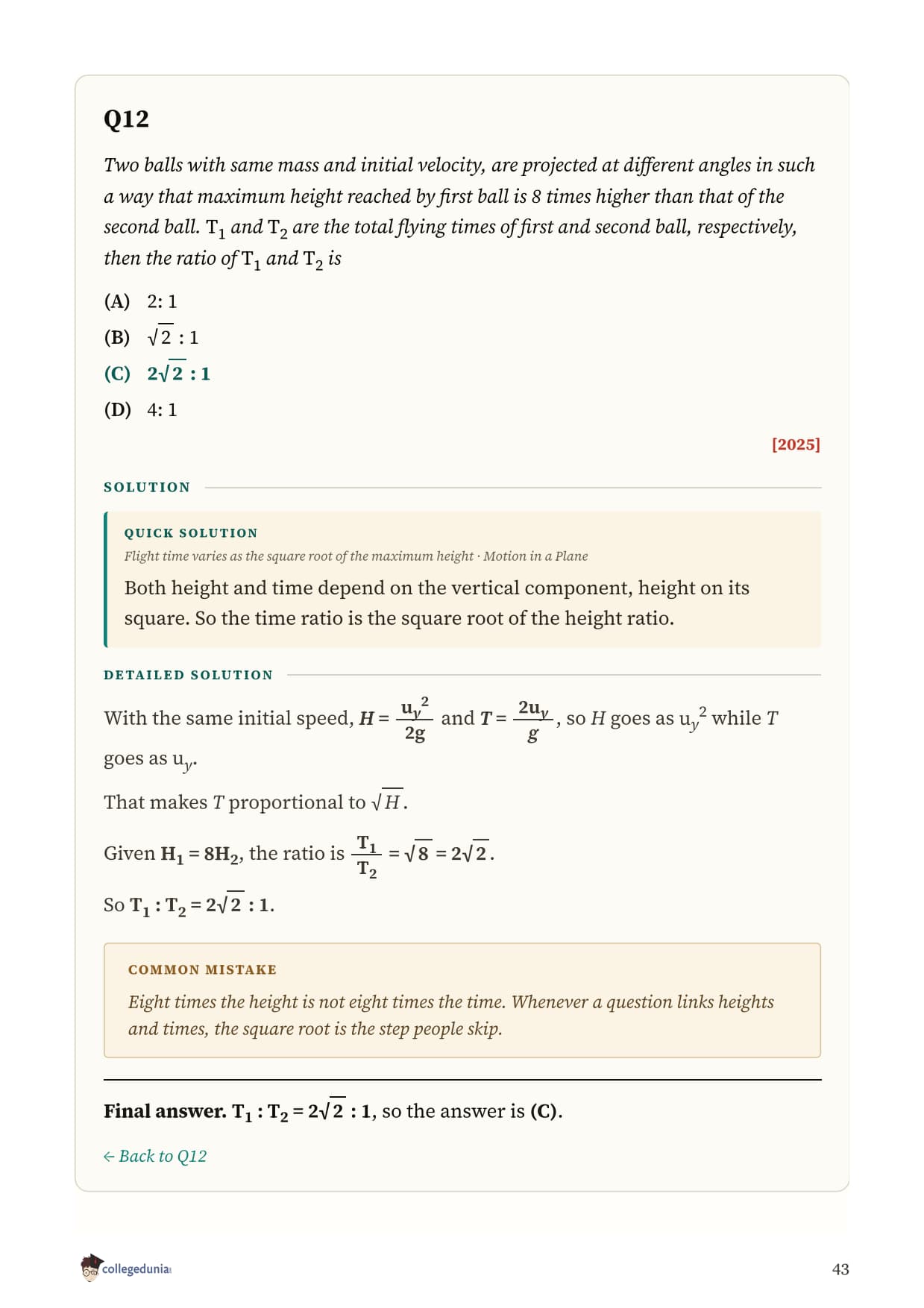
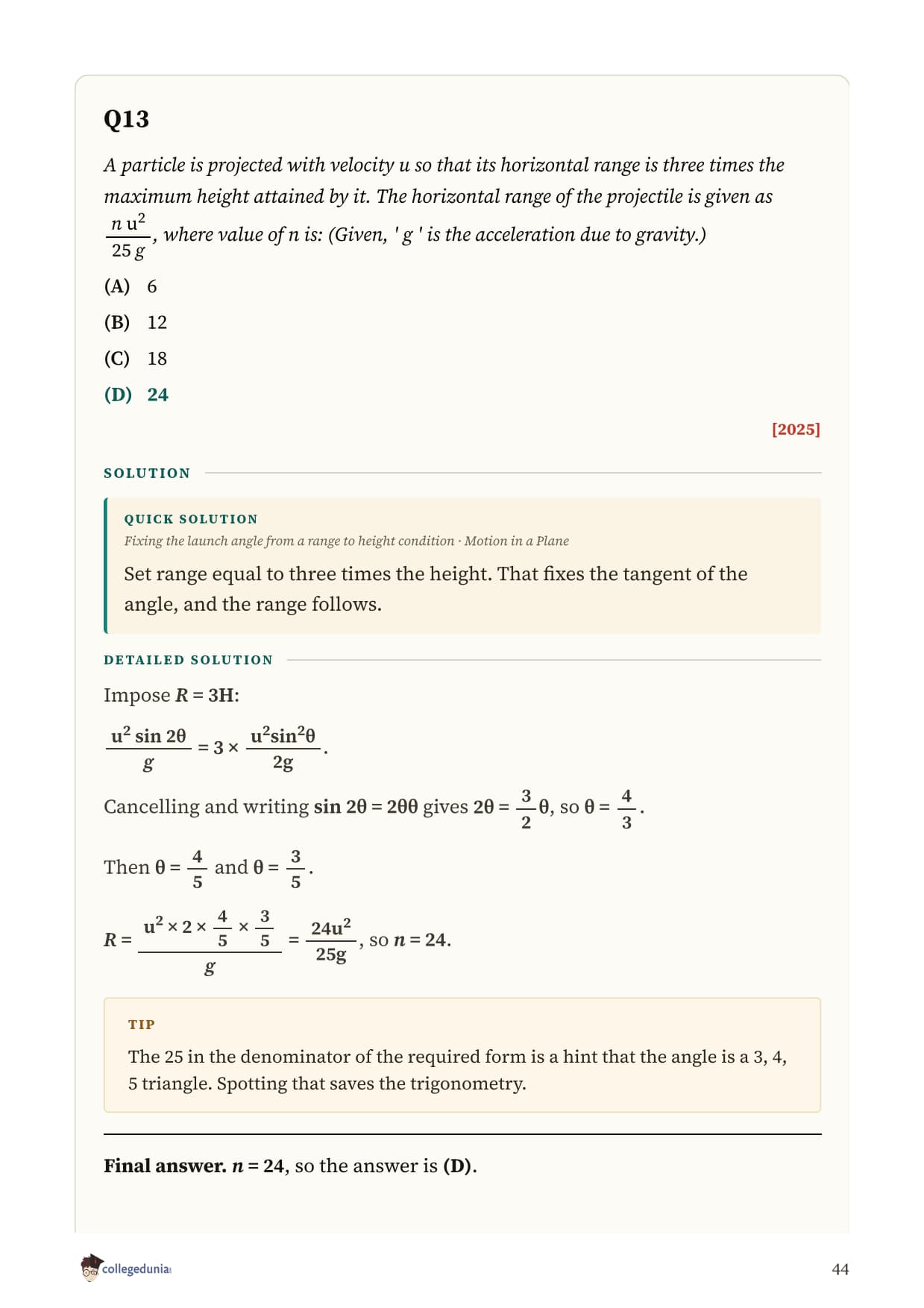

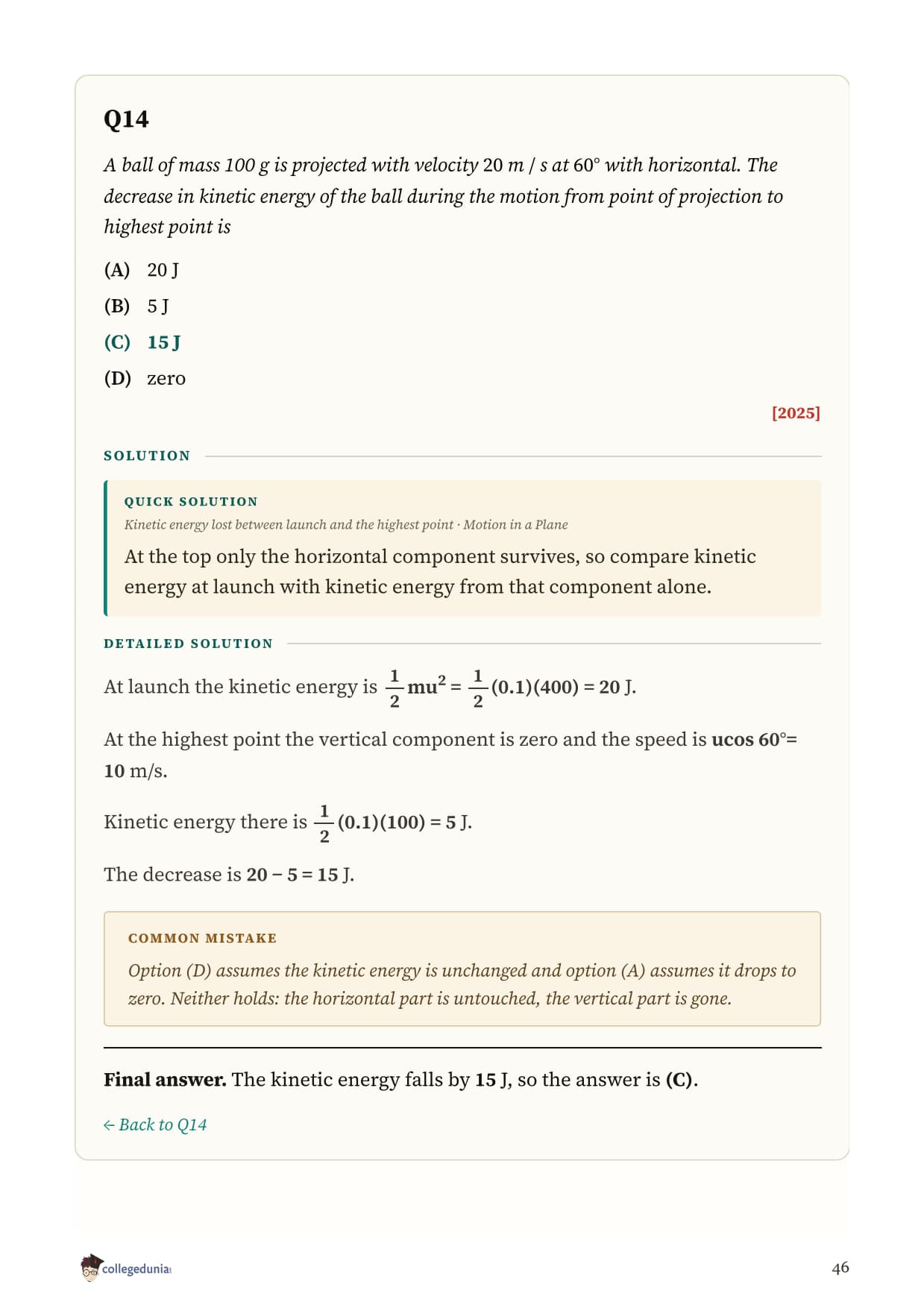
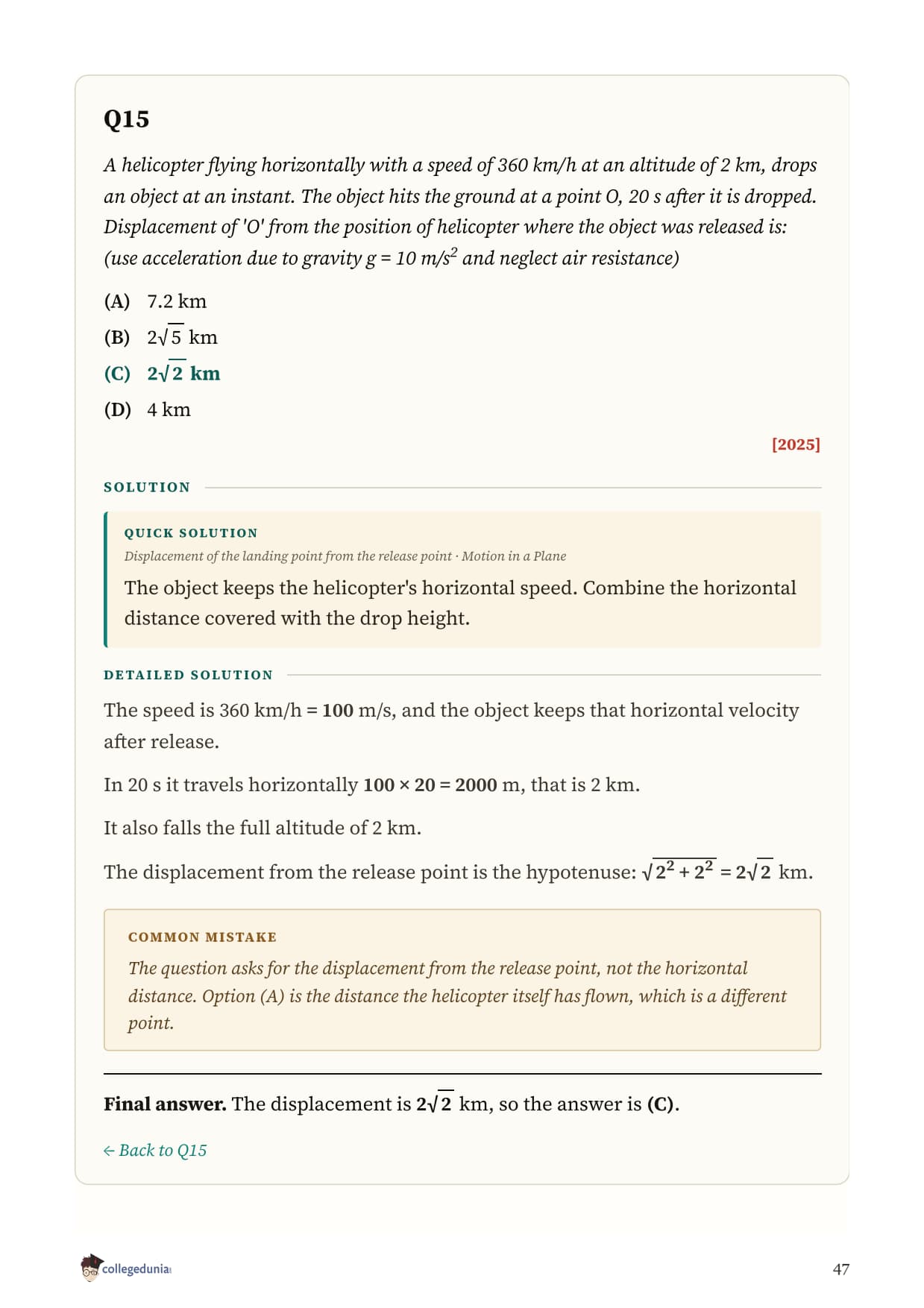
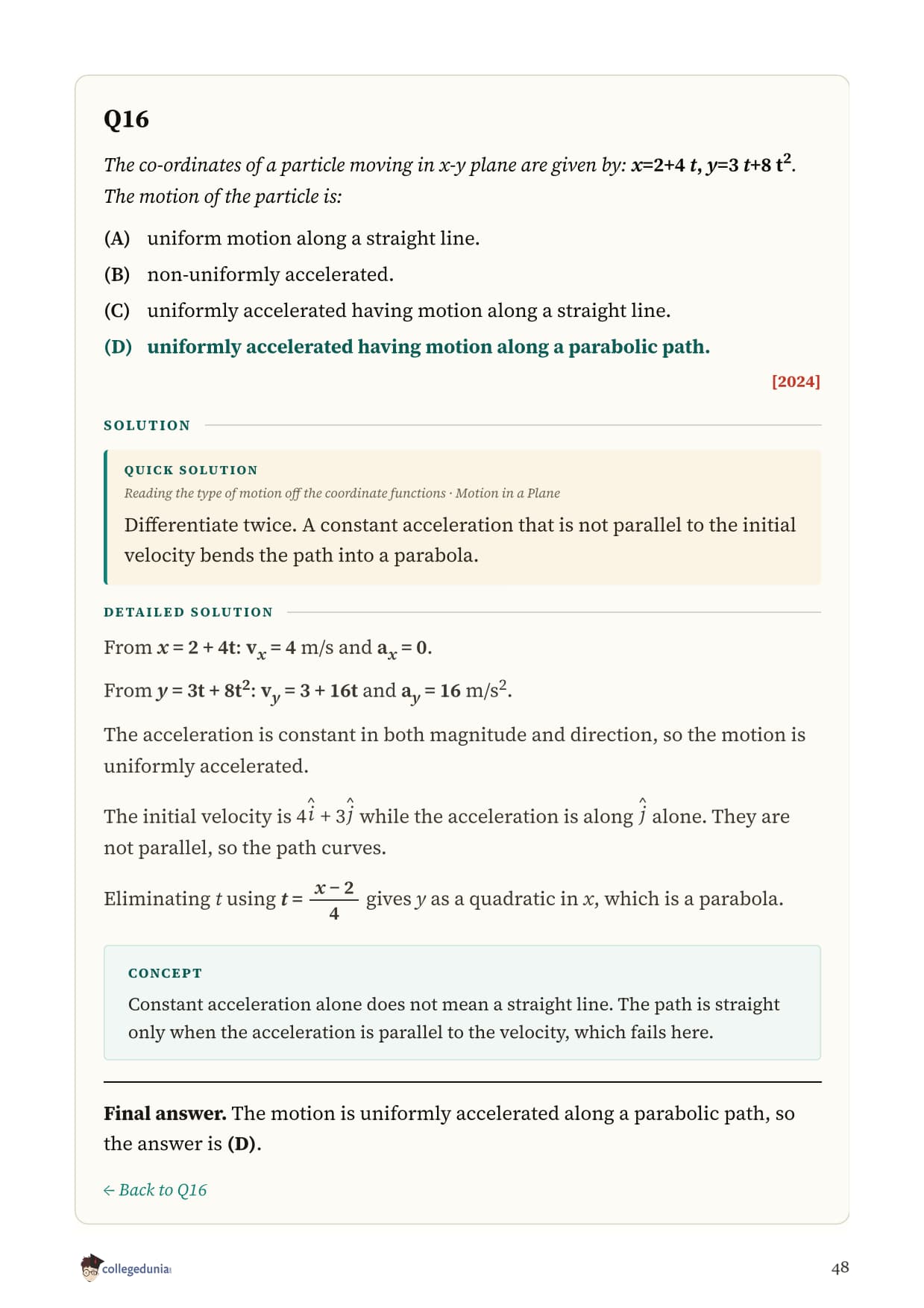
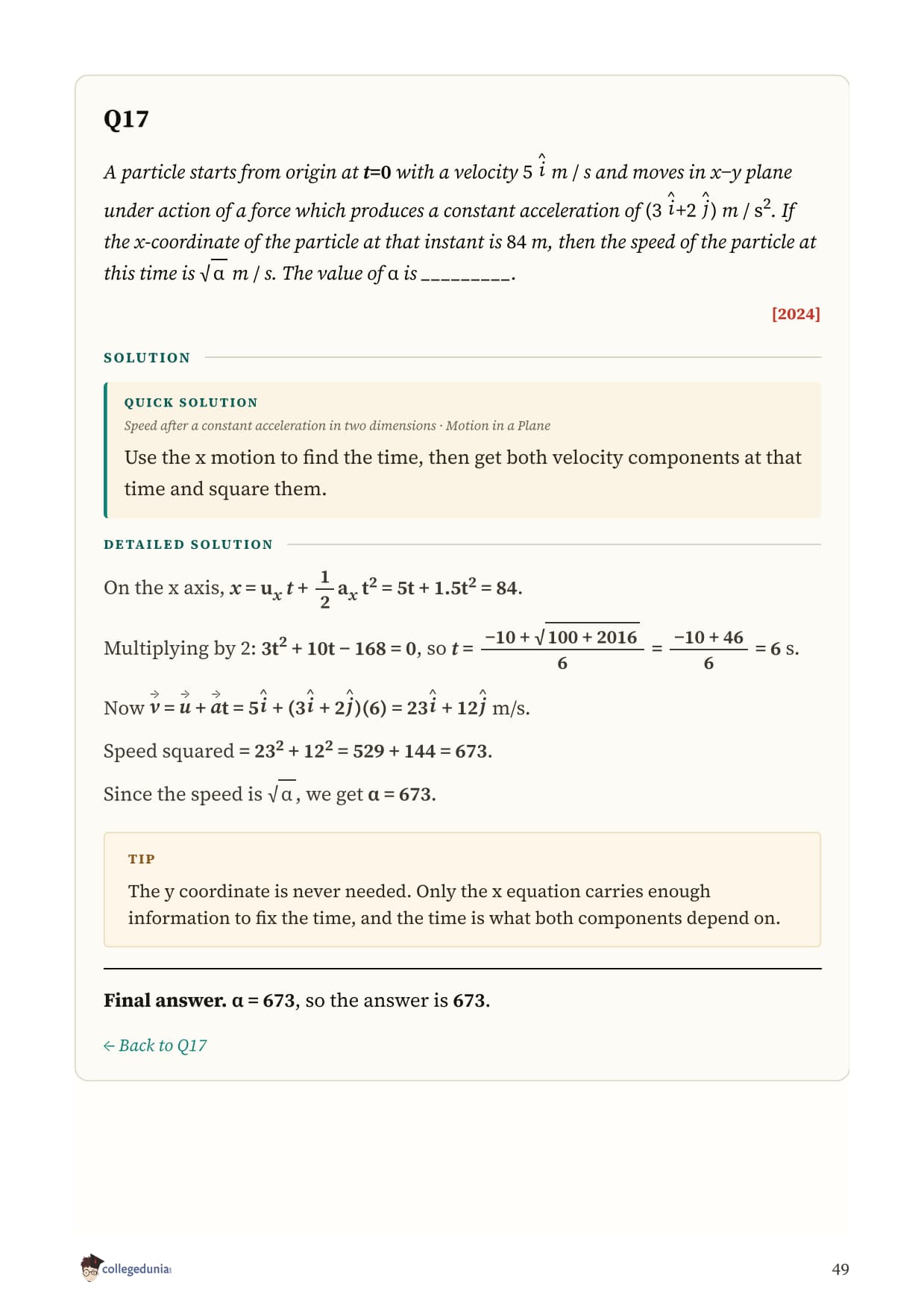
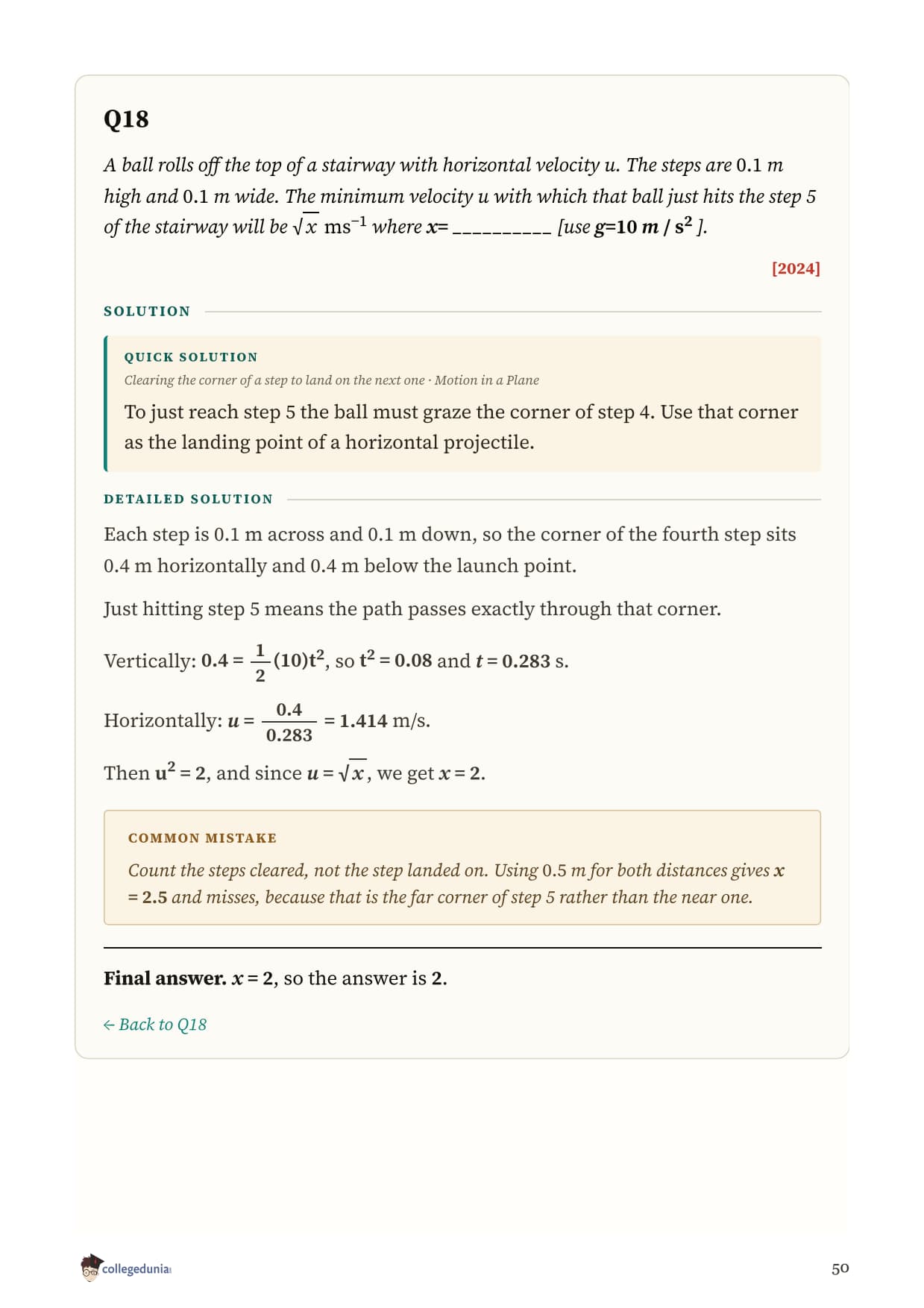
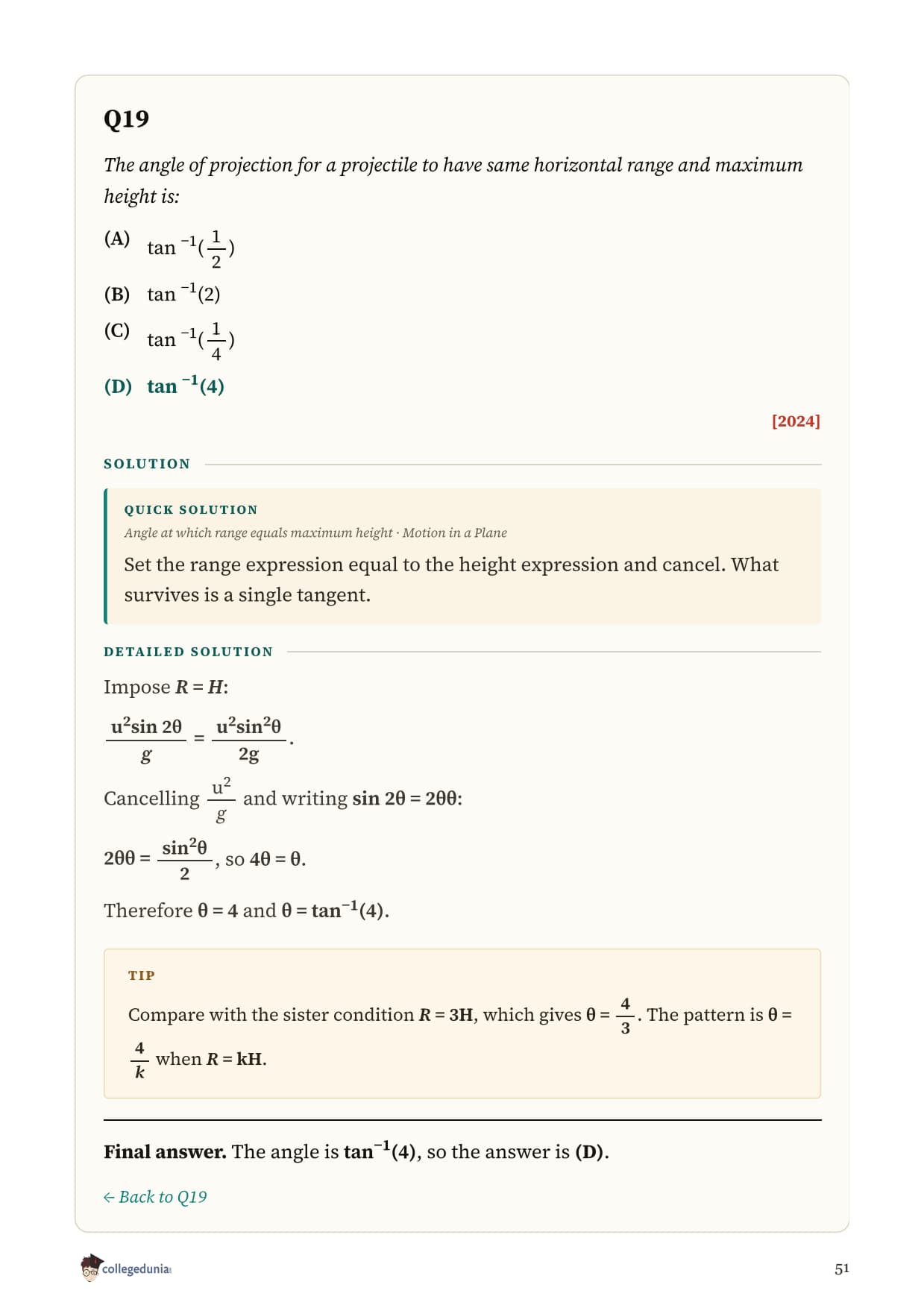
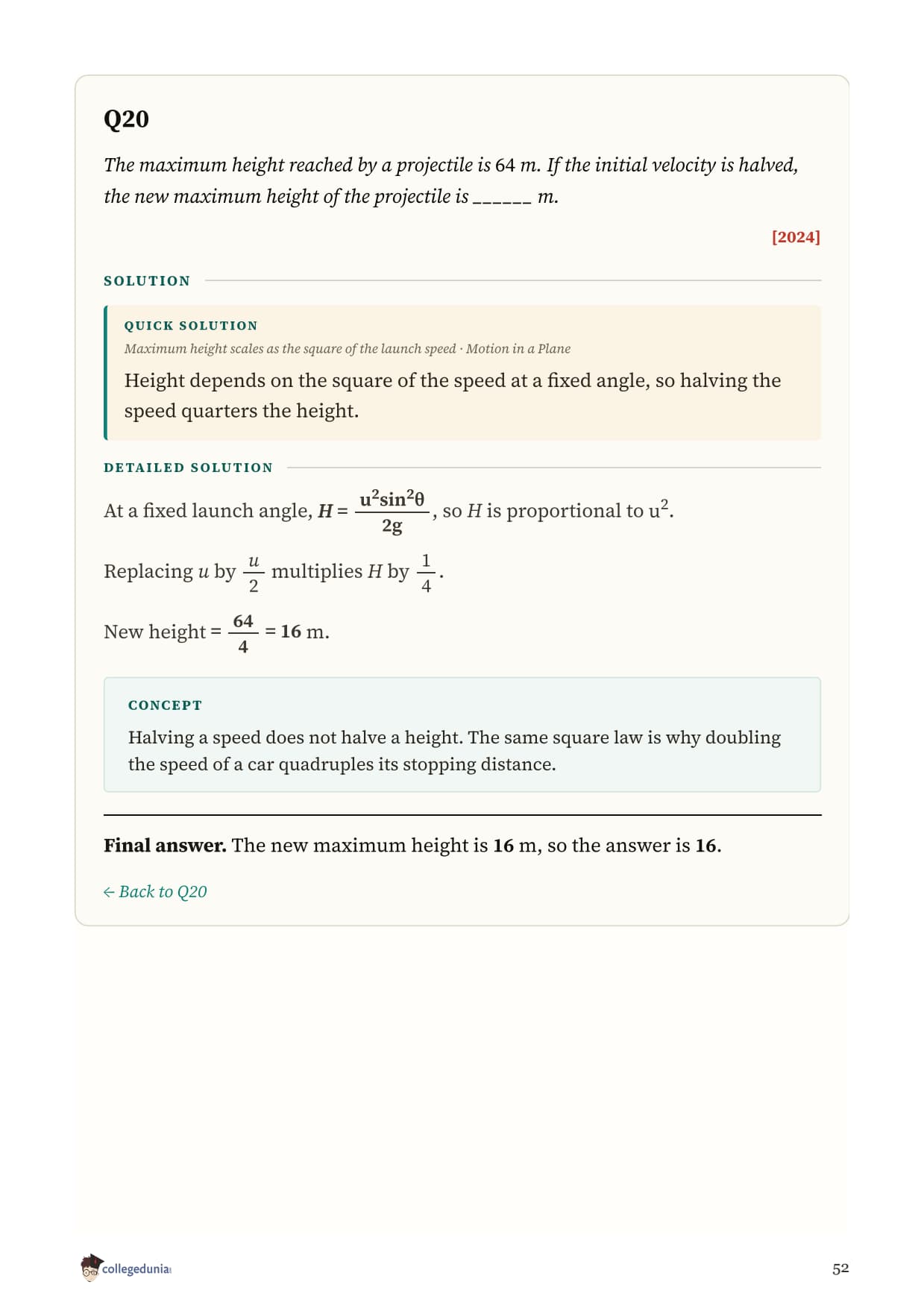
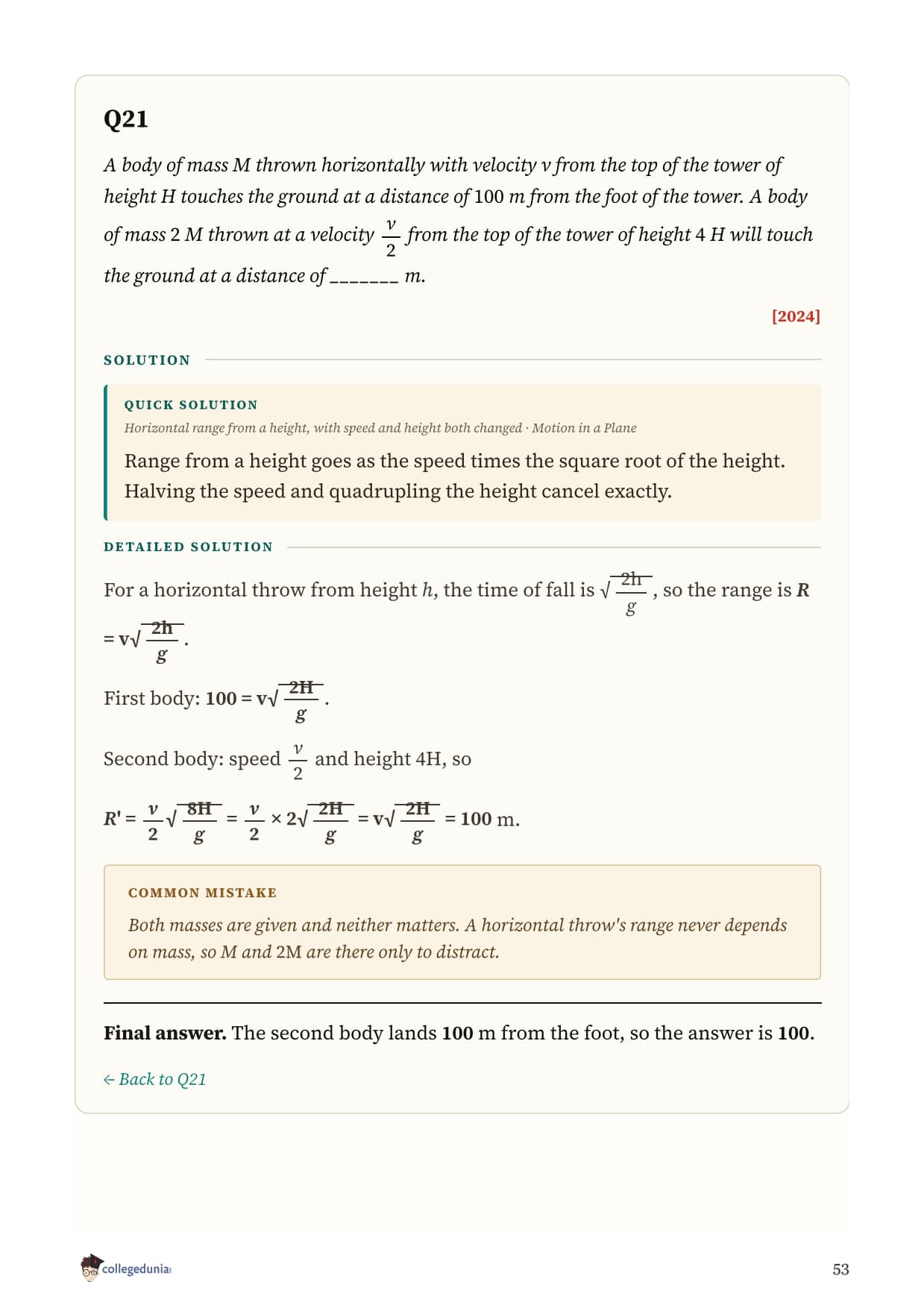
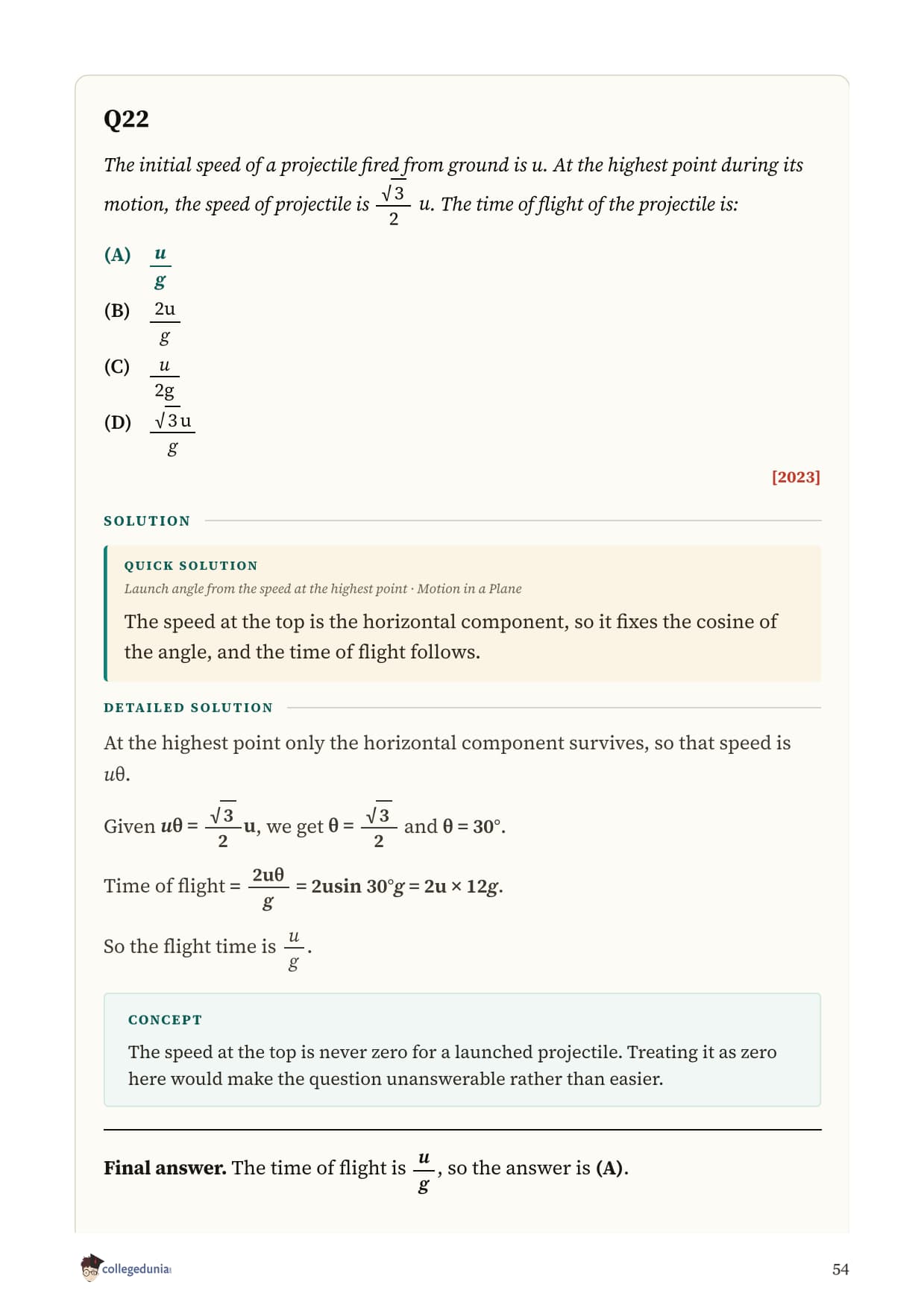
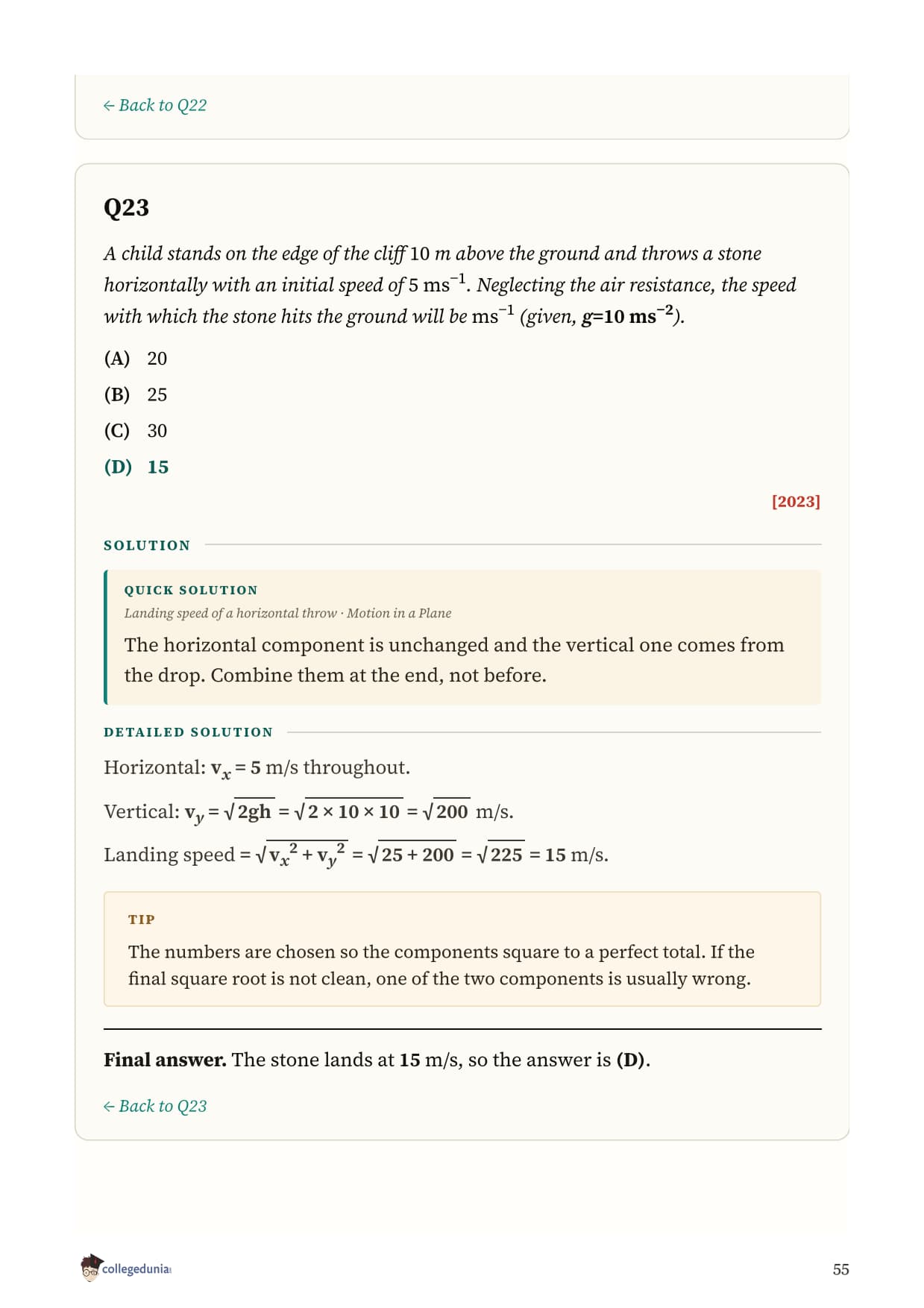
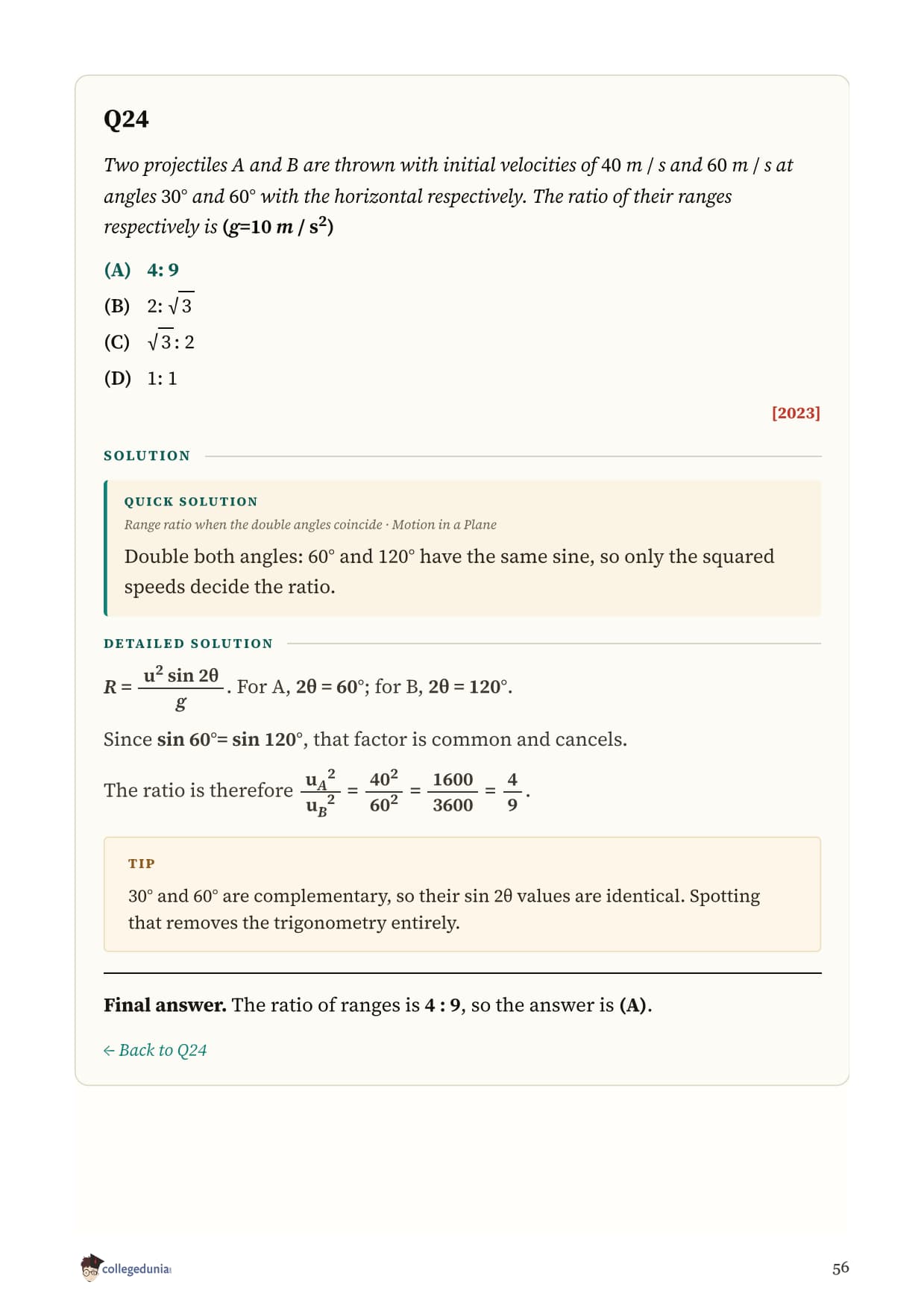
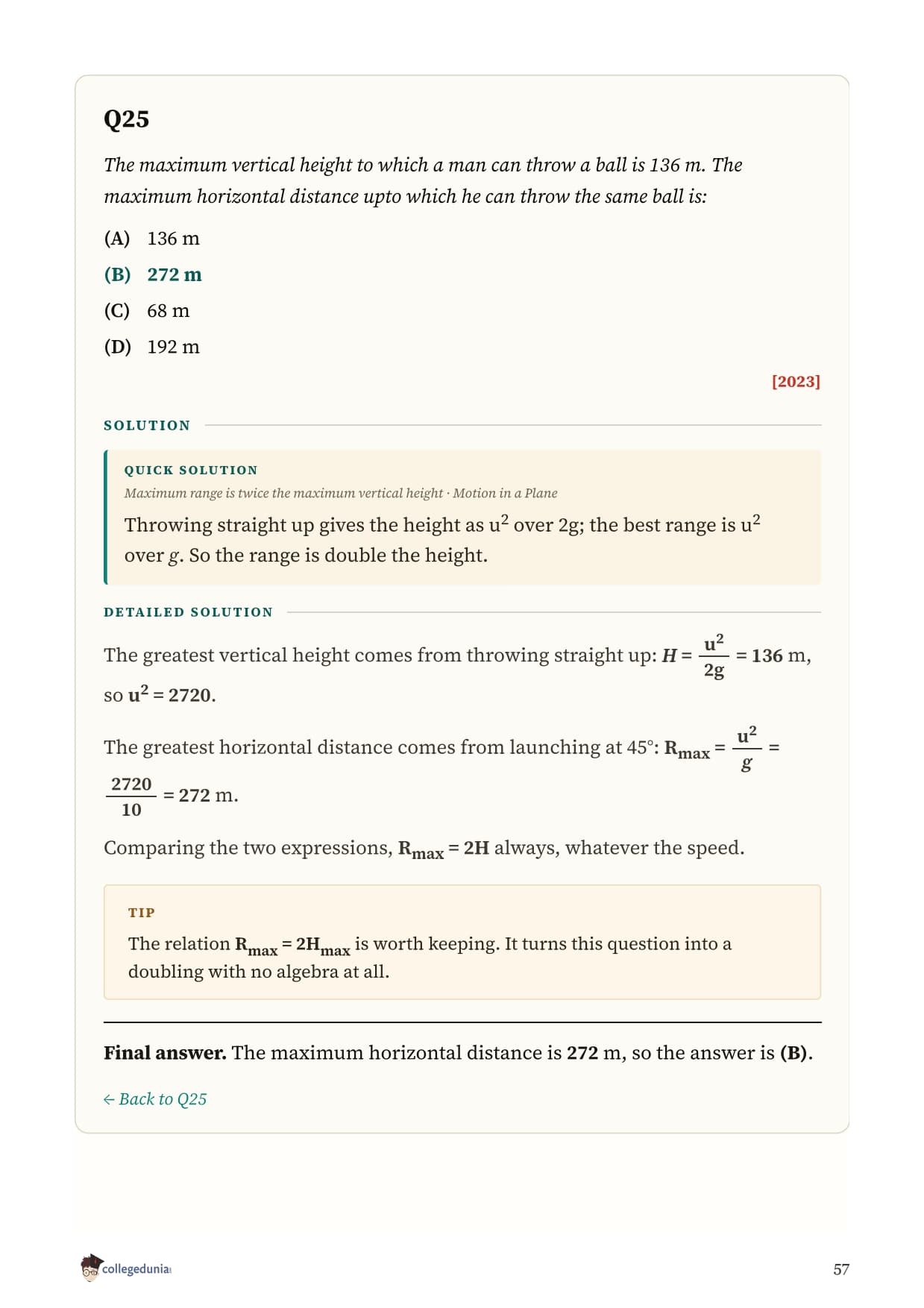
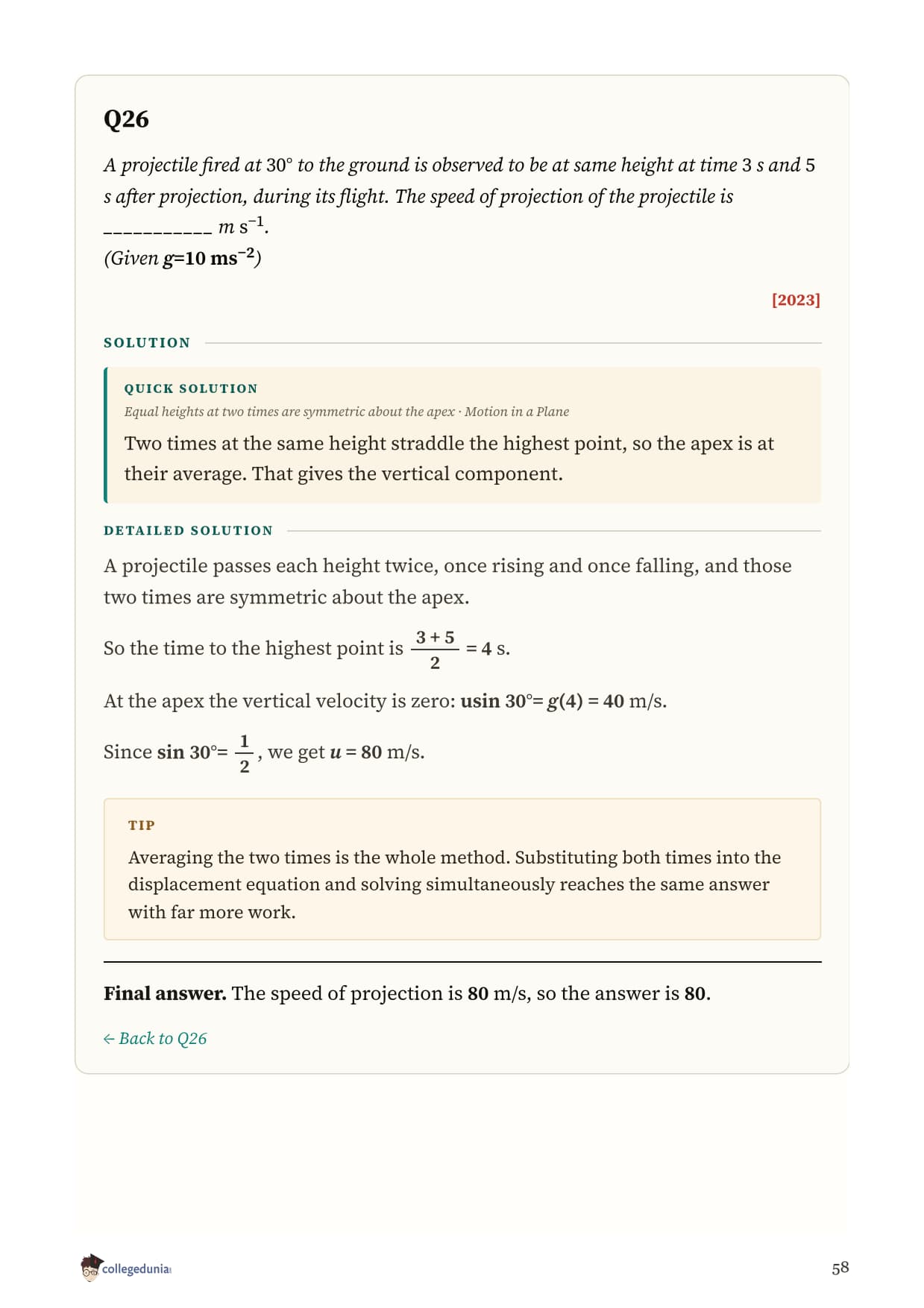
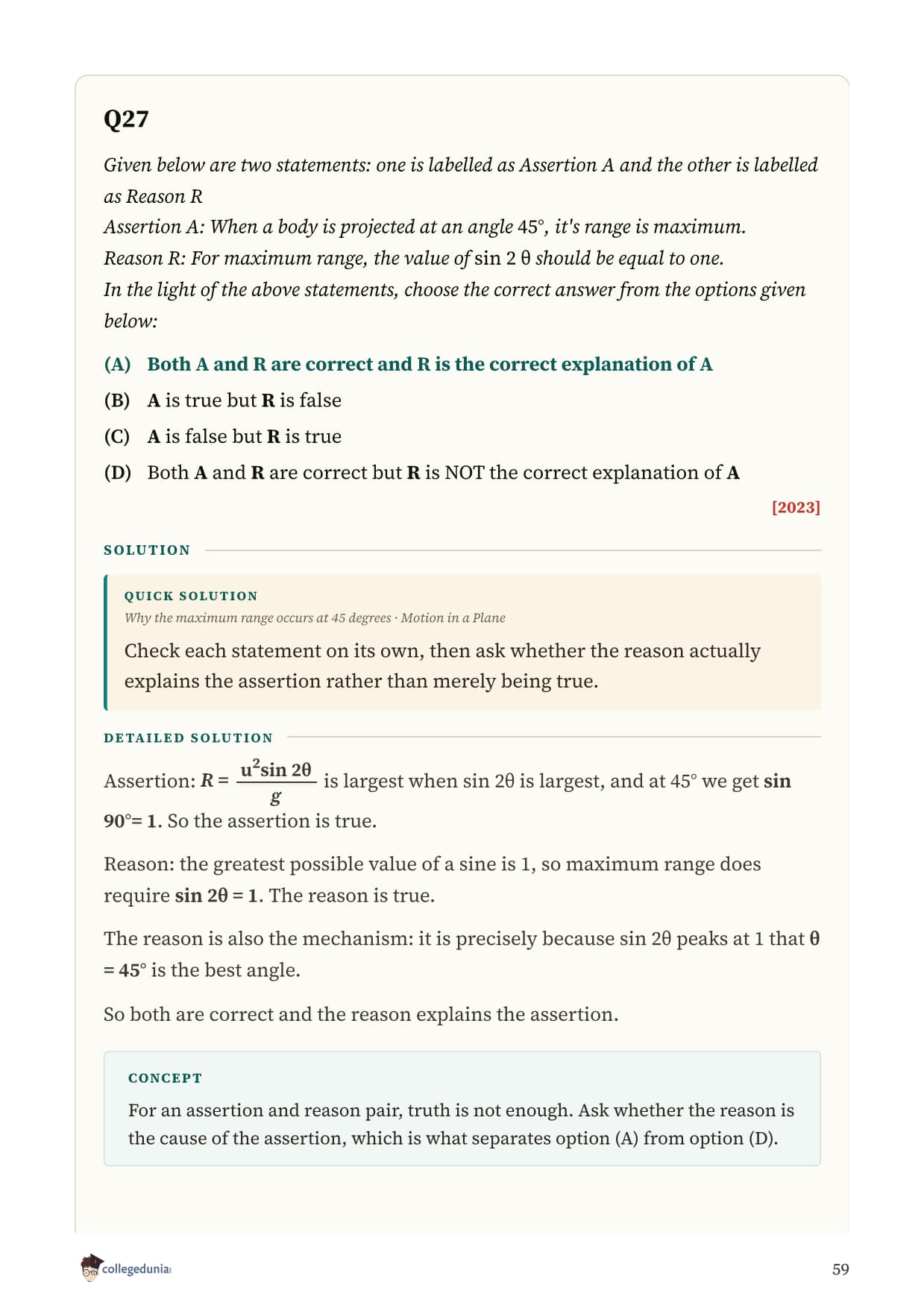
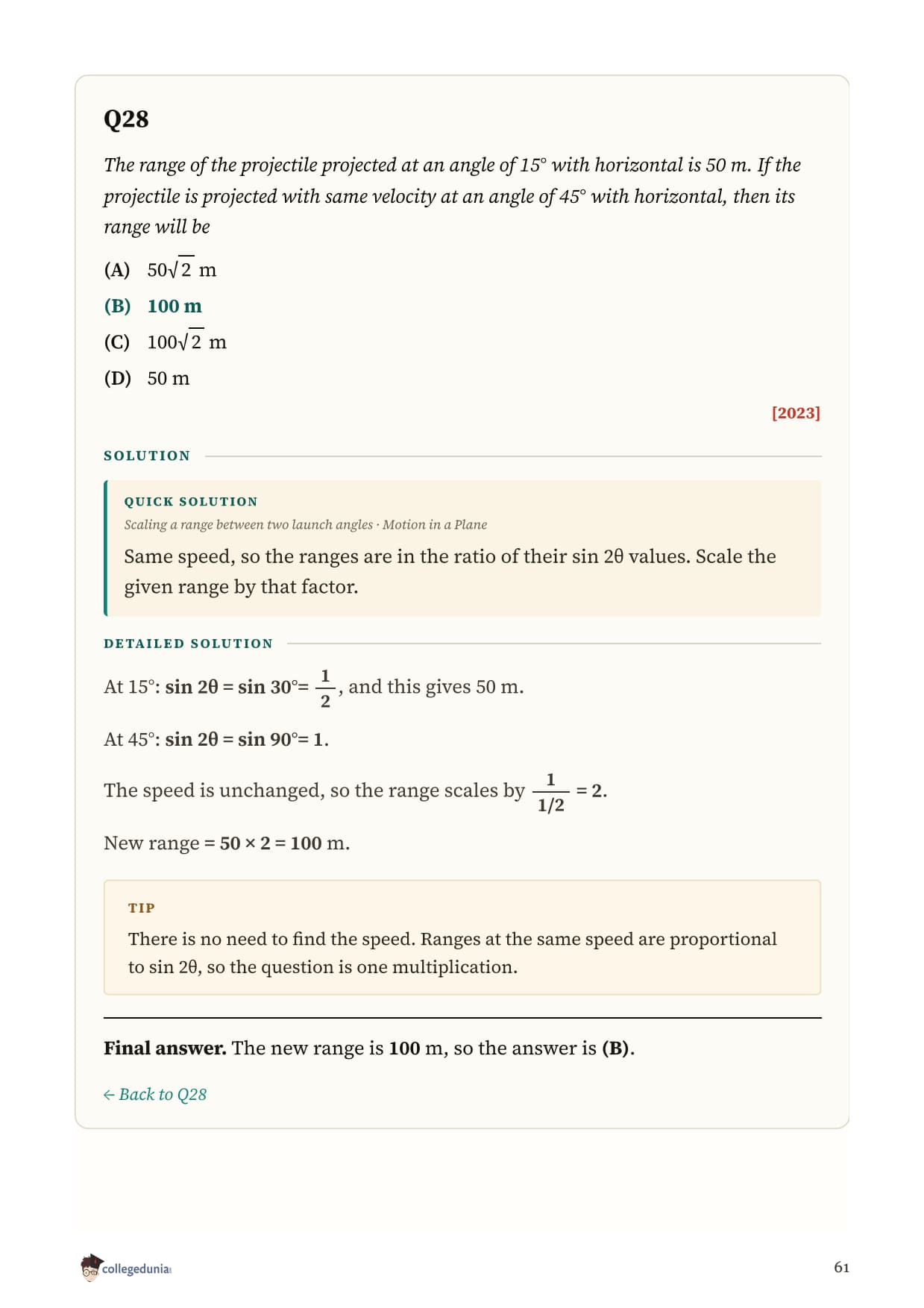
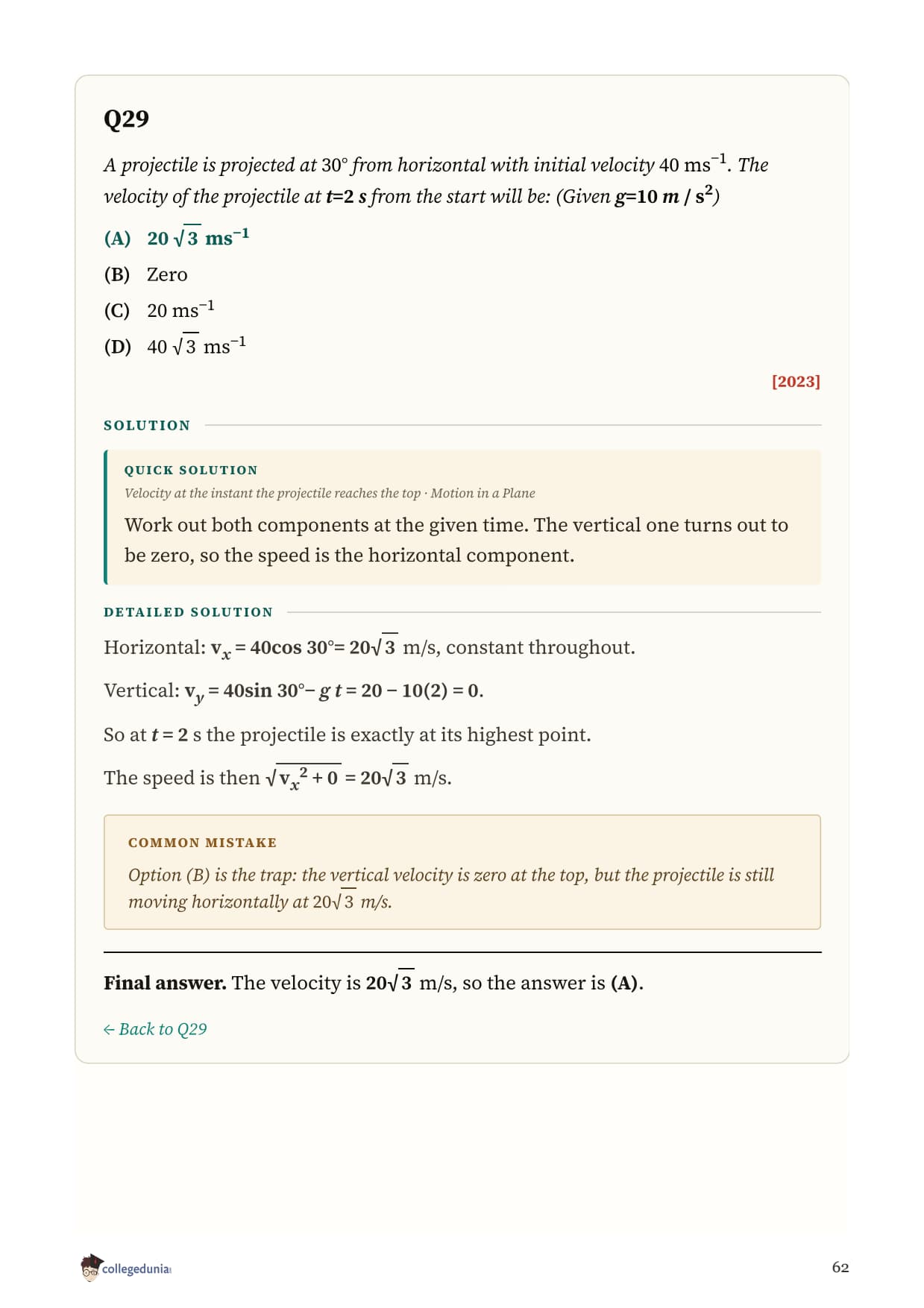
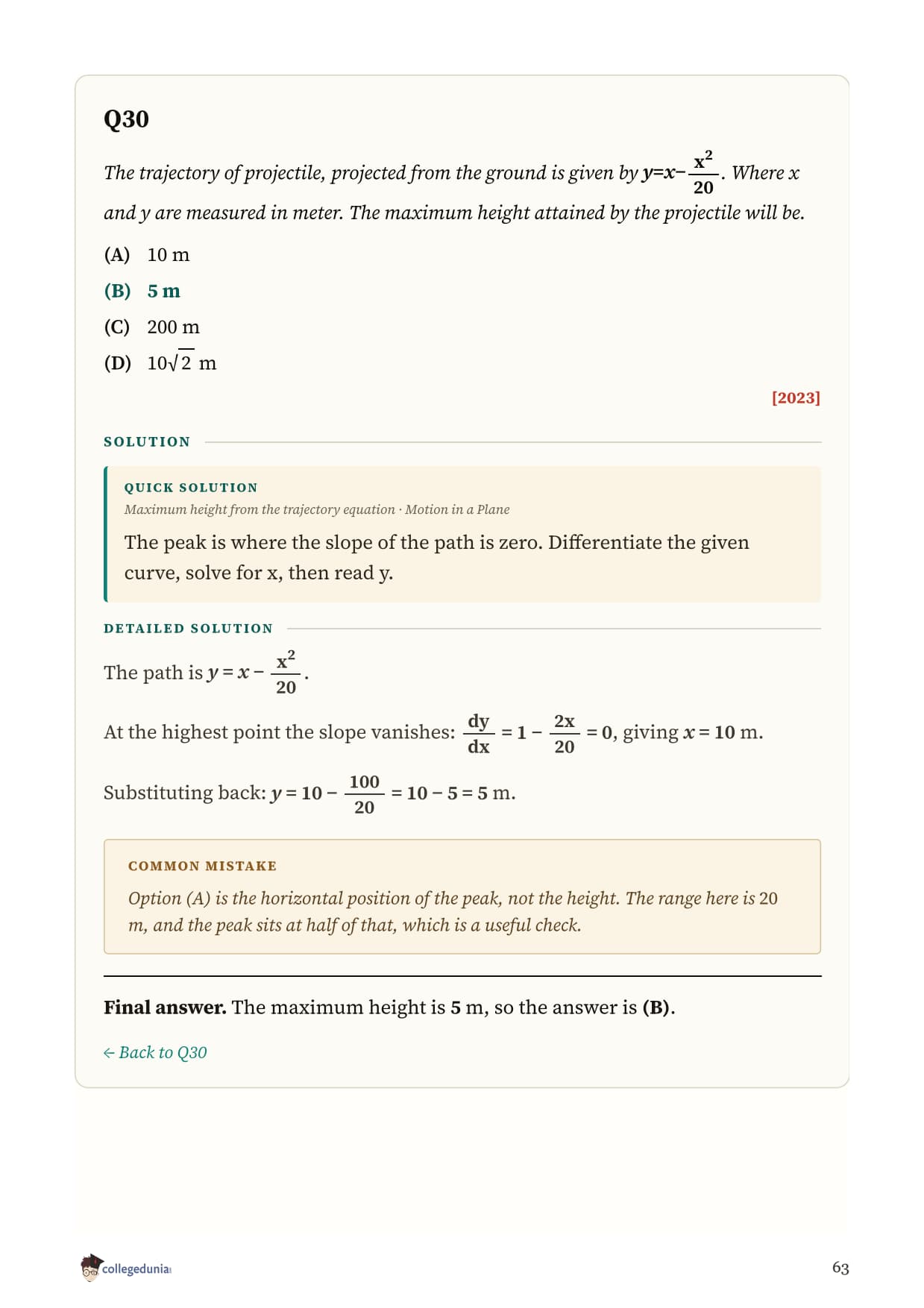
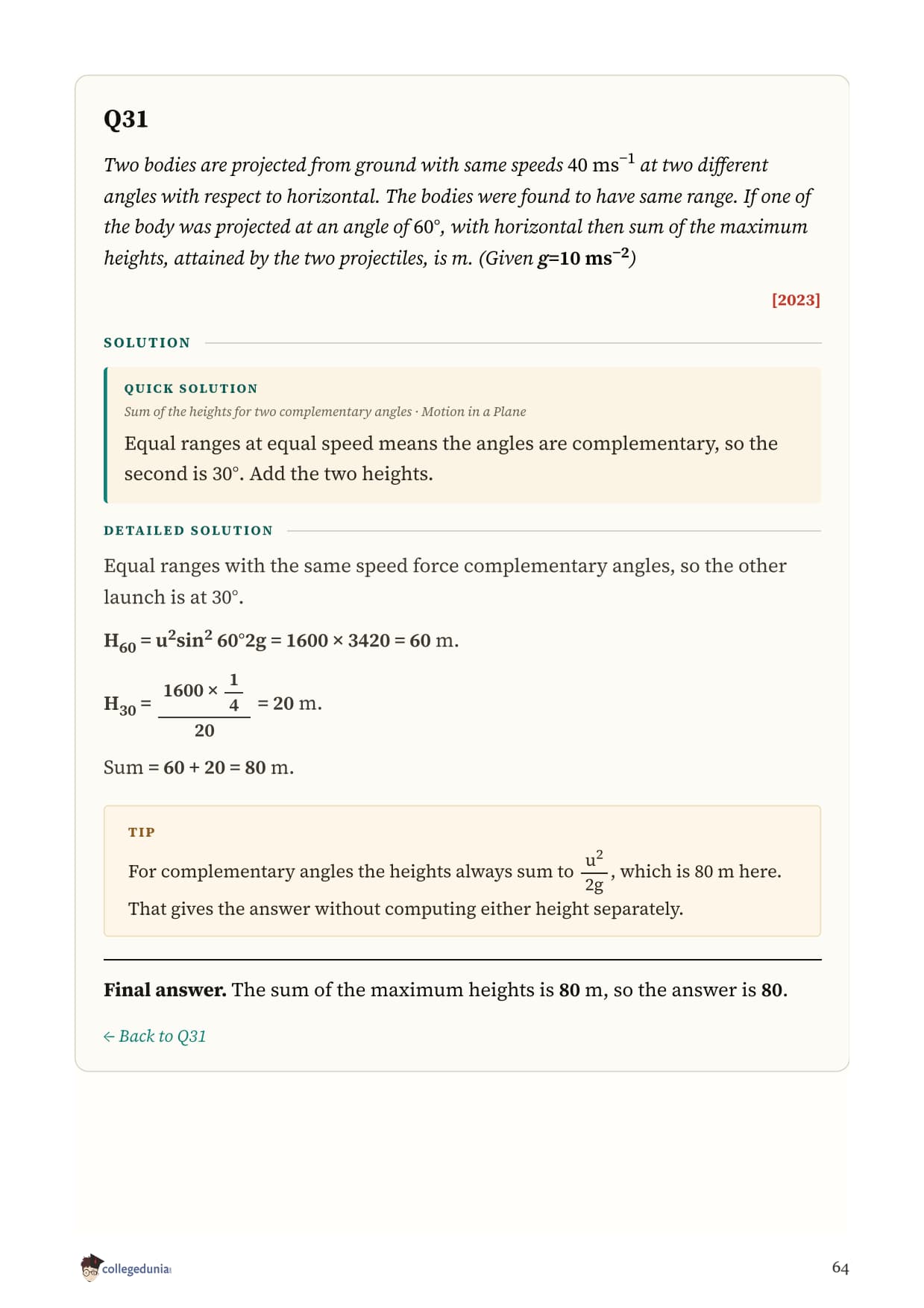
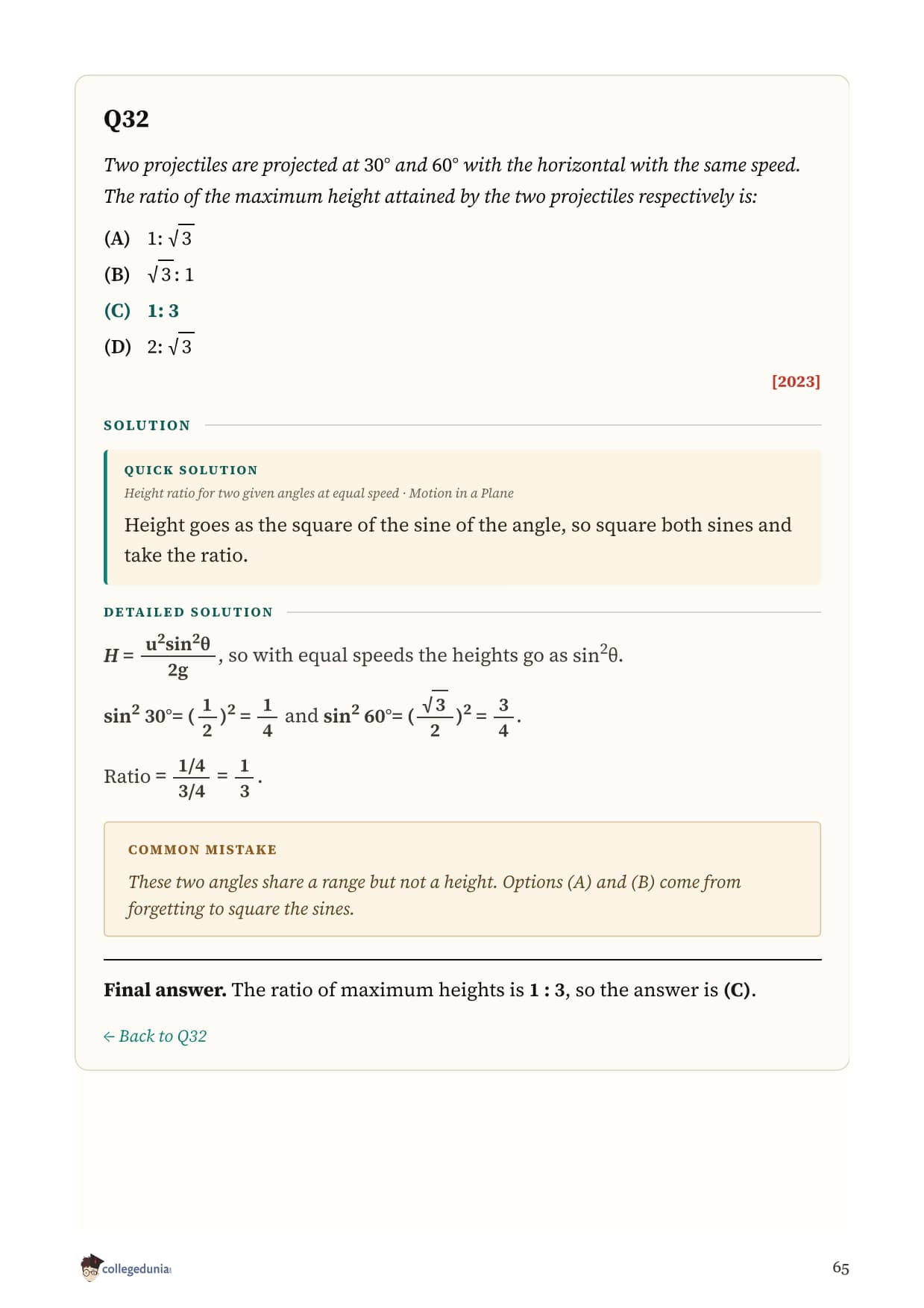
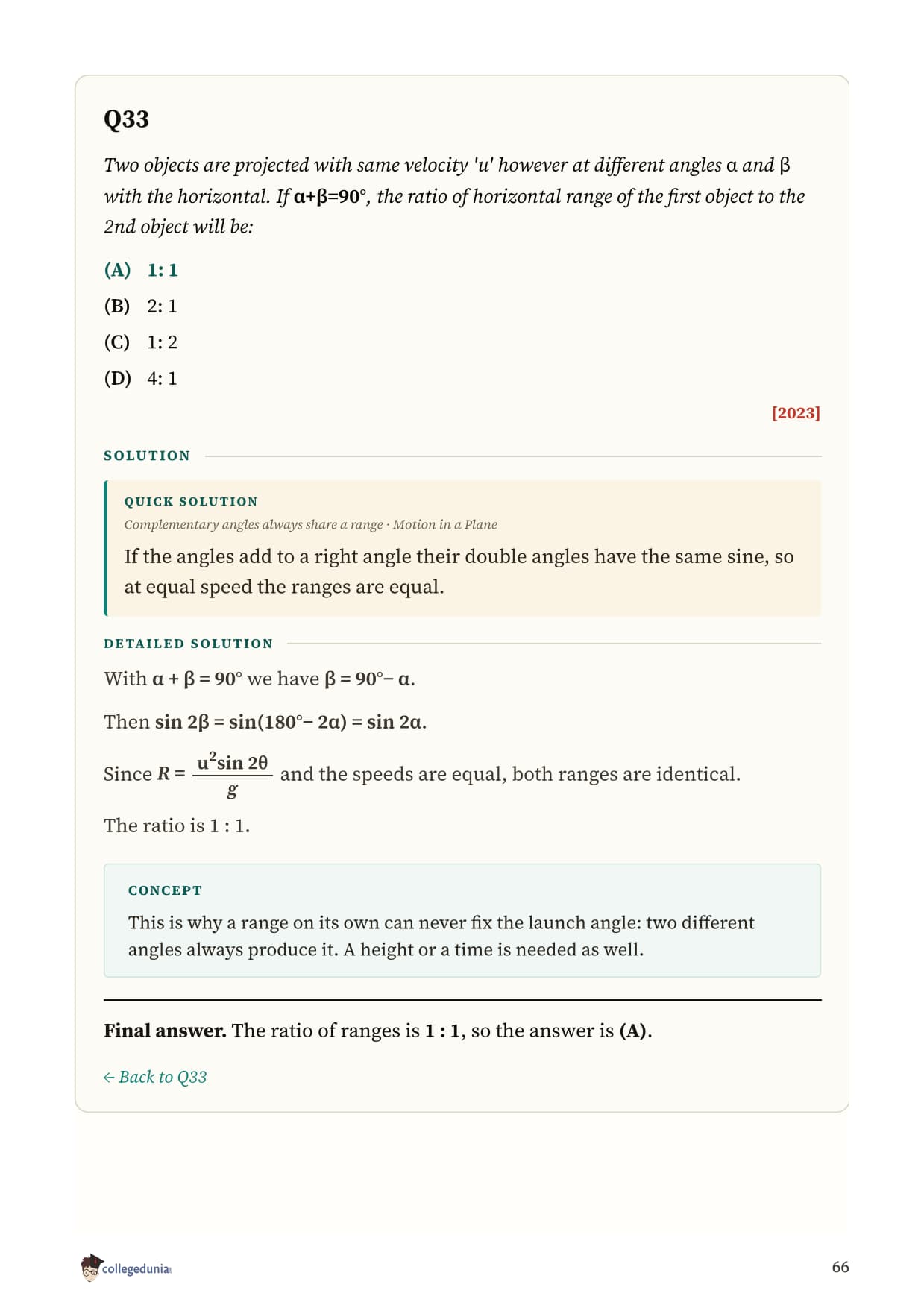
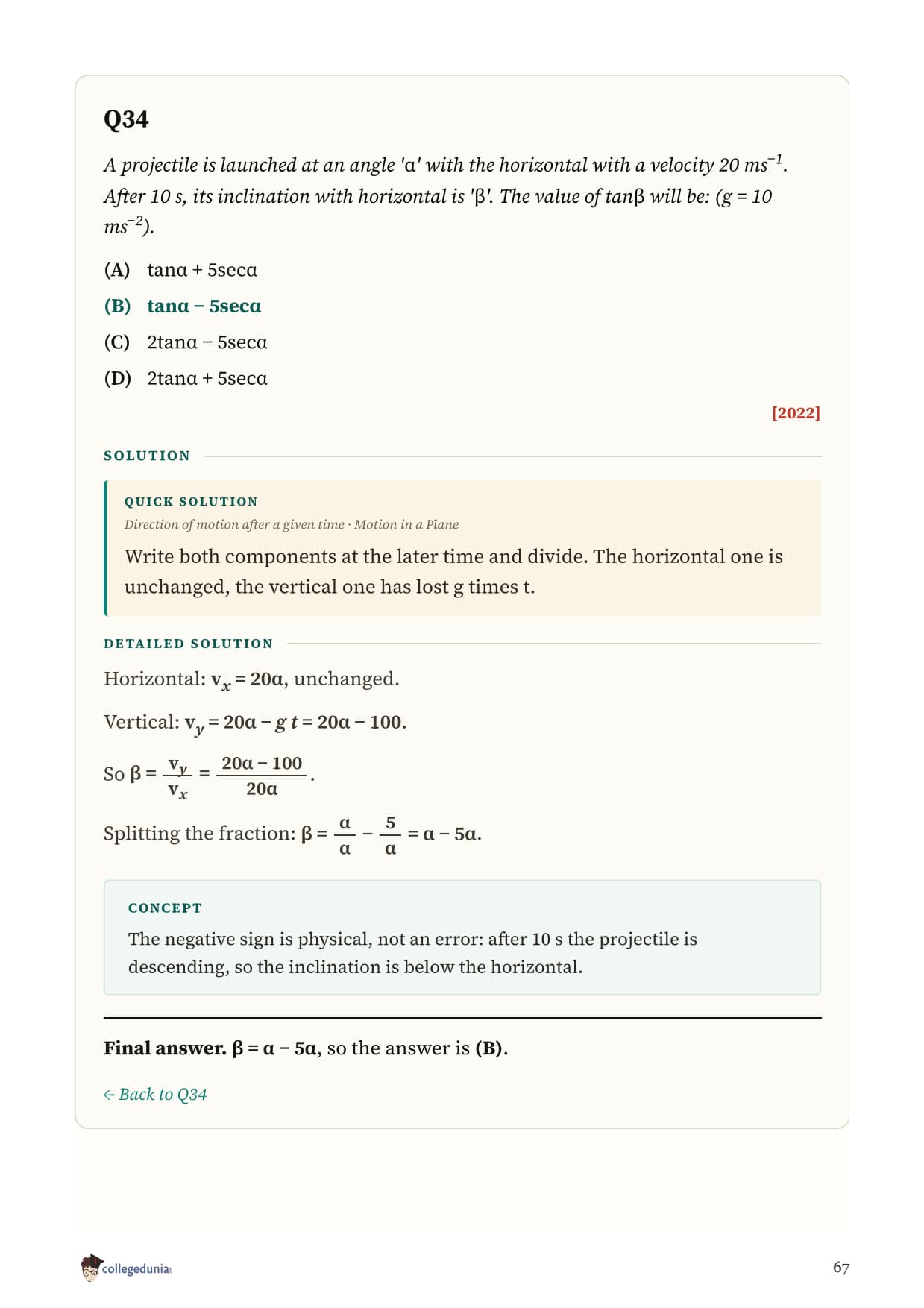
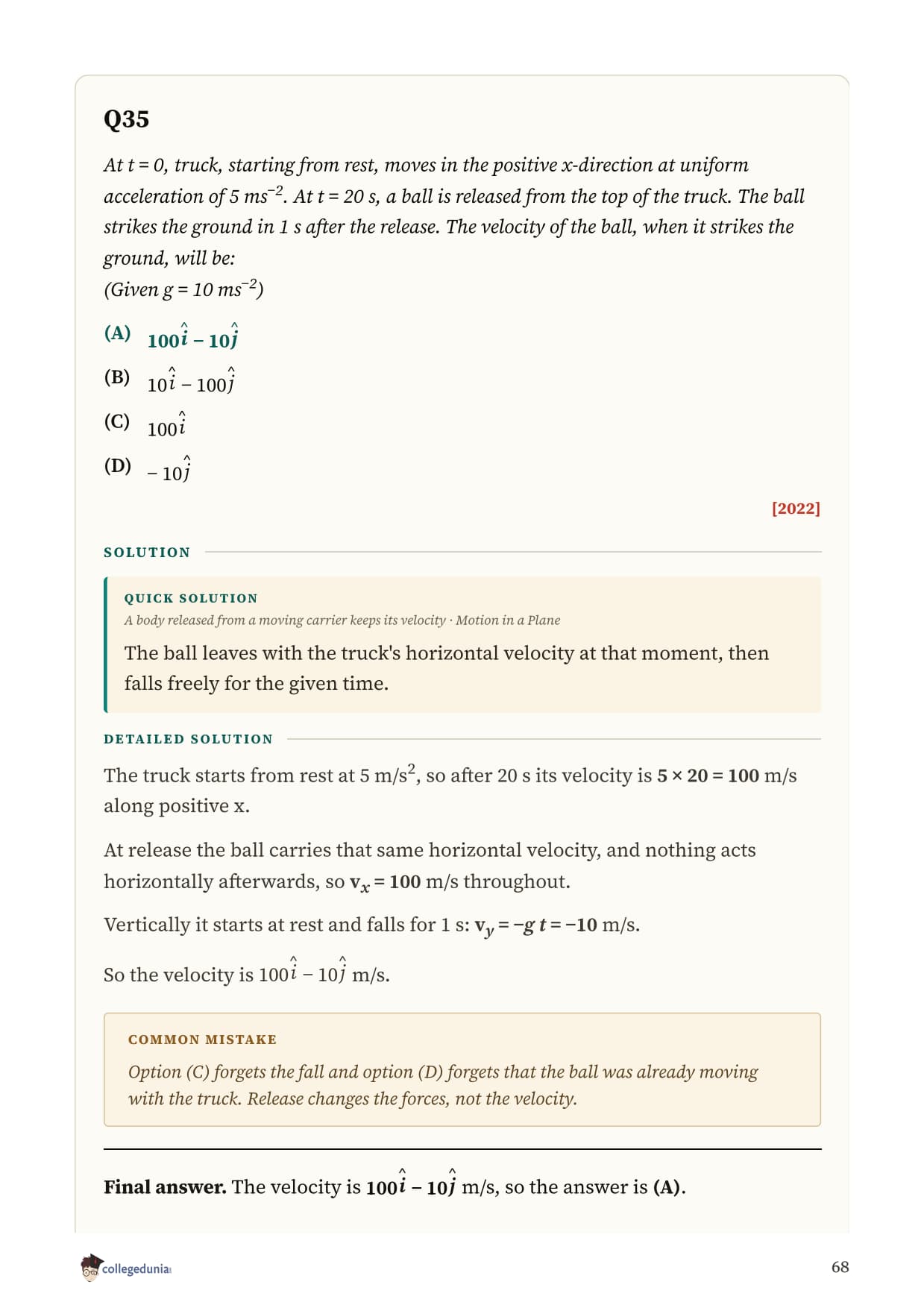
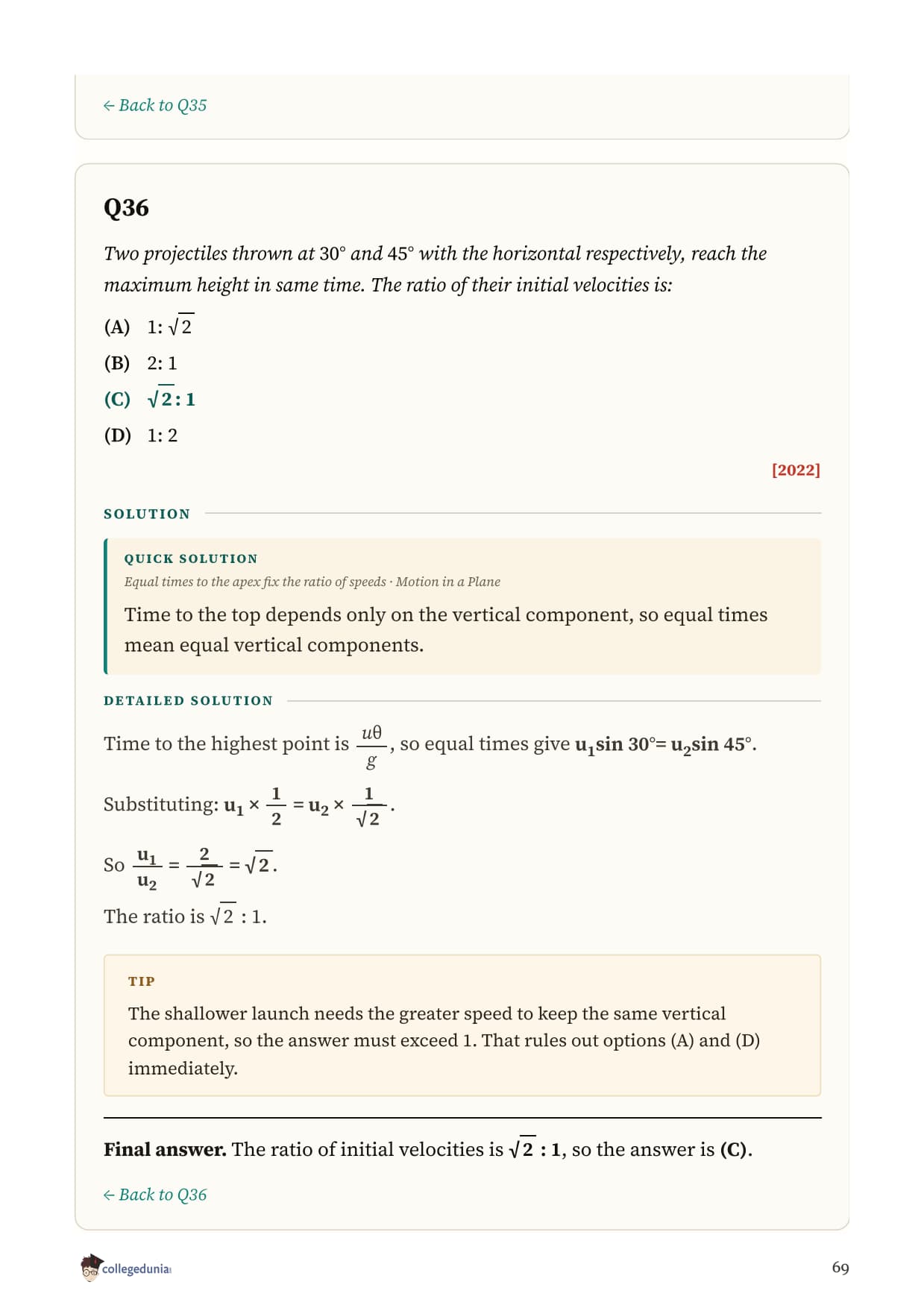
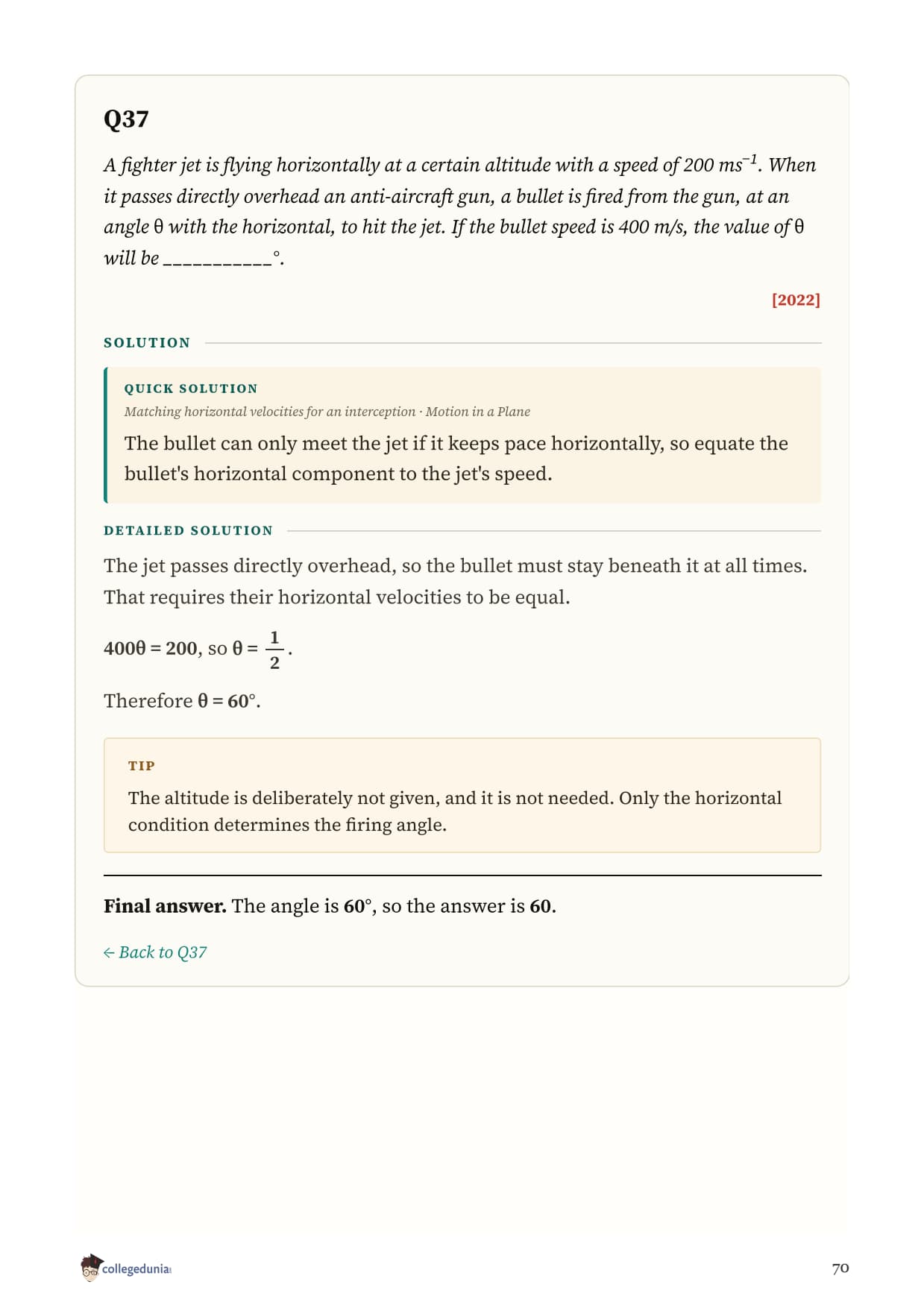
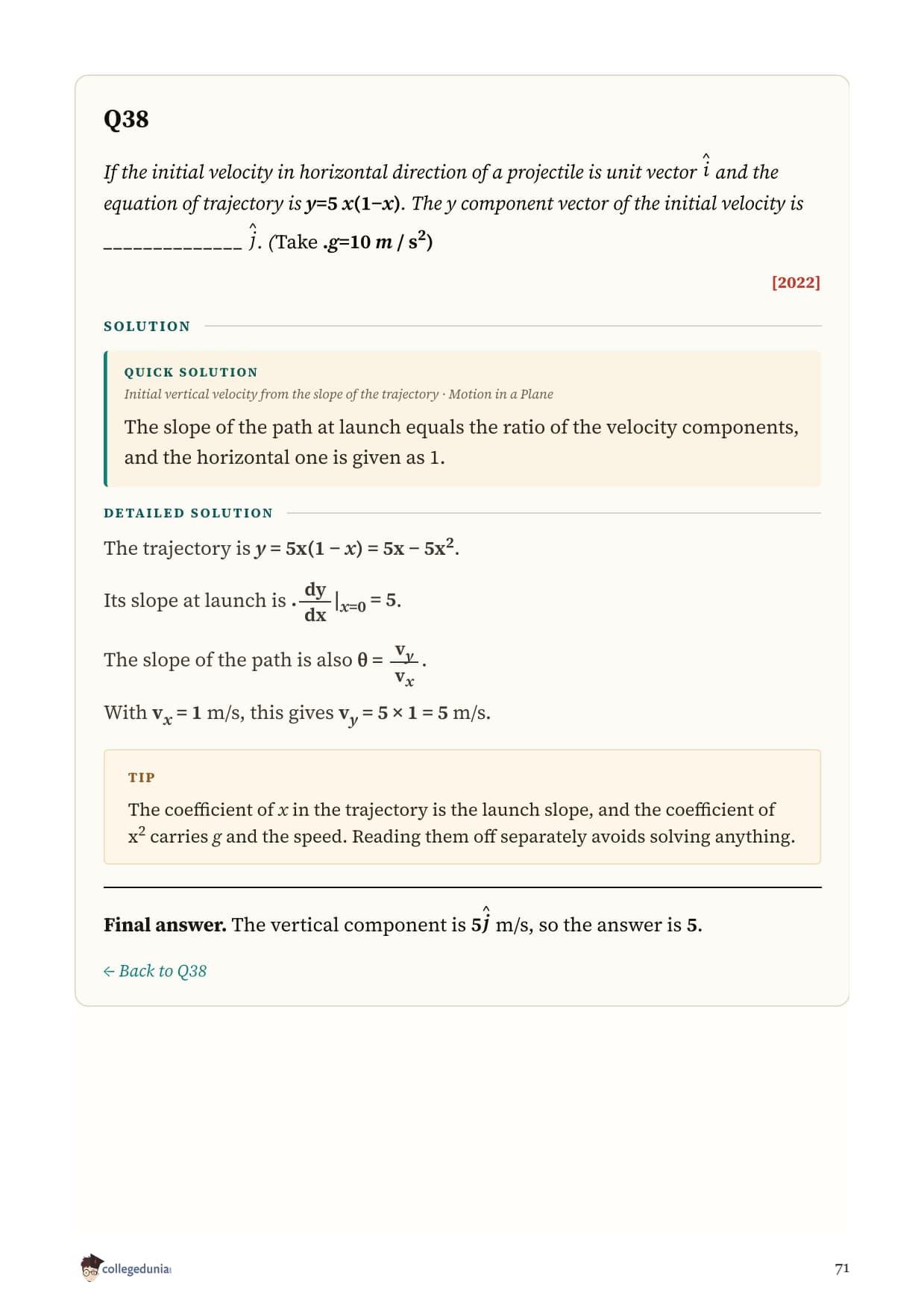
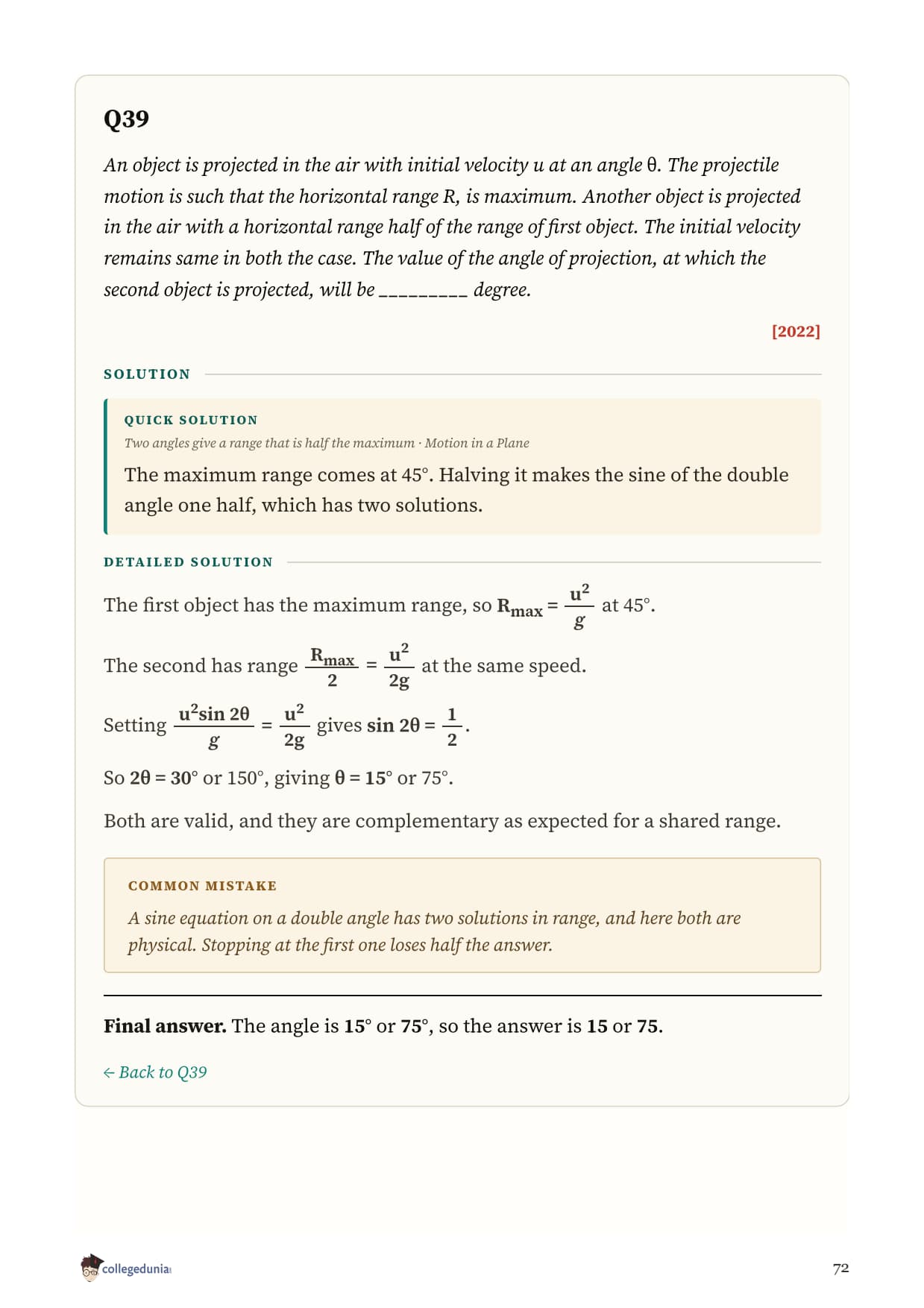
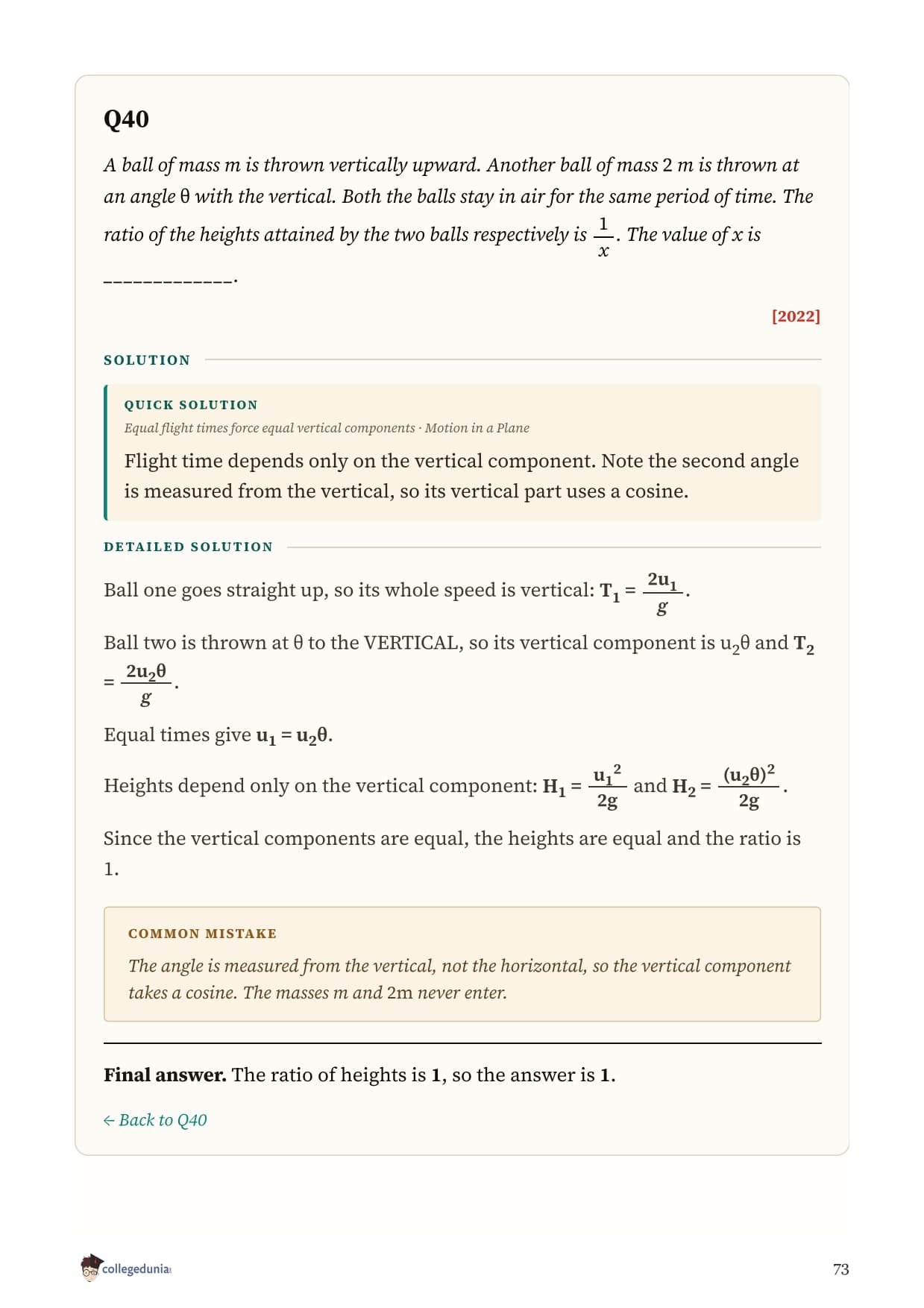
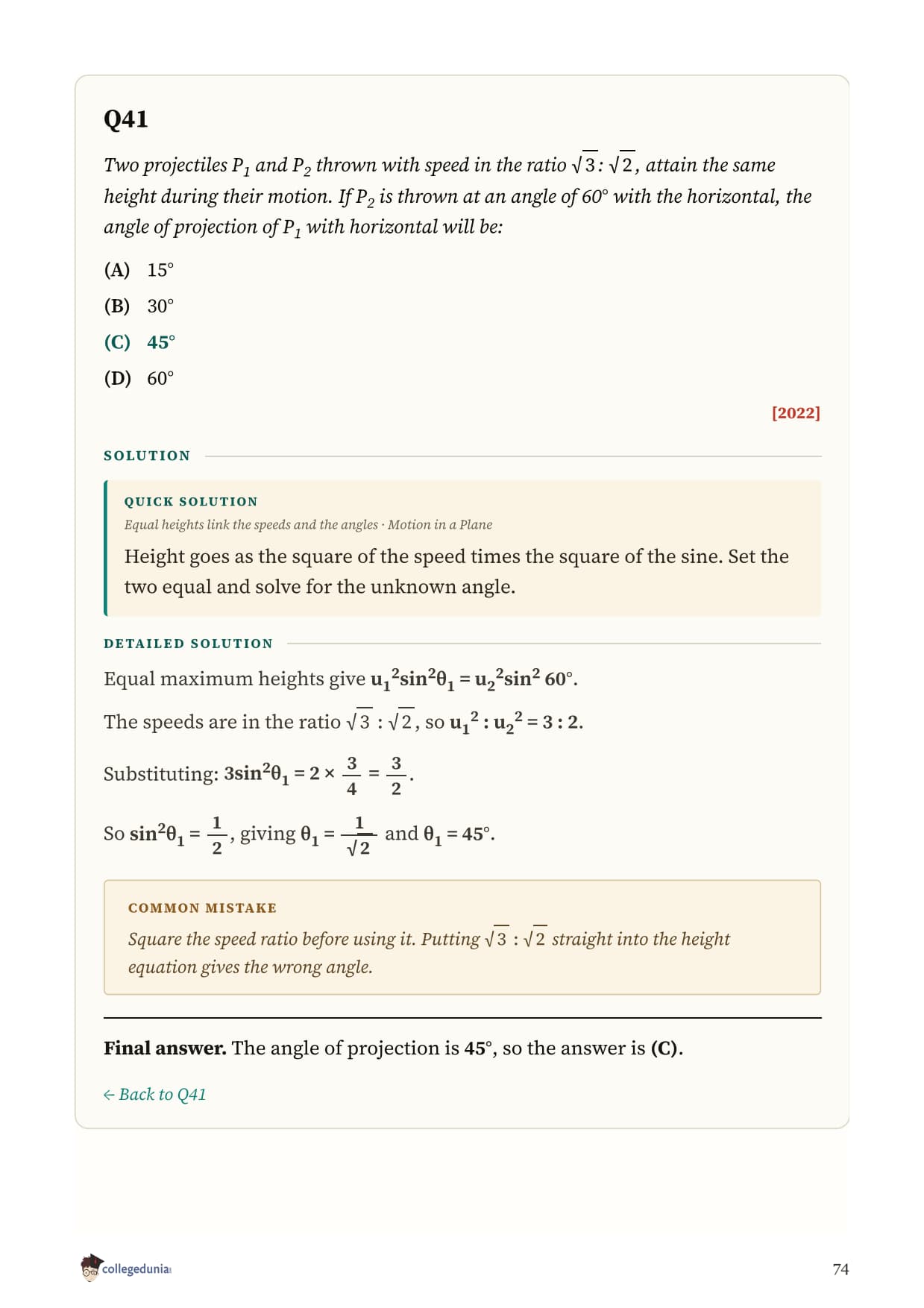
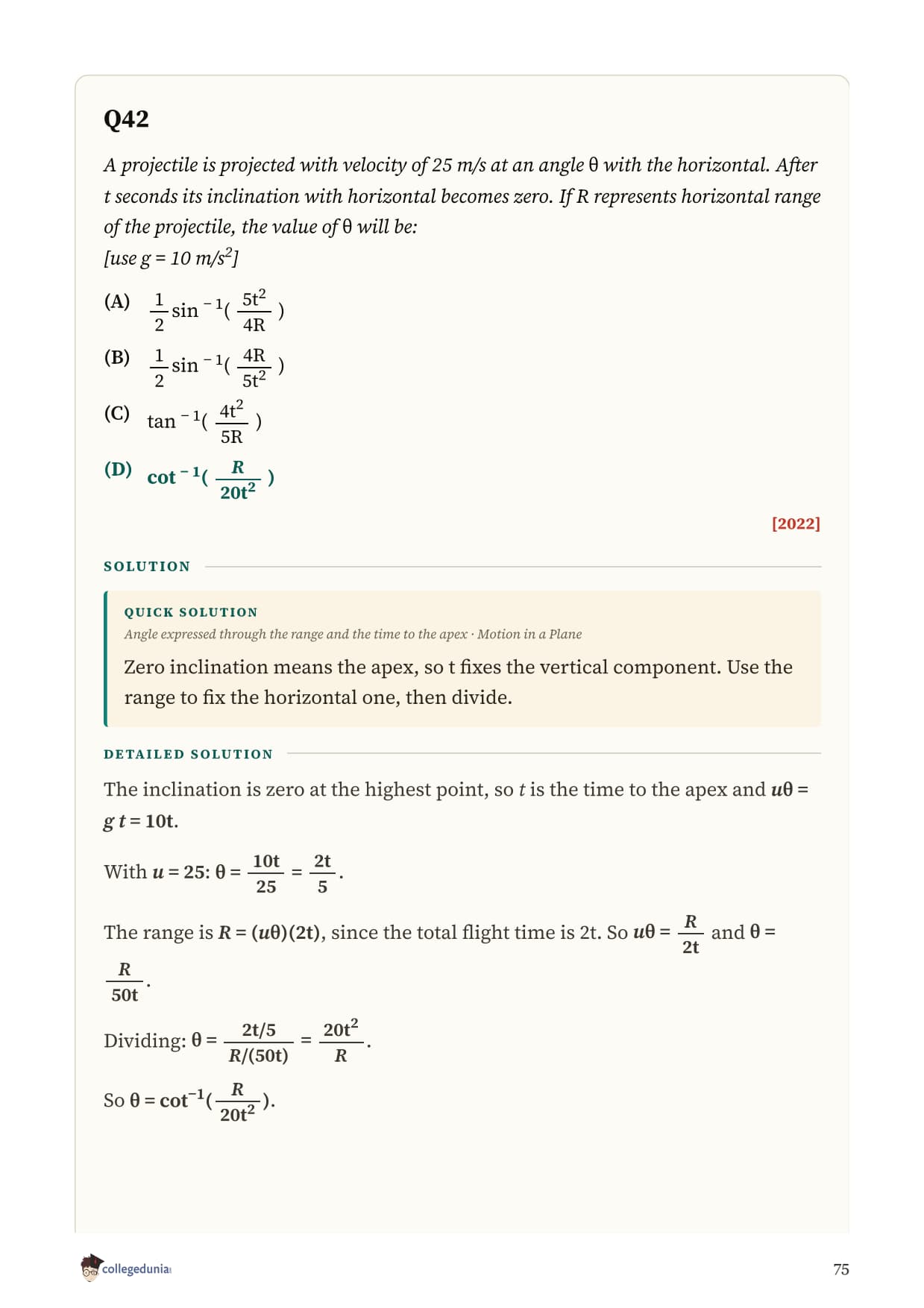
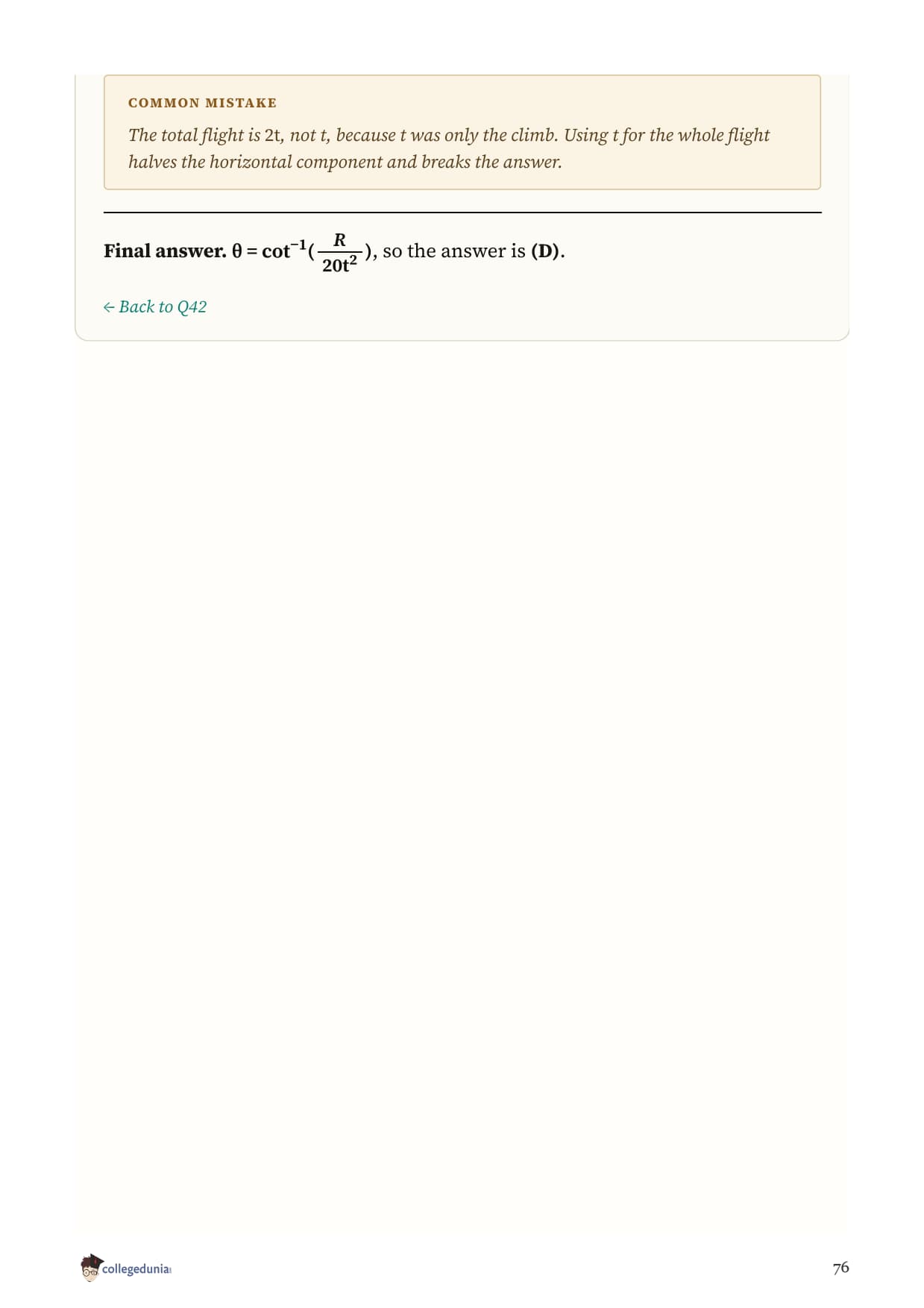
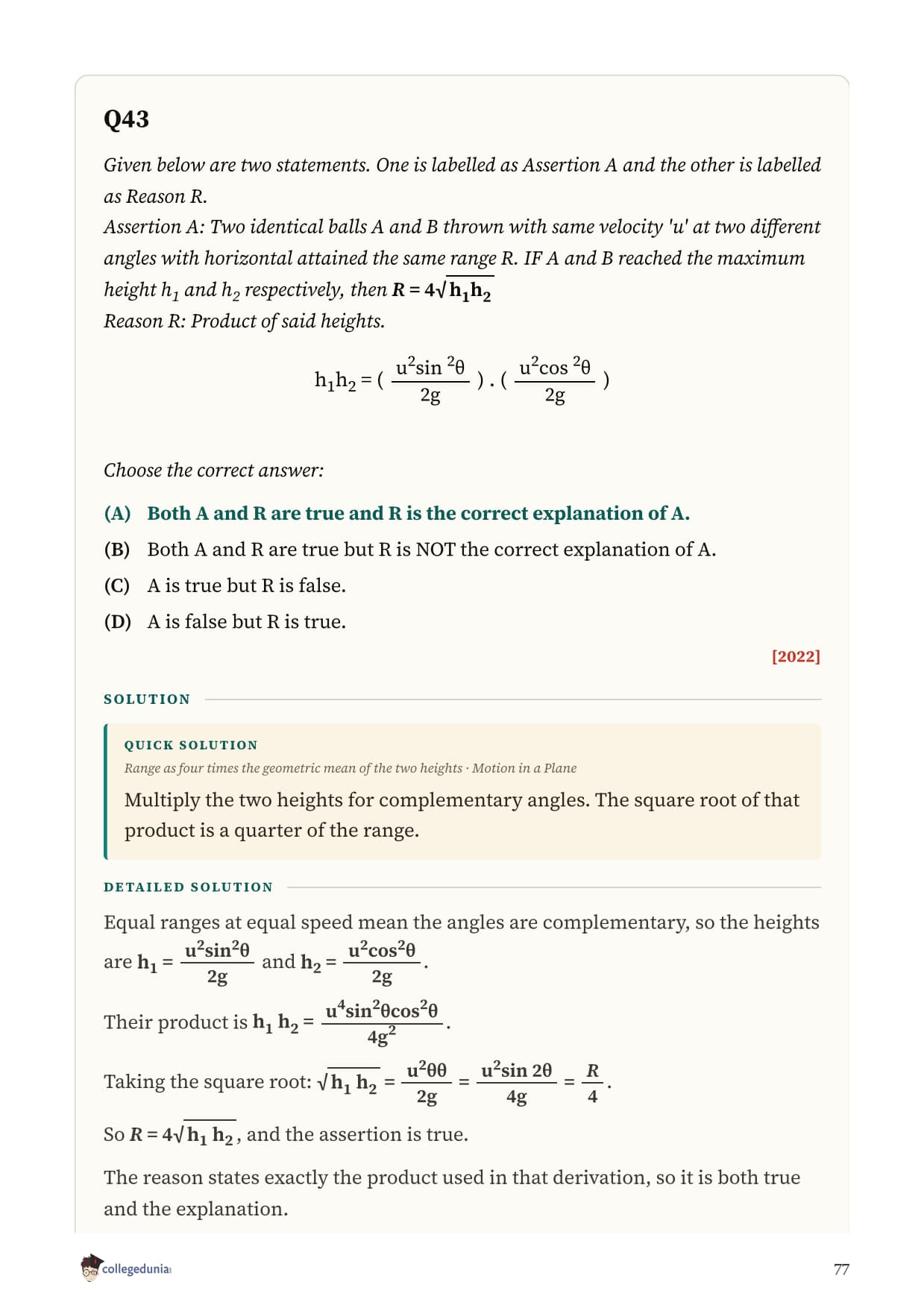
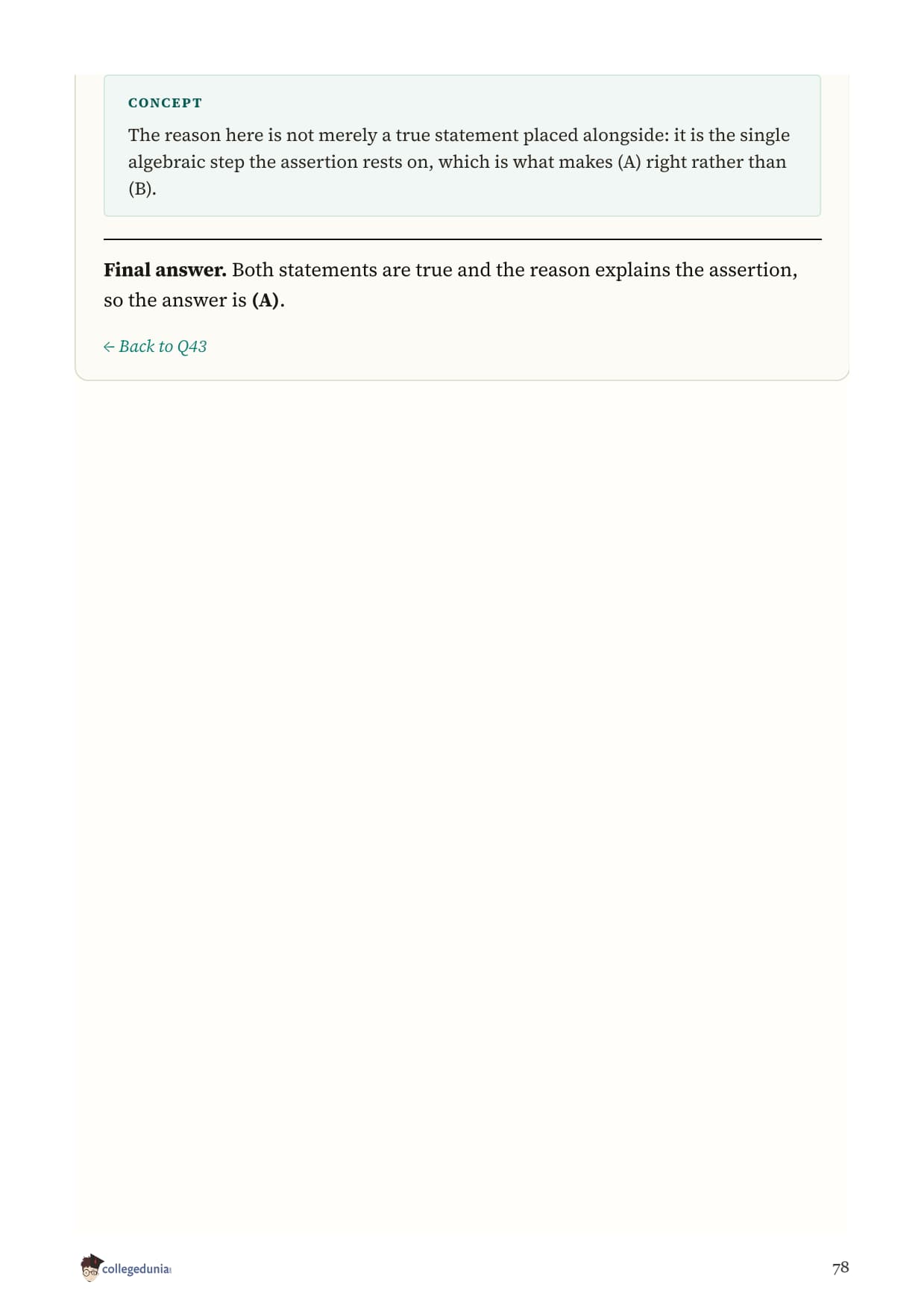
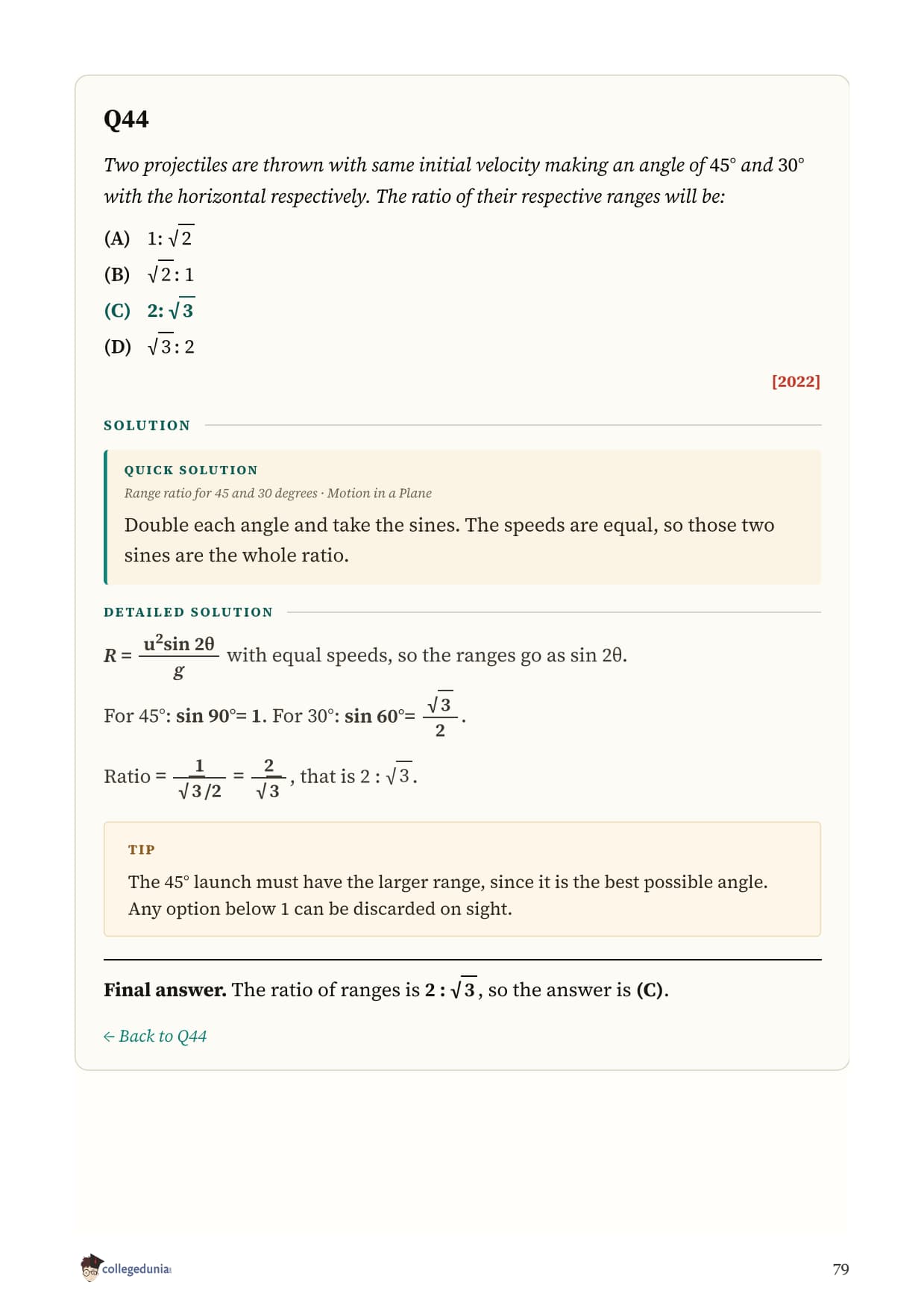
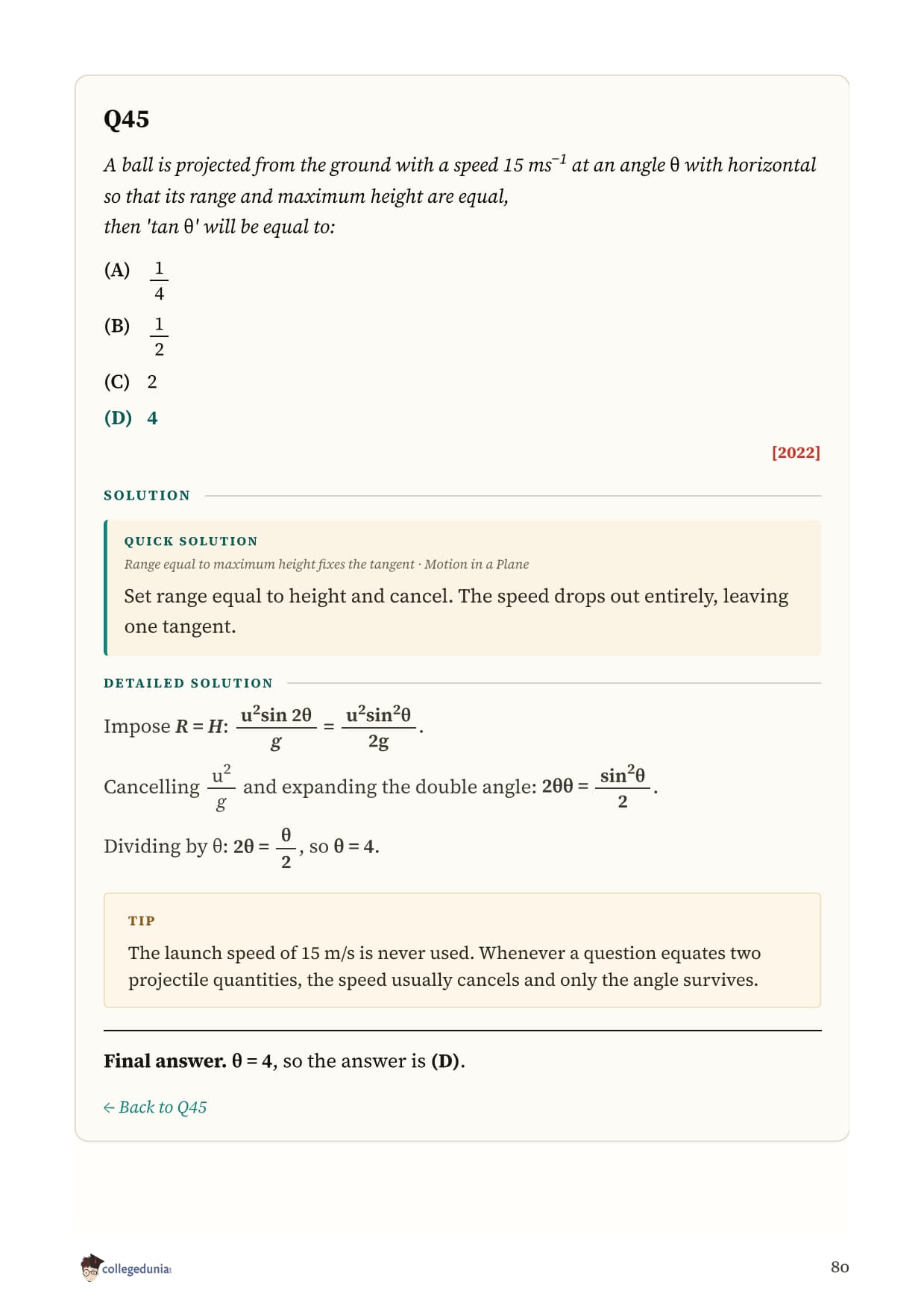
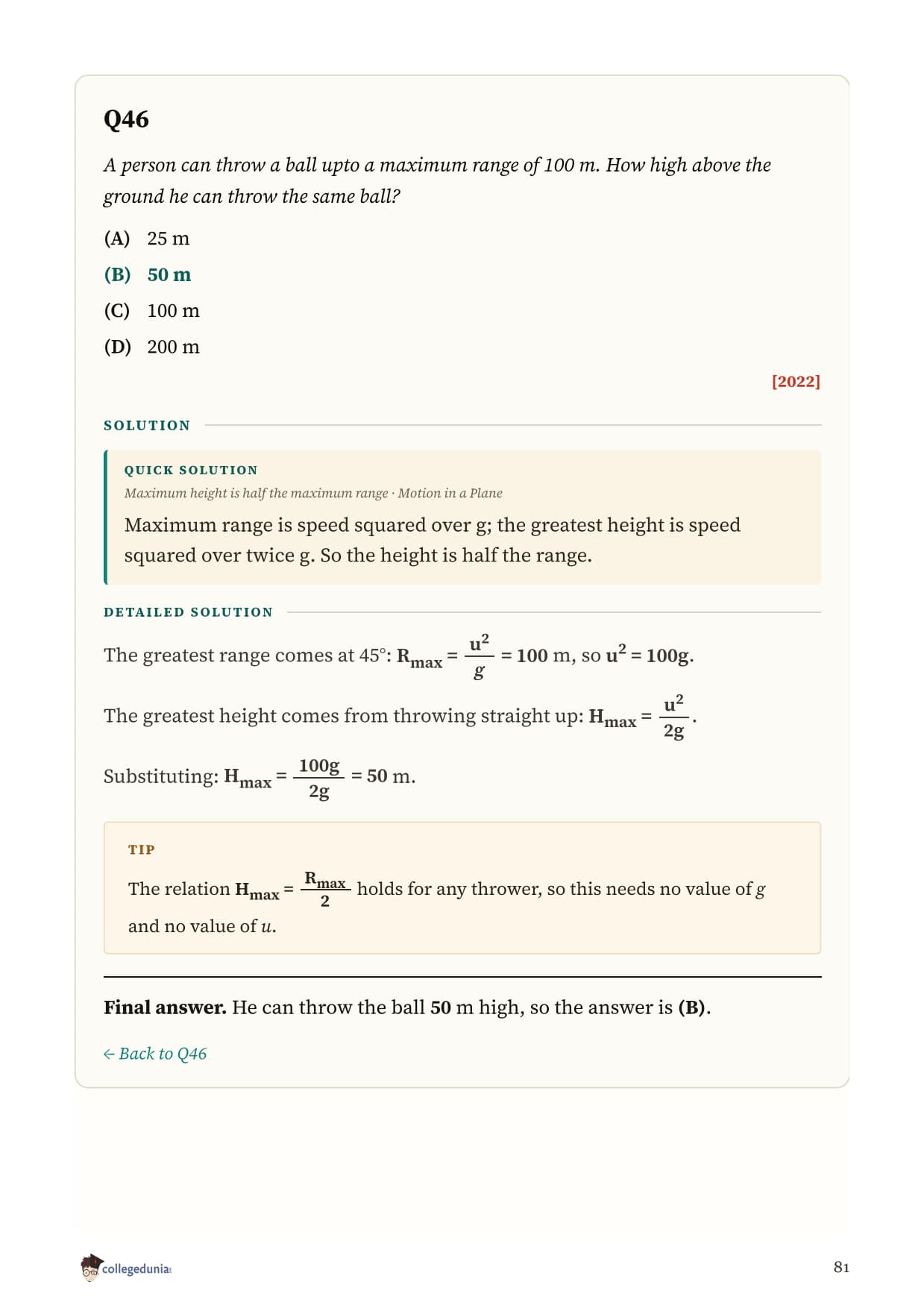
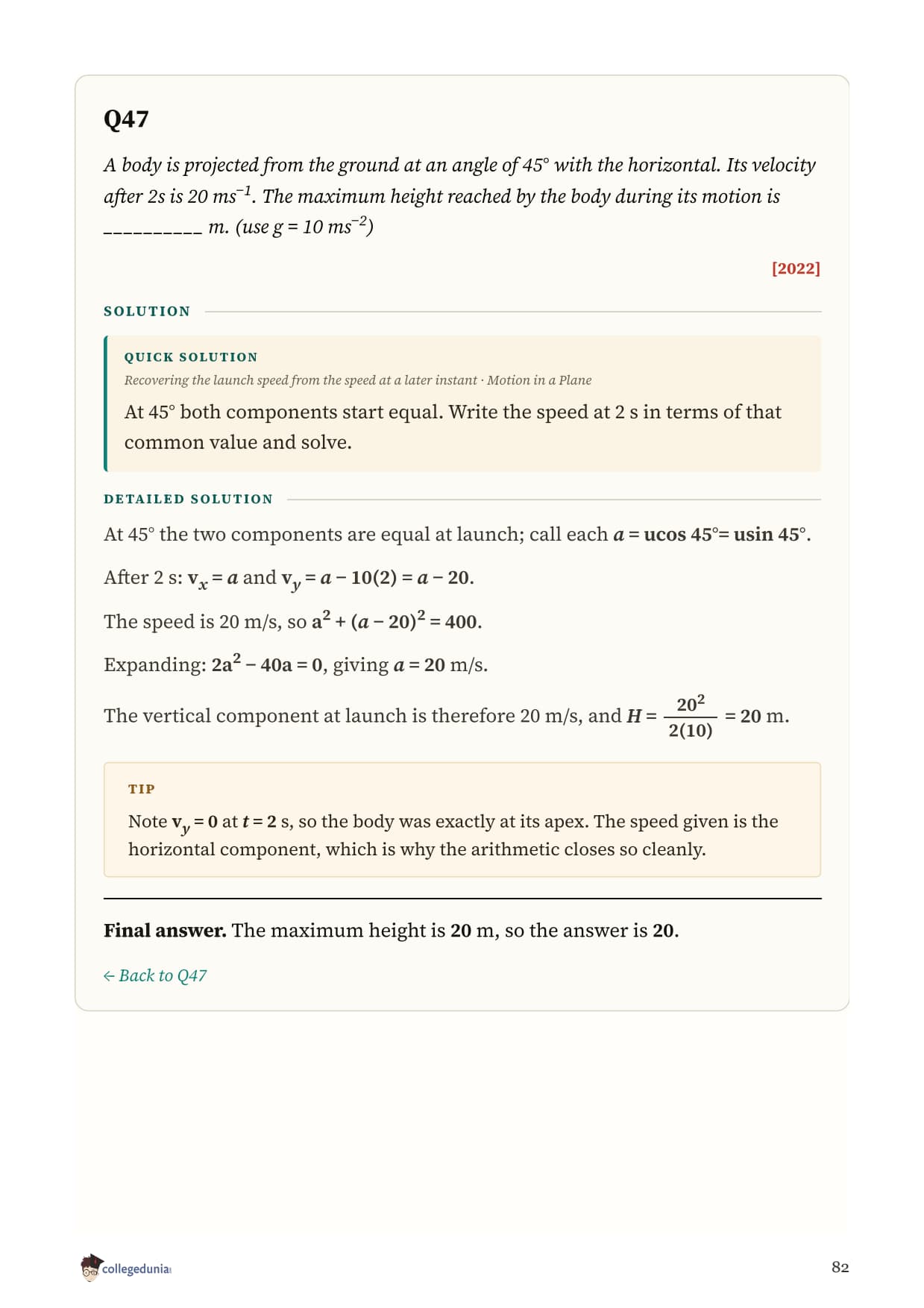
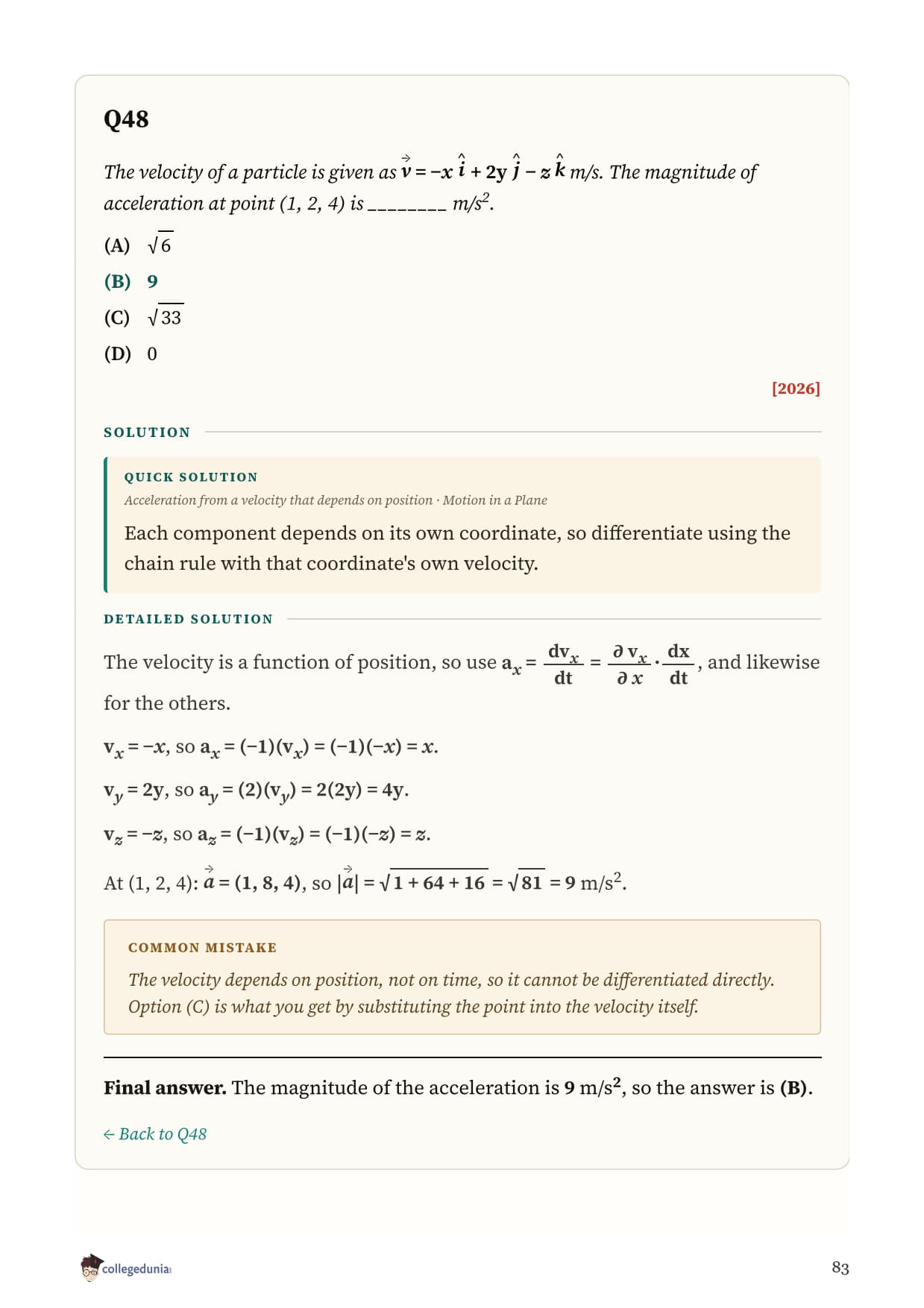
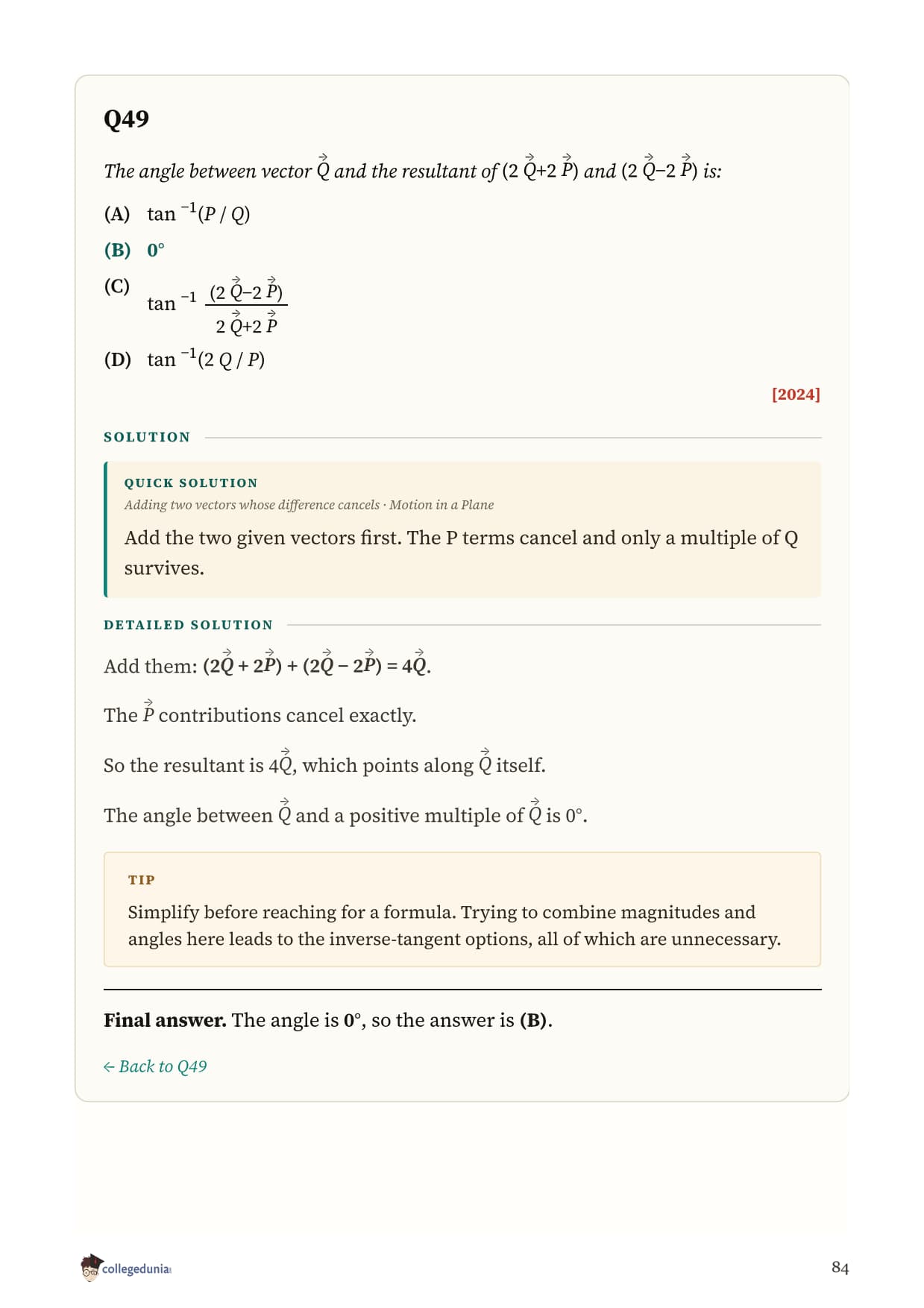
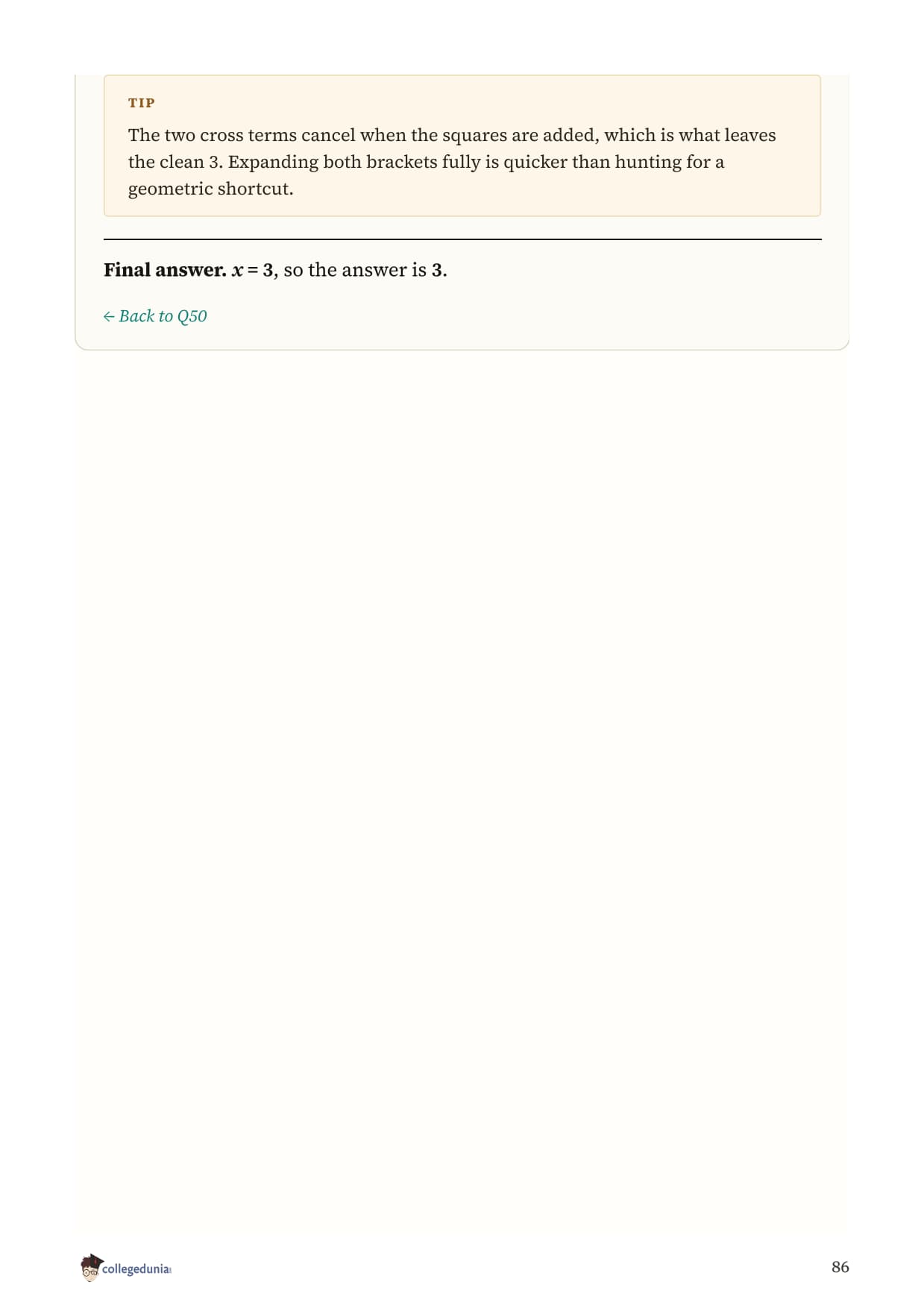
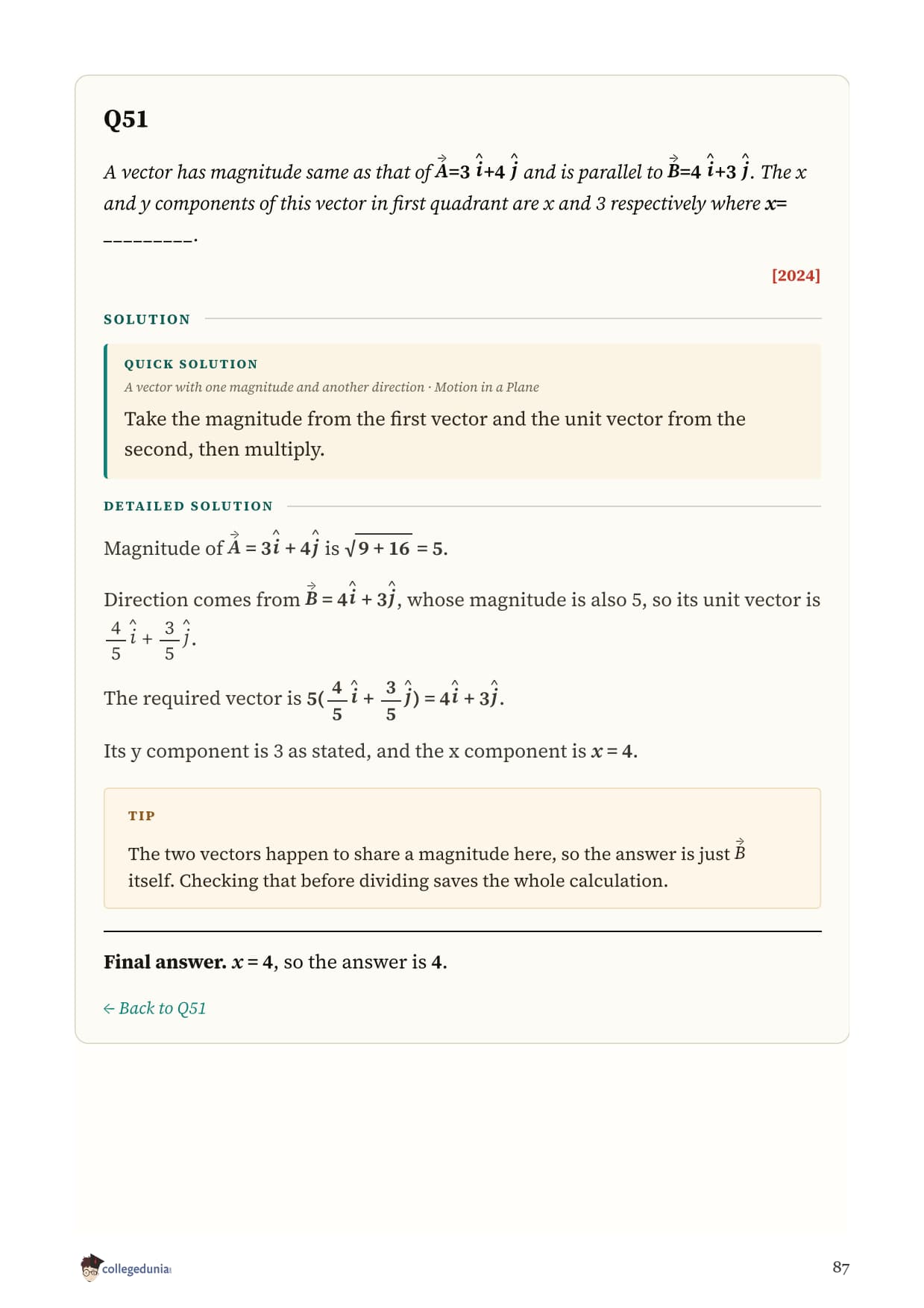
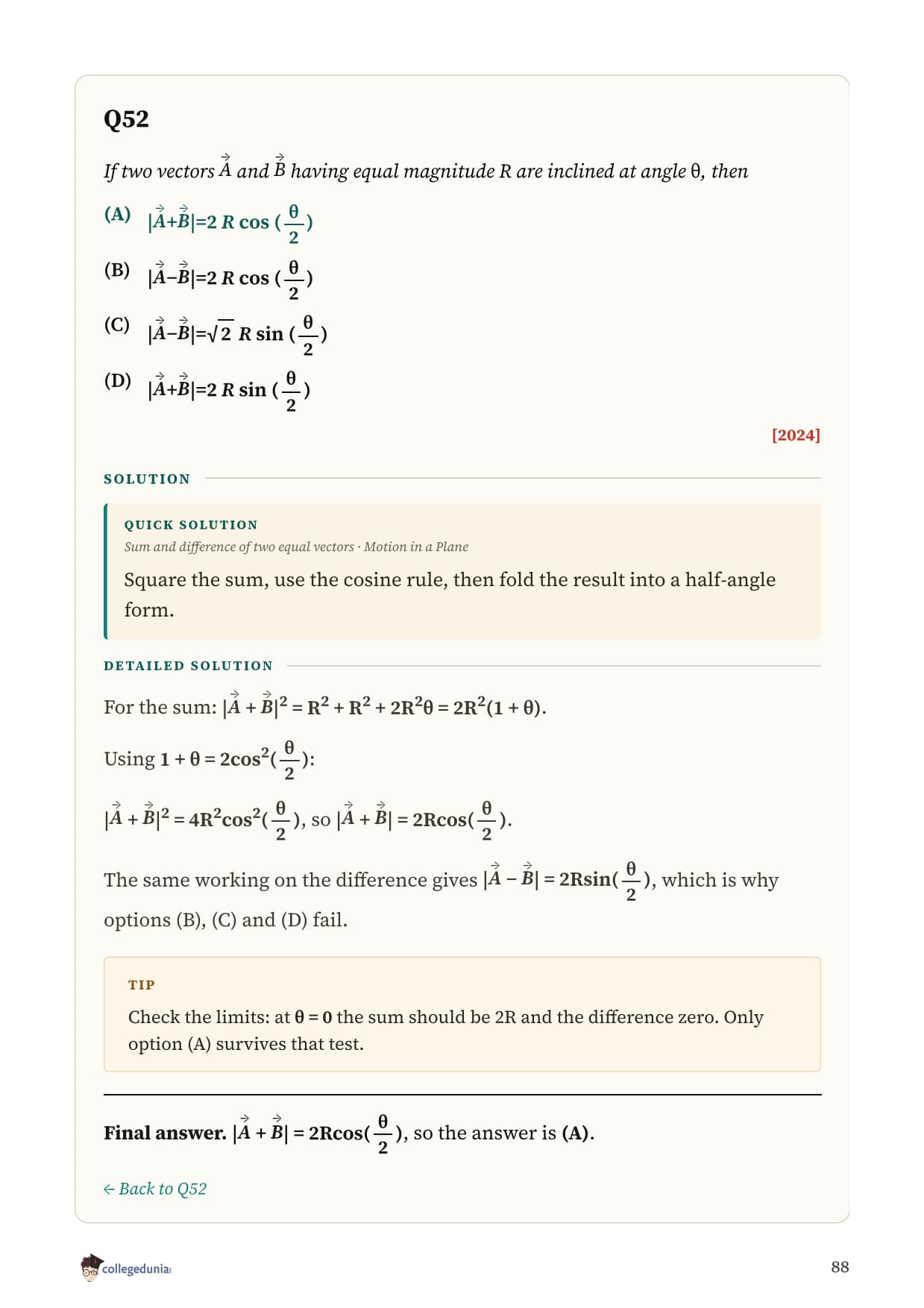
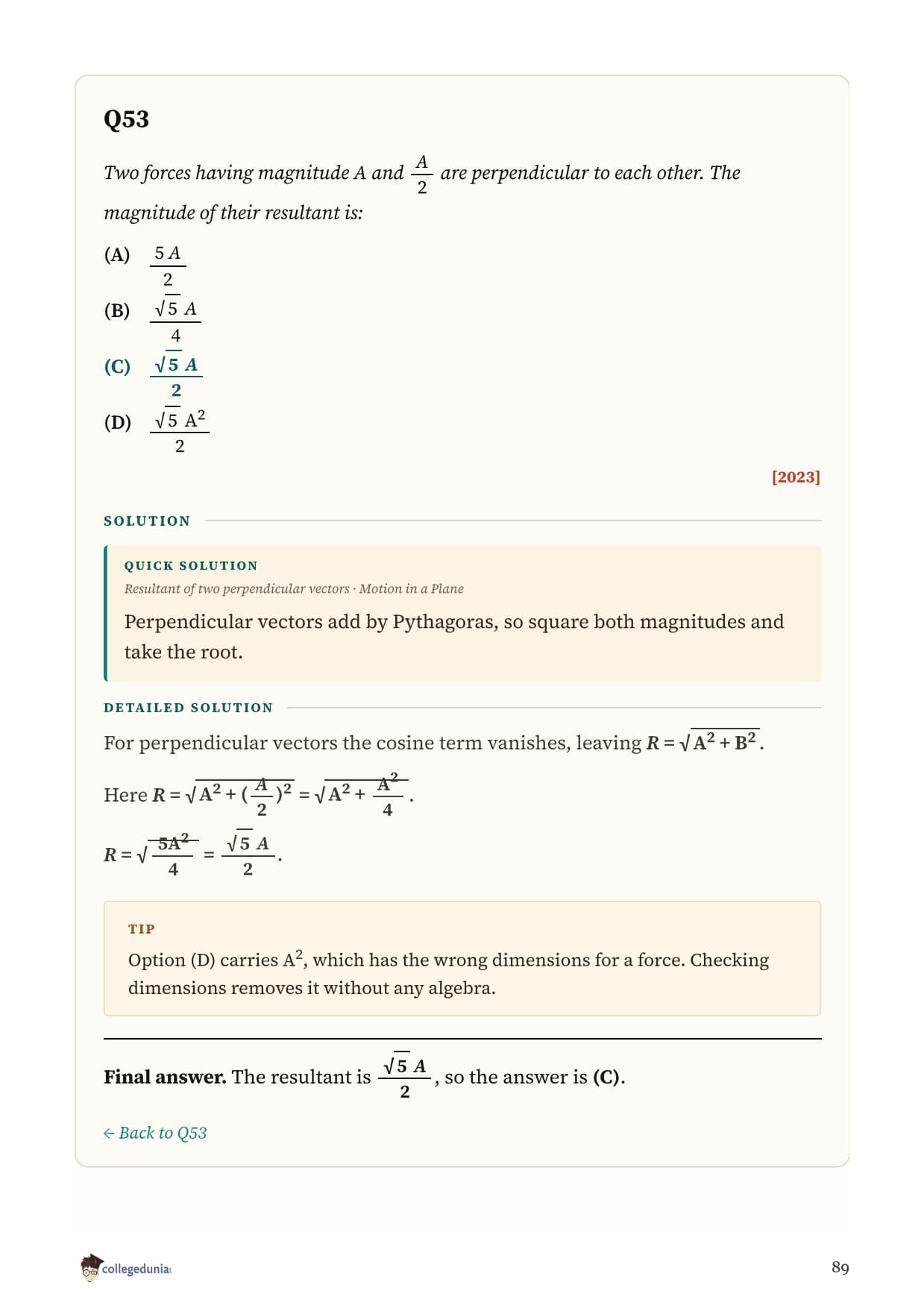
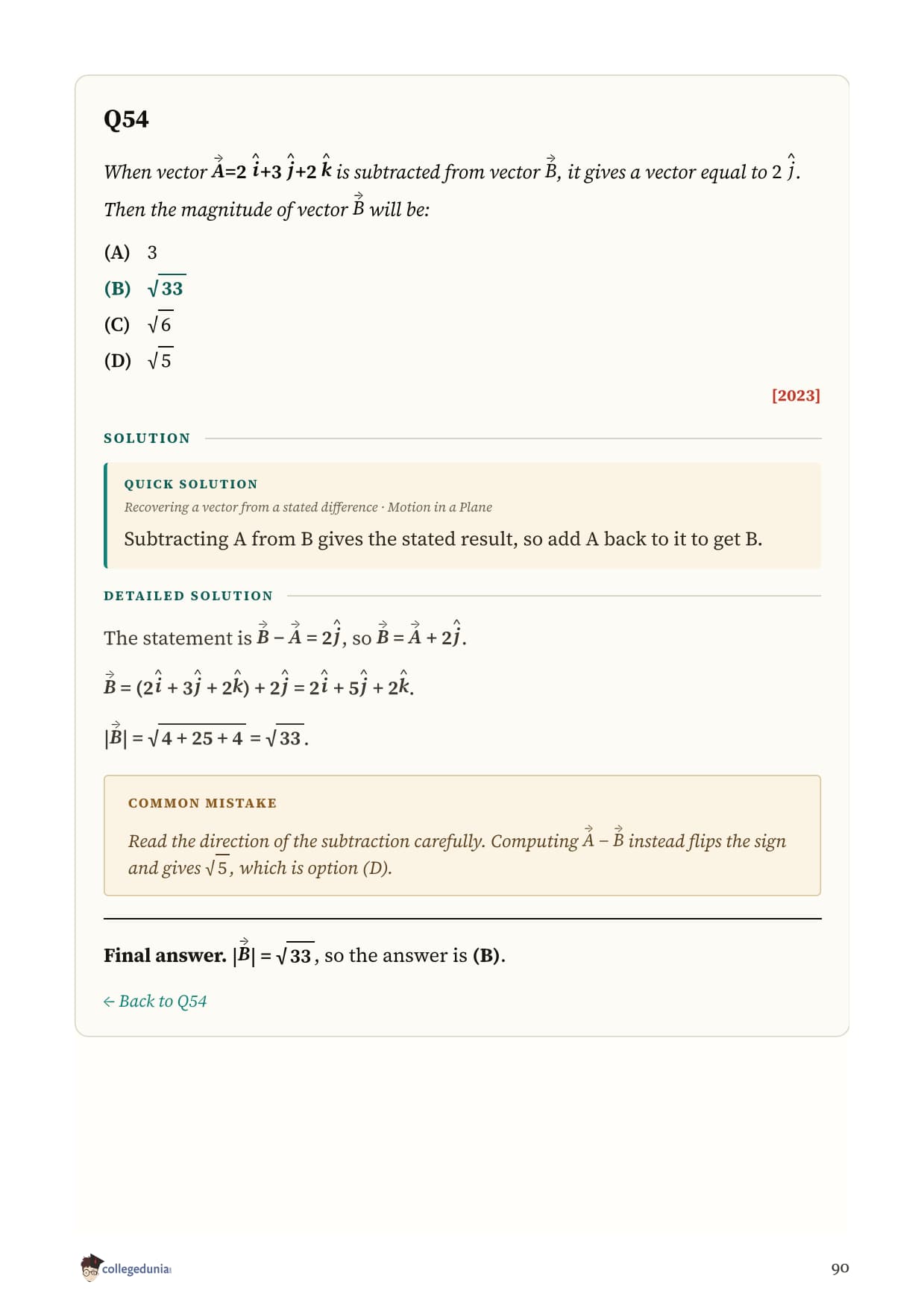
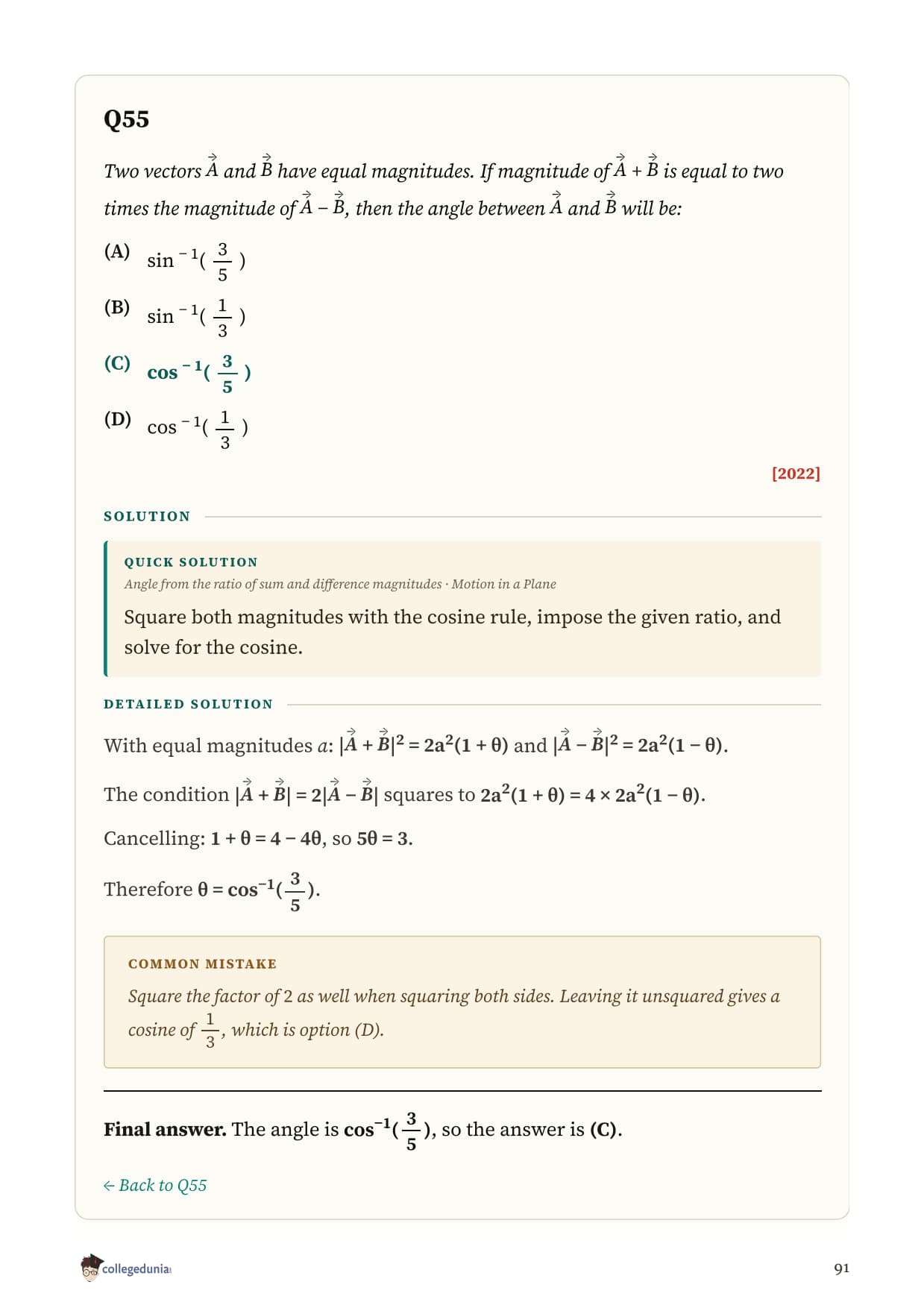
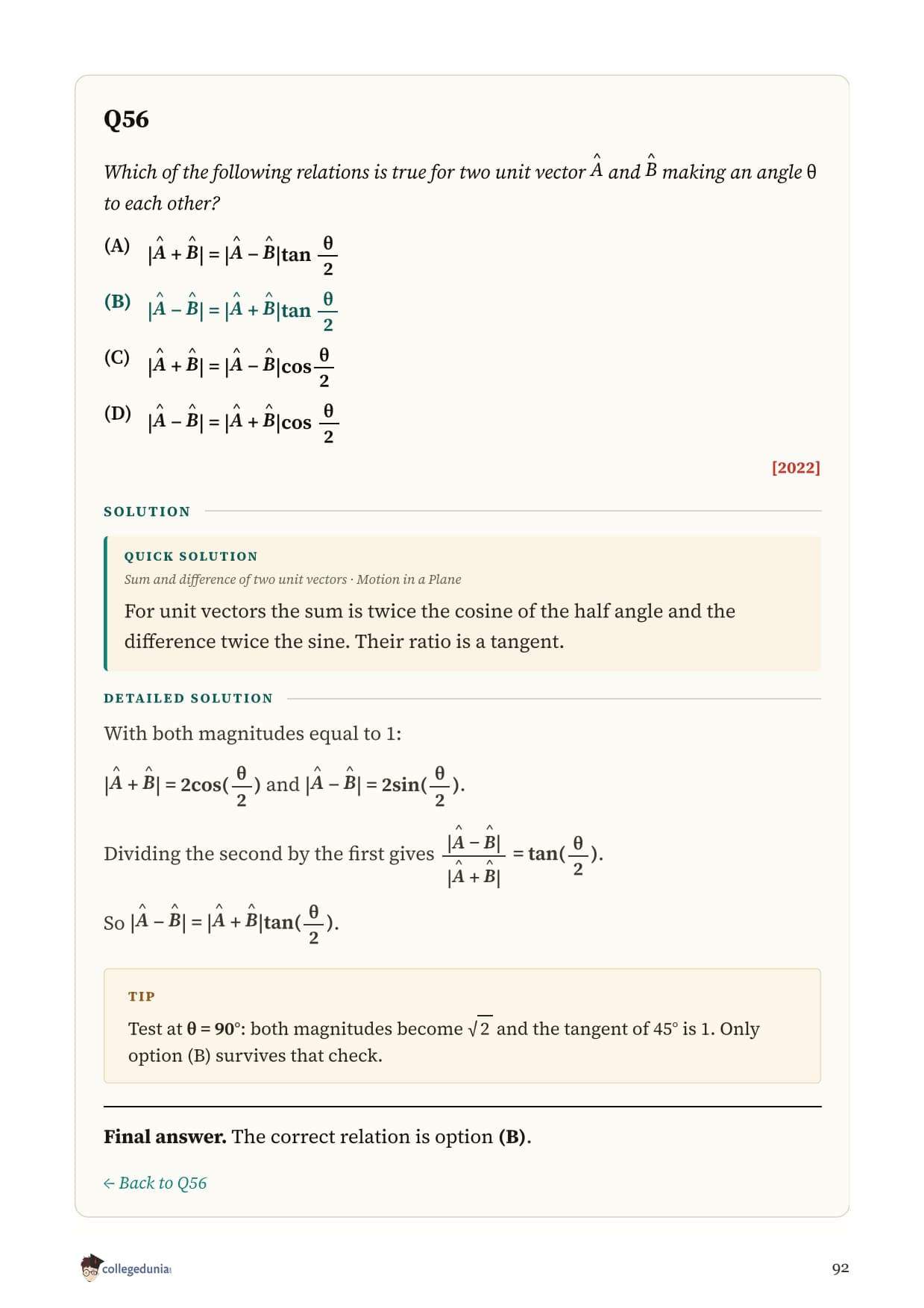
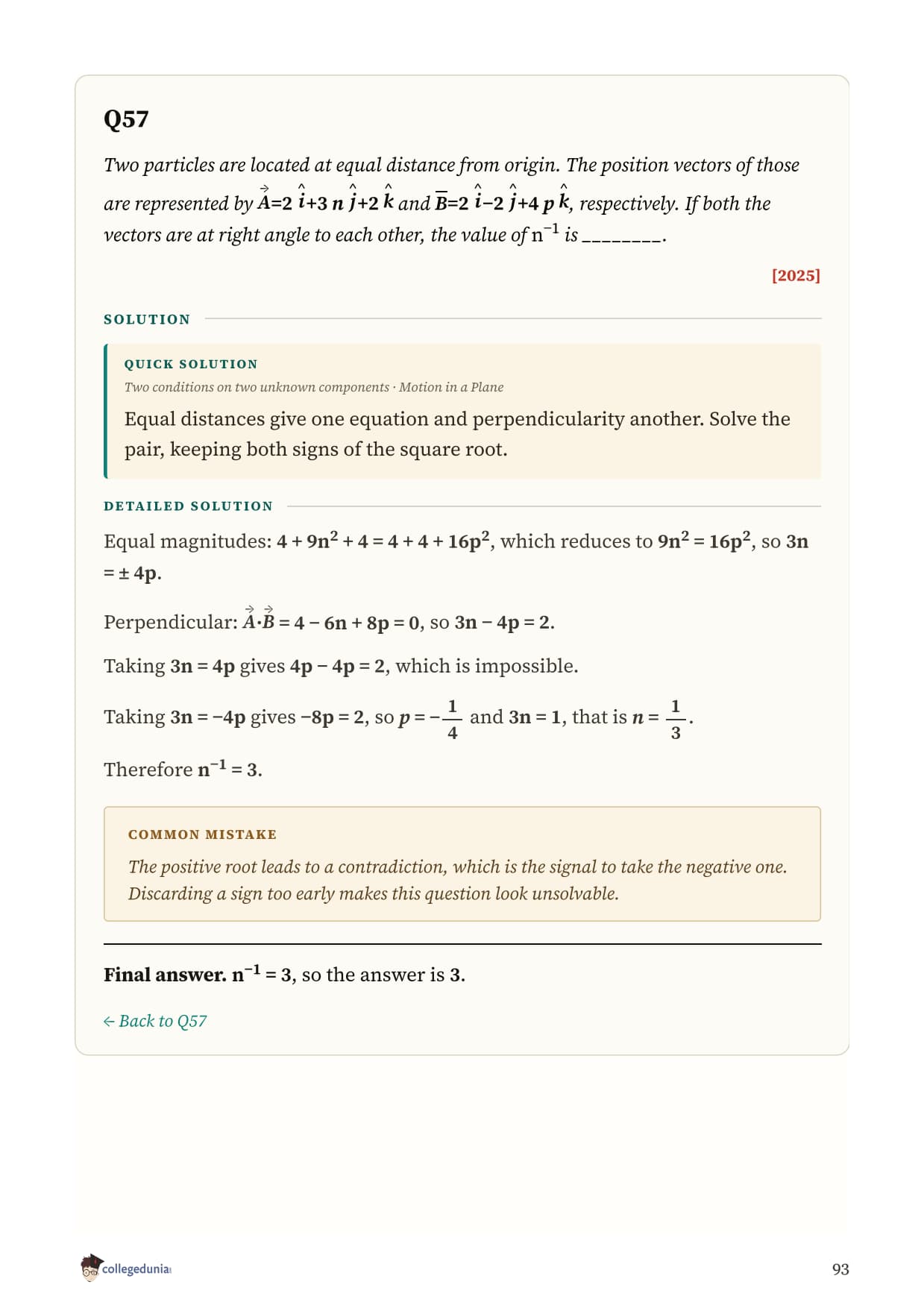
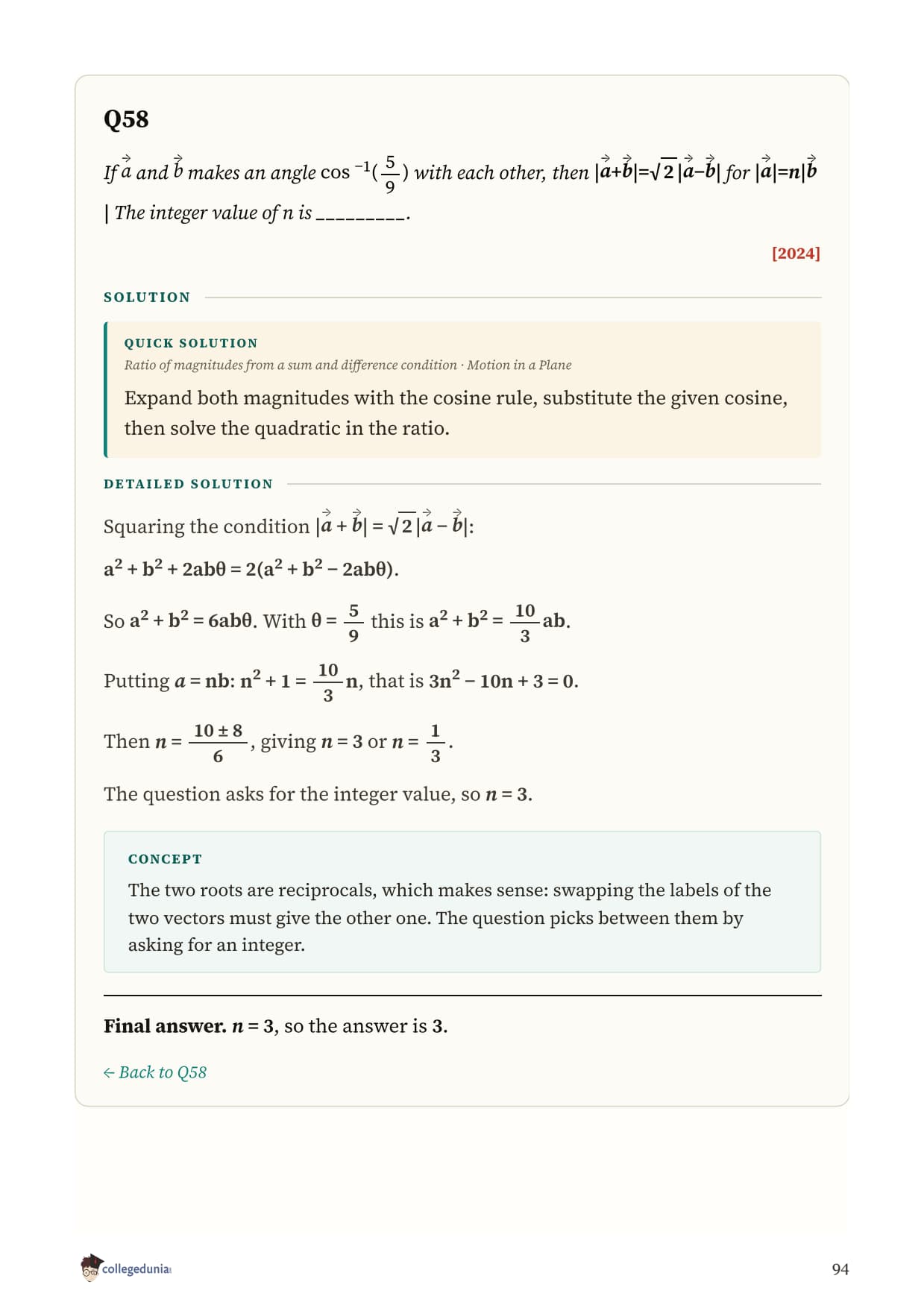
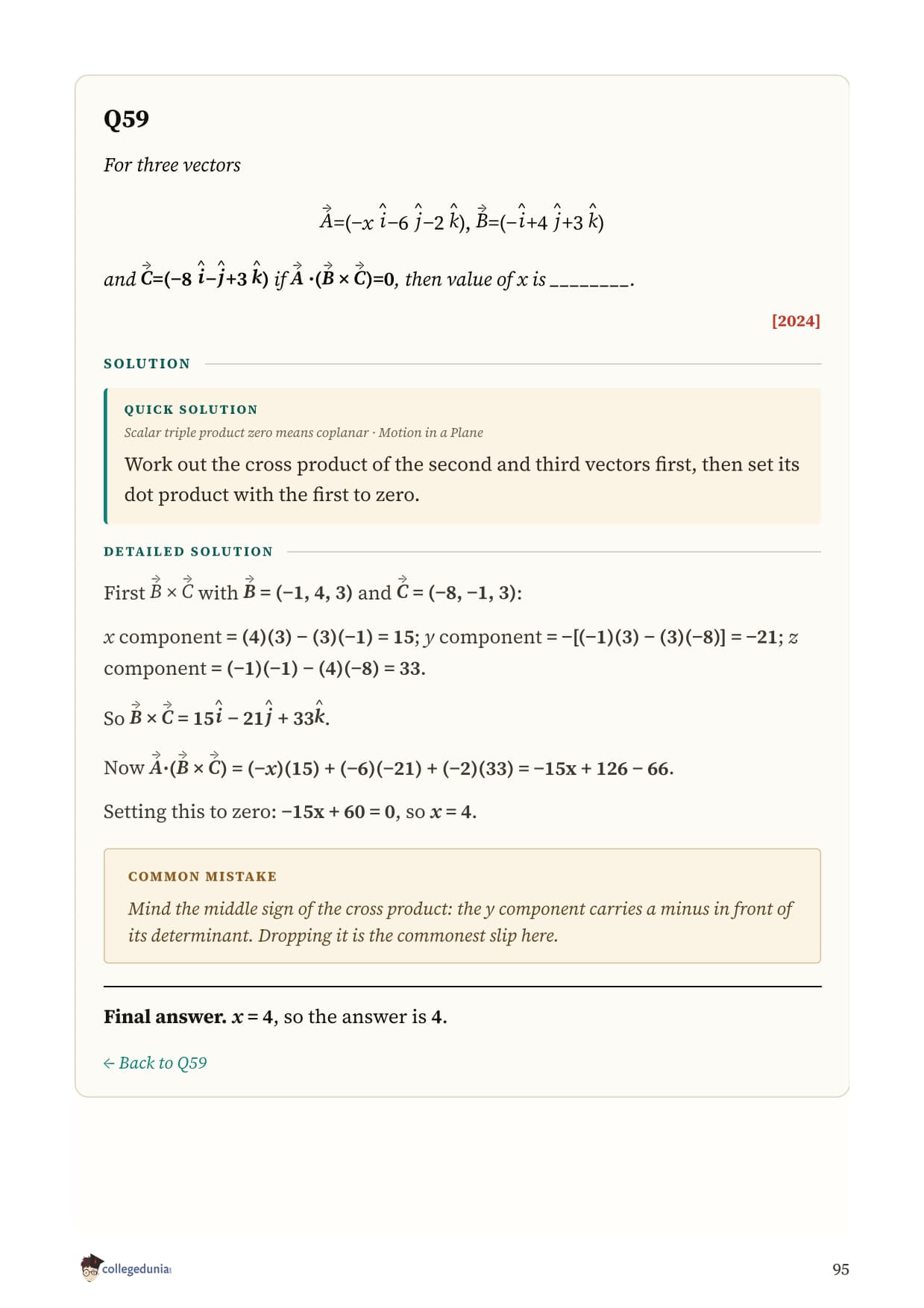
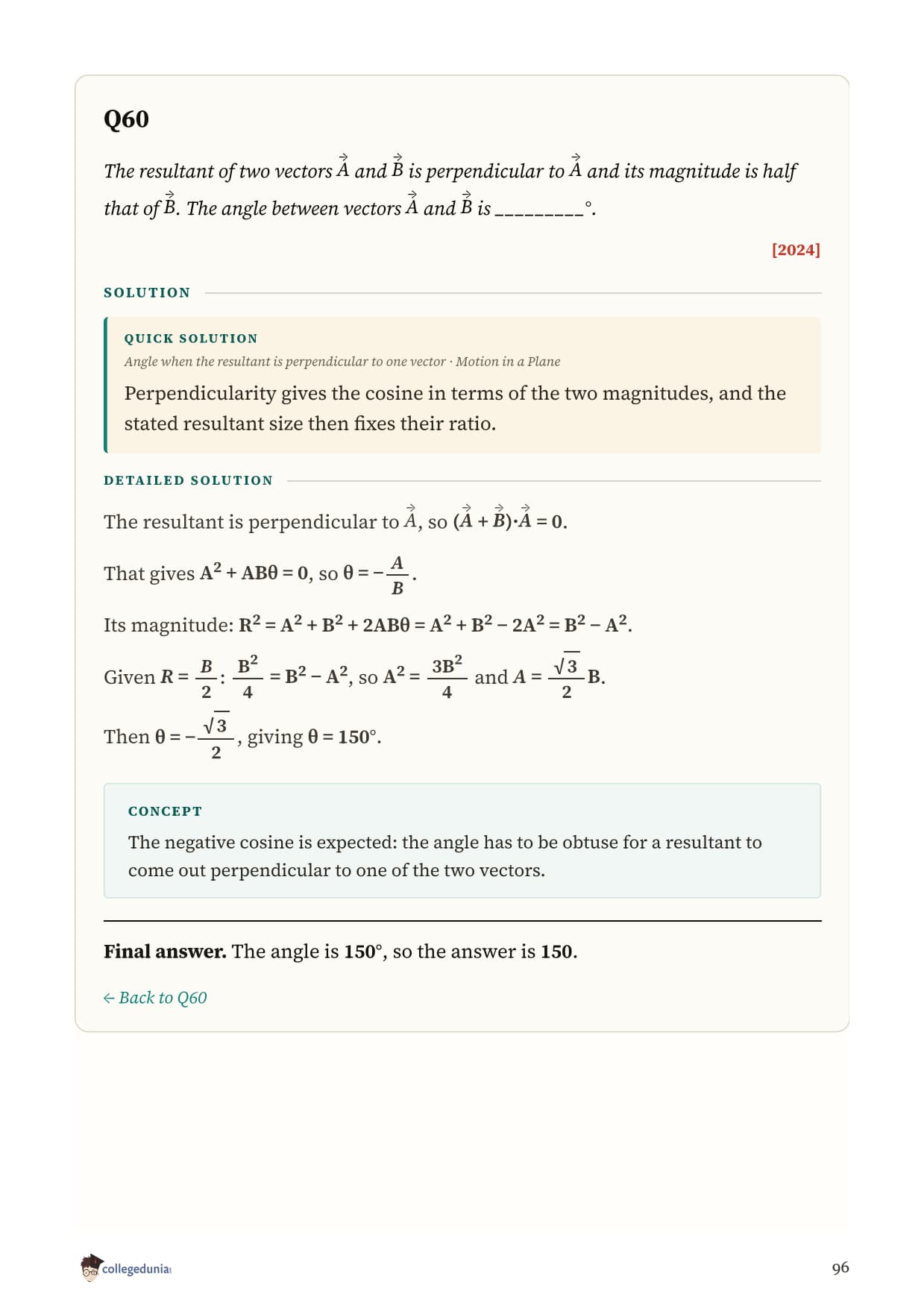
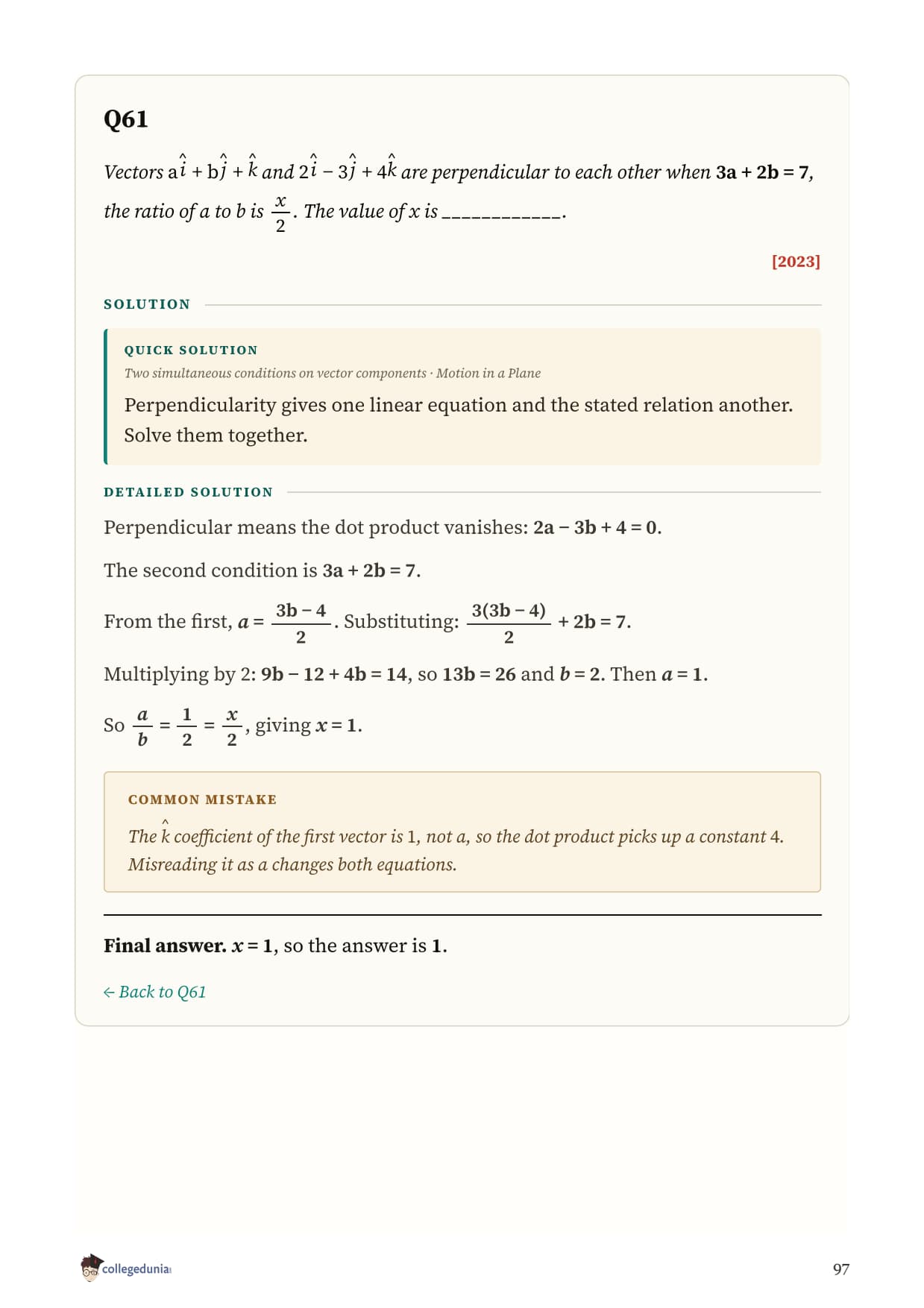
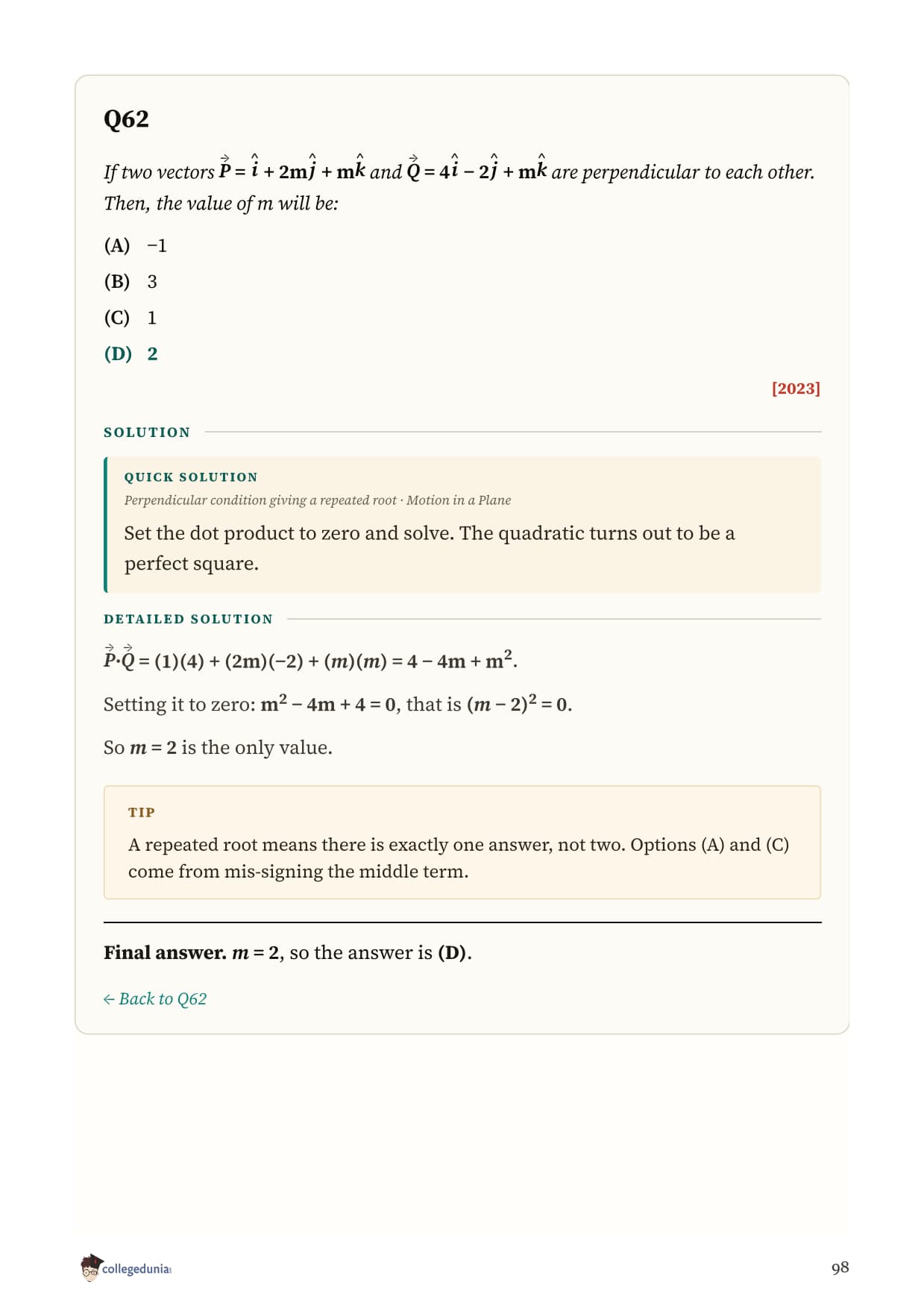
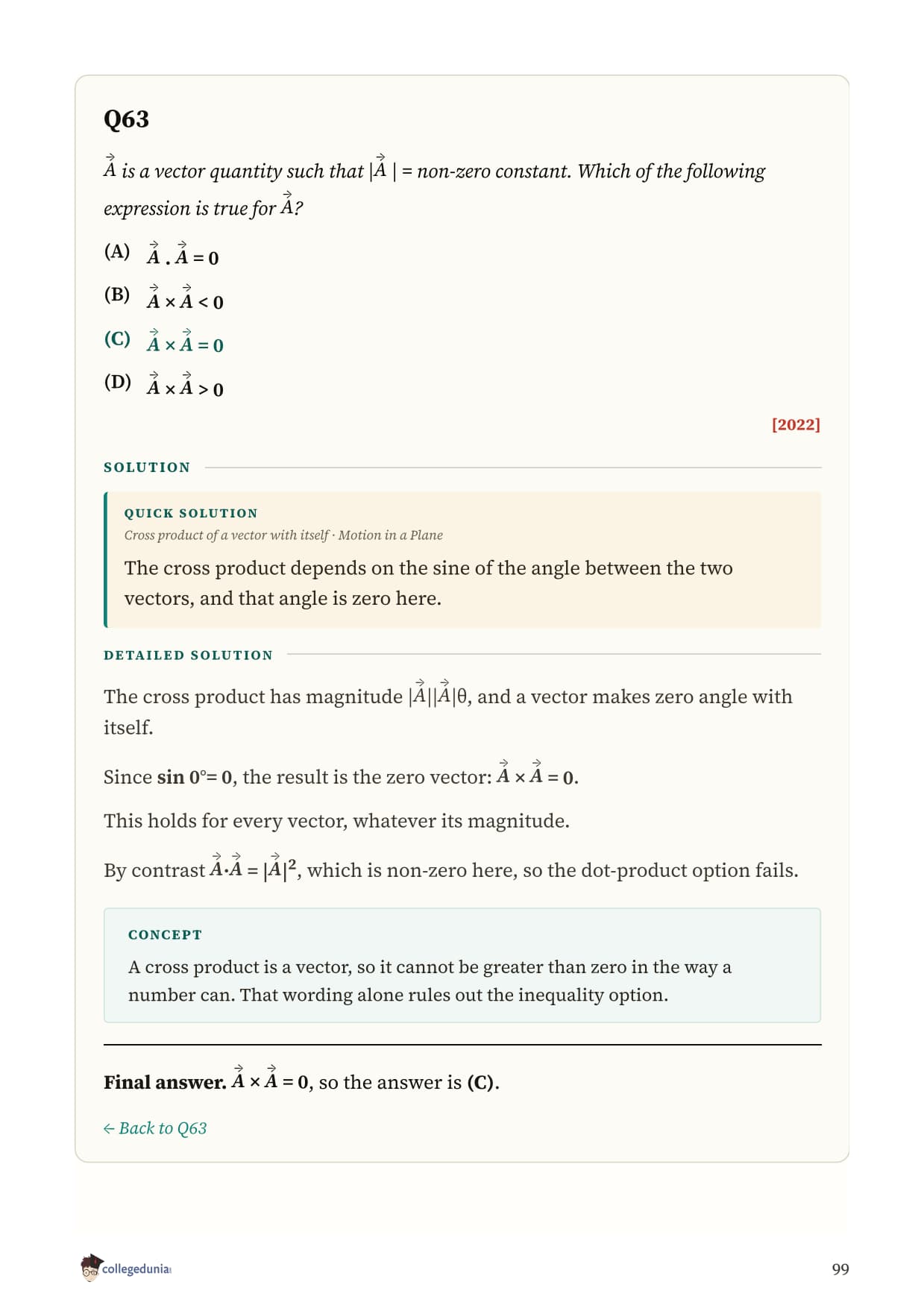
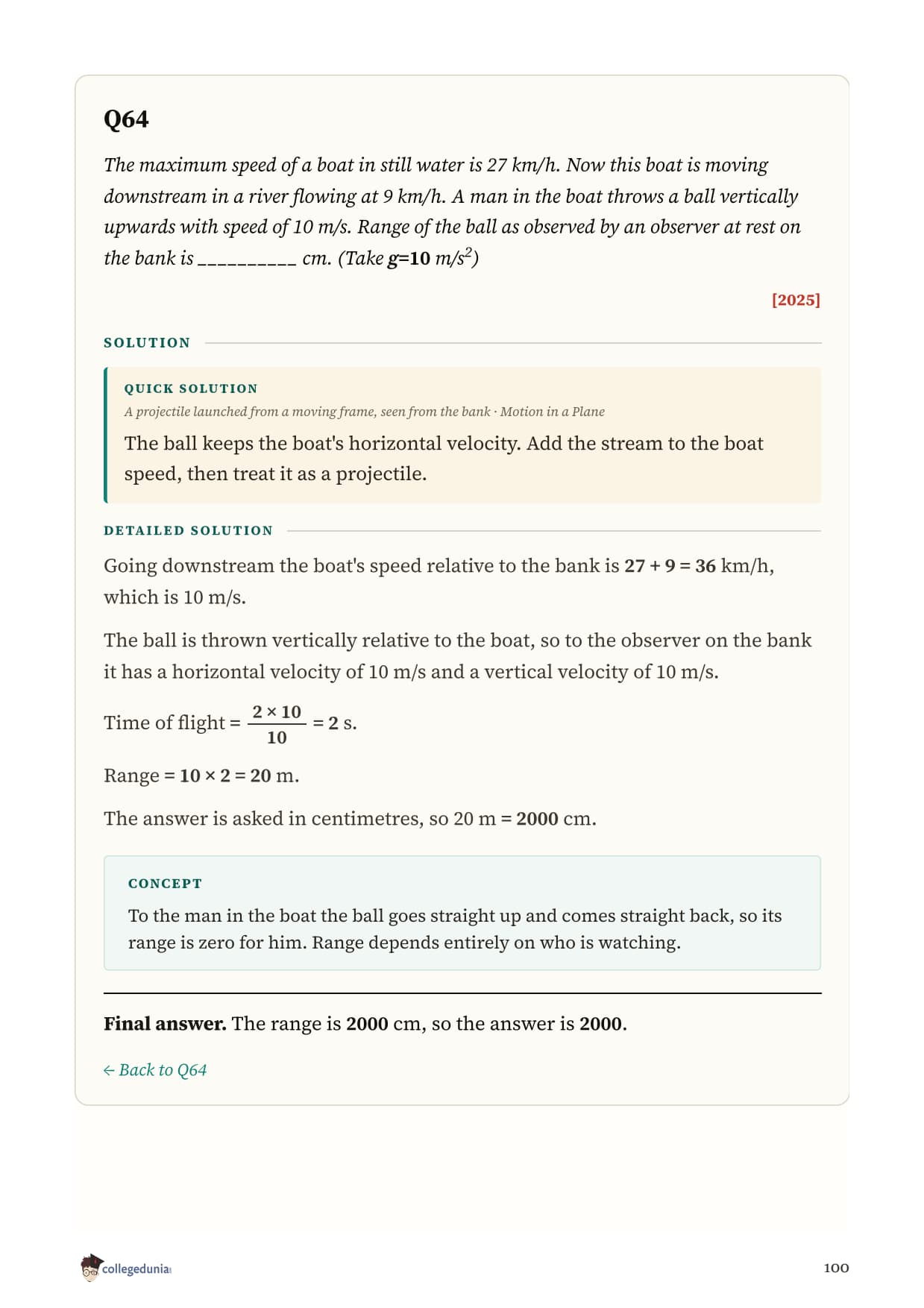
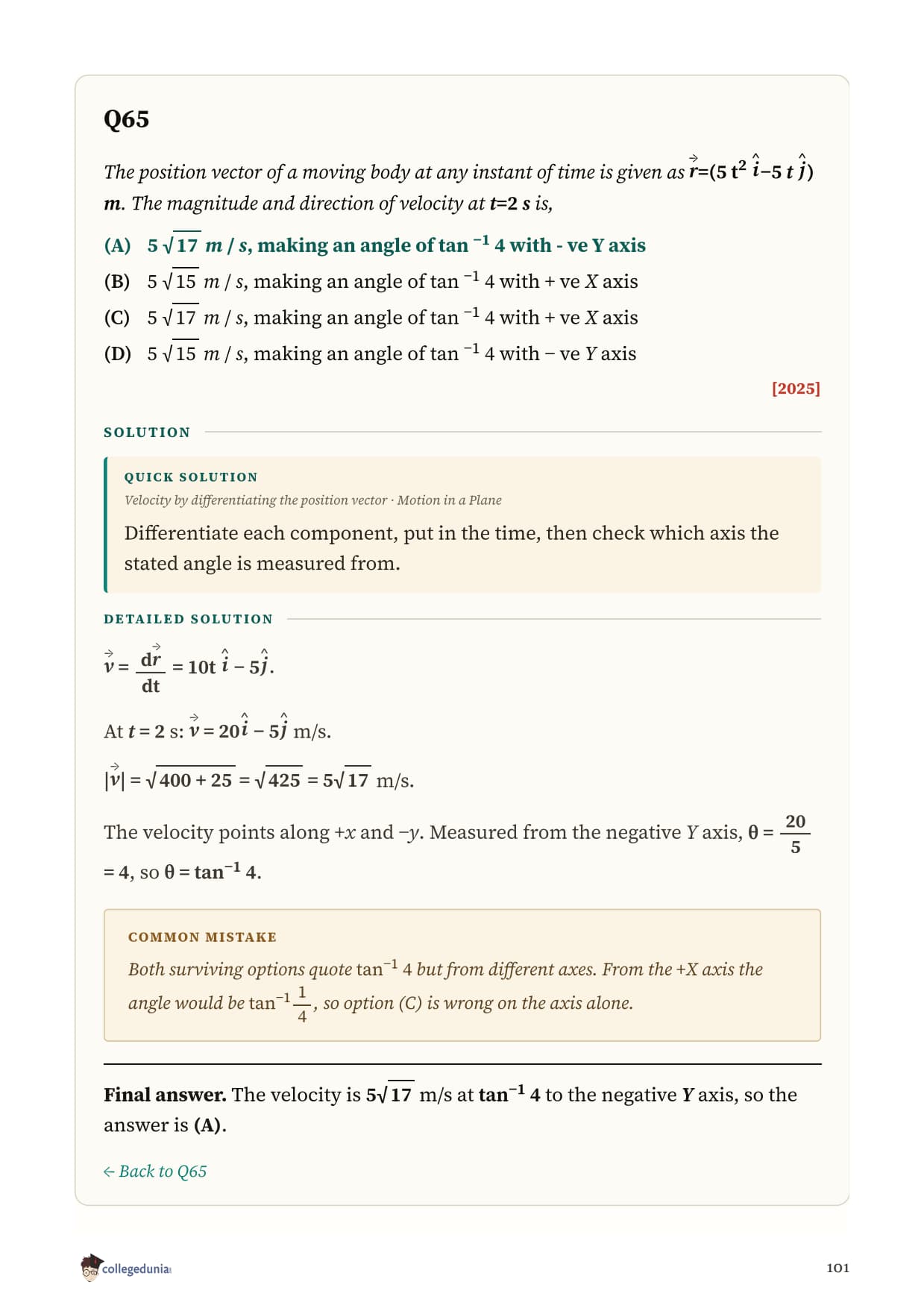
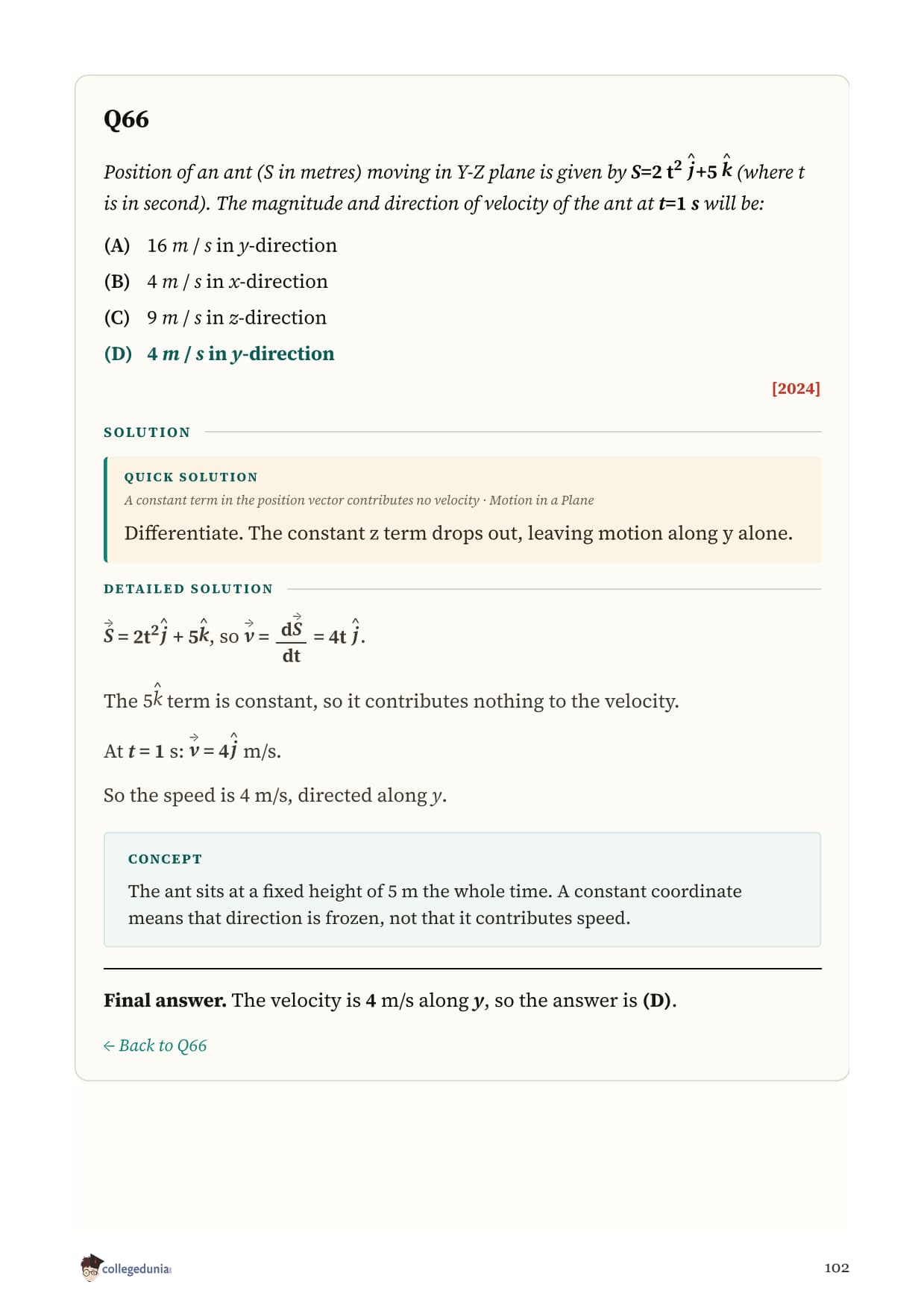
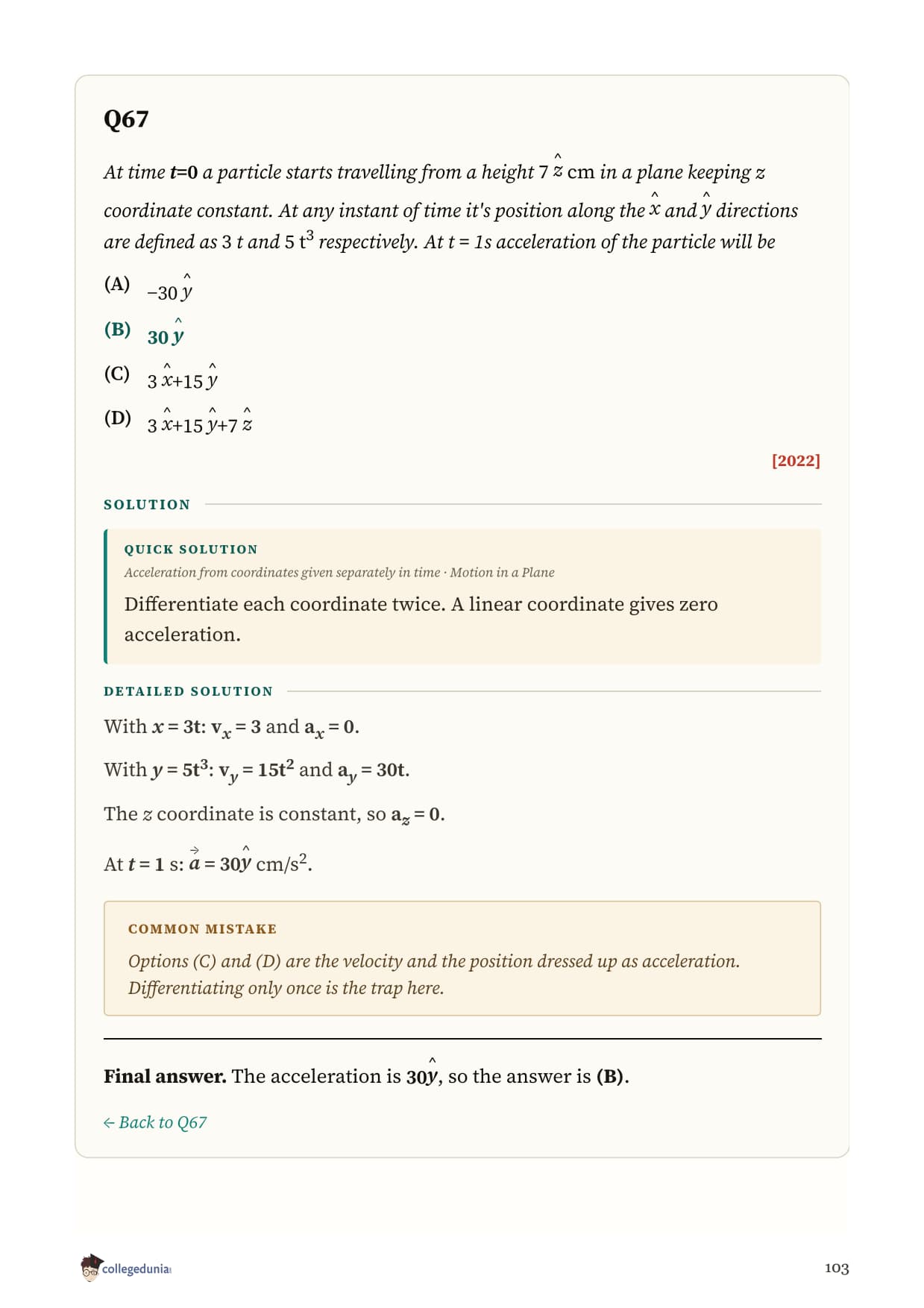
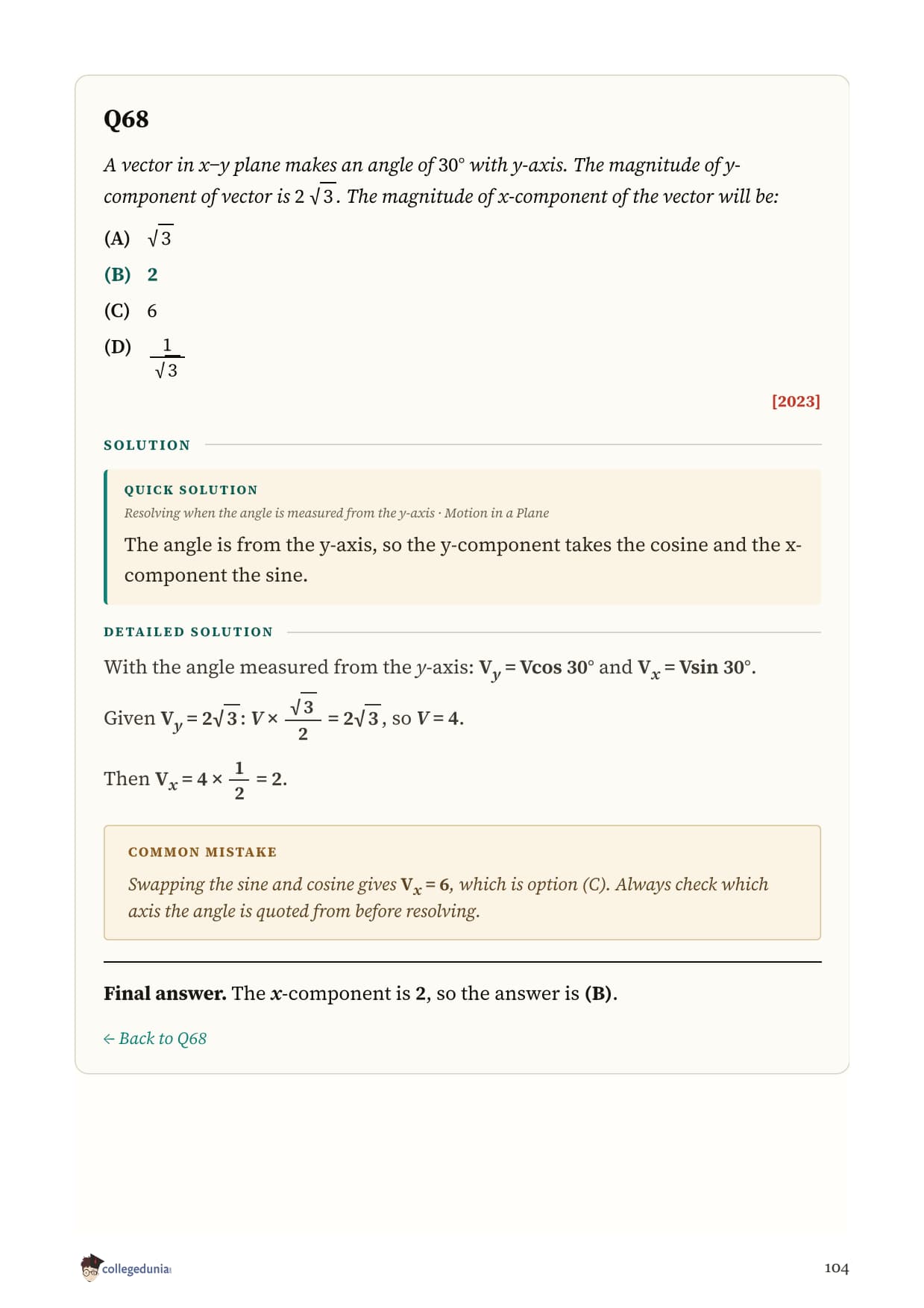
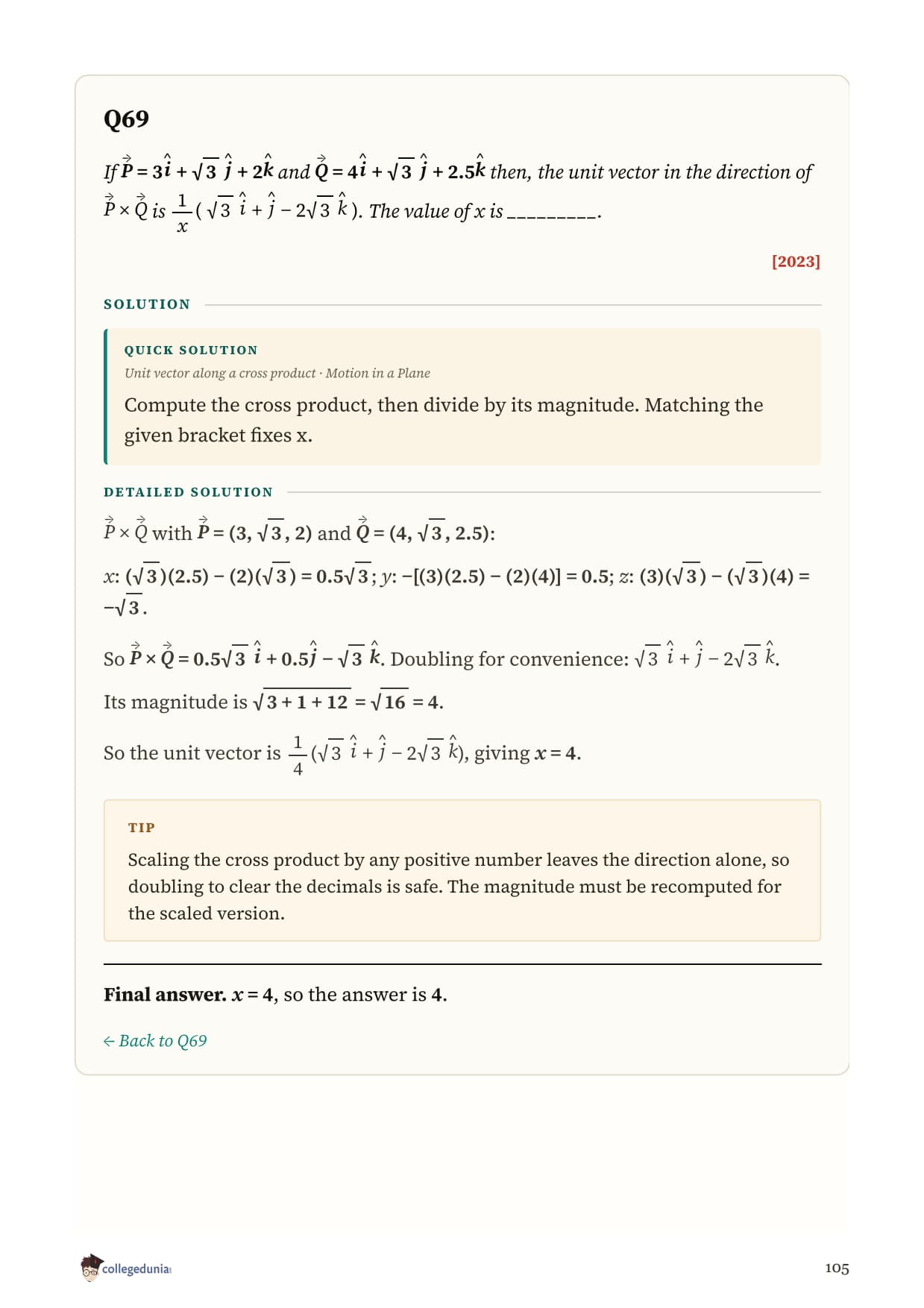
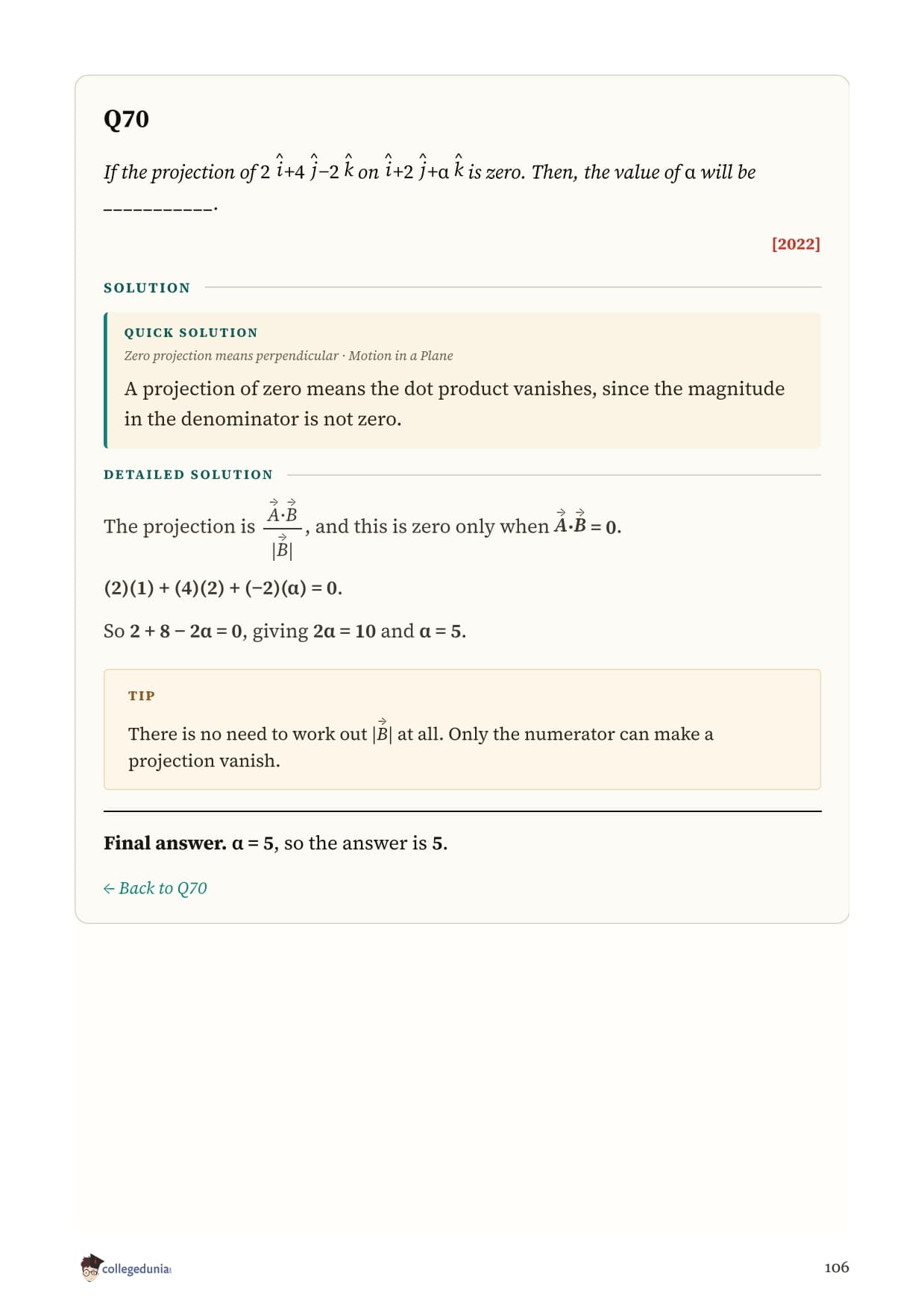
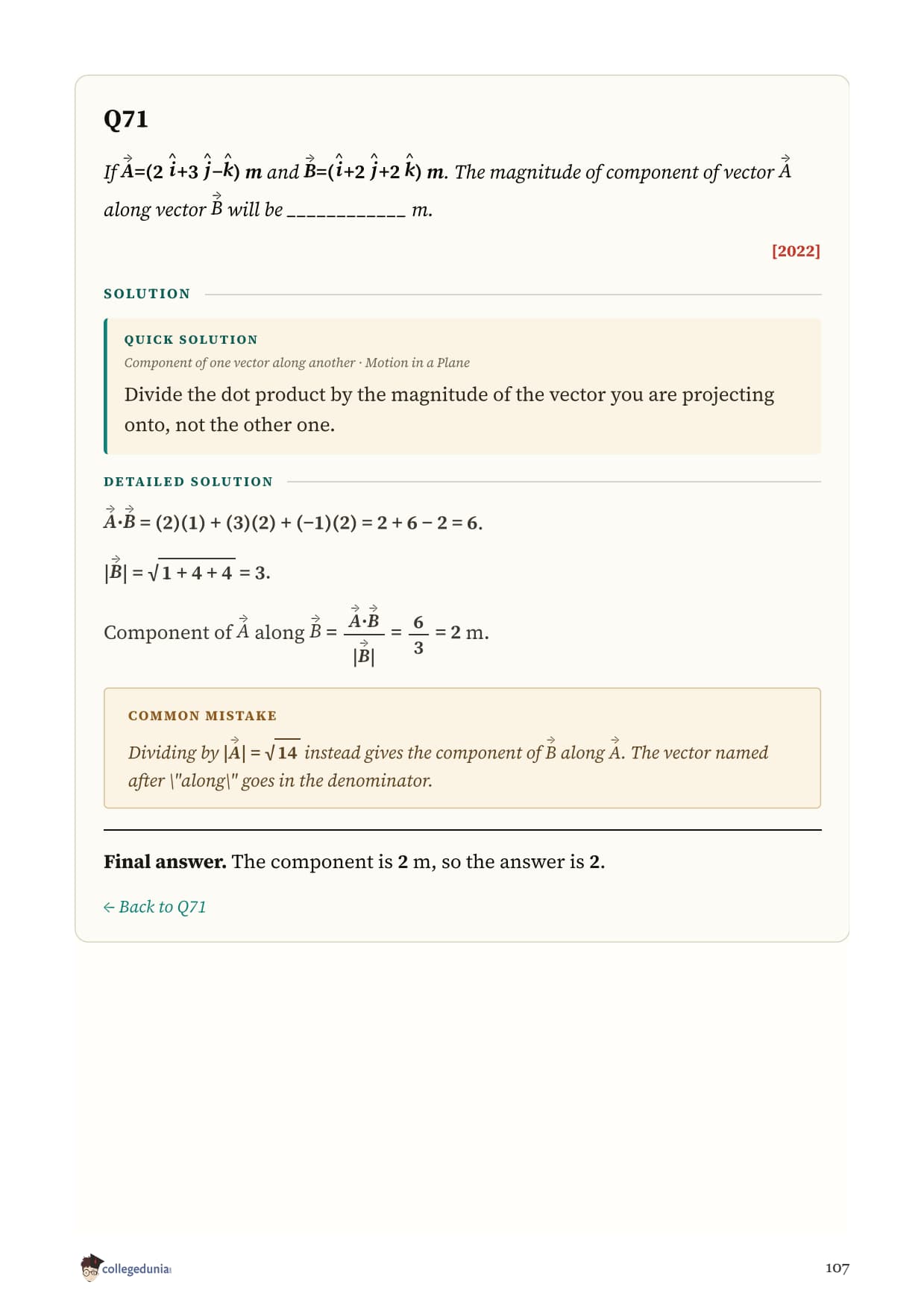
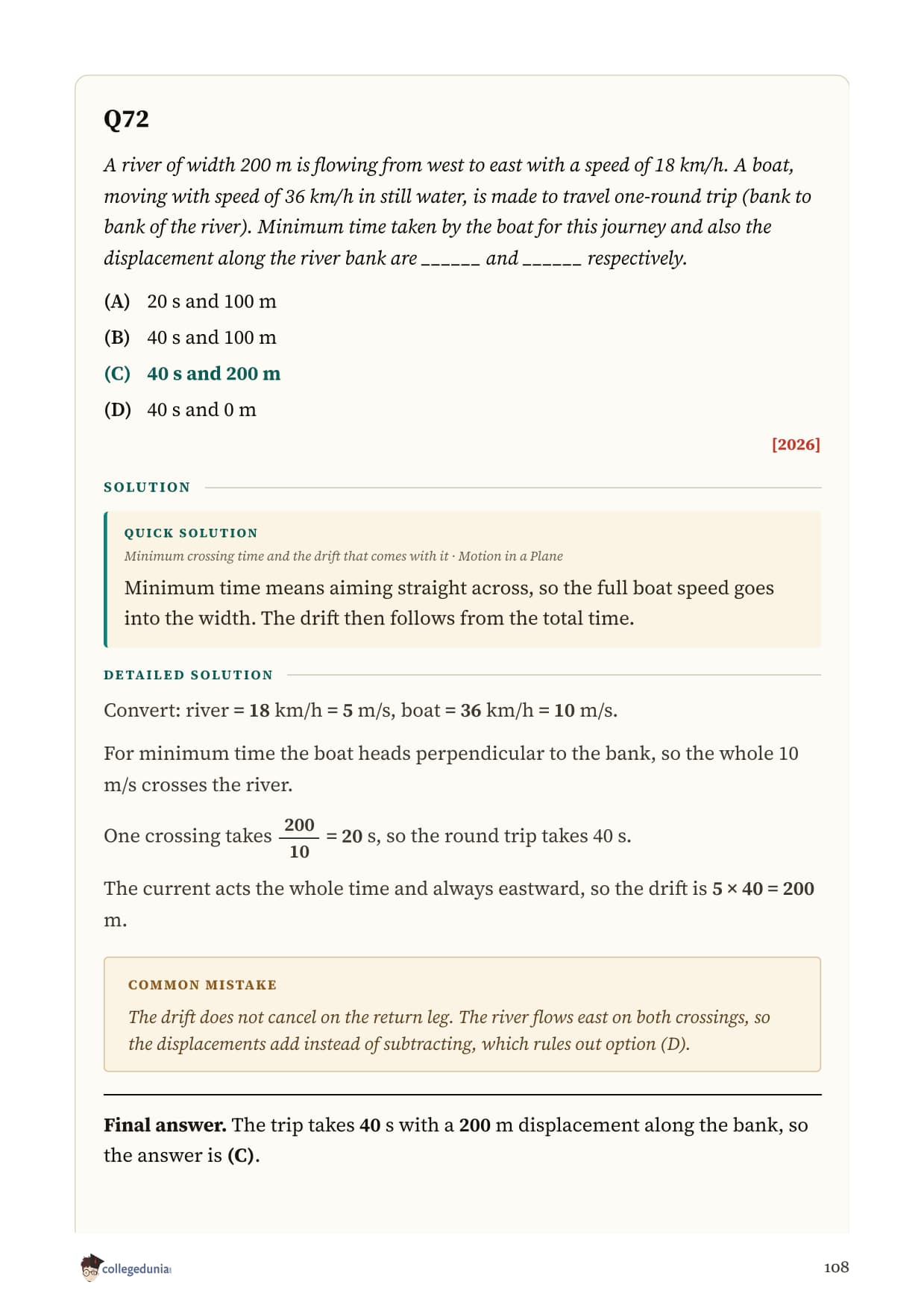

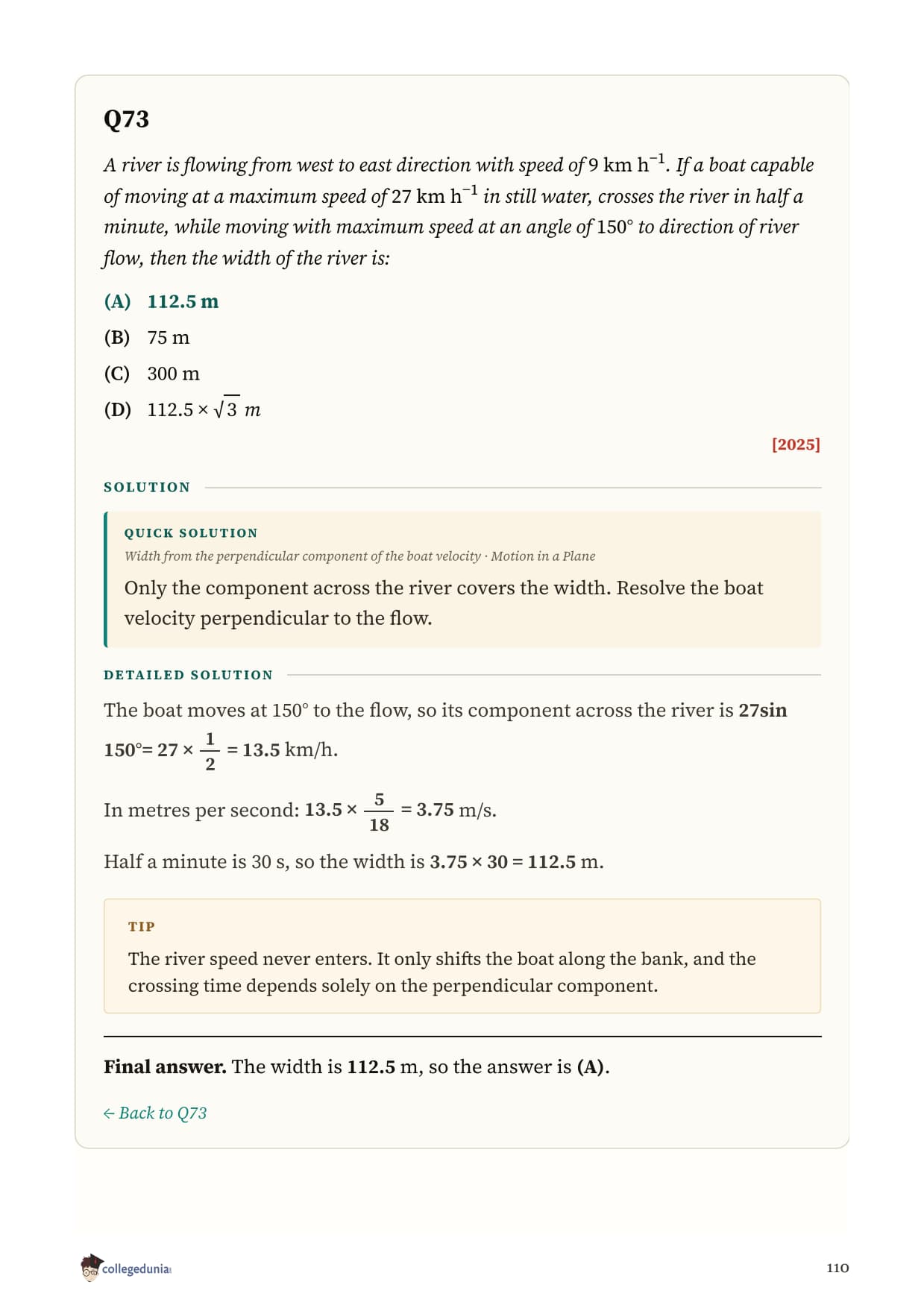
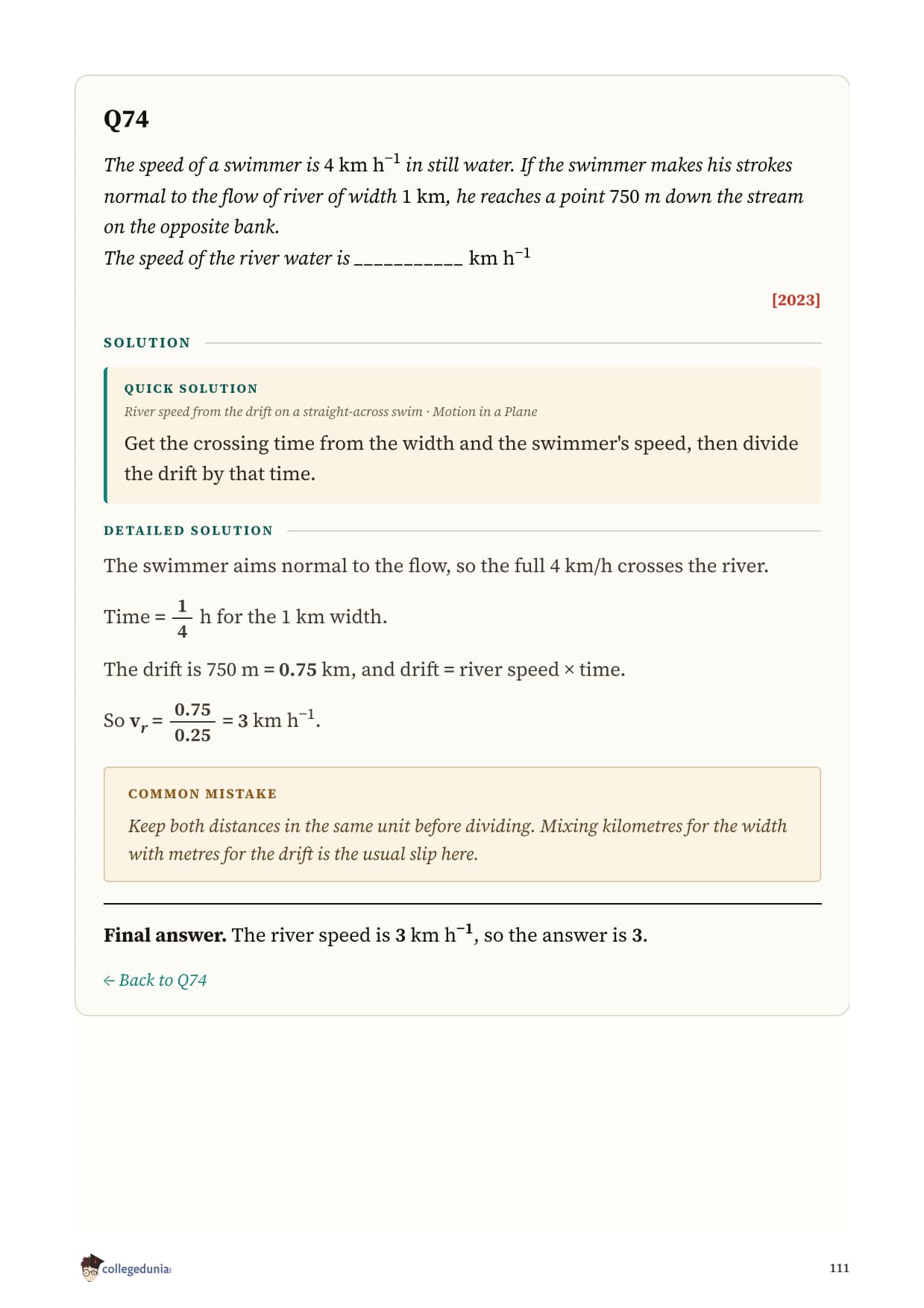
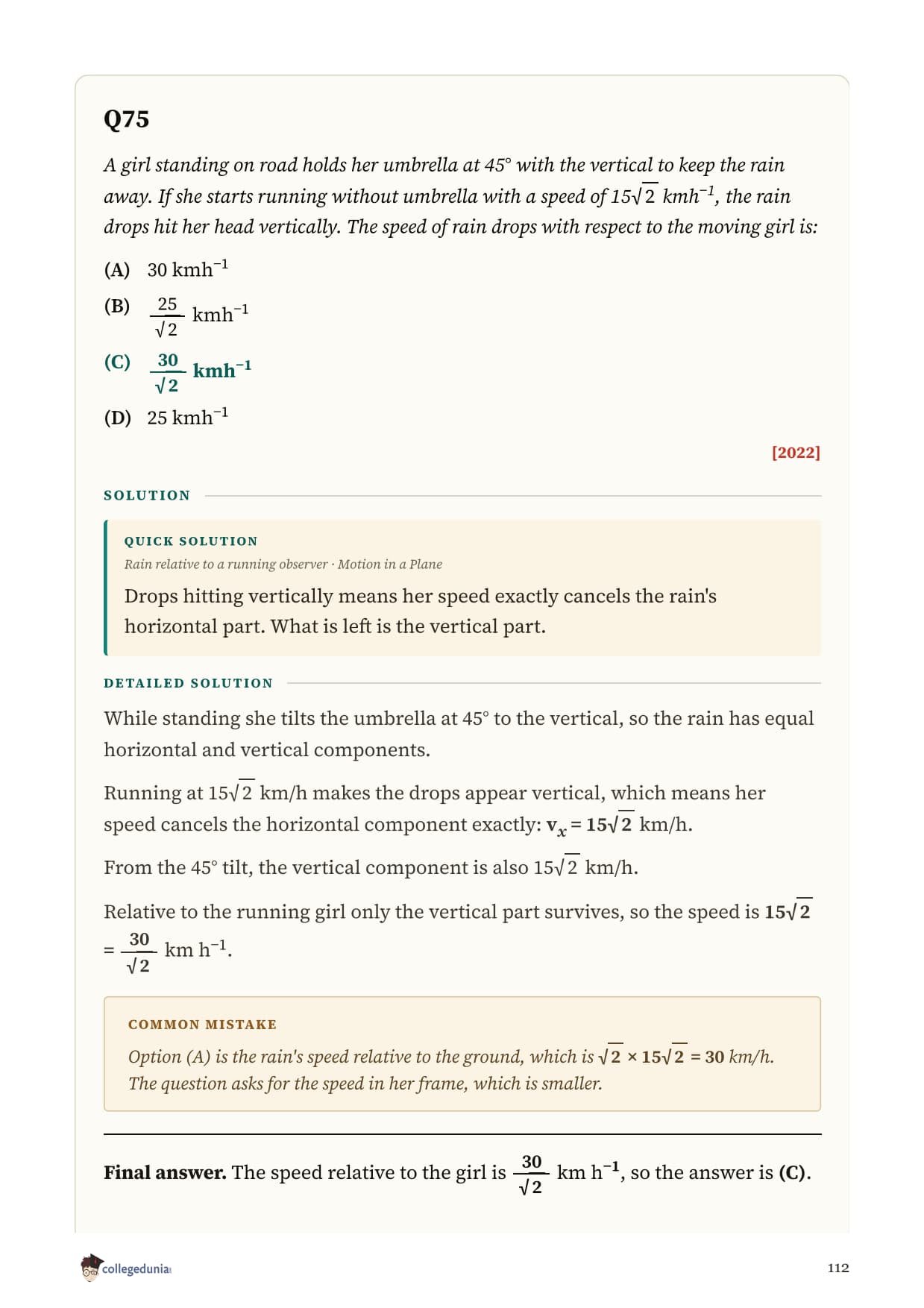

Each question keeps the year it was asked and the options exactly as printed. No answer sits beside its question. An answer key follows the sections, and a full worked solution for every question follows that.
Which Sub-Topics the 75 Questions Come From
Sections run by sub-topic instead of by year, so one idea can be finished in a sitting. Within a section, the newest paper comes first.
- Projectile Motion (47 questions), by far the heaviest section
- Vector Arithmetic (9), addition, subtraction and resultants
- Dot and Cross Product (7), mostly numerical-answer questions
- Relative Motion in Two Dimensions (4)
- Vector Projections (4), the component of one vector along another
- River Boat (3) and Rain and Man (1)
All of this sits inside Unit 2 of the official NTA syllabus, which lists scalars and vectors, scalar and vector products, unit vectors, resolution of a vector, relative velocity, motion in a plane and projectile motion. Uniform circular motion is in the same unit but gets its own bank.
Two Thirds of the Bank Is Projectile Motion
Forty-seven of the 75 questions are projectiles, and they reuse a short list of ideas. Naming them makes the section far quicker.
- The horizontal component never changes, which links any two instants of the flight
- Complementary angles share a range, so a range alone never fixes the angle
- Reading the trajectory equation coefficients instead of solving it
- Time to the top depends only on the vertical component
- For complementary launches the two maximum heights always add to the same total
Twelve questions give a curve like y as a function of x and ask for the peak or the launch angle. Differentiating once answers all twelve, and none of them needs the projectile formulas at all.
How the Five Papers Differ
Counts by year are 21 from 2022, 19 from 2023, 14 from 2024, 12 from 2025 and 9 from 2026. The trend inside those years matters more than the totals.
- 2022 and 2023 favoured plain formula recall, with the angle or speed given outright
- 2024 onward leaned into numerical-answer questions, where a guess earns nothing
- Recent papers prefer two conditions on two unknowns over a single substitution
- Vector questions moved from arithmetic towards projections and triple products
Relative Motion Is Where the Frame Decides the Answer
Eight questions turn on which observer is watching. They look harder than they are once the frame is fixed on paper before any algebra starts.
One 2025 question throws a ball straight up inside a moving boat and asks for its range from the bank. In the boat the range is zero. From the bank the ball keeps the boat's horizontal speed, so it lands 20 m away. Nothing about the ball changed.
The river-boat questions split cleanly. Minimum crossing time means aiming straight across; minimum drift means aiming upstream. Mixing the two is the single most common error in this group.
Three Questions Worth Doing First
If time is short, start here. Each teaches a method the rest of the bank reuses.
2026, projectile. A projectile launched at 60 degrees is moving at 45 degrees when its speed is 20 m per second. Equate the horizontal component at both instants and the launch speed drops out in two lines.
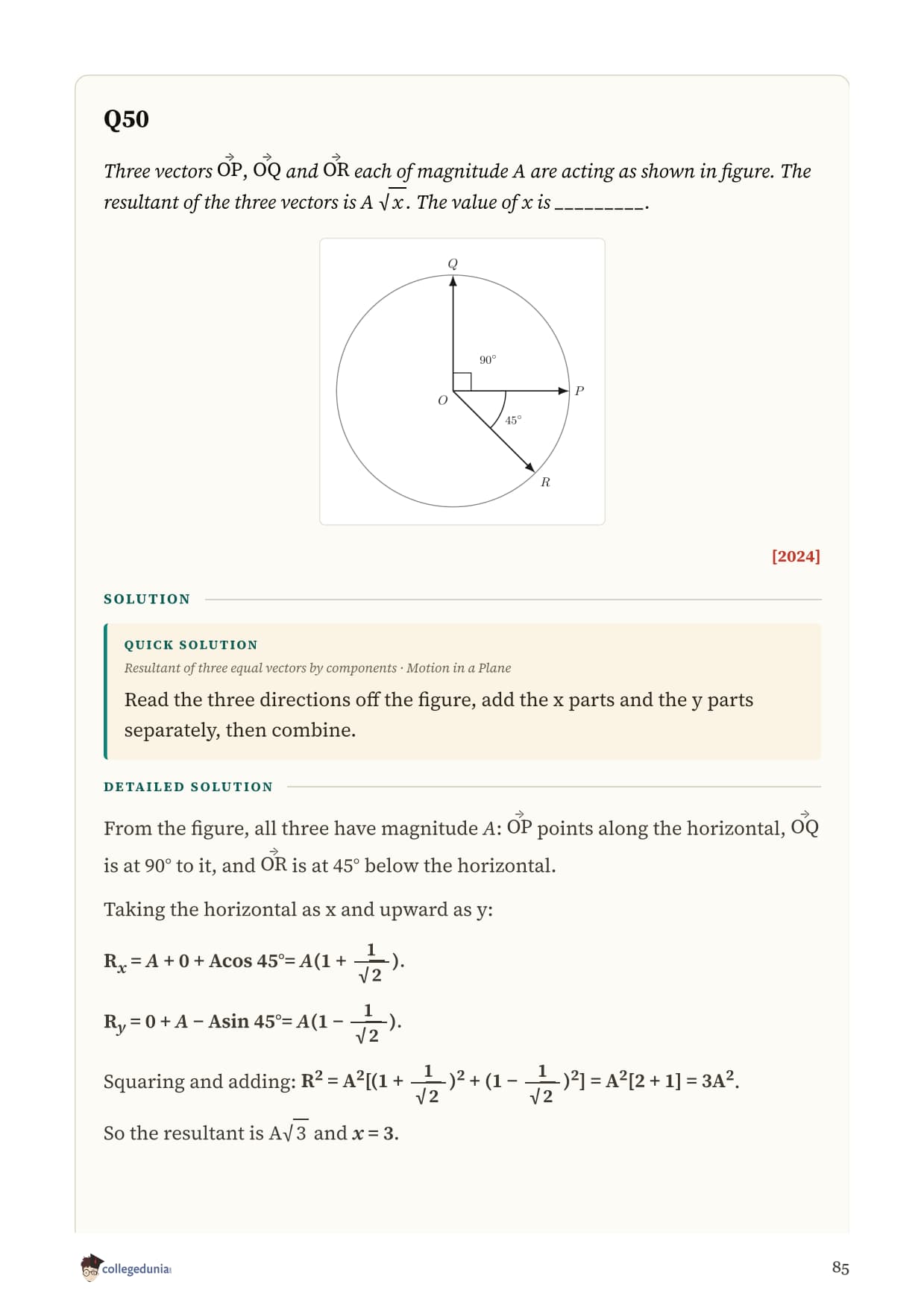
2024, vectors. Three vectors of equal magnitude are drawn from a point at 0, 90 and minus 45 degrees. Add the components separately rather than pairing resultants. The figure in this booklet is redrawn in house.
2025, dot product. Two vectors have equal magnitude and are perpendicular. The positive square root leads to a contradiction, which is the signal to take the negative one.
Watch Projectile Motion Solved on a Board
Source: JEE Wallah
How to Use the Answer Key and Solutions
Attempt a whole section before checking anything. The layout is built so an answer cannot be glimpsed by accident.
- Do one sub-topic in a single timed sitting
- Mark the answer key in one pass, right or wrong only
- Read the solution for every miss and every lucky guess
- Each solution opens with a one-line quick solution, so you can stop there and retry
Traps These Questions Are Built Around
A handful of errors account for most of the lost marks here, and several questions exist only to catch them.
- Treating the speed at the top of a flight as zero when only the vertical part is
- Measuring an angle from the wrong axis, so sine and cosine swap
- Assuming a shared range means a shared height
- Dividing by the wrong magnitude in a projection
- Letting the river drift cancel on the return leg, when it does not
For the theory behind these questions, the motion in a plane handwritten notes cover the same ground in 22 pages before you start the bank.
JEE Main Motion in a Plane Previous Year Questions FAQs
Ques. How many marks does motion in a plane carry in JEE Main?
Ans. The topic usually contributes 2 to 3 questions in Paper 1 Physics, which is 8 to 12 marks. Projectile motion accounts for most of them, and it appears in every session.
Ques. Are solutions included in this PYQ PDF?
Ans. Yes. All 75 questions are worked in full. Each solution opens with a one-line quick approach, then the detailed steps, a common mistake note and the final answer. An answer key grid sits between the questions and the solutions.
Ques. Why is circular motion not in this set?
Ans. Uniform circular motion sits in the same syllabus unit but is a separate scheduler topic with its own question bank, so keeping it out lets you finish projectiles and relative motion without switching ideas.
Ques. Are the figures taken from other websites?
Ans. No. Every diagram in the booklet is redrawn in house from the original question, so nothing carries another site's watermark. Questions whose diagrams cannot be reproduced faithfully are left out rather than shipped with a broken figure.
Ques. Can the PYQ PDF be downloaded free?
Ans. Yes. The full 113 page booklet can be read on this page and downloaded at no cost, so students can print it or keep it on a phone for practice.



Comments