




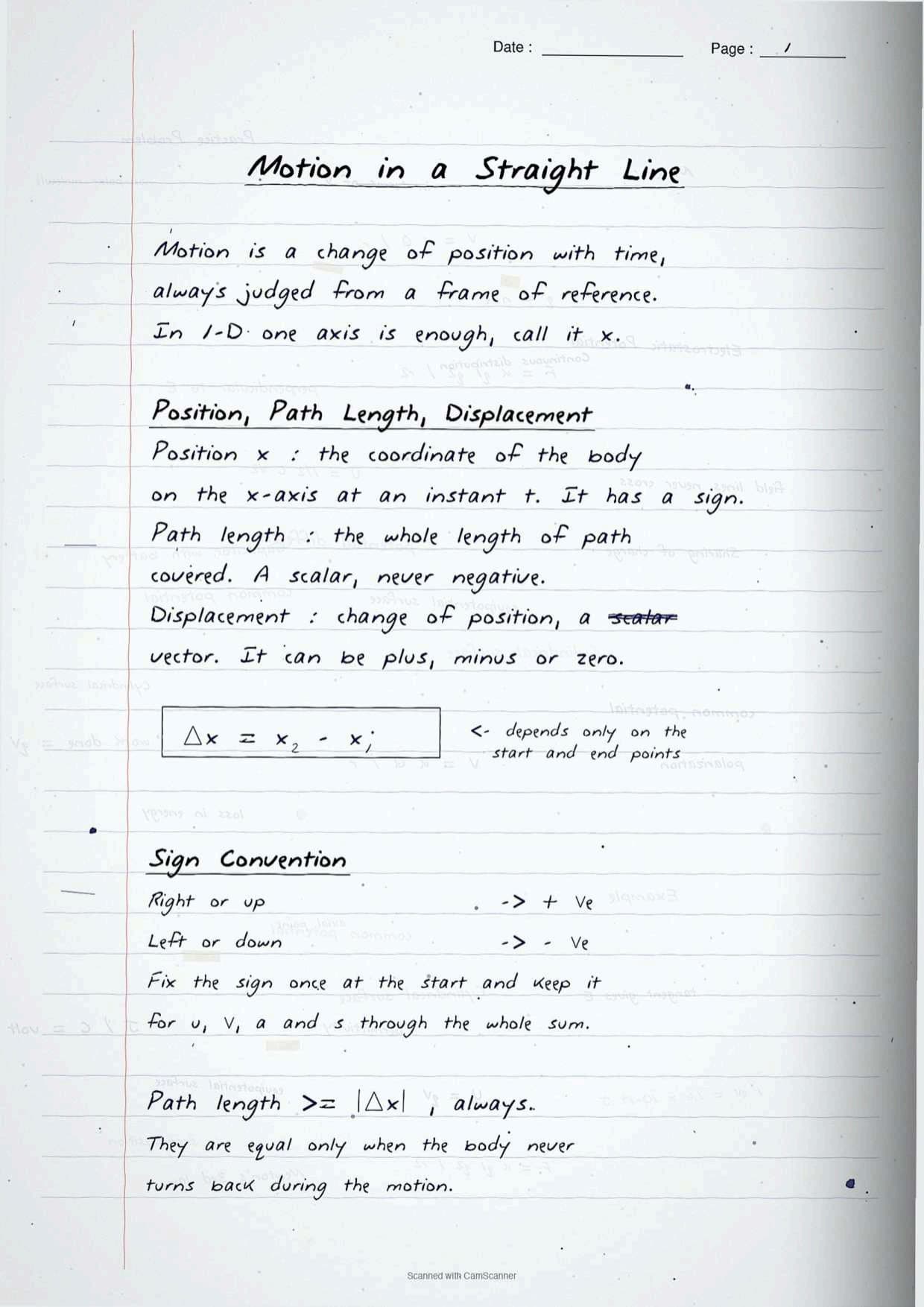
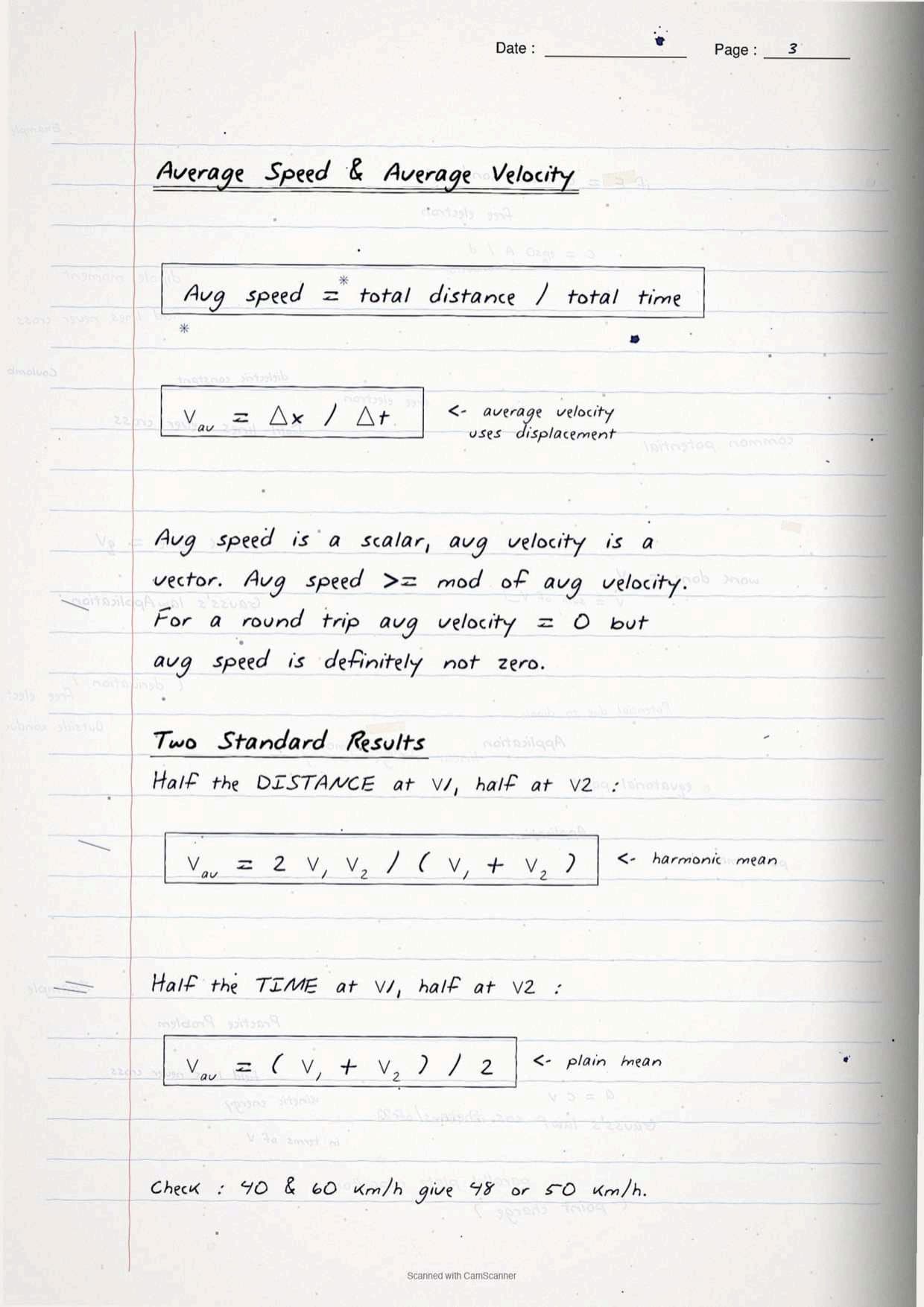
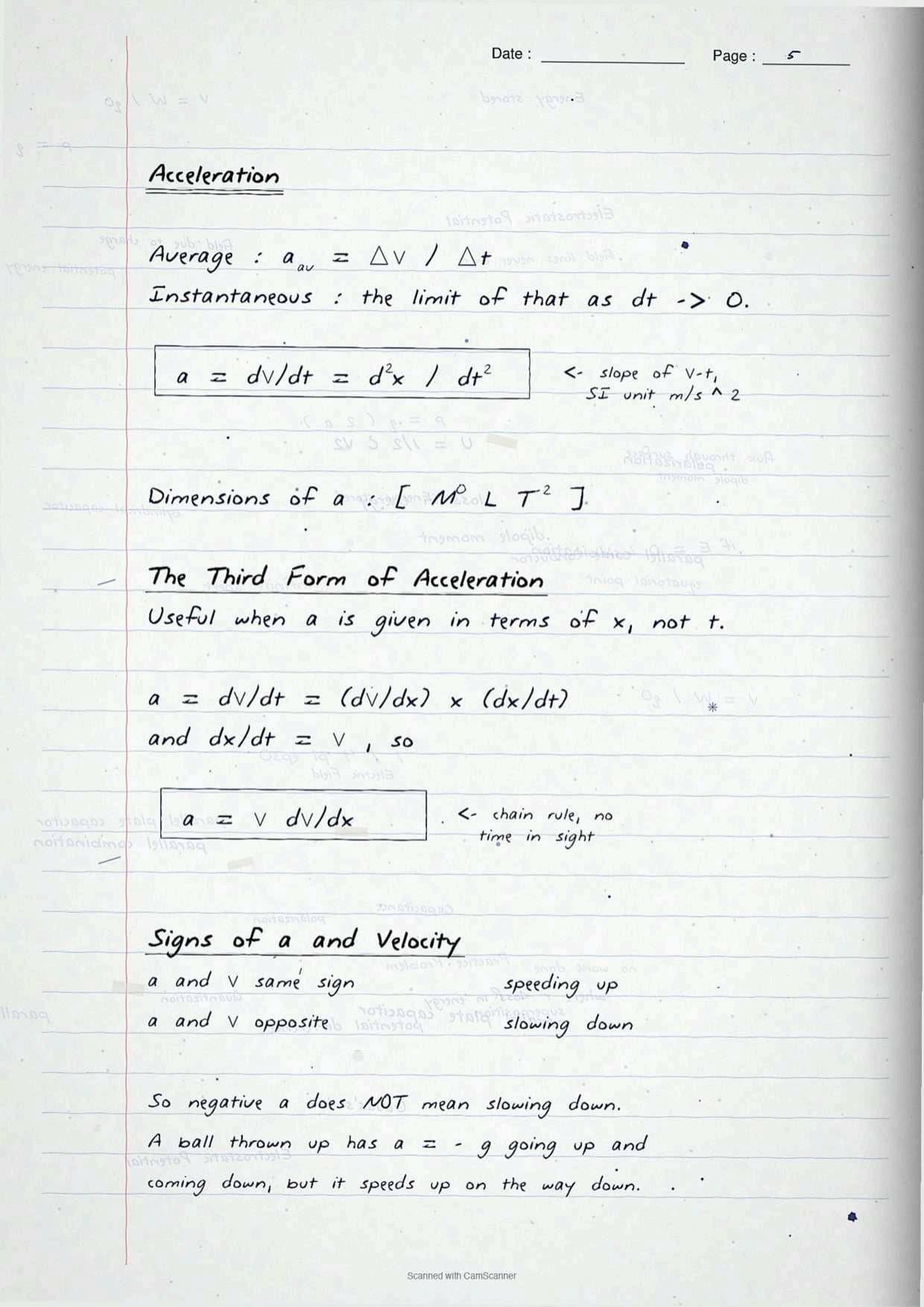
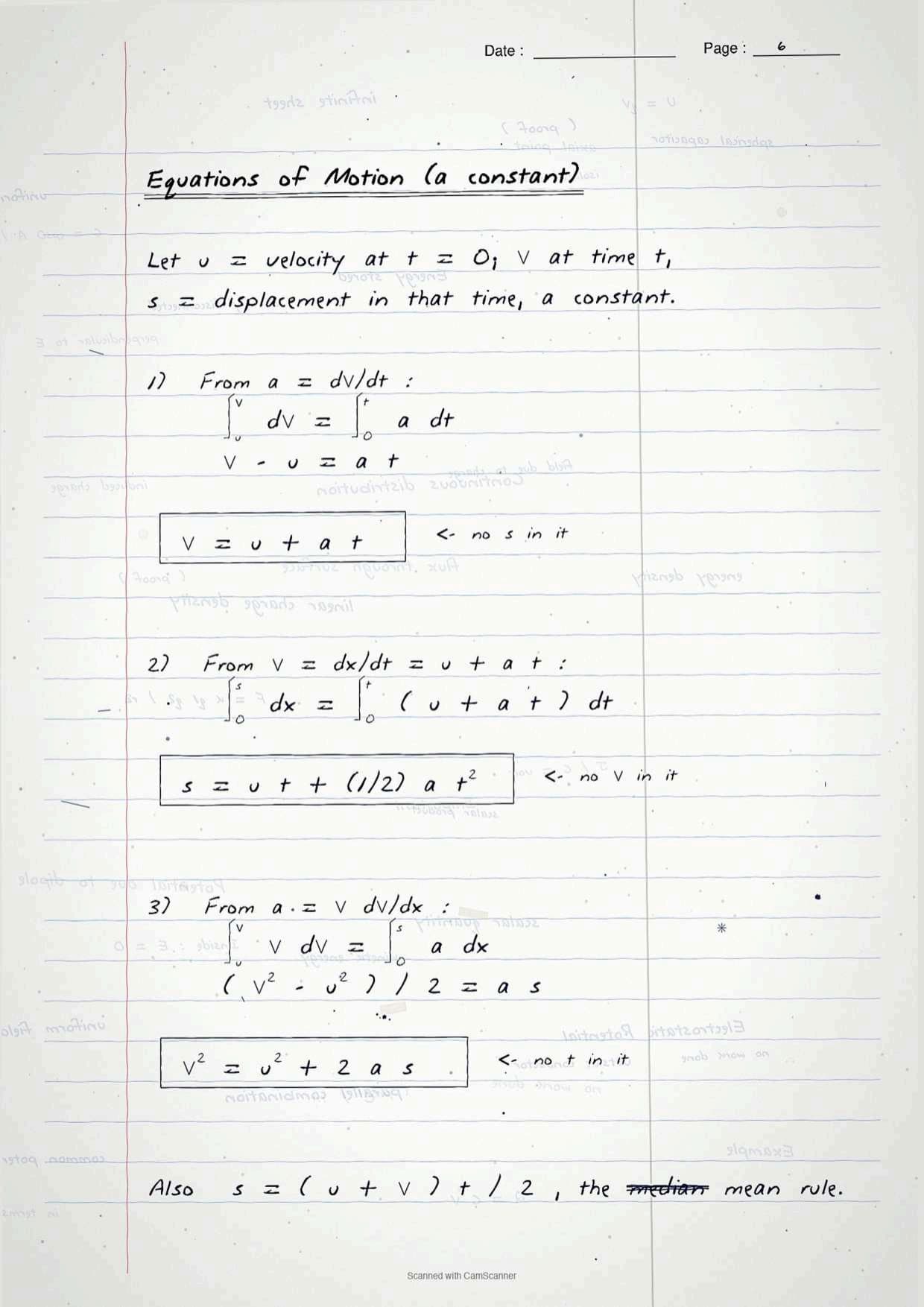
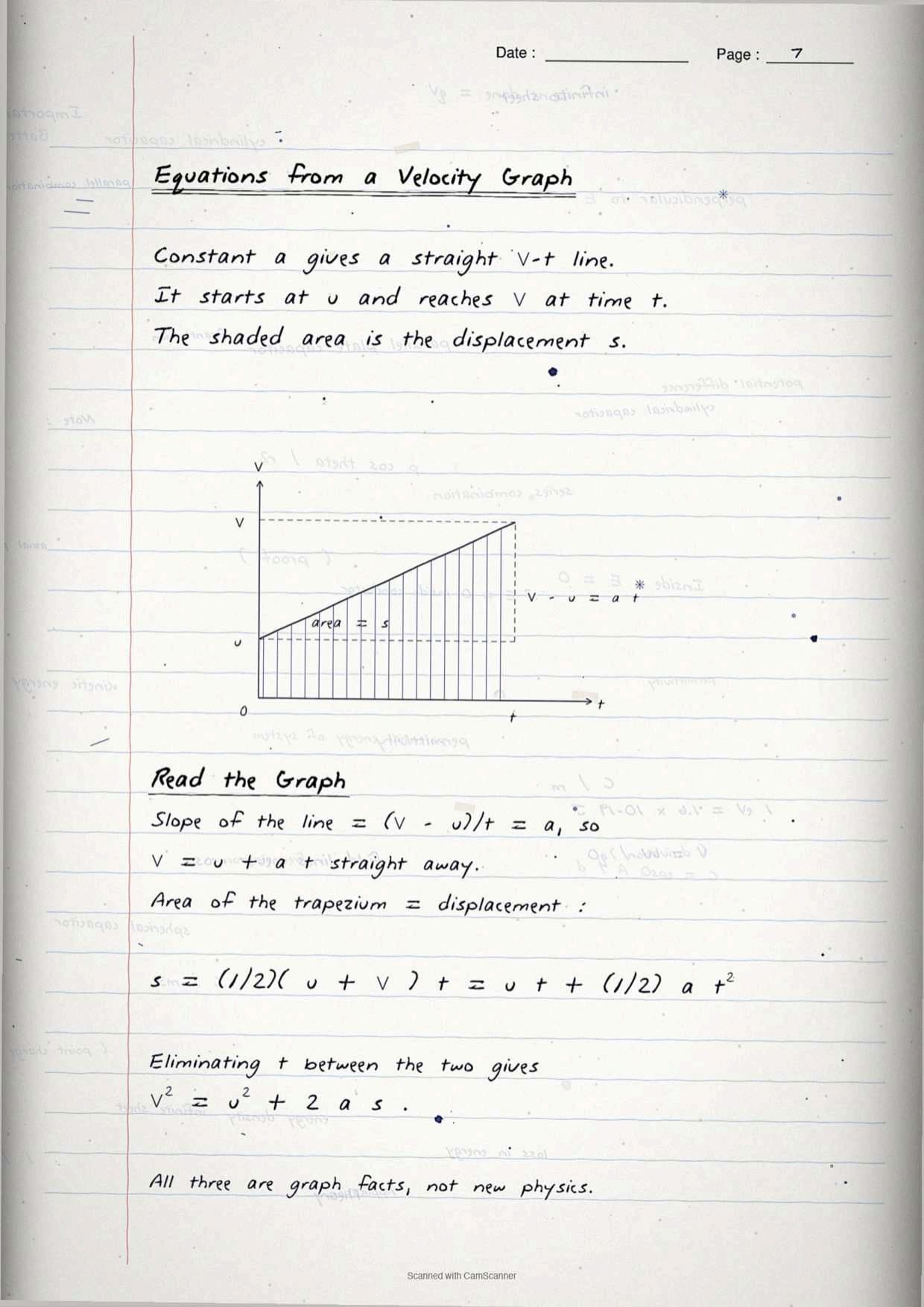
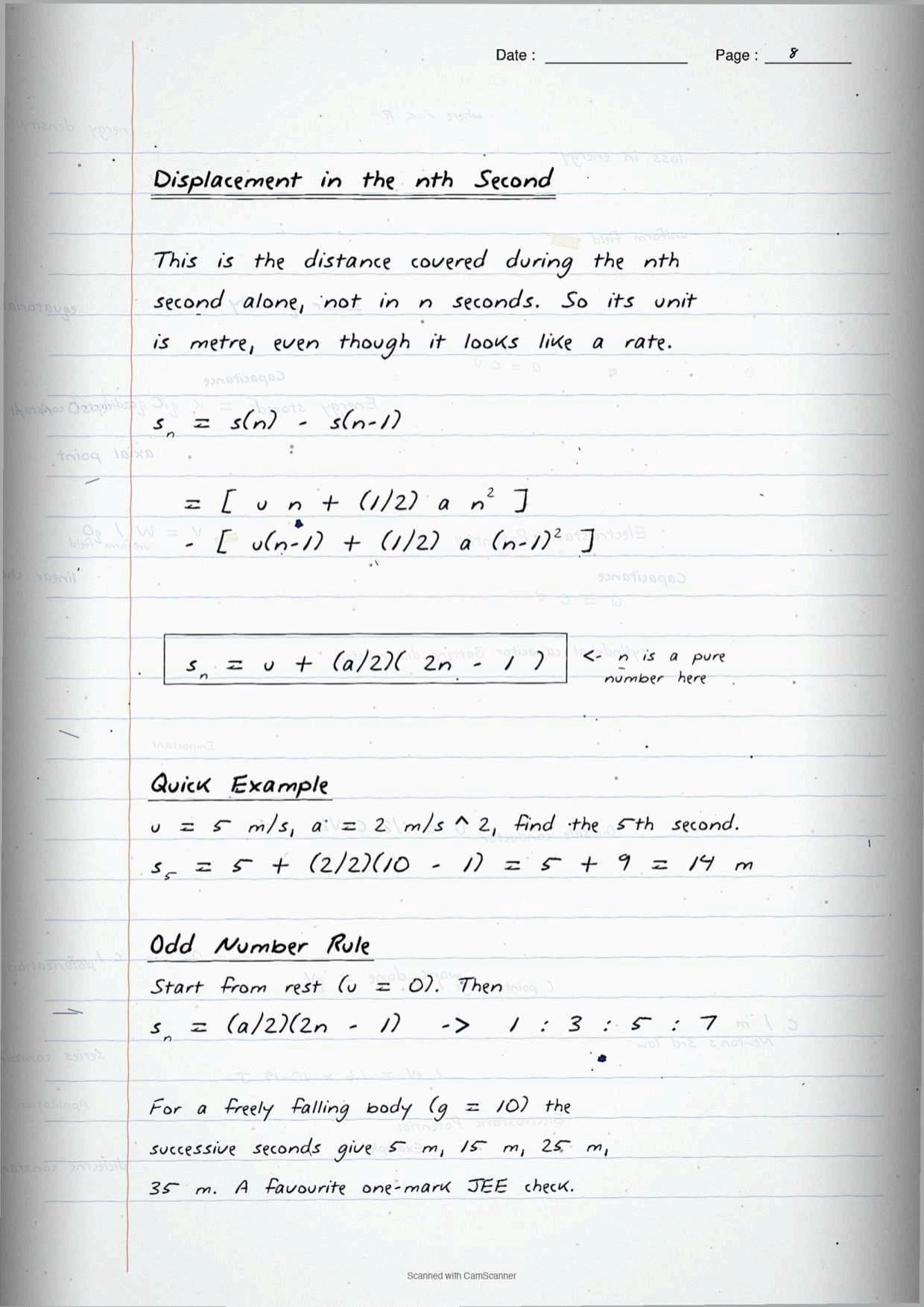
JEE Main Motion in a Straight Line handwritten notes, free to download as a 27-page PDF. Kinematics is where the graph questions live, so these pages carry 12 hand-drawn graphs rather than describing them in words.
- The three equations of motion are derived twice, once by integrating and once off the v-t graph, so you see where each one comes from.
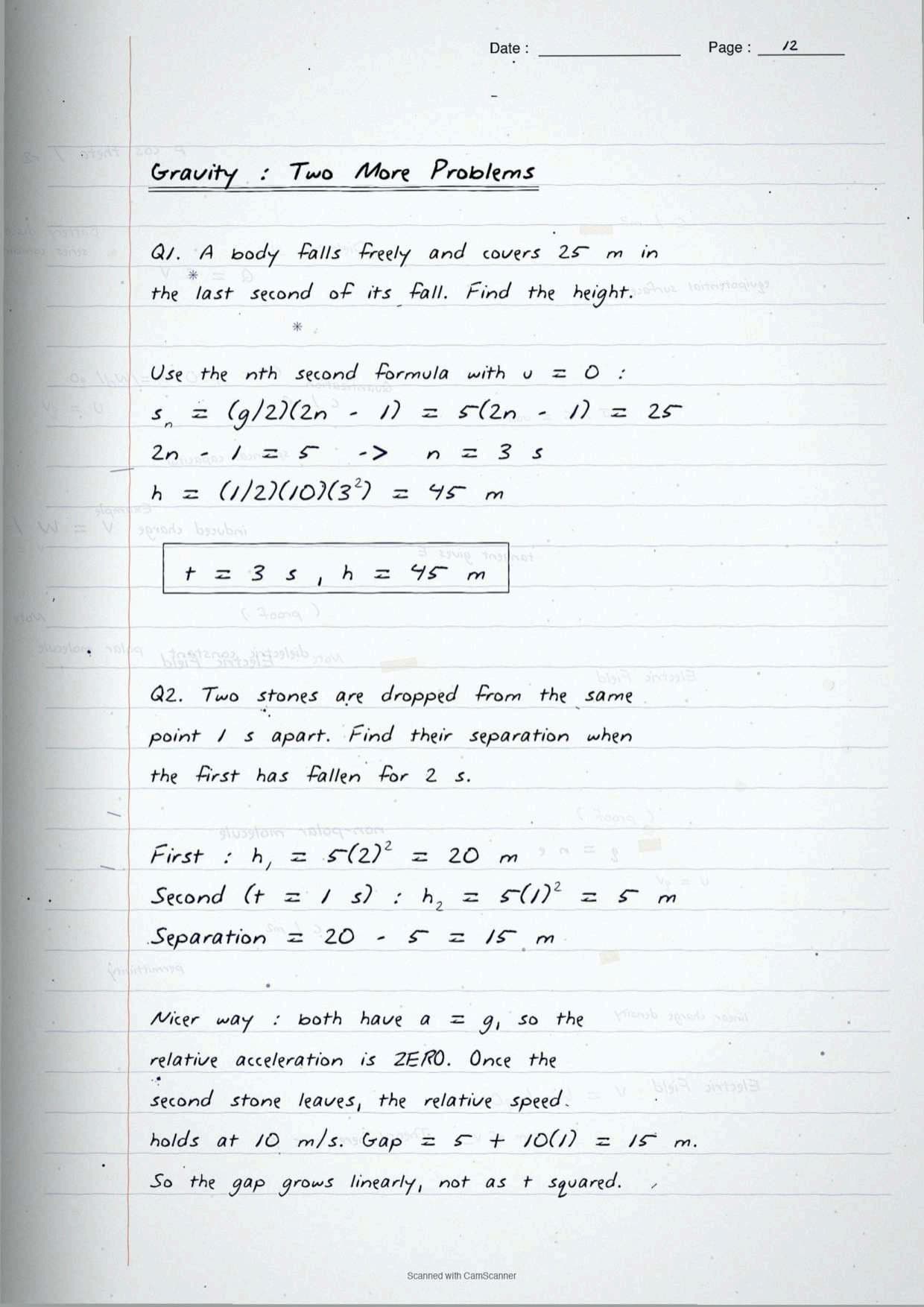
- You get the nth-second formula derived properly, along with the 1:3:5:7 rule that follows from it.
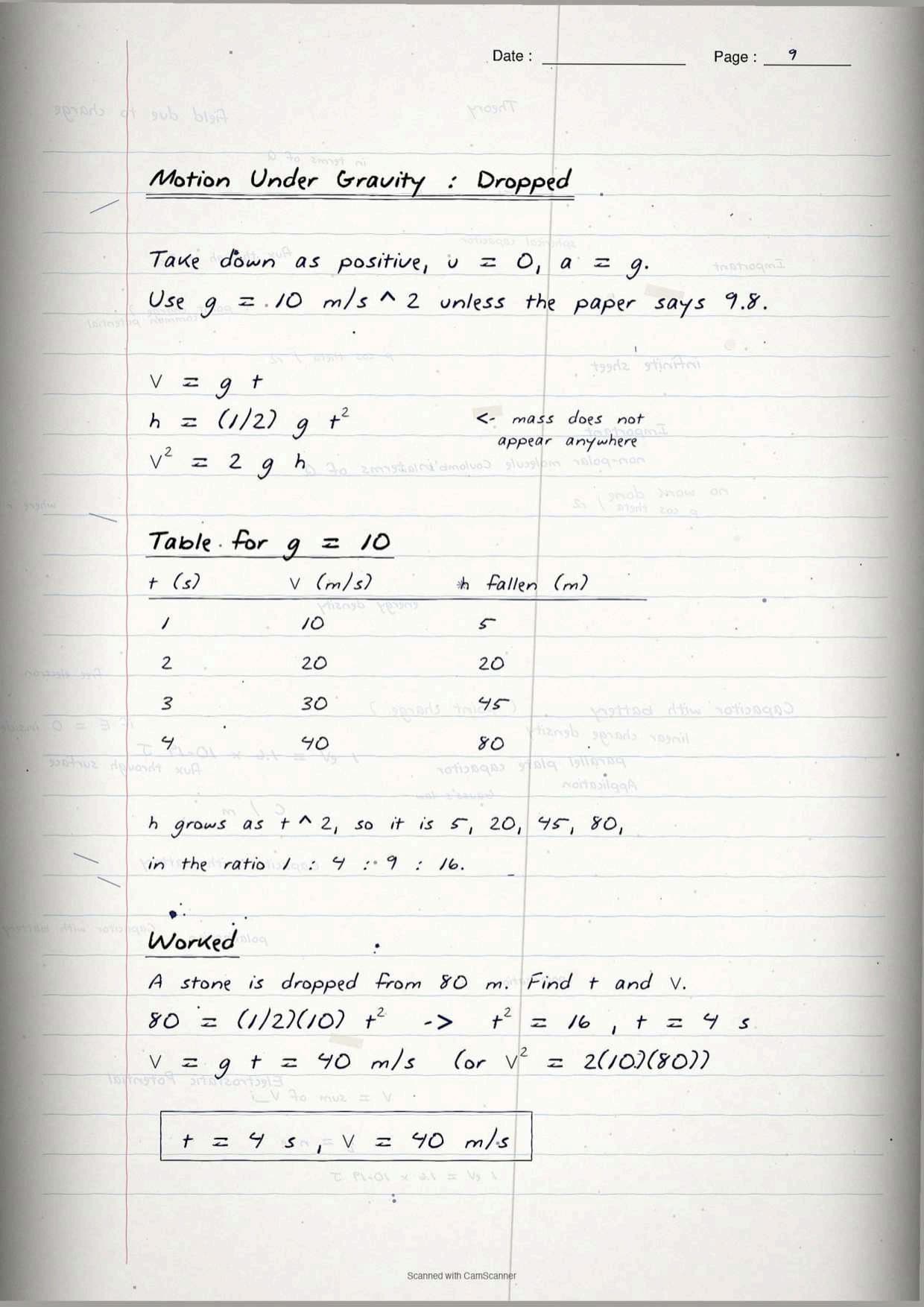
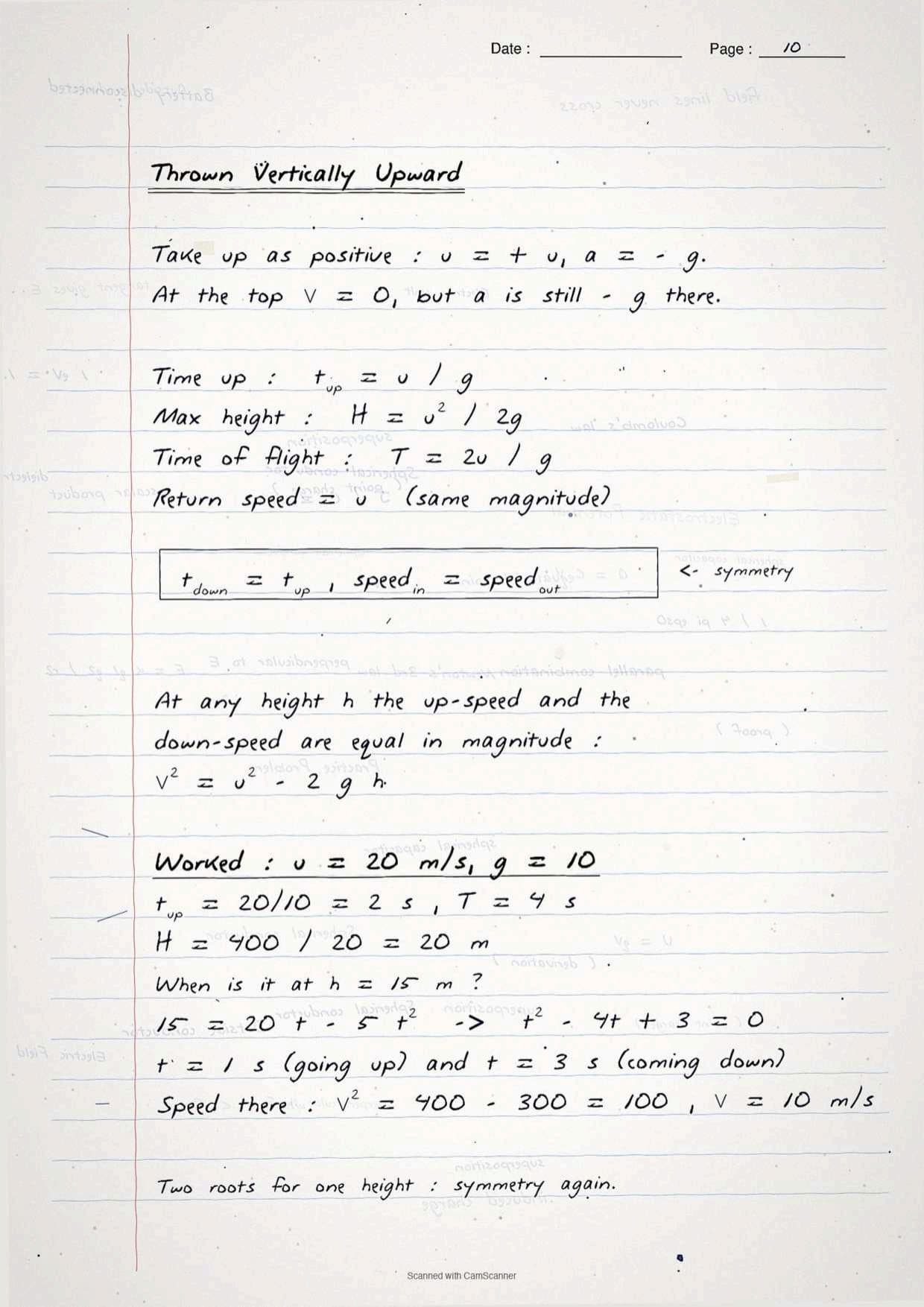
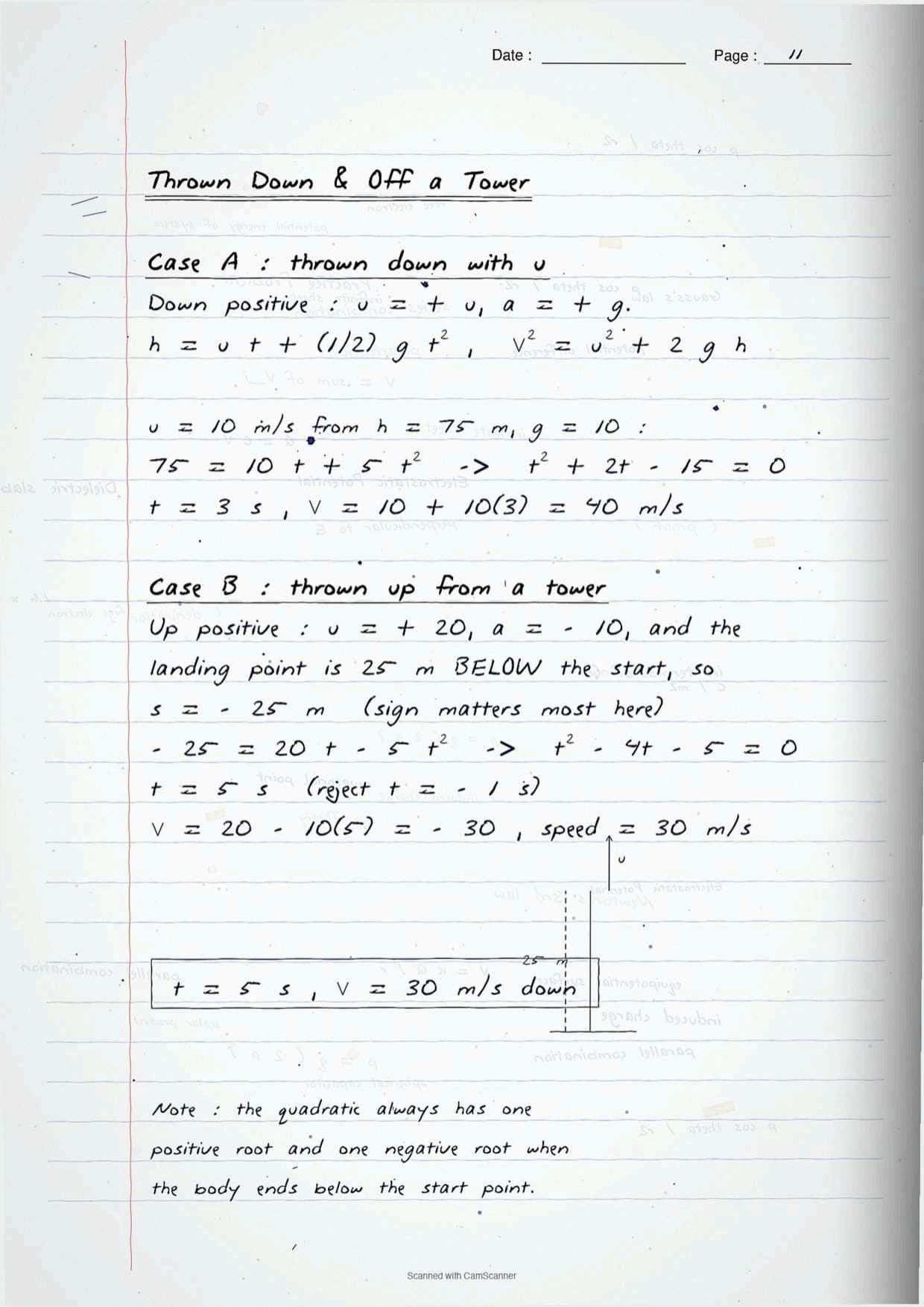
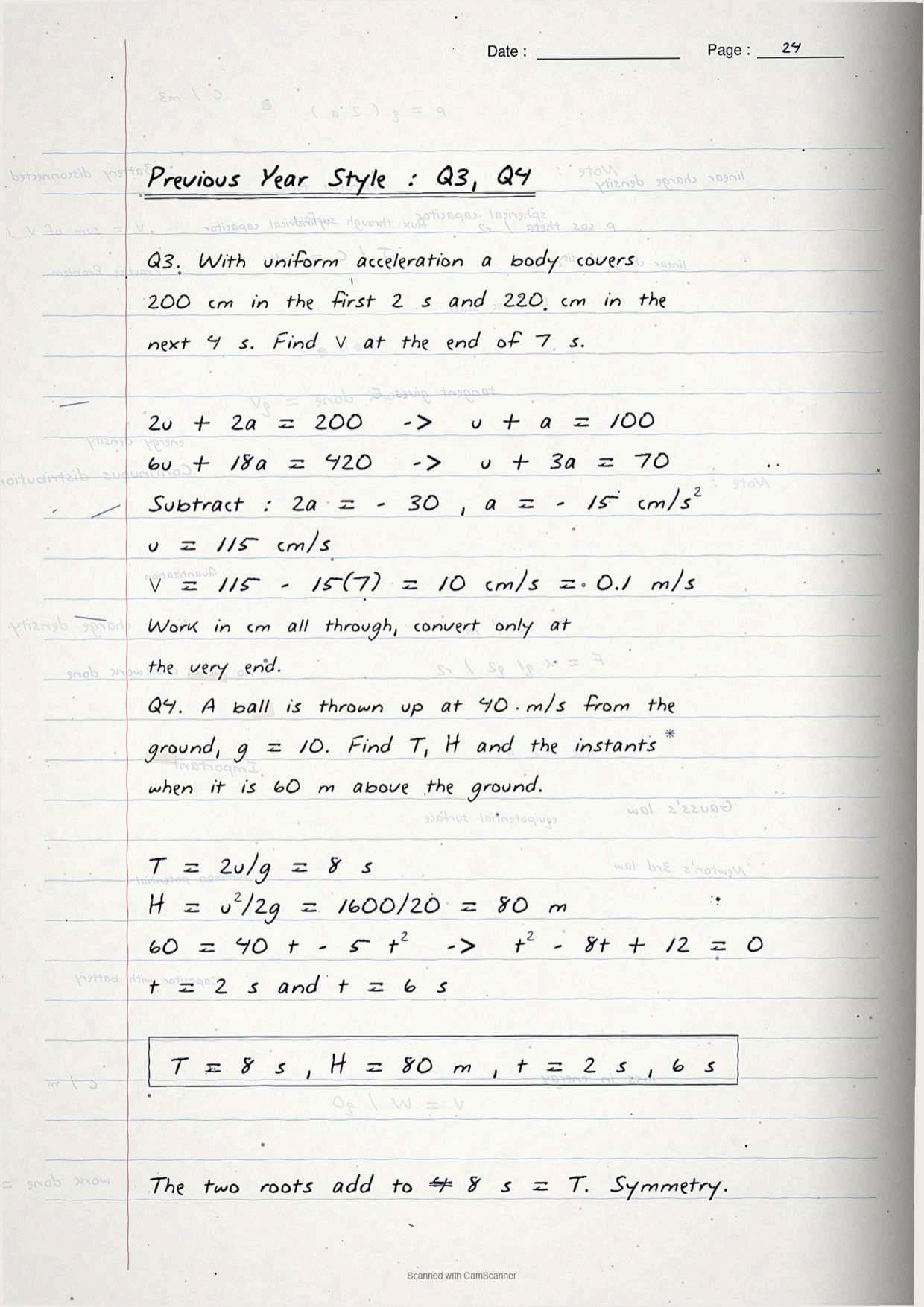
- Motion under gravity runs through all four cases, dropped, thrown up, thrown down and off a tower, with the sign convention fixed on the page each time.
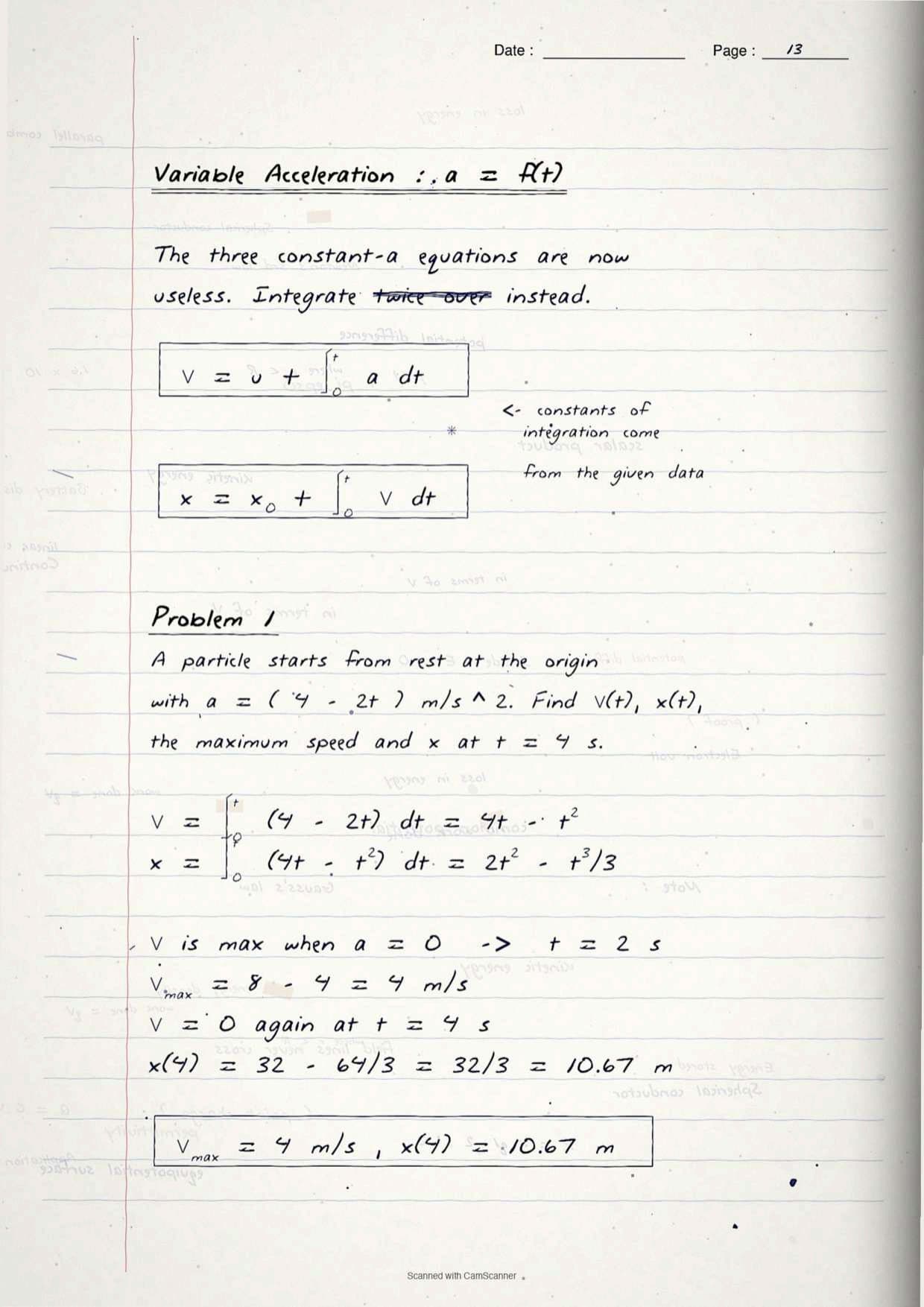
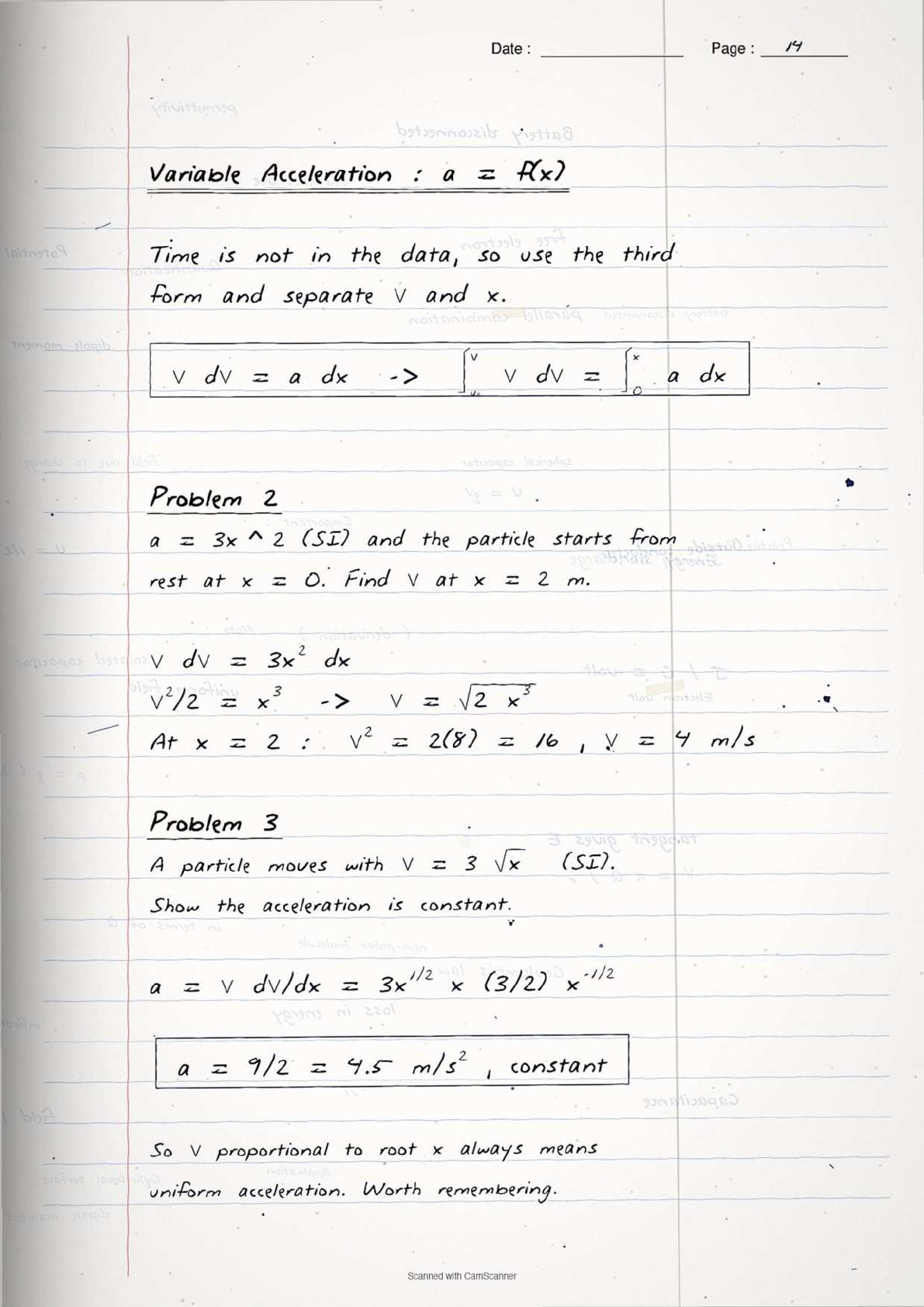
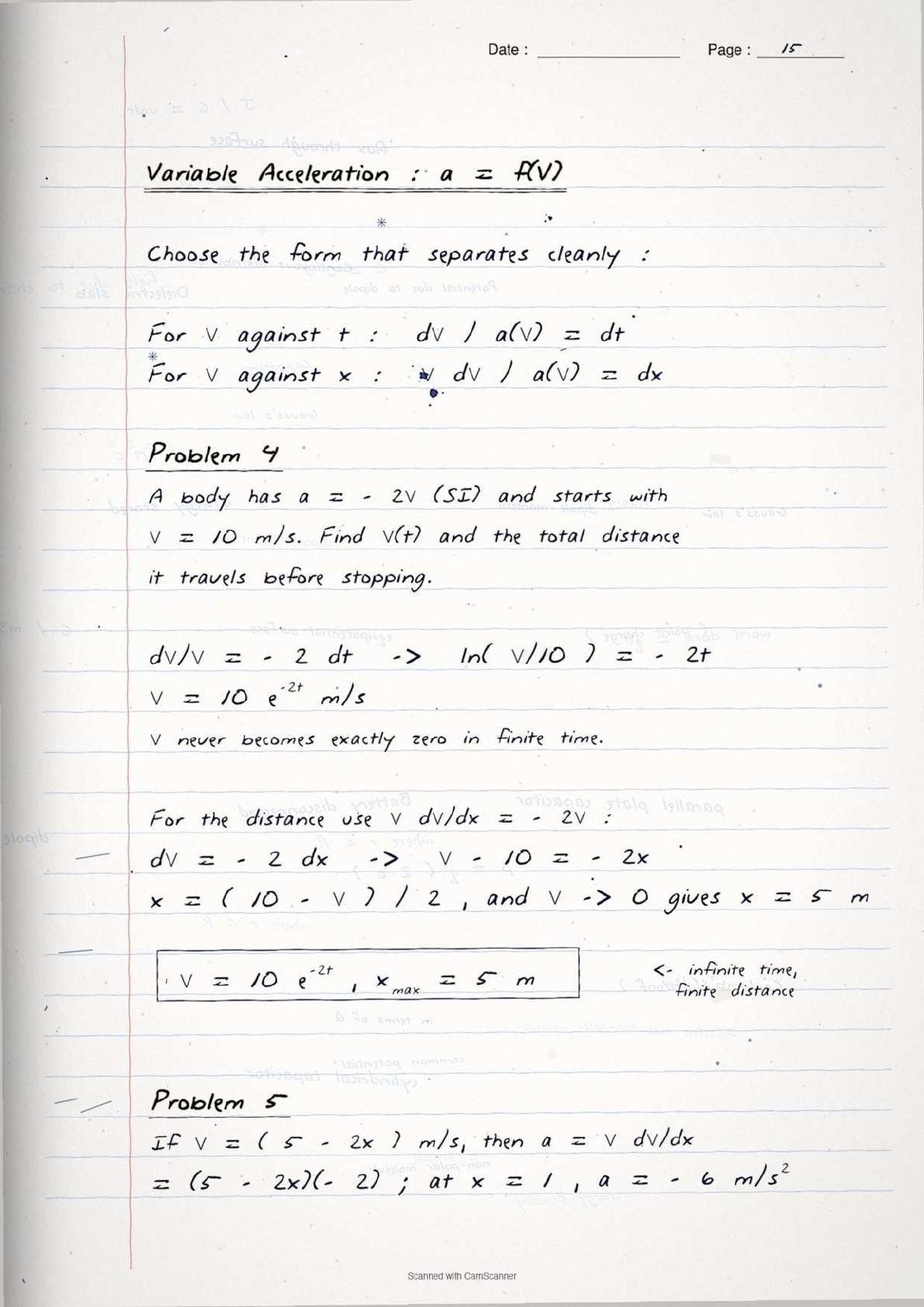
- Variable acceleration gets five worked calculus problems across a=f(t), a=f(x) and a=f(v), including the chain rule a = v dv/dx.
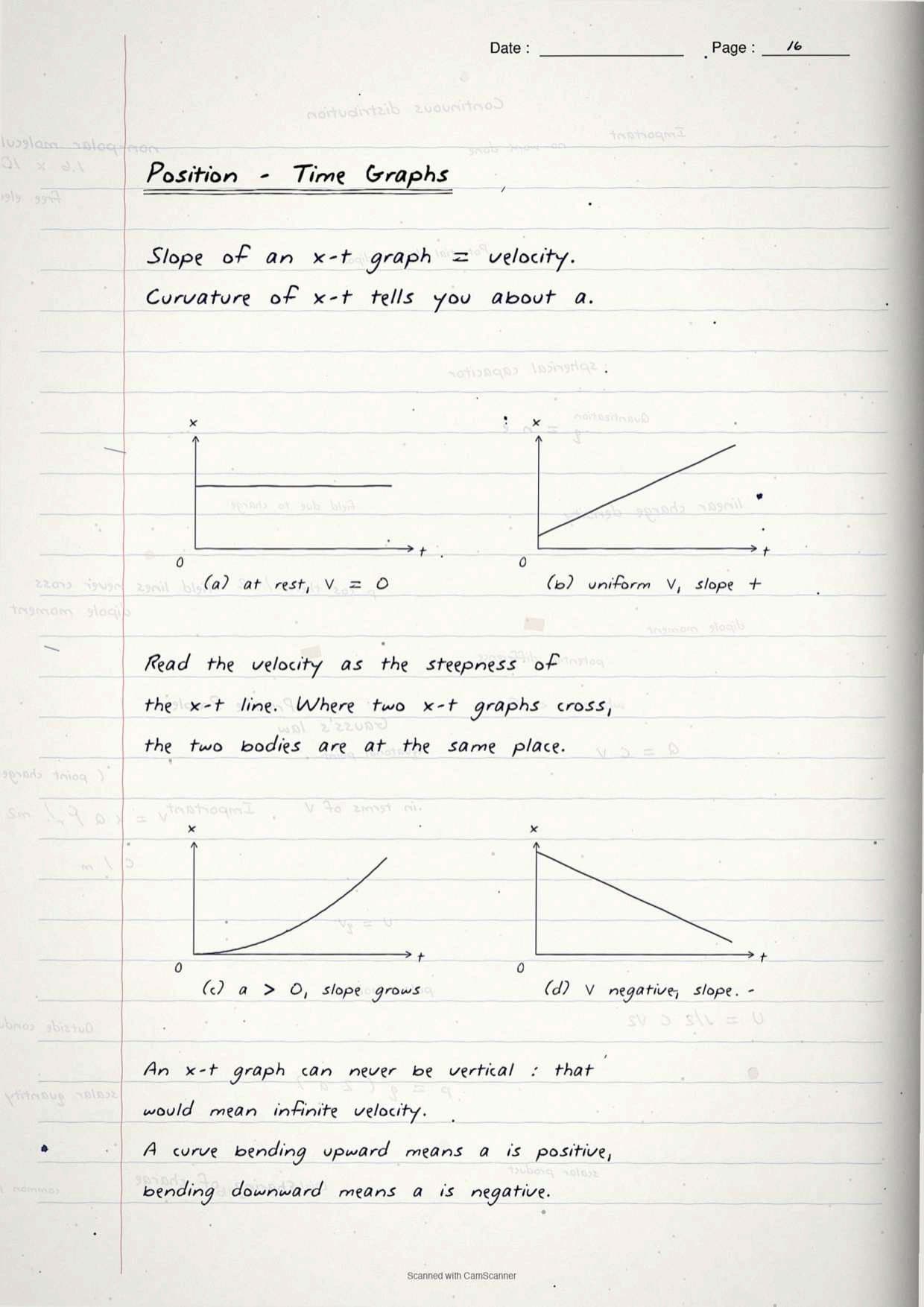
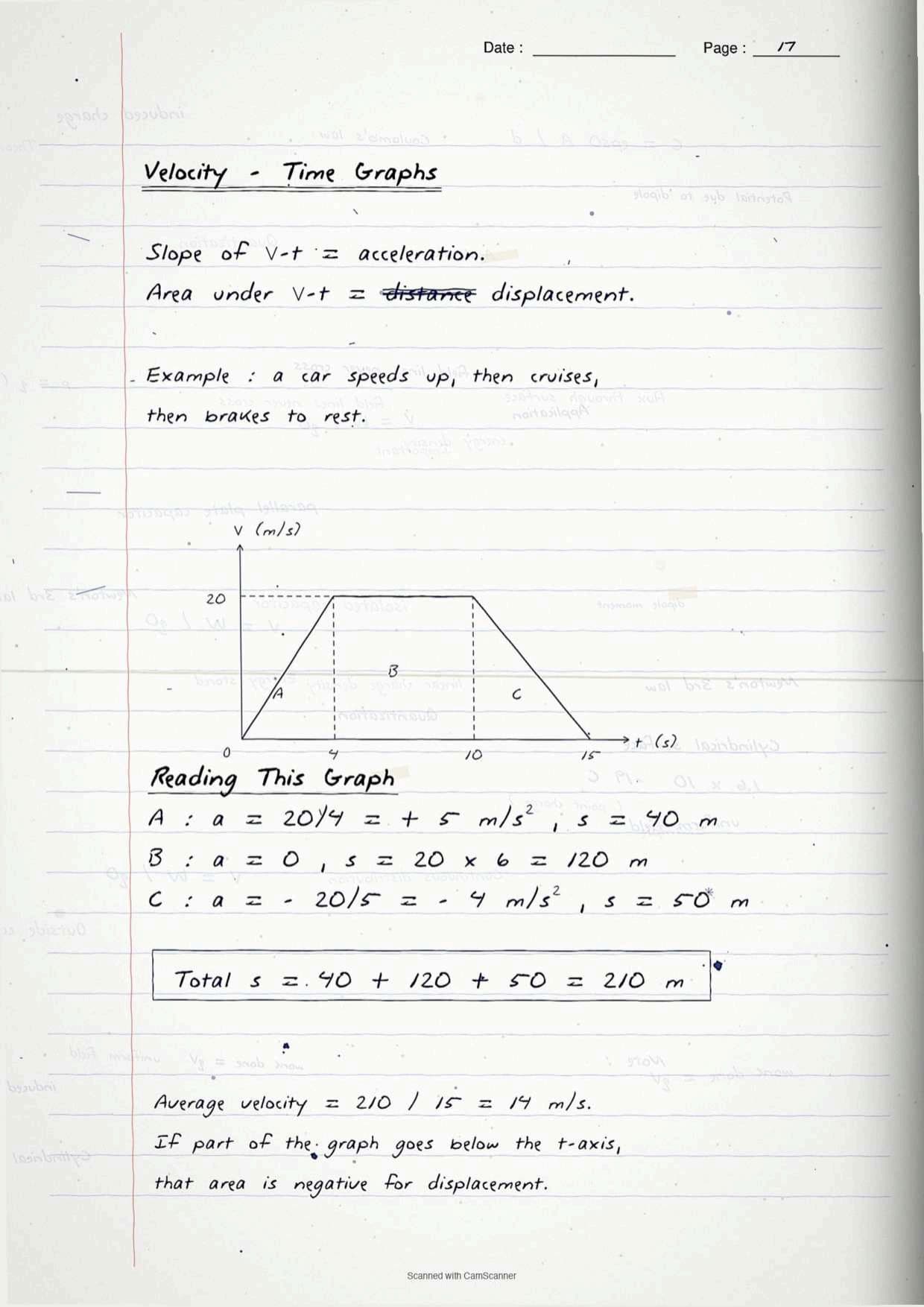
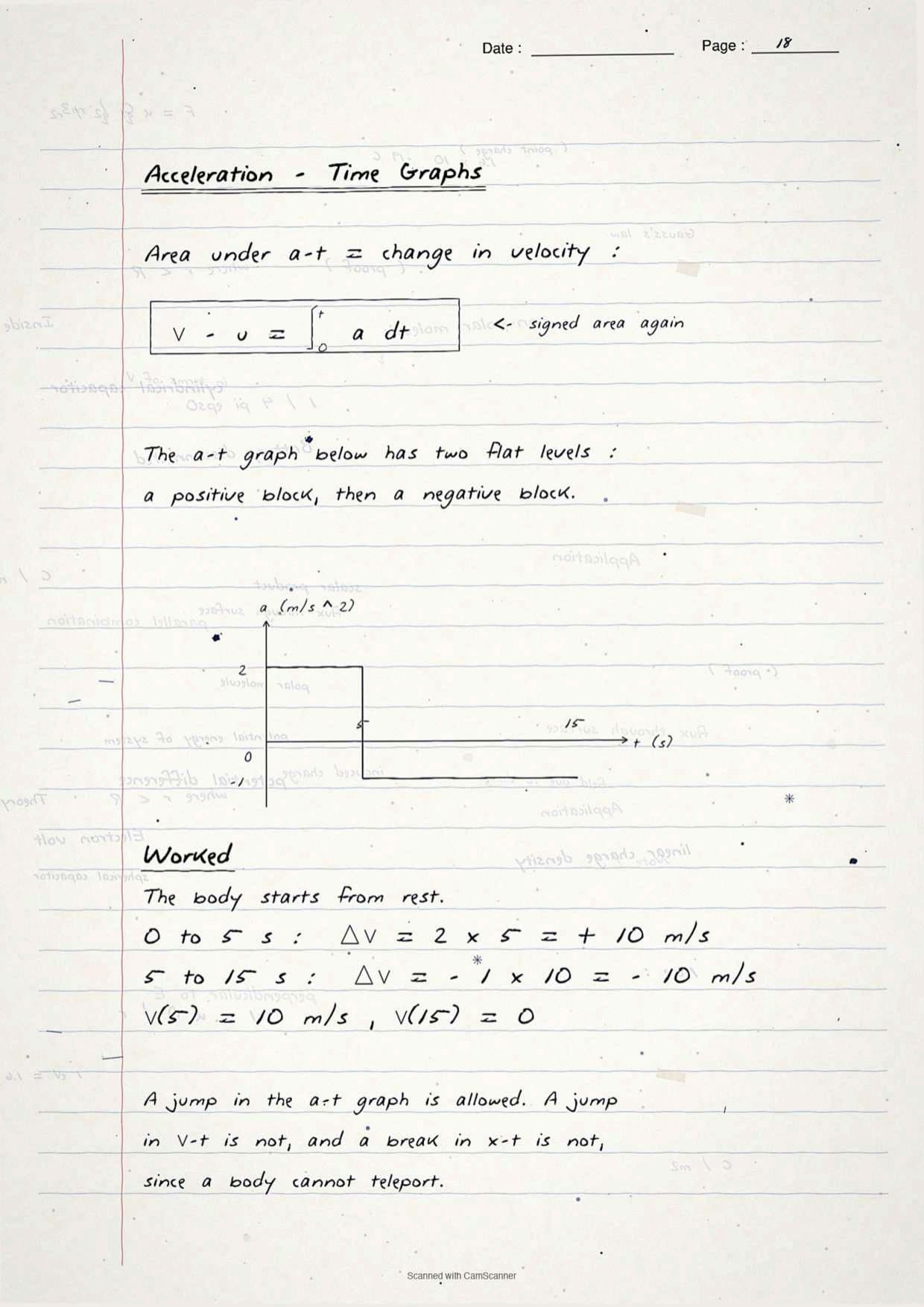
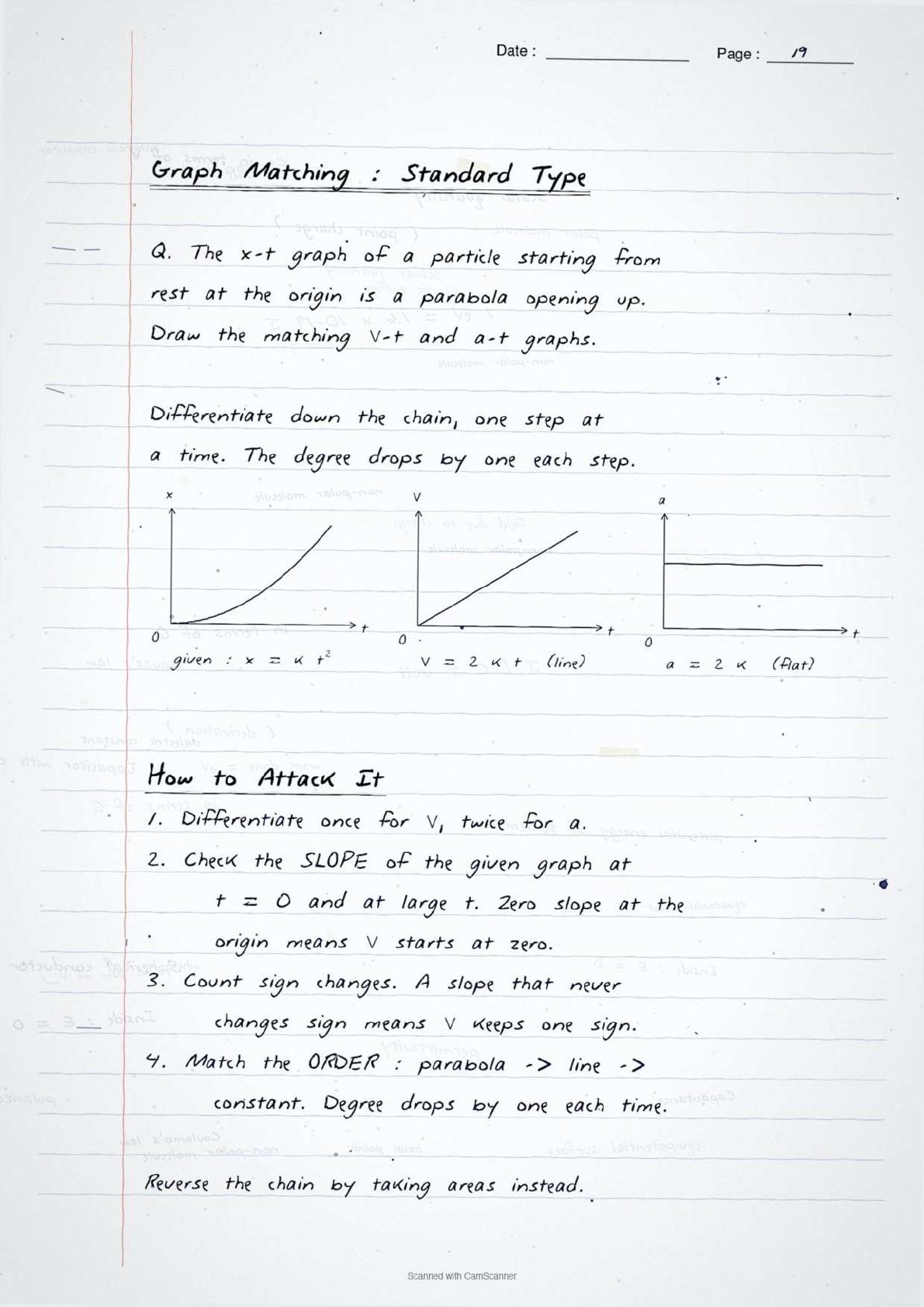
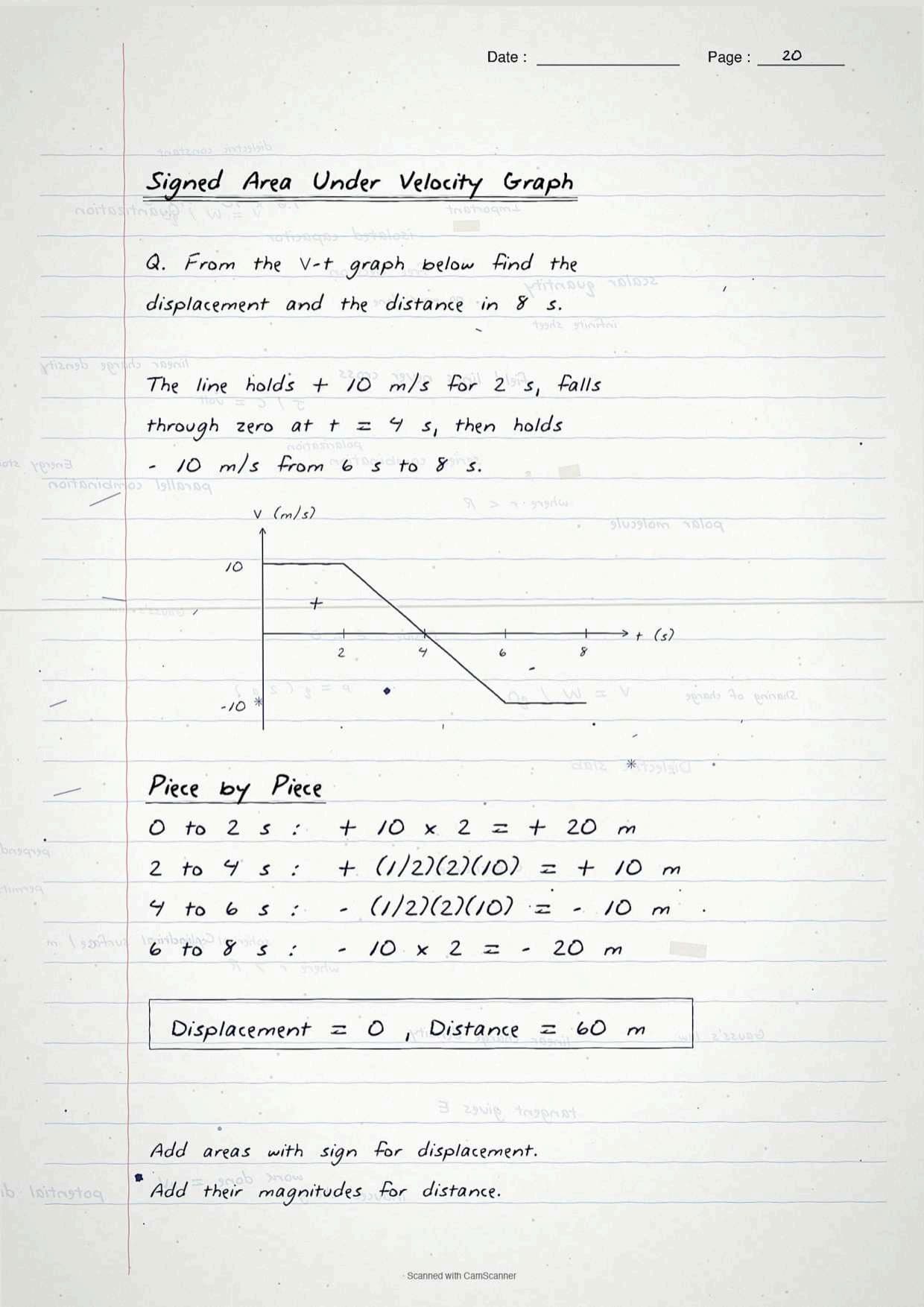
- Graphs take five pages. x-t shapes, v-t, a-t, a worked graph-matching example and the signed-area case where the curve crosses the axis.
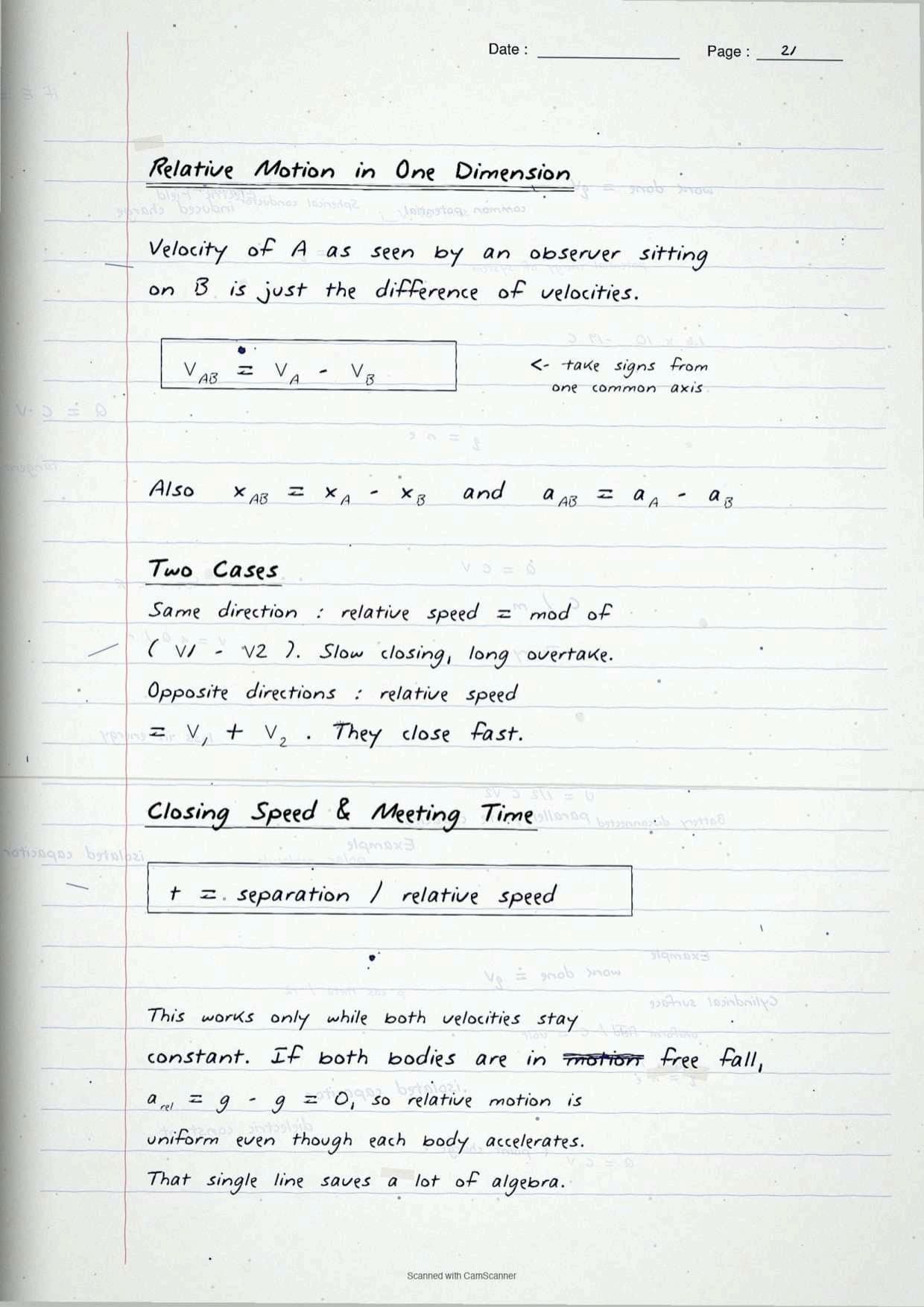
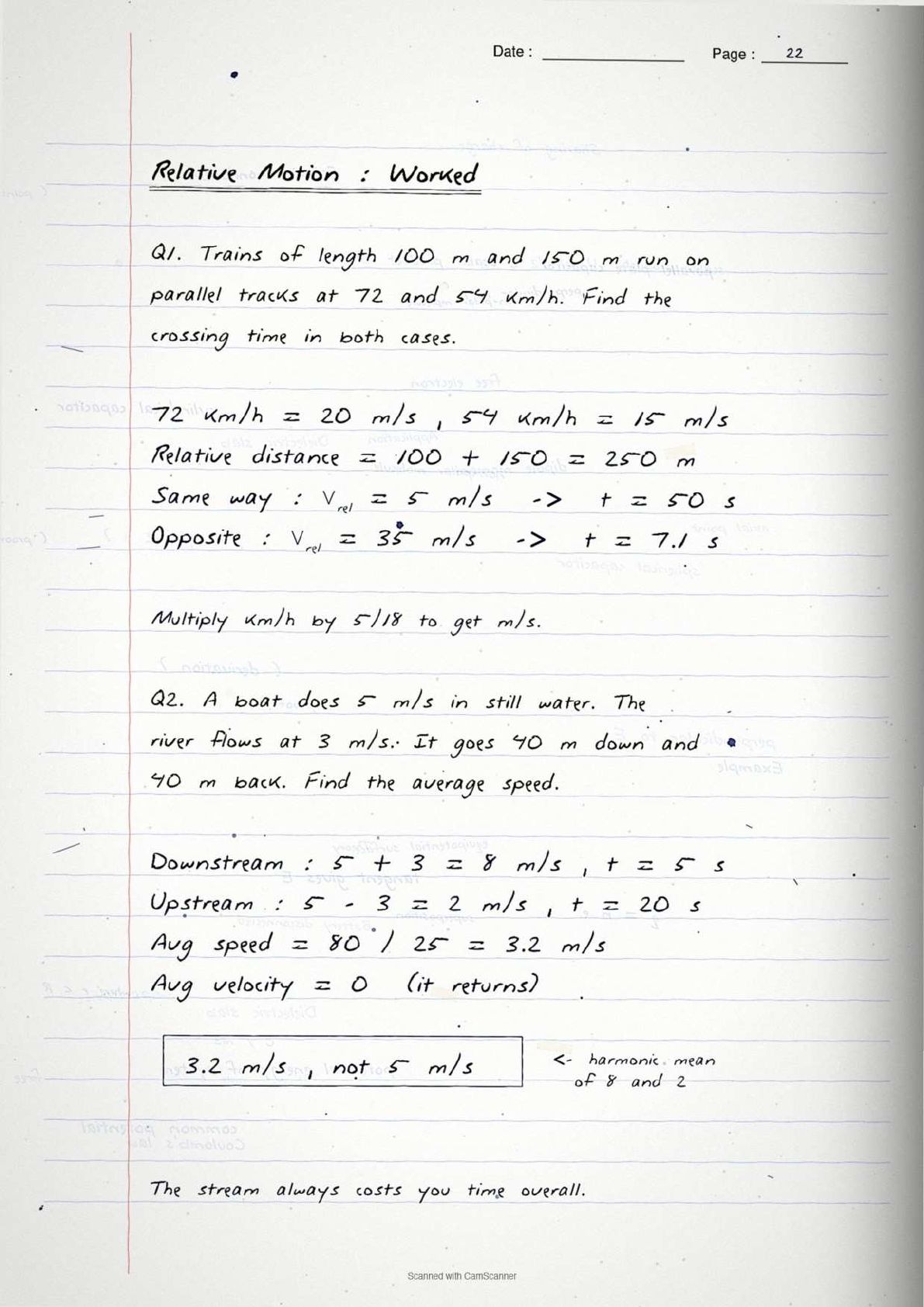
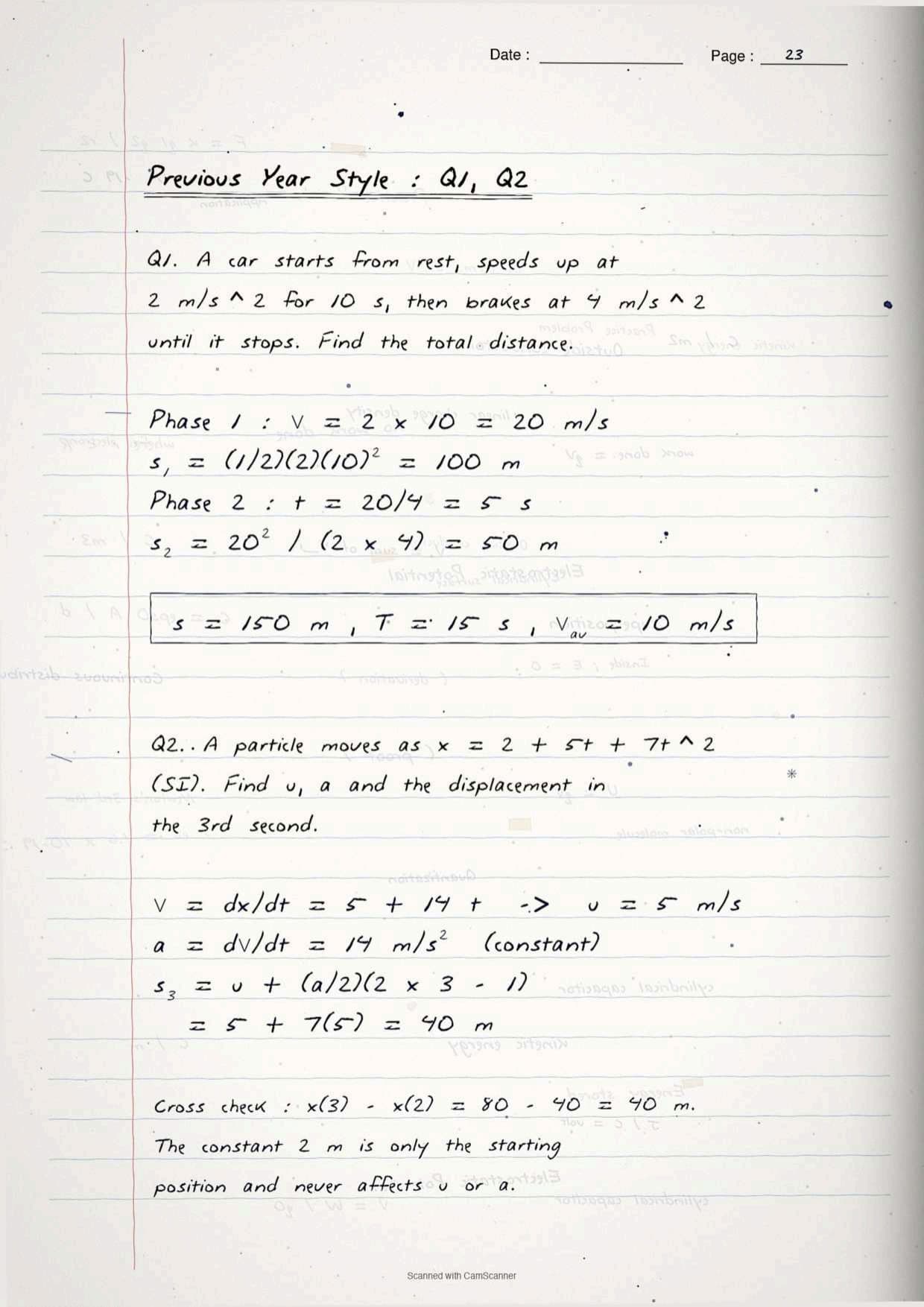
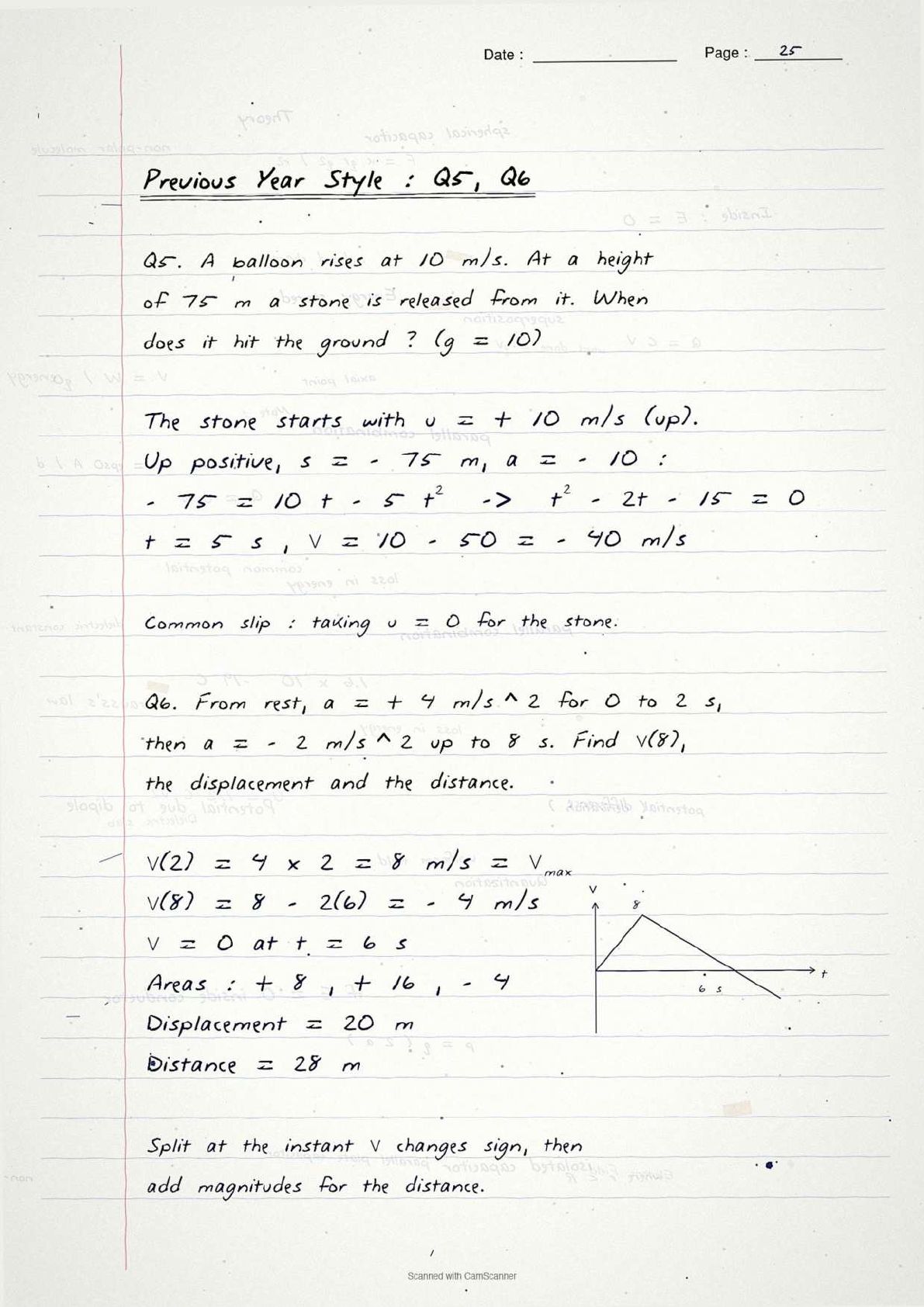
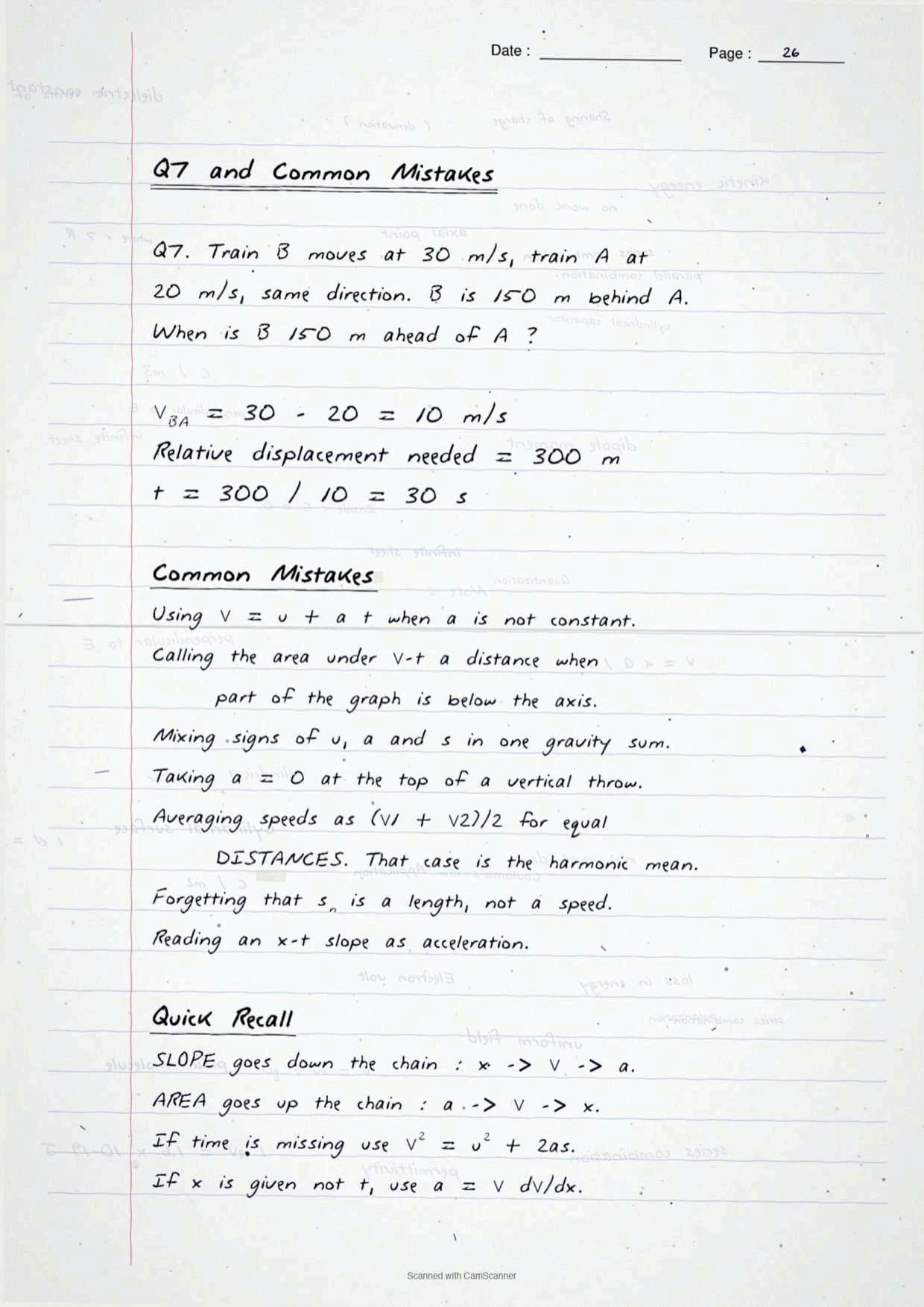
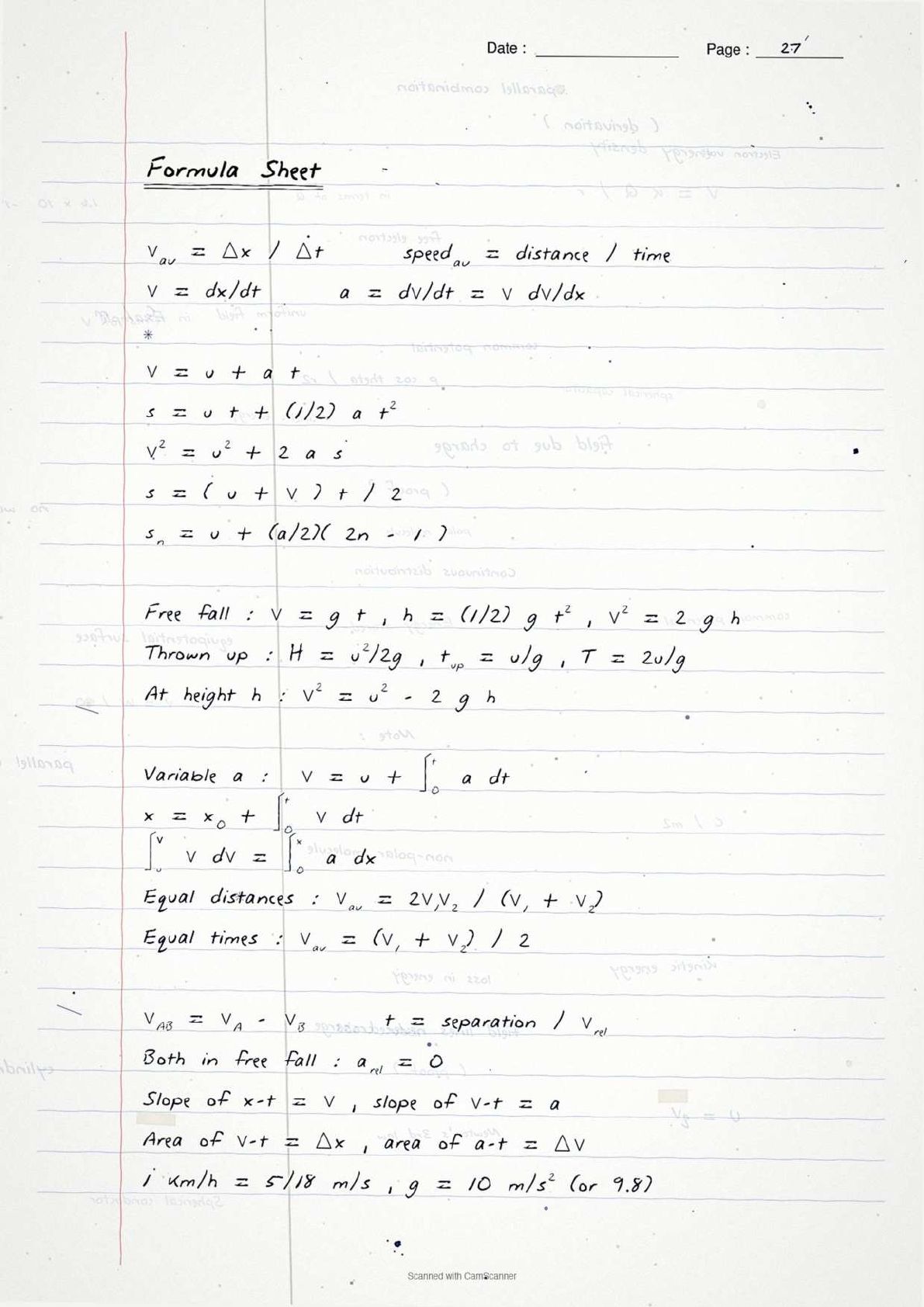
- Relative motion in one dimension, then seven previous-year-style problems worked in full, a common-mistakes page and a formula sheet.
Why Kinematics Rewards Graph Practice
Motion in a Straight Line is set every year, and a large share of what is asked is a graph you have to read rather than a formula you have to recall. NTA leans on the same handful of shapes.
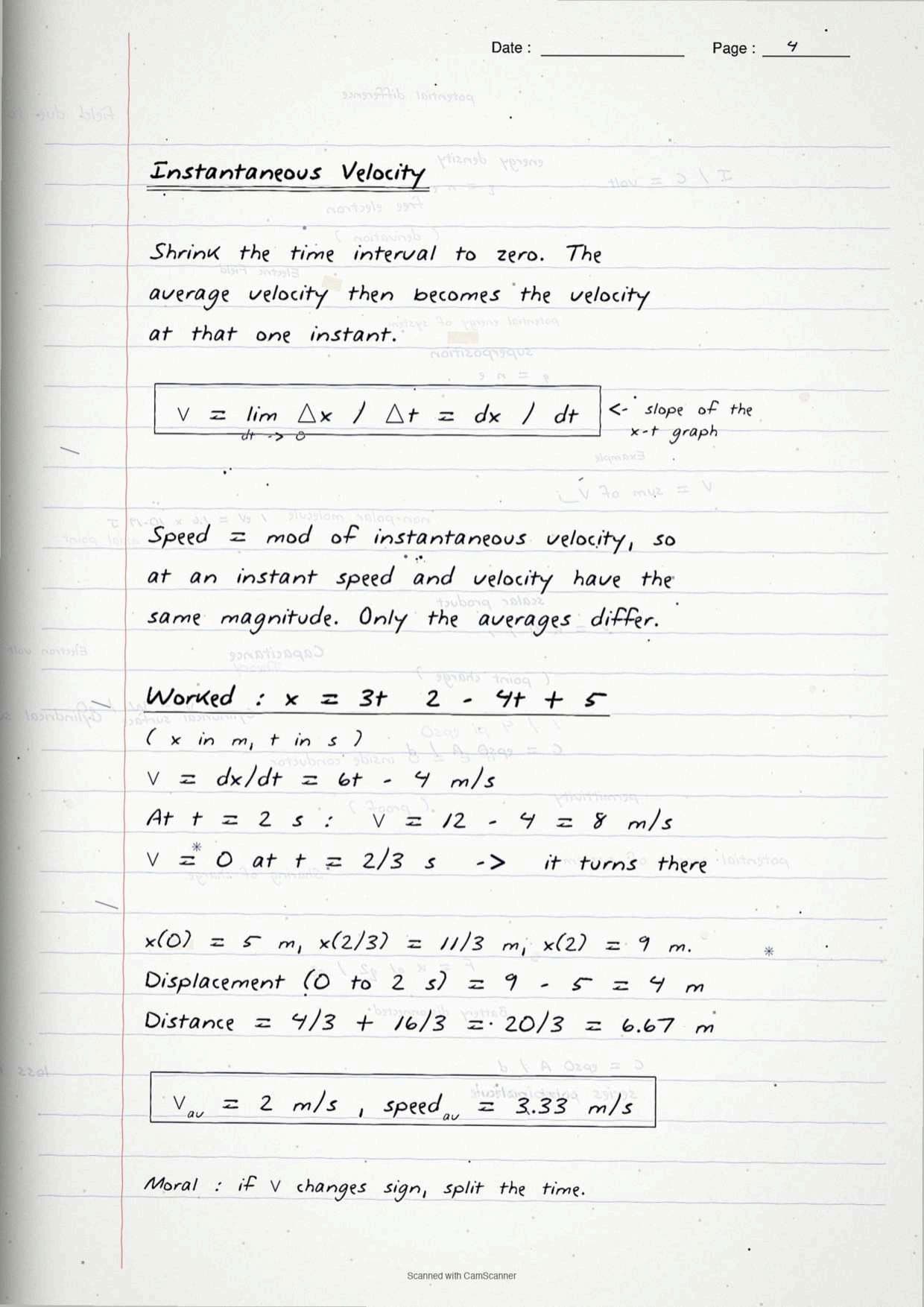
- Slope of an x-t graph is velocity. Slope of a v-t graph is acceleration.
- Area under a v-t graph is displacement, and area under an a-t graph is the change in velocity.
- Signed area matters. When the curve crosses the axis, distance and displacement stop agreeing, and that gap is the whole question.
The Sign Convention That Costs Marks
Most gravity errors are not physics errors. They come from switching the positive direction halfway through a problem.
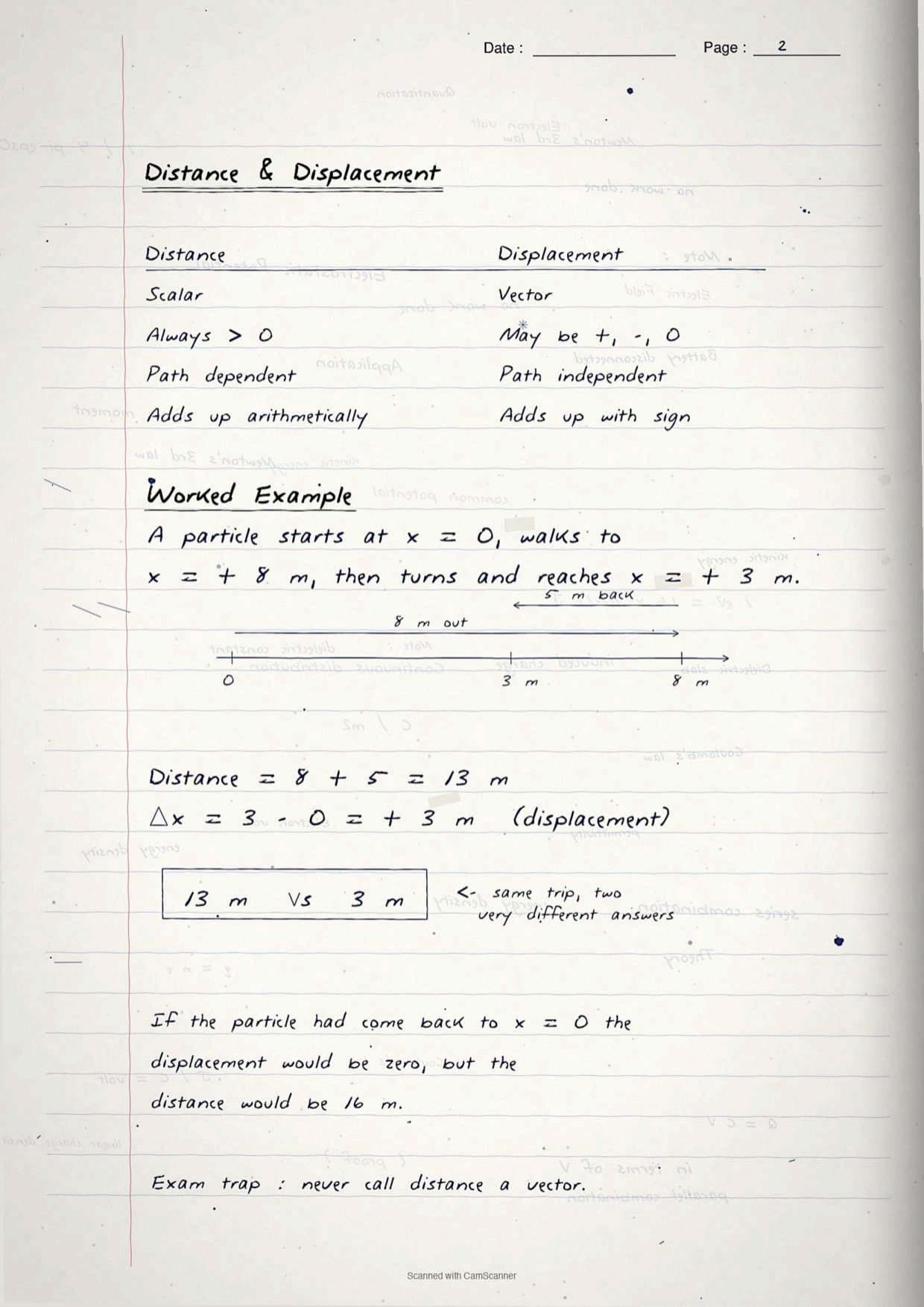
Fix the direction once, write it on the page, and let every quantity carry its sign from there. A body thrown up and caught again has zero displacement but not zero distance, and the notes work that case explicitly.
Variable Acceleration and the Chain Rule
When acceleration is not constant, the three standard equations no longer apply. Which substitution you need depends on what the acceleration is a function of.
- If a is a function of time, integrate a dt to get v, then v dt to get x.
- If a is a function of position, use a = v dv/dx and separate the variables.
- If a is a function of velocity, separate dv/a(v) = dt.
How to Use These Notes
Read the derivation pages once, then work the graph pages with a pencil and cover the answer. Kinematics is not a chapter you can revise by reading, because the graph questions test whether you can move between three representations of the same motion.
Kinematics in One Sitting
Source: JEE Wallah
JEE Main Motion in a Straight Line Notes FAQs
Ques. How many questions come from Motion in a Straight Line in JEE Main?
Ans. Usually one or two per shift, and a good share of those are graph based. Across the 2022 to 2026 papers the chapter is set consistently, and roughly 30 percent of its questions are integer type rather than multiple choice.
Ques. Do I need calculus for this chapter?
Ans. For the constant-acceleration questions, no. For variable acceleration you do, and it is only single-variable integration. The notes work five such problems across the three cases so the pattern becomes routine.
Ques. What is the difference between distance and displacement in graph questions?
Ans. Displacement is the signed area under a v-t graph. Distance is the same area with every part counted positive. They differ only when the curve crosses the time axis, which is exactly when examiners ask for the ratio.
Ques. Are these notes enough on their own?
Ans. They cover the full JEE Main syllabus for the chapter including seven previous-year-style problems, so they work as the main revision source. Pair them with a timed question set, because kinematics is a speed chapter.



Comments