




JEE Main Laws of Motion PYQ, free to download as a 176-page PDF. The bank carries 80 solved questions from the 2022 to 2026 papers and takes roughly two weeks to work through, so pace it by sub-topic.
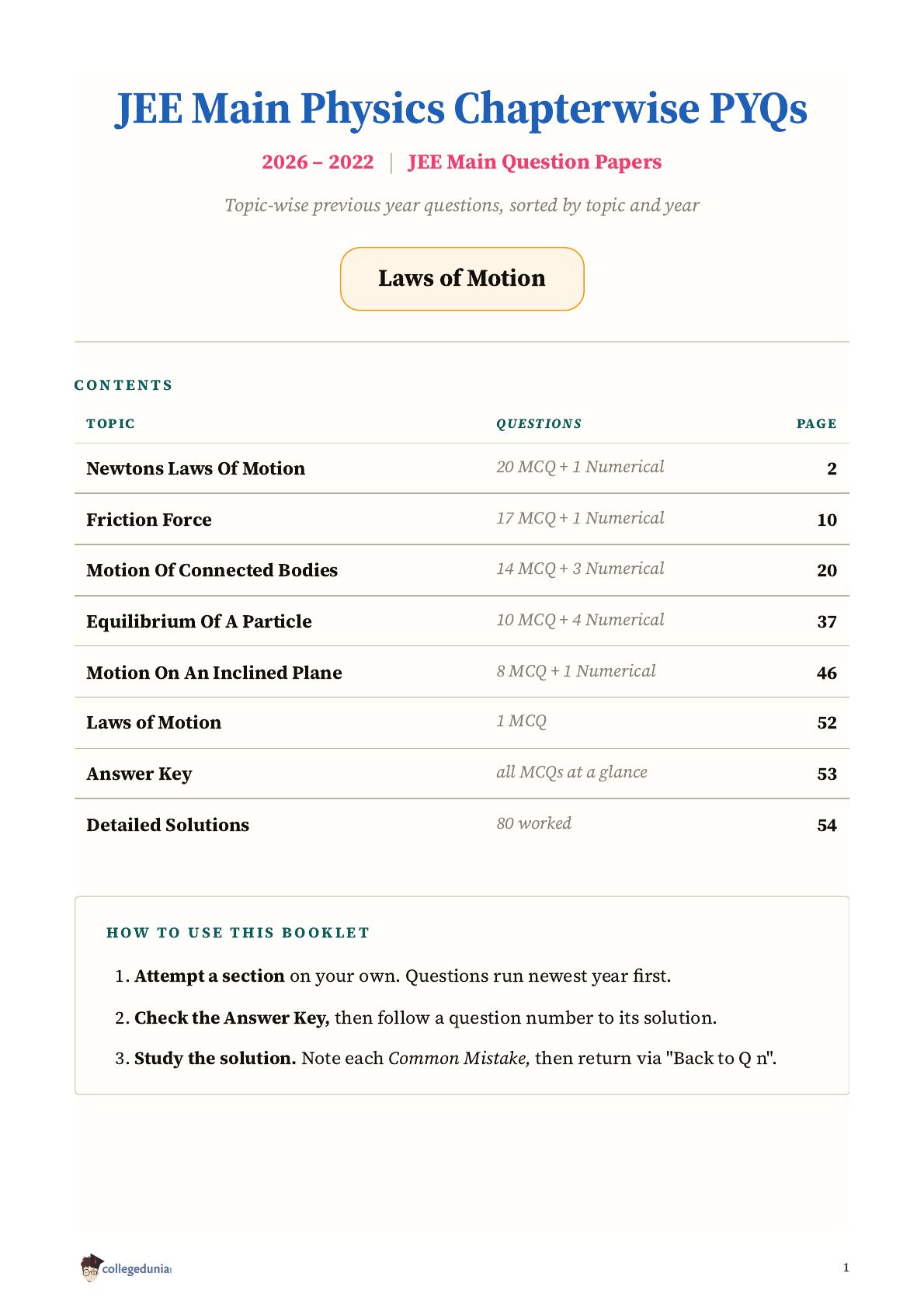
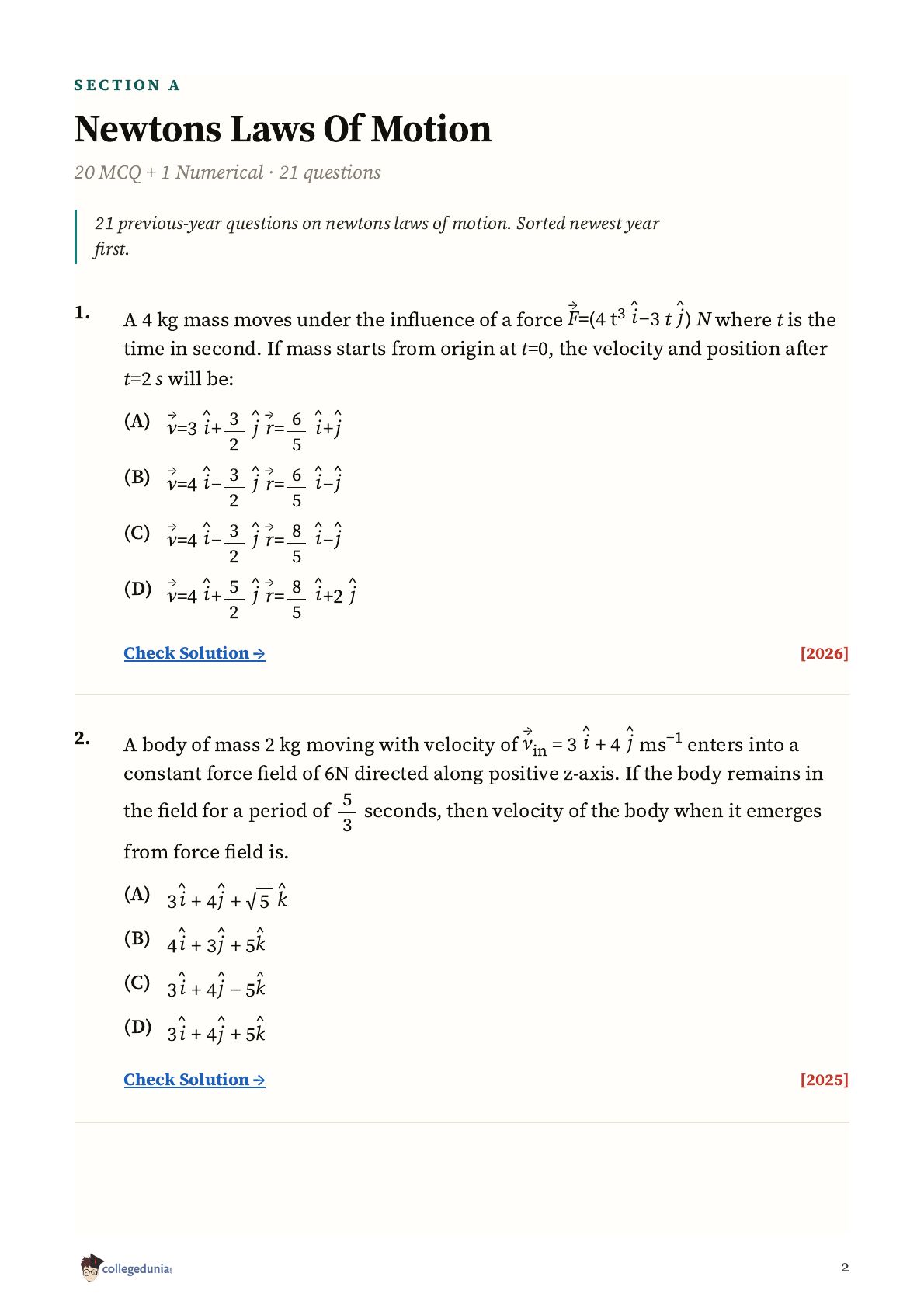
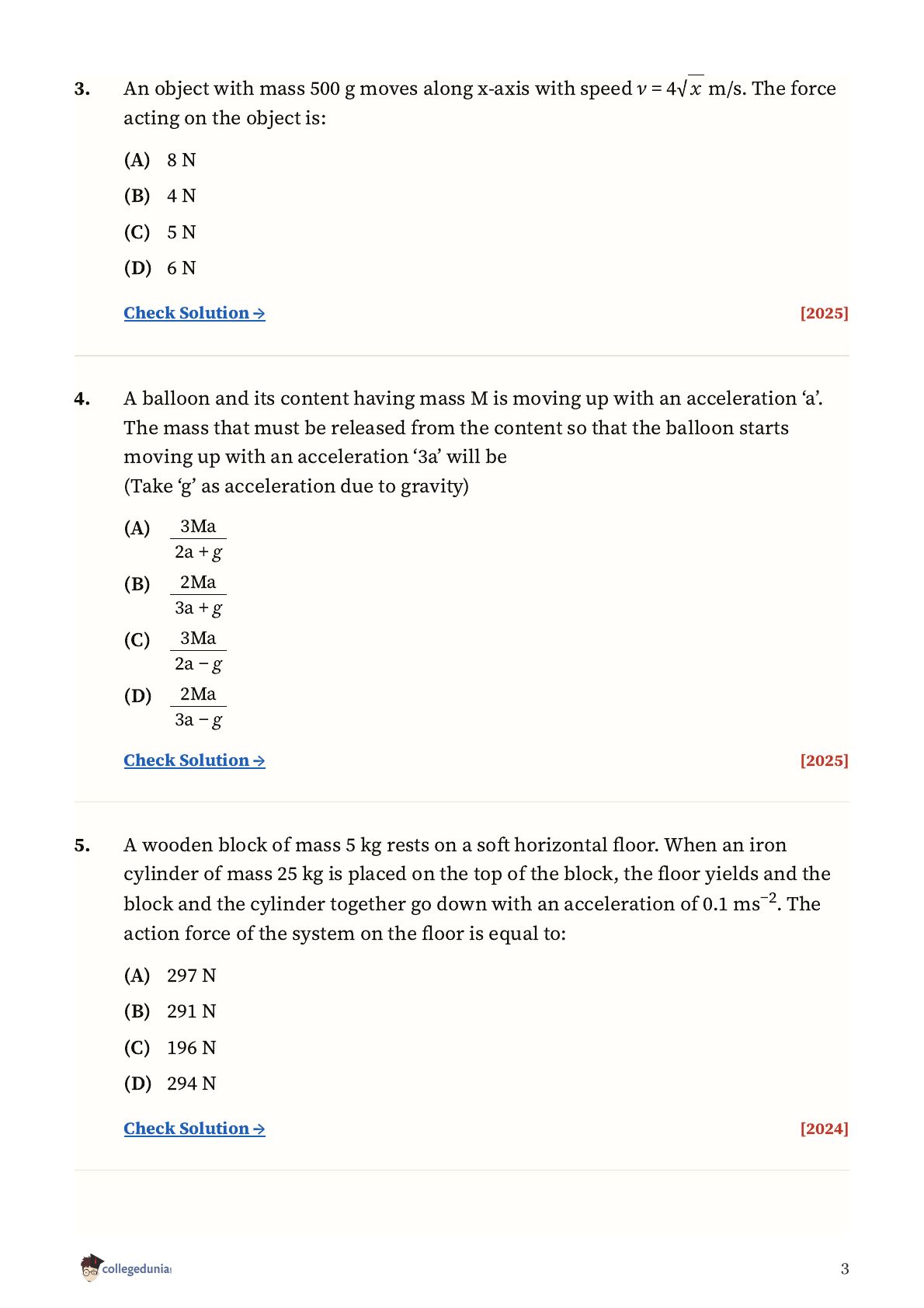
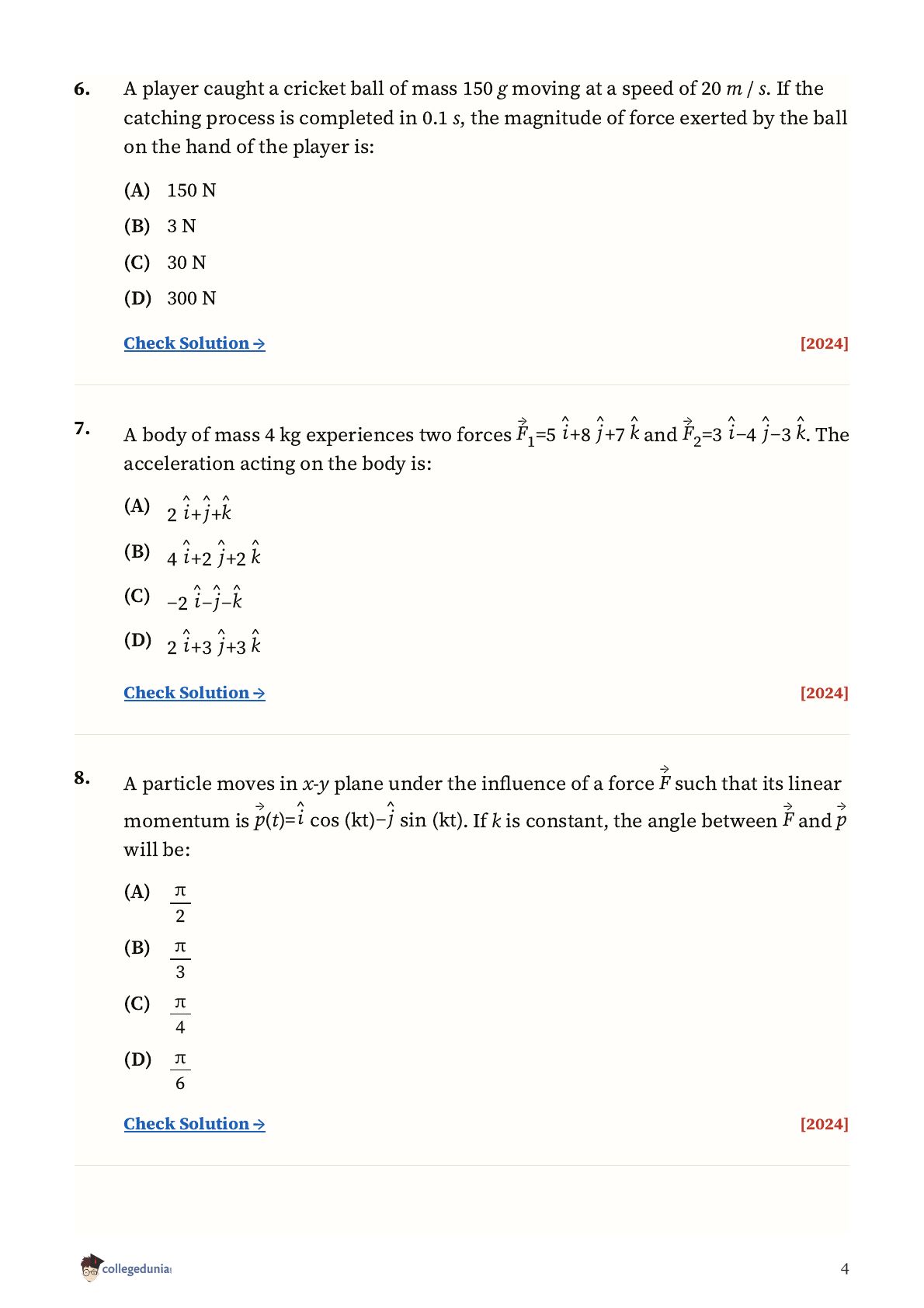
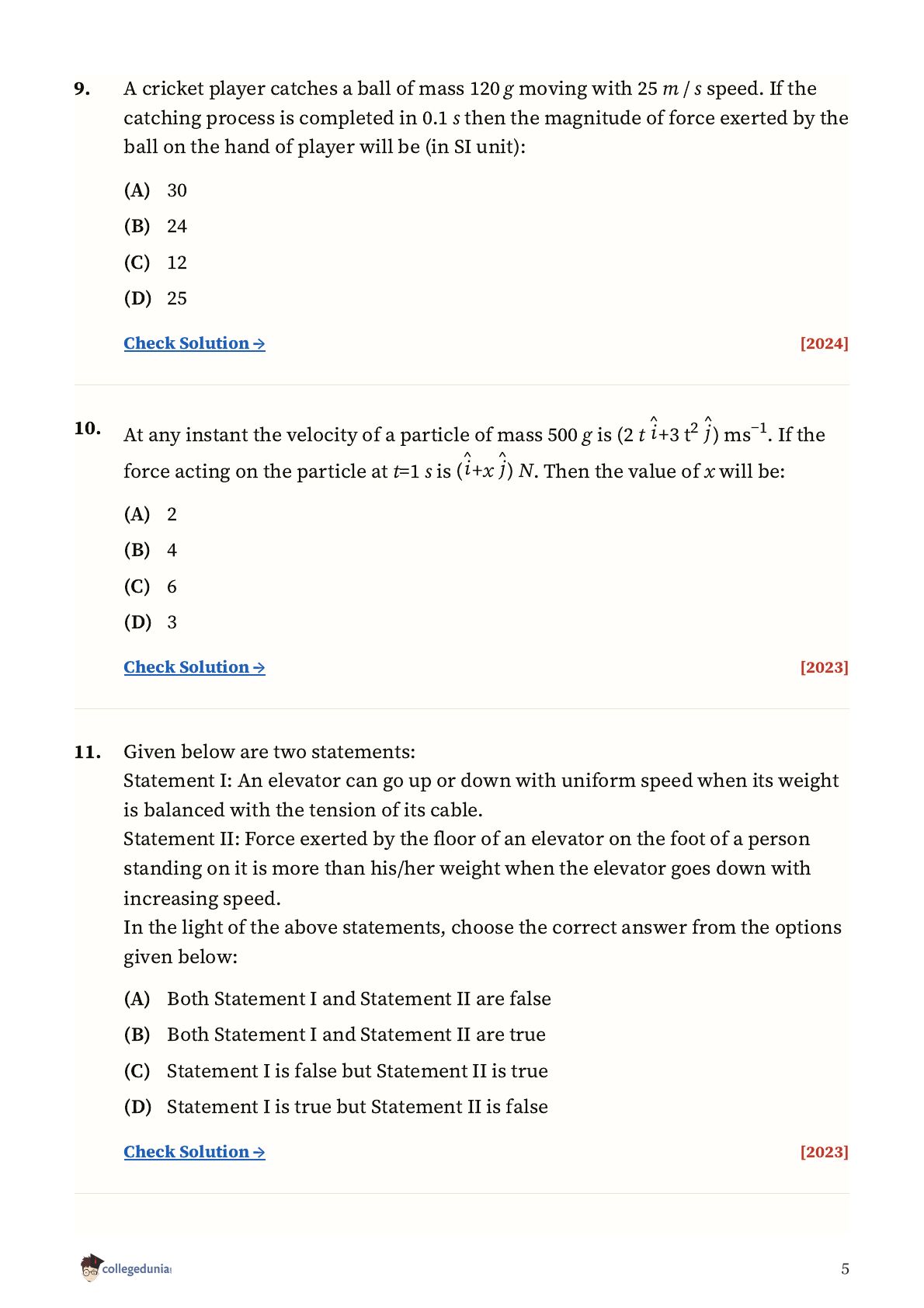
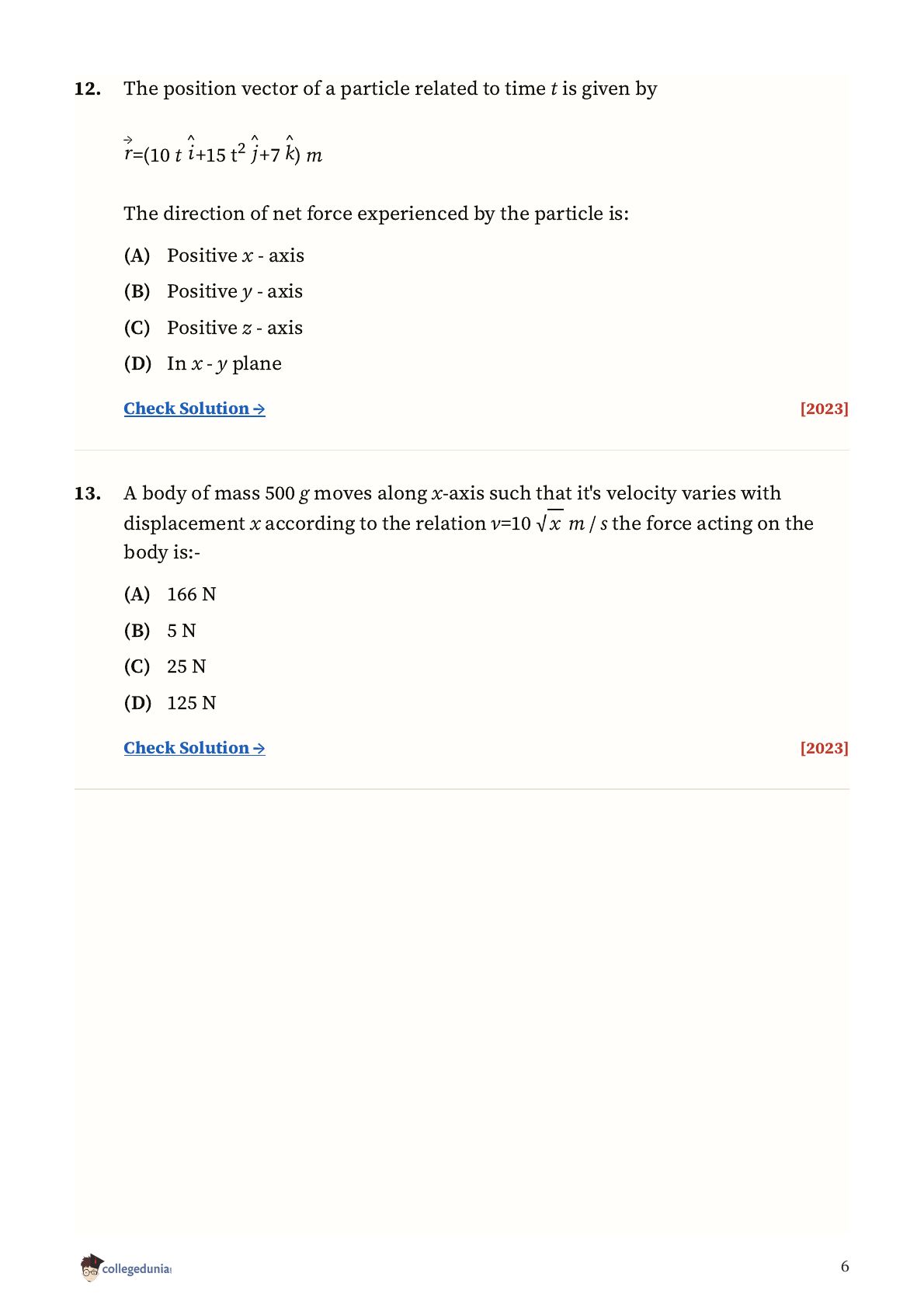
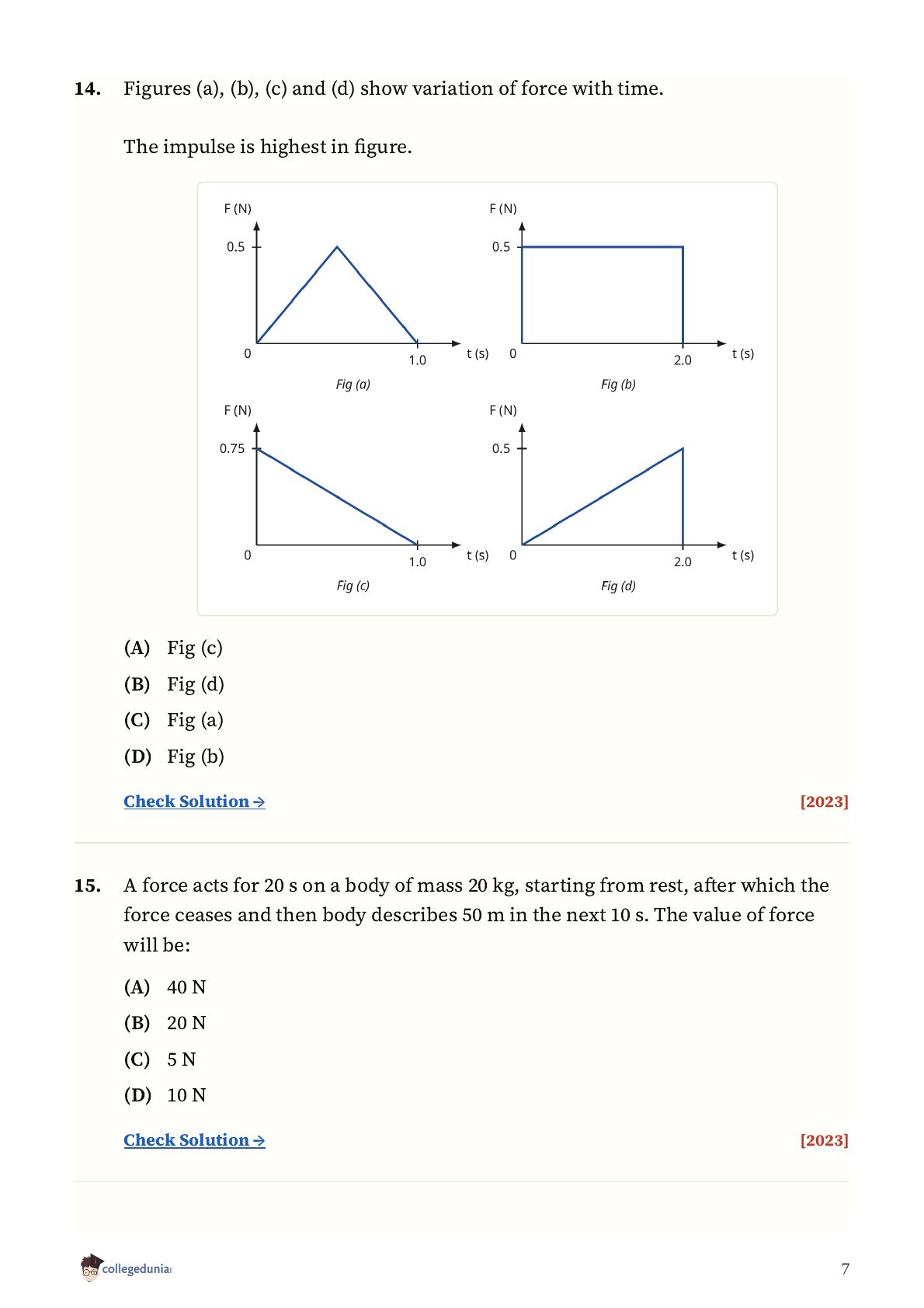
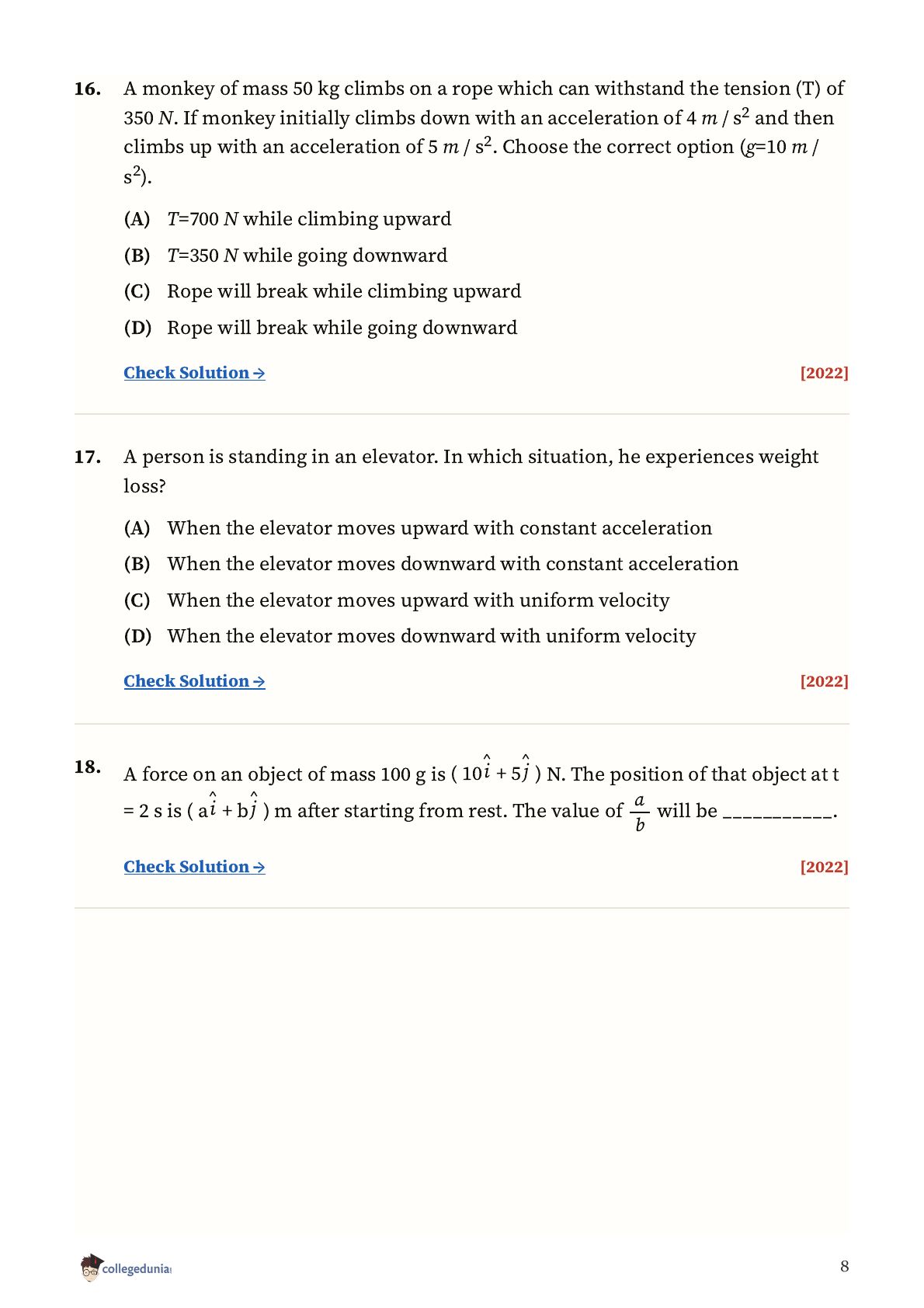
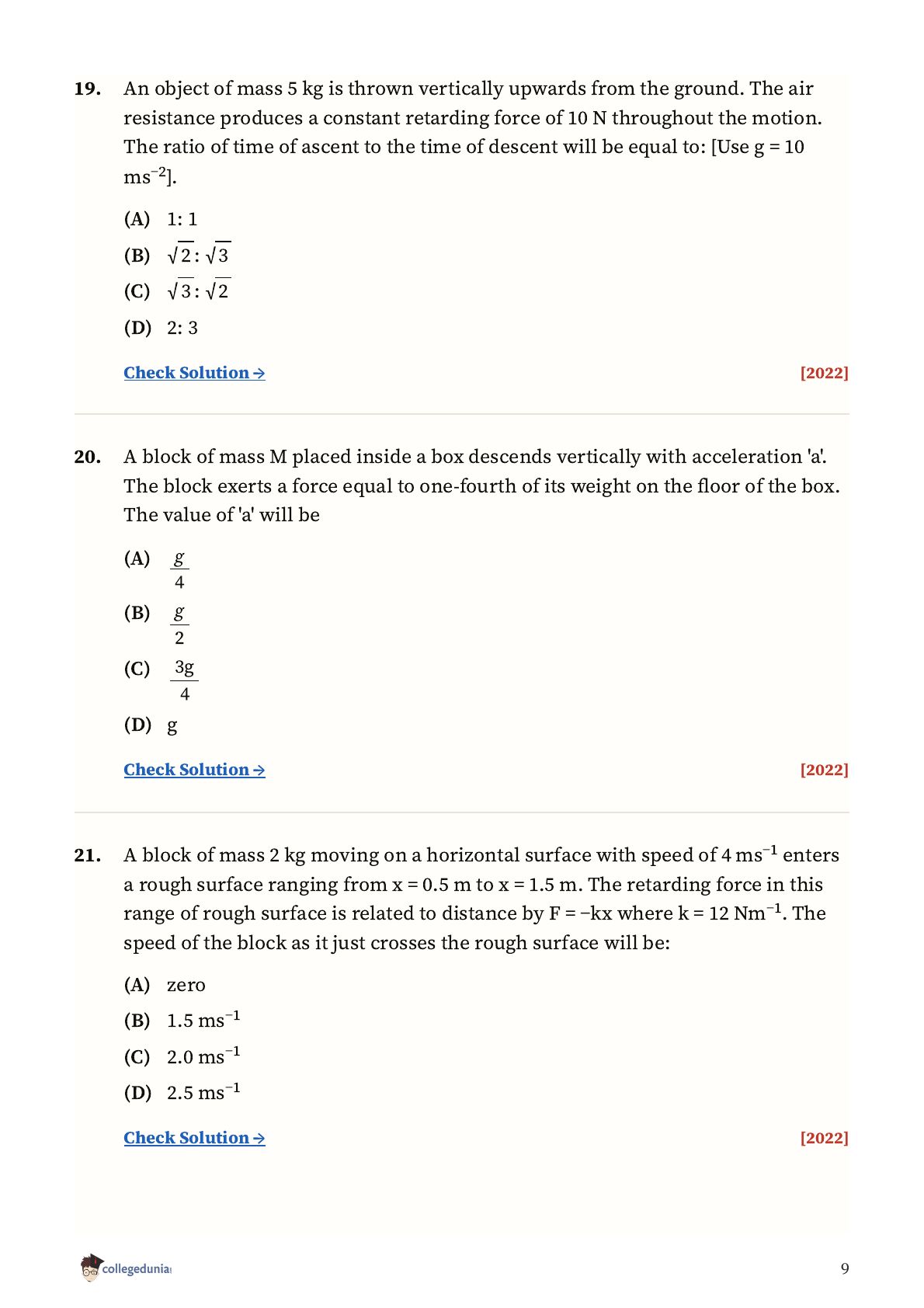
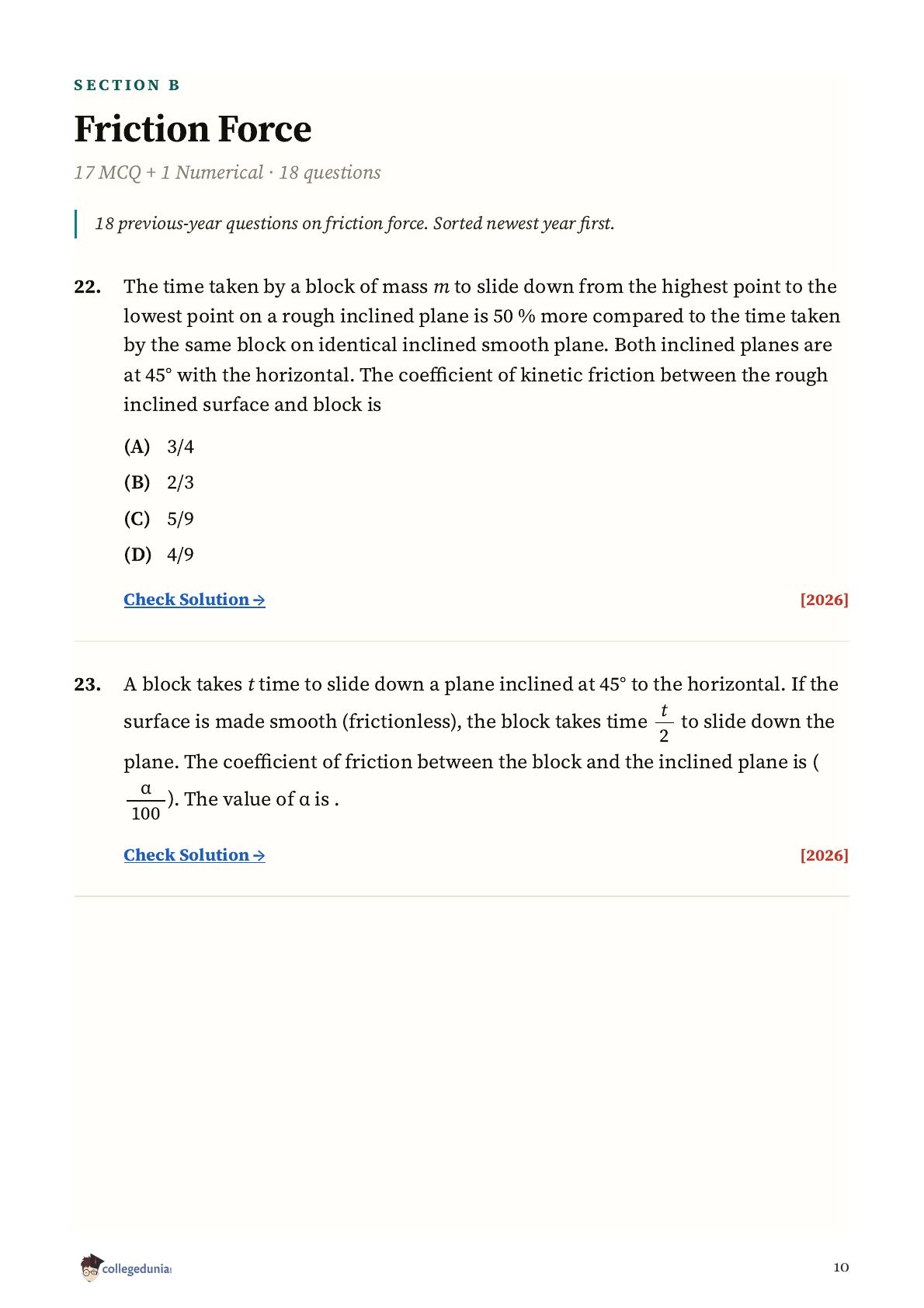
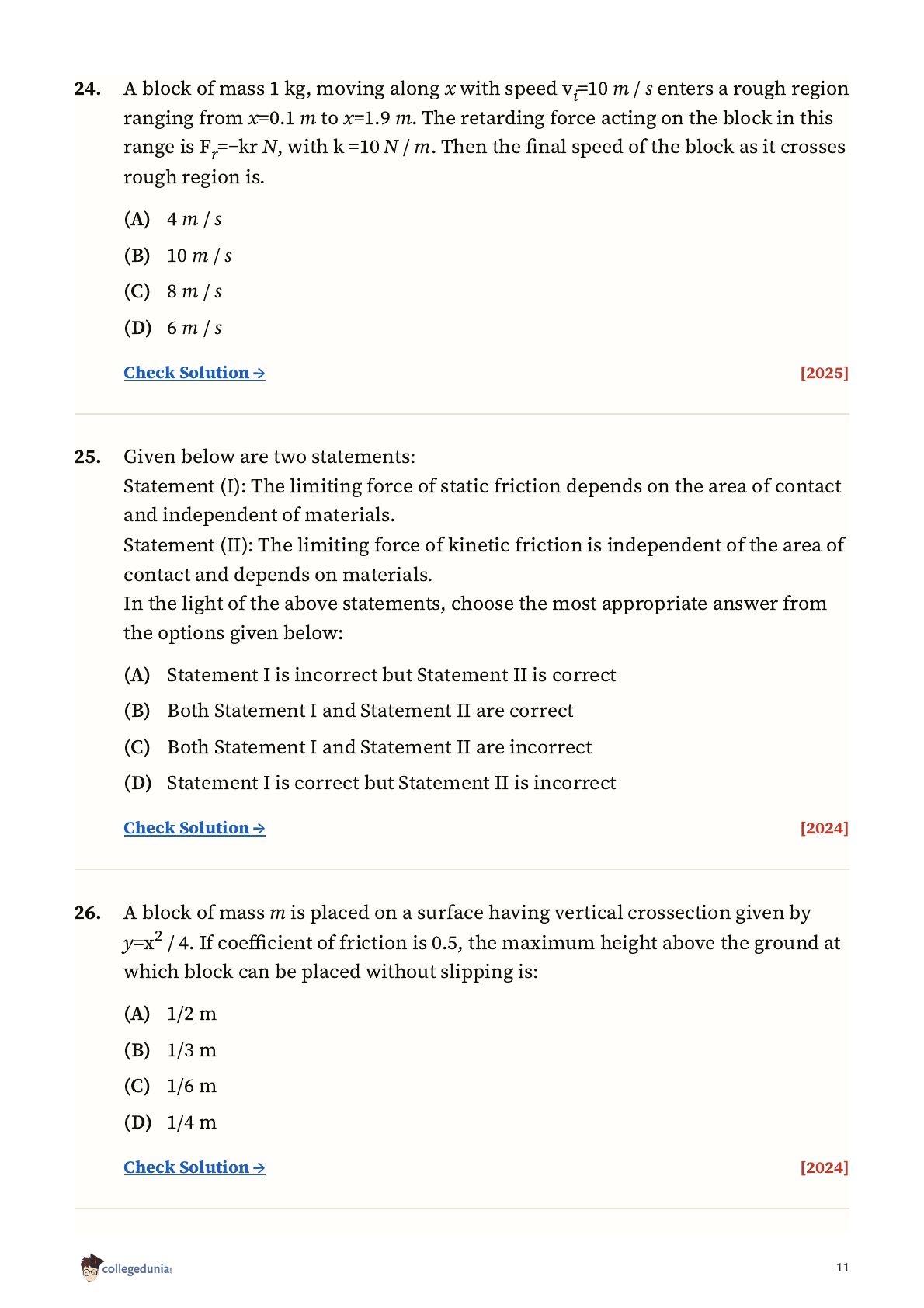
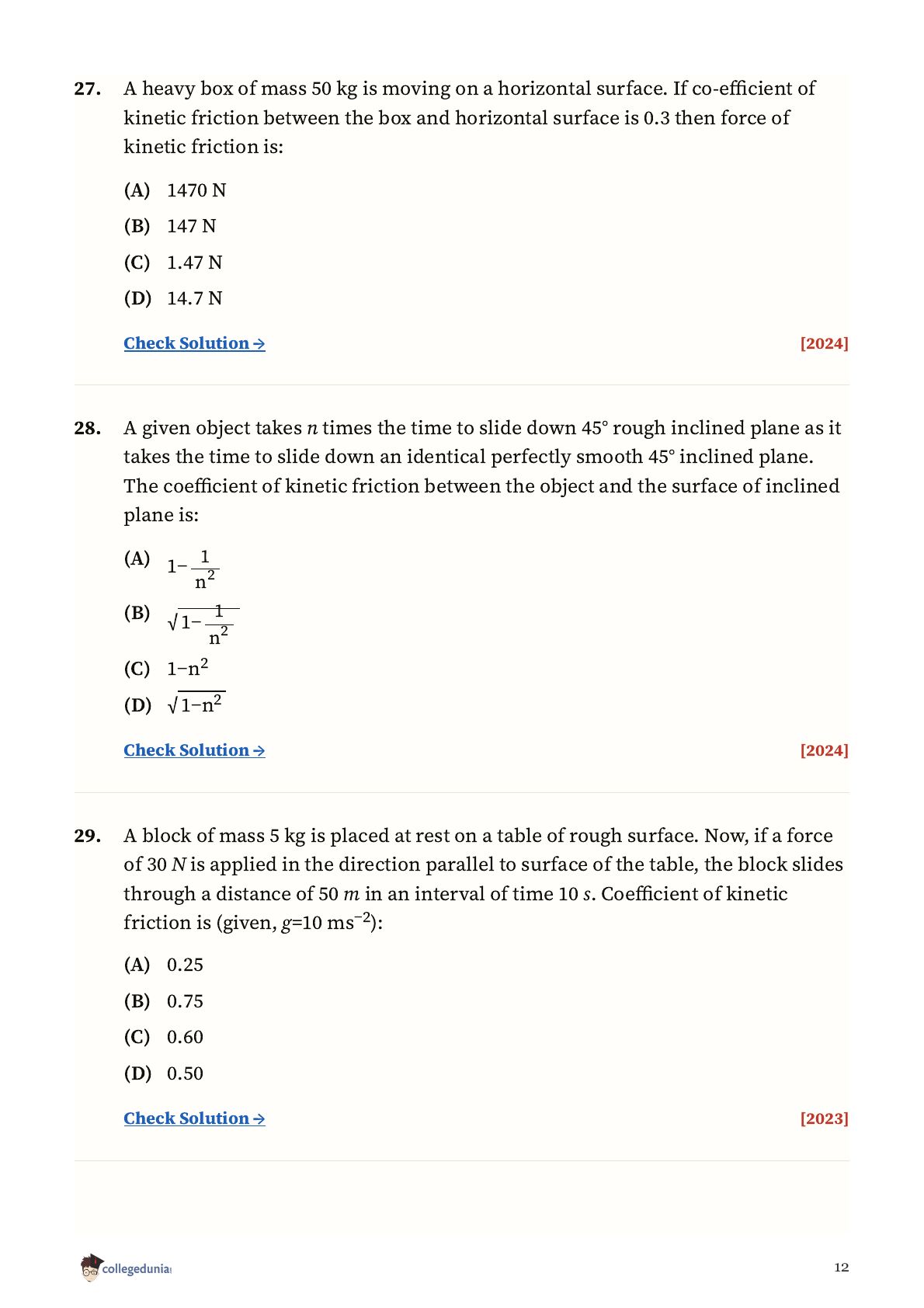
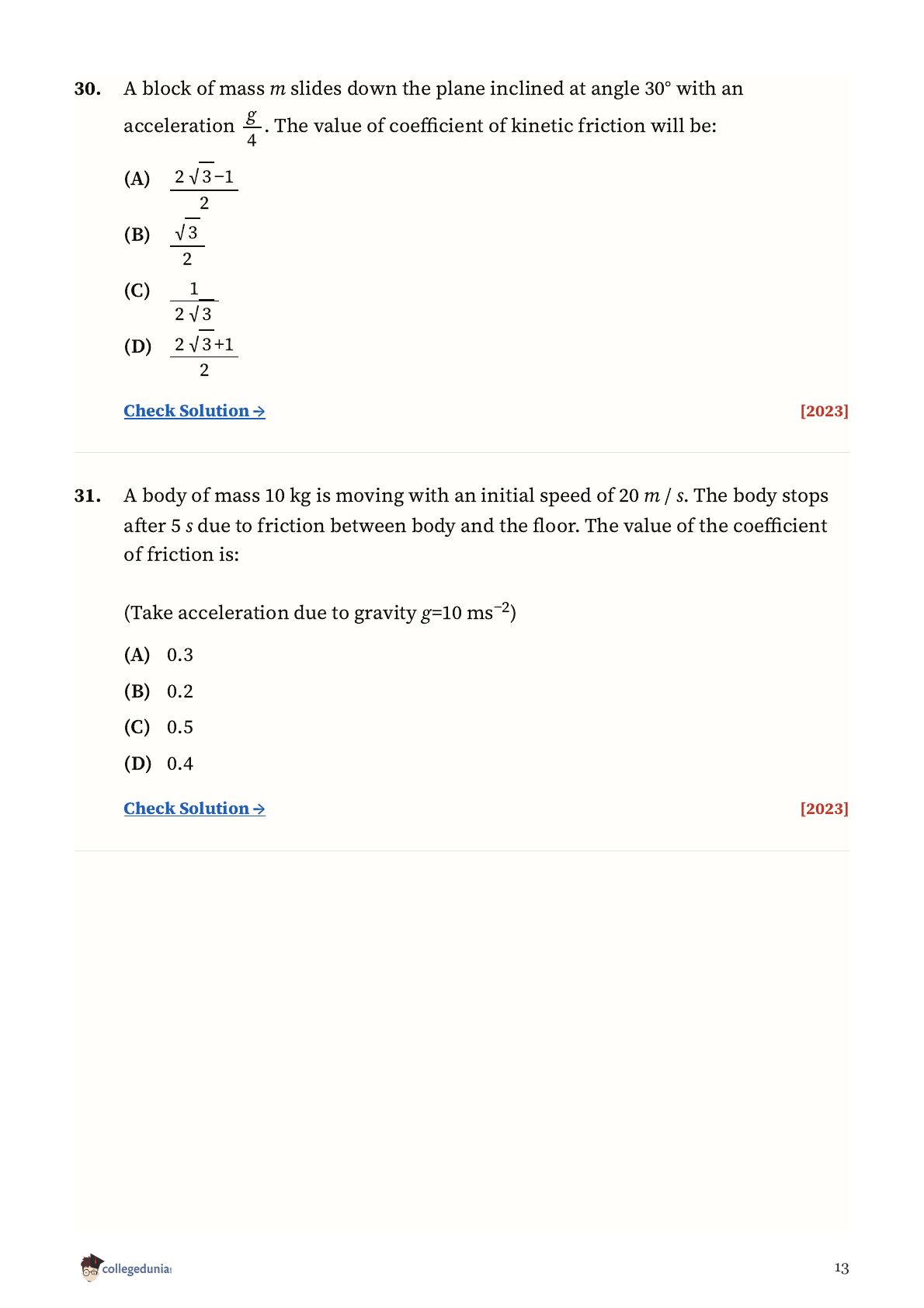
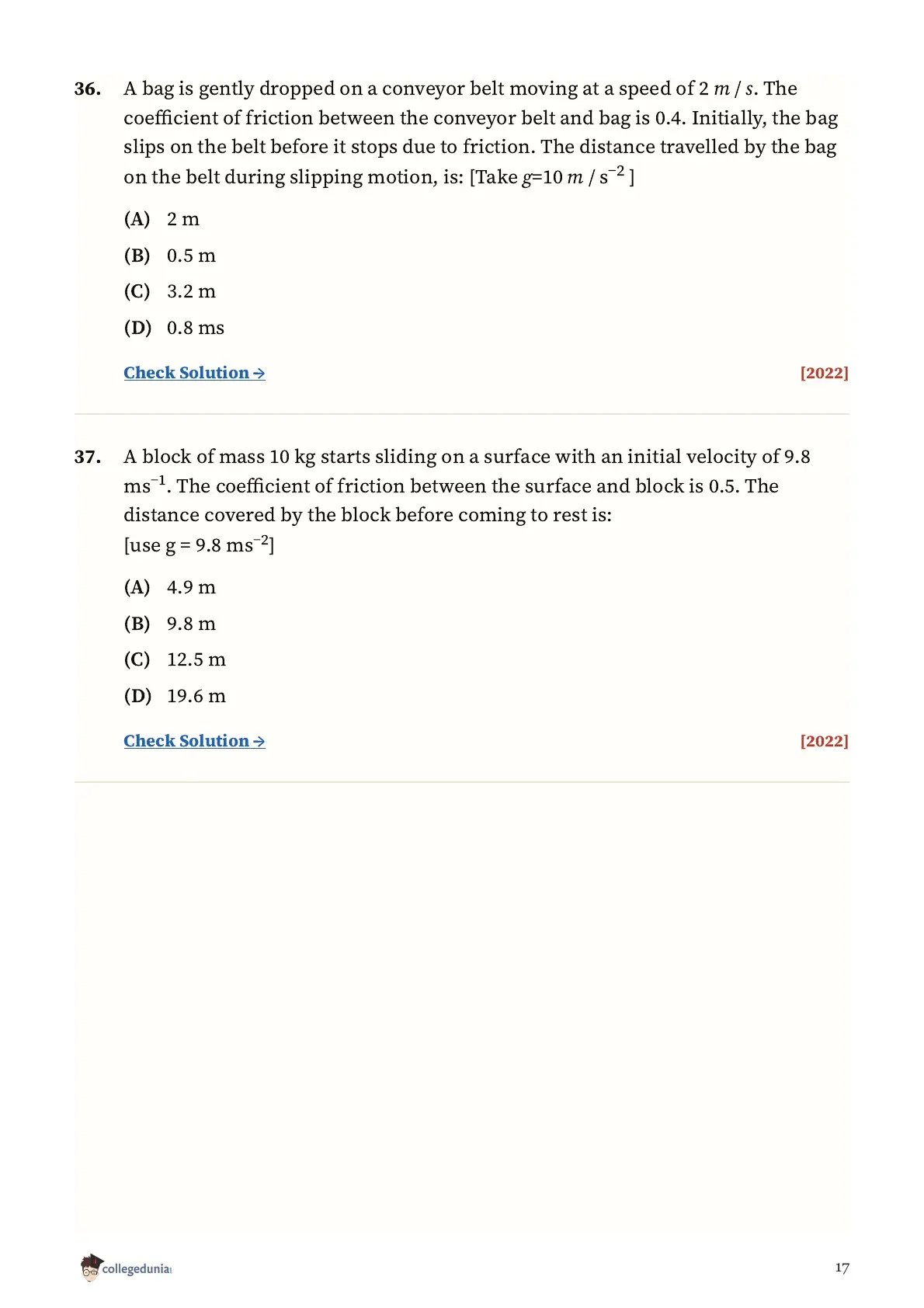
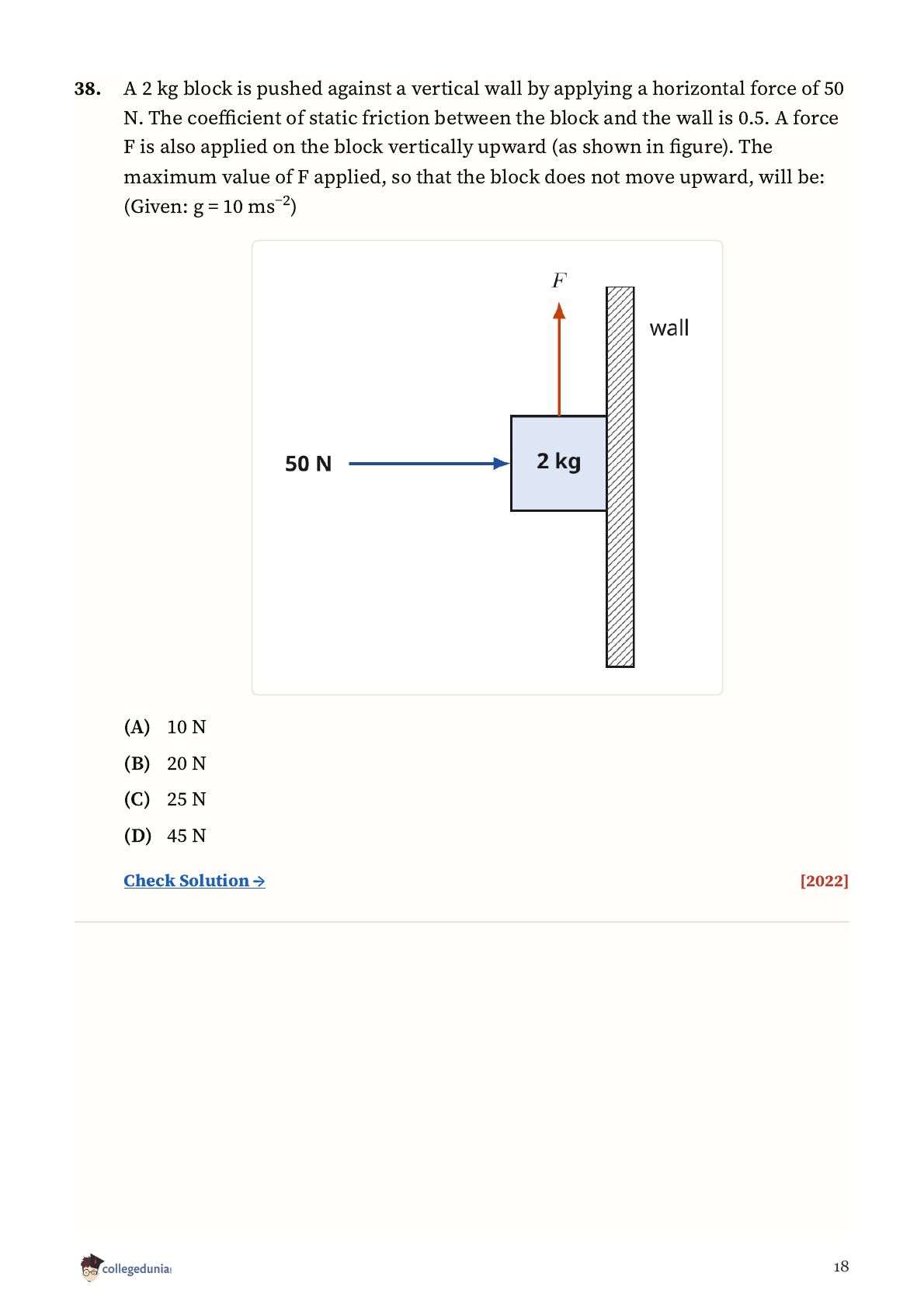
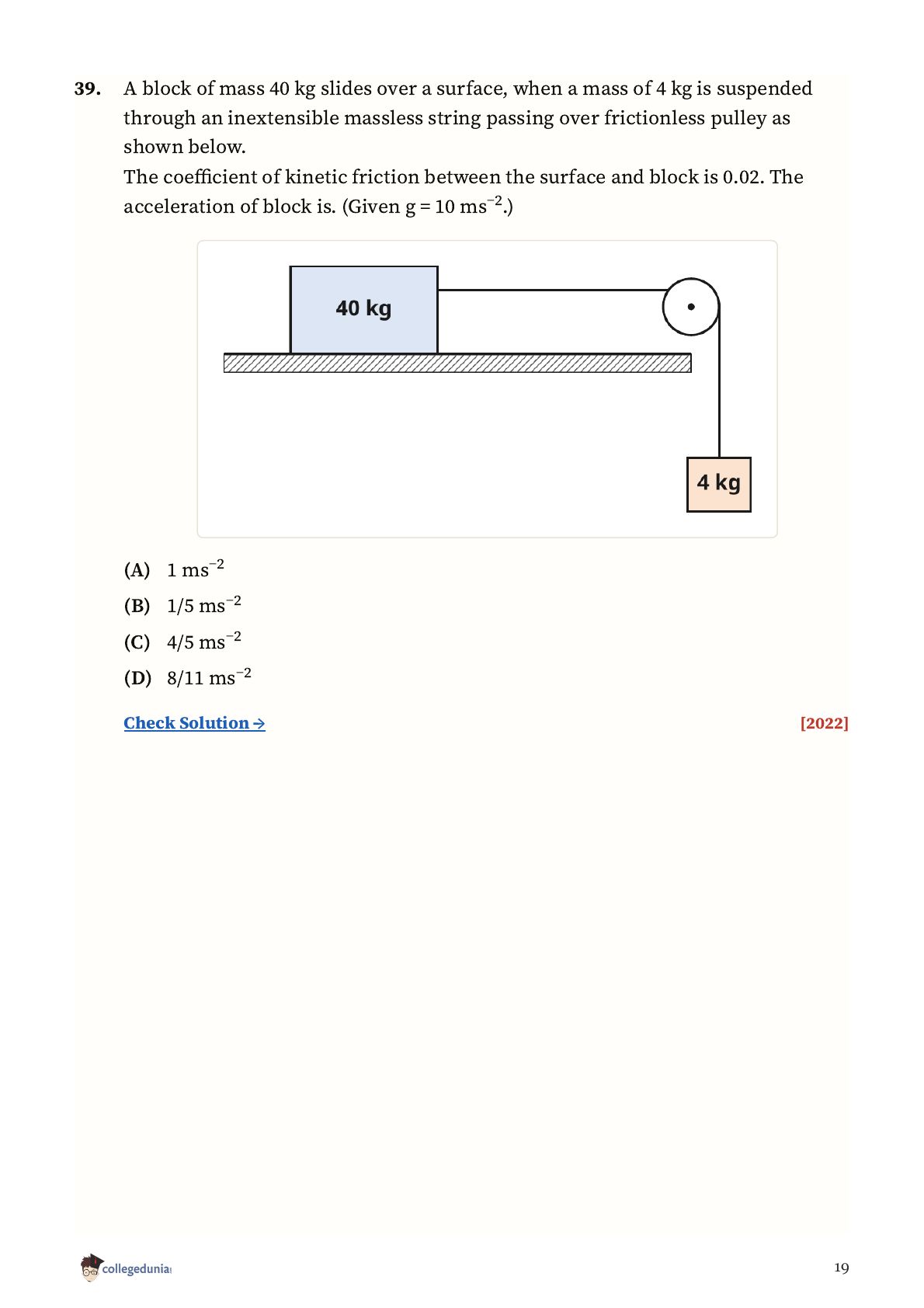
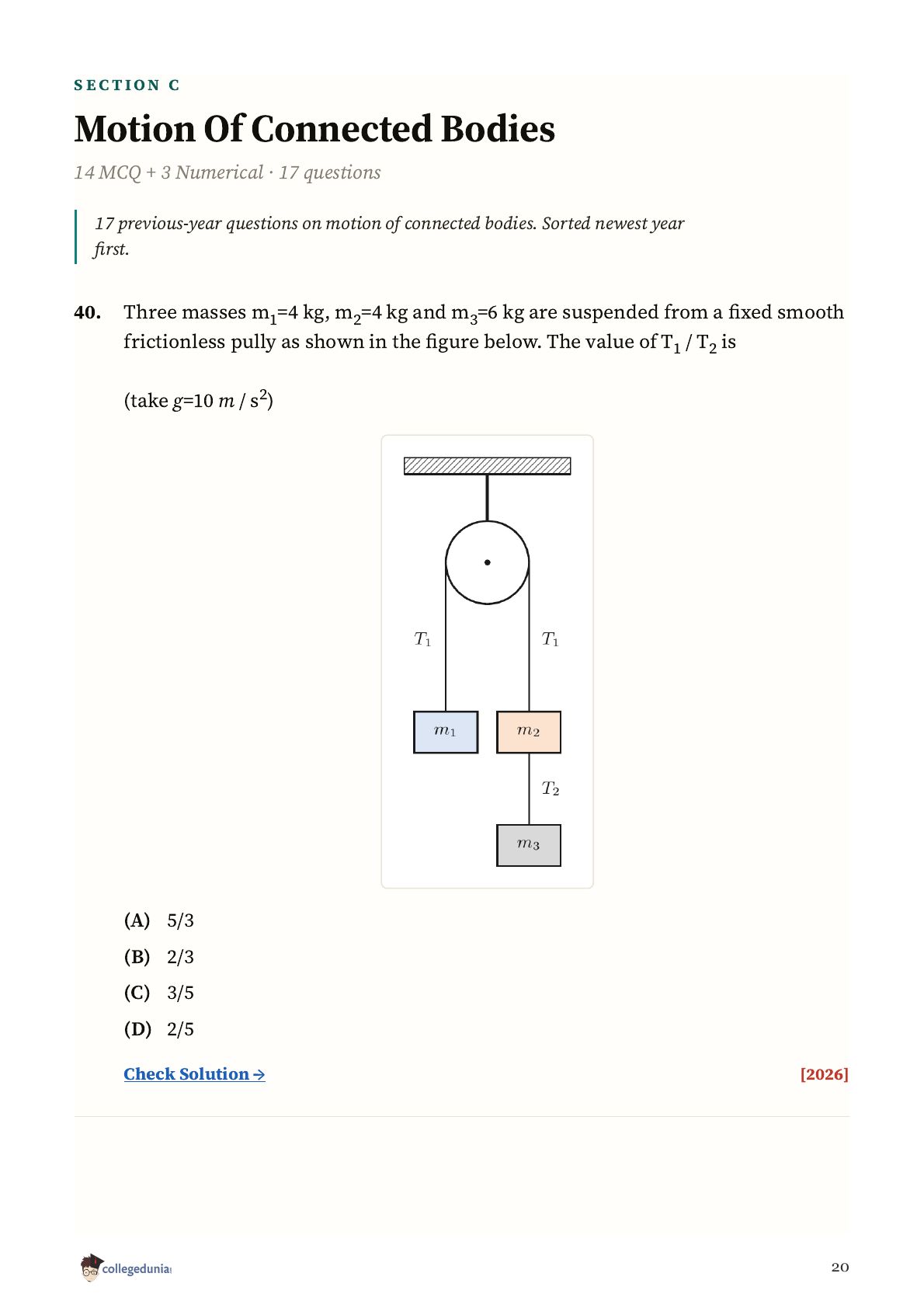
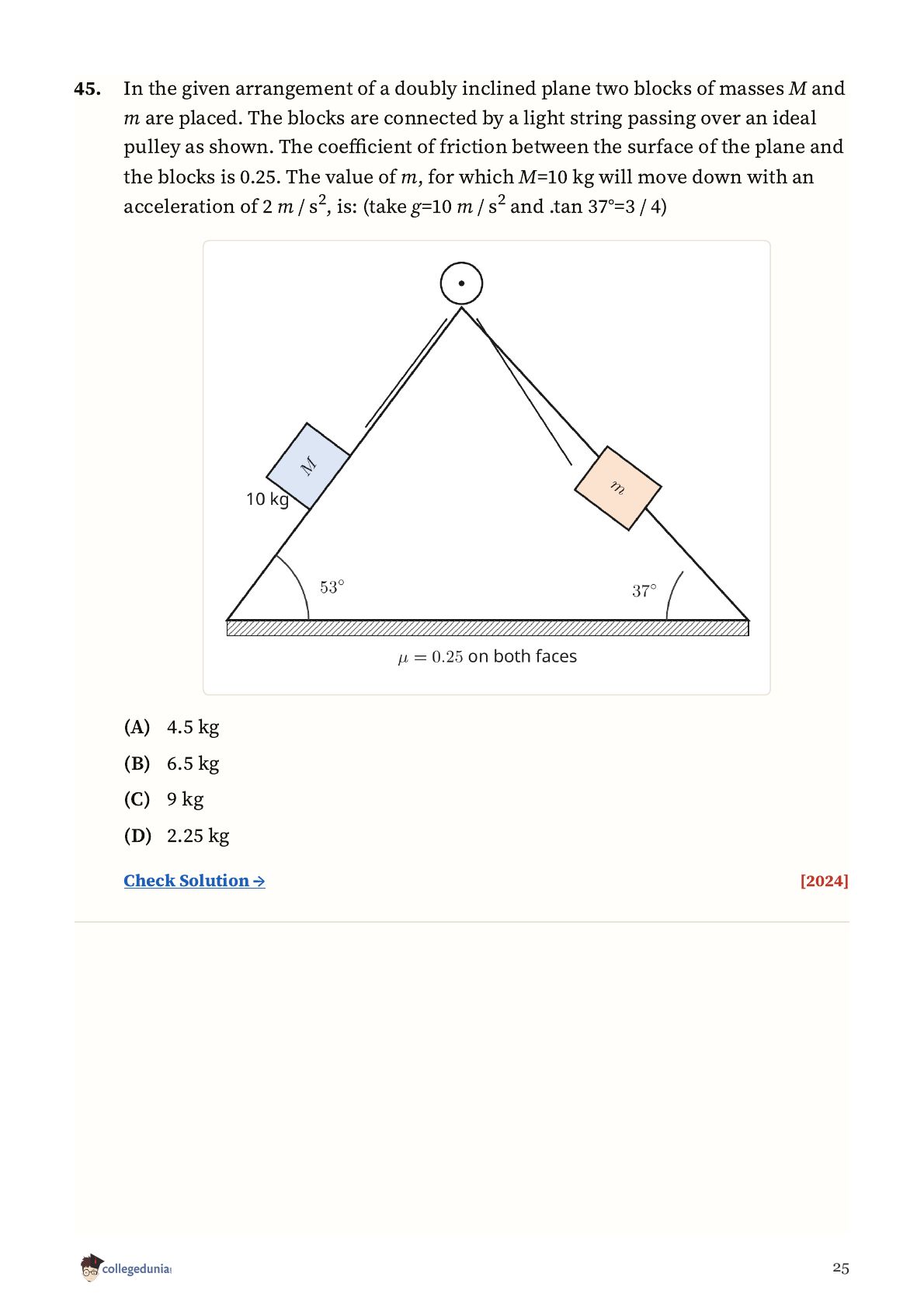
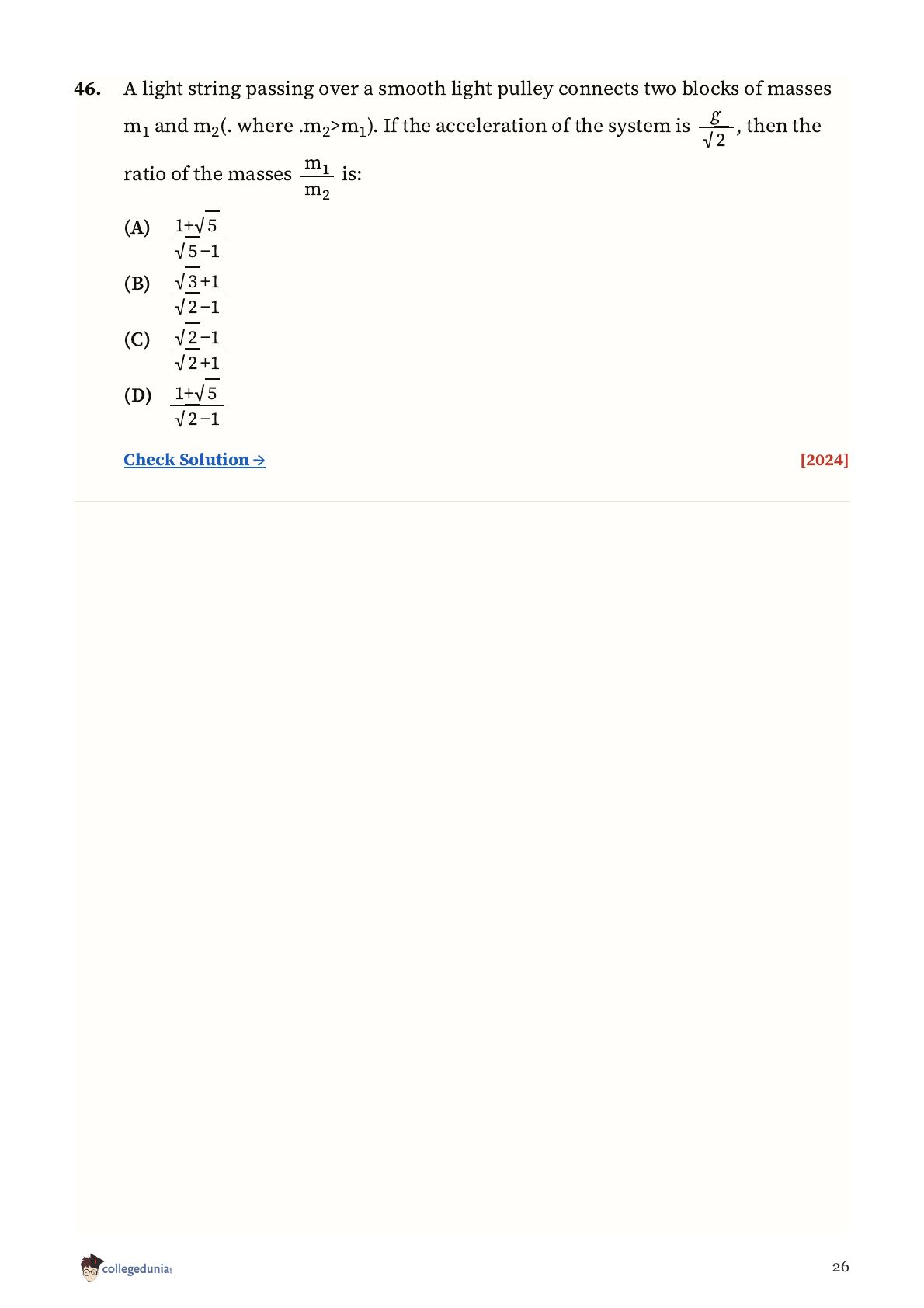
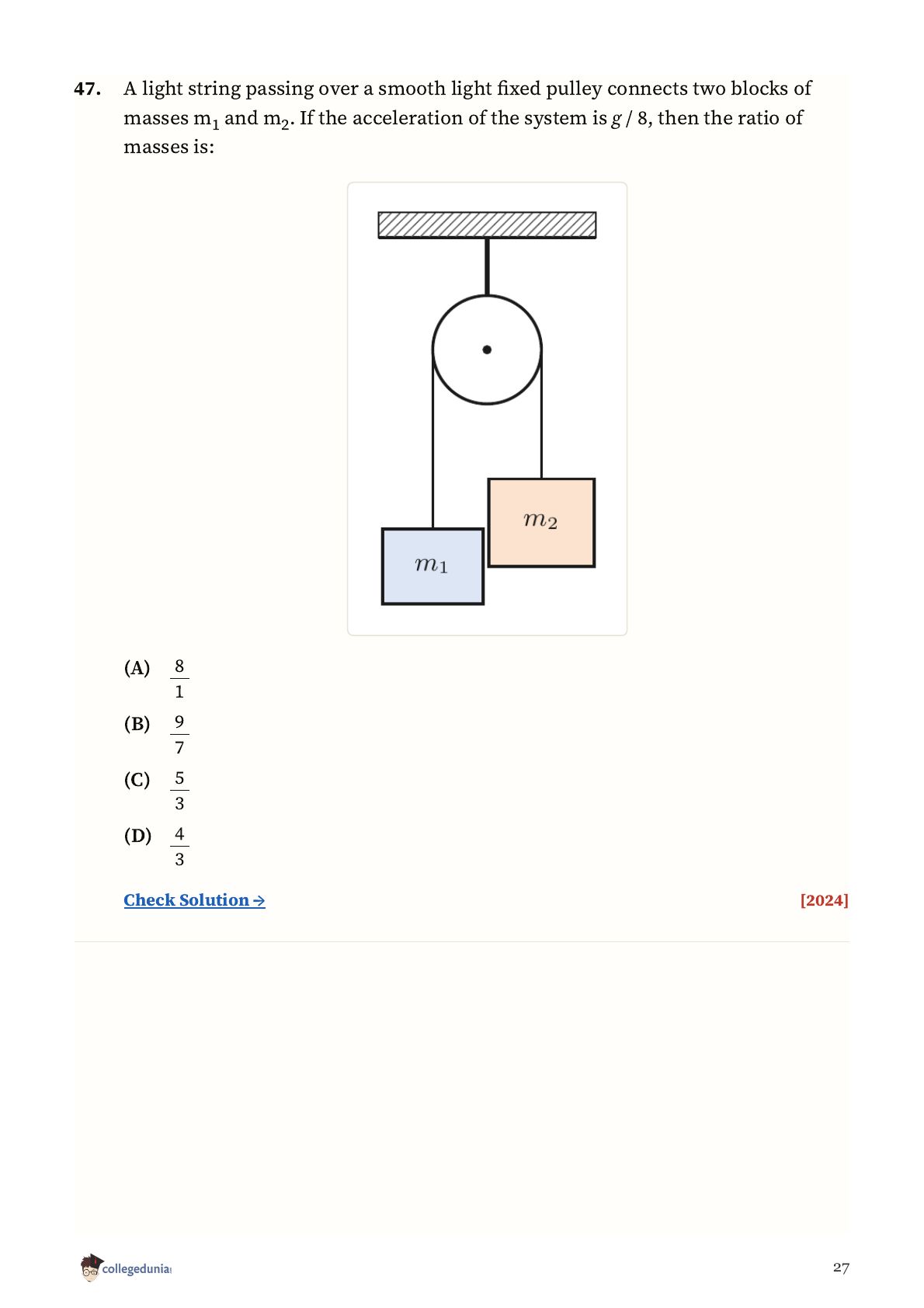
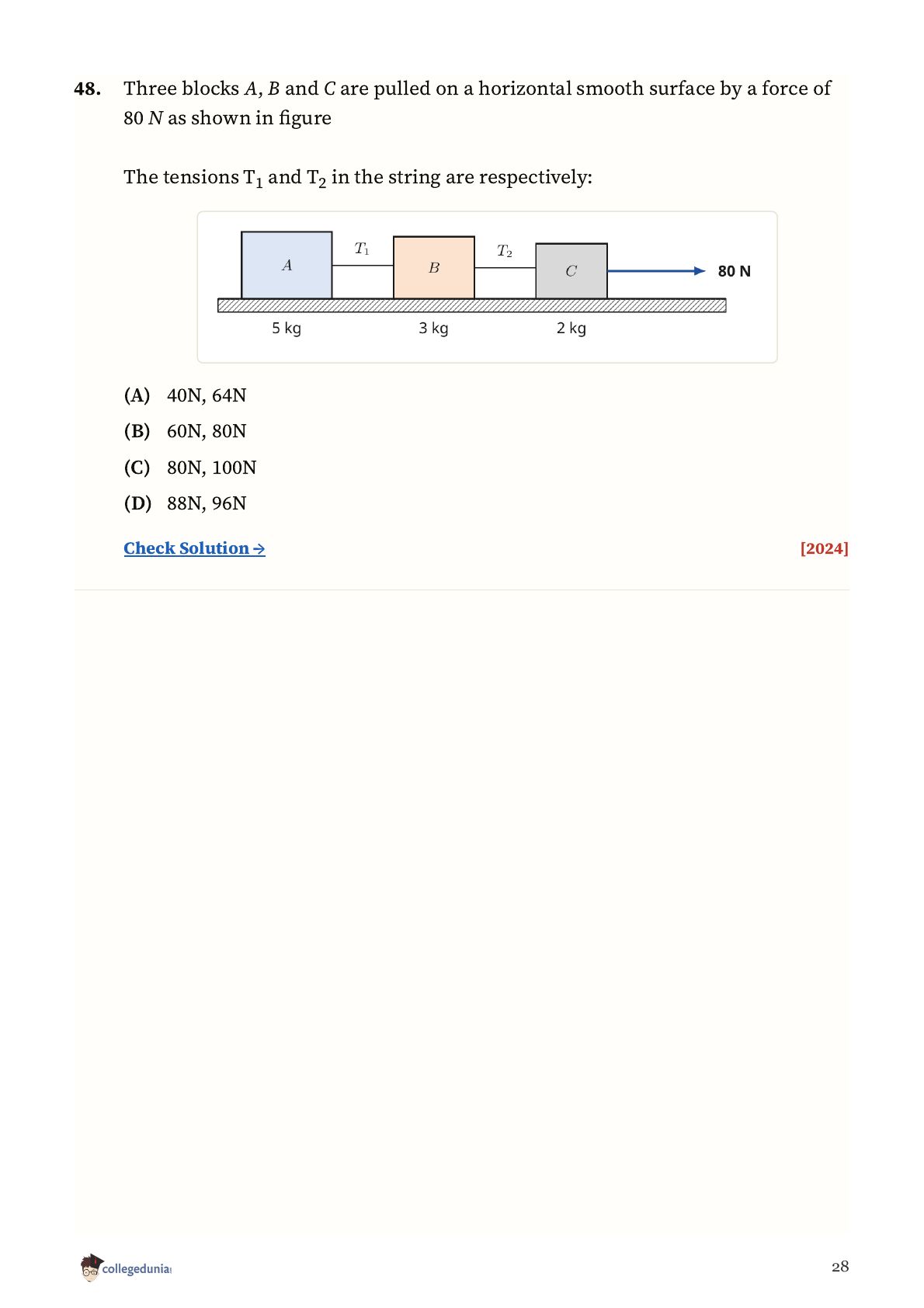
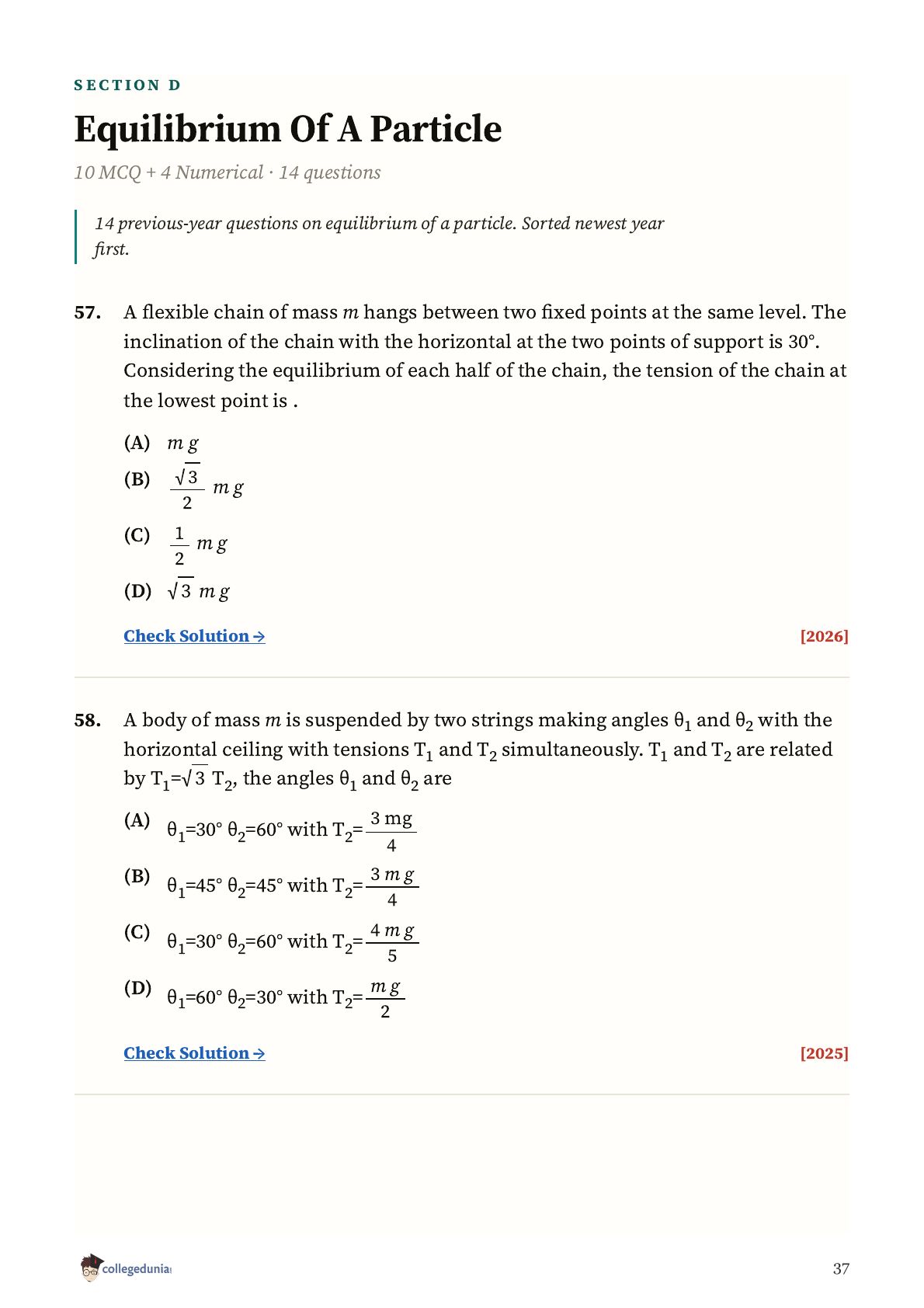
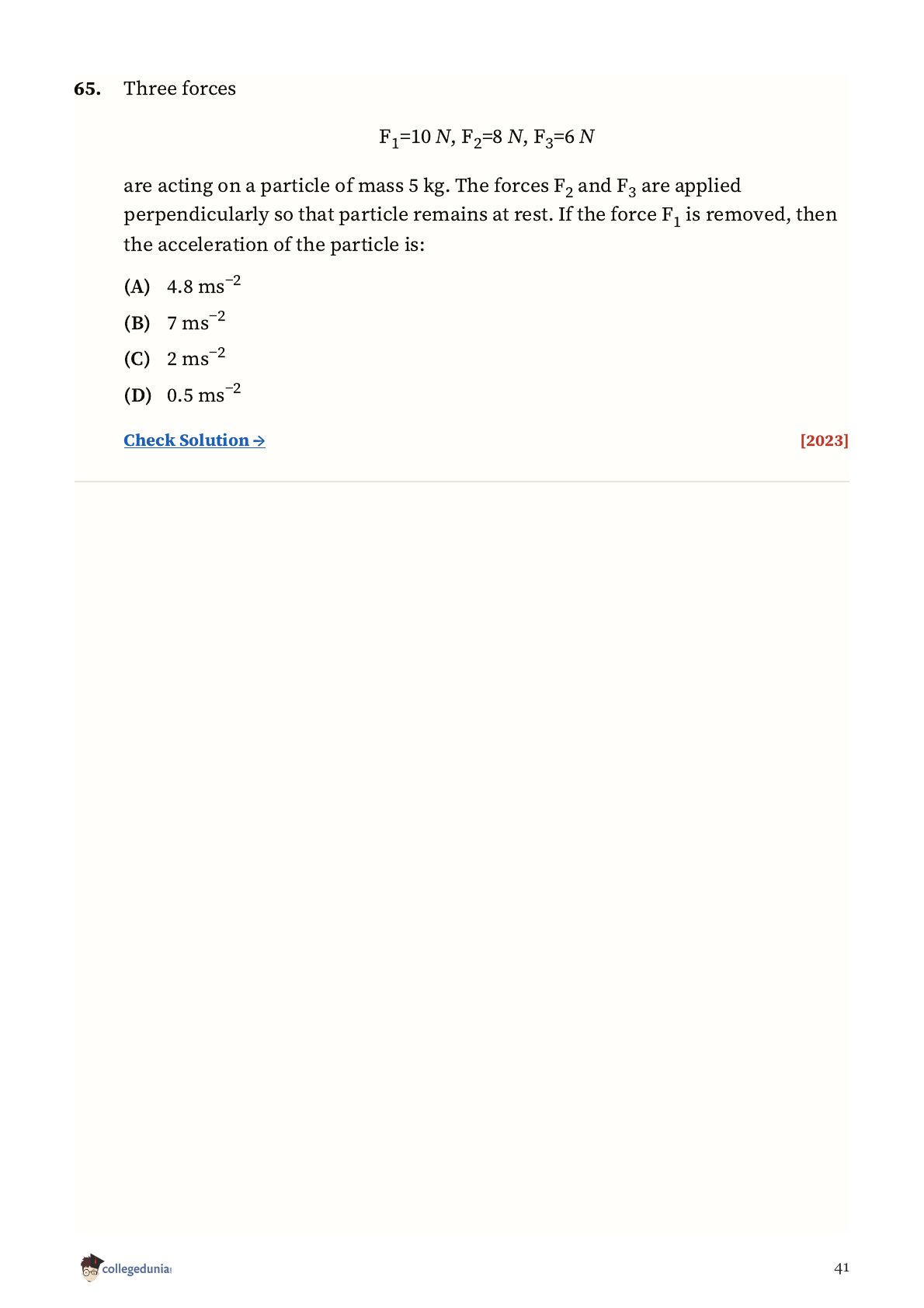
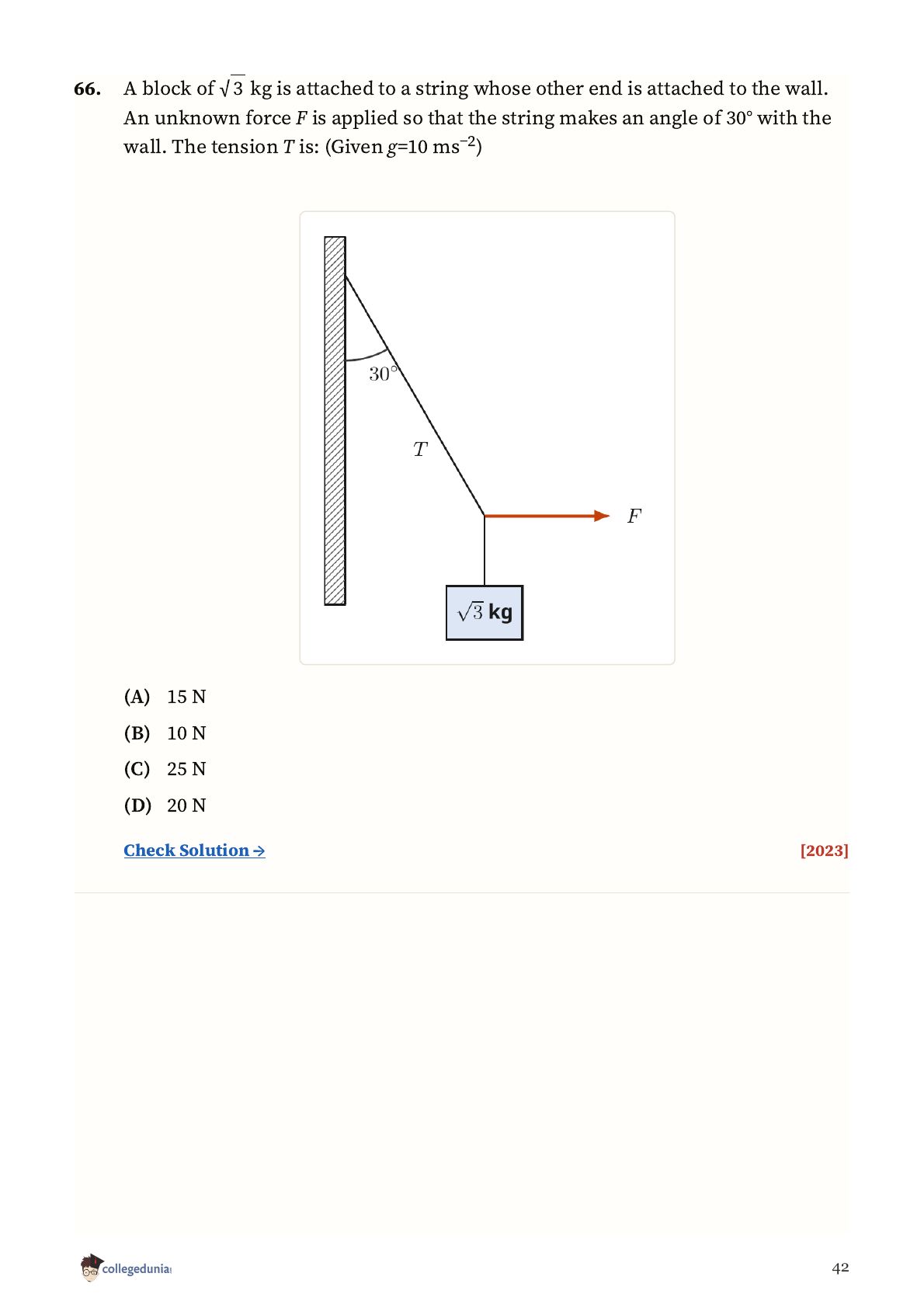
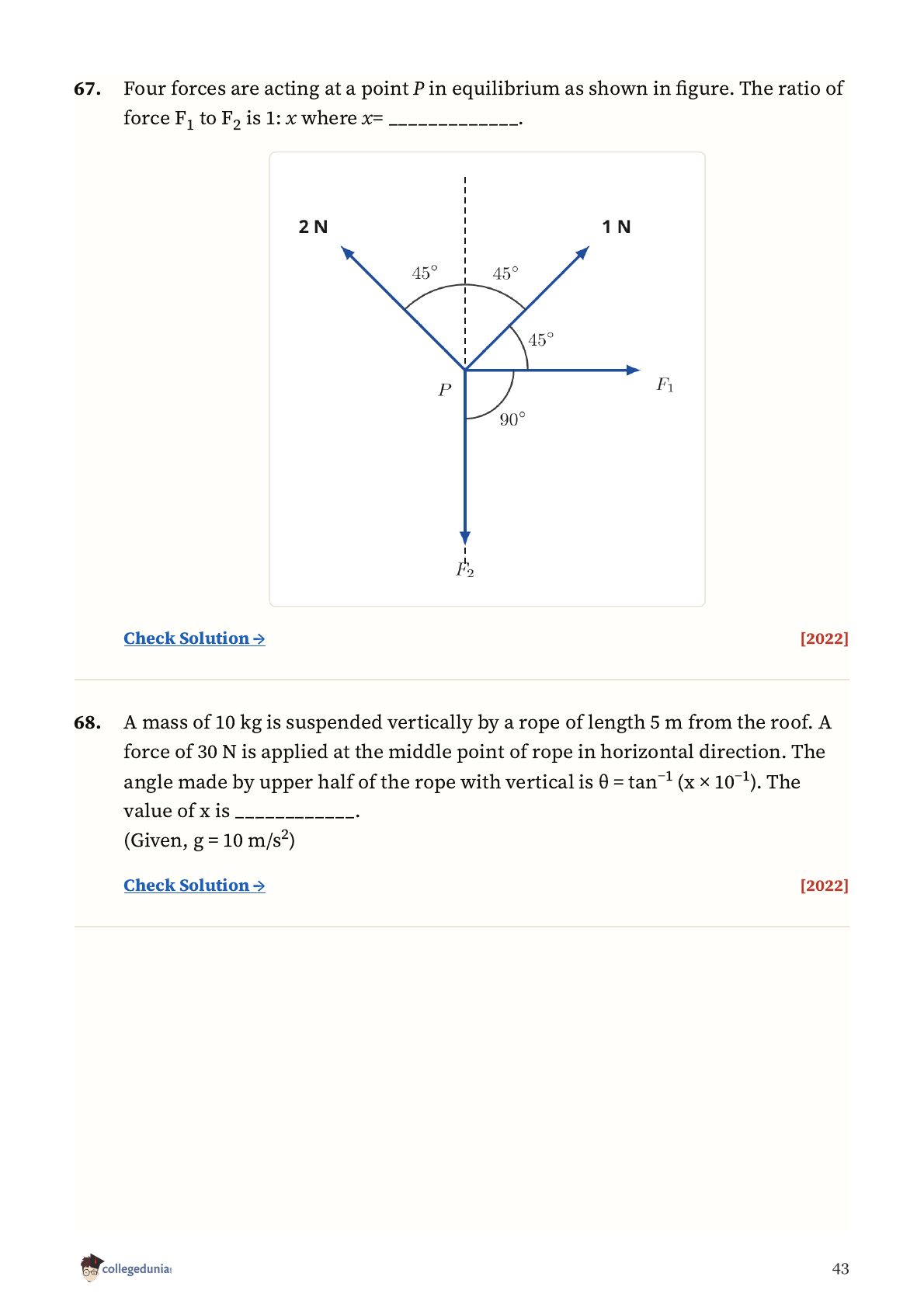
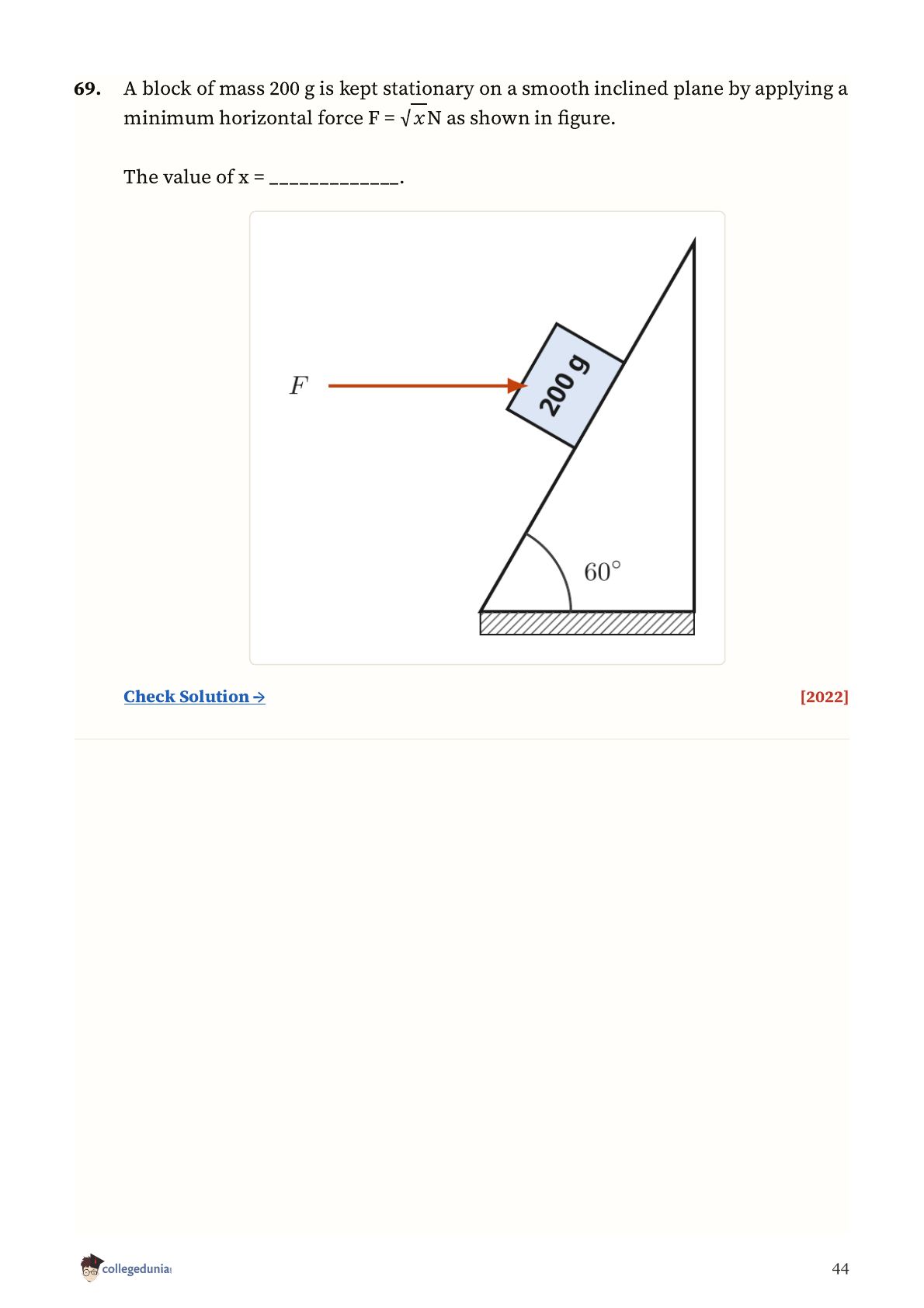
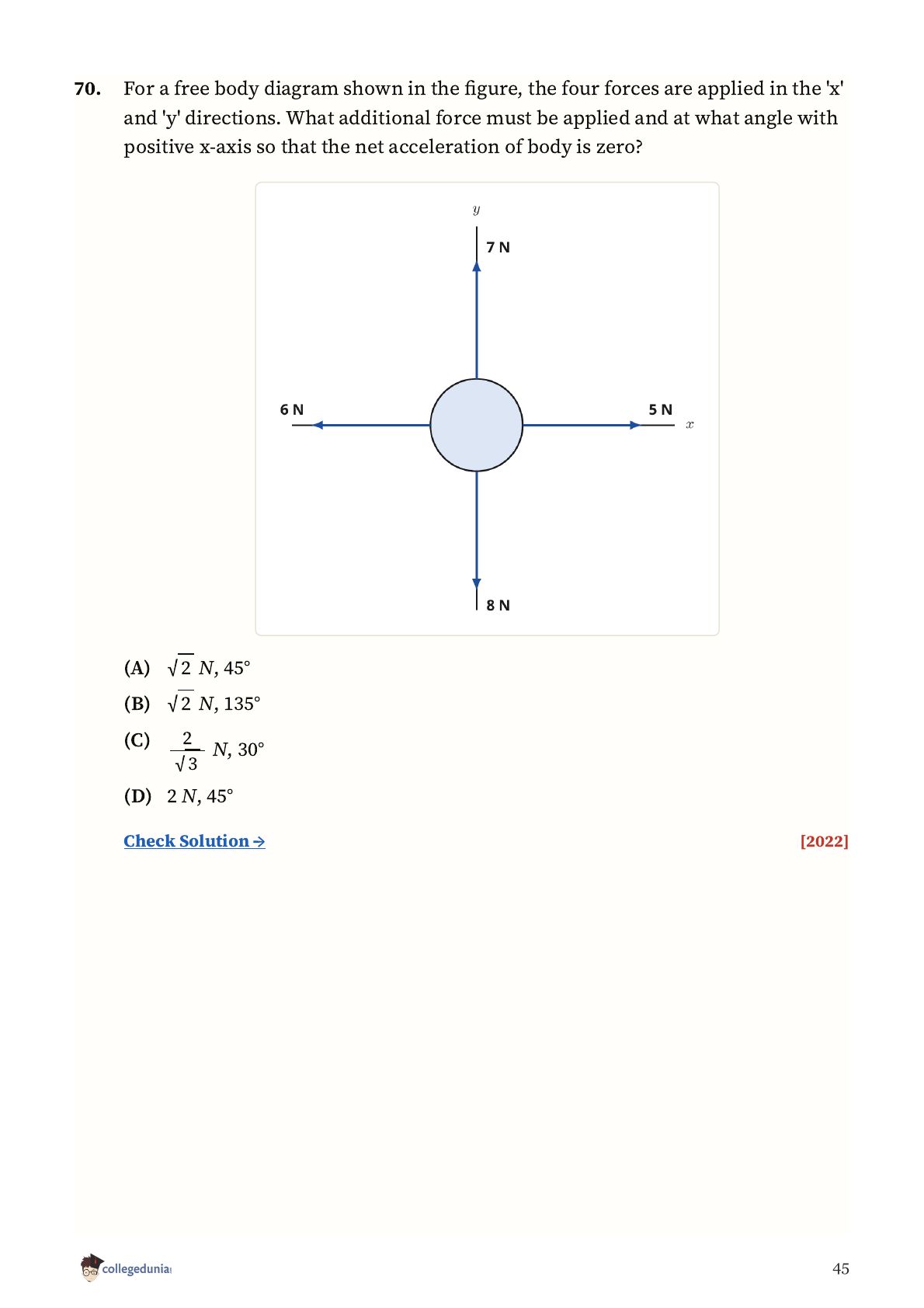
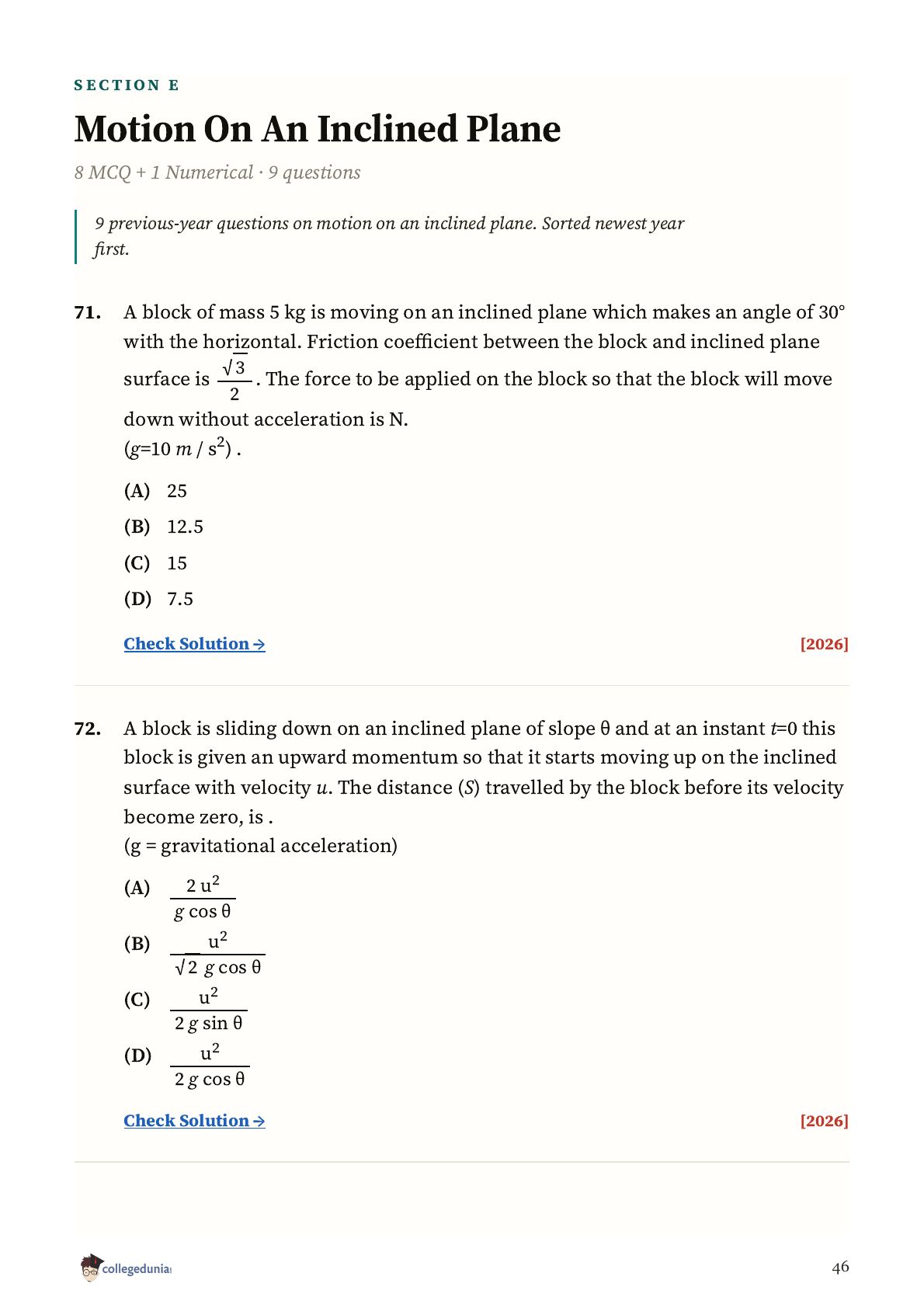
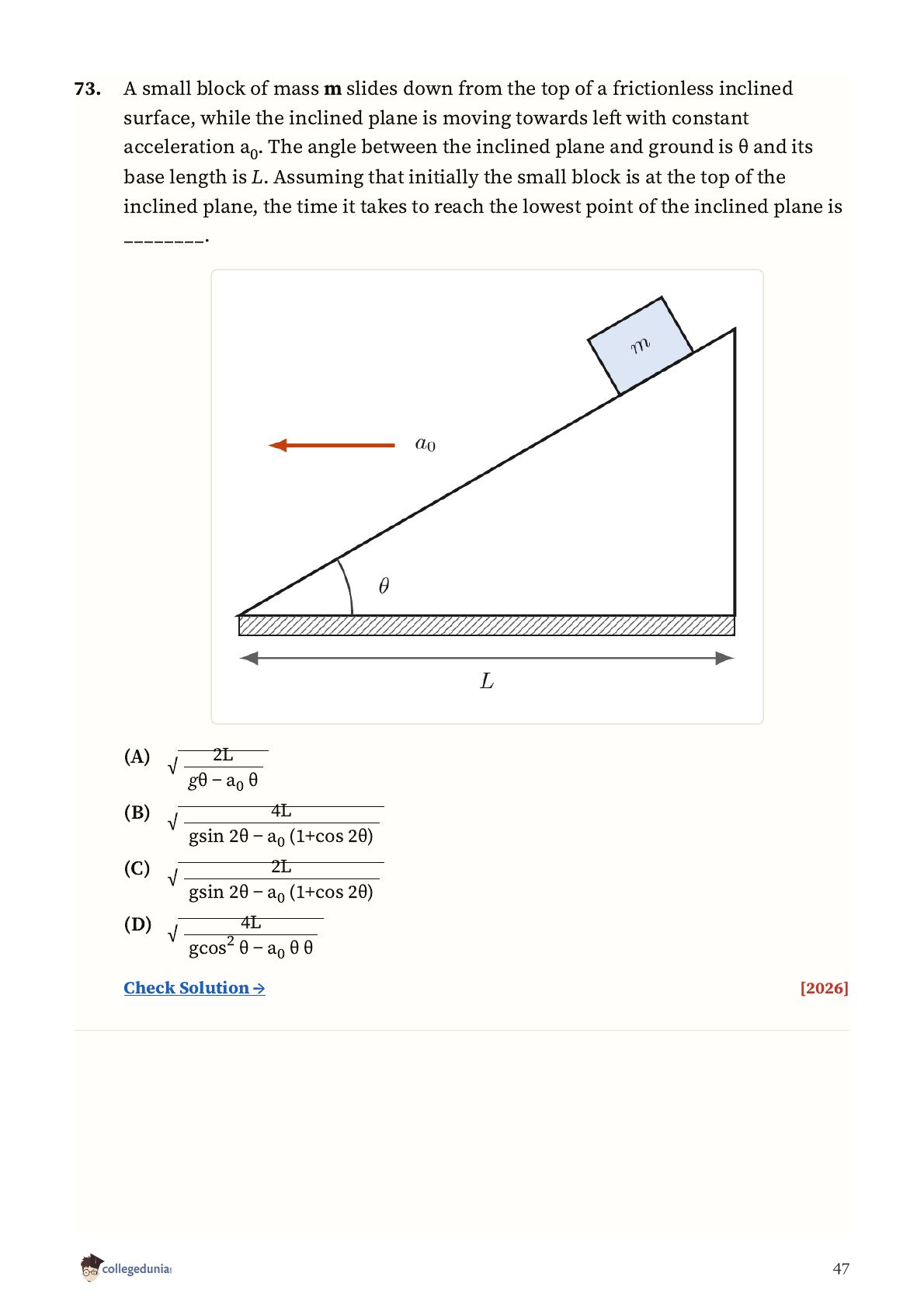
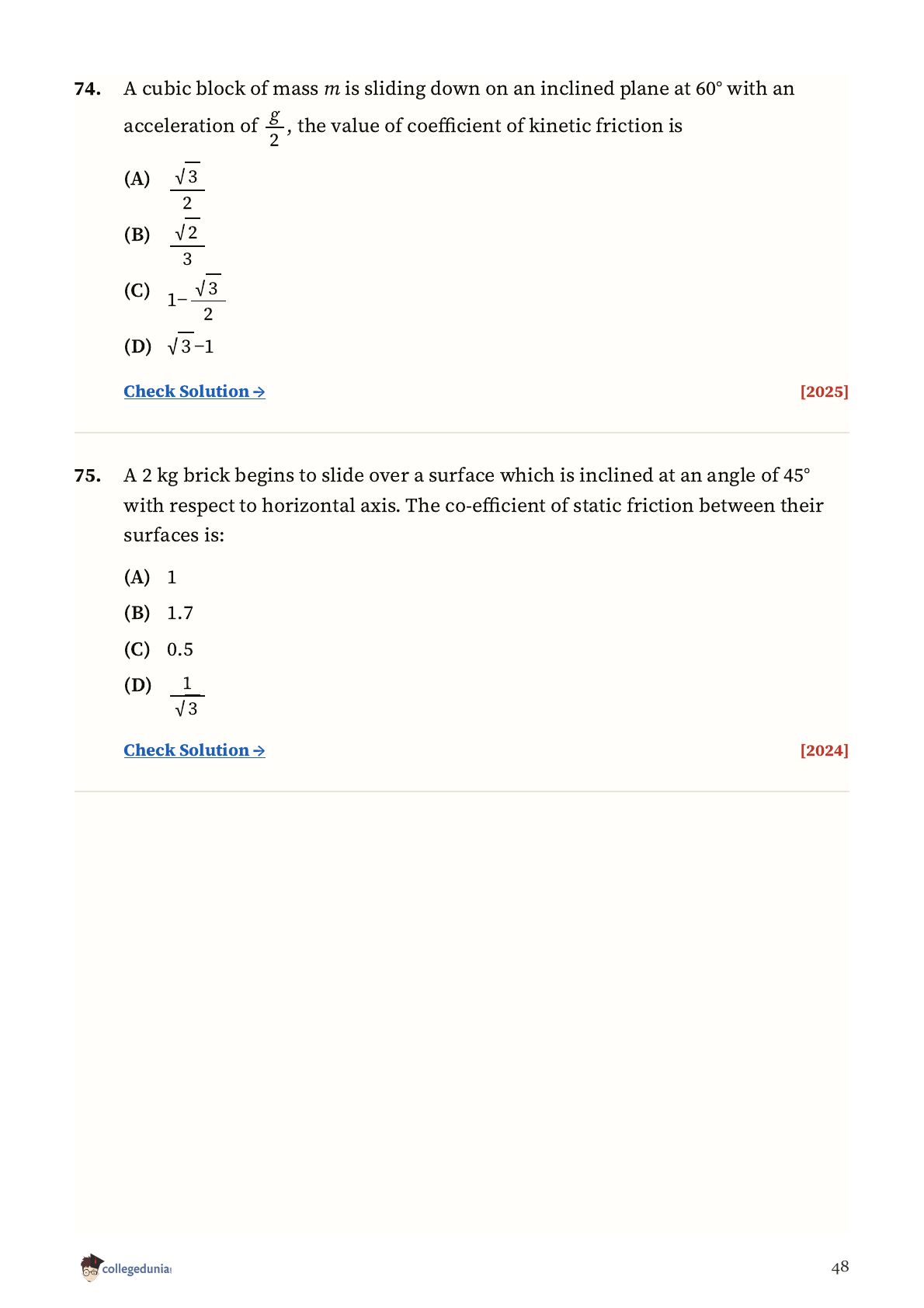
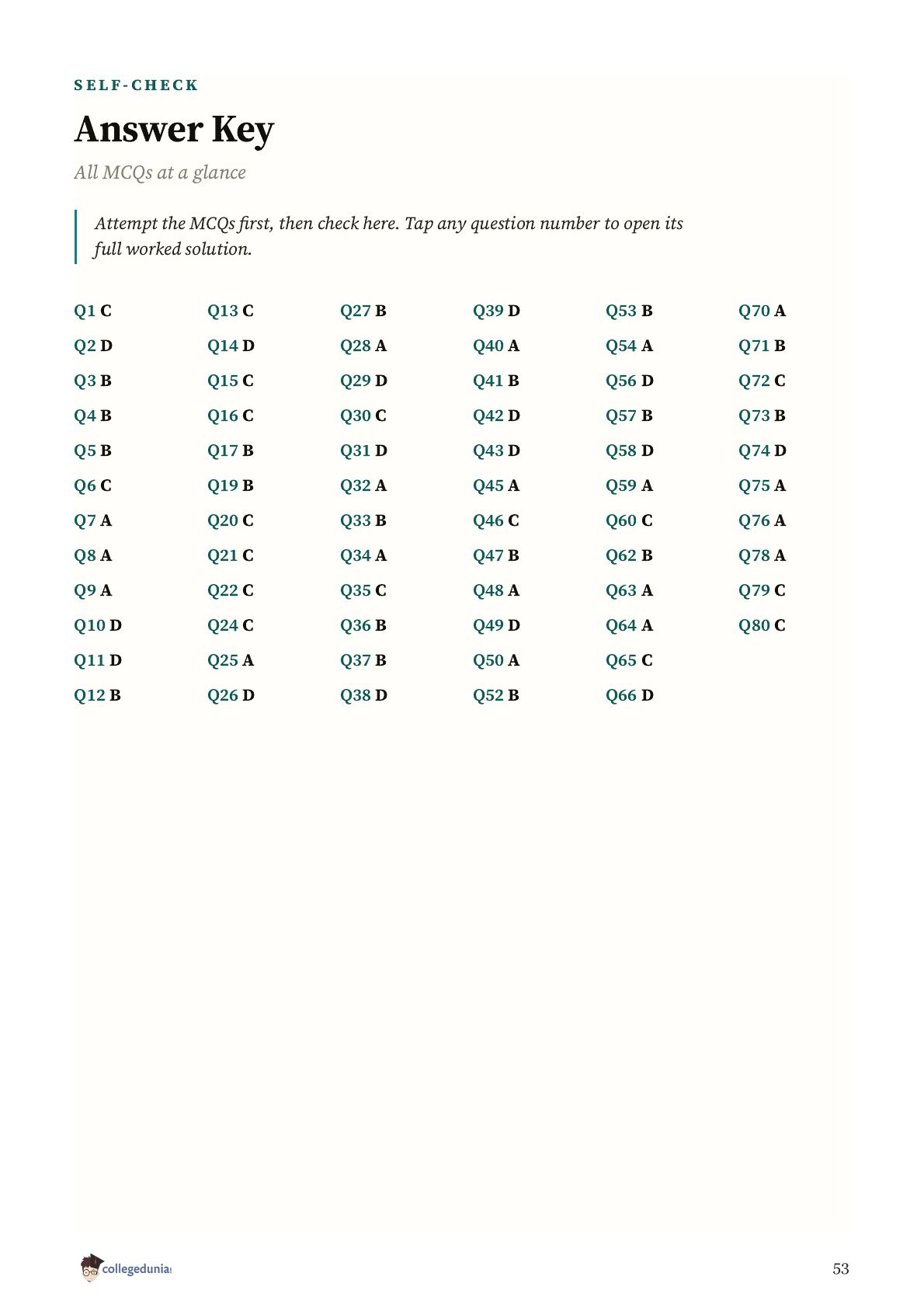
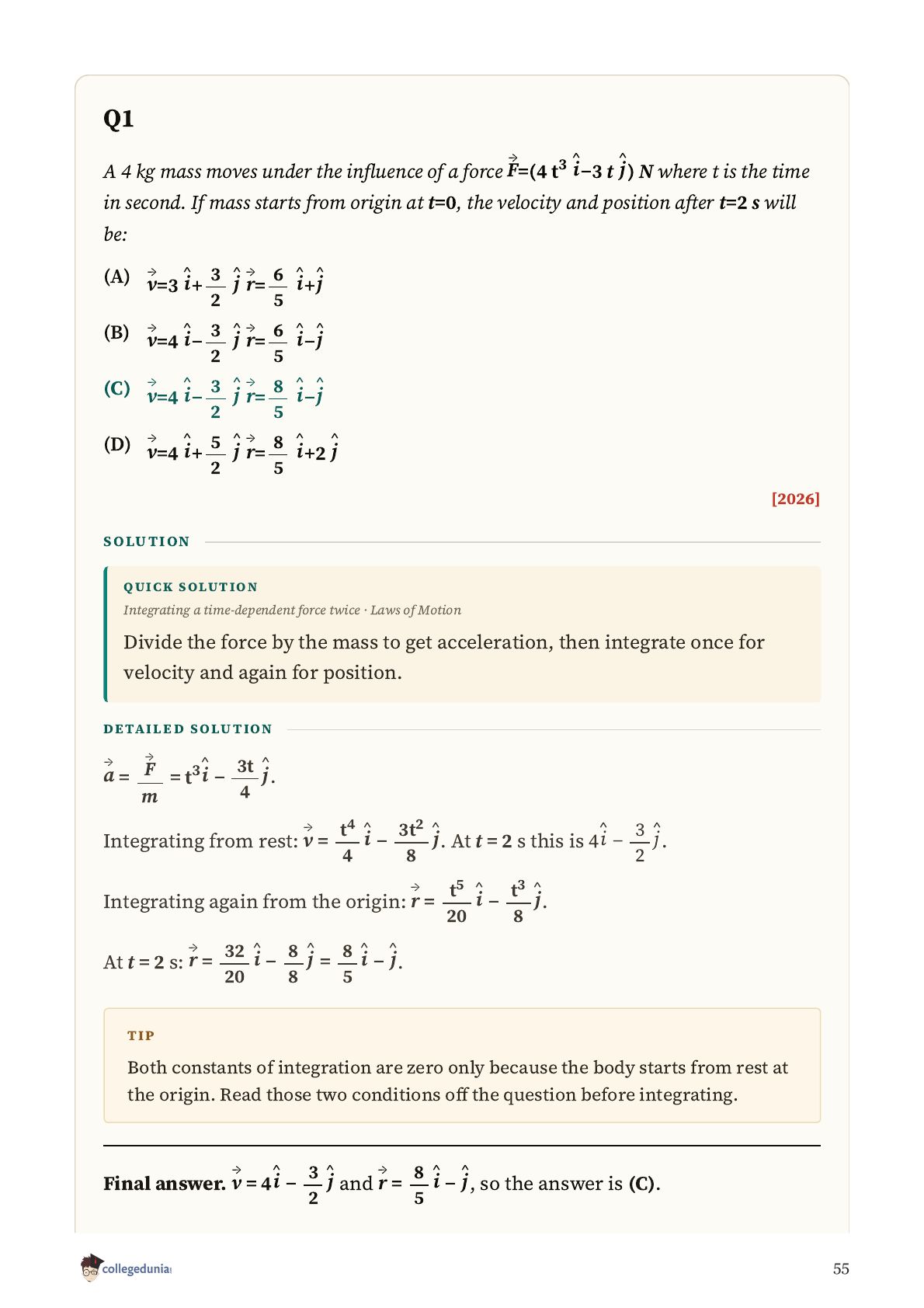

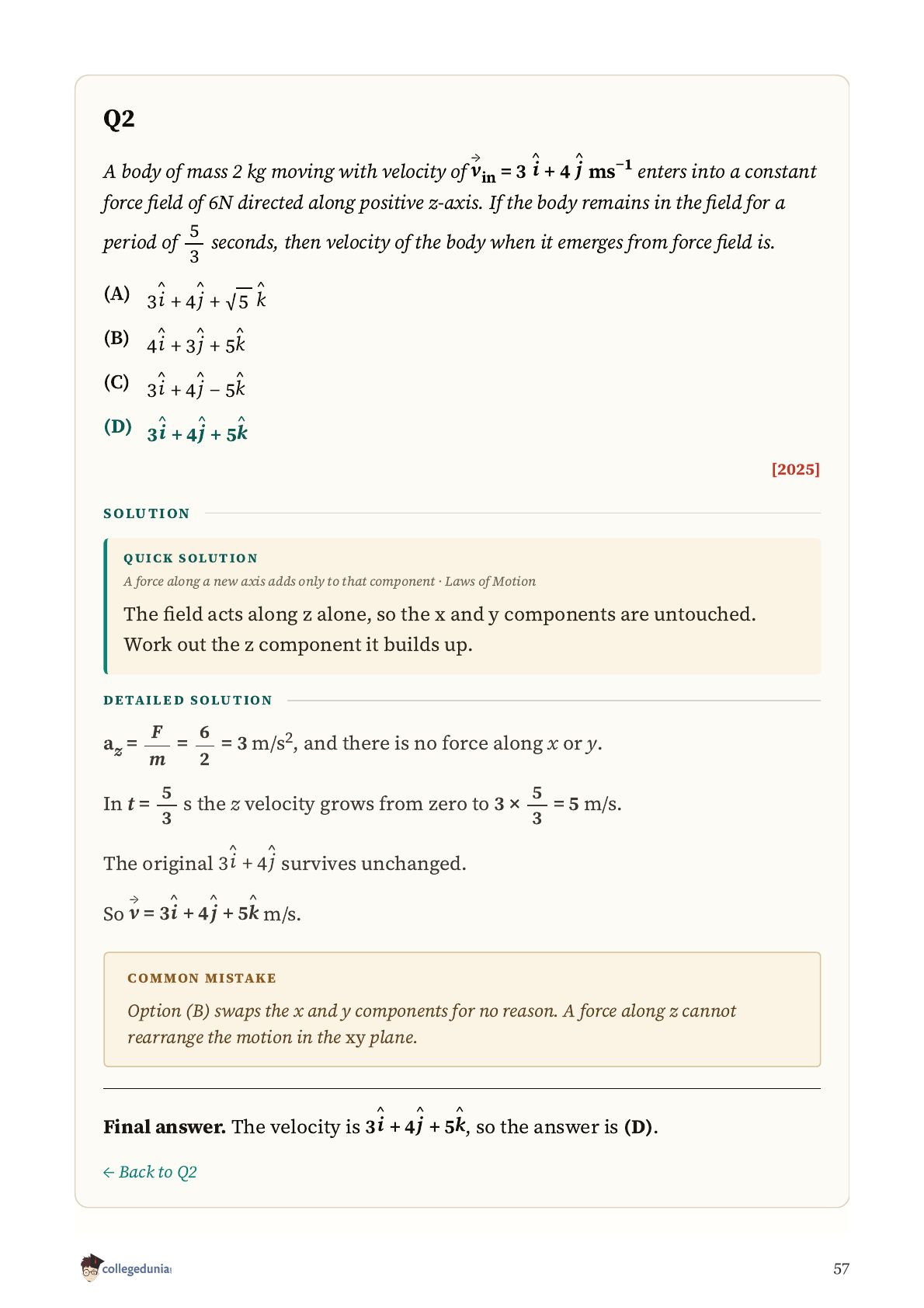
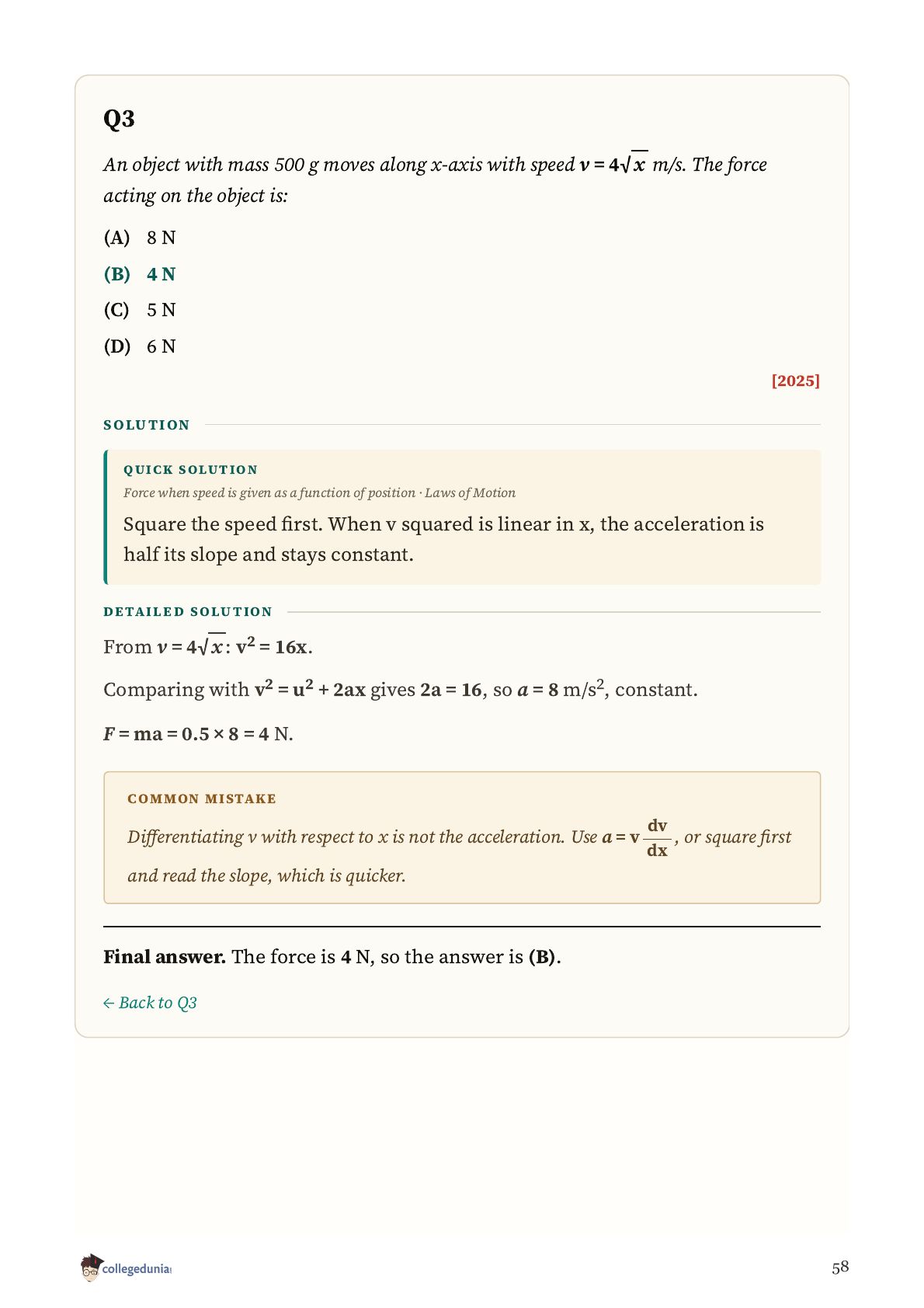
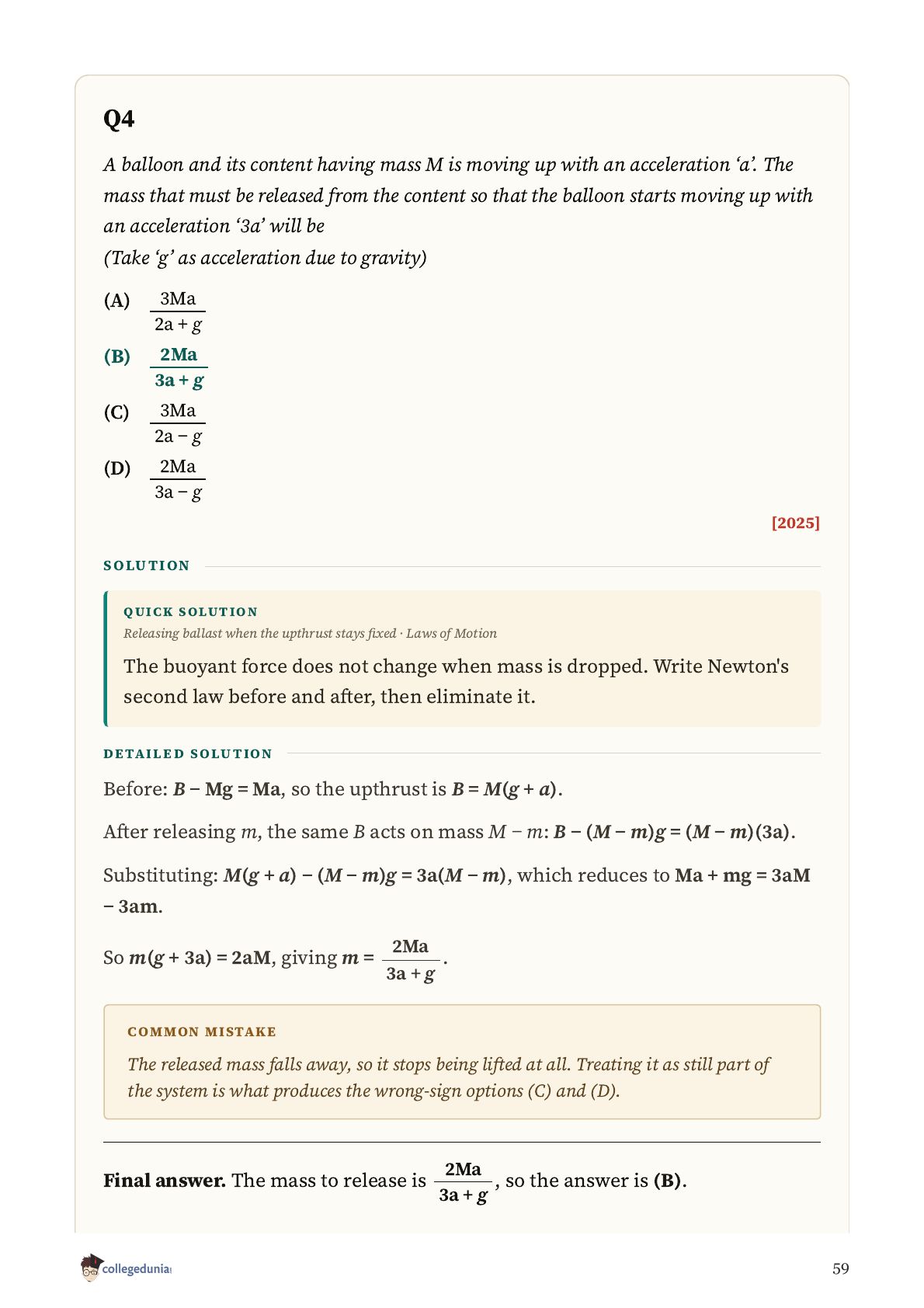
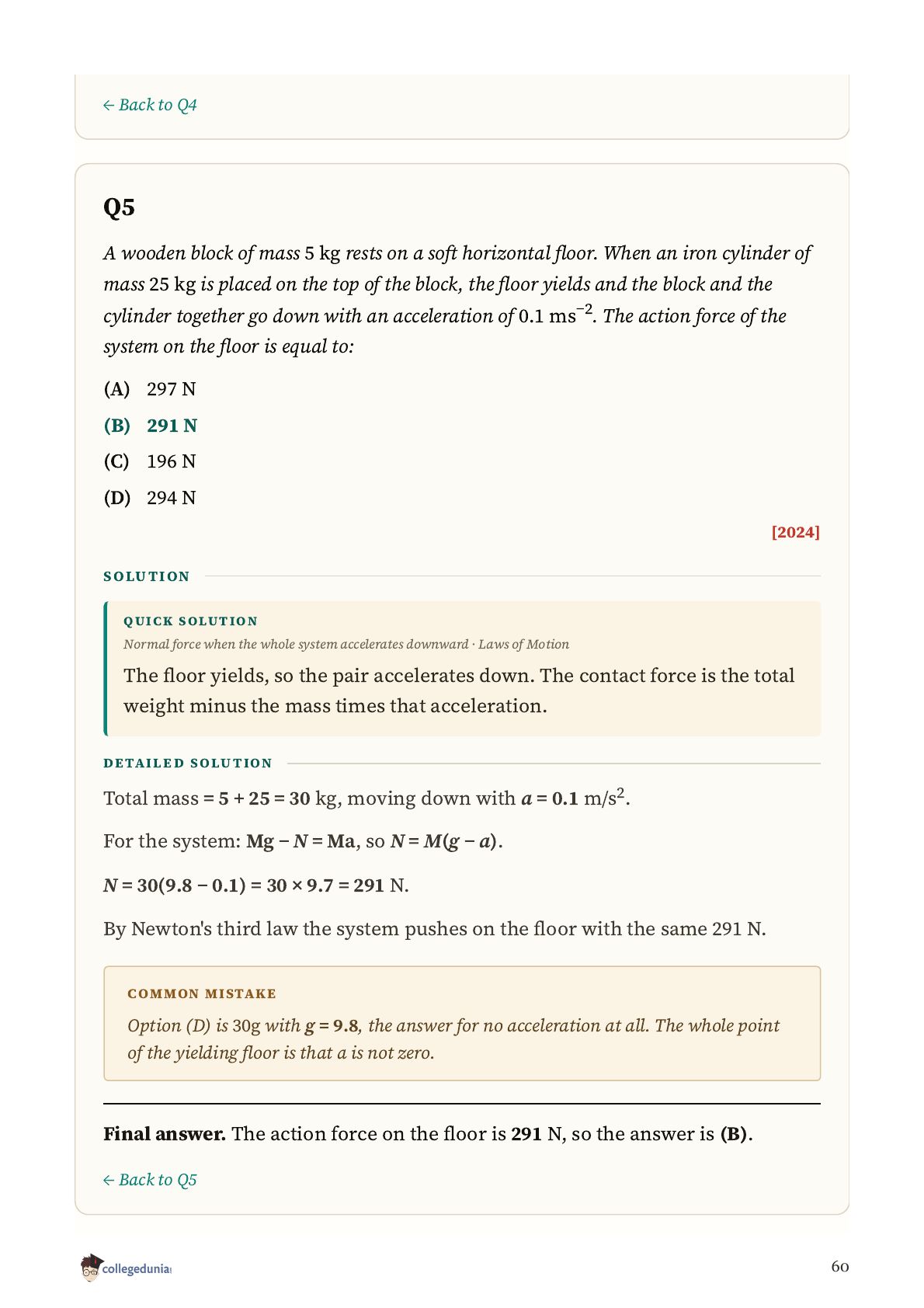
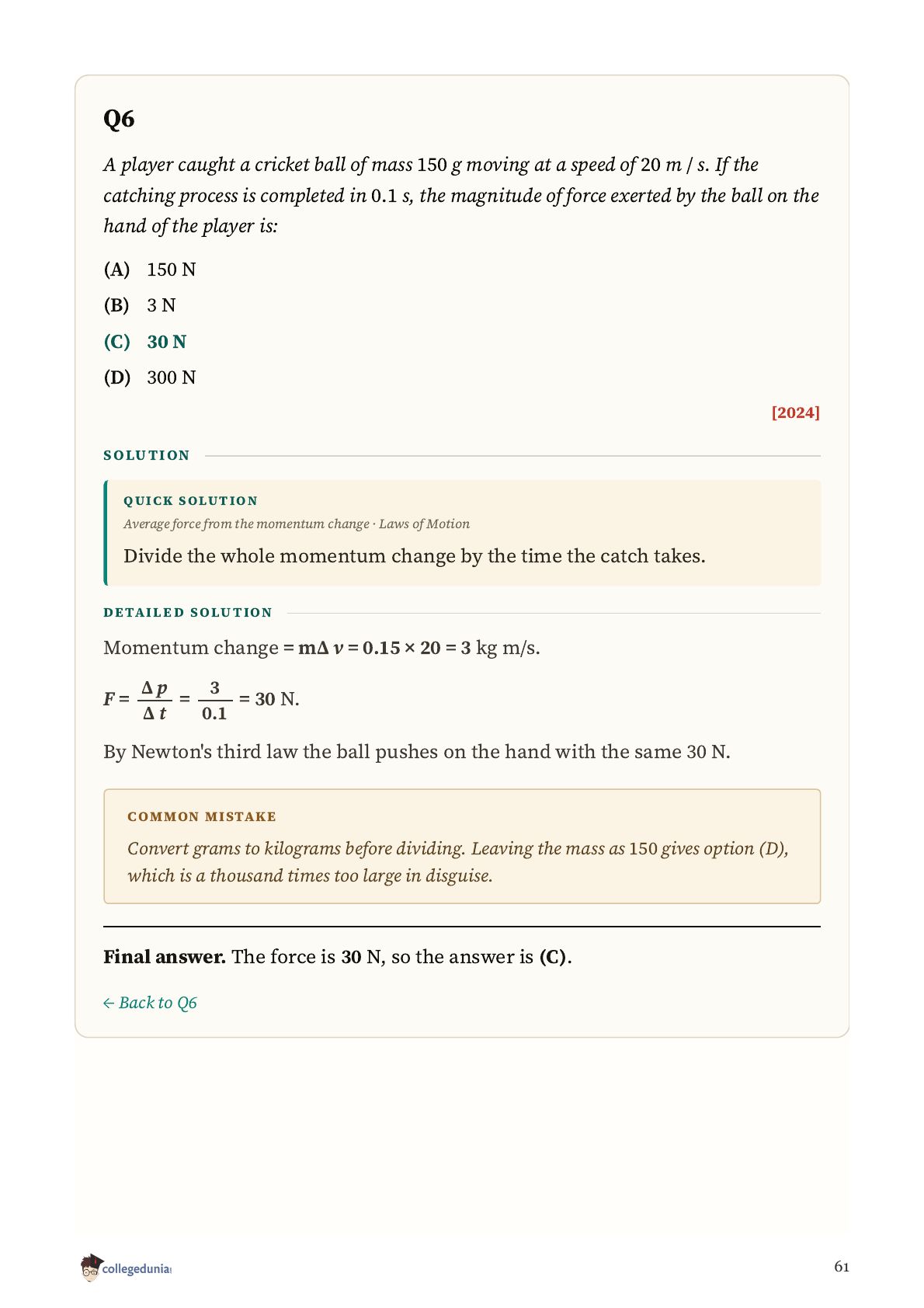
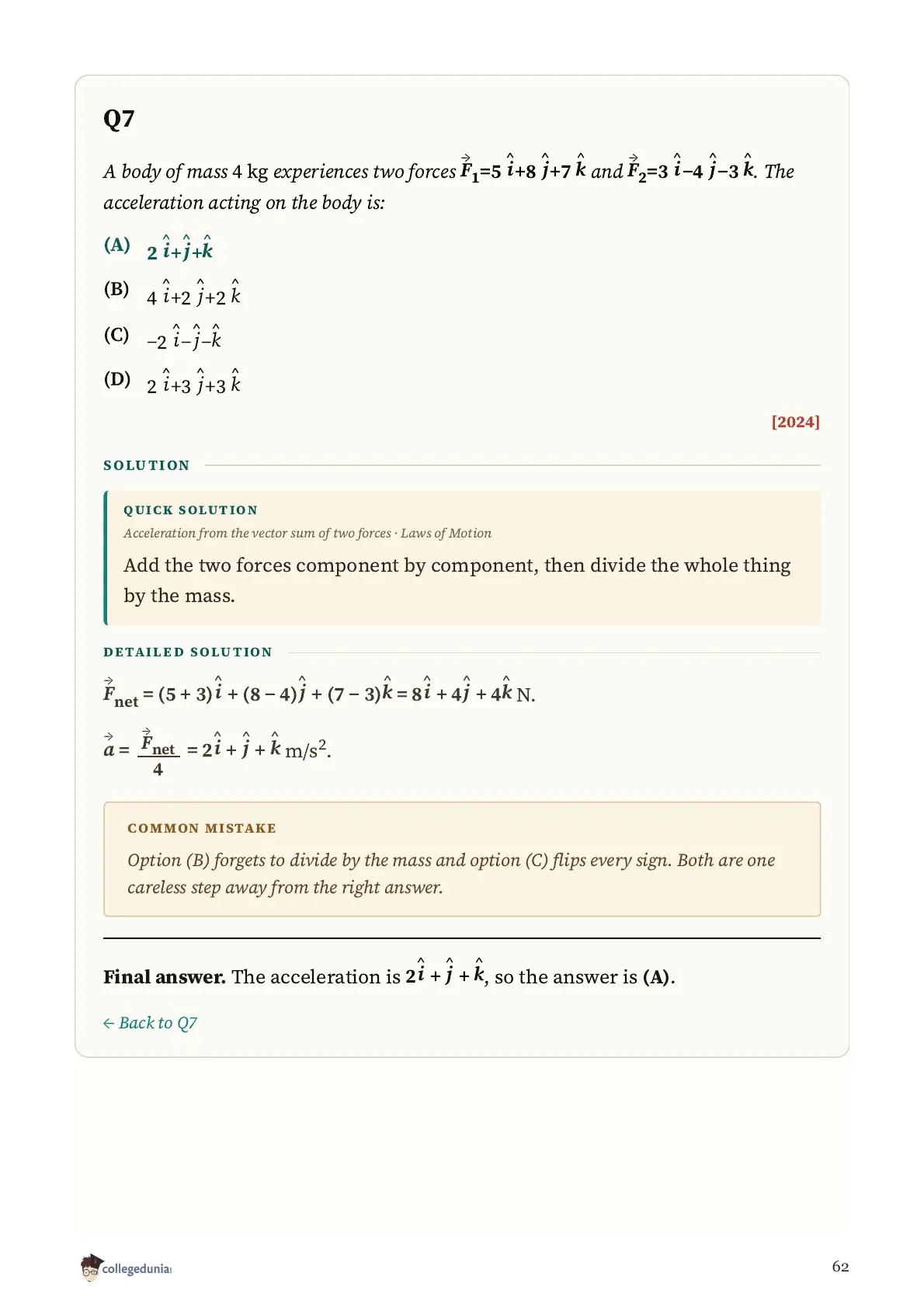
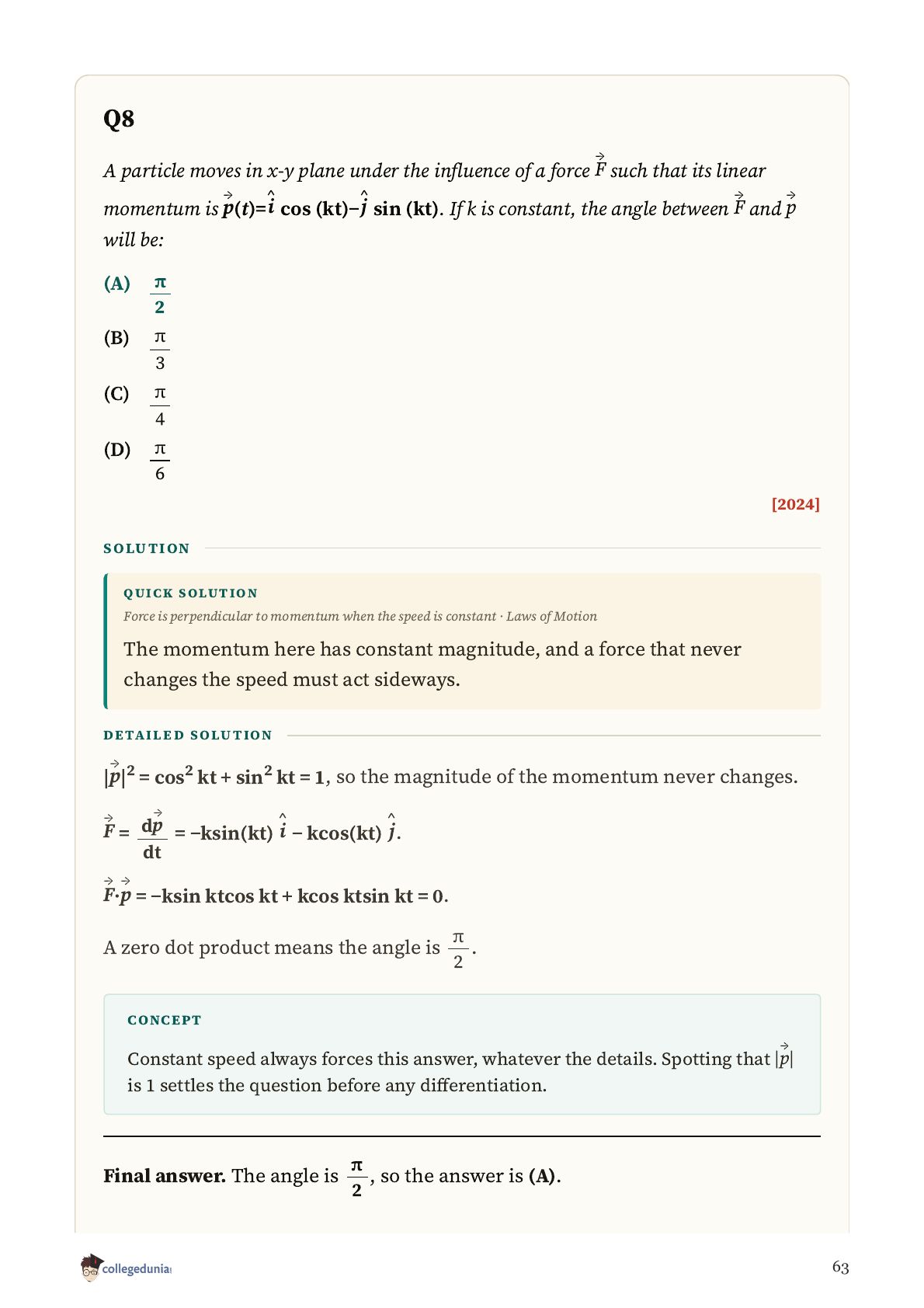
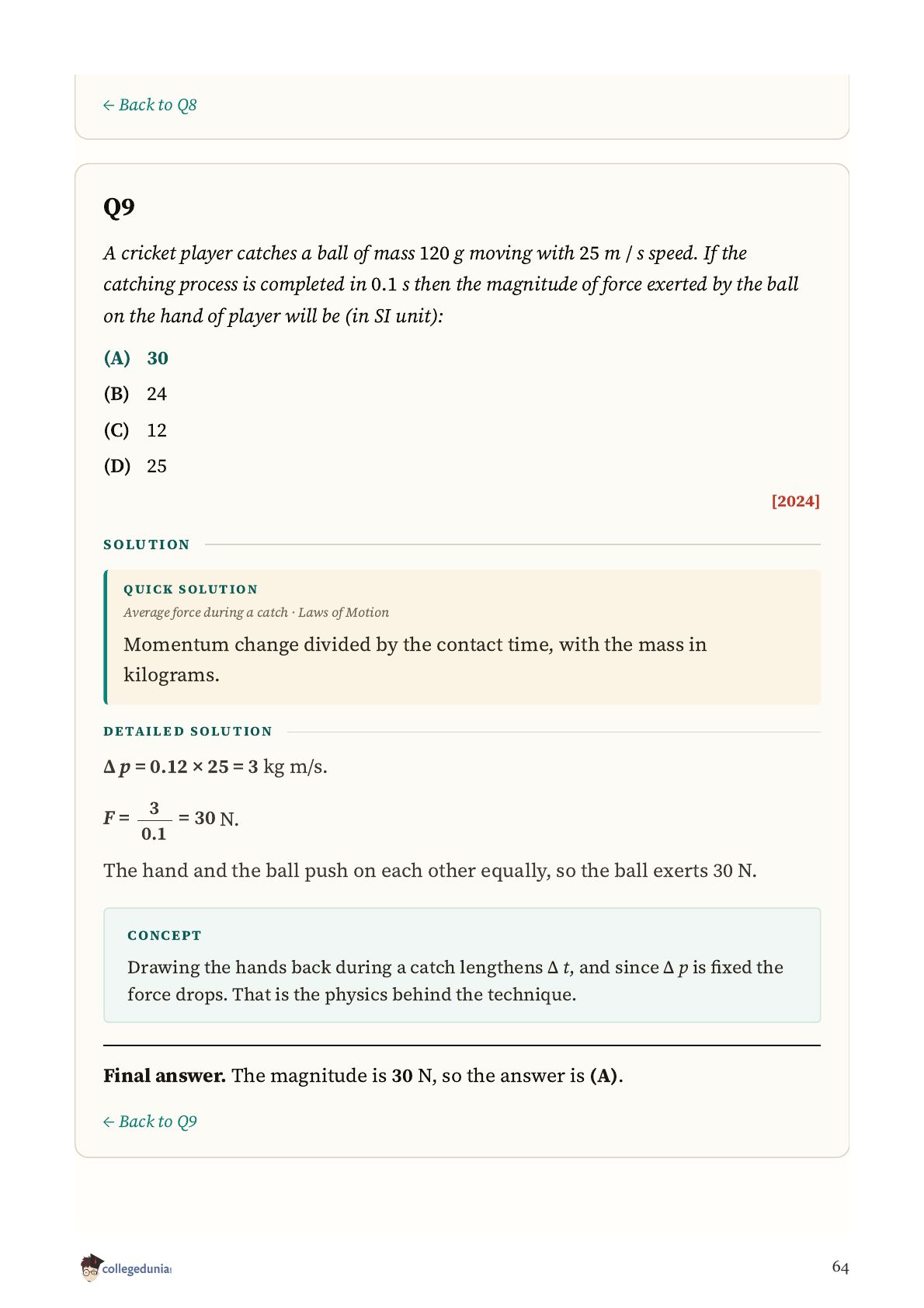
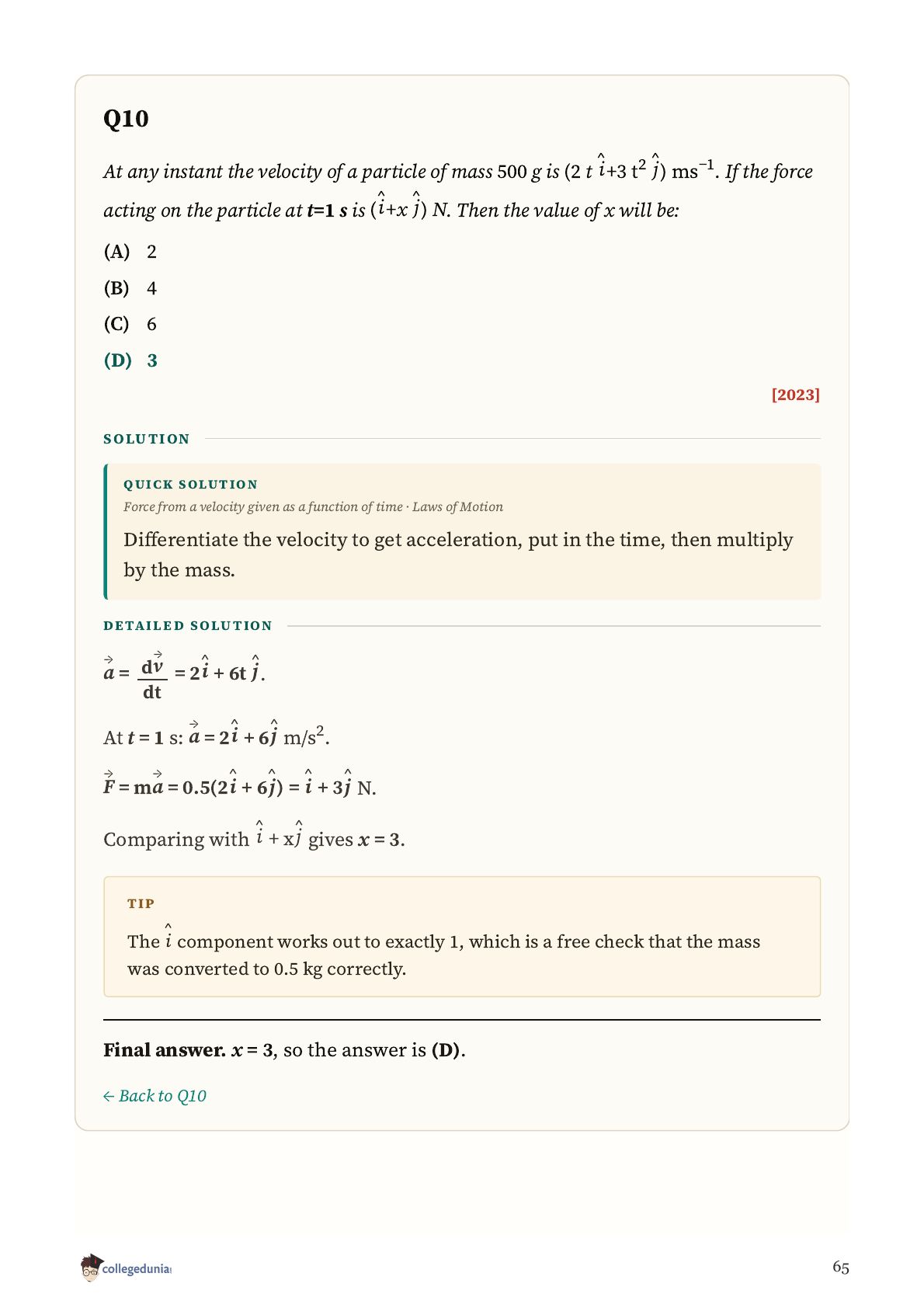
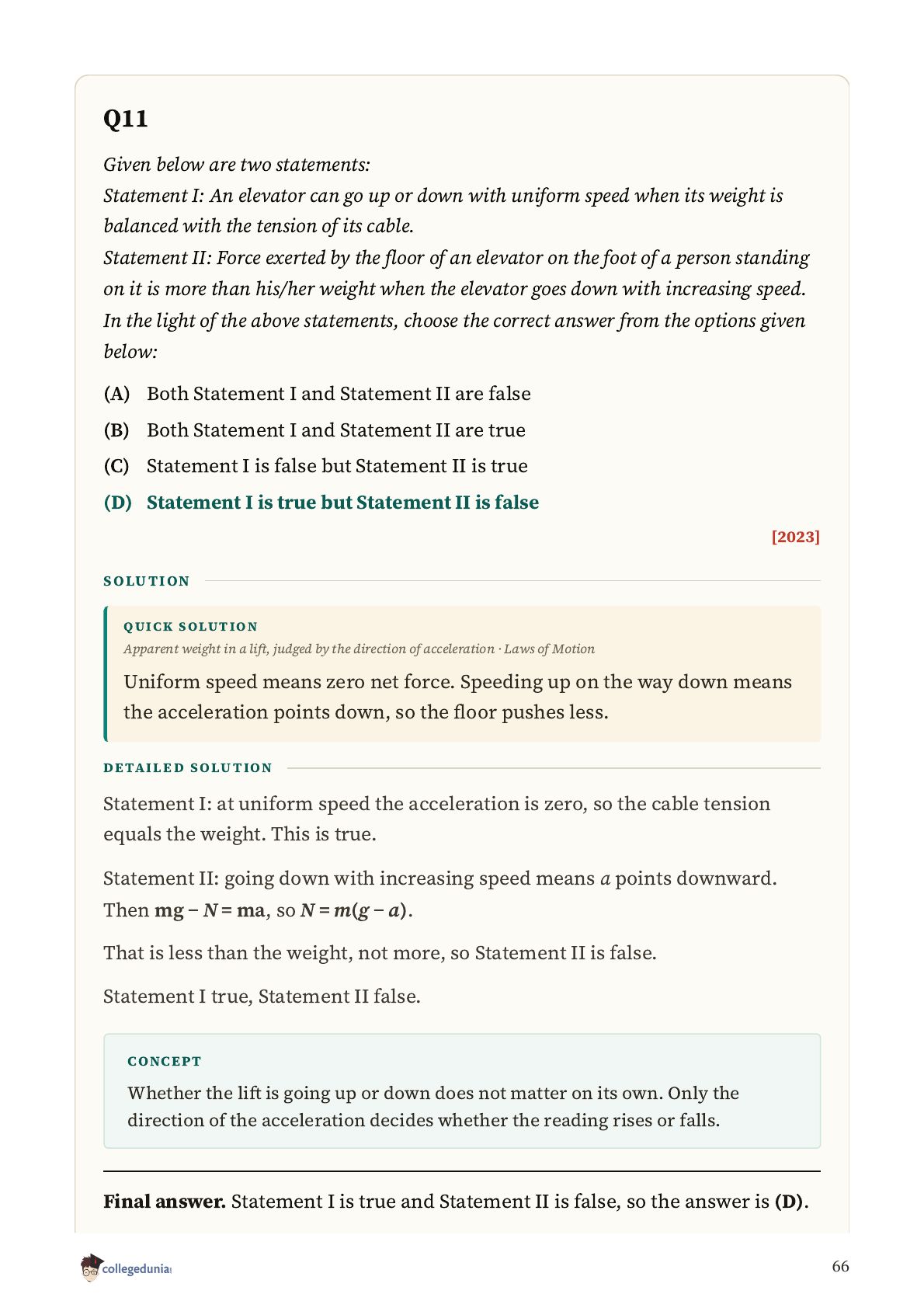

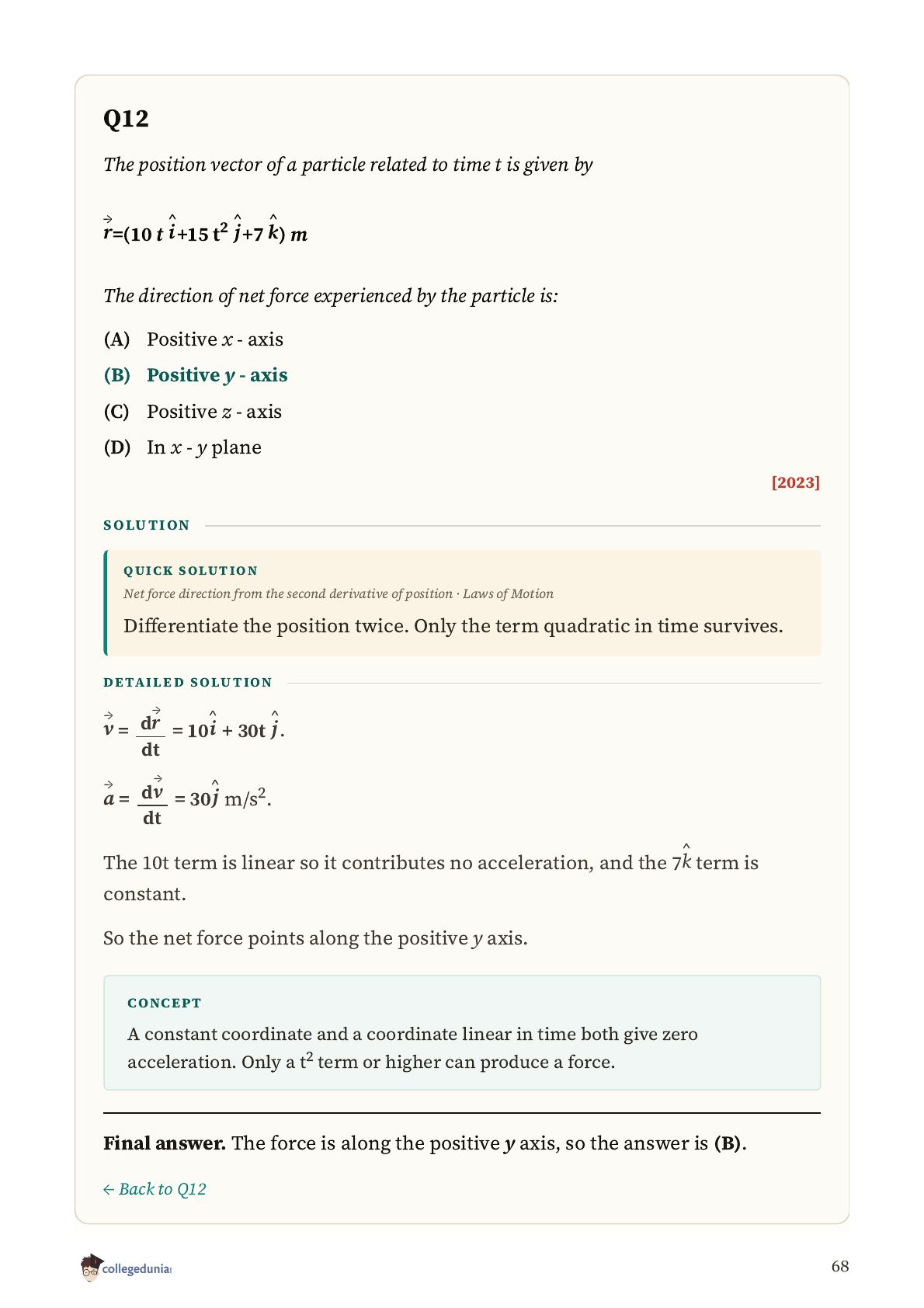
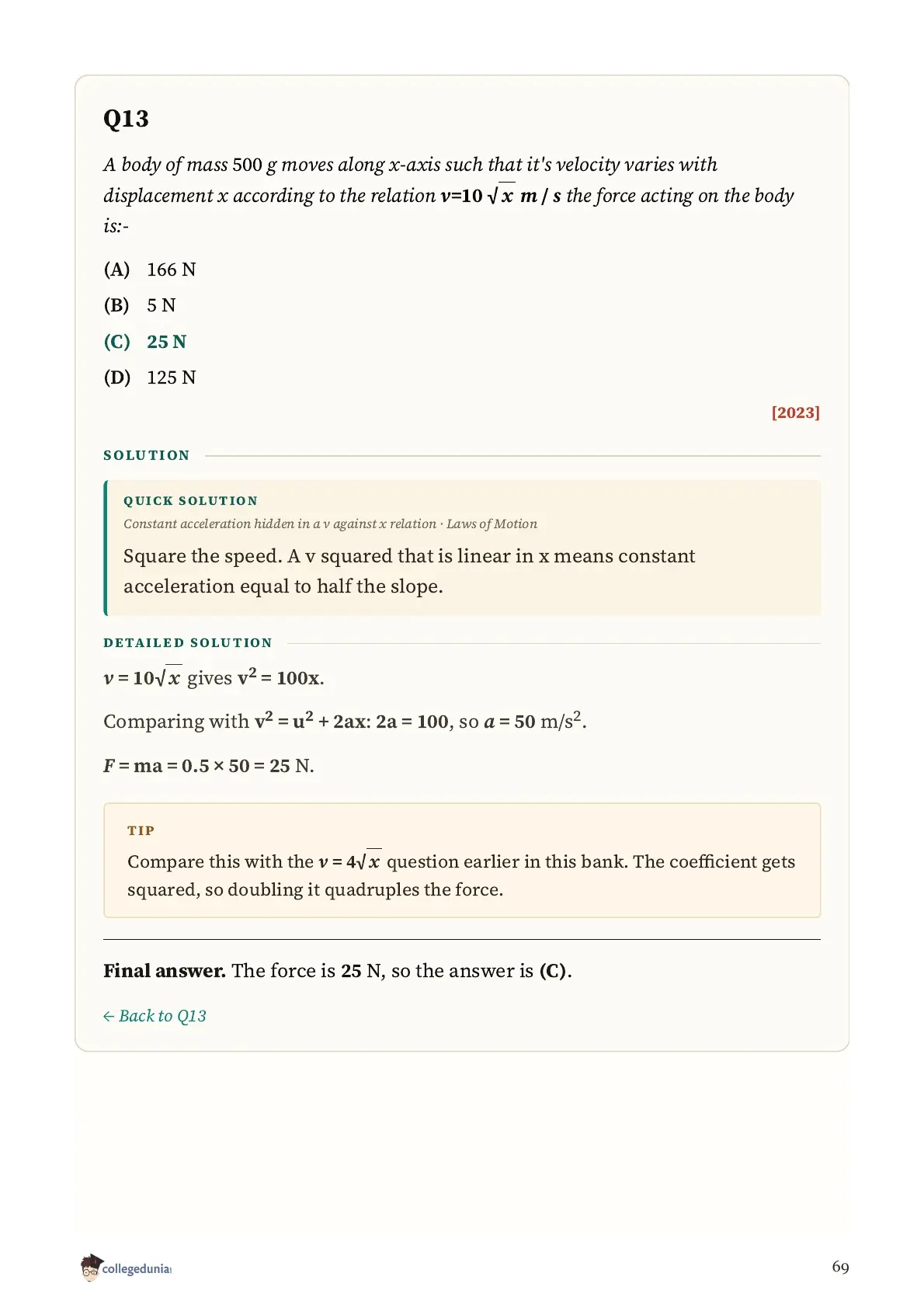
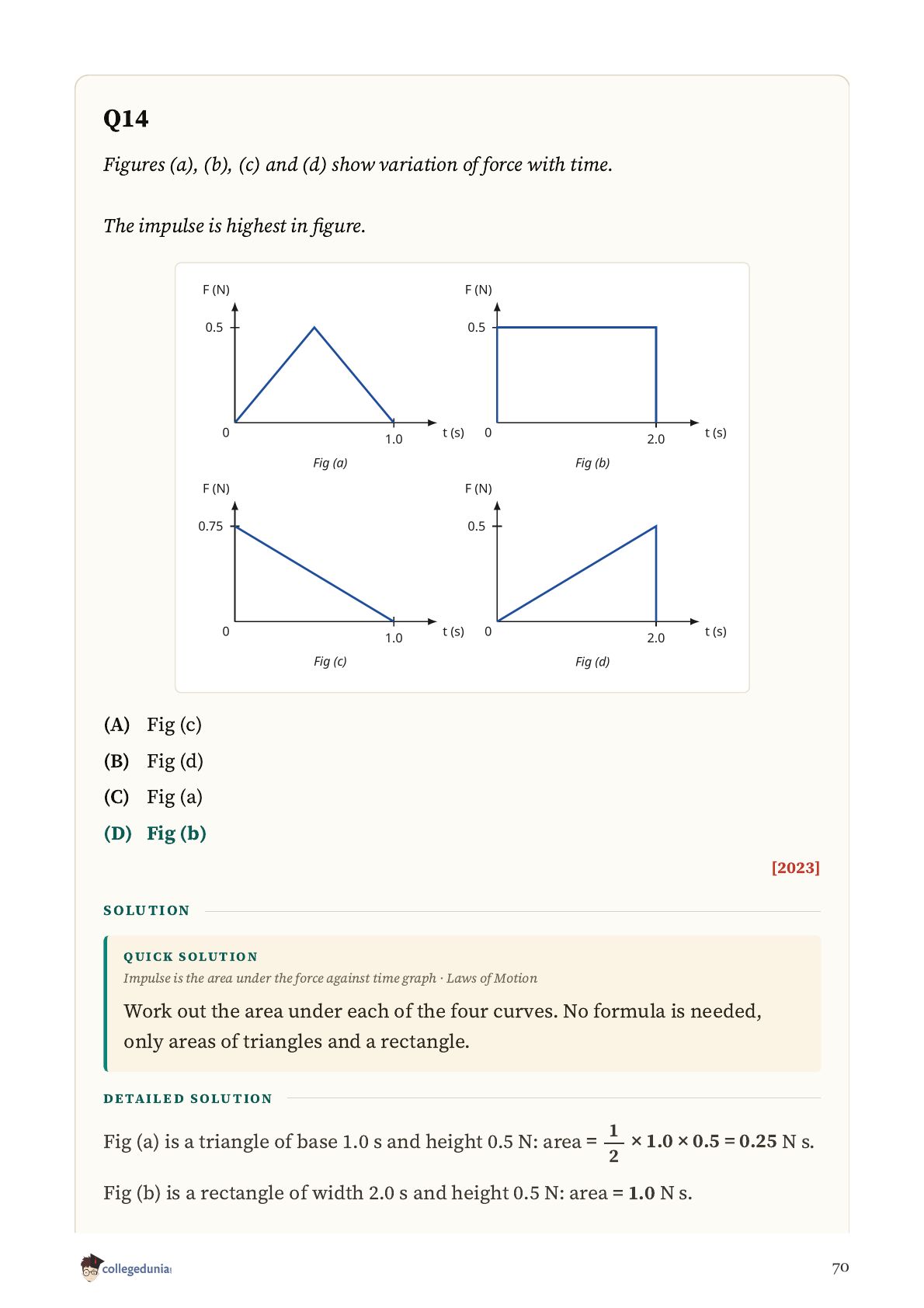
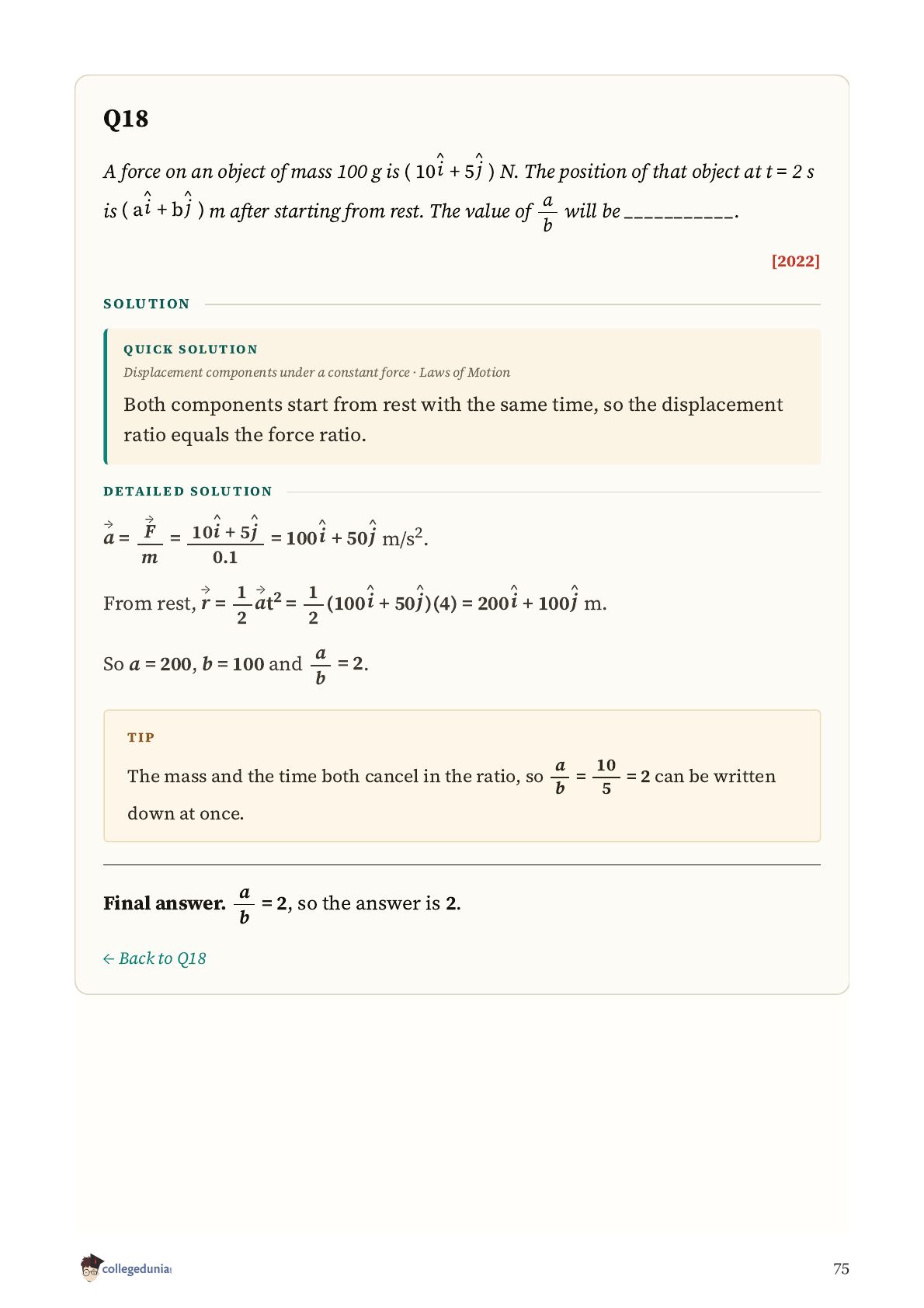
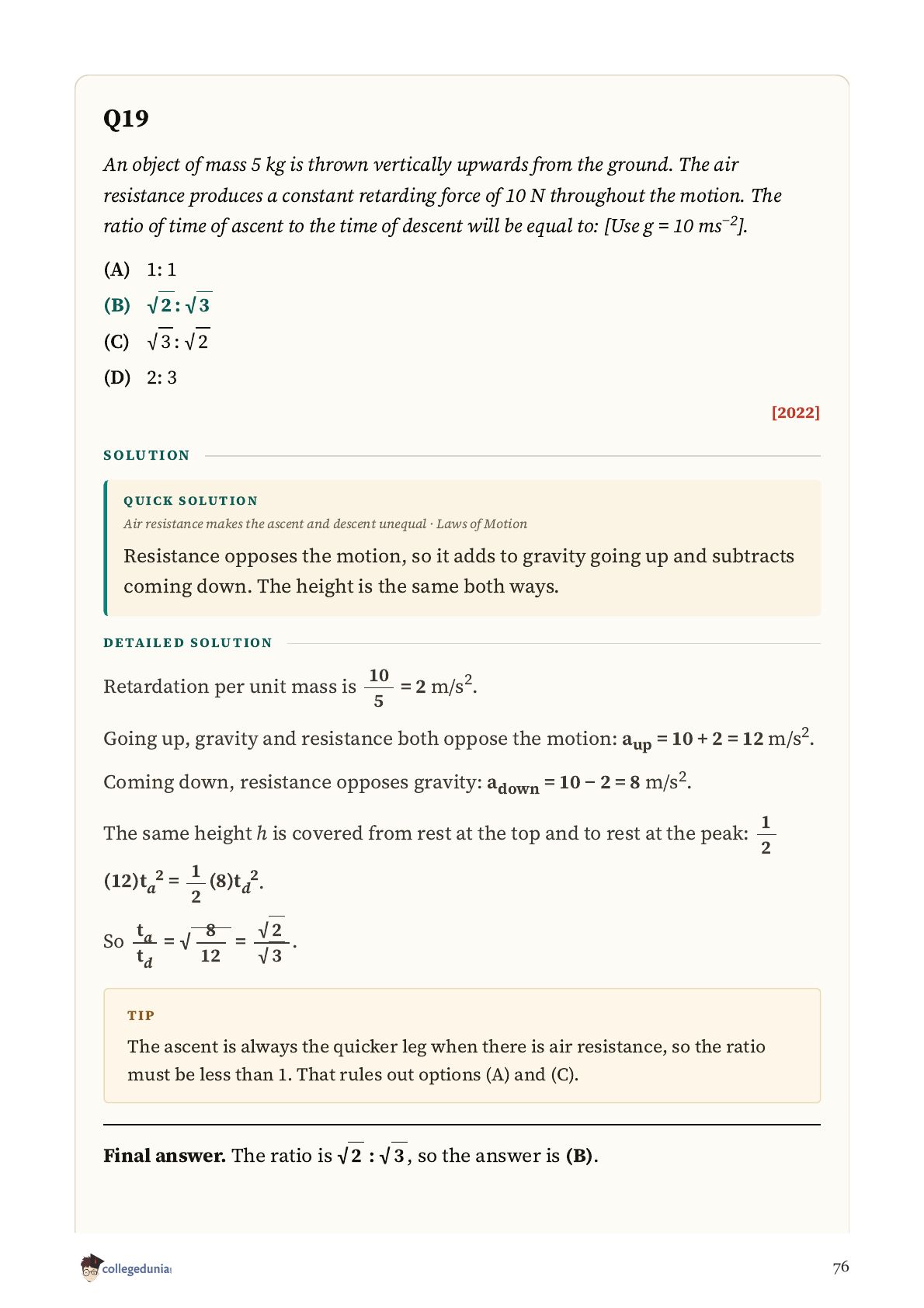

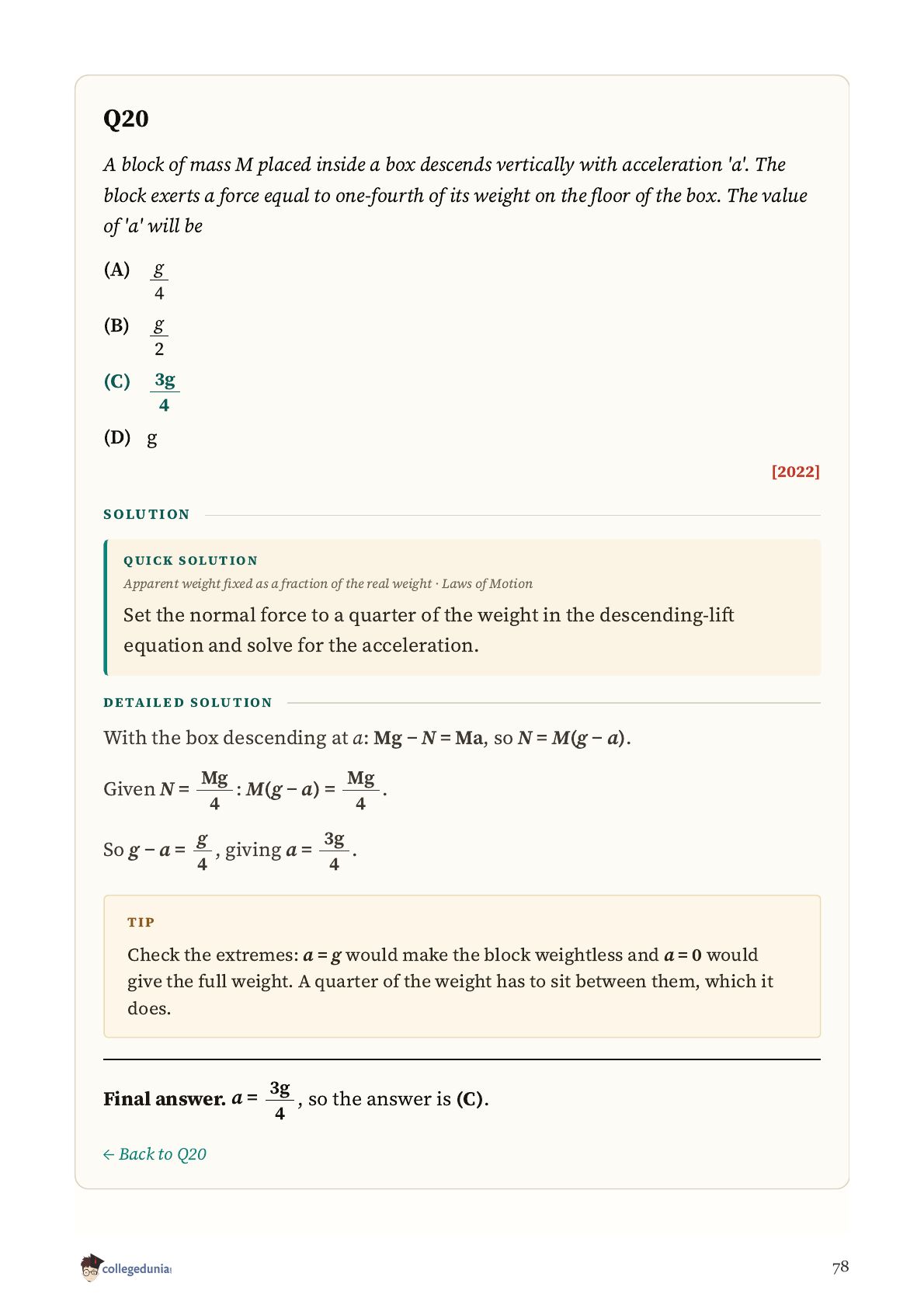
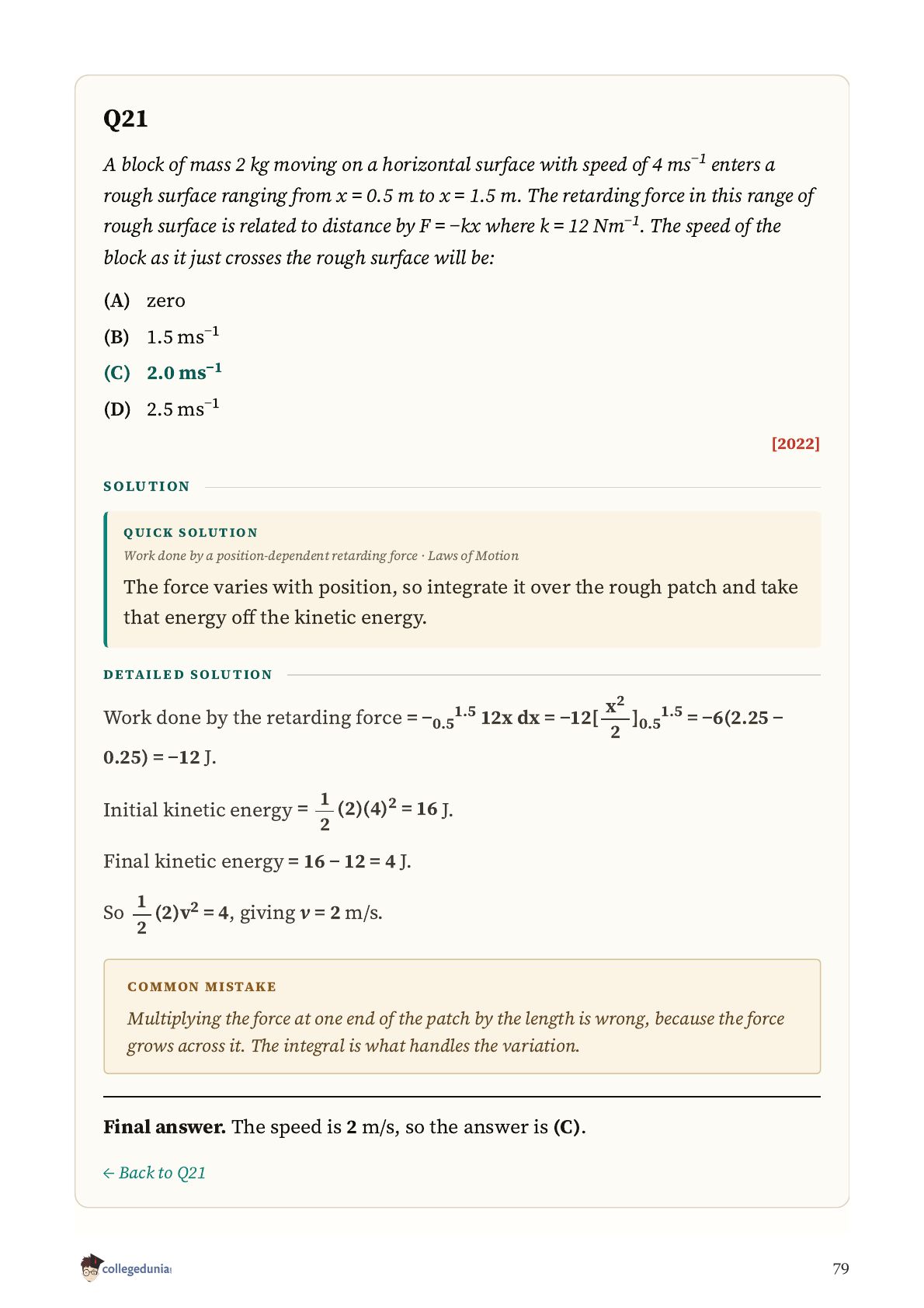
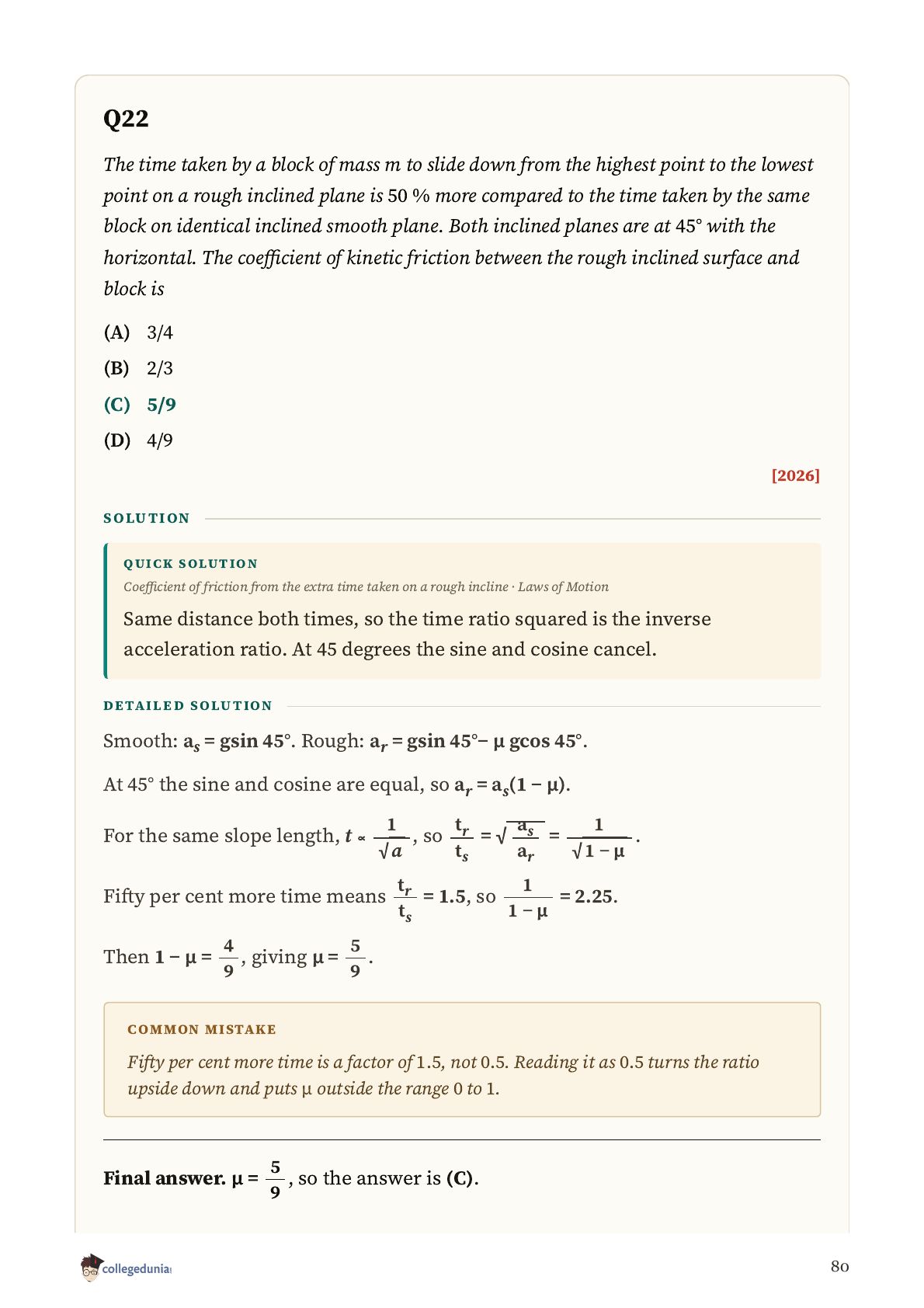
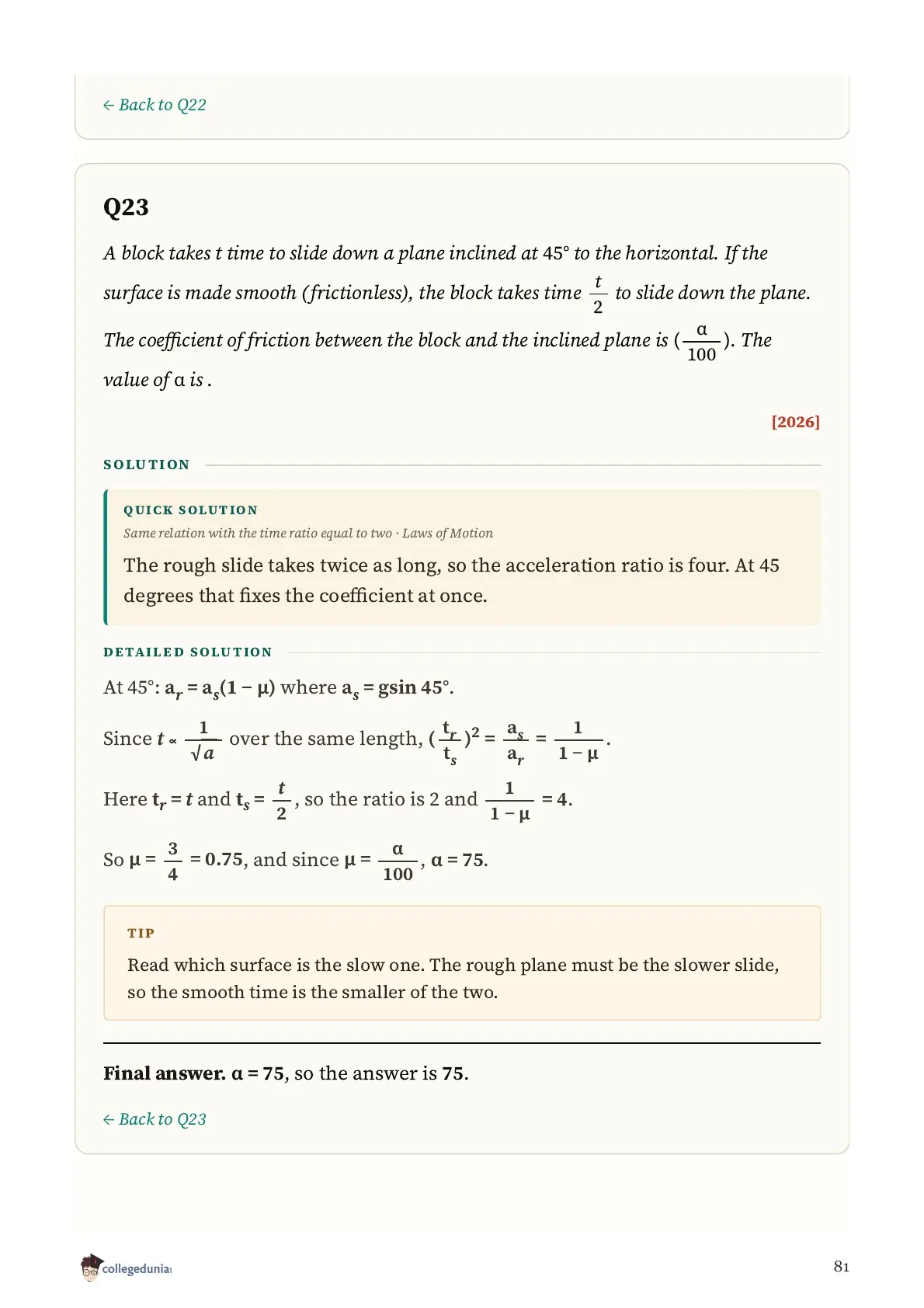
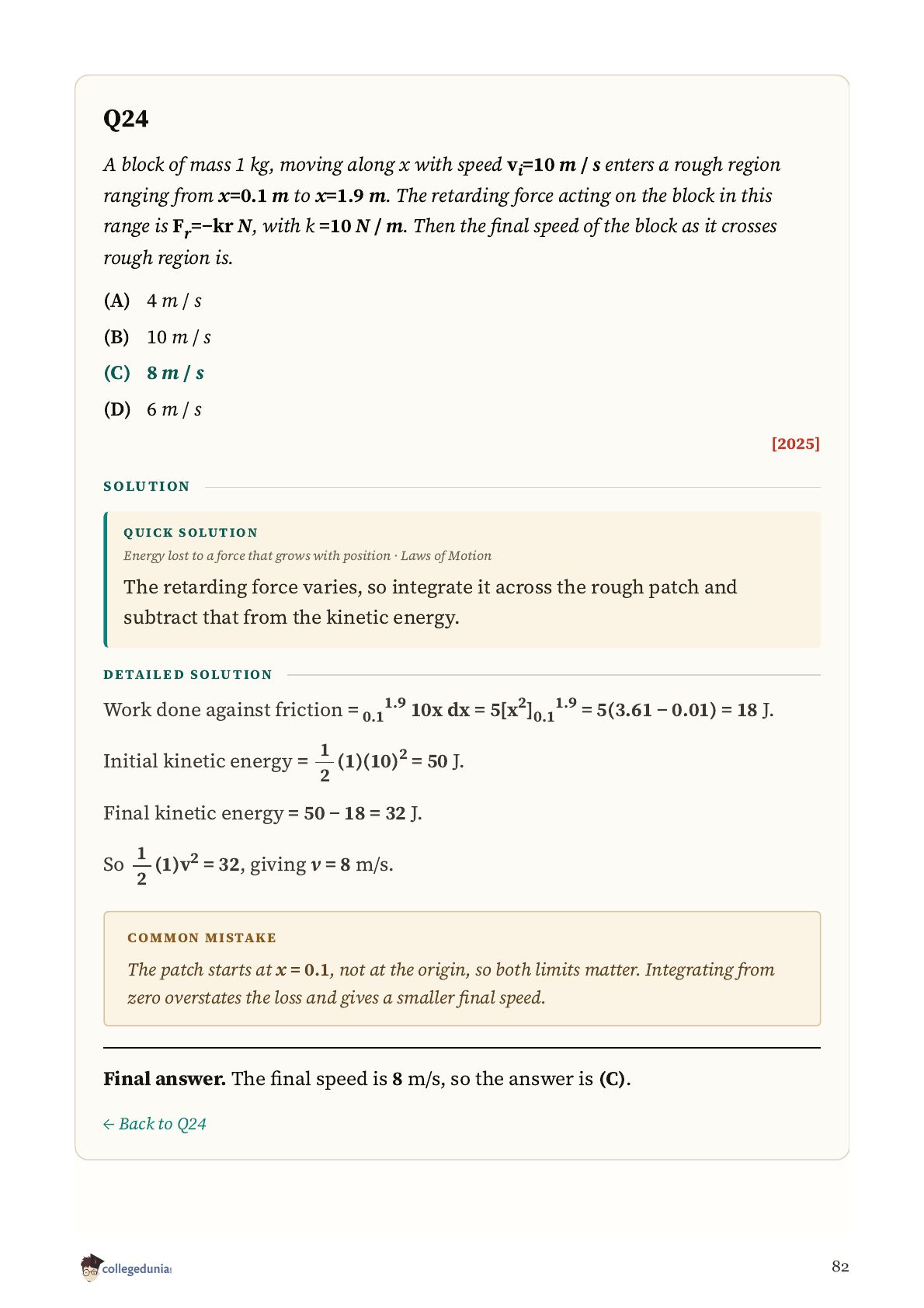
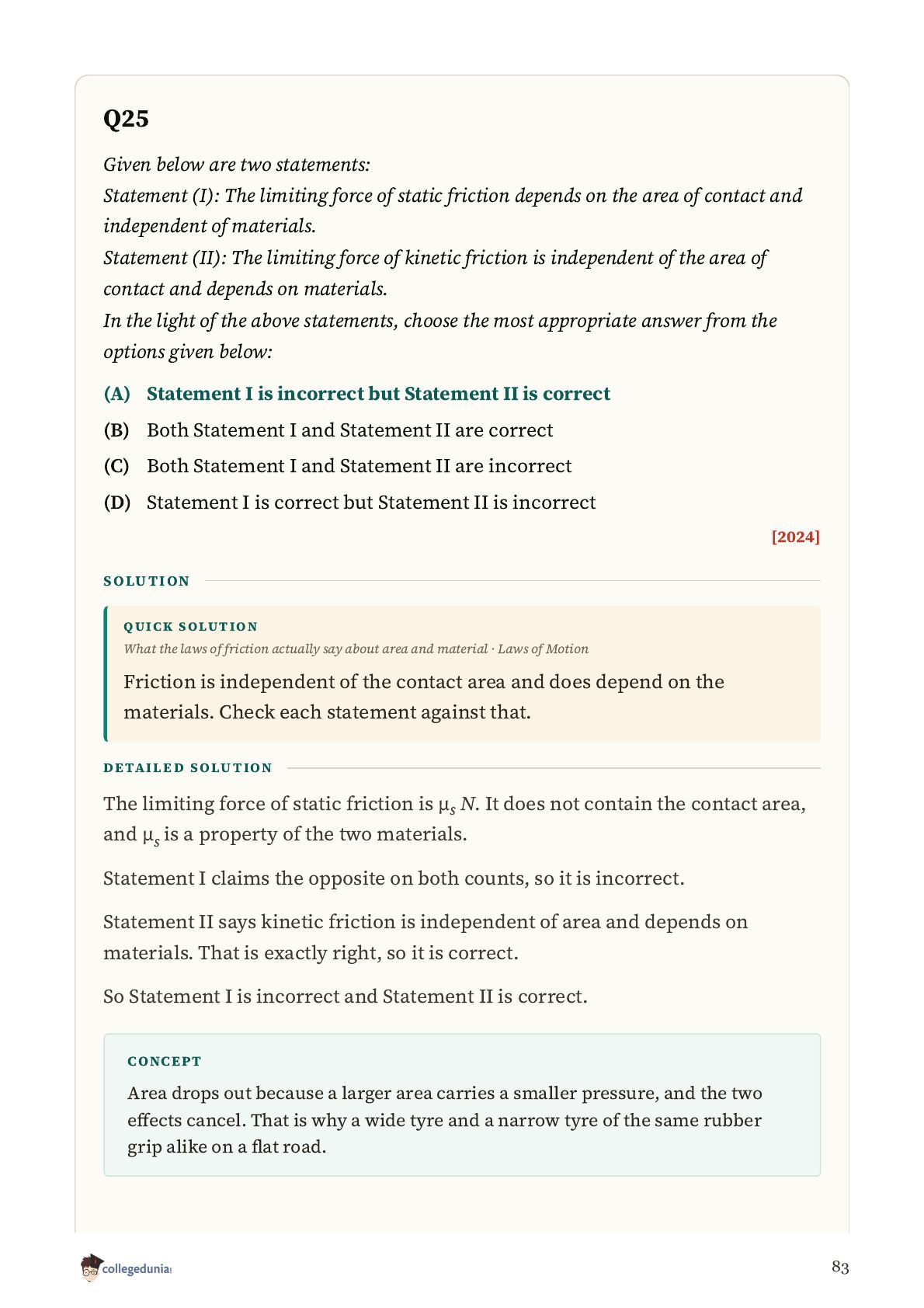
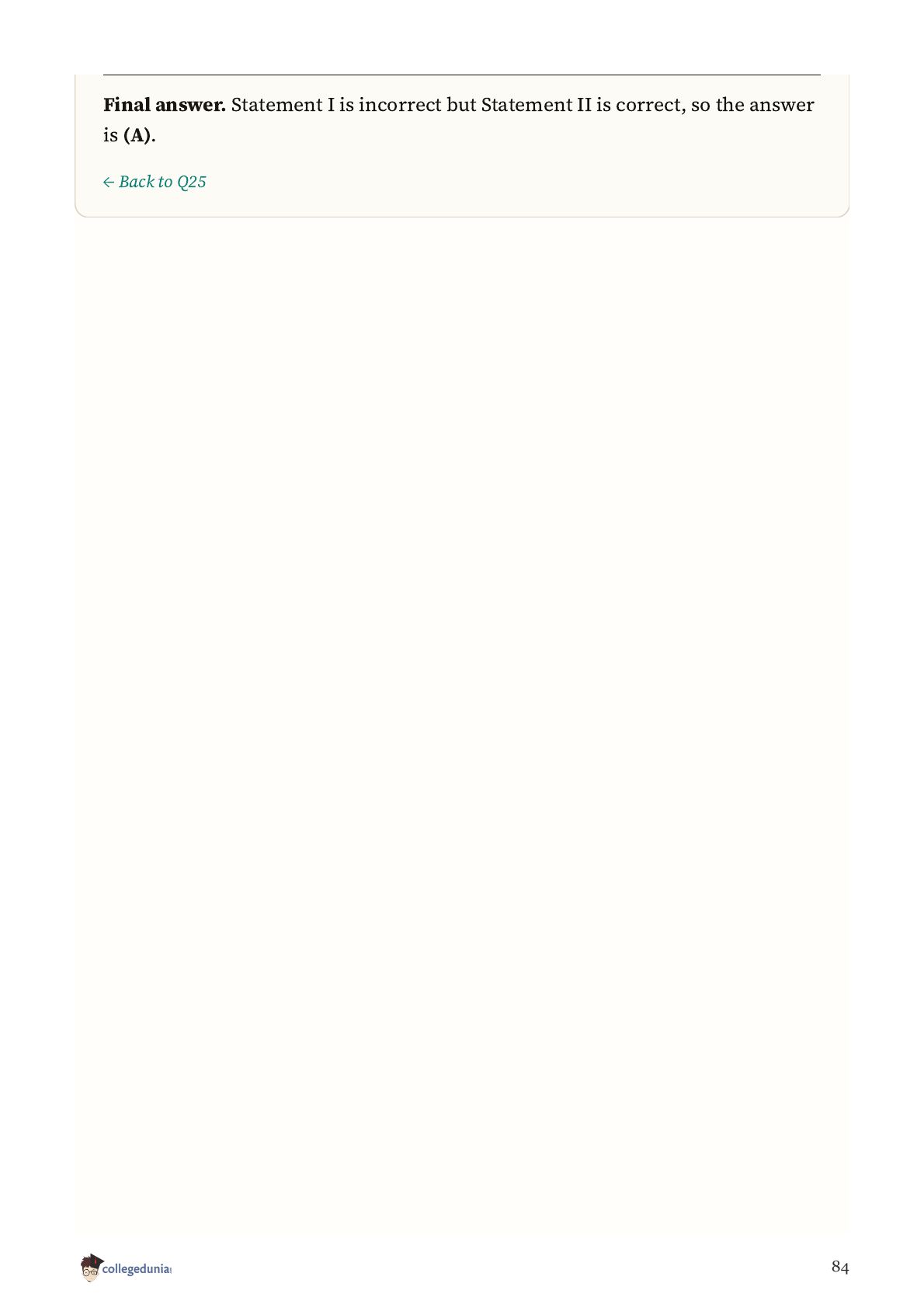
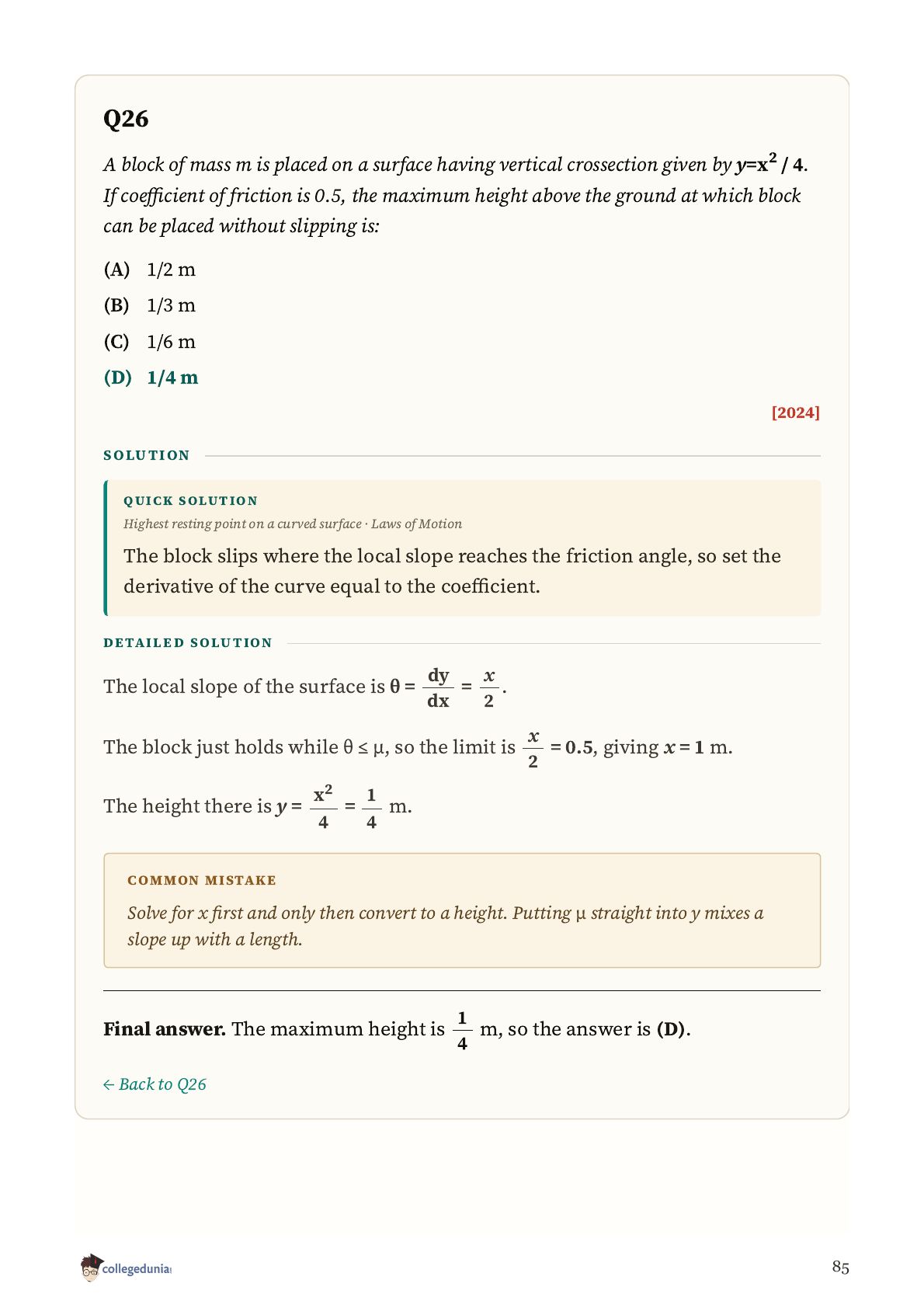
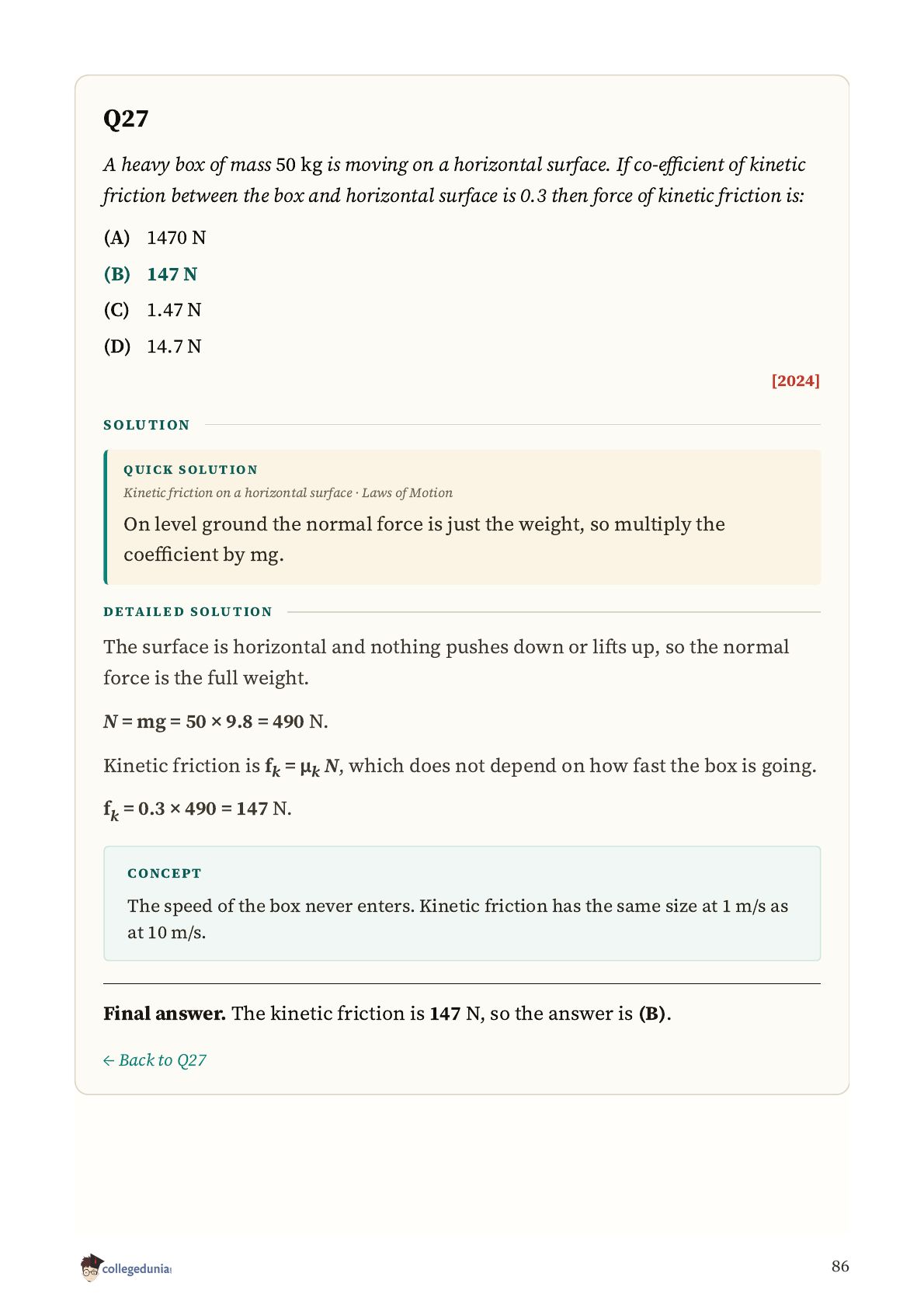
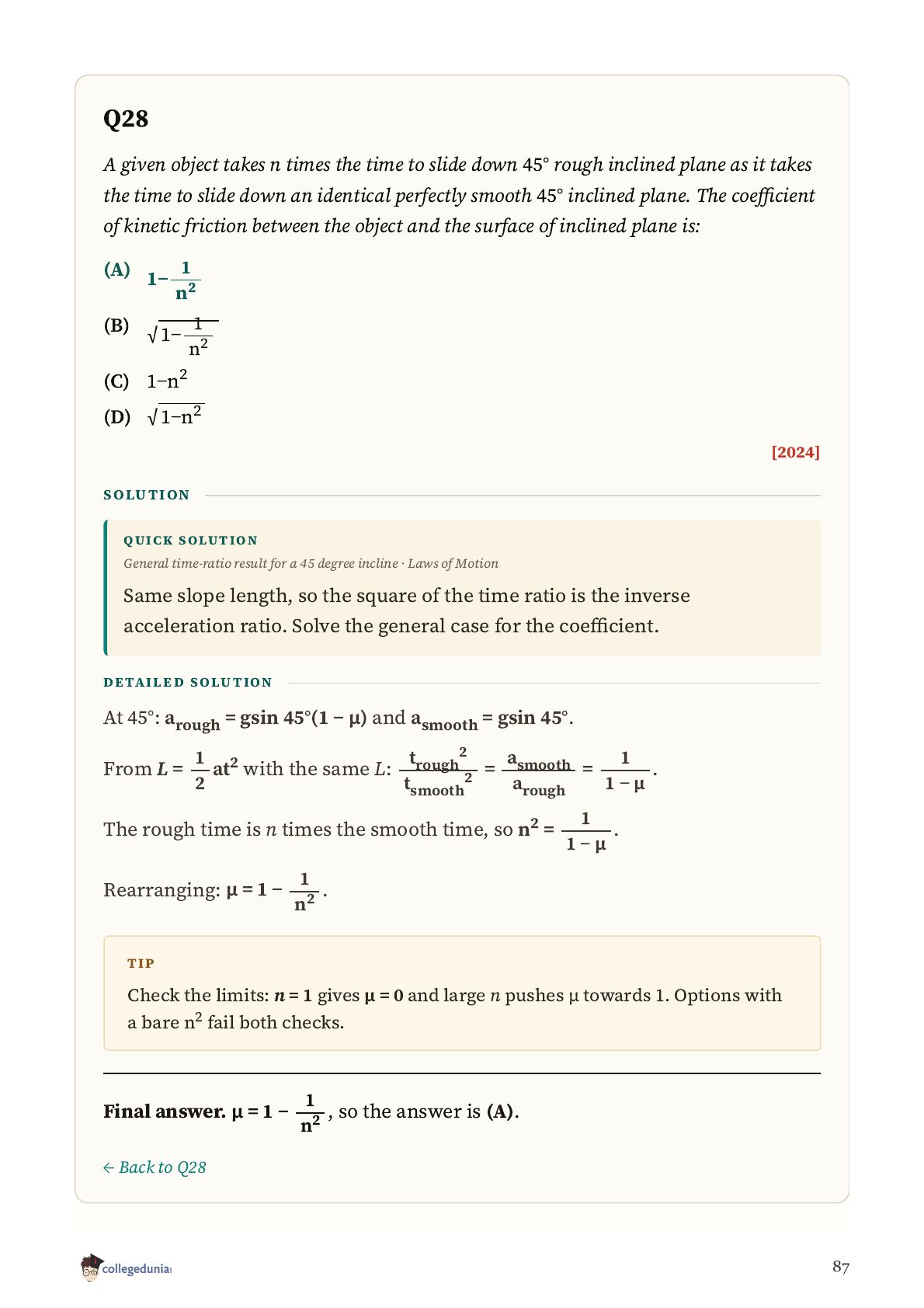
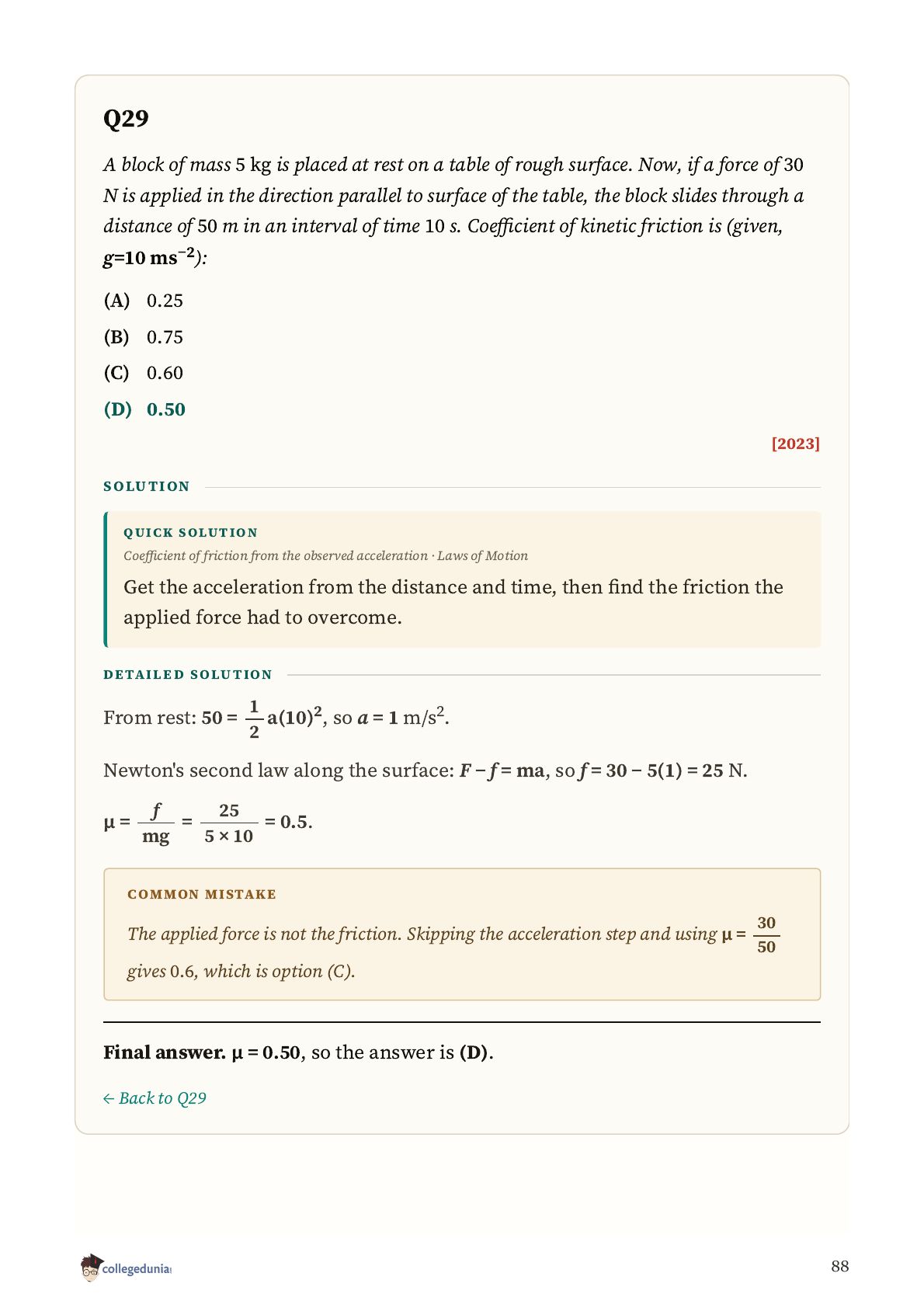
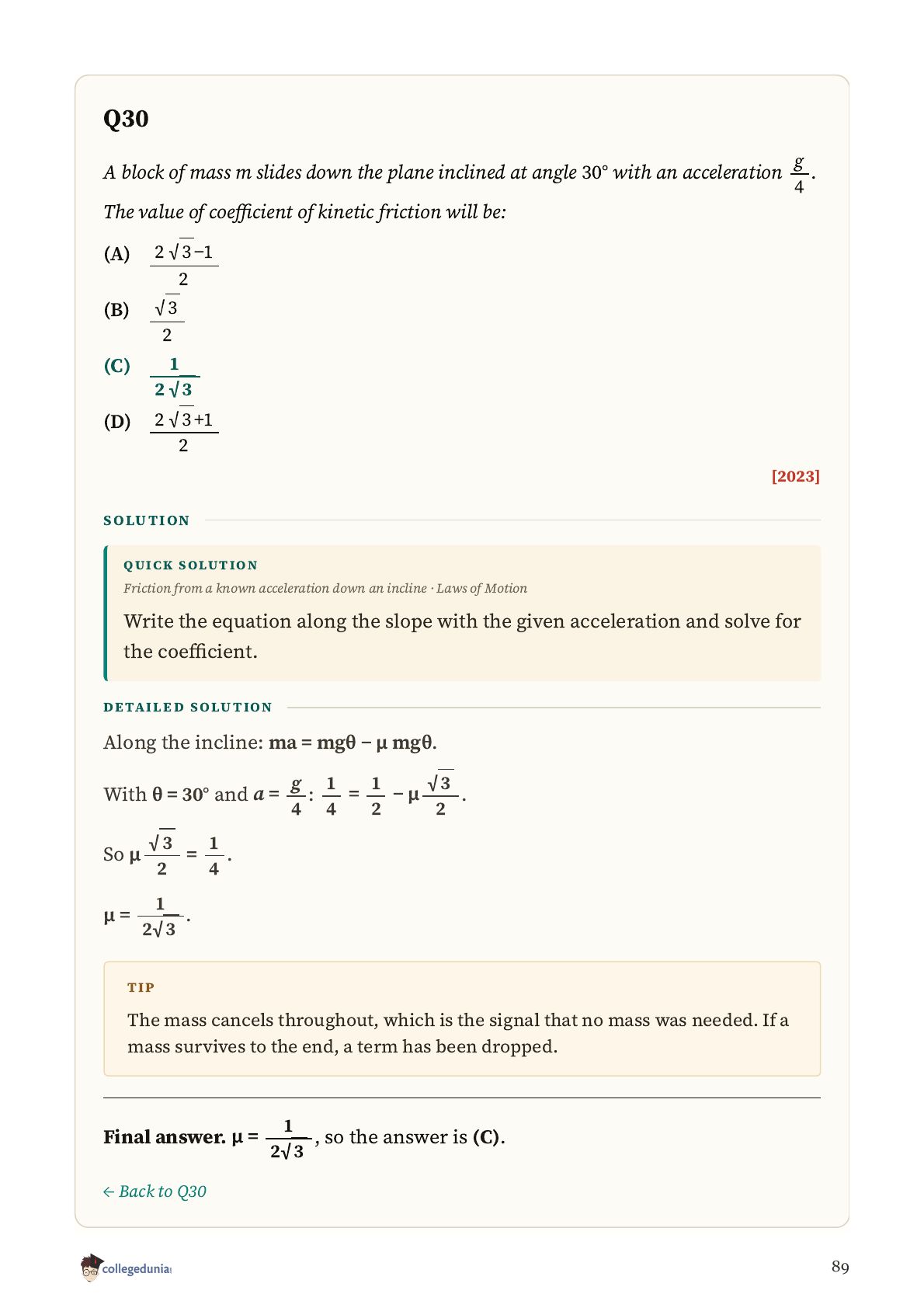
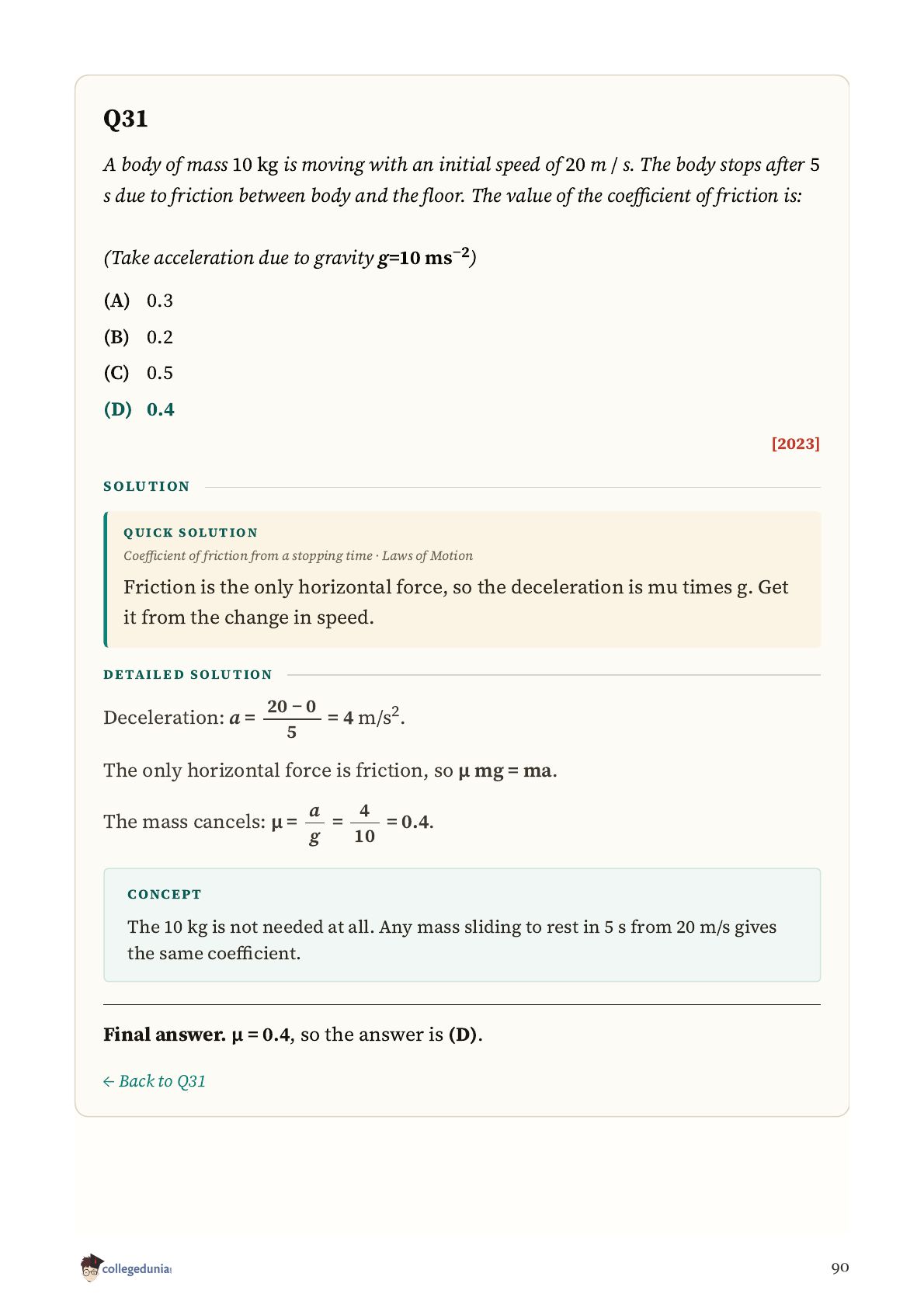
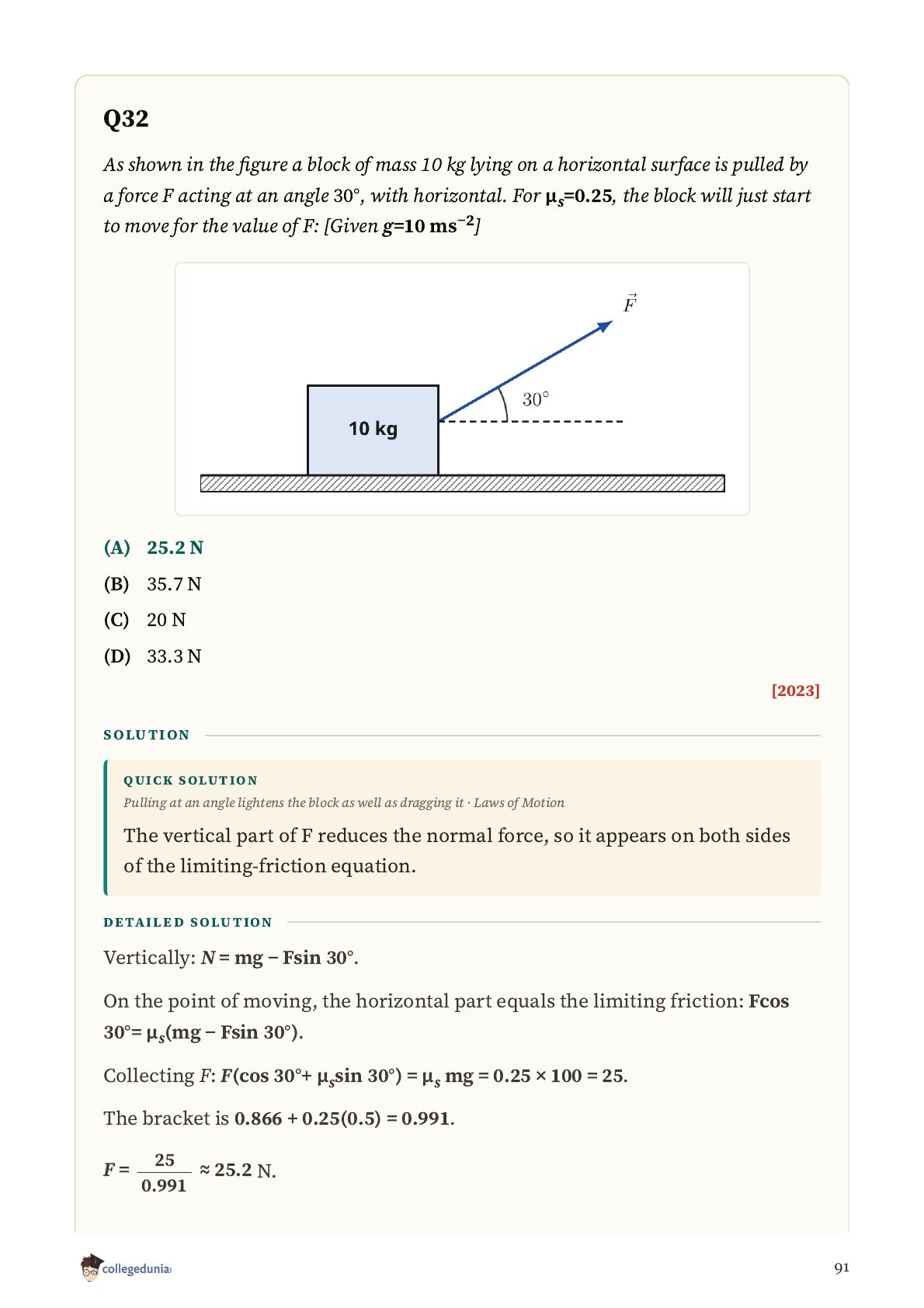
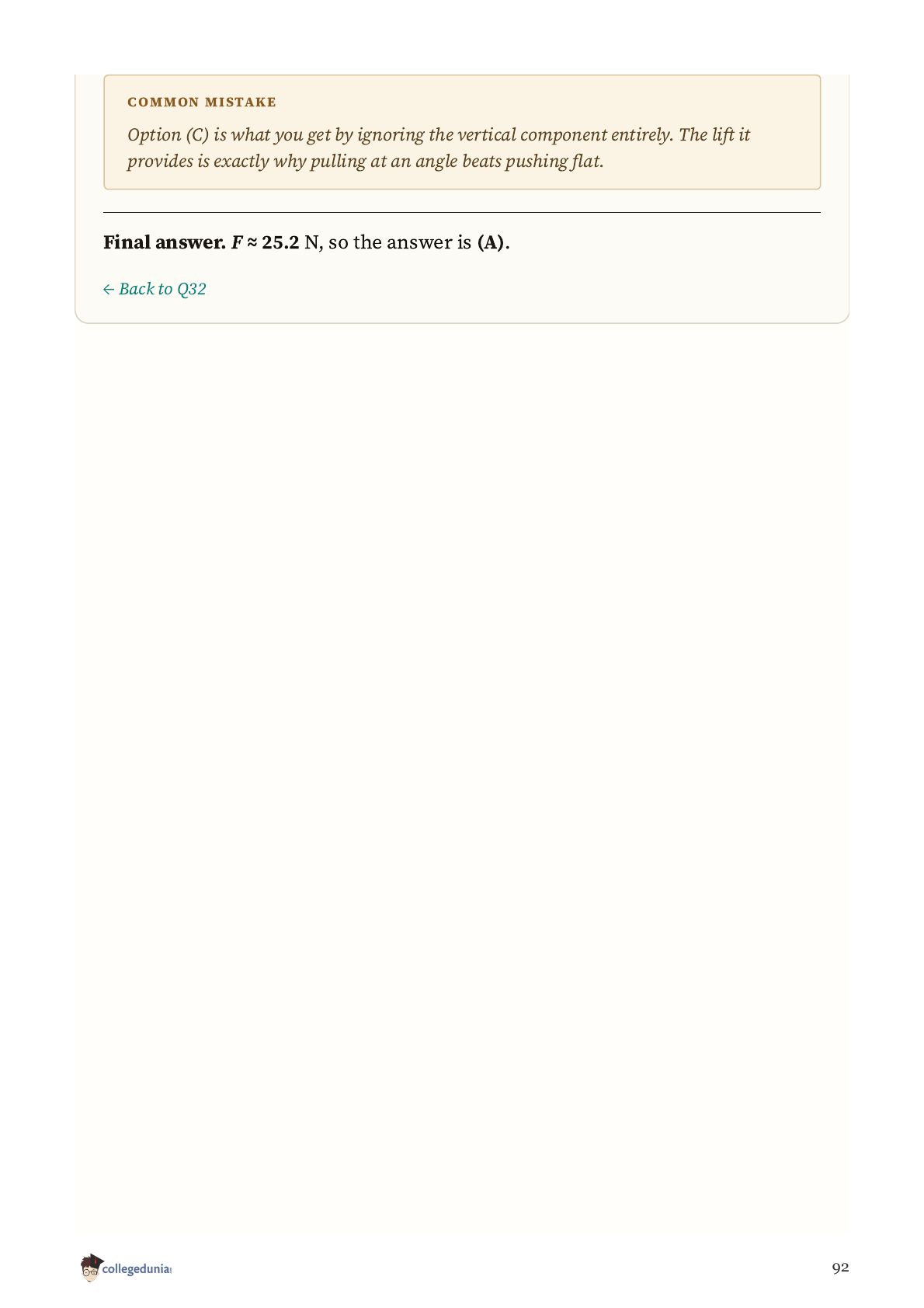
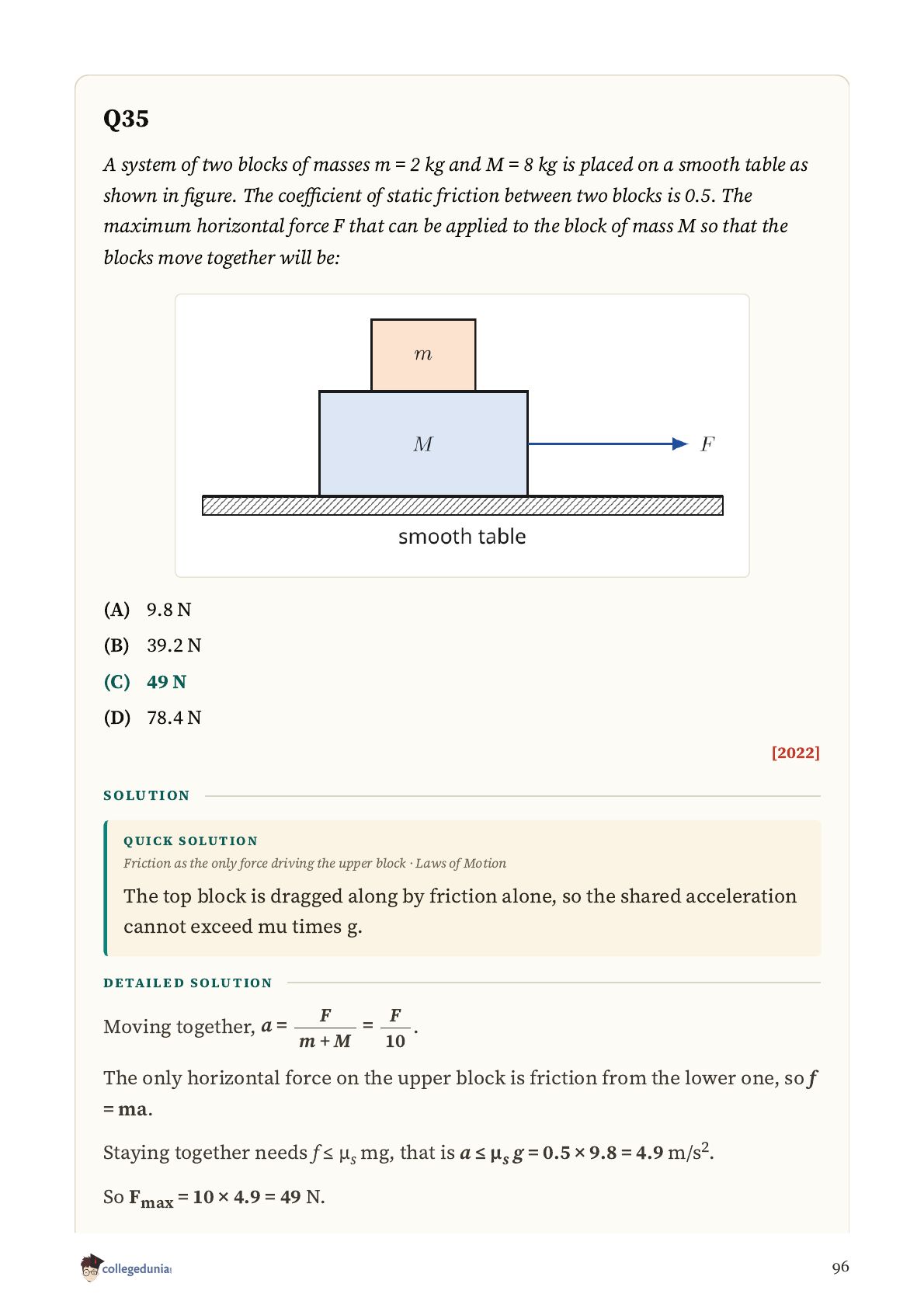
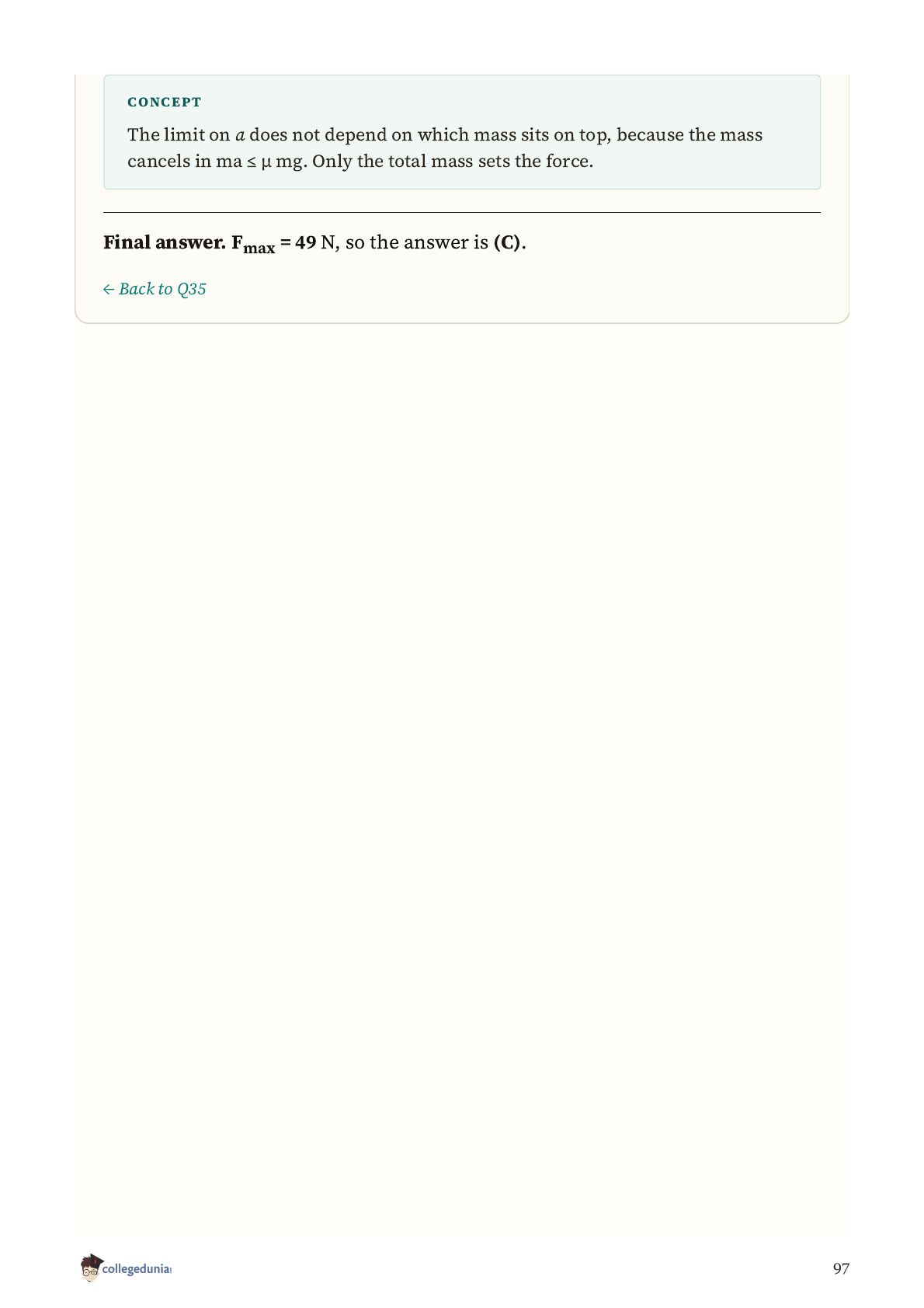
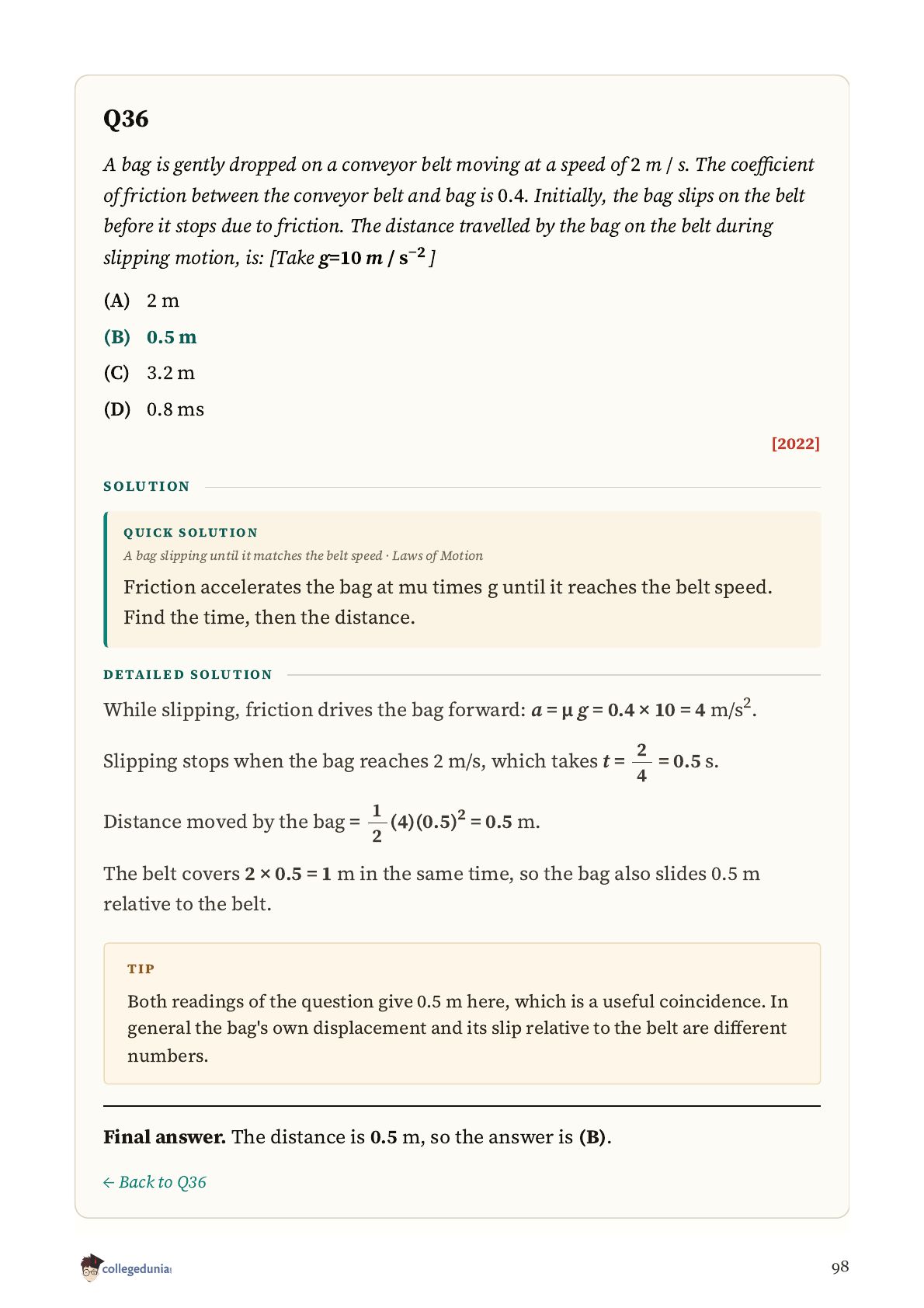
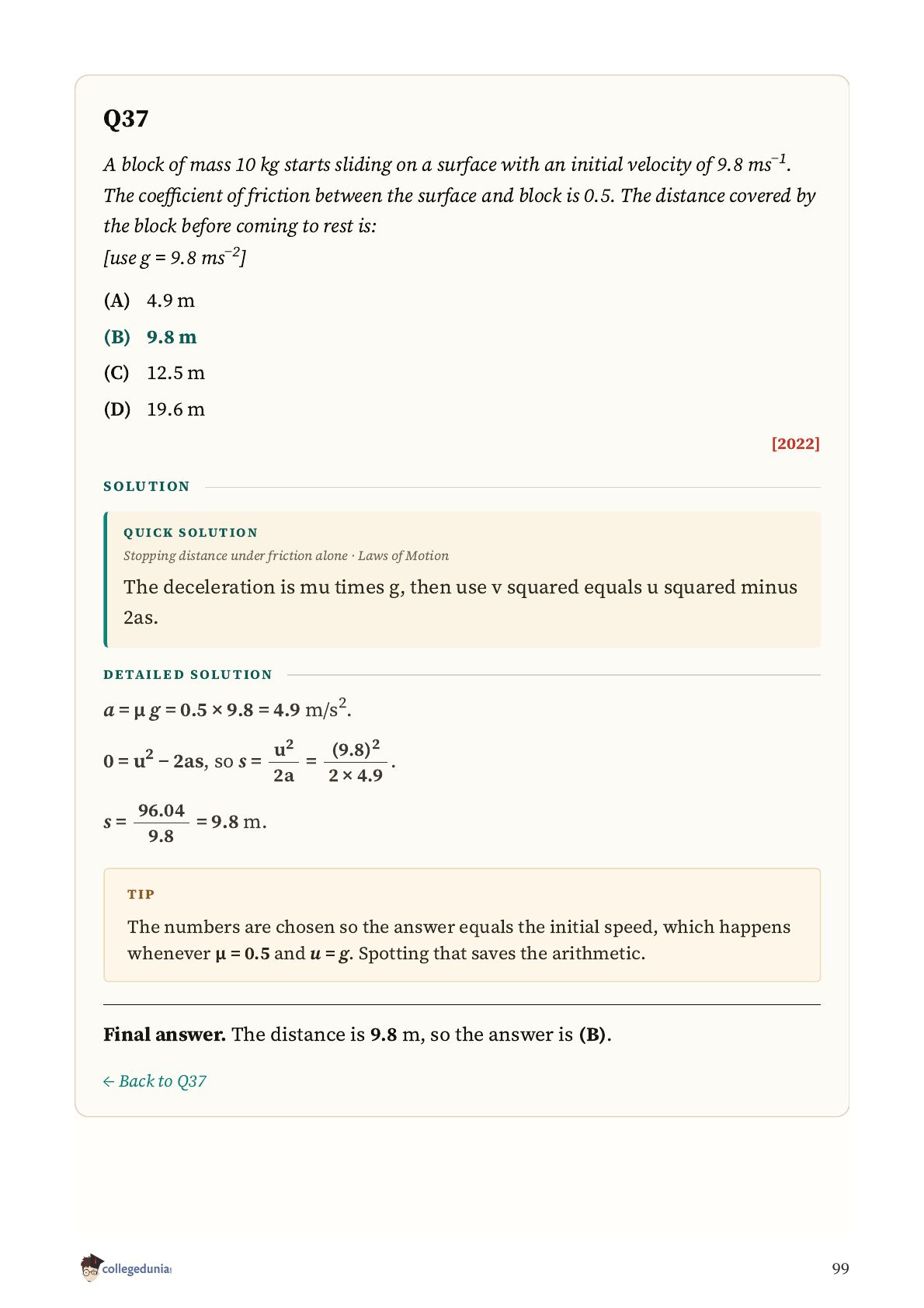
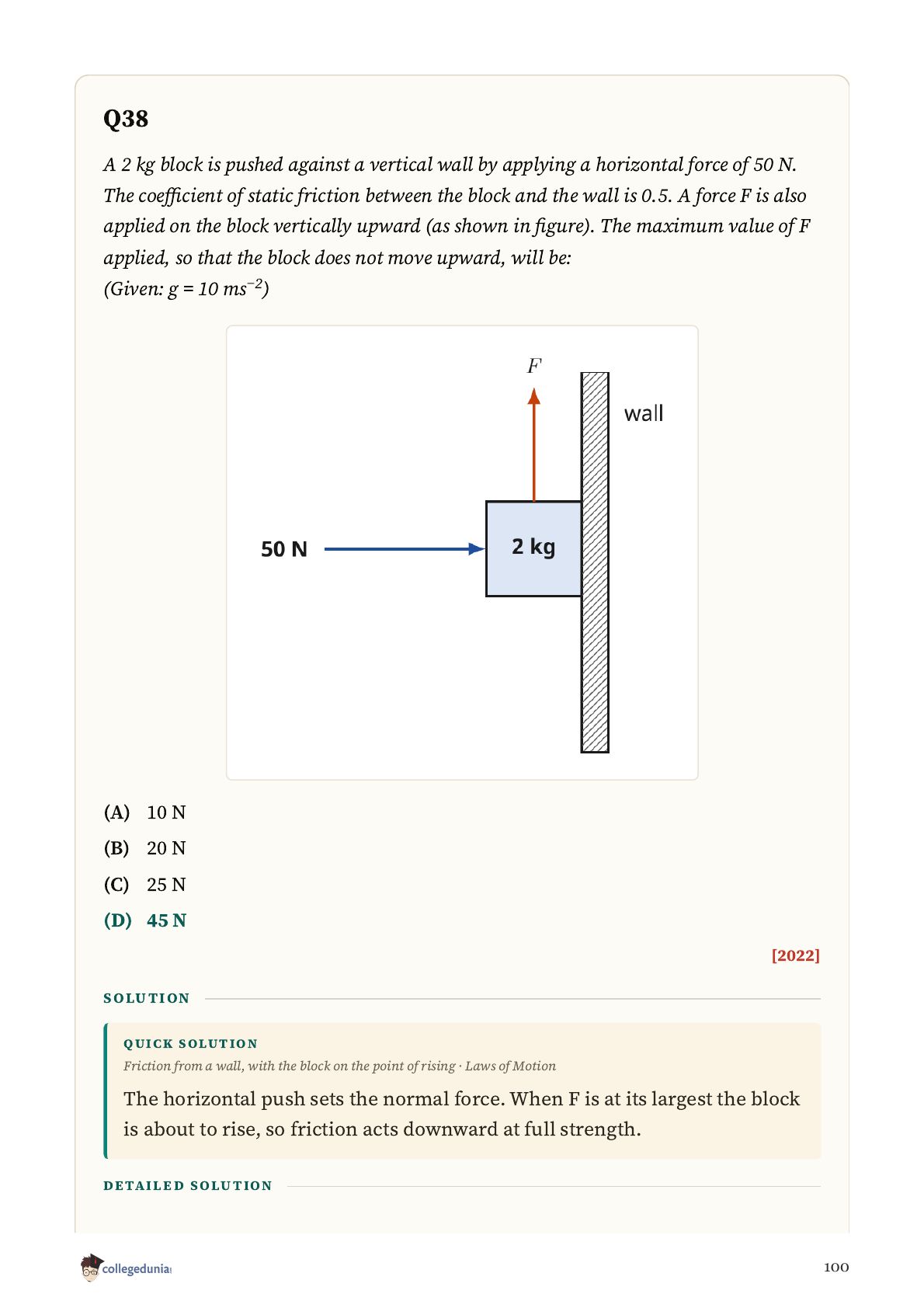
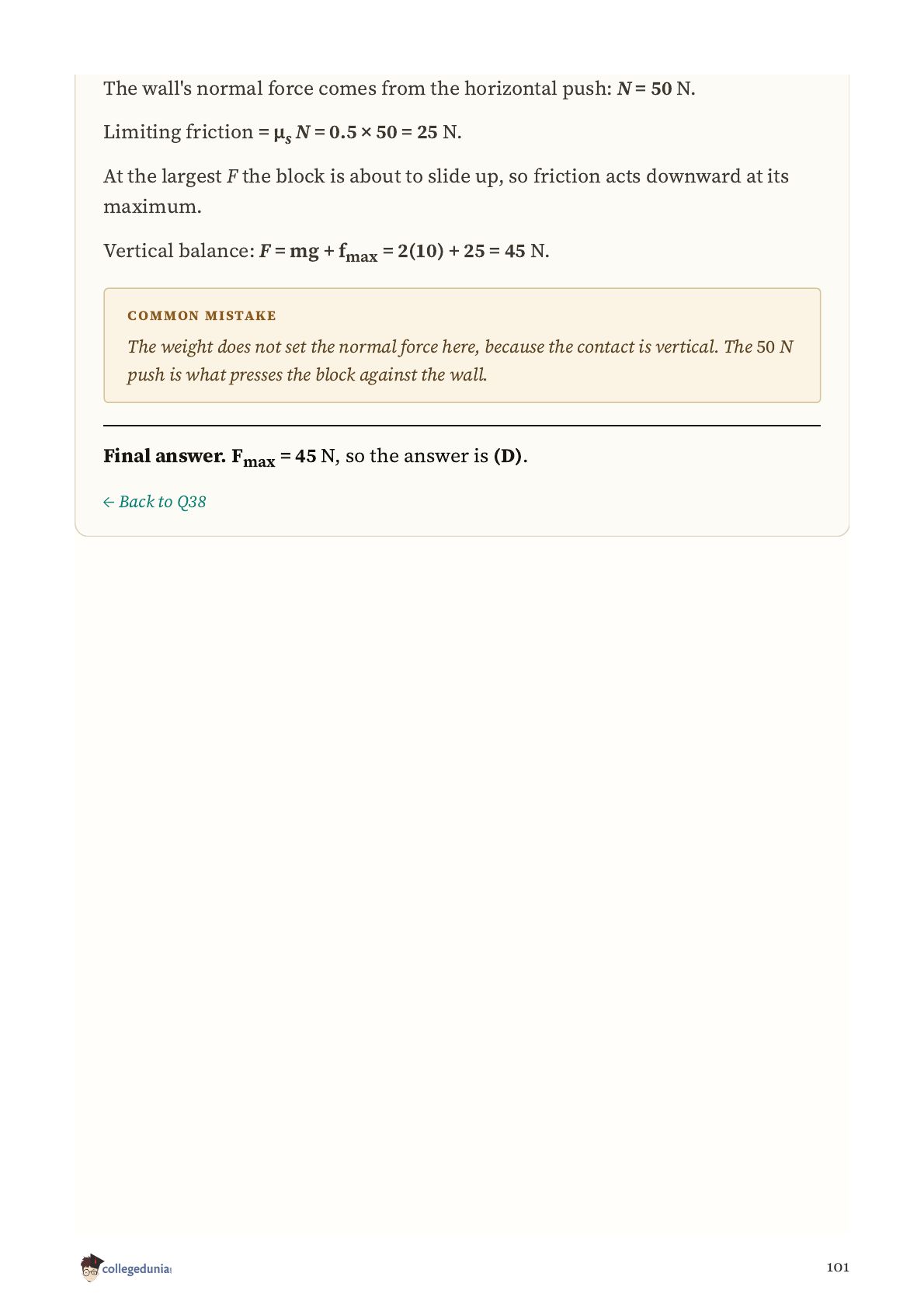
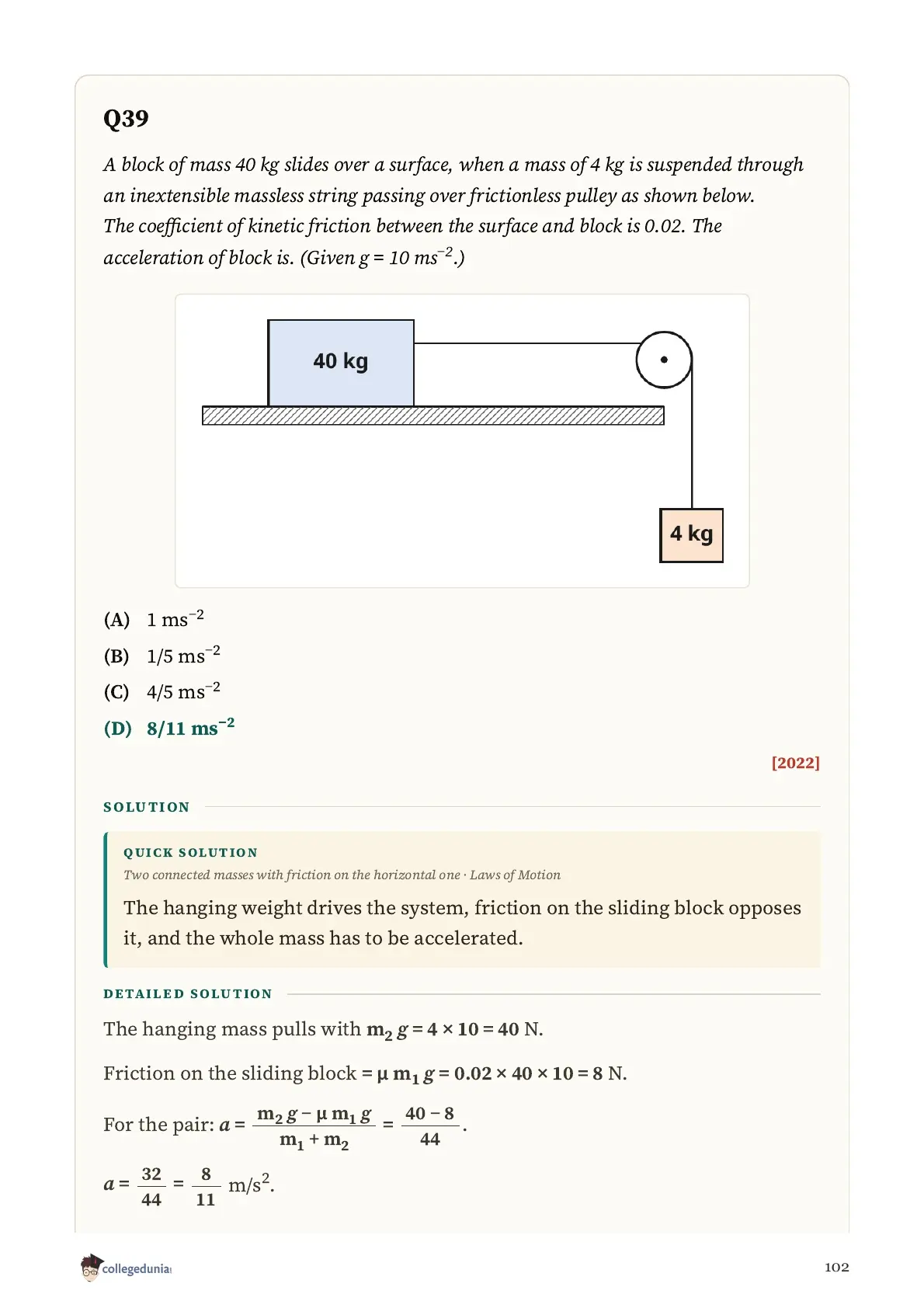
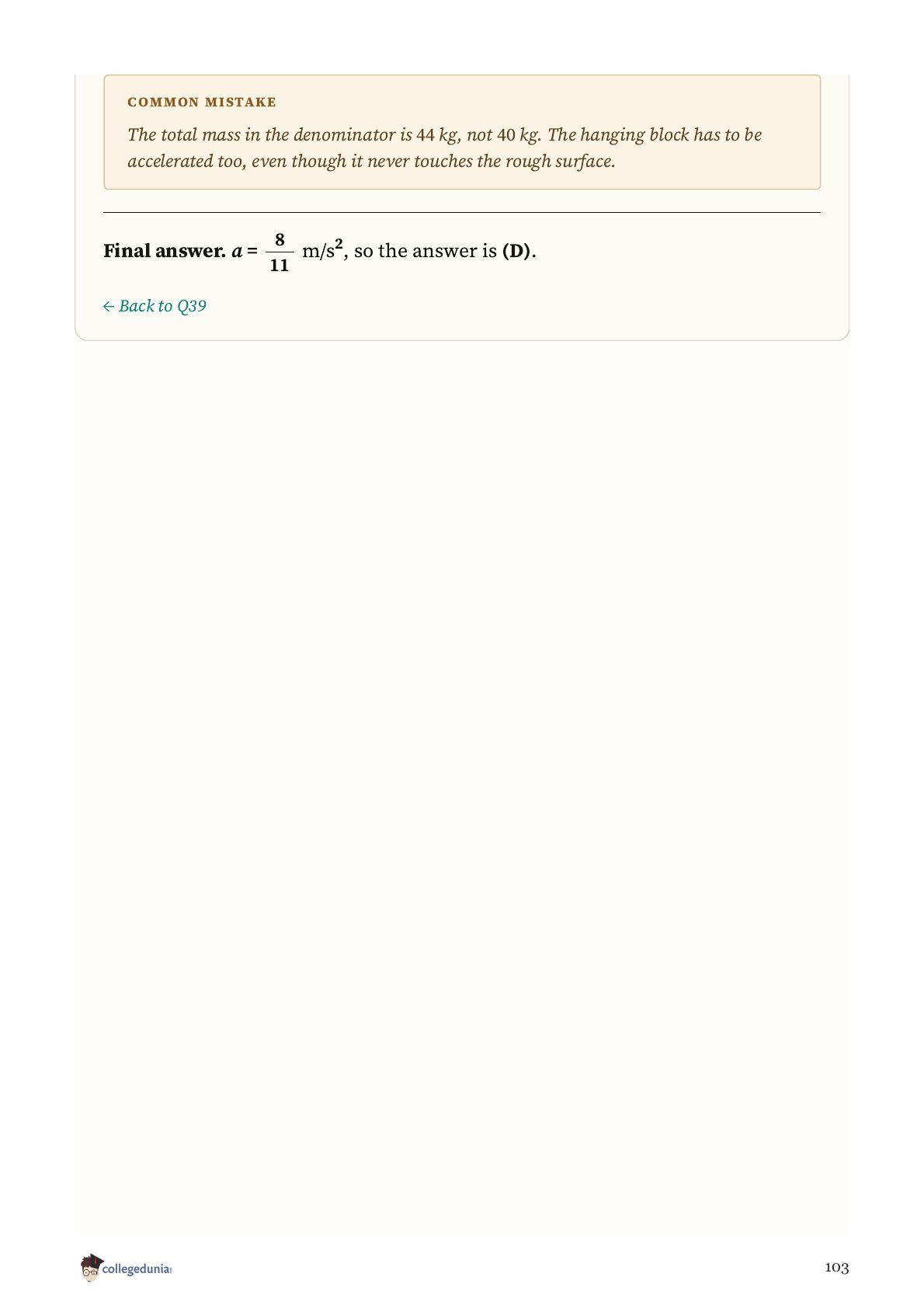
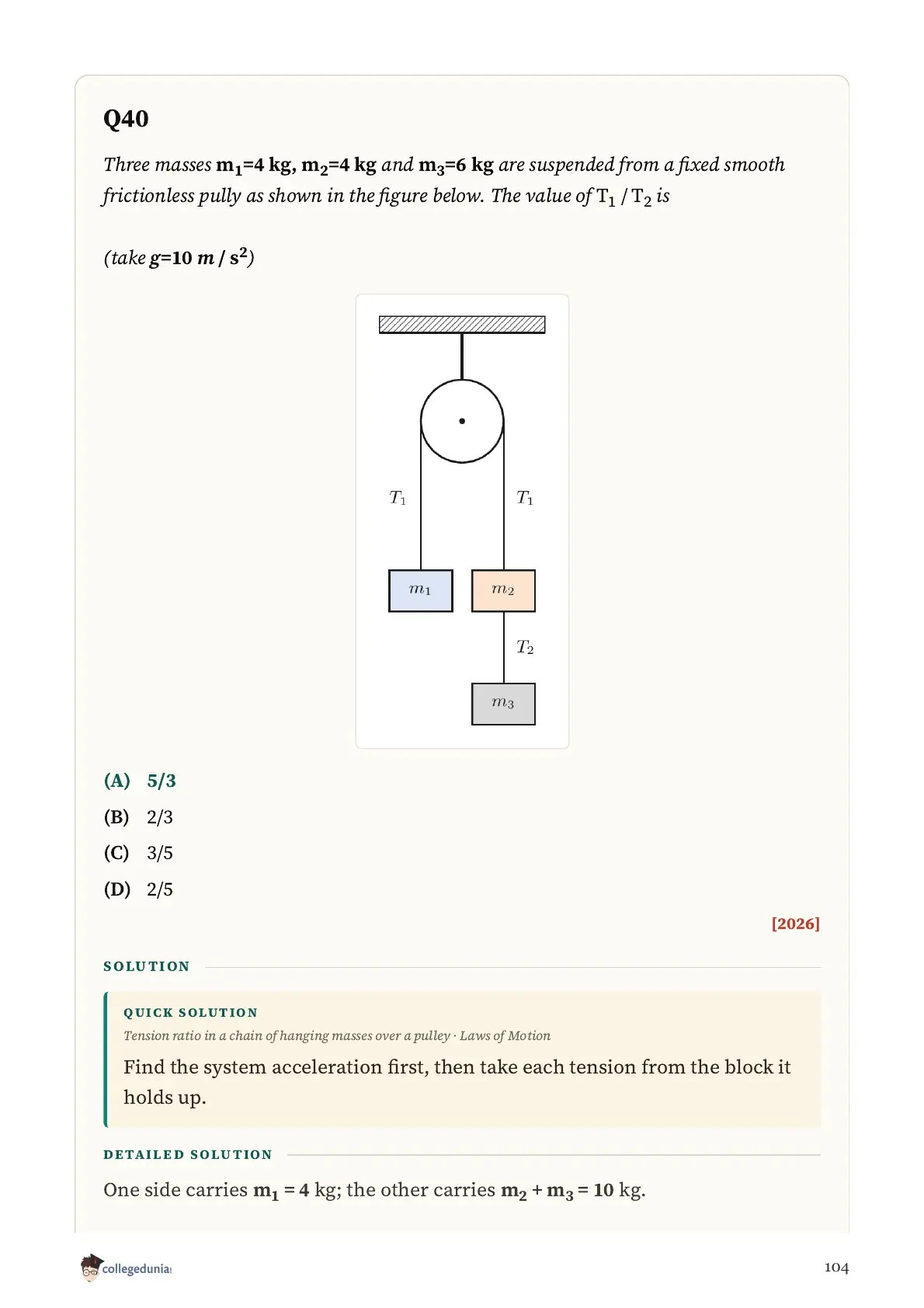
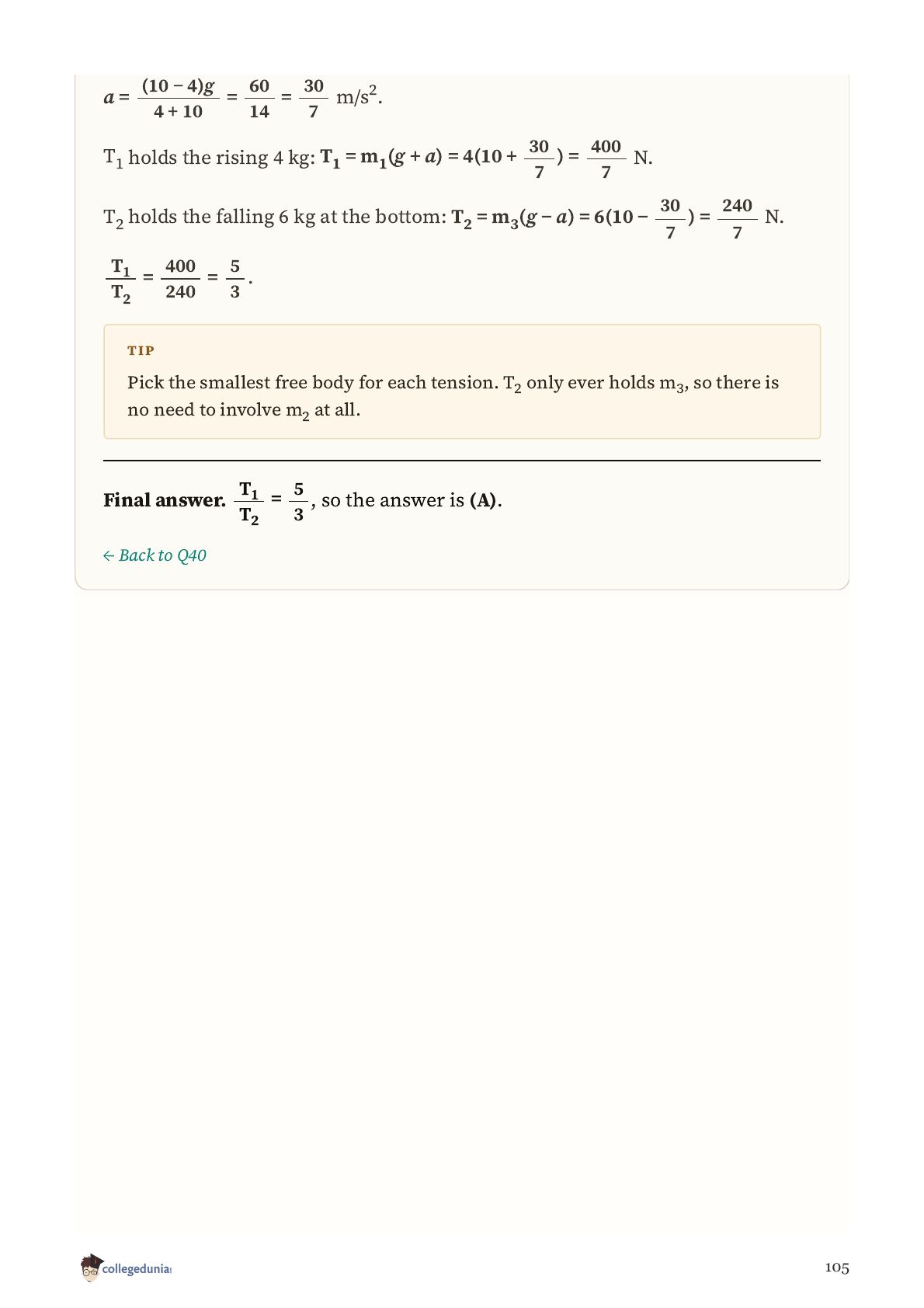
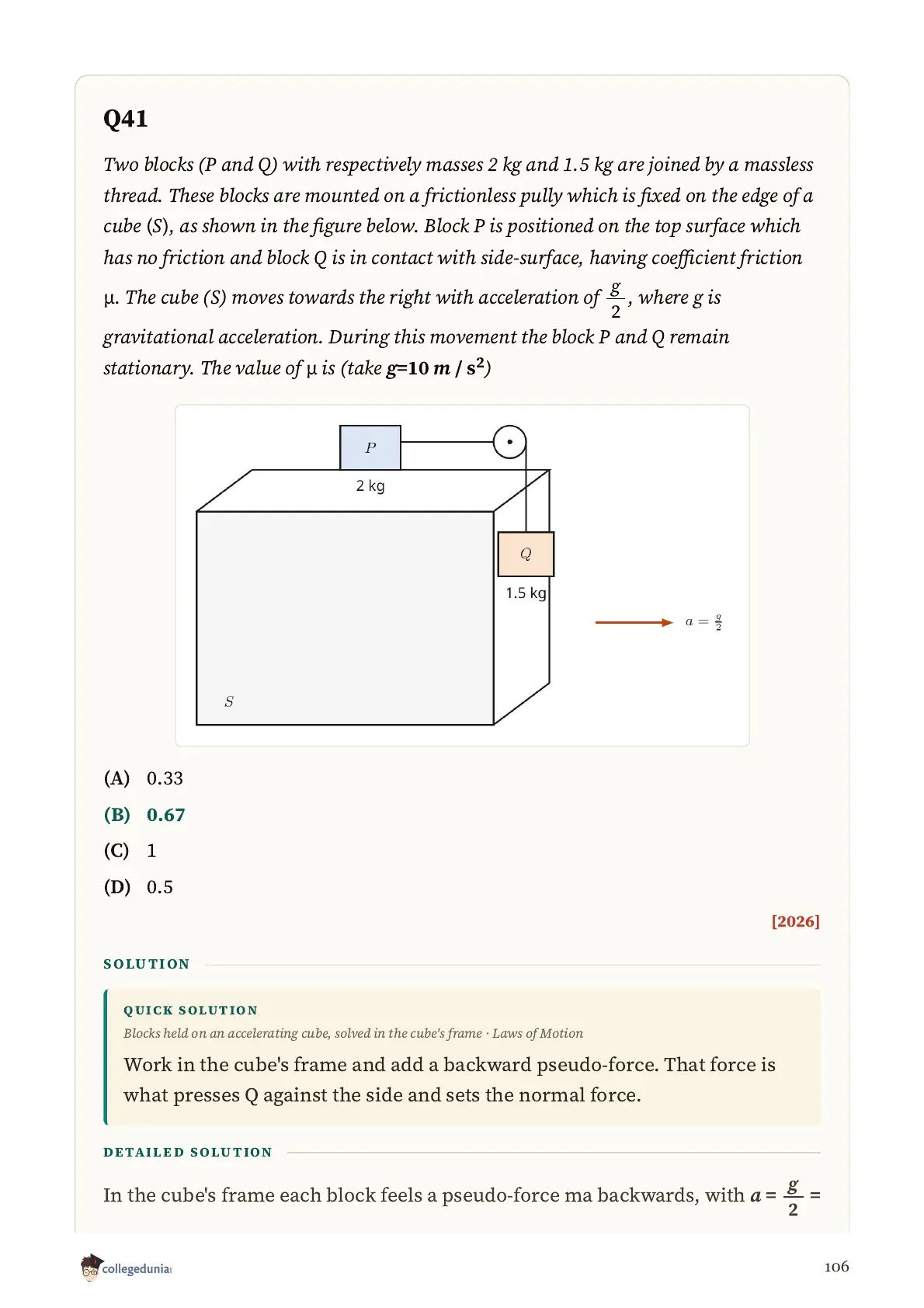
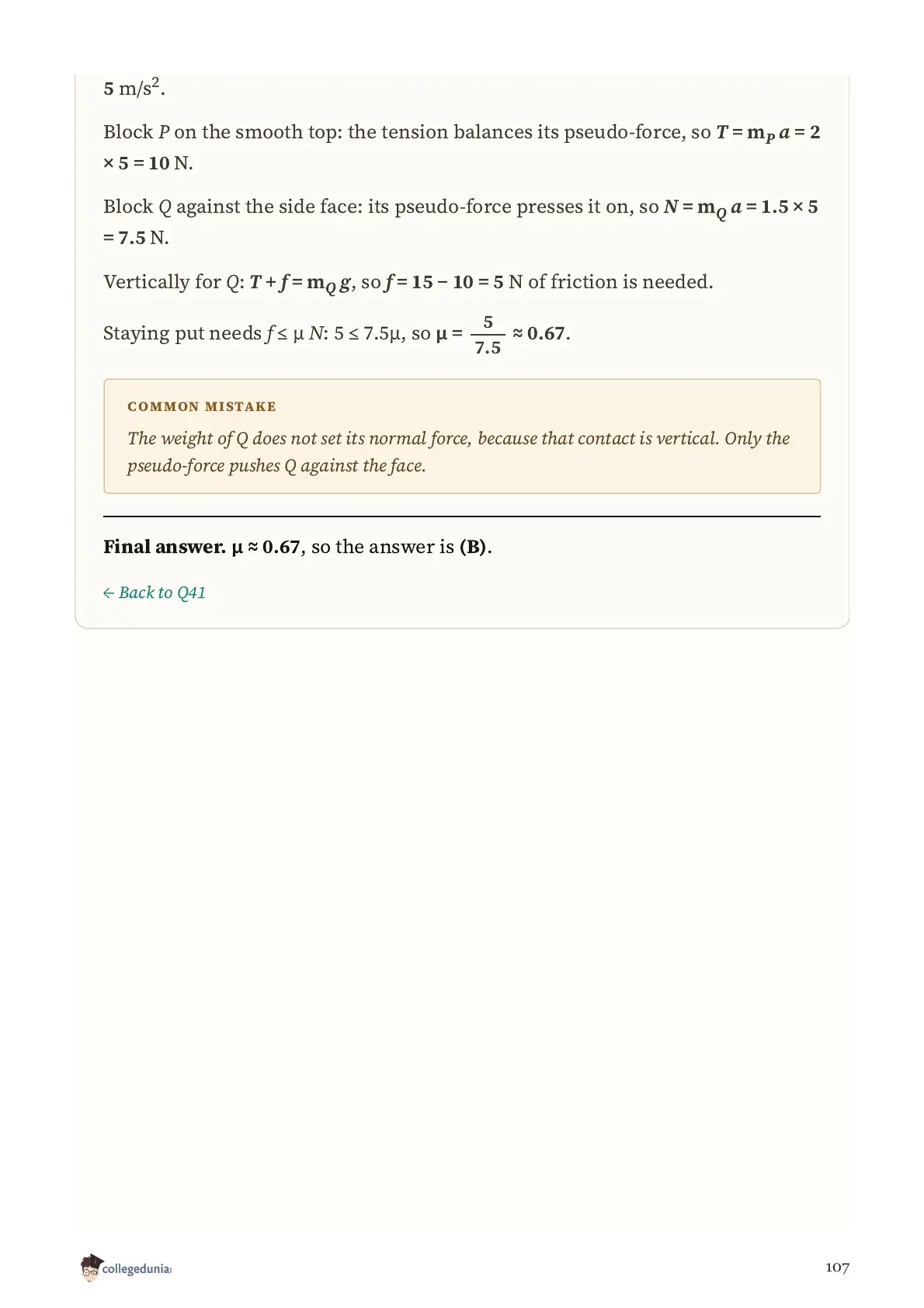
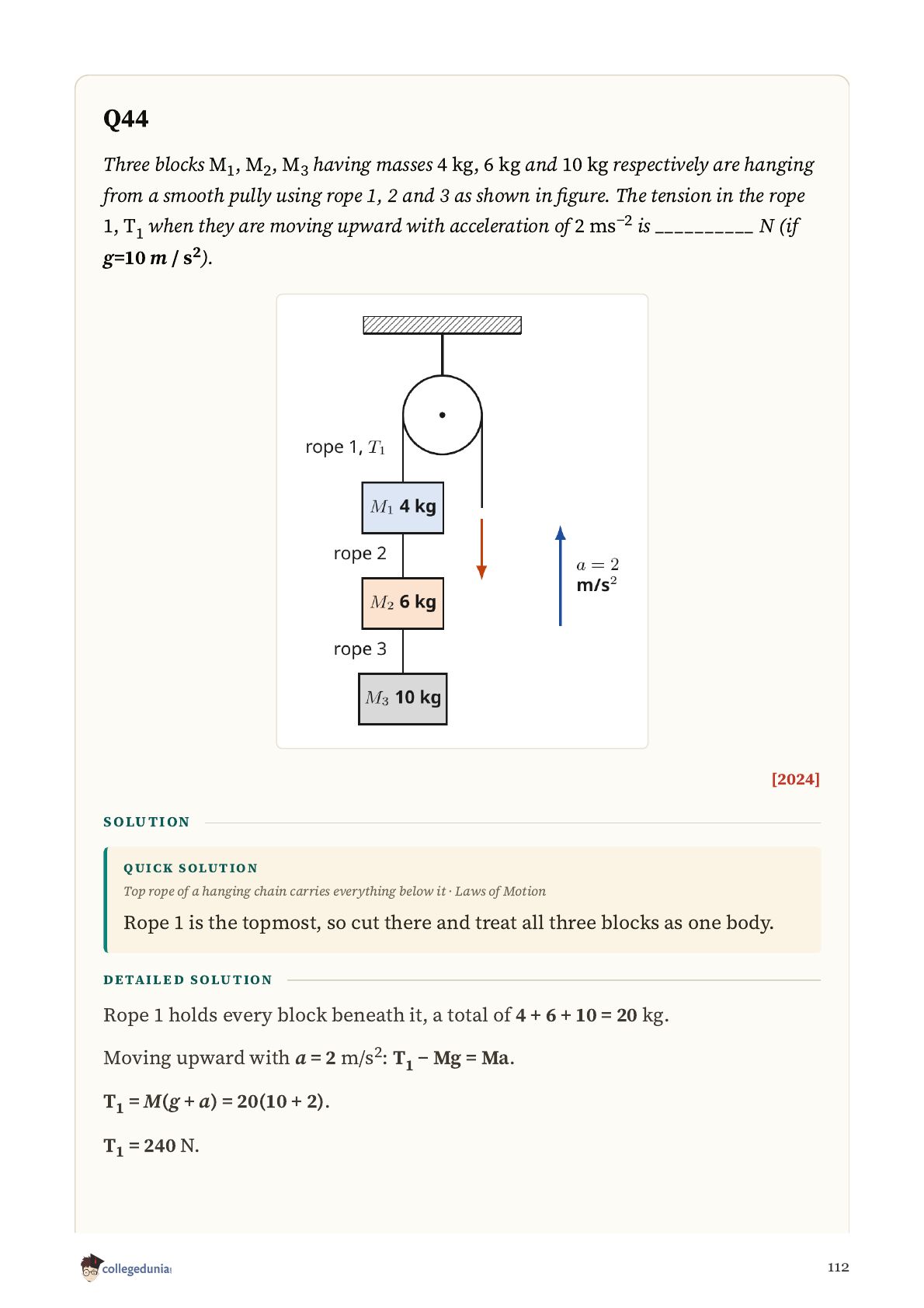
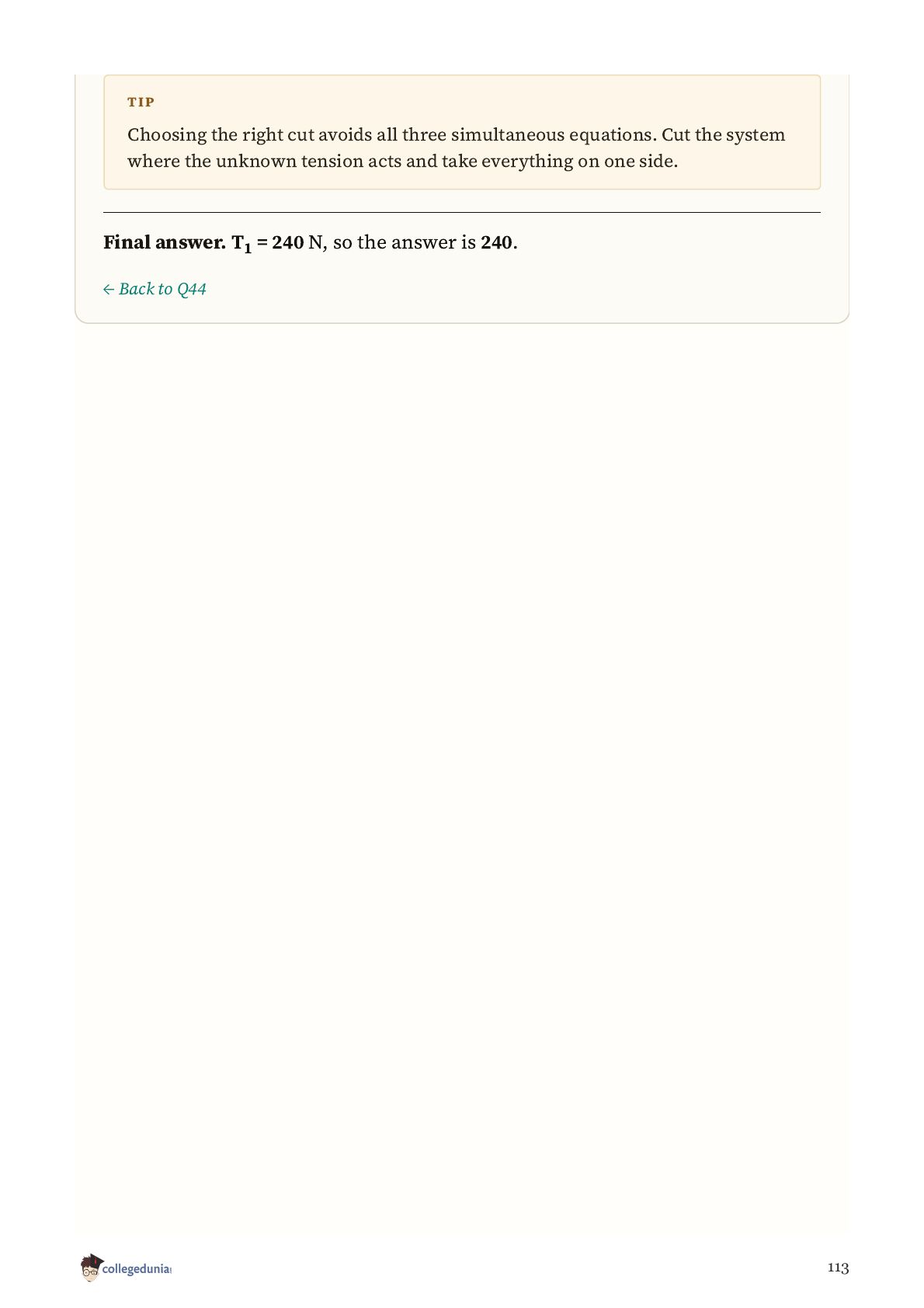
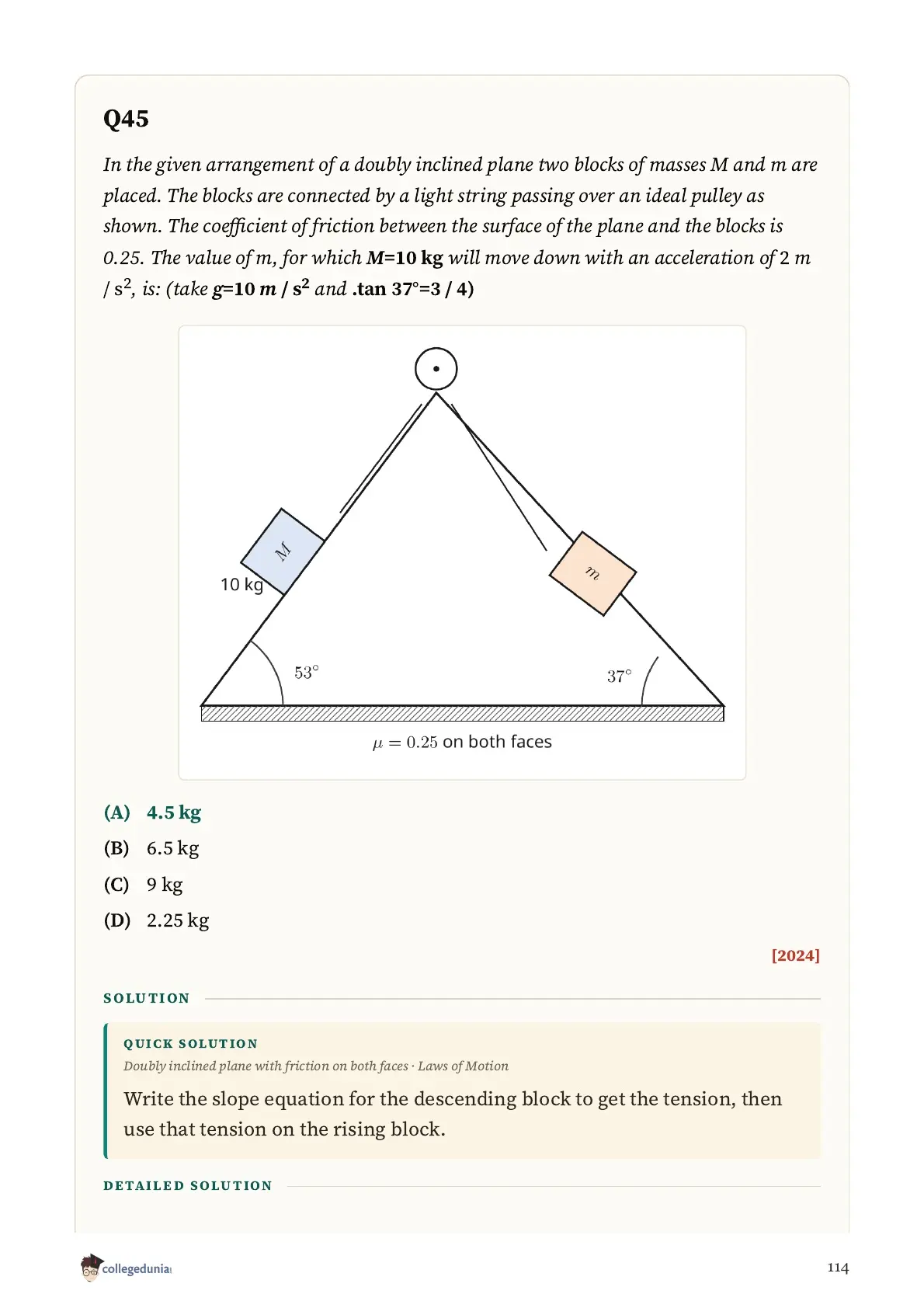
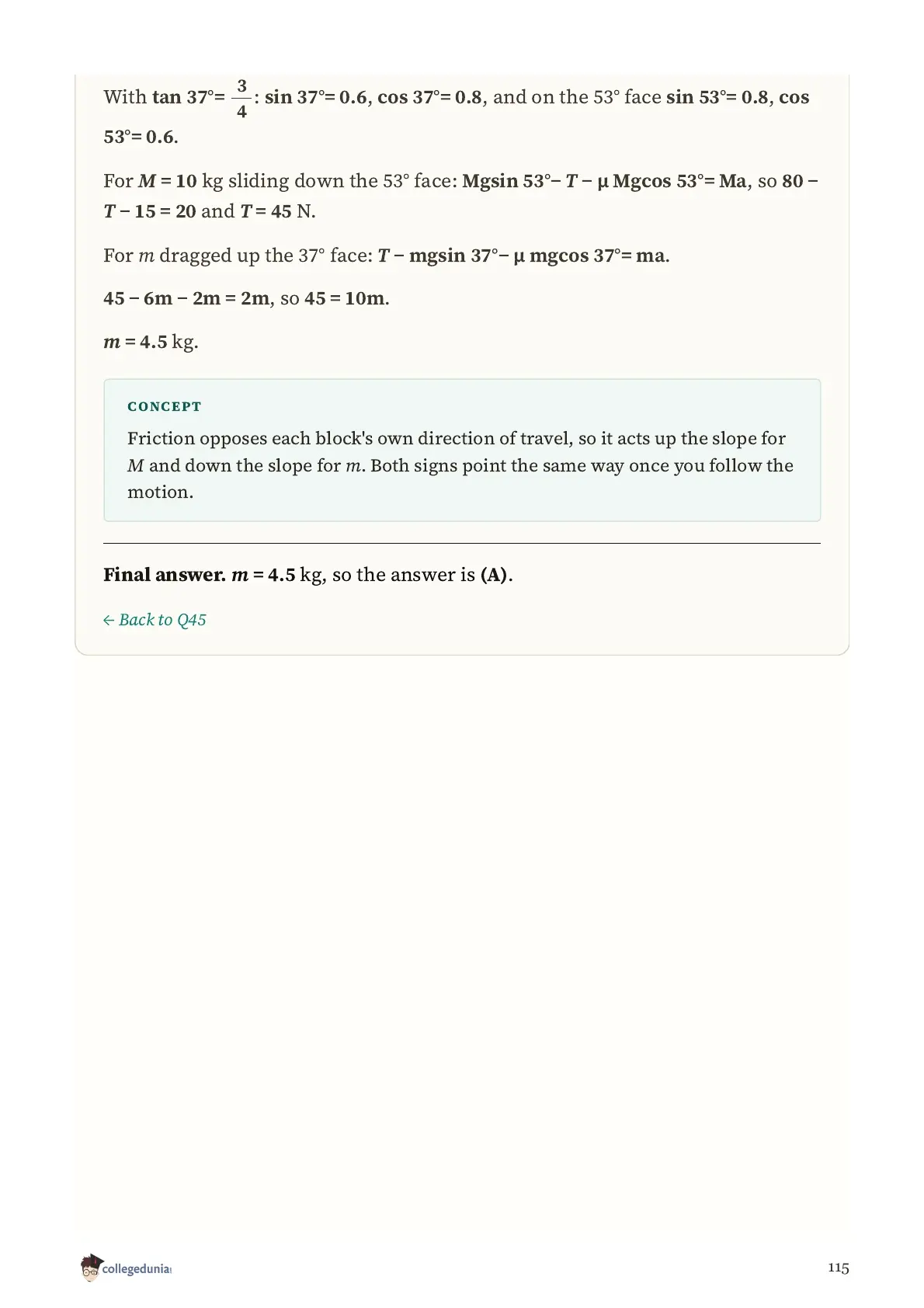
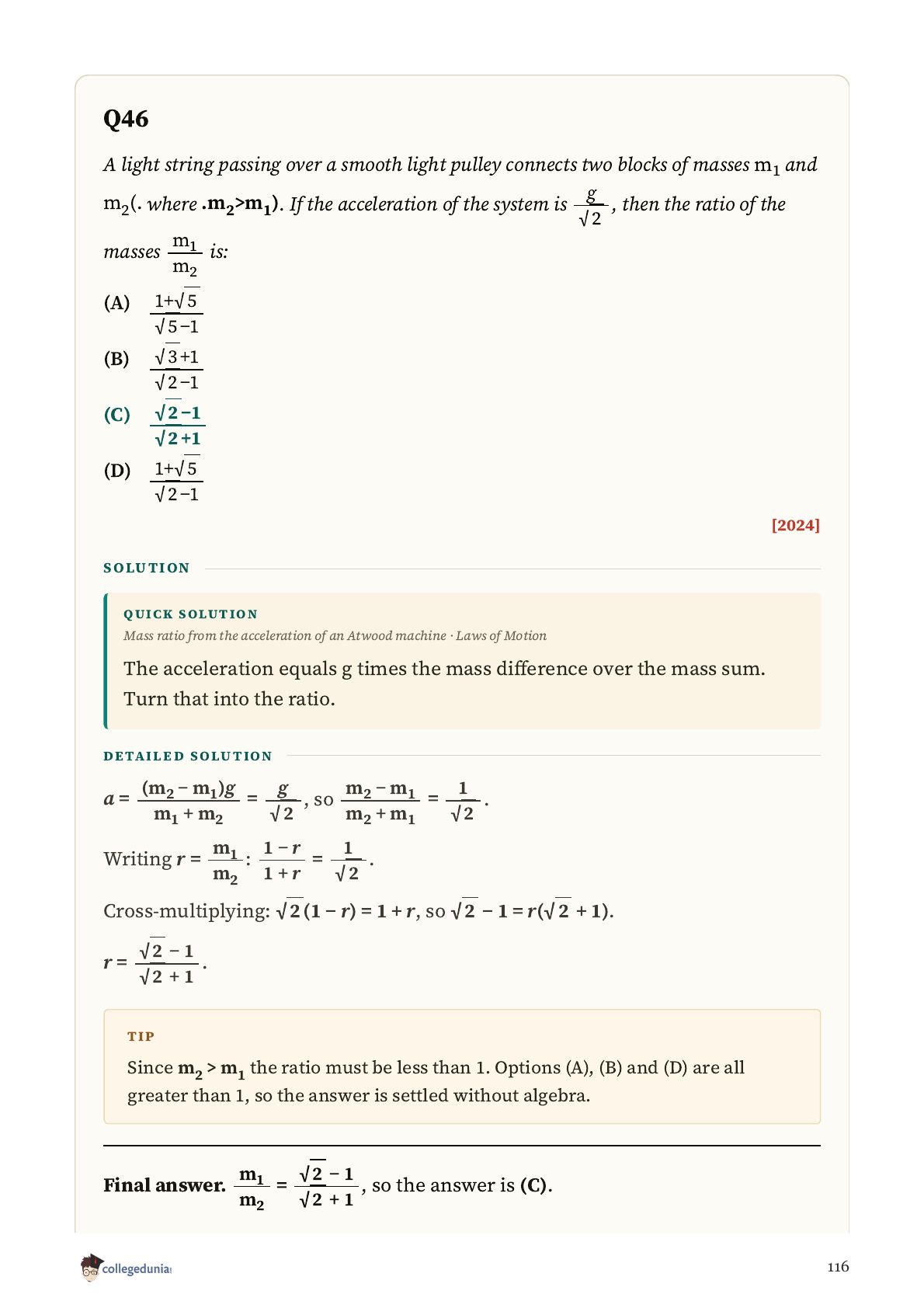

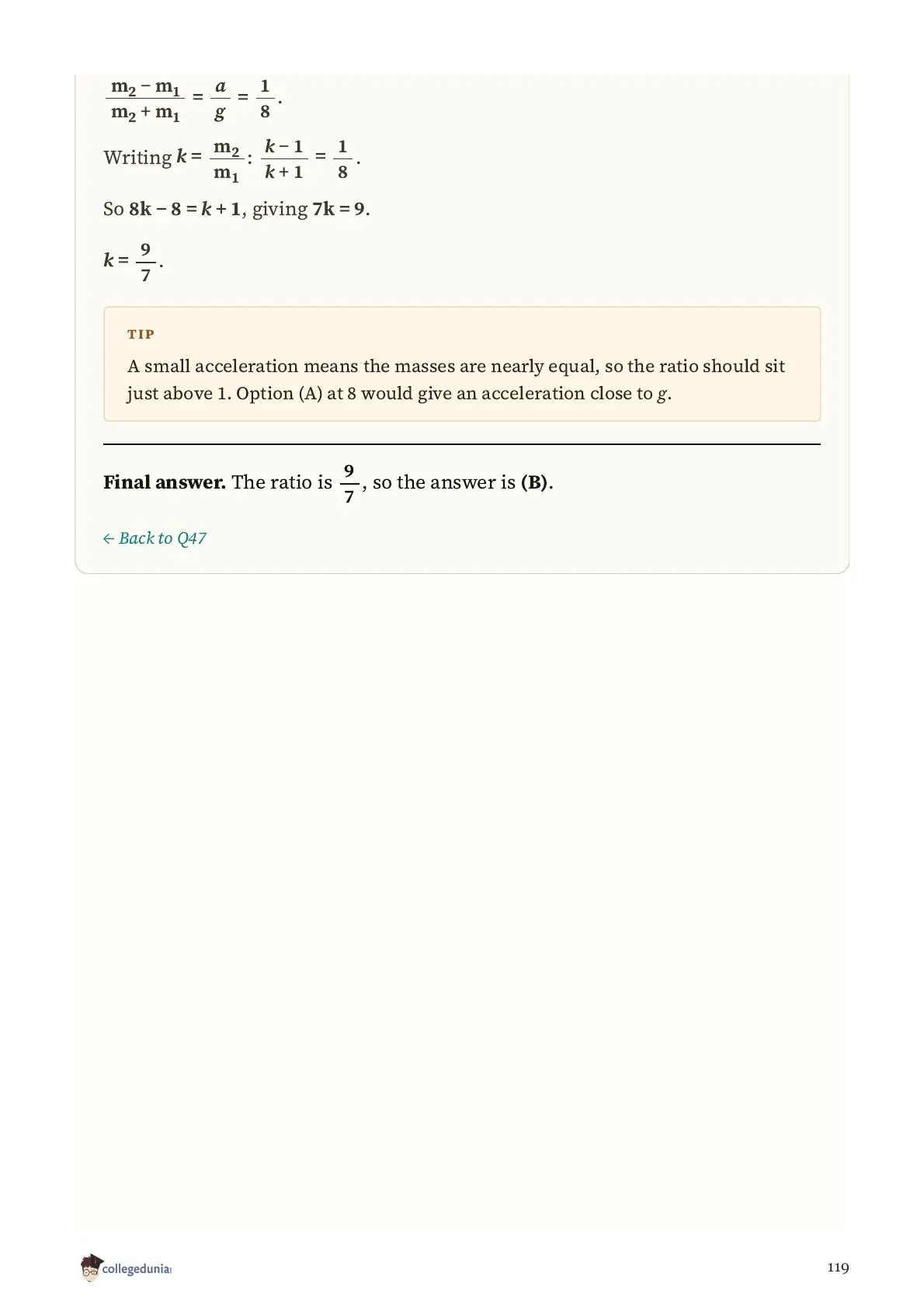
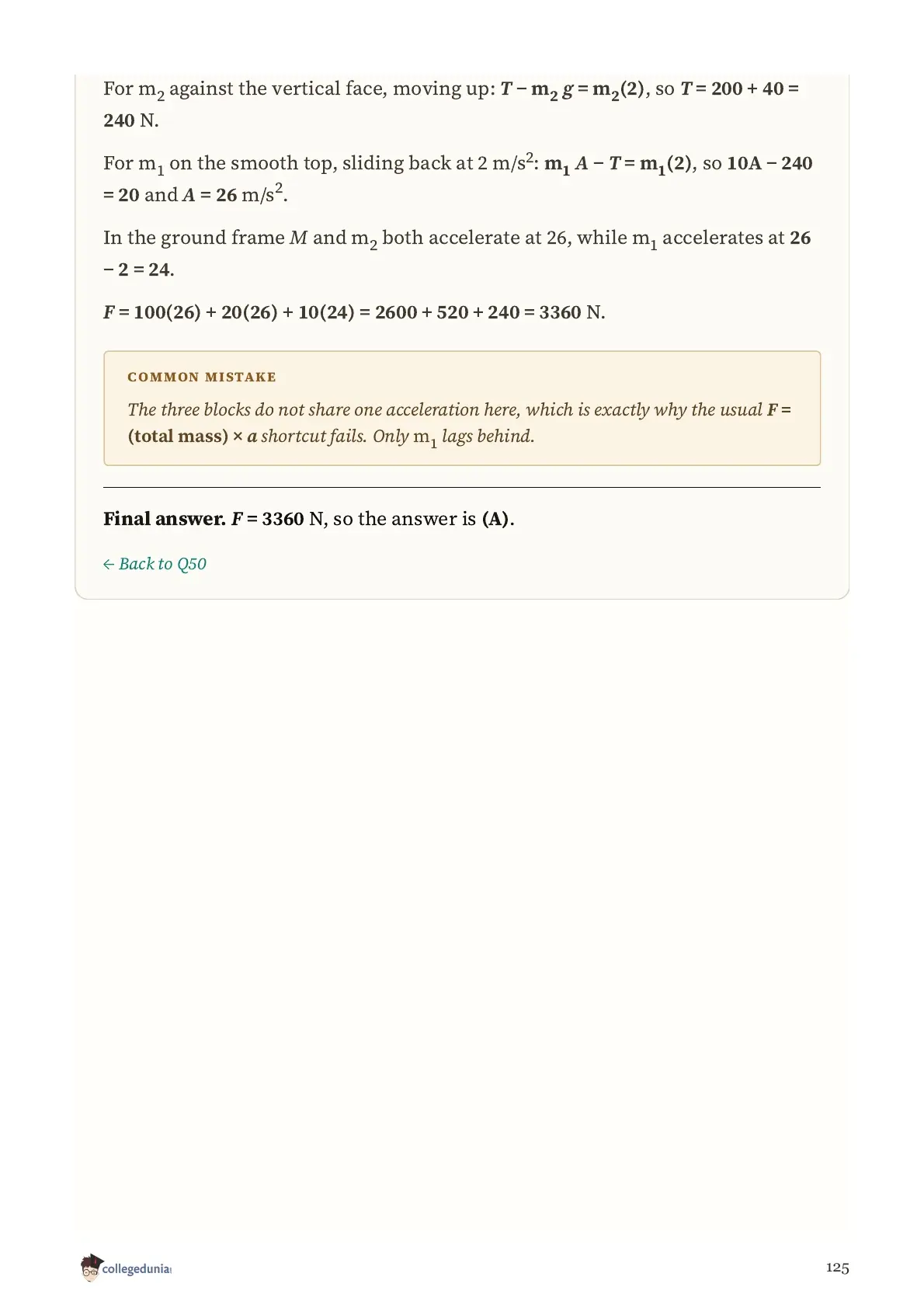
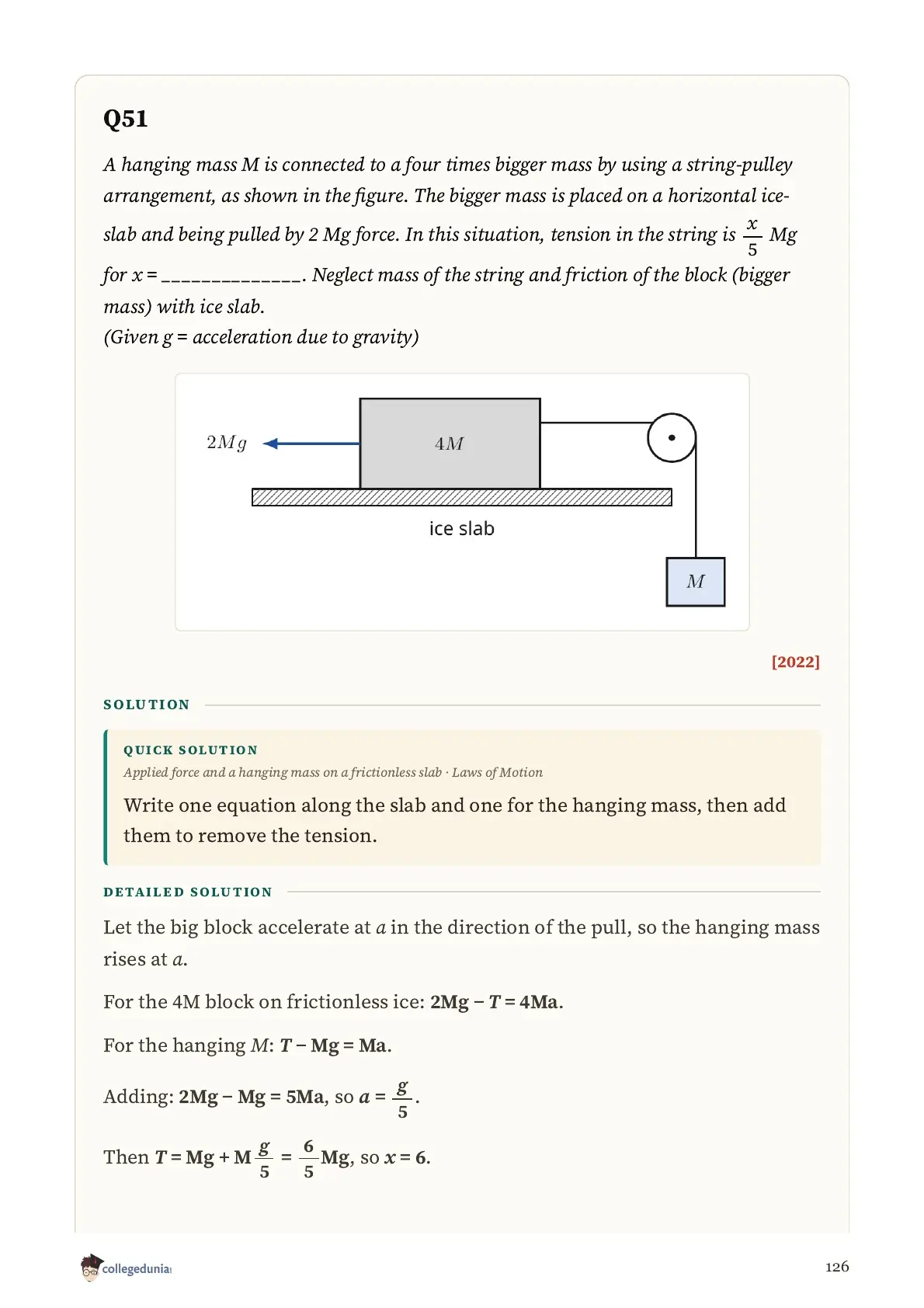
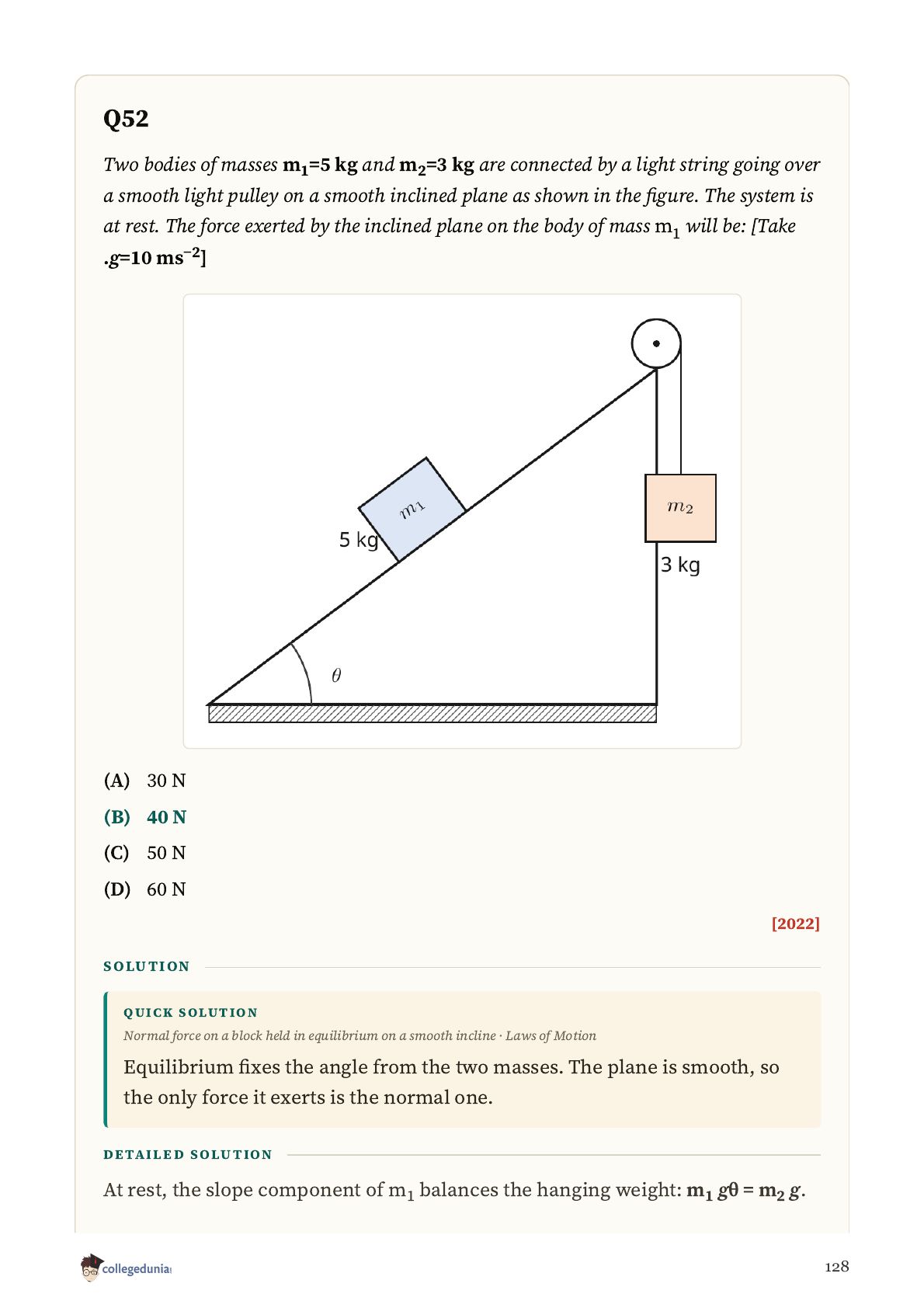
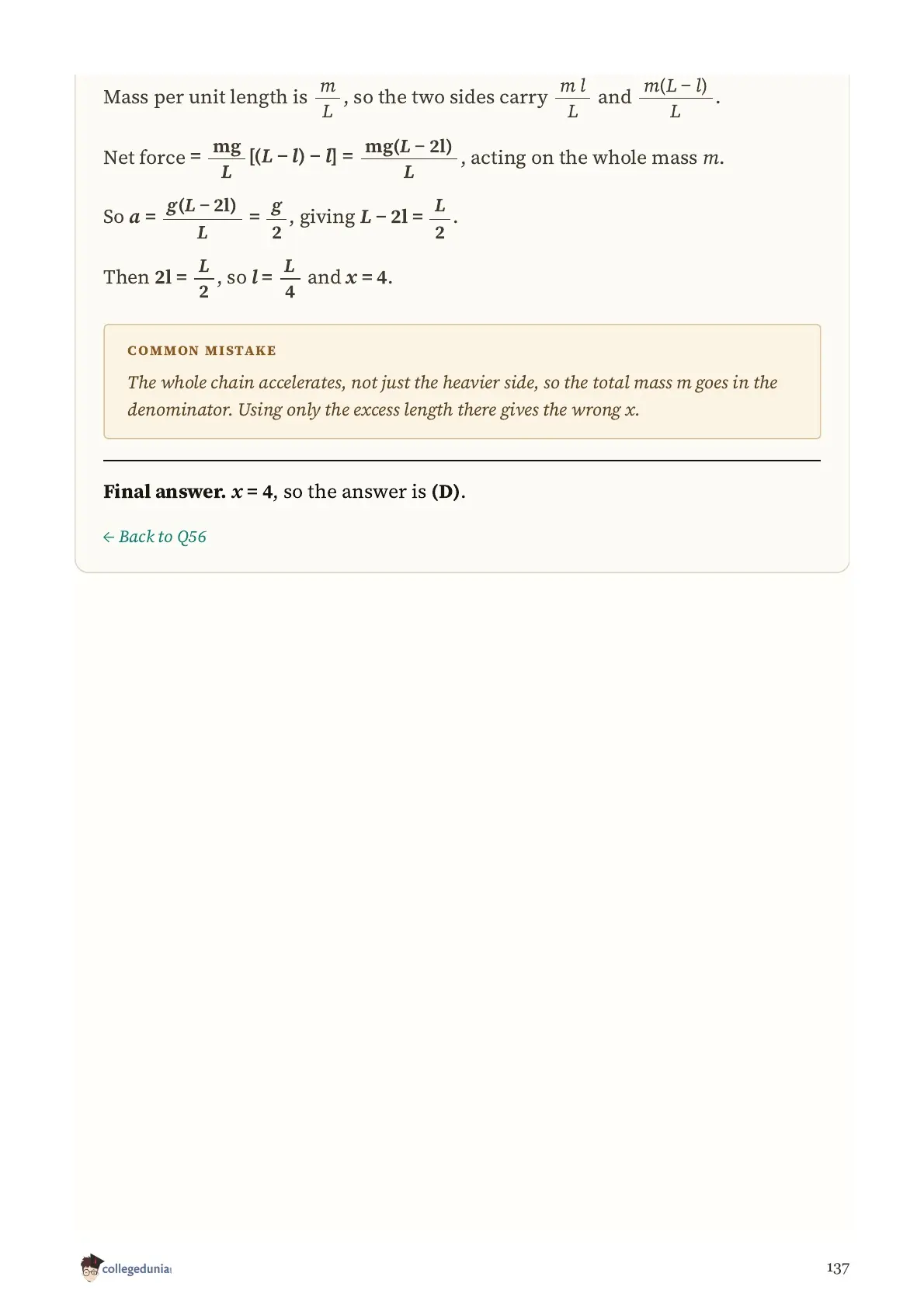
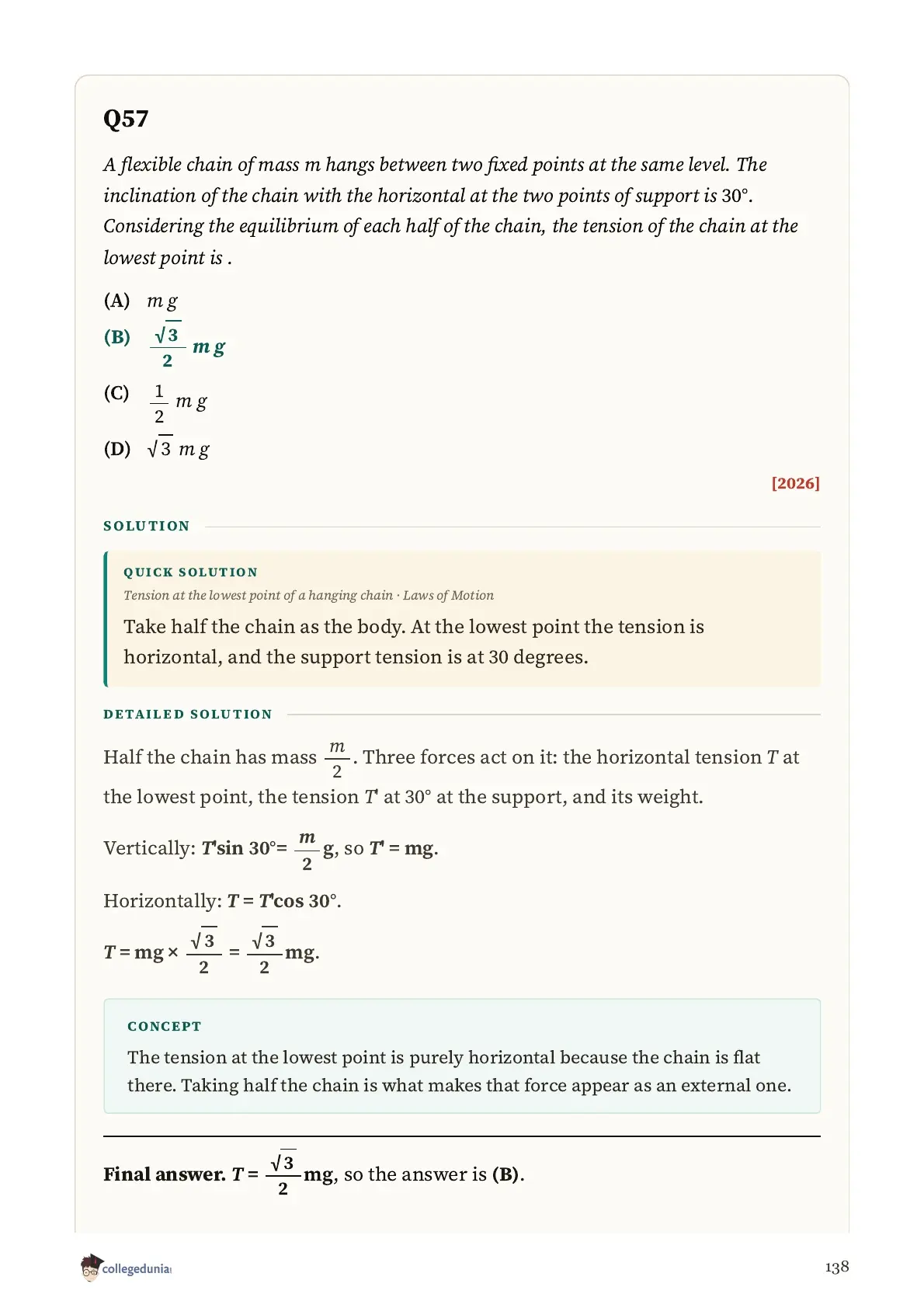

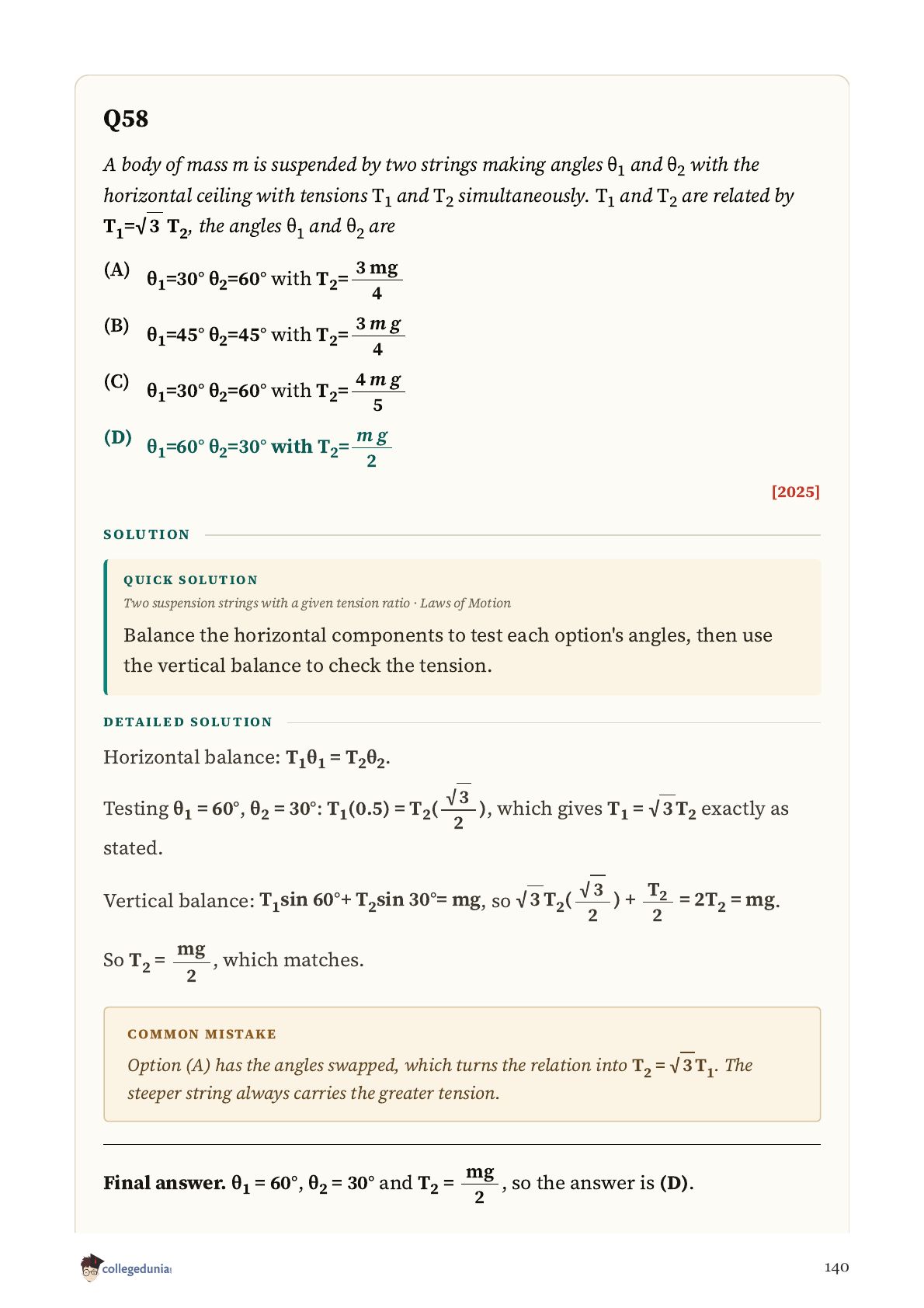

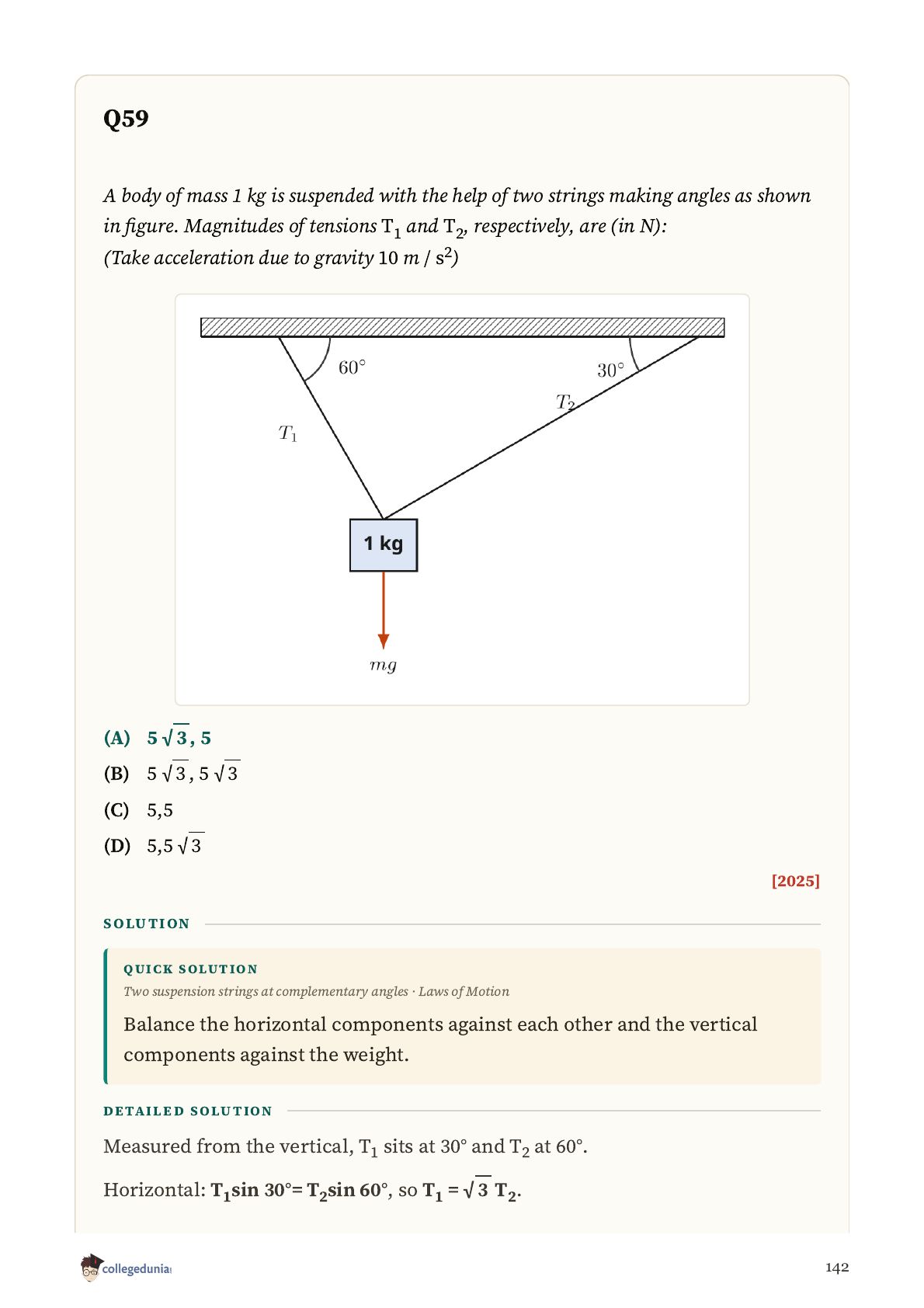
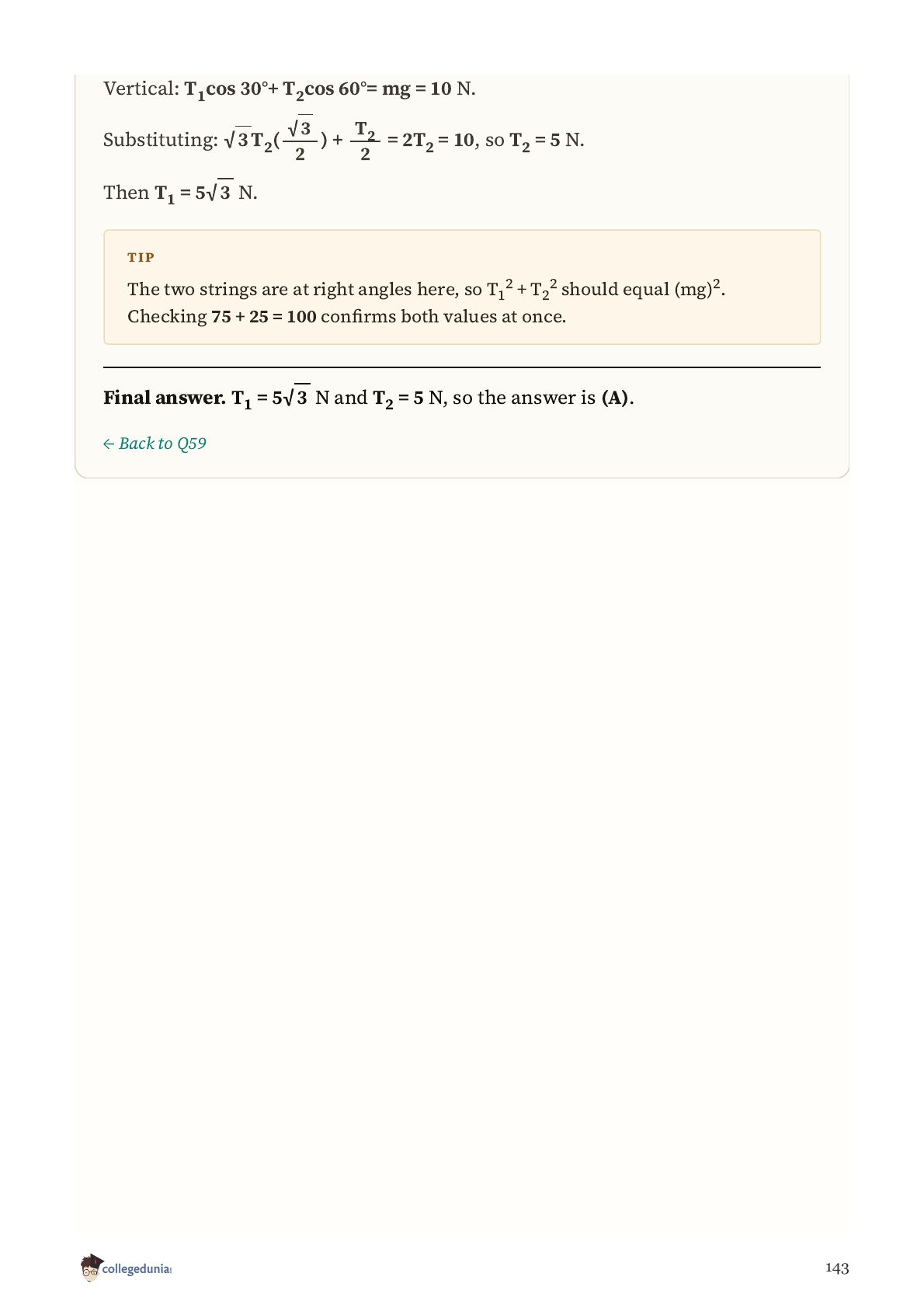
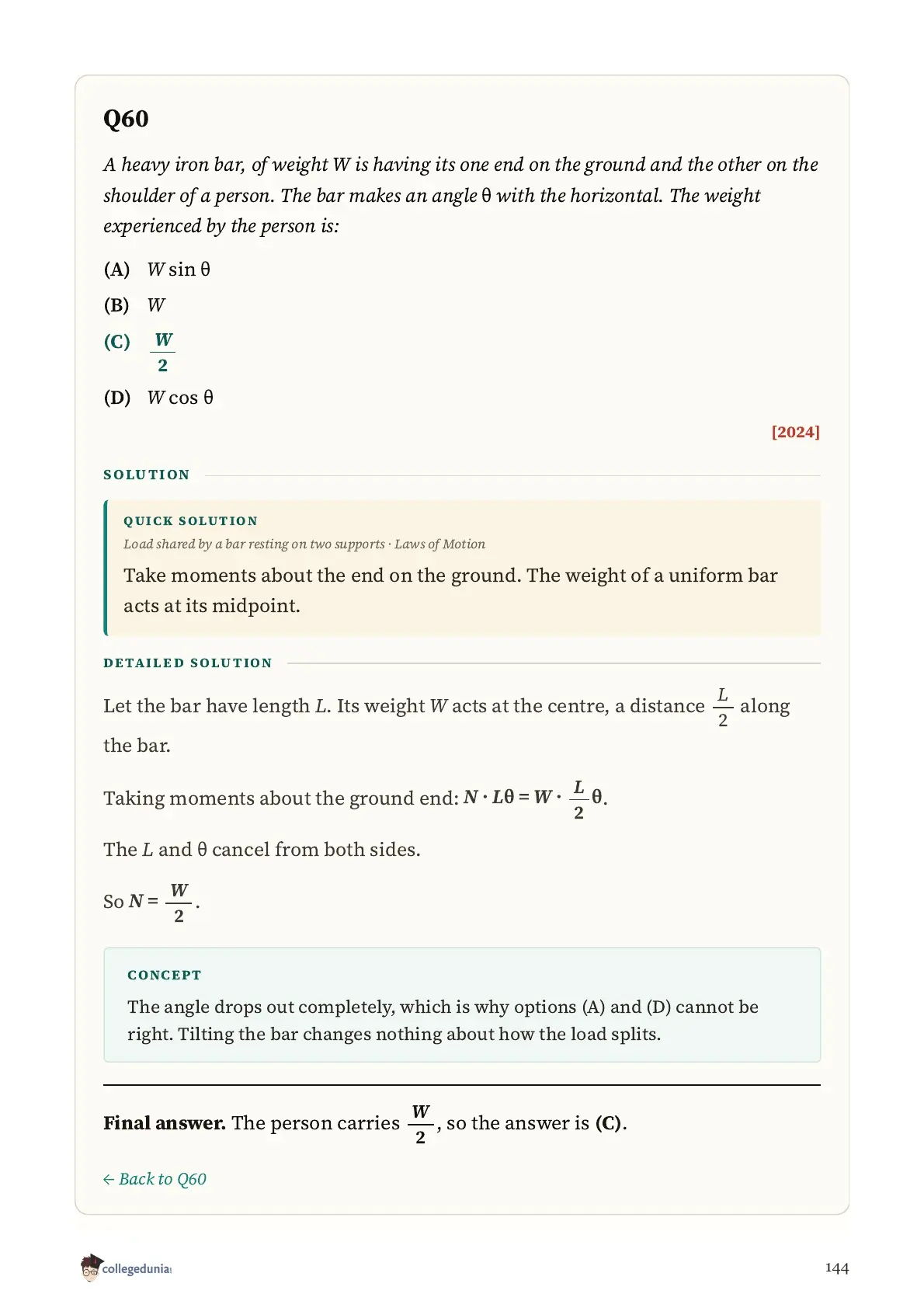
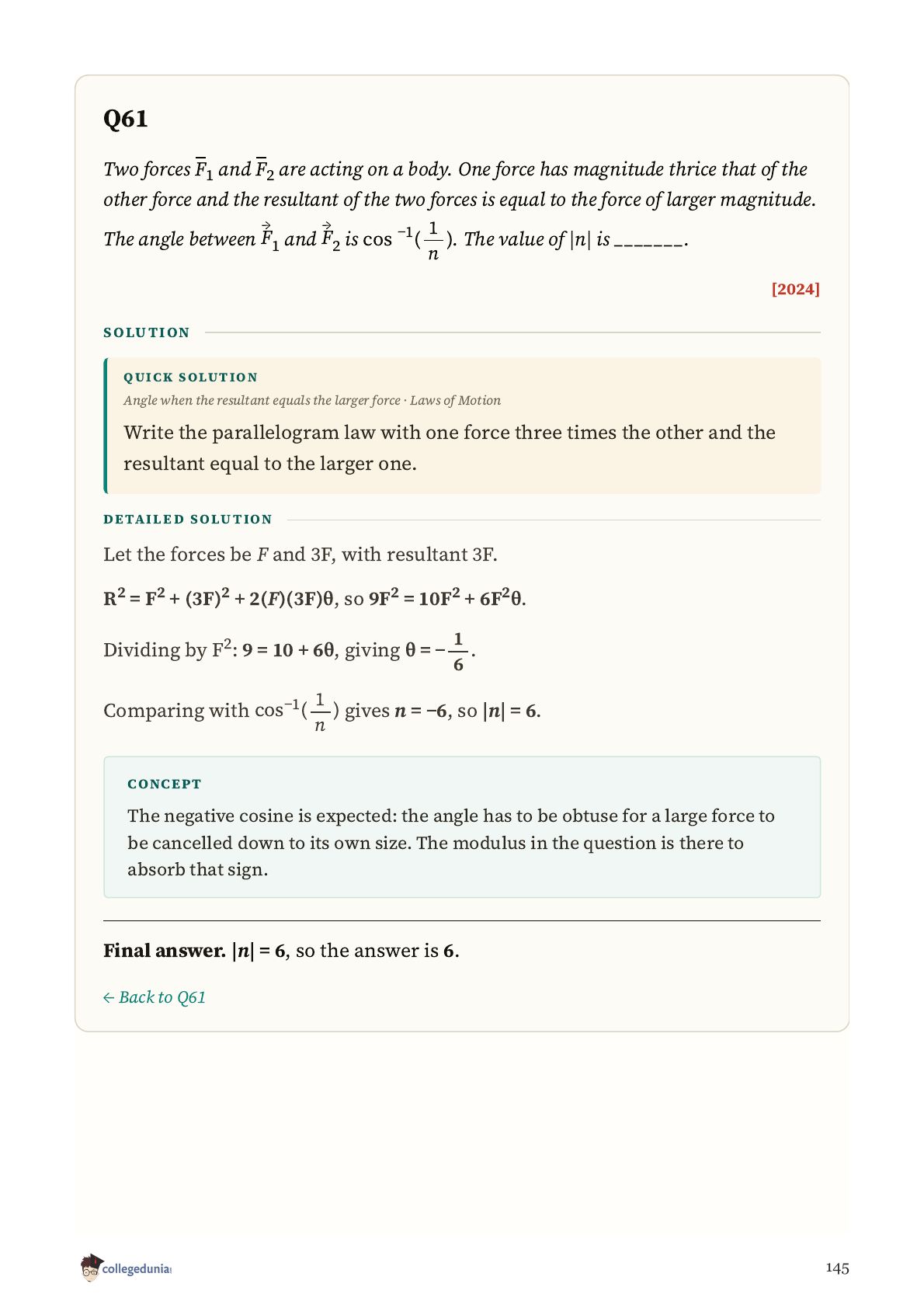
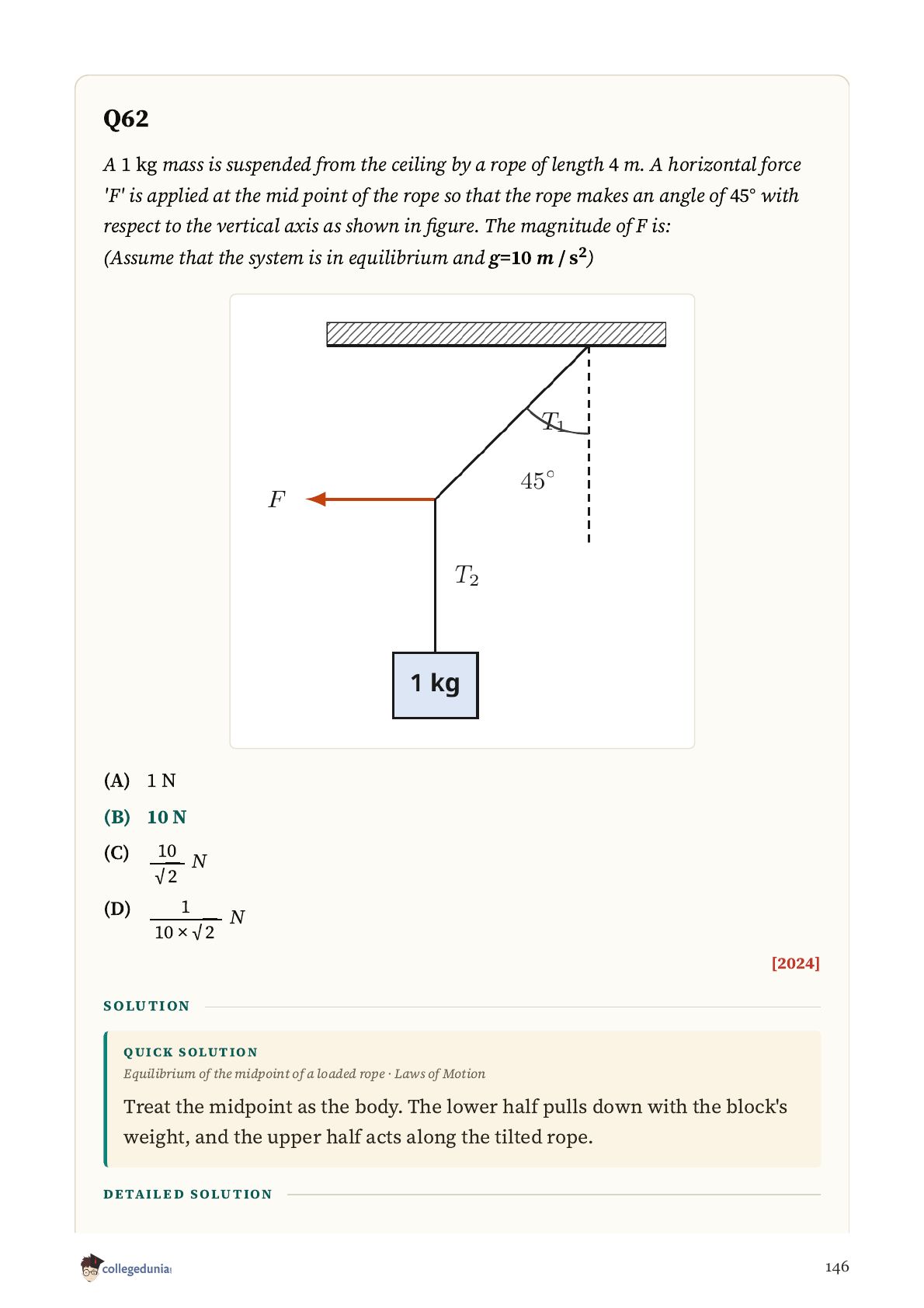
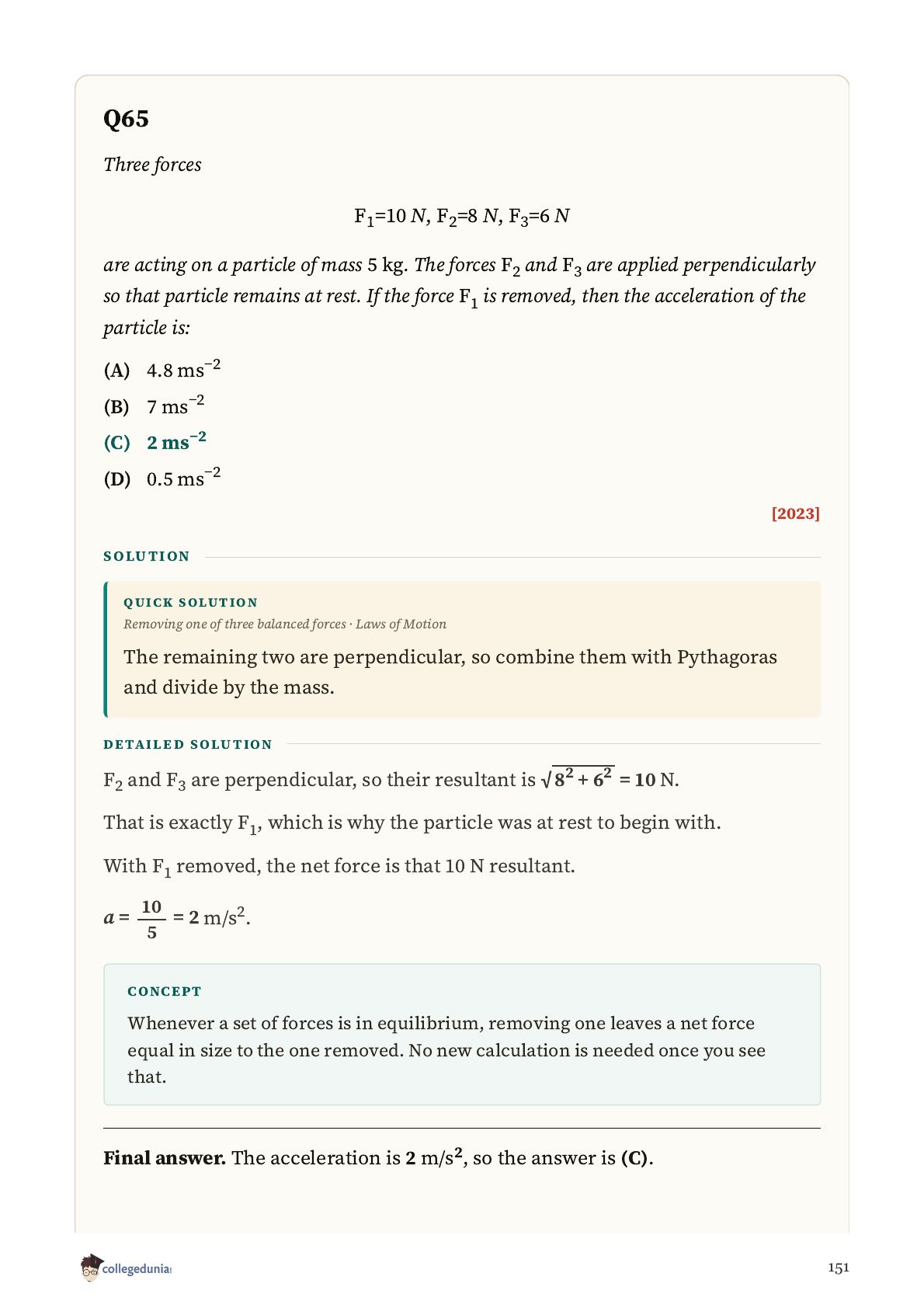

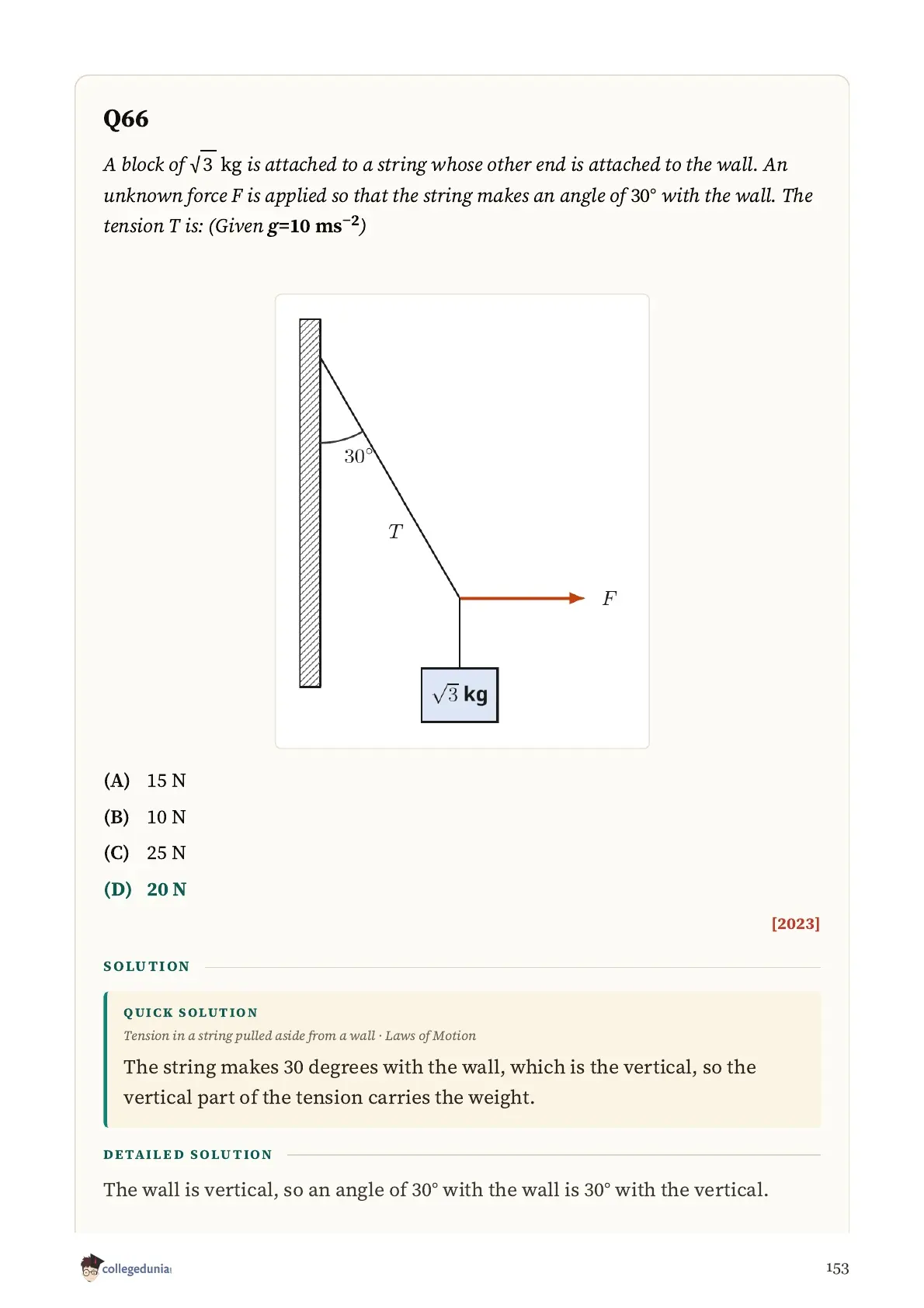
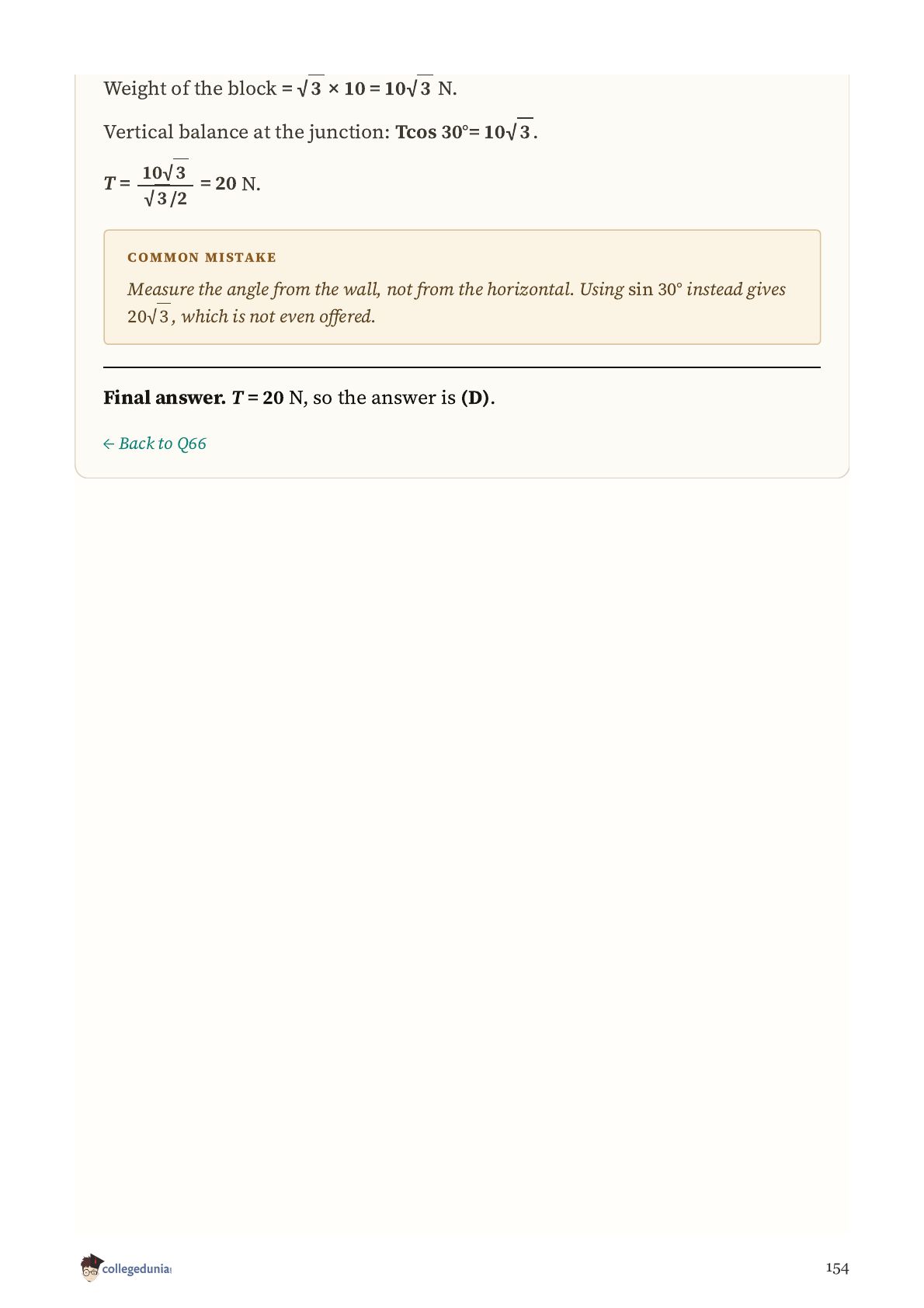
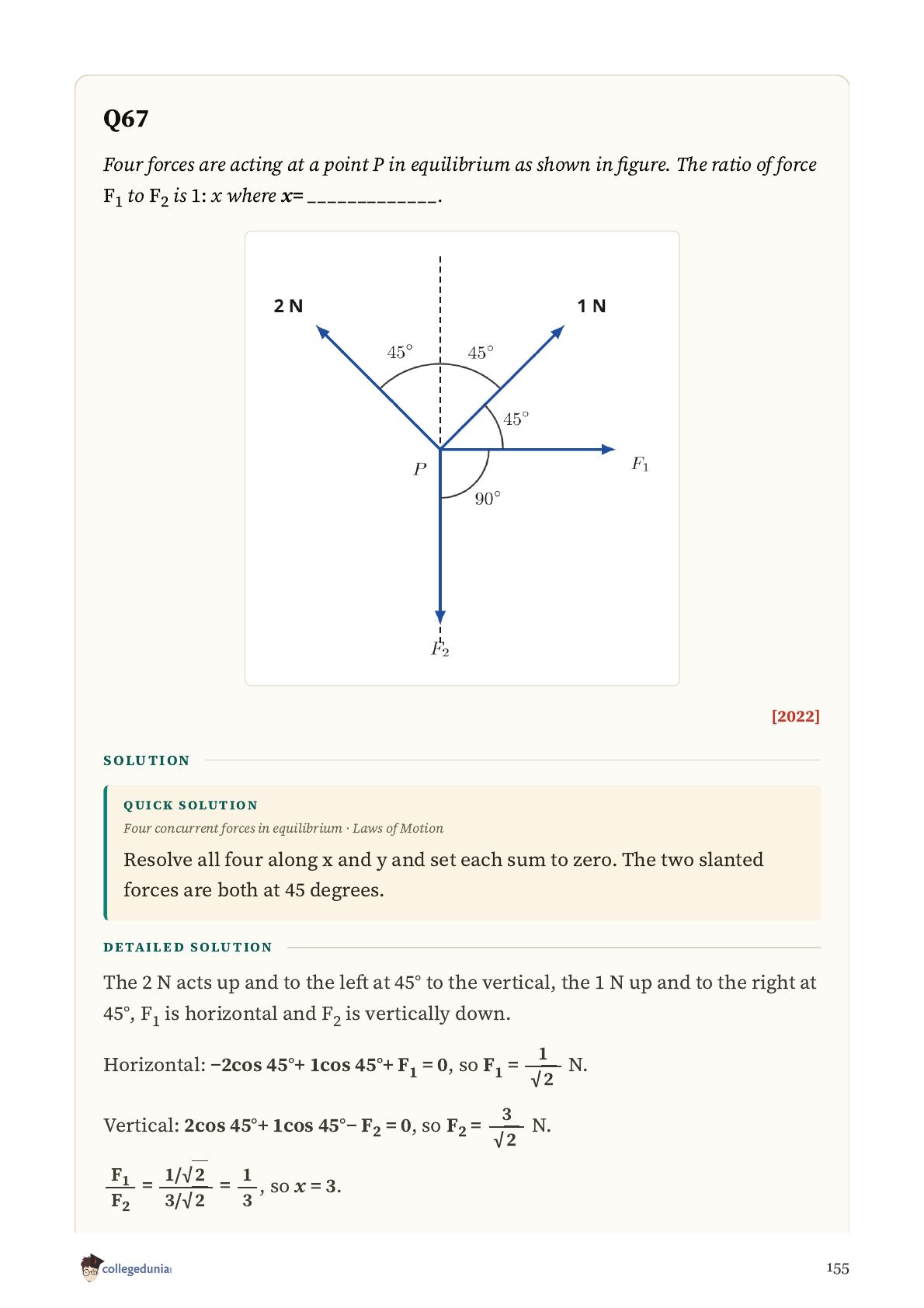
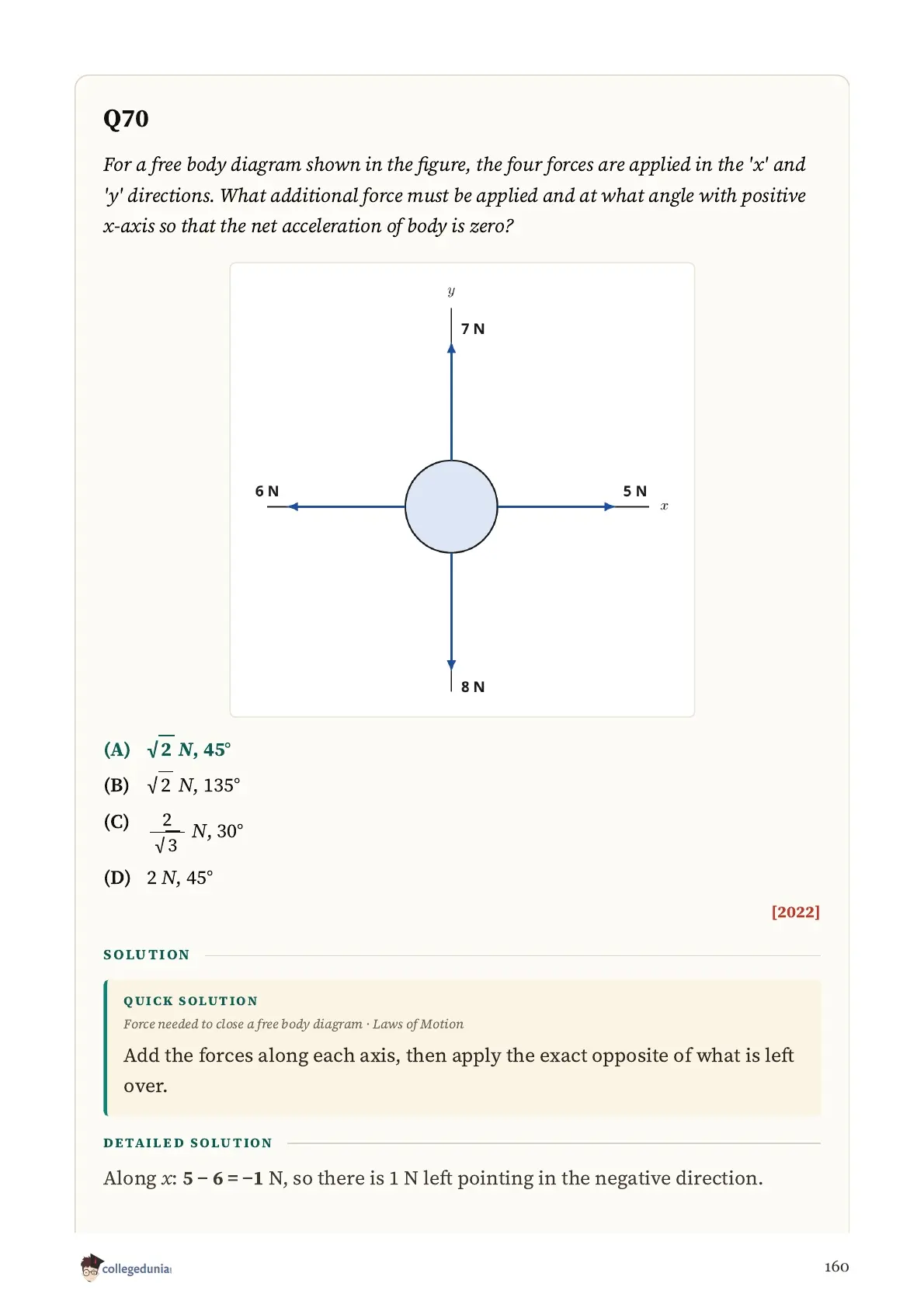
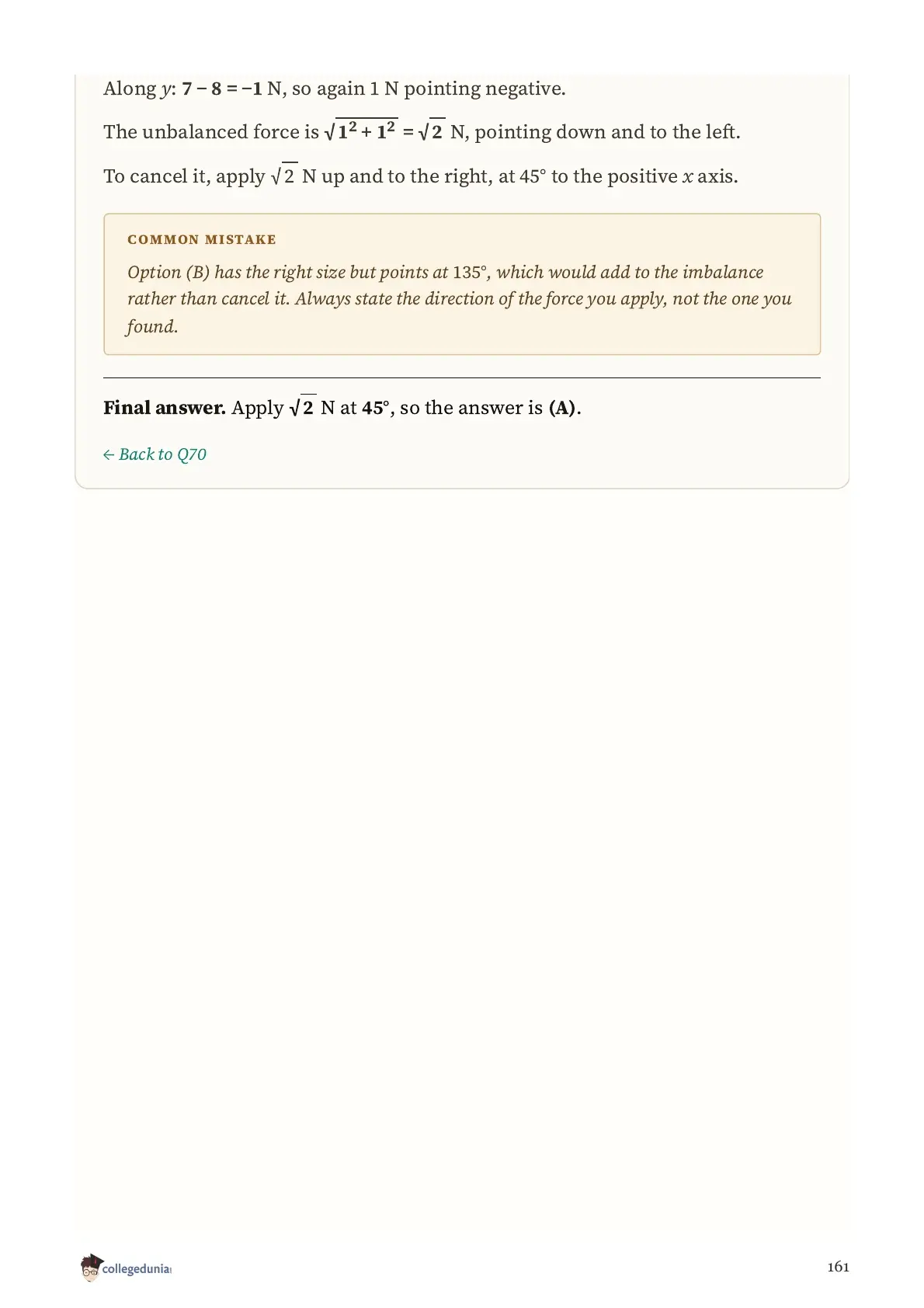
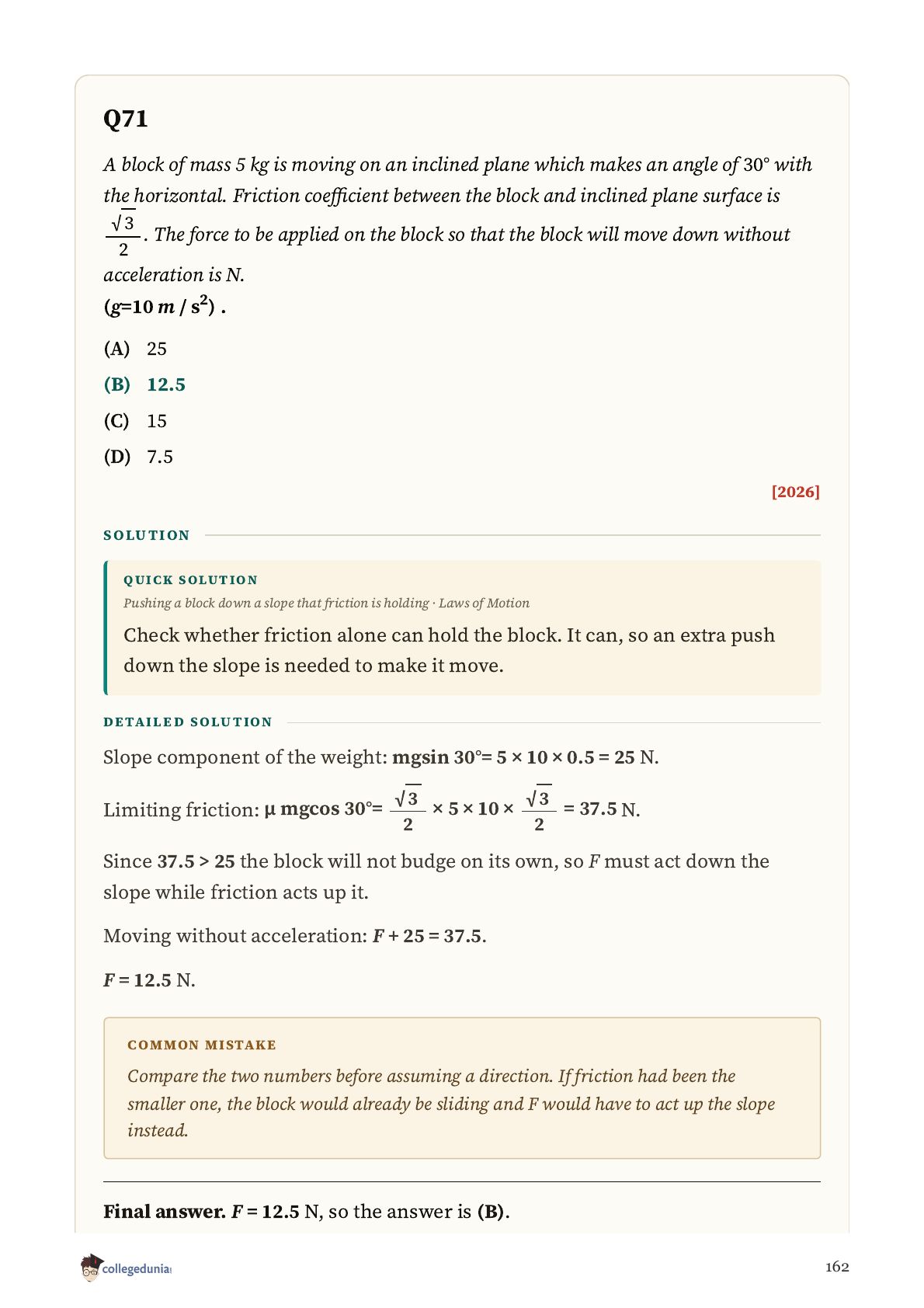

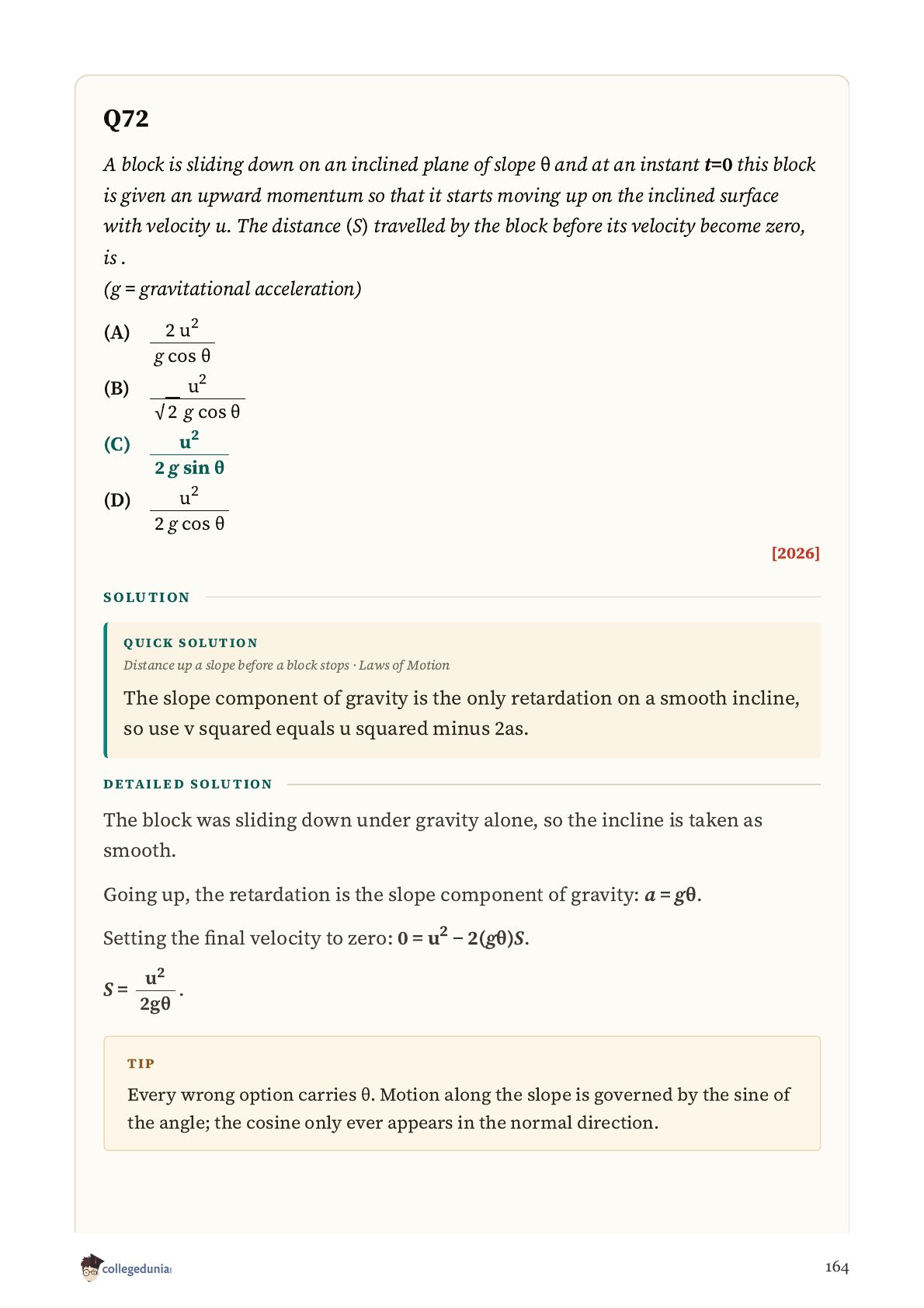
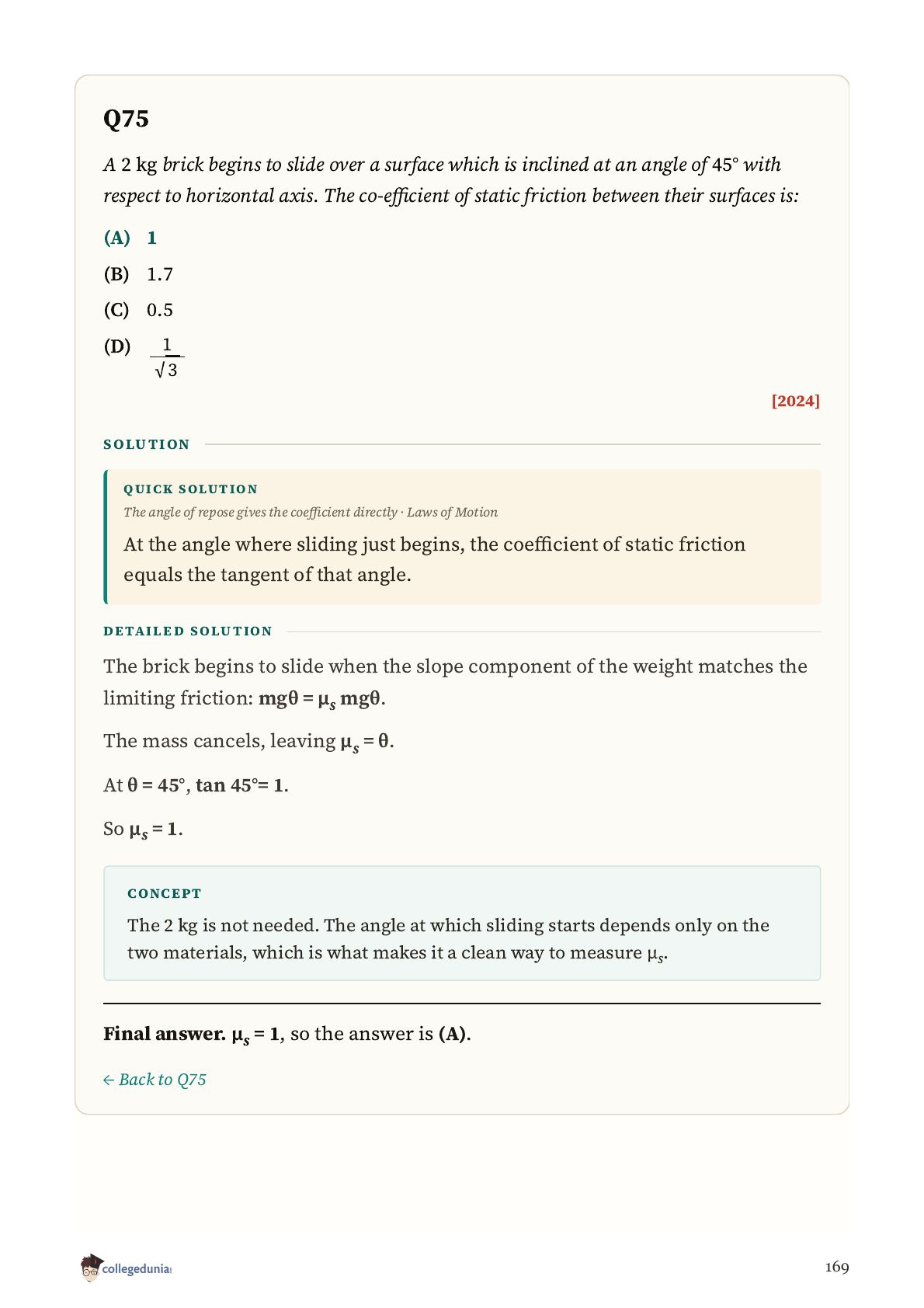
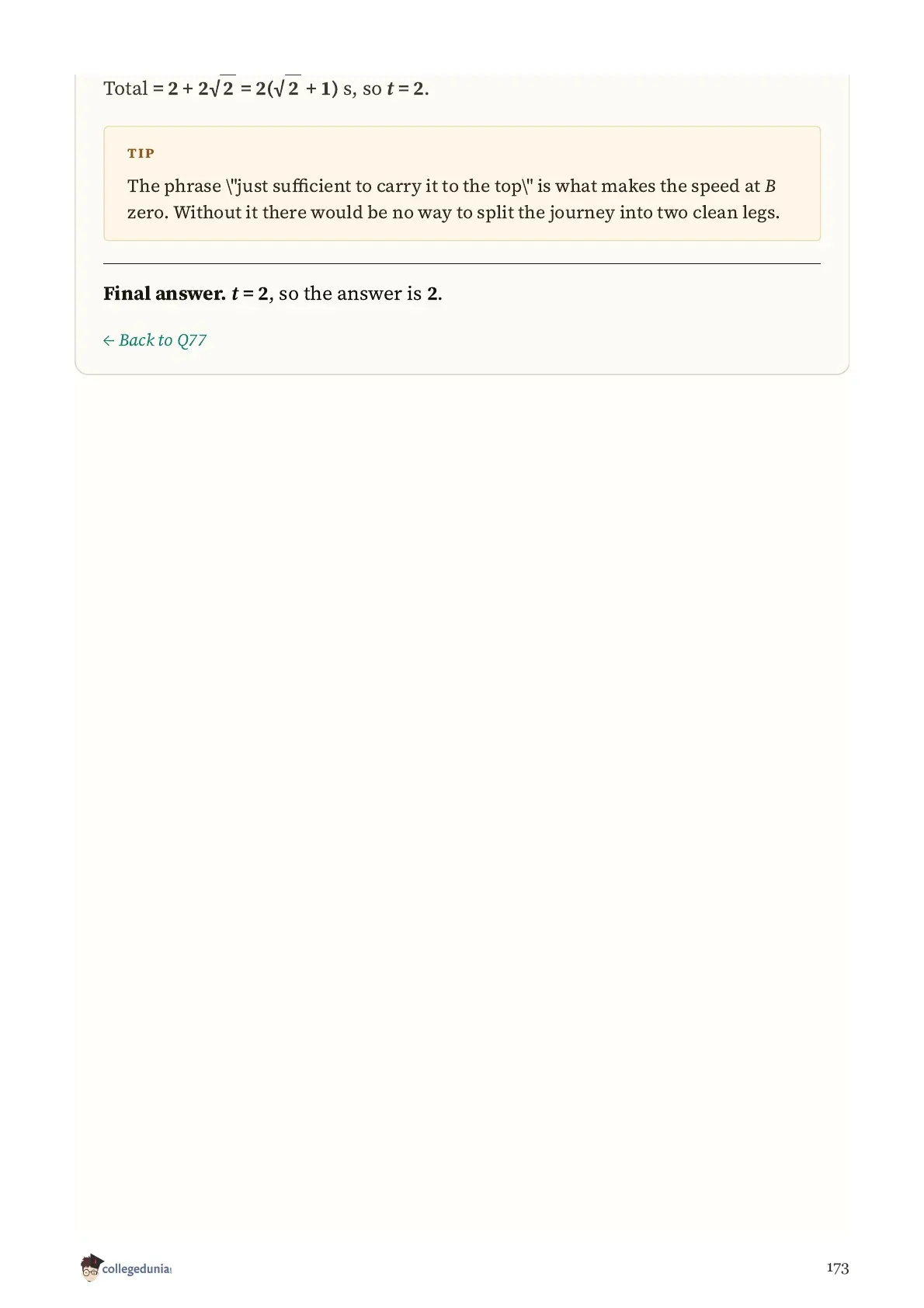
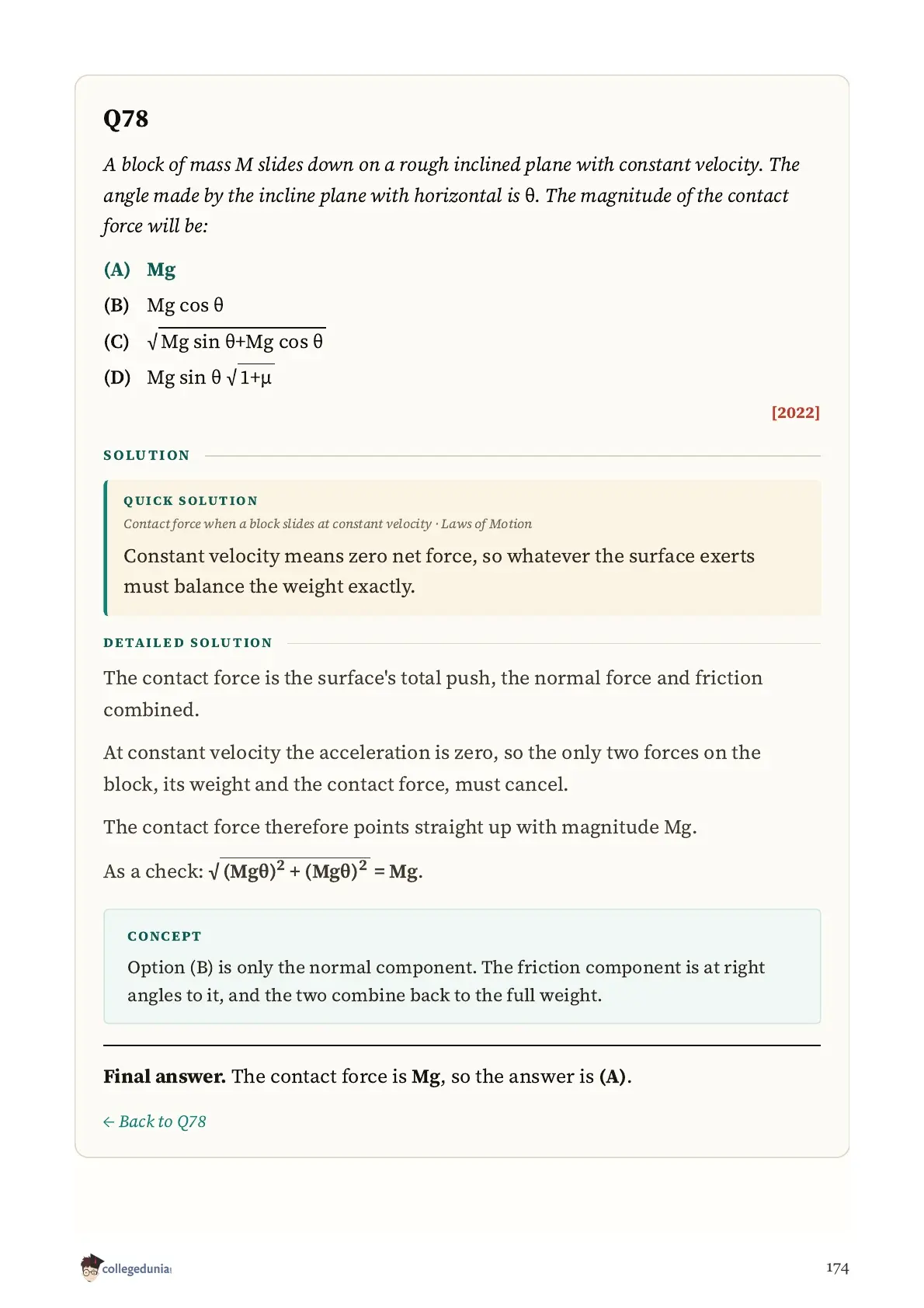
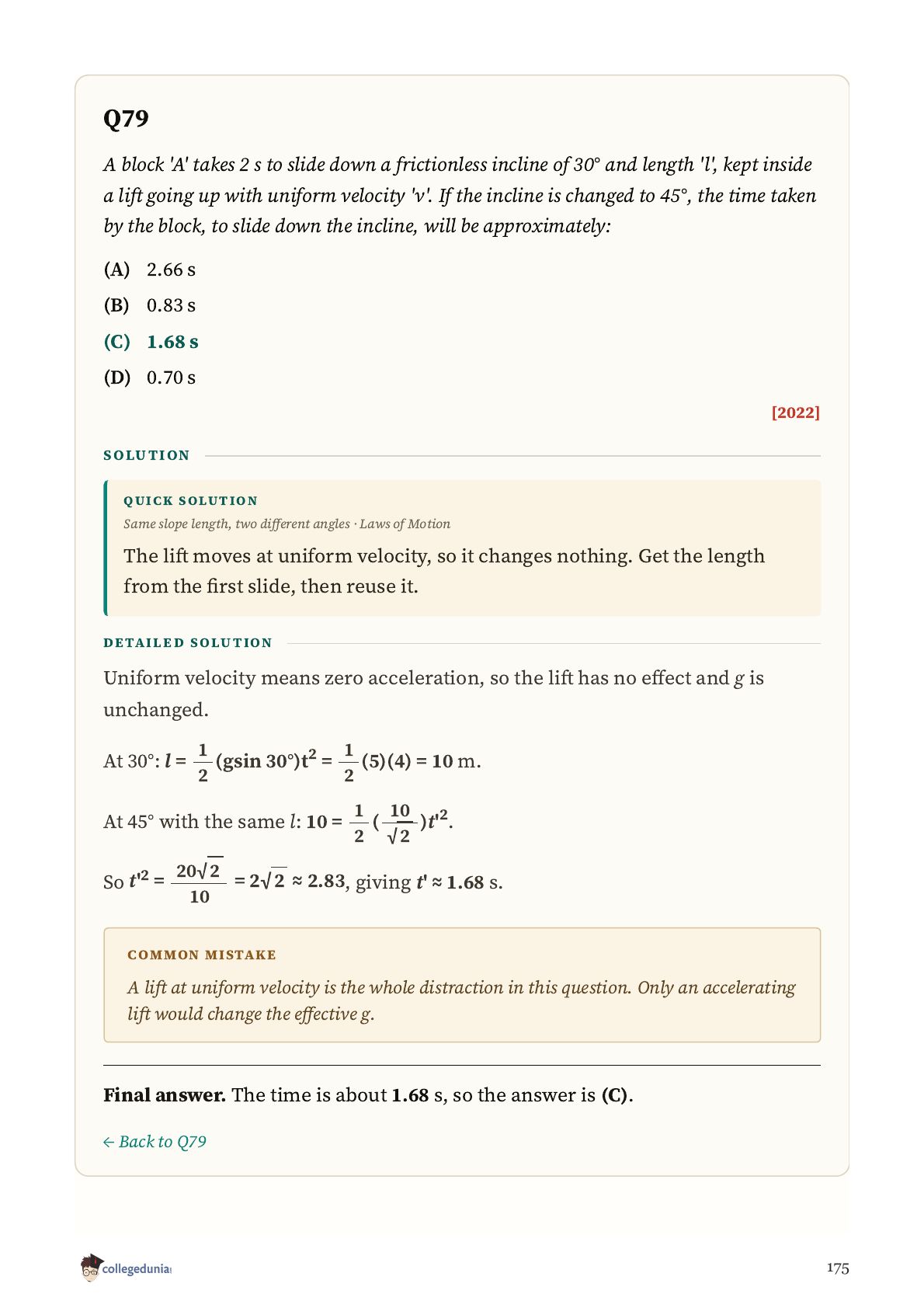
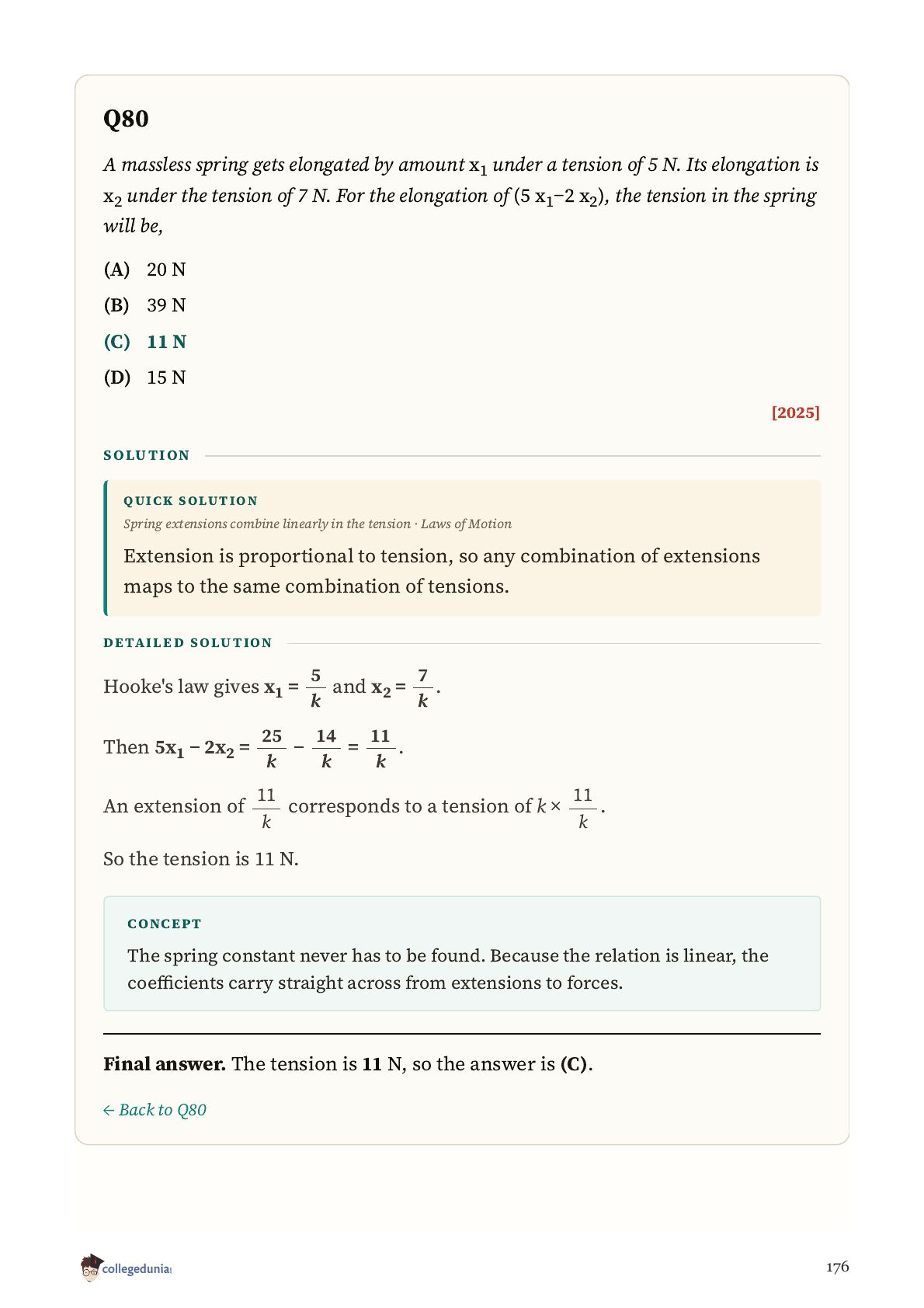
Every question keeps its year and its options exactly as printed, and no answer sits beside its question. An answer key follows the sections, then a full worked solution for all 80.
Which Sub-Topics the 80 Questions Come From
Sections run by sub-topic rather than by year, so one idea can be finished in a sitting. Inside each section the newest paper comes first.
- Newton's Laws of Motion (21 questions), including impulse and lift problems
- Friction (18), static, kinetic and the angle of repose
- Motion of Connected Bodies (17), pulleys, strings and constraint relations
- Equilibrium of a Particle (14), concurrent forces and hanging loads
- Motion on an Inclined Plane (9)
- One question on spring extension, tagged to the chapter itself
This is Unit 3 of the official NTA syllabus, which lists inertia, the three laws, momentum and impulse, conservation of linear momentum, equilibrium of concurrent forces, and static, kinetic and rolling friction. Circular motion sits in the same unit but has its own bank.
Every Diagram Is Redrawn In House
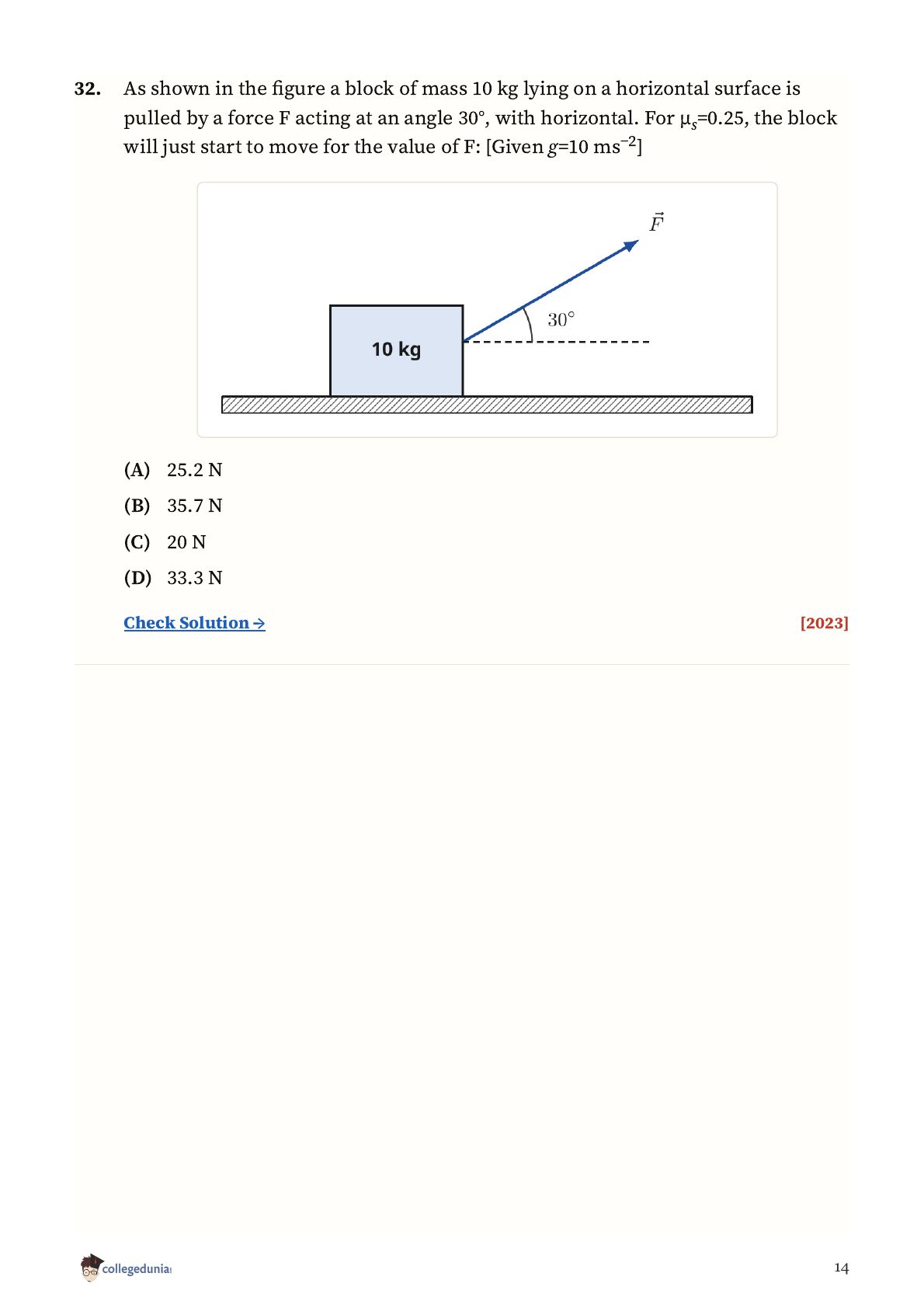
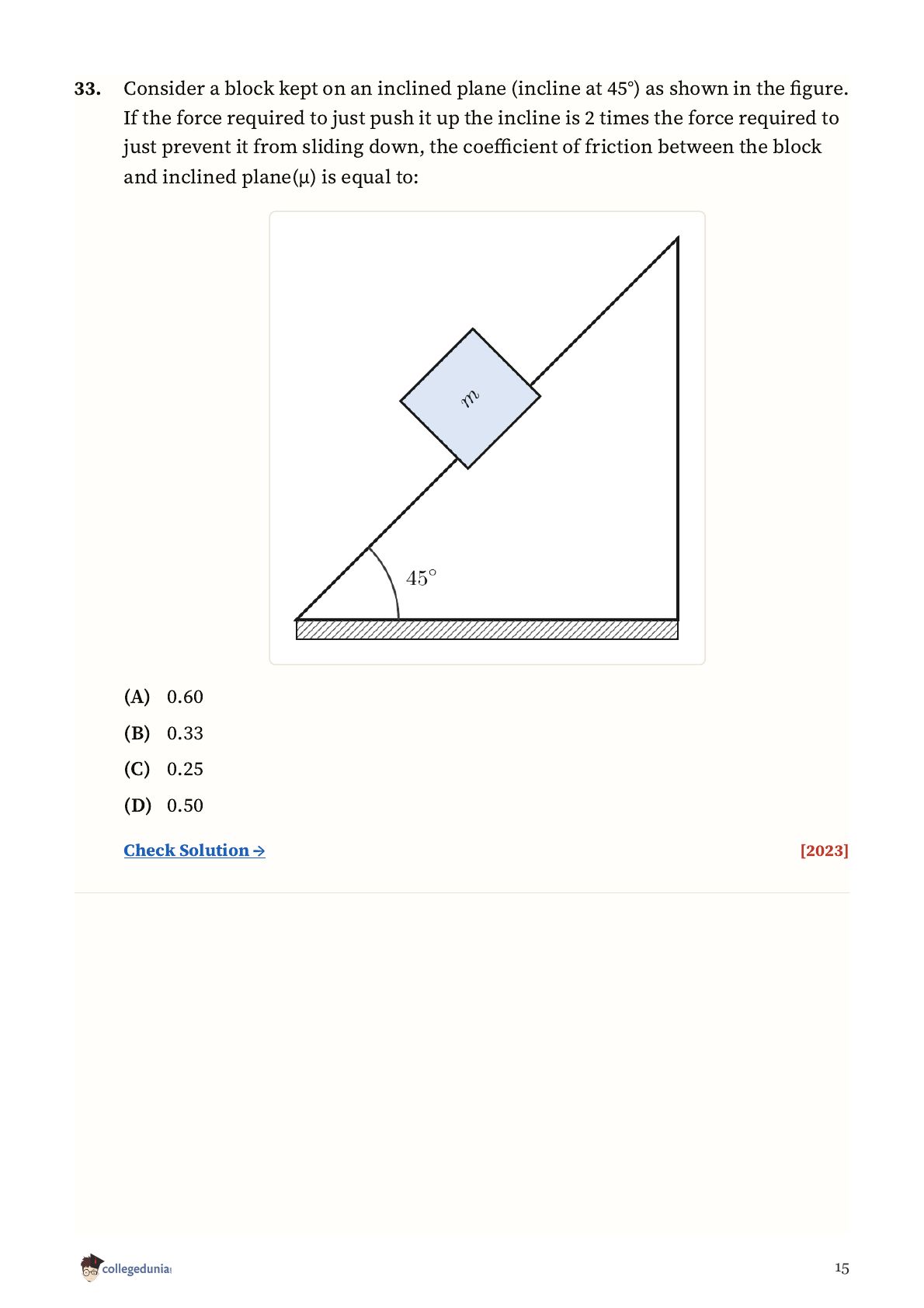
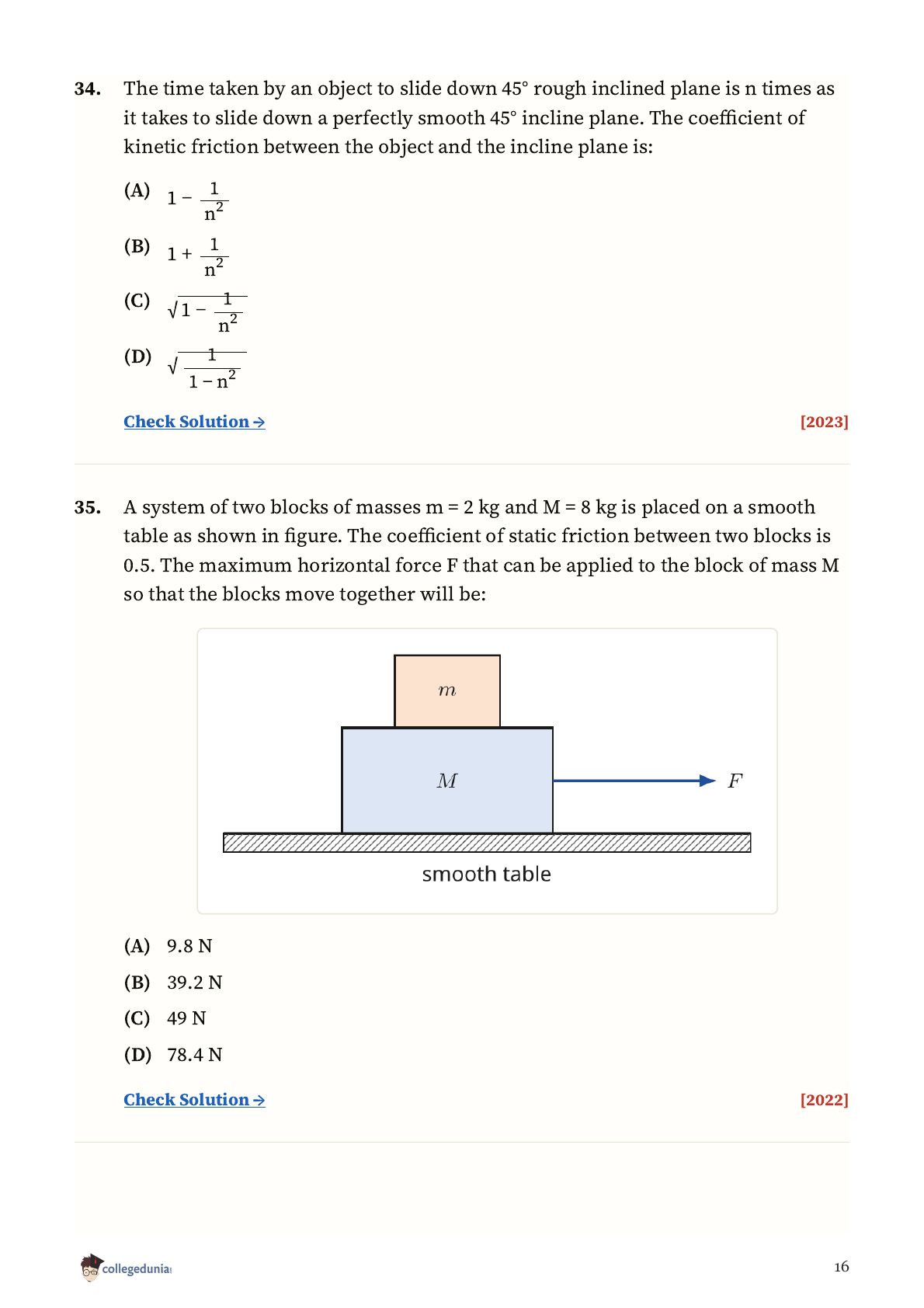
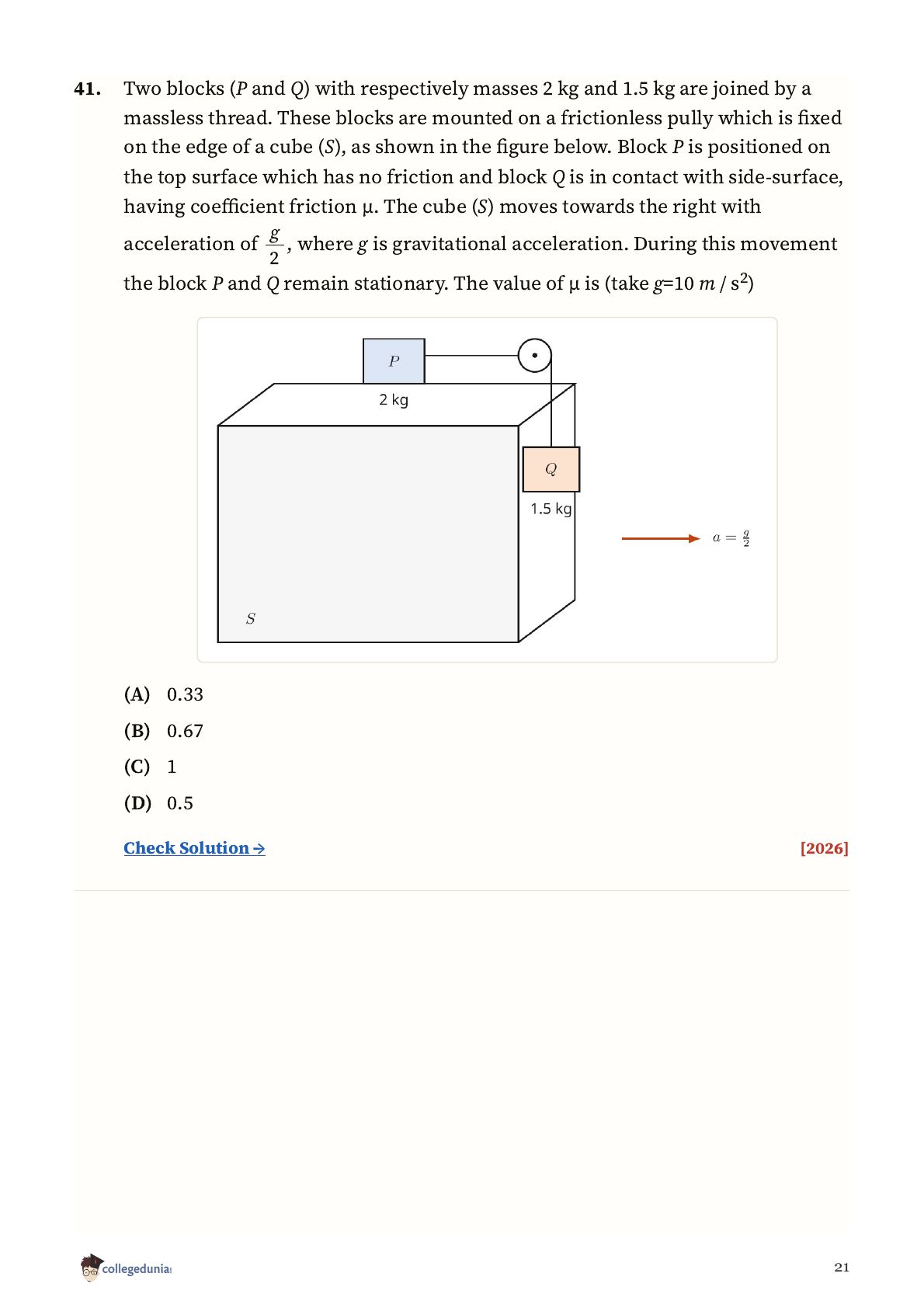
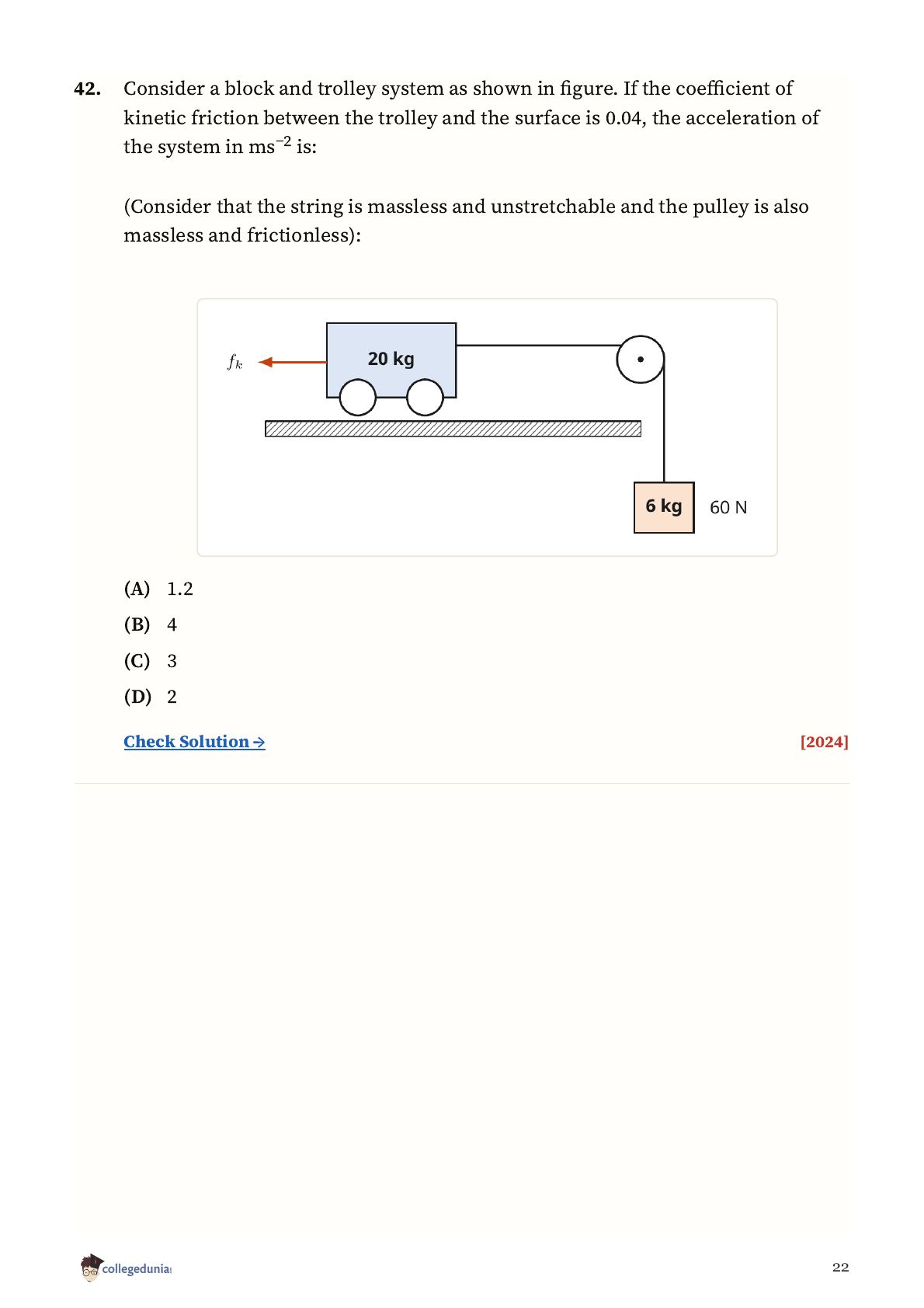
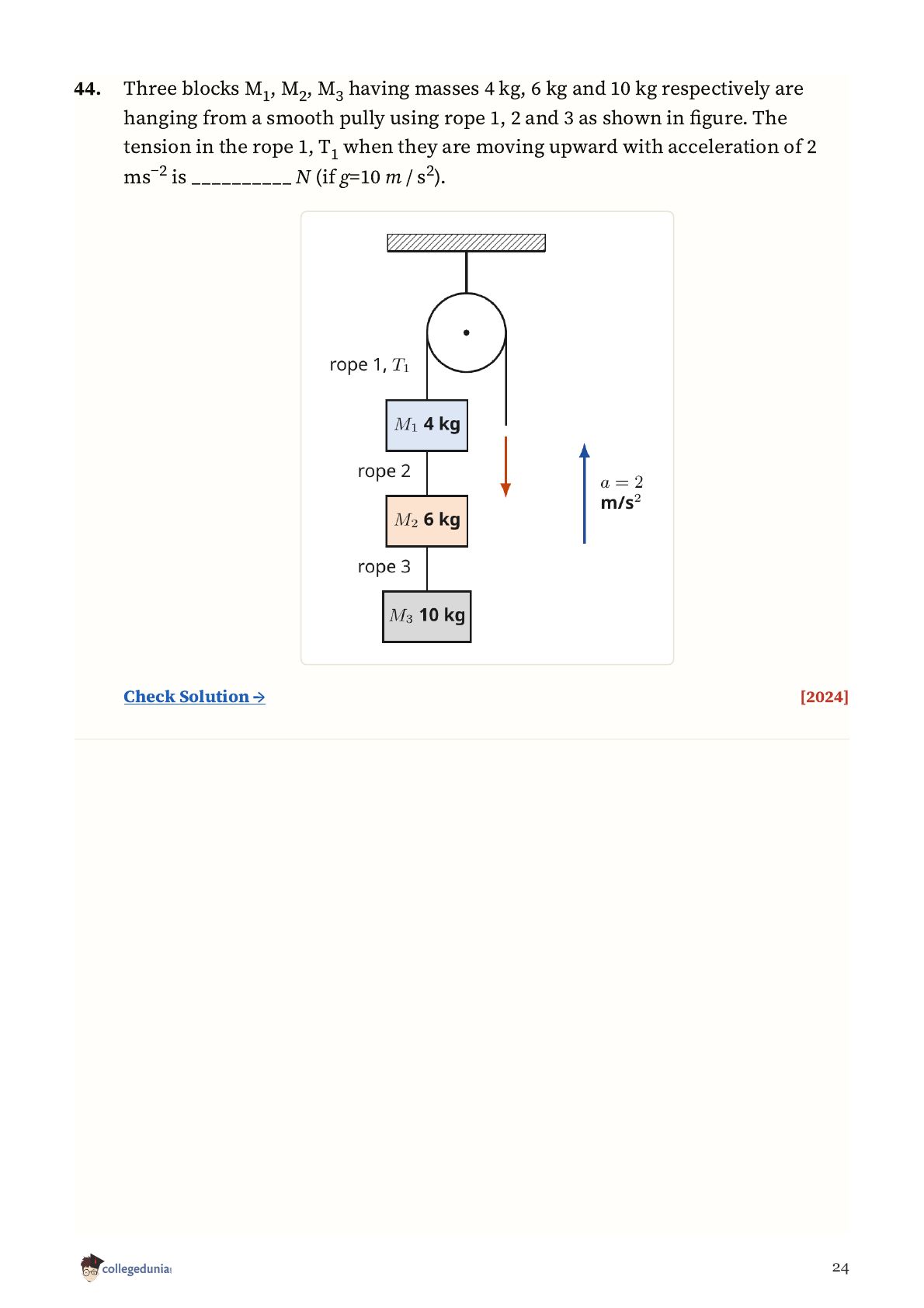
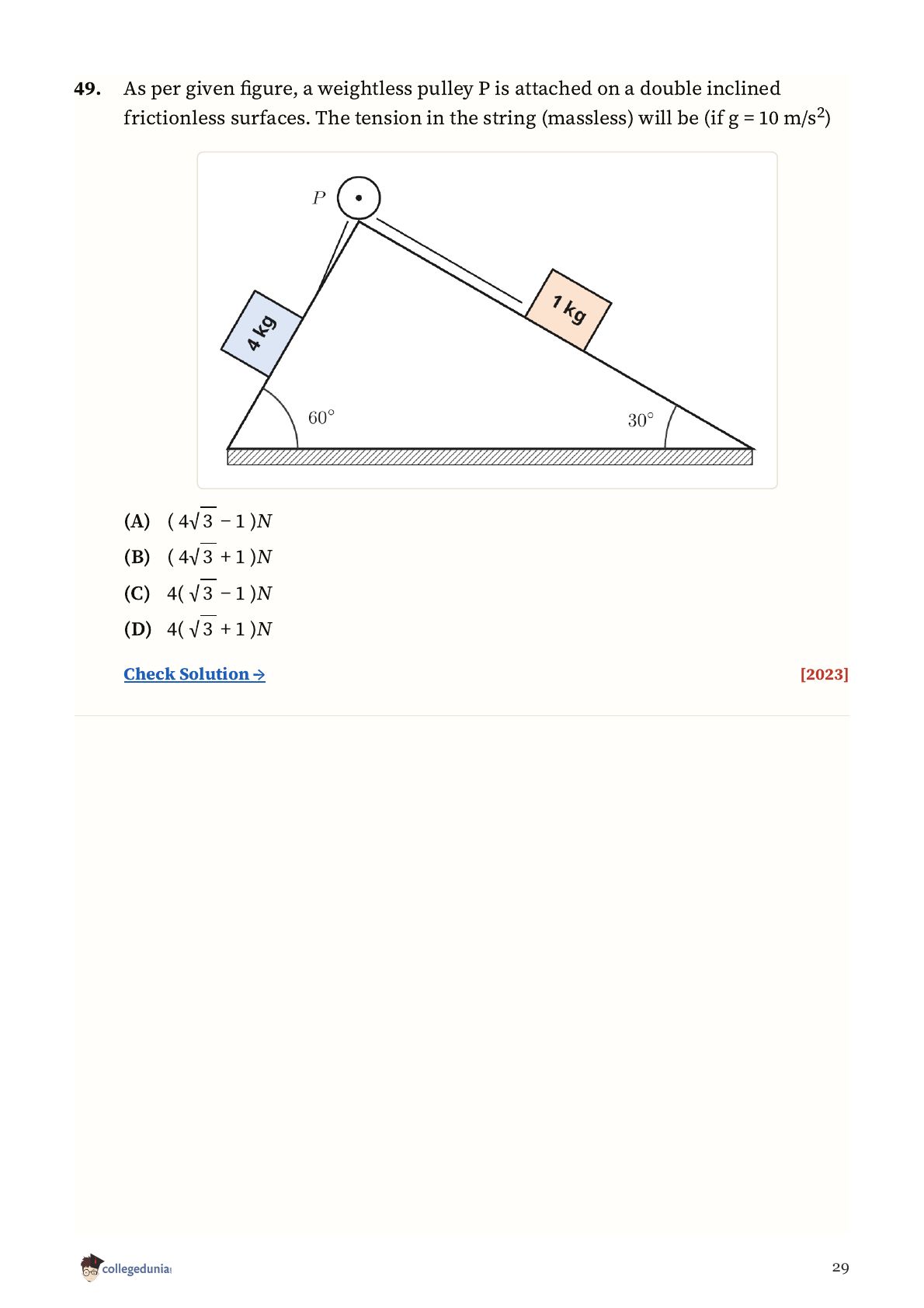
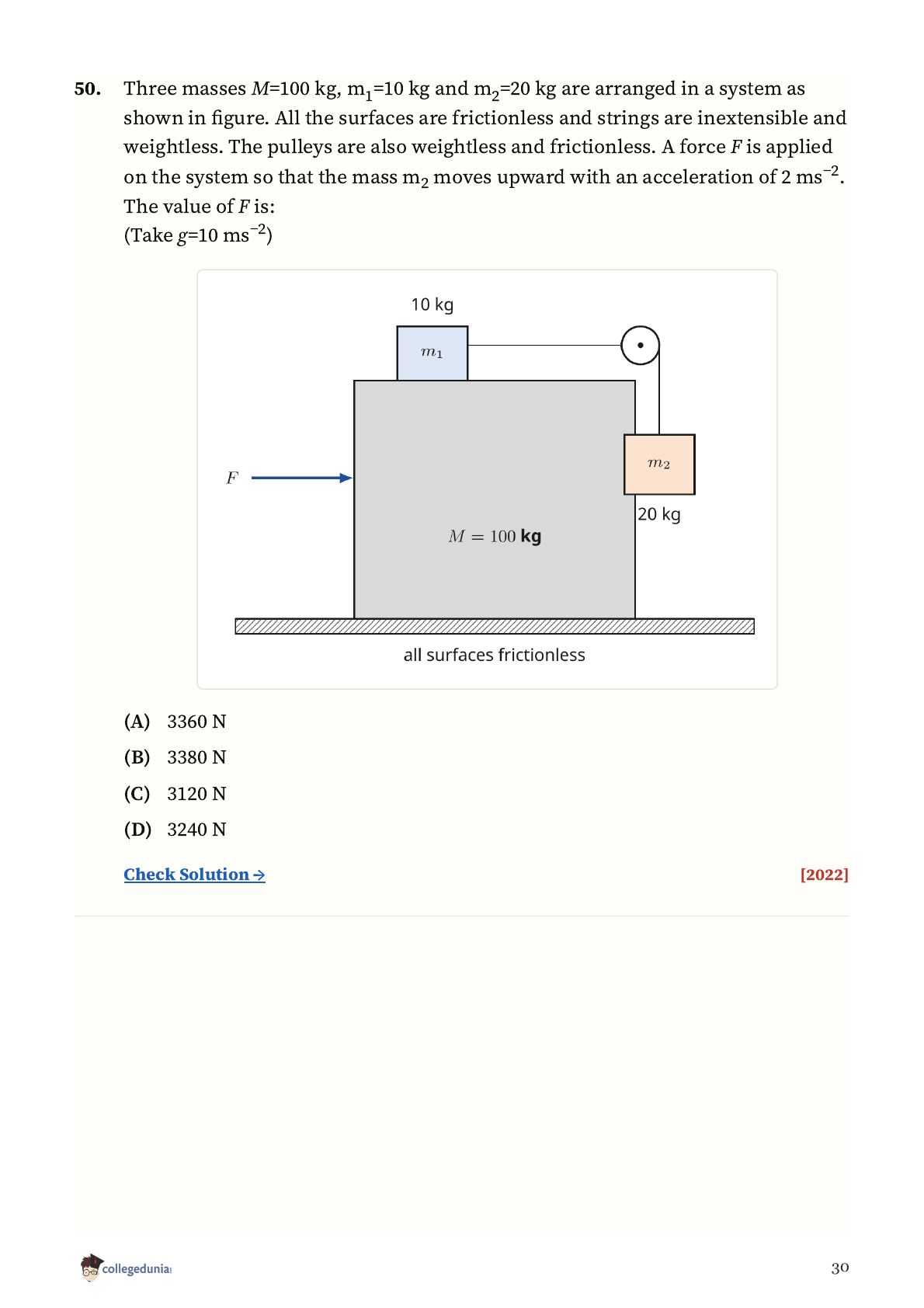
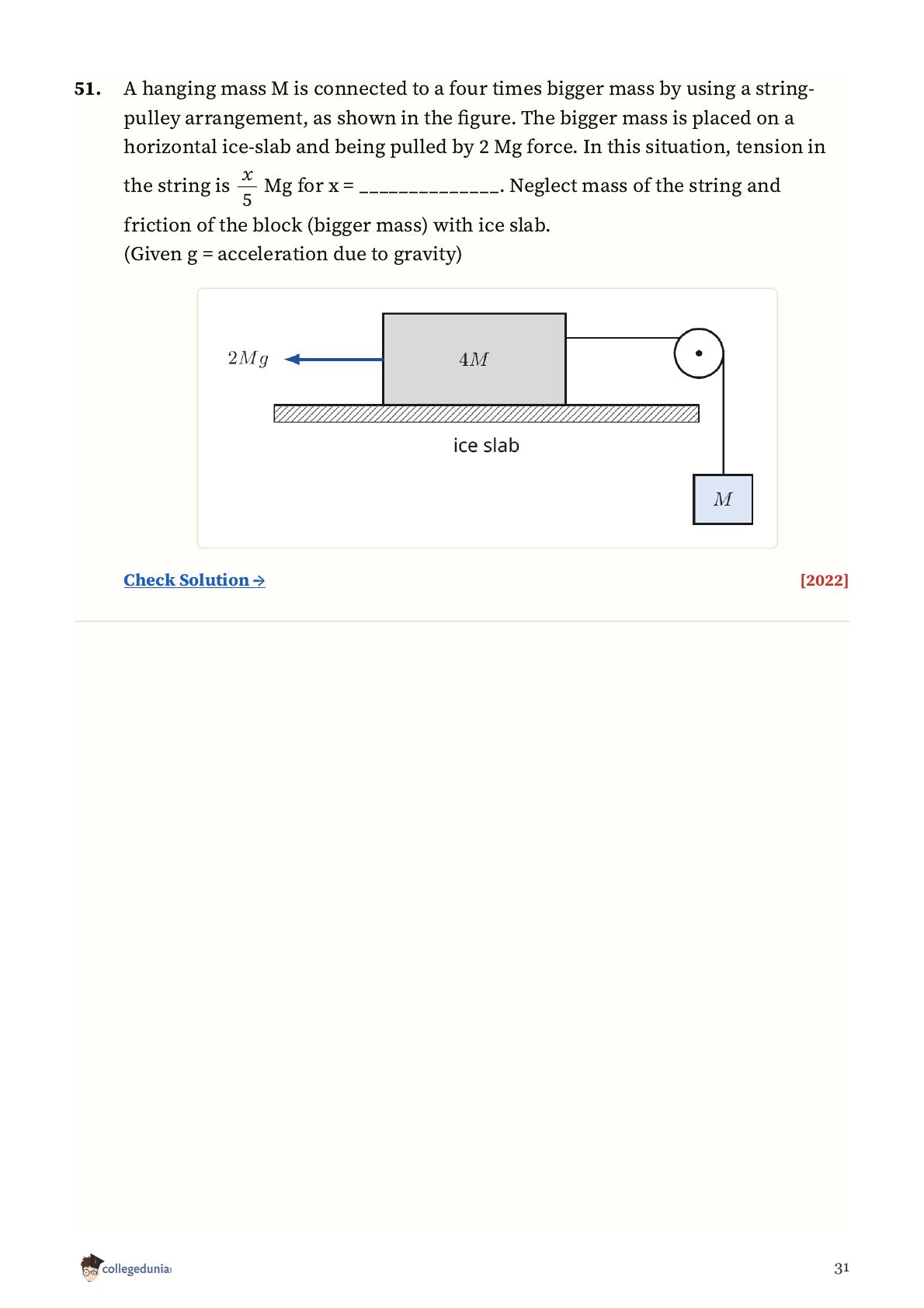
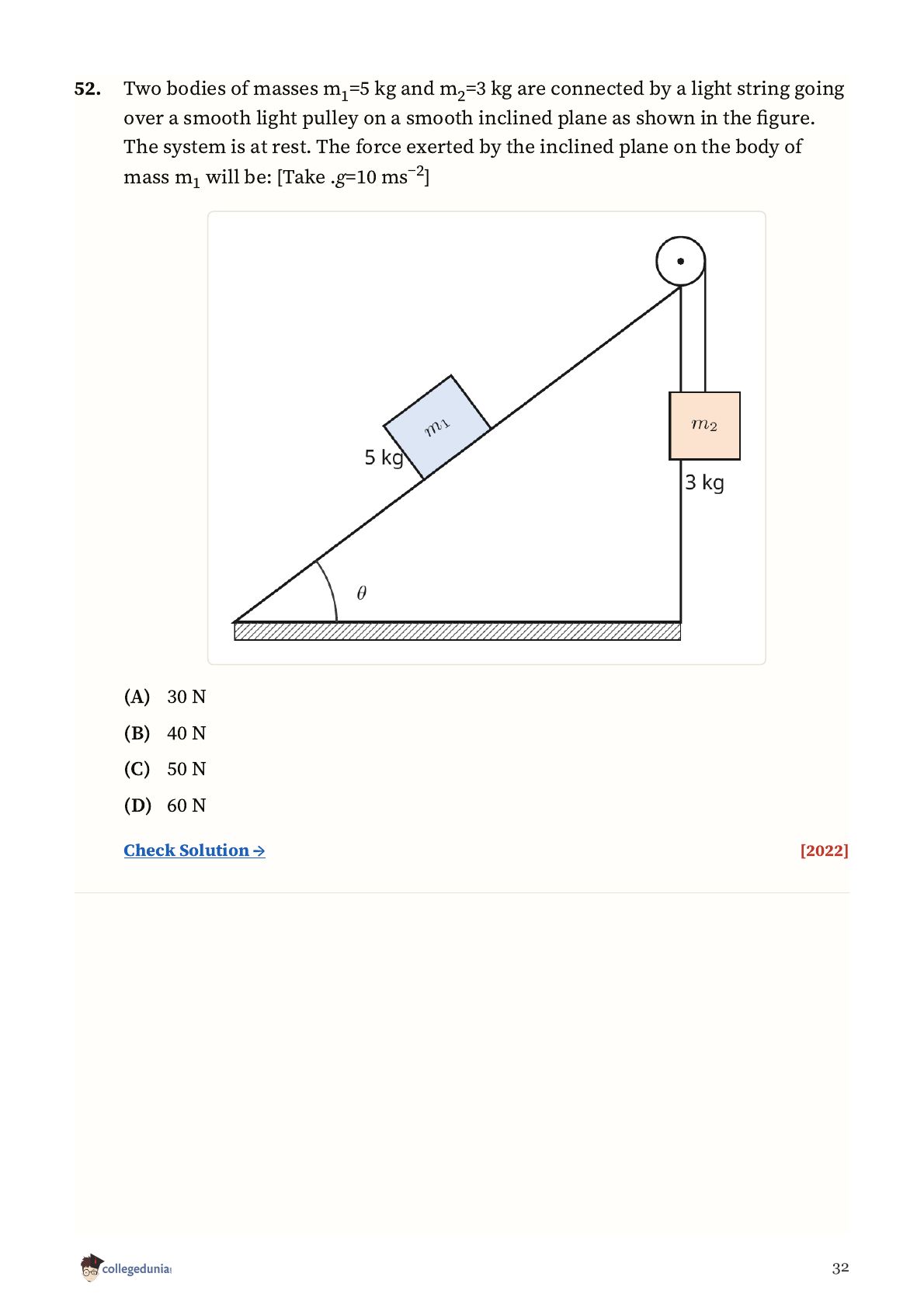
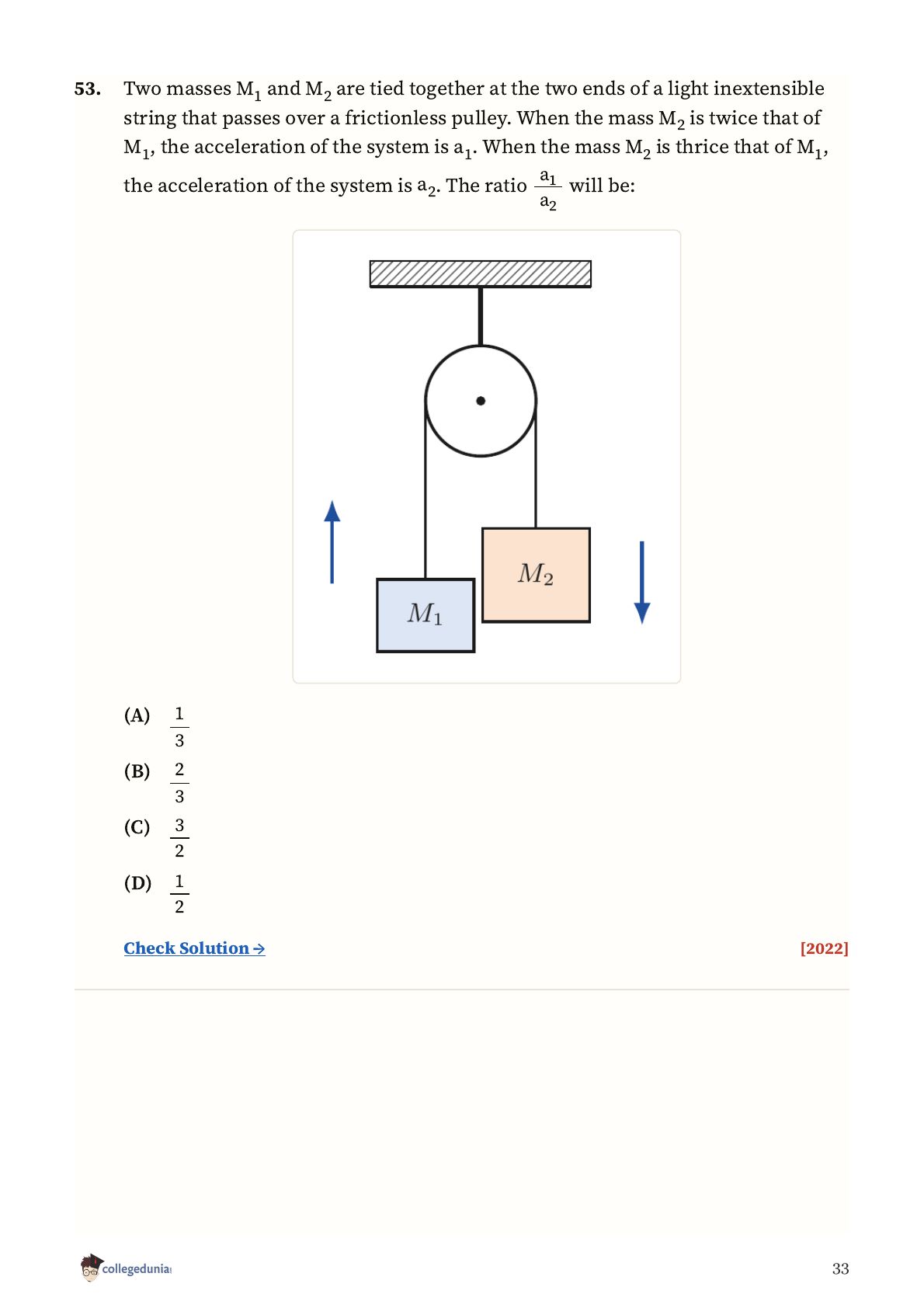
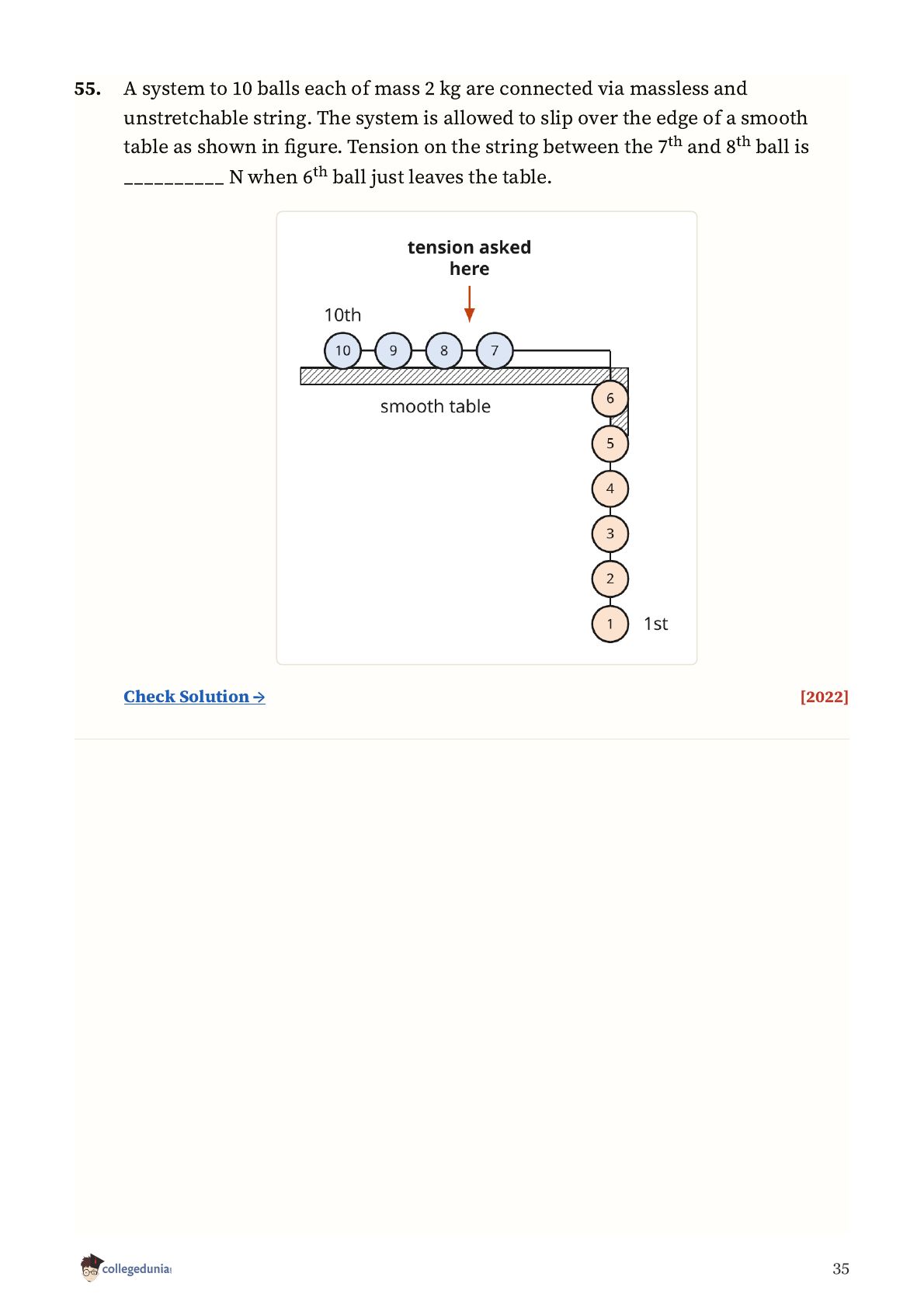
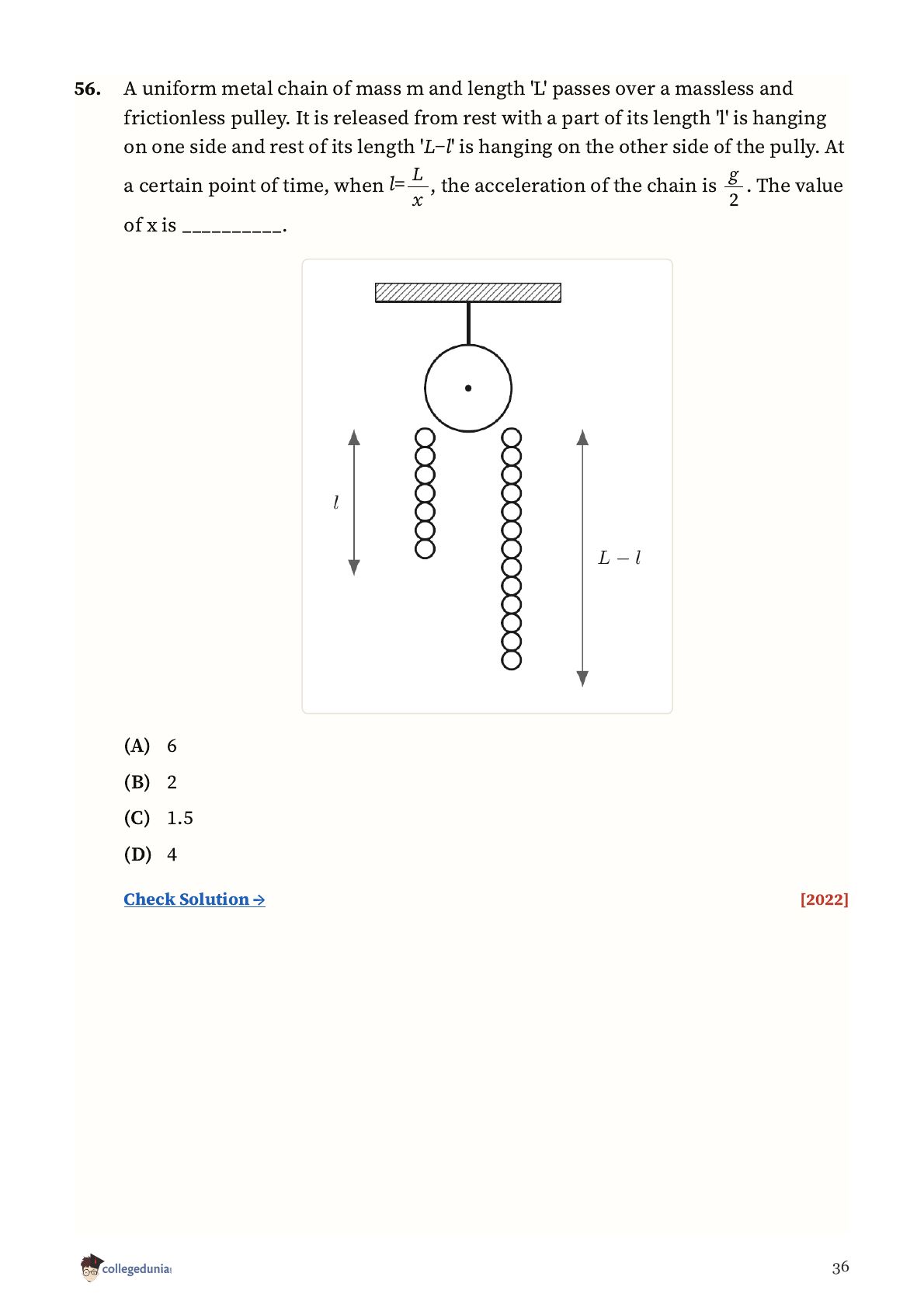
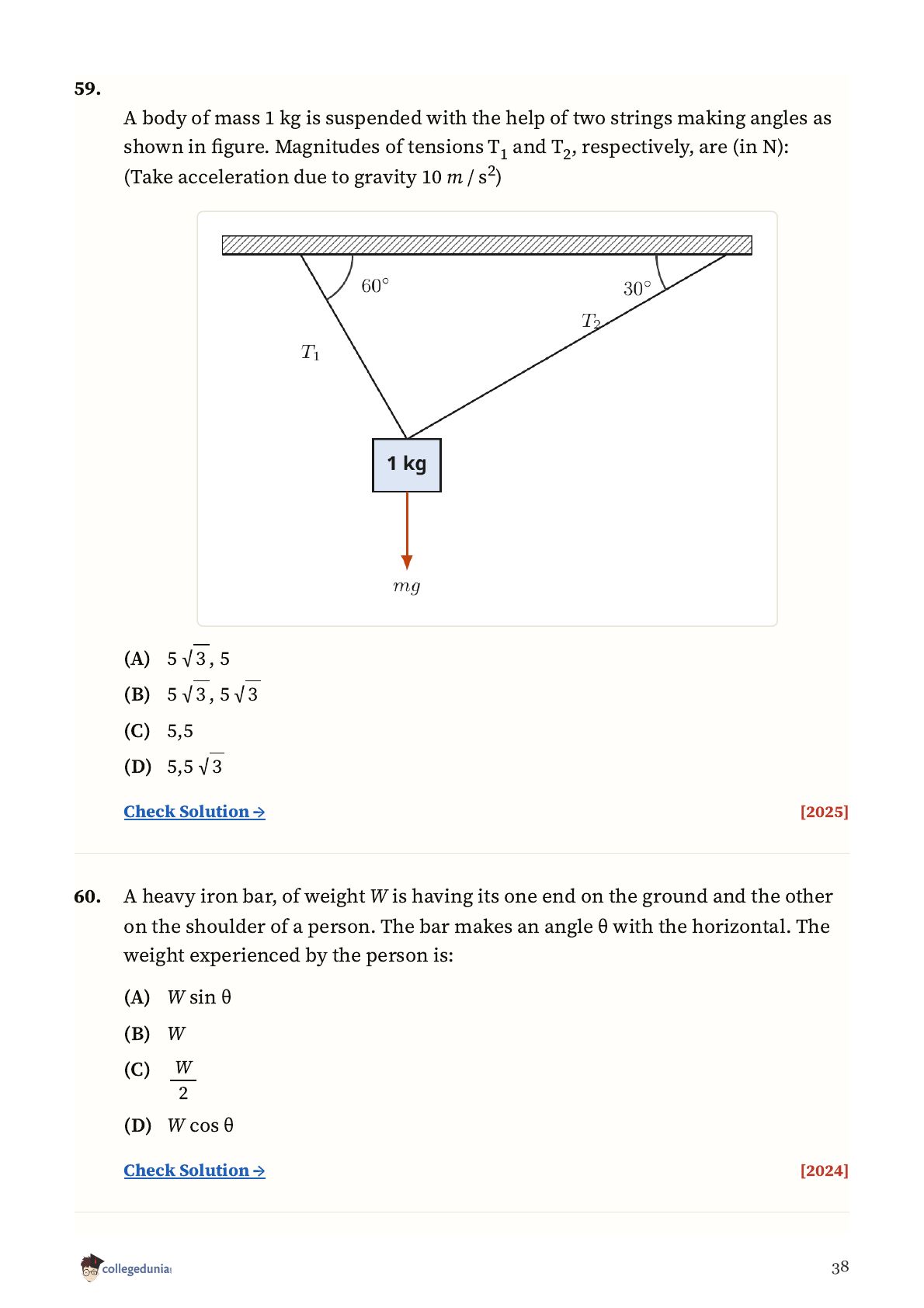
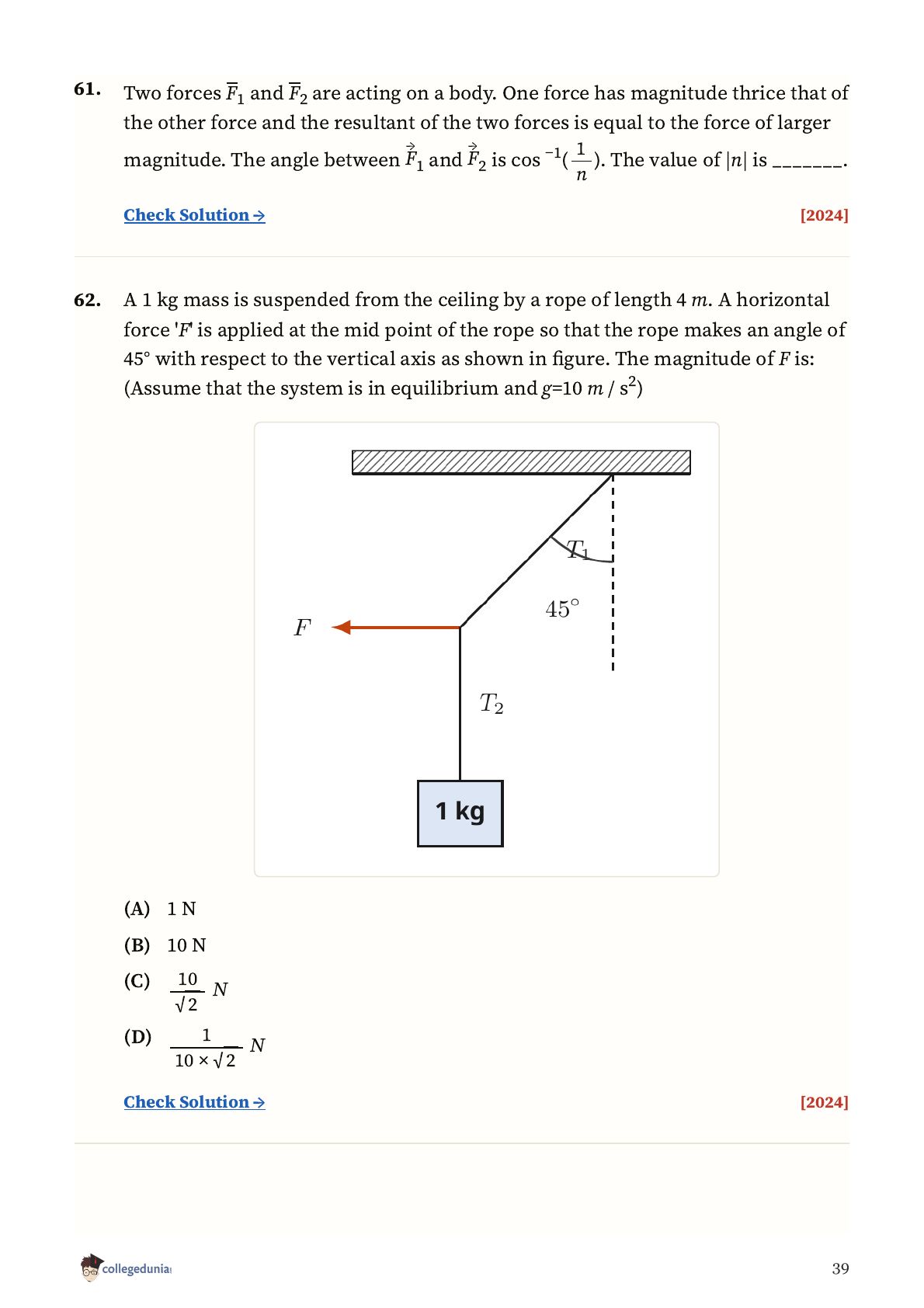
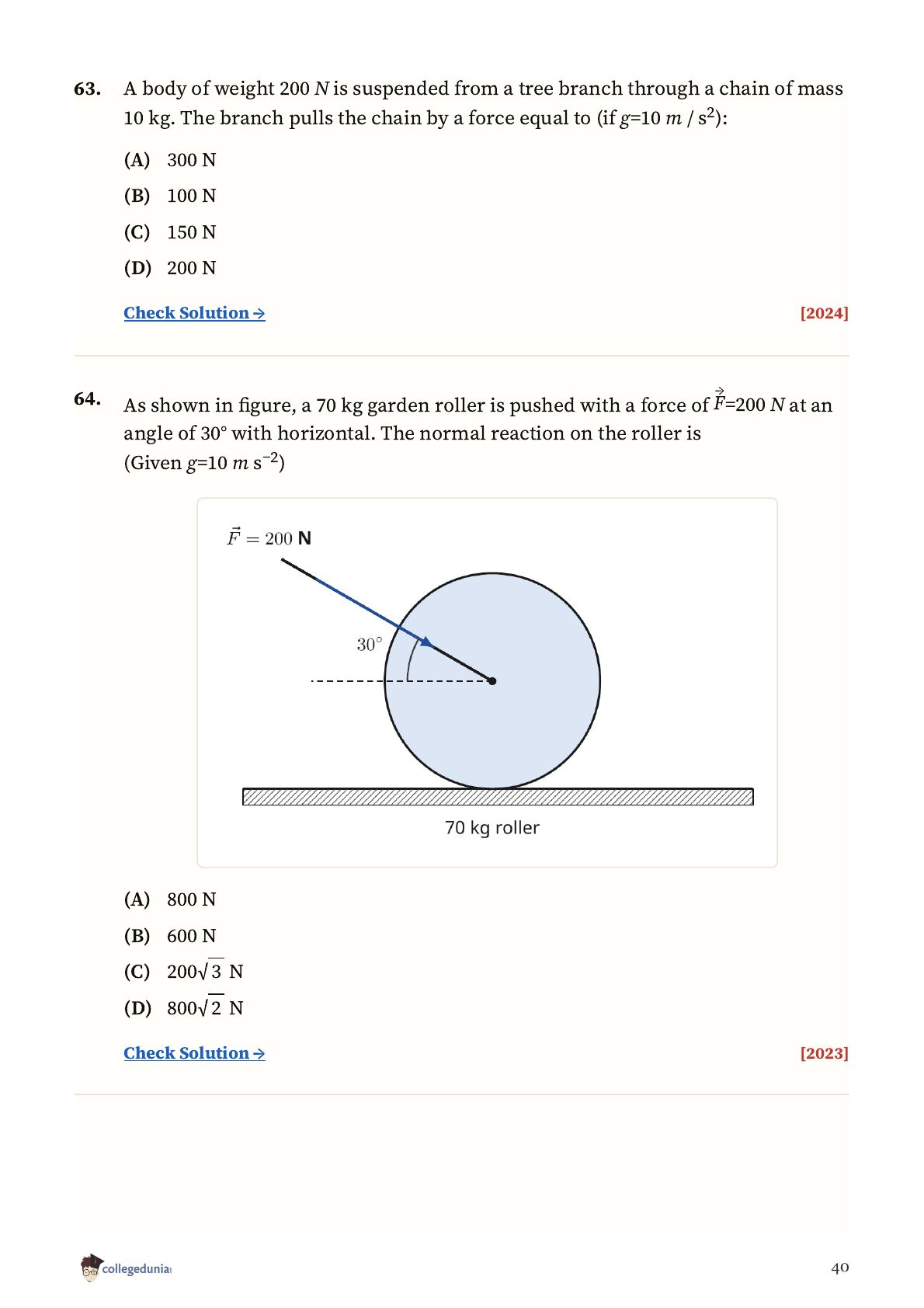
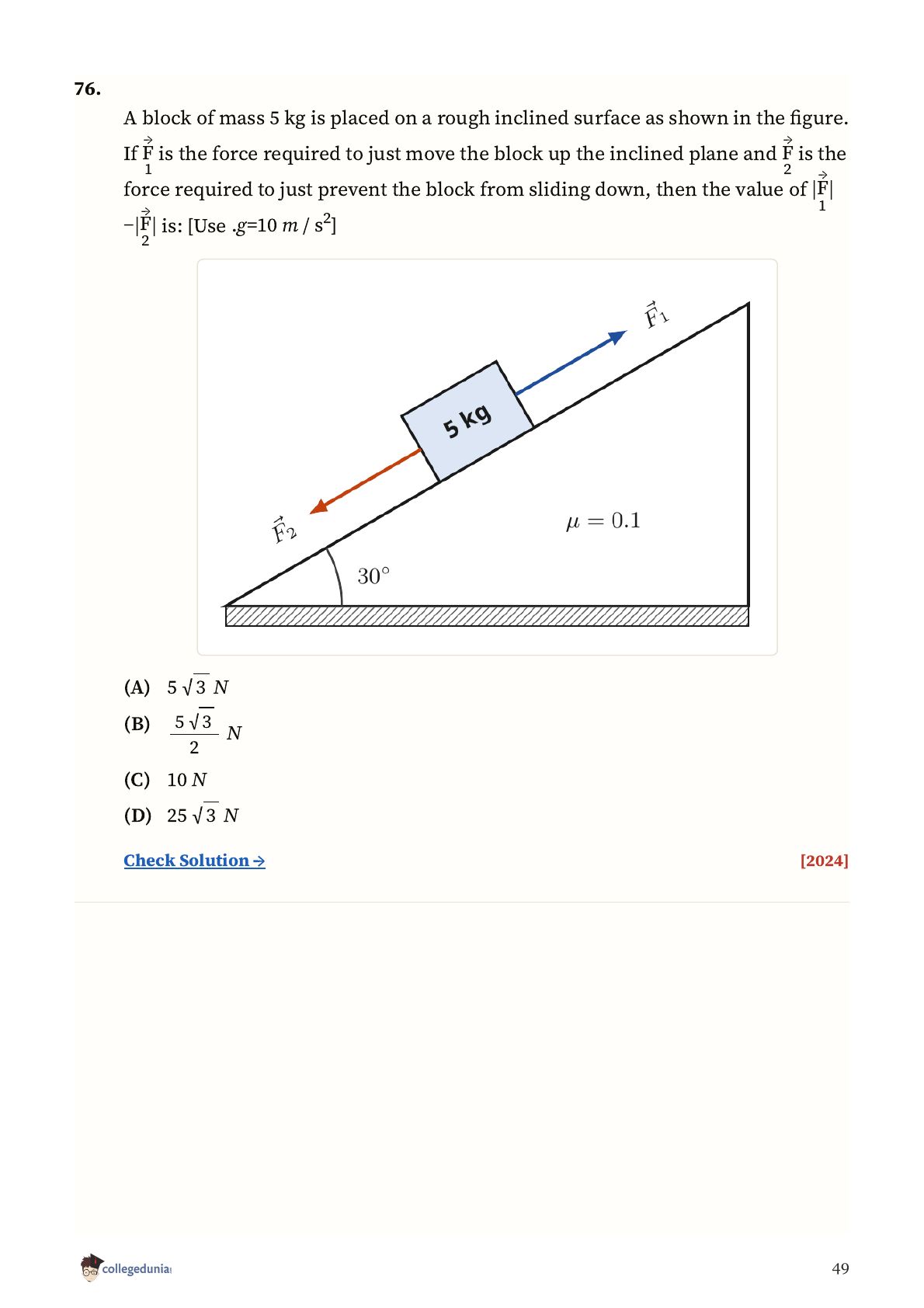
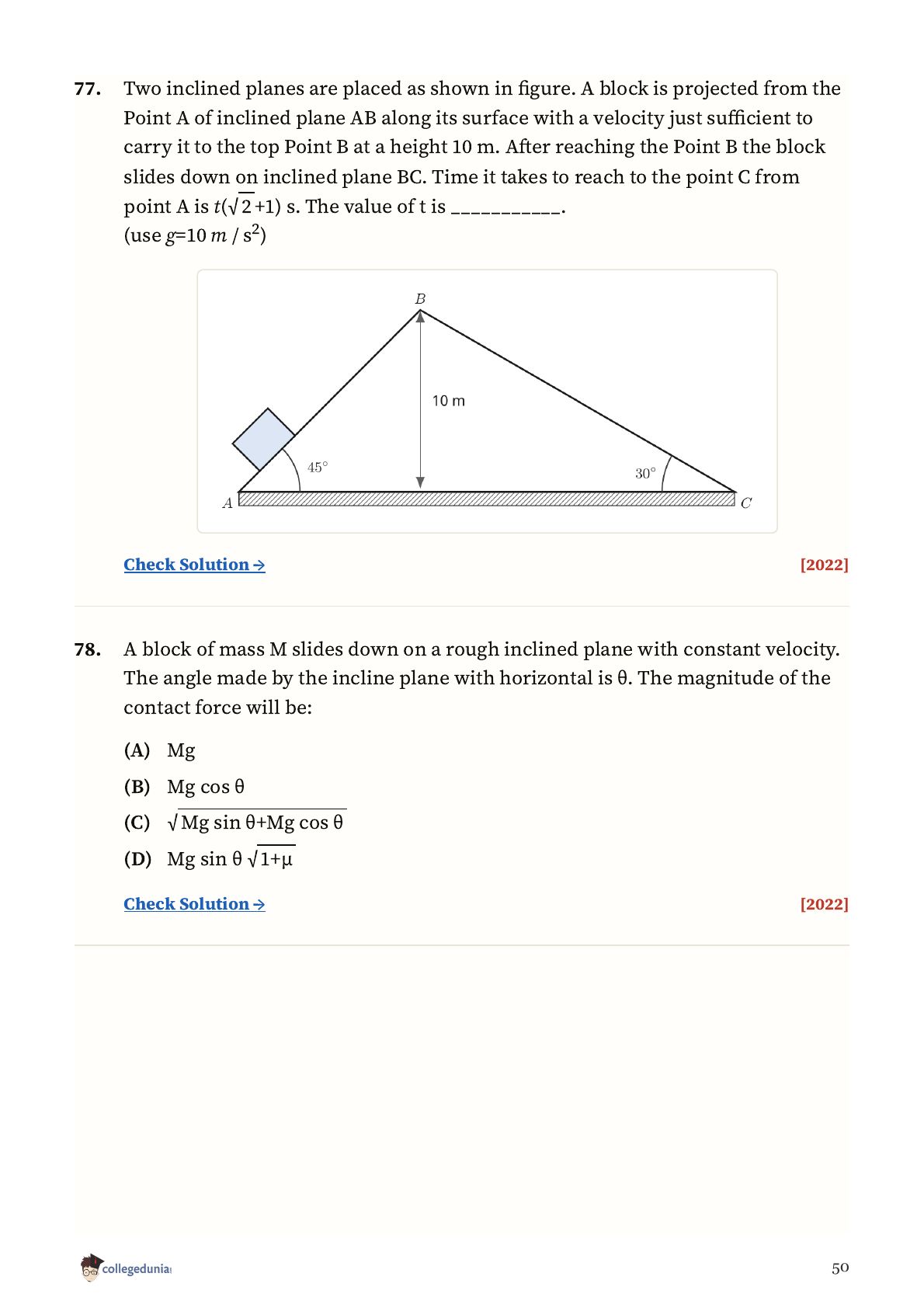
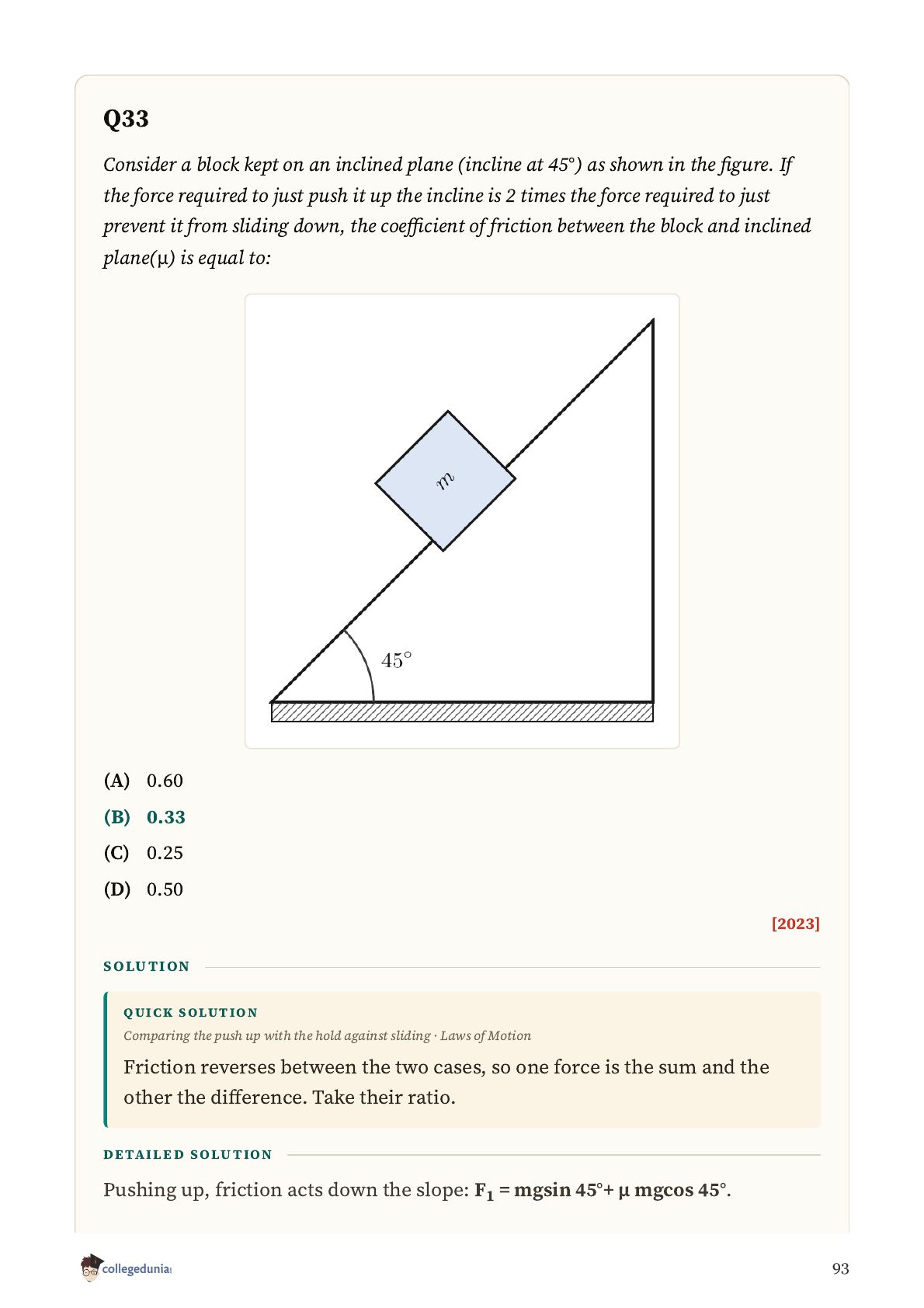
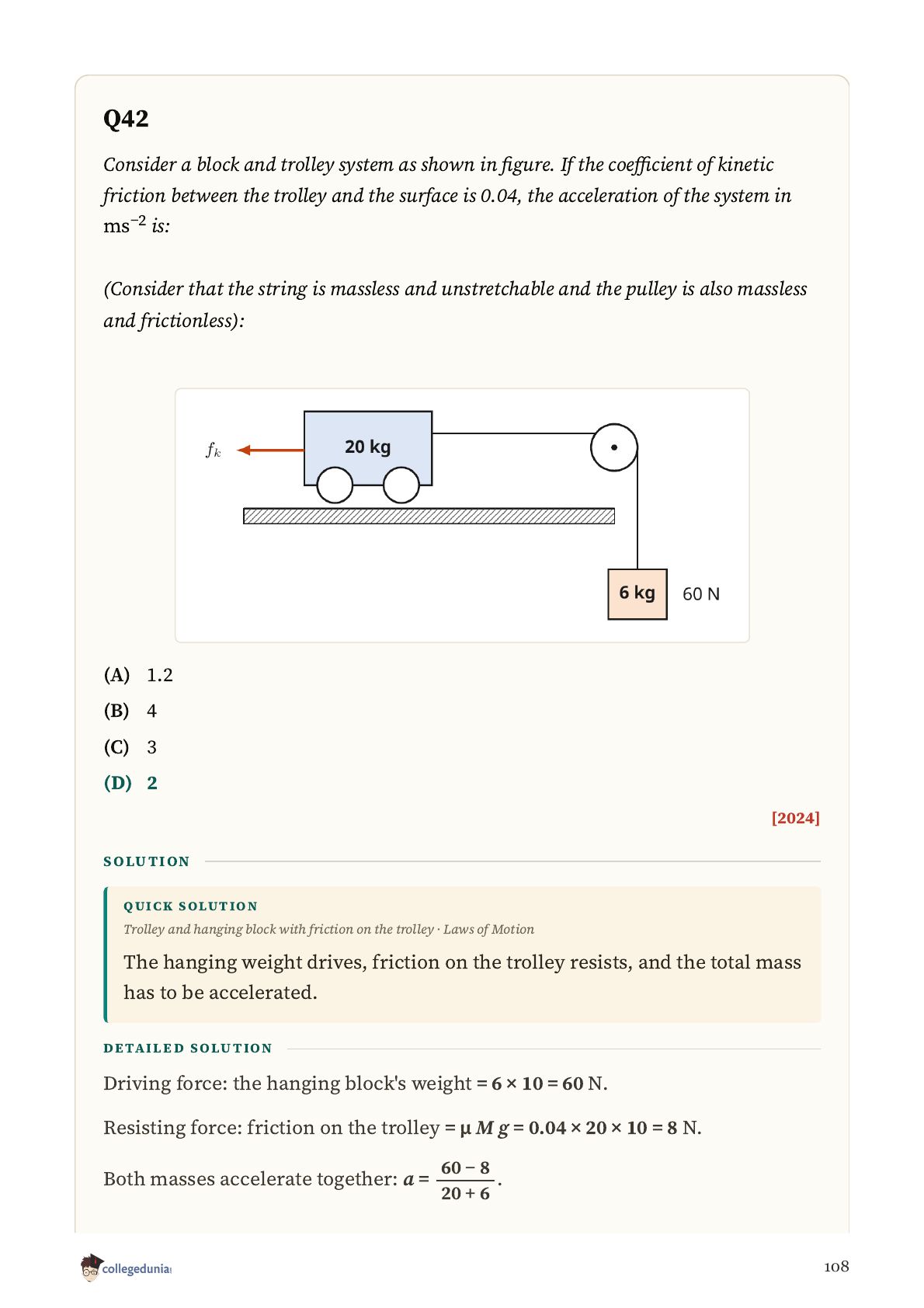
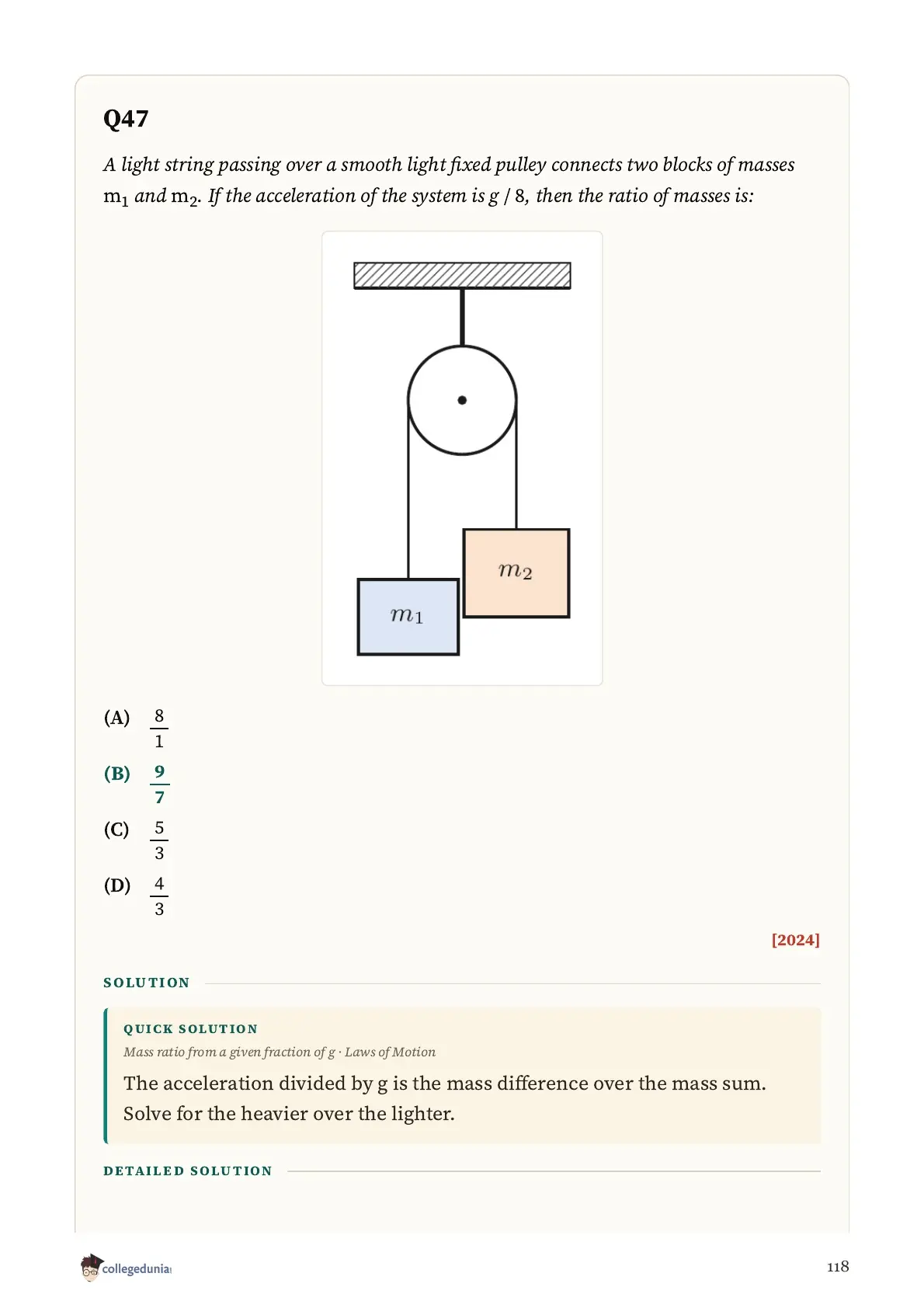
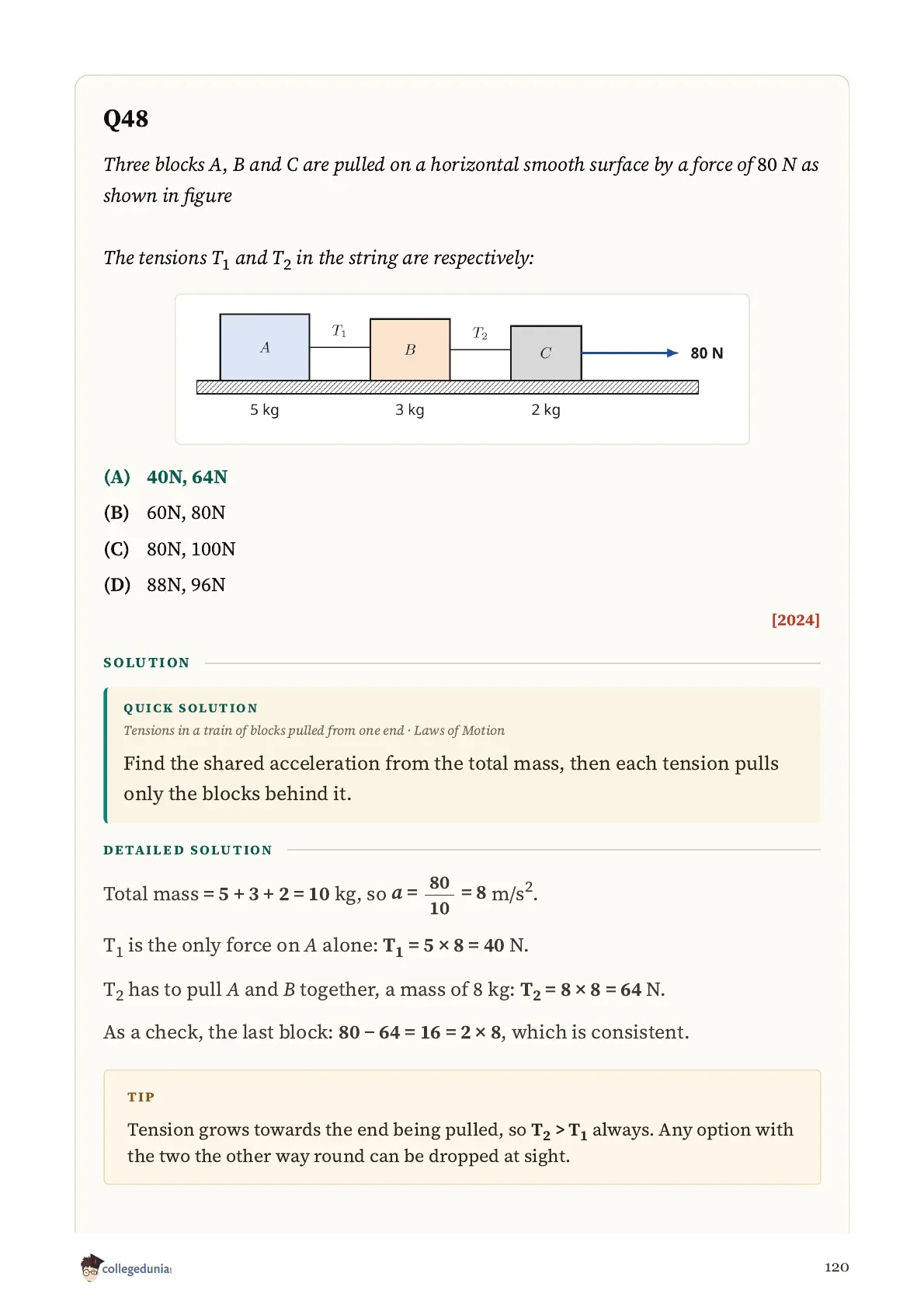
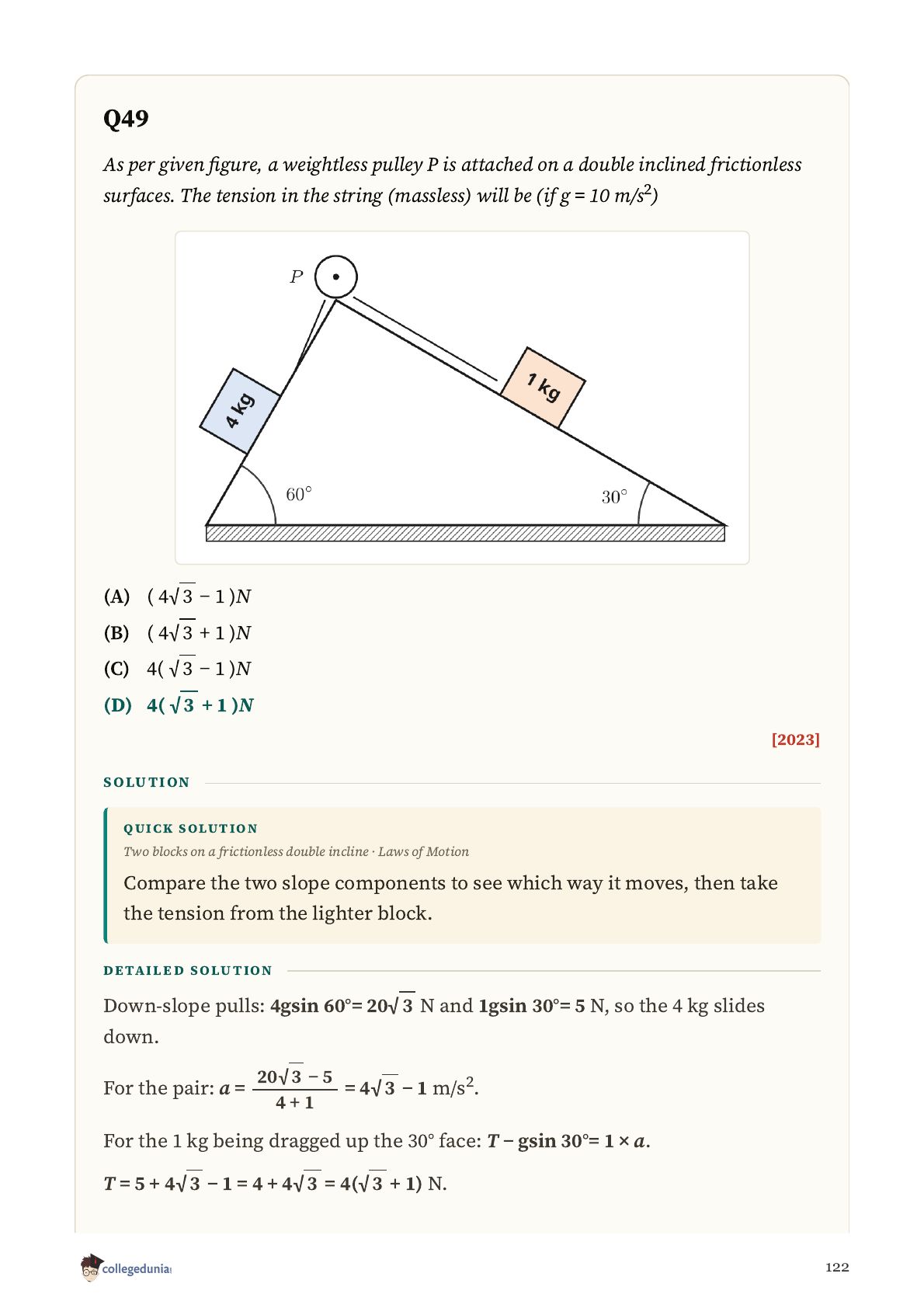
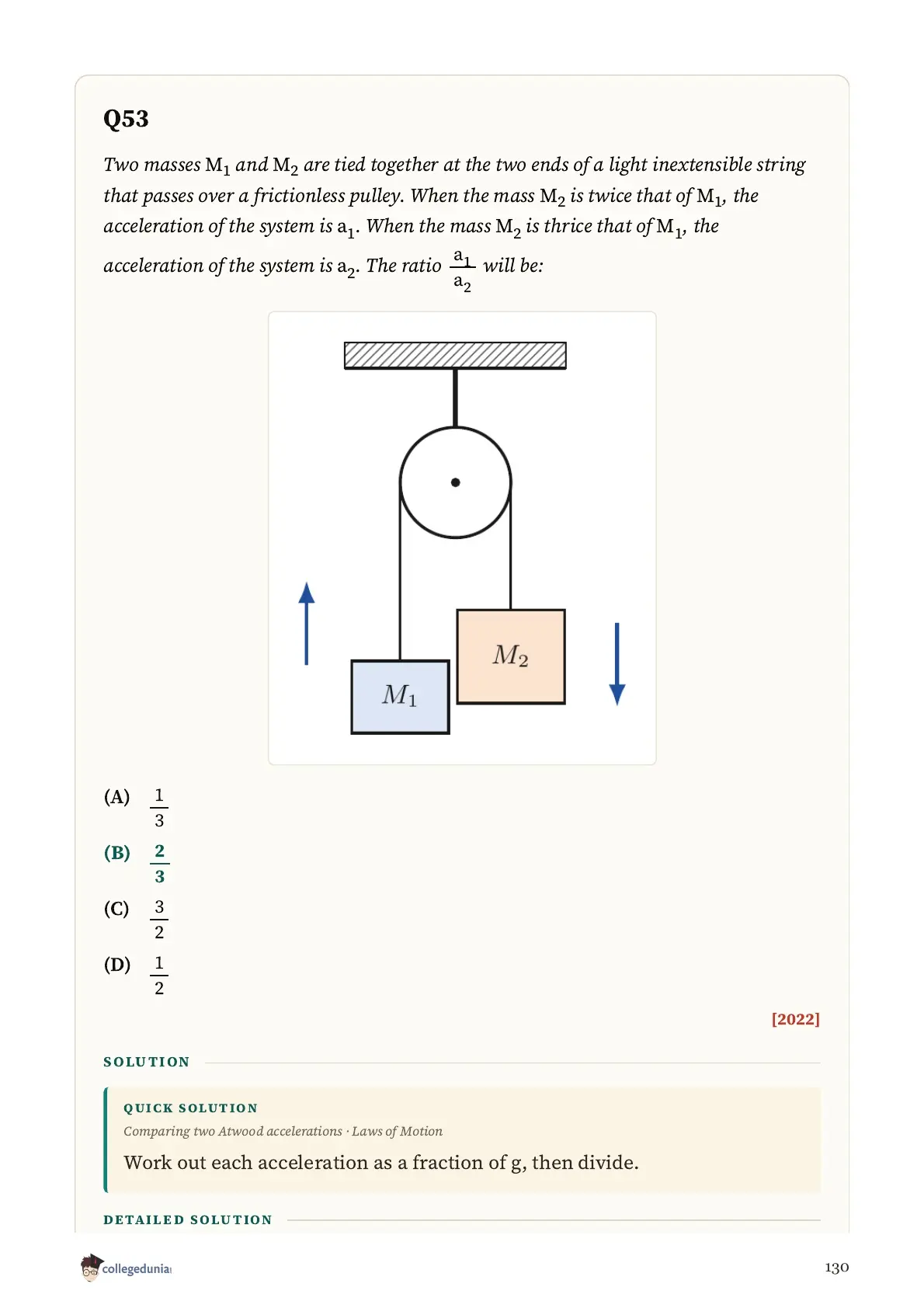
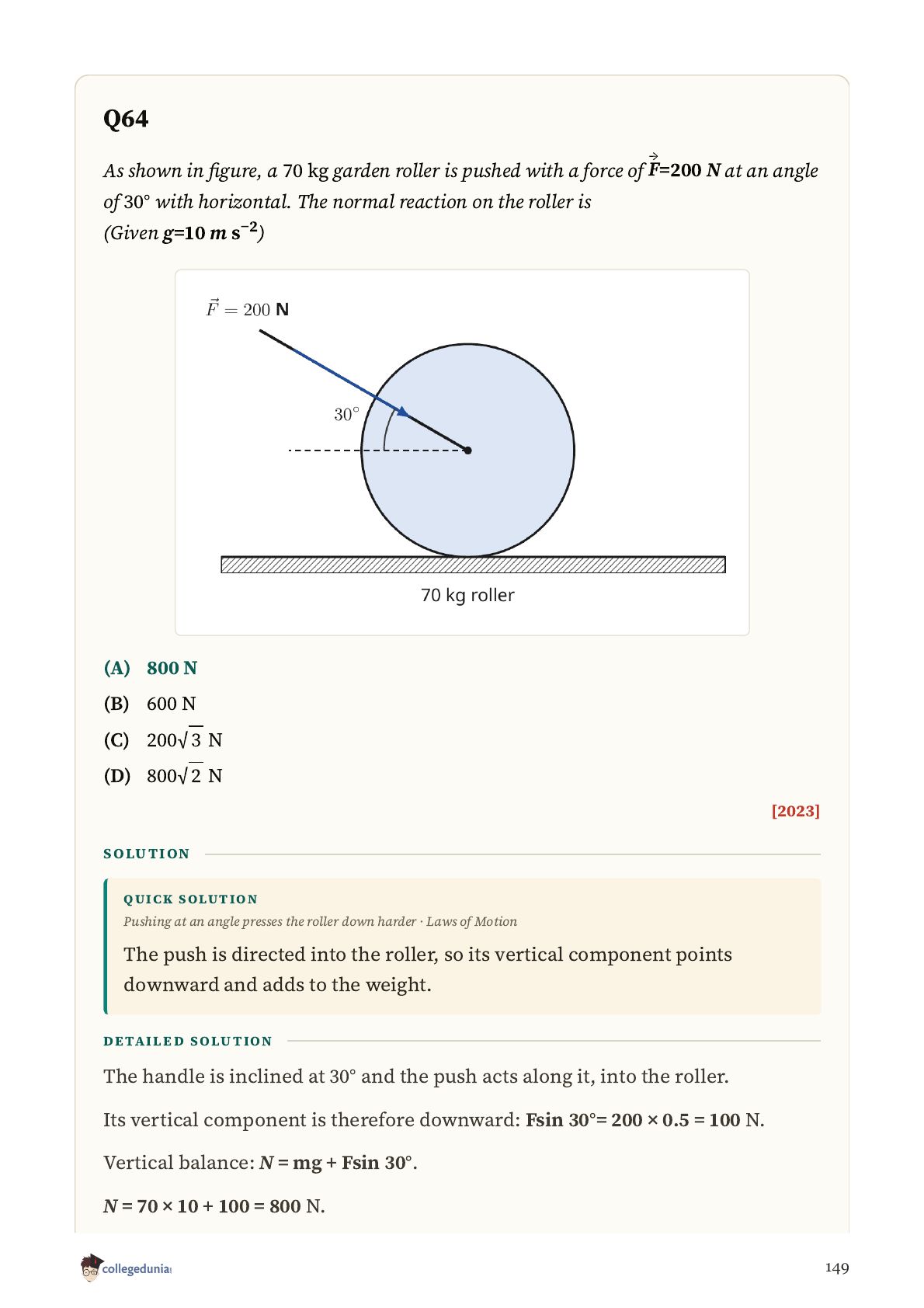
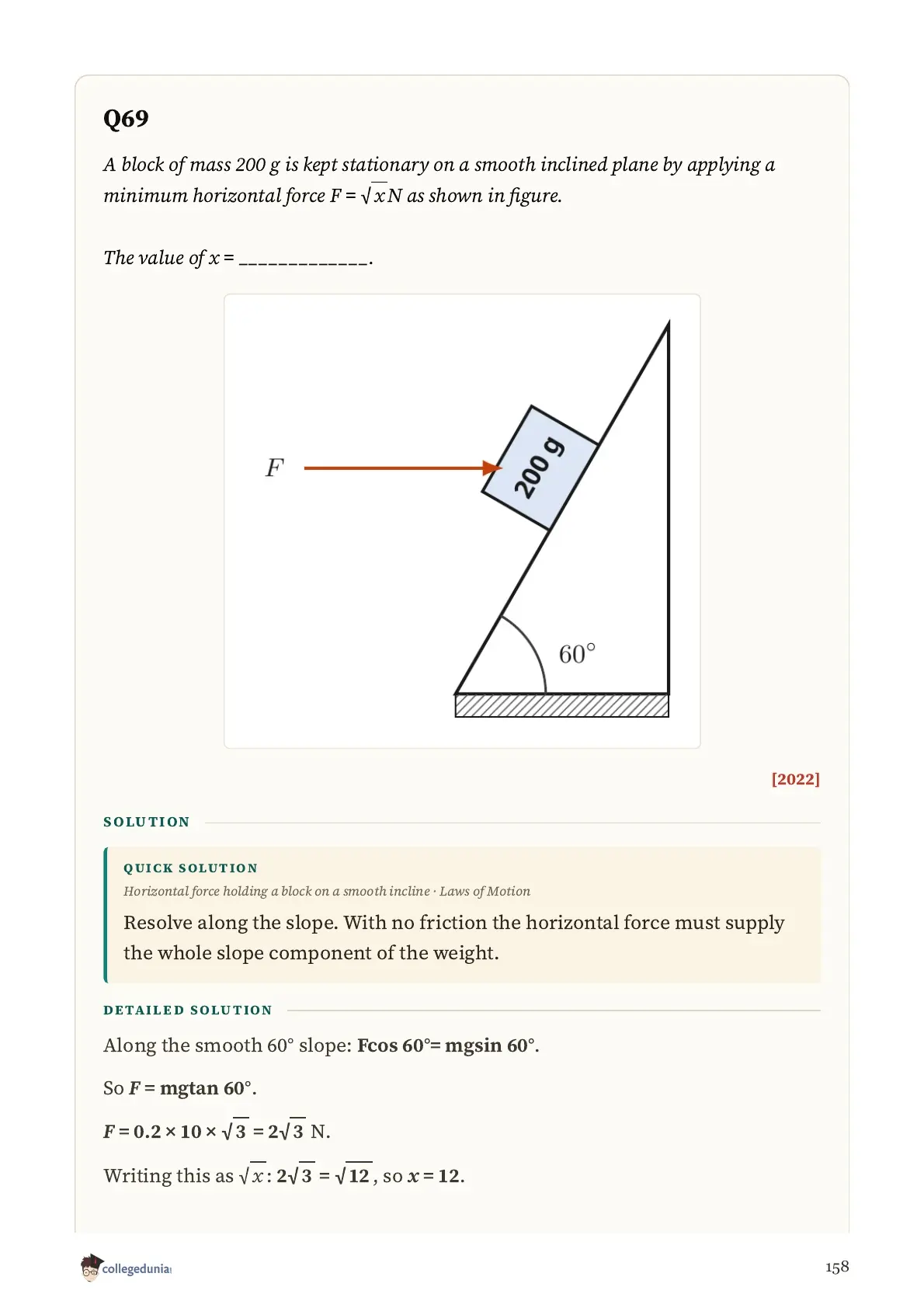
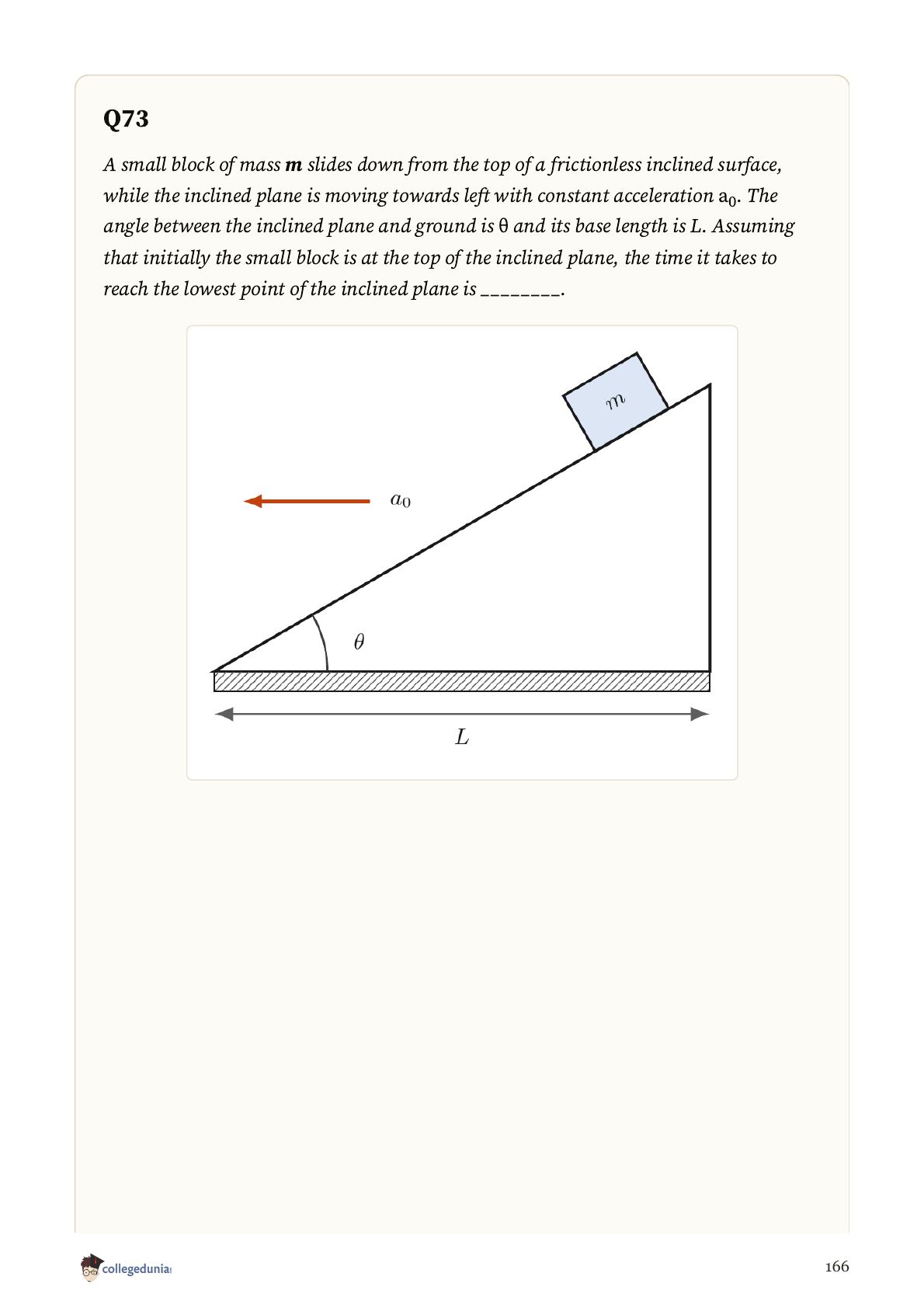
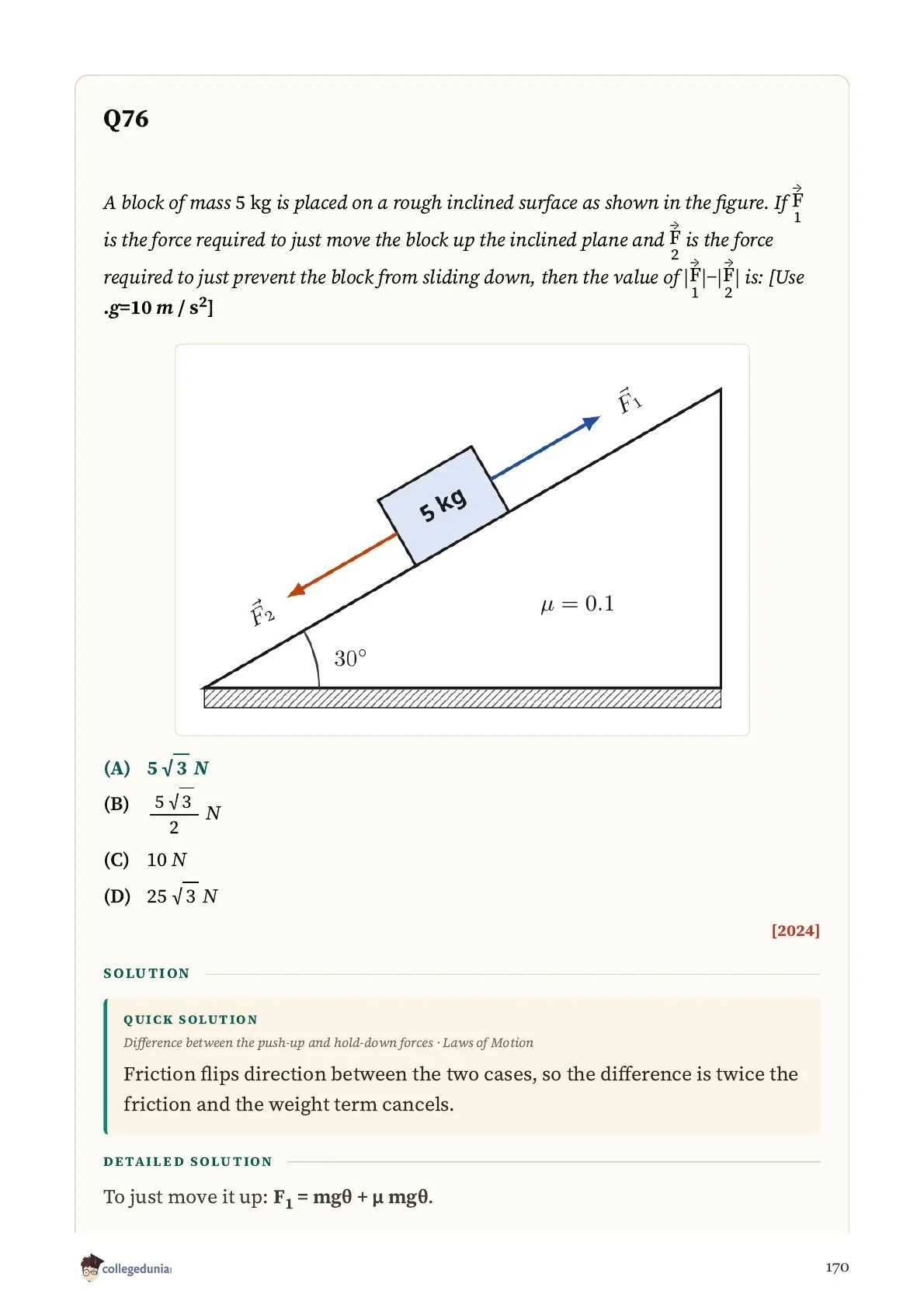
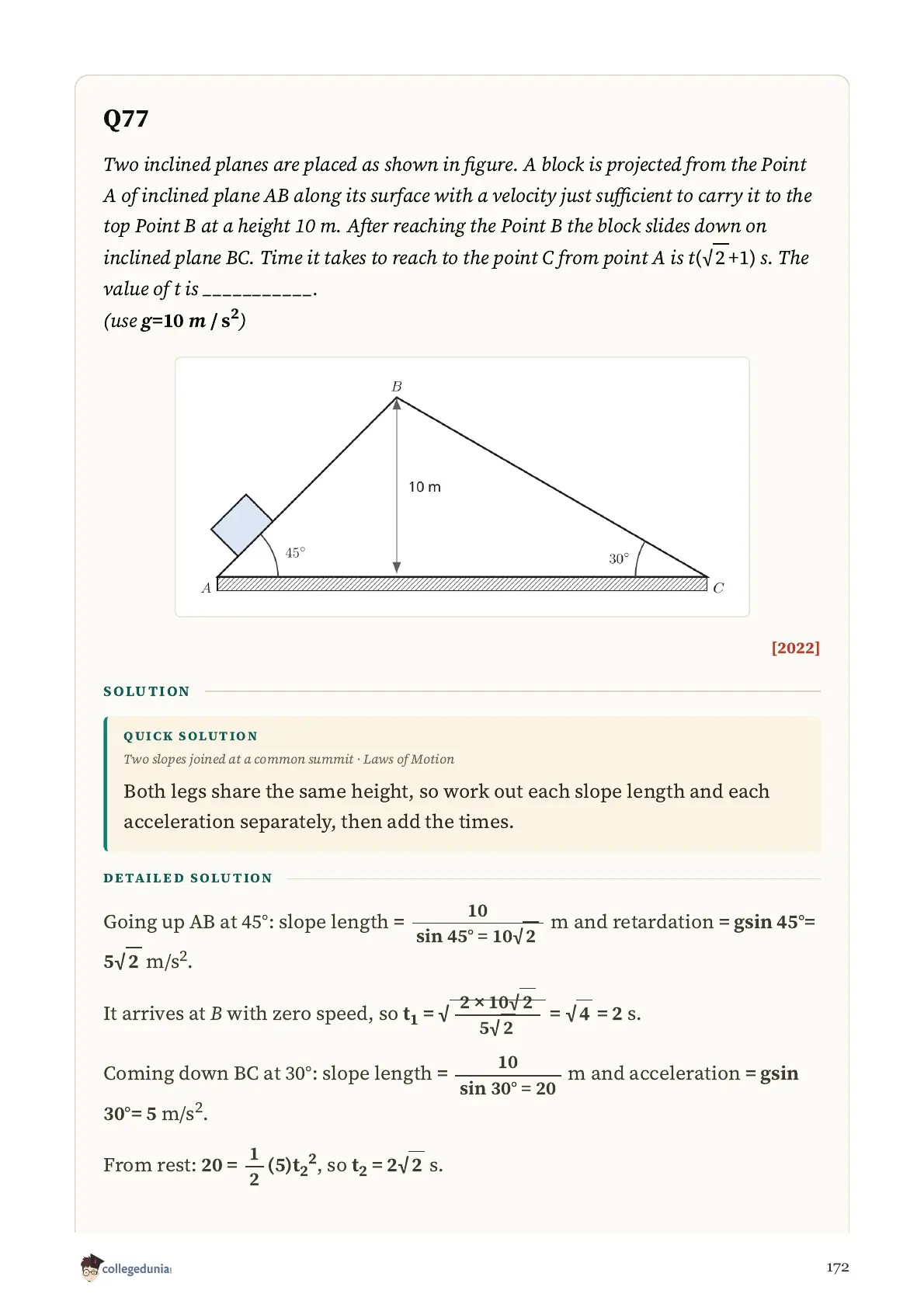
Thirty-two of the 80 questions need a figure, and mechanics figures carry information the words do not: which face a block rests on, where a pulley is anchored, which strand a mass hangs from.
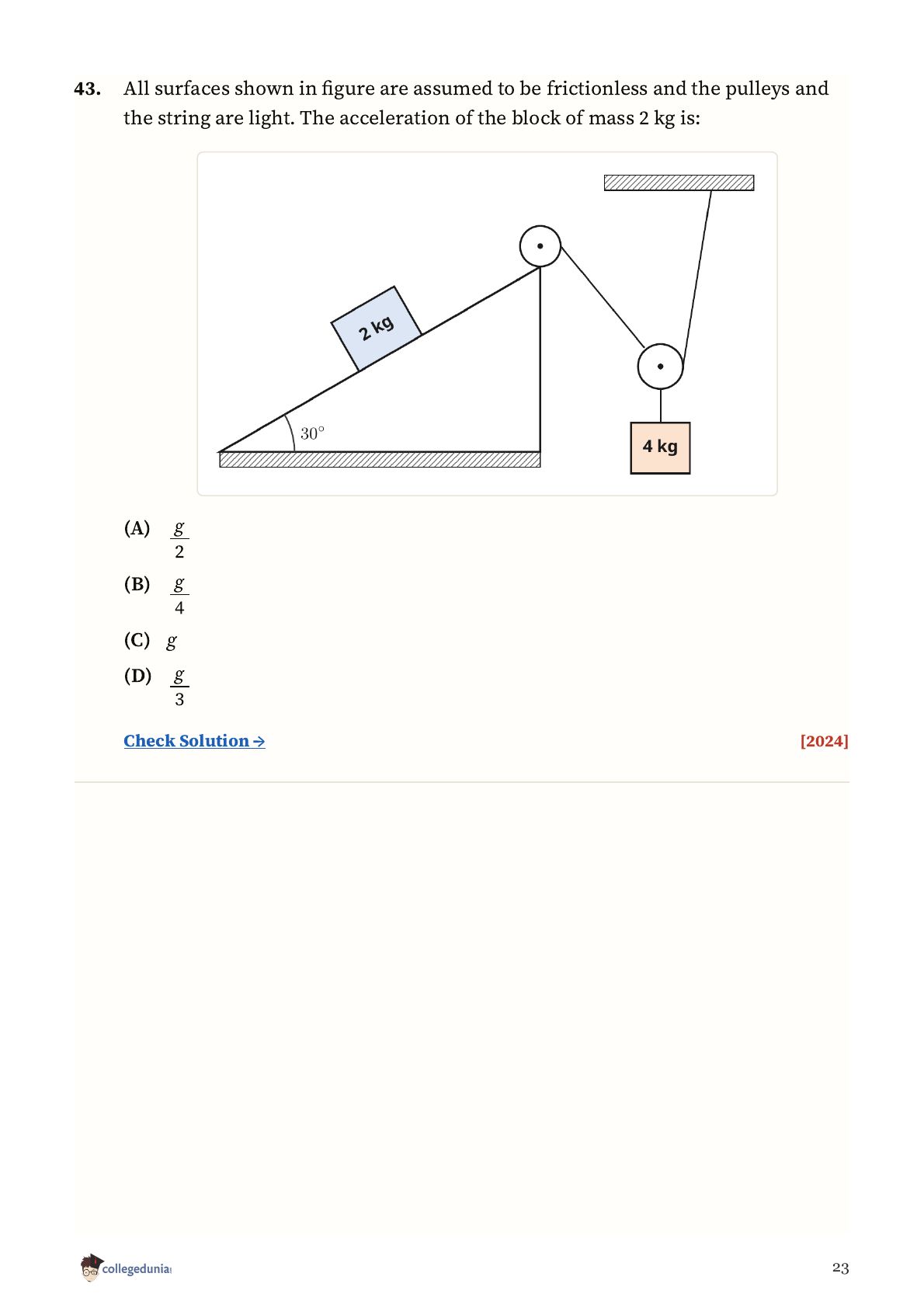
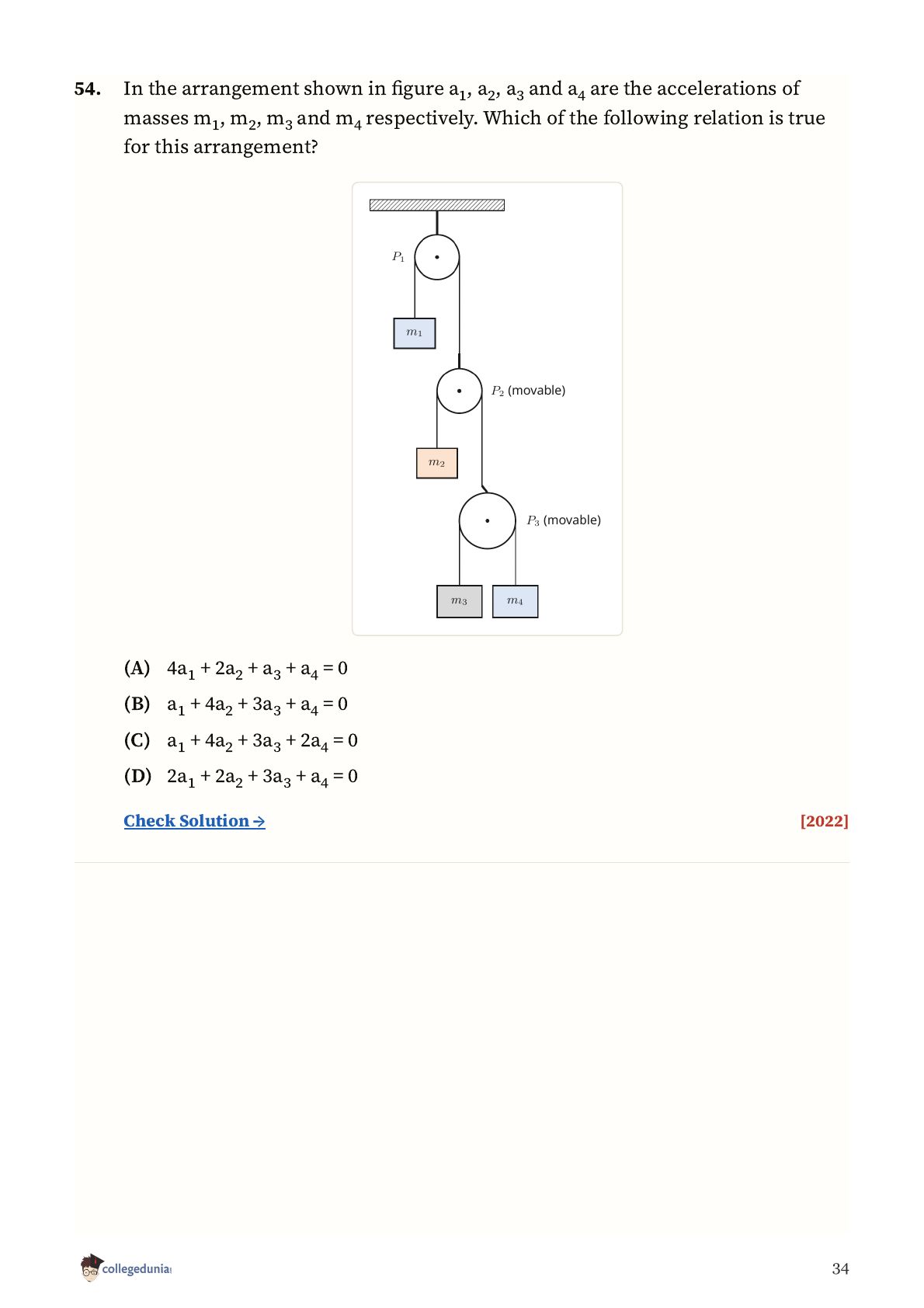
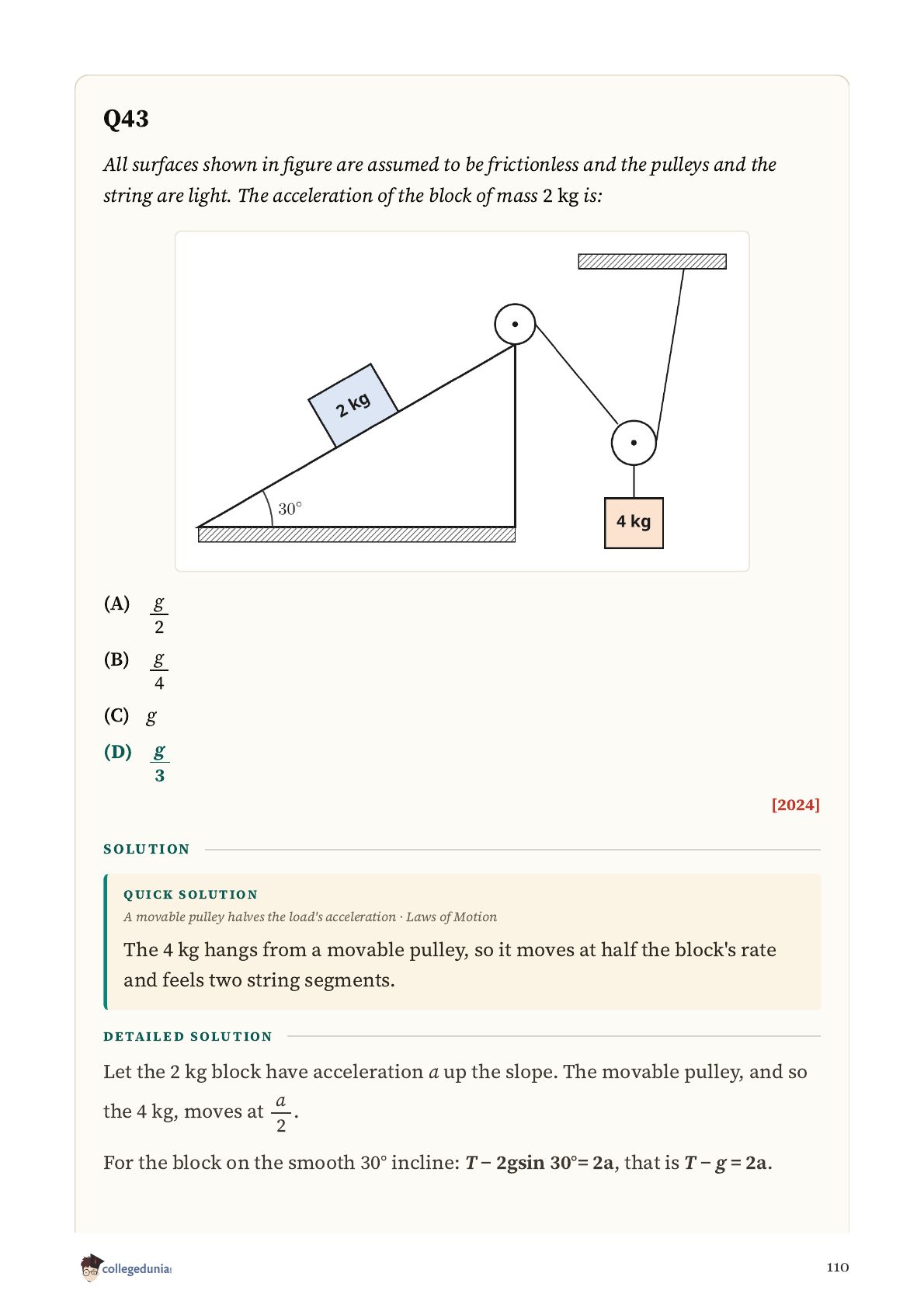
All 32 were redrawn from scratch. That matters most for the pulley questions, where the difference between a fixed and a movable pulley changes the answer by a factor of two, and the only way to tell them apart is the drawing.
Connected Bodies Is the Section That Decides Your Score
Seventeen questions turn on getting the constraint right before any force equation is written. The forces are easy; the geometry is where marks go.
- A movable pulley halves the load's acceleration and doubles the string segments carrying it
- Cut the system where the unknown tension acts, then take everything on one side
- In a train of blocks, tension always grows towards the end being pulled
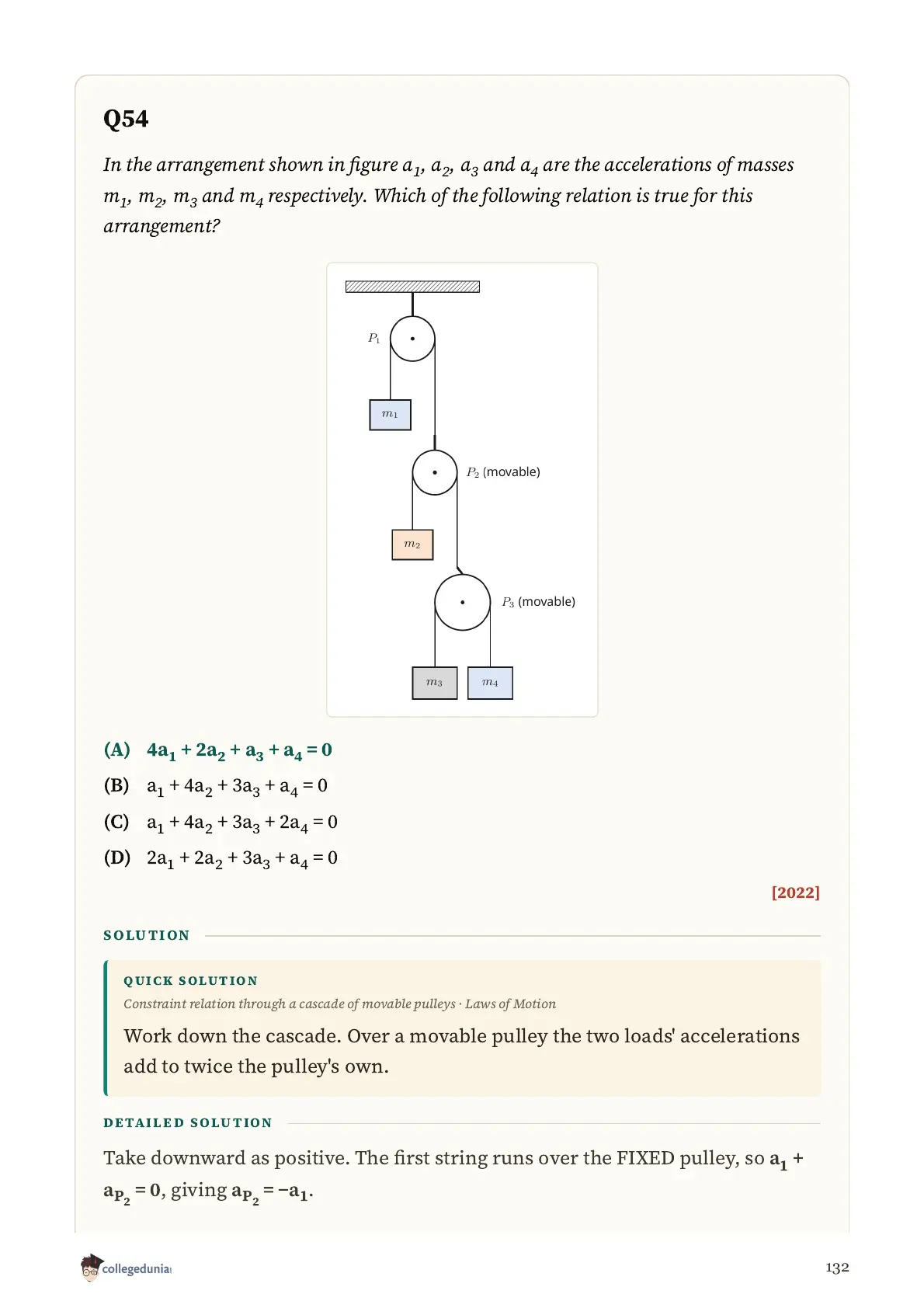
- For a cascade of pulleys, each movable one doubles the coefficient passed down
One 2022 question stacks three pulleys and asks only for the relation between four accelerations. It falls out in three lines from that last rule, with no forces at all.
How the Five Papers Differ
Counts by year are 25 from 2022, 16 from 2023, 22 from 2024, 8 from 2025 and 9 from 2026. The style shifted more than the count.
- 2022 leaned on standard pulley and incline setups with clean numbers
- 2023 and 2024 added statement-based questions on the laws of friction
- 2025 and 2026 favour accelerating frames, where a pseudo-force is the quickest route
- Numerical-answer questions cluster in the connected-bodies and equilibrium sections
The 45 Degree Incline Result Worth Memorising
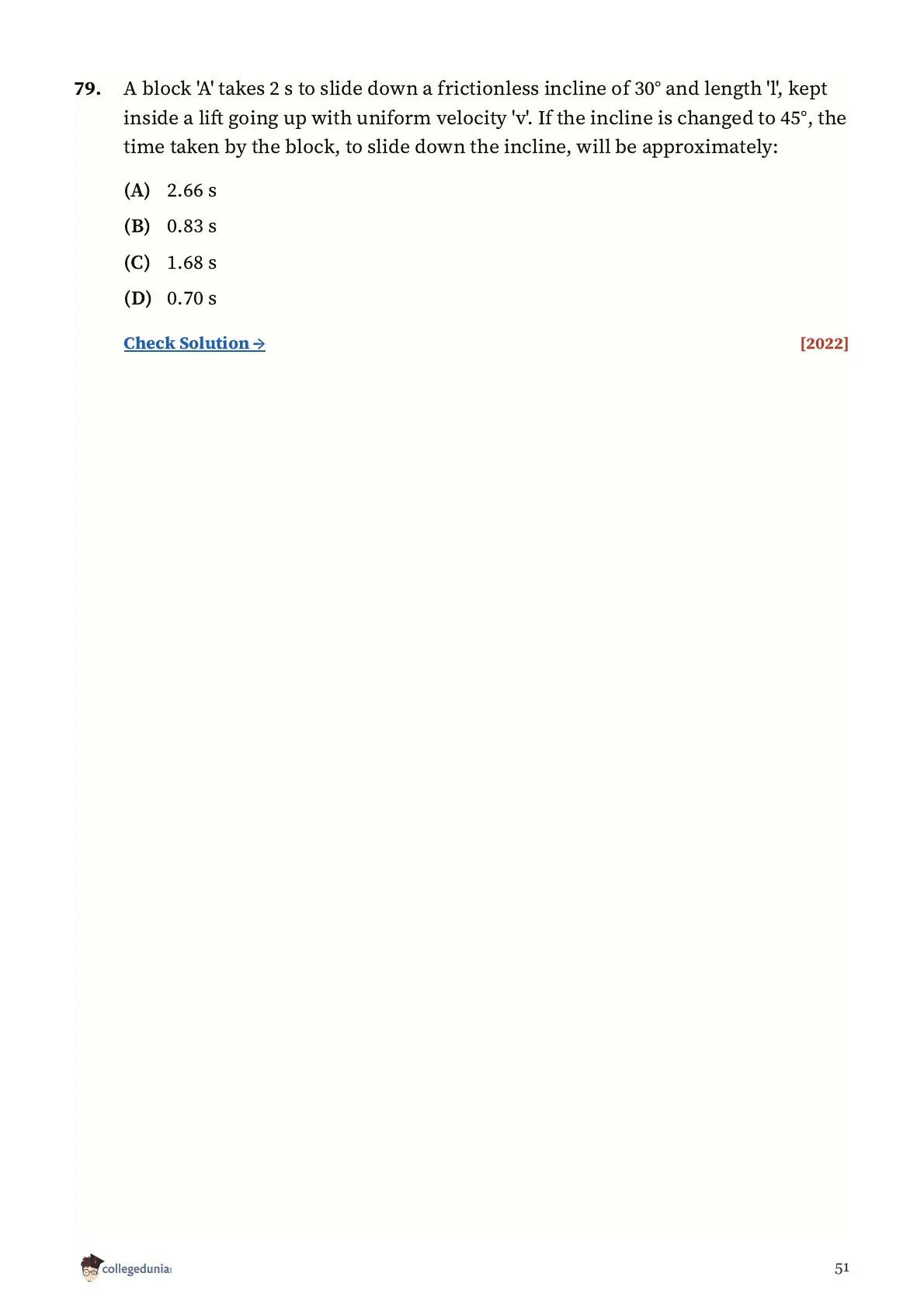
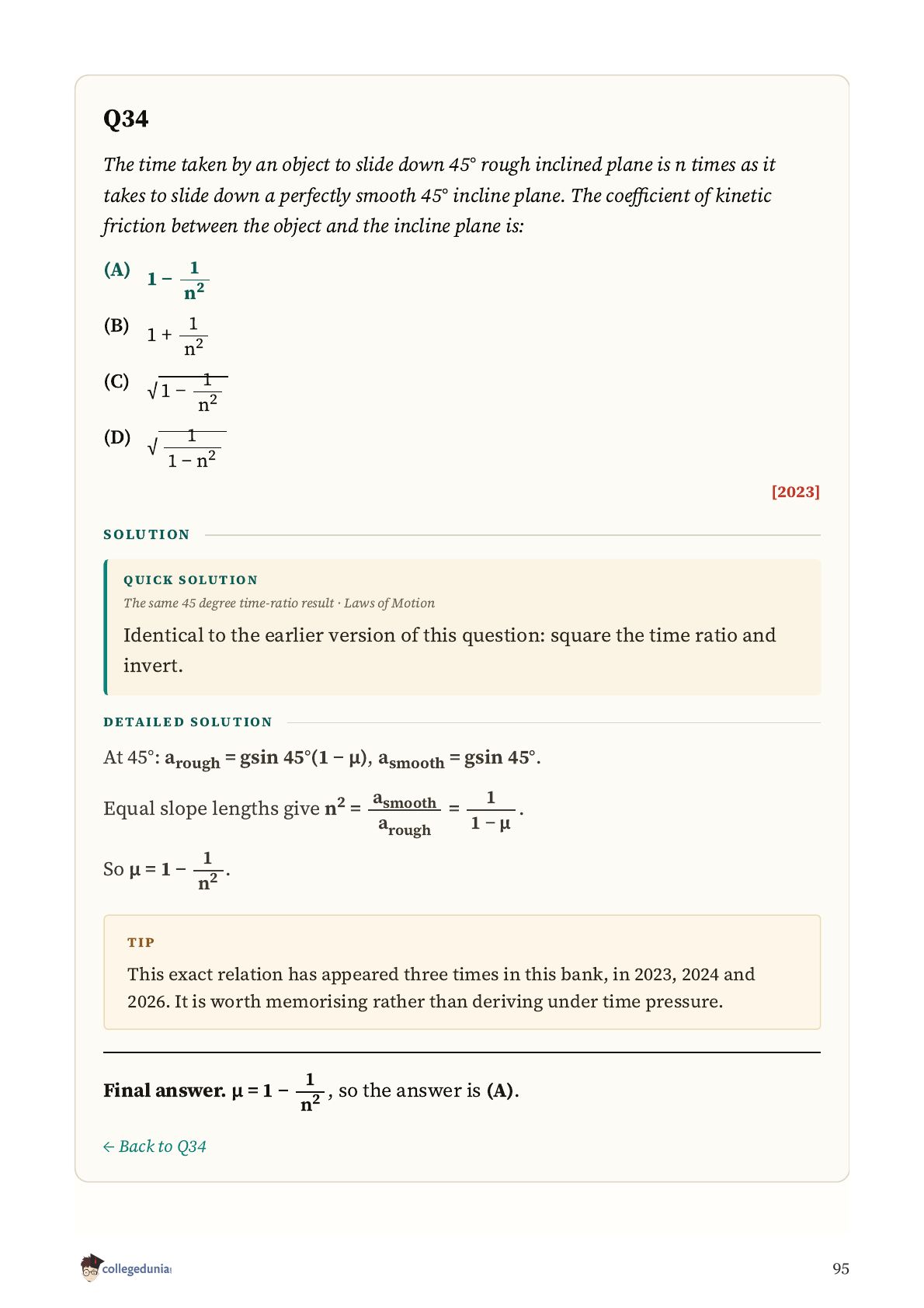
Three separate questions here, from 2023, 2024 and 2026, reduce to the same relation. A block takes n times as long to slide down a rough 45 degree incline as down a smooth one, and the coefficient follows.
The result is that the coefficient equals 1 minus 1 over n squared. Deriving it takes a minute; recognising it takes a second. One version asks for a percentage increase in time, another gives the ratio directly, and a third hides it inside a numerical answer.
Three Questions Worth Doing First
If time is short, start here. Each teaches a method the rest of the bank reuses.
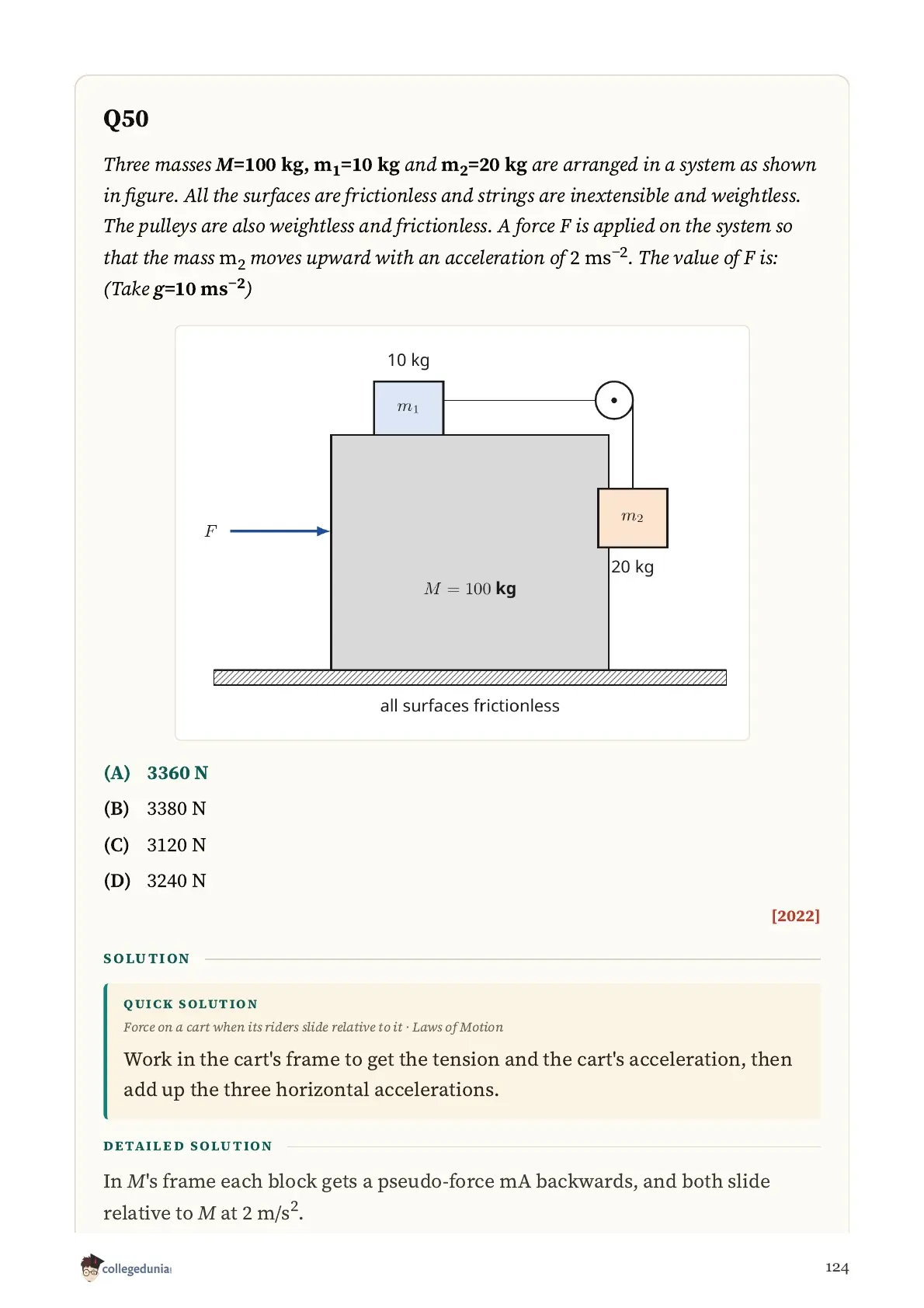
2022, connected bodies. A 100 kg cart is pushed while a block rides on top and another hangs off the side. Solve it in the cart's frame, then add the three horizontal accelerations separately. The blocks do not share one acceleration.
2026, friction. Two blocks stay put on a cube accelerating at half g. The pseudo-force is what presses the side block against the face, so it sets the normal force rather than the weight.
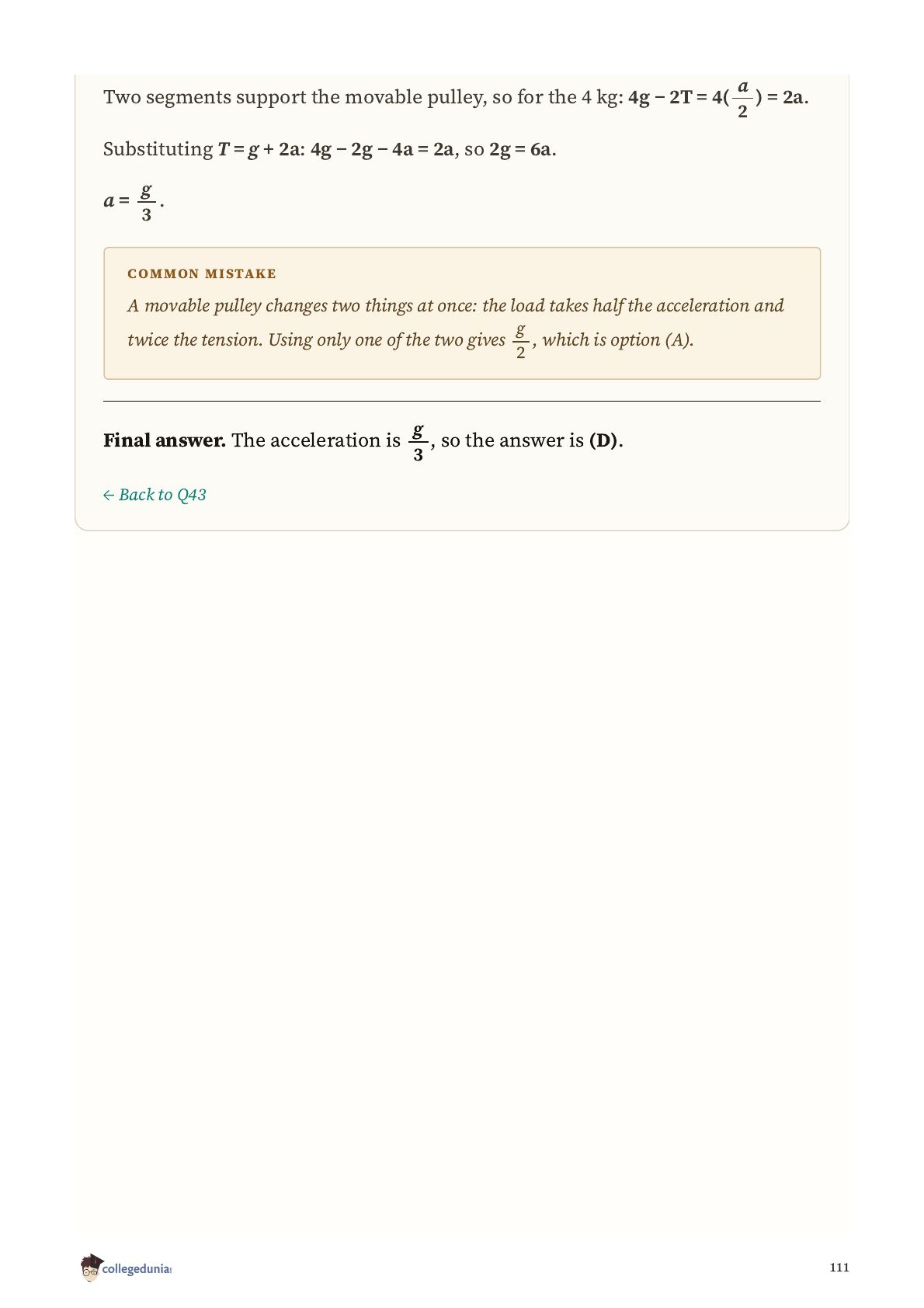
2024, connected bodies. A block on a smooth incline pulls a mass hung from a movable pulley. Getting both effects of the movable pulley gives g over 3; getting one gives g over 2.
Watch the Laws of Motion Solved on a Board
Source: JEE Wallah
How to Use the Answer Key and Solutions
Attempt a whole section before checking anything. The layout is built so an answer cannot be glimpsed by accident.
- Do one sub-topic in a single timed sitting
- Mark the answer key in one pass, right or wrong only
- Read the solution for every miss and every lucky guess
- Each solution opens with a one-line quick solution, so you can stop there and retry
Traps These Questions Are Built Around
A handful of errors account for most of the lost marks here, and several questions exist only to catch them.
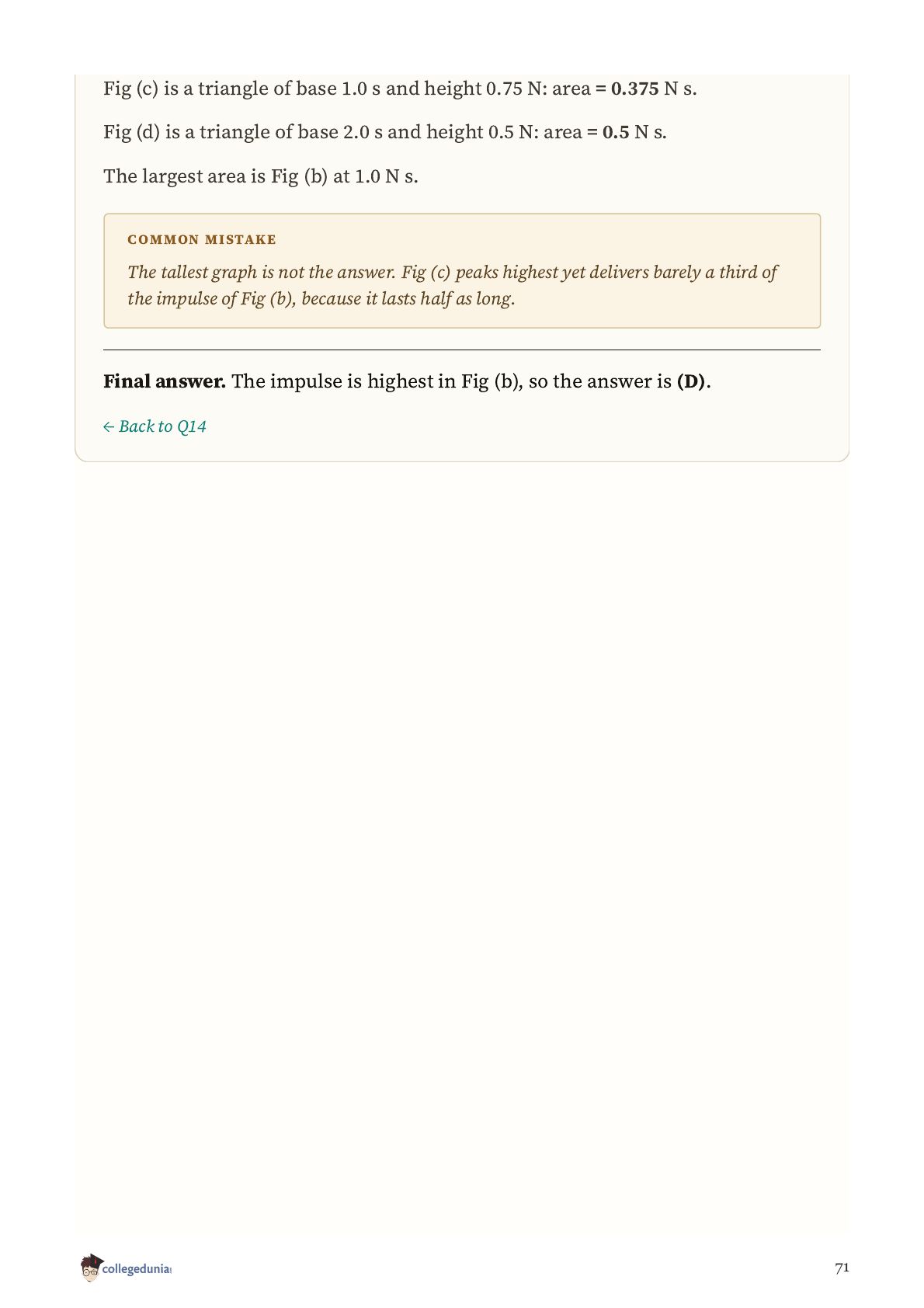
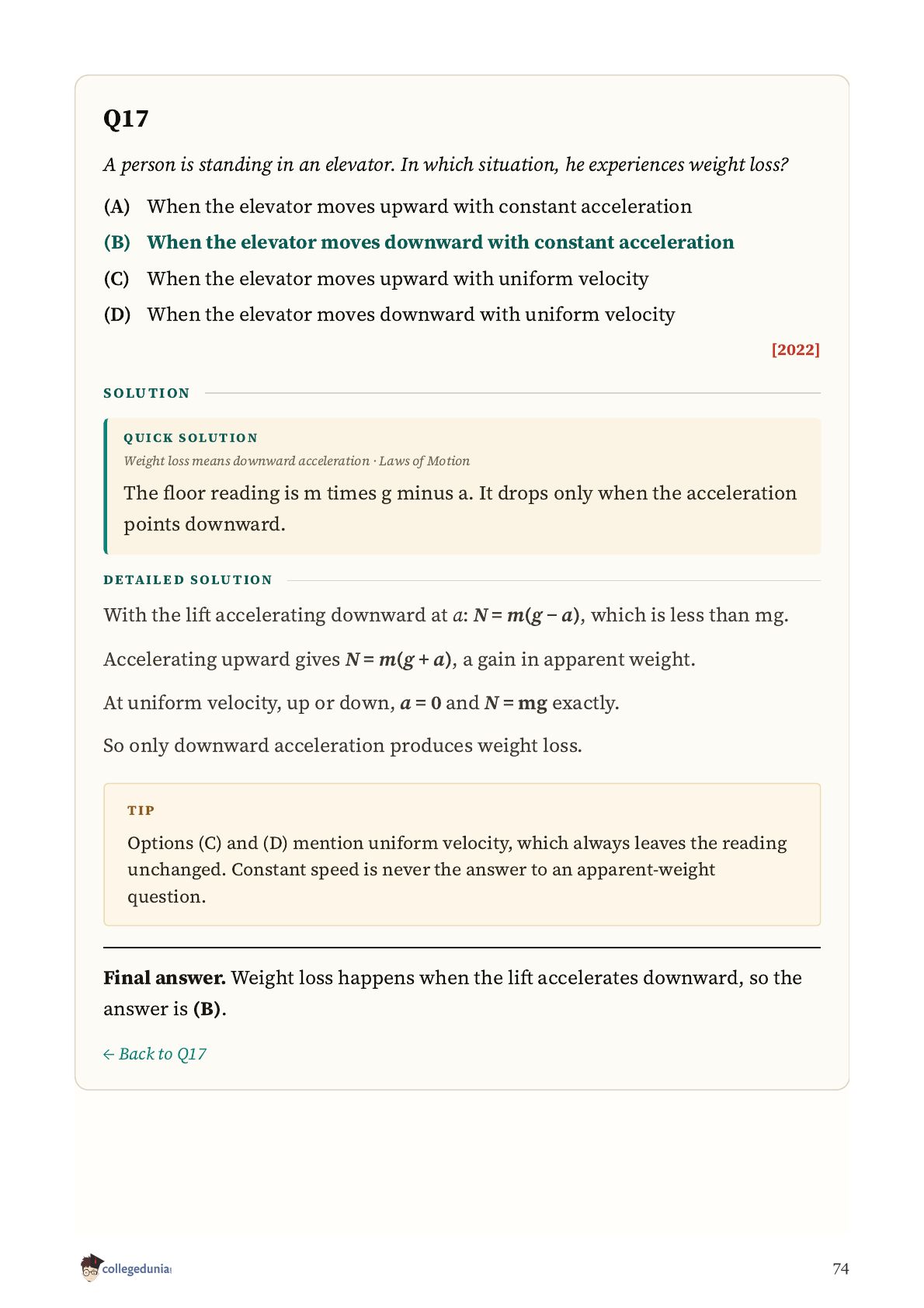
- Assuming a lift going down means a smaller reading, when only the acceleration decides
- Leaving the hanging mass out of the total mass in a pulley problem
- Using the weight for the normal force when the contact surface is vertical
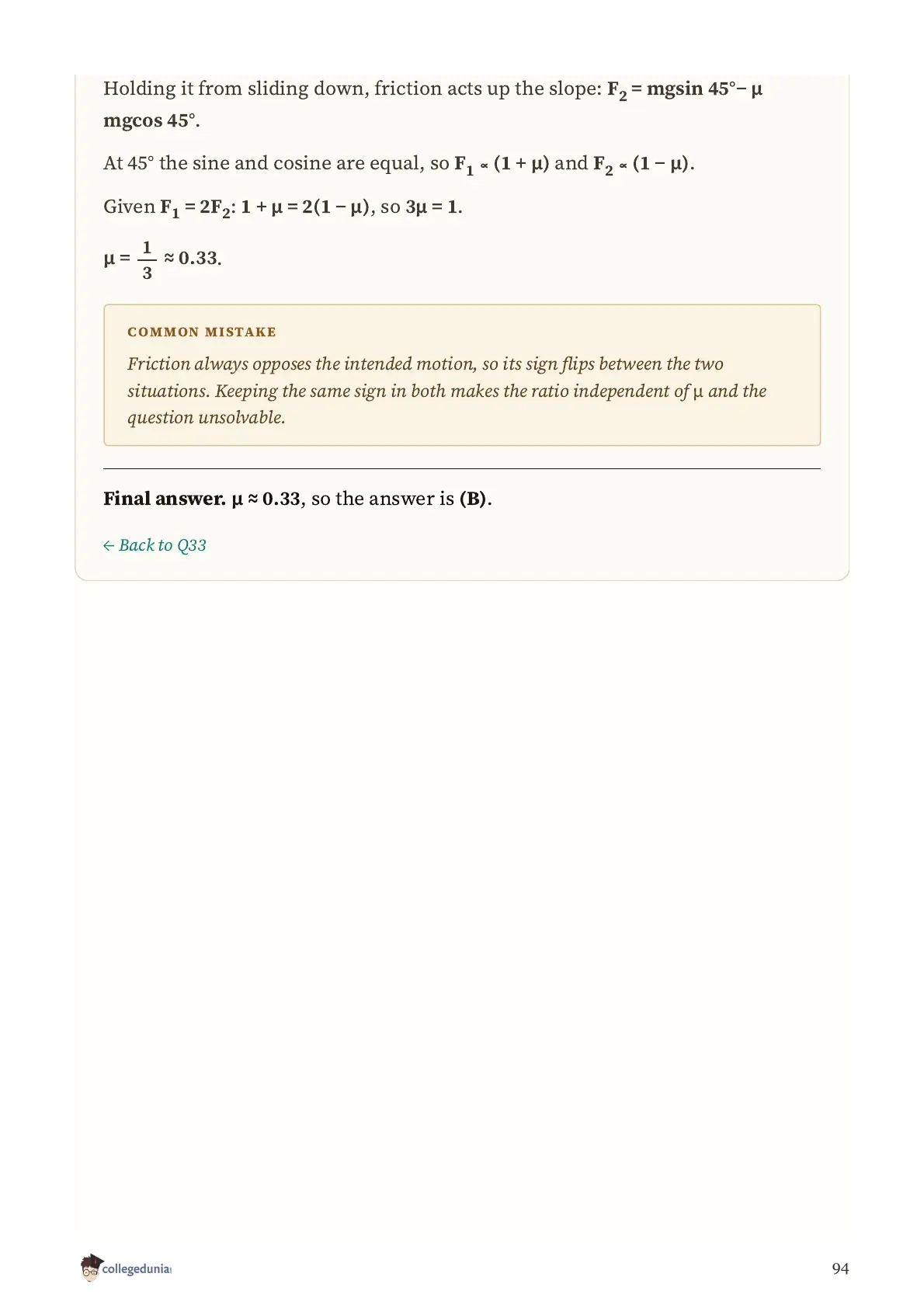
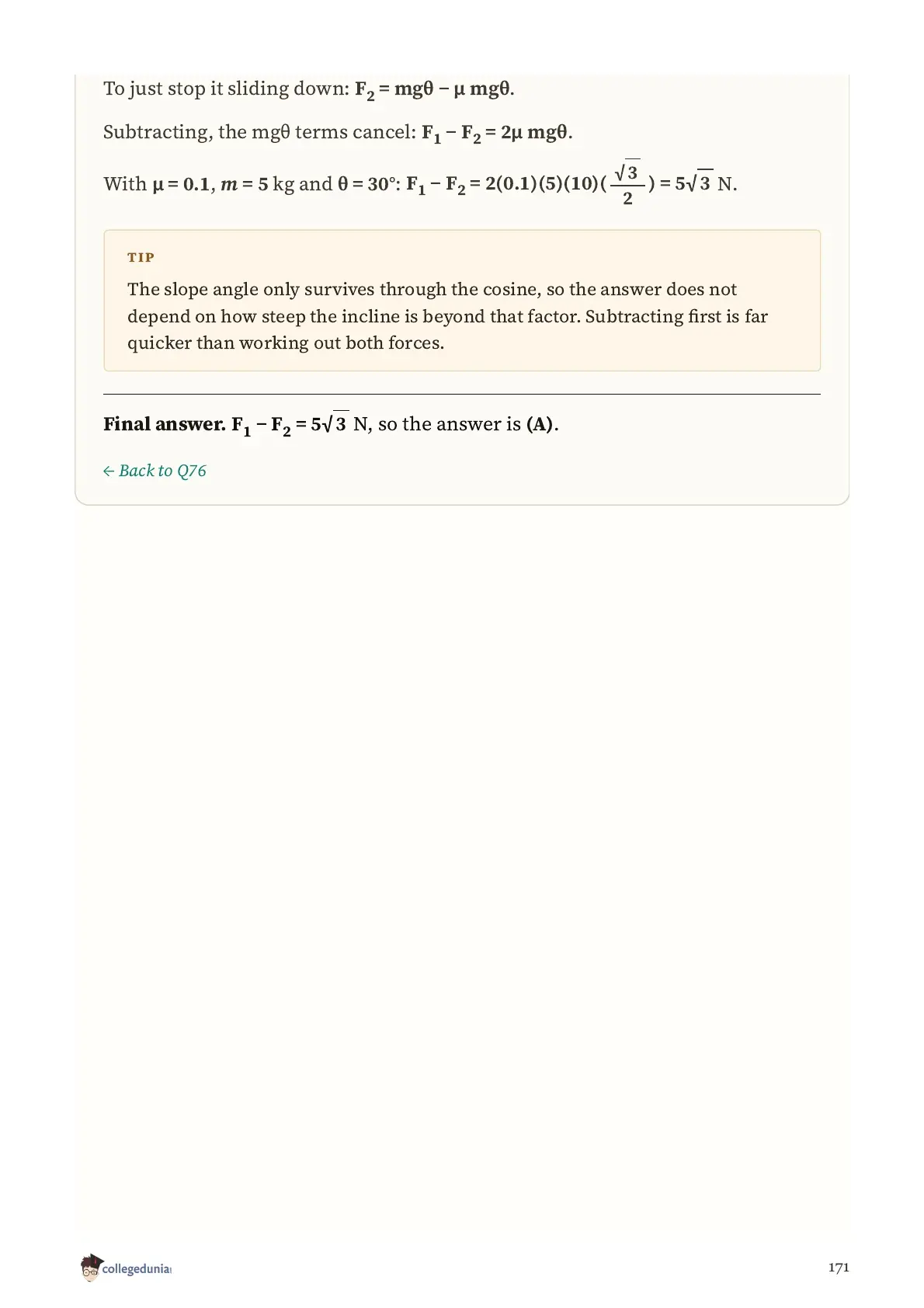
- Keeping friction in the same direction for both the push-up and hold-down cases
- Treating a movable pulley as if it were fixed
For the theory behind these questions, the laws of motion handwritten notes cover the same ground in 22 pages before you start the bank.
JEE Main Laws of Motion Previous Year Questions FAQs
Ques. How many marks do the laws of motion carry in JEE Main?
Ans. The unit usually contributes 2 to 4 questions in Paper 1 Physics, which is 8 to 16 marks. Friction and connected bodies are the two sub-topics that repeat most often.
Ques. Are solutions included in this PYQ PDF?
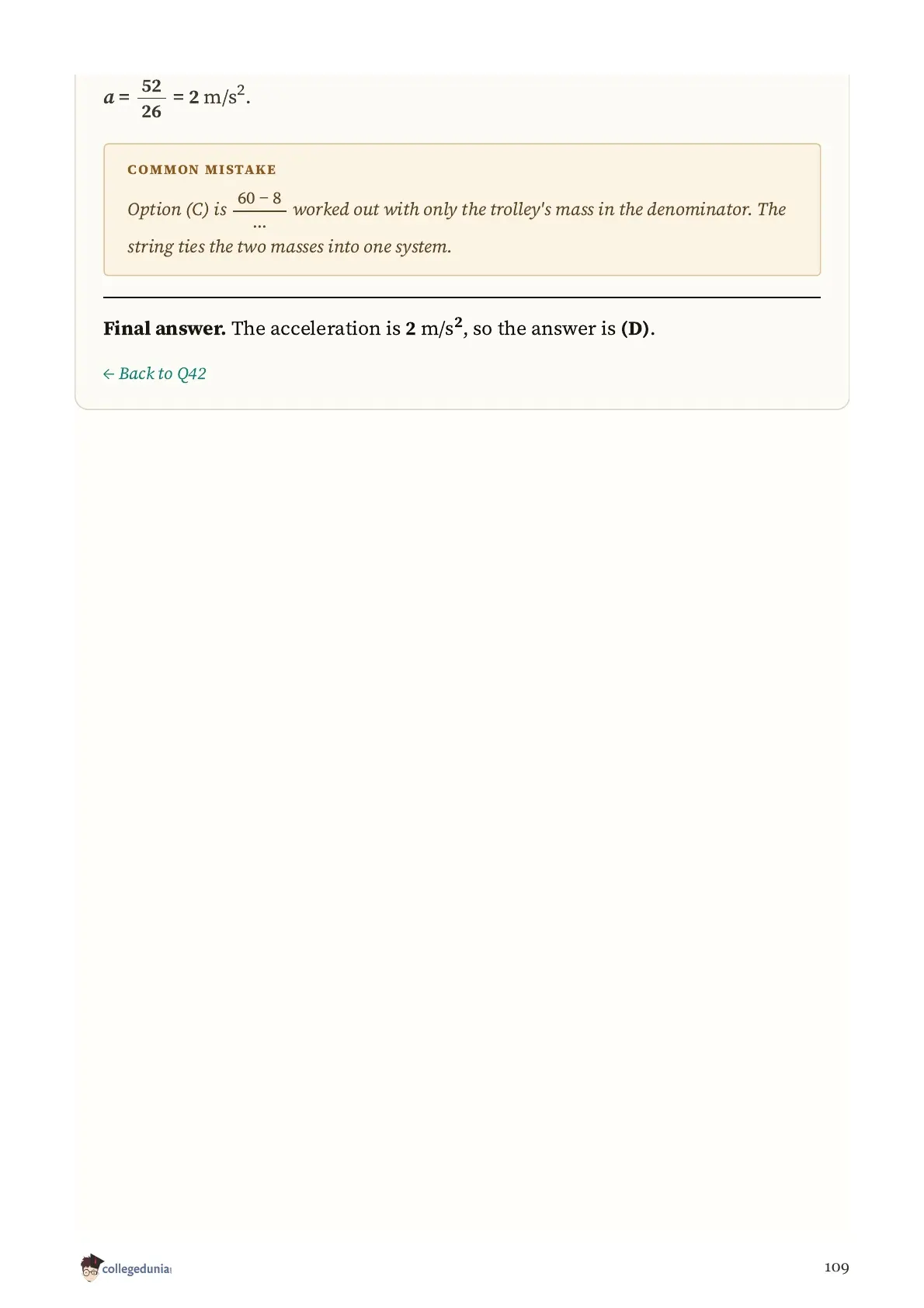
Ans. Yes. All 80 questions are worked in full. Each solution opens with a one-line quick approach, then the detailed steps, a common mistake note and the final answer. An answer key grid sits between the questions and the solutions.
Ques. Are the figures taken from other websites?
Ans. No. All 32 diagrams are redrawn in house from the original question, so nothing carries another site's watermark. Questions whose figure or answer could not be reproduced faithfully were left out rather than shipped broken.
Ques. Why is circular motion not in this set?
Ans. Uniform and non-uniform circular motion sit in the same syllabus unit but form a separate scheduler topic with their own question bank, so keeping them out lets you finish friction and connected bodies without switching ideas.
Ques. Can the PYQ PDF be downloaded free?
Ans. Yes. The full 176 page booklet can be read on this page and downloaded at no cost, so students can print it or keep it on a phone for practice.



Comments