




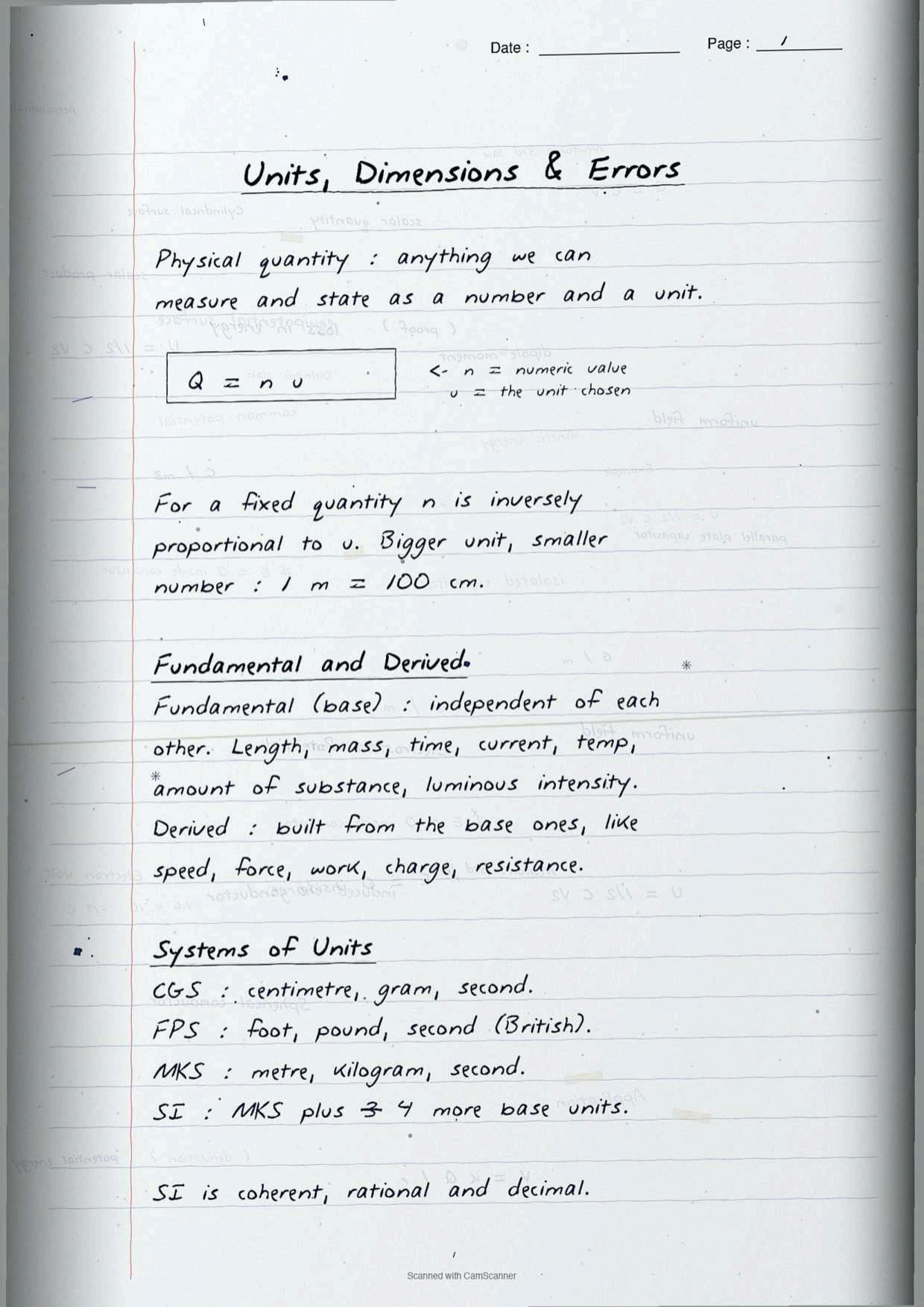
JEE Main Units and Dimensions handwritten notes, free to download as a 26-page PDF. The chapter is worth about 4 marks in every paper and takes roughly a week to learn, so it is one of the first worth finishing.
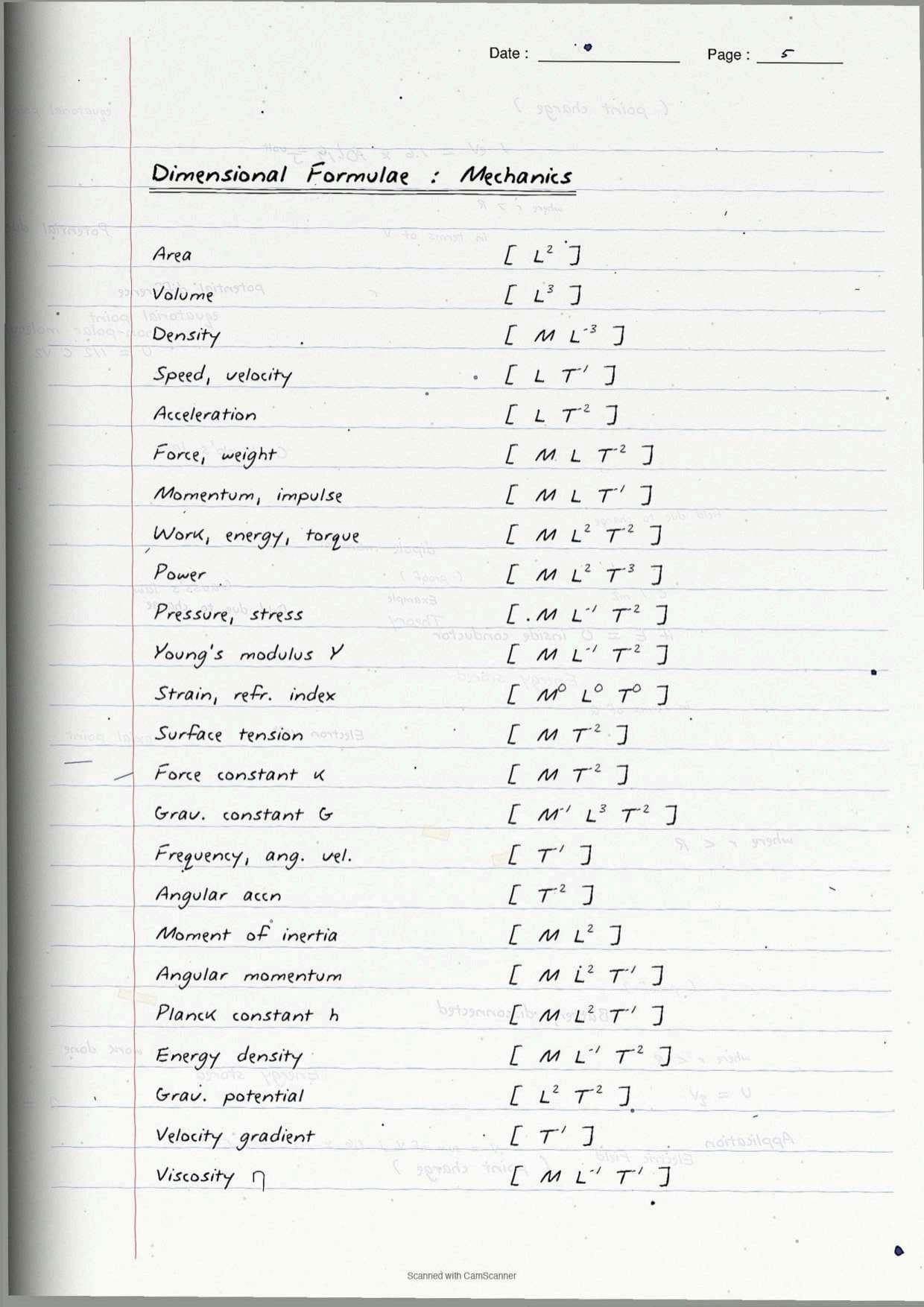
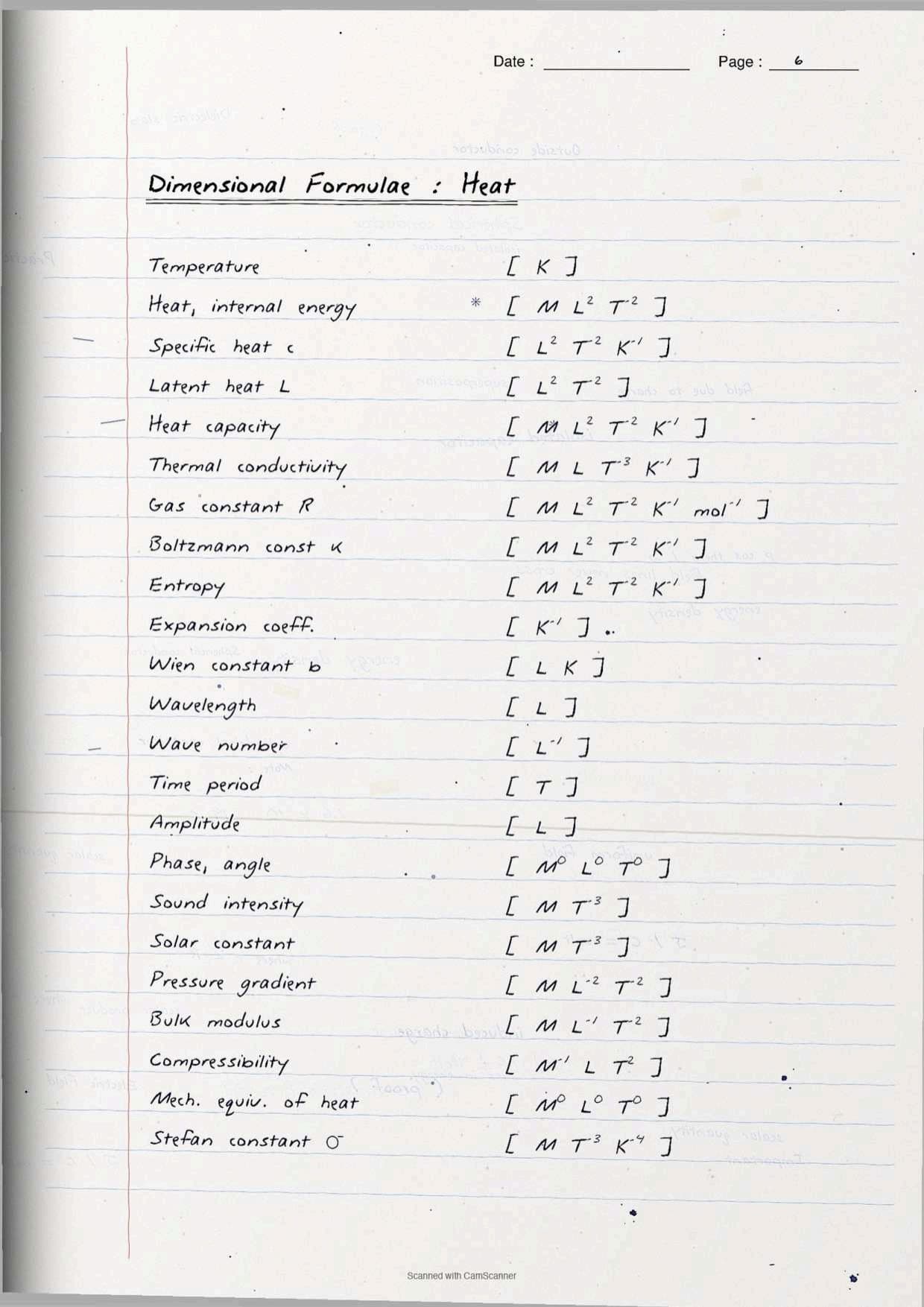
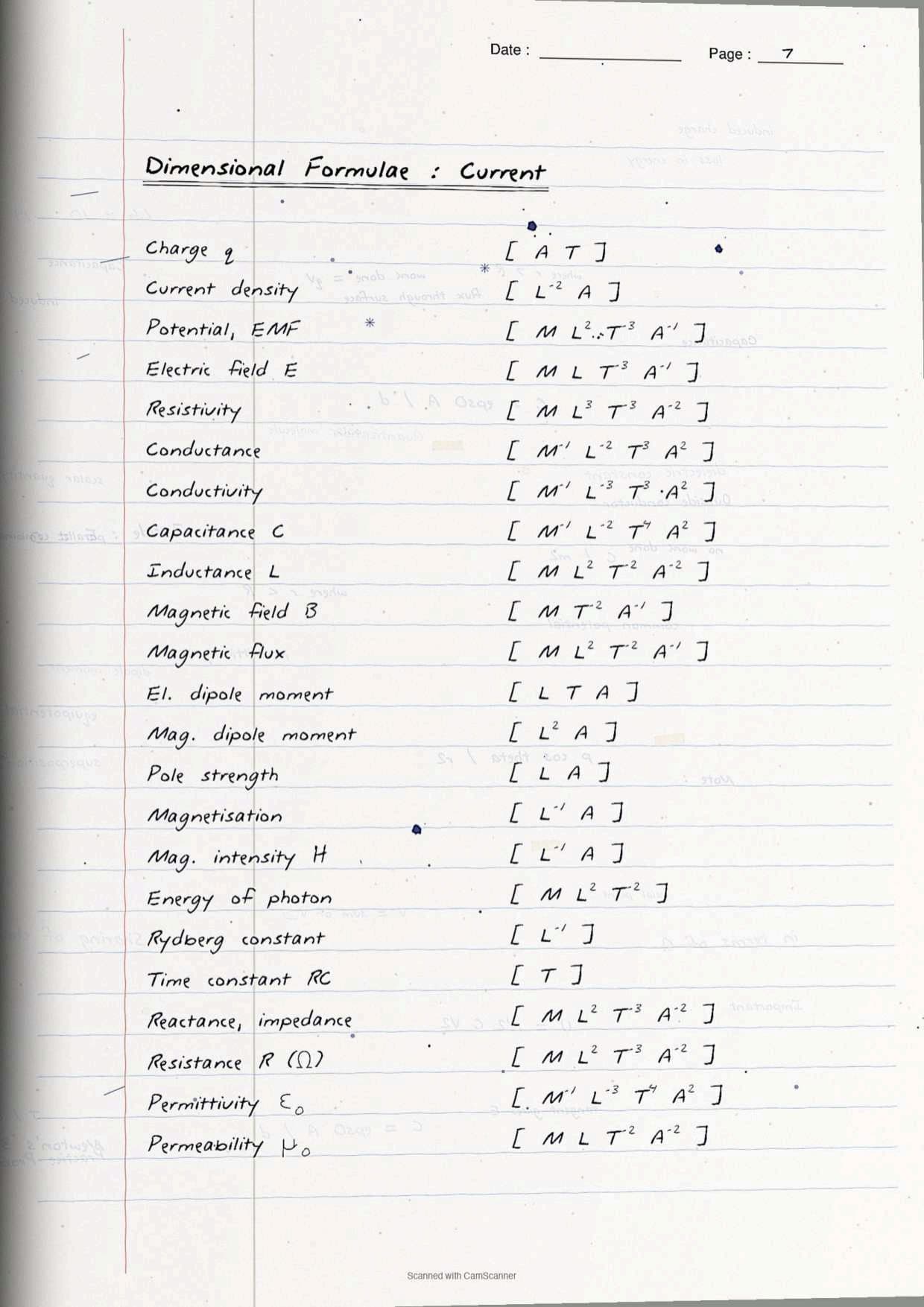
- You get around 70 dimensional formulae over three pages. They are grouped instead of listed alphabetically, so work, energy and torque sit together and you learn them as one thing.
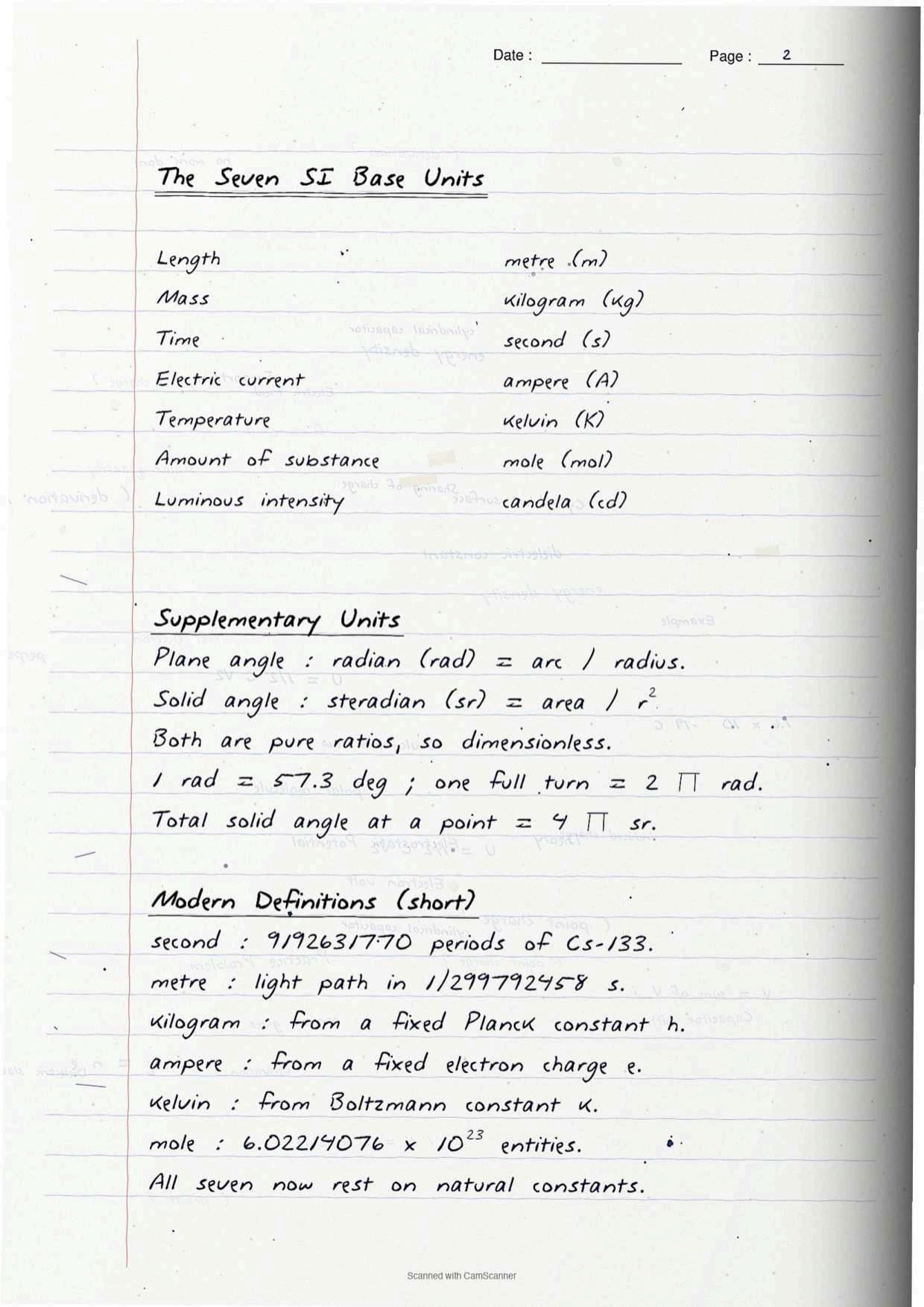
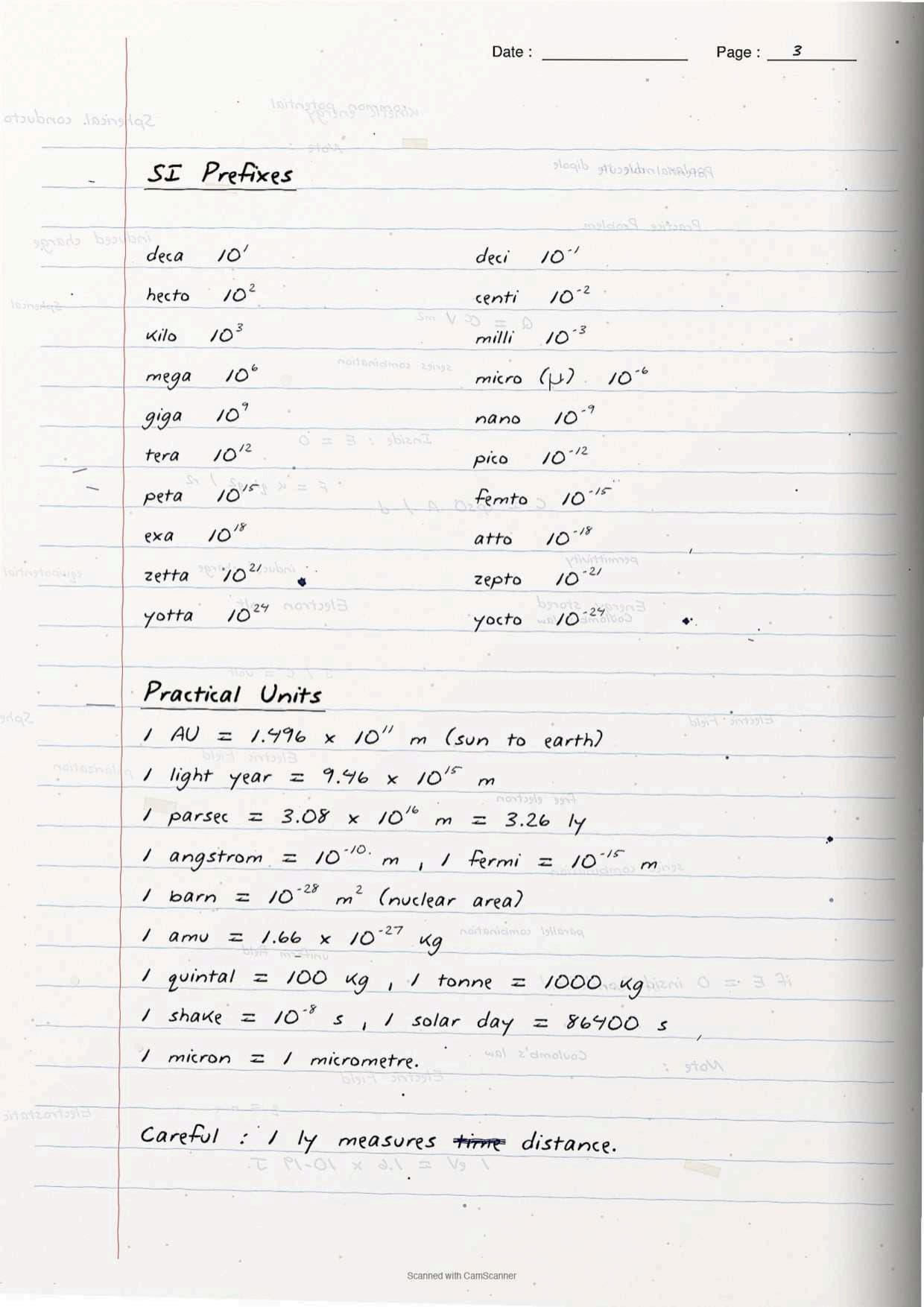
- All 7 SI base units are there with the 2019 definitions, along with the practical units students keep mixing up, from the light year and parsec down to the fermi and the barn.
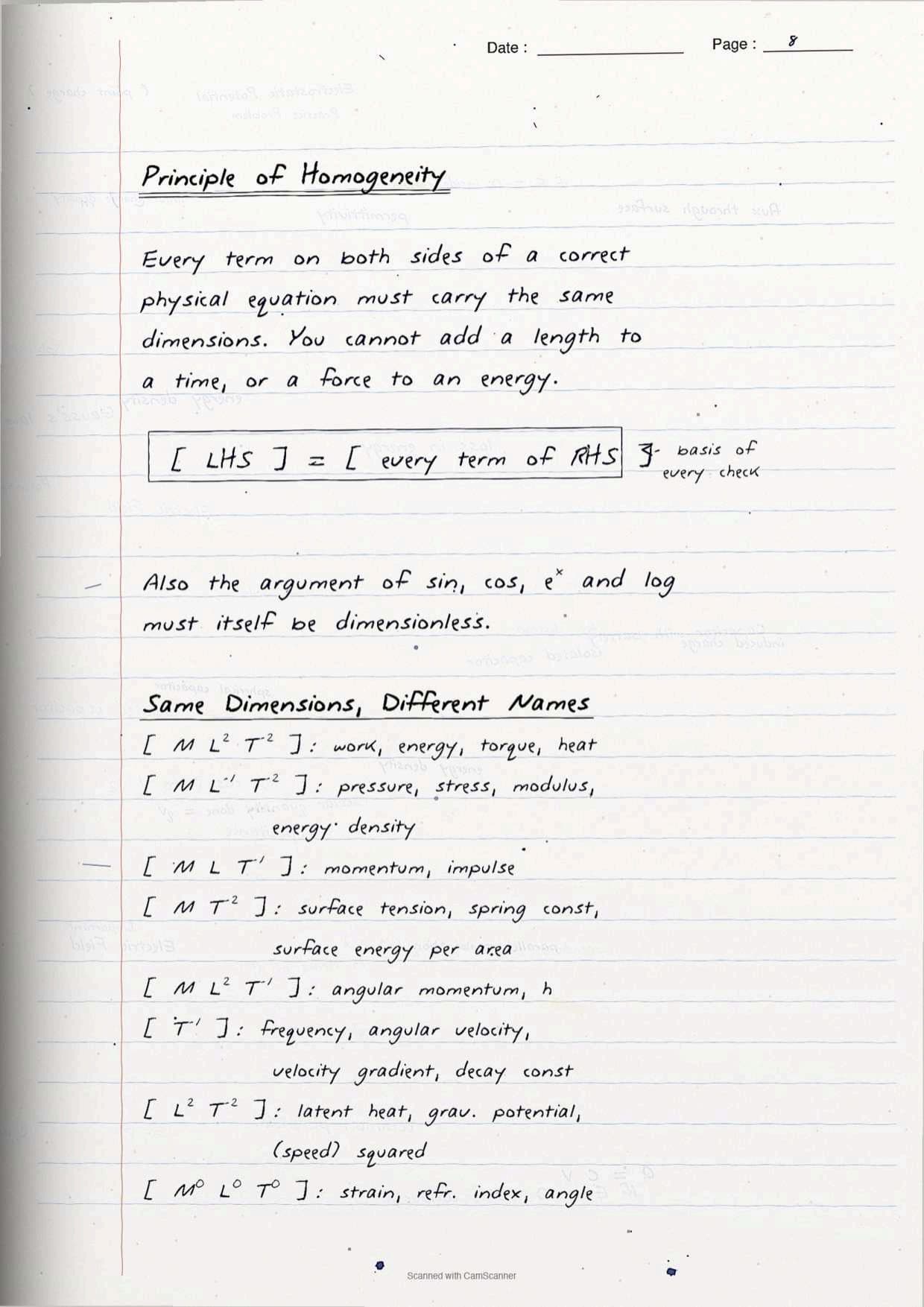
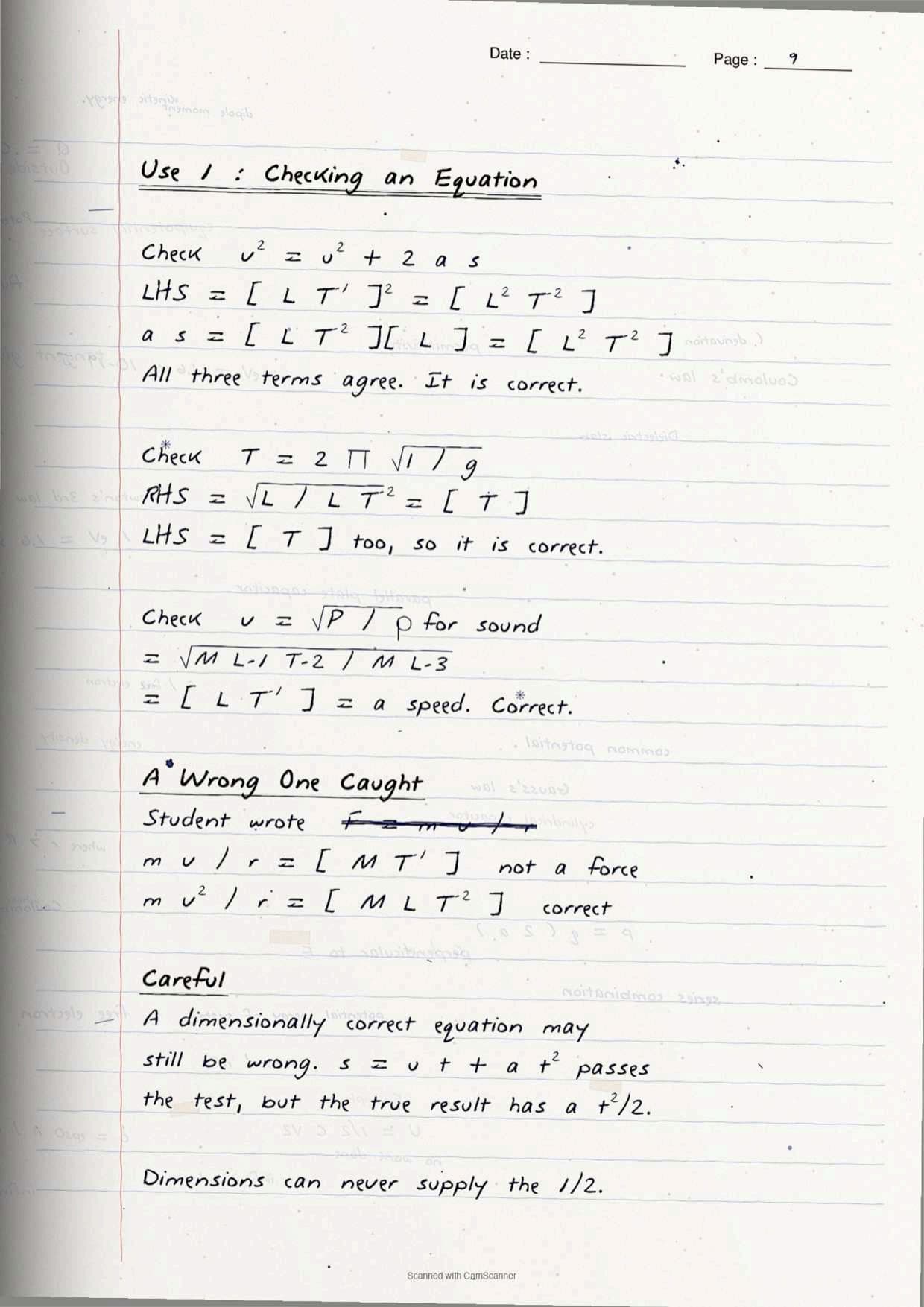
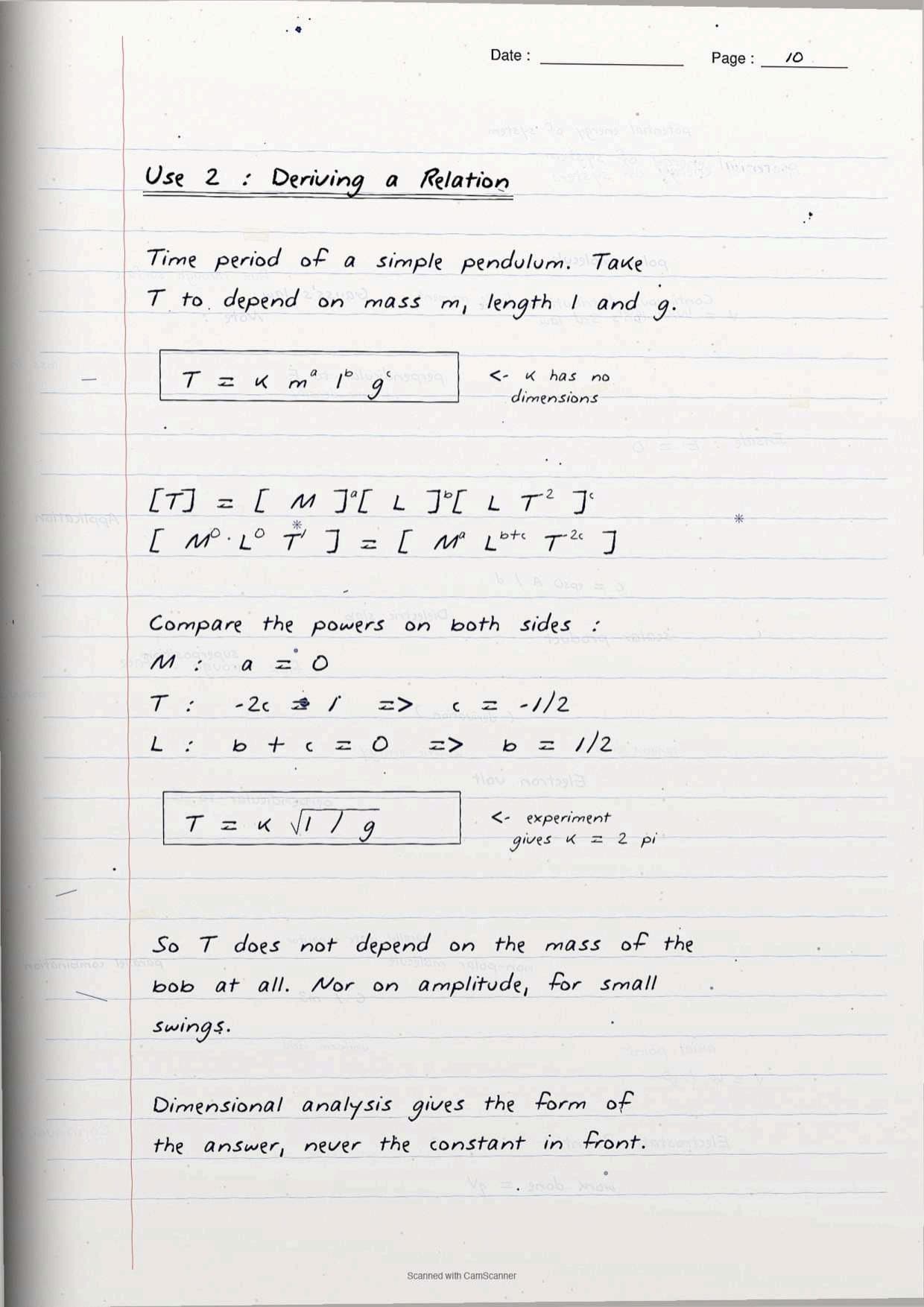
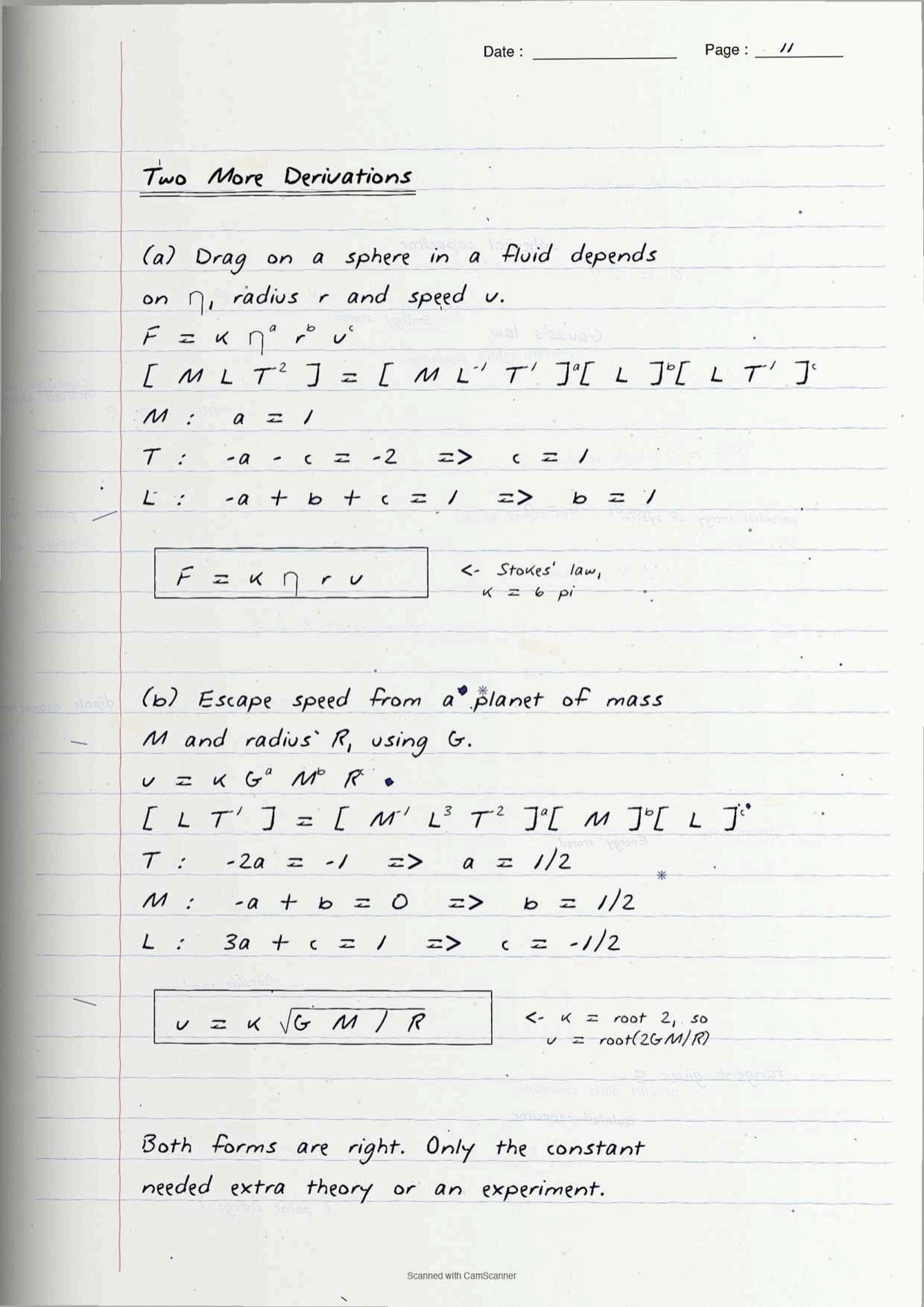
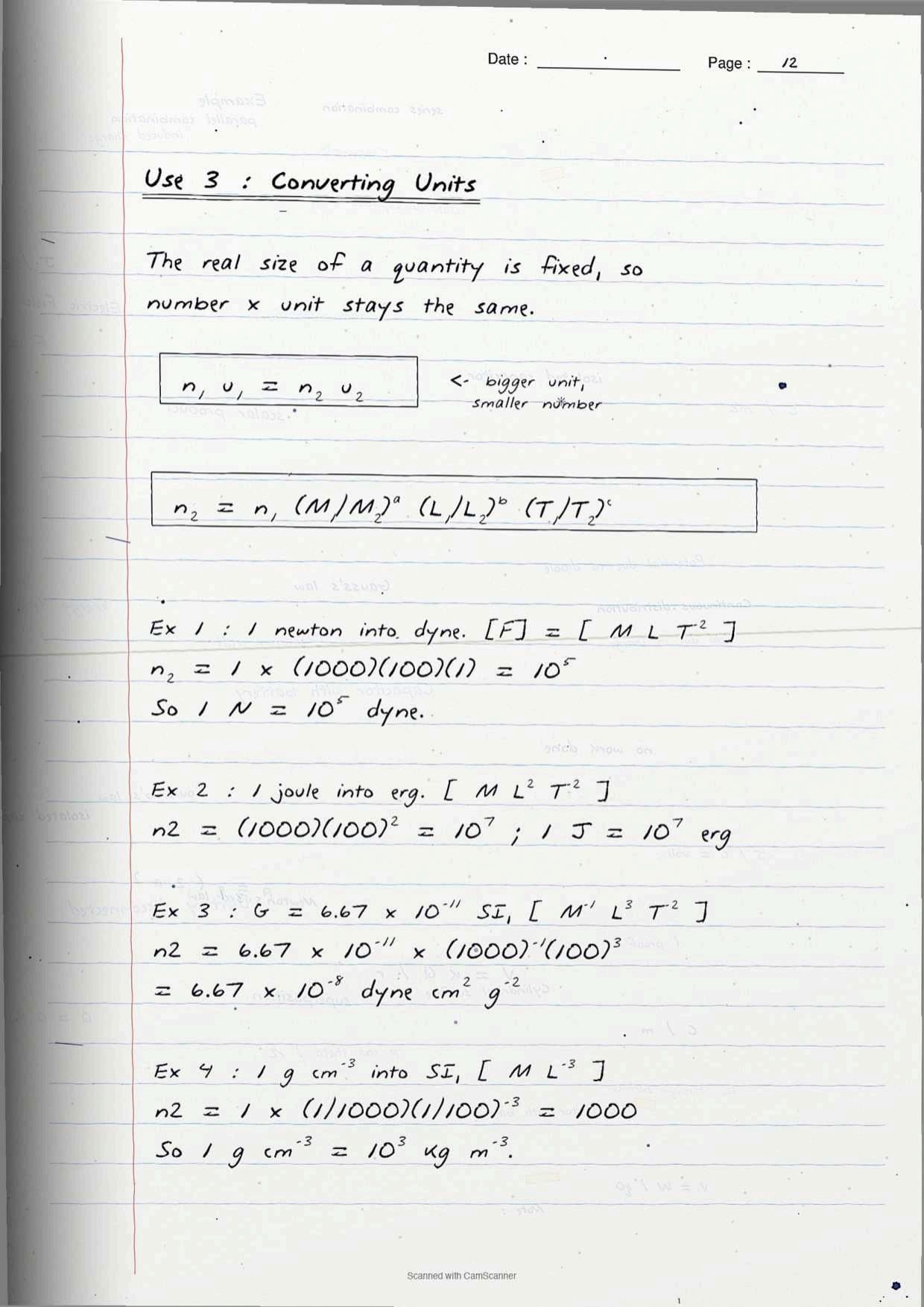
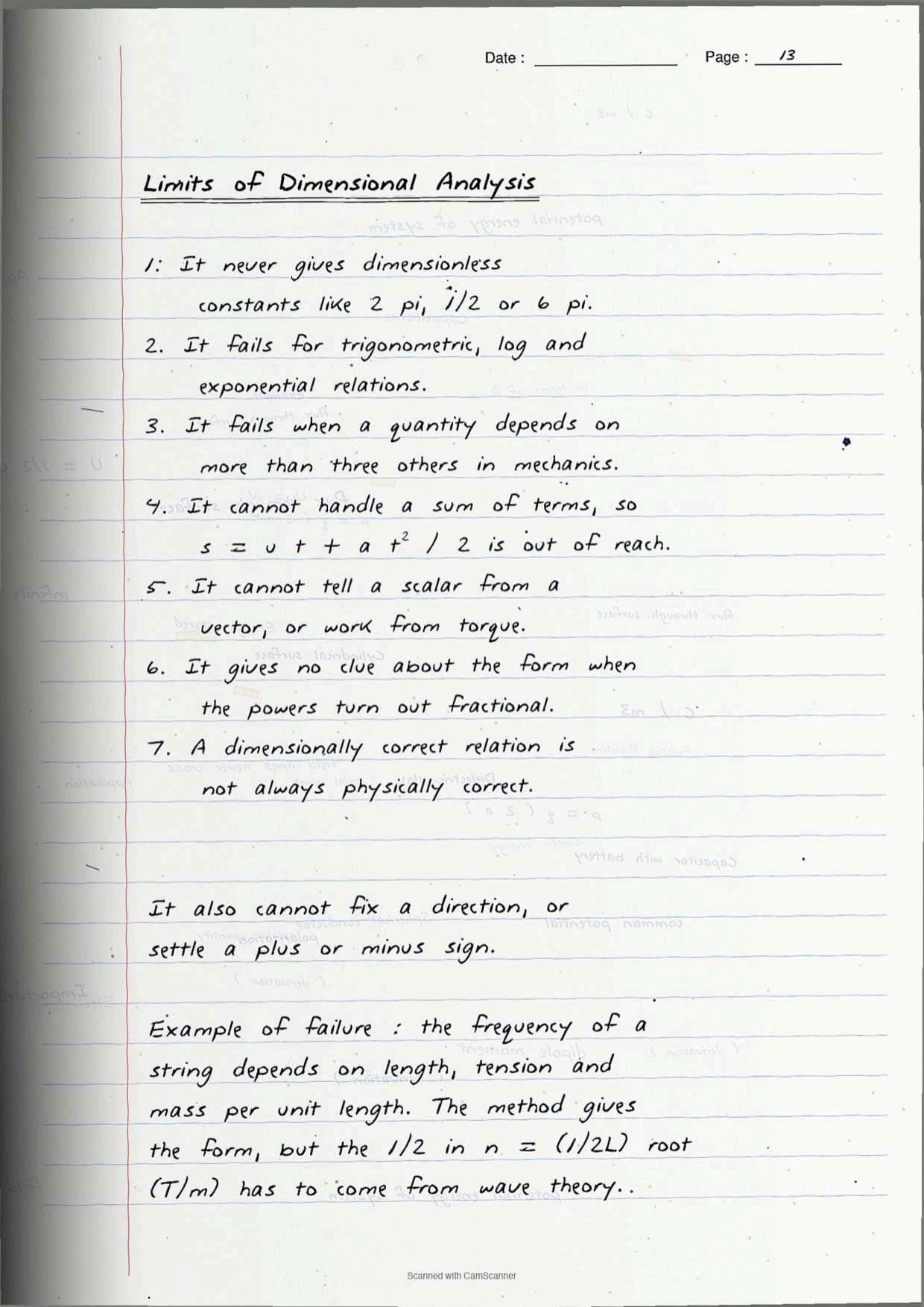
- Homogeneity gets three worked uses. You check an equation, derive one by matching powers, and convert between systems. The pendulum period and Stokes law are both done in full, and the seven limitations follow straight after.
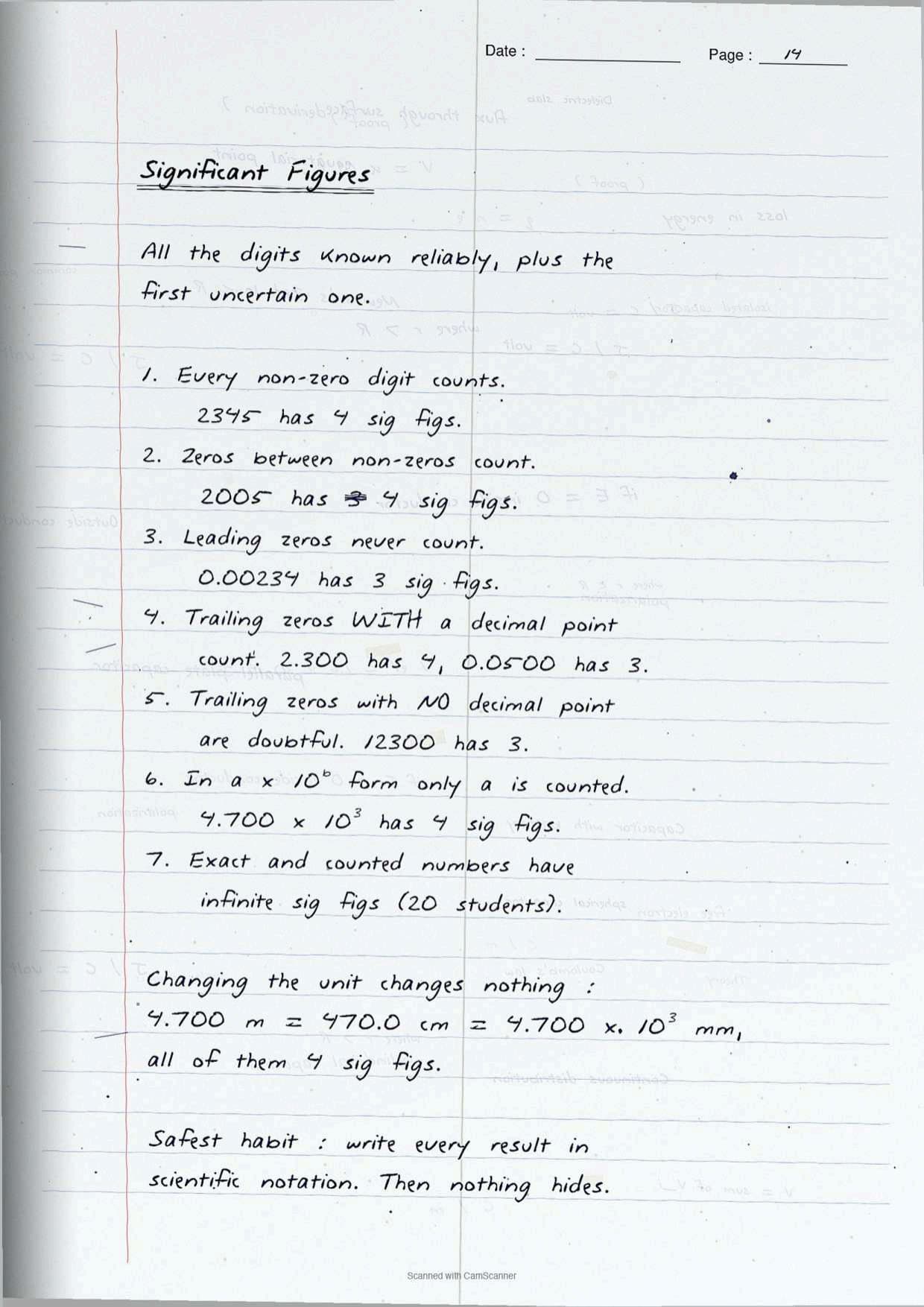
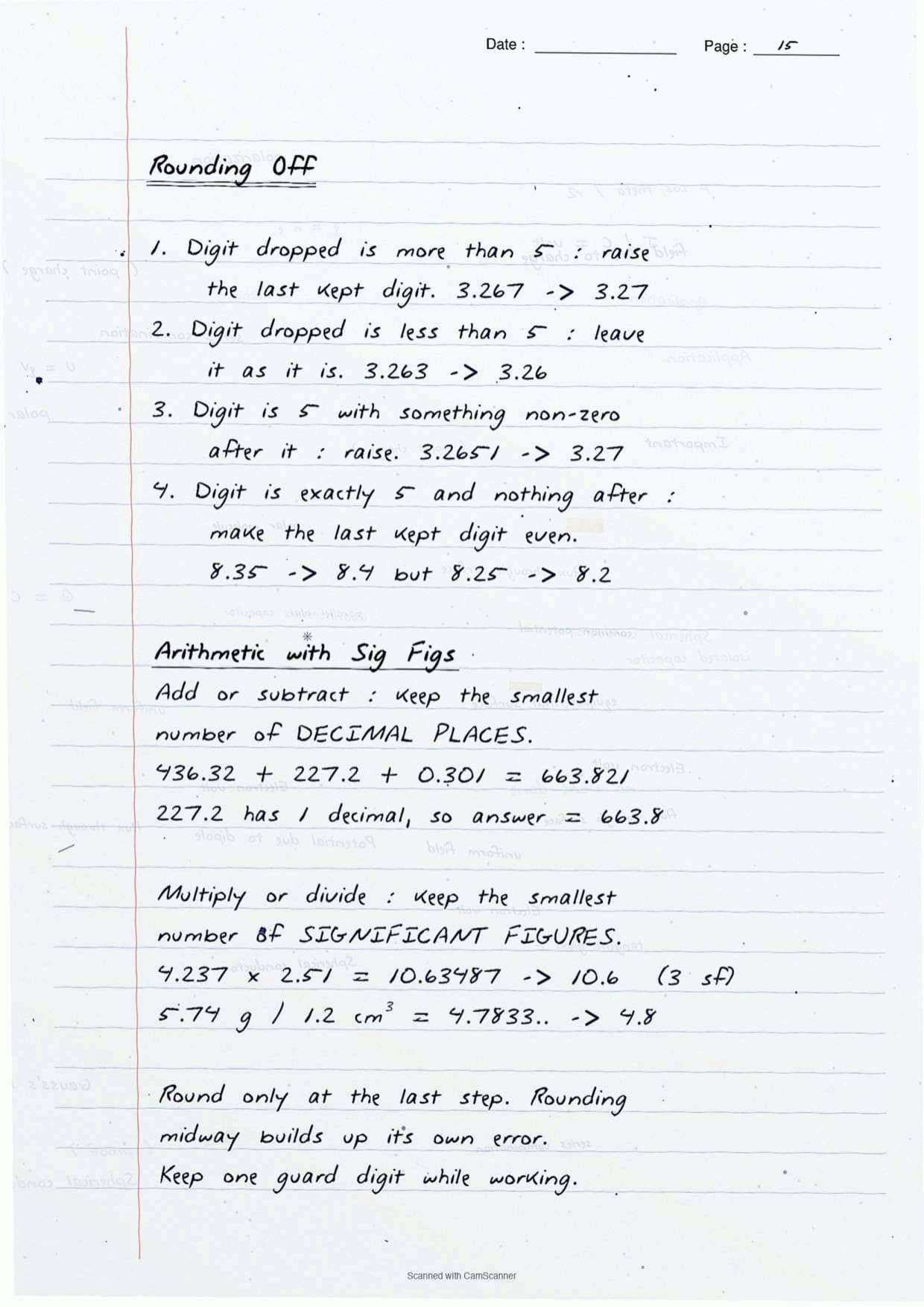
- Significant figures are covered rule by rule, seven for counting and four for rounding. Round-to-even is not skipped, which is where most students lose the mark.
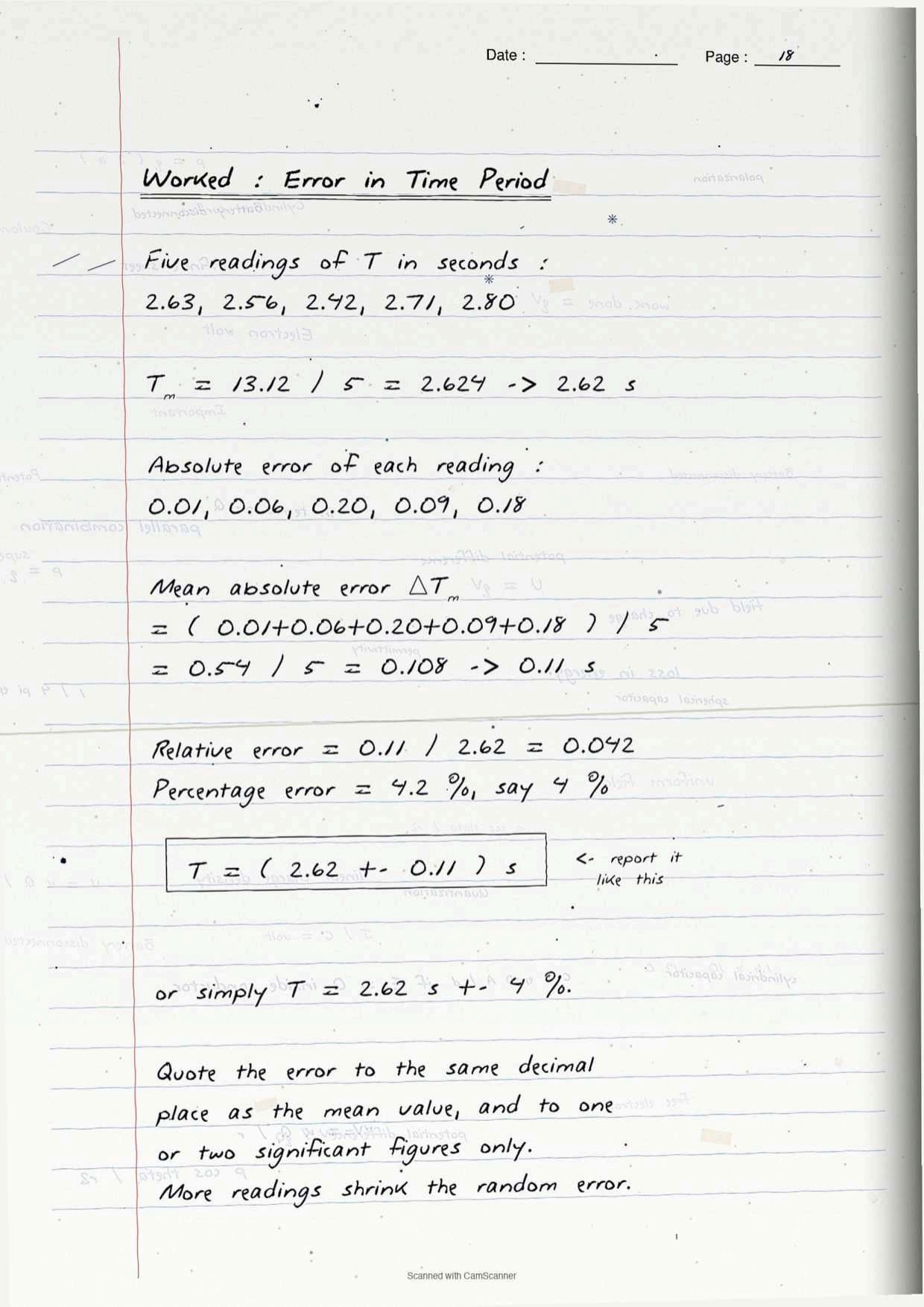
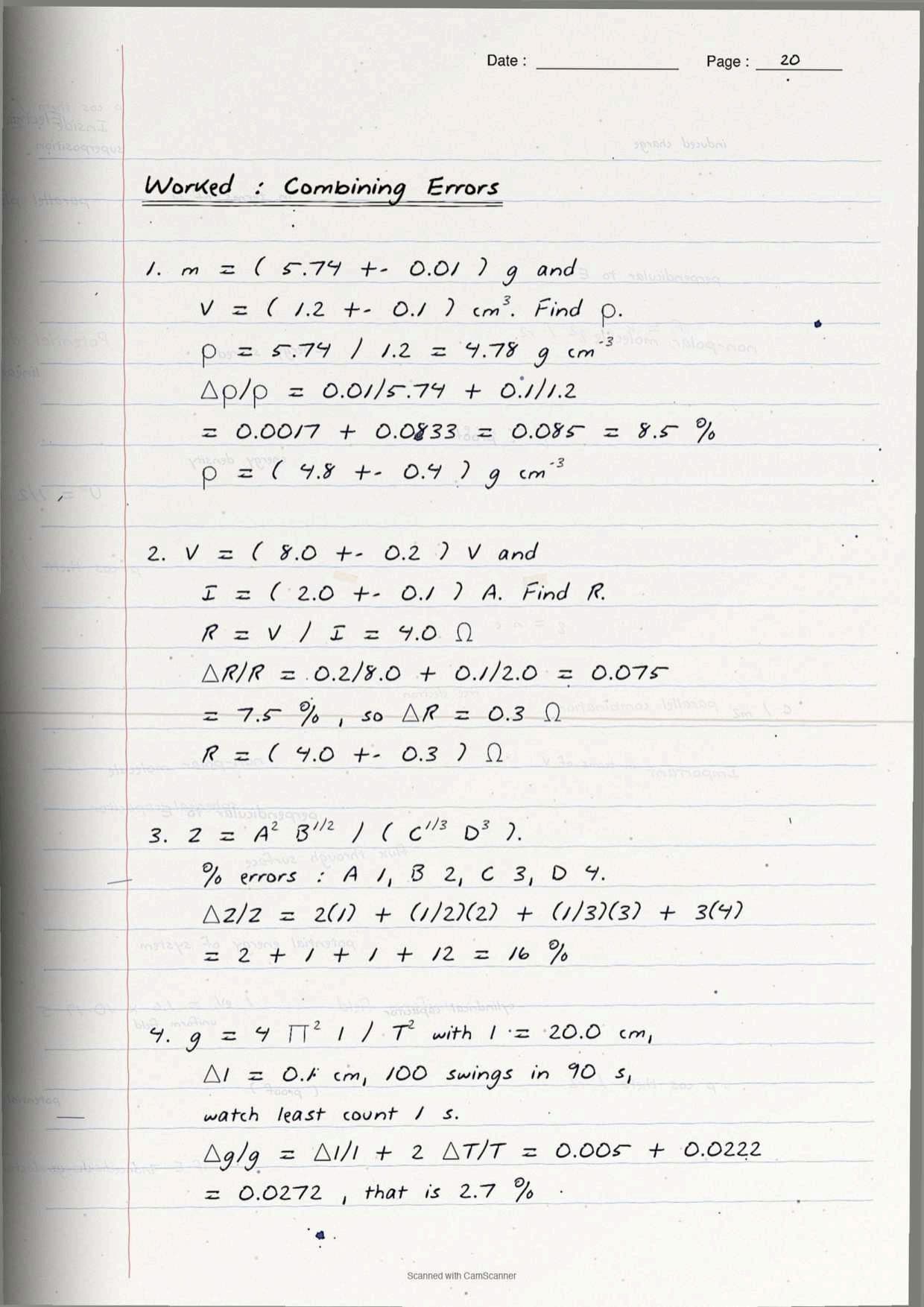
- For errors you get the combination rules and four numericals worked through, coming out at 8.5, 7.5, 16 and 2.7 percent.
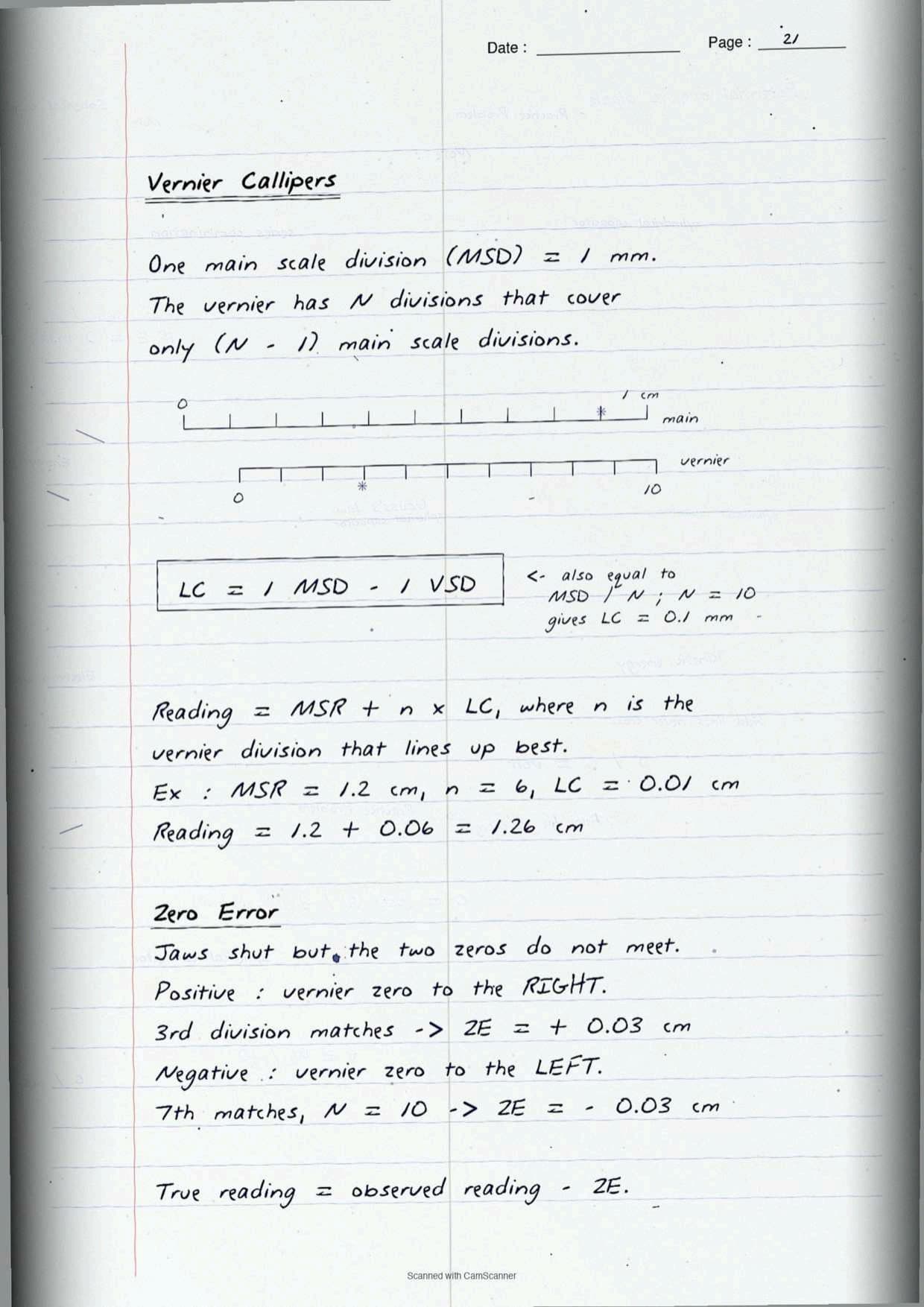
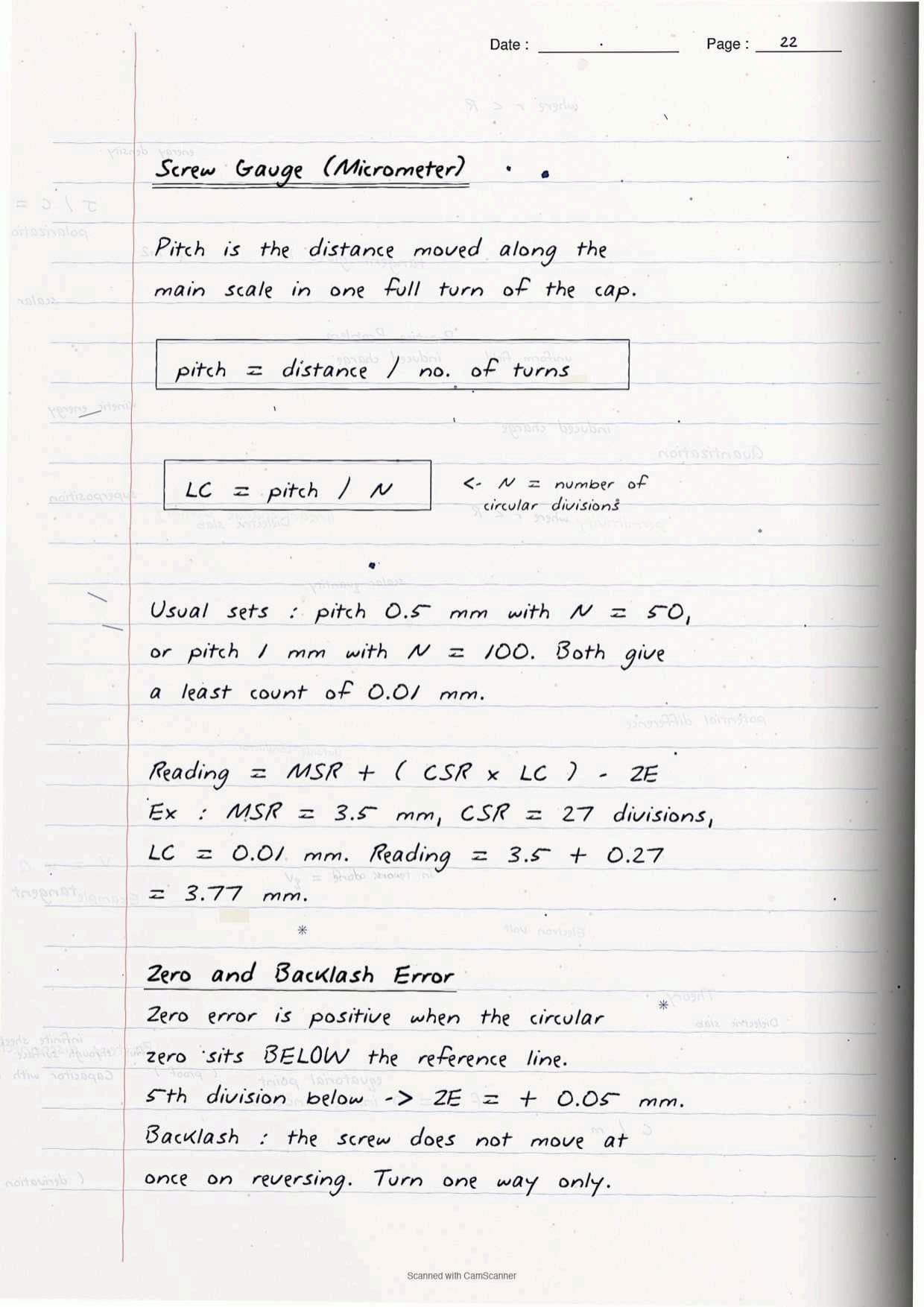
- Both instruments are drawn out. Vernier callipers and the screw gauge each show the scales, positive and negative zero error, pitch, least count and backlash.
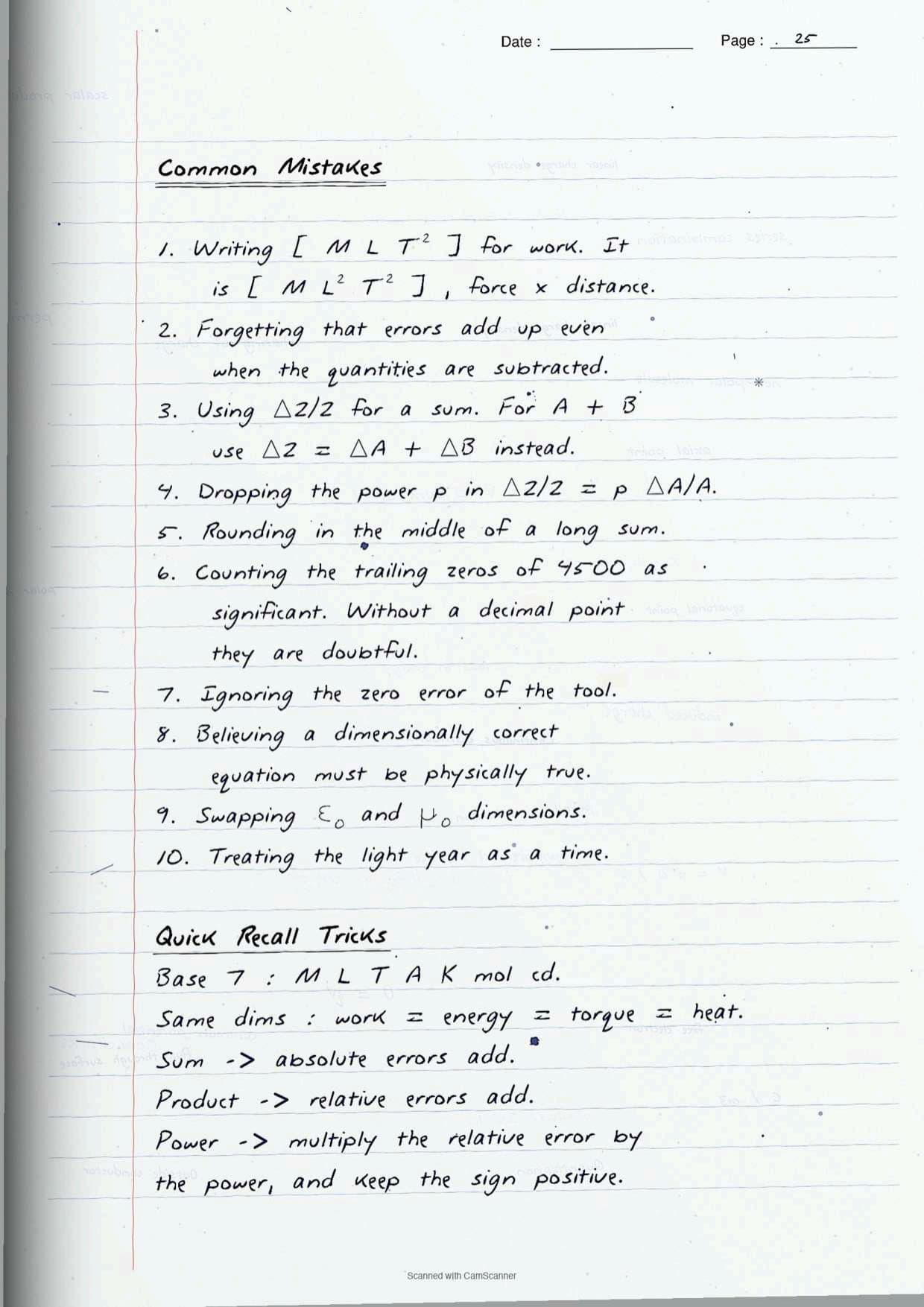
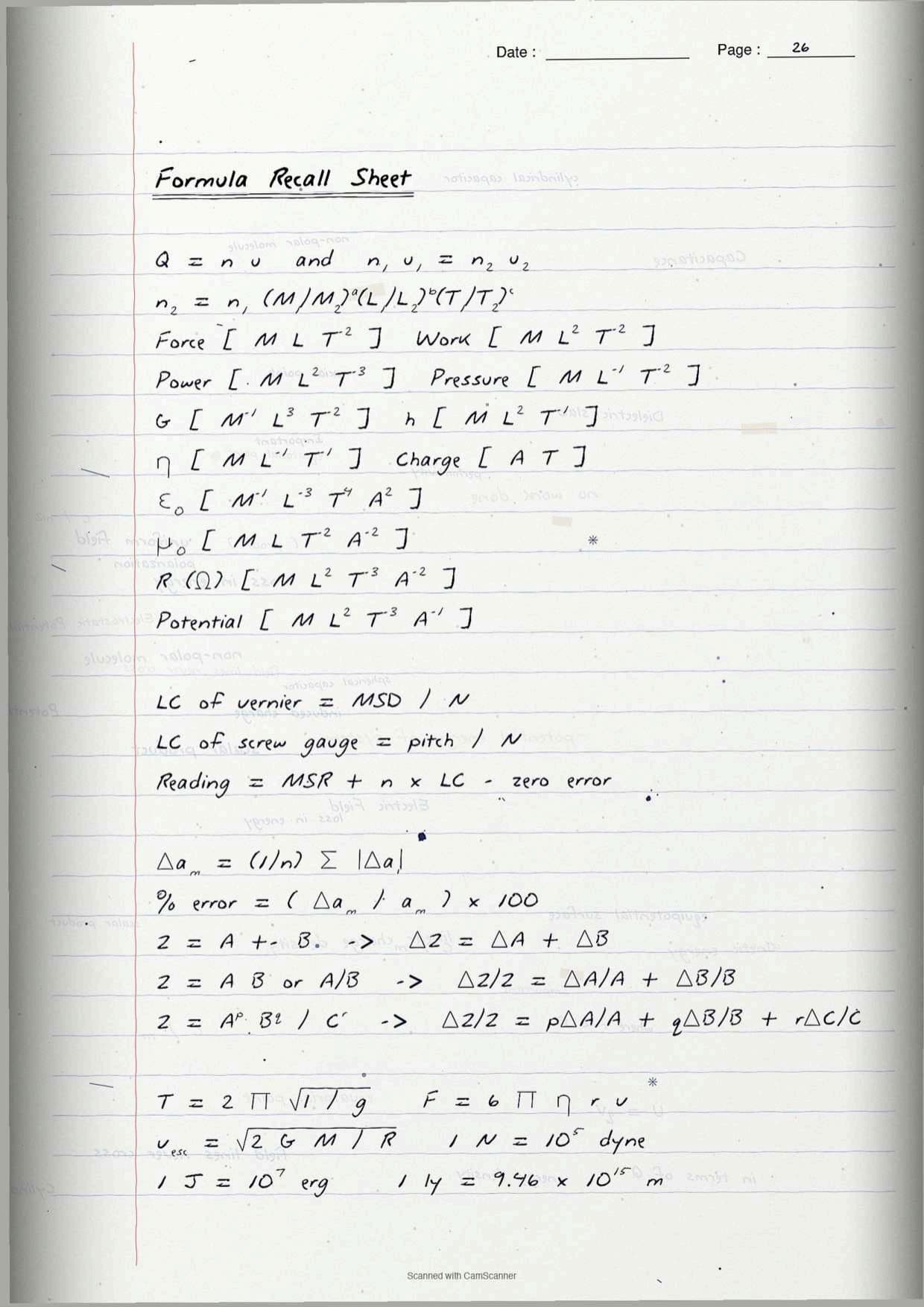
- It closes with six previous-year-style problems, a list of ten common mistakes, and a formula recall sheet.
Why Unit 1 Is Worth Finishing First
NTA has asked at least one question from this unit in almost every recent JEE Main shift. The questions are short, formula driven and rarely need more than two minutes.
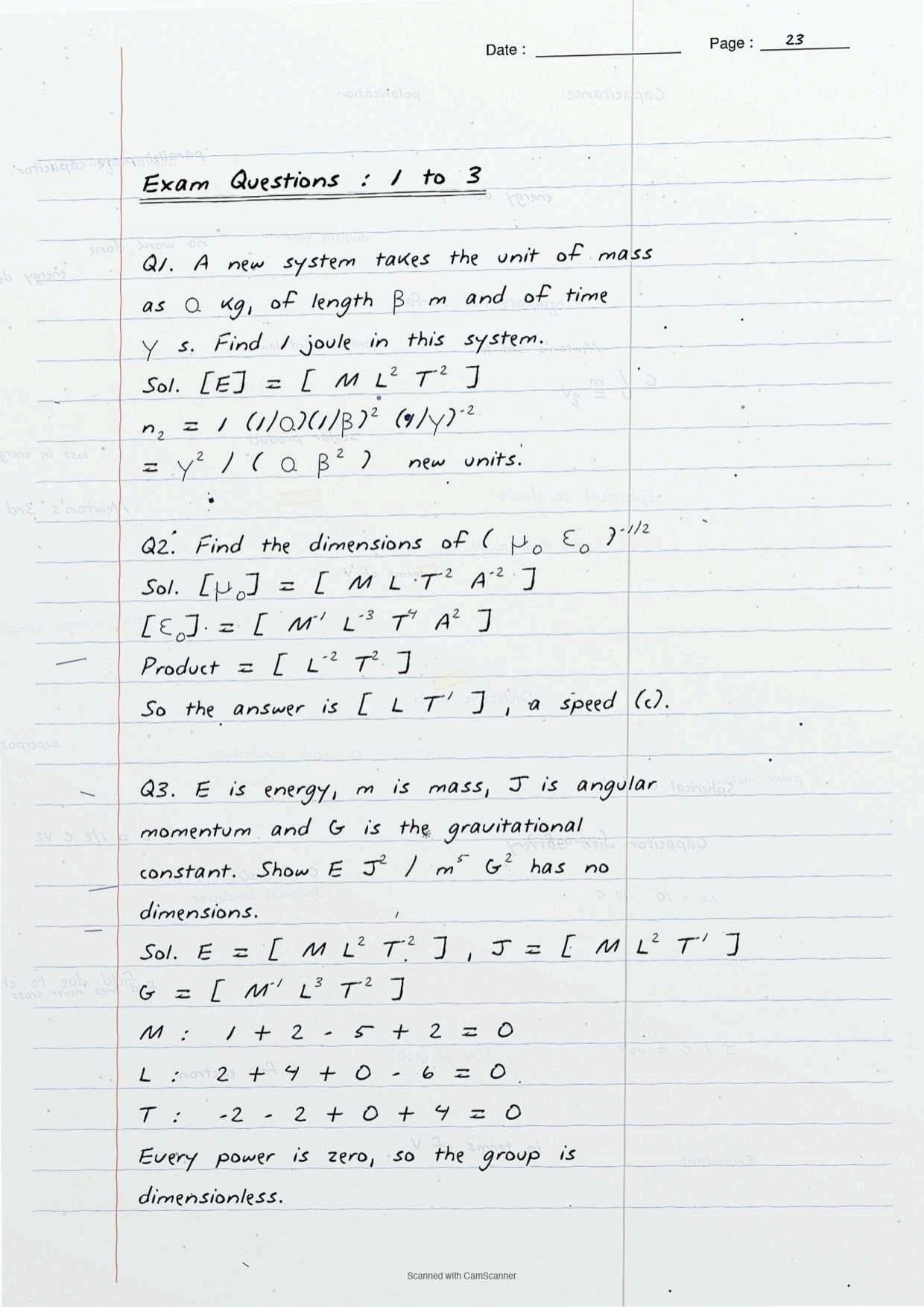
- Dimensional matching questions, where a combination like EJ squared over m to the fifth G squared has to be shown dimensionless.
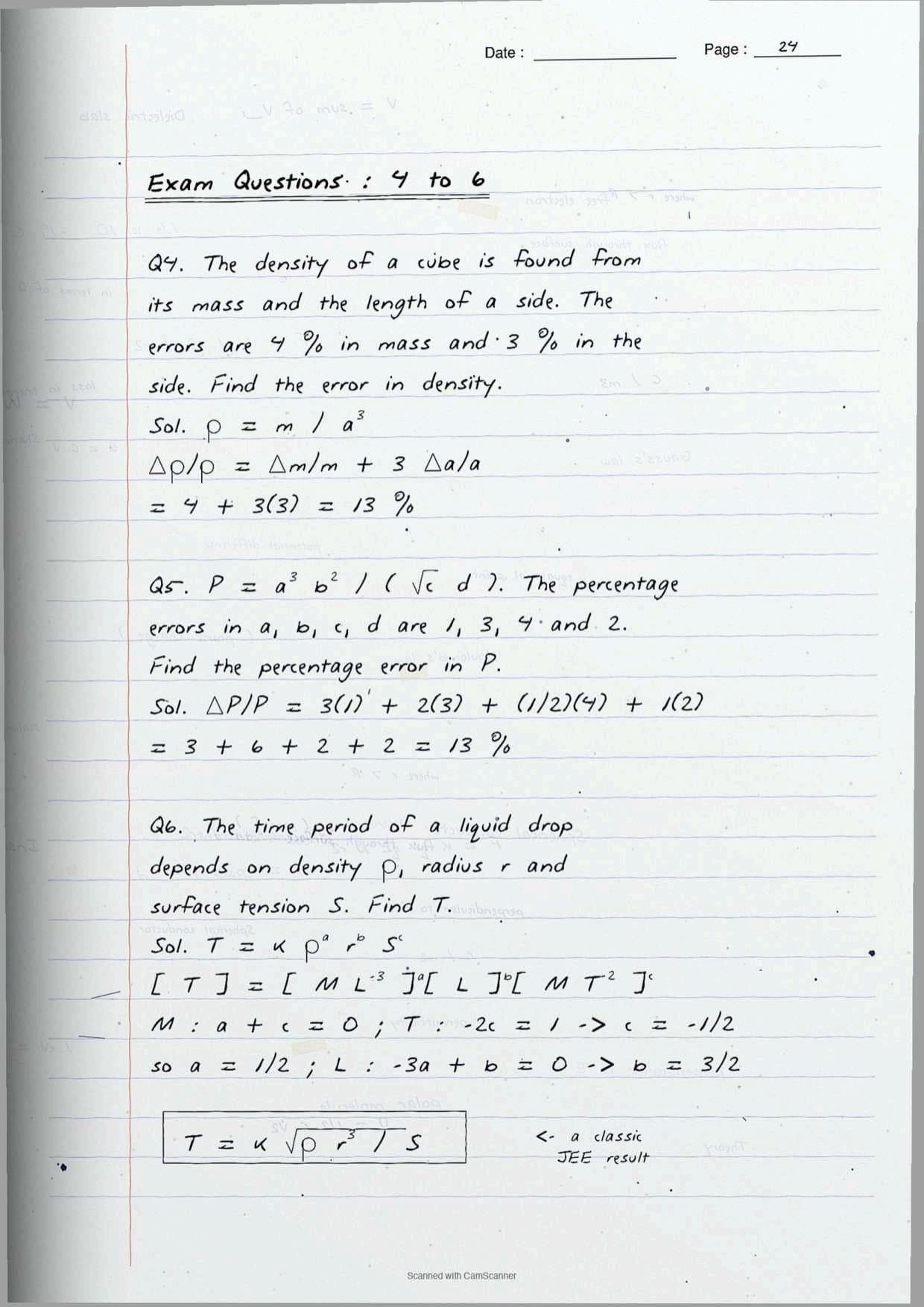
- Percentage error sums built on a single compound formula.
- Least count and zero error readings from a vernier or screw gauge diagram.
Students who skip this unit to spend longer on Rotation usually lose four easy marks and gain nothing.
Seven Base Units, and the Definitions That Changed
The notes list all seven SI base quantities with their symbols, then set out the constant based definitions adopted in 2019. The kilogram is no longer a metal cylinder in Paris, and examiners have started asking about it.
- The second comes from the caesium 133 hyperfine transition.
- The metre is fixed by the speed of light.
- The kilogram is fixed by the Planck constant.
- The ampere is fixed by the elementary charge.
Radian and steradian sit separately as supplementary units, and the full prefix ladder from yotta down to yocto is written on one page for quick reference.
Dimensional Formulae Worth Memorising Cold
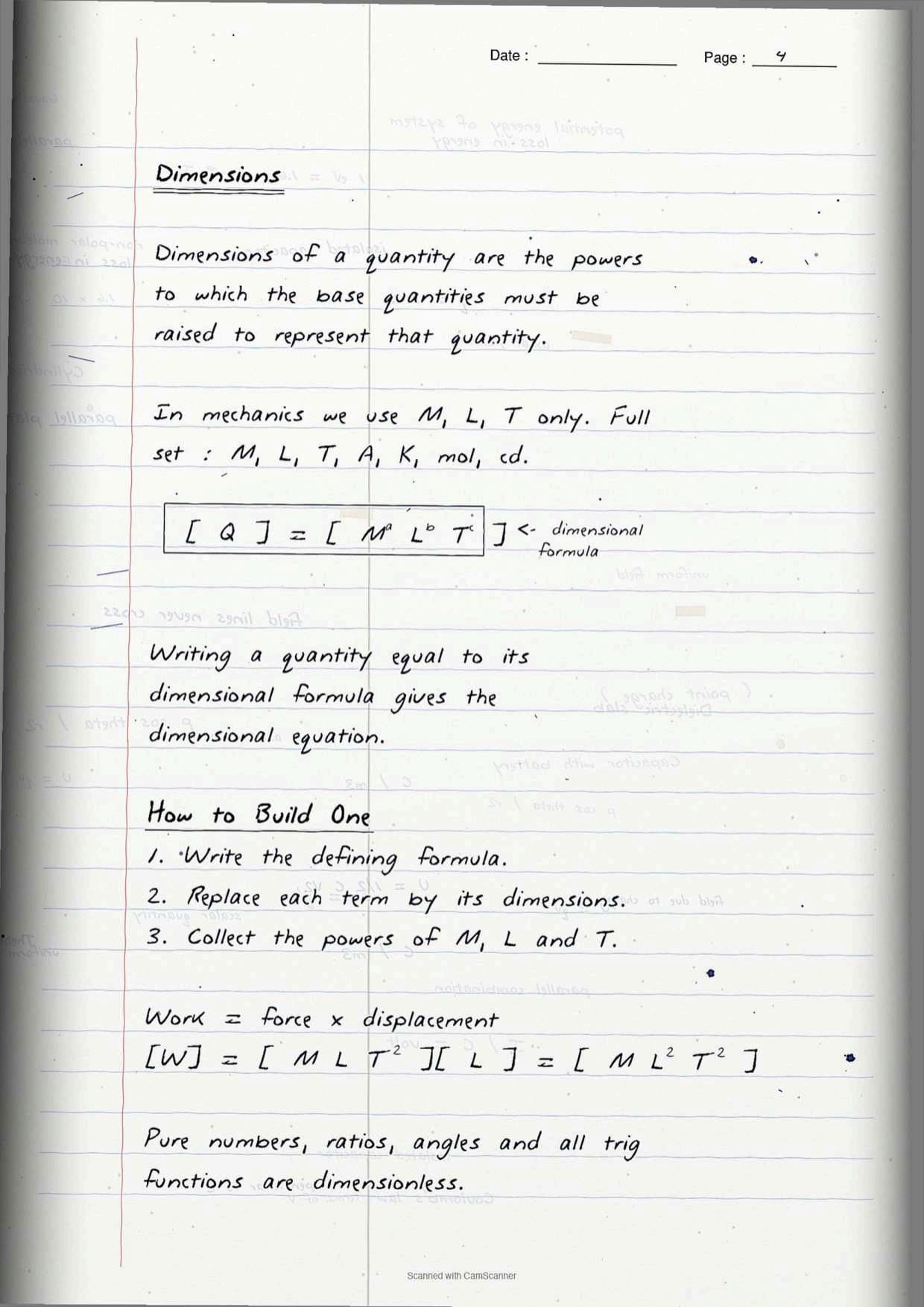
Three full pages carry roughly seventy dimensional formulae, grouped so that related quantities sit together. Grouping matters more than raw memorising.
- Mechanics: work, energy, torque and moment of force all share one dimensional formula.
- Same group trap: pressure, stress and modulus of elasticity are dimensionally identical.
- Heat and waves: specific heat, latent heat and entropy written side by side.
- Electricity: permittivity, permeability and their product, which returns one over speed squared.
Three Real Uses, and Seven Places It Fails
The principle of homogeneity gets three worked applications in the notes: checking an equation, deriving a relation by power matching, and converting a unit between systems.
One worked example deliberately checks an equation that turns out to be wrong, because spotting the mismatch is the actual exam skill. The pendulum period, Stokes law and escape speed are each derived from scratch by matching powers.
The limitations page is the one students underline. Dimensional analysis cannot find dimensionless constants, cannot handle trigonometric or exponential terms, and cannot separate two quantities that share a formula.
Significant Figures Without Losing a Mark
Seven counting rules and four rounding rules are written out, including round to even, which most students get wrong on a 2.5 style boundary.
Addition keeps the fewest decimal places. Multiplication keeps the fewest significant figures. The notes show both with a worked pair so the difference sticks.
Combining Errors in a Compound Formula
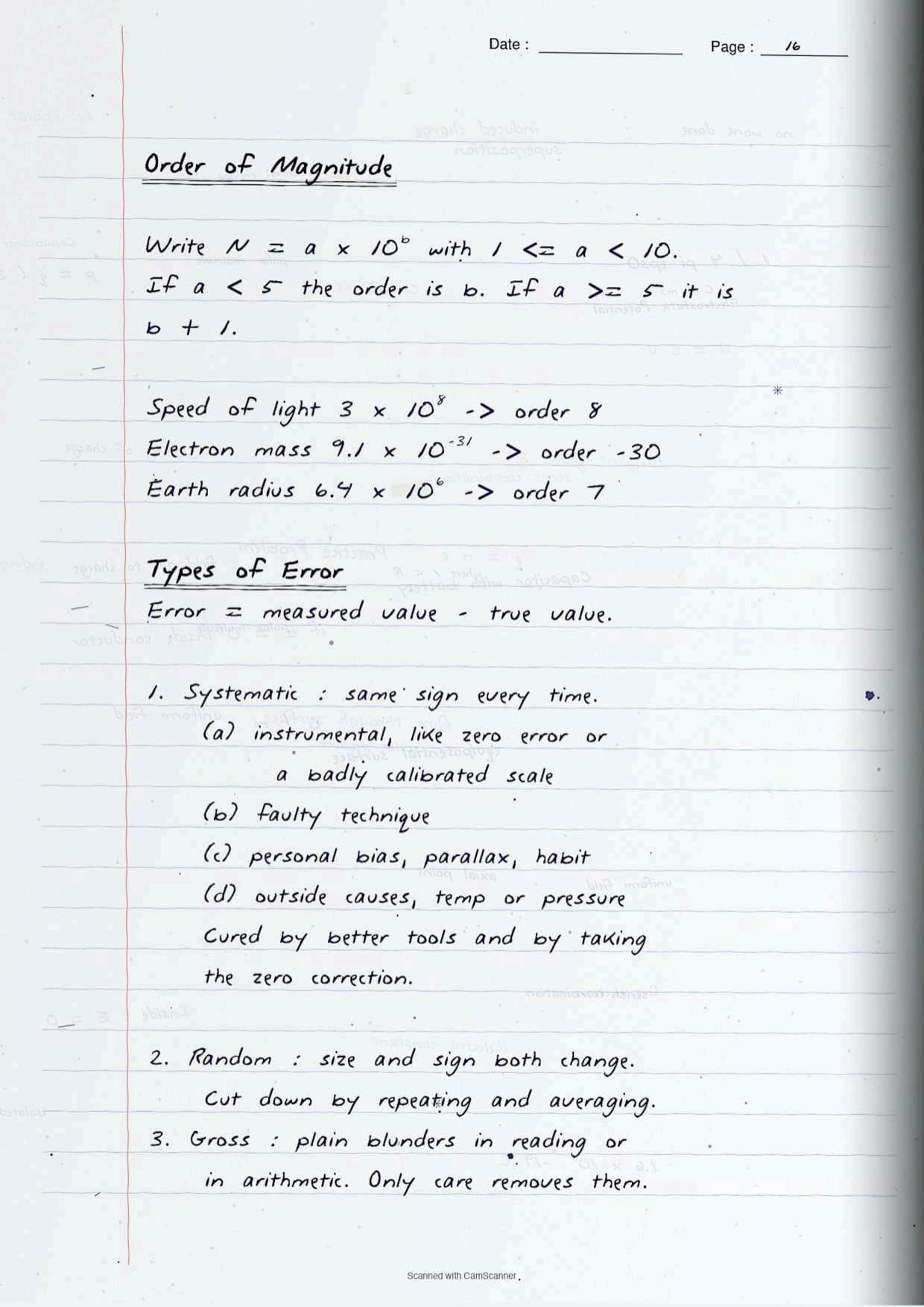
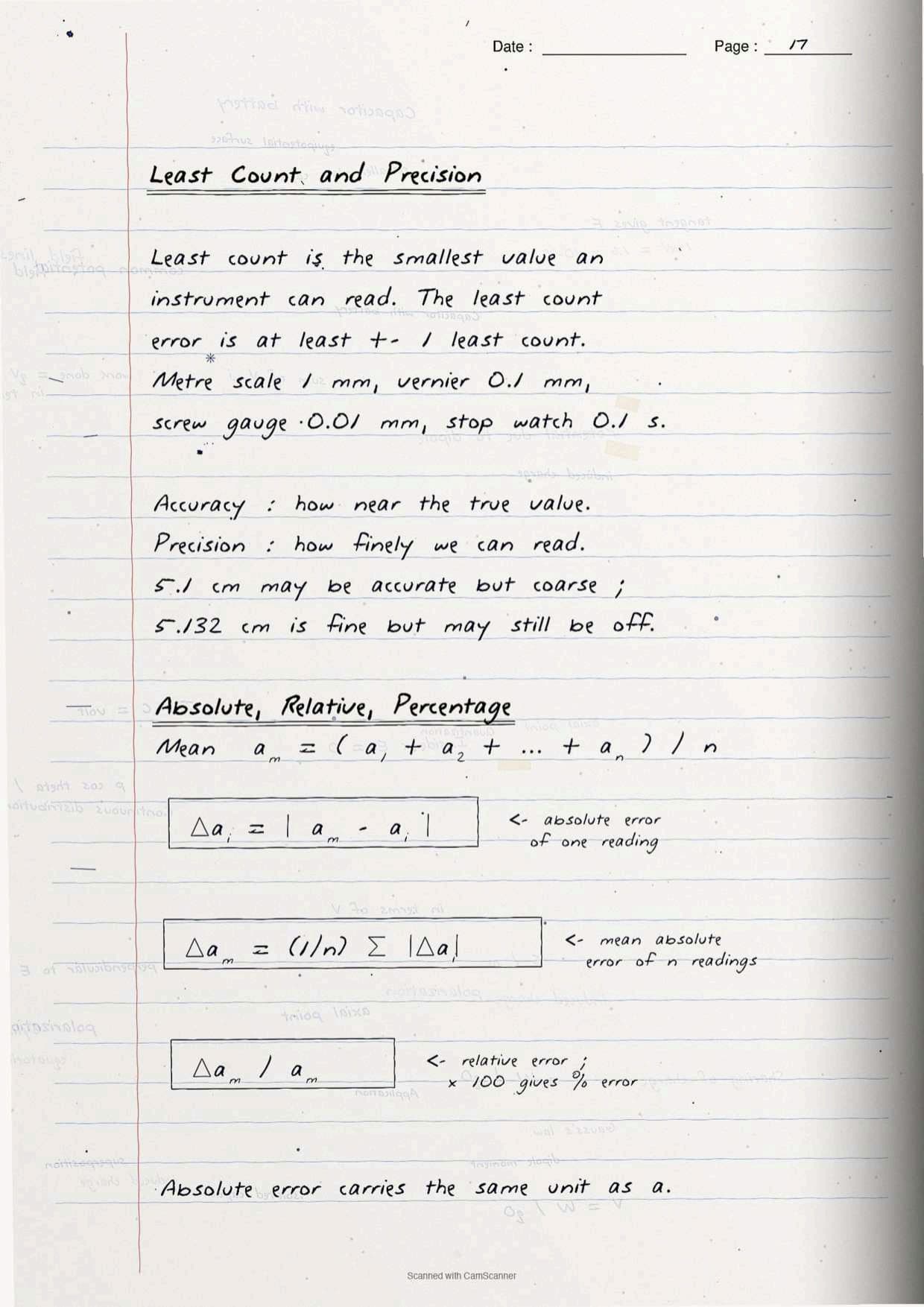
Absolute, mean absolute, relative and percentage error are built up from a five reading dataset first, then combined.
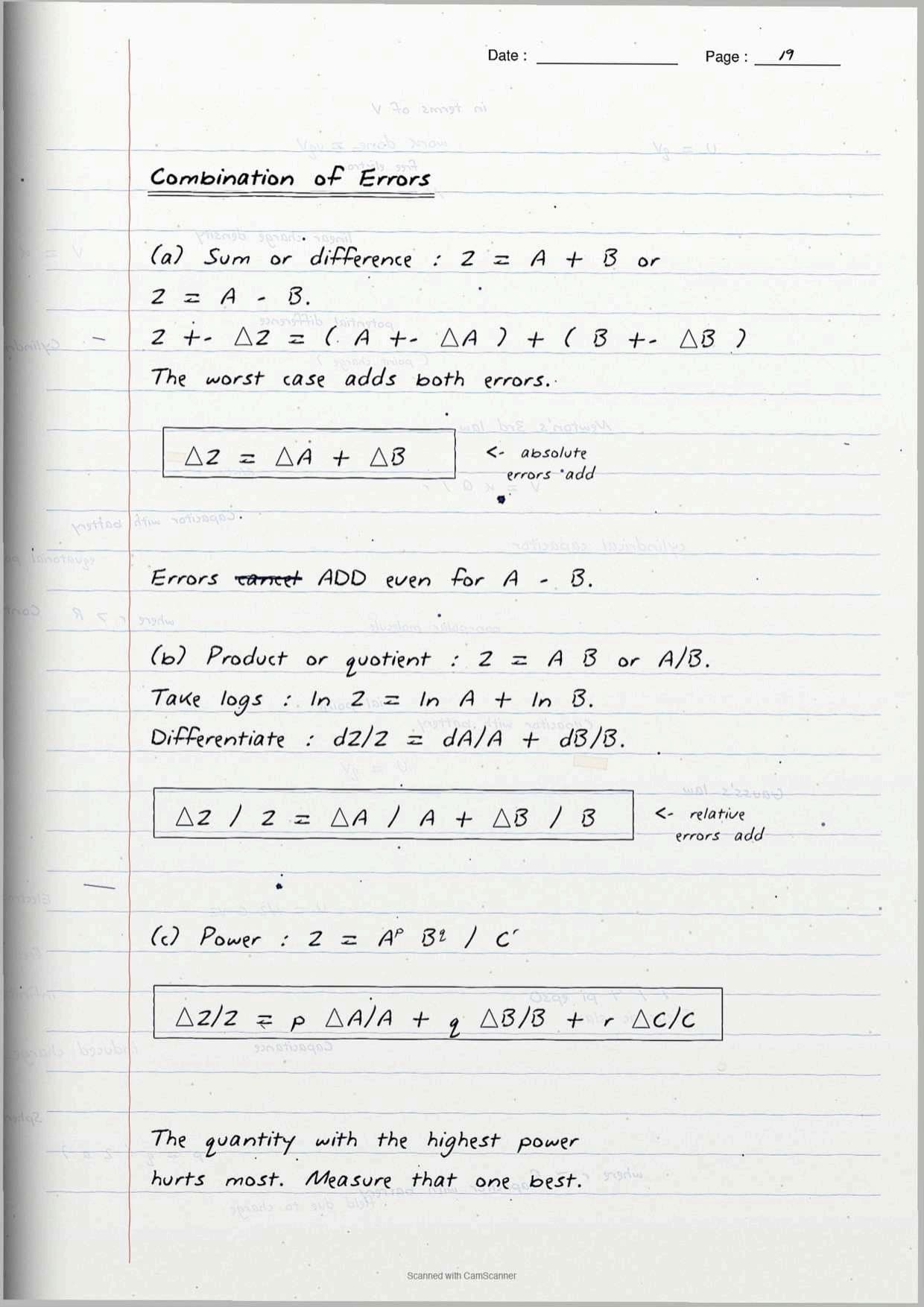
- Sums and differences add absolute errors.
- Products and quotients add relative errors.
- A power multiplies the relative error by that exponent, which is where most marks are dropped.
Four numericals close the section, including a compound expression that works out to a sixteen percent error and the standard g from a pendulum sum at 2.7 percent.
Vernier and Screw Gauge Readings
Both instruments get a hand drawn sketch with the scales labelled. Least count, positive and negative zero error, and backlash are each written as a one line rule with a worked reading underneath.
Revise the Whole Unit in One Sitting
Source: JEE Wallah
JEE Main Units, Dimensions and Error Analysis Notes FAQs
Ques. How many questions come from Units and Dimensions in JEE Main?
Ans. Usually one question per shift, occasionally two when an error analysis sum is included. It carries four marks and takes under two minutes, which makes it one of the best returns per minute in the paper.
Ques. Can dimensional analysis derive every physics formula?
Ans. No. It cannot supply dimensionless constants such as the one half in kinetic energy, it fails on trigonometric, logarithmic and exponential terms, and it cannot separate quantities that share the same dimensional formula, such as work and torque.
Ques. Which error rule is most often applied wrongly?
Ans. The power rule. If a quantity is raised to an exponent, its relative error is multiplied by that exponent, so a squared term contributes double its percentage error. Students frequently add the errors without scaling them.
Ques. Are these notes enough on their own for this unit?
Ans. They cover the full JEE Main syllabus for the unit including previous year style problems, so they work as the main revision source. Students should still solve a dedicated question set for timed practice.
Ques. Is the topic the same for JEE Advanced?
Ans. The concepts are identical, but JEE Advanced leans harder on error propagation in experimental setups and on unusual unit systems where the base quantities are redefined. The dimensional formulae pages serve both exams.



Comments