



JEE Main Atomic Structure PYQ PDF is a free, 48-page resource containing 223 questions from the 2002-2026 papers. The chapter recorded 26 questions across the 2026 papers, with a reported weightage of 5.47% in the referenced database.
The PDF includes 53 questions on quantum numbers and the shapes of orbitals, 39 questions on the Bohr model, and 164 MCQs alongside 59 numerical-value questions. Questions are arranged from newest to oldest to help students practise recent exam patterns and revise key concepts.
The PDF Contains:
| 223 Questions | 48 Page | 5.47% ↑30.00% Weightage in 2026 | 2002-2026 years covered |
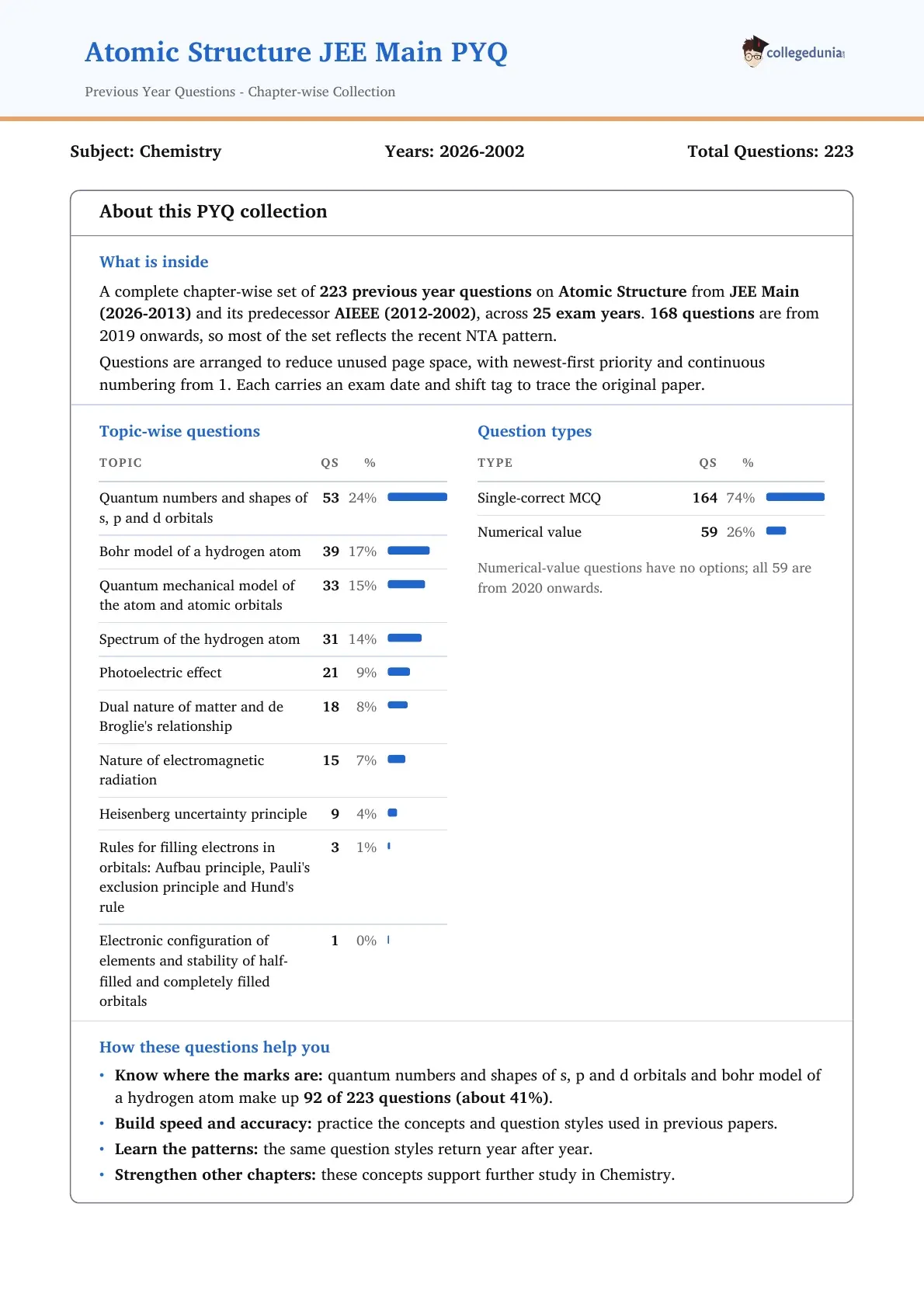
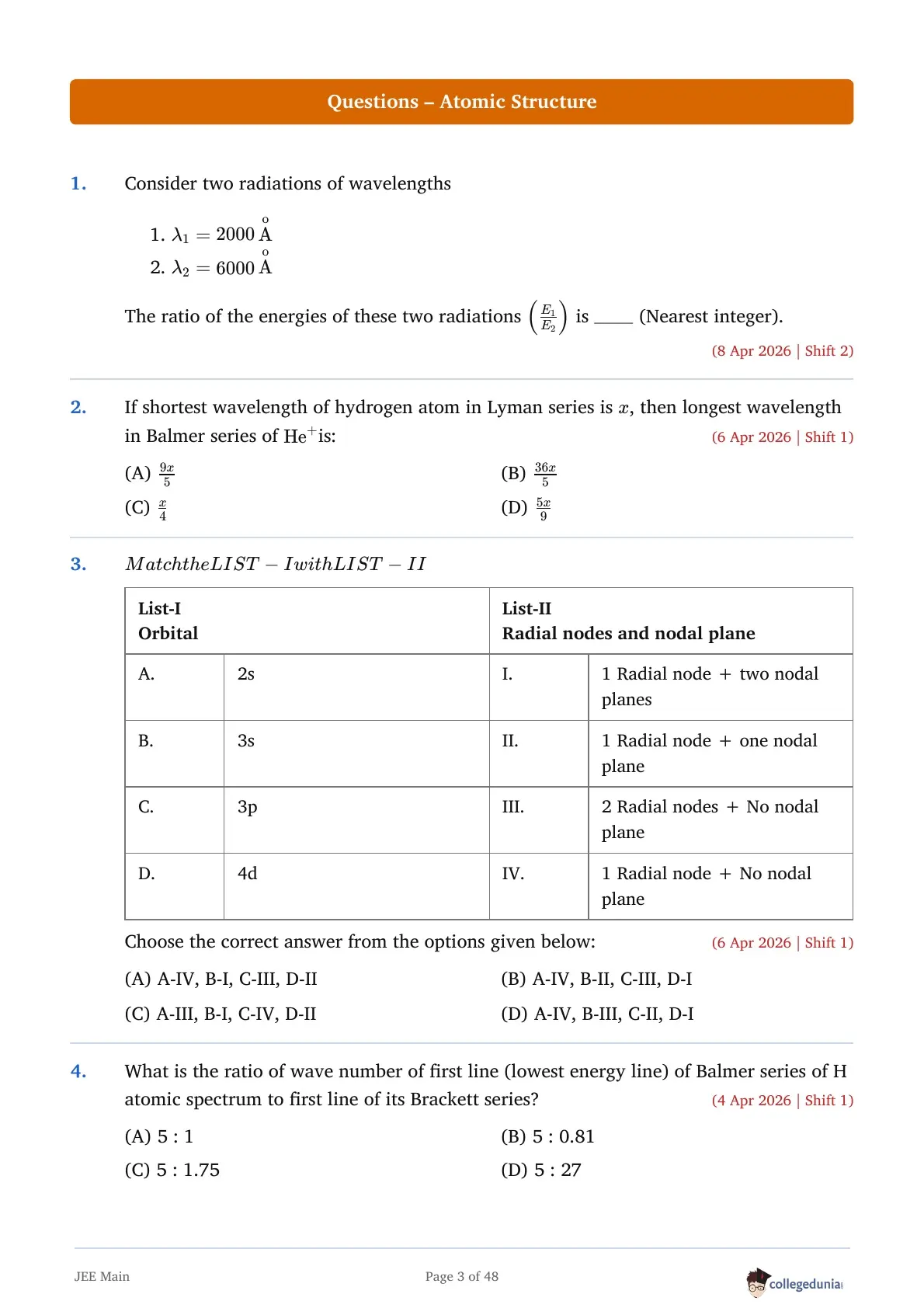
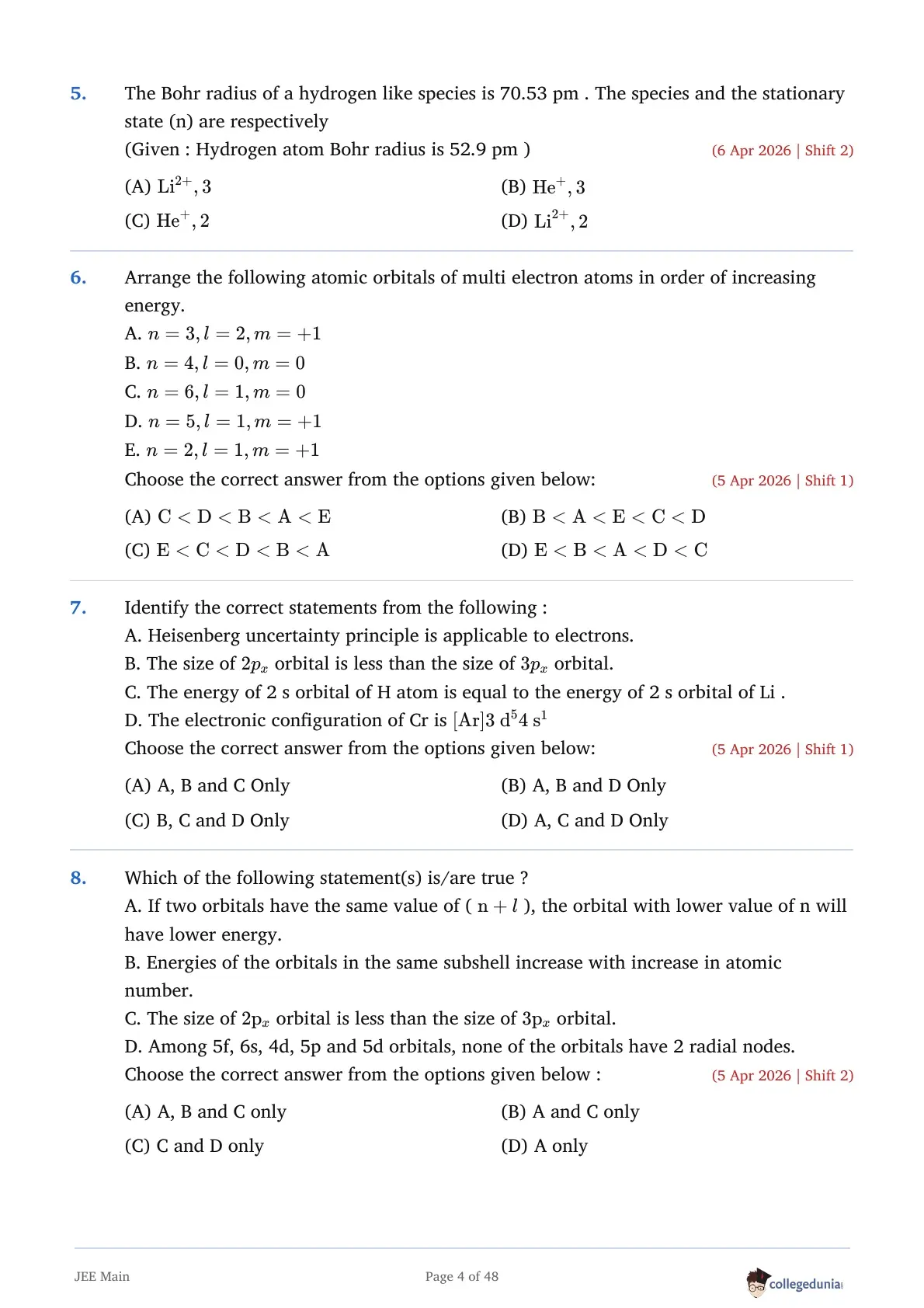
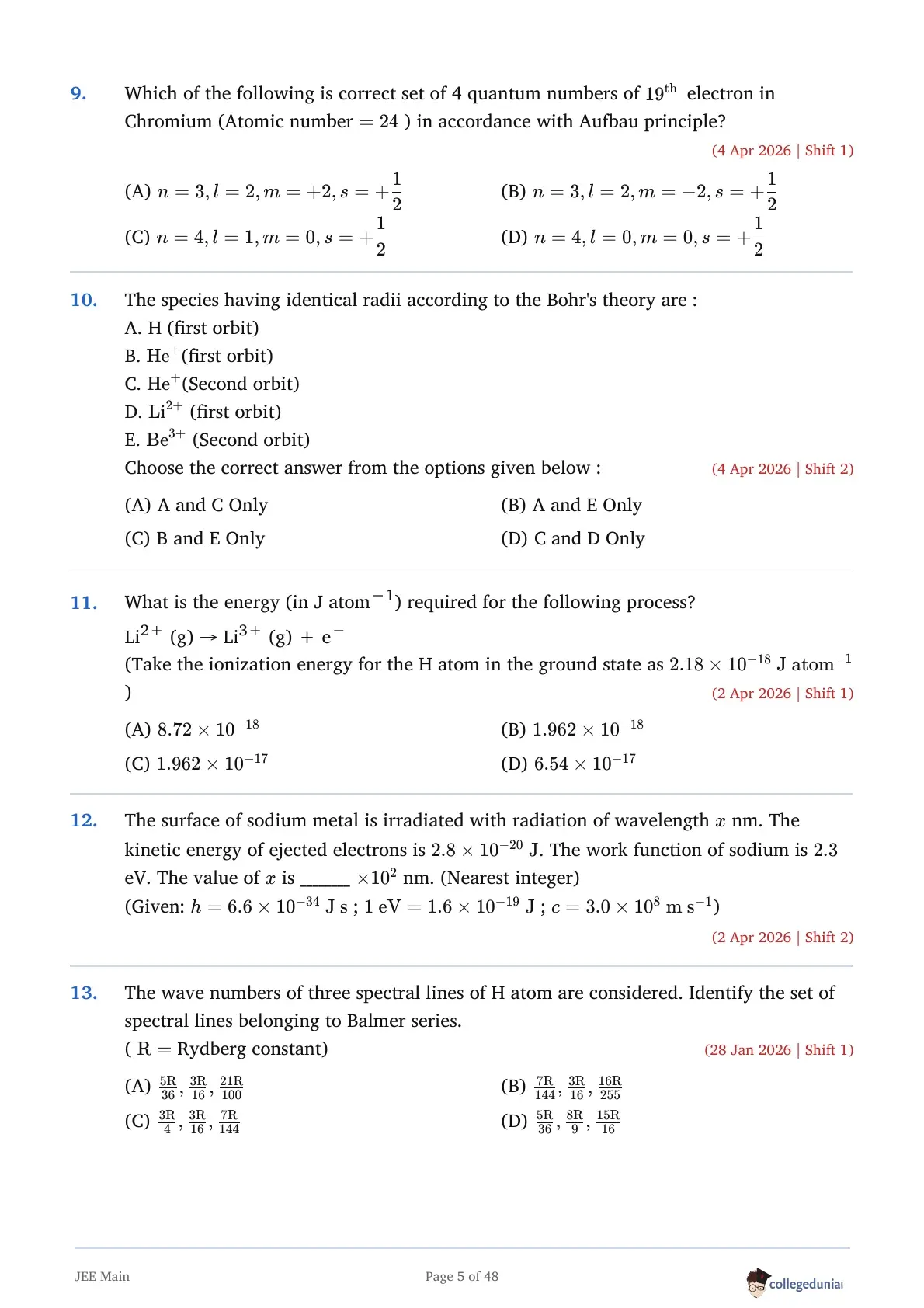
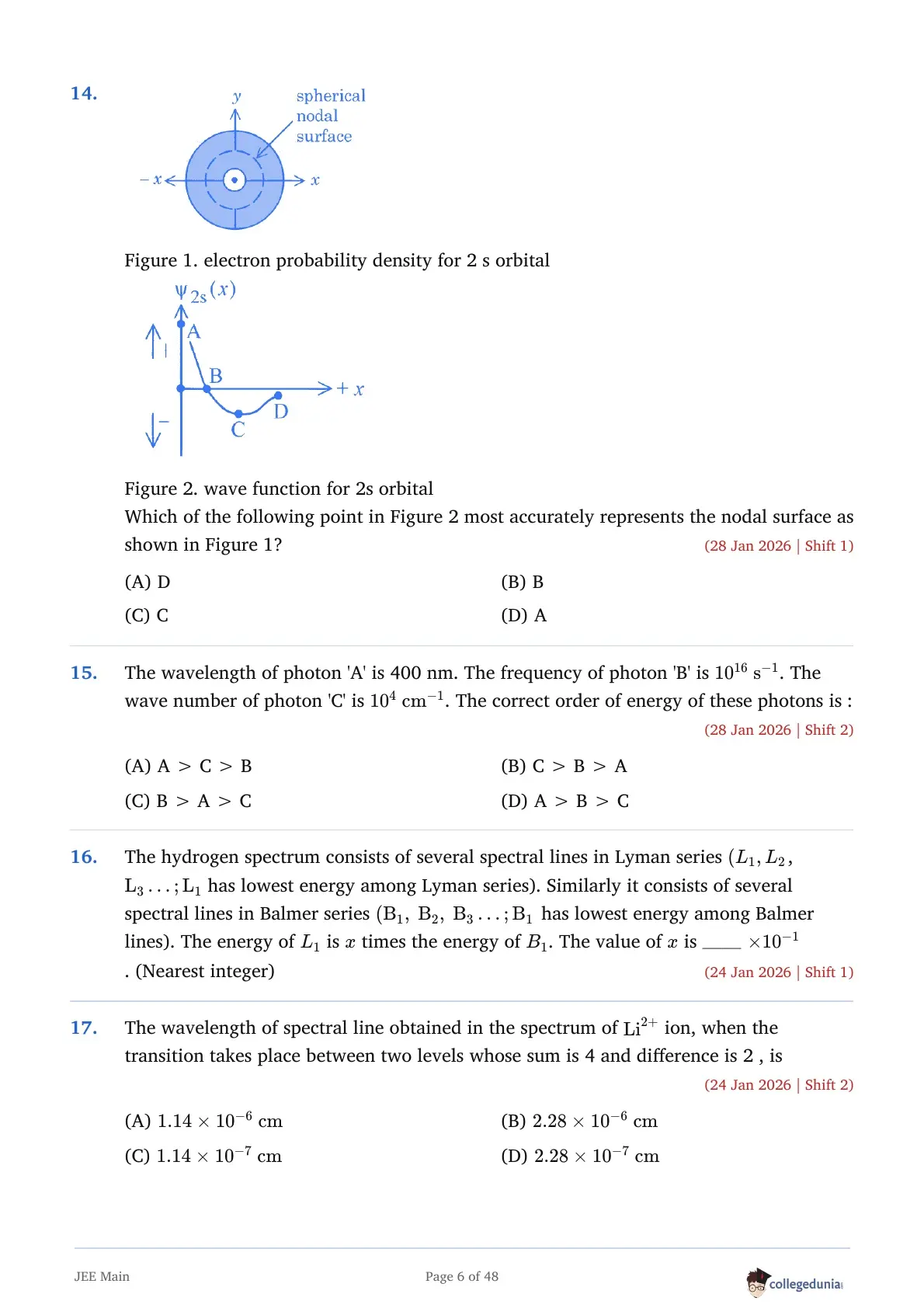
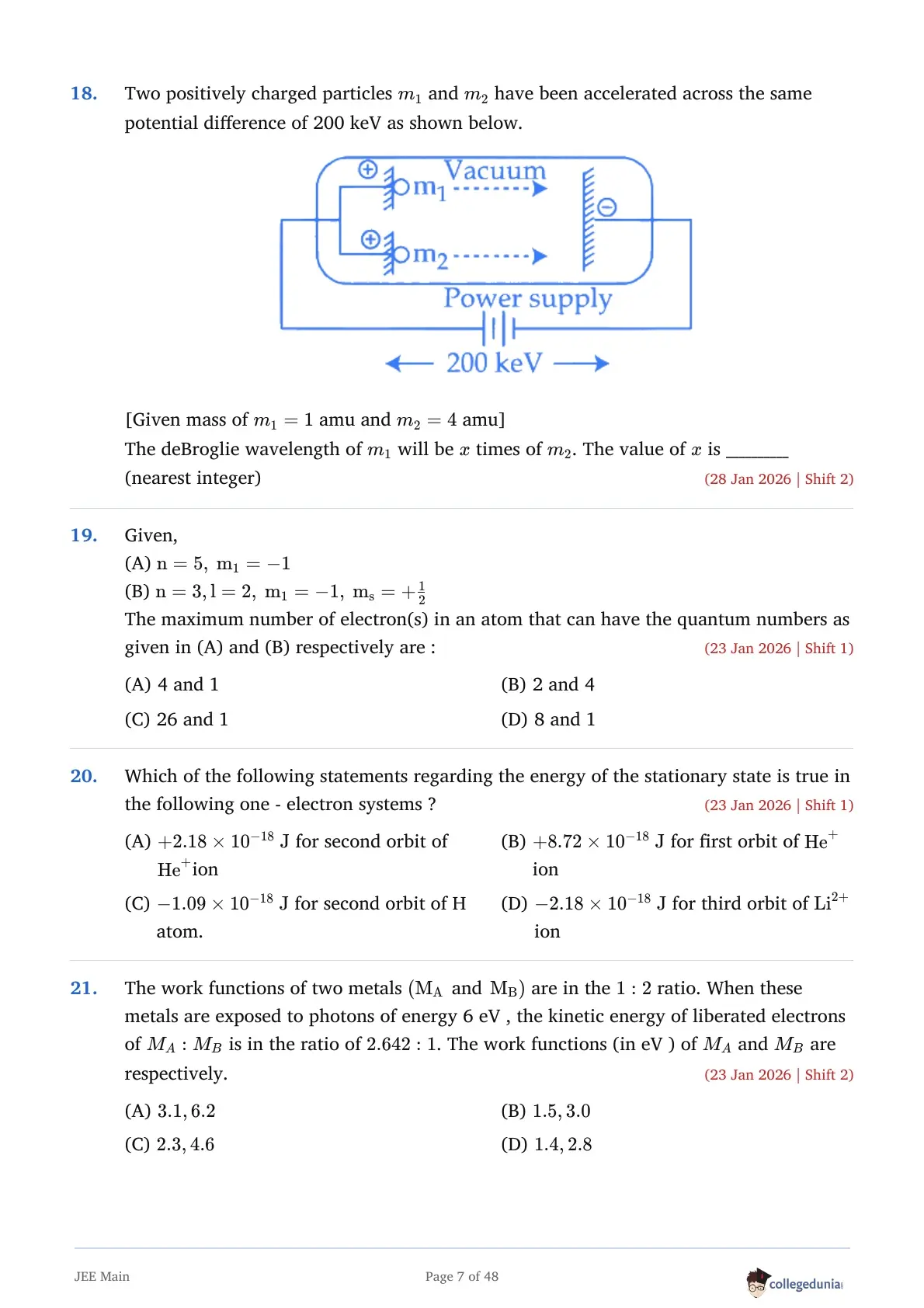
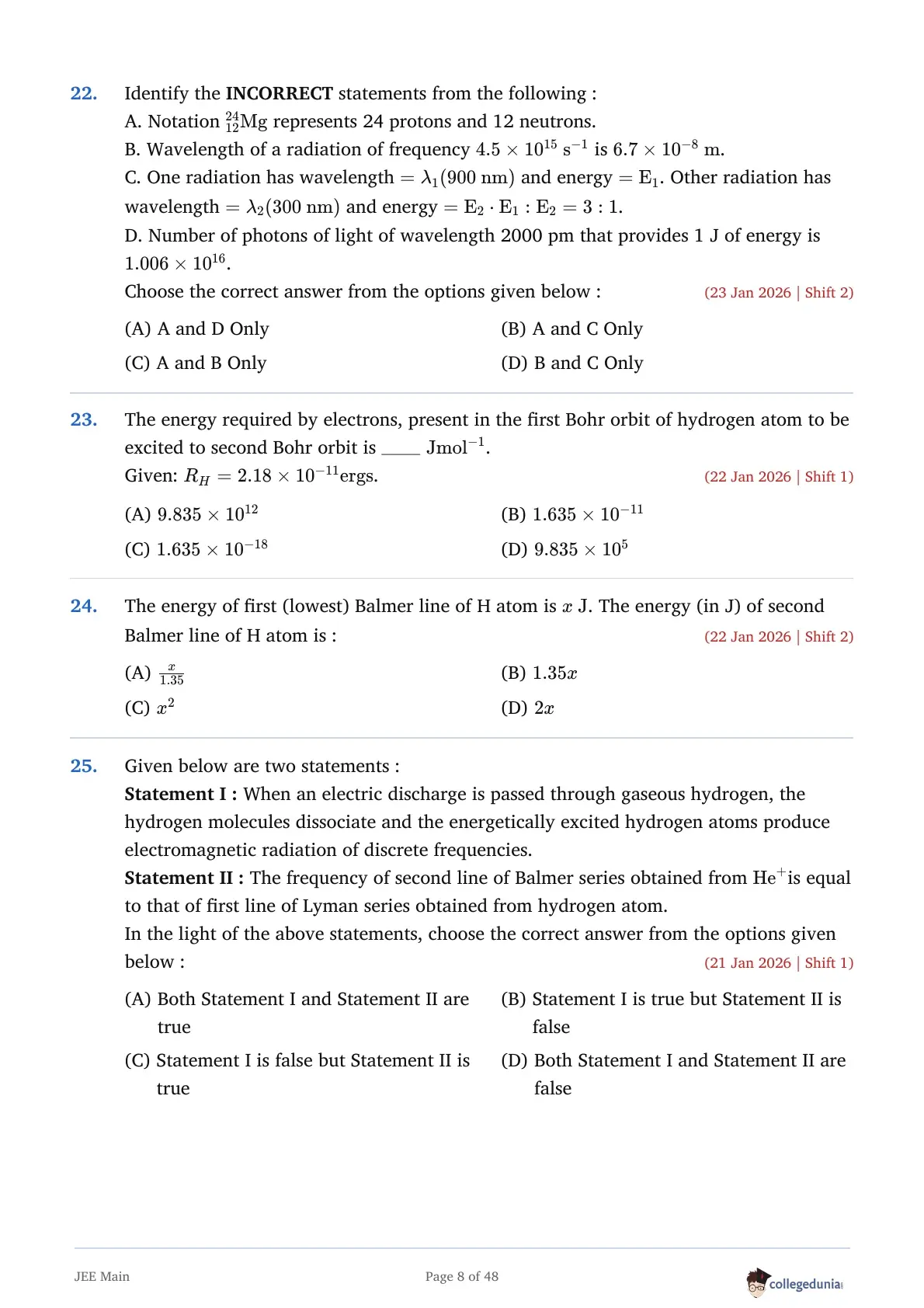
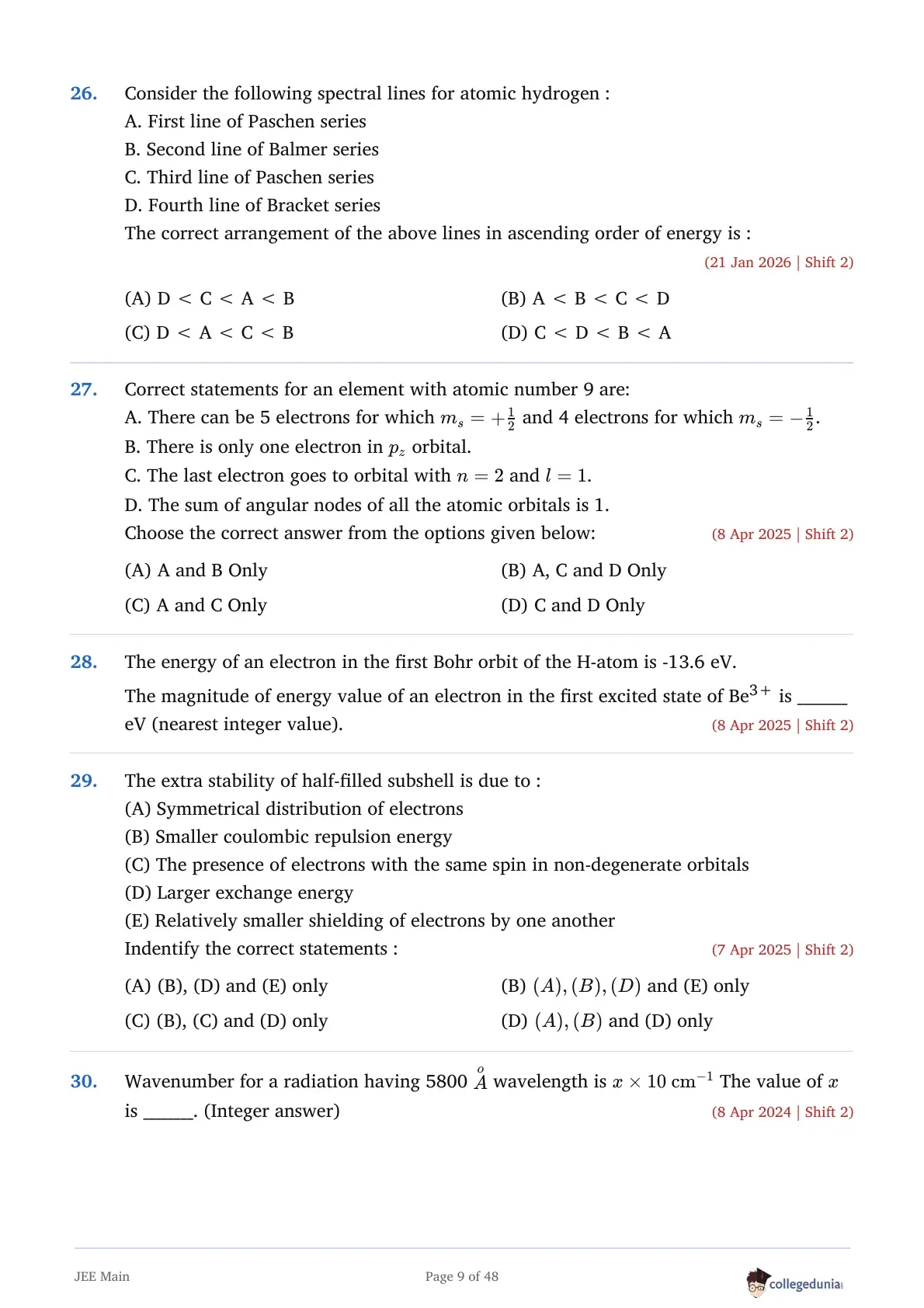
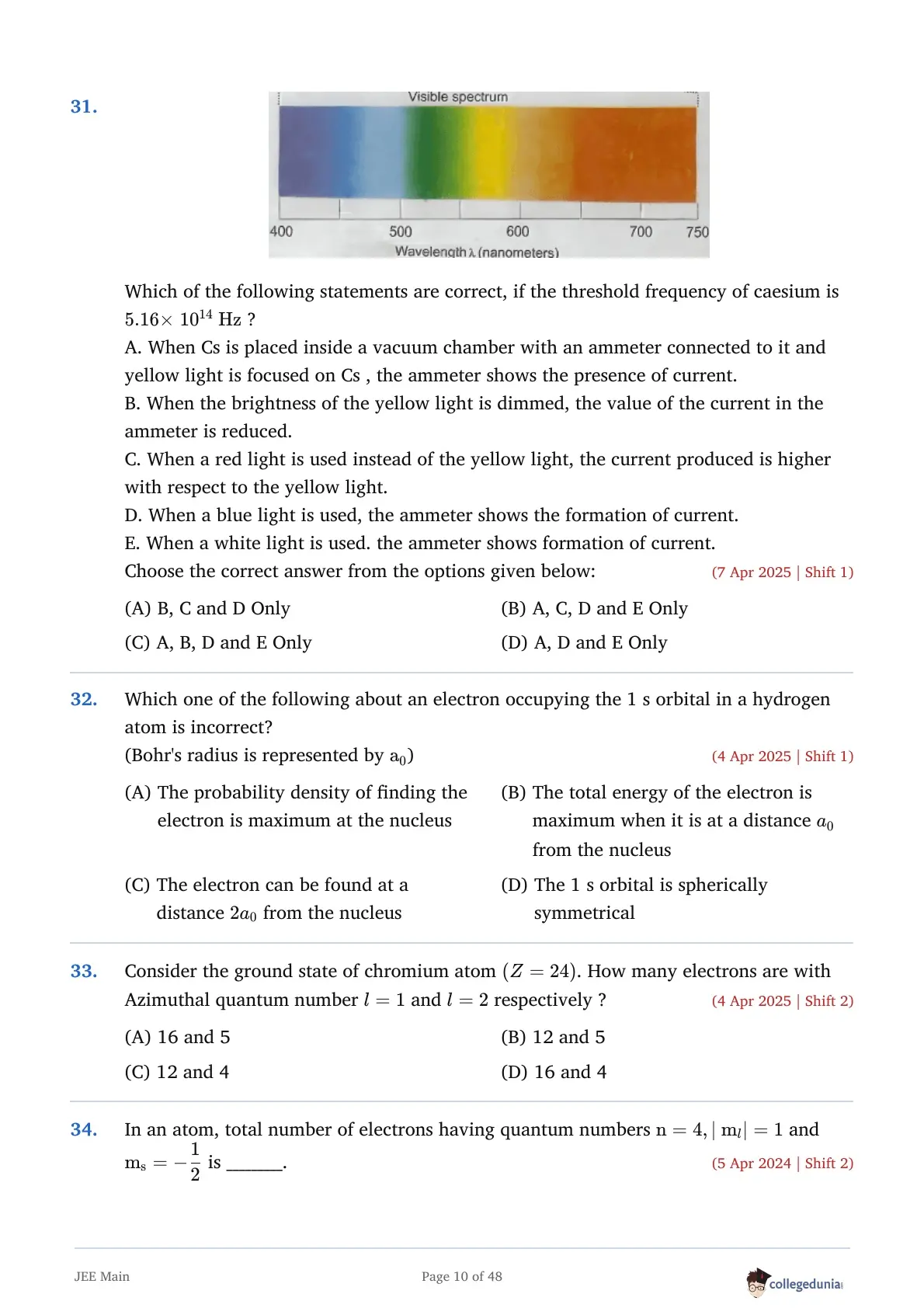
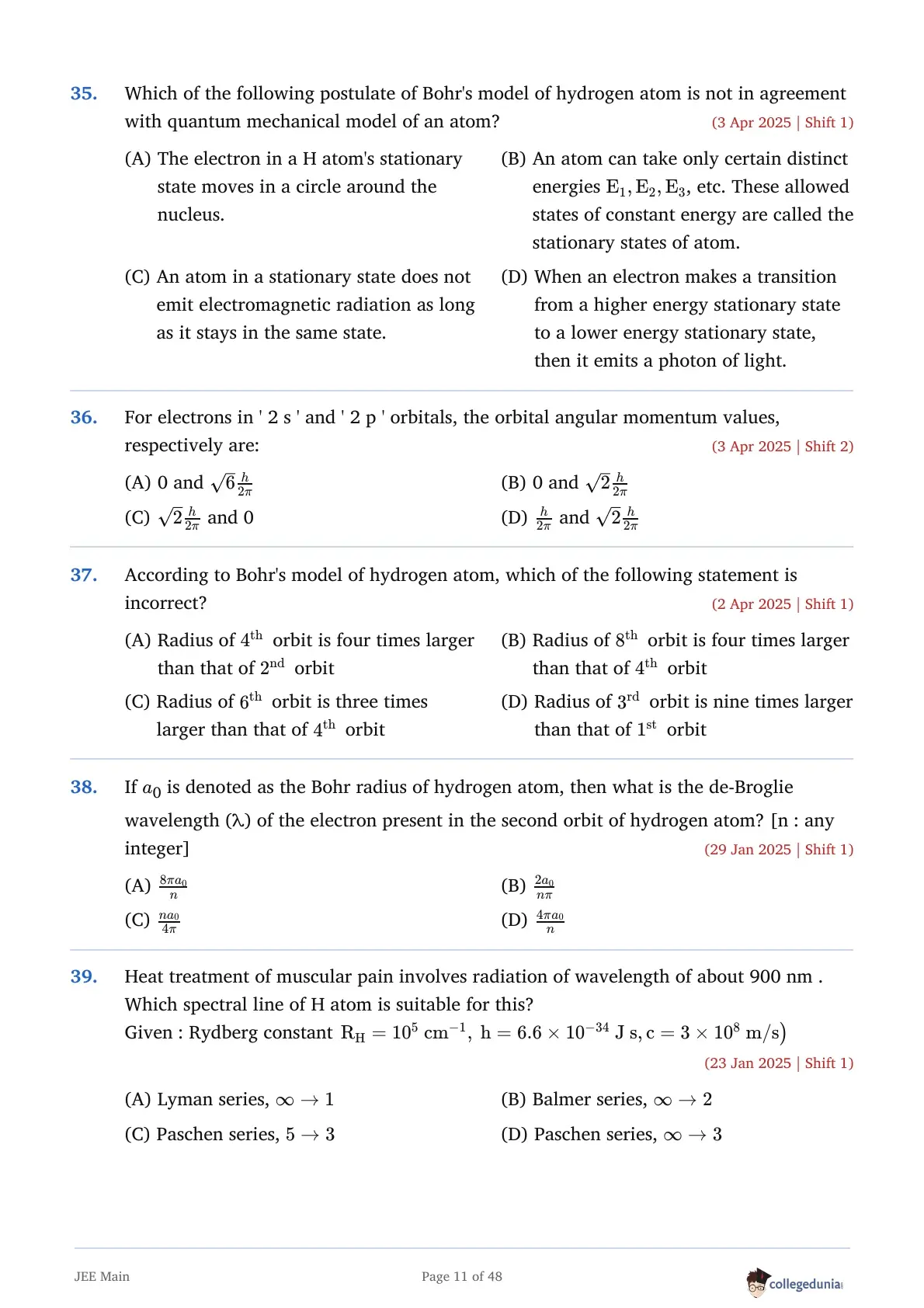
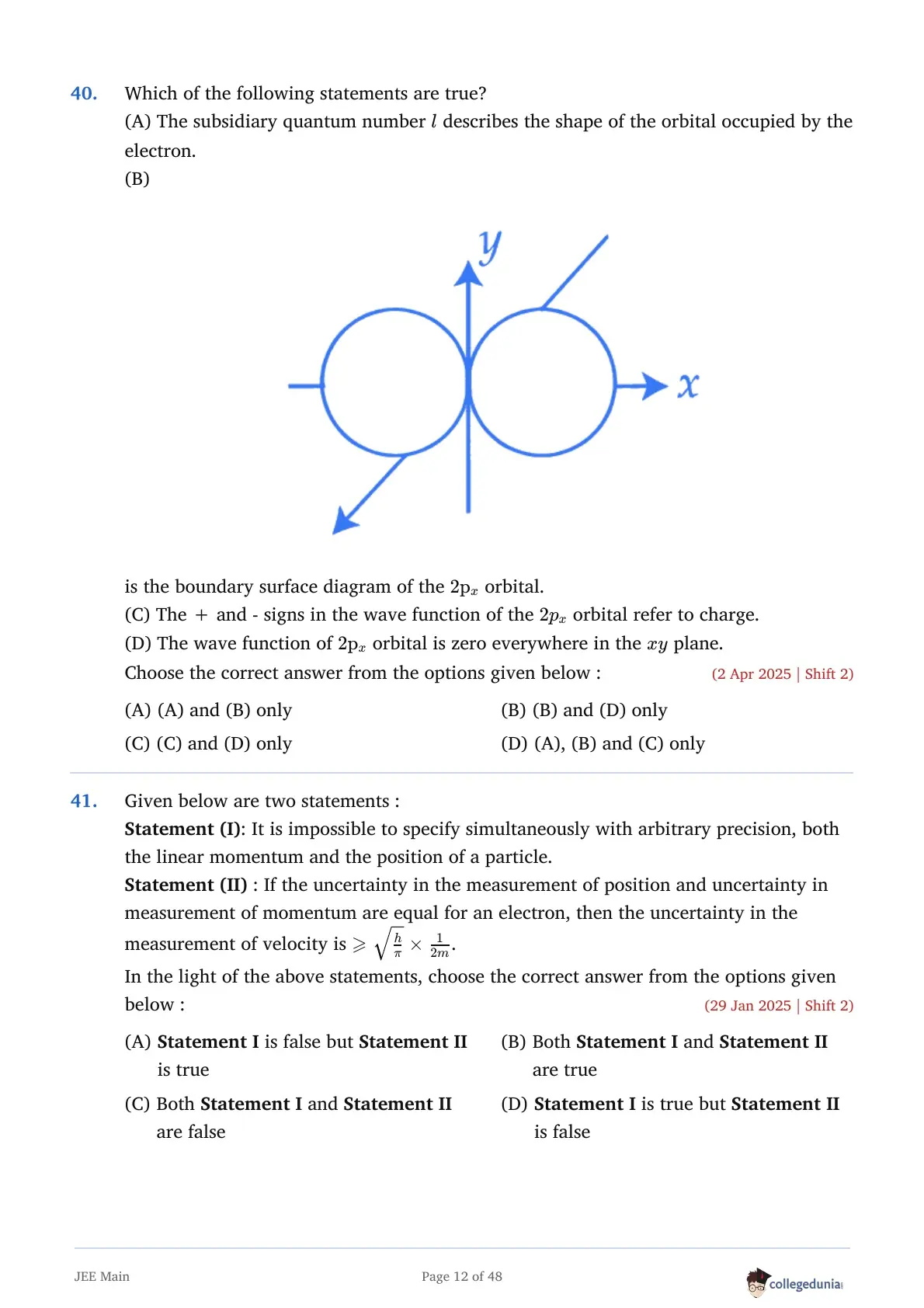
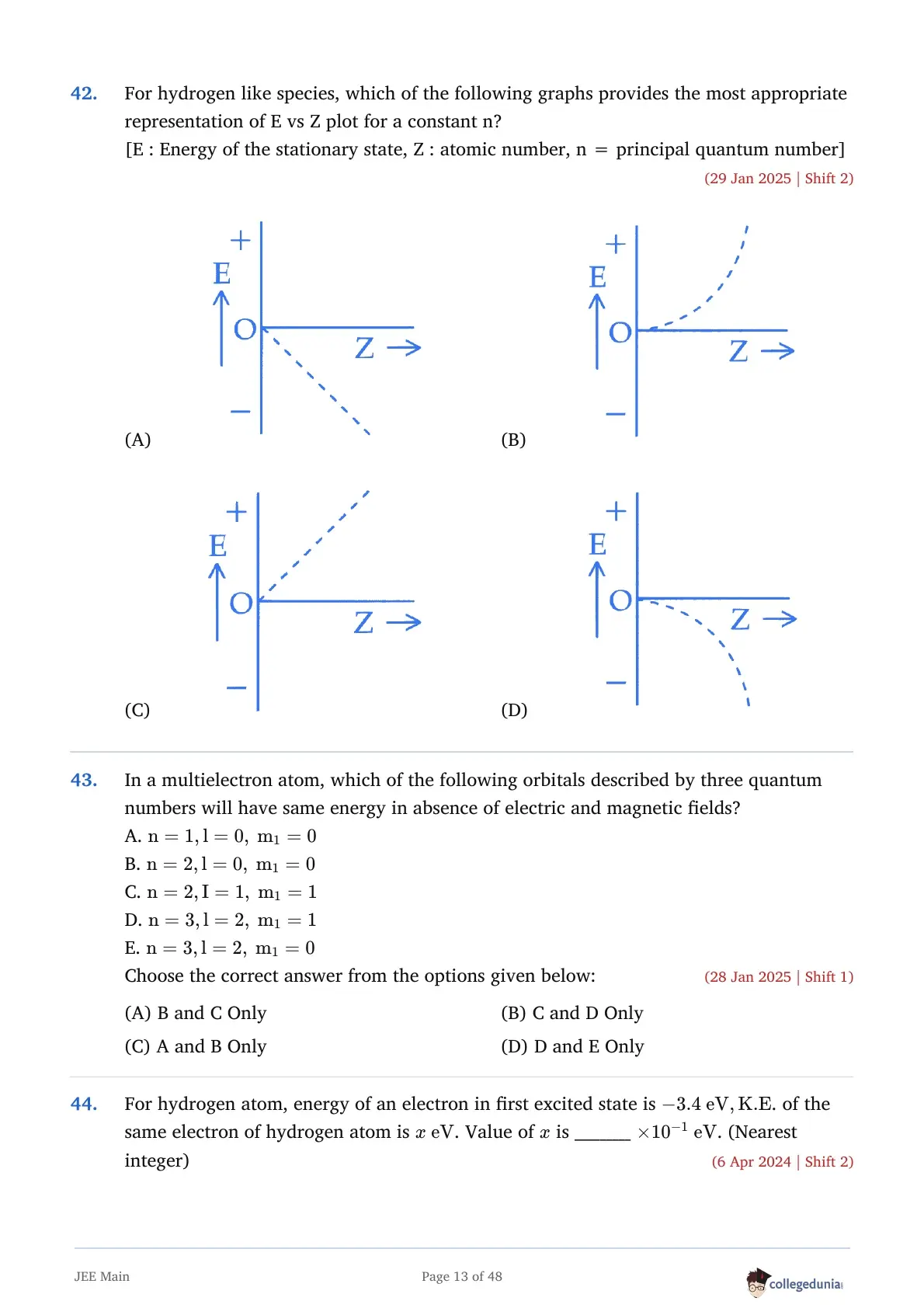
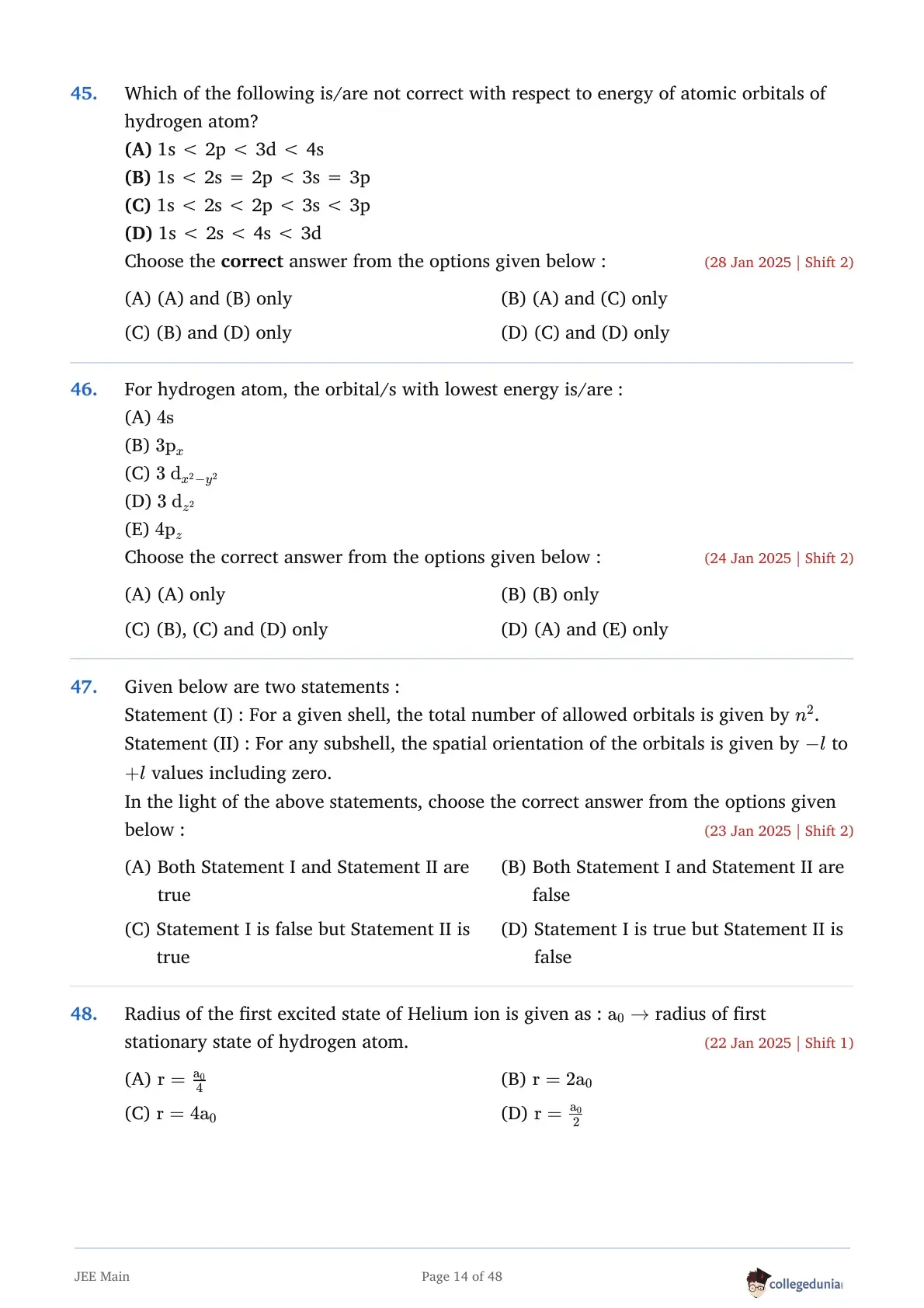
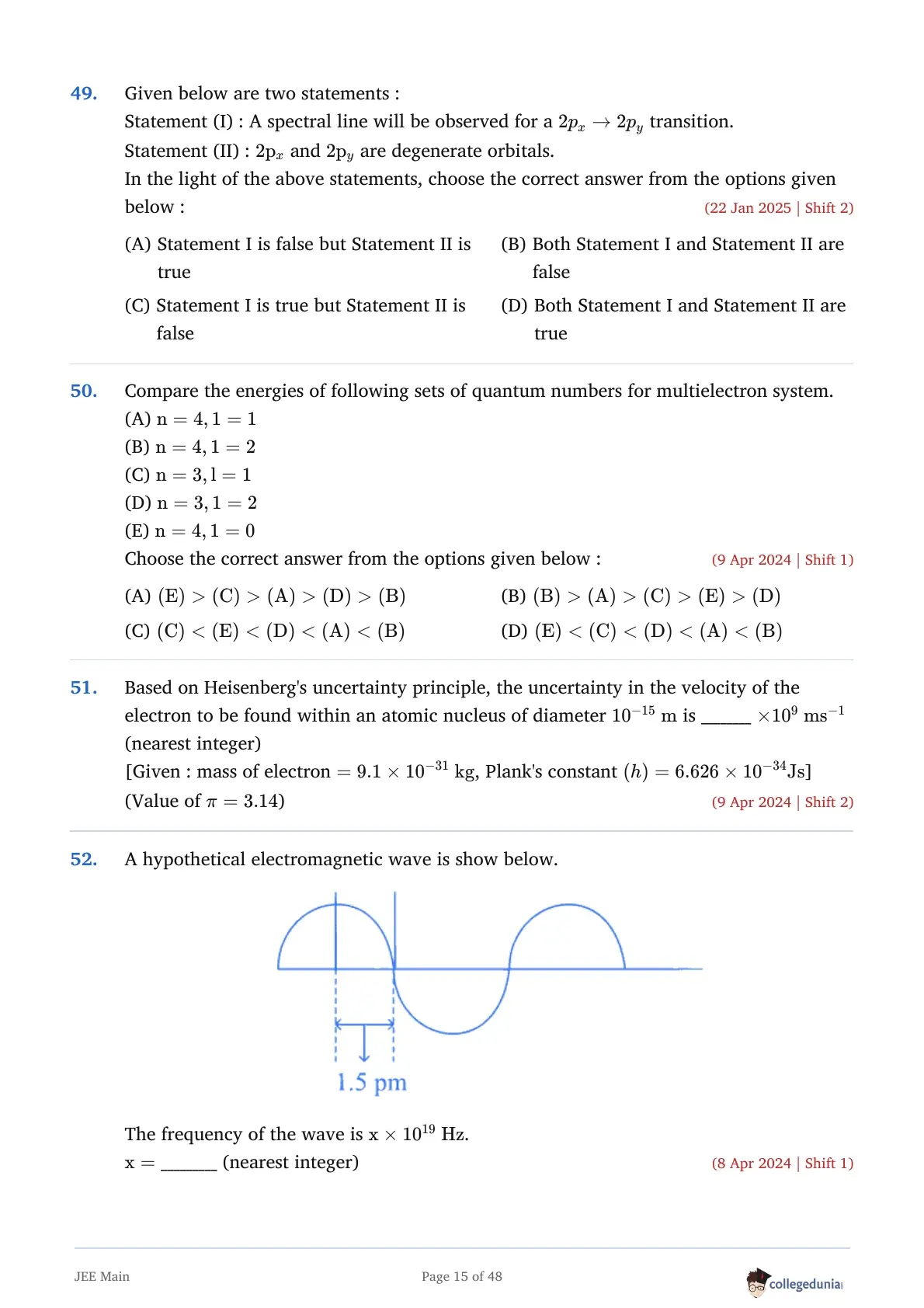
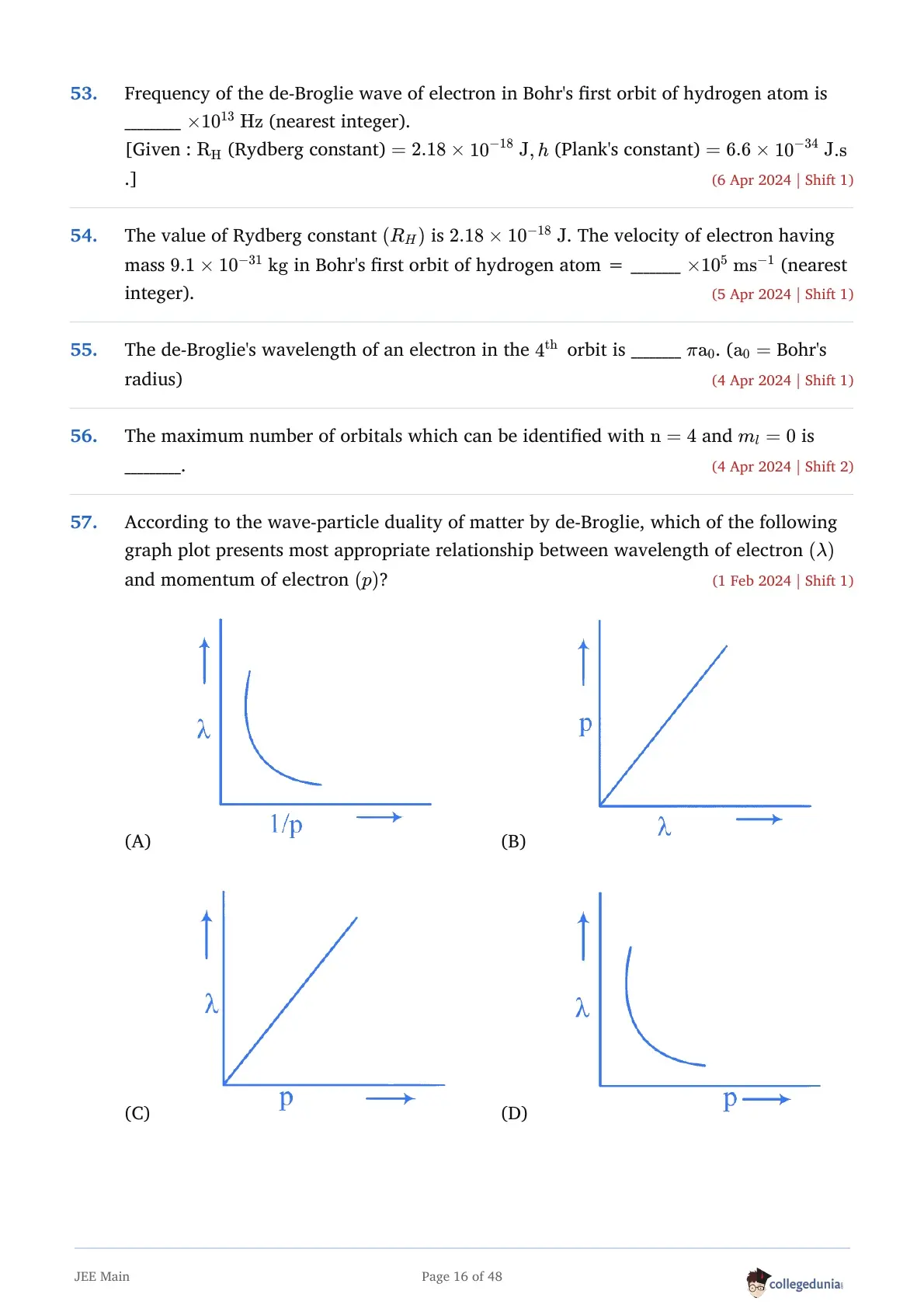
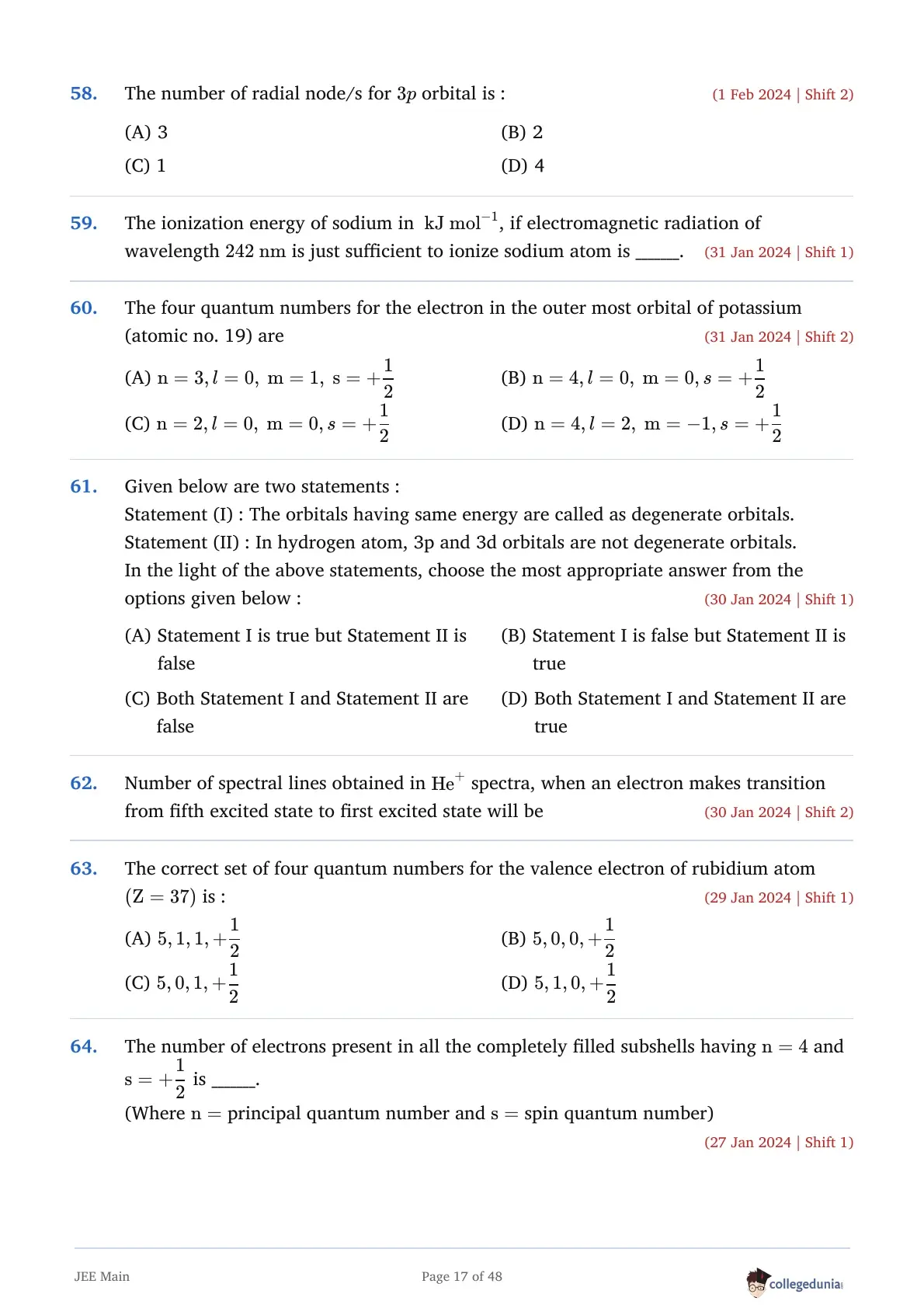
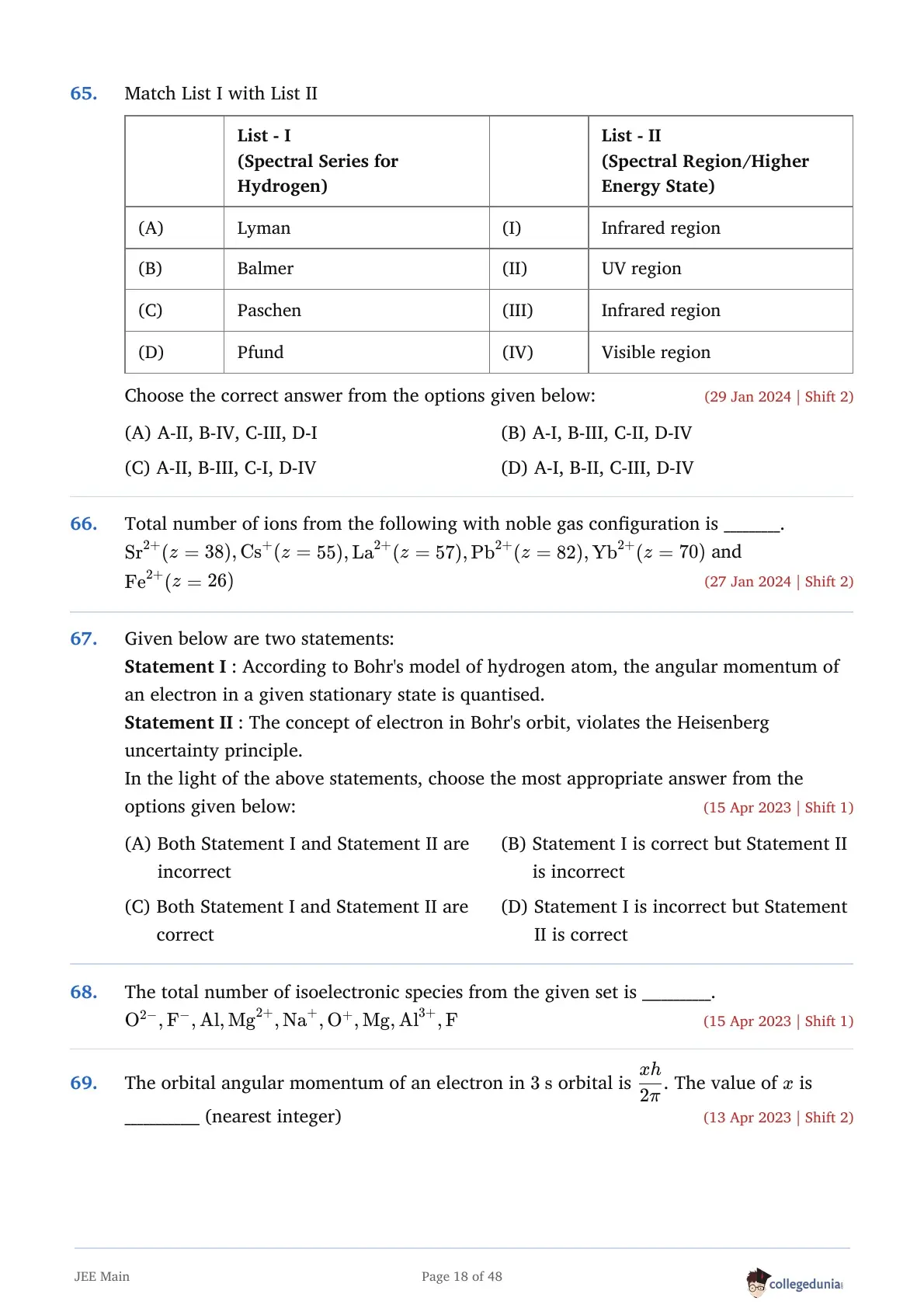
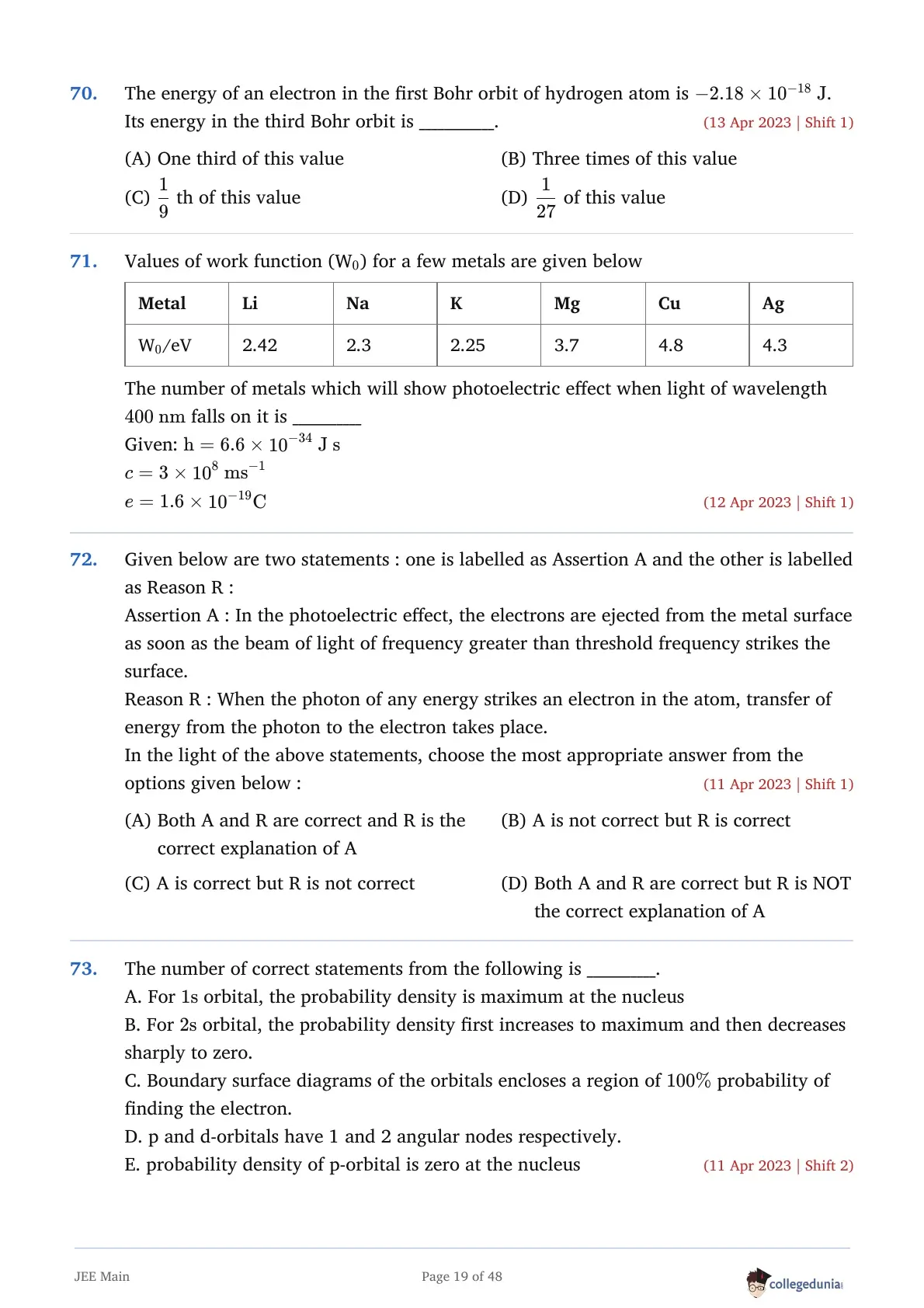
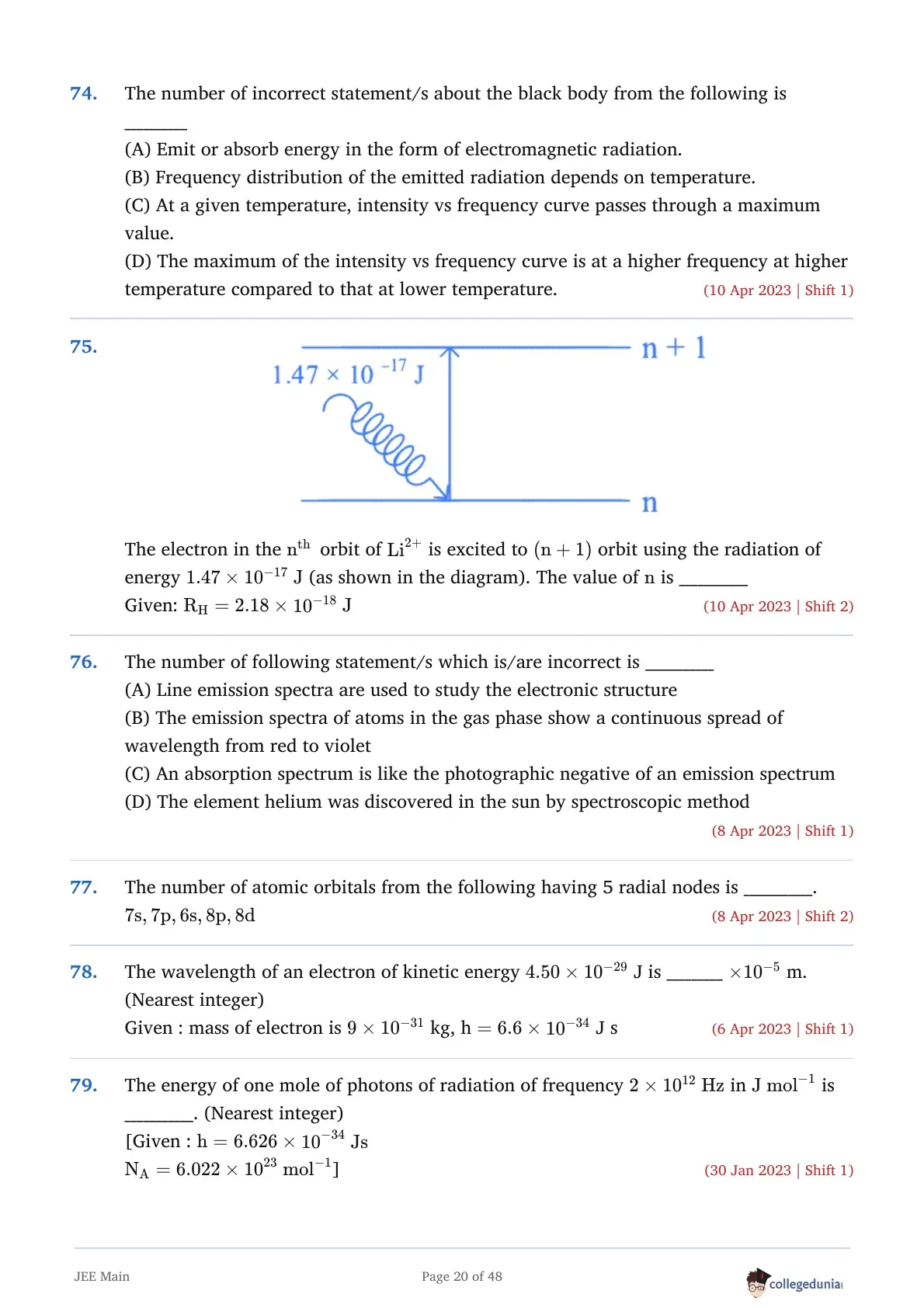
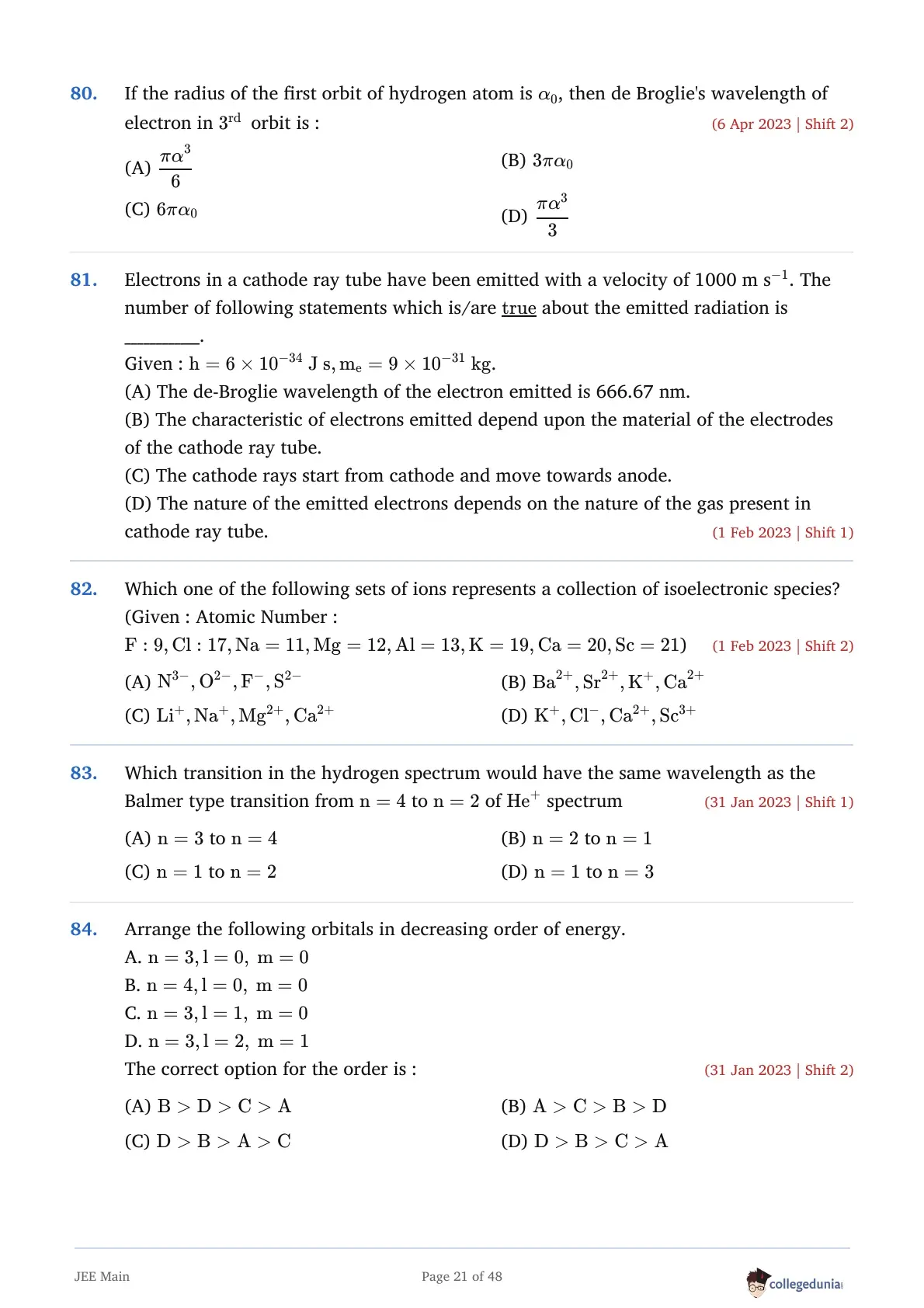
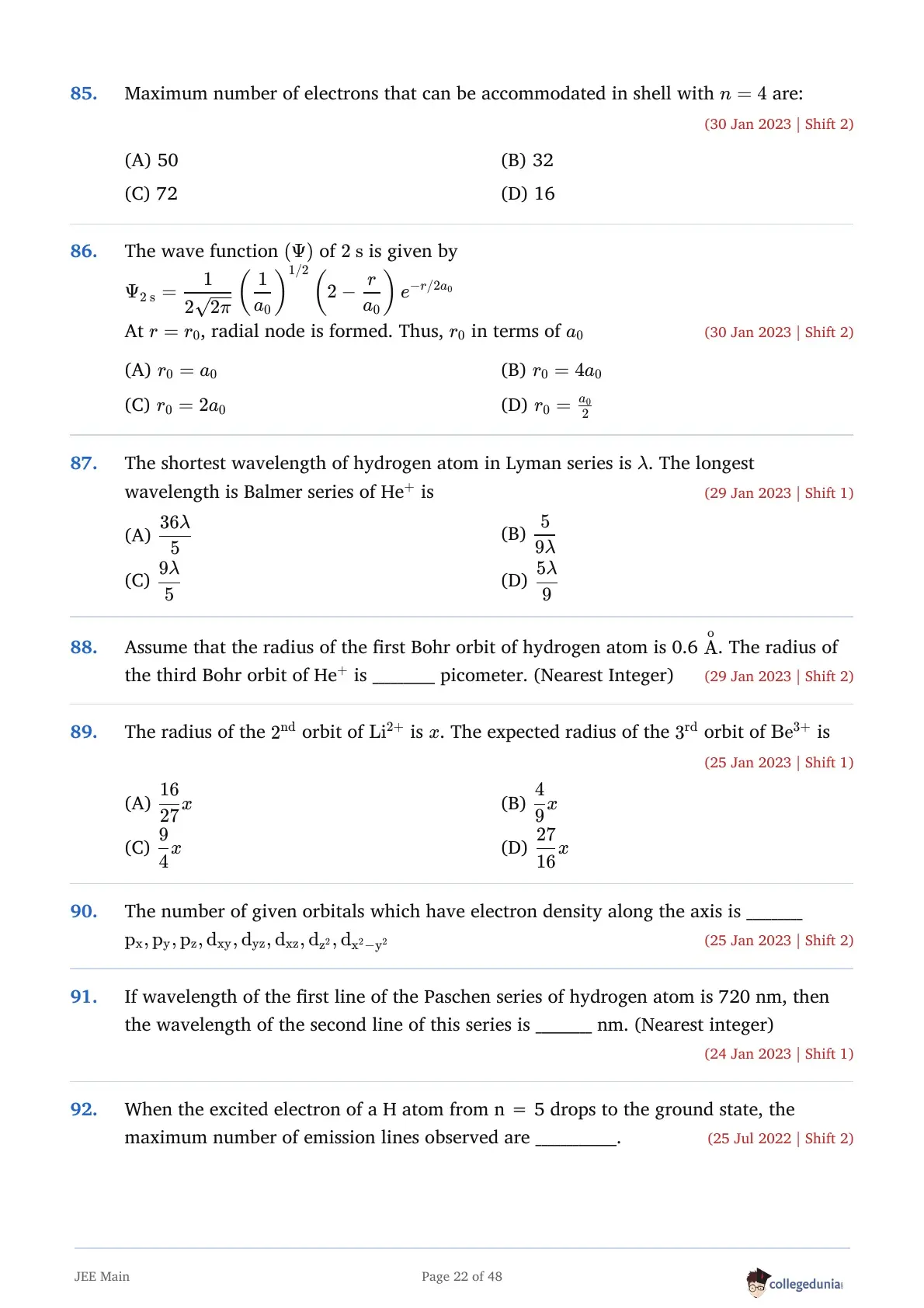
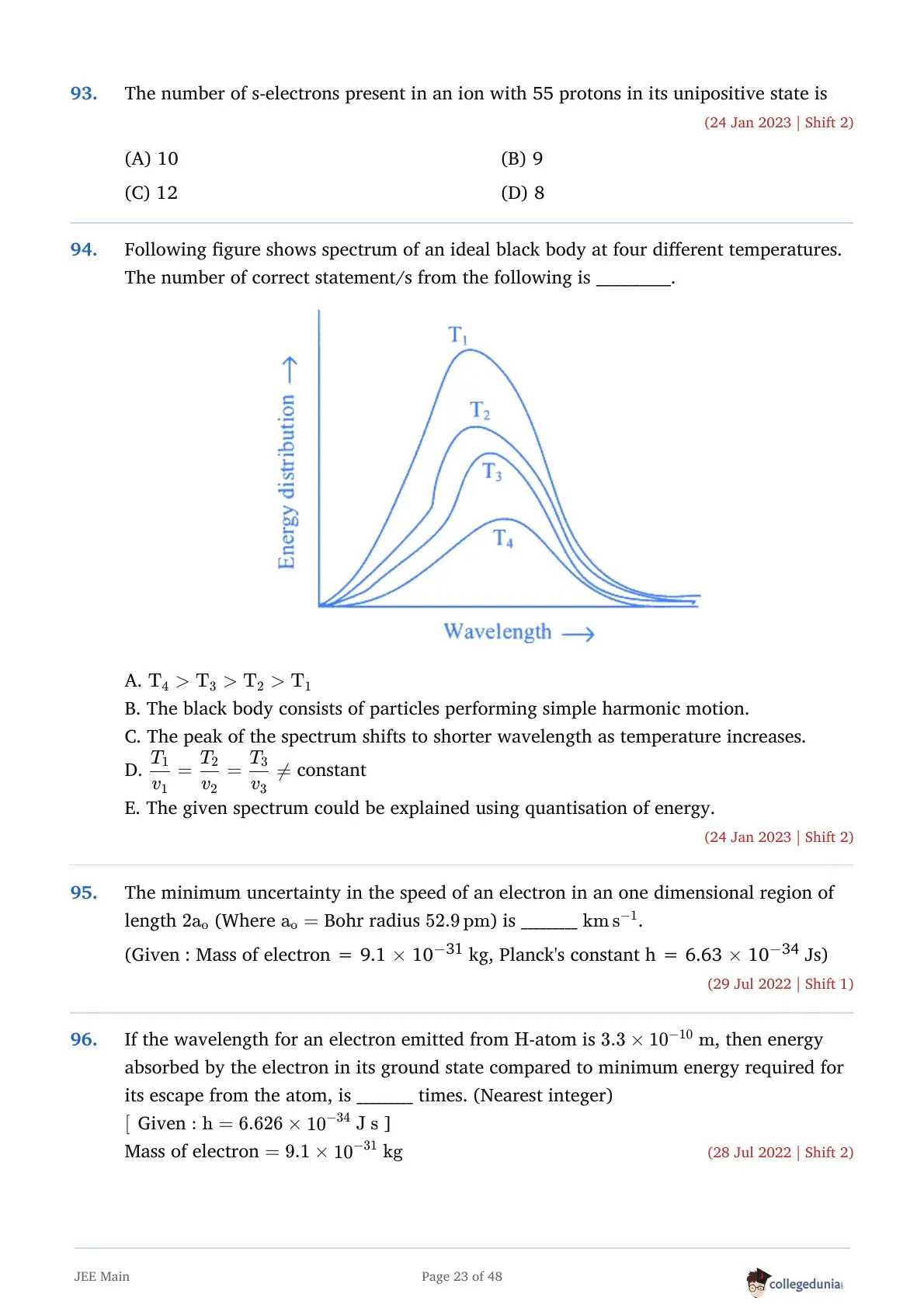
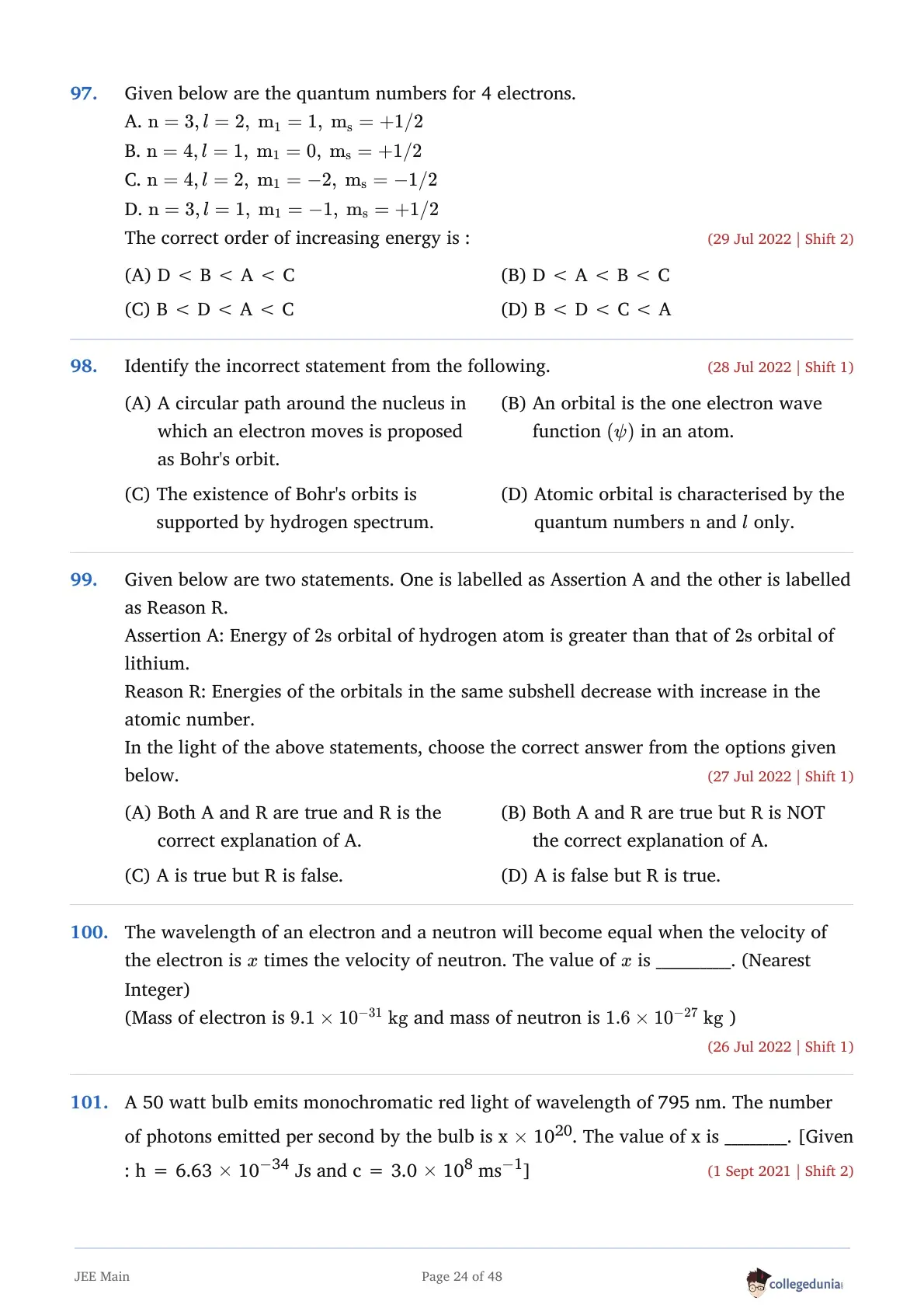
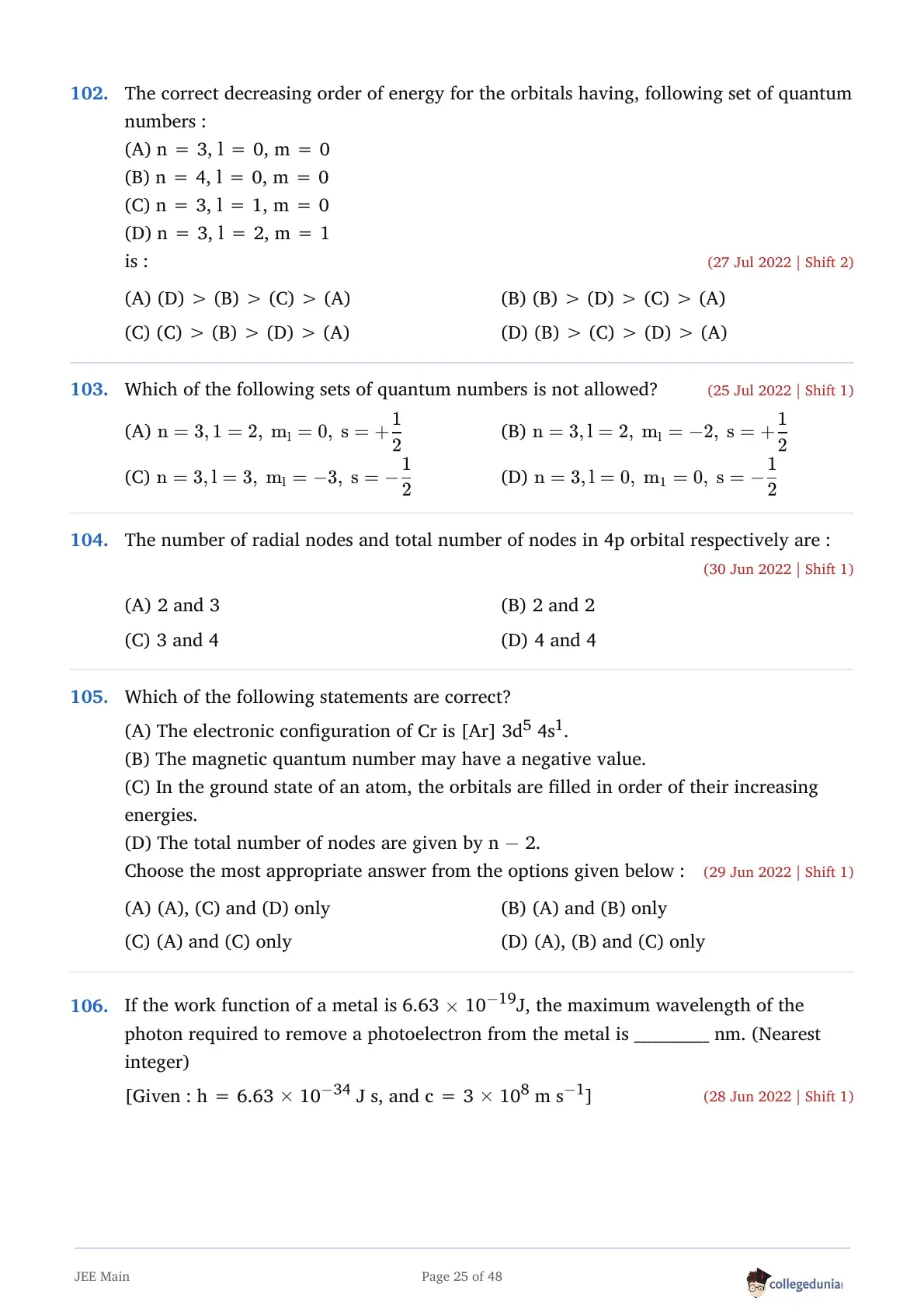
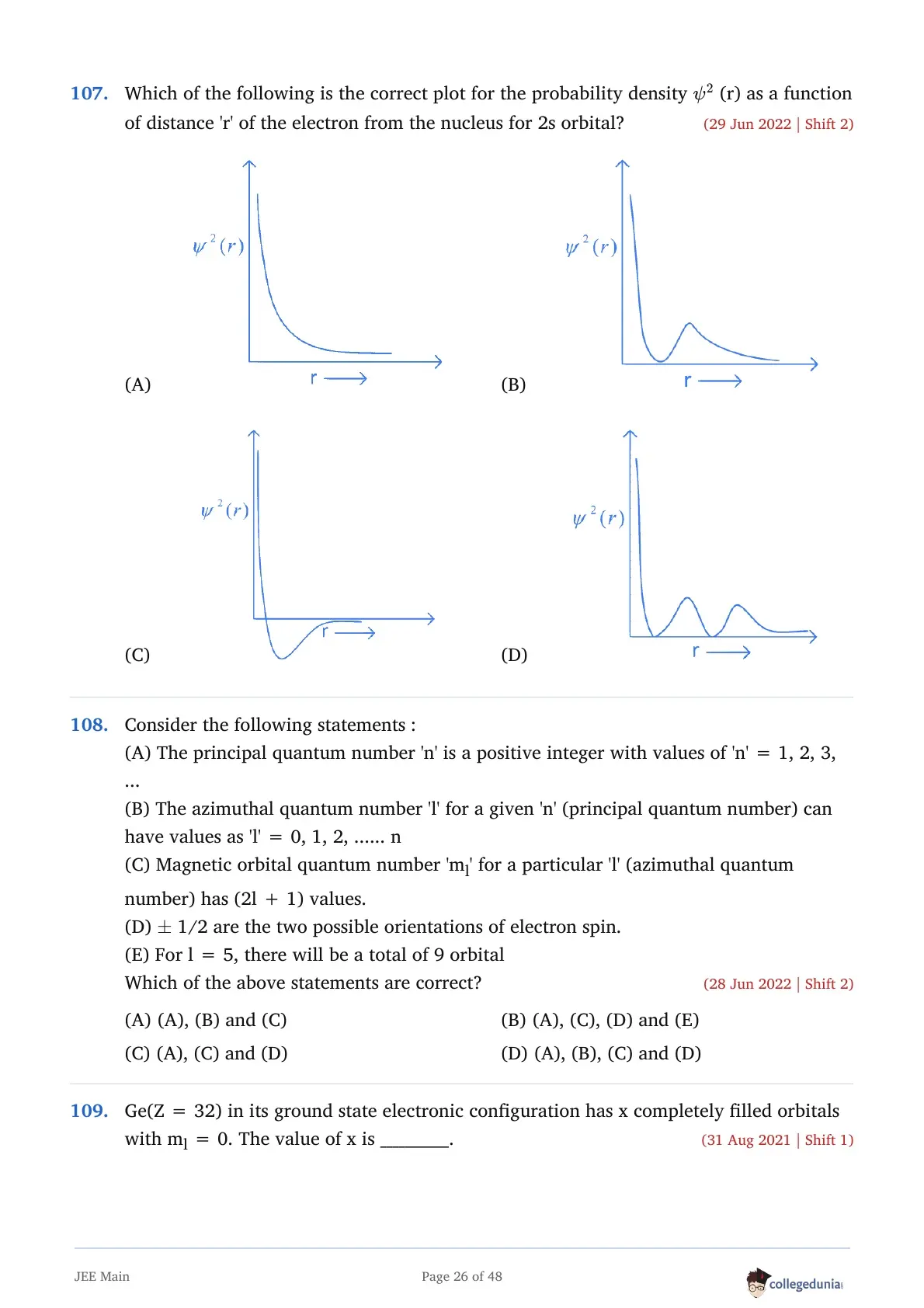
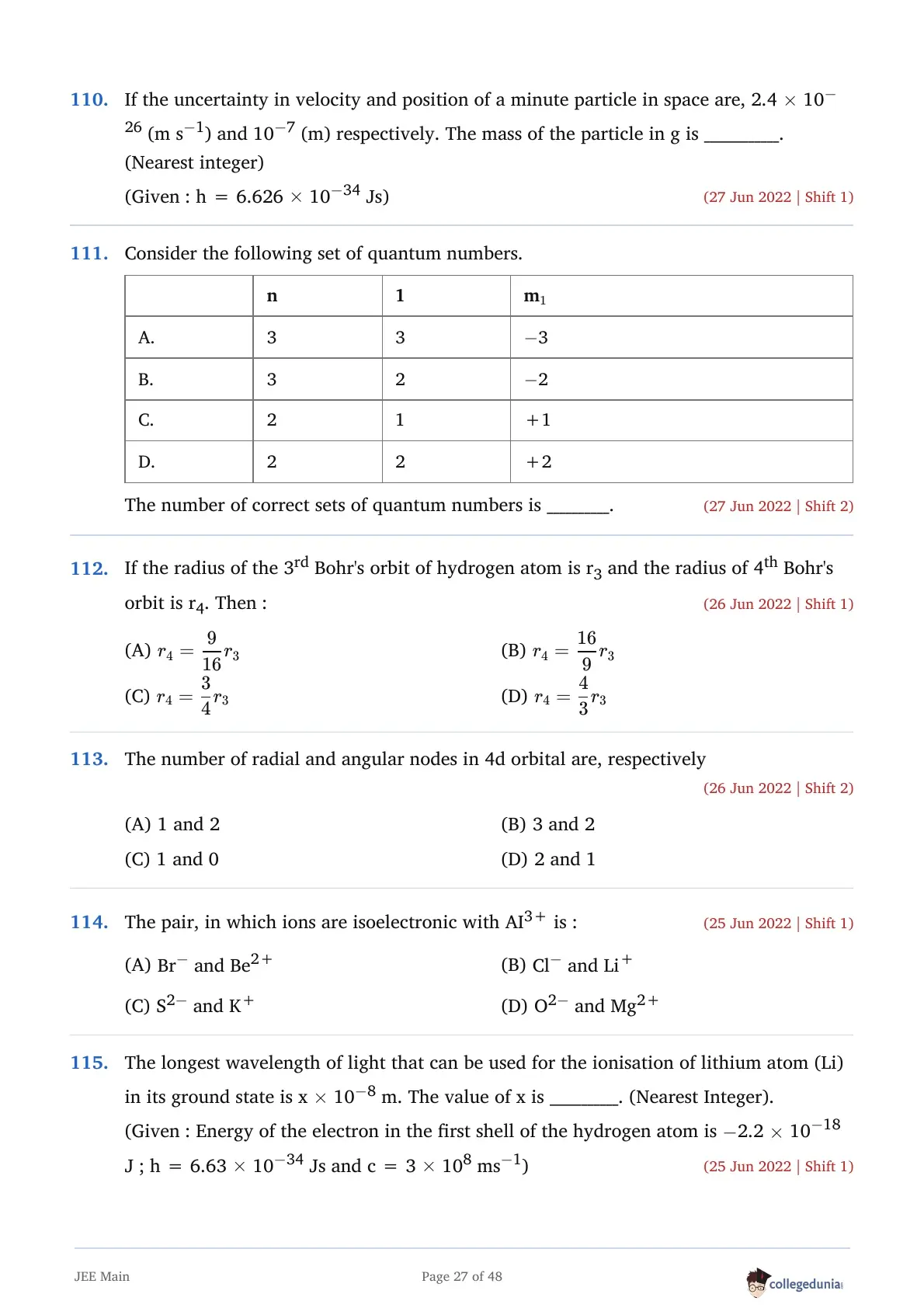
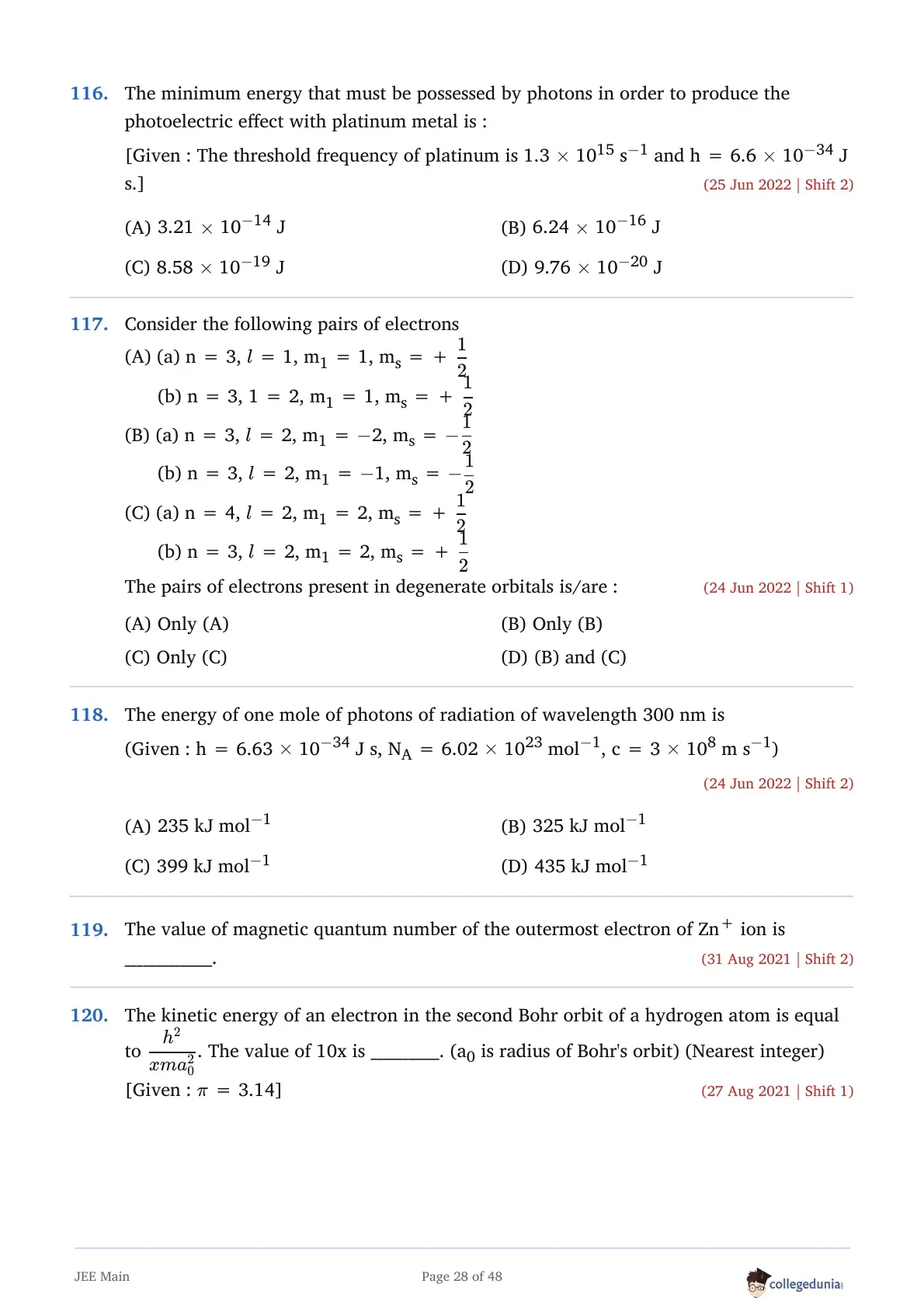
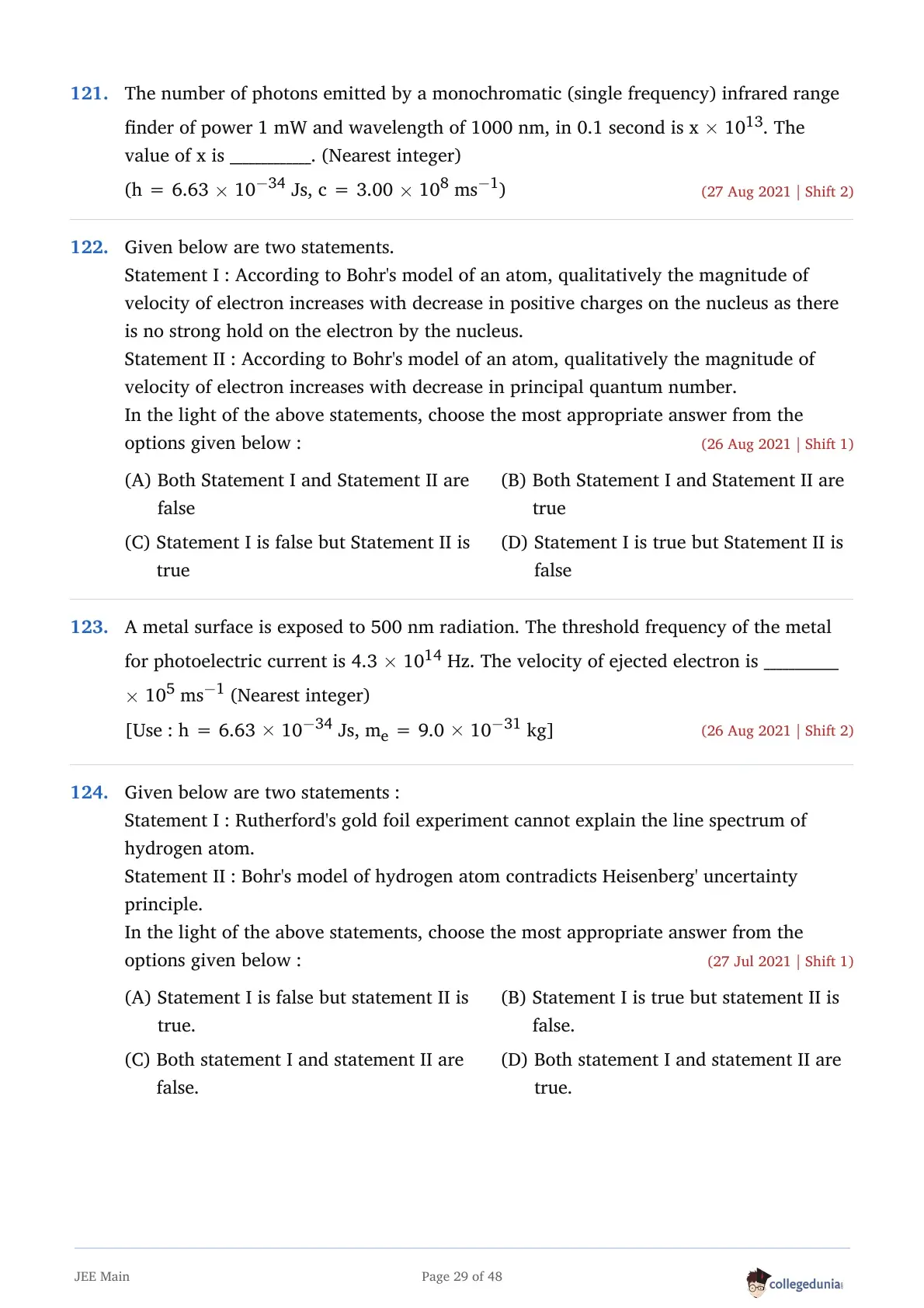
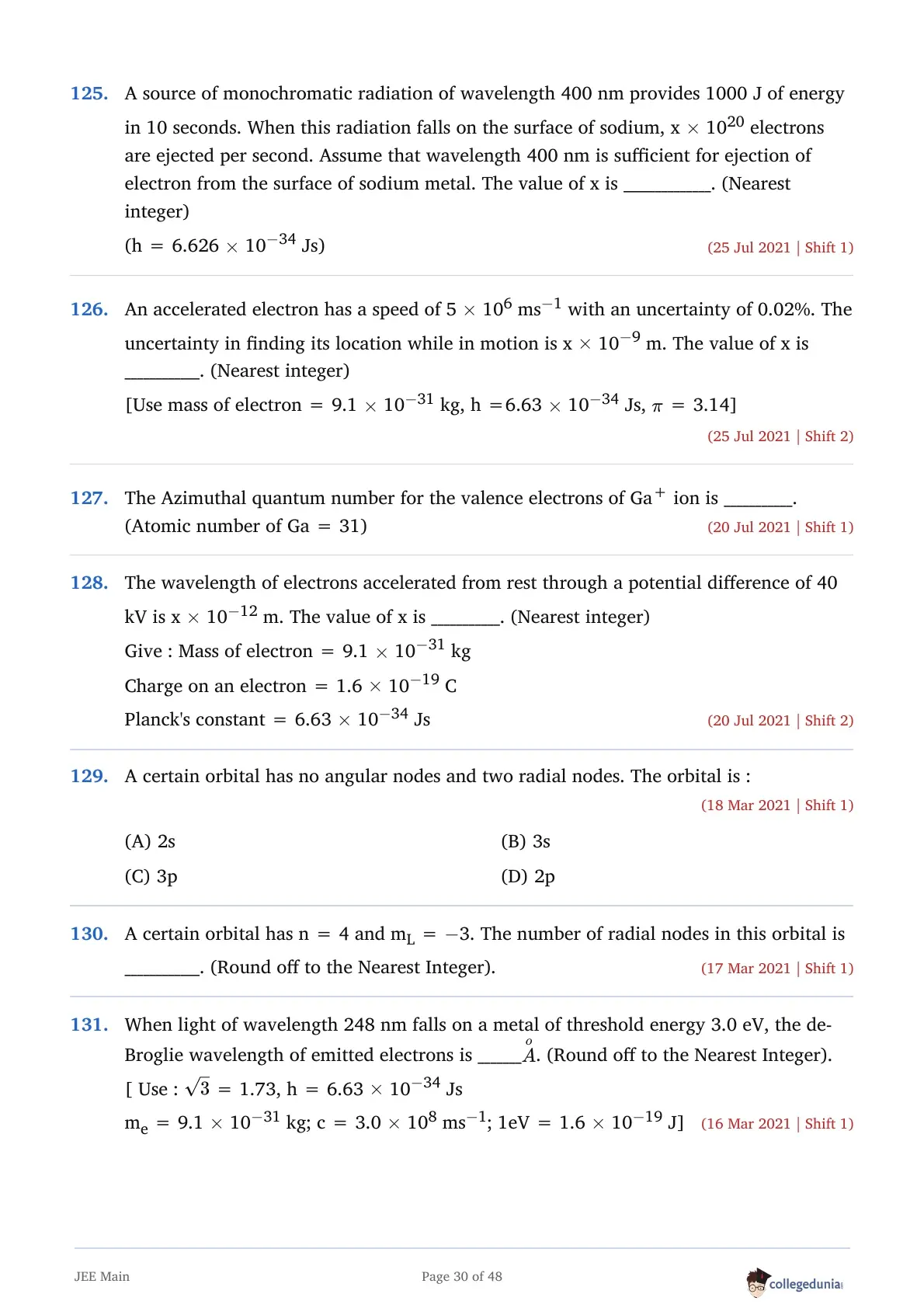
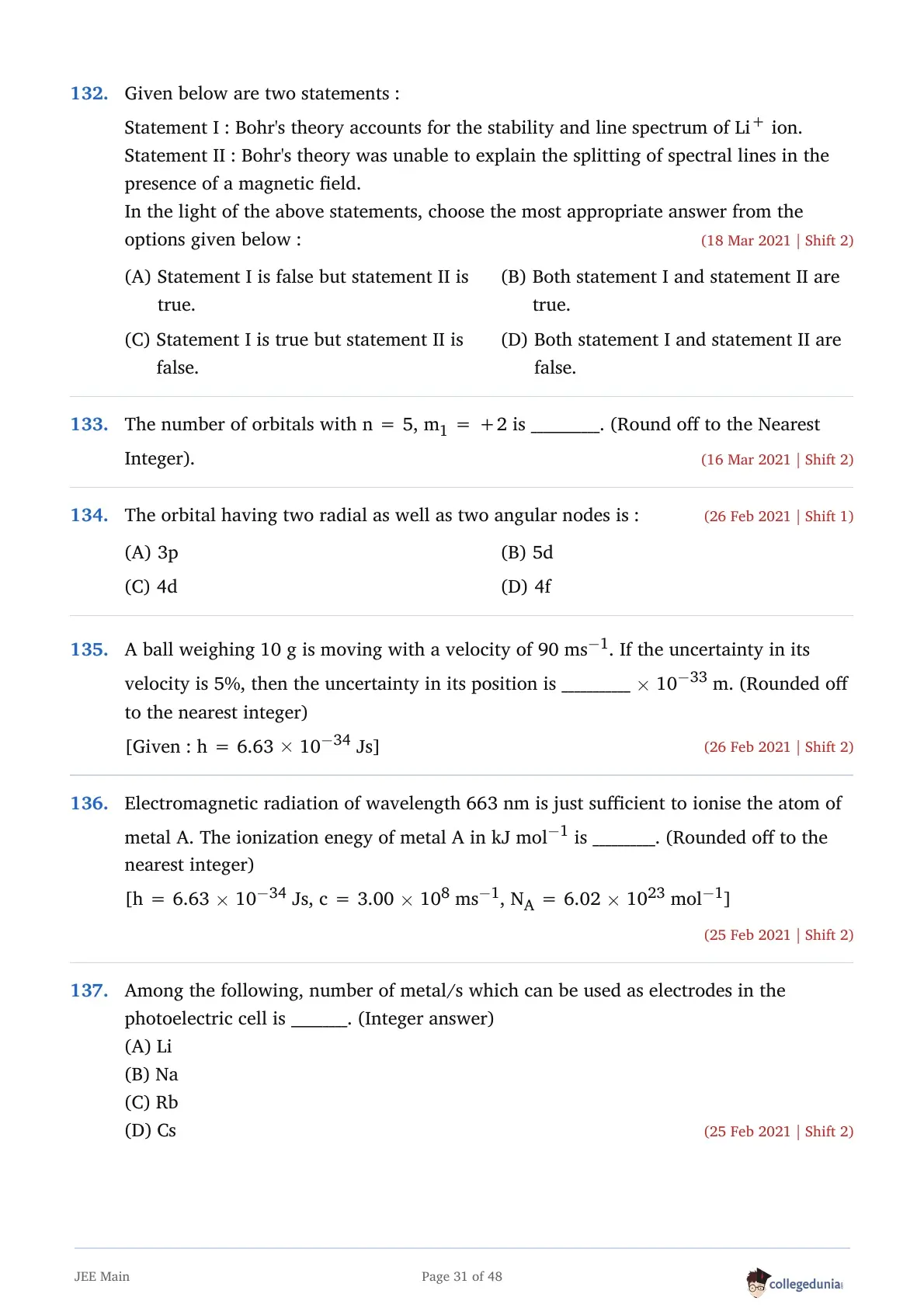
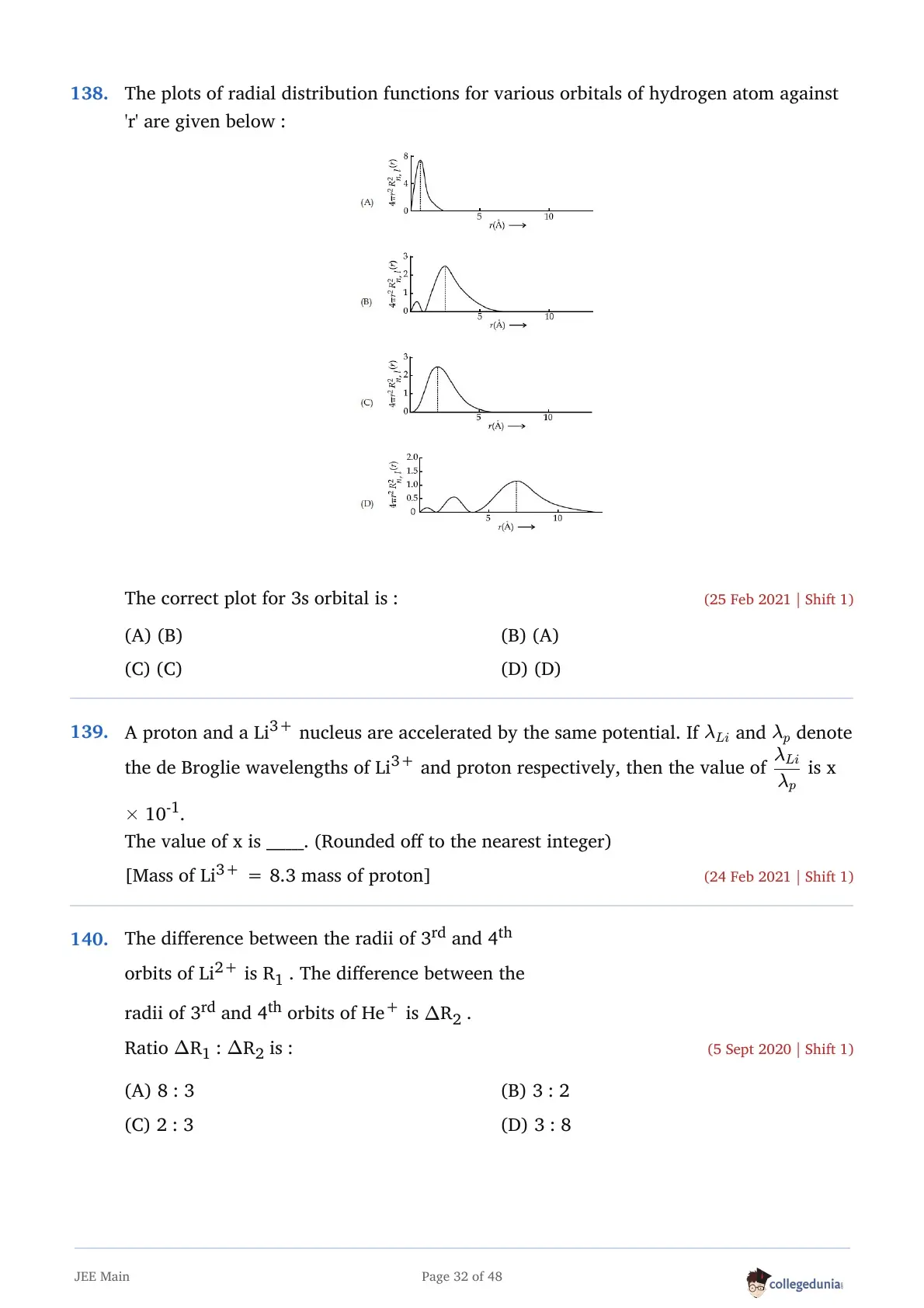
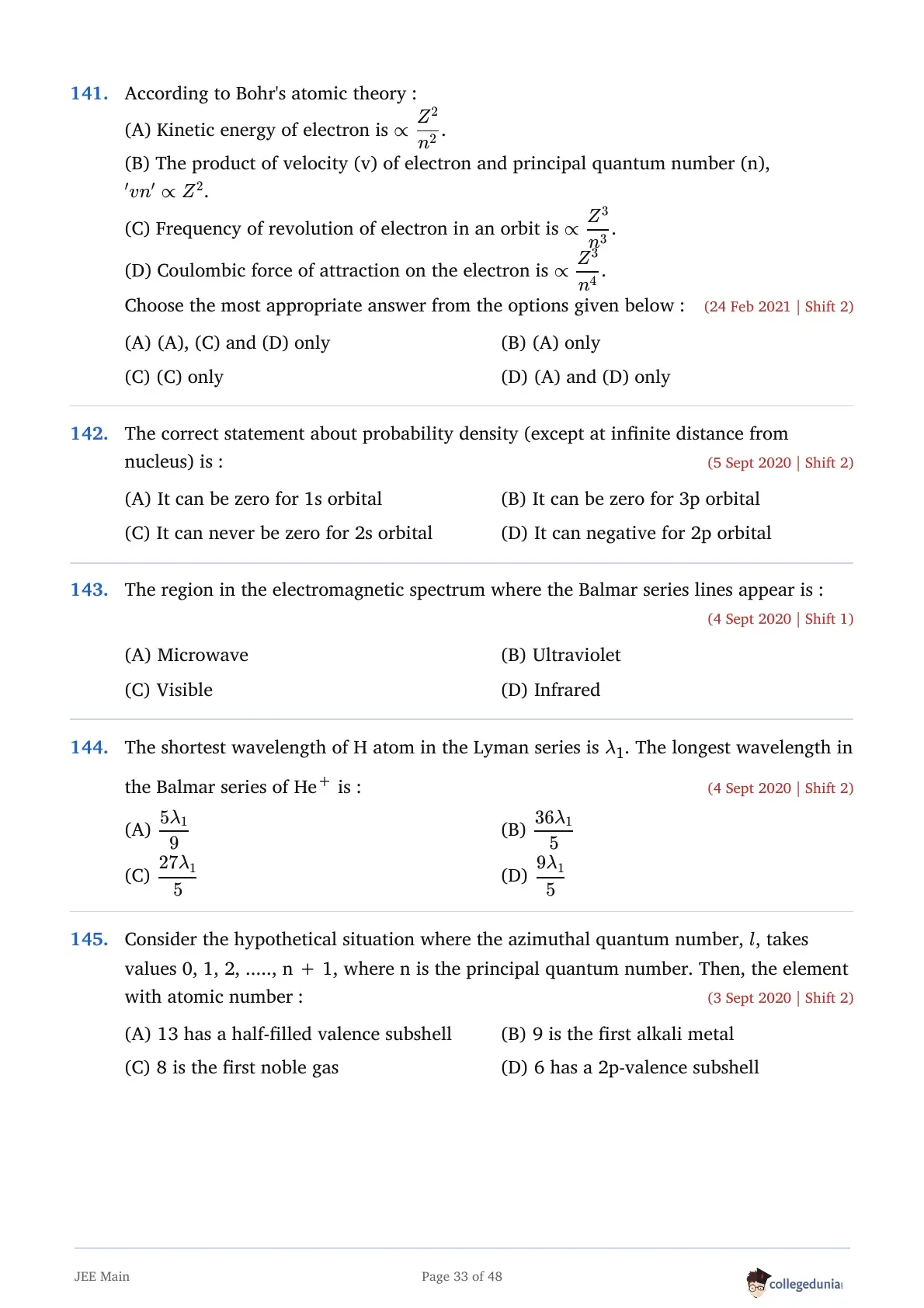
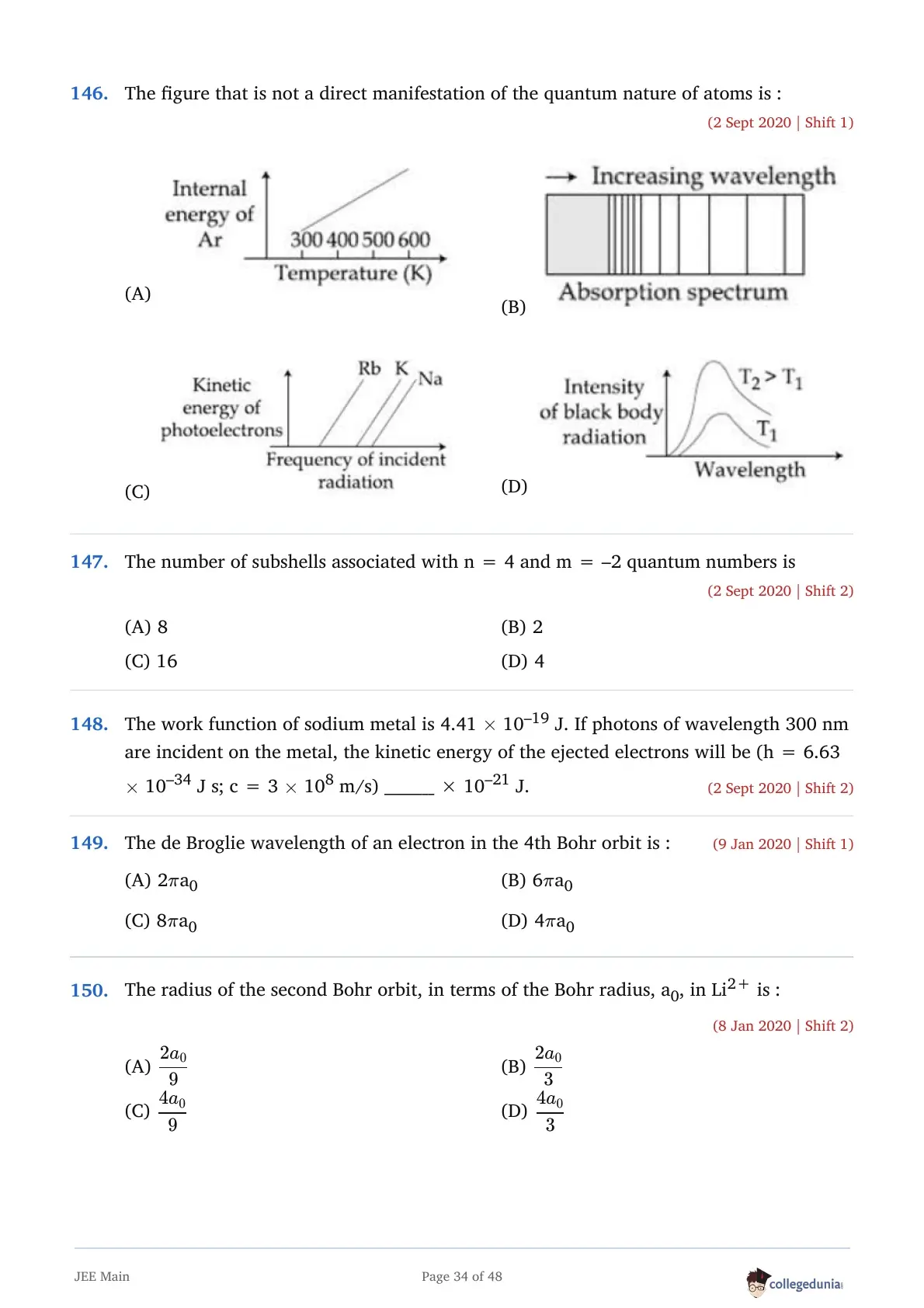
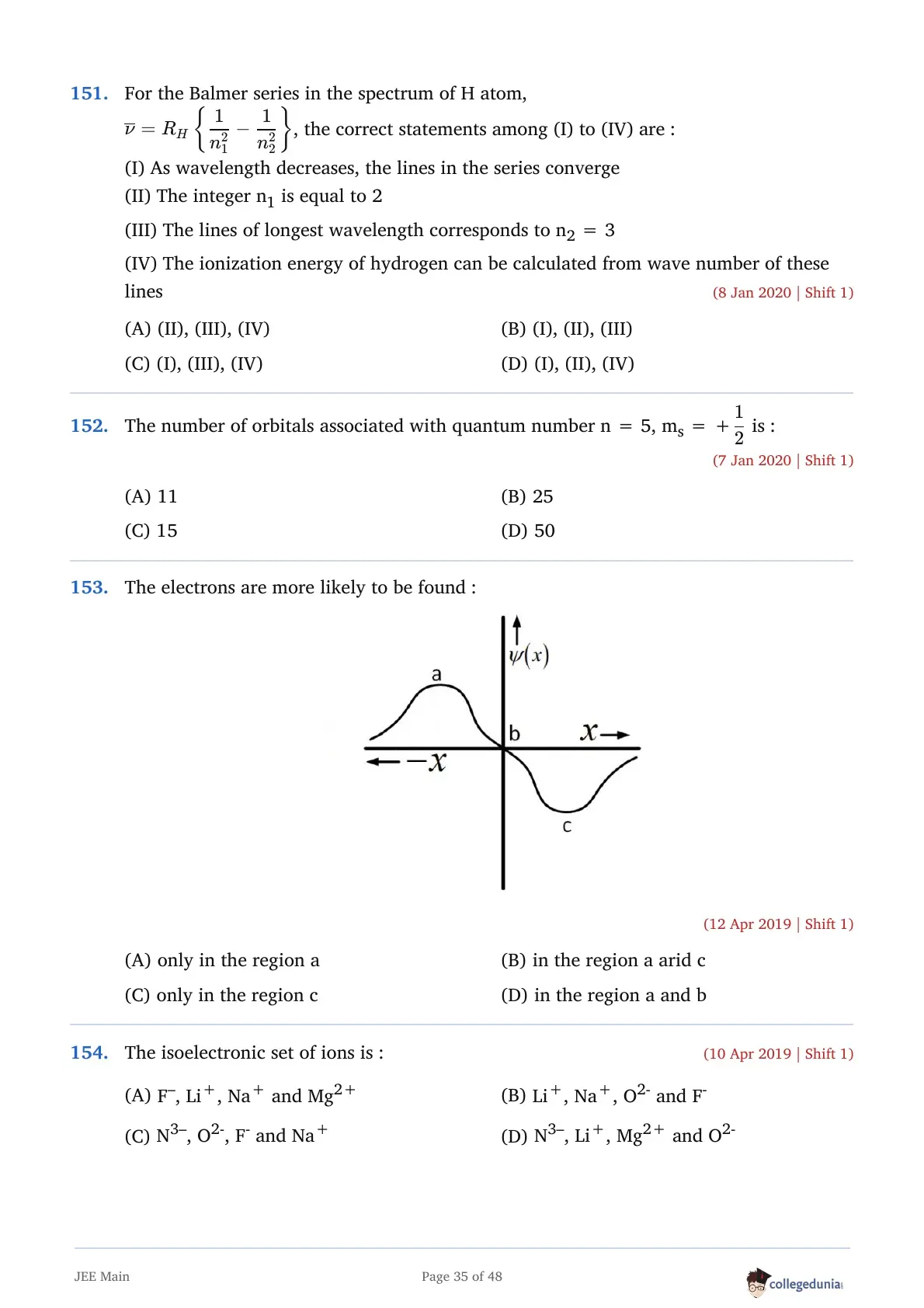
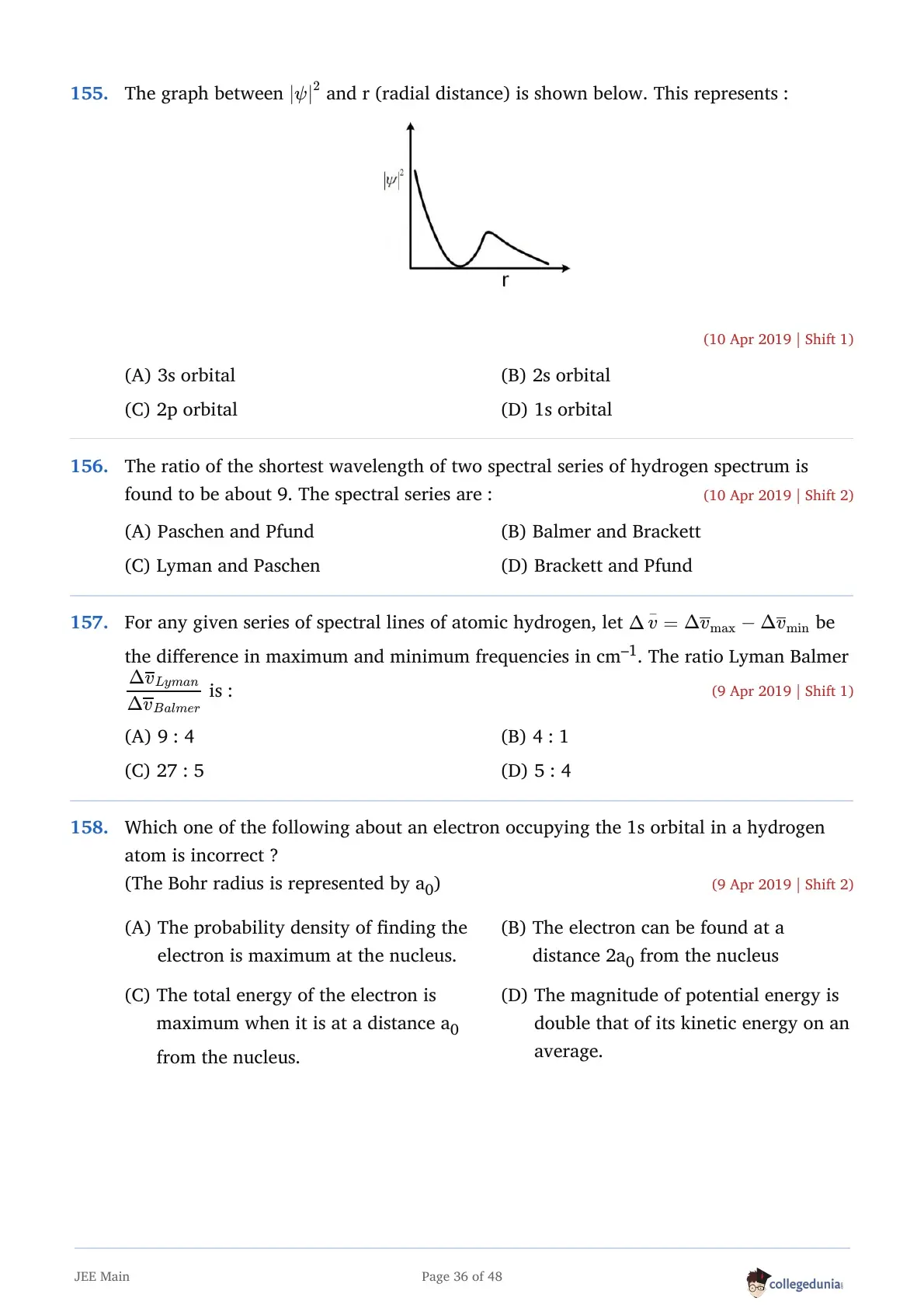
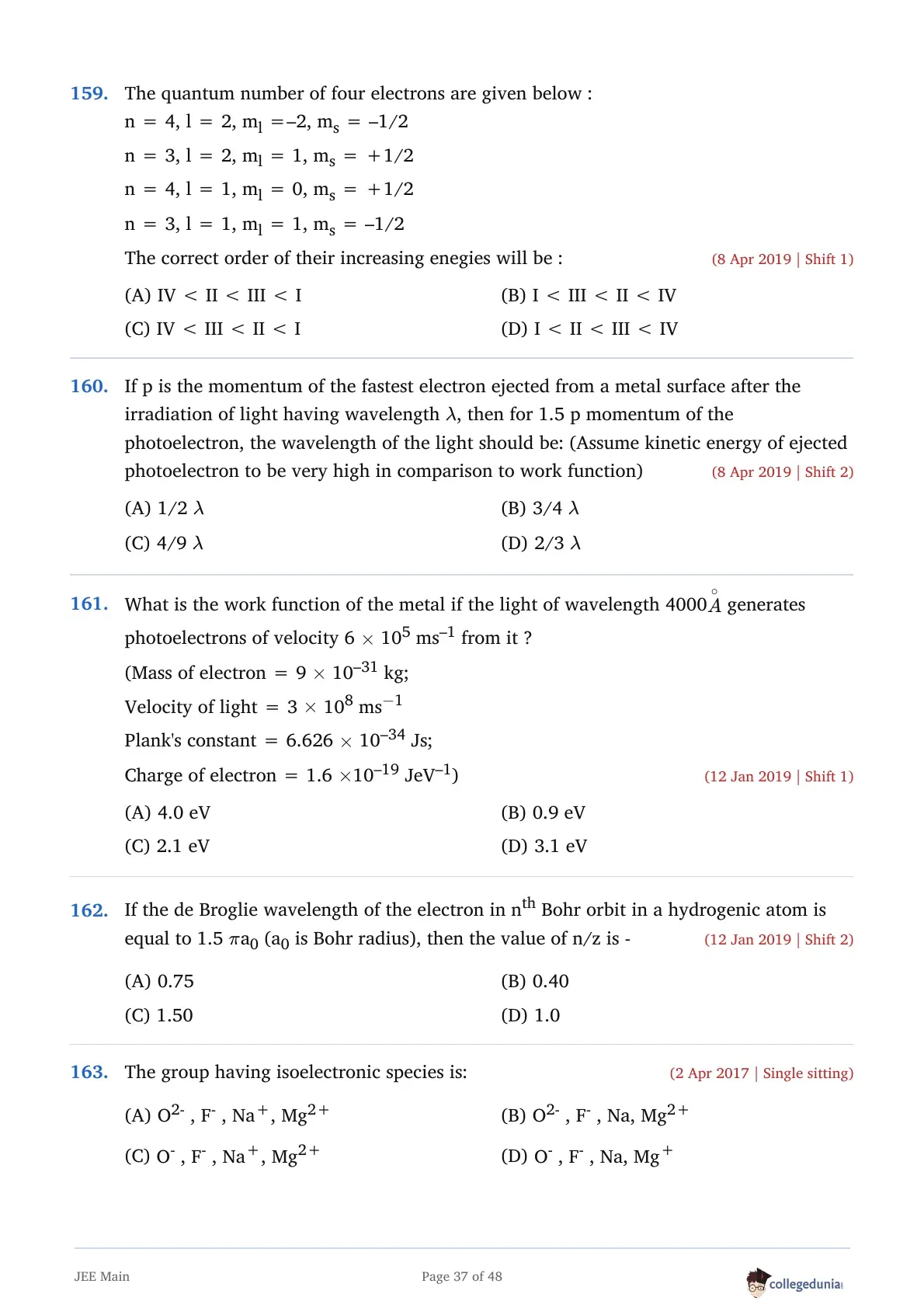
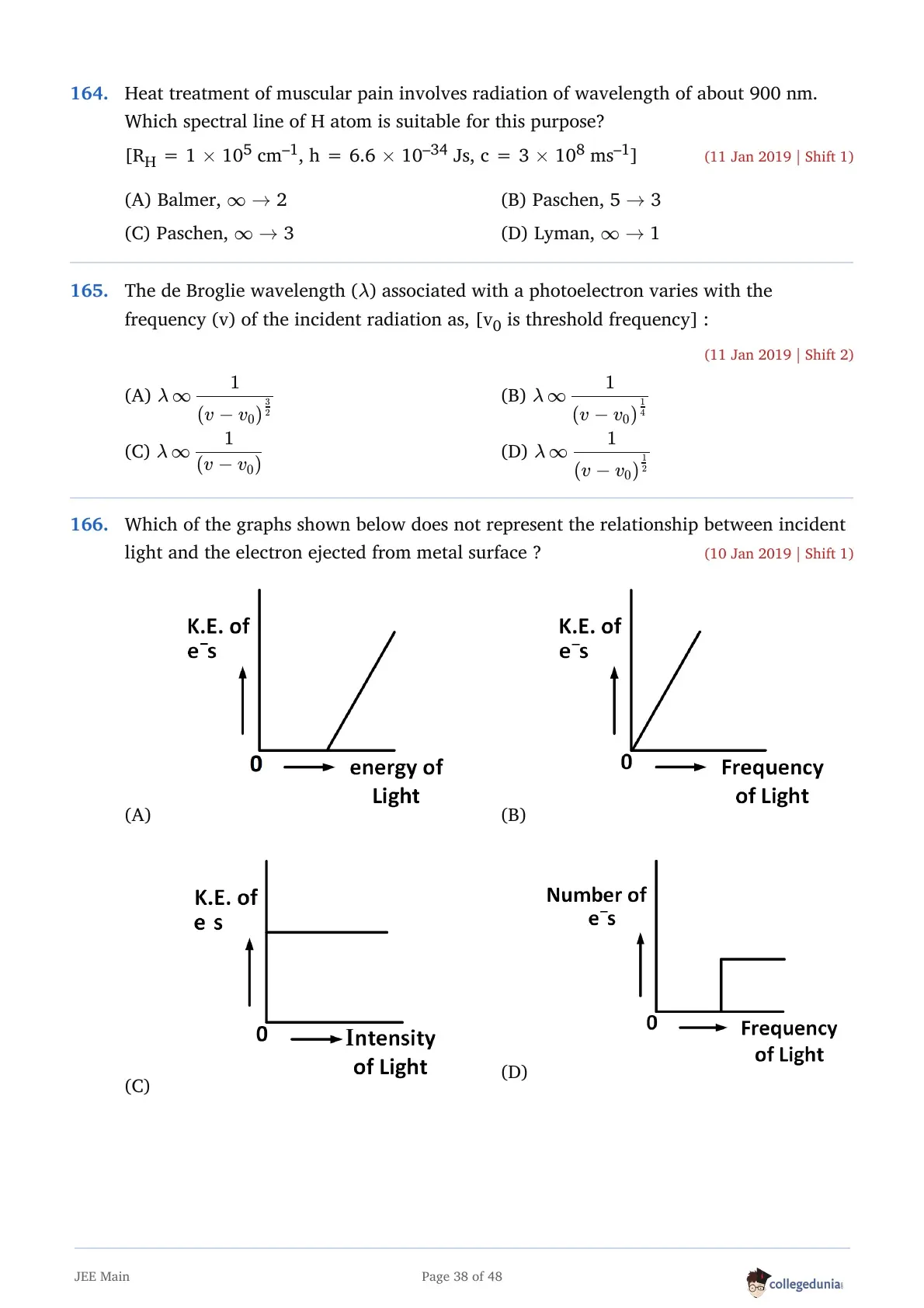
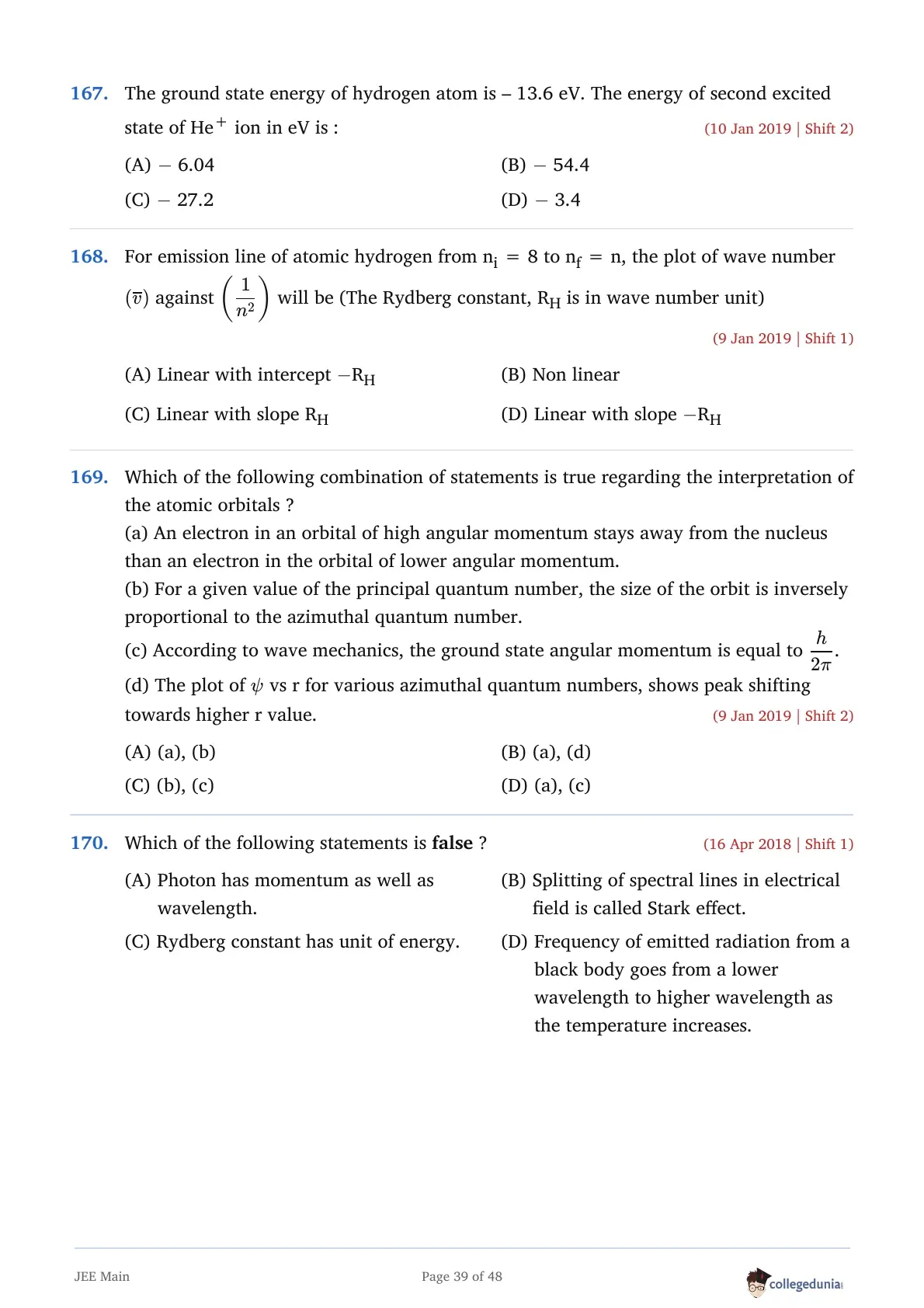
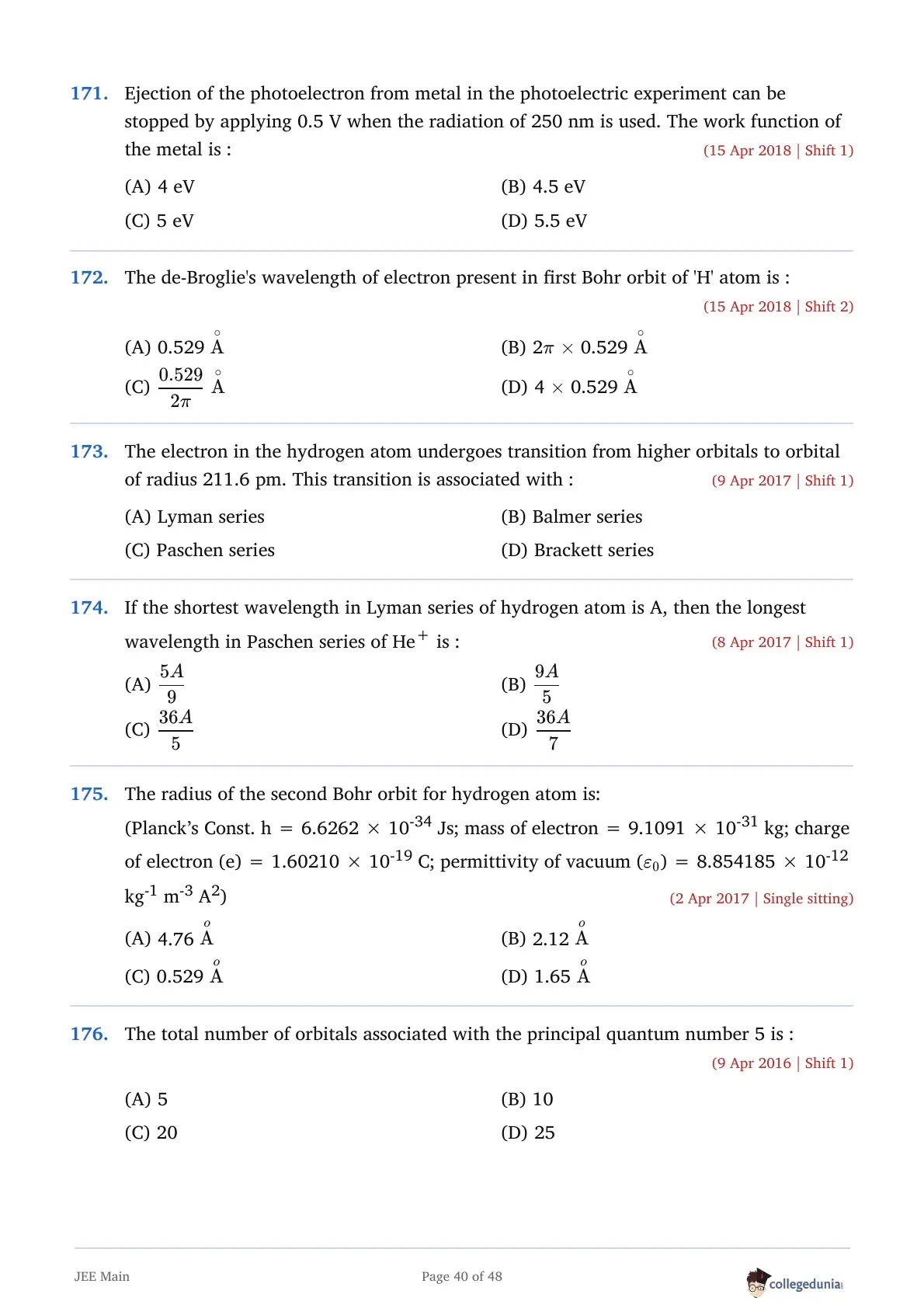
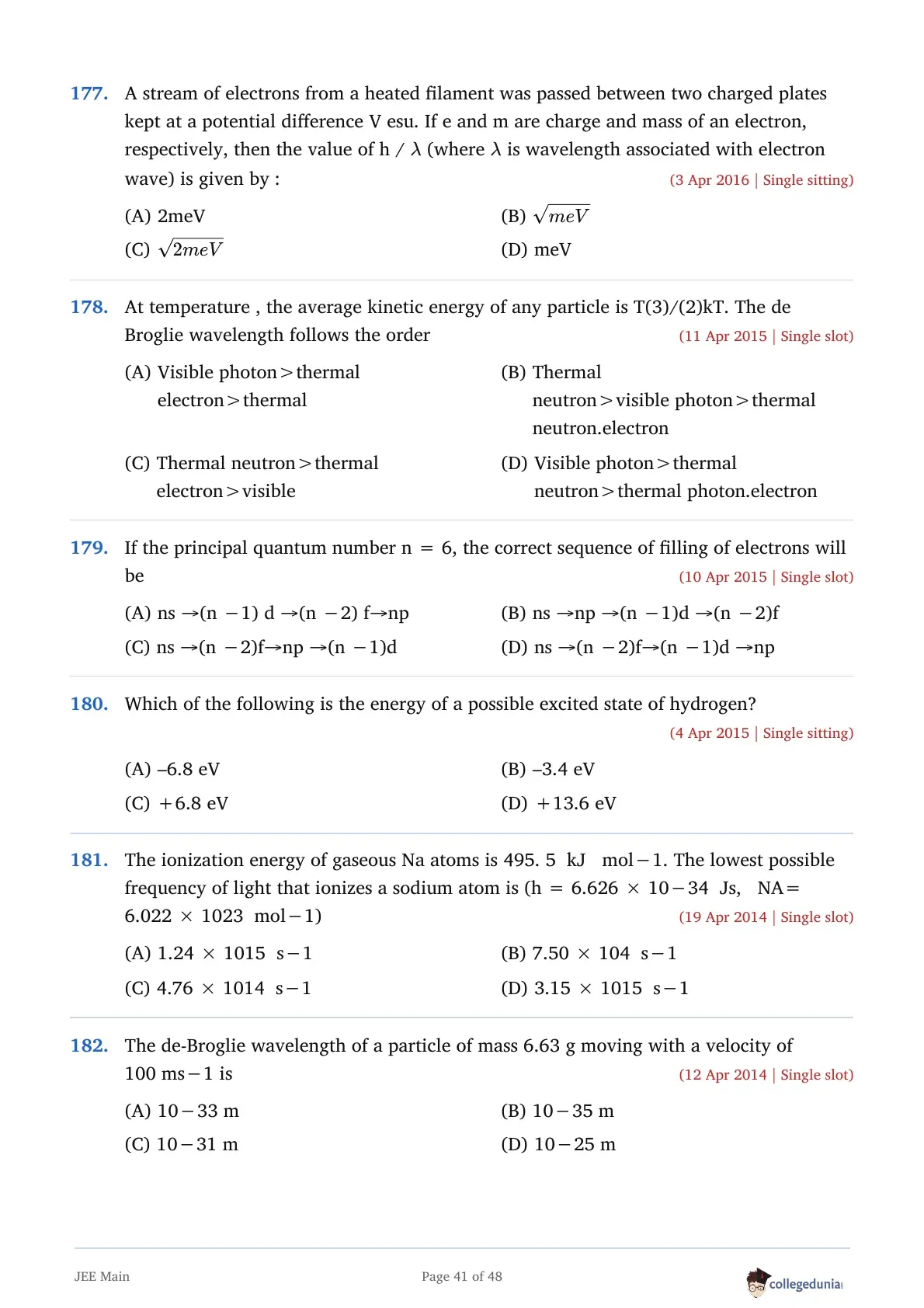
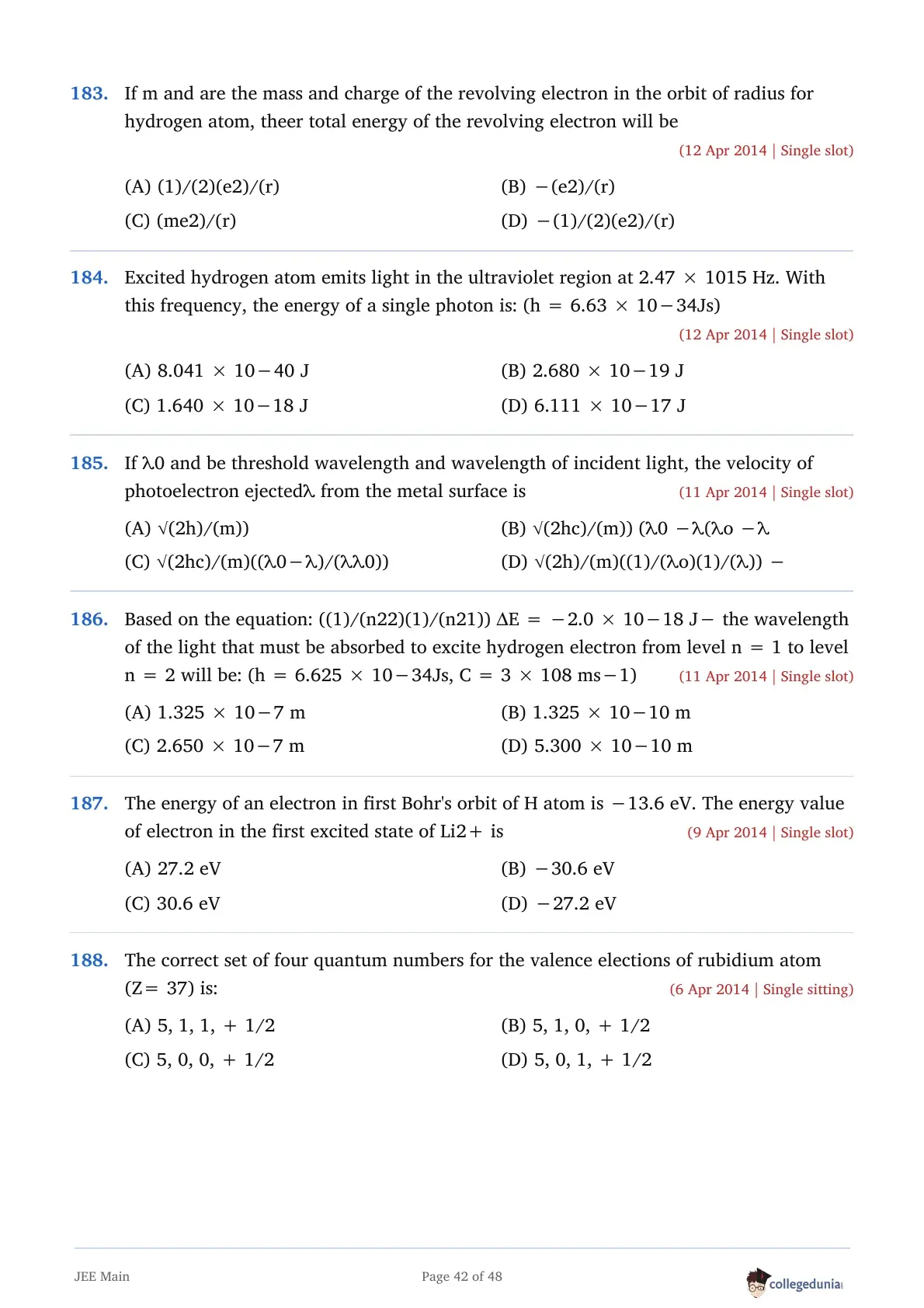
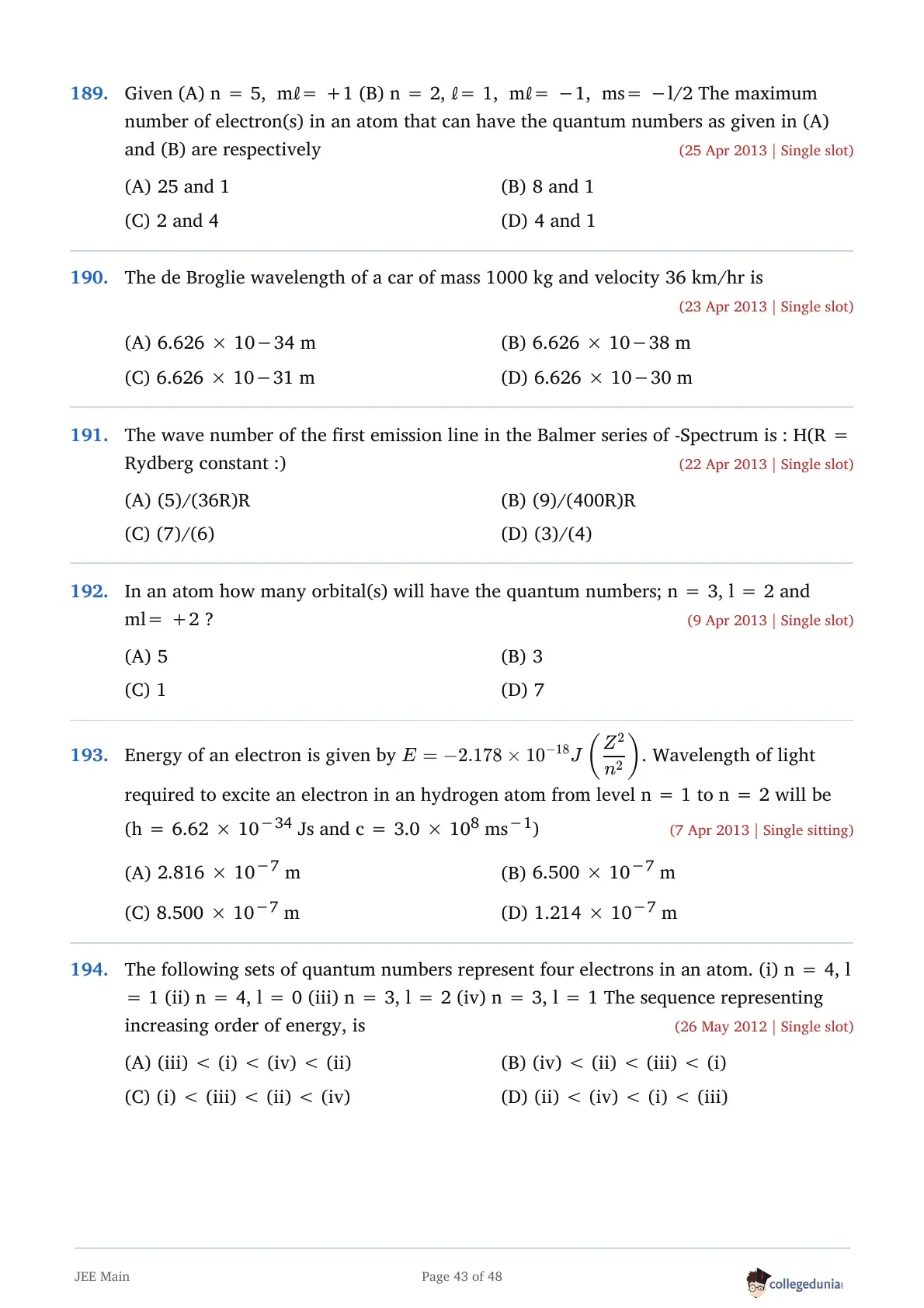
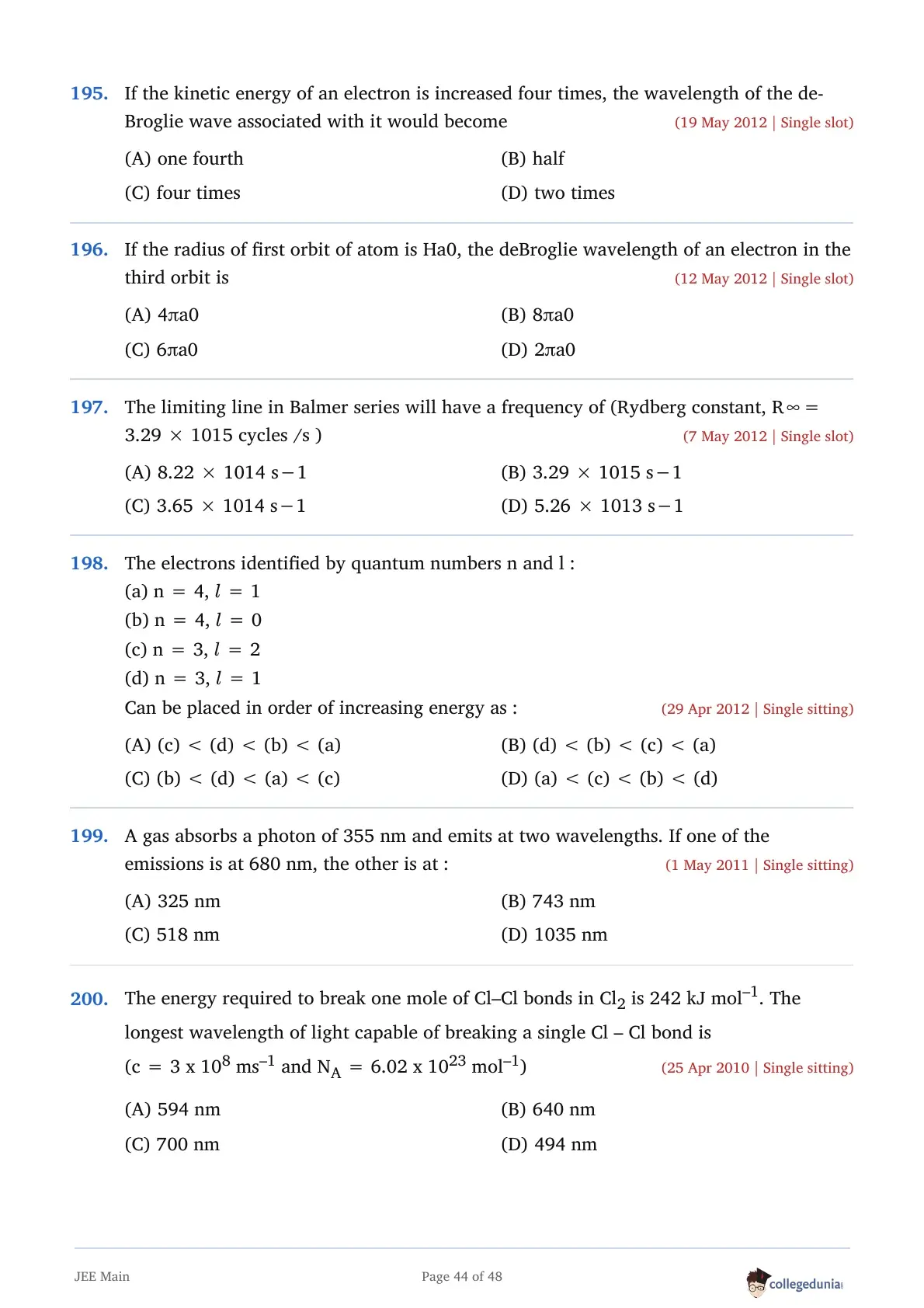
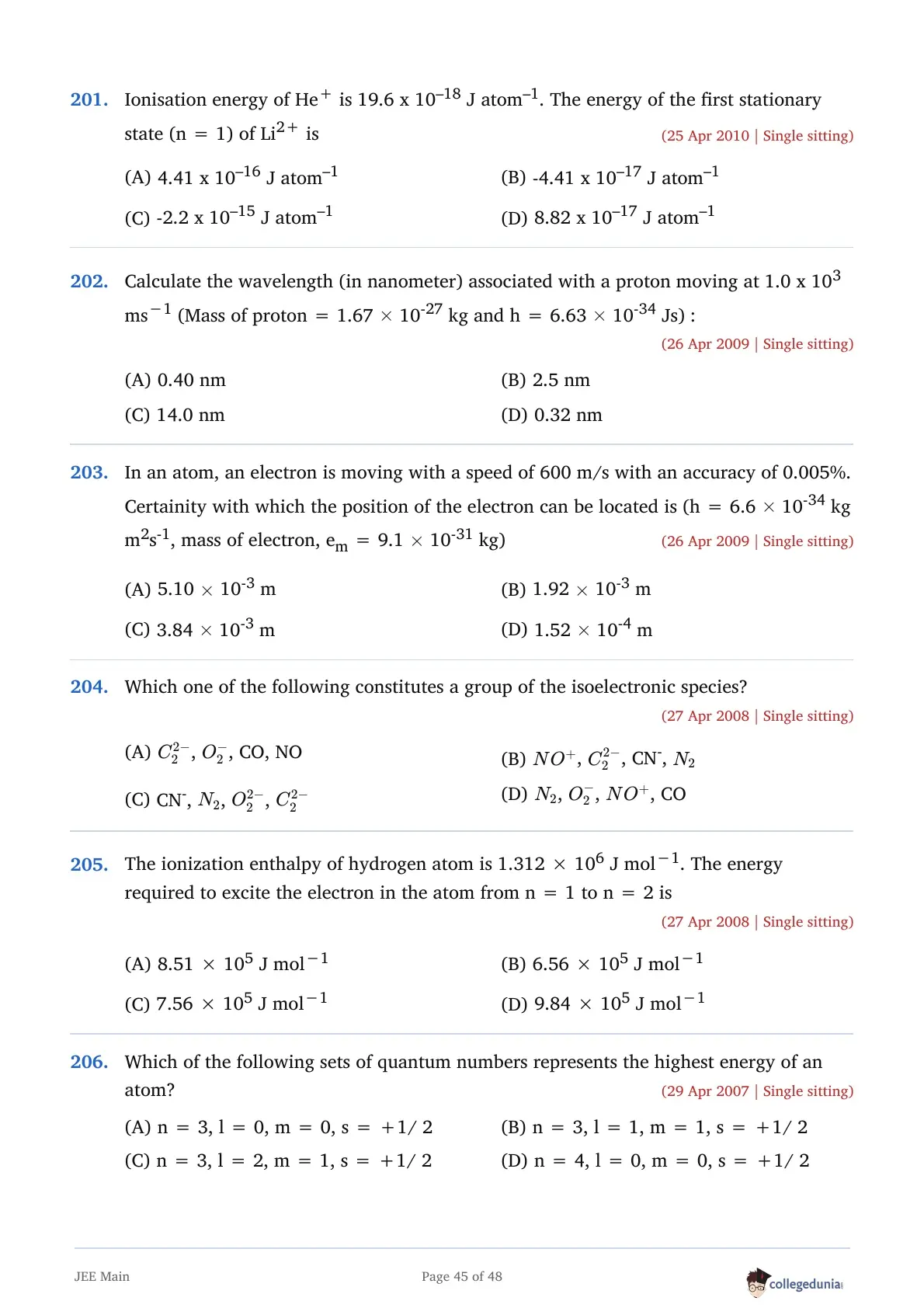
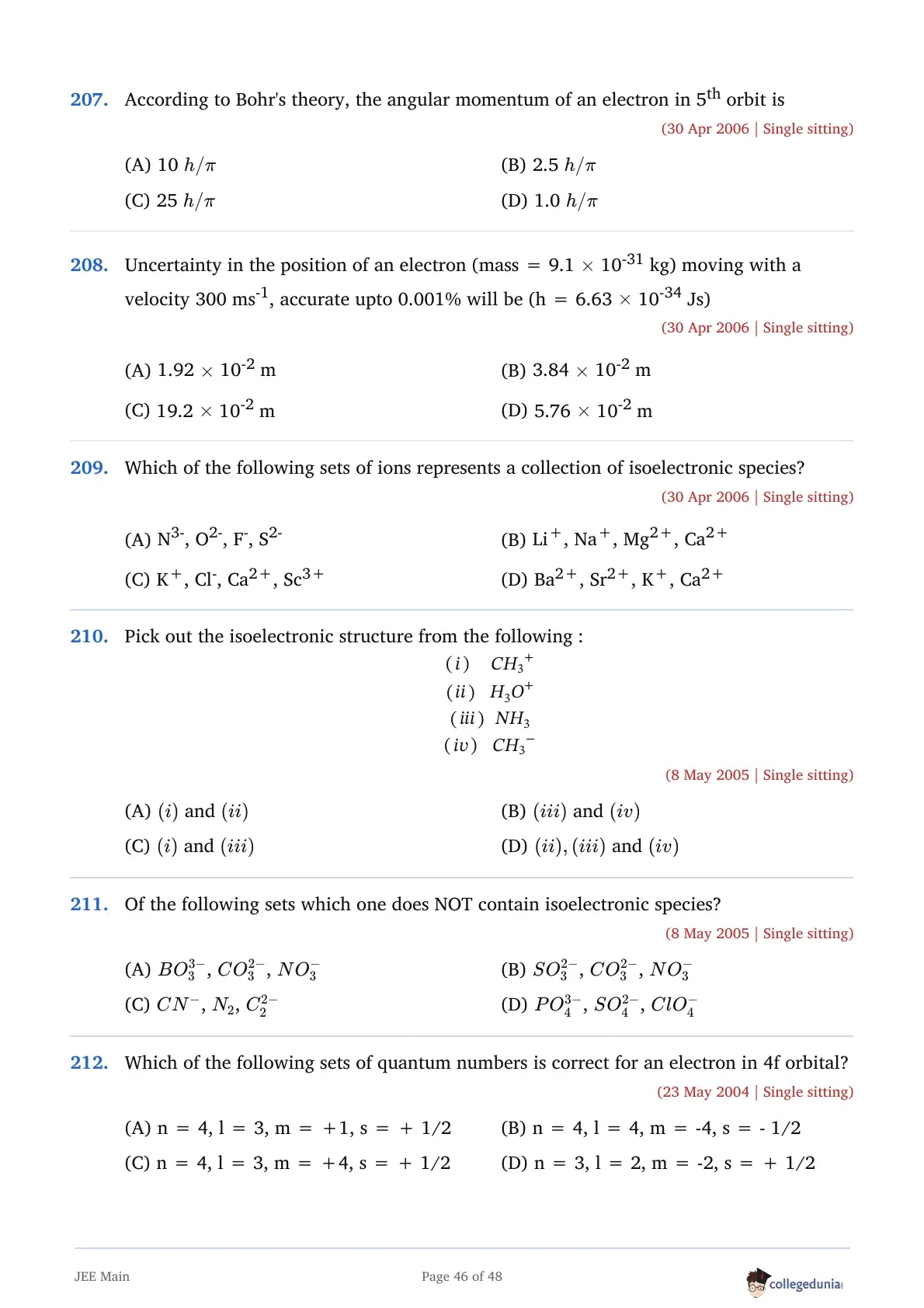
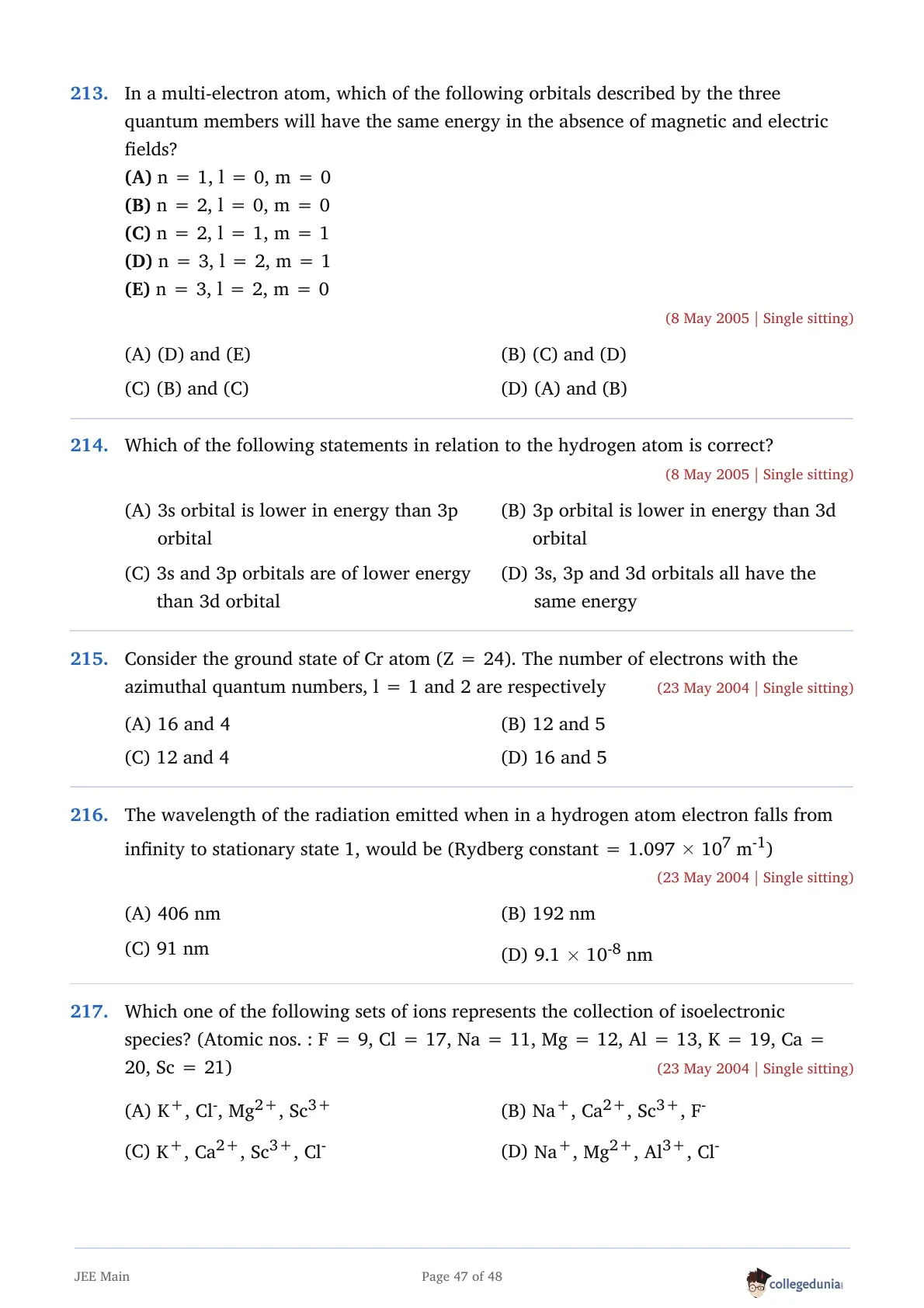
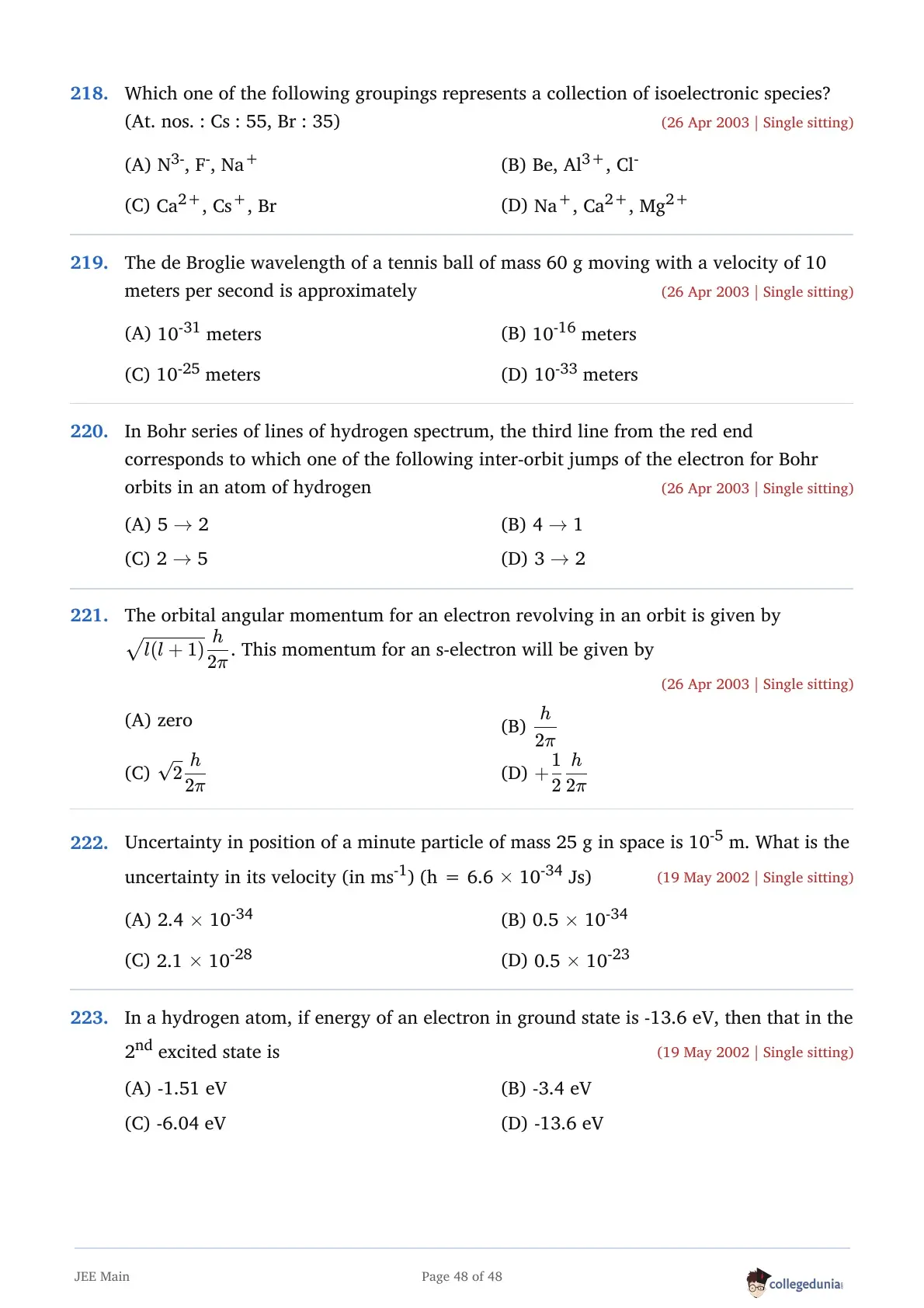
Atomic Structure is a chapter in Class 11 Chemistry. Every question carries its exam date and shift. The PDF holds questions only, with options as printed. Worked solutions for the questions are under "View Solution" further down this page.
JEE Main Atomic Structure Weightage by Year
As per JEE Main Atomic Structure weightage from past years, students can expect about 1 question from this chapter in most shifts. It took 5.47% of the Chemistry questions in 2026, the highest in this window, up from 3.33% in 2022.
| Year | Questions | Average per Shift | Weightage in Chemistry | Change in Weightage |
|---|---|---|---|---|
| 2026 | 26 | 1.37 | 5.47% | +30.00% |
| 2025 | 20 | 1.05 | 4.21% | +26.32% |
| 2024 | 20 | 1.00 | 3.33% | −11.11% |
| 2023 | 27 | 1.12 | 3.75% | +12.50% |
| 2022 | 23 | 1.00 | 3.33% | +8.33% |
The 2021 papers add 24 more questions, and the years before that add 83. Weightage is the chapter's share of all Chemistry questions in the bank for that year.
Topic-Wise Questions and PDFs
Four topics carry the chapter. Quantum numbers and orbitals, the Bohr model, the quantum mechanical model and the hydrogen spectrum make up 156 of the 223 questions, about 70%. Each topic also has its own PDF if you want to drill one area.
| Topic | Questions | PDF Size | Download |
|---|---|---|---|
| Quantum numbers and shapes of s, p and d orbitals | 53 | 2.008 MB | Download PDF |
| Bohr model of a hydrogen atom | 39 | 1.992 MB | Download PDF |
| Quantum mechanical model of the atom and atomic orbitals | 33 | 2.142 MB | Download PDF |
| Spectrum of the hydrogen atom | 31 | 1.935 MB | Download PDF |
| Photoelectric effect | 21 | 2.086 MB | Download PDF |
| Dual nature of matter and de Broglie's relationship | 18 | 1.915 MB | Download PDF |
| Nature of electromagnetic radiation | 15 | 1.888 MB | Download PDF |
| Heisenberg uncertainty principle | 9 | 1.863 MB | Download PDF |
| Rules for filling electrons in orbitals: Aufbau principle, Pauli's exclusion principle and Hund's rule | 3 | 1.821 MB | Download PDF |
| Electronic configuration of elements and stability of half-filled and completely filled orbitals | 1 | 1.819 MB | Download PDF |
Question Types and Difficulty
Roughly three in four questions are single-answer MCQs. The 59 numerical-value questions all come from 2020 onwards.
| Question Type | Questions | Share |
|---|---|---|
| Single-correct MCQ | 164 | 73.5% |
| Numerical value | 59 | 26.5% |
| Total | 223 | 100% |
By the difficulty tag in our question bank, 129 questions are easy and 75 are medium. Only 2 are hard, and 17 carry no tag.
How to Practise Atomic Structure
Begin with the Bohr model and the hydrogen spectrum, 39 and 31 questions that rest on a handful of formulas. Then take the 53 questions on quantum numbers and orbital shapes and the 33 on the quantum mechanical model.
Finish with the photoelectric effect, de Broglie's relationship, electromagnetic radiation and the uncertainty principle, 63 questions in all, plus the 4 on filling rules and electronic configuration. Redo any you missed after a day.
Related JEE Main Chemistry Resources
| Resource | Link |
|---|---|
| Atomic Structure JEE Main Previous Year Questions with Solutions and Weightage | Read and download |
| Atomic Structure JEE Main Questions: List of Most Asked Questions with Solutions | Read and download |
| JEE Main Chemistry Atomic Structure PYQs | Read and download |
Video: Atomic Structure PYQs One Shot
Source: Vedantu JEE Made Ejee
Also Read


 Which of the following points in Figure 2 most accurately represents the nodal surface shown in Figure 1?



Comments