



JEE Main Relative Velocity PYQ PDF is a free, 9-page resource containing 27 questions from the 2014-2026 papers. The topic recorded 2 questions across the 2026 papers, with a reported weightage of 0.42% in the referenced database.
The PDF includes 9 questions on trains and cars, 8 questions on river crossing, and 20 MCQs alongside 7 numerical-value questions. Questions are arranged from newest to oldest to help students practise recent exam patterns and revise key concepts.
The PDF Contains:
| 27 Questions | 9 Page | 0.42% ↓33.33% Weightage in 2026 | 2014-2026 years covered |
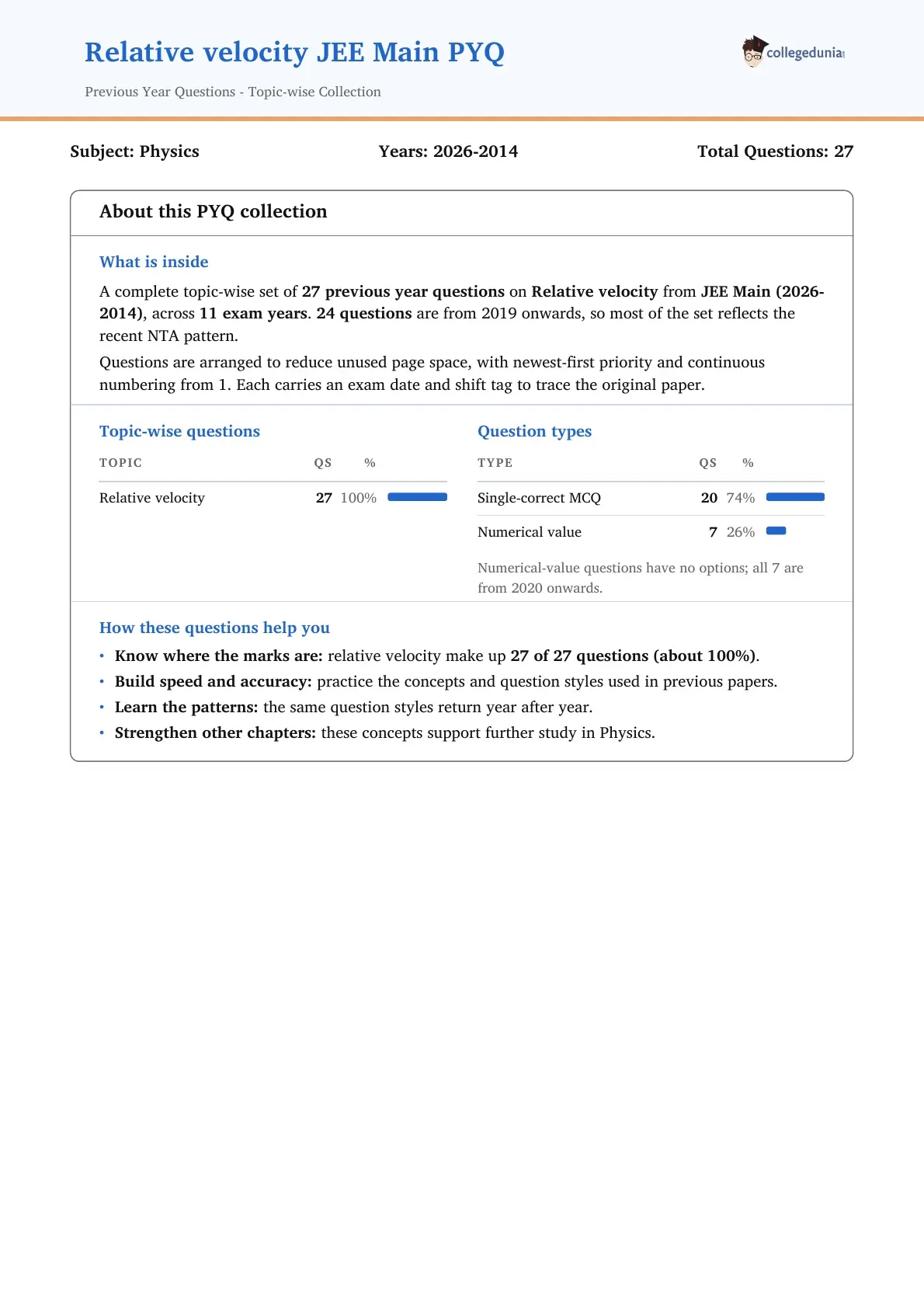
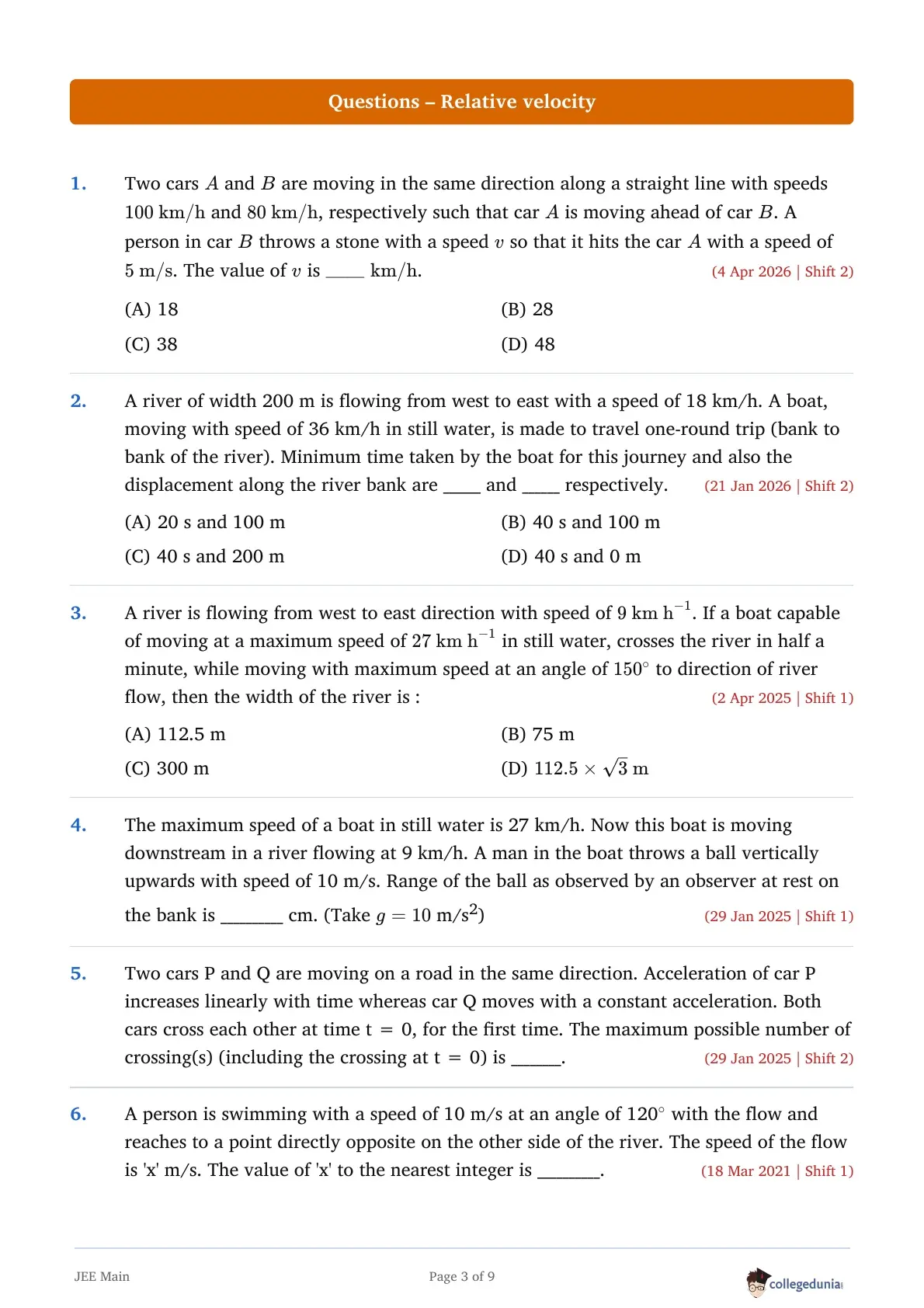
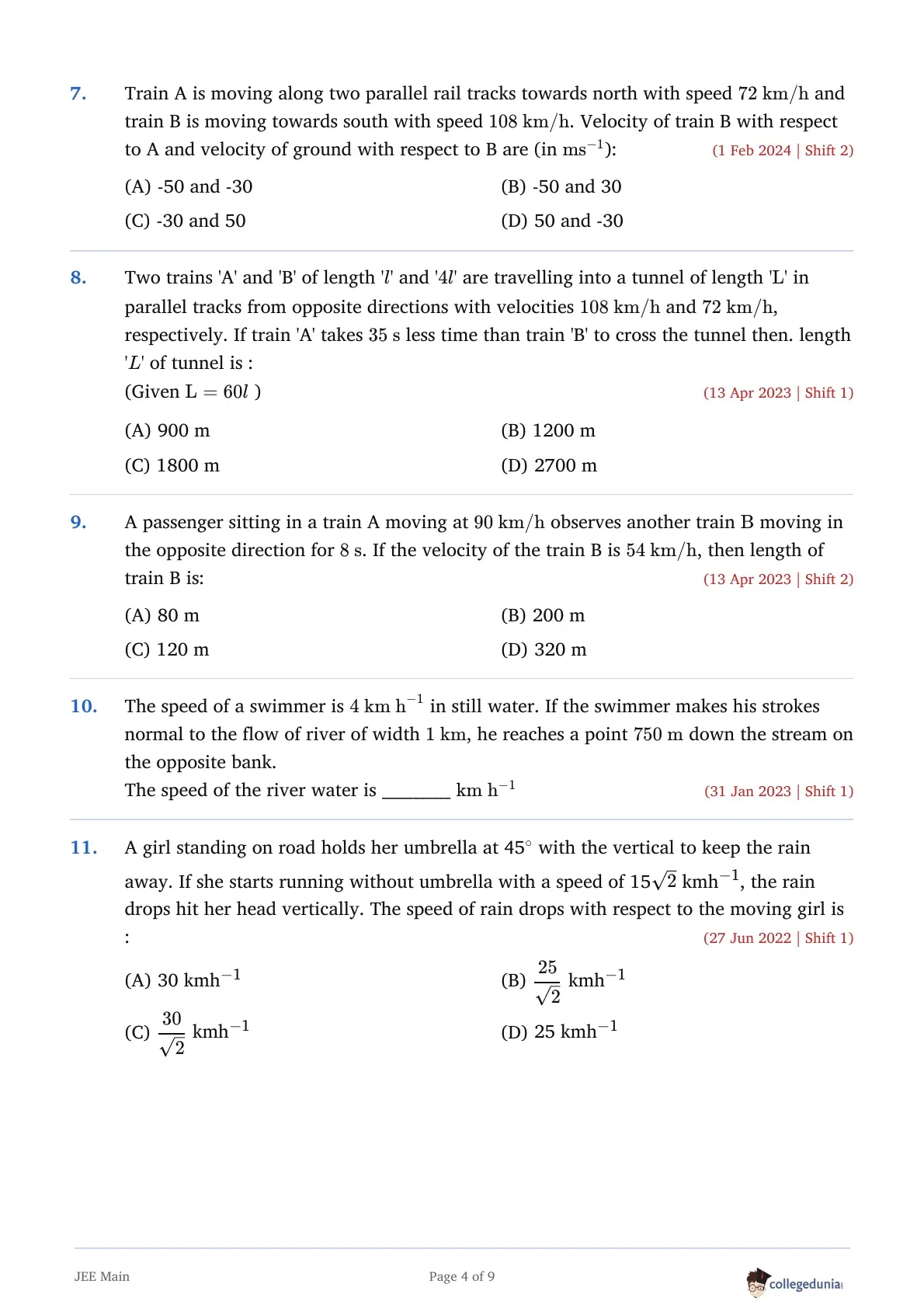
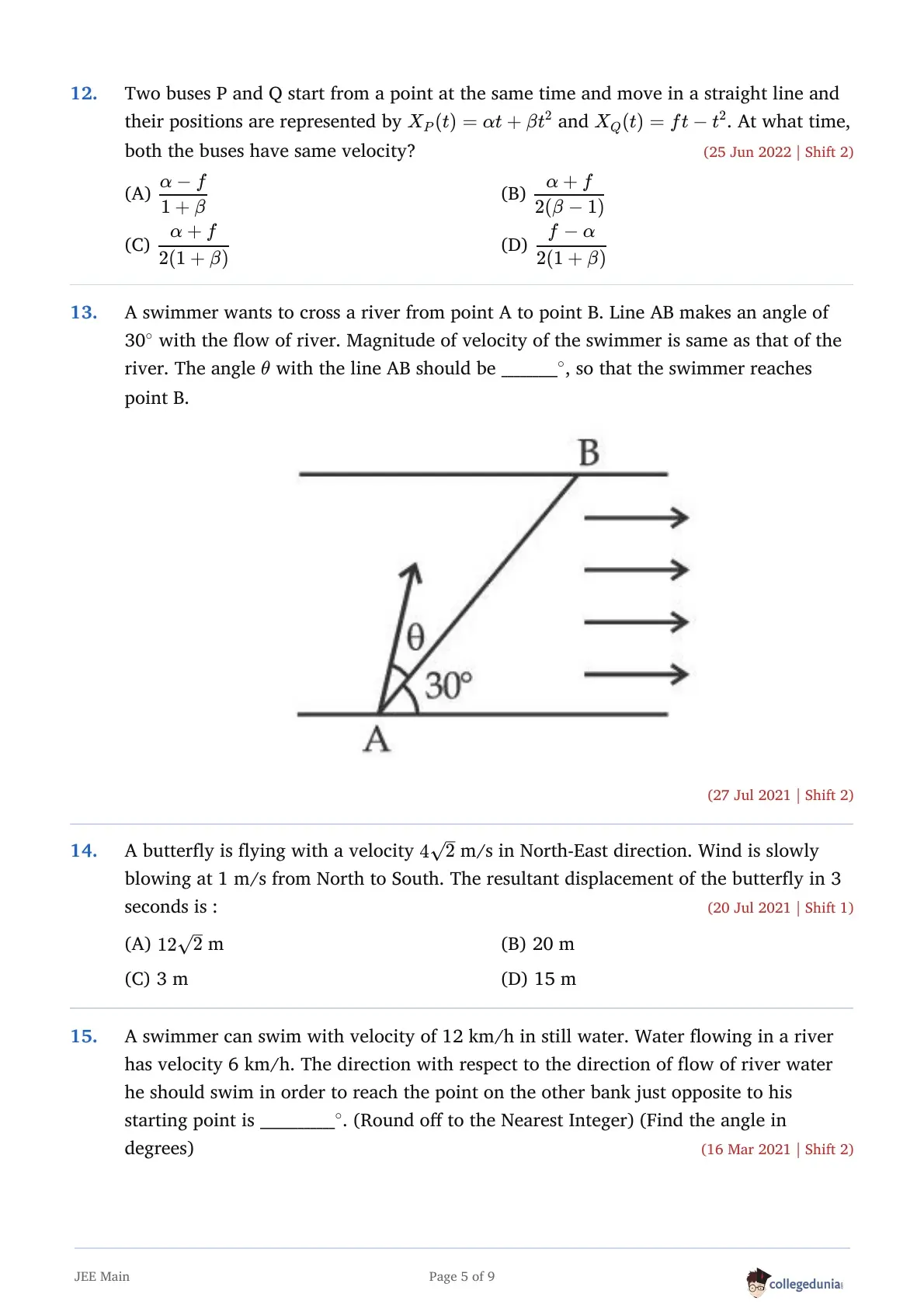
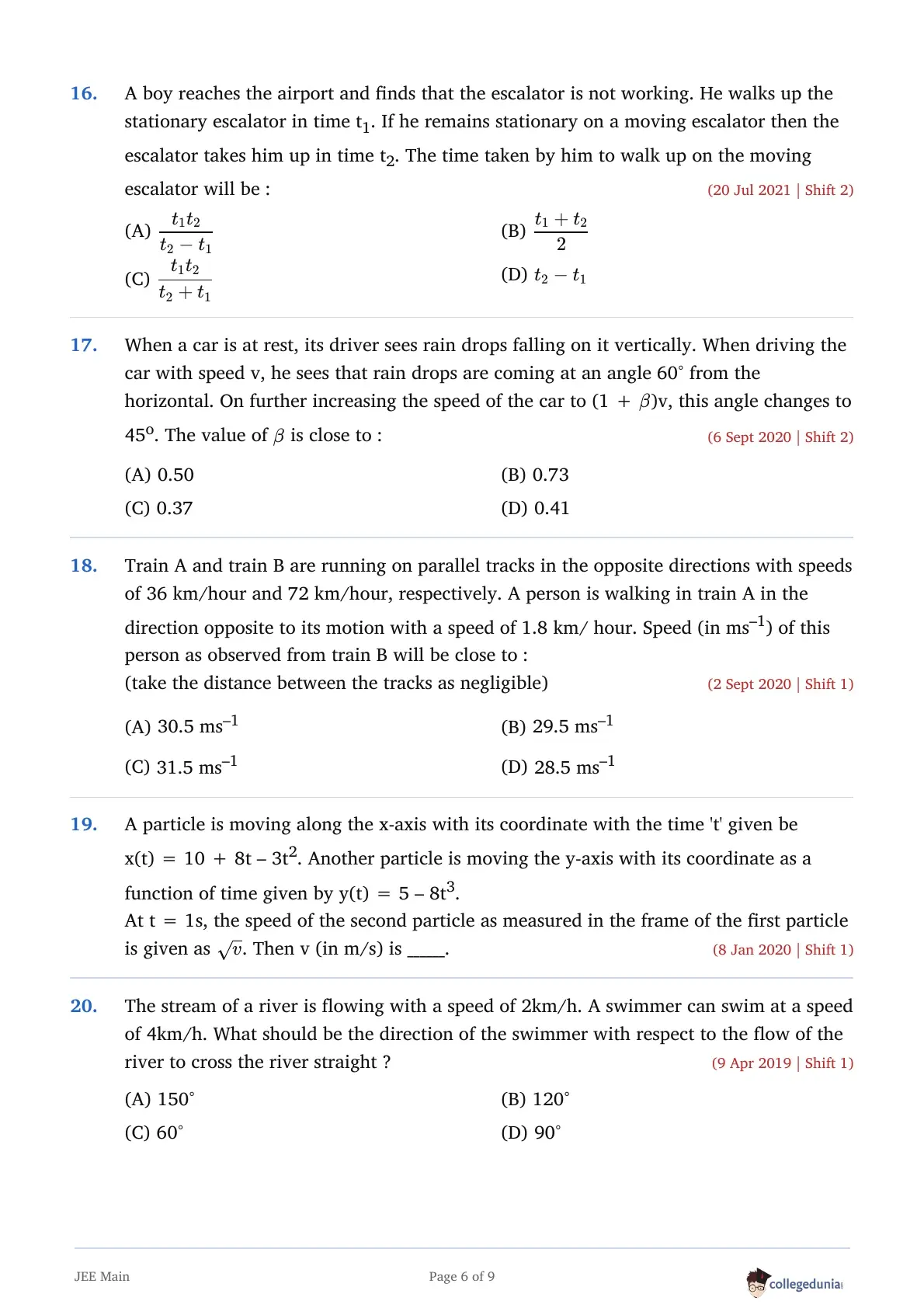
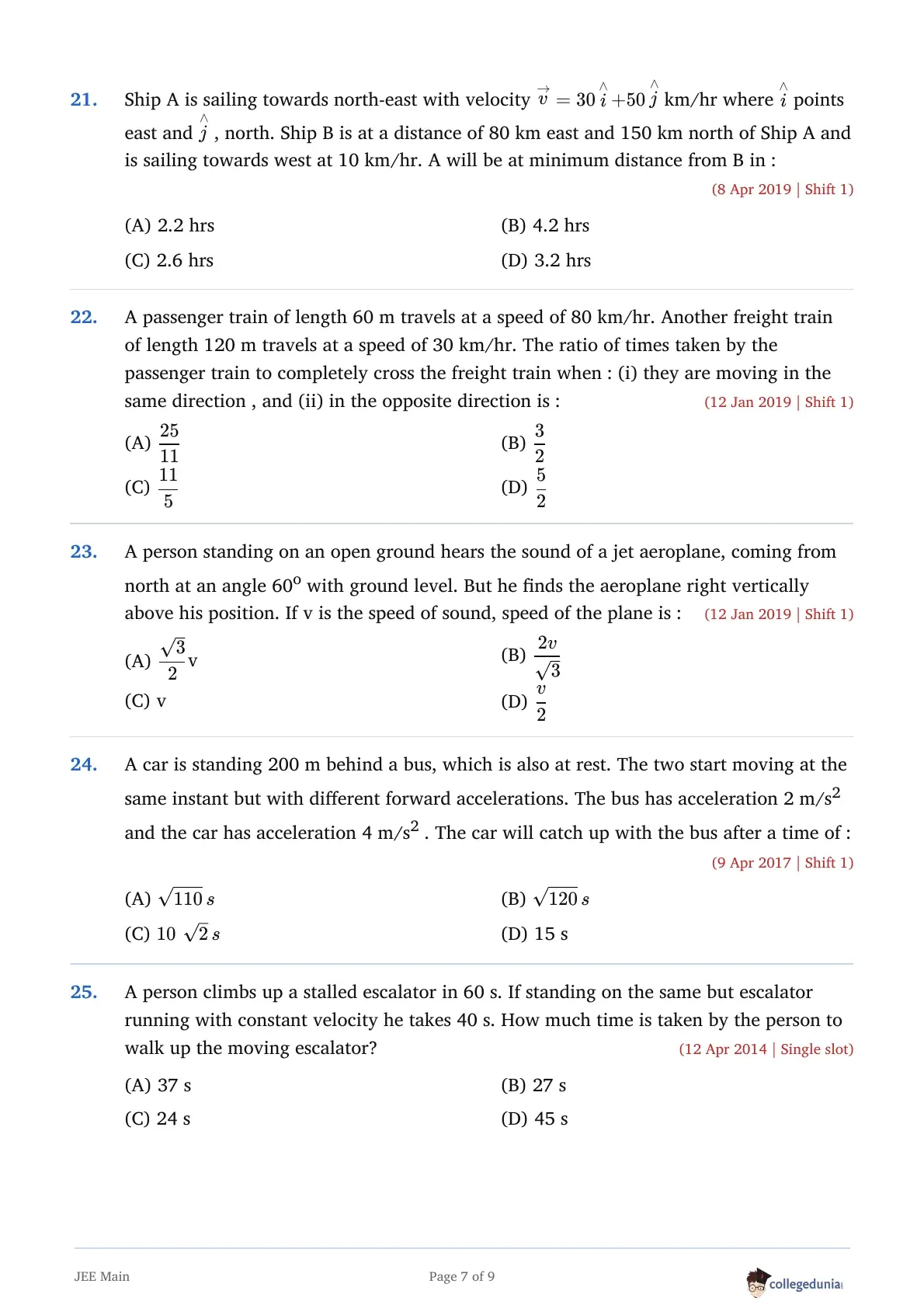
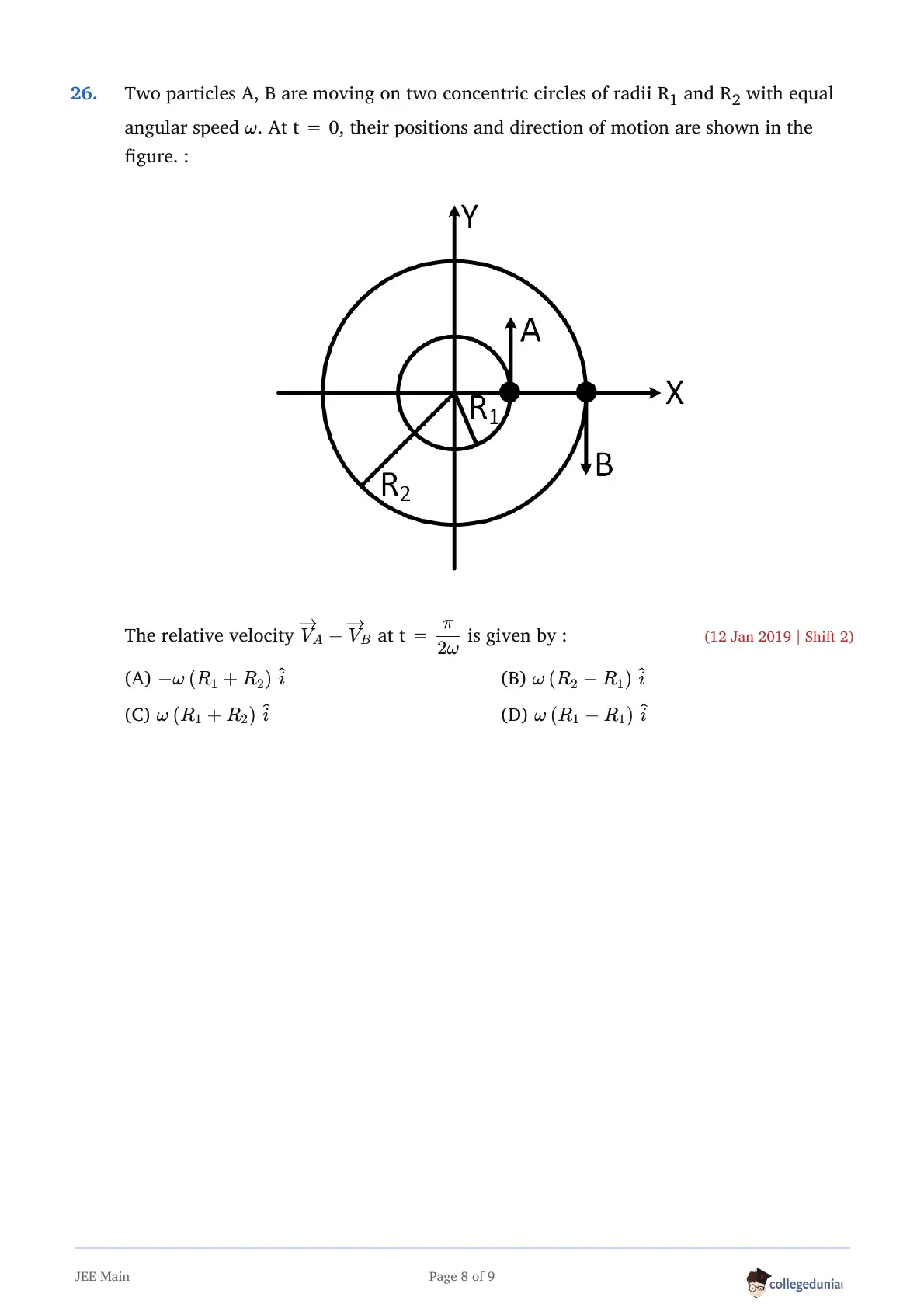
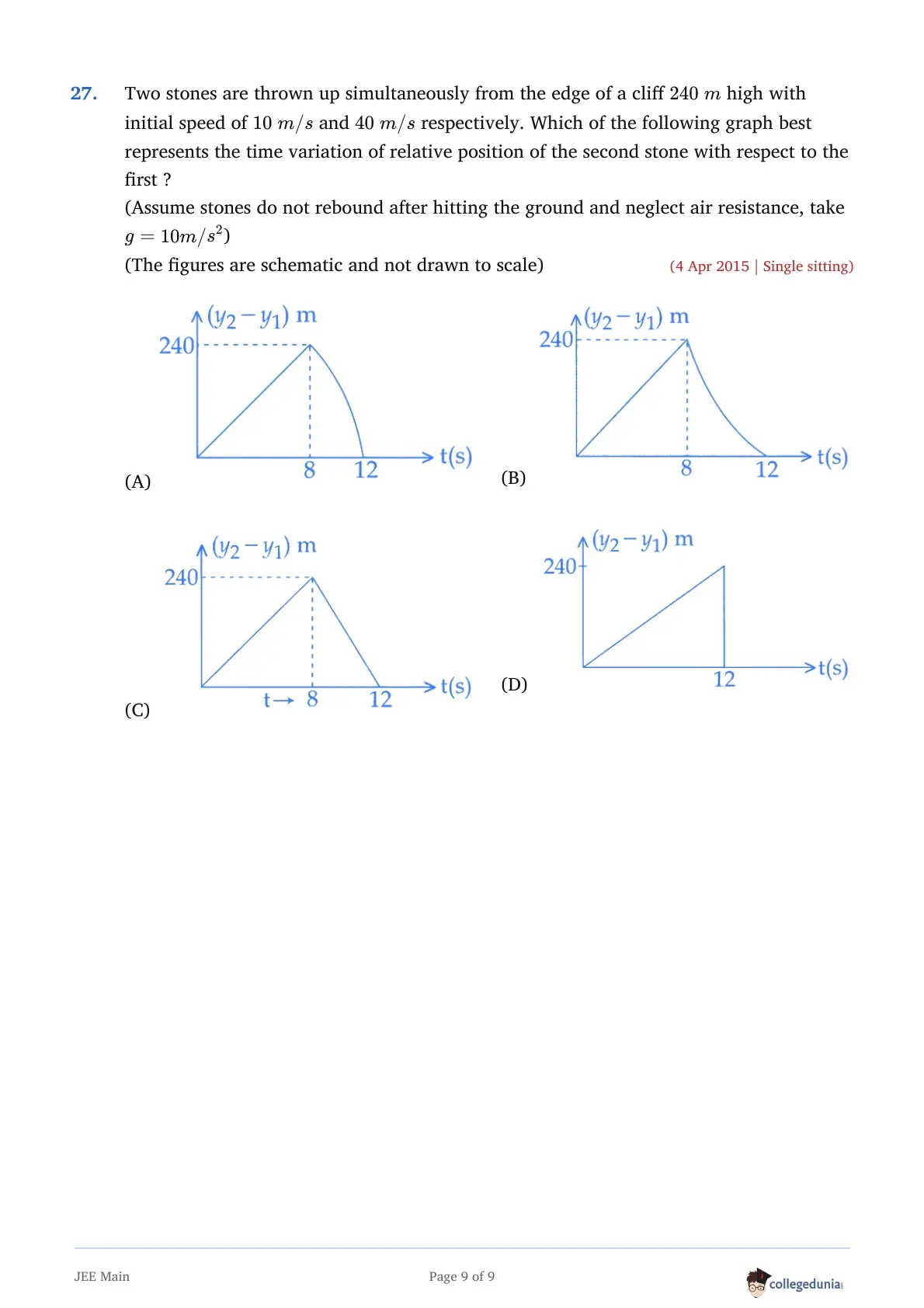
Relative velocity is a topic inside the Class 11 Physics chapter Kinematics. Every question carries its exam date and shift. The PDF holds questions only, with options as printed. Worked solutions for the questions are under "View Solution" further down this page.
JEE Main Relative Velocity Weightage by Year
As per JEE Main relative velocity weightage from past years, students can expect 1 to 3 questions from this topic in a year in recent papers. The 2021 papers had the most, with 5, and 2024 had just 1.
| Year | Questions | Average per Shift | Weightage in Physics | Change in Weightage |
|---|---|---|---|---|
| 2026 | 2 | 0.11 | 0.42% | −33.33% |
| 2025 | 3 | 0.16 | 0.63% | +278.95% |
| 2024 | 1 | 0.05 | 0.17% | −60.00% |
| 2023 | 3 | 0.12 | 0.42% | +43.75% |
| 2022 | 2 | 0.09 | 0.29% | −54.78% |
The 2021 papers add 5 more questions, and the years before that add 11. Weightage is the topic's share of all Physics questions in the bank for that year.
What the Questions Ask
River crossing and train problems account for 17 of the 27 questions. River questions give the swimmer's or boat's speed and the stream's speed, then ask for the crossing time, the drift, or the heading that lands you directly opposite. Train questions ask for a crossing time, a length, or a relative speed.
The rest cover rain and wind, escalators, and relative motion written in vector form. A girl running with an umbrella, a car driver watching rain drops, and a butterfly in a crosswind are all the same idea: subtract the observer's velocity from the object's.
| Question Style | Questions |
|---|---|
| Trains and cars (crossing time, length, catching up) | 9 |
| River crossing and swimmer problems | 8 |
| Rain, wind and sound (apparent direction) | 4 |
| Escalators | 2 |
| Ships, particles and stones in vector or graph form | 4 |
| Total | 27 |
Question Types and Difficulty
Three in four questions are single-answer MCQs. The 7 numerical-value questions all come from 2020 onwards, and they are mostly river and swimmer problems asking for an angle or a speed.
| Question Type | Questions | Share |
|---|---|---|
| Single-correct MCQ | 20 | 74.1% |
| Numerical value | 7 | 25.9% |
| Total | 27 | 100% |
By the difficulty tag in our question bank, 14 questions are medium and 11 are easy. One is hard and one carries no tag. Medium questions usually need two steps, such as finding a relative speed and then a time.
How to Practise Relative Velocity
Start with the 9 train and car questions, which need only one-dimensional subtraction of velocities. Take note of the direction convention before you substitute, because opposite directions add speeds and the same direction subtracts them.
Then do the 8 river questions with a sketch each time, resolving the boat's velocity into a component along the stream and one across it. Finish with the rain and wind questions, and redo any you missed after a day.
Related JEE Main Physics Resources
| Resource | Link |
|---|---|
| JEE Main Kinematics PYQ PDF (full chapter, 284 questions) | Read and download |
| JEE Main PYQs on Projectile Motion | Read and download |
| Motion in a plane PYQ PDF (55 questions) | Download PDF |
Video: Relative Velocity One Shot with PYQs
Source: Arjuna JEE
Also Read



Comments