



.png?h=35&w=35&mode=stretch)
Download the official JEE Main 2023 Chemistry April 10 Shift 1 Question Paper PDF with Solutions and Answer Key right here! Supercharge your JEE Main 2025 preparation with this NTA-approved previous year question paper, available via the link below. The JEE Main Chemistry Question Paper includes Section A with 20 MCQs and Section B with 10 numerical-type questions—answer all from Section A and any 5 from Section B. Rated moderate by aspirants, with emphasis on organic and physical chemistry, this free JEE Main 2023 question paper PDF is your ultimate tool to master the JEE Main exam pattern.
Related Links:
- Download JEE Main Previous Year Question Papers PDF with Solutions
- Download JEE Main 2025 Question Paper for all Shifts
Download JEE Main 2023 Question Paper PDF For Chemistry with Solutions (April 10 Shift 1)
| JEE Main 2023 Question Paper For Chemistry ( April 10 Shift 1) with Answer Key |  Download Download |
Check Solution |
JEE Main 2023 Question Paper With Solutions For Chemistry
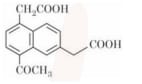
Question 1:The major product 'P' formed in the given reaction is:




Prolonged heating is avoided during the preparation of ferrous ammonium sulphate to:
View Solution
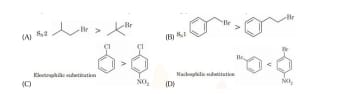
Identify the correct order of reactivity for the following pairs towards the respective mechanism:
View Solution
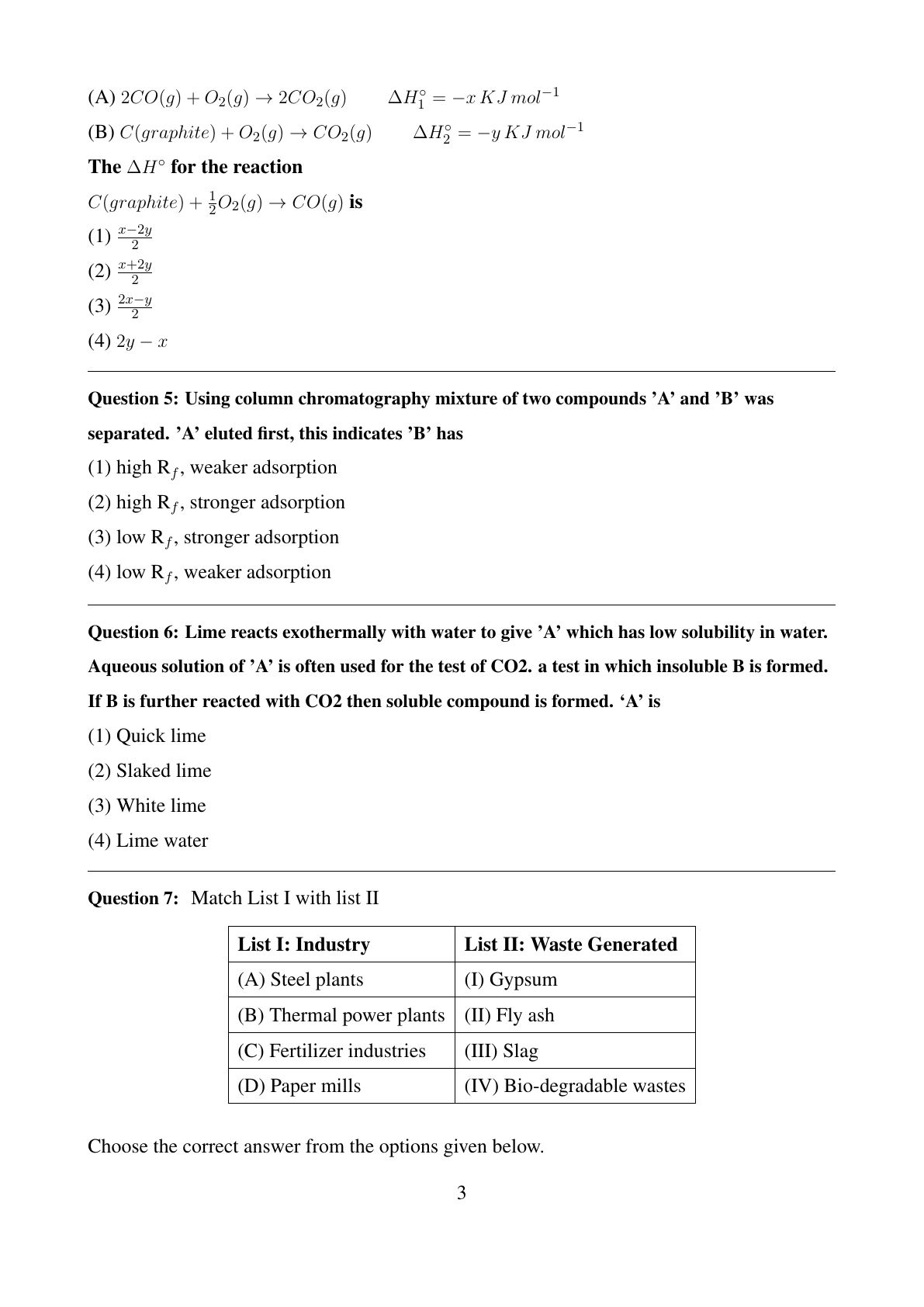
The ∆H° for the reaction C(graphite) + 1/2 O2(g) → CO(g) is:
View Solution
Using column chromatography, a mixture of two compounds 'A' and 'B' was separated. 'A' eluted first. This indicates 'B' has:
View Solution
Lime reacts exothermally with water to give 'A' which has low solubility in water. Aqueous solution of 'A' is often used for the test of CO2, where insoluble 'B' is formed. If 'B' is further reacted with CO2, a soluble compound is formed. 'A' is:
View Solution
Match List I with List II:
List I: Industry
List II: Waste Generated
View Solution
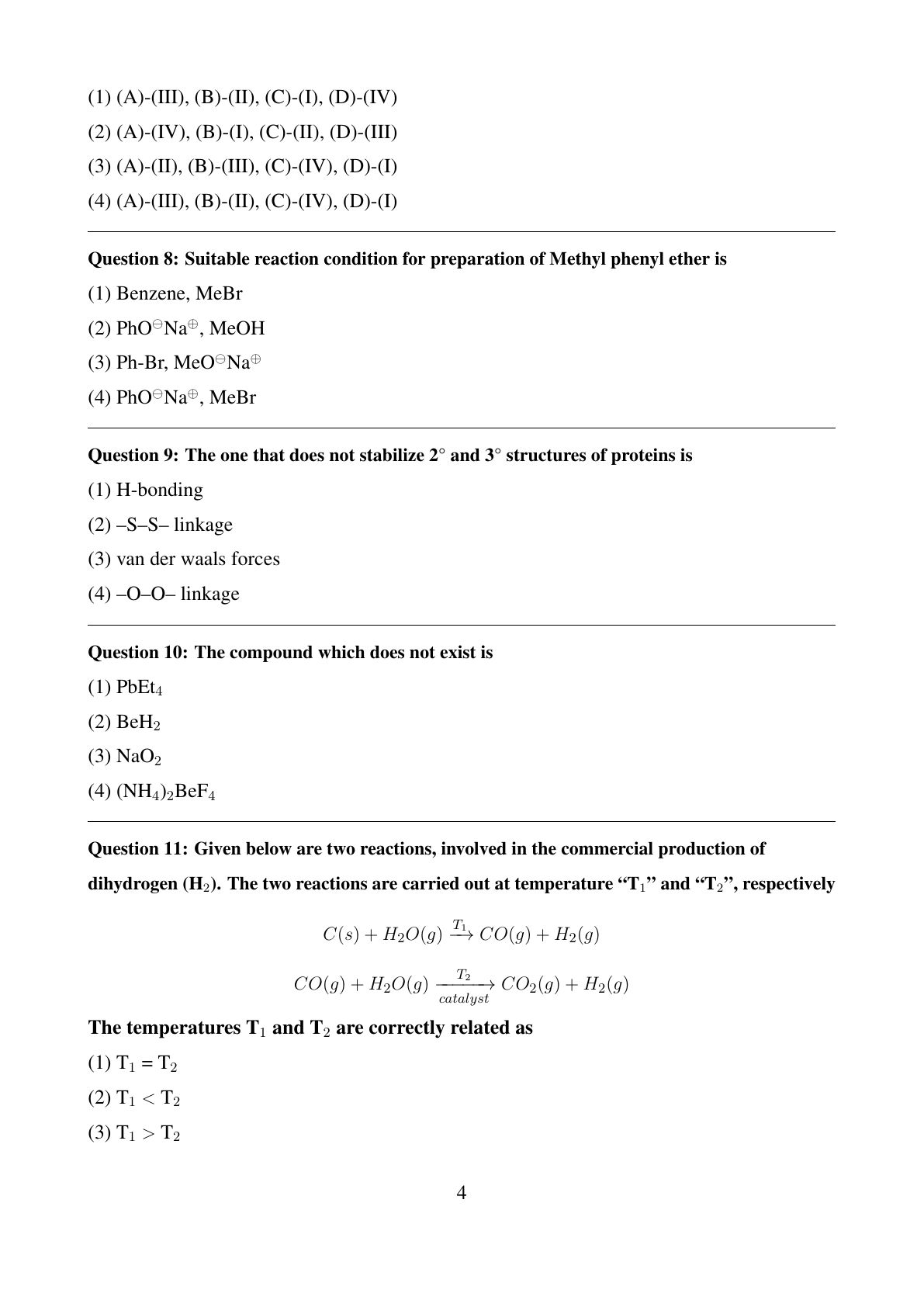
Suitable reaction condition for preparation of Methyl phenyl ether is:
View Solution
The one that does not stabilize 2° and 3° structures of proteins is:
View Solution
The compound which does not exist is:
View Solution
Given below are two reactions, involved in the commercial production of dihydrogen (H2). The two reactions are carried out at temperature T1 and T2, respectively:
C(s) + H2O(g) → CO(g) + H2 (T1)
CO(g) + H2O(g) → CO2(g) + H2 (T2)
The temperatures T1 and T2 are correctly related as:
View Solution
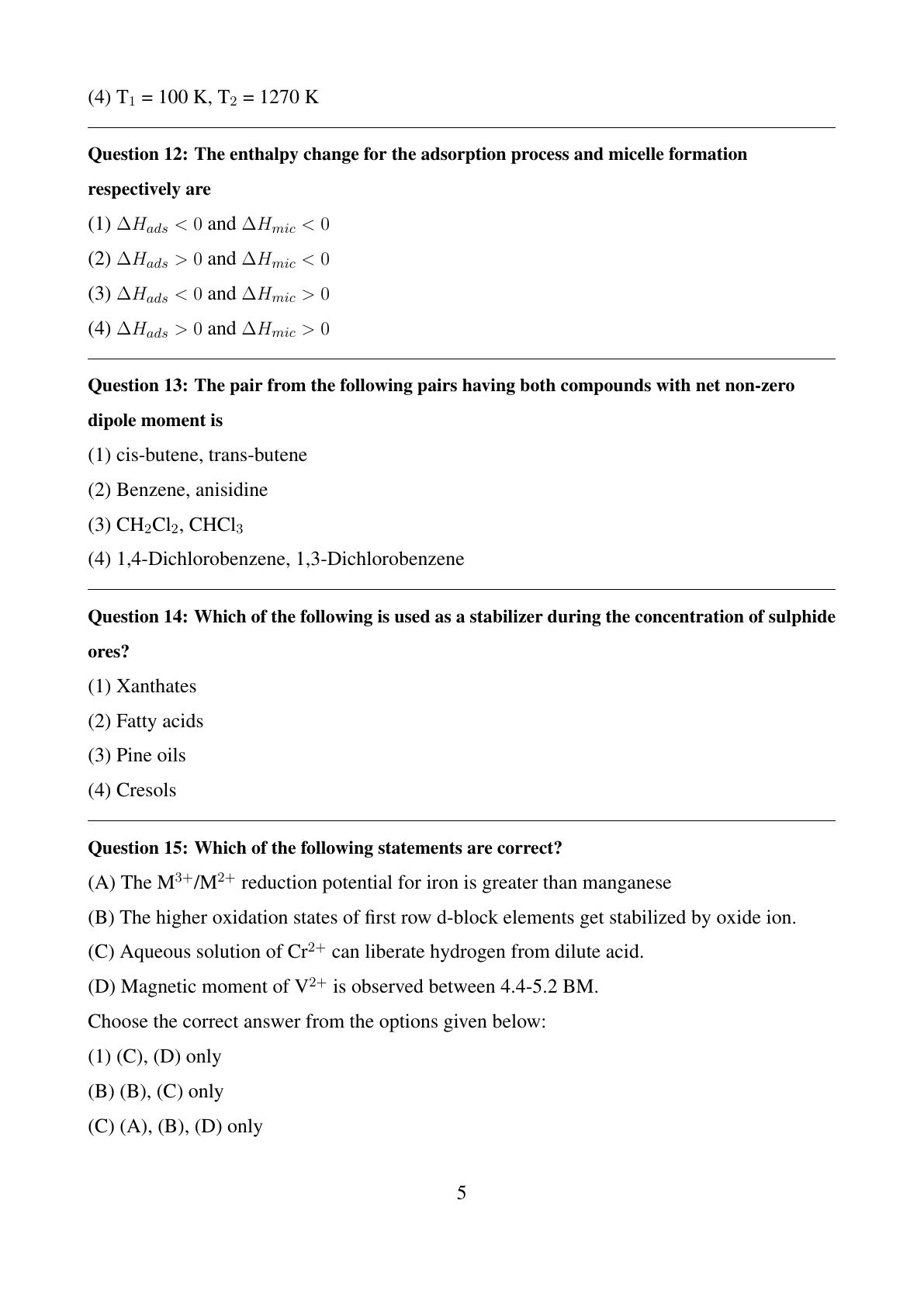
The enthalpy change for the adsorption process and micelle formation respectively are:
View Solution
The pair from the following pairs having both compounds with net non-zero dipole moment is:
View Solution
Which of the following is used as a stabilizer during the concentration of sulphide ores?
View Solution
Which of the following statements are correct?
(A) The M3+/M2+ reduction potential for iron is greater than manganese.
(B) The higher oxidation states of first-row d-block elements get stabilized by oxide ion.
(C) Aqueous solution of Cr2+ can liberate hydrogen from dilute acid.
(D) Magnetic moment of V2+ is observed between 4.4-5.2 BM.
View Solution
Given below are two statements:
Statement I: Aqueous solution of K2Cr2O7 is preferred as a primary standard in volumetric analysis over Na2Cr2O7 aqueous solution.
Statement II: K2Cr2O7 has a higher solubility in water than Na2Cr2O7.
In the light of the above statements, choose the correct answer:
View Solution
The octahedral diamagnetic low spin complex among the following is:
View Solution
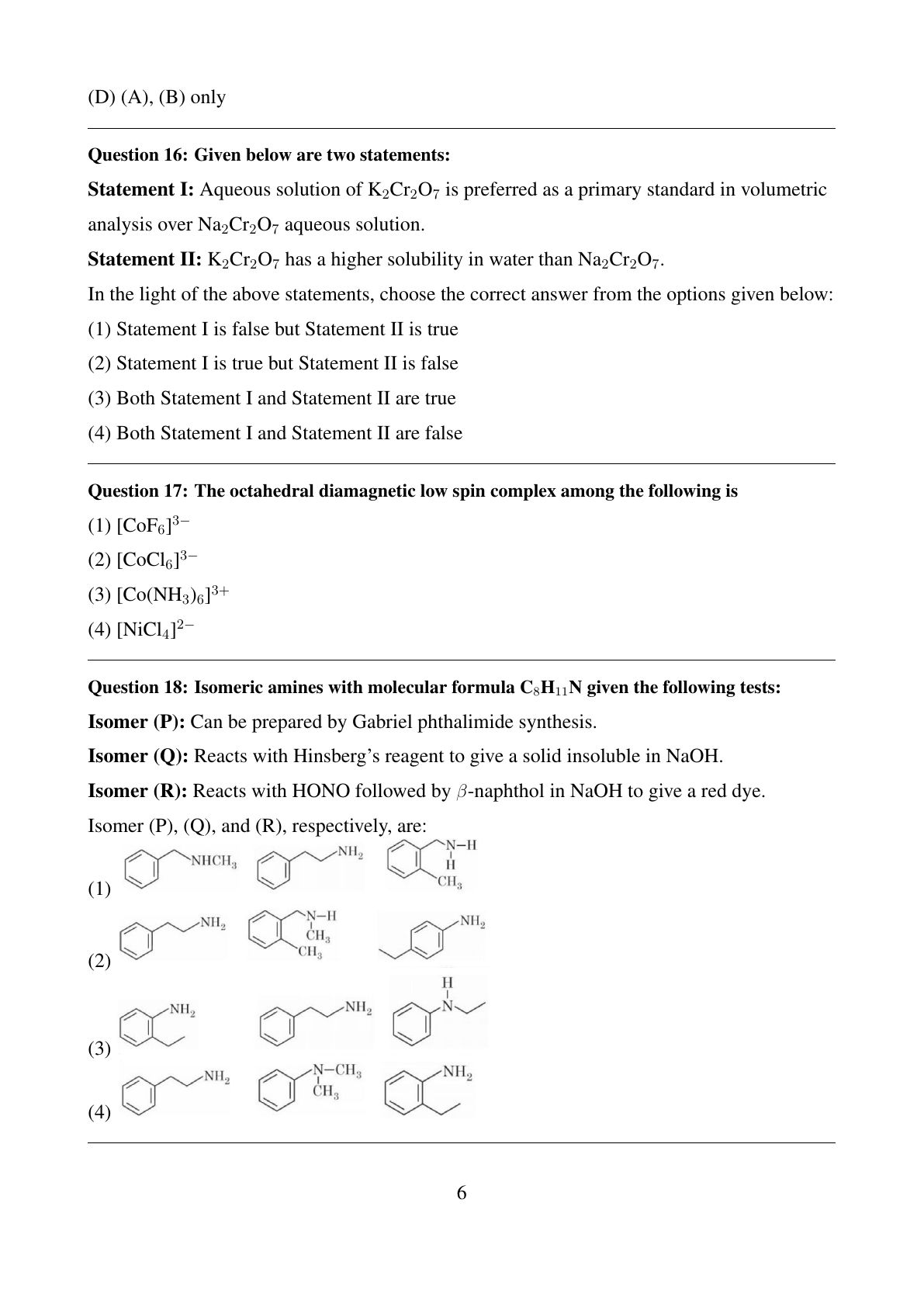
Isomeric amines with molecular formula C8H11N give the following tests:
(P) Can be prepared by Gabriel phthalimide synthesis.
(Q) Reacts with Hinsberg’s reagent to give a solid insoluble in NaOH.
(R) Reacts with HONO followed by β-naphthol in NaOH to give a red dye.
Isomer (P), (Q), and (R), respectively, are:



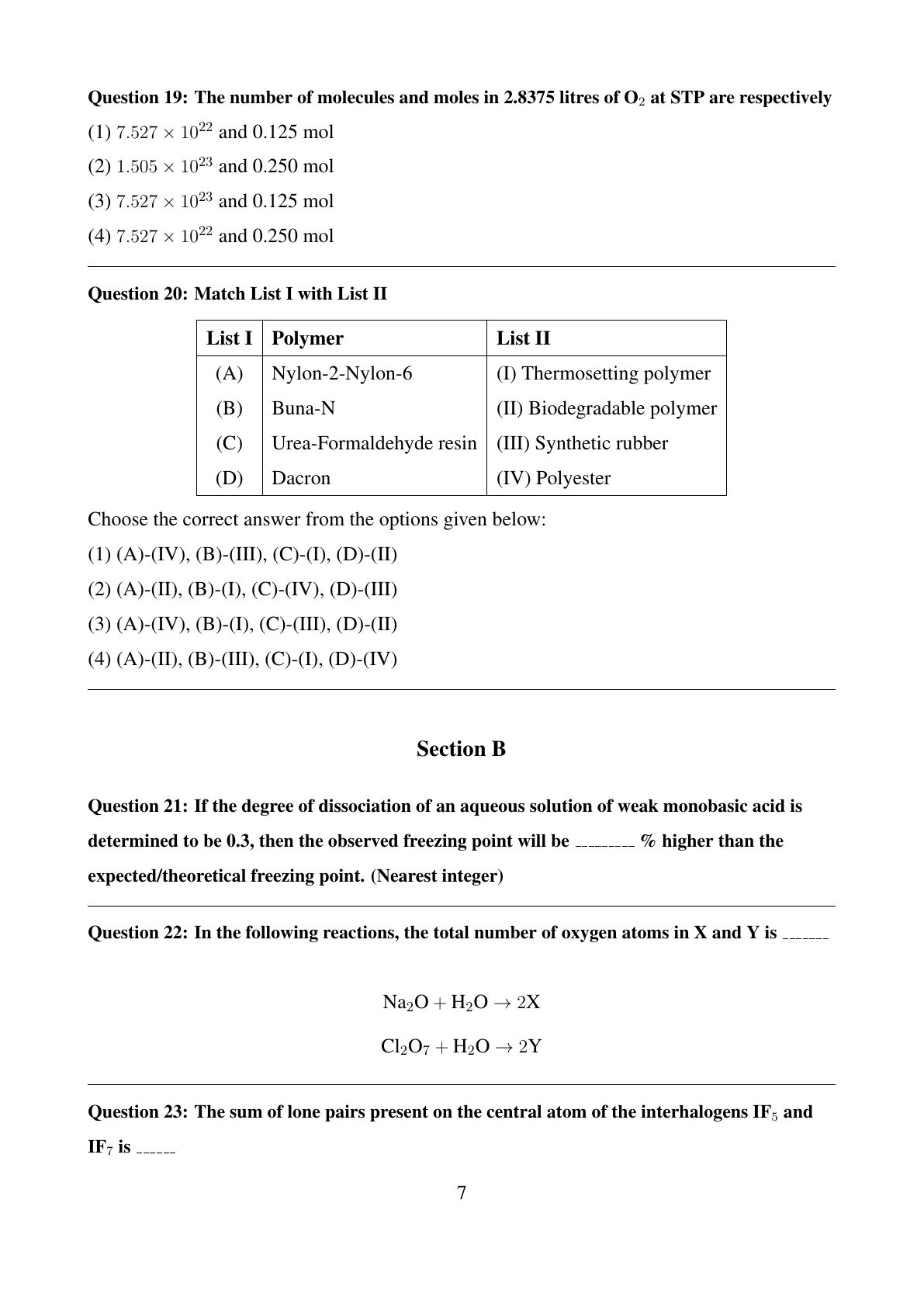
The number of molecules and moles in 2.8375 litres of O2 at STP are respectively:
View Solution
Match List I with List II:
List I: Polymer
List II: Classification
(A) Nylon-2-Nylon-6 - Biodegradable polymer
(B) Buna-N - Synthetic rubber
(C) Urea-formaldehyde resin - Thermosetting polymer
(D) Dacron - Polyester
View Solution
If the degree of dissociation of an aqueous solution of weak monobasic acid is determined to be 0.3, then the observed freezing point will be % higher than the expected/theoretical freezing point. (Nearest integer)
View Solution
In the following reactions, the total number of oxygen atoms in X and Y is:
Na2O + H2O → 2X
Cl2O7 + H2O → 2Y
View Solution
The sum of lone pairs present on the central atom of the interhalogens IF5 and IF7 is:
View Solution
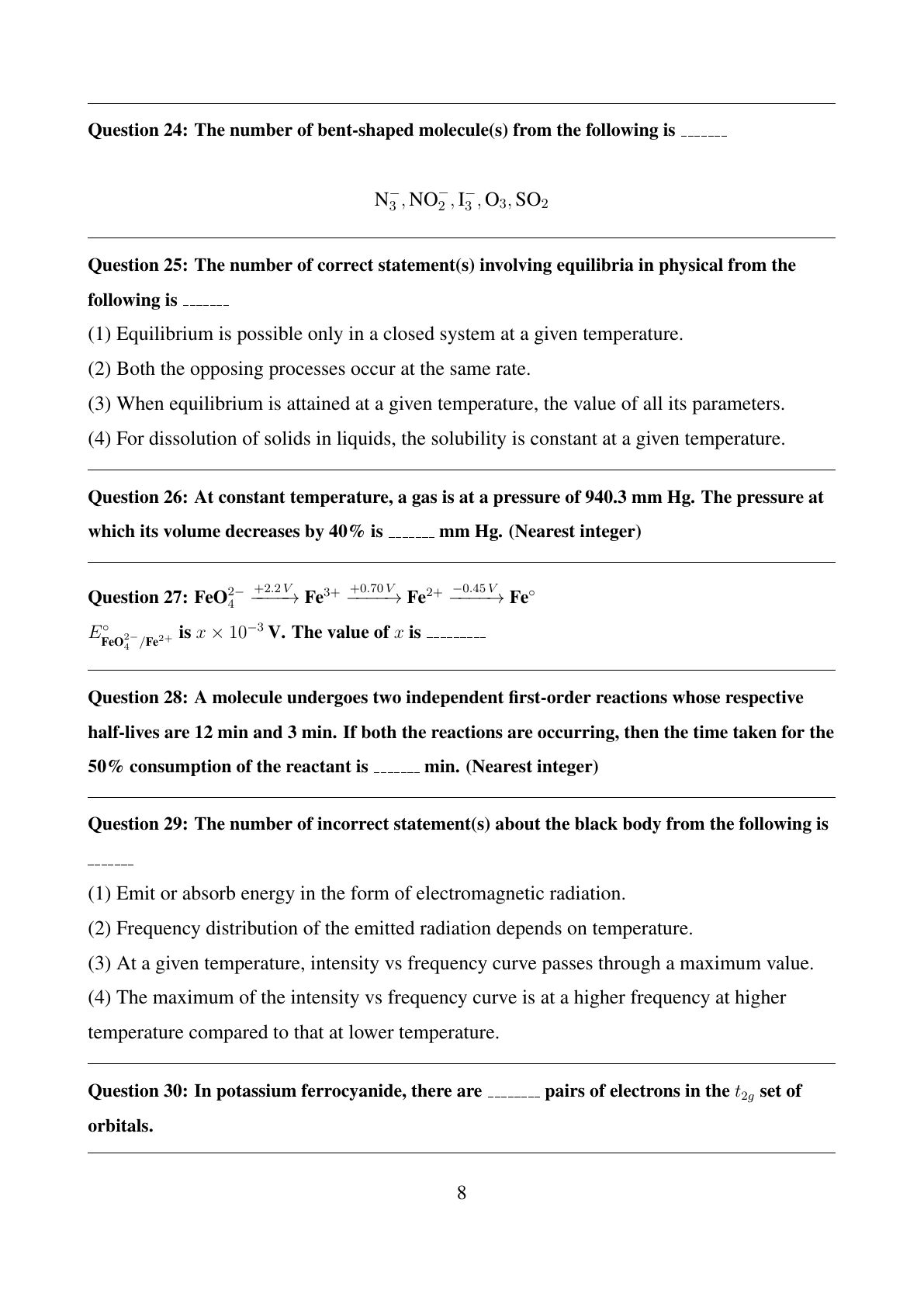
The number of bent-shaped molecule(s) from the following is:
N3−, NO2−, I3−, O3, SO2
The number of correct statement(s) involving equilibria in physical form from the following is:
(1) Equilibrium is possible only in a closed system at a given temperature.
(2) Both the opposing processes occur at the same rate.
(3) When equilibrium is attained at a given temperature, the value of all its parameters becomes constant.
(4) For dissolution of solids in liquids, the solubility is constant at a given temperature.
View Solution
At constant temperature, a gas is at a pressure of 940.3 mm Hg. The pressure at which its volume decreases by 40% is:
View Solution
FeO42− + 2.2V → Fe3+, Fe3+ + 0.7V → Fe2+, Fe2+ -0.45V → Fe°. E°FeO42−/Fe2+ is x × 10−3V. The value of x is:
View Solution
A molecule undergoes two independent first-order reactions whose respective half-lives are 12 min and 3 min. If both reactions are occurring, the time taken for 50% consumption of the reactant is:
View Solution
The number of incorrect statement(s) about the black body from the following is:
(1) Emits or absorbs energy in the form of electromagnetic radiation.
(2) Frequency distribution of the emitted radiation depends on temperature.
(3) At a given temperature, intensity vs frequency curve passes through a maximum value.
(4) The maximum of the intensity vs frequency curve is at a higher frequency at higher temperature compared to that at lower temperature.
View Solution
In potassium ferrocyanide, there are pairs of electrons in the t2g set of orbitals:
View Solution

JEE Main 2023 Chemistry Paper Analysis April 10 Shift 1
JEE Main 2023 Chemistry Paper Analysis for the exam scheduled on April 10 Shift 1 is available here. Candidates can check subject-wise paper analysis for the exam scheduled on April 10 Shift 1 here along with the topics with the highest weightage.
JEE Main 2023 Chemistry Question Paper Pattern
| Feature | Question Paper Pattern |
|---|---|
| Examination Mode | Computer-based Test |
| Exam Language | 13 languages (English, Hindi, Assamese, Bengali, Gujarati, Kannada, Malayalam, Marathi, Odia, Punjabi, Tamil, Telugu, and Urdu) |
| Exam Duration | 3 hours |
| Sectional Time Limit | None |
| Chemistry Marks | 100 marks |
| Total Number of Questions Asked | 20 MCQs + 10 Numerical Type Questions |
| Total Number of Questions to be Answered | 20 MCQs + 5 Numerical Type Questions |
| Marking Scheme | +4 for each correct answer |
| Negative Marking | -1 for each incorrect answer |
Also Check:
JEE Main Previous Year Question Paper
| JEE Main 2022 Question Paper | JEE Main 2021 Question Paper | JEE Main 2020 Question Paper |
| JEE Main 2019 Question Paper | JEE Main 2018 Question Paper | JEE Main 2017 Question Paper |



Comments