



JEE Main Mole Concept and Stoichiometry handwritten notes, free to download as a 24-page PDF. The topic is worth about 8 to 12 marks each year and takes roughly a week to learn, so it is one of the first worth finishing.
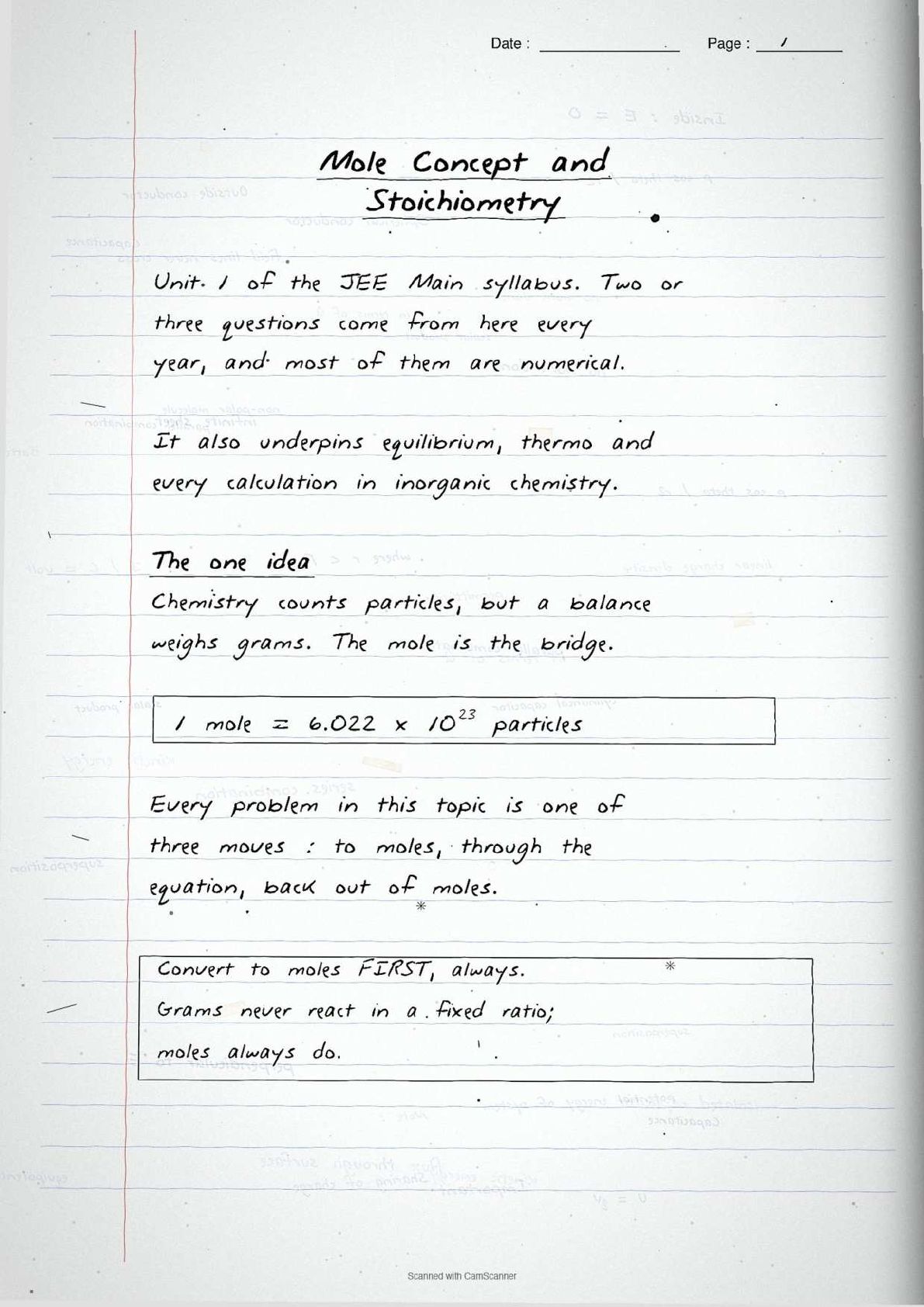
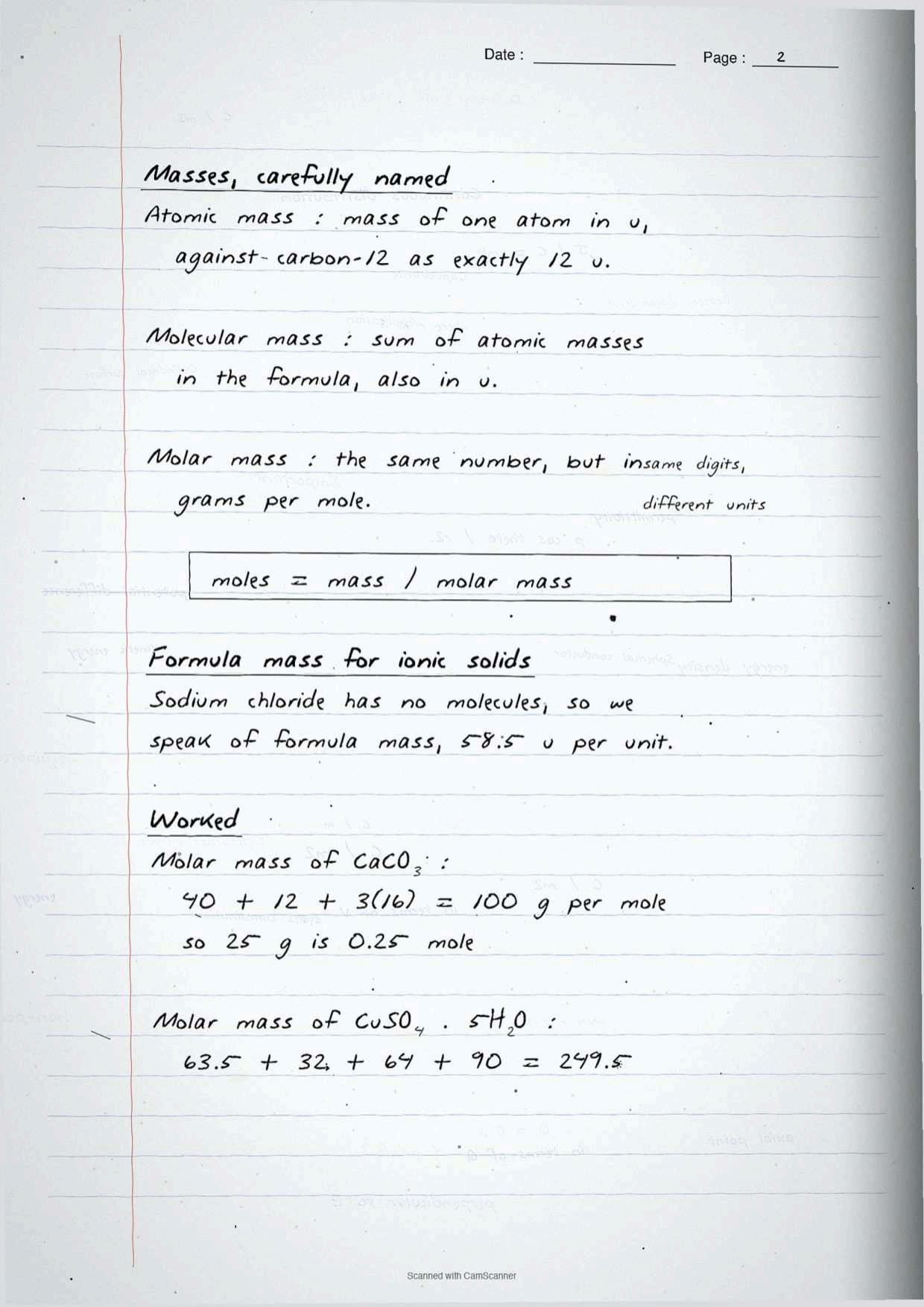
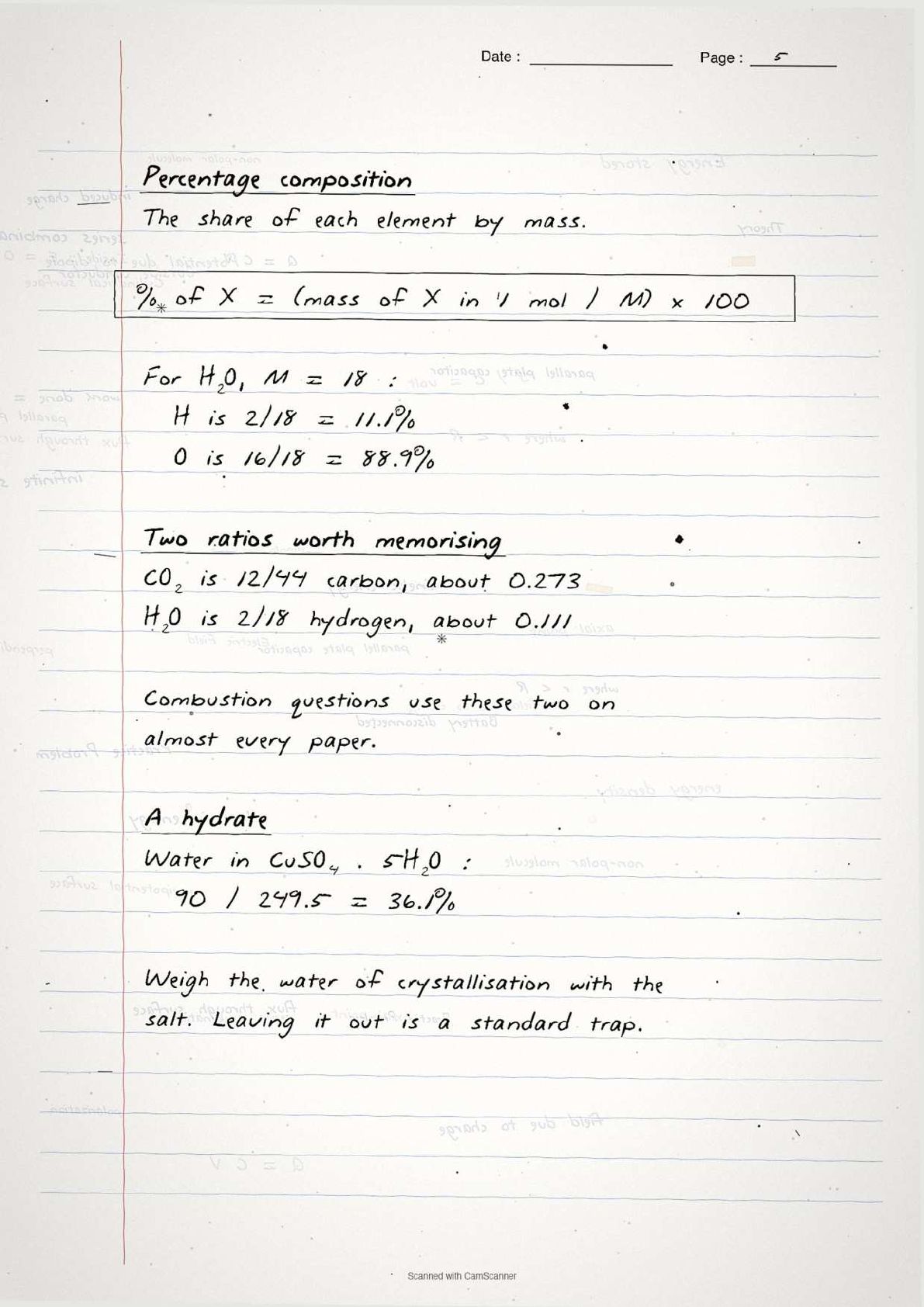
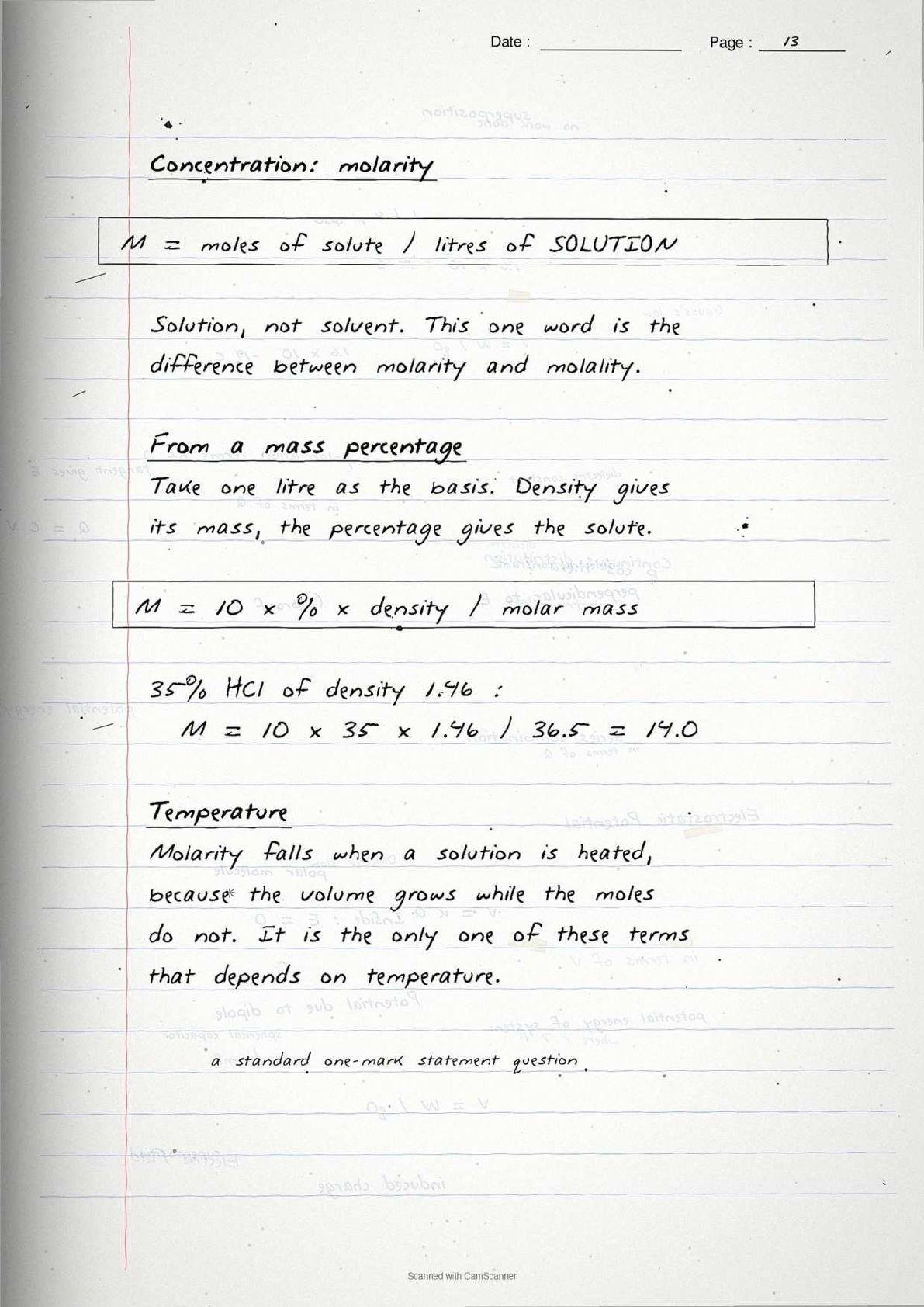
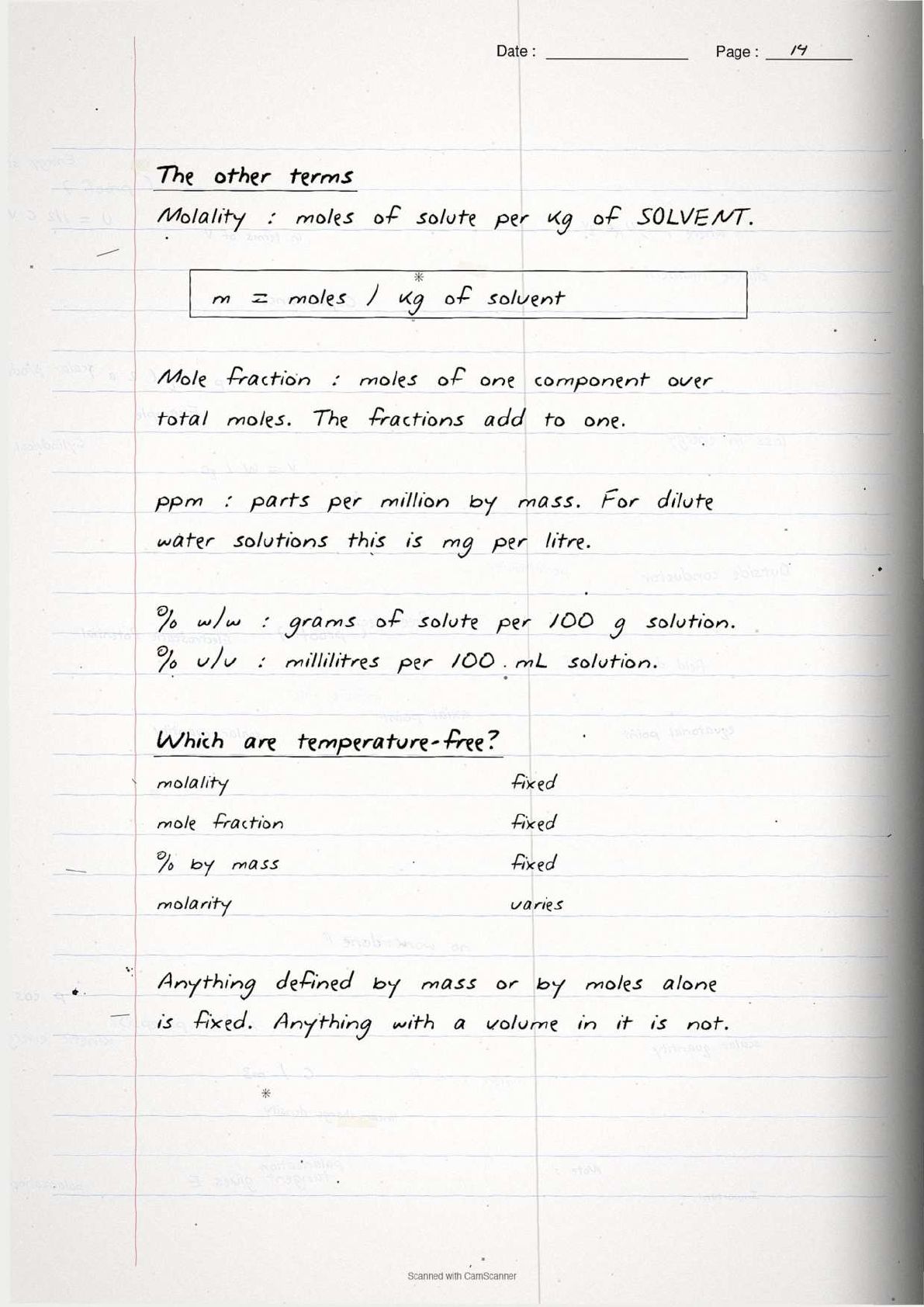
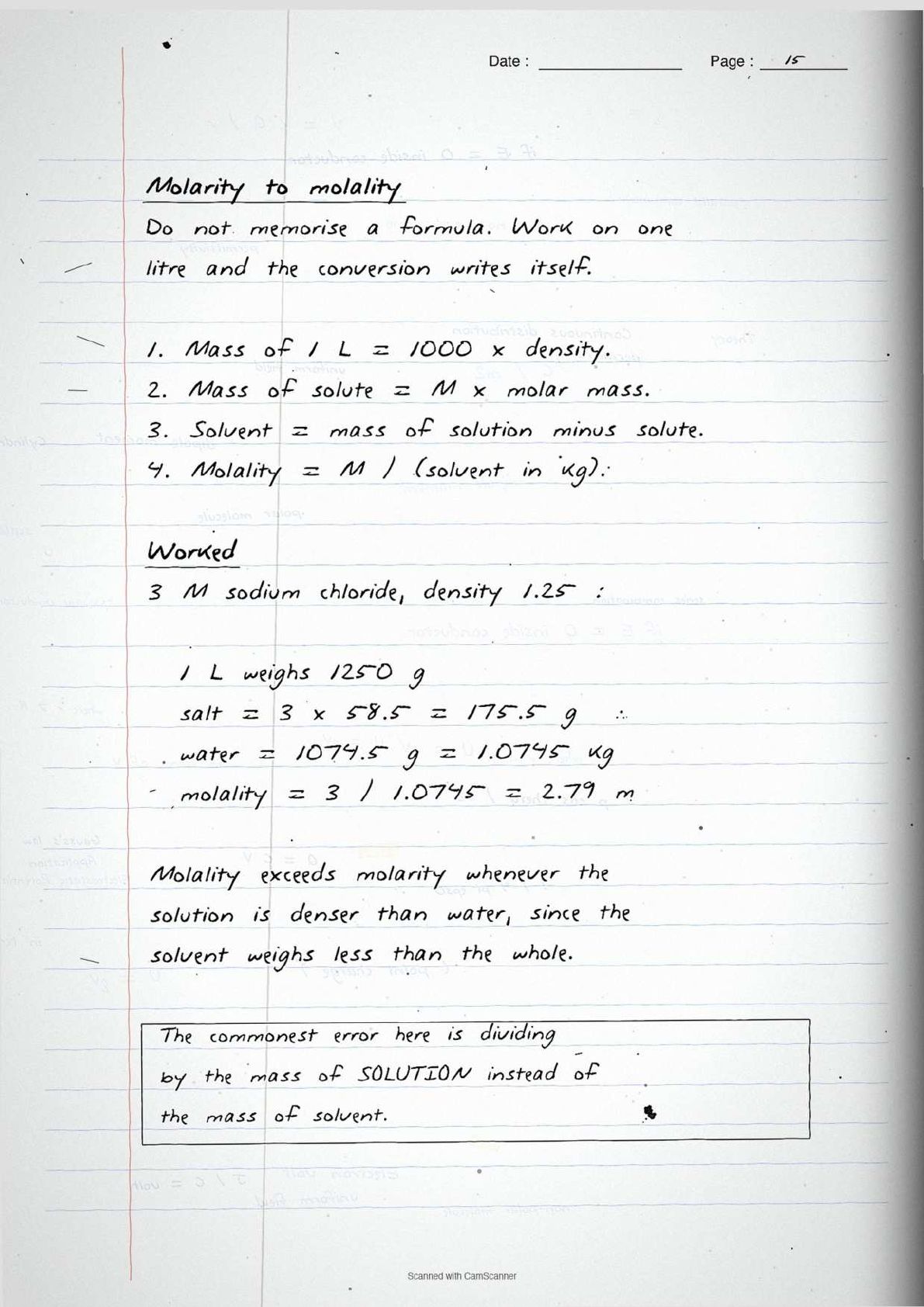
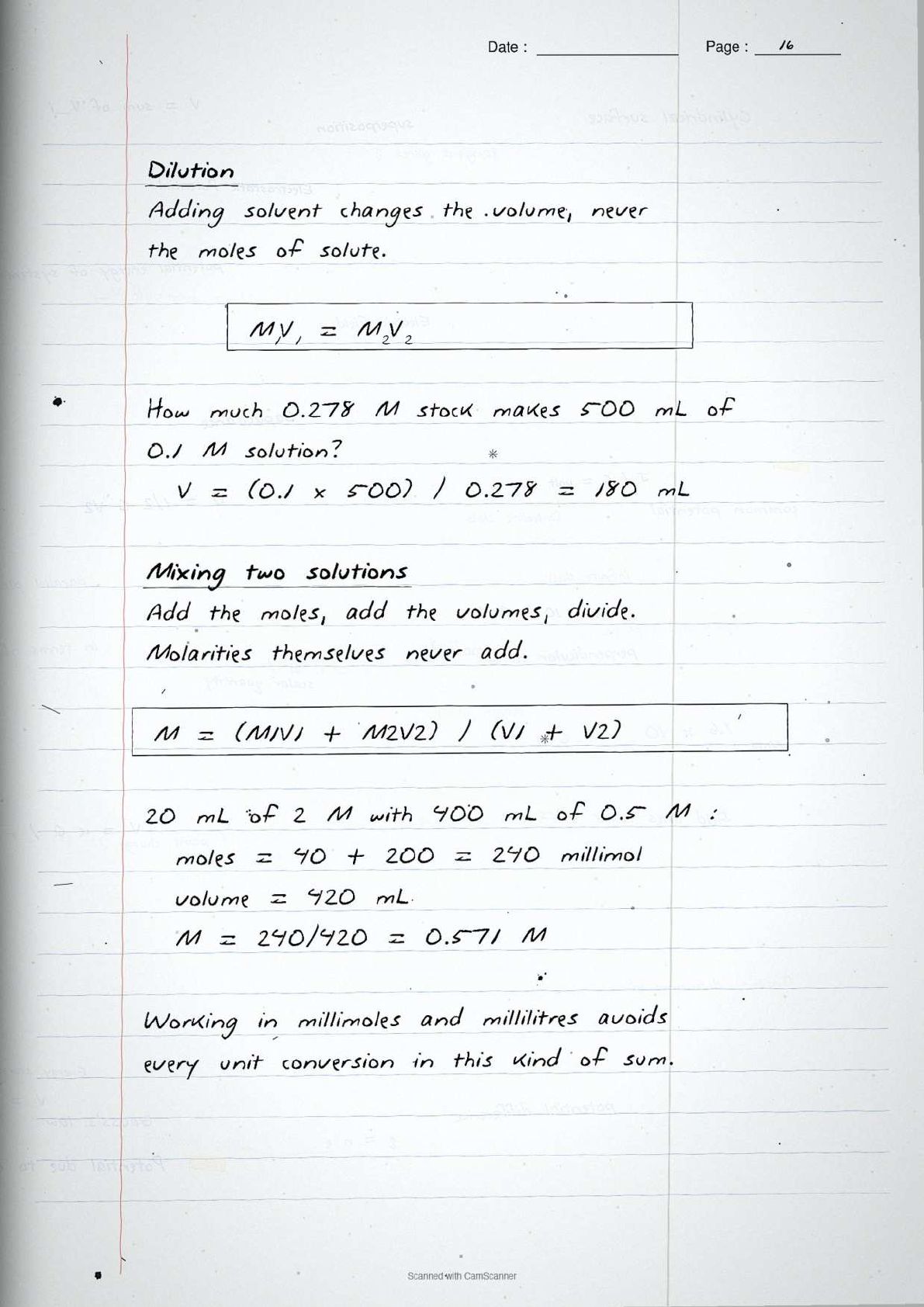
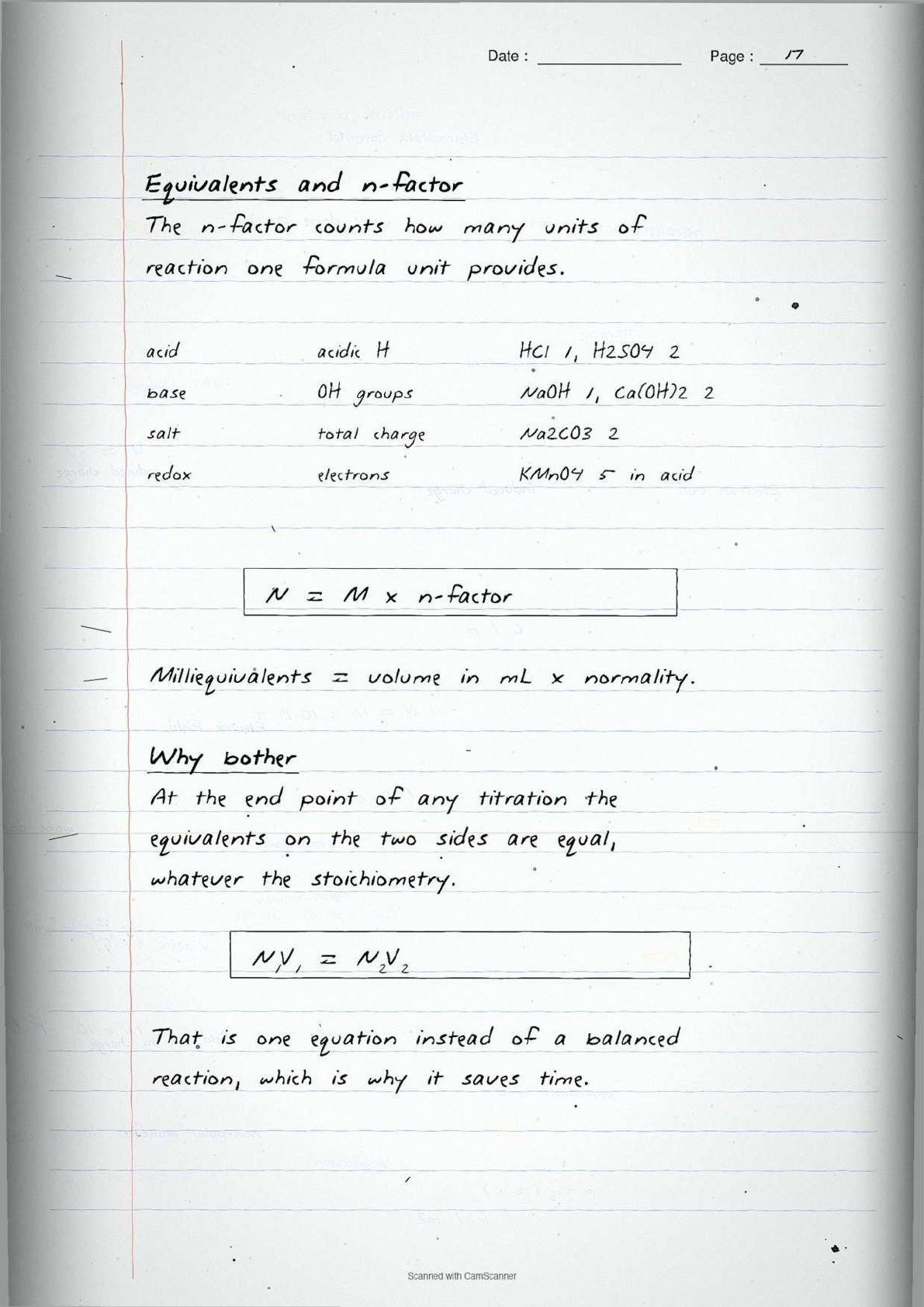
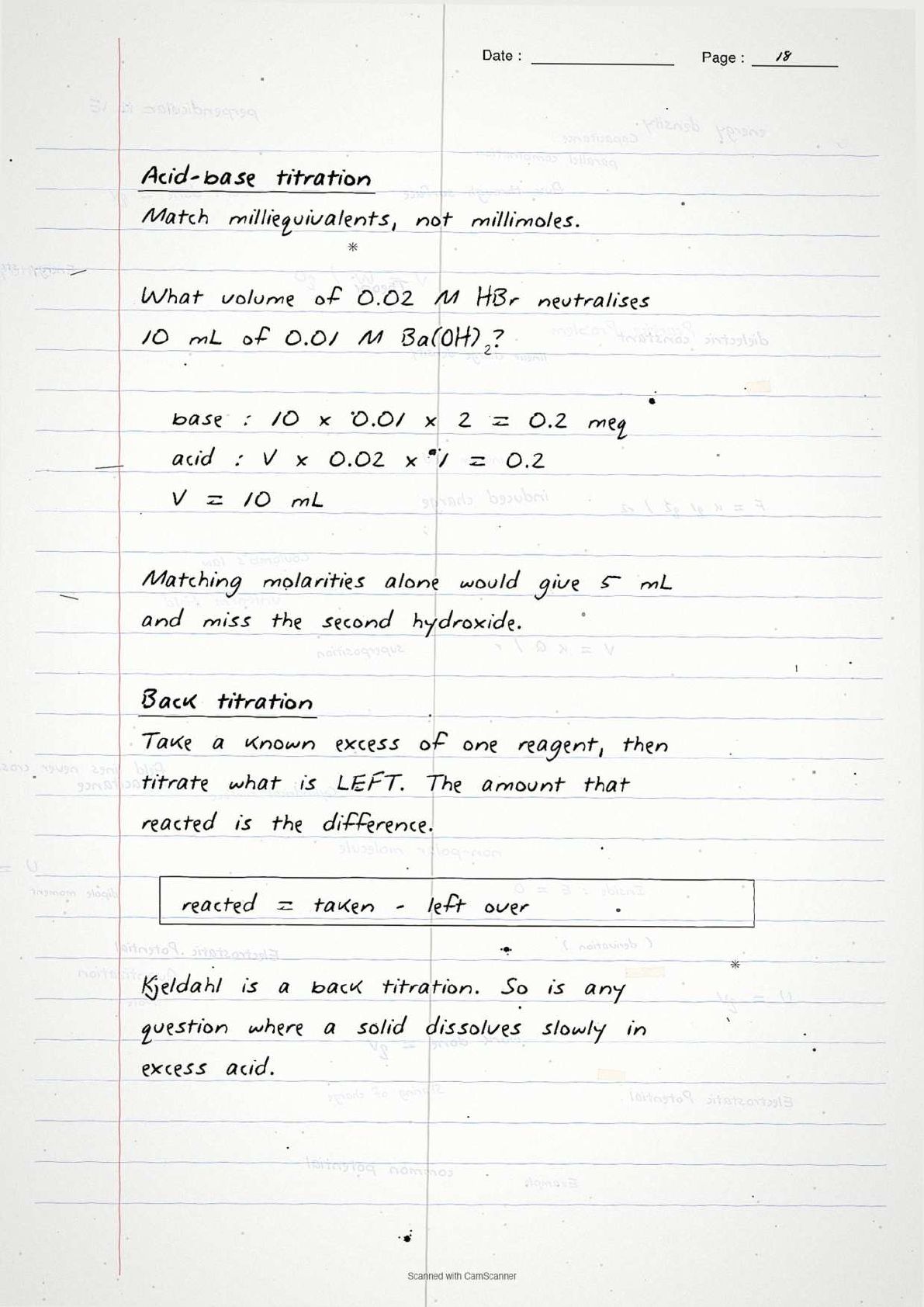
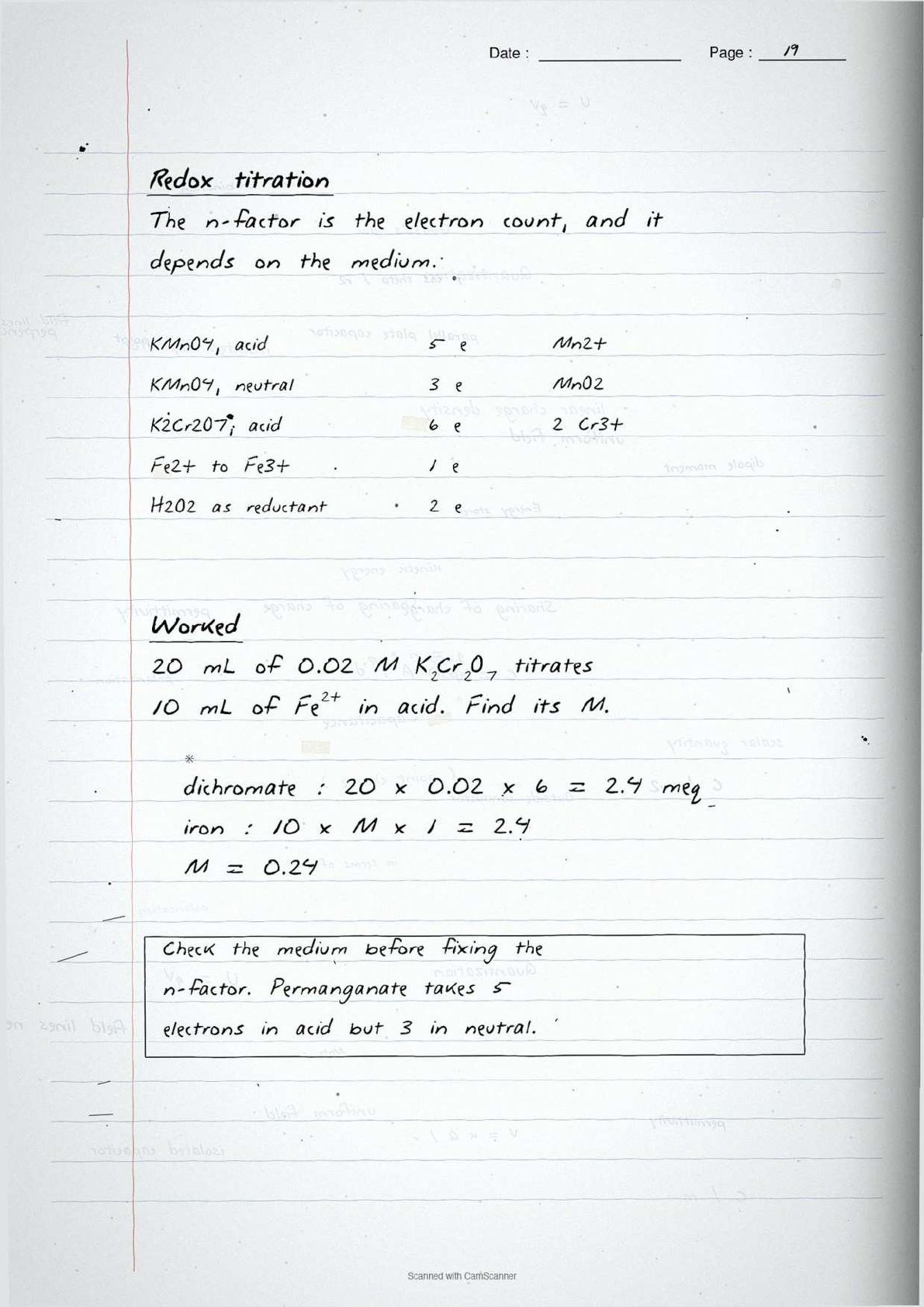
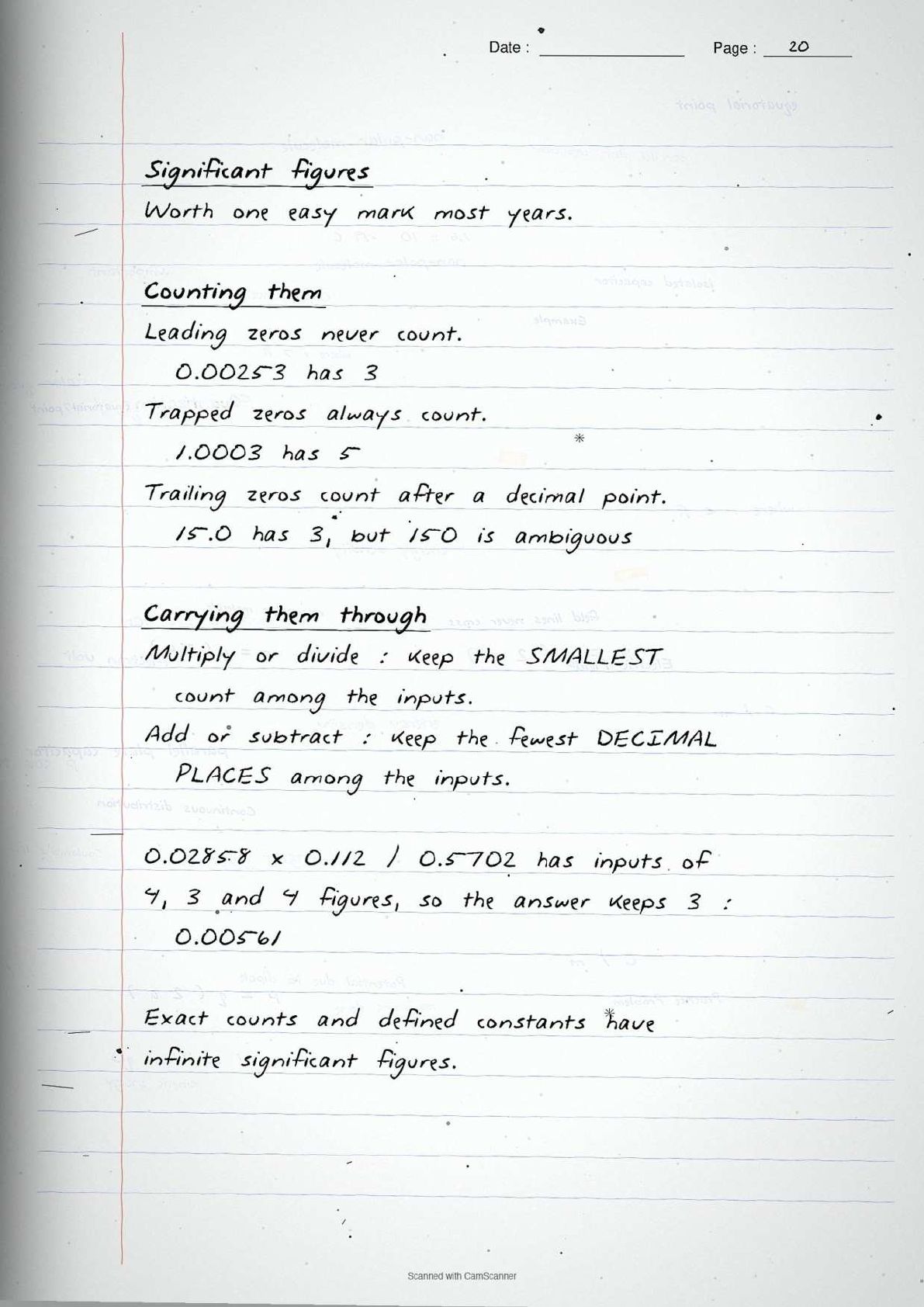
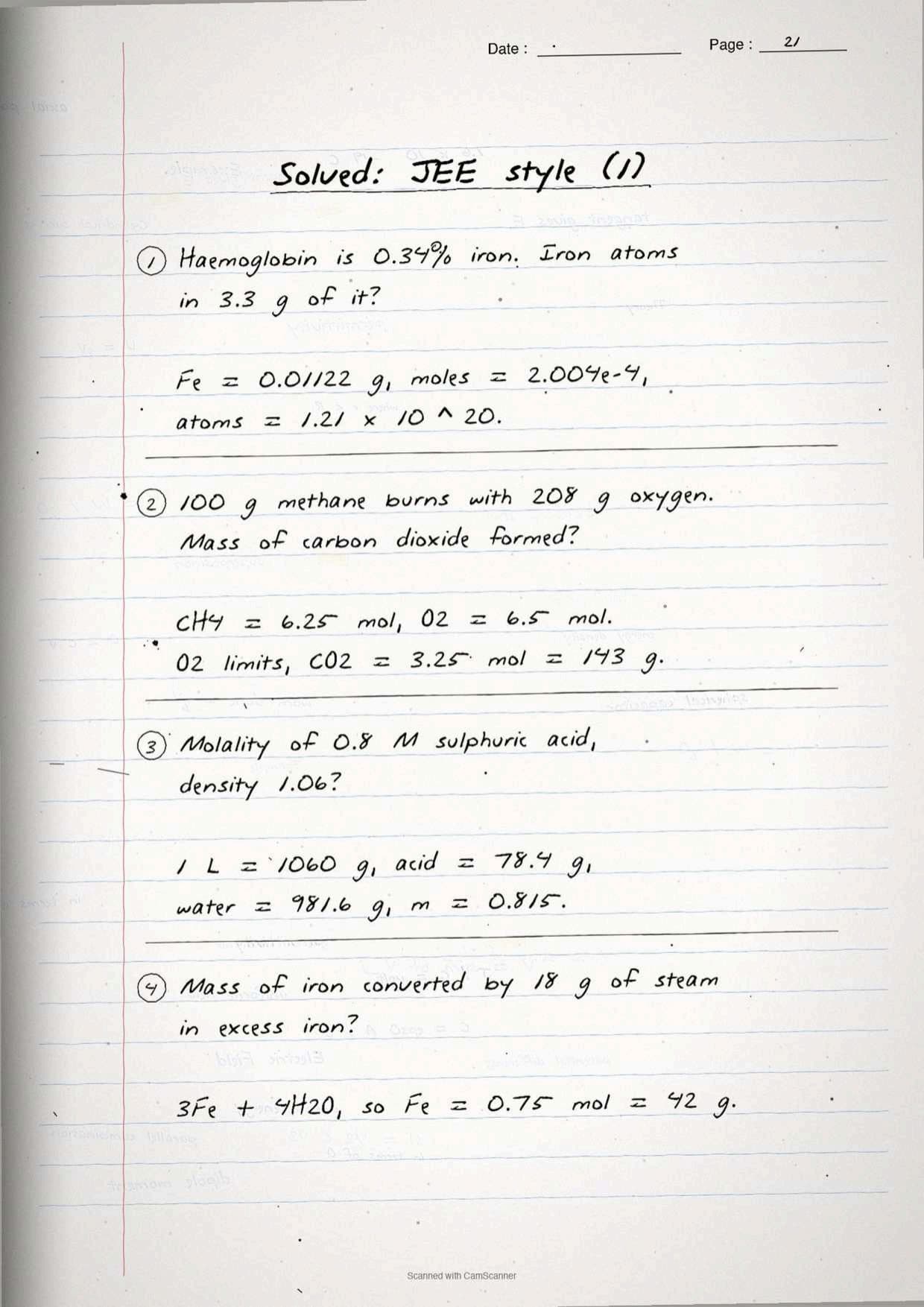
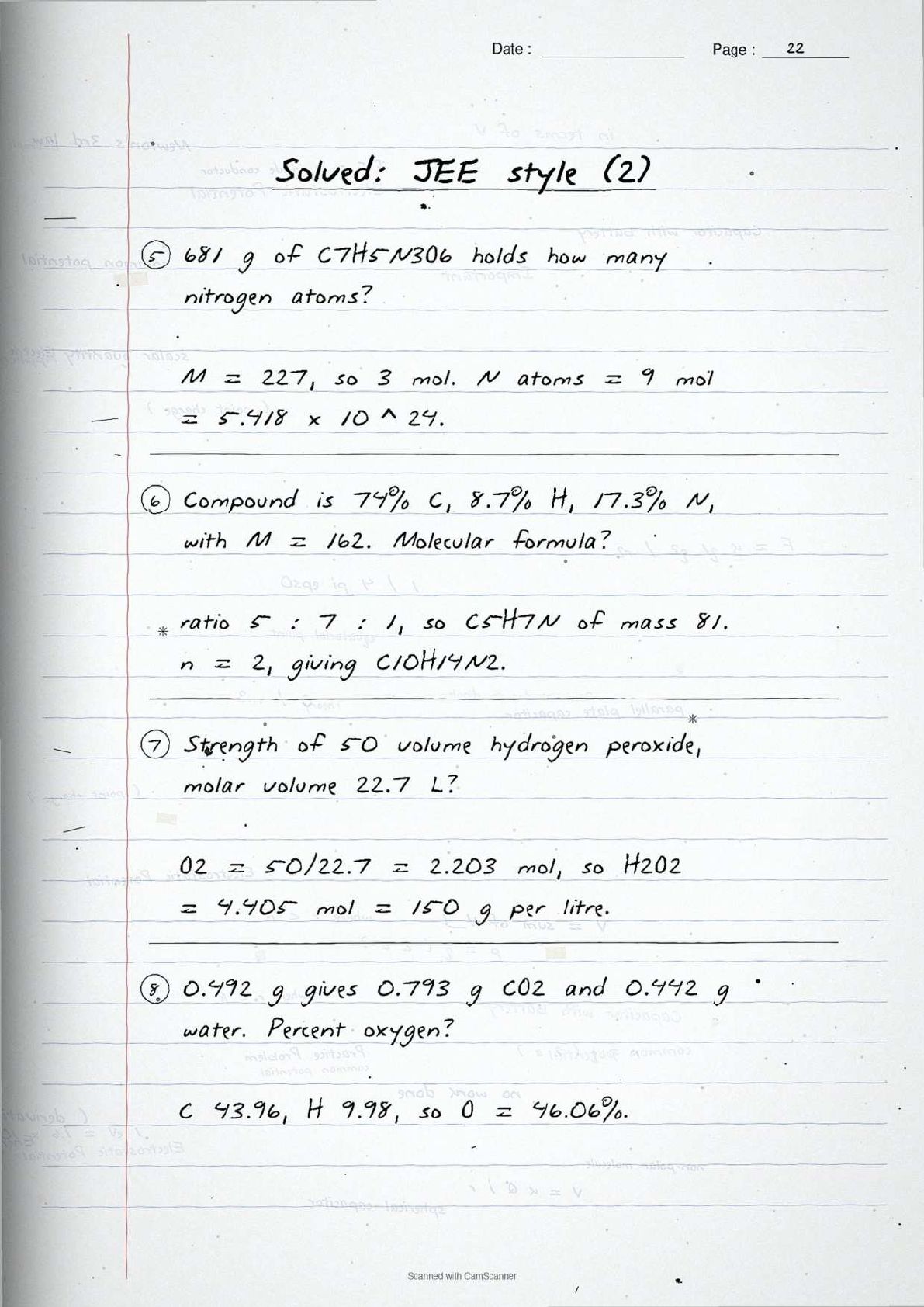
The notes follow one thread: chemistry counts particles while a balance weighs grams, and the mole is the bridge. Every formula in the topic is a step across that bridge.
Why Unit 1 Is Worth Finishing First
Two or three questions come from here every year, and most of them are numerical. The unit also underpins equilibrium, thermodynamics and every calculation in inorganic chemistry.
- Mole conversions: mass, particles and gas volume
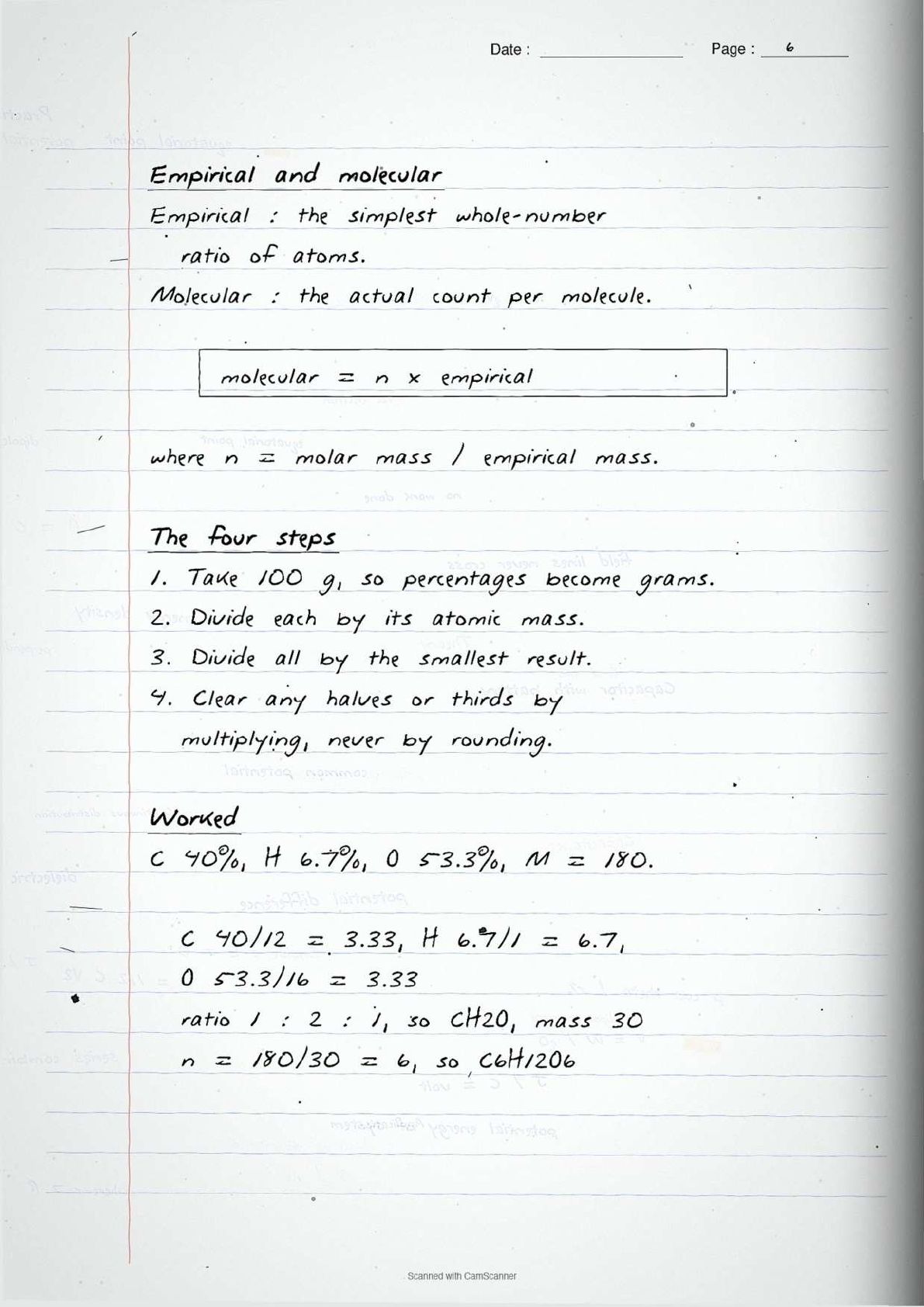
- Empirical and molecular formula from percentage data
- Limiting reagent and percentage yield
- Concentration terms and titration arithmetic
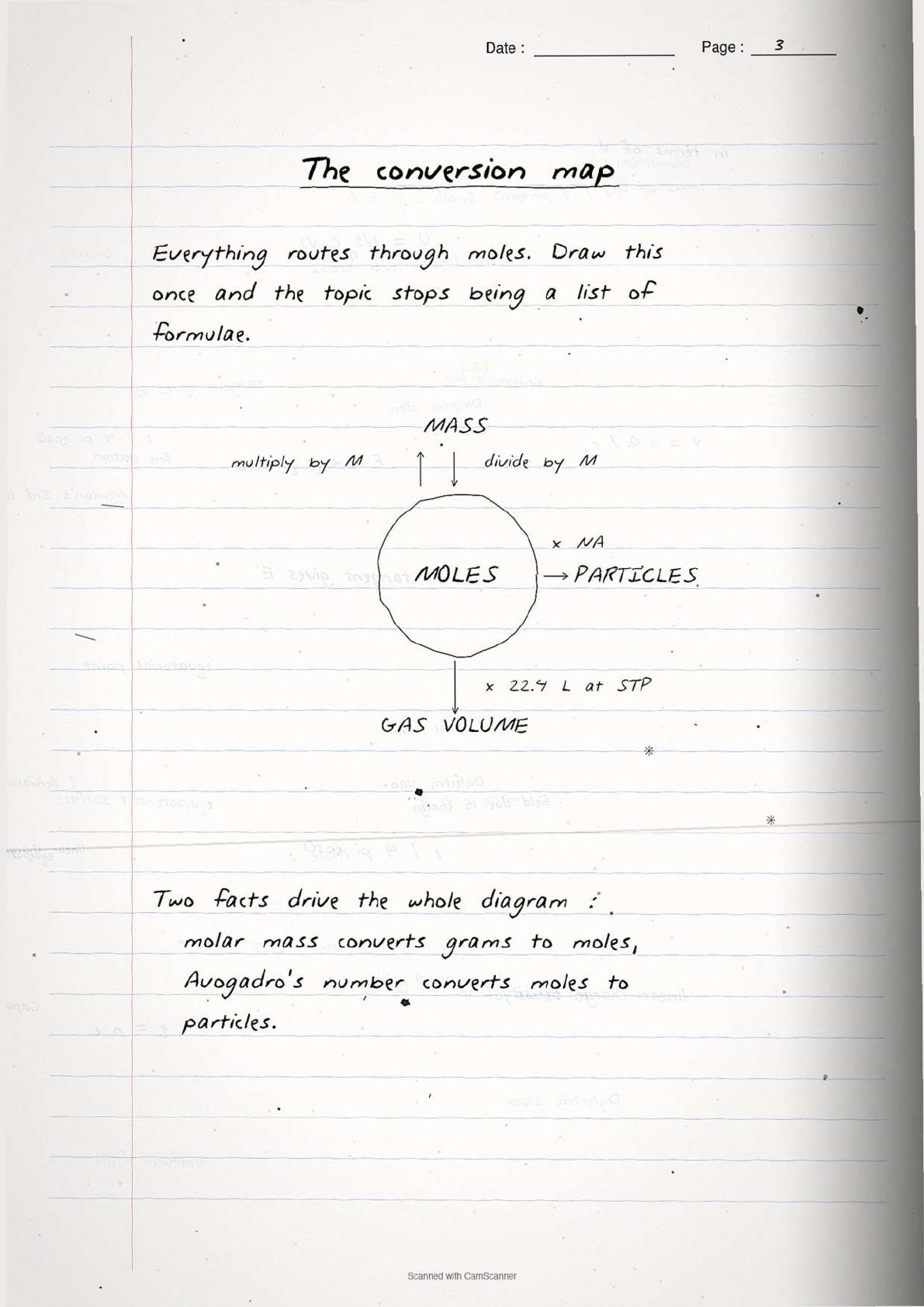
The Conversion Map
The notes draw a single diagram with moles at the centre. Mass sits above it, particles to the side and gas volume below, with the factor written on each arrow.
- Mass to moles: divide by the molar mass
- Moles to particles: multiply by Avogadro's number
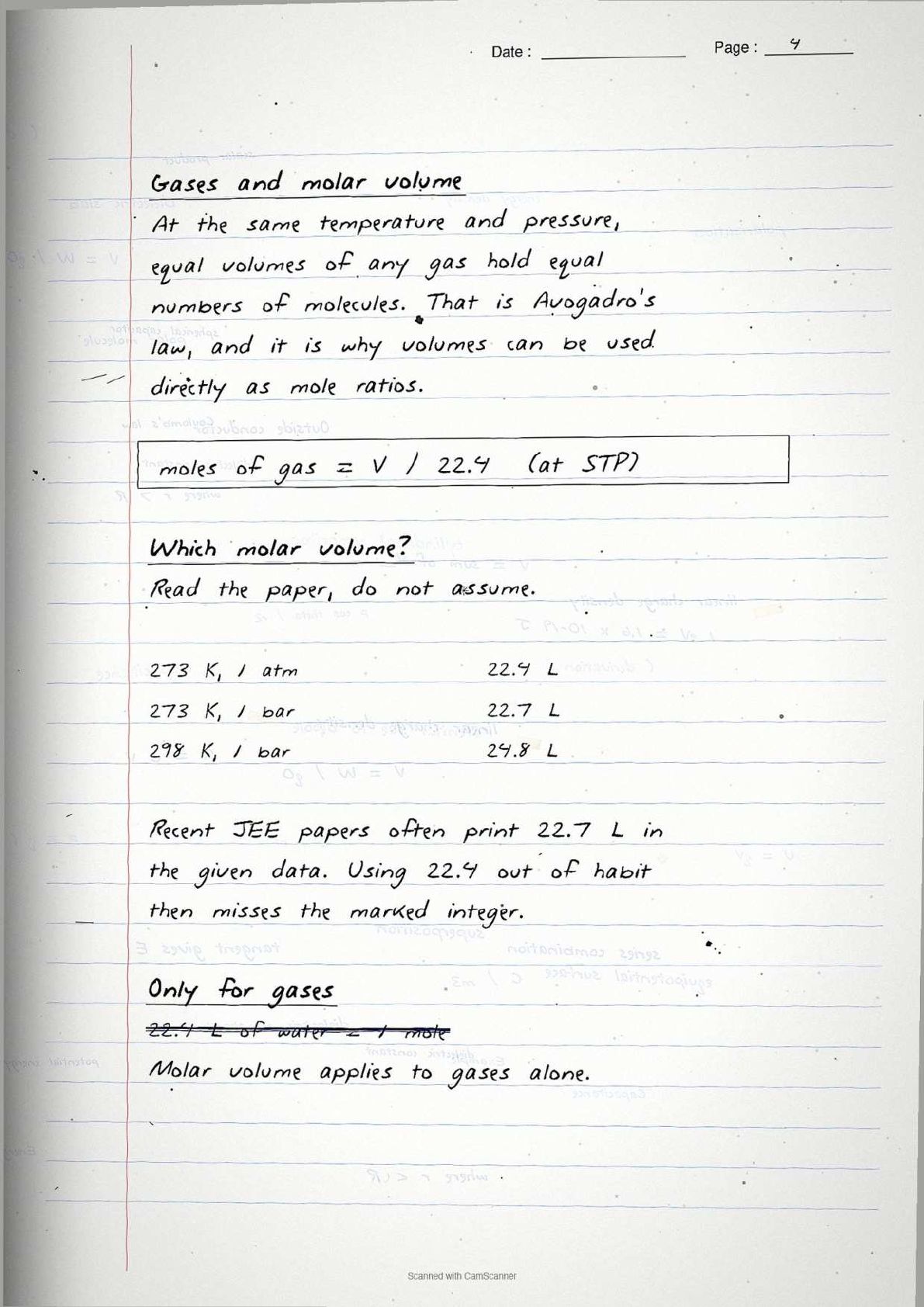
- Moles to gas volume: multiply by the molar volume
- Molar volume is 22.4 L at 273 K and 1 atm, but 22.7 L at 1 bar
Recent papers often print 22.7 L in the given data. Reaching for 22.4 out of habit then misses the marked integer, so the notes flag it in the margin.
Limiting Reagent, Done Properly
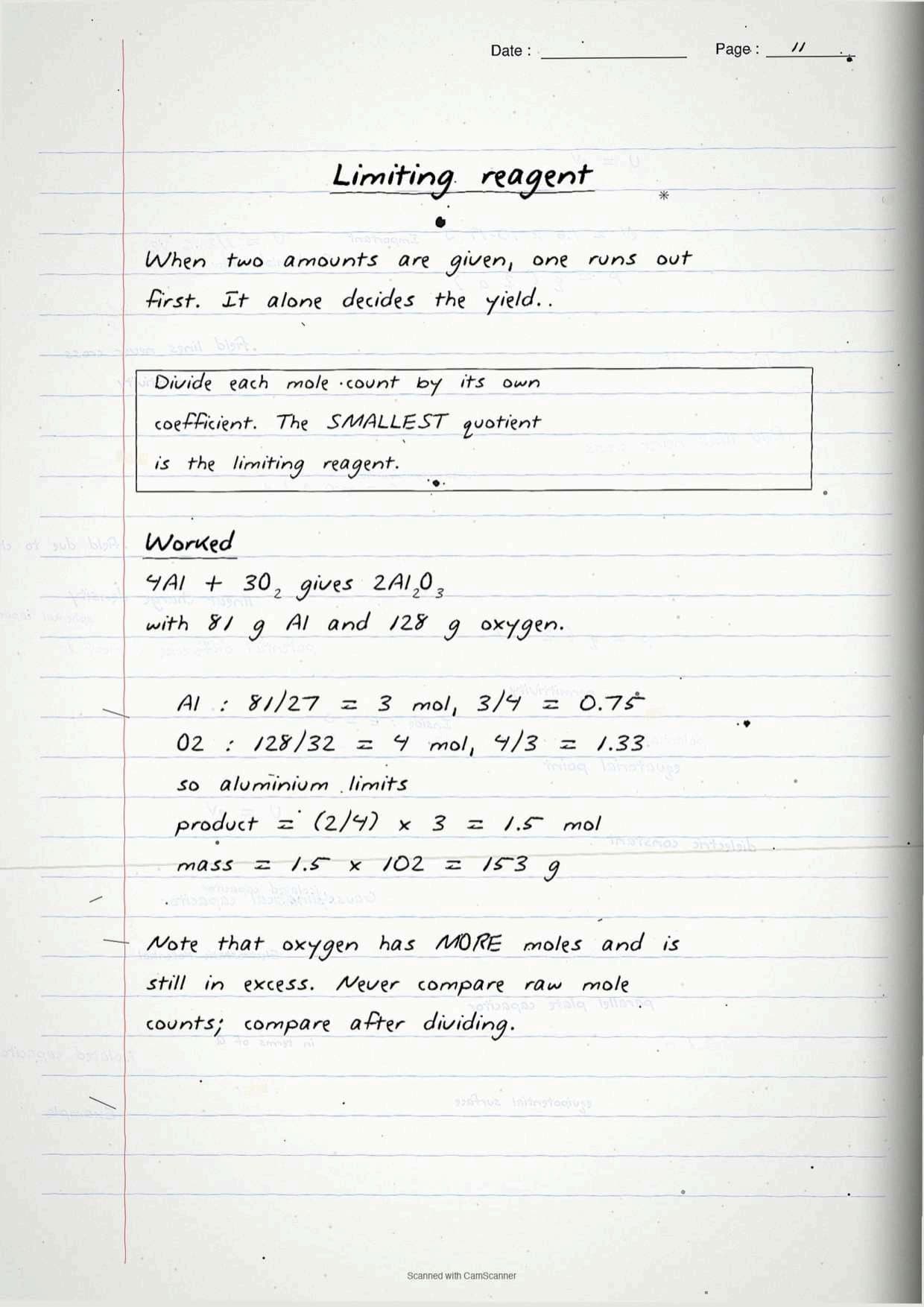
When two amounts are given, one runs out first and it alone decides the yield. The method is one line: divide each mole count by its own coefficient and take the smallest quotient.
The worked case makes the trap visible. With 81 g aluminium and 128 g oxygen, oxygen has more moles and is still in excess, because four aluminium are needed for every three oxygen.
- Never compare raw mole counts
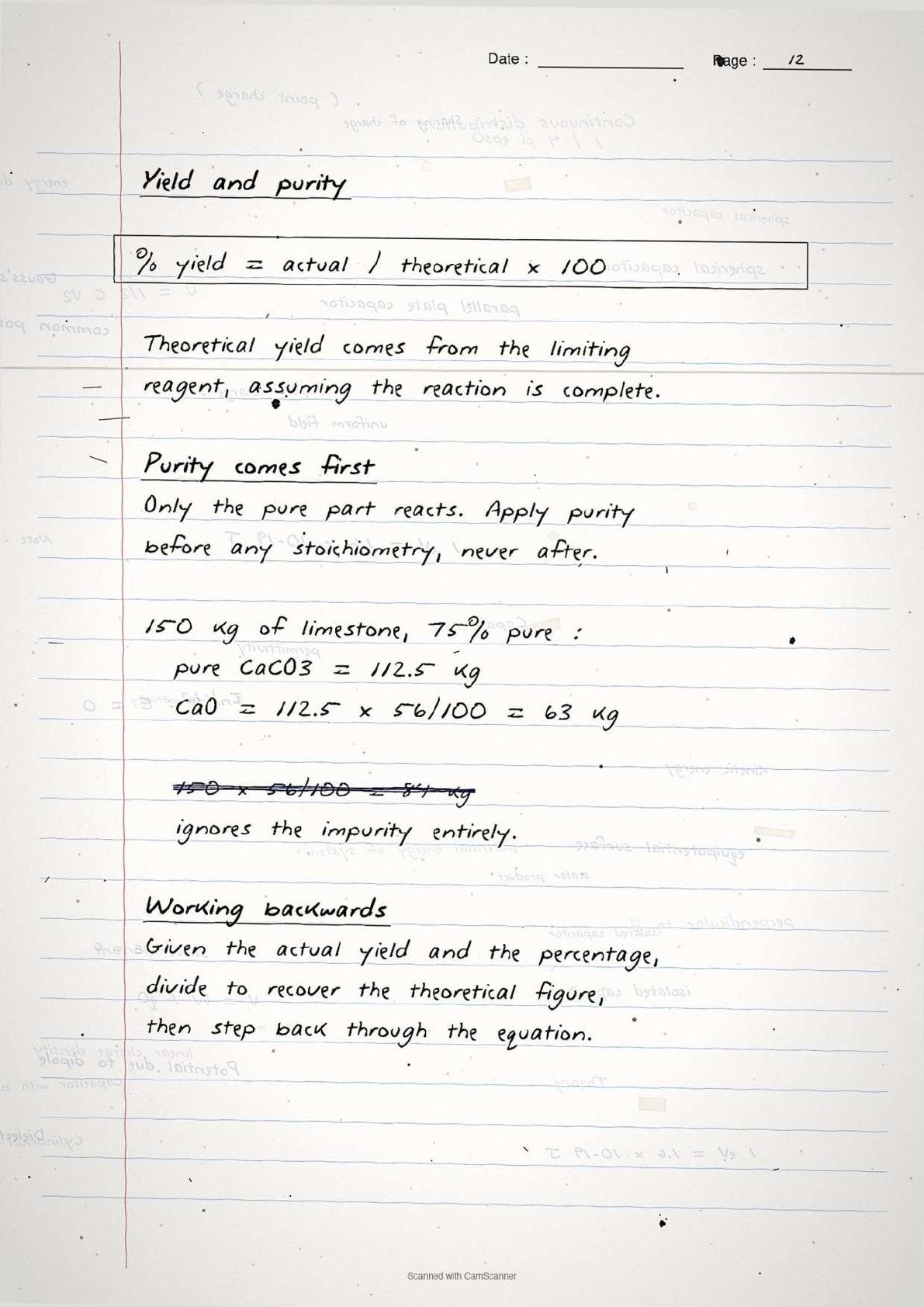
- Apply purity before any stoichiometry, never after
- Theoretical yield always comes from the limiting reagent
Estimation and Concentration
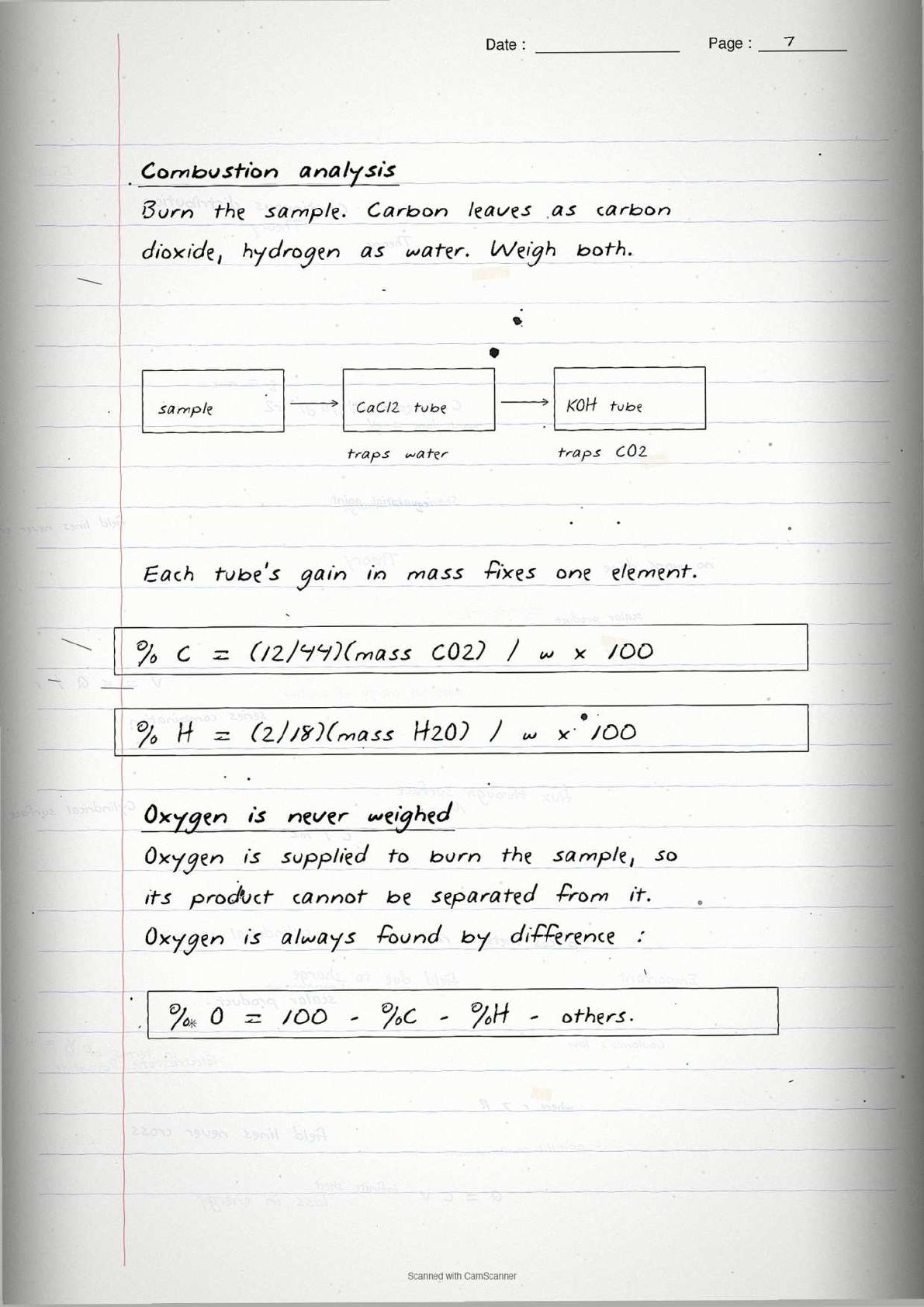
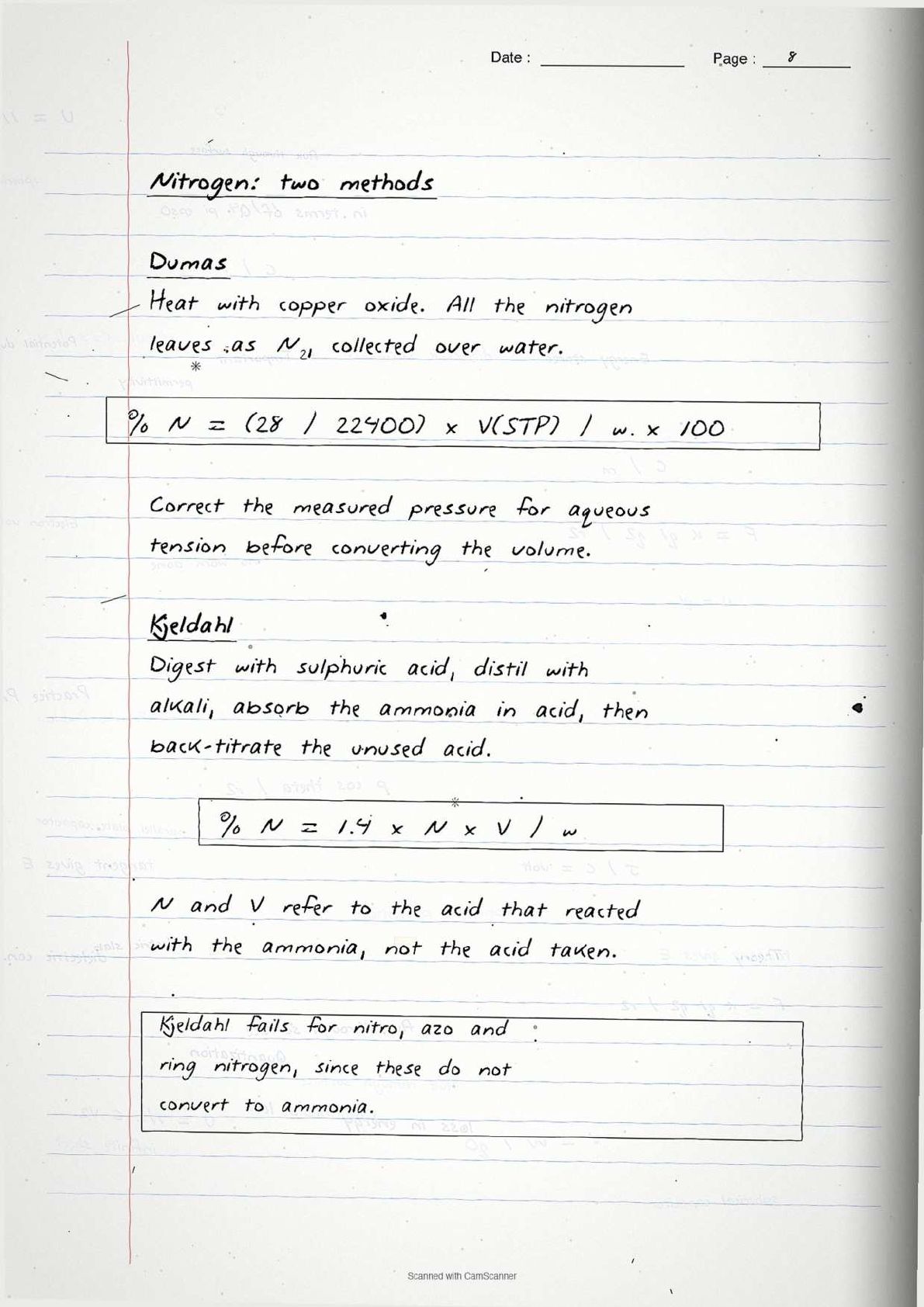
Organic estimation is pure percentage arithmetic once the product is known. The notes carry each formula beside a drawing of the apparatus.
- Carbon and hydrogen: from carbon dioxide and water, with oxygen by difference
- Nitrogen: Dumas by gas volume, Kjeldahl by back titration
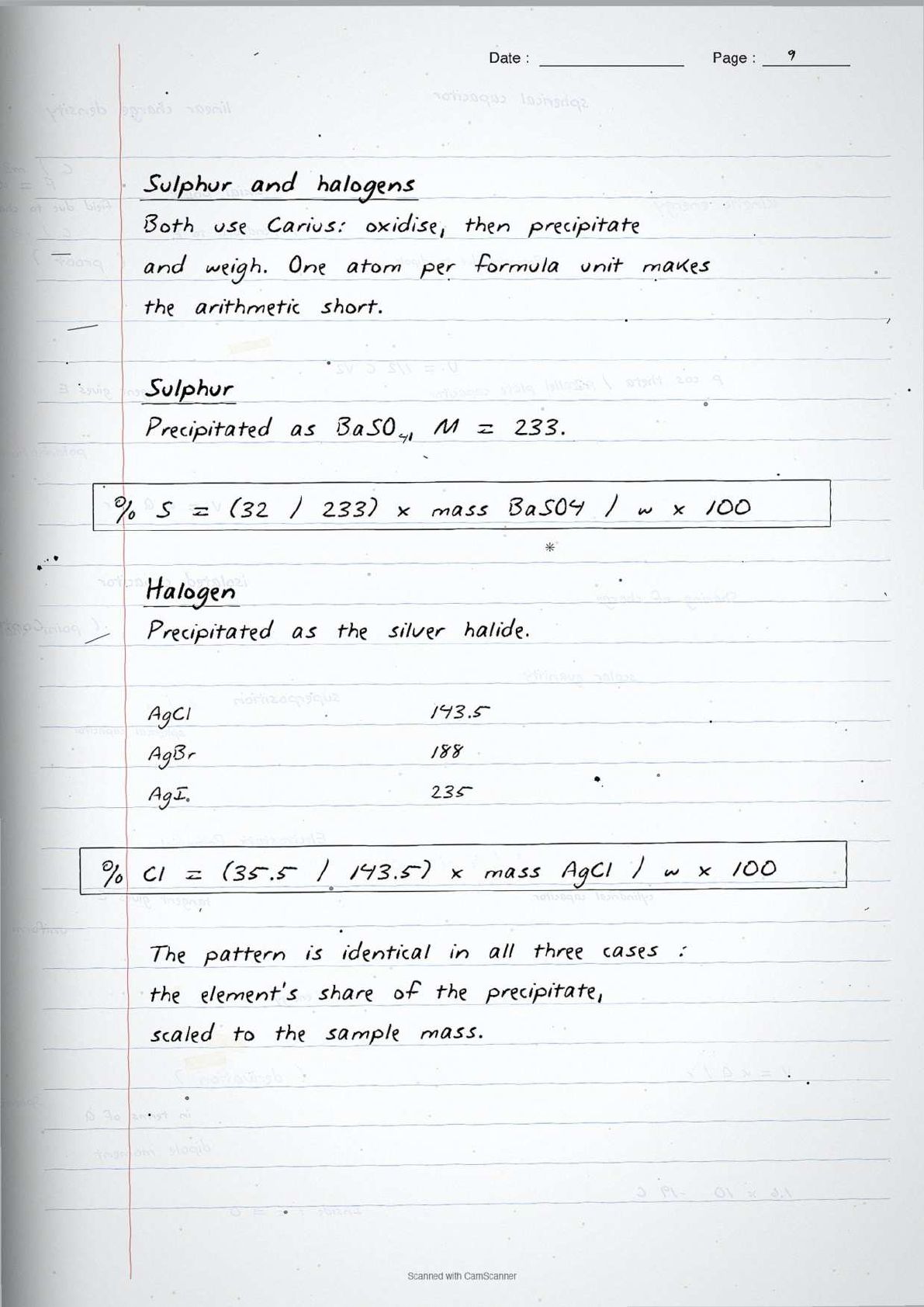
- Sulphur: weighed as barium sulphate
- Halogen: weighed as the silver halide
On the solution side, molarity uses litres of solution while molality uses kilograms of solvent. That single word is the difference, and the notes convert between them on a worked density.
Watch Mole Concept Explained on a Board
Source: PW JEE
Where Students Lose Marks Here
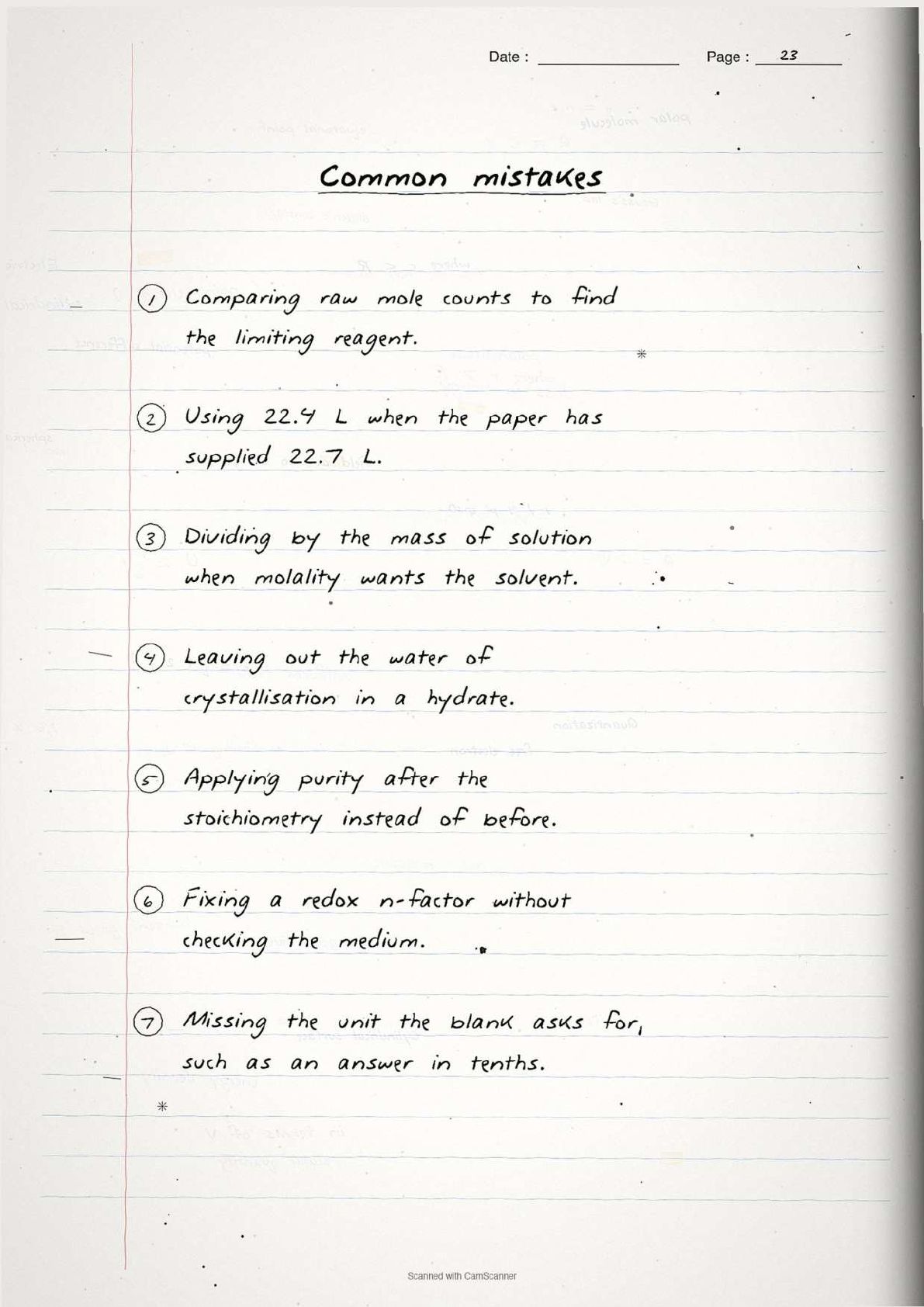
Each of these is written into the notes as a correction rather than a rule.
- Comparing raw mole counts to pick the limiting reagent
- Using 22.4 L when the paper supplied 22.7 L
- Dividing by the mass of solution where molality wants solvent
- Leaving out the water of crystallisation in a hydrate
- Fixing a redox n-factor without checking the medium
- Missing the unit the blank asks for, such as an answer in tenths
How to Use These Notes Before the Exam
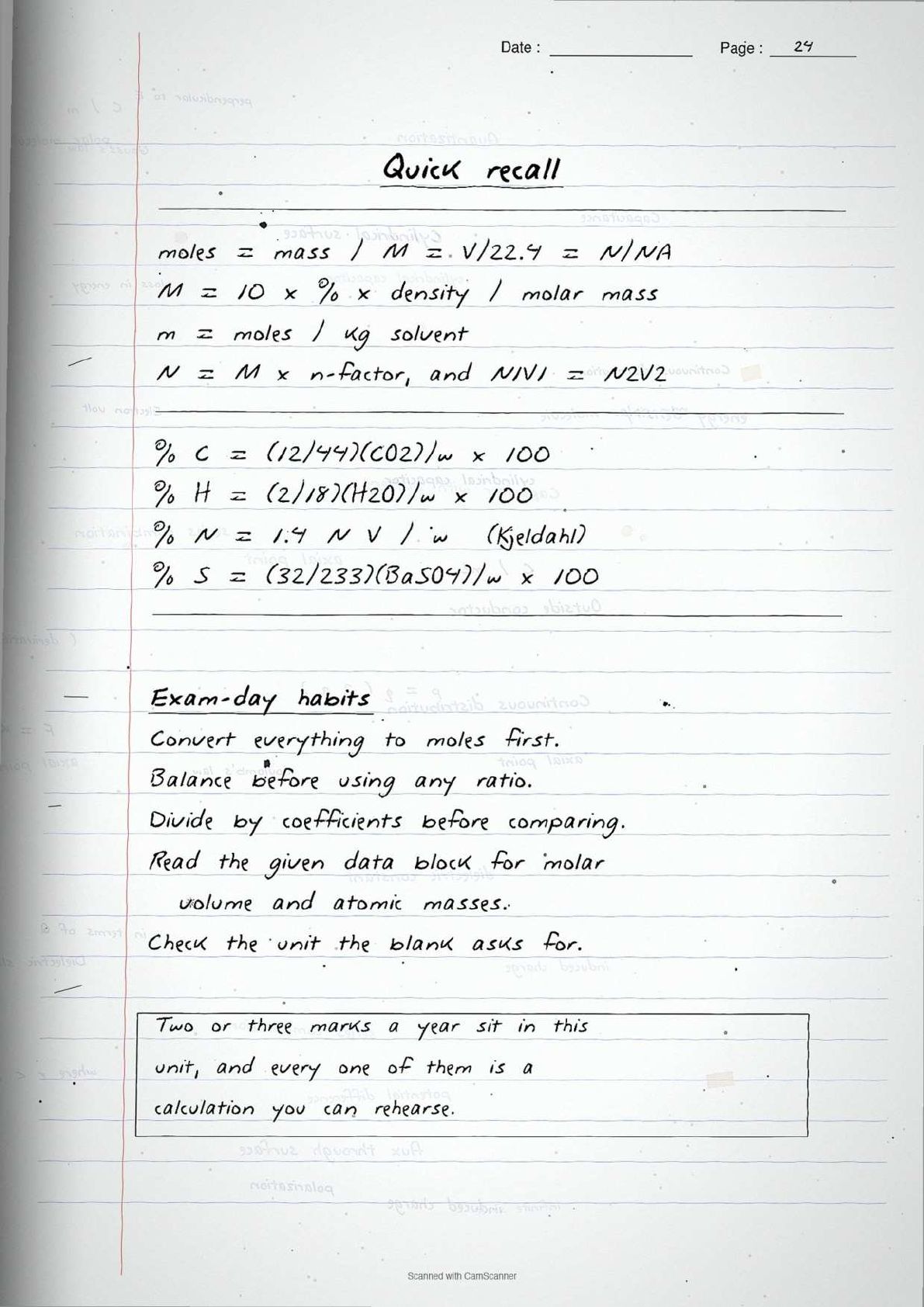
The conversion map and the quick recall page are the two worth returning to. The eight solved questions are drawn from recent papers.
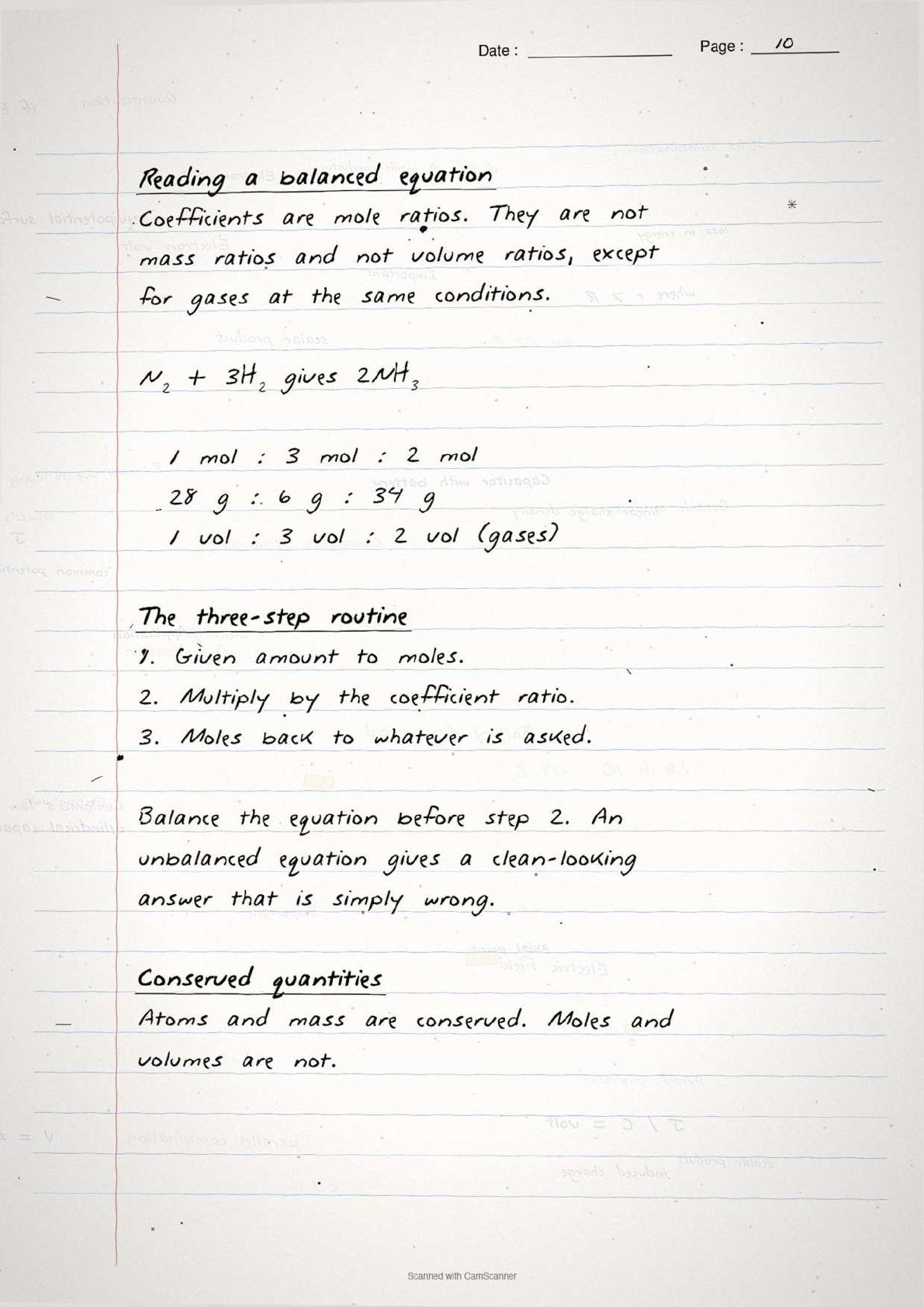
- Convert everything to moles before touching the equation
- Balance the equation before using any ratio
- Read the given data block for molar volume and atomic masses
- Check the unit the blank asks for before writing the answer
Every mark in this unit sits behind a calculation you can rehearse, which is what makes it the cheapest unit in the paper to secure.
JEE Main Mole Concept Handwritten Notes FAQs
Ques. How many questions come from mole concept in JEE Main?
Ans. Two or three questions appear most years, usually numerical, which works out to roughly 8 to 12 marks. The unit also supports calculations across the rest of the Chemistry paper.
Ques. Should students use 22.4 L or 22.7 L as the molar volume?
Ans. Whichever the question supplies. 22.4 L applies at 273 K and 1 atm, while 22.7 L applies at 273 K and 1 bar. Recent papers print 22.7 L in the data block, and using 22.4 out of habit misses the marked integer.
Ques. What is the quickest way to find the limiting reagent?
Ans. Divide each reagent's mole count by its own coefficient in the balanced equation. The smallest quotient is the limiting reagent. Comparing mole counts directly fails whenever the coefficients differ.
Ques. Why is oxygen found by difference in combustion analysis?
Ans. Because oxygen is also supplied to burn the sample, so the oxygen in the products cannot be separated from the oxygen added. Its percentage is taken as 100 minus the others.
Ques. Can the notes be downloaded for free?
Ans. Yes. The full 24 page PDF can be read on this page and downloaded at no cost, so it can be printed or kept on a phone for revision.



Comments