




The National Testing Agency (NTA) has announced the JEE Main 2027 Session 1 exam dates in its official examination calendar. According to the calendar, the January session will be conducted on January 22, 23, 24, 28, 29 and 30, 2027, with January 31 kept as a buffer date.

| Direct link to JEE Main 2027 Official Notification (Soon) |
- The official JEE Main 2027 notification has not been released yet and is expected in the last week of October 2026 along with the information bulletin.
- The JEE Main 2027 Session 1 application form is expected to be released soon after the notification, likely in October 2026.
- The JEE Main 2027 Session 1 registration is expected to continue through November 2026.
- The JEE Main 2027 syllabus is expected to be released with the official notification. It is likely to remain similar to the JEE Main 2026 syllabus, covering Physics, Chemistry and Mathematics.
- The exam pattern is expected to remain similar to 2026, with 75 questions for 300 marks in Paper 1 (B.E./B.Tech). The paper will include both MCQs and numerical-value questions, with negative marking.
- If you are targeting NITs, IIITs, GFTIs, or JEE Advanced, this is the right time to start your preparation.
- Candidates should try to cover their syllabus till the end of November, and after that they should focus on mock tests and solving PYQs.
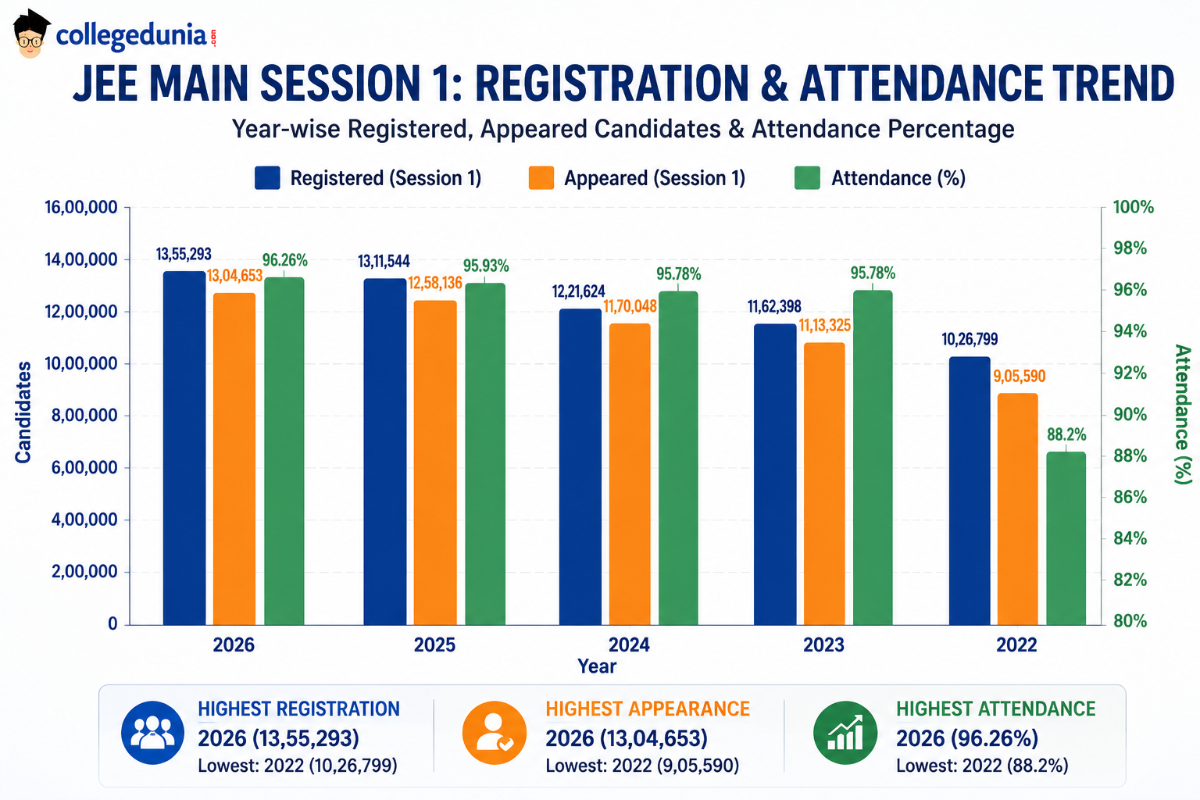
In JEE Main 2026 session 1, around 13,04,65 candidates appeared in the B.E. / B. Tech. paper out of the 13,55,293 registered candidates.
Free PDFs to start your JEE Main 2027 Preparation

Related Articles:

Latest Updates:
- JEE Main 2027 notification: Expected in October 2026.
- JEE Main 2027 registration: Expected to begin in October 2026 for Session 1.
- JEE Main 2027 Session 1: January 22–24 and January 28–30, 2027 (Confirmed).
- JEE Main 2027 Session 2: Expected in April 2027.
- JEE Main 2027 syllabus: The official syllabus is awaited.
- JEE Main 2027 result: Expected after each session.
- JEE Main 2027 counselling: Expected to begin after the Session 2 result.
JEE Main 2027: Highlights
| Particulars | Details |
|---|---|
| Exam Name | Joint Entrance Examination Main (JEE Main) 2027 |
| Conducting Body | National Testing Agency (NTA) |
| Exam Level | National-level undergraduate entrance exam |
| Sessions | 2 (January 2027 and April 2027, expected) |
| Notification Date | Last week of October 2026 (expected) |
| Mode of Exam | Computer-Based Test, except Drawing section of Paper 2A |
| Papers | Paper 1 (BE/BTech), Paper 2A (BArch), Paper 2B (BPlanning) |
| Total Questions in Paper 1 | 75 questions, all compulsory |
| Total Marks in Paper 1 | 300 marks |
| Marking Scheme | +4 for correct, -1 for incorrect, 0 for unattempted |
| Exam Duration | 3 hours (3 hours 30 minutes for Paper 2A and 2B together) |
| Medium | 13 languages |
| Official Website | jeemain.nta.nic.in |
Source: jeemain.nta.nic.in
What is JEE Main 2027?
JEE Main 2027 is a national-level engineering entrance exam conducted by the National Testing Agency (NTA) for admission to BE, BTech, BArch, and BPlanning courses.
- The JEE Main score gets you admission to undergraduate engineering, architecture, and planning programs at top institutes like NITs, IIITs, and CFITs.
- For admission to IITs, you need to be among the top 2,50,000 candidates in JEE Main Paper 1 along with fulfilling other criteria like:
- You must have passed your Class 12 (or equivalent) examination in the current year or the previous year.
- You must have studied Physics, Chemistry, and Mathematics (PCM) as compulsory subjects.
- General category candidates usually need to be under the prescribed upper age limit (typically born on or after October 1 of a specific year).There is a 5-year age relaxation for SC, ST, and PwD candidates
- JoSAA 2026 had 67,323 seats across 138 institutes, and NITs alone offered 25,162 seats
Note: Candidates who have previously been admitted to an IIT through JoSAA are generally not eligible to take the JEE Advanced exam again.
Candidates should understand that clearing the JEE Main cutoff only makes you eligible for JEE Advanced, as the JEE Main Admission cutoff is much higher.
Also Check: JEE Main vs JEE Advanced
JEE Main 2027 Official Website
The official JEE Main 2027 website is jeemain.nta.nic.in. NTA publishes the notification, application form, city intimation slip, admit card, answer key and result-related updates on the official portal.
Candidates should rely on the NTA website for the final JEE Main 2027 exam date, syllabus, registration dates and other official announcements.
Official Website: jeemain.nta.nic.in
JEE Main 2027 Exam Dates
NTA's calendar confirms the examination window. Details such as registration dates, application form, city intimation slip, admit card and result date should be added only when NTA officially announces them.
| Event | Date |
|---|---|
| JEE Main 2027 Session 1 | January 22–24, 2027 |
| JEE Main 2027 Session 1 | January 28–30, 2027 |
| Buffer Date | January 31, 2027 |
- Registration for Session 1 is expected to open in the last week of October 2026, giving you roughly a month to apply.
- City intimation slips typically land 2 to 3 weeks before the admit card, so use that window to plan travel.
- The gap between exam and result has stayed at about 2 weeks across recent cycles, so expect the same pace in 2027.
Given below are the expected dates for both JEE Main 2027 sessions based on the previous years' trends:
JEE Main 2027 Expected Dates
| Event | Session 1 (Expected) | Session 2 (Expected) |
|---|---|---|
| Notification and information bulletin | Last week of October 2026 | Late January 2027 |
| Registration starts | Last week of October 2026 | First week of February 2027 |
| Last date to apply | Last week of November 2026 | Last week of February 2027 |
| Correction window | Early December 2026 | Early March 2027 |
| City intimation slip | First week of January 2027 | Third week of March 2027 |
| Admit card release | Two to three days before exam | Two to three days before exam |
| Exam dates | January 22–24 and January 28–30, 2027 (Confirmed) | First week of April 2027 |
| Provisional answer key | First week of February 2027 | Second week of April 2027 |
| Result declaration | Second week of February 2027 | Third week of April 2027 |
JEE Main Year-Wise Exam Dates and Notification Trends
- The notification or first official notice was generally released between October and December in recent years, with JEE Main 2026 notice issued on October 19, 2025.
- JEE Main Session 1 has mostly been conducted in January, except in 2022 when the exam was delayed to June due to disruptions.
- Session 2 is generally held in April, while JEE Main 2022 was again an exception, with the second session conducted in July.
| Year | Notification / First Official Notice | Session 1 Exam Dates | Session 2 Exam Dates |
|---|---|---|---|
| JEE Main 2026 | 19 October 2025 – NTA advisory | January 21, 22, 23, 24, 28, 29 & 30, 2026 | April 2, 4, 5, 6, 7 & 8, 2026 |
| JEE Main 2025 | 28 October 2024 – Online application notice | January 22, 23, 24, 28 & 29, 2025 | April 2, 3, 4, 7 & 8, 2025 |
| JEE Main 2024 | November 1, 2023 – Online application notice | January 24, 27, 29, 30, 31 & February 1, 2024 | April 4, 5, 6, 8, 9 & 12, 2024 |
| JEE Main 2023 | December 15, 2022 – NTA examination calendar/notice | January 24, 25, 28, 29, 30 & 31, 2023; February 1, 2023 | April 6, 8, 10, 11 & 12, 2023 |
| JEE Main 2022 | March 1, 2022 – First Session 1 application notice | June 23, 24, 25, 26, 27, 28 & 29, 2022 | July 21, 22, 23, 25, 26, 27, 28 & 29, 2022 |
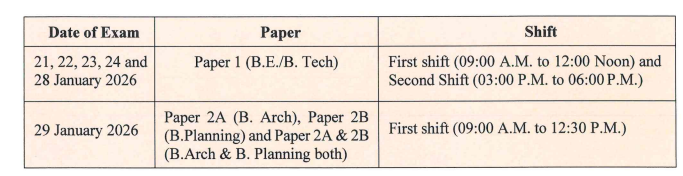
Source: jeemain.nta.nic.in
You can track the full year-wise calendar on the JEE Main exam dates page as soon as NTA confirms the 2027 schedule.
Related Links:
Most downloaded this week
JEE Main 2027 Registration
JEE Main 2027 registration will open online at jeemain.nta.nic.in, most likely in the last week of October 2026 for Session 1.
- The NTA opens the application window for each session, and candidates must apply separately for both sessions.
- The JEE Main application process has three parts, which include registration, application form filling, and fee payment.
- Candidates will be able to fill out the application form in online mode only, and the form filled in any other mode will not be accepted.
- Candidates get a system-generated application number in the first step, and the same number works for both sessions.
Candidates must note that those who wish to fill the JEE Main application form for Session 2 only can do so only during the application window for Session 2.
JEE Main 2027: Previous Years Registration Trends
| Year | Registered (Session 1) | Appeared (Session 1) | Attendance |
|---|---|---|---|
| 2026 | 13,55,293 | 13,04,653 | 96.26% |
| 2025 | 13,11,544 | 12,58,136 | 95.93% |
| 2024 | 12,21,624 | 11,70,048 | 95.78% |
| 2023 | 11,62,398 | 11,13,325 | 95.78% |
| 2022 | 10,26,799 | 9,05,590 | 88.2% |
How to Fill the JEE Main 2027 Application Form
- Step 1: Go to jeemain.nta.nic.in and click the JEE Main 2027 Session 1 registration link.
- Step 2: Enter your name, mobile number and email ID, then note down the application number you receive.
- Step 3: Log in and fill in your personal details, state of eligibility, category, paper choice, and exam city preferences.
- Step 4: Enter Class 10 and Class 12 academic details along with parents' income details.
- Step 5: Upload your photograph and signature in the prescribed size and format.
- Step 6: Pay the fee online, submit the form, and download the confirmation page.
JEE Main 2027 Application Form: Documents Required
The documents required by the candidates while filling out the JEE Main 2027 application form are given below:
- Class 10 certificate or mark sheet with your date of birth
- Class 12 mark sheet, if you have already passed
- Scanned photograph and signature as per the specified dimensions
- Category certificate with issue date and issuing authority, and PwD certificate if applicable
- Active email ID and mobile number, since every NTA update goes there
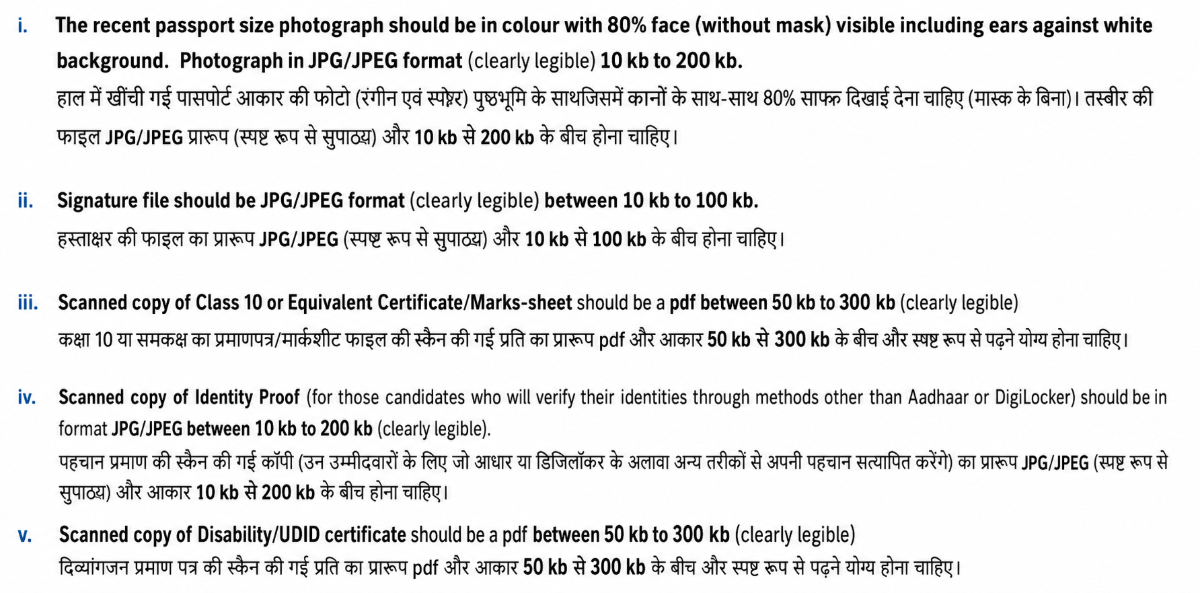
Source: jeemain.nta.nic.in
Do not create a second application number if you already registered for Session 1. Use the same login for Session 2 and pay only the fee.
Related Links:
JEE Main 2027 Application Fee
The JEE Main 2027 application fee will be released along with the official information brochure and is expected to stay same as 2026 fee.
- The fee amount depends on three things: your category, your gender, and whether you pick an exam centre inside or outside India.
- Once paid the JEE Main 2027 application fee is non-refundable.
Given below is the official fee structure of JEE Main based on the official information brochure of 2026.
- Two papers here means any combination such as BE/BTech with BArch, or BArch with BPlanning.
- If you change your category during the correction window, you may need to pay the fee difference.
| Category | One Paper (Male) | One Paper (Female) | Two Papers (Male) | Two Papers (Female) |
|---|---|---|---|---|
| General | Rs 1,000 | Rs 800 | Rs 2,000 | Rs 1,600 |
| EWS / OBC-NCL | Rs 900 | Rs 800 | Rs 2,000 | Rs 1,600 |
| SC / ST / PwD / Third Gender | Rs 500 | Rs 500 | Rs 1,000 | Rs 1,000 |
| General (centre outside India) | Rs 5,000 | Rs 4,000 | Rs 10,000 | Rs 8,000 |
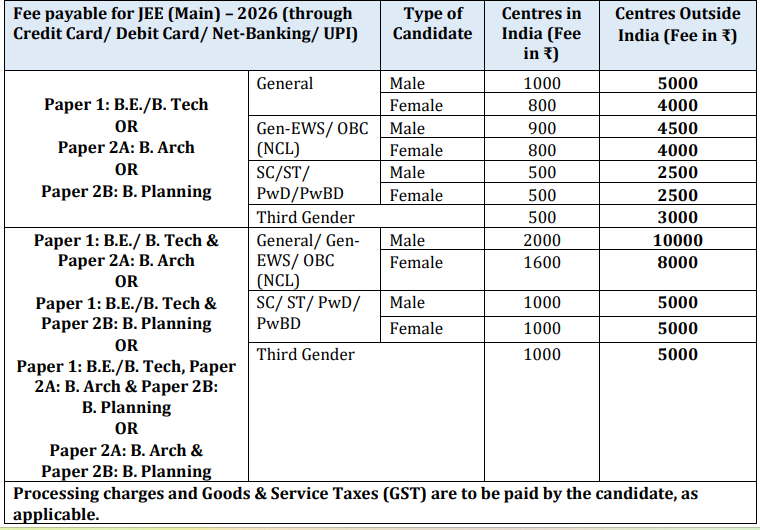
Source: jeemain.nta.nic.in
Related Links:
JEE Main 2027 Eligibility Criteria
The JEE Main 2027 eligibility criteria will be released along with the official bulletin expected in October. There is no upper age limit in JEE Main.
- The candidates who have passed the class XII / equivalent Examination in 2025, 2026 or appearing in 2027 irrespective of their age can appear in JEE Main 2027.
- Candidates can write JEE Main with any Class 12 score, but you cannot take seat at an NIT, IIIT or GFTI unless you meet the 75 percent or top 20 percentile condition.
| Criteria | Expected Requirement for JEE Main 2027 |
|---|---|
| Nationality | Indian nationals, NRIs, PIOs, OCIs and foreign nationals can apply |
| Age limit | No upper or lower age limit |
| Year of passing Class 12 | 2025, 2026 or appearing in 2027 |
| Number of attempts | Three consecutive years, with two sessions in each year |
| Subjects for BE/BTech | Physics, Mathematics and one of Chemistry, Biology, Biotechnology or a technical vocational subject |
| Subjects for BArch | Physics, Chemistry and Mathematics |
| Subjects for BPlanning | Mathematics |
| Minimum marks for JEE Main | No minimum marks needed to appear in the exam |
| Minimum marks for NIT and IIIT admission | 75 percent in Class 12 or top 20 percentile of your board, 65 percent for SC and ST |
Your three attempt years are counted from the year you pass Class 12, not from the year you first appear. If you passed in 2025, your last JEE Main attempt year is 2027.
Related Links:
Which JEE Main 2027 Paper Should You Take?
- Candidates targeting B.E./B.Tech programmes appear for Paper 1, which tests Physics, Chemistry and Mathematics.
- Candidates must choose Paper 2A for B.Arch or Paper 2B for B.Planning, with both papers including Mathematics and Aptitude, while B.Arch adds Drawing and B.Planning includes Planning-based questions.
| Course Target | JEE Main Paper | Subjects |
|---|---|---|
| B.E./B.Tech | Paper 1 | Physics, Chemistry, Mathematics |
| B.Arch | Paper 2A | Mathematics, Aptitude, Drawing |
| B.Planning | Paper 2B | Mathematics, Aptitude, Planning |
JEE Main 2027 Exam Pattern
The JEE Main 2027 exam pattern is expected to stay same as it was in 2026. Since 2025, NTA has kept all questions compulsory.
- Each Subject will have two sections: Section A will be of MCQs and Section B will contain Questions whose answers are to be filled in as a numerical value.
- There will be negative marking for incorrect answer in Section A and Section B.
- There are no optional questions in Section B anymore, so you cannot skip questions by choice.
JEE Main 2027 Paper 1 Pattern (BE and BTech)
| Subject | Section A (MCQ) | Section B (Numerical) | Total Questions | Total Marks |
|---|---|---|---|---|
| Physics | 20 | 5 | 25 | 100 |
| Chemistry | 20 | 5 | 25 | 100 |
| Mathematics | 20 | 5 | 25 | 100 |
| Total | 60 | 15 | 75 | 300 |
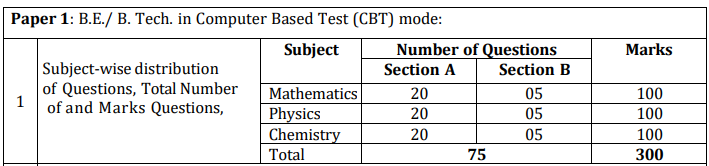
Source: jeemain.nta.nic.in
JEE Main 2027 Paper 2A and 2B Pattern
| Paper | Sections | Questions | Total Marks |
|---|---|---|---|
| Paper 2A (BArch) | Mathematics 25, Aptitude 50, Drawing 2 | 77 | 400 |
| Paper 2B (BPlanning) | Mathematics 25, Aptitude 50, Planning 25 | 100 | 400 |
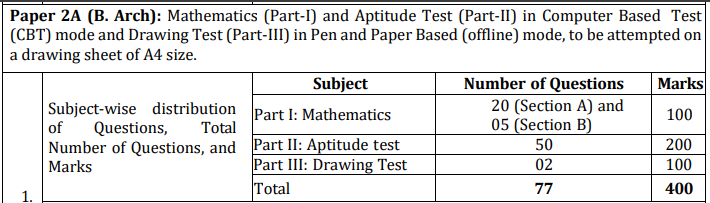
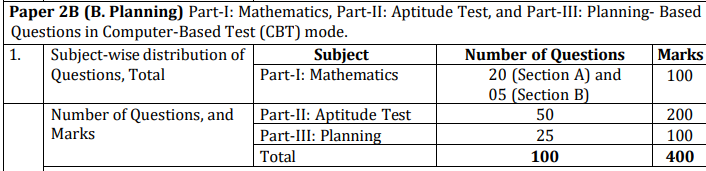
Source: jeemain.nta.nic.in
What Should I Focus on in the JEE Main 2027 Exam Pattern?
JEE 2027 aspirants are also discussing full-syllabus tests designed around the JEE Main pattern, along with concerns about question practice and scoring targets. One student preparing for a full-syllabus test specifically mentioned targeting 200+ marks and asked for help planning revision around the test.
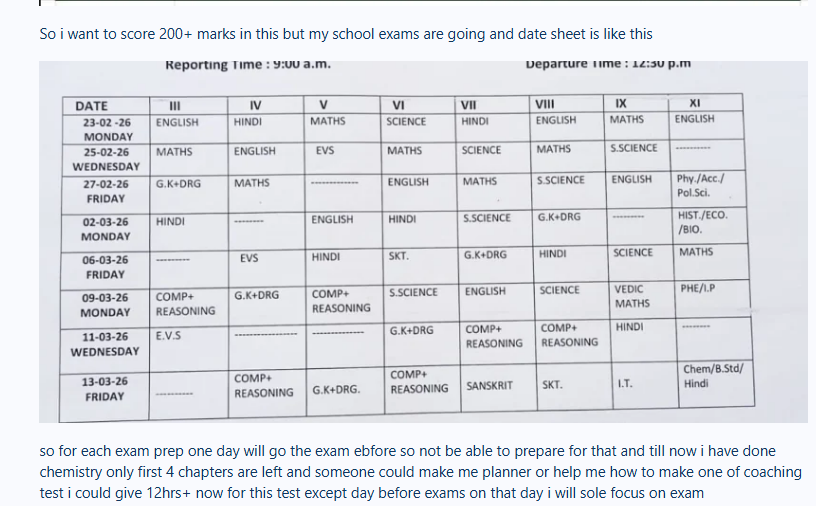
Source: Reddit
JEE Main 2027 Marking Scheme
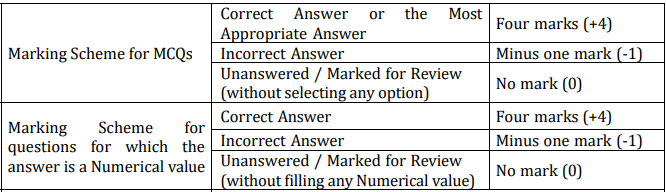
- Correct answer: +4 marks
- Incorrect answer: -1 mark, in both Section A and Section B
- Unattempted question: 0 marks
- Duration: 3 hours for Paper 1, and 3 hours 30 minutes if you take Paper 2A and 2B together
- Shift timings: Shift 1 from 9 AM to 12 PM, Shift 2 from 3 PM to 6 PM
Source: jeemain.nta.nic.in
Related Links:
JEE Main 2027 Syllabus
The JEE Main 2027 syllabus PDF will be released along with the official information bulletin, expected in October 2026.
- The entire syllabus comes from NCERT Class 11 and Class 12 Physics, Chemistry and Mathematics.
- In recent sessions, both classes have contributed almost equally to the JEE Main paper.
- The last major revision of the JEE Main syllabus was done in 2024, and no new additions have been announced for 2027.
Until NTA releases the JEE Main syllabus 2027 candidates can prepare from the JEE Main 2026 syllabus PDF provided below:
JEE Main Syllabus: Subject-Wise
Related Links:
Will the JEE Main 2027 Syllabus Change?
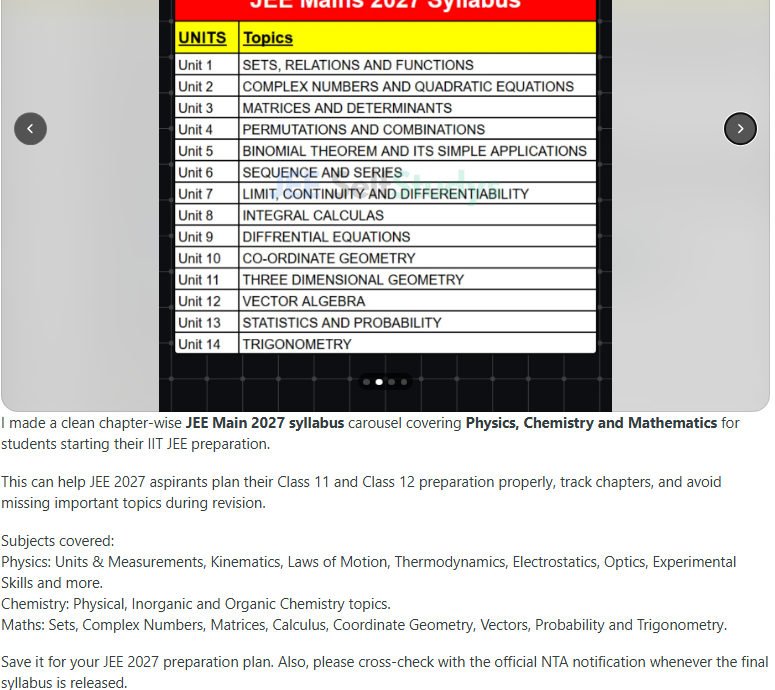
A JEE 2027 aspirant on Reddit shared a chapter-wise JEE Main 2027 syllabus covering Physics, Chemistry and Mathematics, while also advising students to cross-check the list with the official NTA syllabus when released.
Source: Reddit
JEE Main 2027 High Weightage Chapters
Every chapter in the JEE Main 2027 syllabus does not carry the same number of questions. Candidates can find the high weightage chapters usin the PYQs.
- The PYQs will show the clear pattern of the recurring chapters and the depth of the concepts asked in the exam.
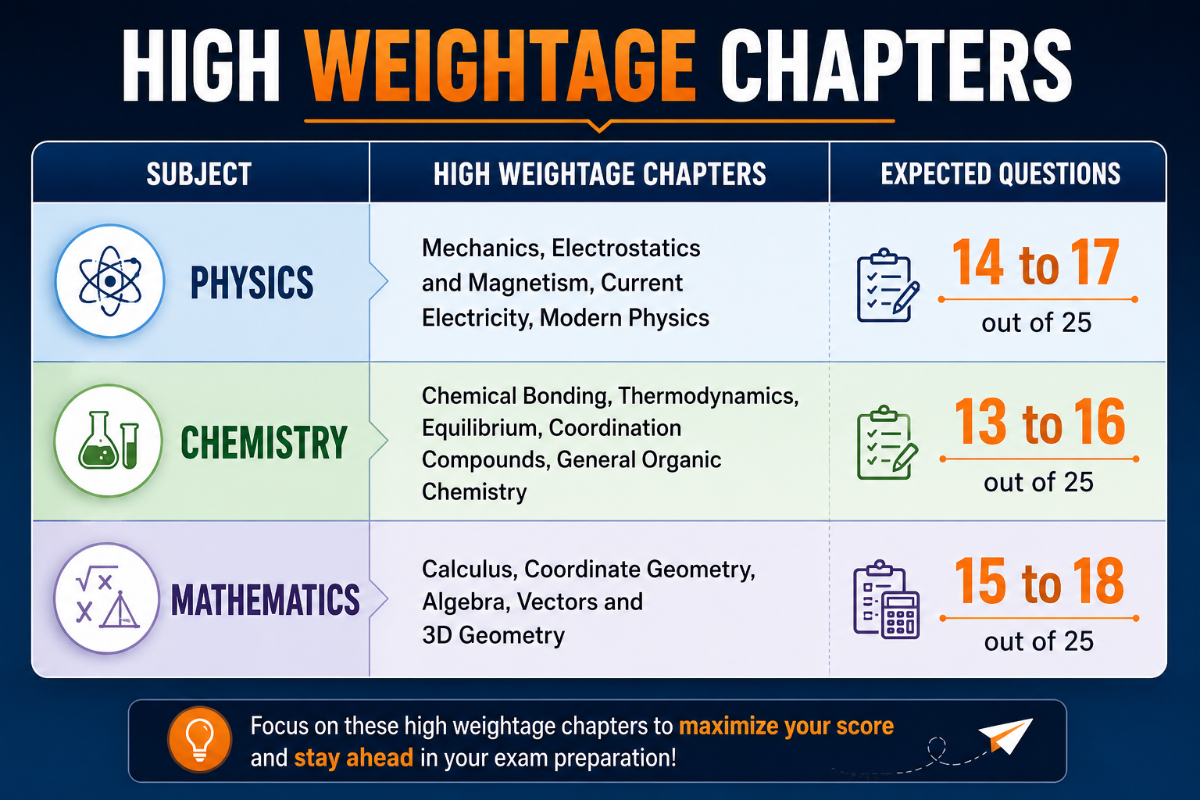
- In the Physics section out of the 25 questions around 14-17 questions usually come from Mechanics, Electrostatics and Magnetism, Current Electricity, Modern Physics.
- Similarly in Mathematics around 15 to 18 questions are asked from Calculus, Coordinate Geometry, Algebra, Vectors and 3D Geometry.
- Candidates should keep revising Inorganic Chemistry because it is memory-based and fades fast.
Solve previous year questions chapter by chapter instead of paper by paper, so you see how NTA repeats question types.
| Subject | High Weightage Chapters | Expected Questions |
|---|---|---|
| Physics | Mechanics, Electrostatics and Magnetism, Current Electricity, Modern Physics | 14 to 17 out of 25 |
| Chemistry | Chemical Bonding, Thermodynamics, Equilibrium, Coordination Compounds, General Organic Chemistry | 13 to 16 out of 25 |
| Mathematics | Calculus, Coordinate Geometry, Algebra, Vectors and 3D Geometry | 15 to 18 out of 25 |
Related Links:
- JEE Mains 2027 High Weightage Chapters
- High Weightage Chapters for JEE Mains 2027 Chemistry
- Coordinate Geometry JEE Main Previous Year Questions With Solutions and Weightage
How Much of the Syllabus Should I Complete Before JEE Main 2027?
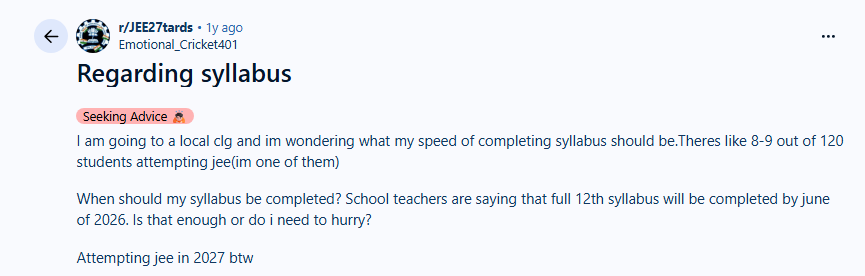
Students preparing for JEE Main 2027 are already asking when they should finish the syllabus and start revision. In one discussion, an aspirant asked whether completing the Class 12 syllabus by June 2026 would be sufficient for the 2027 exam. Other students suggested finishing the syllabus by around October-November and then moving towards revision and boards
Source: Reddit
JEE Main 2027 Admit Card
The JEE Main 2027 admit card will be released two to three days before the exam. Before that, NTA releases an advance city intimation slip so you can plan travel.
Candidates must note that the city slip is not your admit card, and you cannot enter the centre with it.
- Login needed: Application number and date of birth or password
- Details on it: Your name, roll number, photograph, exam date, shift timing, centre address and reporting time
- Documents to carry: Printed admit card, a valid photo ID, one passport size photo and the PwD certificate if applicable
- Reporting: Reach the centre well before the gate closing time printed on your admit card
Candidates should check every detail on their admit card and should report any error in name spelling, category, or photograph to NTA immediately on the following:
| NTA Helpline Number | +91-11-40759000, |
|---|---|
| Email Address | jeemain@nta.ac.in |
Related Links:
JEE Main 2027 Answer Key and Result
NTA releases the provisional answer key with your response sheet a few days after each session, and it also provides a short objection window to challenge the answers.
- Candidates will be able to challenge the JEE Main Answer key by paying a non-refundable fee of 200 per question.
- If your challenge is accepted, the question is corrected or dropped for every student.
In JEE Main 2026 Session 1, NTA dropped 9 questions from the final answer key after reviewing objections. Every student who attempted those questions received full marks.
How Your JEE Main Result is Calculated
- Your raw score is converted to an NTA score, or percentile, for each subject and for the total.
- Percentile is calculated shift-wise, so students in a tough shift are not penalised.
- The formula is the number of students who scored equal to or below you, divided by the total students in your shift, multiplied by 100.
- If you appear in both sessions, NTA takes your better total percentile.
- All India Rank is prepared only after Session 2, using the best of two scores.
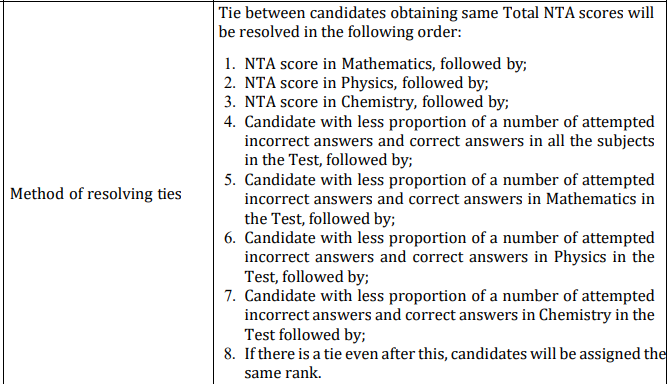
Tie-Breaking Rules
When two students end up with the same total percentile, NTA applies tie-breakers in this order:
- Higher percentile in Mathematics
- Then higher percentile in Physics
- Then higher percentile in Chemistry
- Then the student with a lower ratio of wrong answers to correct answers
After this process, if there is still a tie, then candidates will be assigned the same rank. Age is no longer used as a tie-breaker in the JEE Main Rank allocation.
Related Links:
JEE Main 2027 Cutoff
The NTA will release the JEE Main 2027 cutoff with the Session 2 result expected in April 2027.
- This is the qualifying percentile you need to become eligible for JEE Advanced 2027, subject to the top 2.5 lakh limit in the Common Rank List.
- JoSAA will release the Admission cutoff at which candidates will get a seat in NITs, IIITs, and CFTIs.
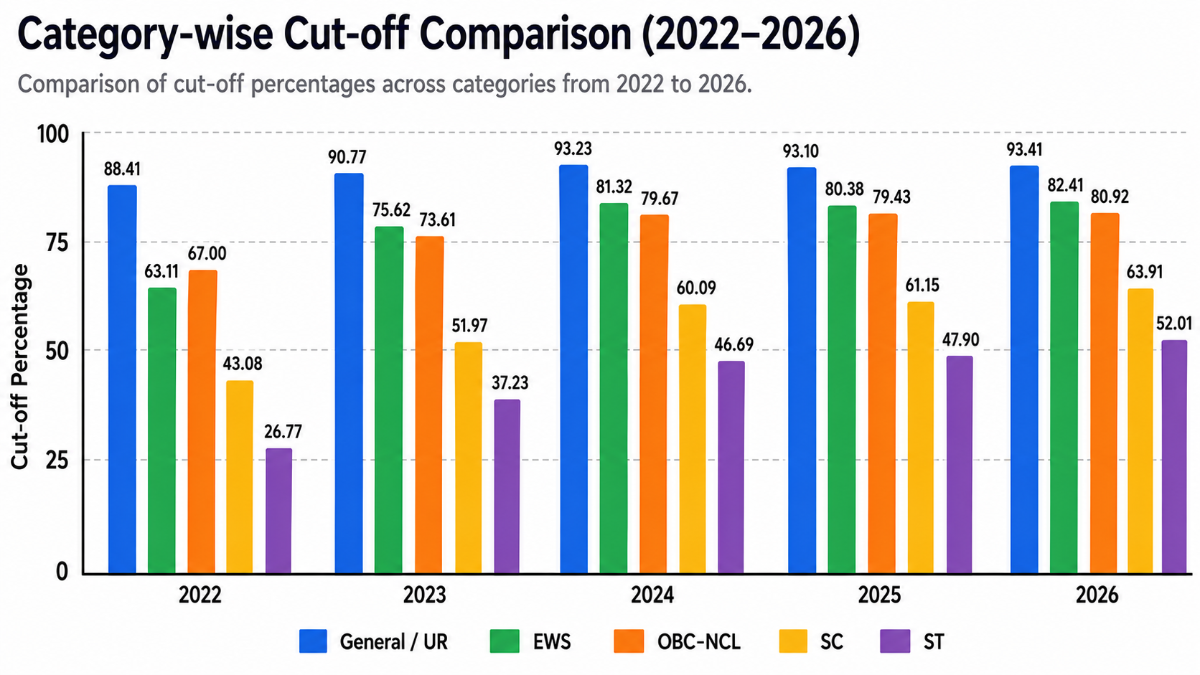
The trend over five years shows that the General category qualifying percentile has moved up by about 5 percentile points since 2022.
Previous Year Official JEE Main Cutoff
| Category | 2022 | 2023 | 2024 | 2025 | 2026 |
|---|---|---|---|---|---|
| General / UR | 88.41 | 90.77 | 93.23 | 93.10 | 93.41 |
| EWS | 63.11 | 75.62 | 81.32 | 80.38 | 82.41 |
| OBC-NCL | 67.00 | 73.61 | 79.67 | 79.43 | 80.92 |
| SC | 43.08 | 51.97 | 60.09 | 61.15 | 63.91 |
| ST | 26.77 | 37.23 | 46.69 | 47.90 | 52.01 |
Also Check: JEE Main Cutoff
What This Means for JEE Main 2027
- The General qualifying percentile has stayed in the 93 to 94 band for three years, so plan for at least 93.5 percentile
- In marks terms, that is roughly 90 to 110 marks out of 300, depending on your shift difficulty.
- SC and ST cutoffs have risen the fastest, by more than 25 percentile points since 2022.
Clearing the qualifying cutoff does not get you an NIT seat. For a top NIT CSE seat, you need a rank under about 2,000 in the General category.
Related Links:
JEE Main Marks vs Percentile vs Rank
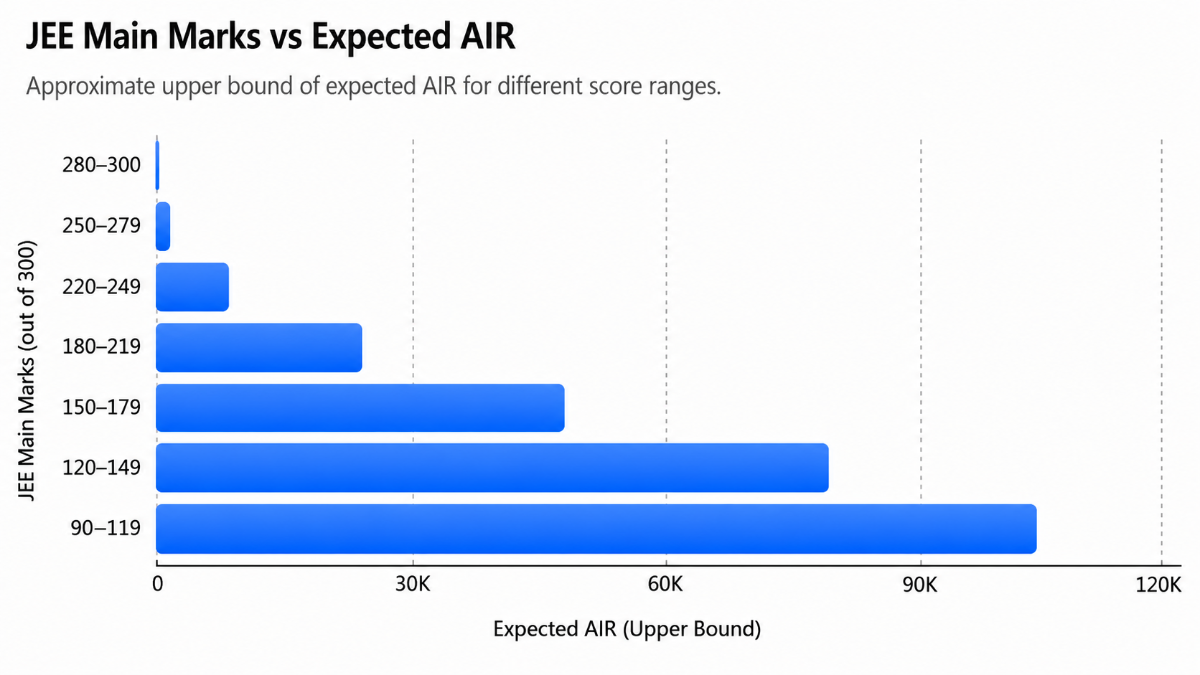
The NTA does not provide official Marks vs Rank vs Percentile data. The data provided below is based on the previous years' trends.
- Marks, percentile, and rank are three different things, and mixing them up leads to wrong targets.
- Your marks become a percentile through shift normalisation, and the percentile then becomes your All India Rank.
- Each 1.0 percentile band holds around 16,000 students, so a small change in marks moves your rank a lot in the middle range and very little at the top.
The expected Marks vs Percentile vs Rank data is provided below for candidates' reference:
| Marks (out of 300) | Expected Percentile | Expected AIR | What You Can Target |
|---|---|---|---|
| 280 to 300 | 99.99+ | 1 to 200 | Top ranks, safe JEE Advanced qualification |
| 250 to 279 | 99.90 to 99.99 | 200 to 1,600 | CSE in top NITs, almost all IIT branches |
| 220 to 249 | 99.50 to 99.90 | 1,600 to 8,000 | CSE and ECE in top NITs and IIITs |
| 180 to 219 | 98.50 to 99.50 | 8,000 to 24,000 | Core branches in top NITs, CSE in mid-tier NITs |
| 150 to 179 | 97.00 to 98.50 | 24,000 to 48,000 | Mid-tier NITs, IIITs and better GFTIs |
| 120 to 149 | 95.00 to 97.00 | 48,000 to 80,000 | Lower NITs, GFTIs and good state colleges |
| 90 to 119 | 93.50 to 95.00 | 80,000 to 1,05,000 | Around the JEE Advanced qualifying line |
Related Links:
JEE Main 2027 Counselling and Seat Matrix
JEE Main 2027 counselling will be conducted by the Joint Seat Allocation Authority (JoSAA) most likely from June 2027.
- JoSAA runs a single counselling for IITs, NITs, IIITs and GFTIs on its official website, josaa.nic.in.
- Your JEE Main rank is used for NITs, IIITs and GFTIs, while IIT and IISc seats are secured through JEE Advanced ranks.
JoSAA 2026 Seat Matrix for Reference
| Institute Type | Number of Institutes | Seats in 2026 | Admission Based On |
|---|---|---|---|
| IITs and IISc | 23 IITs and IISc Bengaluru | 18,951 | JEE Advanced rank |
| NITs | 31 | 25,162 | JEE Main rank |
| IIITs | 26 | 11,518 | JEE Main rank |
| GFTIs | 56 | 11,692 | JEE Main rank |
| Total | 138 | 67,323 | - |
Also Check: JEE Main Seat Matrix
How JoSAA Counselling Works
- Choice filling and locking: Register on the JoSAA portal, list your institute and branch preferences in order, and lock the list before the deadline
- Seat allotment rounds: Multiple rounds are held, and you can float, slide or freeze your allotted seat
- Reporting: Pay the seat acceptance fee and complete online document verification within the deadline
- CSAB special rounds: Vacant NIT, IIIT and GFTI seats are filled after JoSAA ends
NITs and GFTIs follow a 50 percent Home State Quota and 50 percent All India Quota split, which is why your state of eligibility on the application form matters.
Related Links:
How to Prepare for JEE Main 2027
With about six months left for Session 1, your JEE Main 2027 preparation should move from learning new chapters to building accuracy.
- Students should cover their syllabus by the end of November, and after that they should focus on revision.
- In December and January, candidates should focus on attempting mock tests and solving PYQs.
Month-Wise Plan for JEE Main 2027
- August to October 2026: Finish the remaining syllabus, revise Class 11 chapters once, and solve chapter-wise previous year questions.
- November 2026: Start subject-only full-length papers, then move to combined PCM papers by mid-month.
- December 2026: Take three to four full-length mocks a week at the actual shift timing, and review each paper the next morning.
- January 2027: Stop new content. Revise formula sheets, error logs and Inorganic Chemistry only.
- February to March 2027: Fix the weak areas your Session 1 scorecard exposes, then repeat the mock cycle.
Subject-Wise Strategy
- Physics: Build Mechanics first, since it feeds Rotational Motion, Gravitation and Waves. Modern Physics gives the highest marks per hour.
- Chemistry: Split time across Physical, Organic and Inorganic. NCERT alone covers most Inorganic and Organic questions.
- Mathematics: Calculus and Coordinate Geometry carry the most questions. Practise them daily, not in weekend blocks.
Best Books for JEE Main 2027
| Subject | Recommended Books | Purpose |
|---|---|---|
| Physics | NCERT Class 11 & 12, Concepts of Physics by H. C. Verma | Build fundamentals with NCERT and strengthen problem-solving skills with HCV. |
| Chemistry | NCERT (Inorganic), Organic Chemistry by M. S. Chouhan, Numerical Chemistry by P. Bahadur | NCERT for theory, M. S. Chouhan for Organic practice, and P. Bahadur for Physical Chemistry numericals. |
| Mathematics | NCERT, Objective Mathematics by R. D. Sharma or the Cengage Mathematics Series | Strengthen concepts first, then develop advanced problem-solving ability. |
| Practice | Previous 10 Years of JEE Main Question Papers (Chapter-wise + Full-Length) | Improve speed, accuracy, exam temperament, and identify frequently tested topics. |
Related Links:











Comments
Found 1016 Comments
The JoSAA 2026 category-wise top 20 percentile cutoff scores for various educational boards are officially compiled and published on the JoSAA portal (josaa.nic.in) during the active counseling cycle. They are made available alongside the business rules or just before the first seat allotment round begins.
With a Home State SC category rank of 10,421, you cannot get admission to the premier branches at NIT Surathkal, as its core closing ranks usually wrap up around 6,600. However, you can secure lower branches like Mining or Metallurgy in Special CSAB rounds, or look at other Tier-2 NITs.
With an EWS rank around 1,59,774 and female quota, admission to top NITs and IIITs is very unlikely through JoSAA. However, some lower-demand branches in newer GFTIs or seats available through CSAB special rounds may still be possible. Check the official JoSAA cutoff database and counseling rounds carefully before finalizing choices.
If you are using the CollegeDunia college predictor for the admissions, enter your CRL (Common Rank List) rank unless the portal specifically asks for a category rank. For EWS, OBC, SC, or ST candidates, some predictors provide a separate field for category rank. Use the rank type requested by the portal to get the most accurate prediction.
For JEE Main counselling (like JoSAA or CSAB), you must enter your General Rank (CRL) in the form, even if you belong to a reserved category. The portal automatically detects and applies your Category Rank based on your certificate to allocate seats under your specific category quota.
For JoSAA Counselling, General category students need to qualify JEE Main cutoff percentile to participate for NITs, IIITs, and GFTIs. A 50 percentile student may not qualify for top colleges through JoSAA, but can still explore private colleges or state counselling options where admission chances are comparatively better.
With 92.11 percentile in JEE Main 2026 and OBC-NCL category, you may expect lower/mid GFTIs for CSE/ECE through JoSAA/CSAB, especially in later rounds. Possible options include Assam University, Gurukula Kangri Vishwavidyalaya, and some Northeast institutes. CSE chances are limited; ECE/electrical-related branches are comparatively more achievable.
With a 92.13 percentile, OBC rank 40652, and CRL 122213, mechanical in top NITs is difficult. You may get chances in newer NITs like NIT Agartala, NIT Meghalaya, NIT Mizoram, NIT Arunachal Pradesh or NIT Uttarakhand under home state or OBC quota, in lower branches or allied engineering.
For JEE Main, top 20 percentile means your board marks must be within the top 20% of your board or meet minimum marks (75% general and 65% reserved). Improvement exams are accepted; best marks are considered. Admission to NITs and IIITs depends on meeting these eligibility criteria.
With an 88.03 percentile in the OBC-NCL category, securing a seat in a top-tier NIT is challenging. However, you have a chance at North-Eastern NITs (like Mizoram or Nagaland) or newer NITs through Home State quota or spot rounds (CSAB) for branches like Civil or Metallurgical Engineering.
With a 97th percentile in JEE Main 2026 (estimated rank 32,000–35,000), you have excellent chances for core branches in mid-tier NITs and tech branches in several IIITs. According to previous cutoff trends, the options include NIT Nagpur (Mechanical/Civil), NIT Jalandhar (Electrical), and NIT Raipur (IT/Electrical). You can also target IIIT Pune, IIIT Kota, and IIIT Sri City for ECE or newer specialization tracks. Additionally, PEC Chandigarh and BIT Mesra remain strong contenders for various engineering disciplines at this percentile level
JEE Main is used for admission to undergraduate engineering and architecture courses in India. It is the qualifying exam for JEE Advanced, required for IITs, and is accepted by NITs, IIITs, and many government and private colleges for B.Tech, B.E, and B.Arch admissions.
The number of mocks offered is mentioned below:
The Collegedunia JEE Mains test series offers online mock tests, chapter-wise and full-syllabus practice with instant scorecards and detailed solutions based on the latest pattern, which can help in timed practice and performance tracking.
You can check here for the JEE Main Question Paper 2025 - Download JEE Main Previous Year Question Paper with Solutions and Answer key.
The mock tests on Collegedunia (for exams such as JEE Main, NEET, CUET, CAT, etc.) are available for free online, offering instant access and downloadable PDF options, allowing you to practice without incurring any fees. These free tests help you track performance and improve your preparation
Yes, Collegedunia is a free website. You can browse information on colleges, courses, fees, admissions, exams, and placements without paying. Registration is optional for personalized features like shortlisting colleges, applying online, or receiving alerts; accessing basic course and college details does not require any payment.
You can check here for the JEE Main Mock Test- Attempt Free Chapterwise-test, Sectional-test, and Full-length test.
As a beginner, start with chapter-wise or sectional mock tests first to build basics, then move to full-length CUET mocks that simulate the real exam pattern. Use Collegedunia’s free mocks & PDFs, practice weekly, check your mistakes, and improve gradually to manage time and accuracy.