




JEE Main Collisions and Centre of Mass Handwritten Notes, free to download as a 20-page PDF. The topic is worth about 4 to 8 marks and takes roughly one day to learn, so treat it as a single focused sitting.
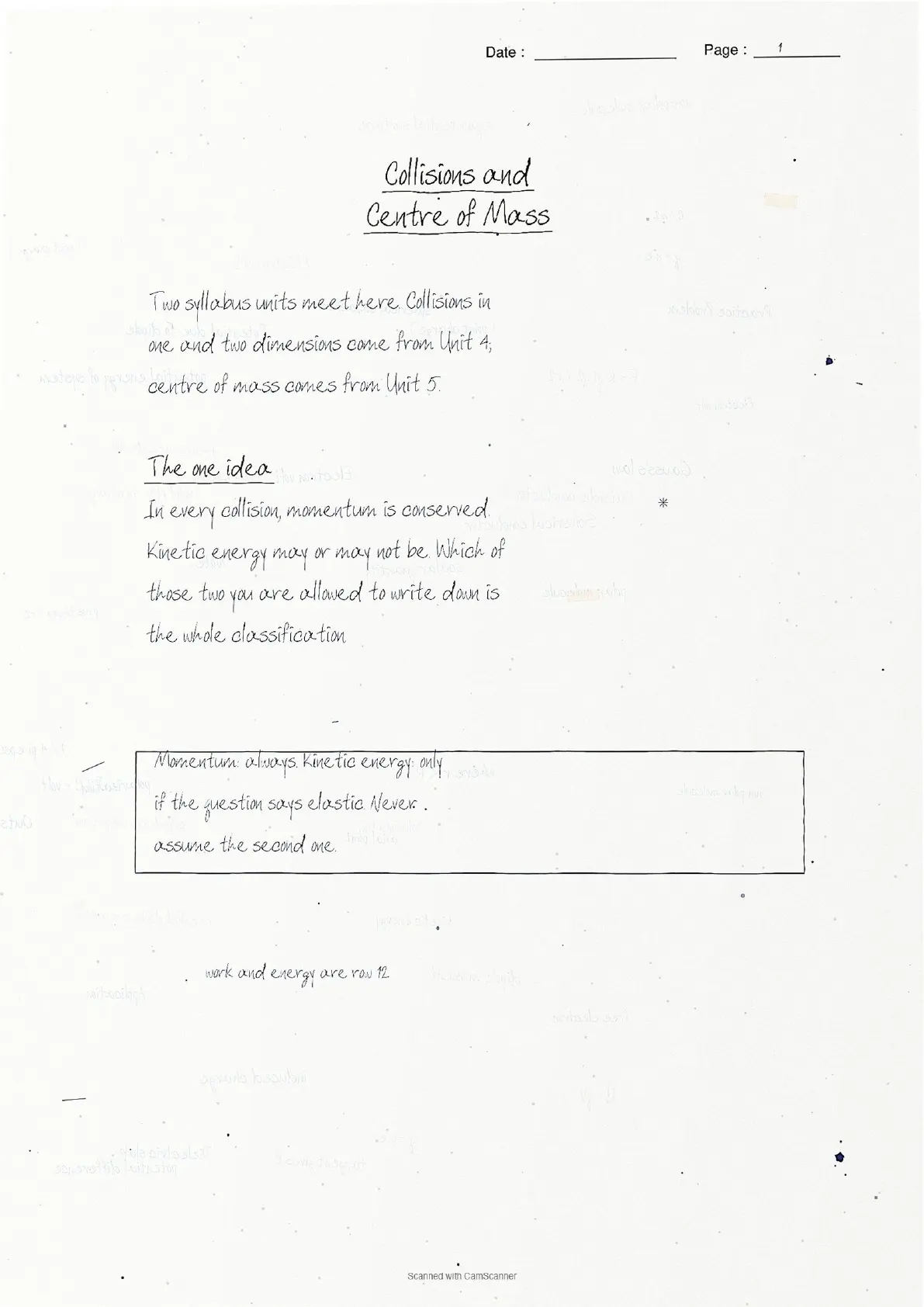
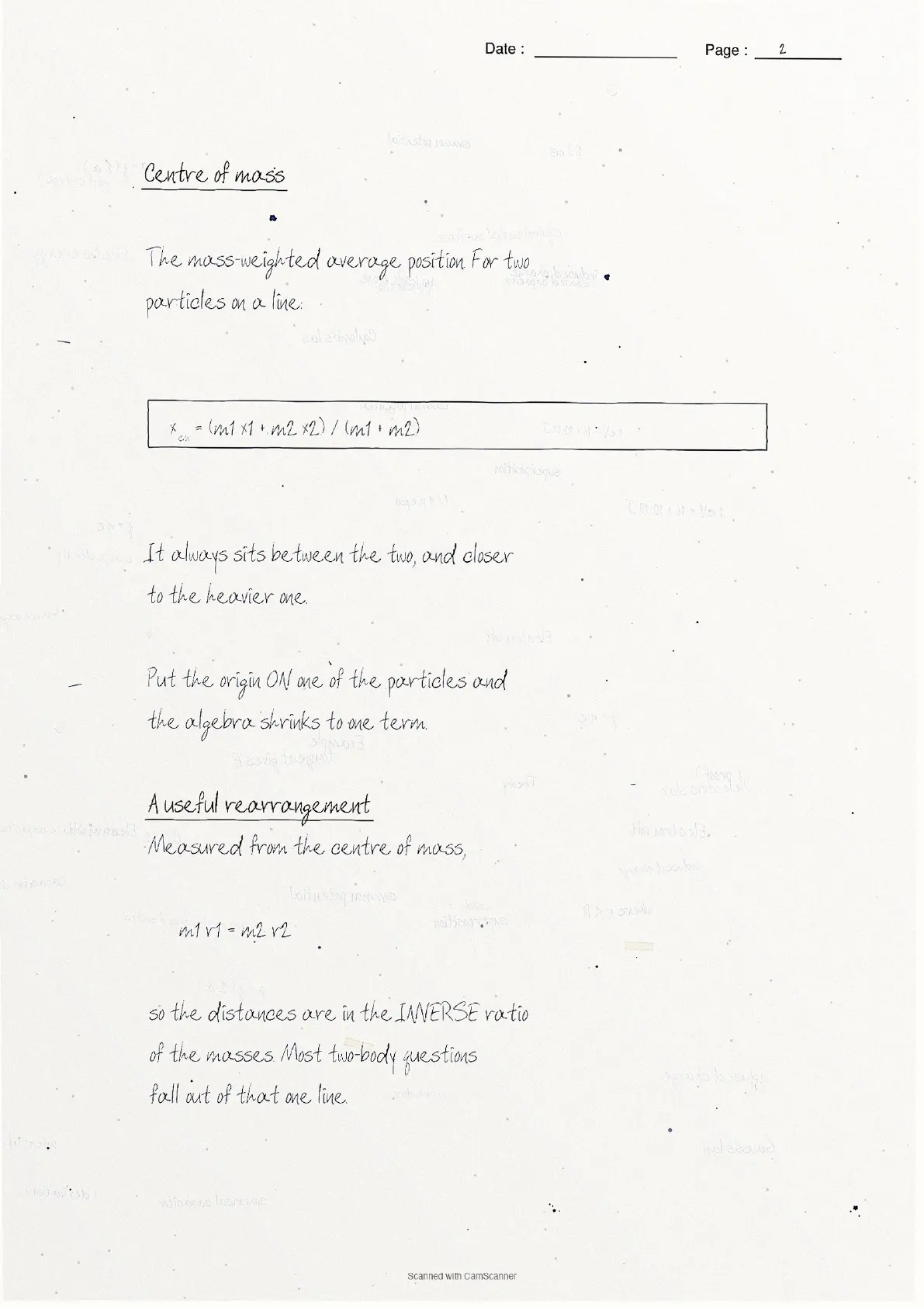
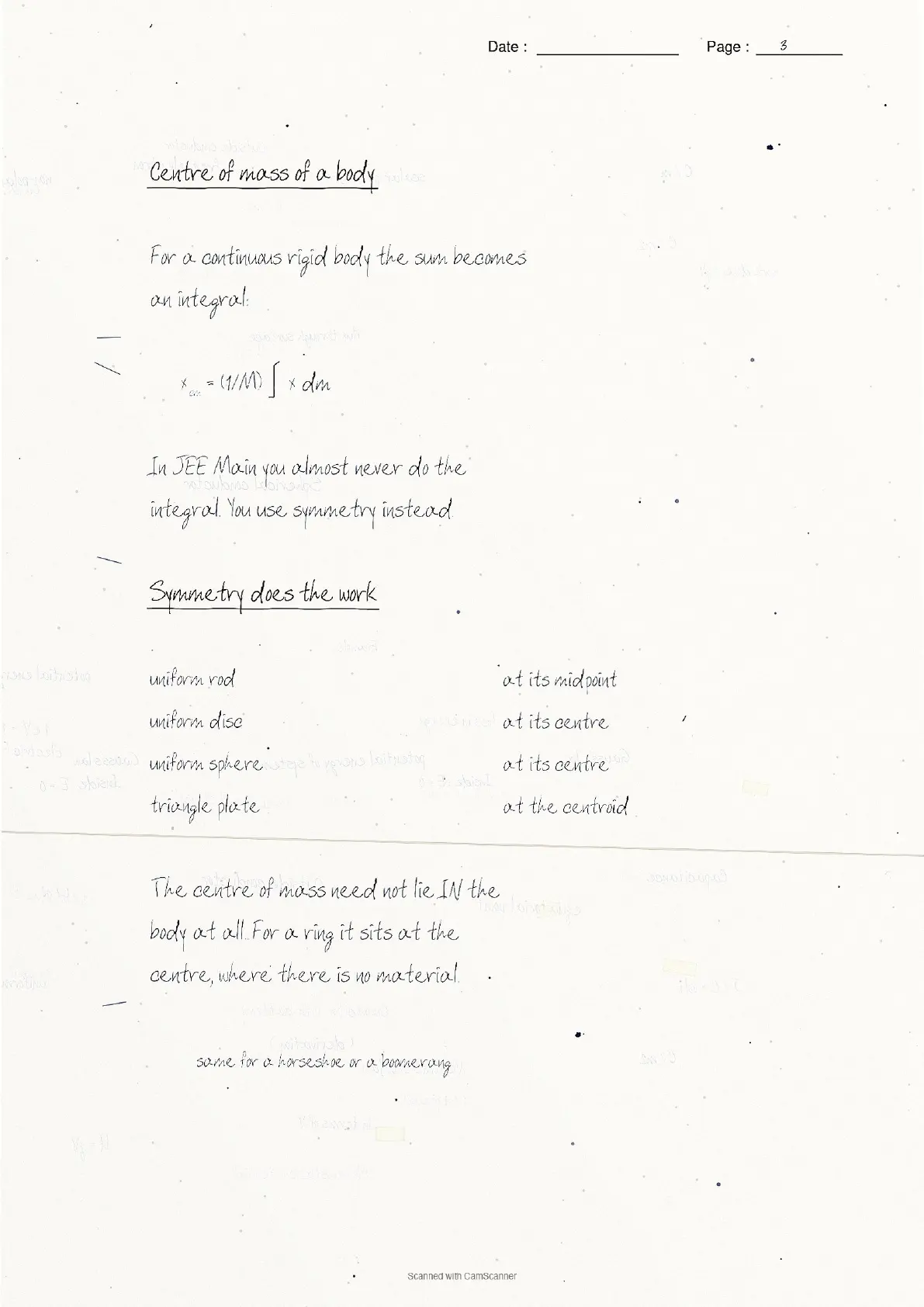
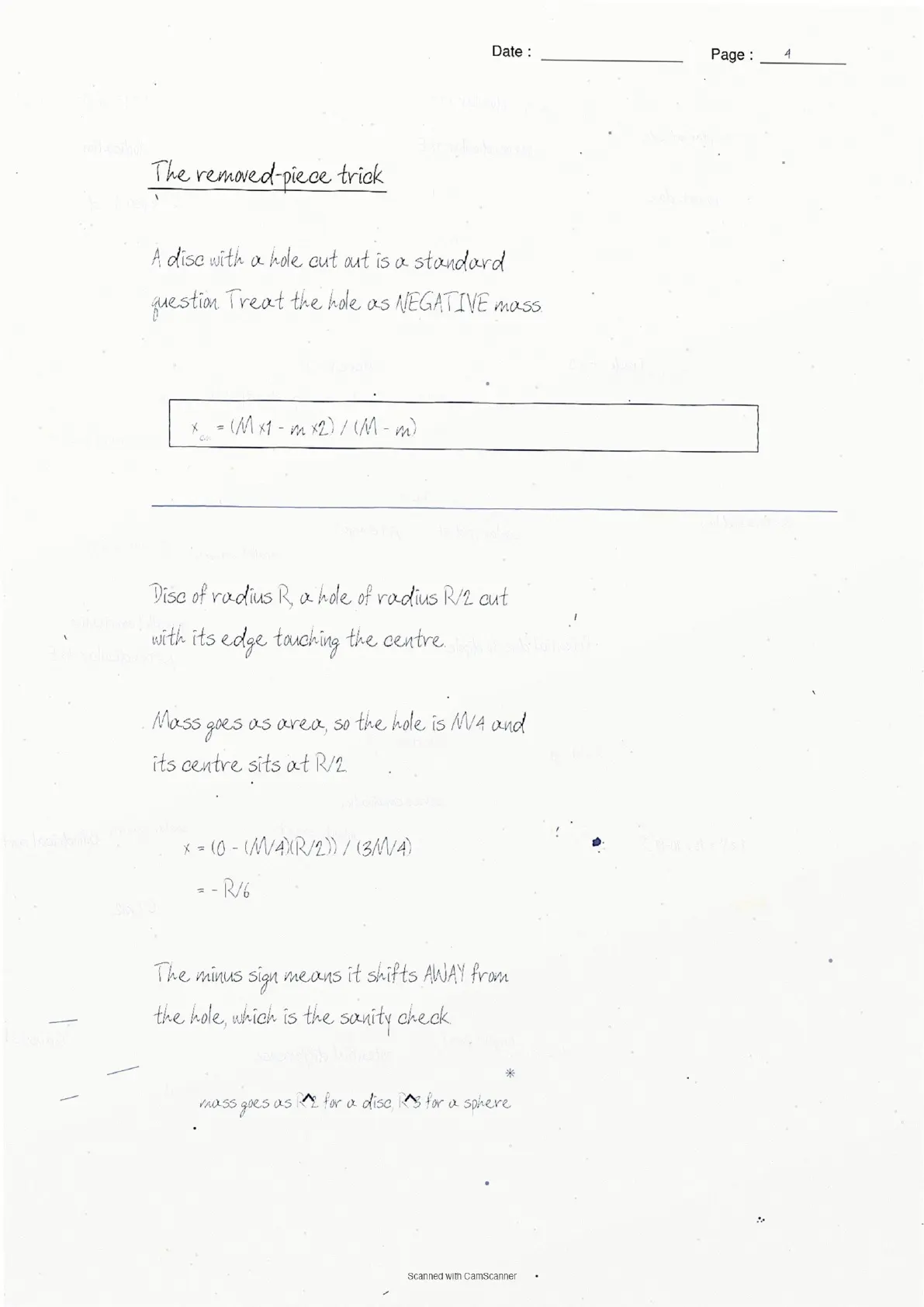
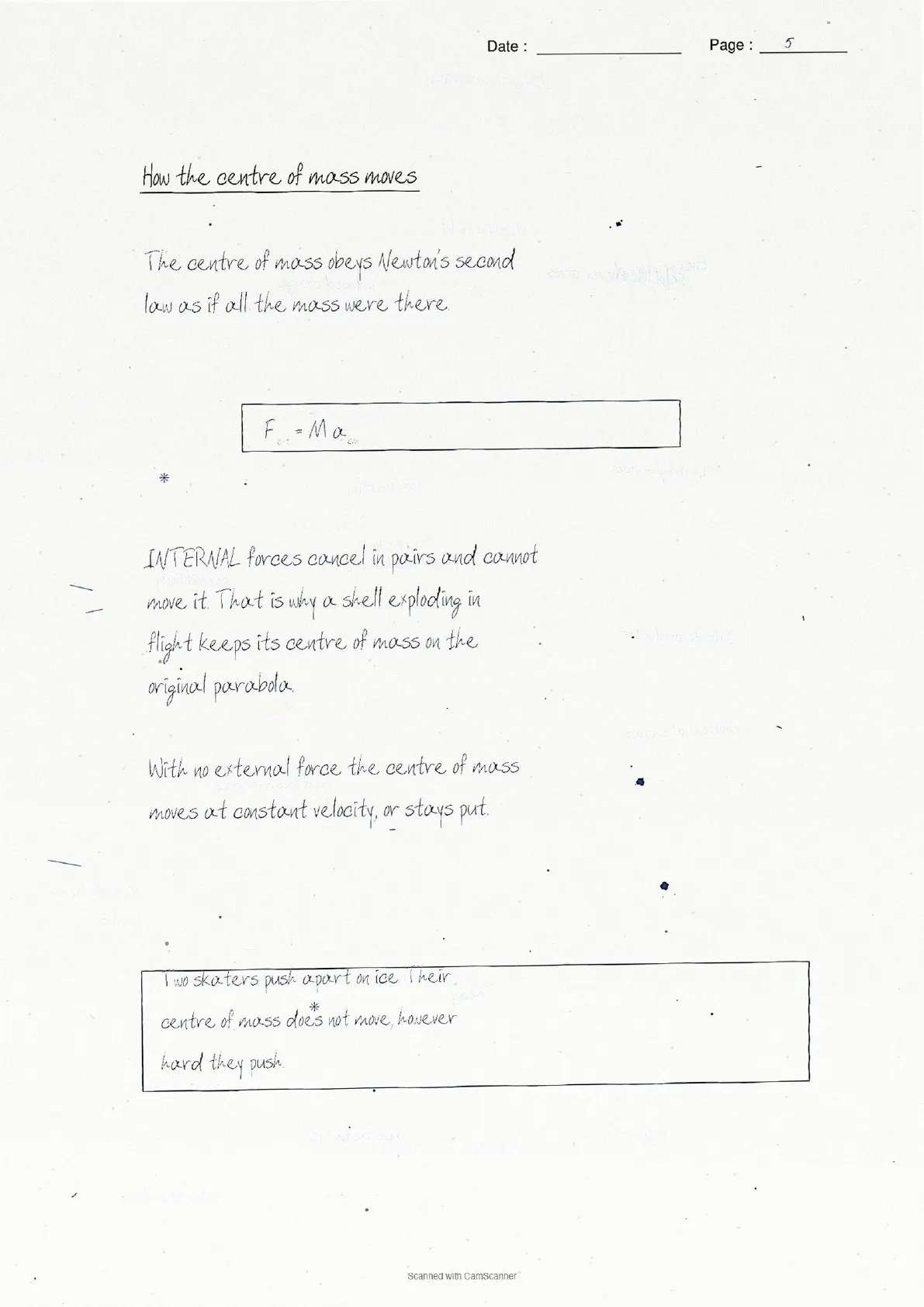
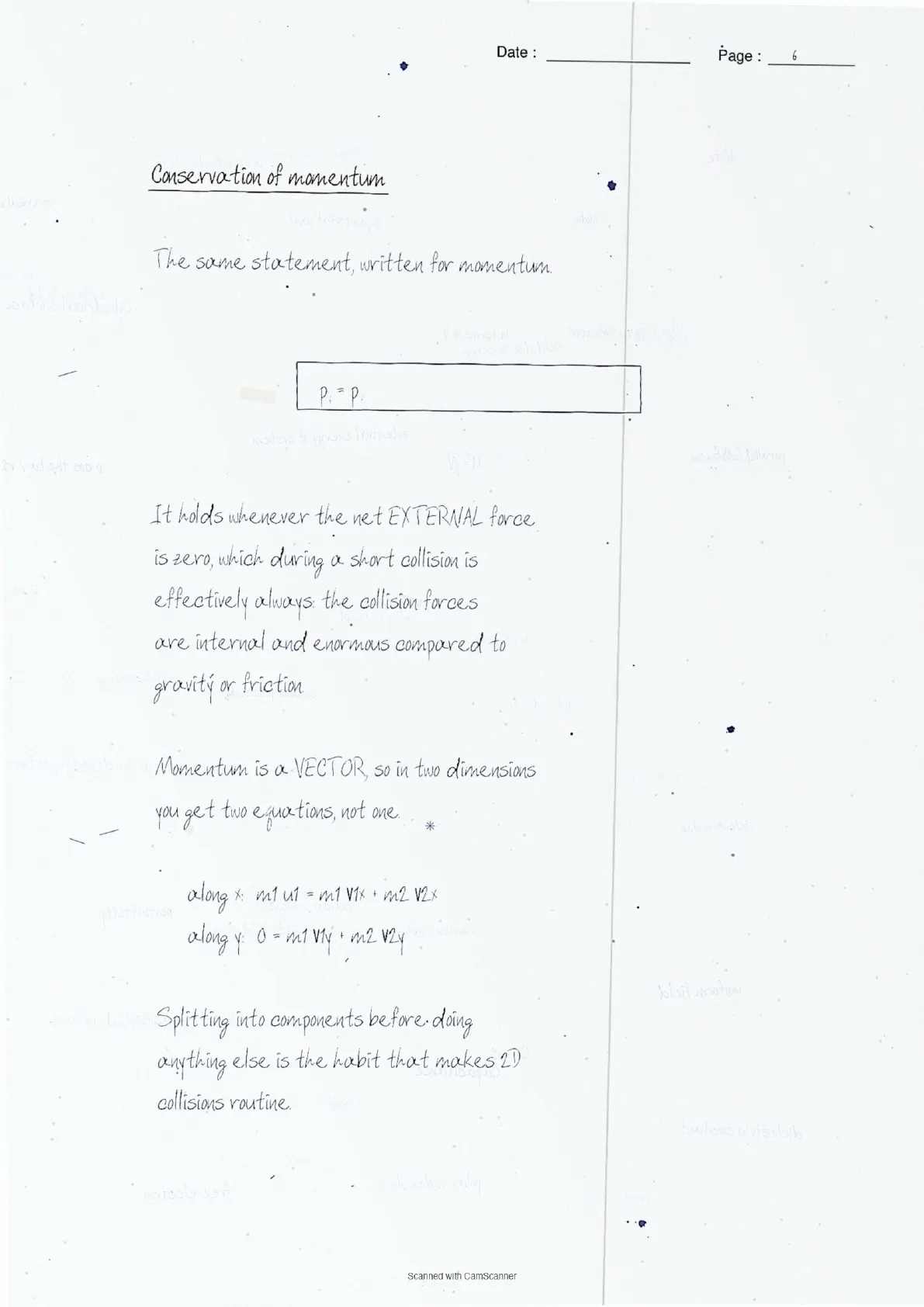
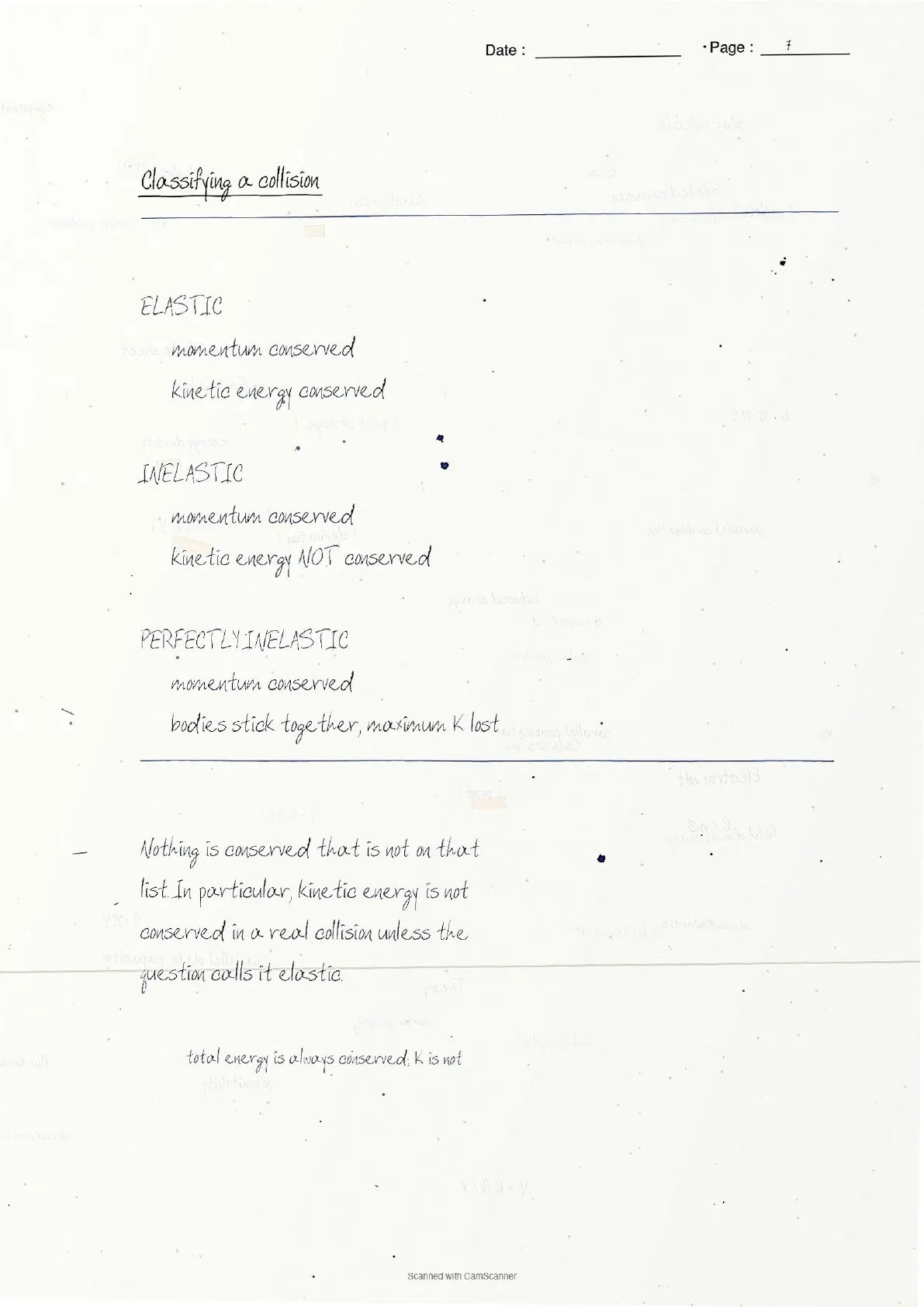
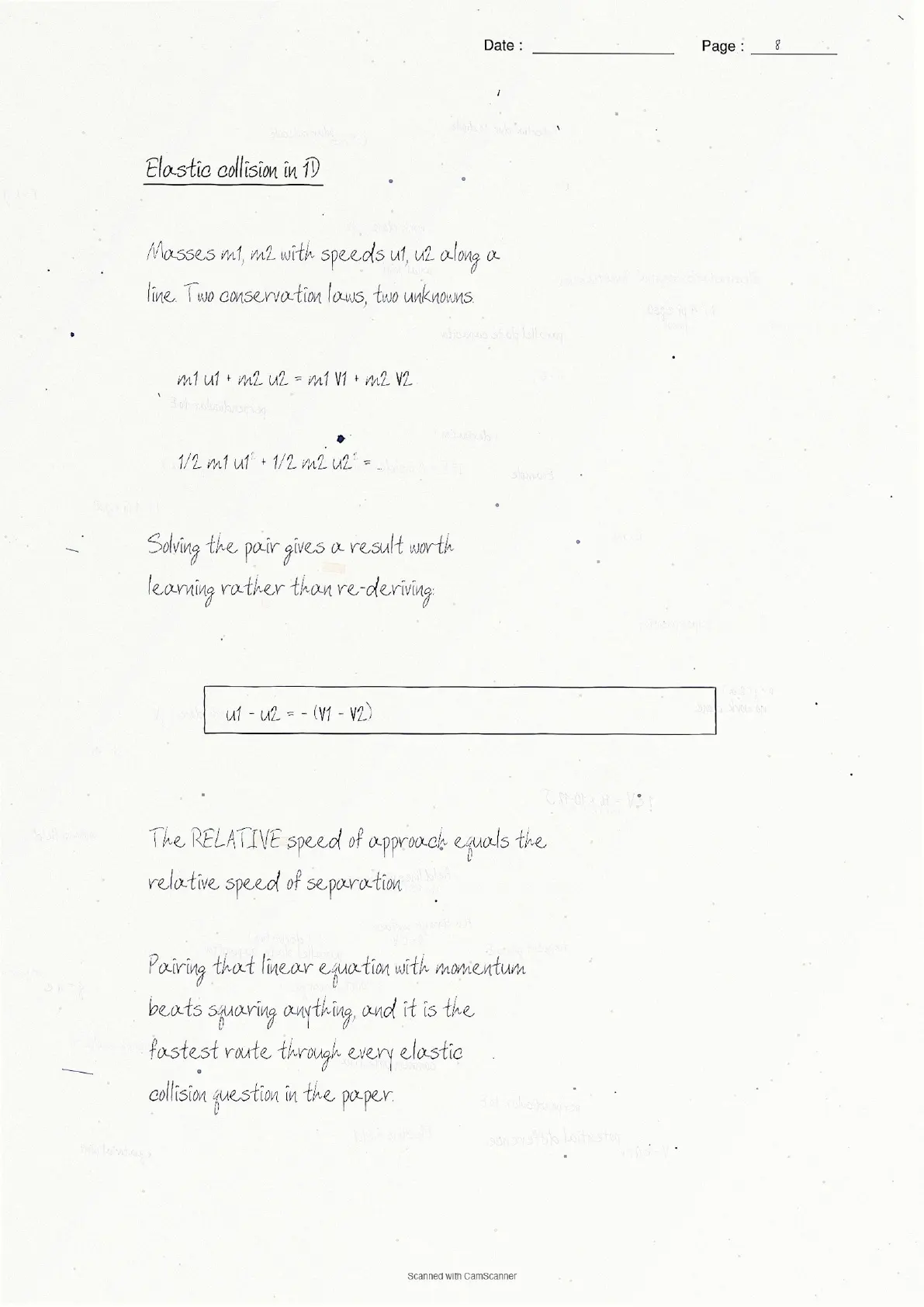
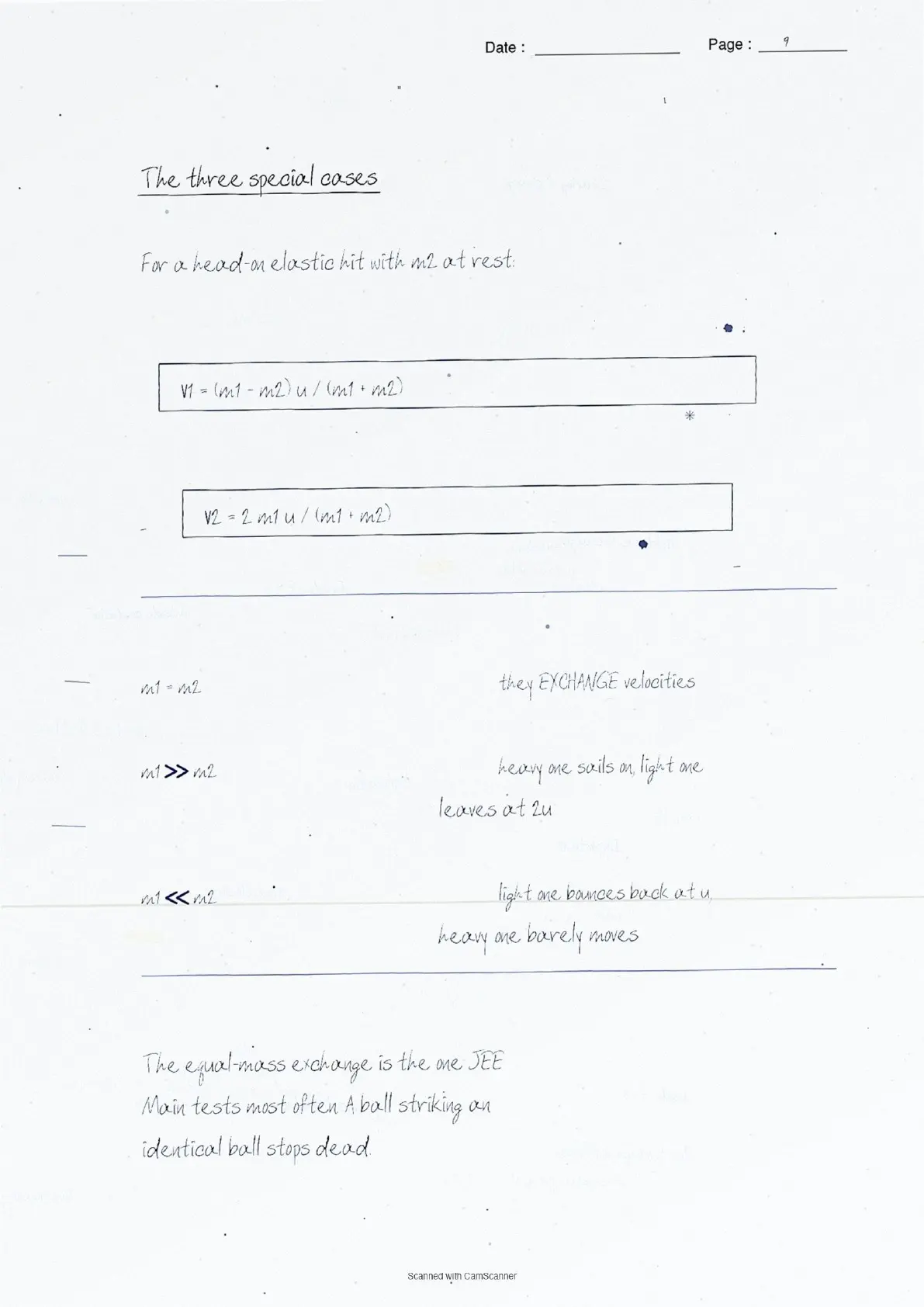
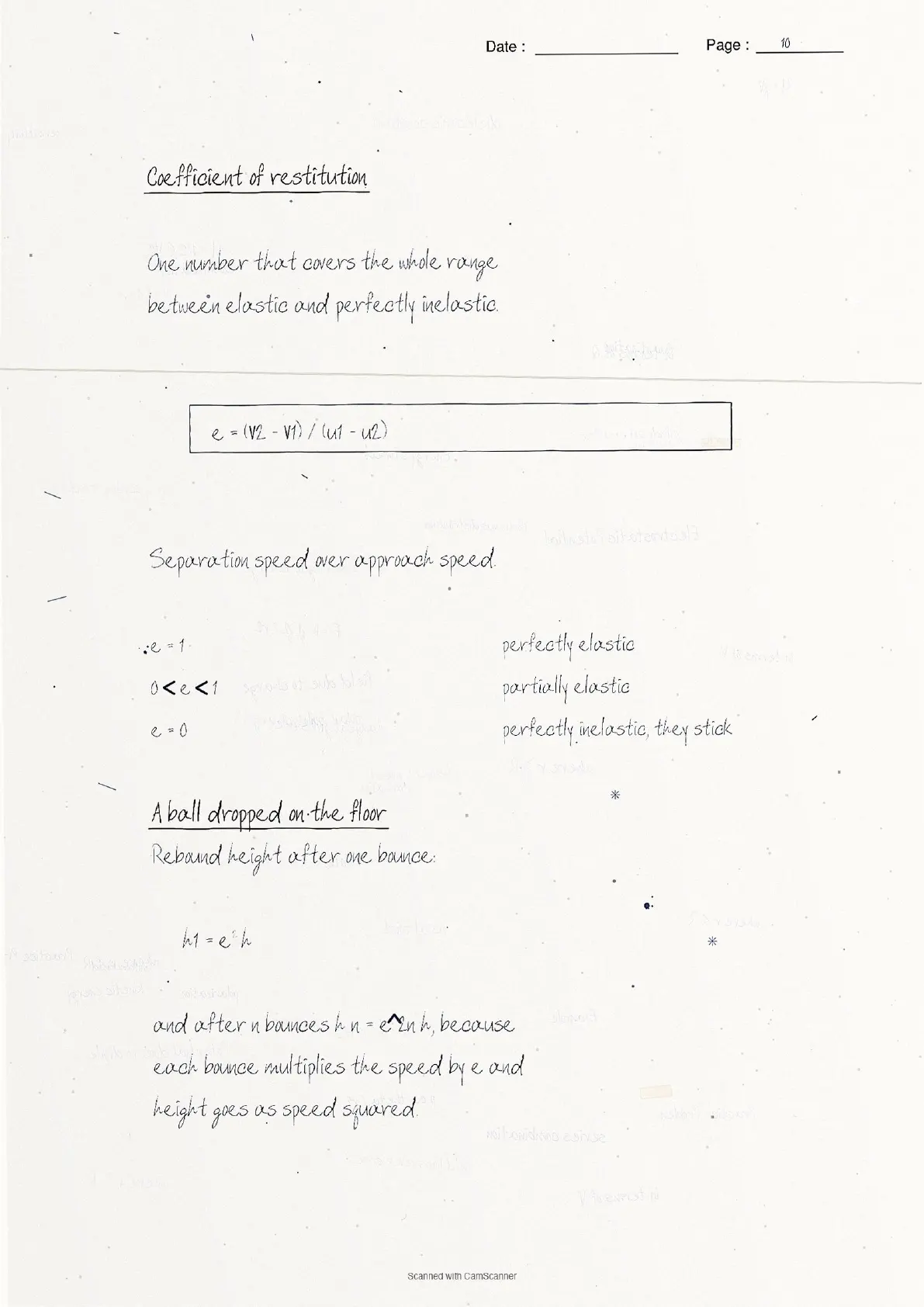
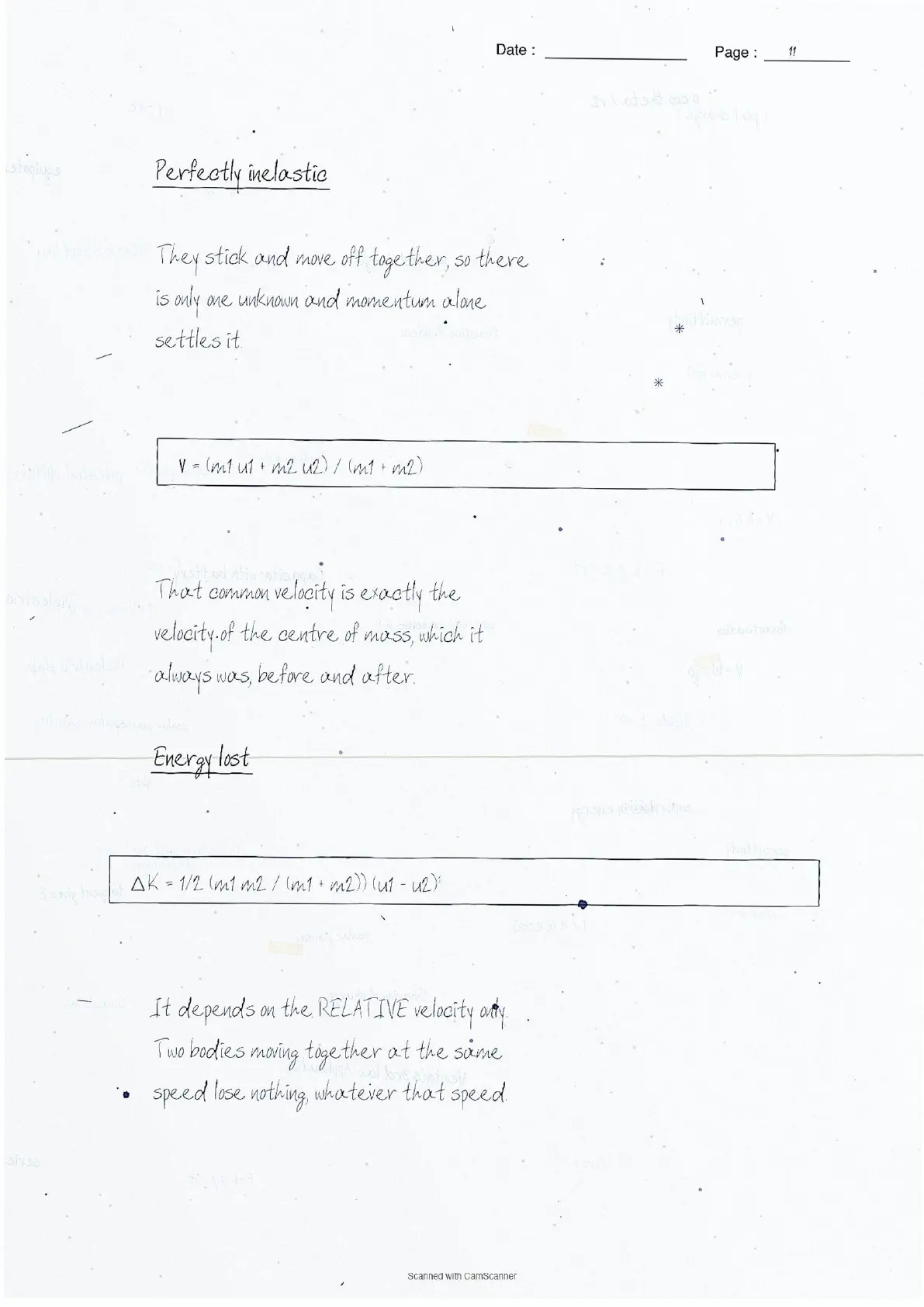
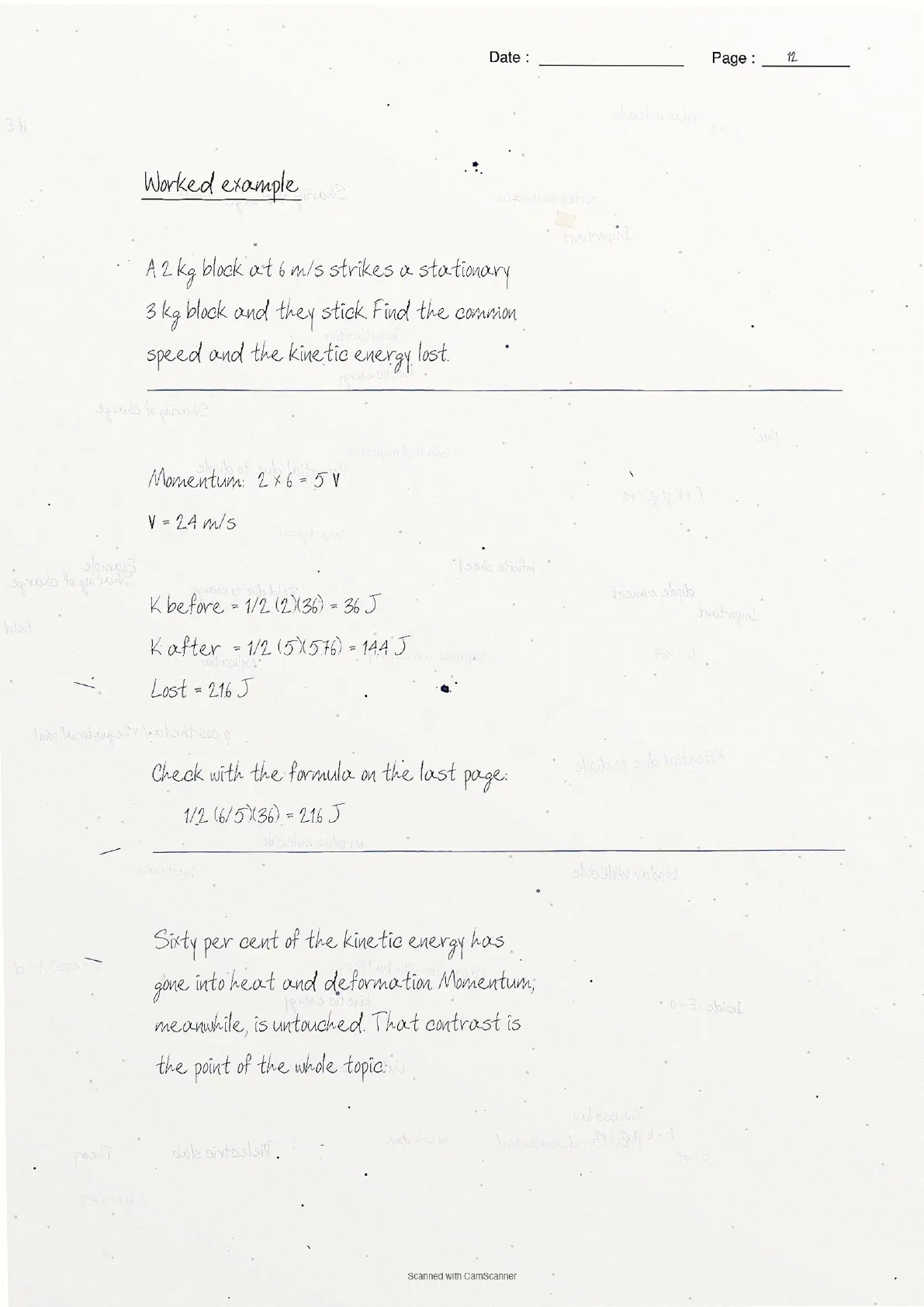
The notes are scans of a real notebook, so they read the way a topper's own pages do: short lines, boxed formulas, and a margin note where something is easy to get wrong.
JEE Main Collisions Weightage
This topic straddles two official units. NTA lists collisions under Unit 4 and centre of mass under Unit 5, and they are almost always asked together, so the notes treat them as one chapter.
| Pages | What is on them |
|---|---|
| 2 to 5 | Centre of mass, including the removed-piece trick |
| 6 to 7 | Momentum conservation and classifying a collision |
| 8 to 10 | Elastic collisions in one dimension, restitution |
| 11 to 12 | Perfectly inelastic collisions and energy lost |
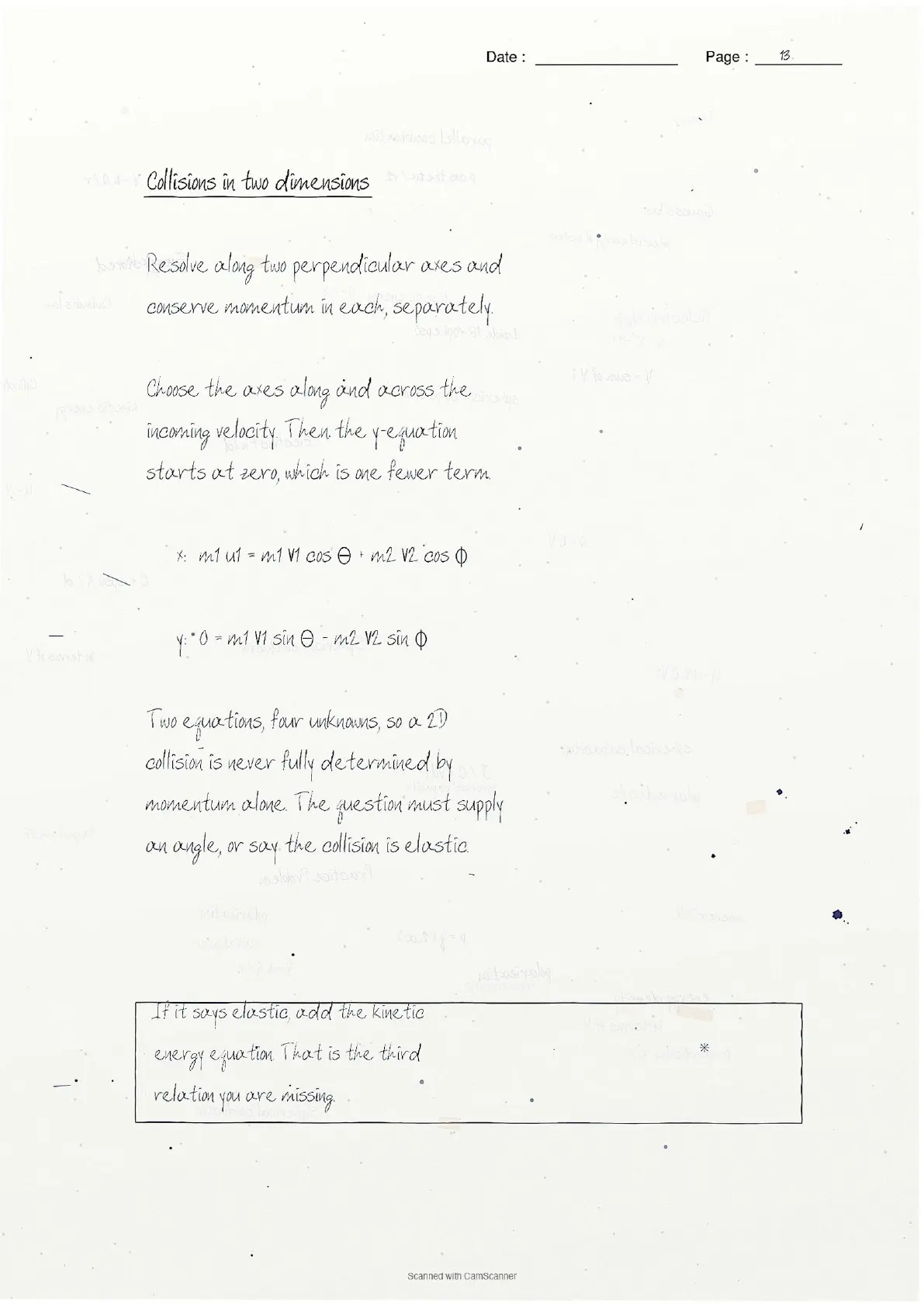
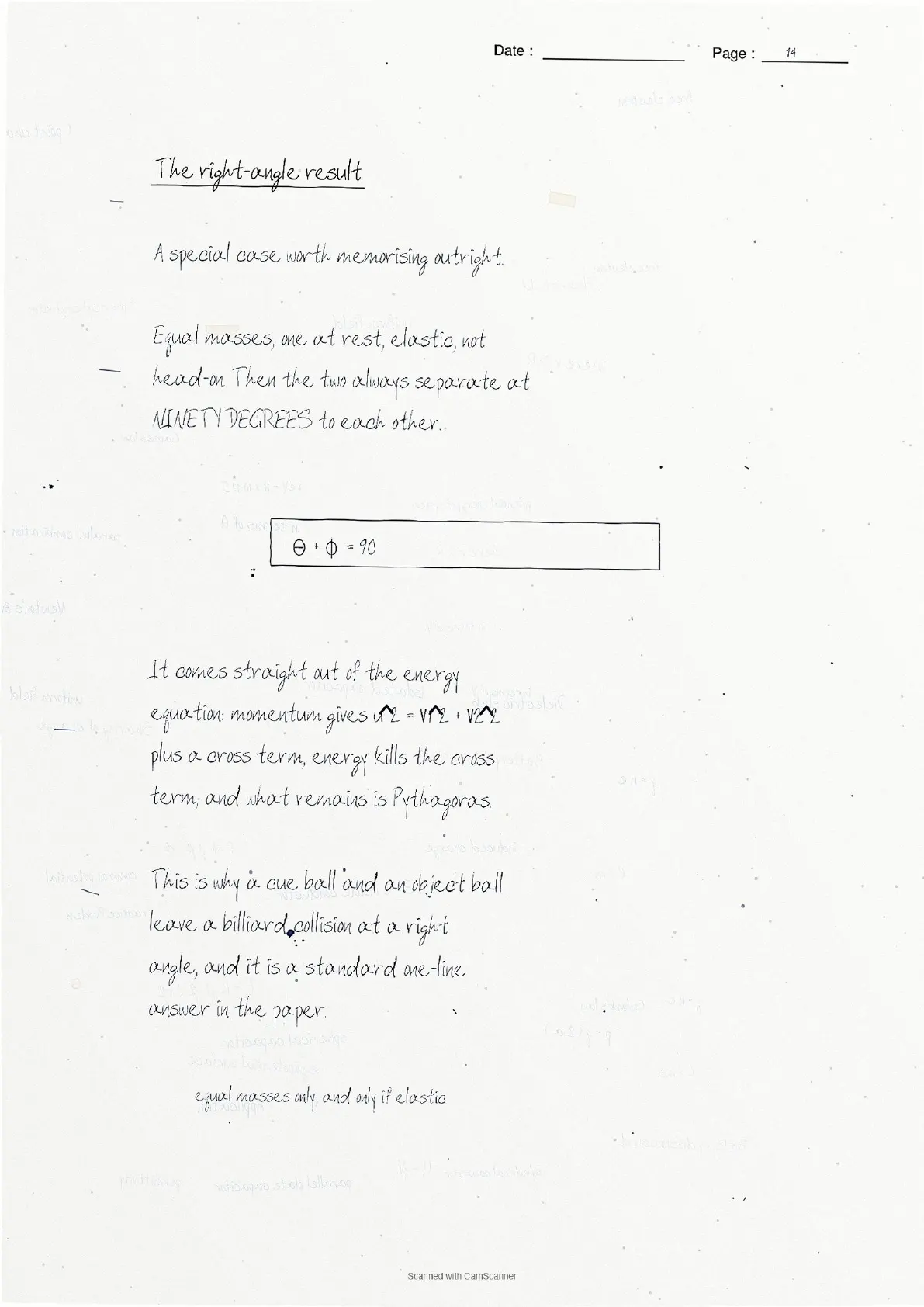
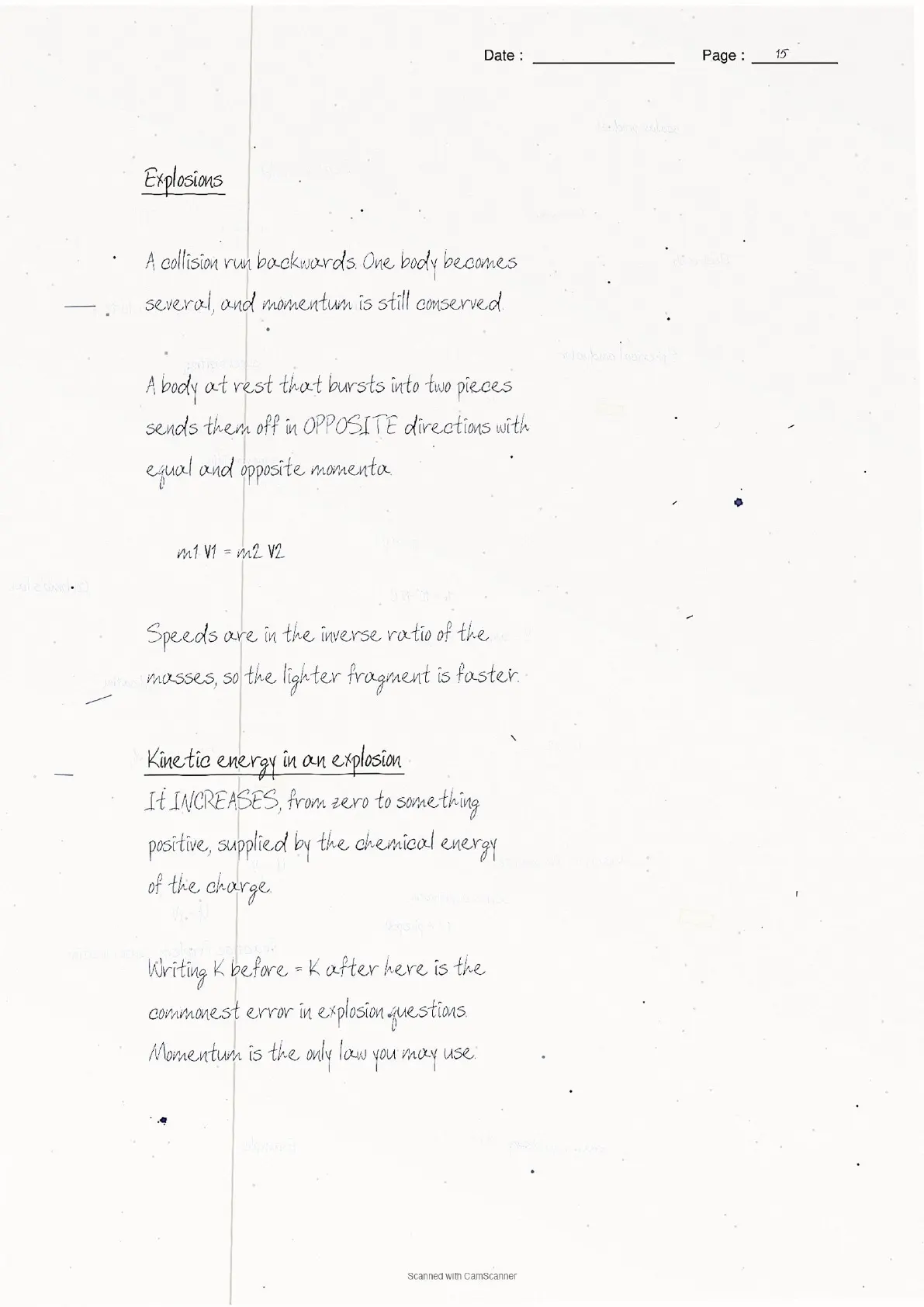
| 13 to 15 | Two dimensions, the right-angle result, explosions |
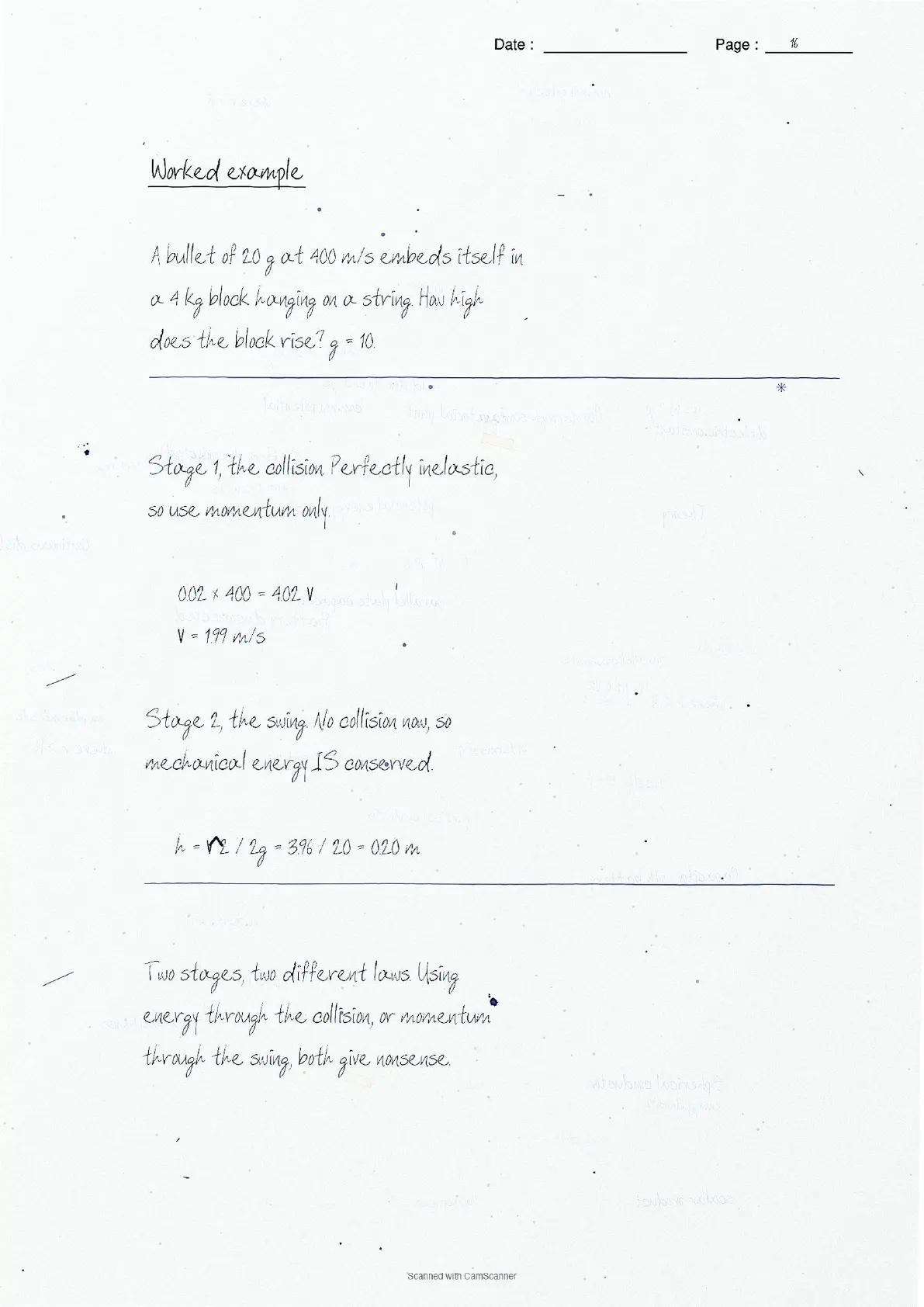
| 16 to 20 | Worked examples, mistakes and practice |
What the Notes Cover
- Centre of mass of a two-particle system and of a rigid body
- Symmetry shortcuts, and the negative-mass trick for a body with a hole cut out
- How the centre of mass moves, and why internal forces cannot shift it
- Conservation of momentum, resolved into components
- Elastic collisions in one dimension, and the relative-speed result
- The coefficient of restitution, and rebound heights
- Perfectly inelastic collisions and the energy they lose
- Collisions in two dimensions, and explosions
How to Approach the Chapter
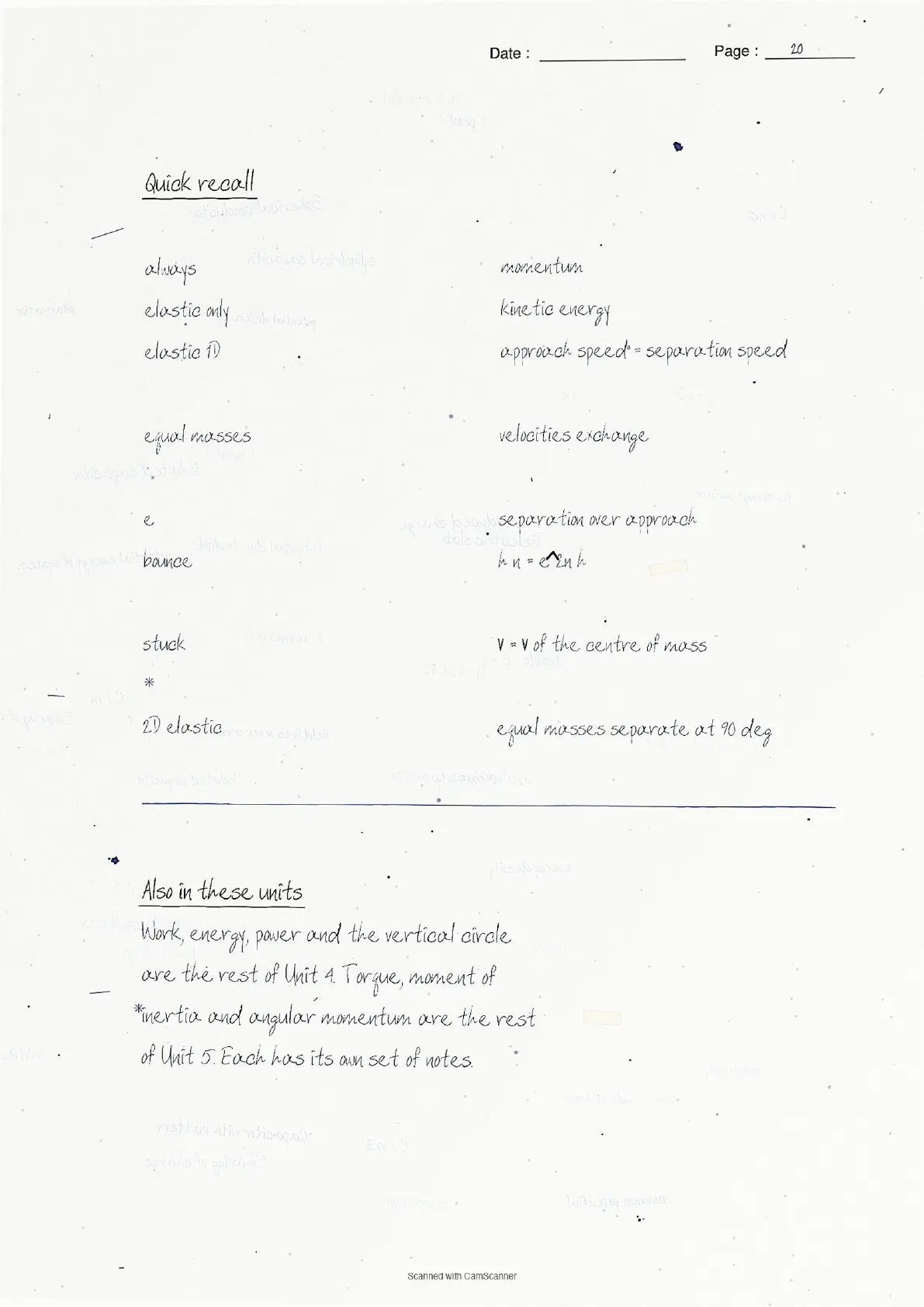
One question settles almost every problem here: which conservation law am I allowed to write down? Momentum, always. Kinetic energy, only if the question says elastic. Getting that decision right first is worth more than any algebra.
For an elastic head-on collision, do not square anything. The relative speed of approach equals the relative speed of separation, and pairing that linear equation with momentum is far quicker than solving two quadratics.
Multi-stage problems, like a bullet embedding in a hanging block, need different laws in different stages. Momentum through the collision, energy through the swing. Using either one for both gives nonsense.
Common Mistakes
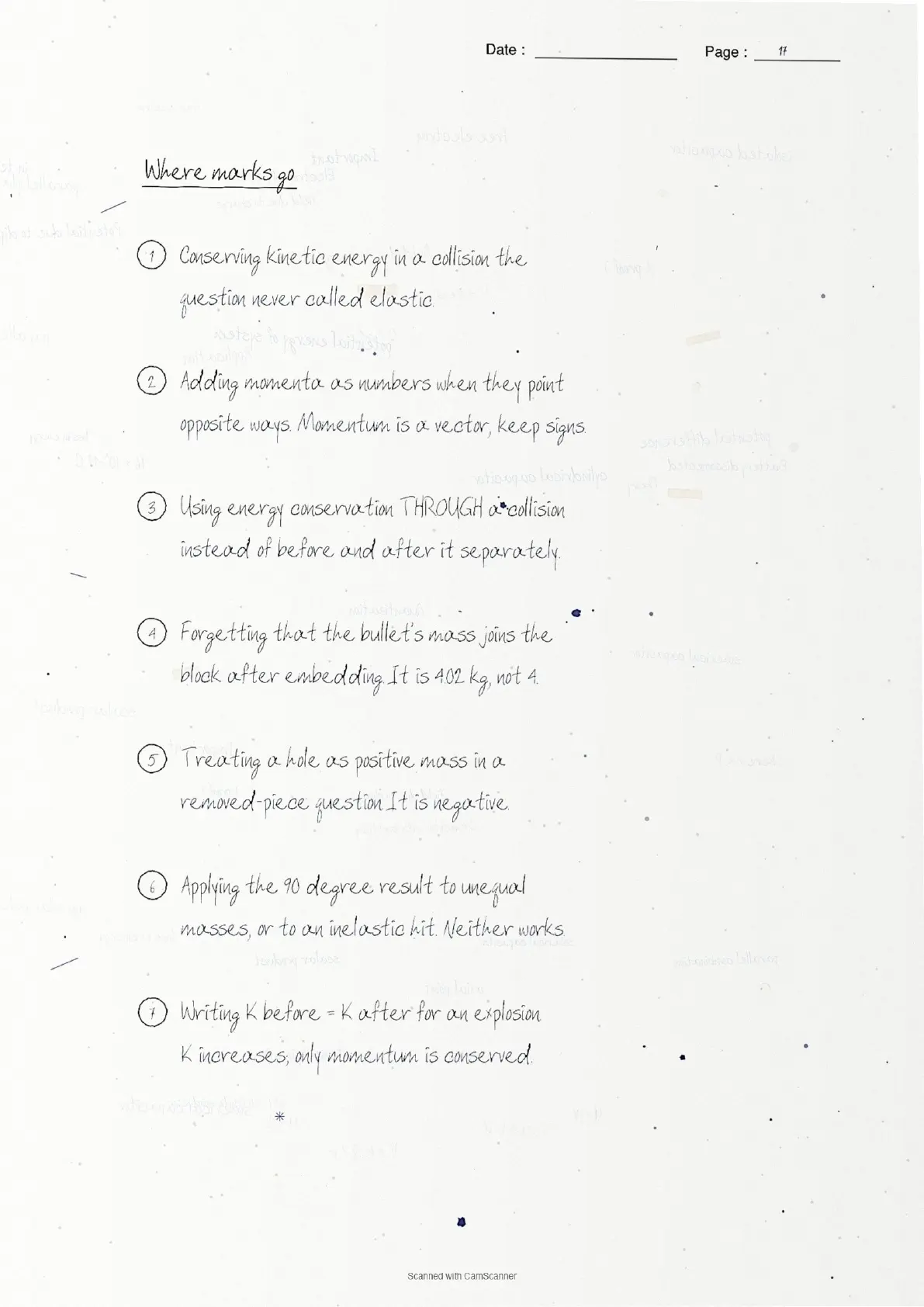
- Conserving kinetic energy in a collision the question never called elastic
- Adding momenta as numbers when they point opposite ways
- Forgetting that the bullet's mass joins the block after embedding
- Treating a hole as positive mass in a removed-piece question
- Applying the 90 degree result to unequal masses, or to an inelastic hit
- Writing K before equals K after for an explosion. K increases
Video Revision
Source: JEE Wallah
How to Use These Notes
Page 7 is the one to memorise: the three-way classification of a collision and what is conserved in each. Everything else in the chapter follows from getting that right.
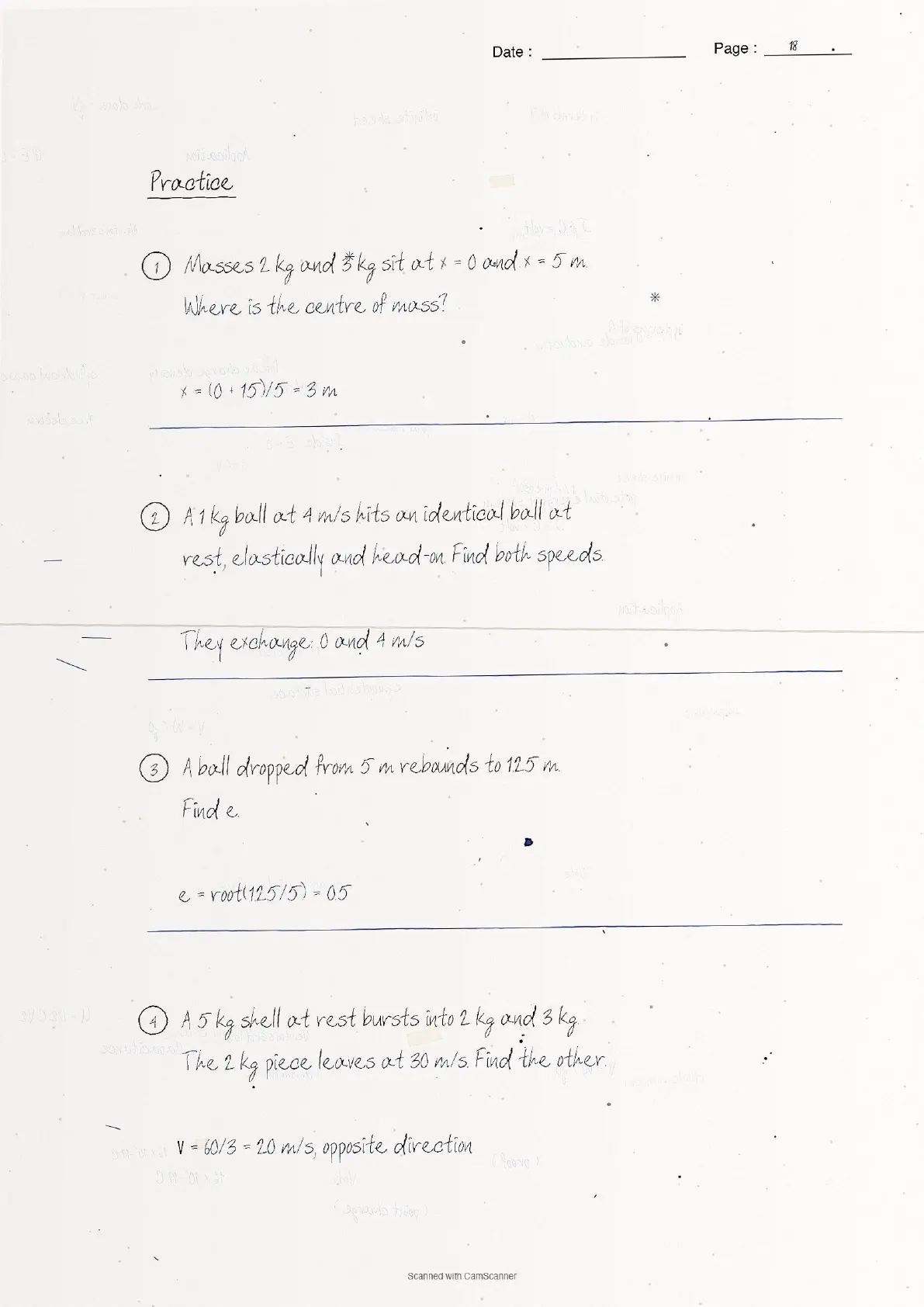
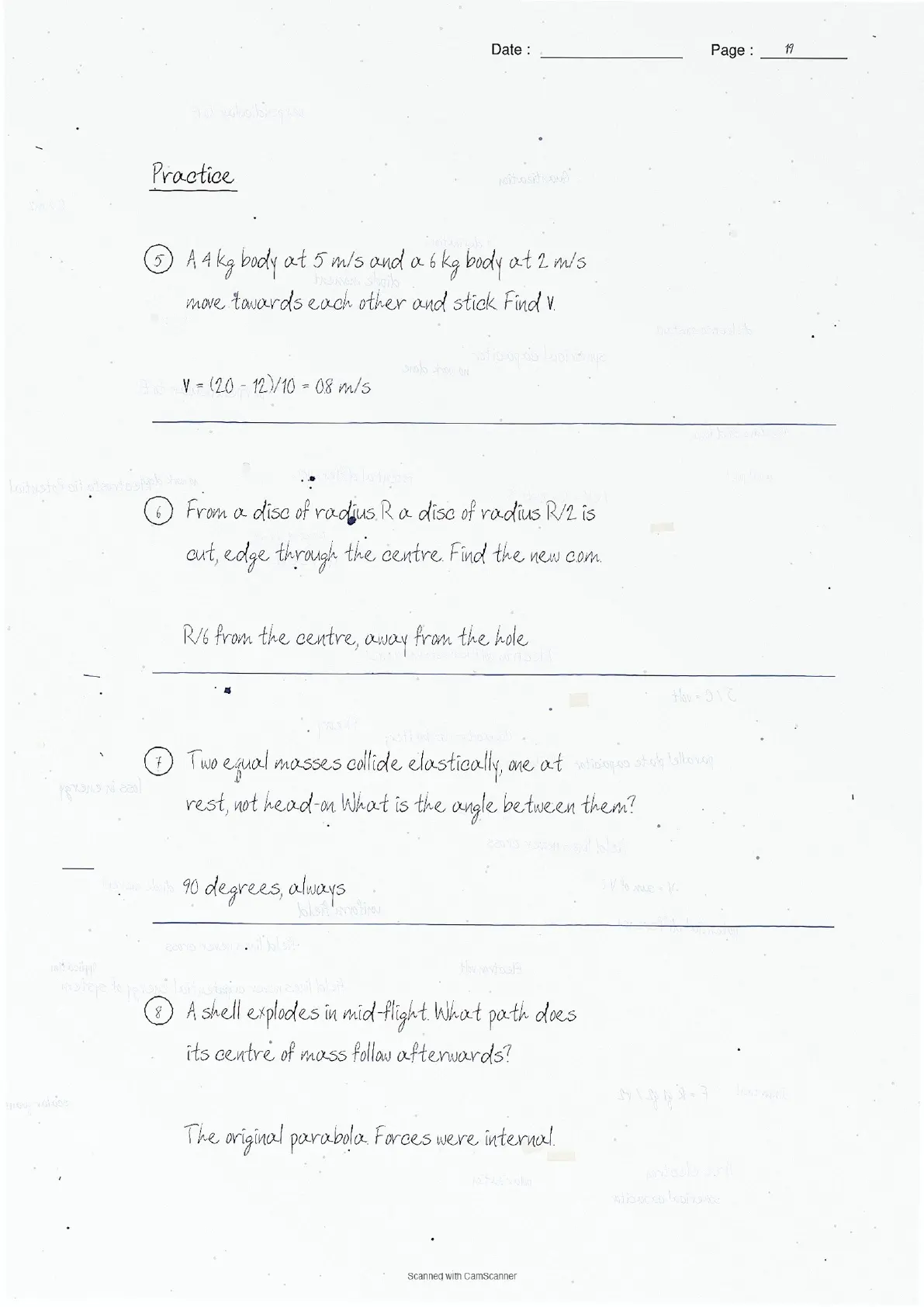
Page 20 is a recall grid you can use as a last-minute revision sheet, and pages 18 and 19 carry eight practice questions with worked answers.
The rest of Unit 4, work and energy, is covered in its own set of notes.
JEE Main Collisions and Centre of Mass Notes FAQs
Ques. How many questions come from collisions in JEE Main?
Ans. Usually one per session, sometimes two when centre of mass is asked separately. Both sit inside Physics, which carries 25 of the 75 questions in the paper.
Ques. Which unit does centre of mass belong to?
Ans. Unit 5, Rotational Motion, where NTA lists the centre of mass of a two-particle system and of a rigid body. Collisions are Unit 4. The notes cover both because questions rarely separate them.
Ques. What is conserved in a collision?
Ans. Momentum, always. Kinetic energy only if the collision is elastic. In a perfectly inelastic collision the bodies stick together and the loss of kinetic energy is the largest possible.
Ques. What is the fastest way to solve an elastic collision?
Ans. Use the relative-speed result: the speed of approach equals the speed of separation. Pairing that with momentum conservation gives two linear equations instead of a quadratic.
Ques. Can the notes be downloaded free?
Ans. Yes. All 20 pages can be read on this page and downloaded at no cost.



Comments