




JEE Main Work Energy and Power Handwritten Notes, free to download as a 20-page PDF. The topic is worth about 4 to 8 marks and takes roughly one day to learn, so treat it as a single focused sitting.
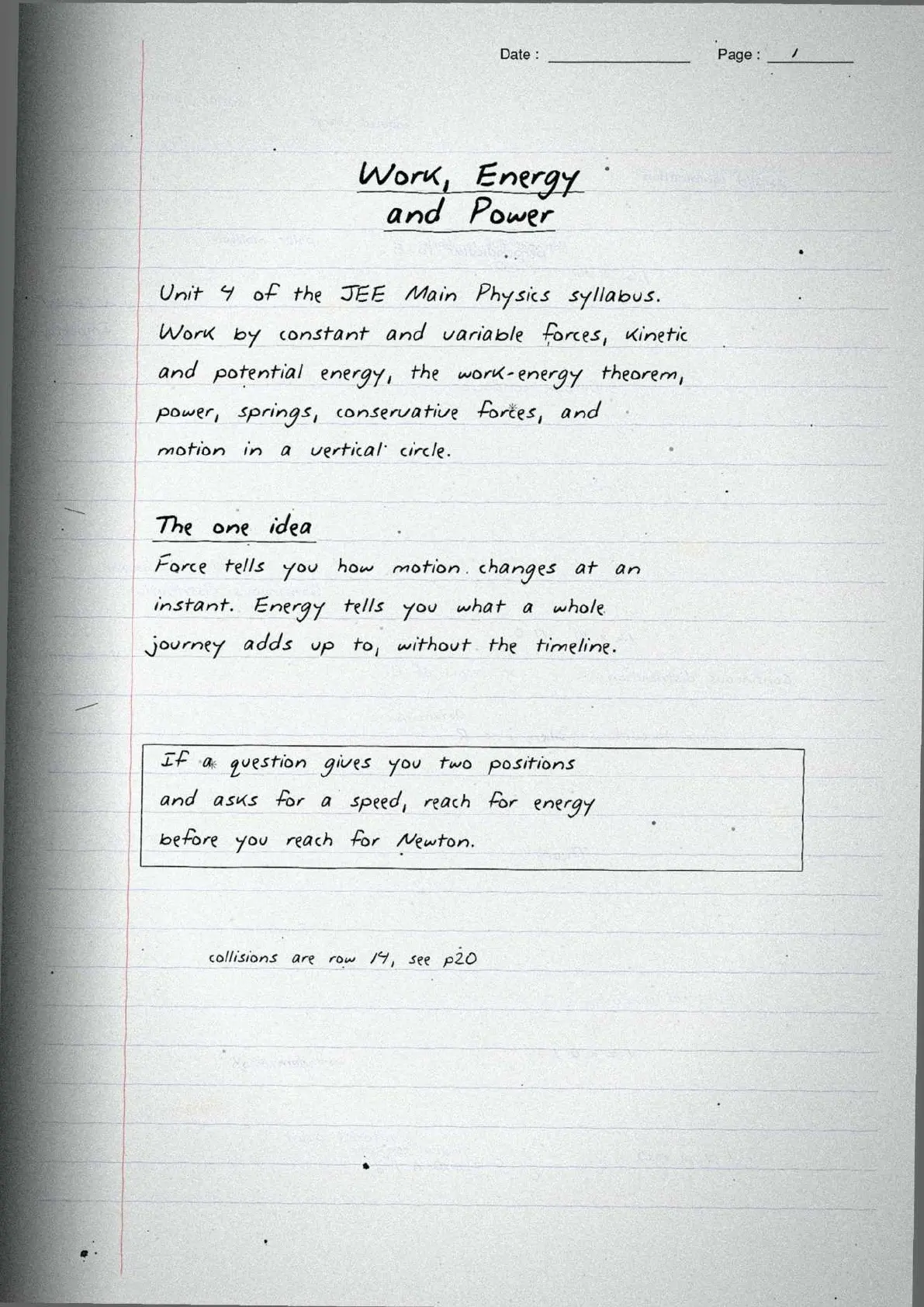
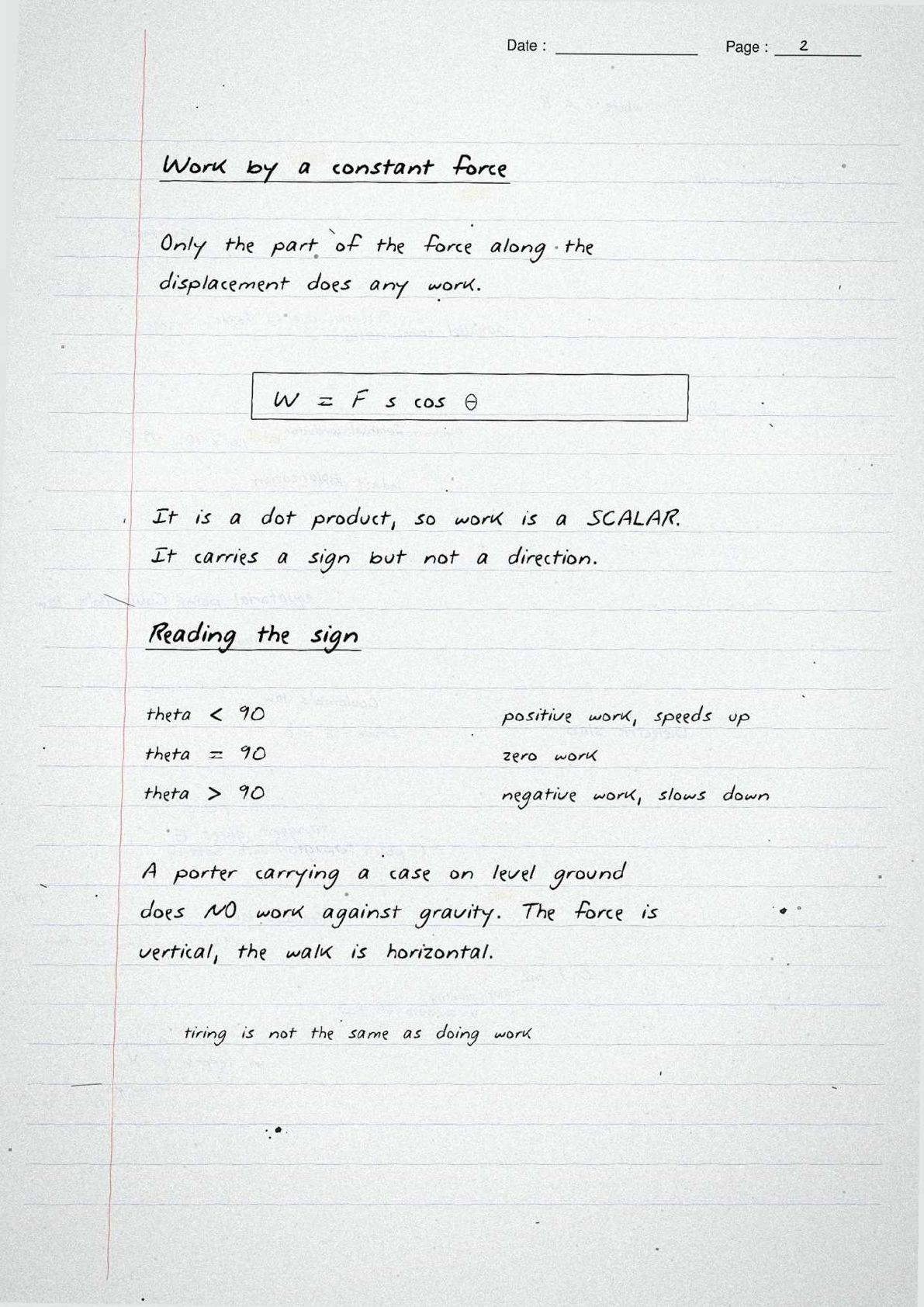
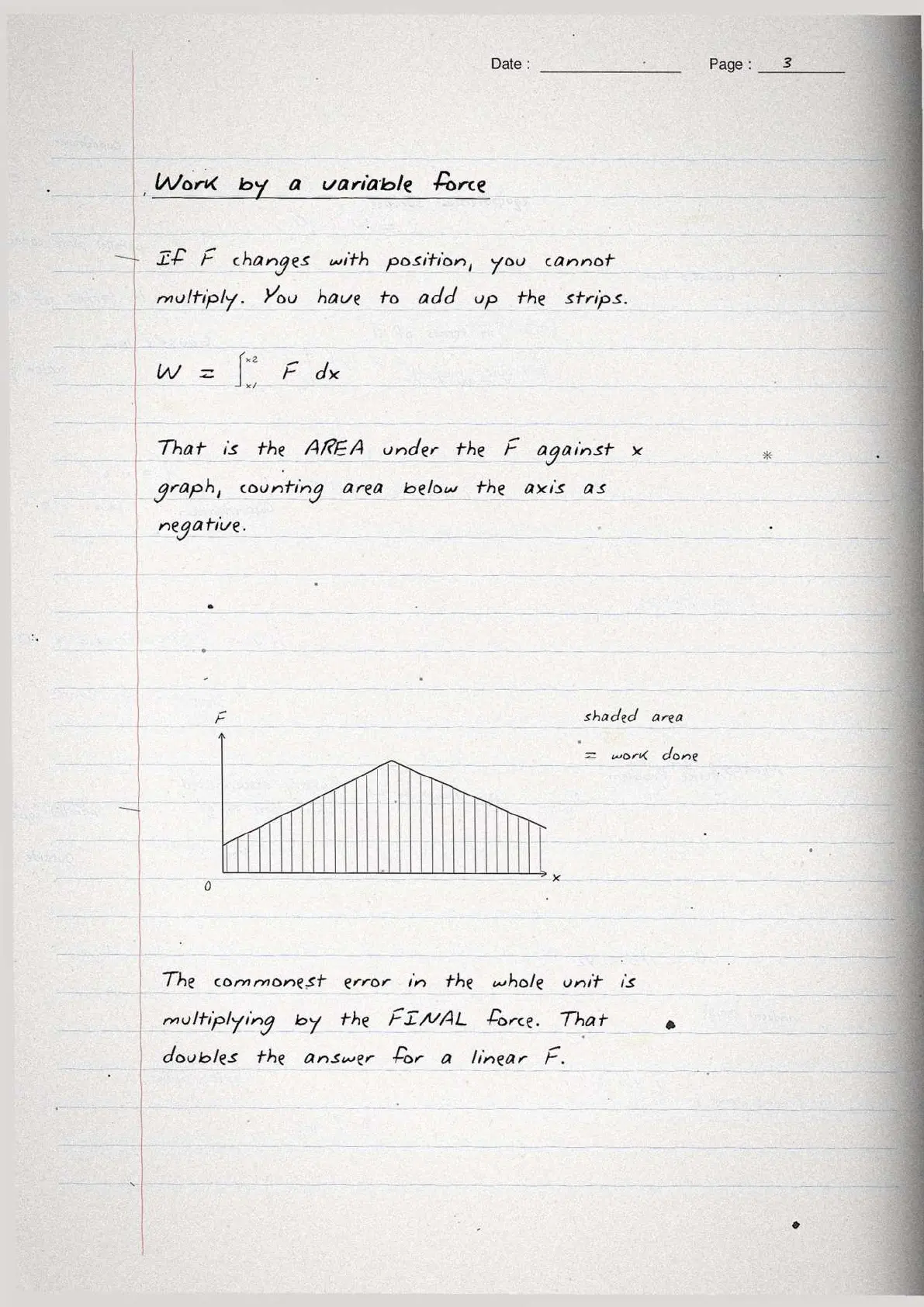
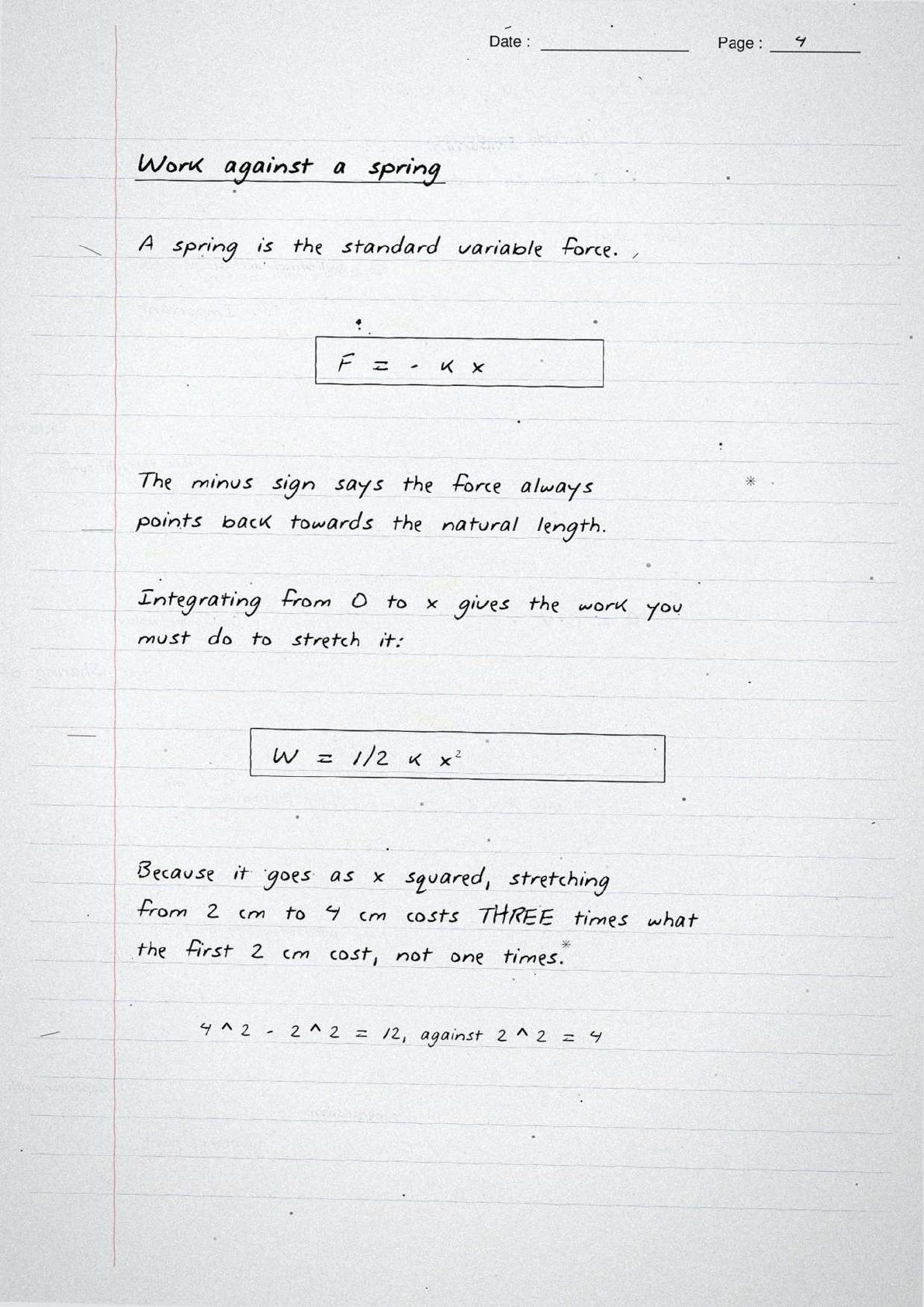
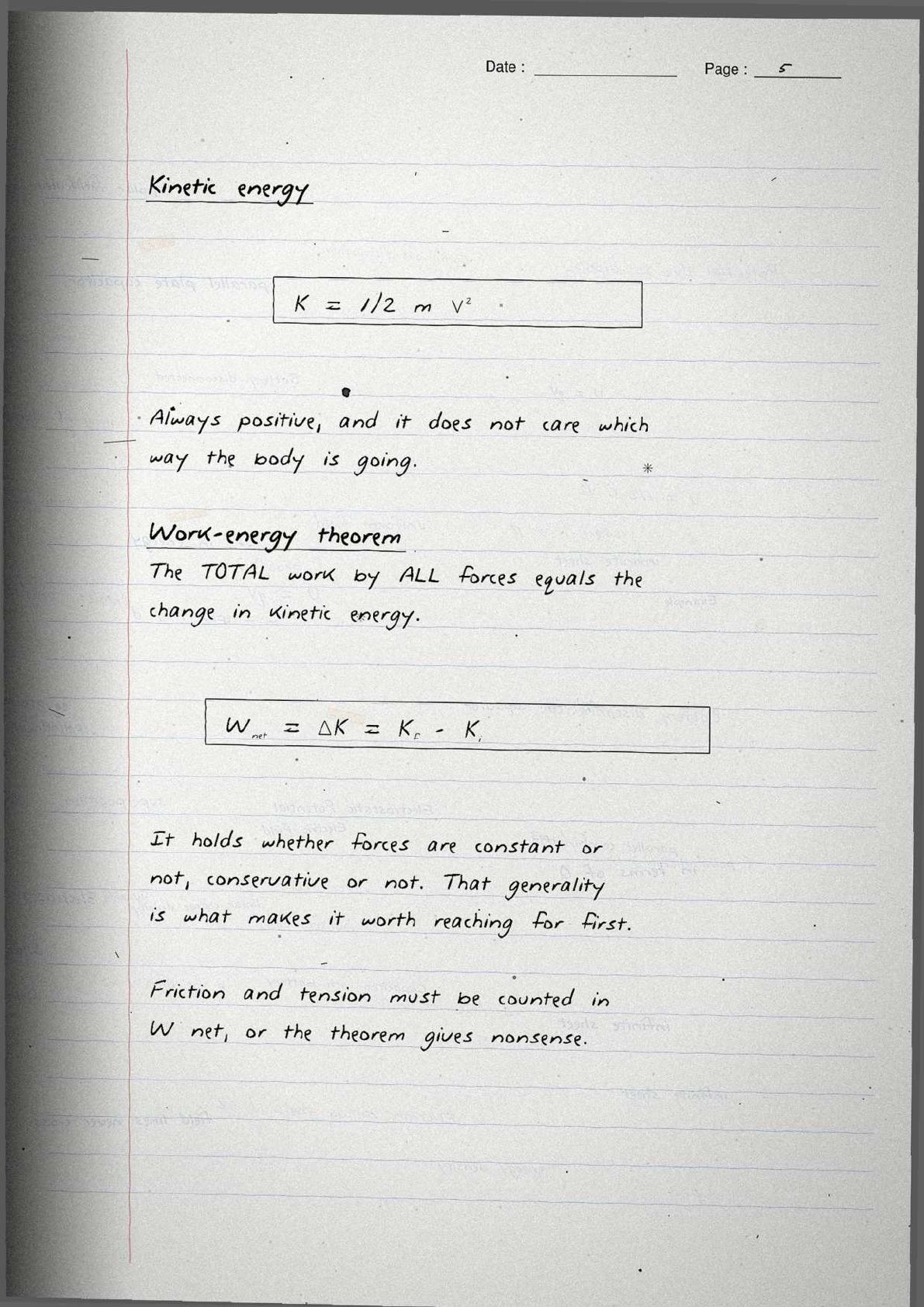
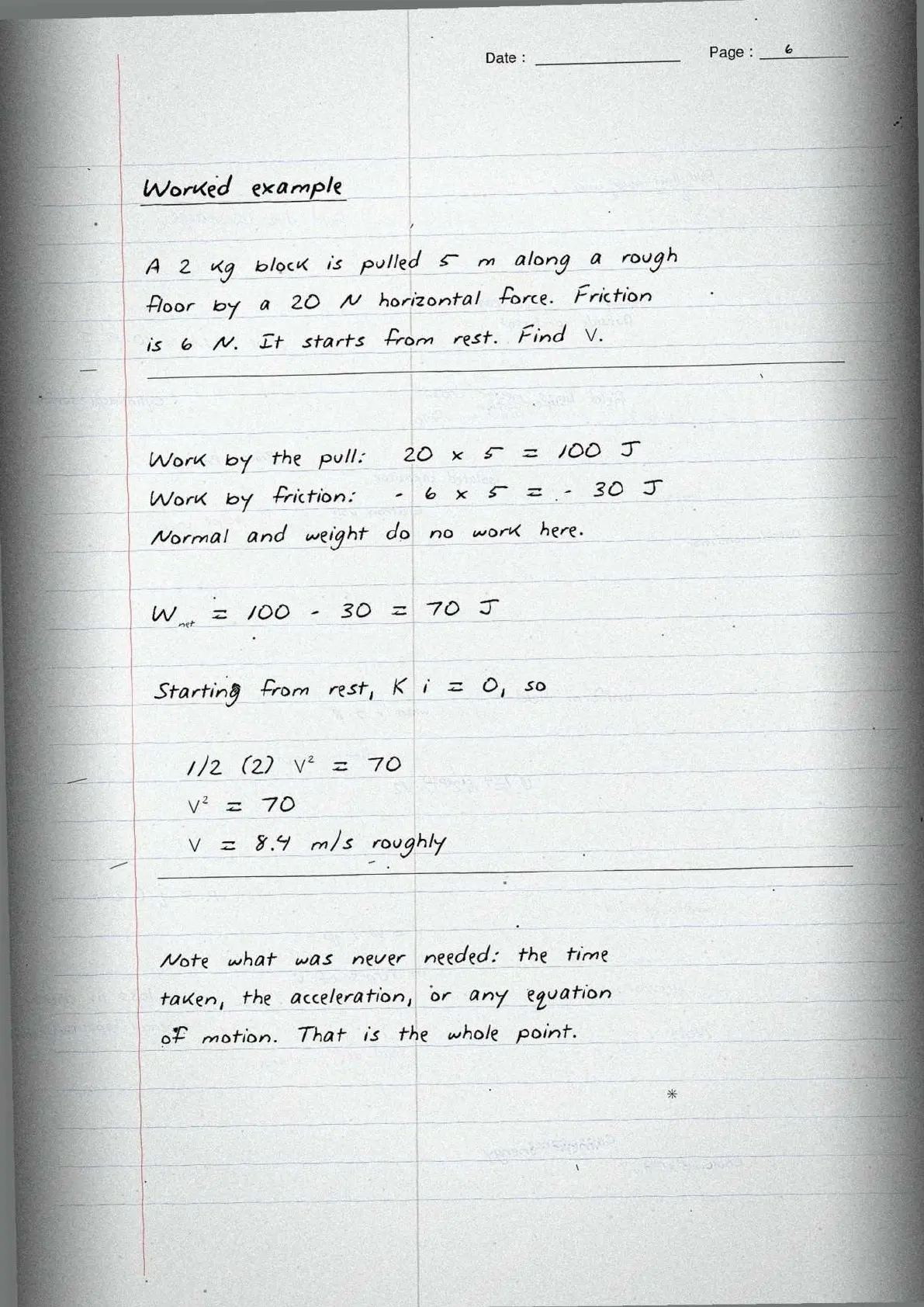
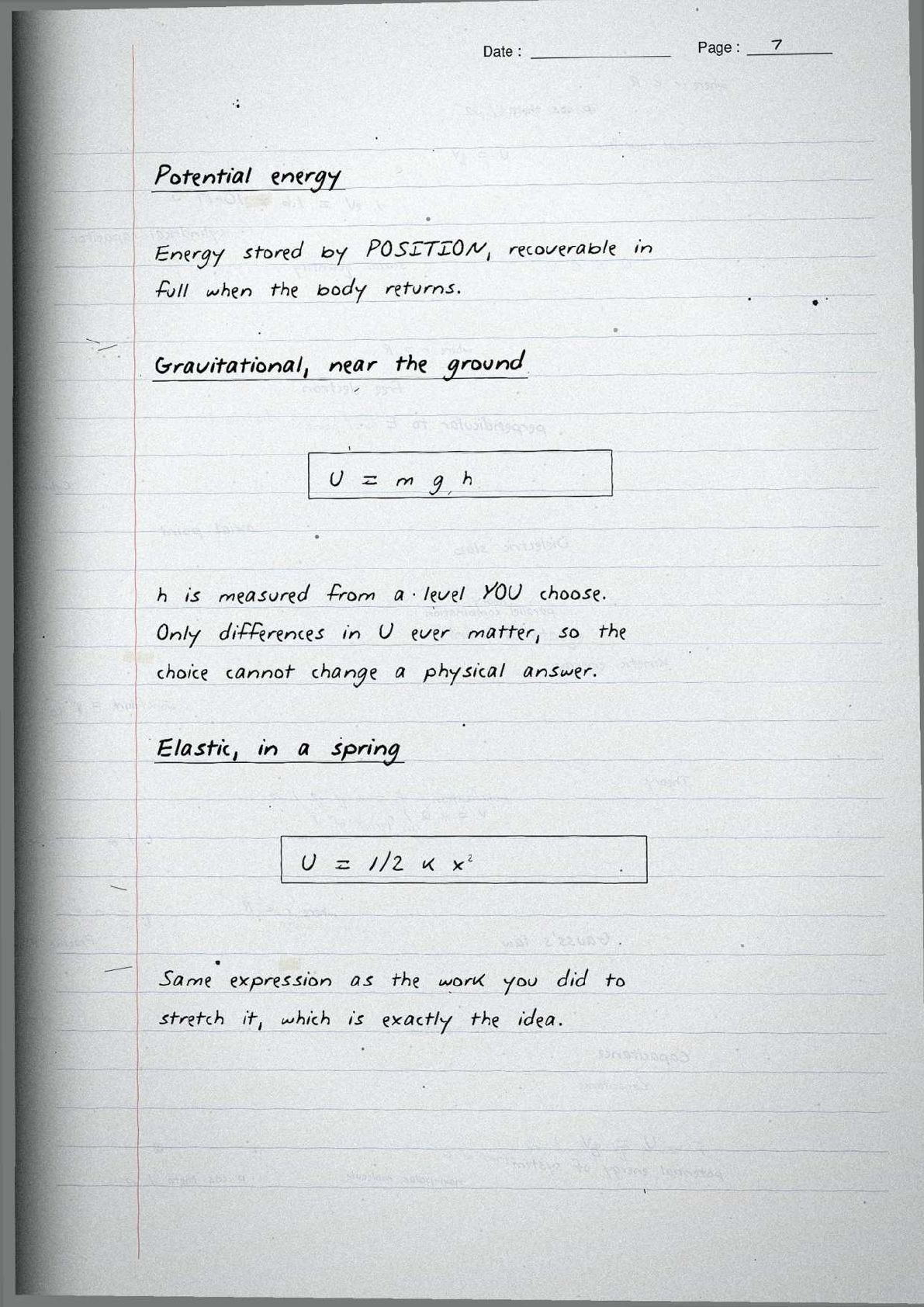
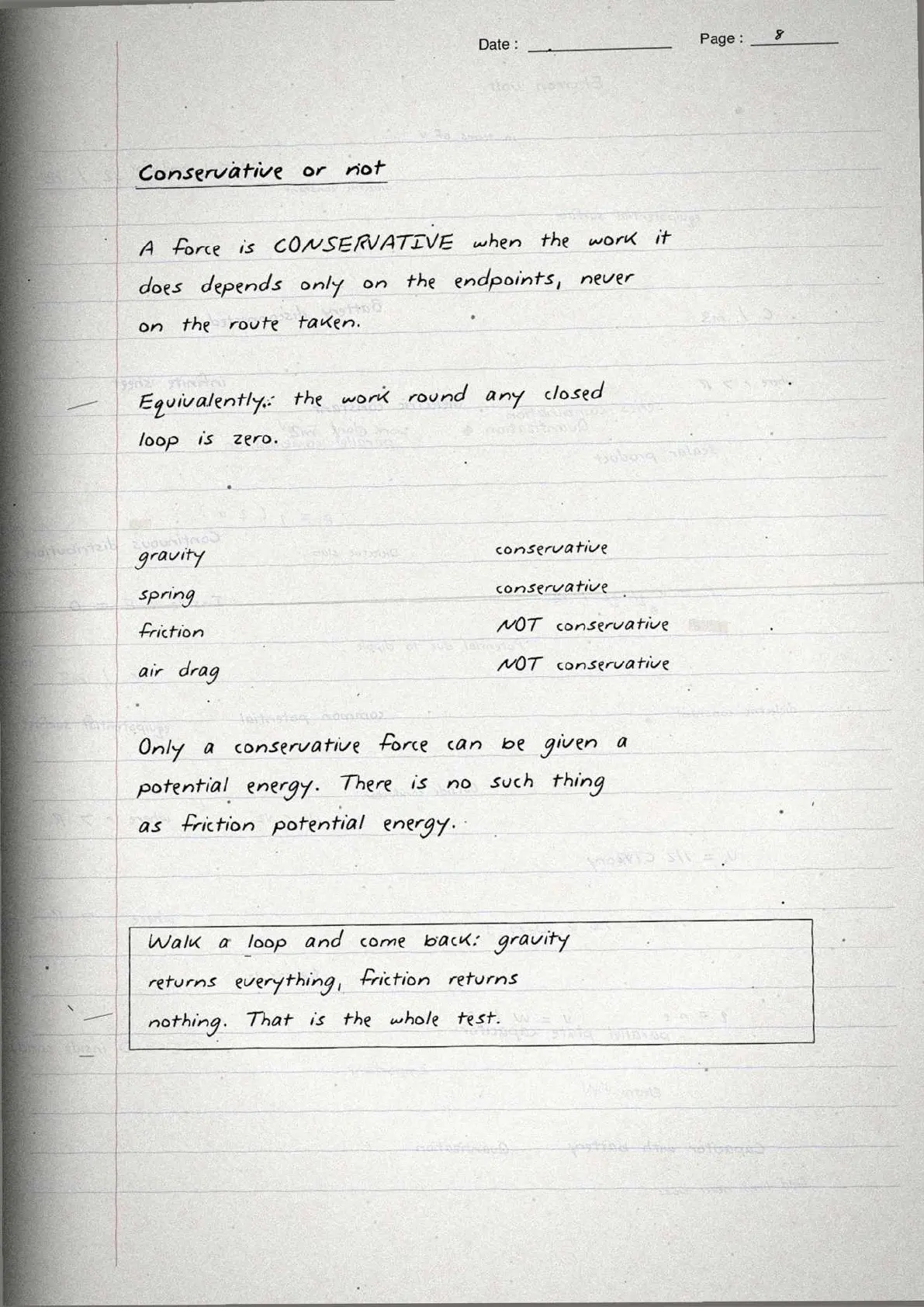
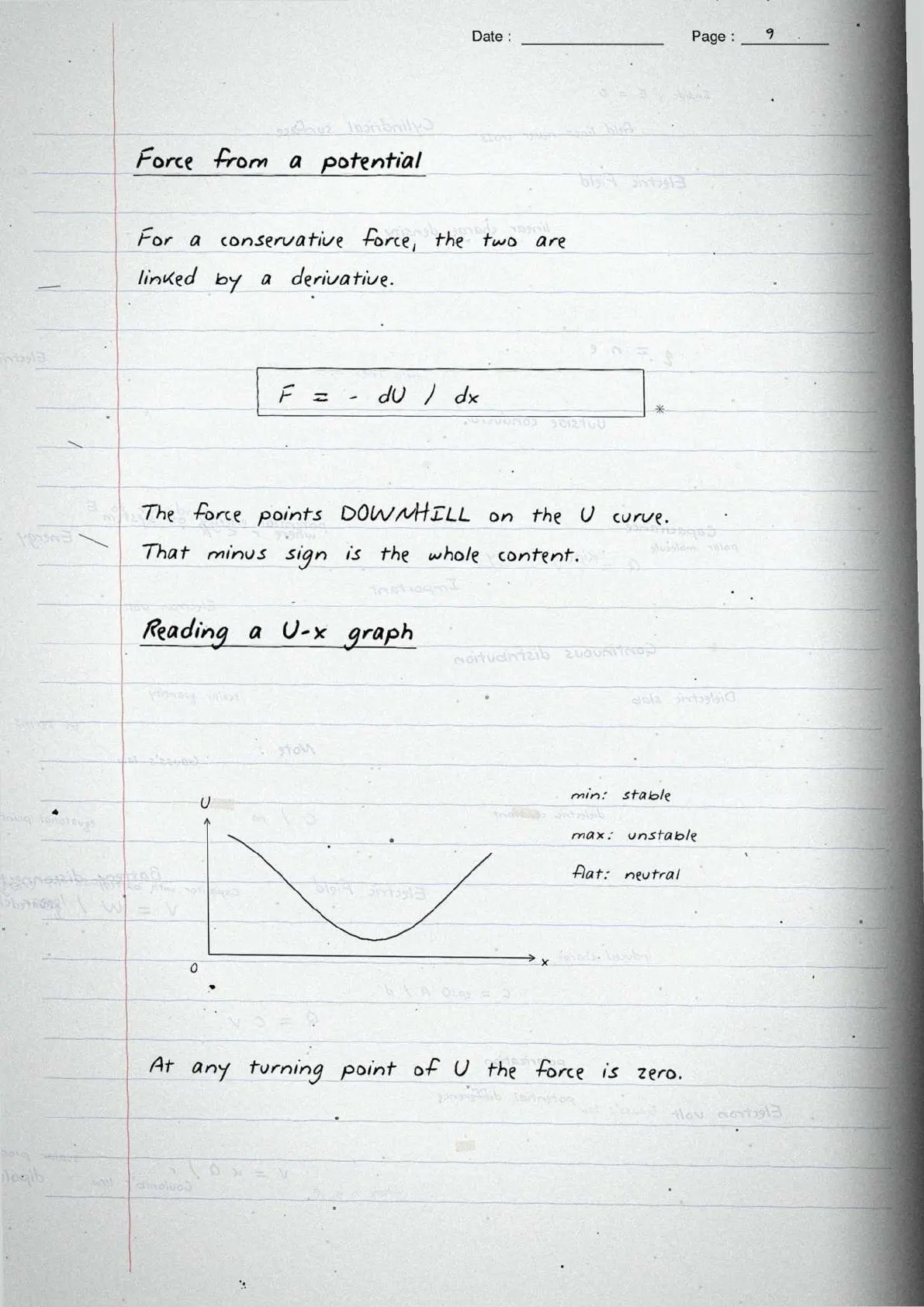
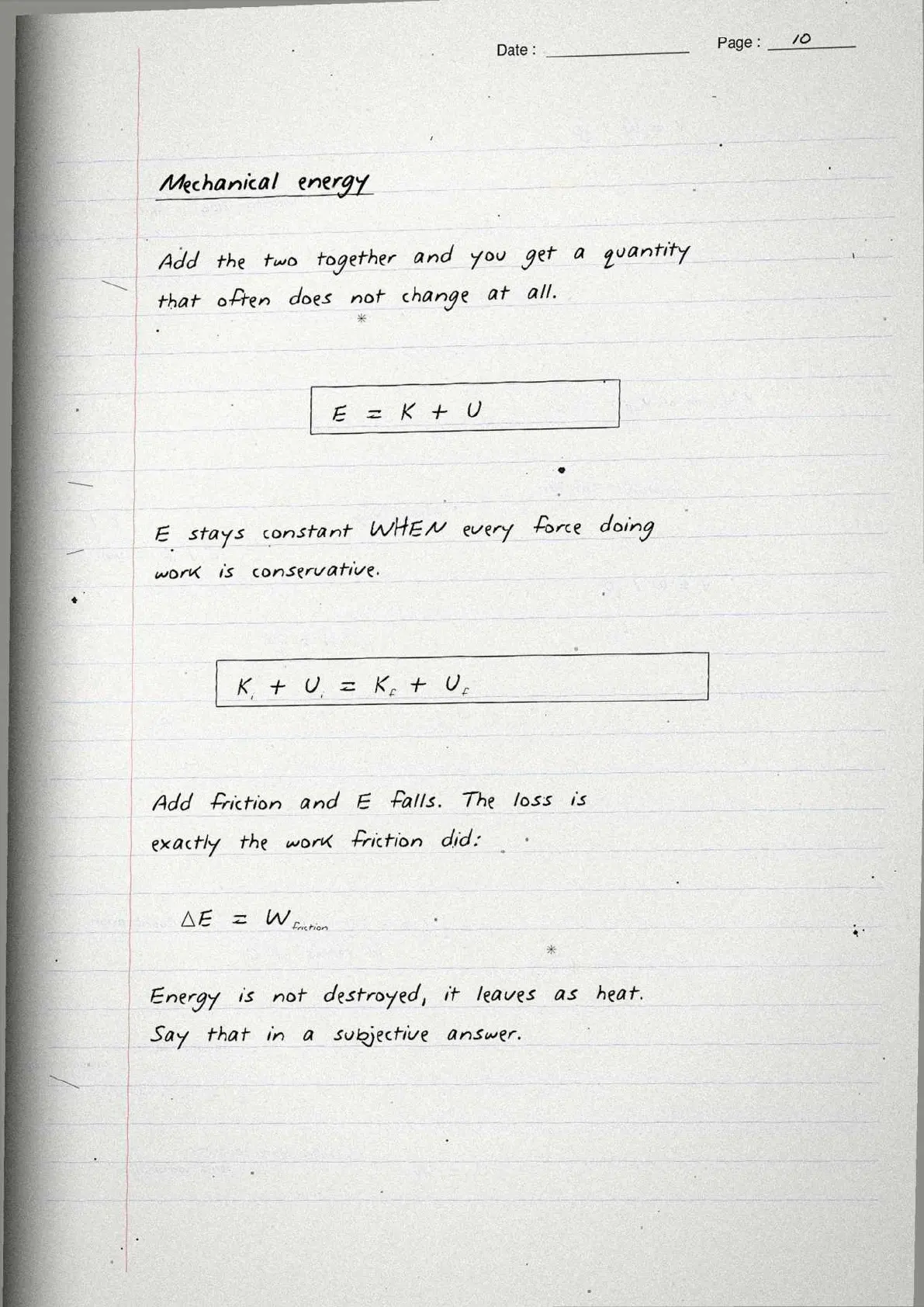
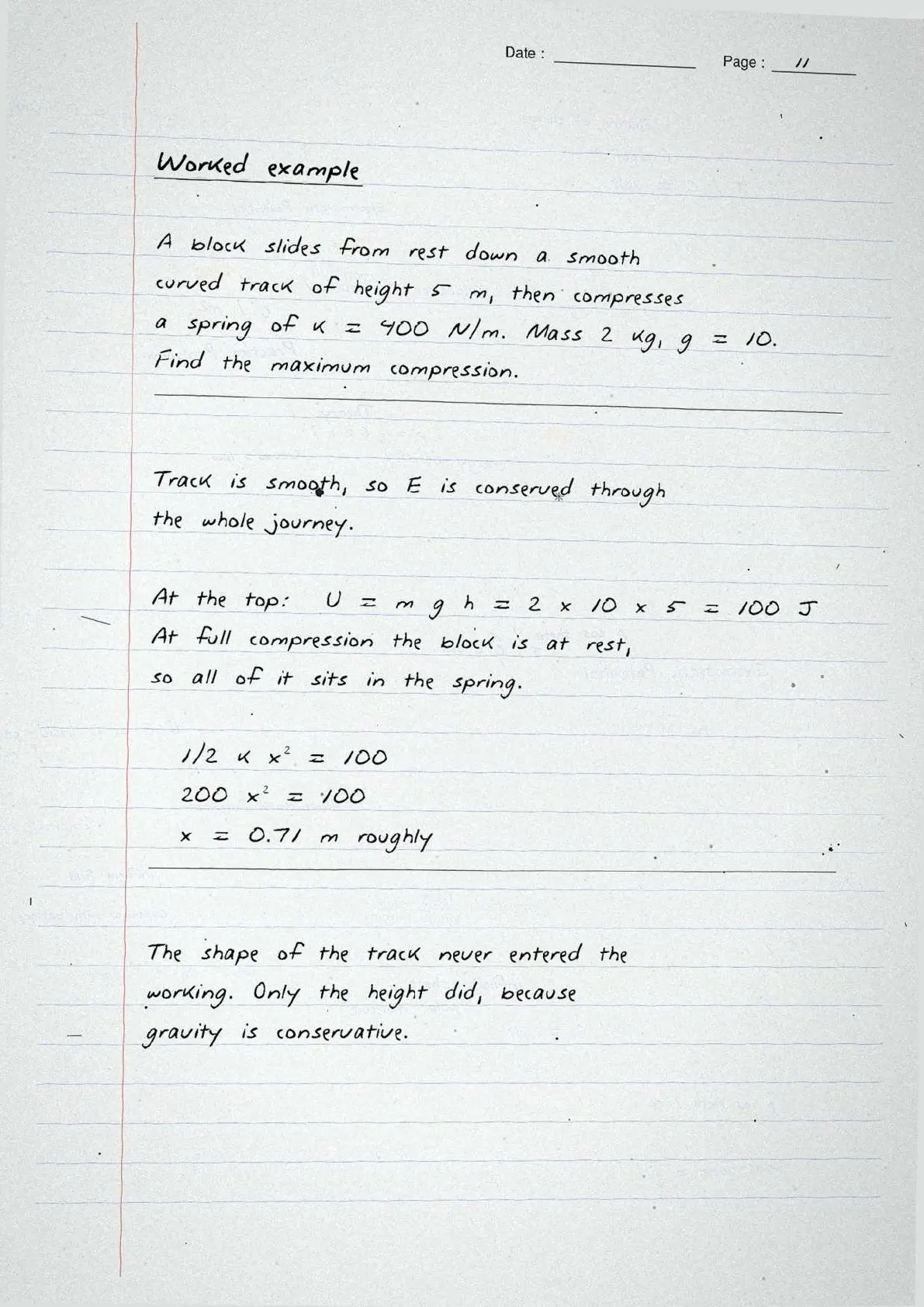
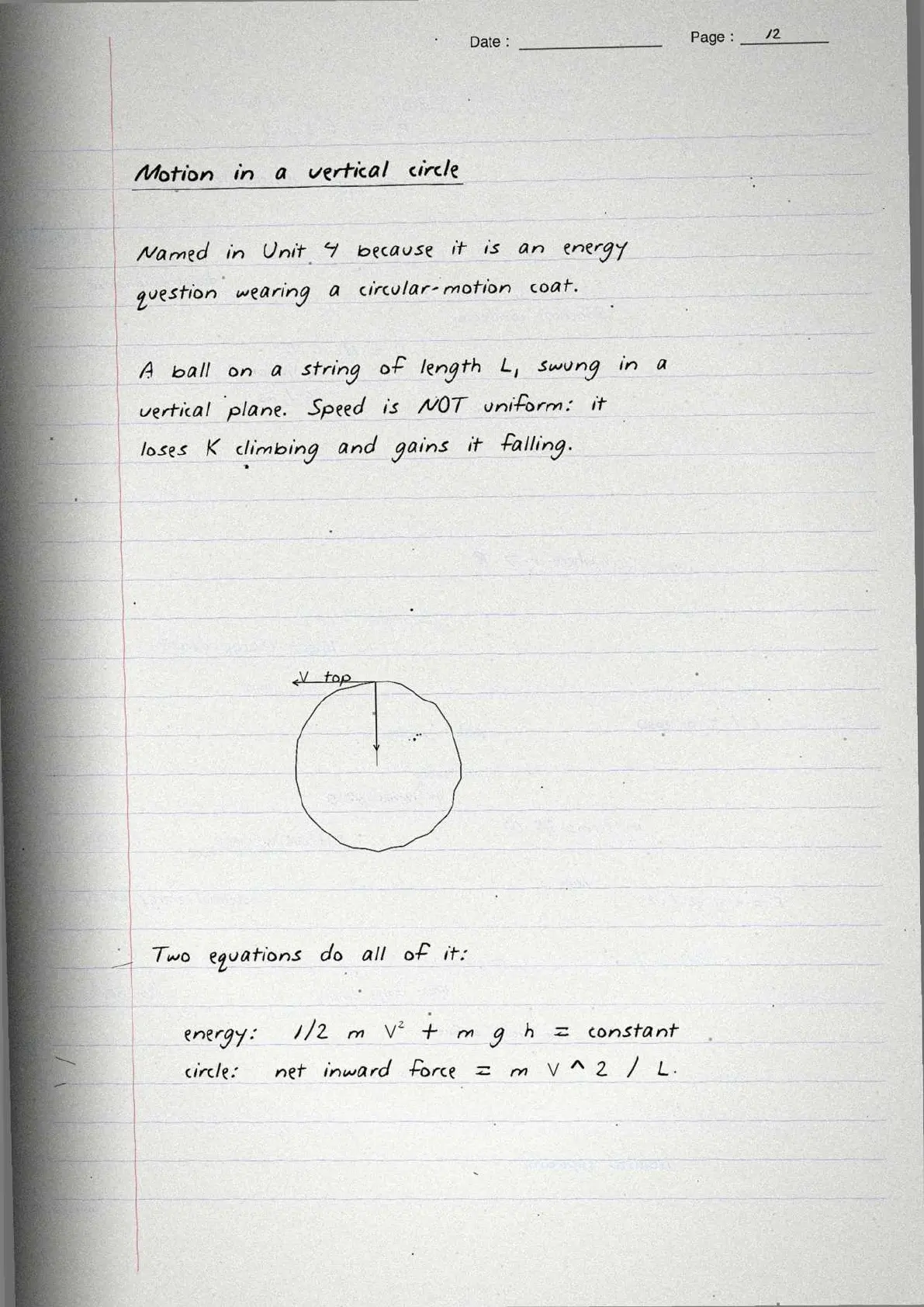
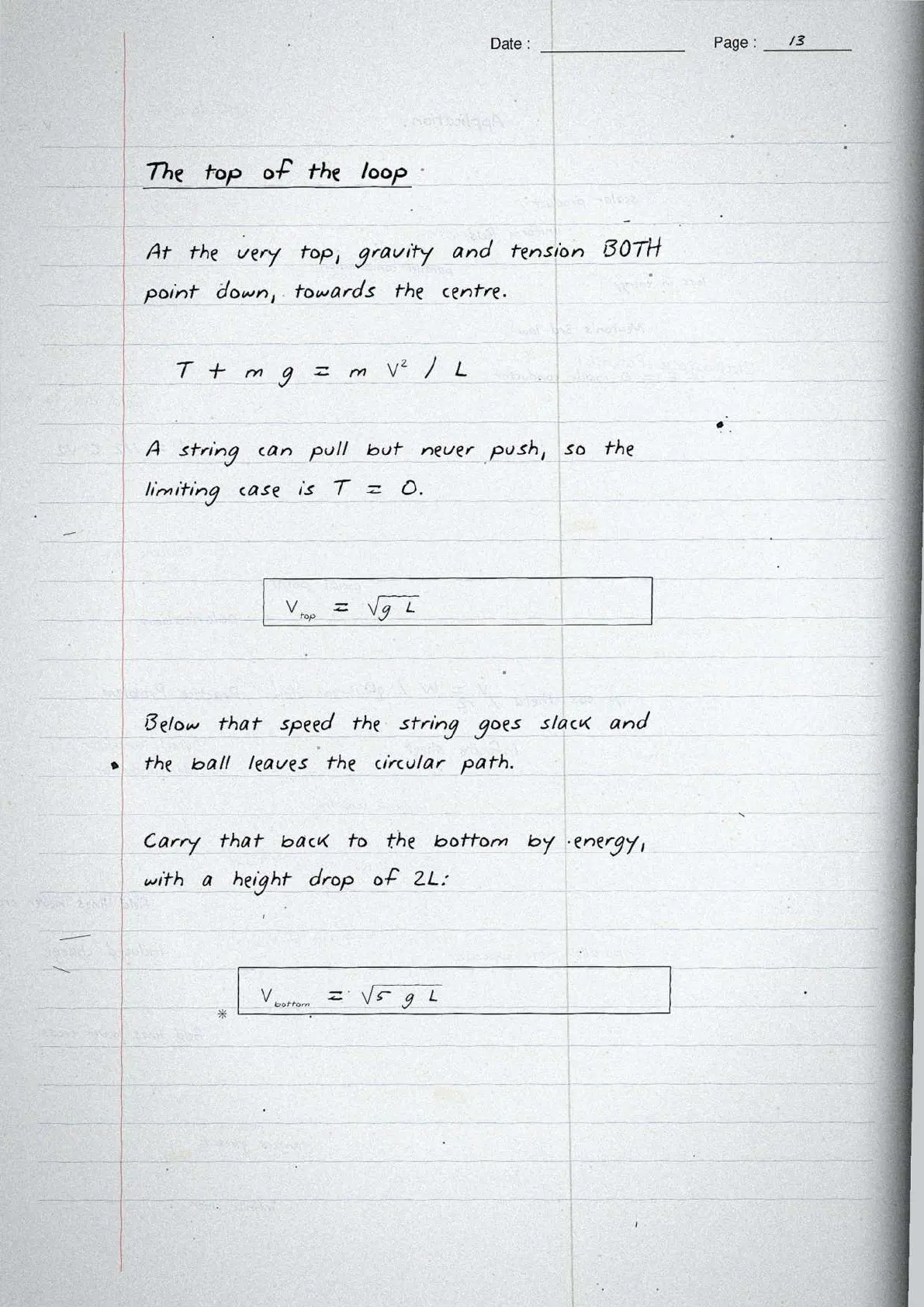
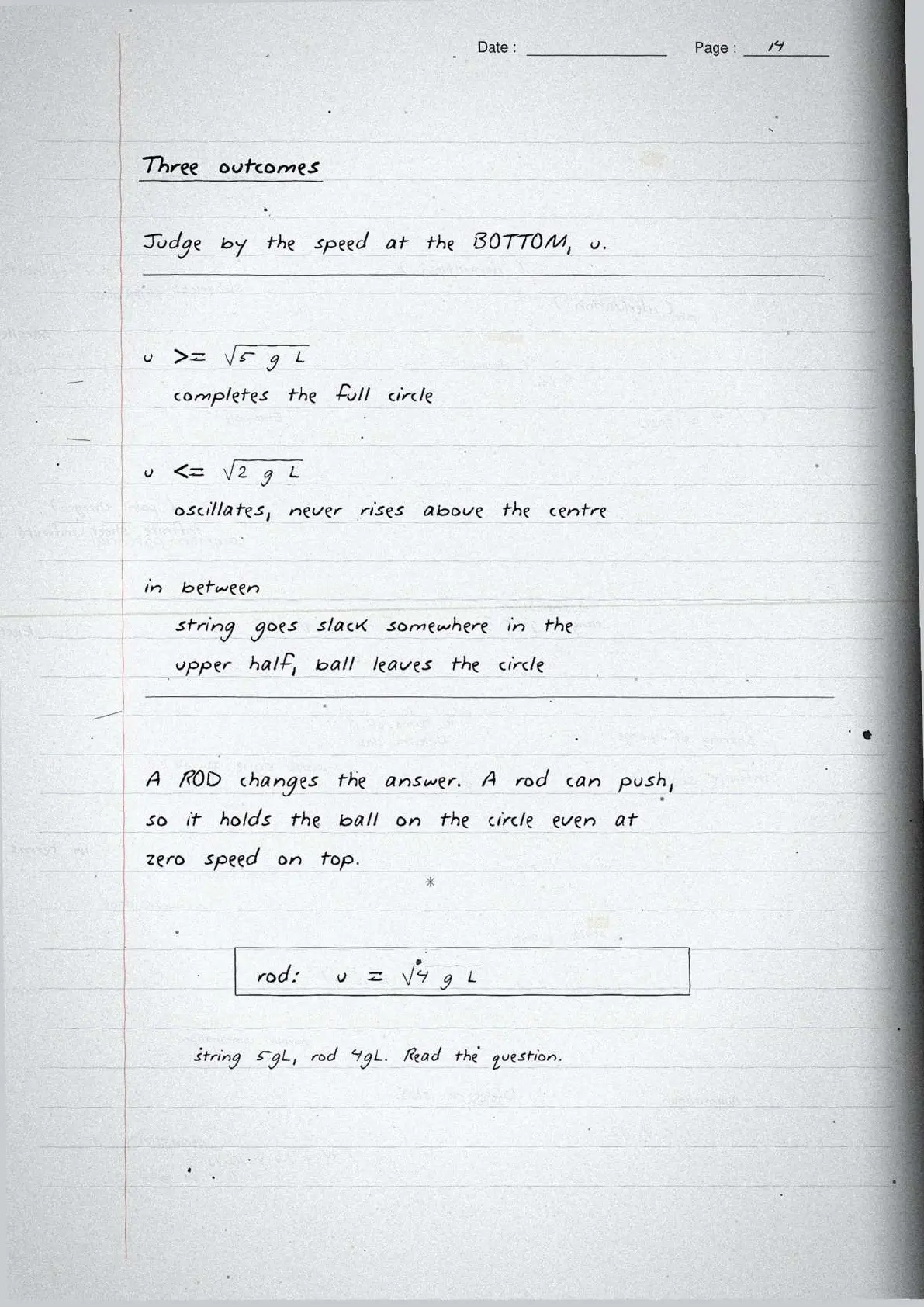
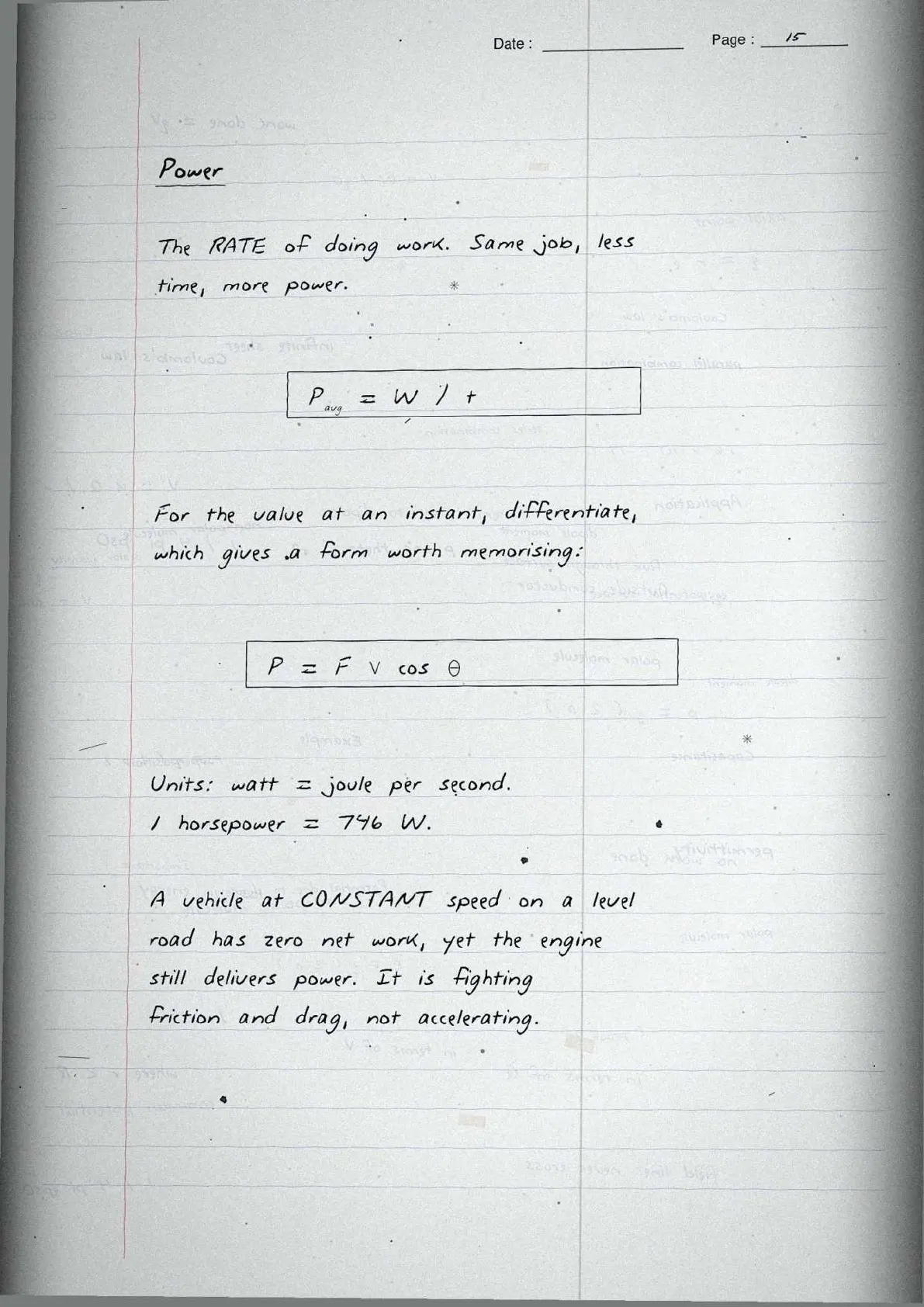
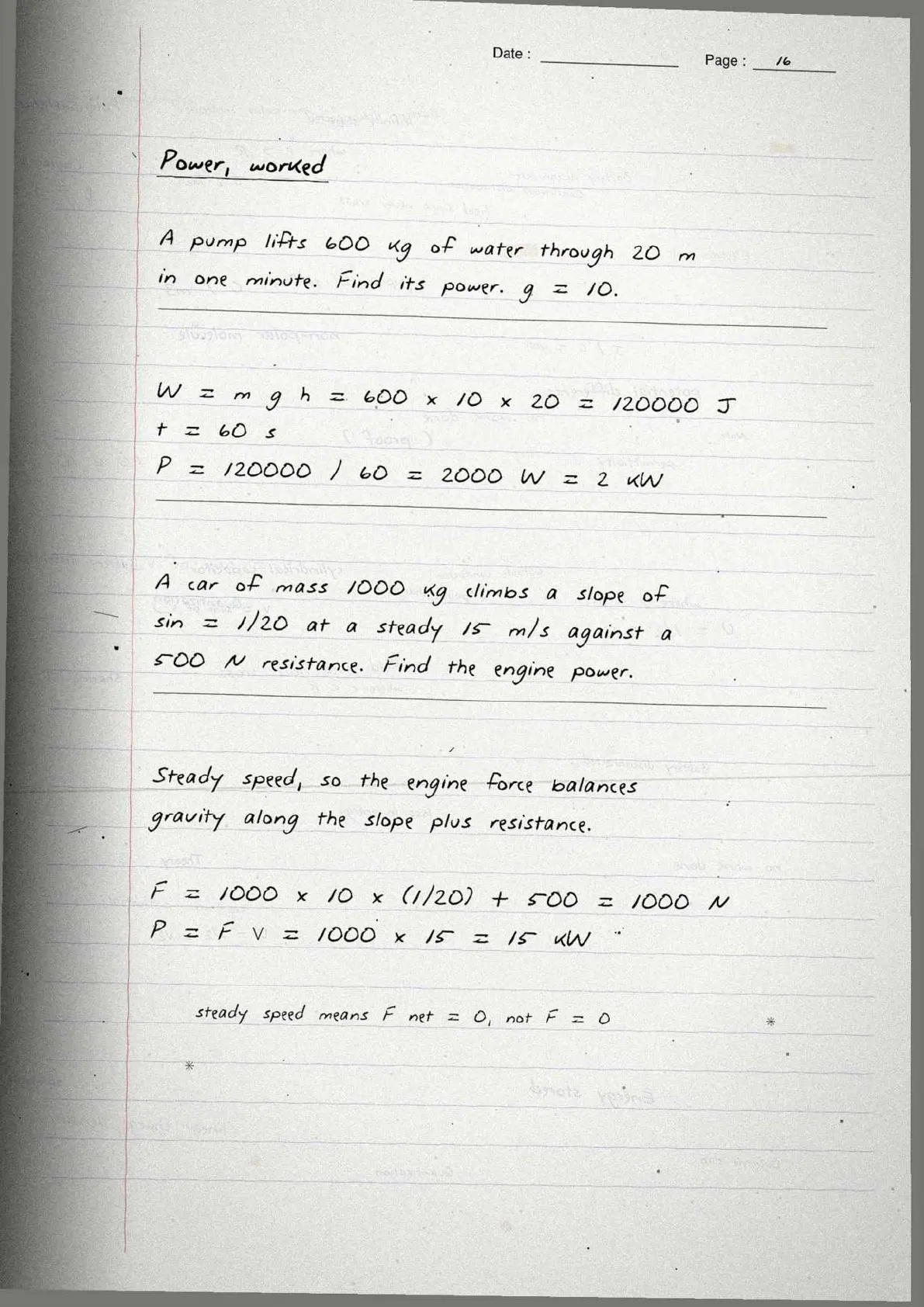
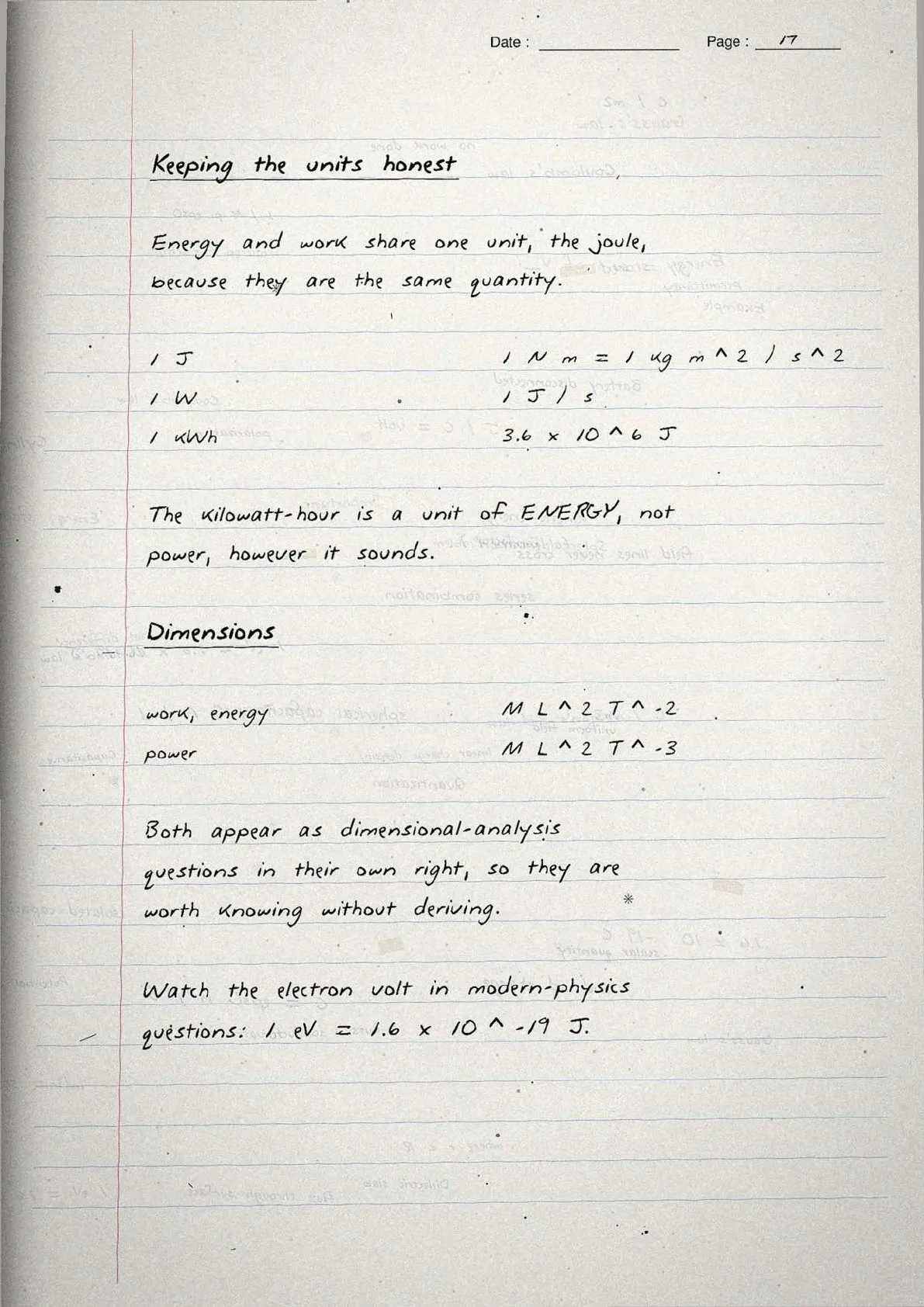
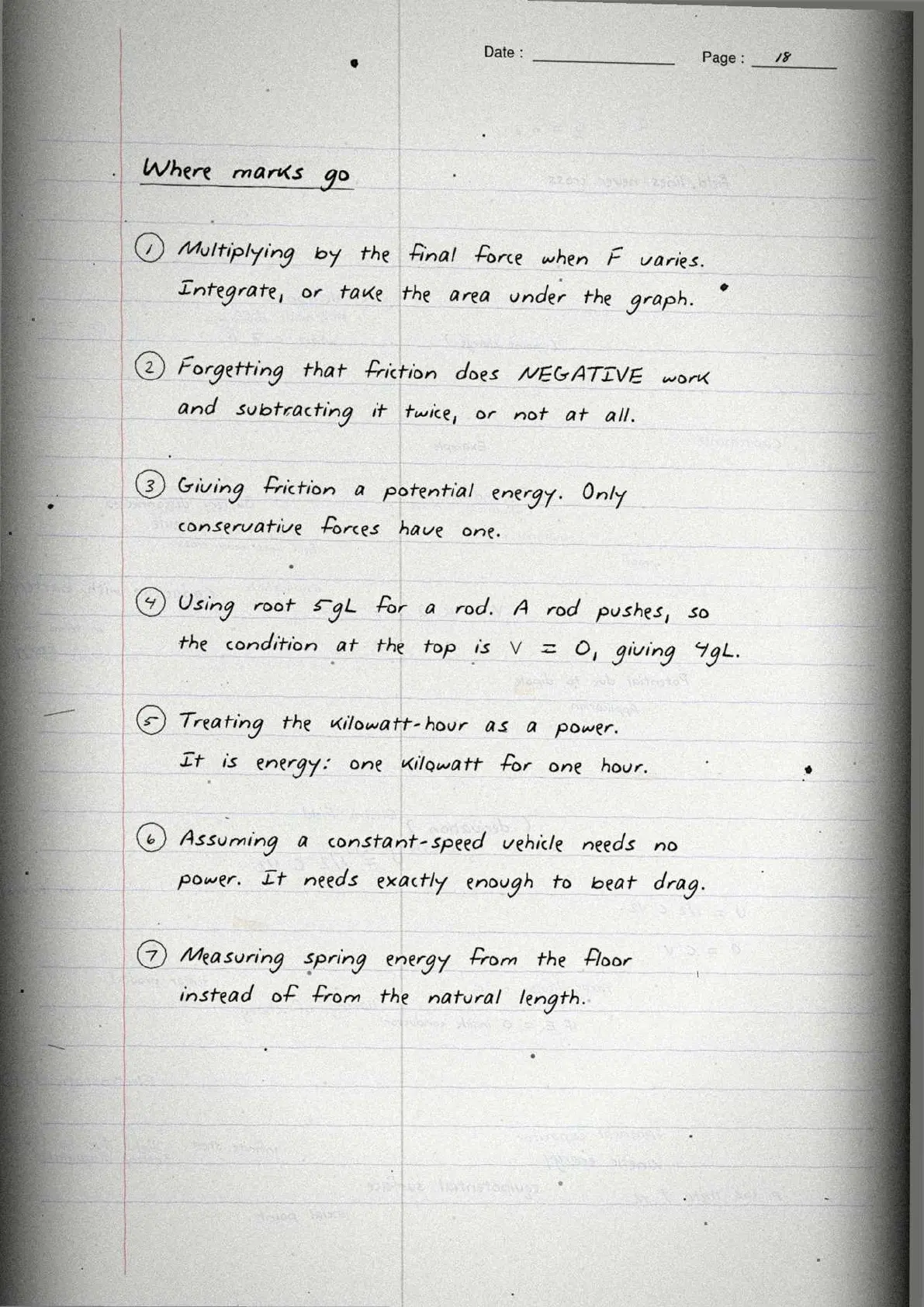
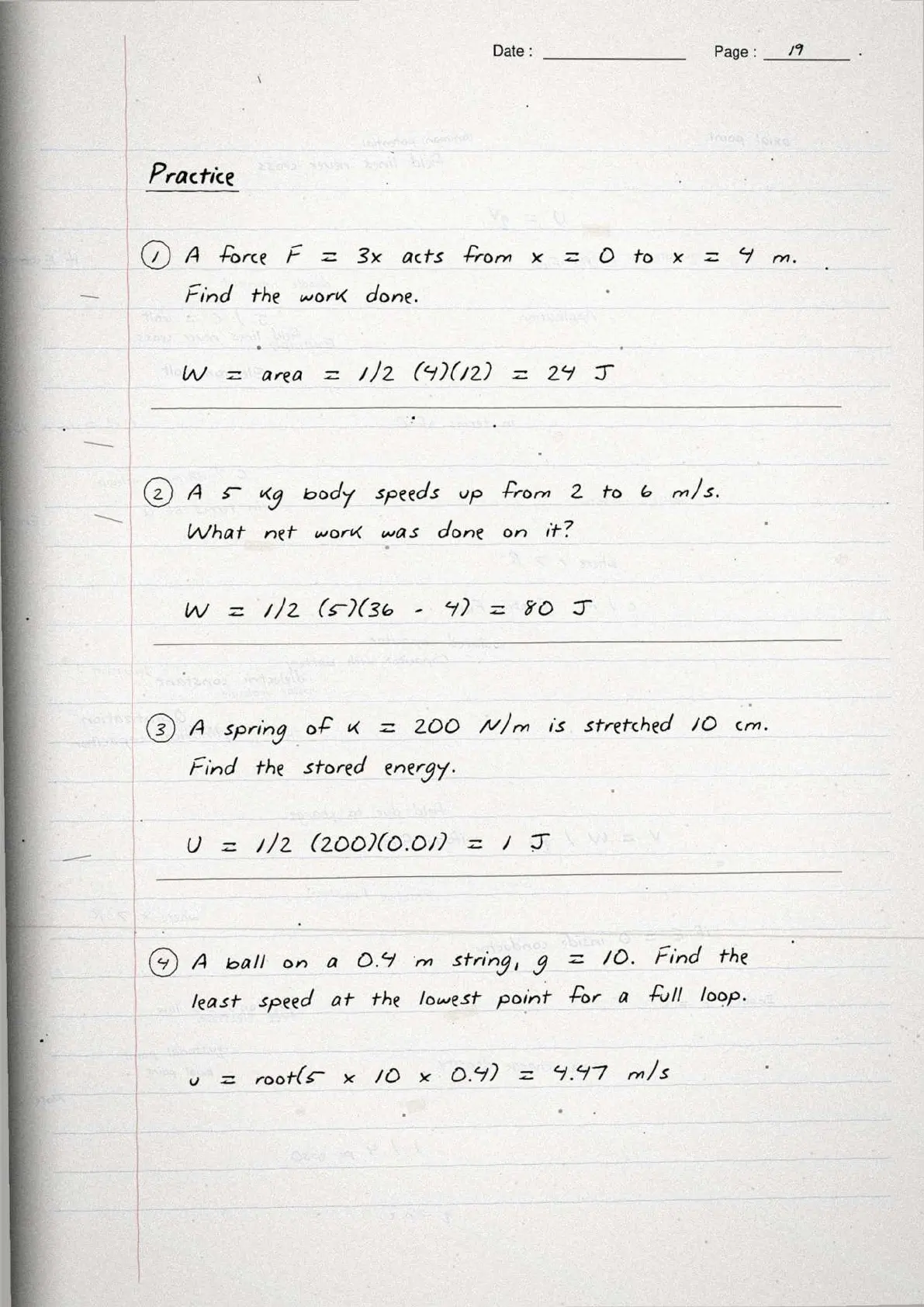
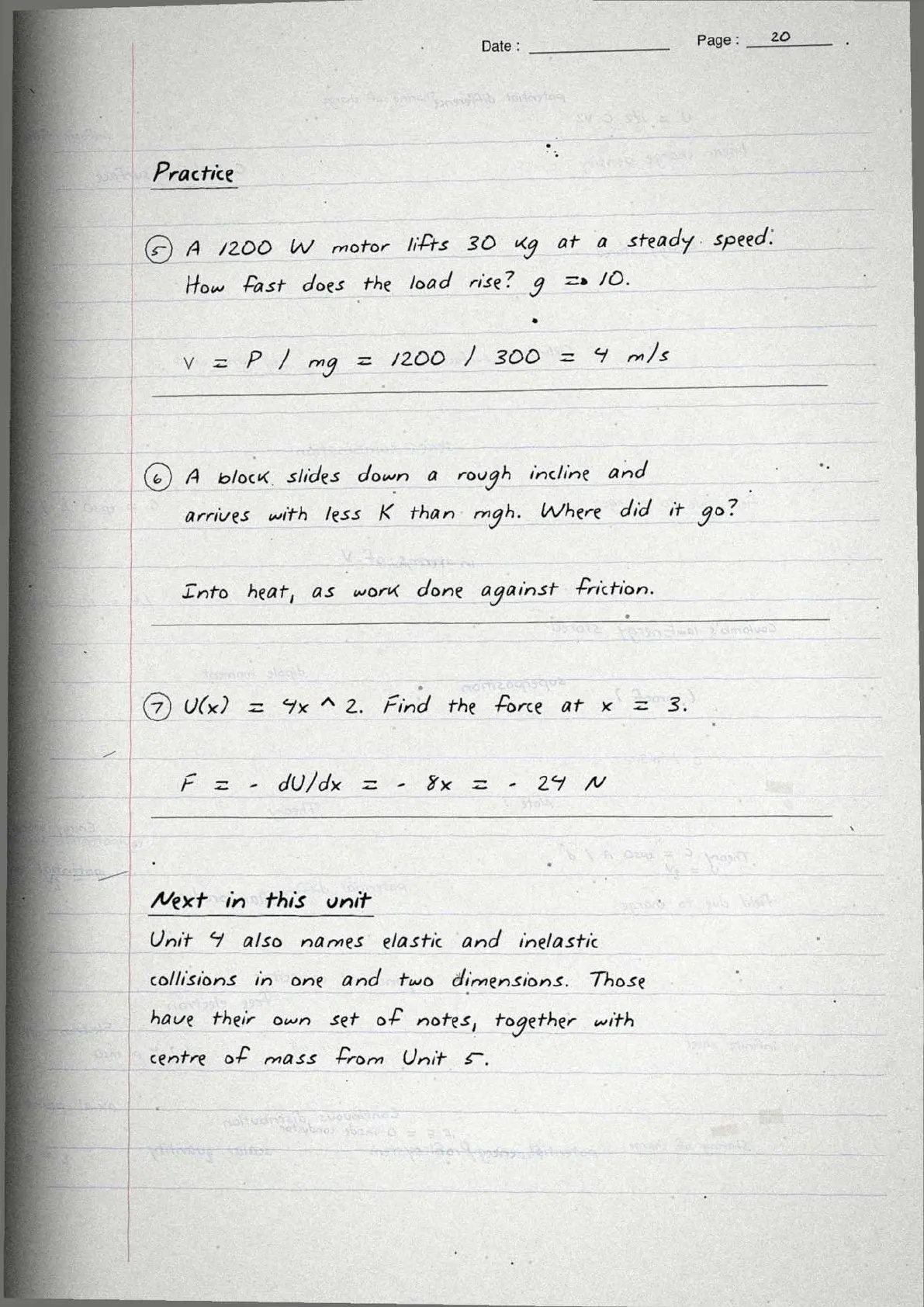
The notes are scans of a real notebook, so they read the way a topper's own pages do: short lines, boxed formulas, and a margin note where something is easy to get wrong.
JEE Main Work Energy and Power Weightage
Physics is 25 of the 75 questions in JEE Main, each worth four marks with one deducted for a wrong answer. Unit 4 usually contributes one or two of them.
| Pages | What is on them |
|---|---|
| 2 to 4 | Work by constant and variable forces, springs |
| 5 to 6 | Kinetic energy and the work-energy theorem |
| 7 to 11 | Potential energy, conservative forces, conservation |
| 12 to 14 | Motion in a vertical circle |
| 15 to 17 | Power, units and dimensions |
| 18 to 20 | Common mistakes and practice |
What the Notes Cover
- Work done by a constant force, and the sign convention that goes with it
- Work by a variable force, as an integral and as the area under a graph
- The spring force and the half k x squared it stores
- Kinetic energy and the work-energy theorem, which holds for any force at all
- Potential energy, conservative and non-conservative forces, and F = minus dU by dx
- Conservation of mechanical energy, and what friction does to it
- Motion in a vertical circle, including the string and rod conditions
- Power, average and instantaneous
How to Approach the Chapter
The habit worth building is reaching for energy before Newton. If a question gives two positions and asks for a speed, the work-energy theorem gets there in one line where equations of motion take four.
The theorem is also more general than students expect. It holds whether the forces are constant or varying, conservative or not, so long as you count every force in the net work. Friction and tension included.
Vertical circles are the part that feels hardest and is not. They are an energy question with one extra equation: at the top, gravity and tension both point inward, and the limiting case is when the tension reaches zero.
Common Mistakes
- Multiplying by the final force when the force varies. Integrate, or take the area
- Forgetting that a porter carrying a case on level ground does no work against gravity
- Giving friction a potential energy. Only conservative forces have one
- Using root 5gL for a rod. A rod can push, so its condition is 4gL
- Treating the kilowatt-hour as a power. It is an energy
- Assuming a car at constant speed needs no power. It needs exactly enough to beat drag
Video Revision
Source: JEE Wallah
How to Use These Notes
Read a page, close it, and write the boxed formula from memory before turning over. The notes are deliberately short per page so that is possible.
The last three pages are a mistake list and twelve practice questions with worked answers. Do those before any coaching sheet: they are chosen so each one teaches a move the rest of the chapter reuses.
Collisions belong to this same unit and have their own set of notes, together with centre of mass.
JEE Main Work Energy and Power Notes FAQs
Ques. How many questions come from work, energy and power in JEE Main?
Ans. Usually one or two per session. Physics carries 25 of the 75 questions in the paper, and Unit 4 is one of the reliable contributors, most often through the work-energy theorem or a vertical circle.
Ques. What does the JEE Main syllabus include in this unit?
Ans. Work by constant and variable forces, kinetic and potential energy, the work-energy theorem, power, spring potential energy, conservation of mechanical energy, conservative and non-conservative forces, motion in a vertical circle, and collisions.
Ques. Are collisions part of this chapter?
Ans. Yes, NTA lists elastic and inelastic collisions in one and two dimensions under Unit 4. They are covered in a separate set of notes alongside centre of mass, because the two are always asked together.
Ques. Which formula is worth learning first?
Ans. The work-energy theorem, that net work equals the change in kinetic energy. It applies to every force, constant or varying, and it is the fastest route through most questions in the unit.
Ques. Can the notes be downloaded free?
Ans. Yes. All 20 pages can be read on this page and downloaded at no cost, so you can print them or keep them on a phone.



Comments