



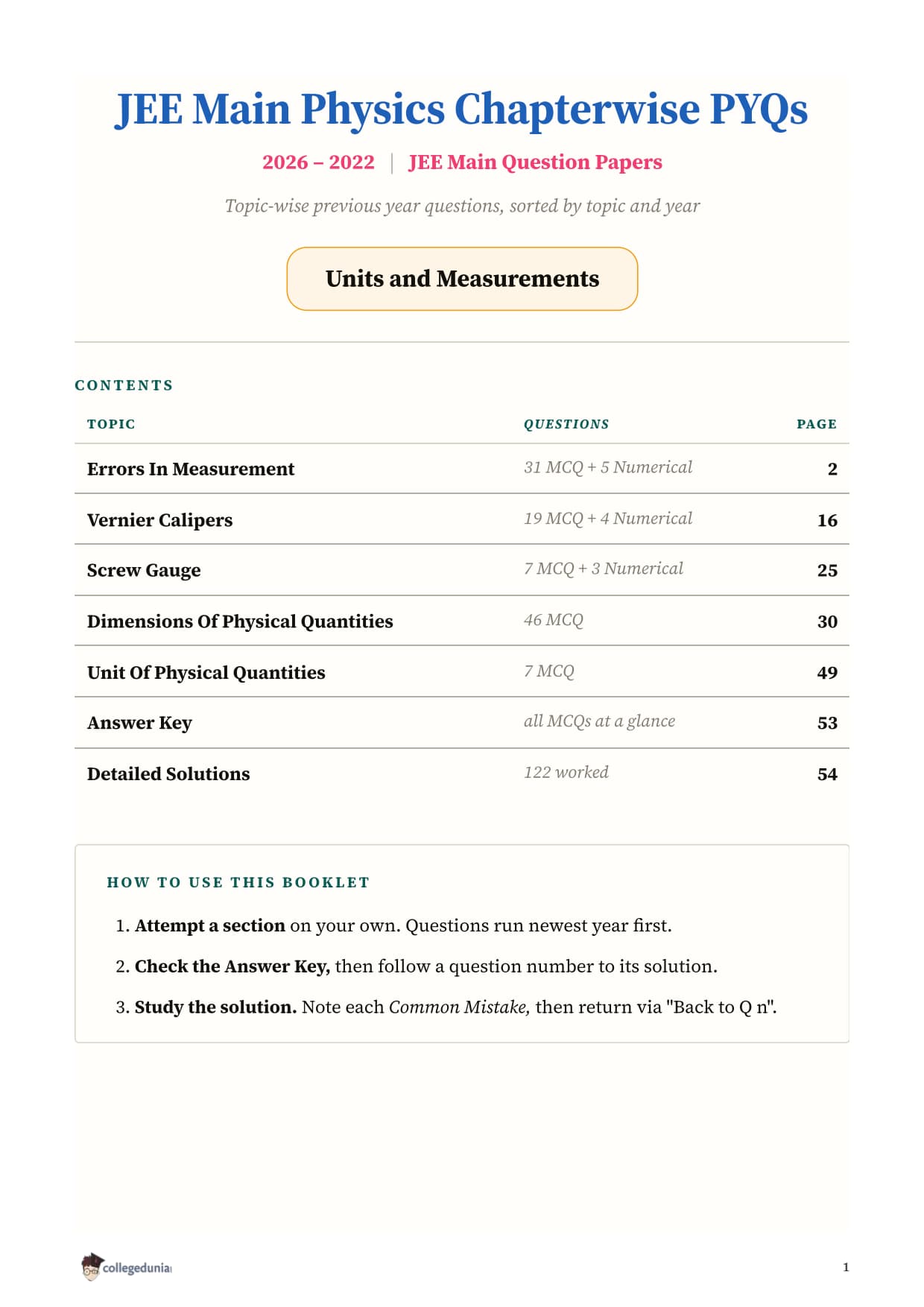
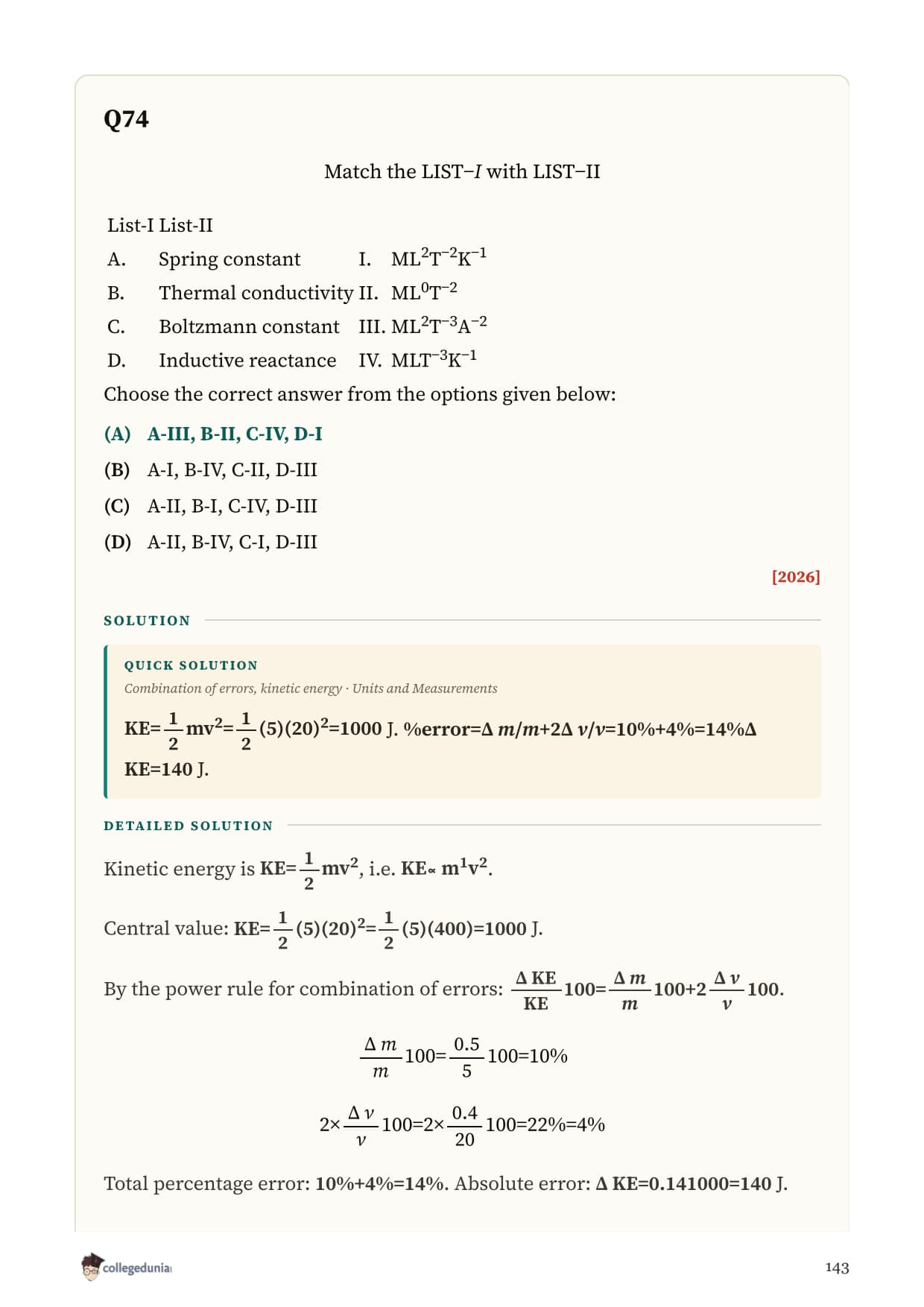
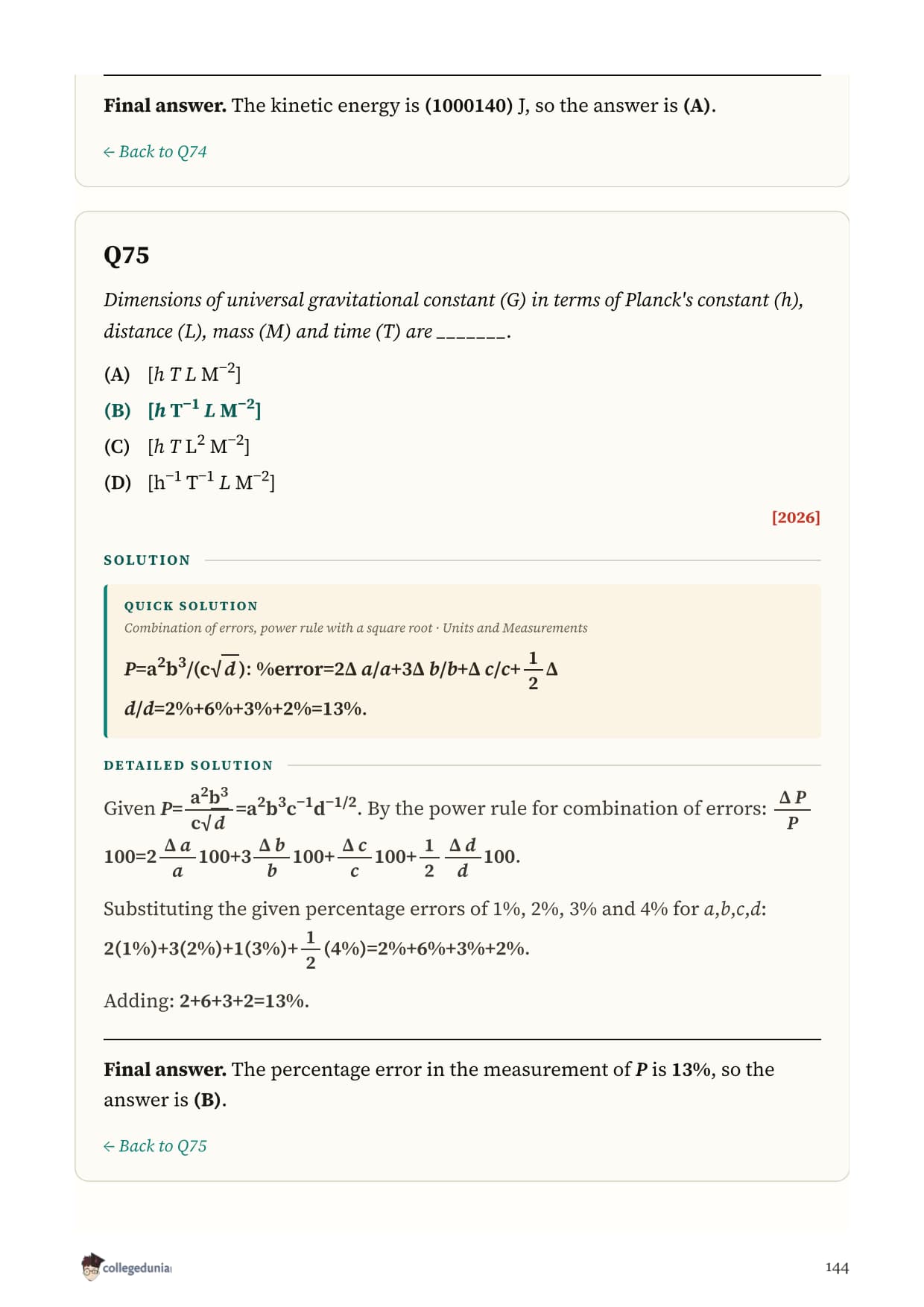
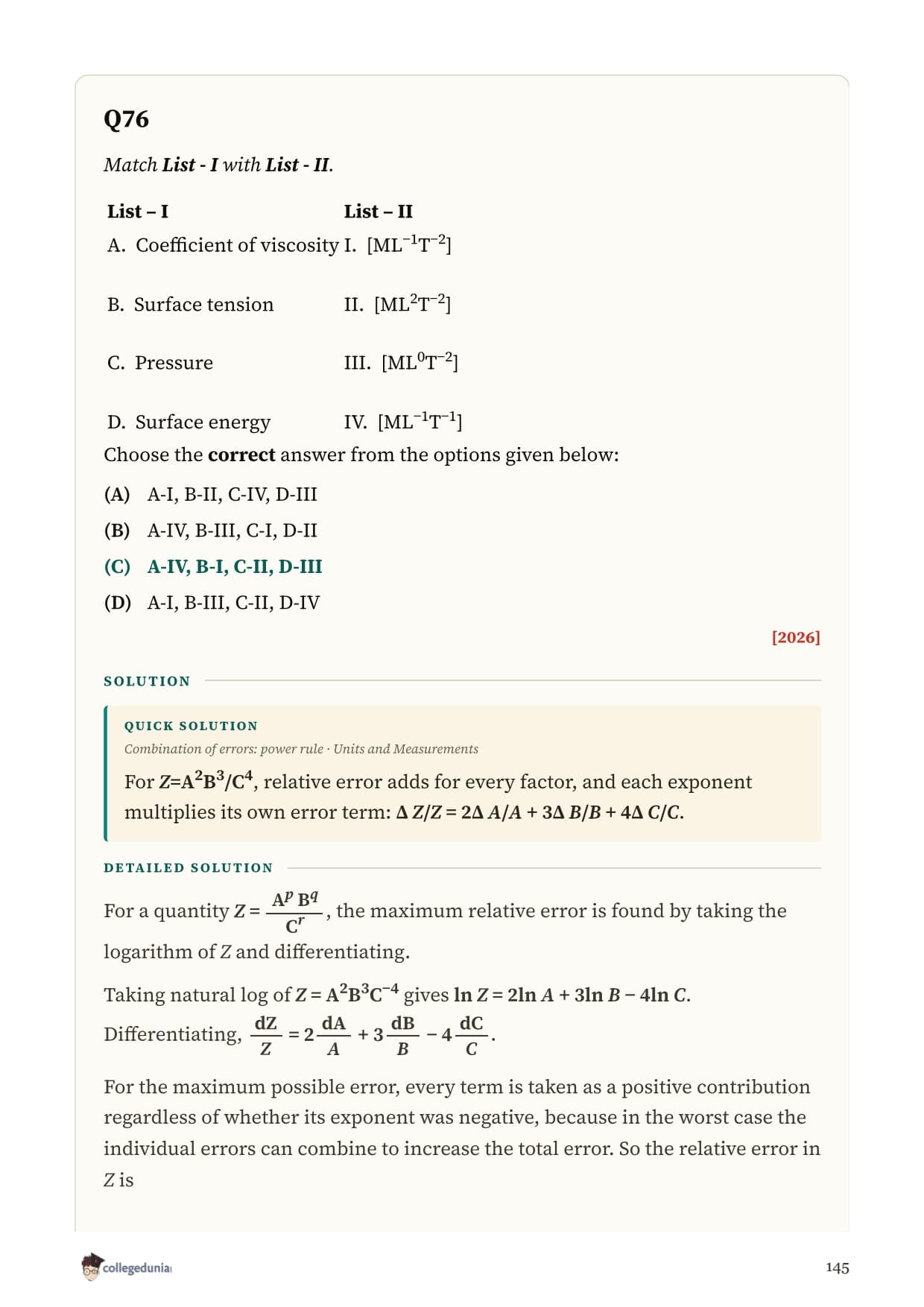
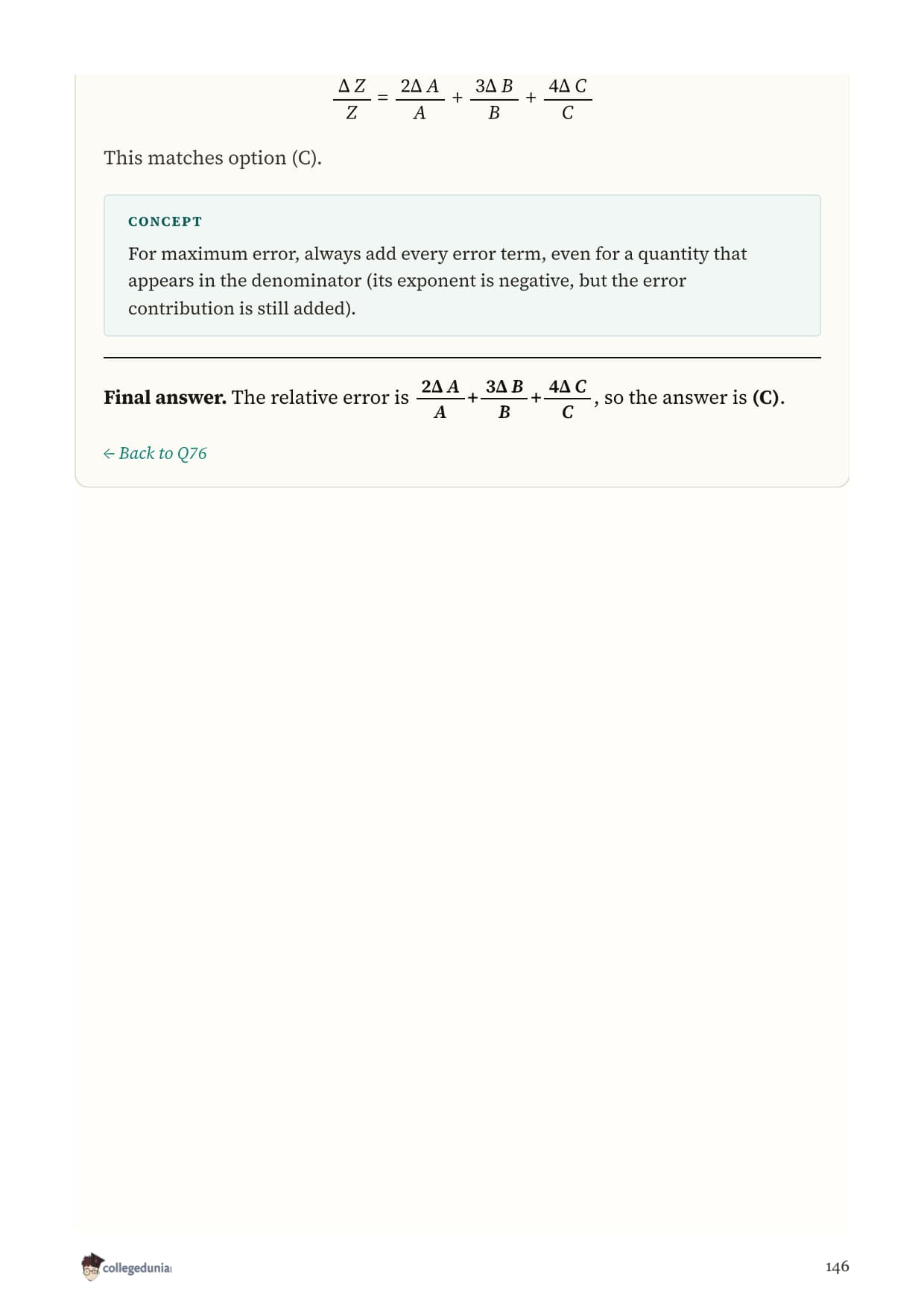
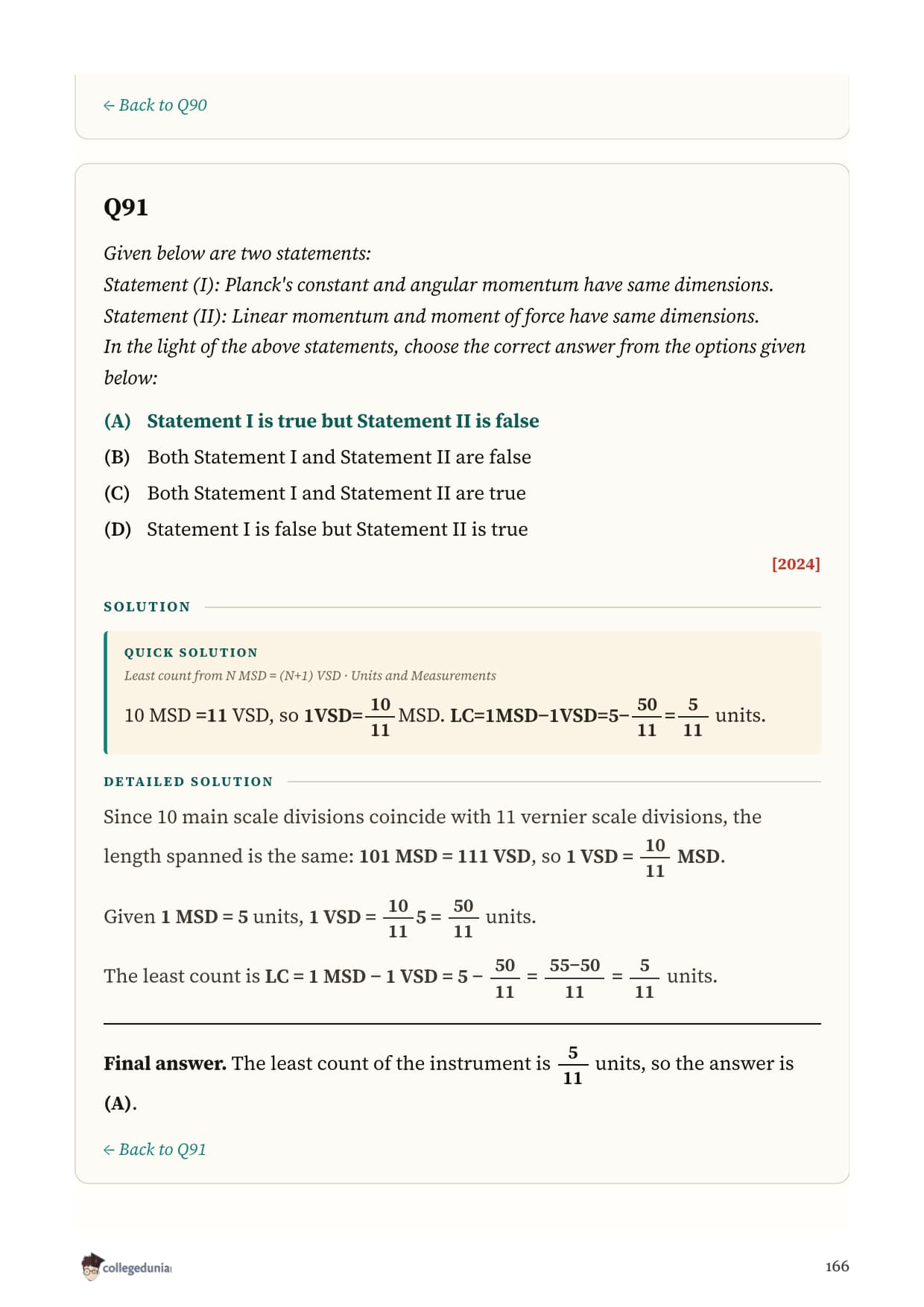
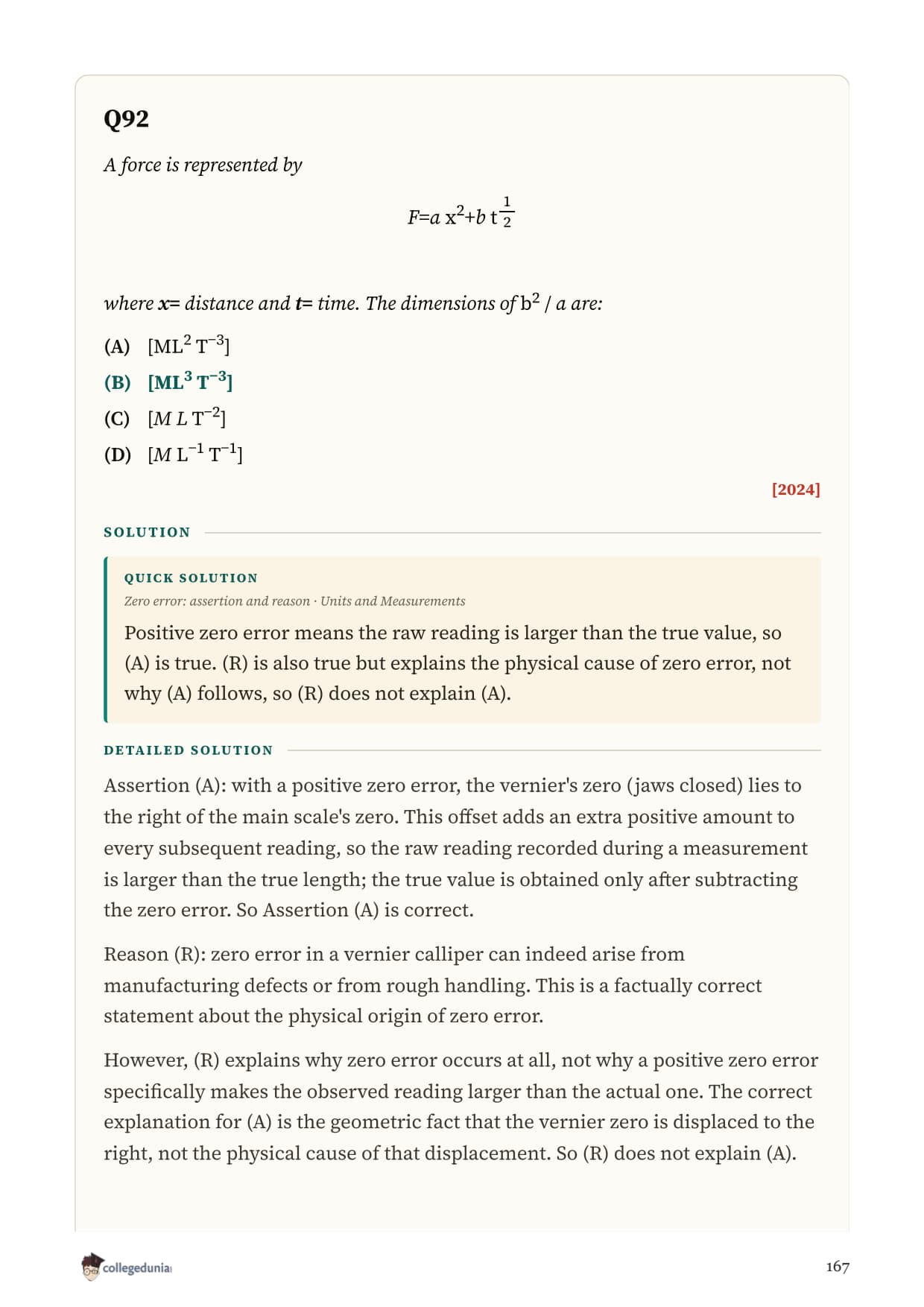
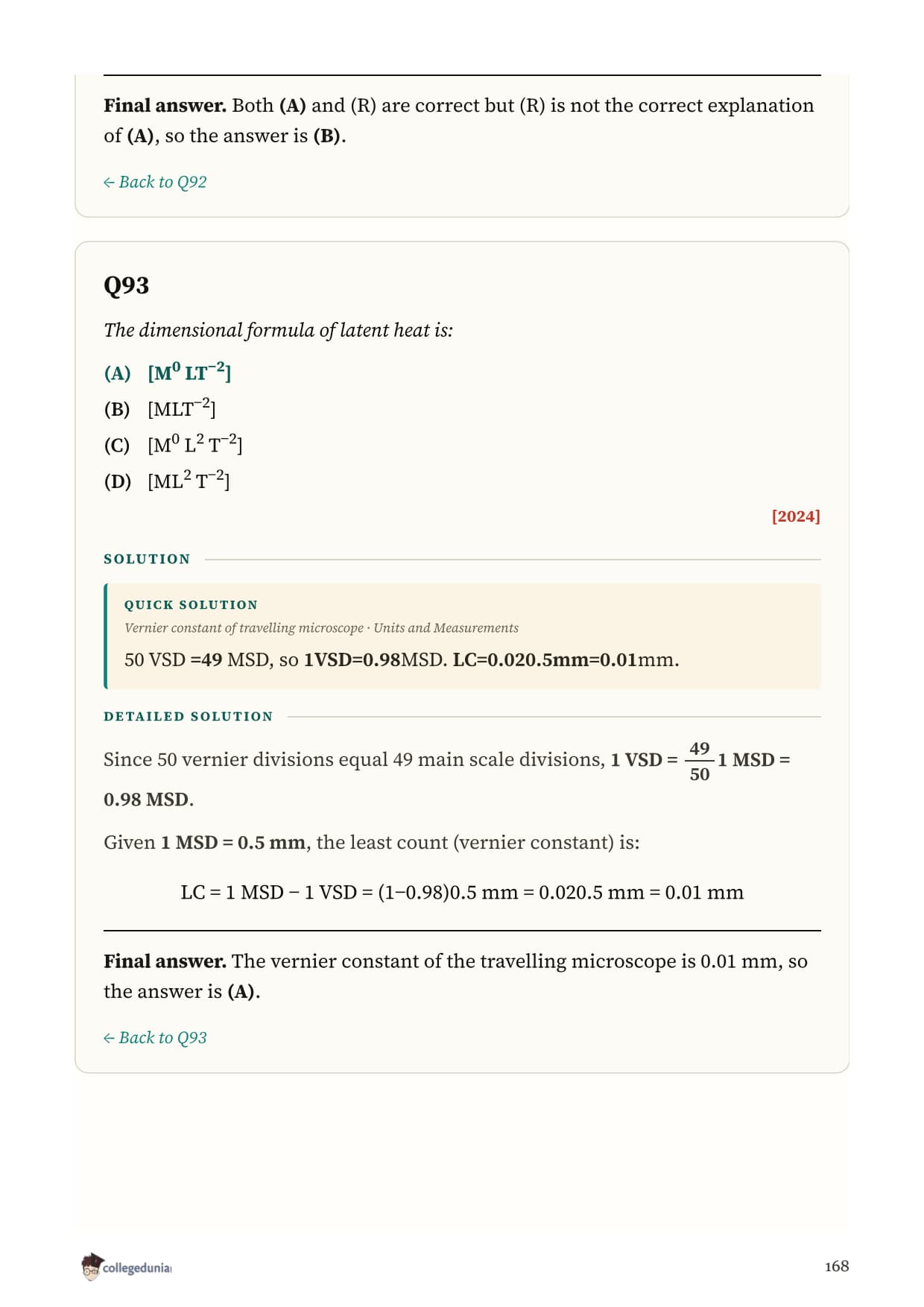
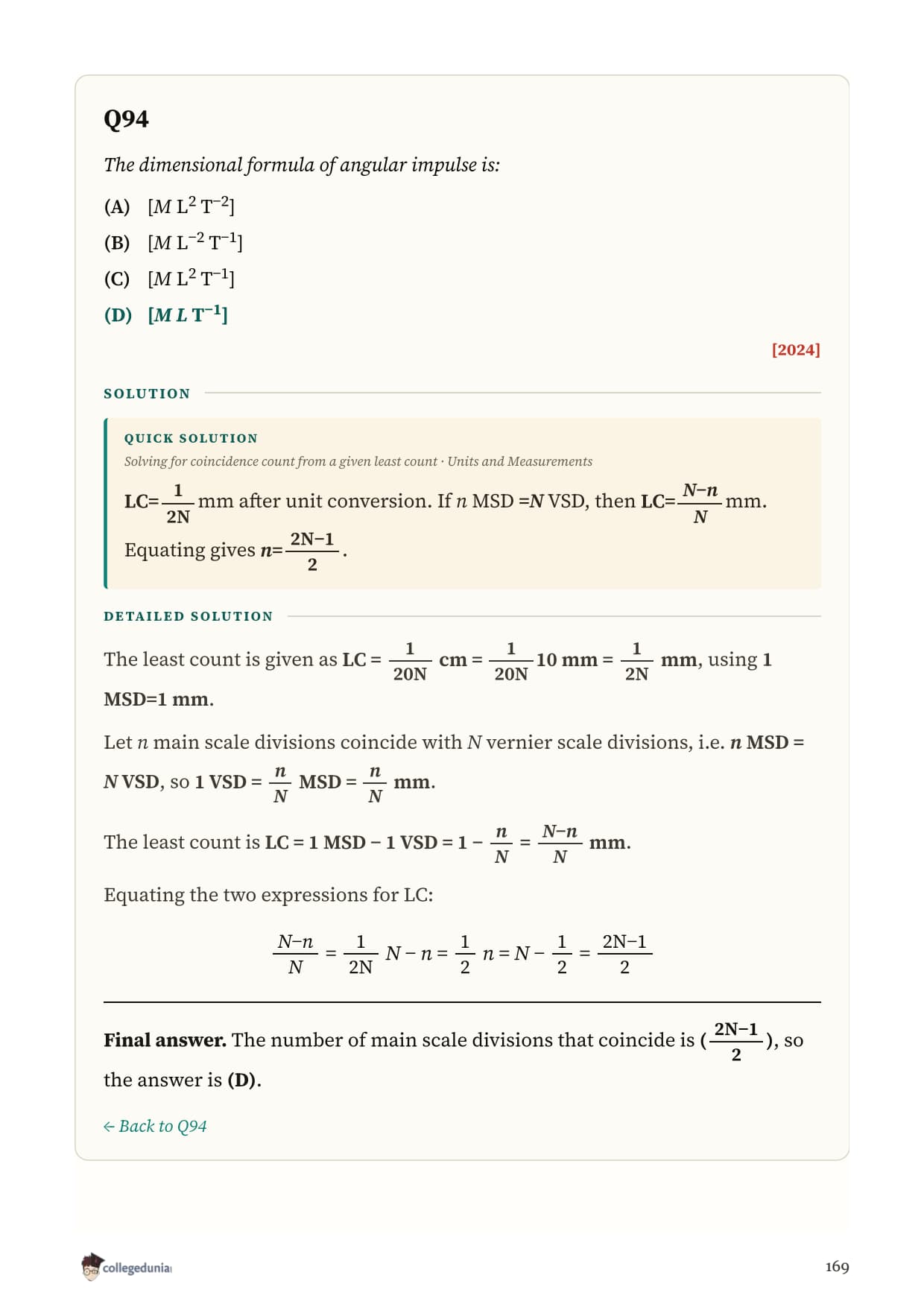
These JEE Main Units and Dimensions PYQ sets bring together 122 previous year questions asked between 2022 and 2026, each carrying a quick answer for revision and a full worked solution, with every final answer checked against the official key.
Units and Dimensions opens the JEE Main Physics syllabus and is one of the most reliably set chapters in the paper. Across the 2022 to 2026 shifts collected here it works out to roughly one question per Physics paper, worth 4 marks, and most of those questions are solvable in under two minutes.
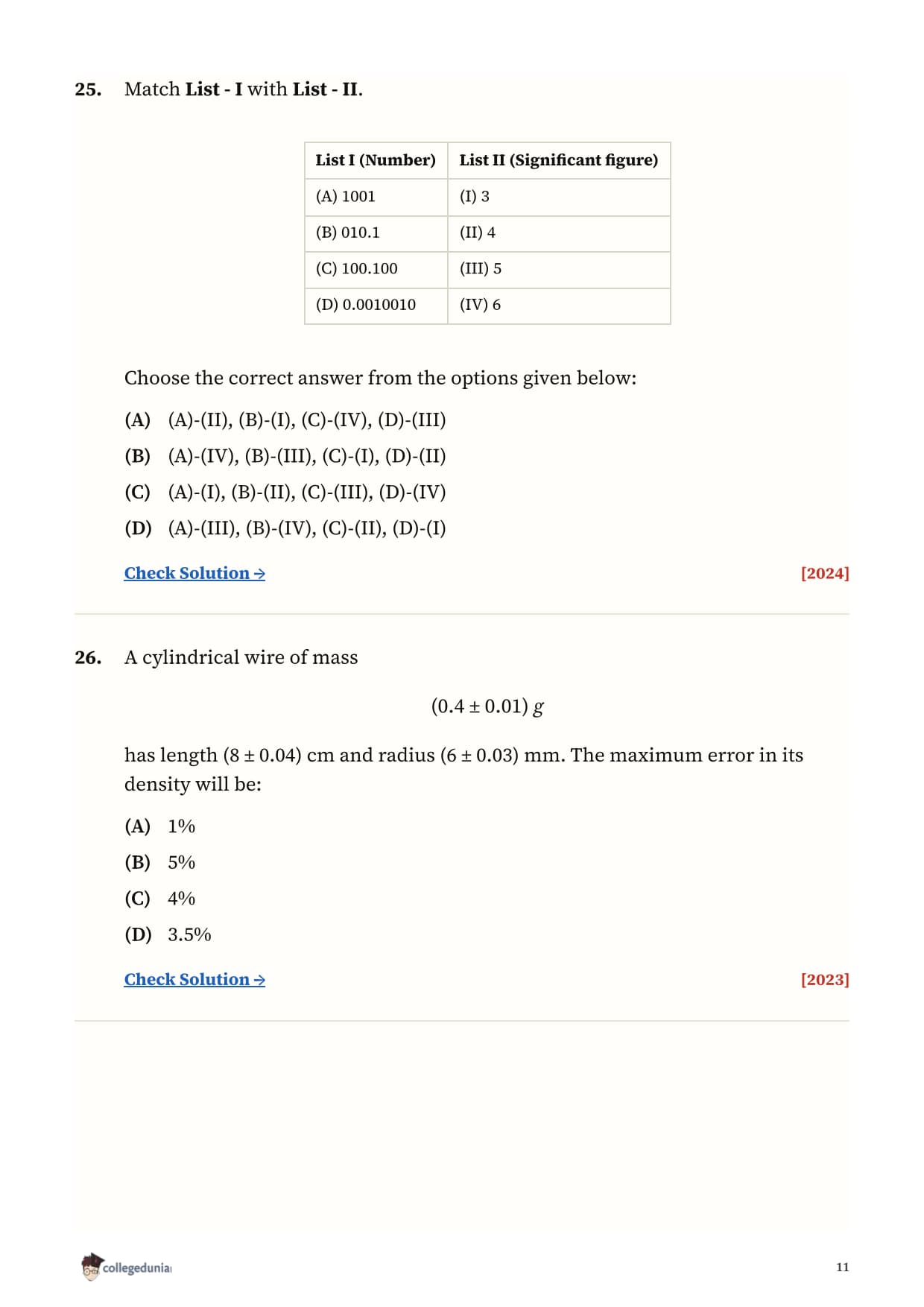
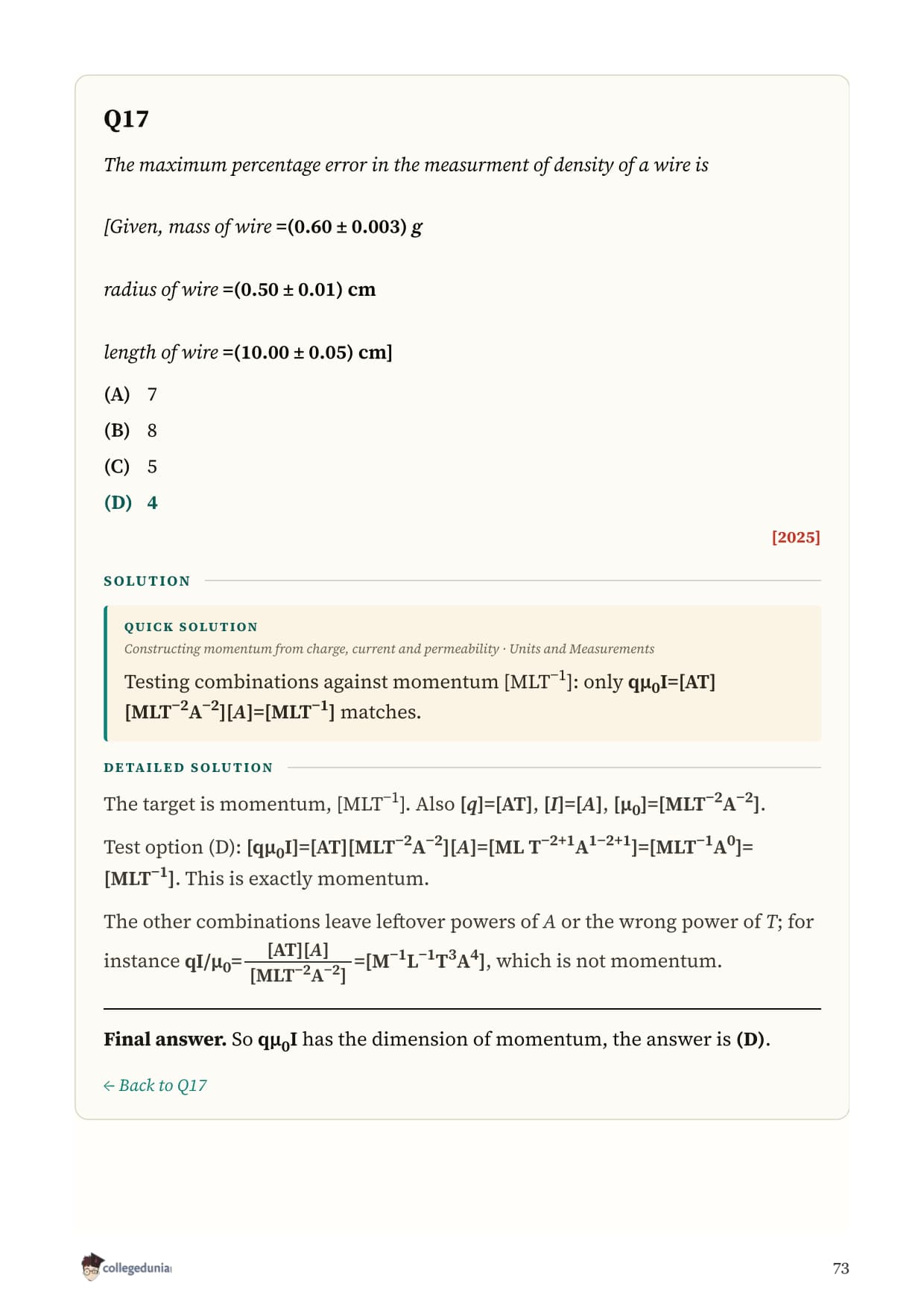
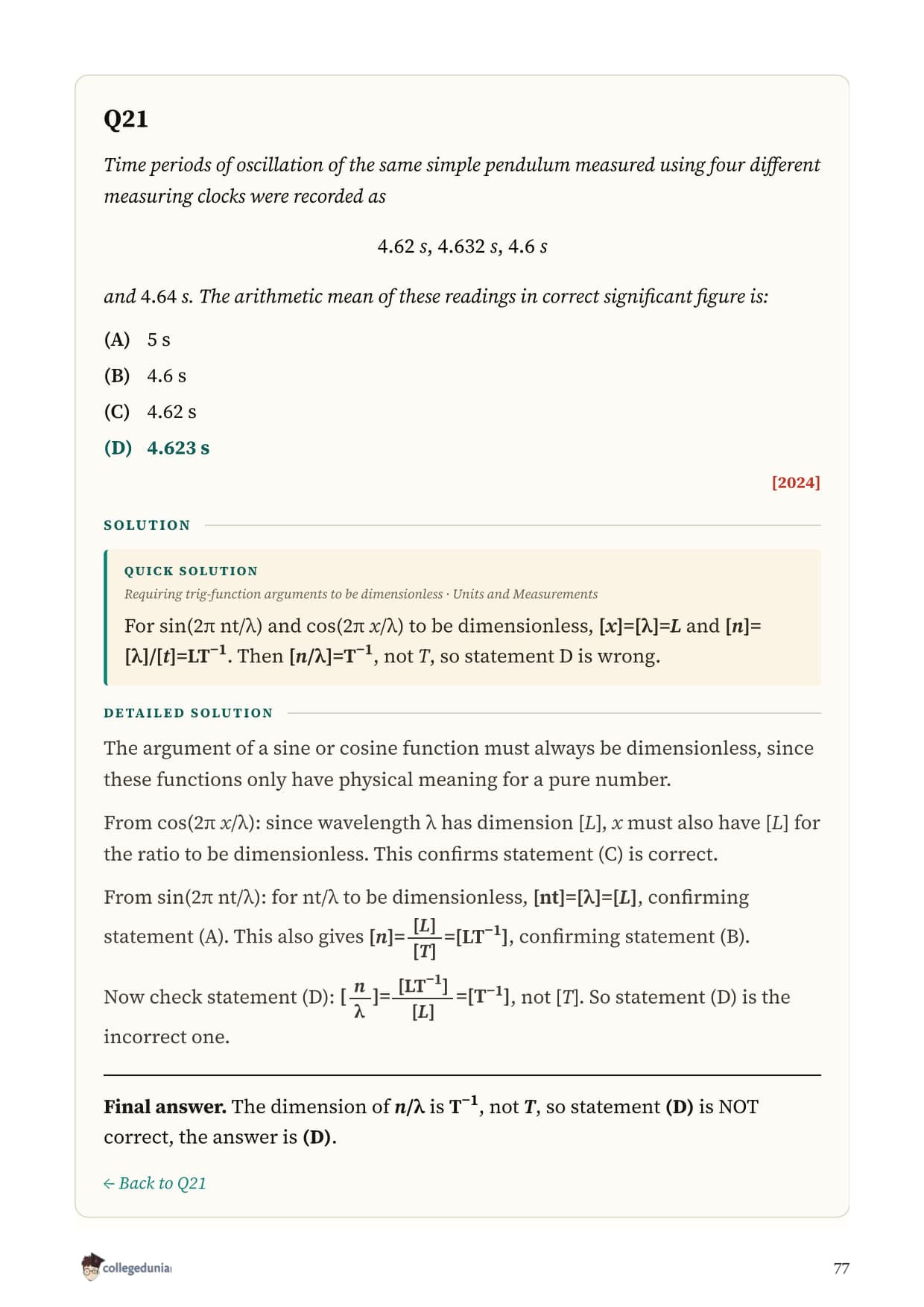
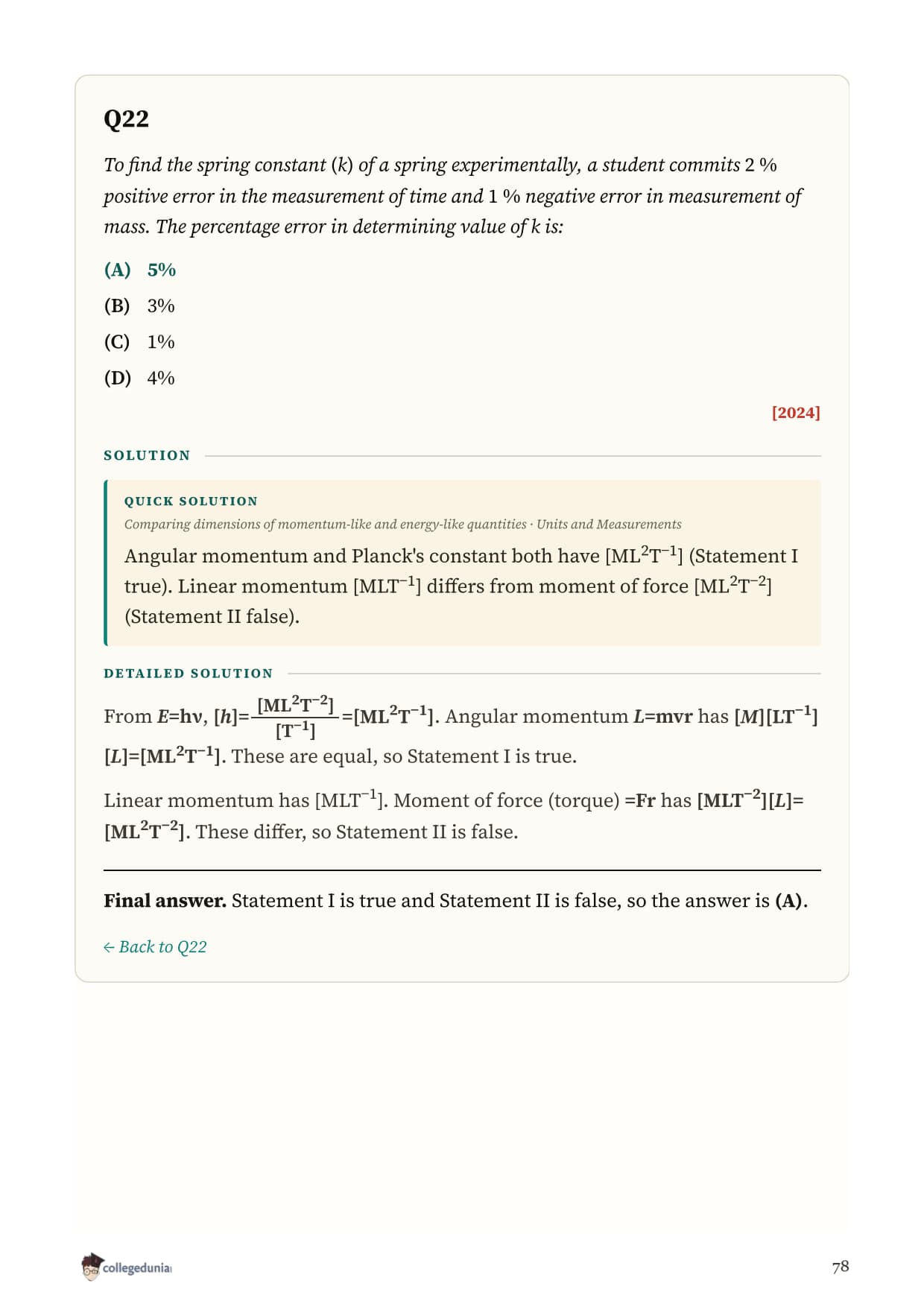
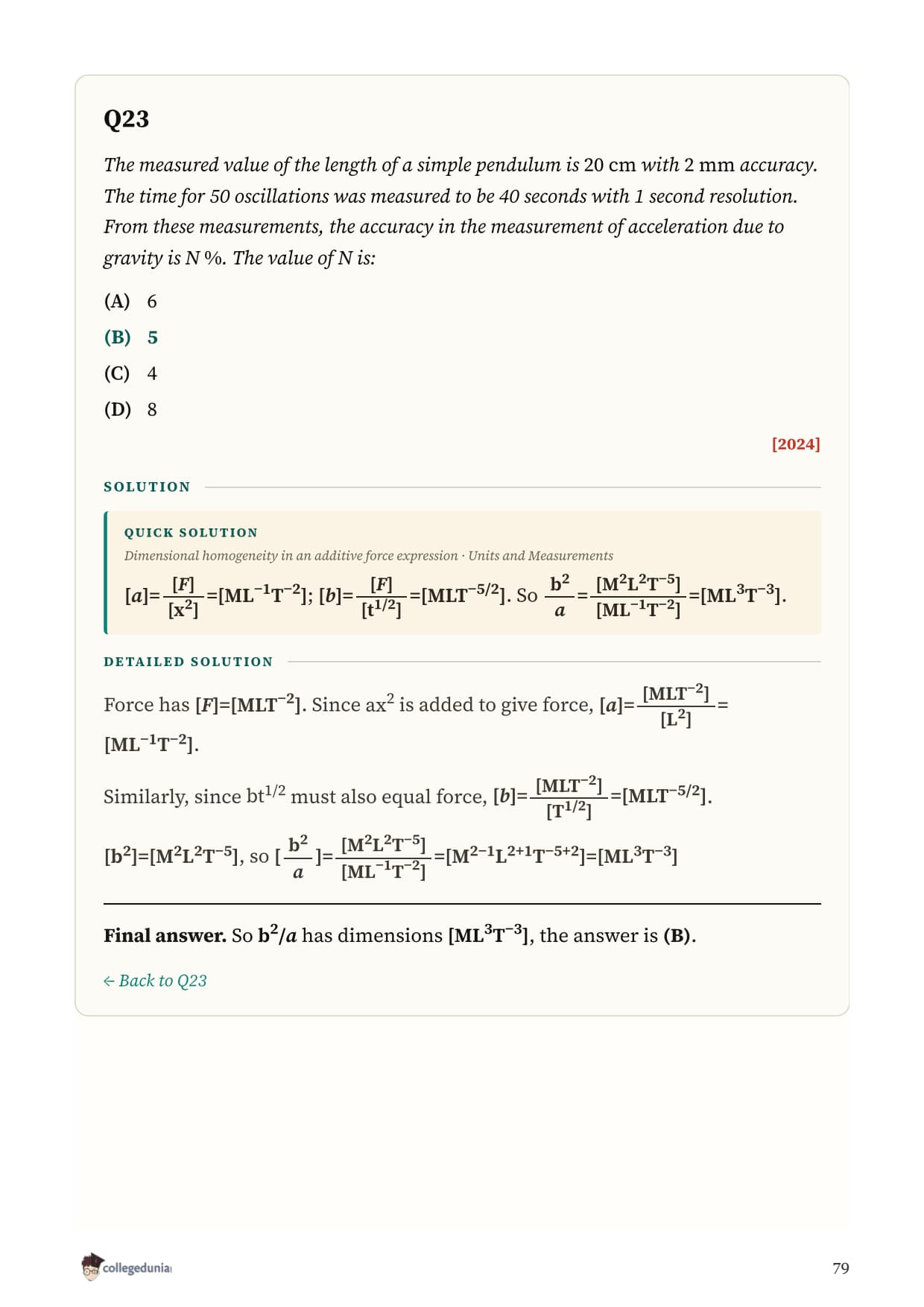
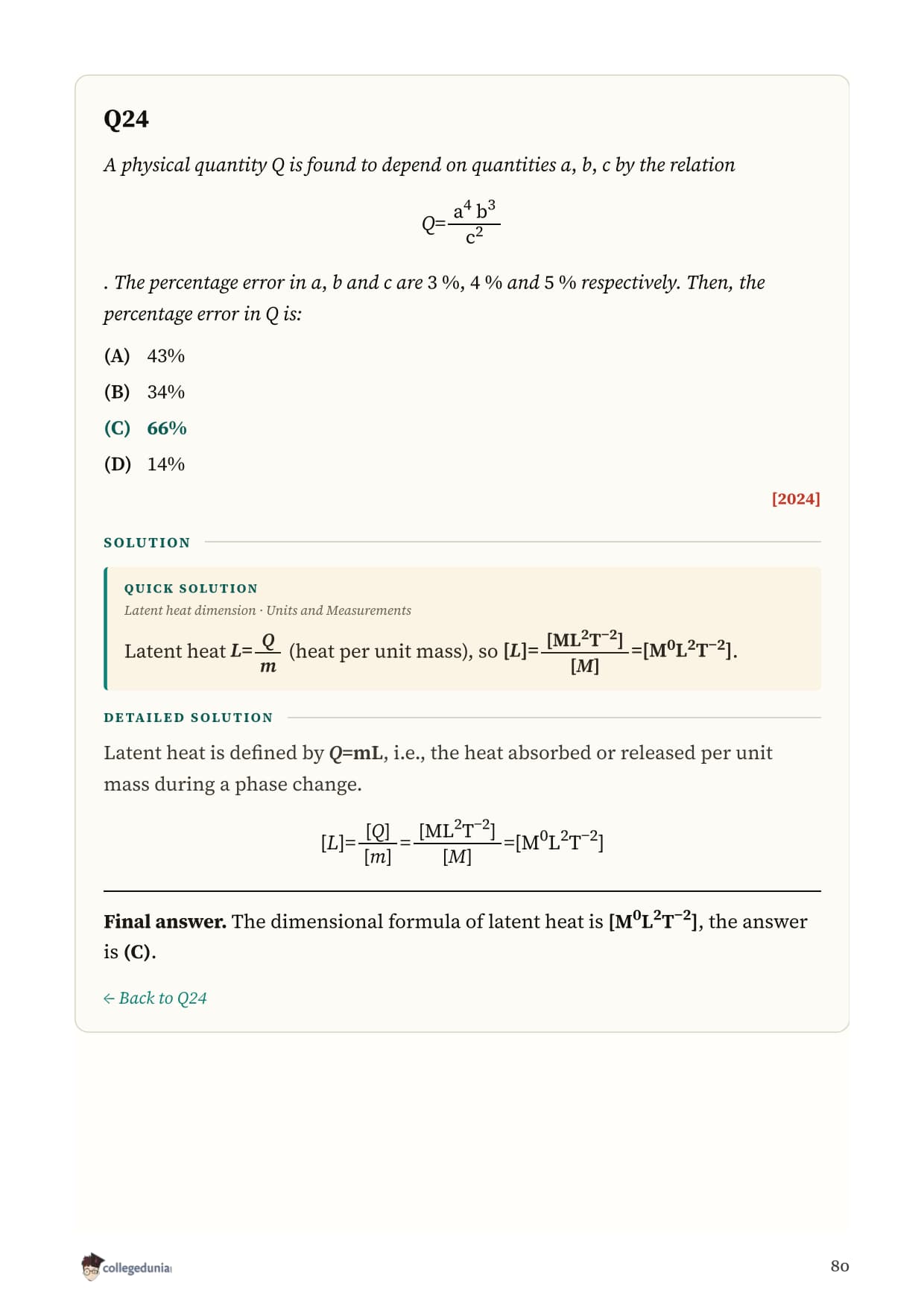
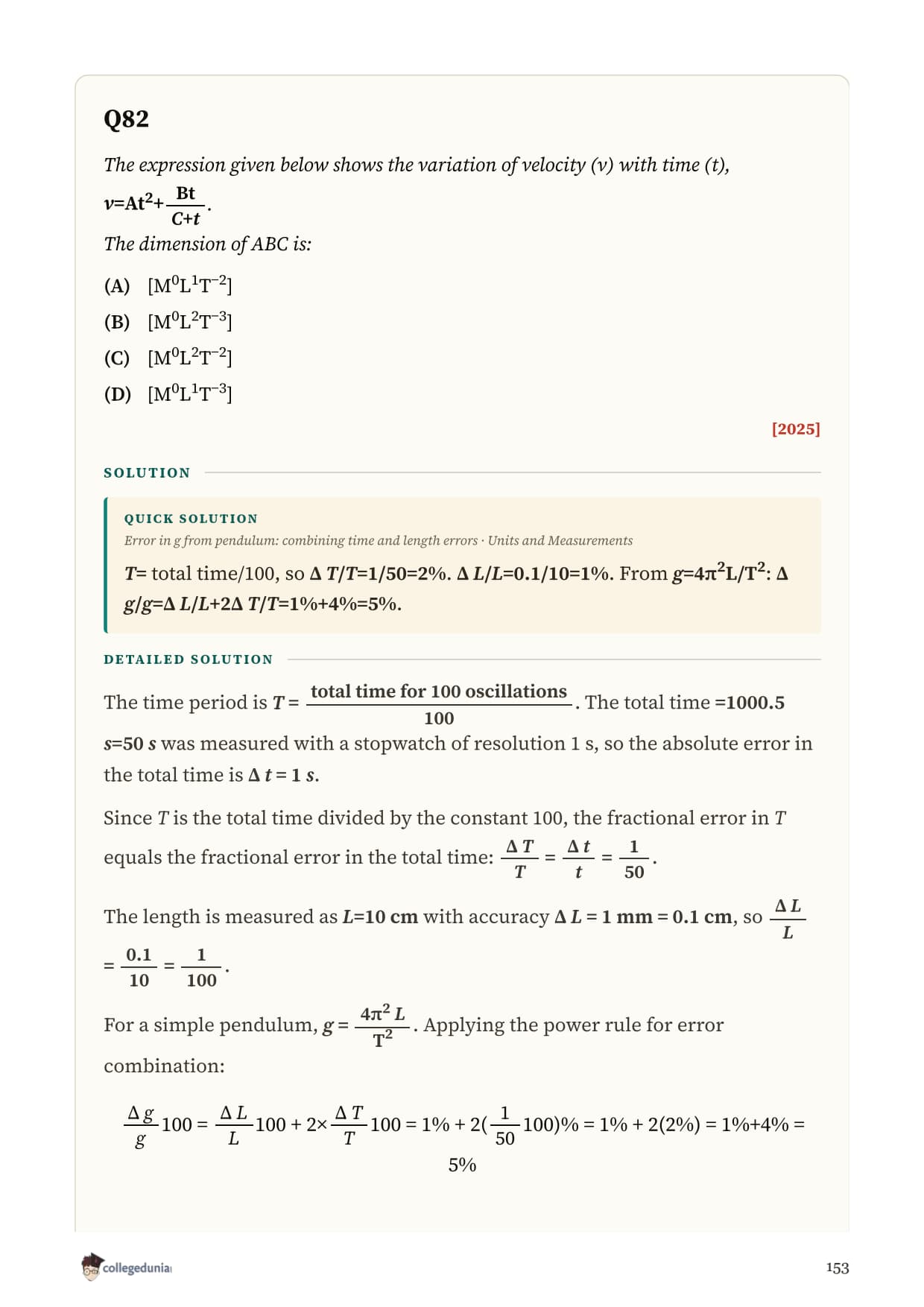
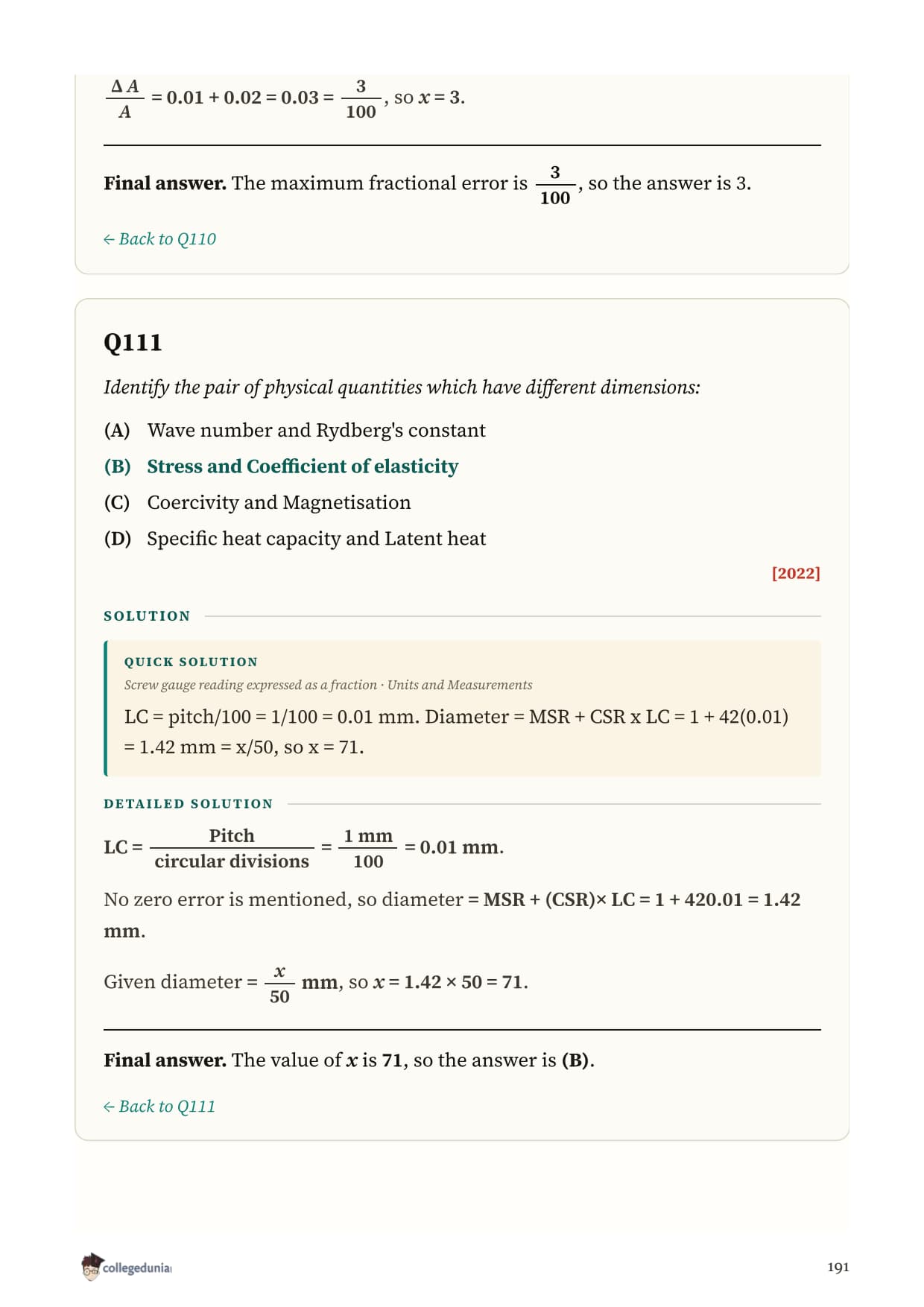
Two sub-topics carry the chapter. Dimensional analysis and error measurement account for 82 of the 122 questions in this bank, with vernier callipers and the screw gauge supplying most of what is left. A student short on time should attempt those two sections first and treat the rest as revision.
- 122 questions from 2022 to 2026, grouped by topic and sorted newest year first, so repeats are easy to spot.
- 110 multiple choice and 12 integer type, matching how the chapter is actually set rather than padding one format.
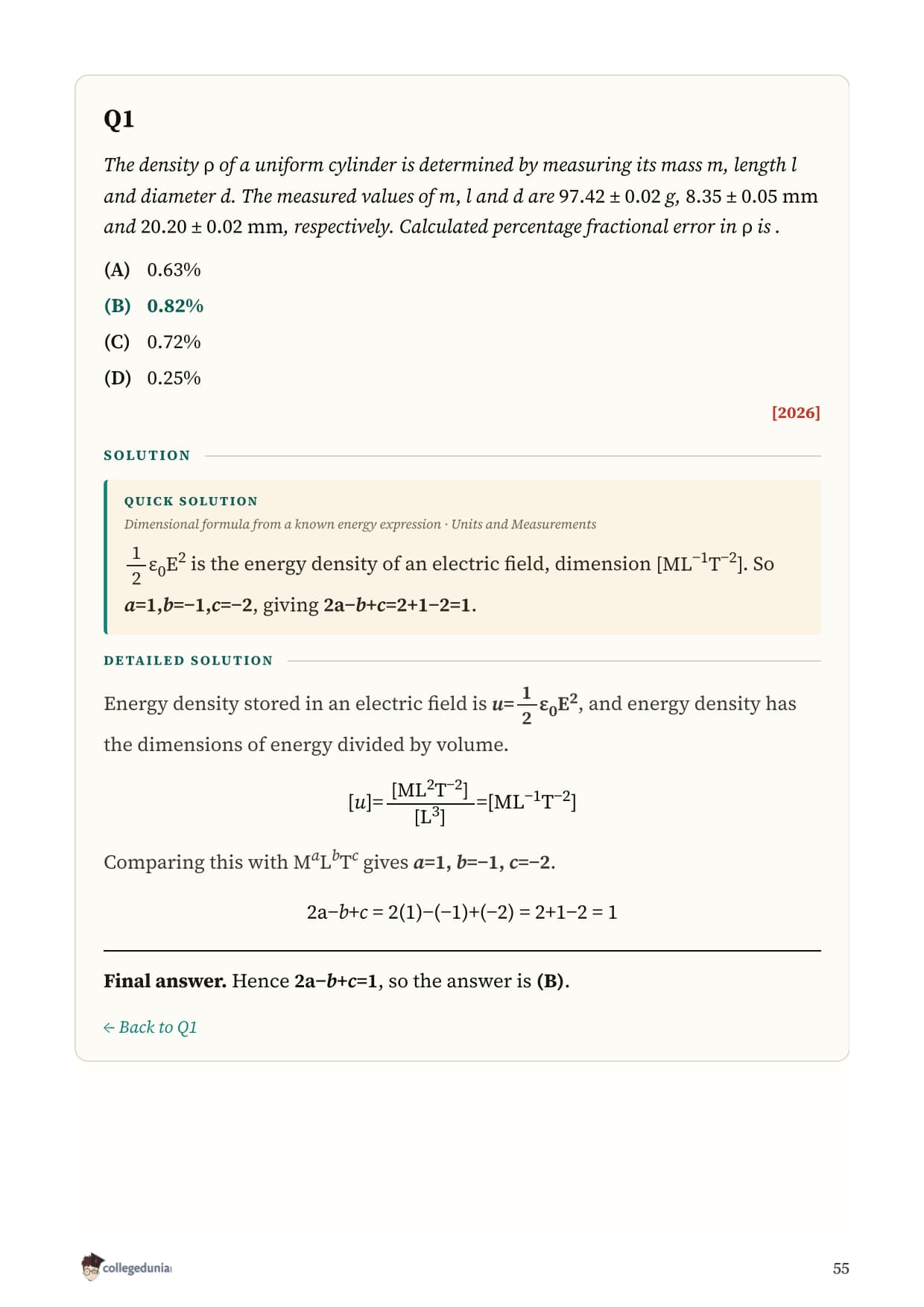
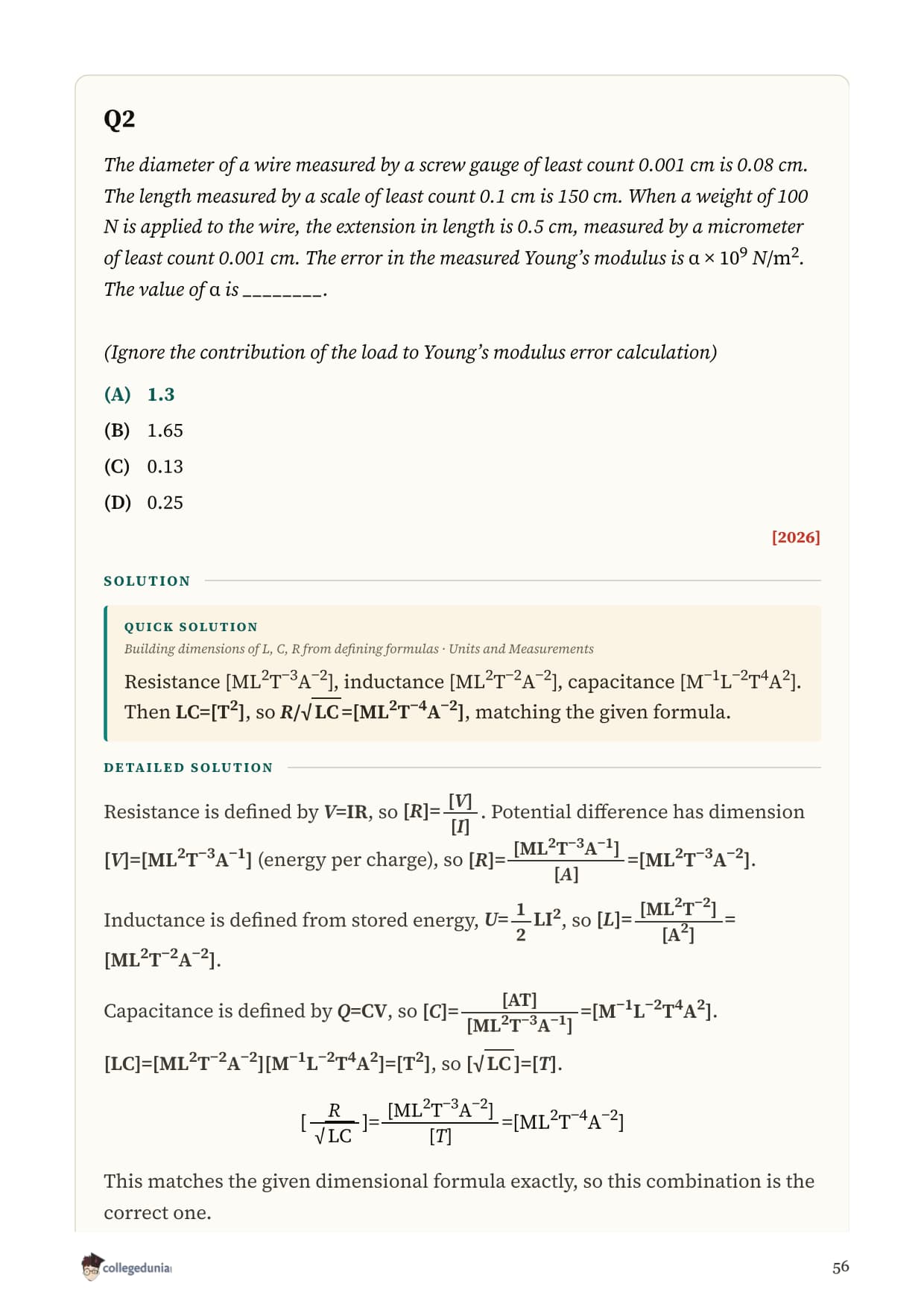
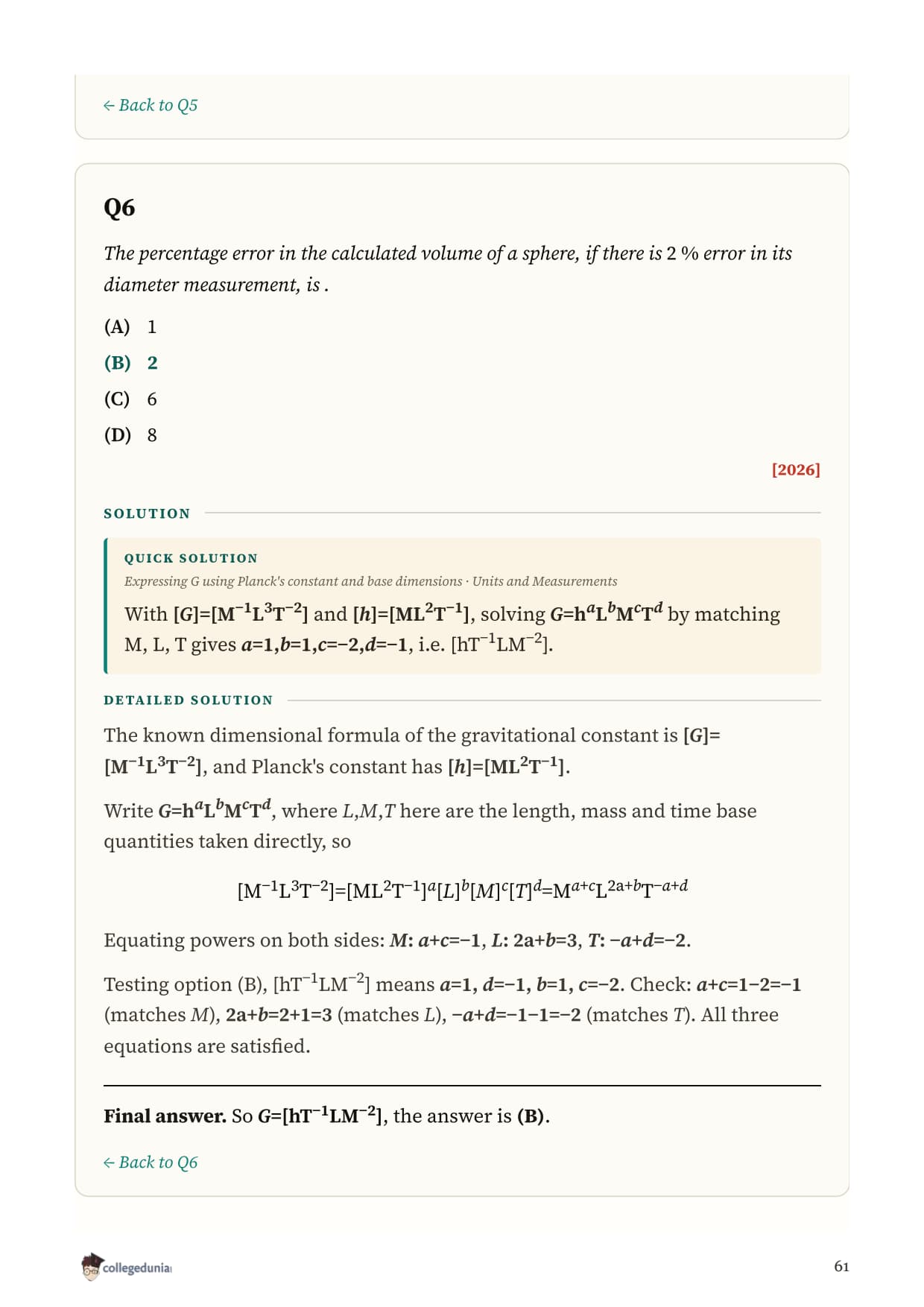
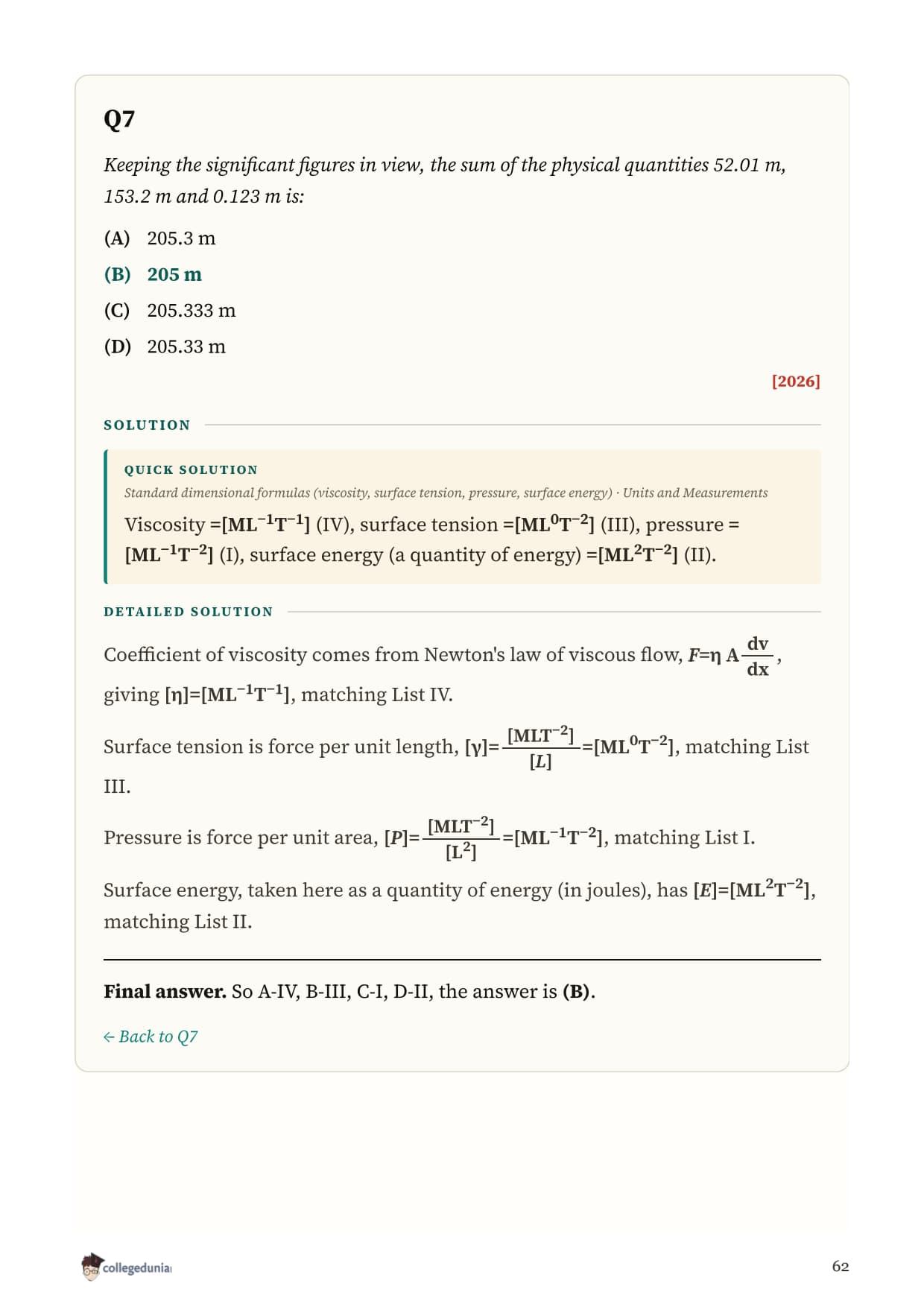
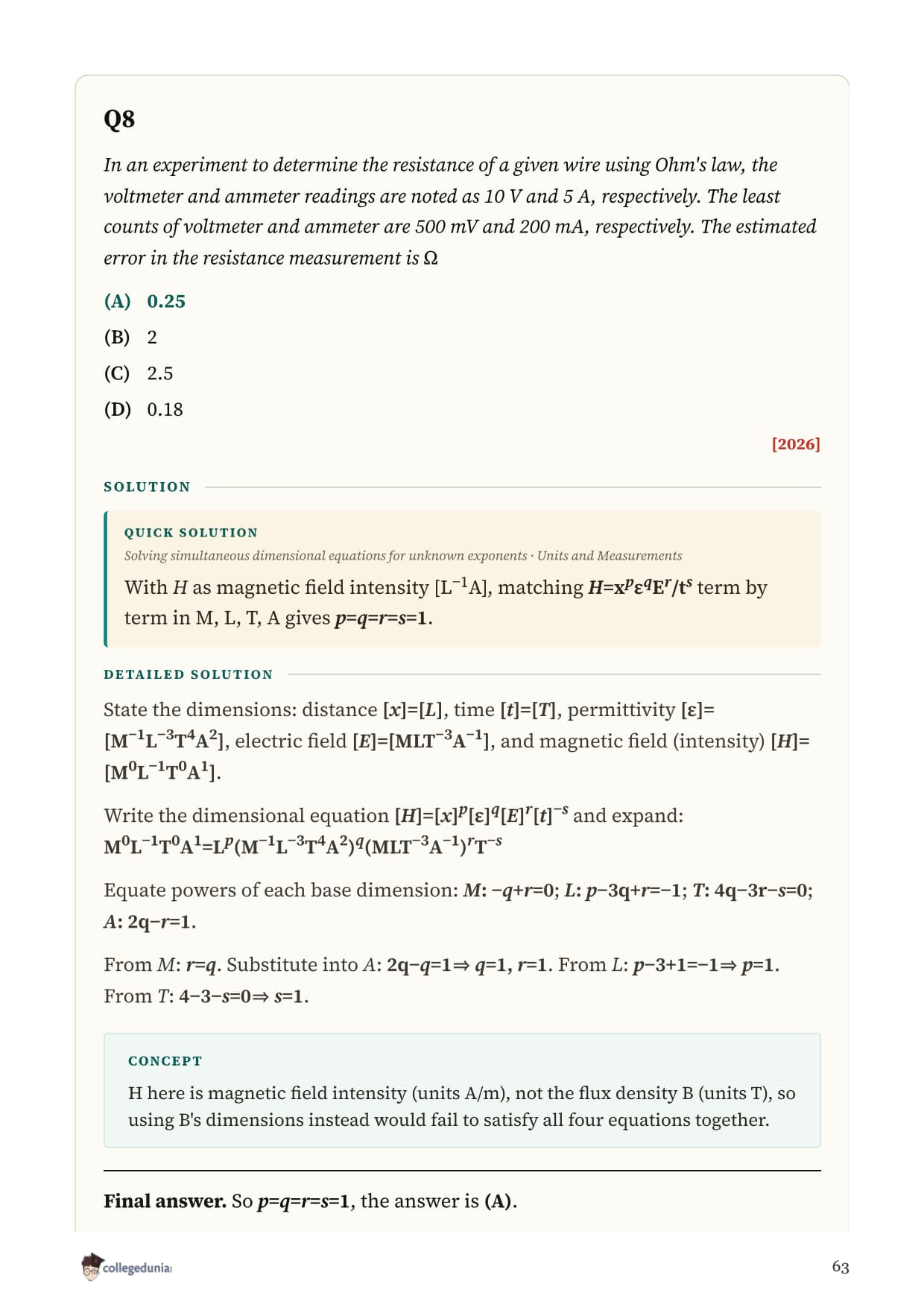
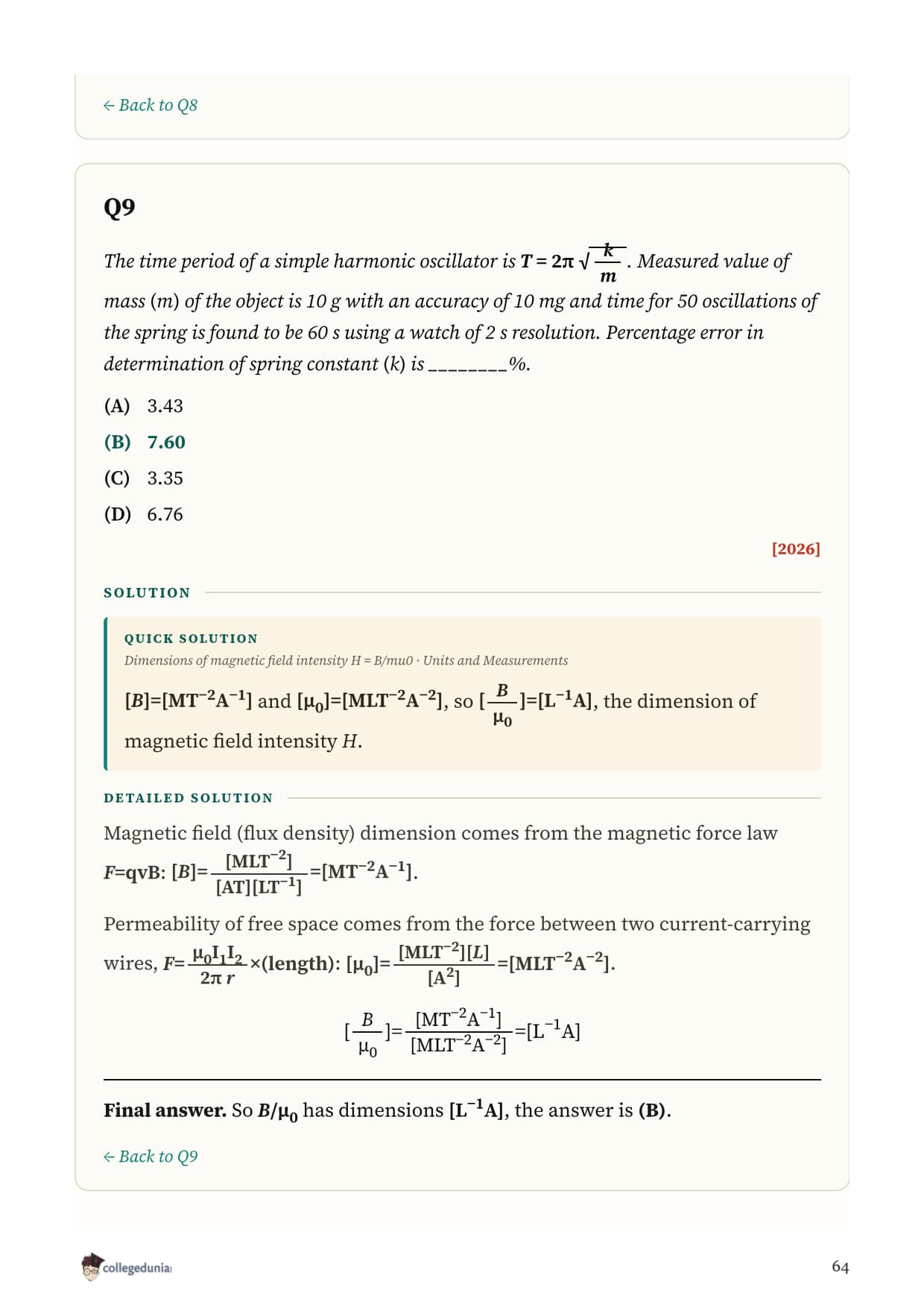
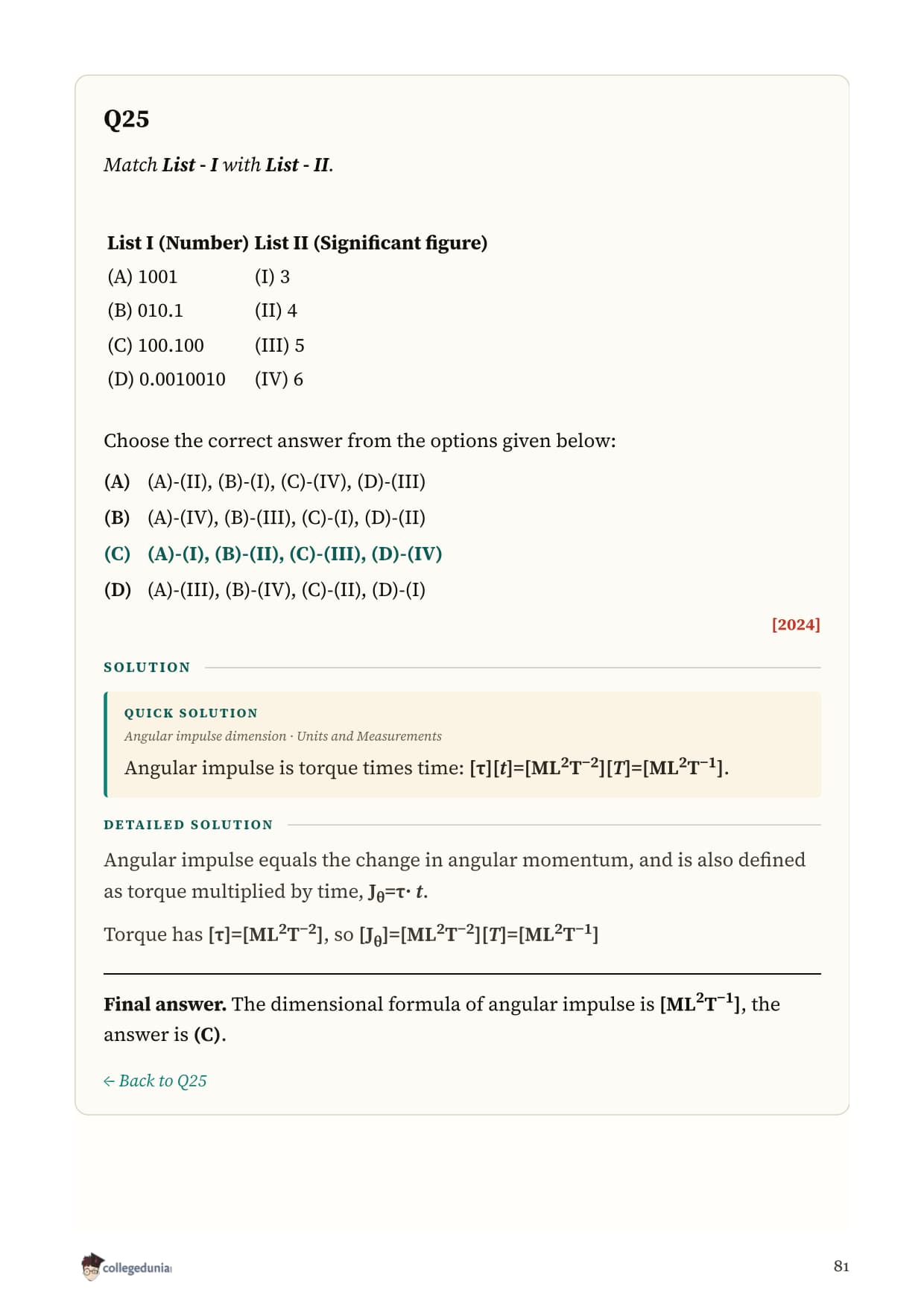
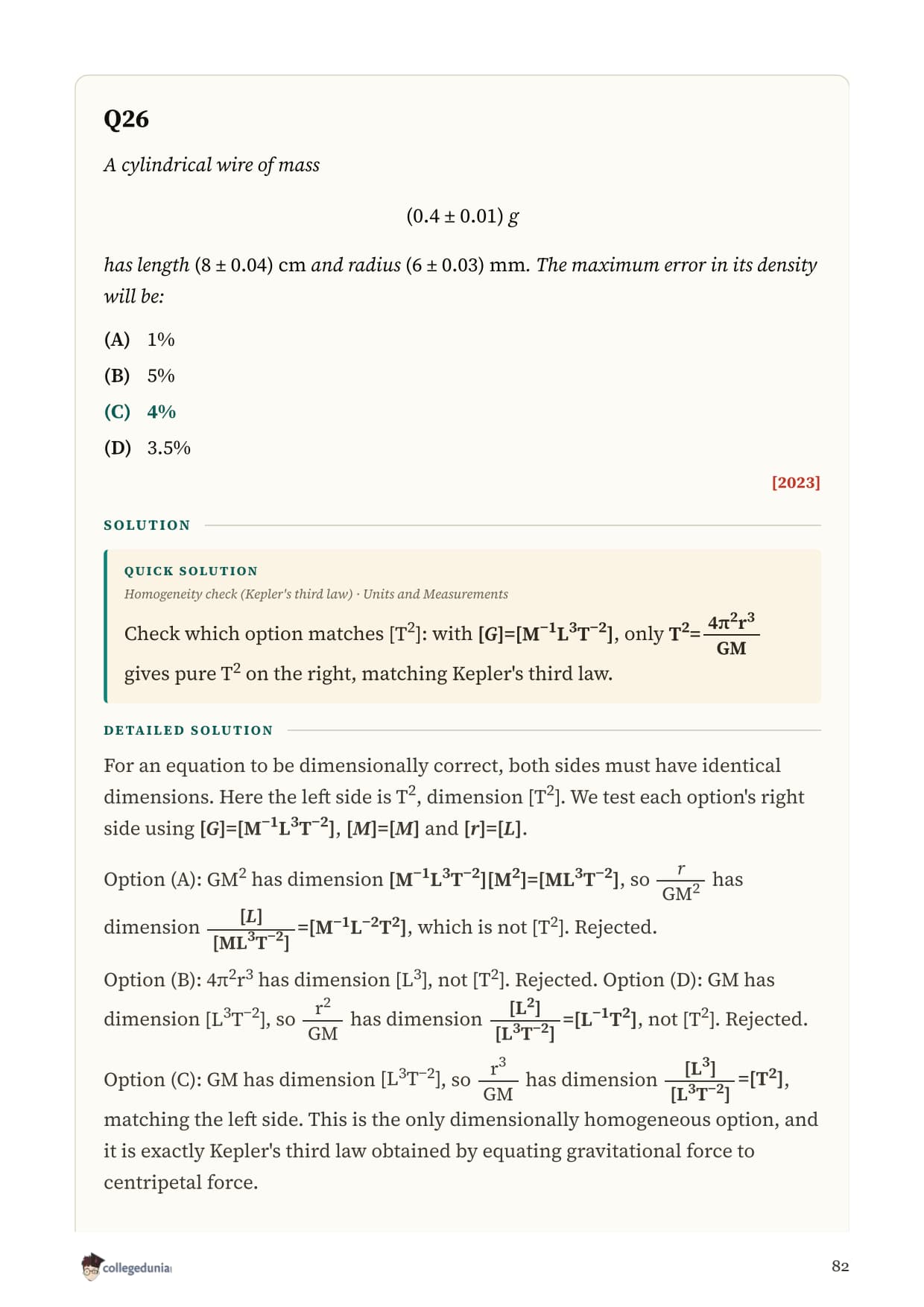
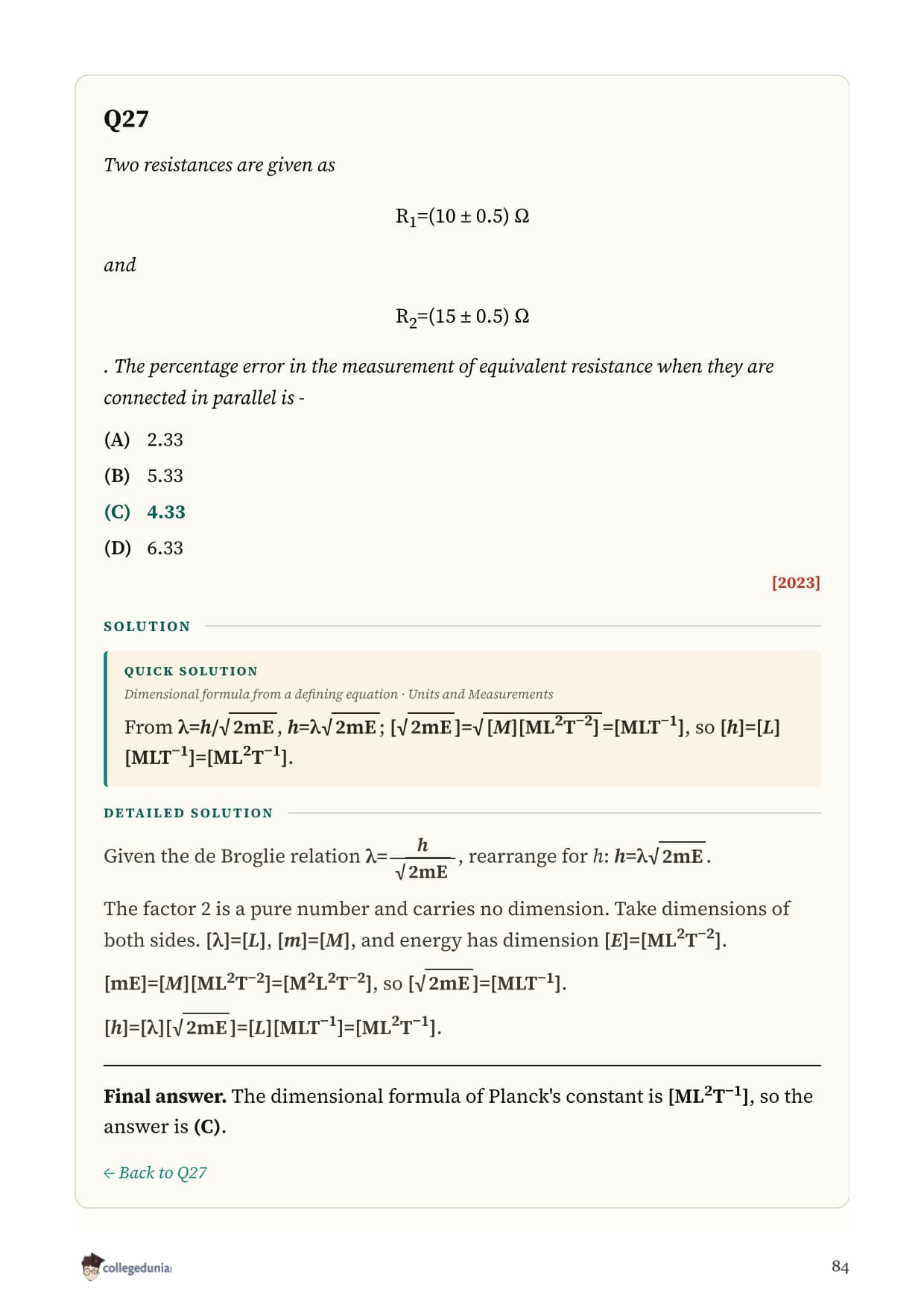
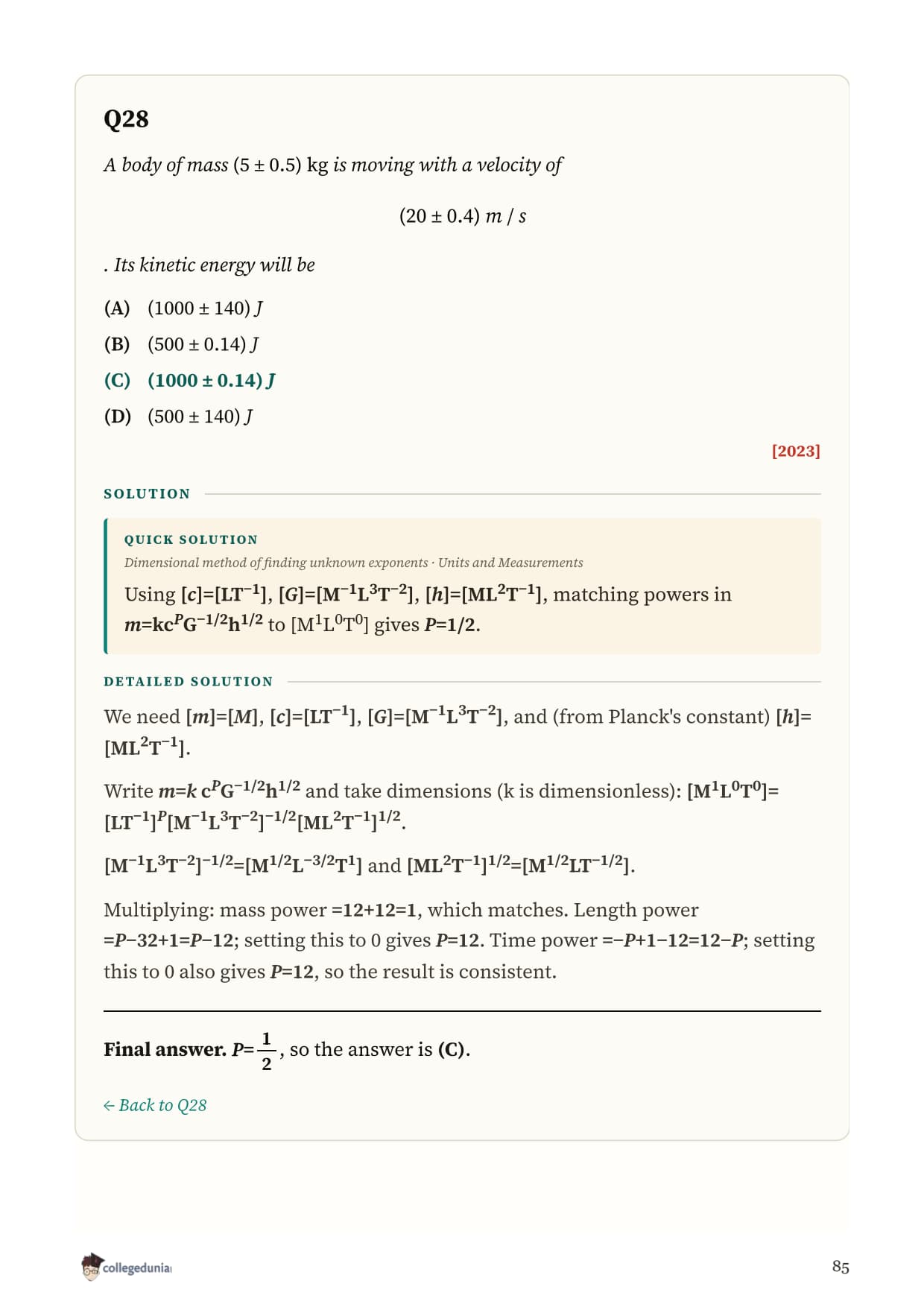
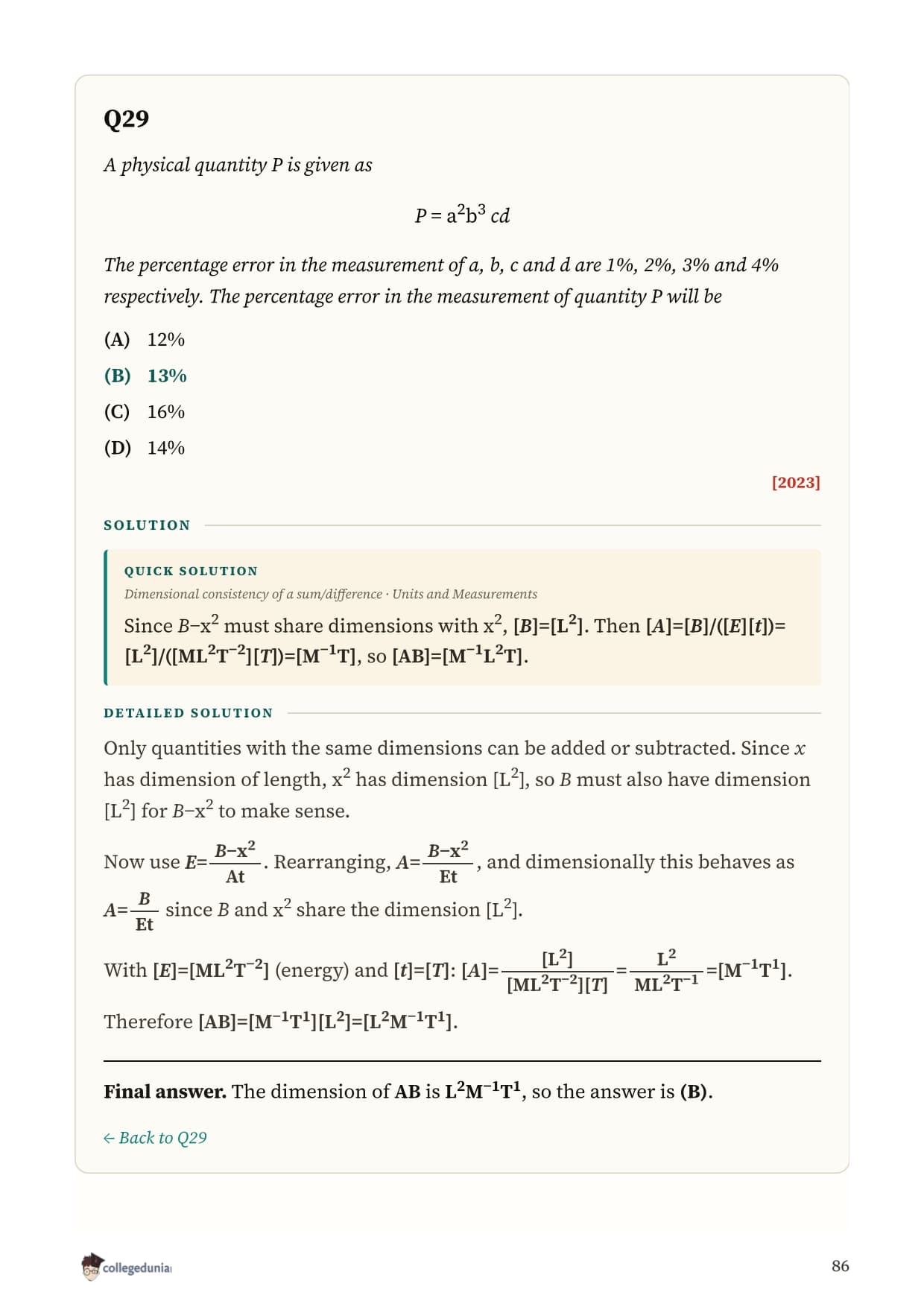
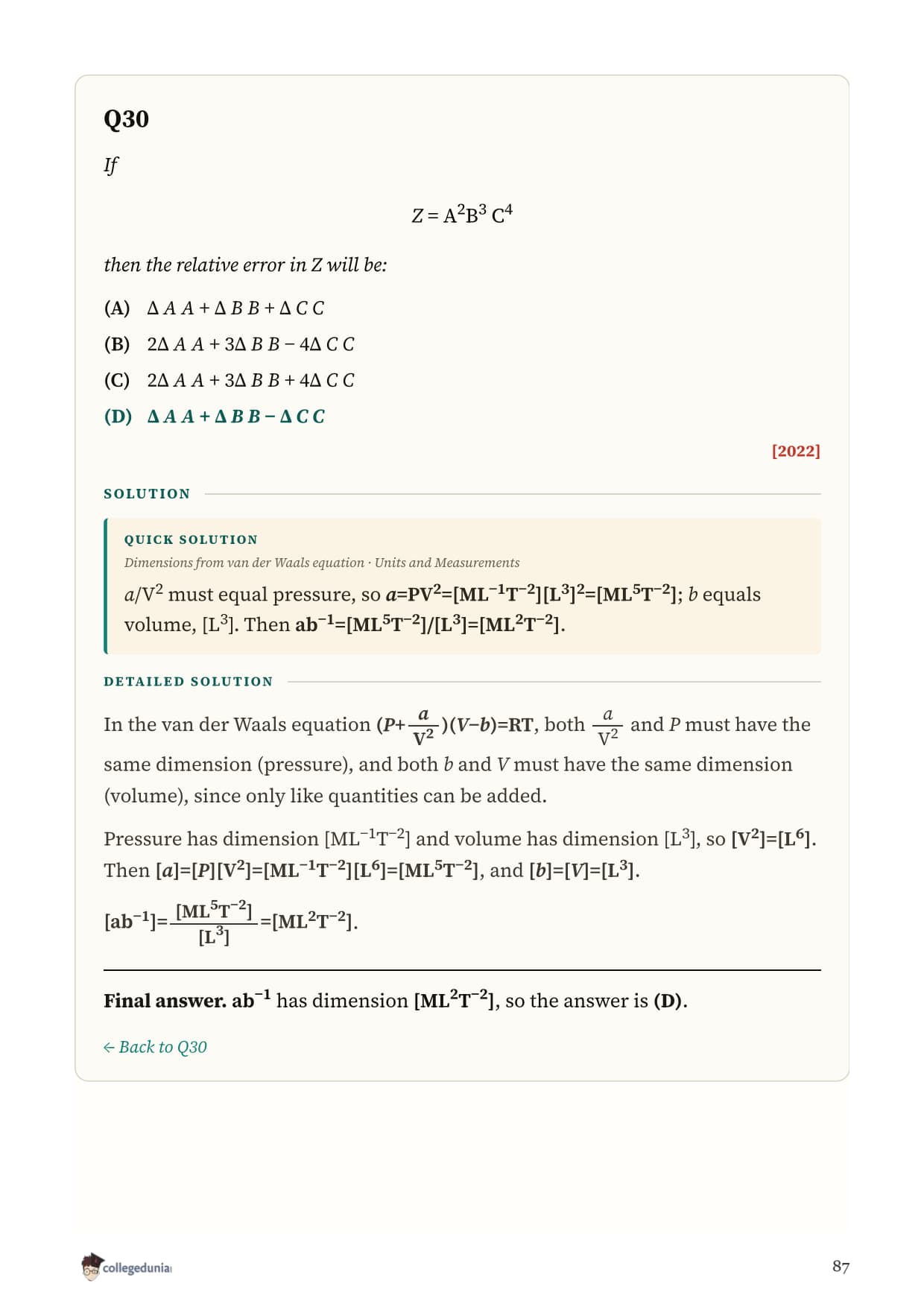
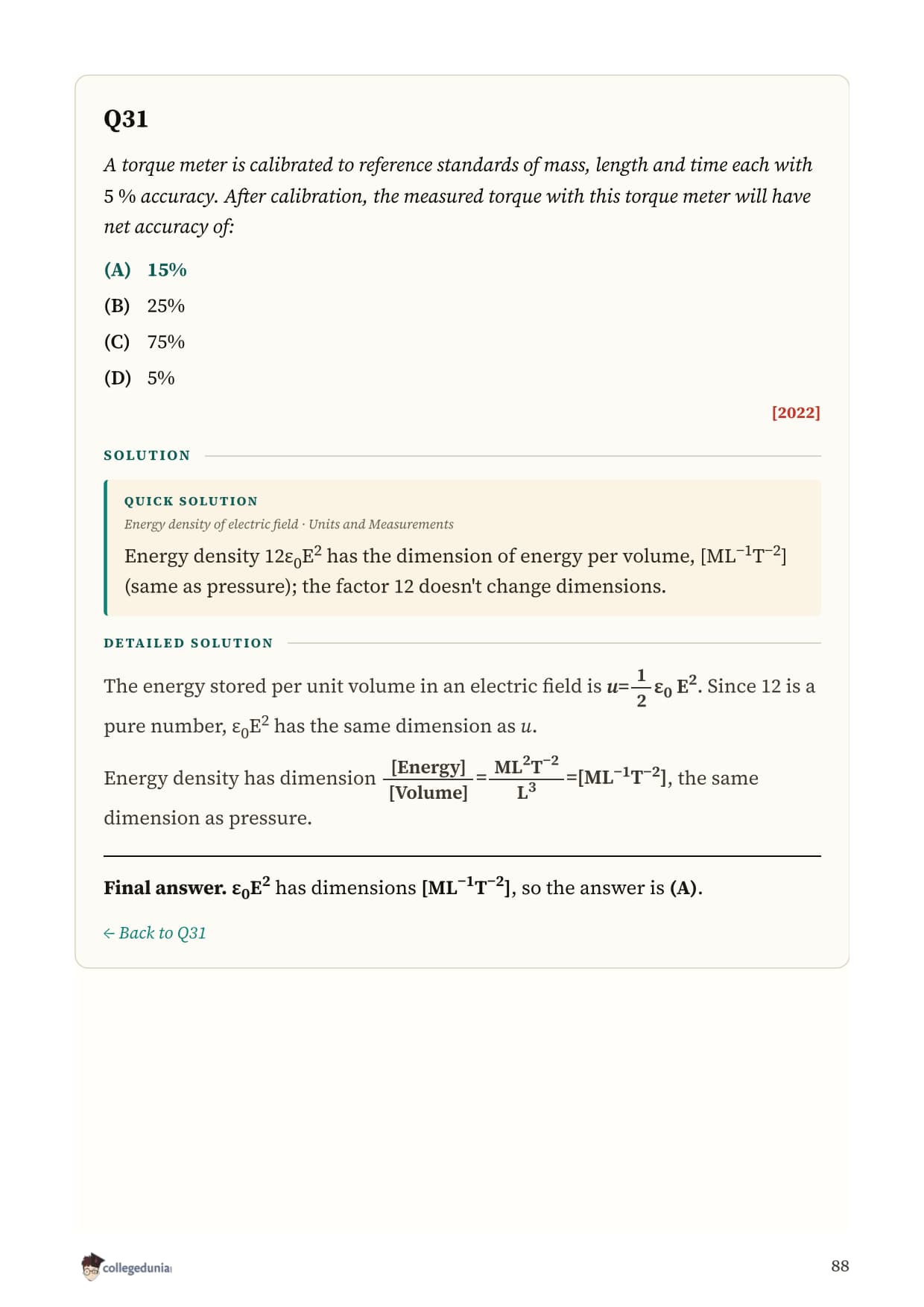
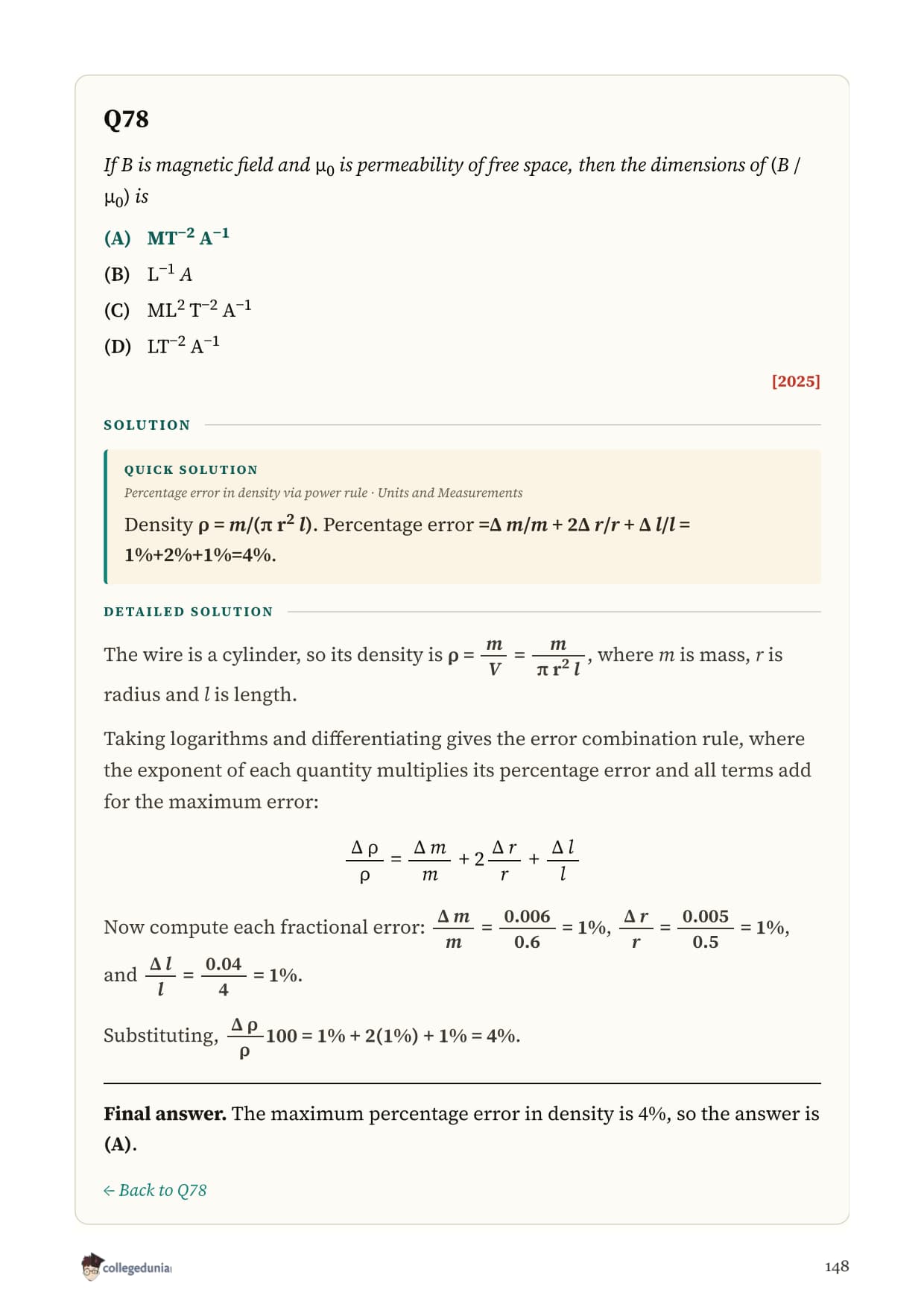
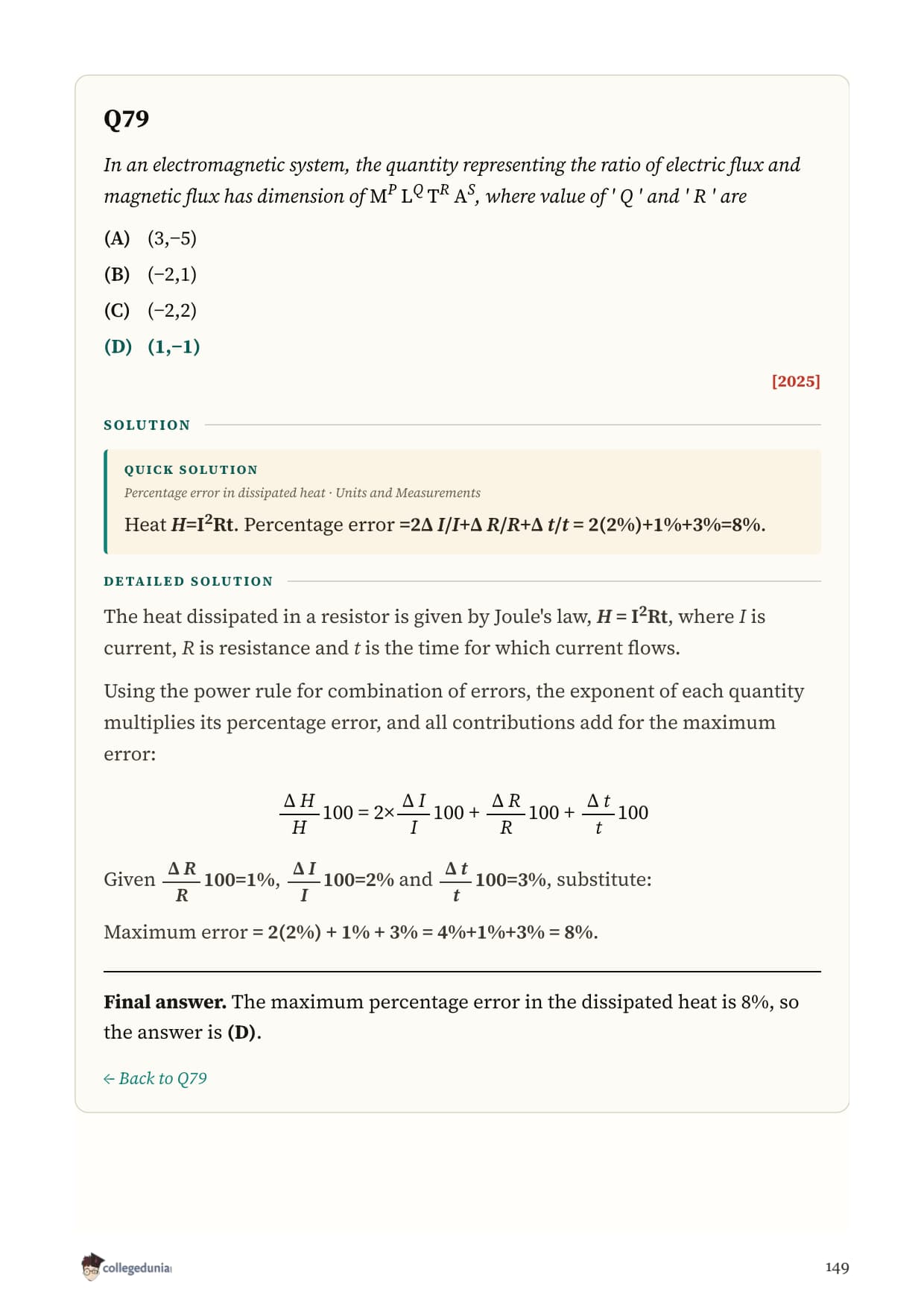
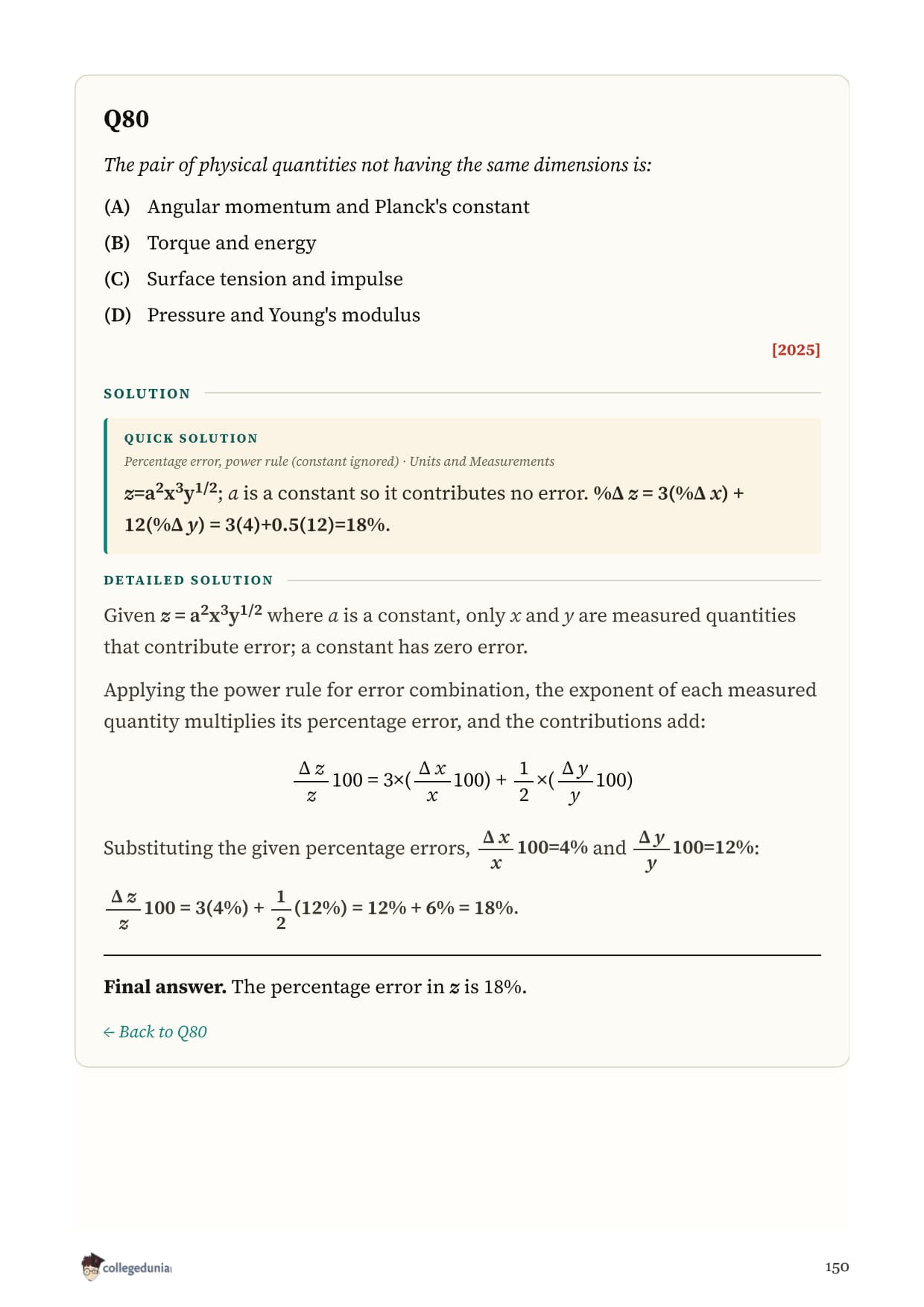
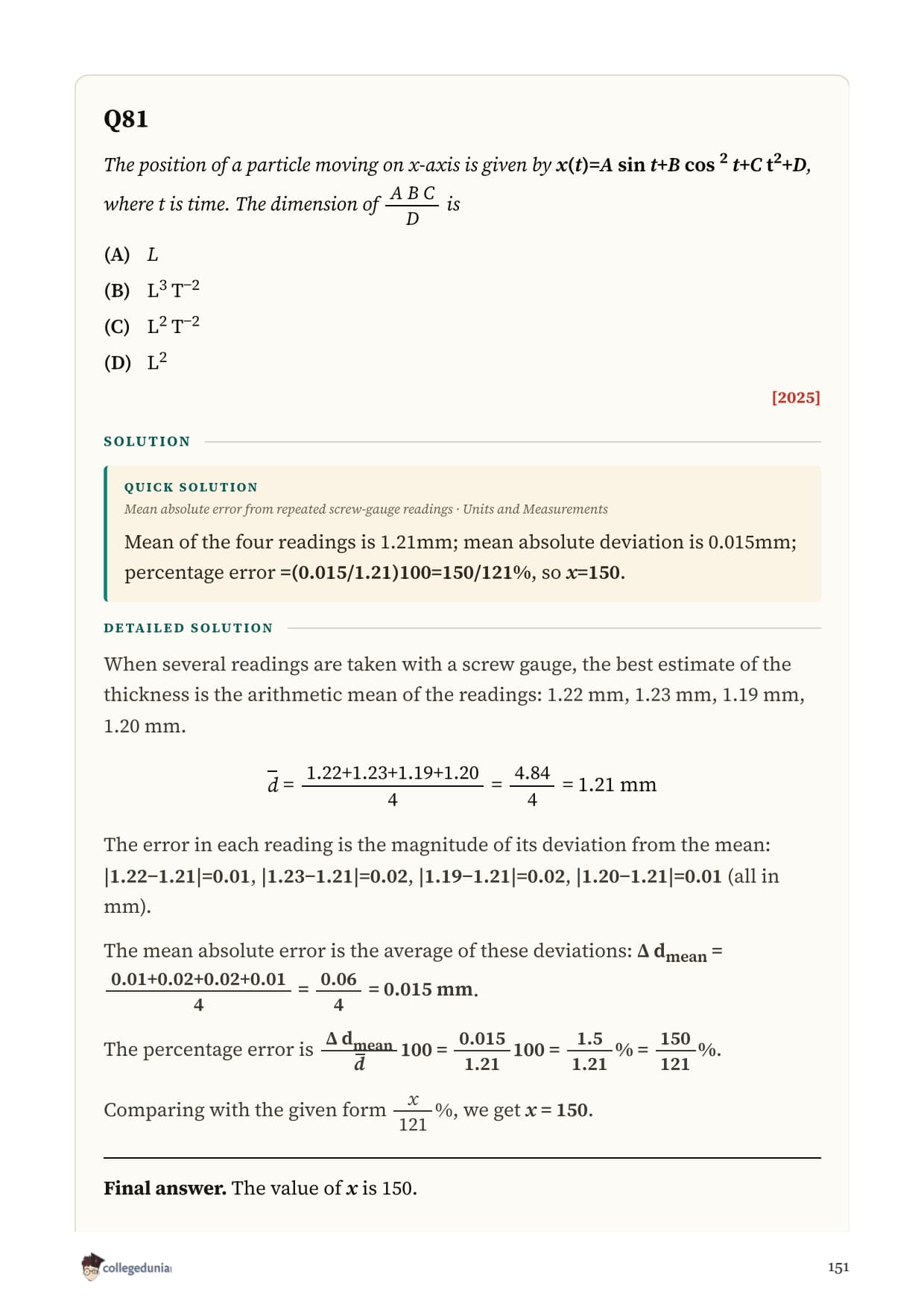
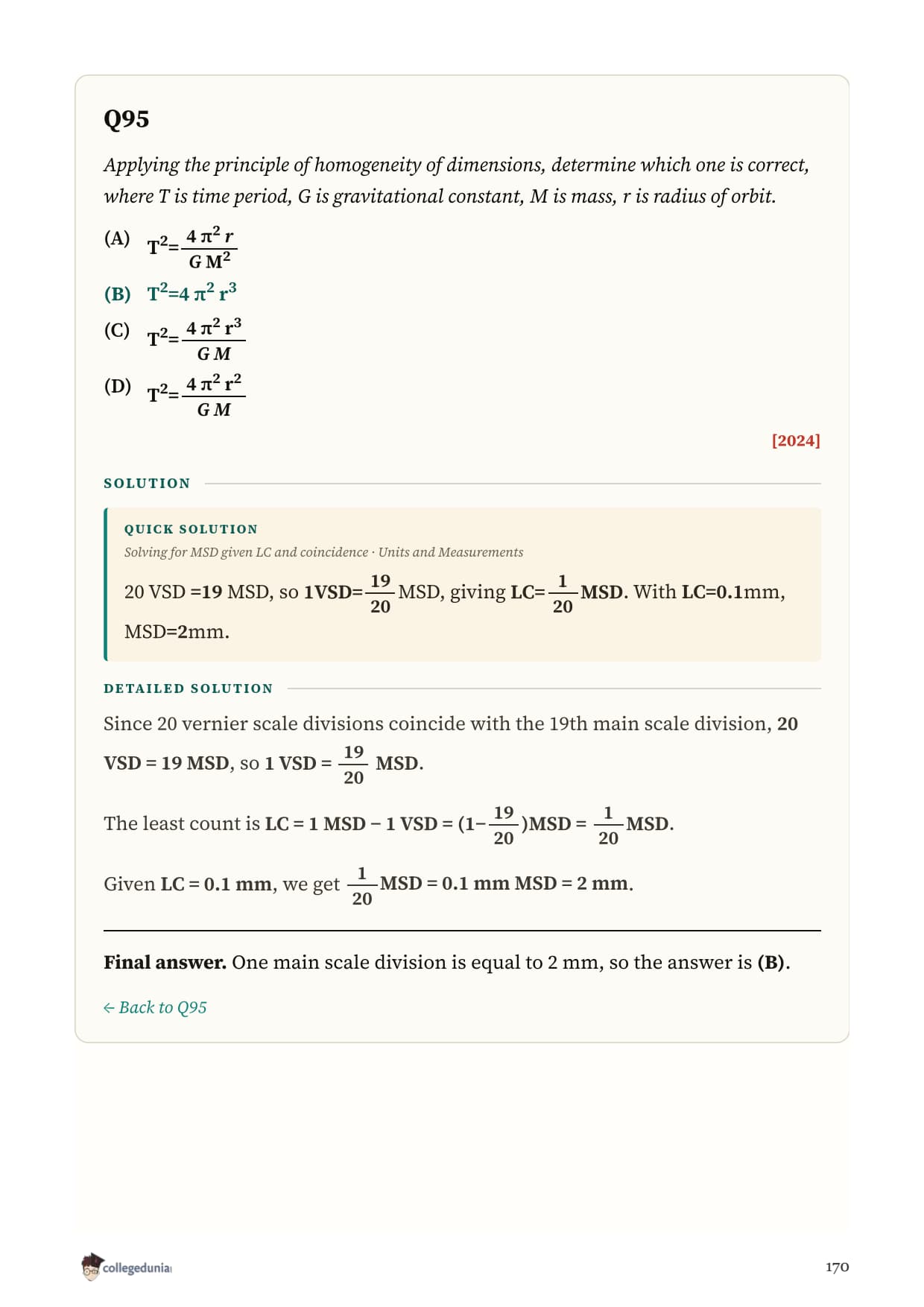
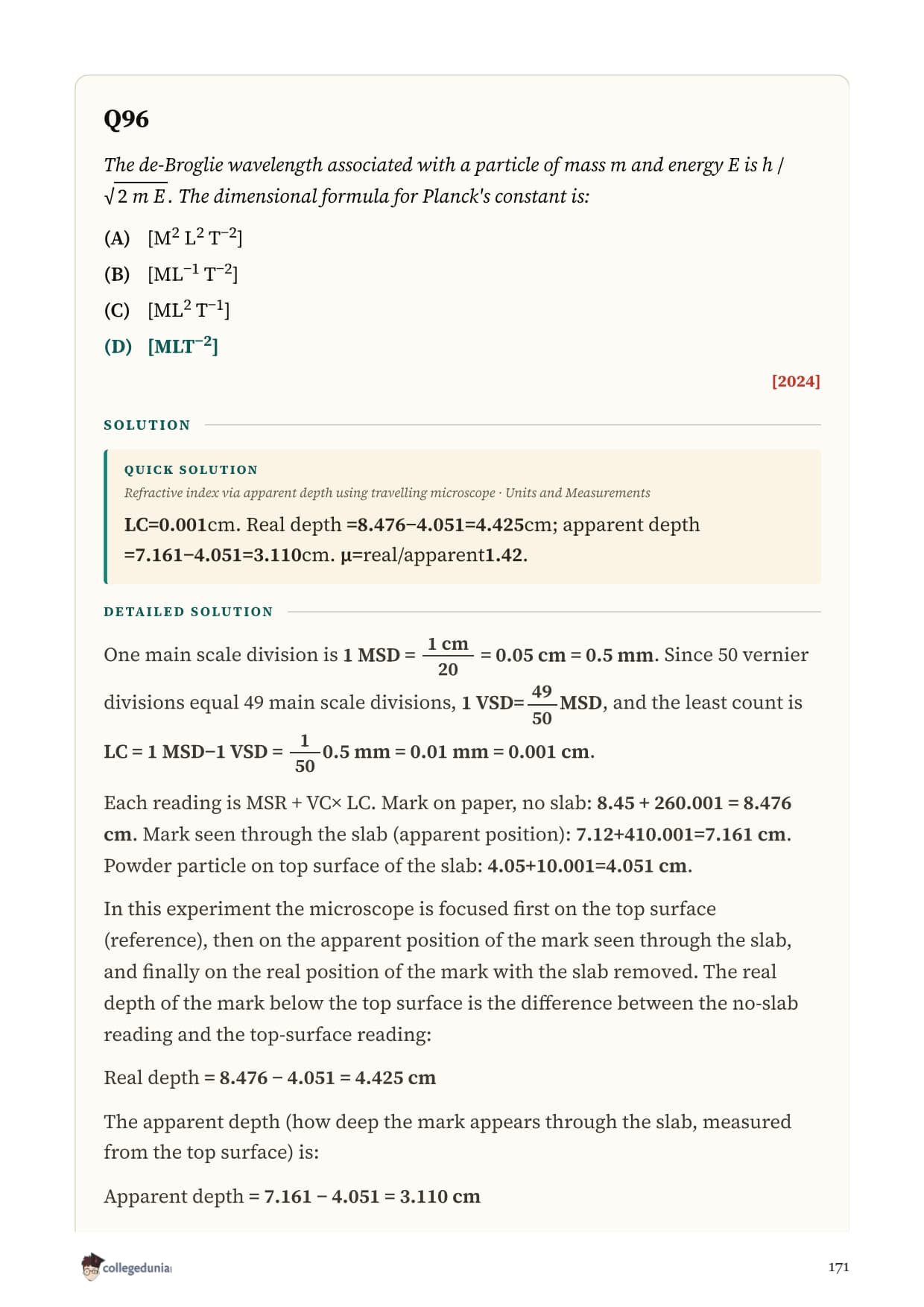
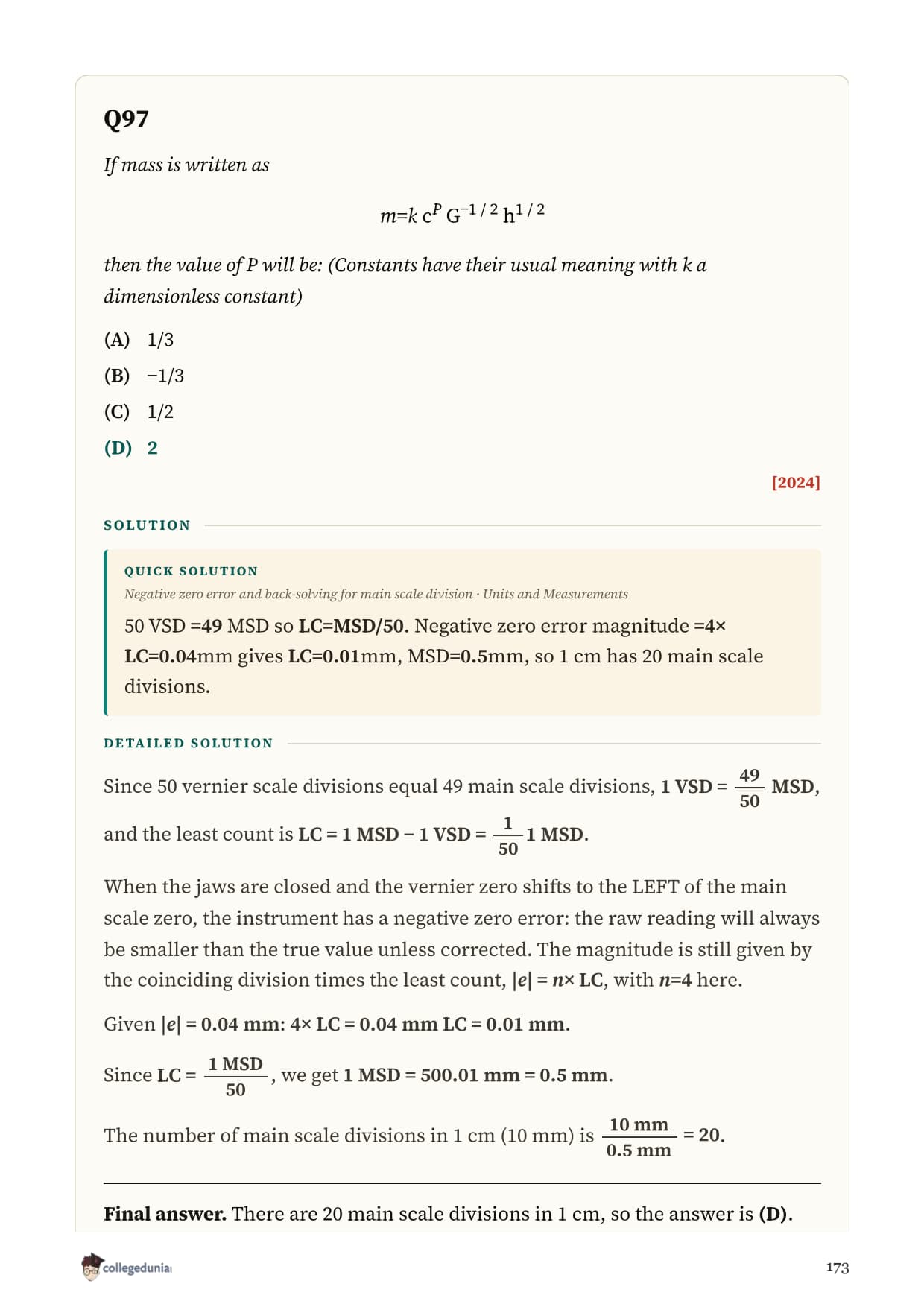
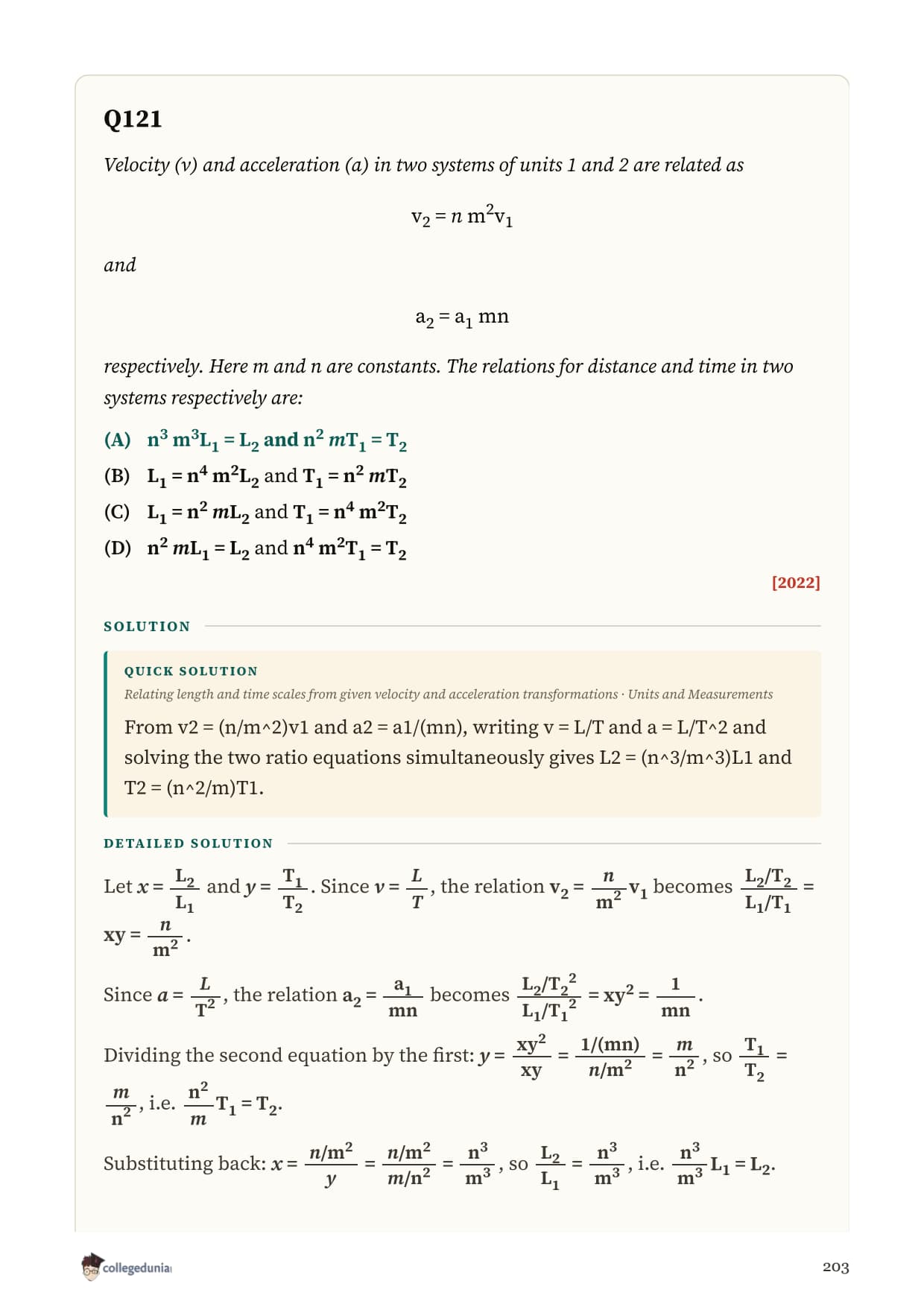
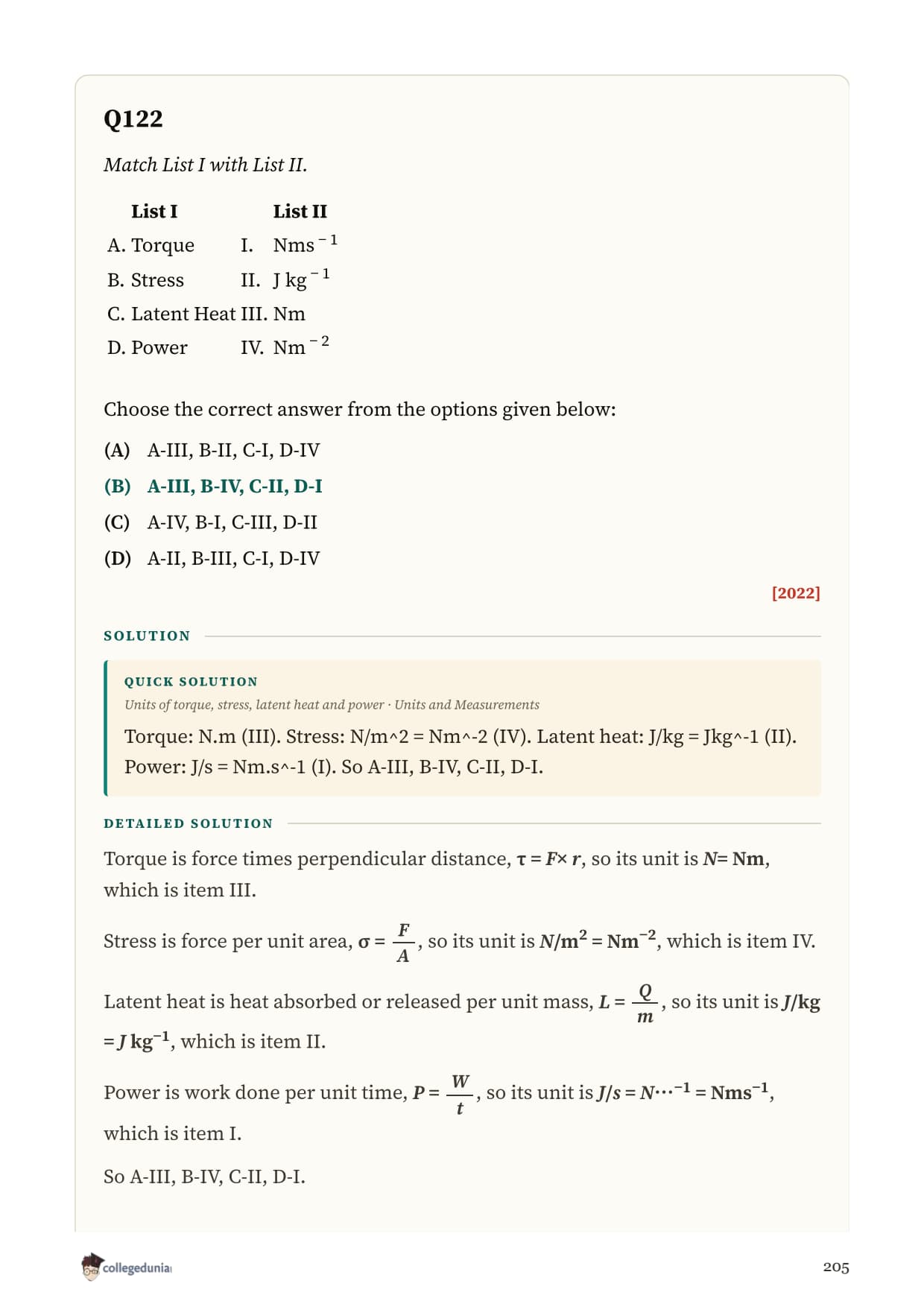
- Two solutions per question: a Quick Solution that names the governing concept, then a full derivation that states every formula before using it.
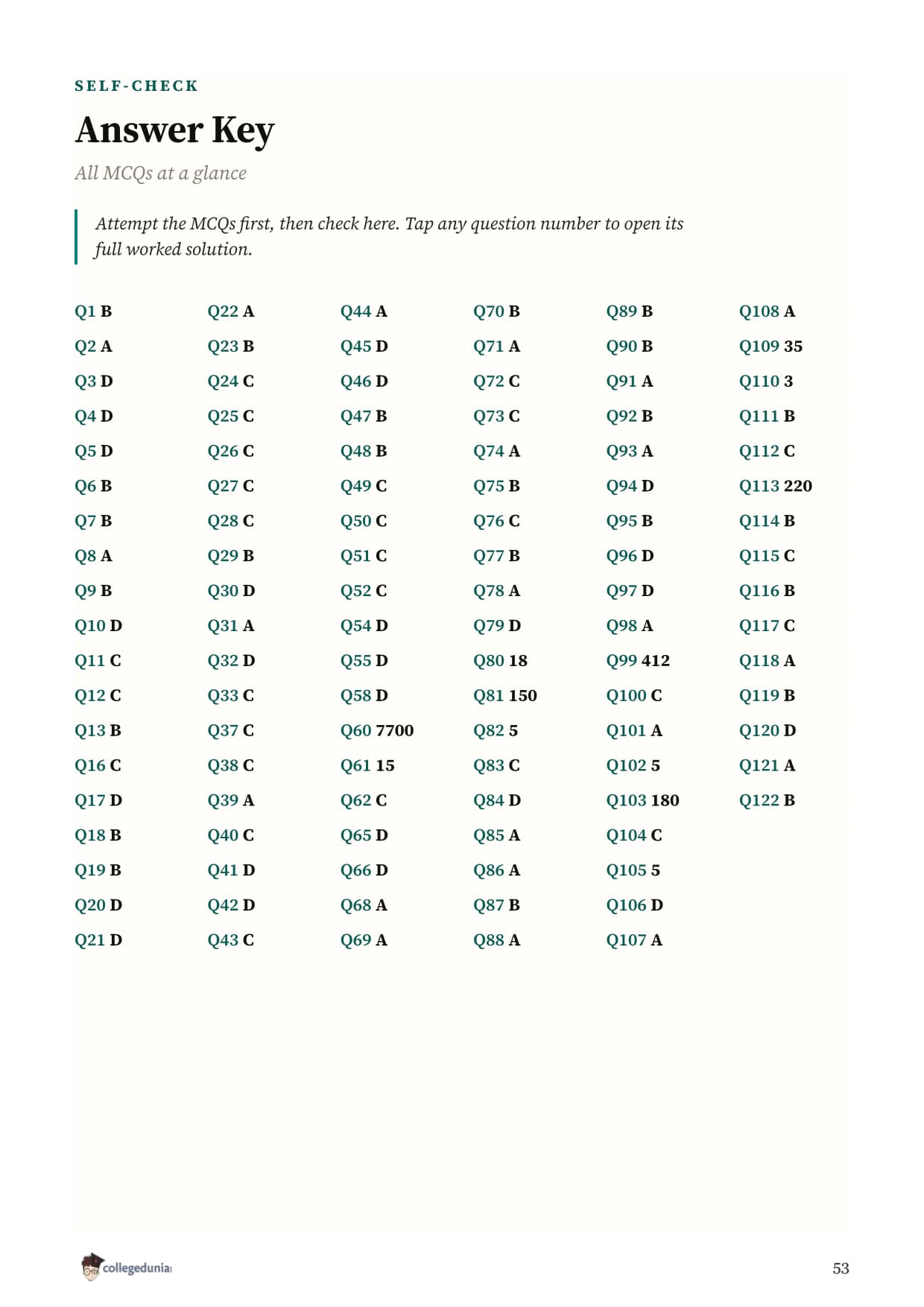
- An answer key grid for self-checking before you open any solution.
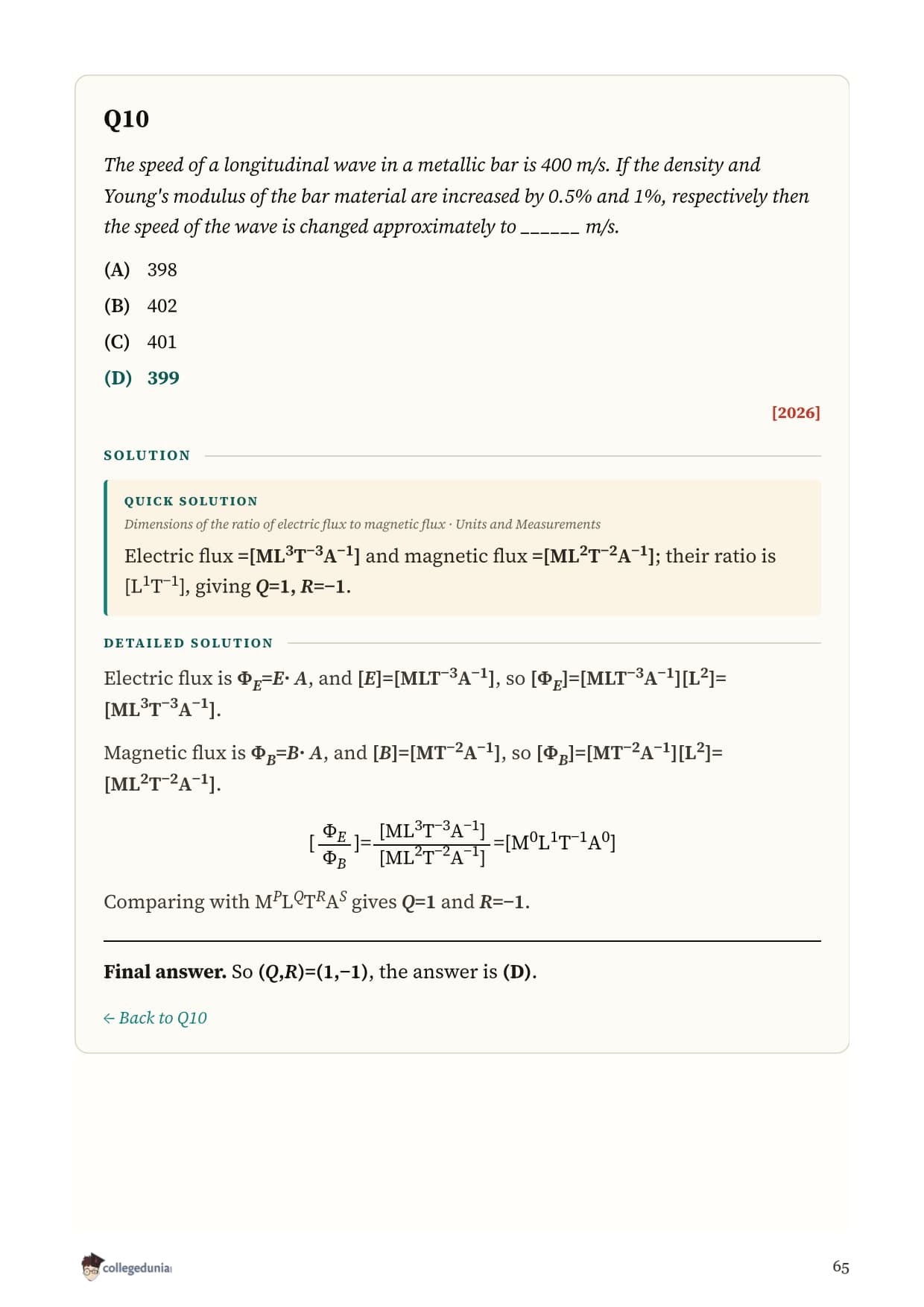
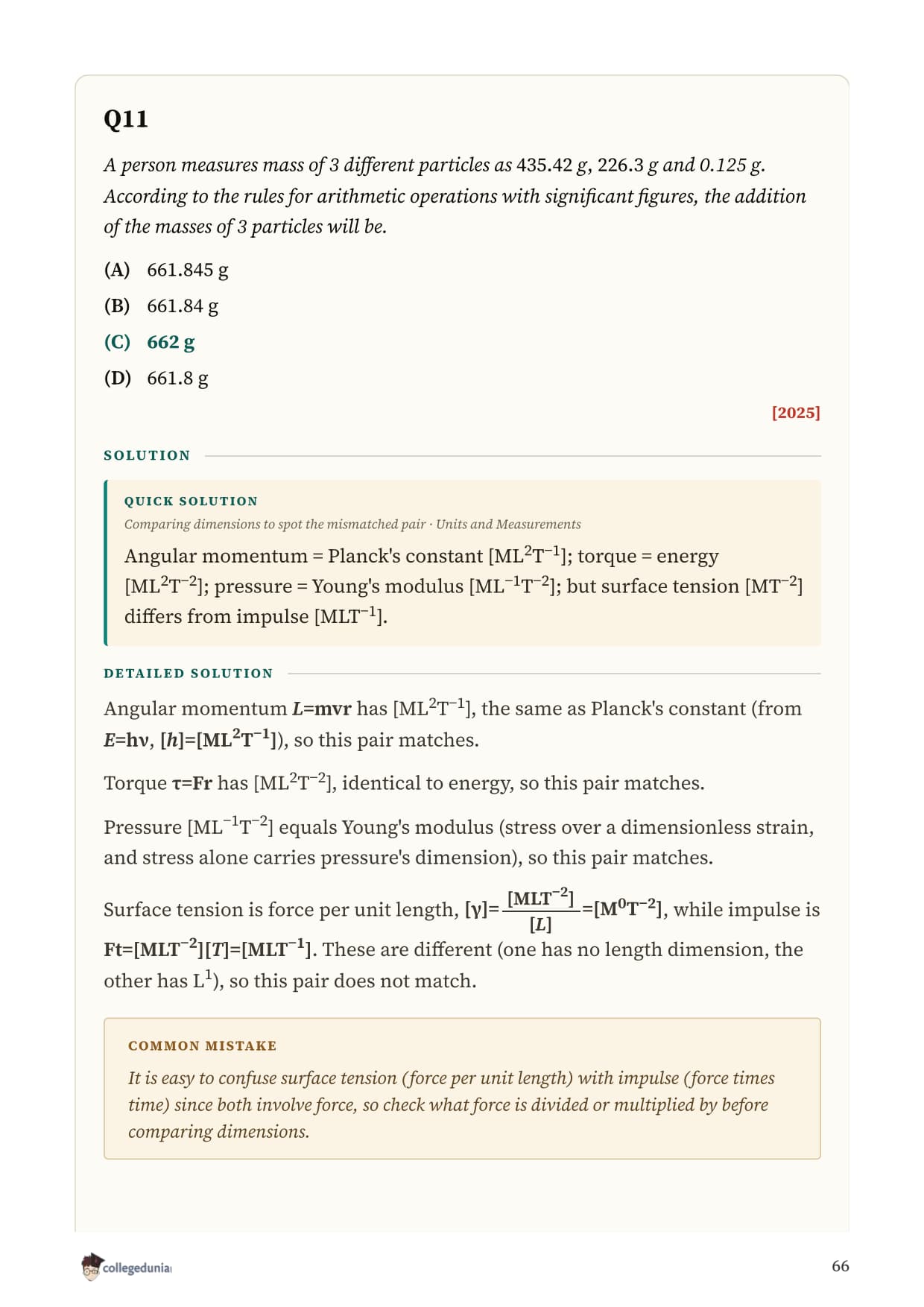
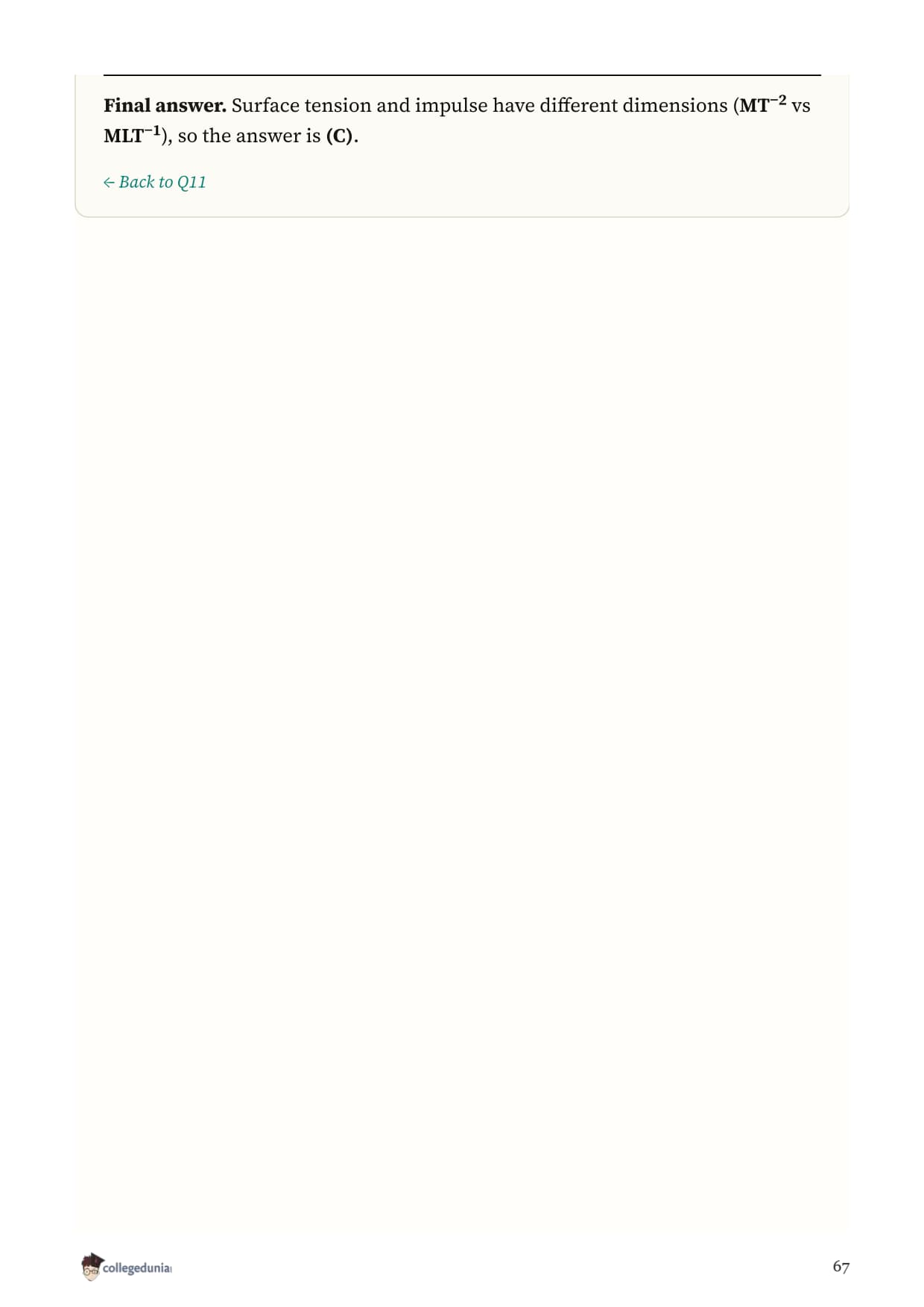
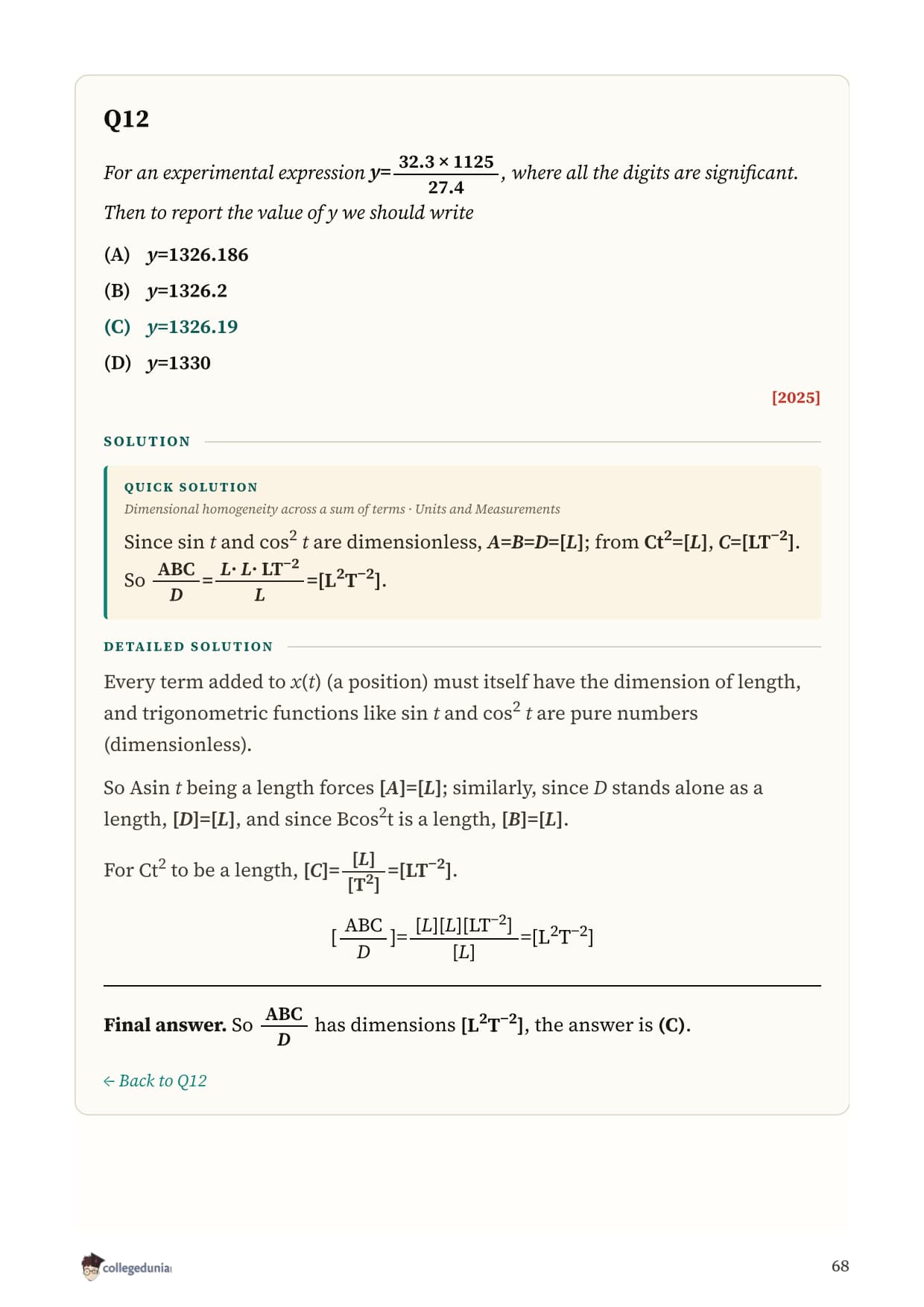
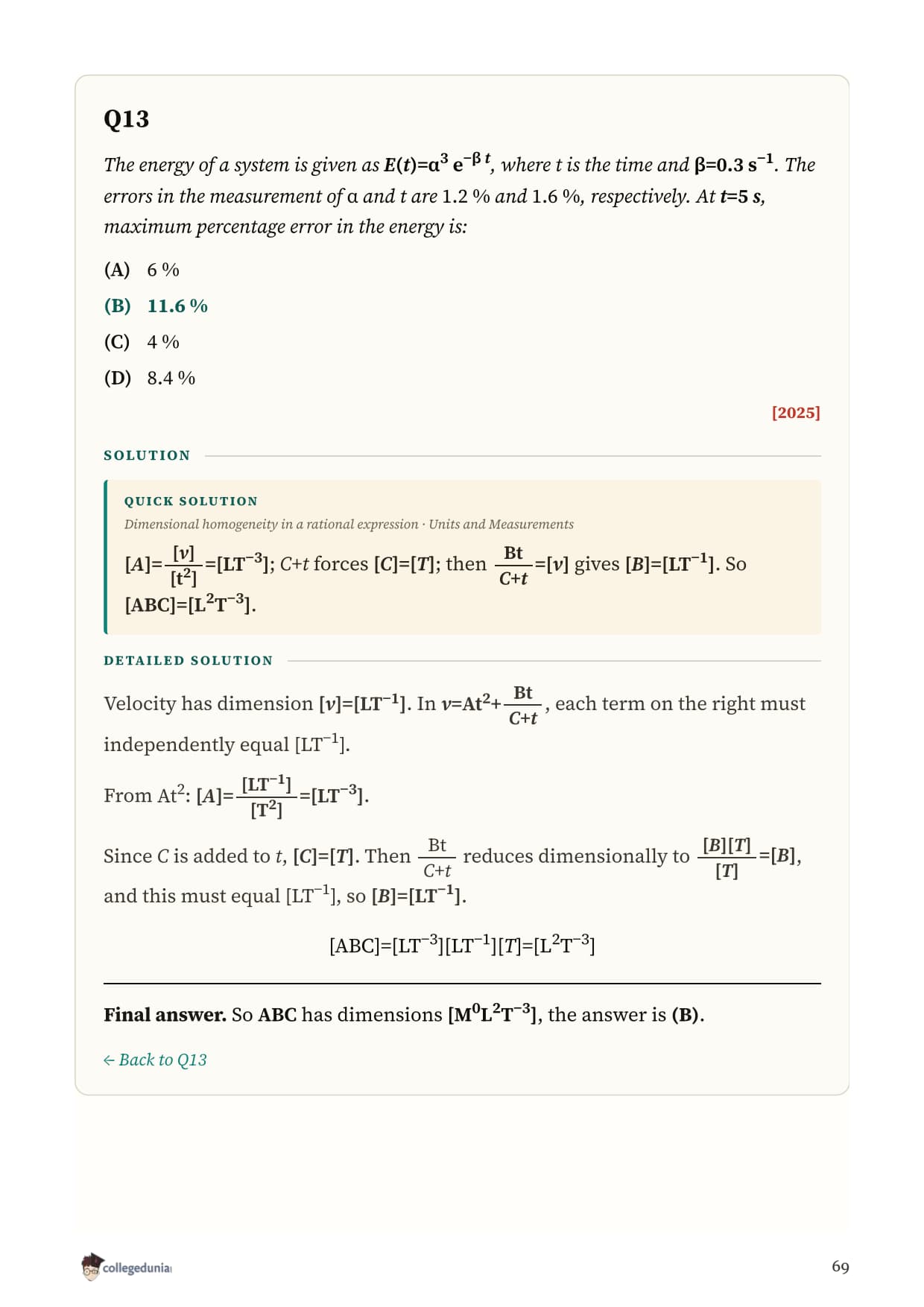
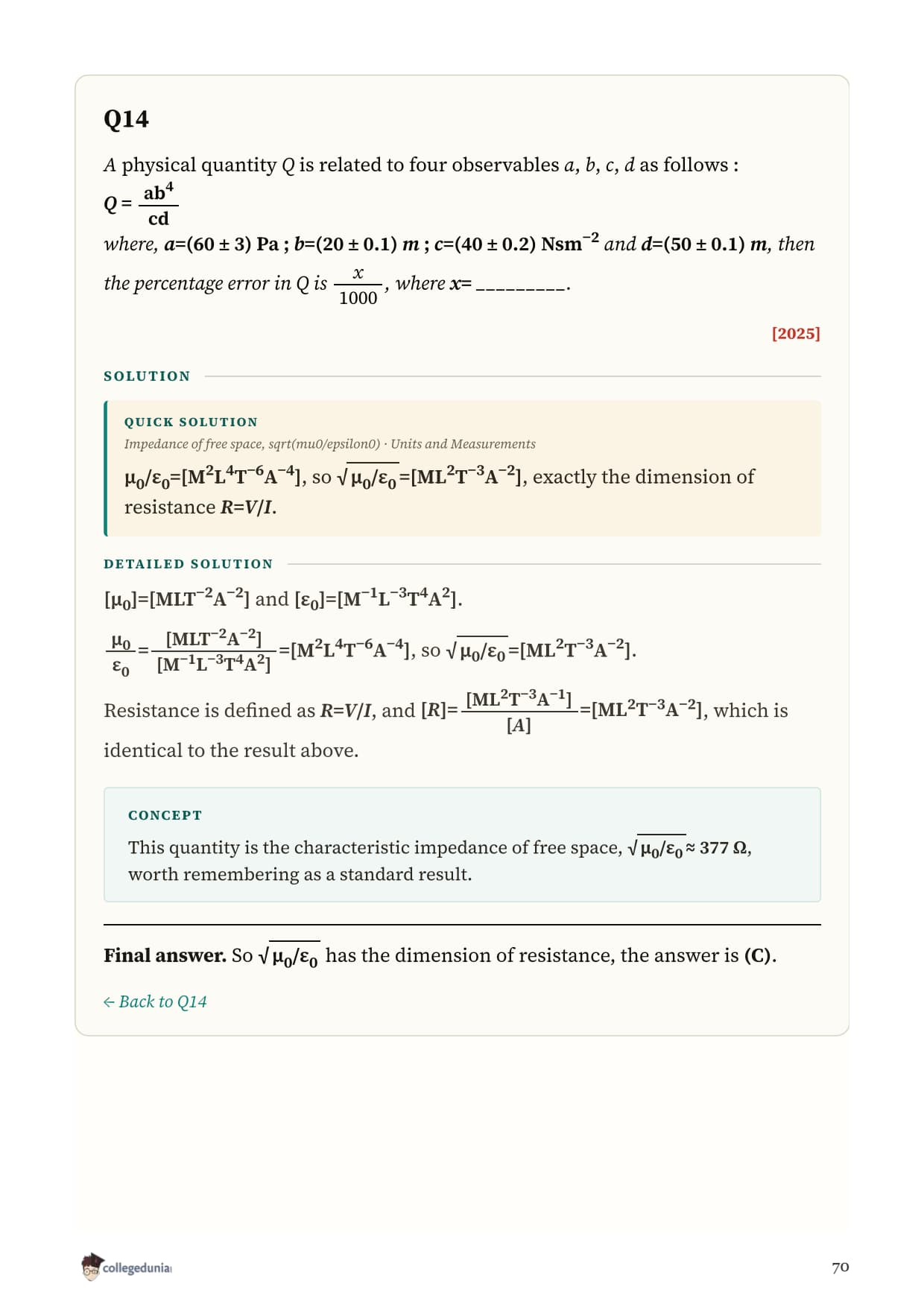
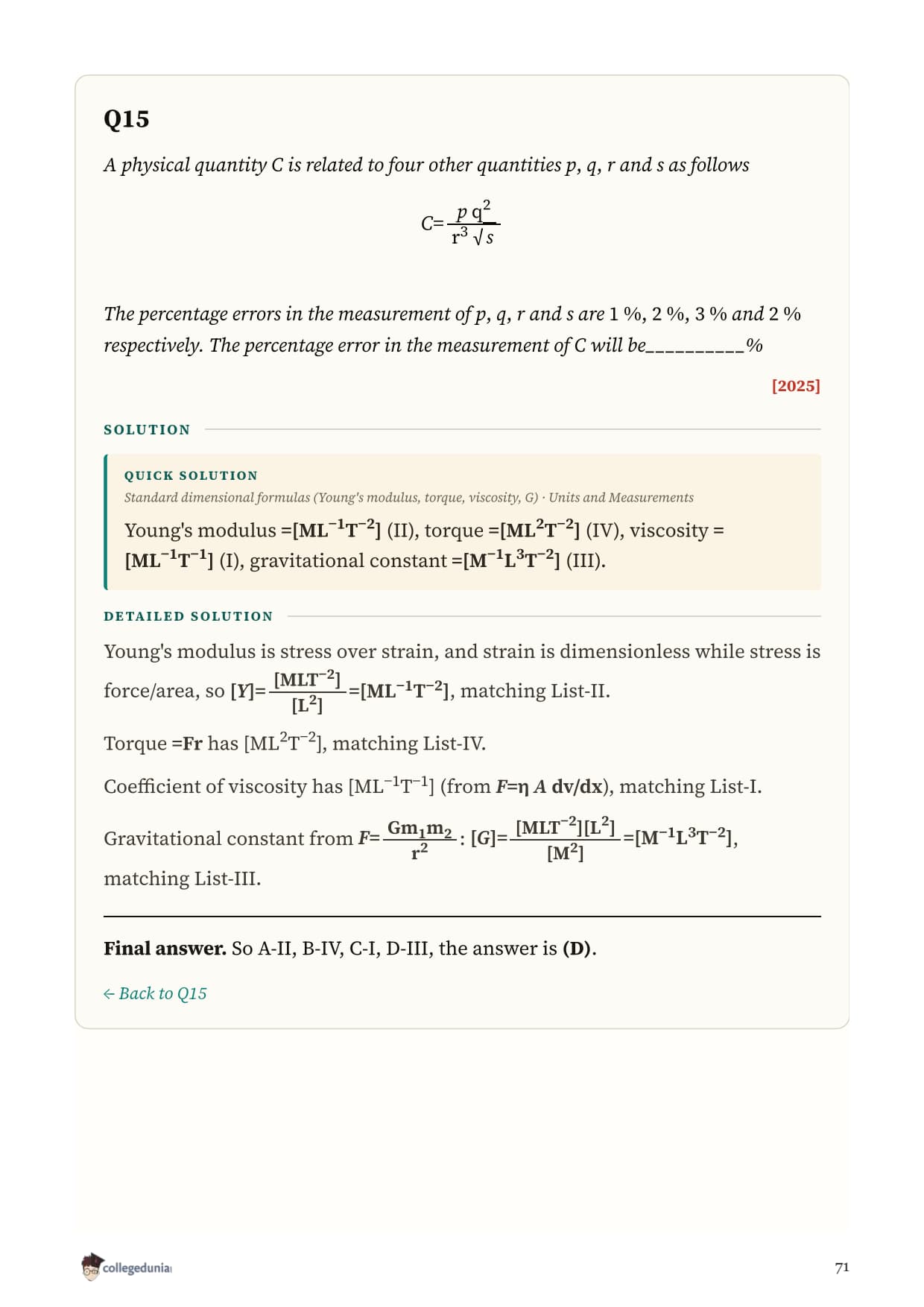
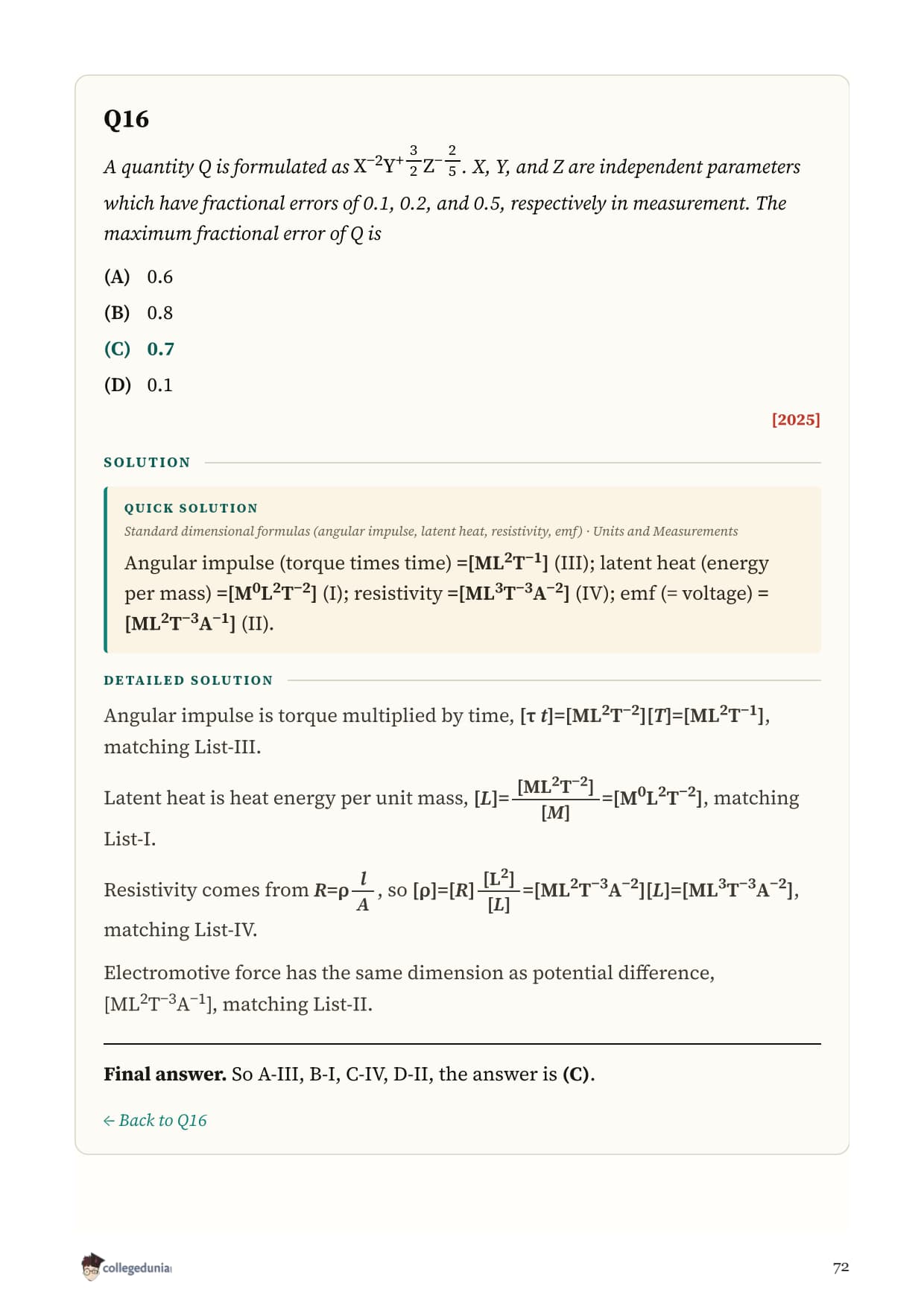






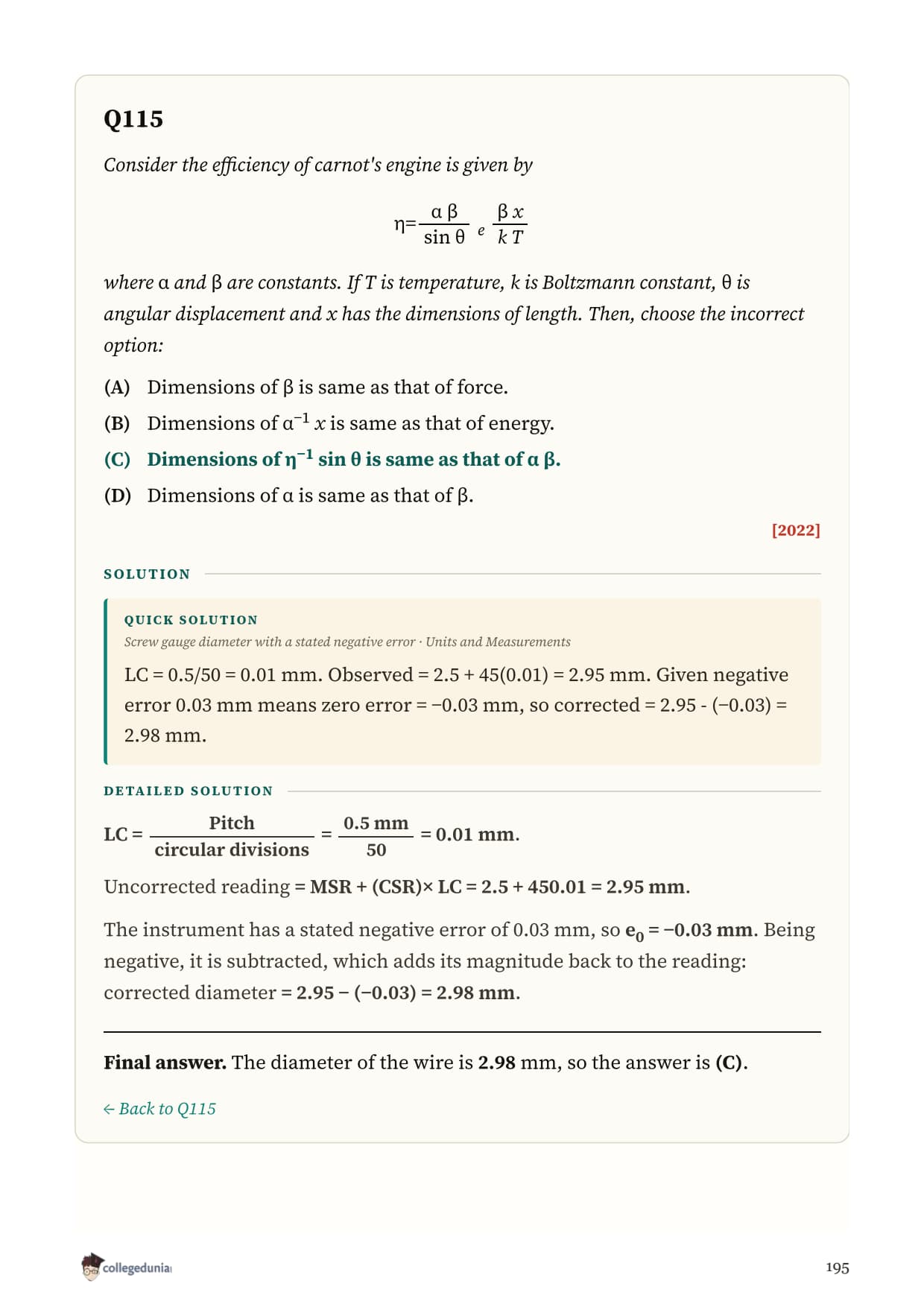
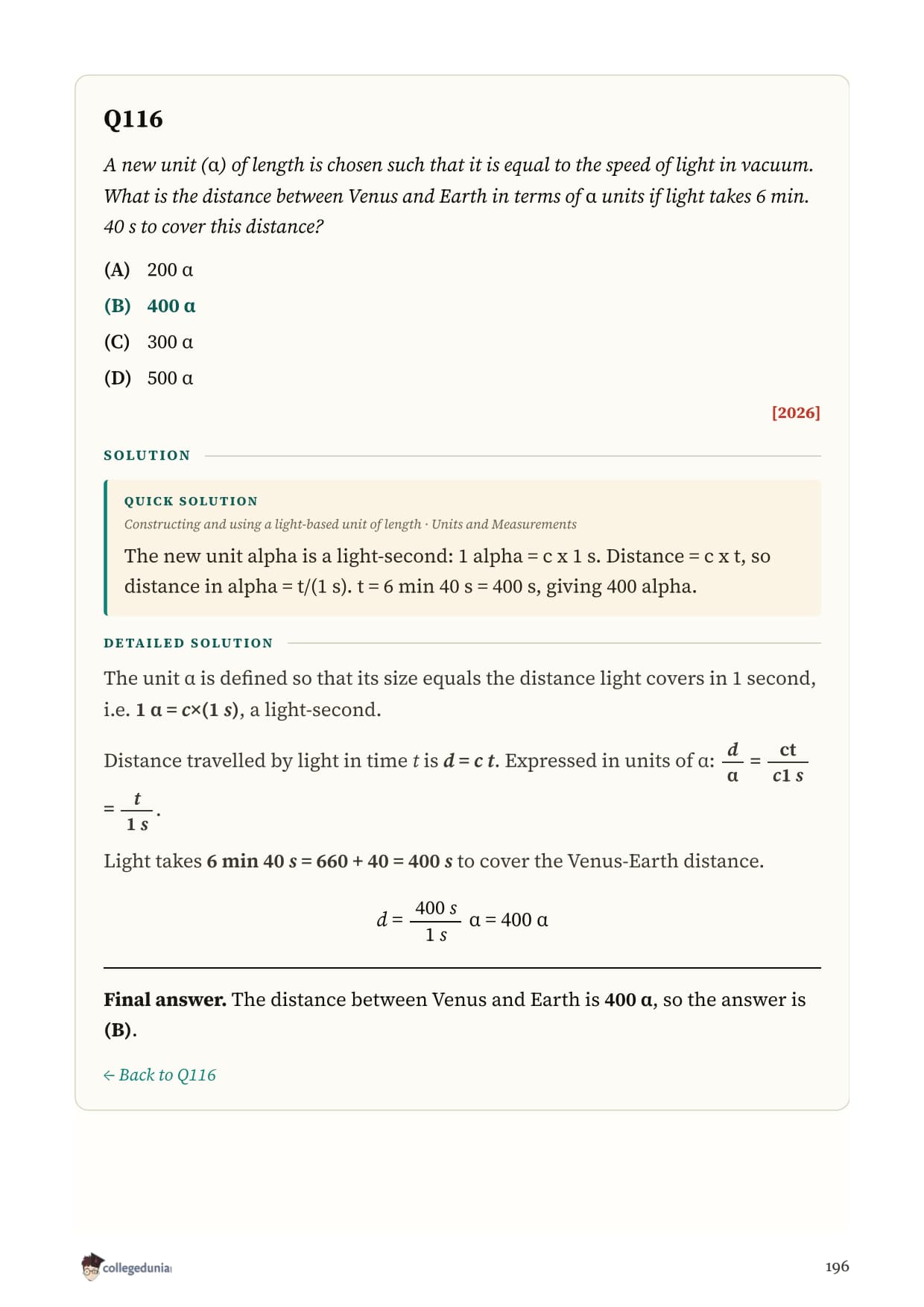
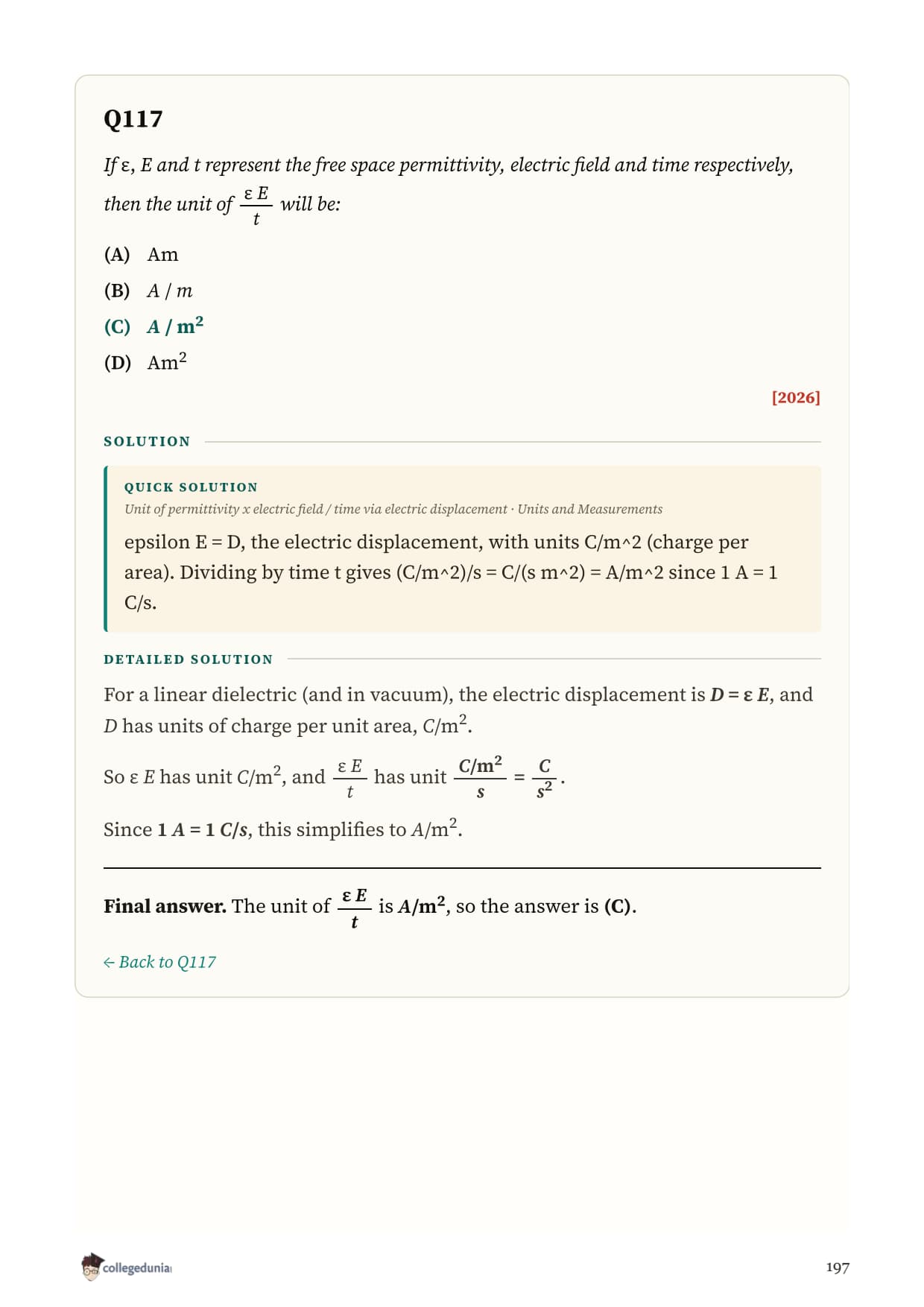
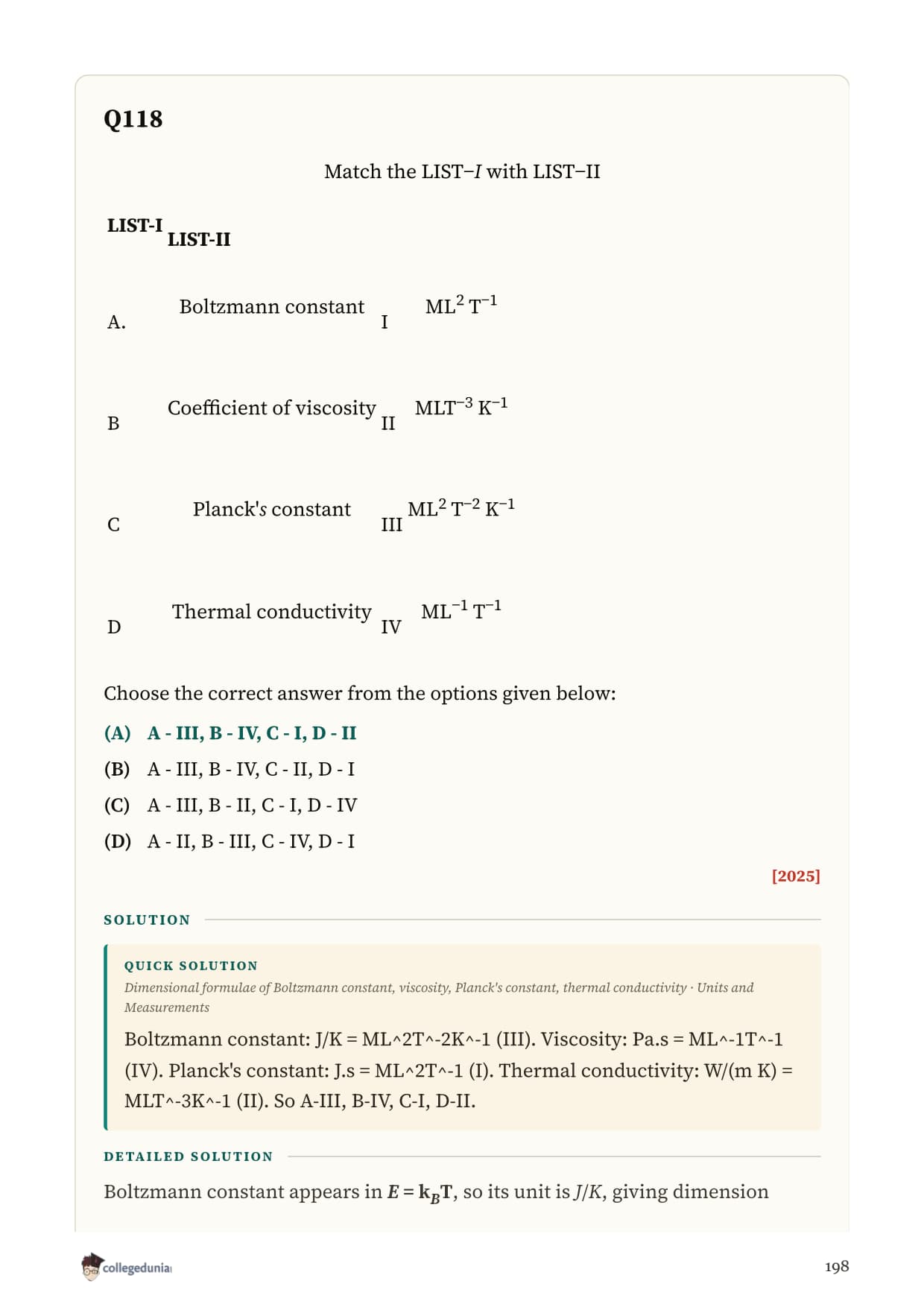
What the 122 Questions Cover
The bank is split by topic rather than by year, so a student can drill one weakness at a time.
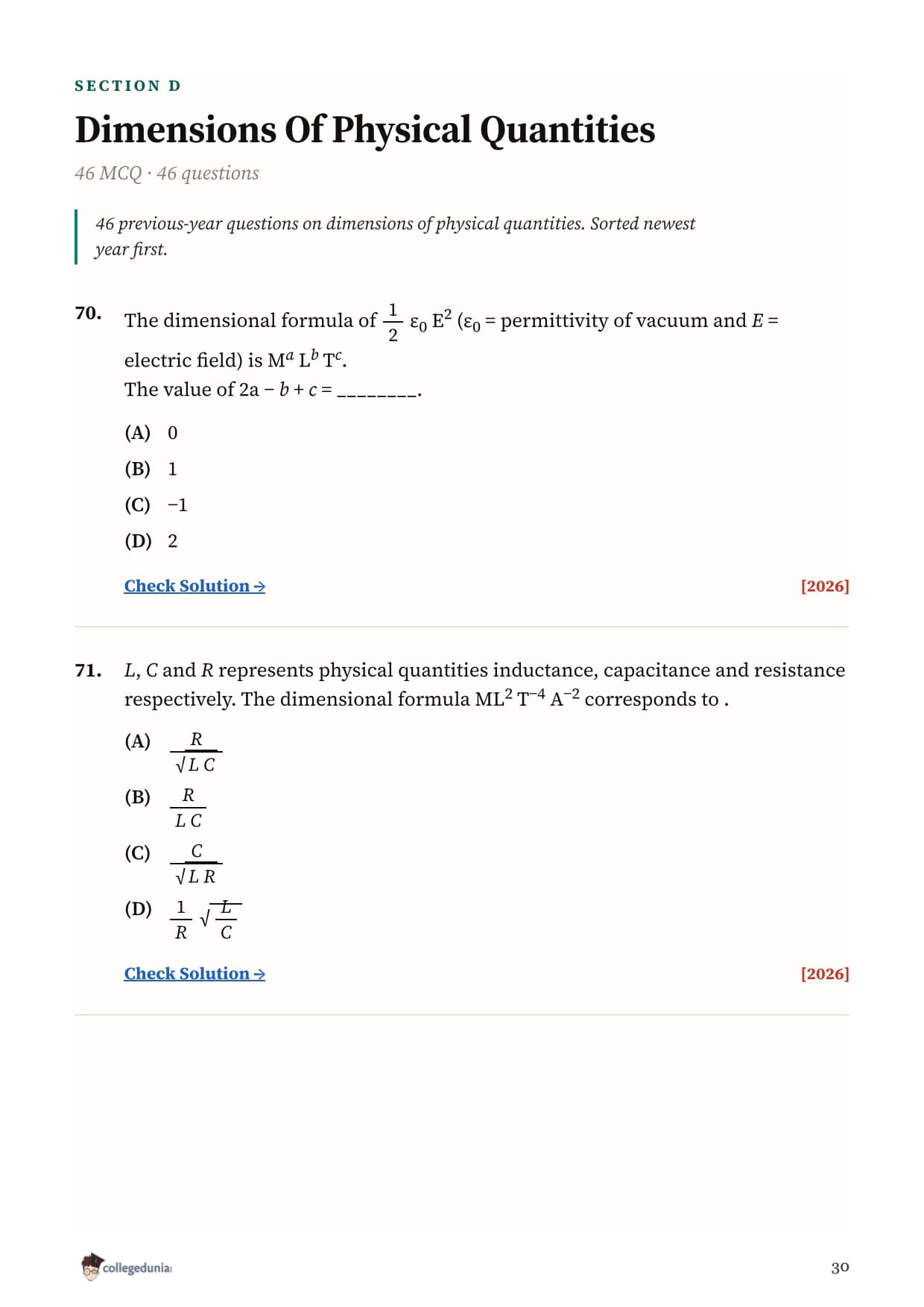
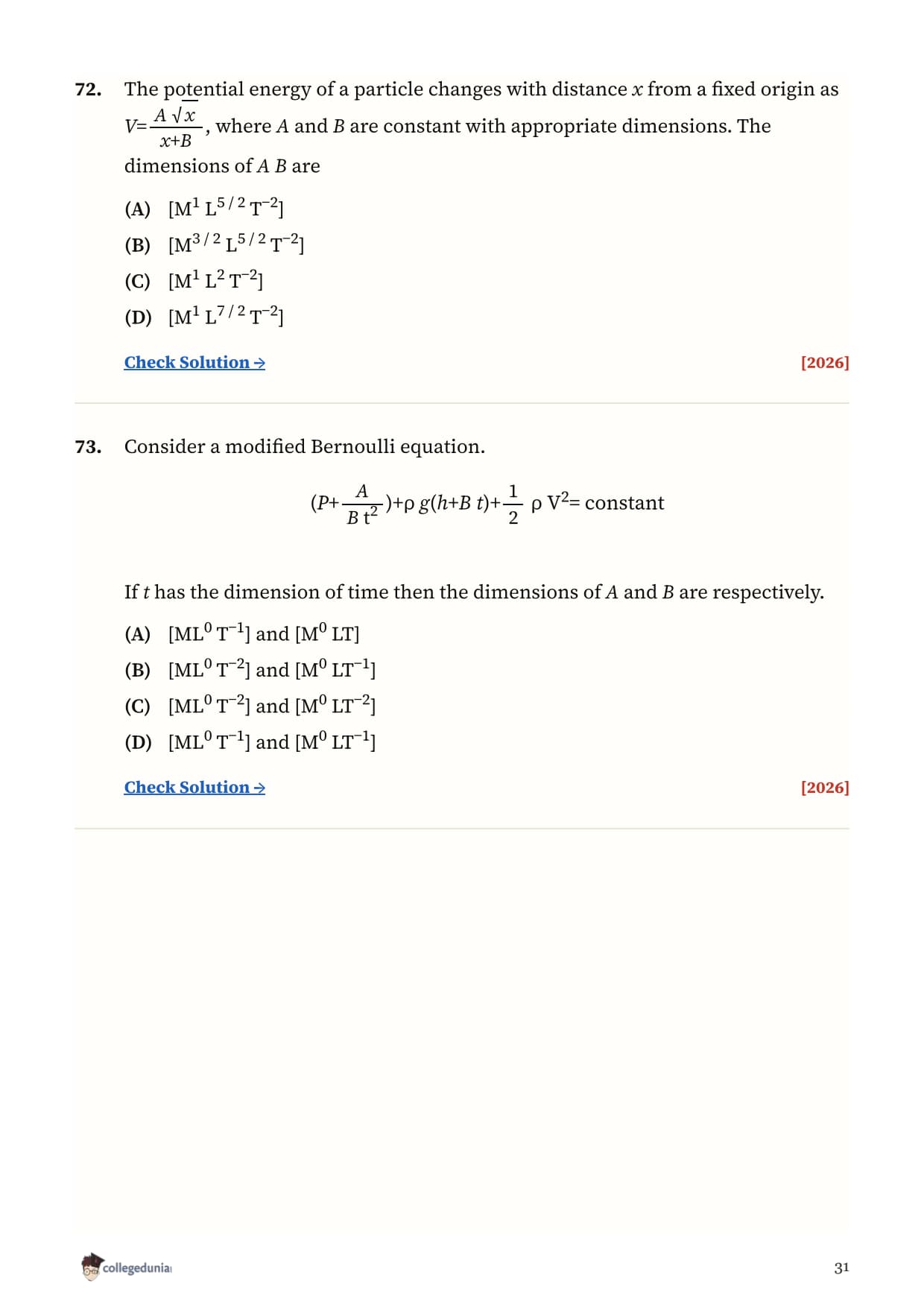
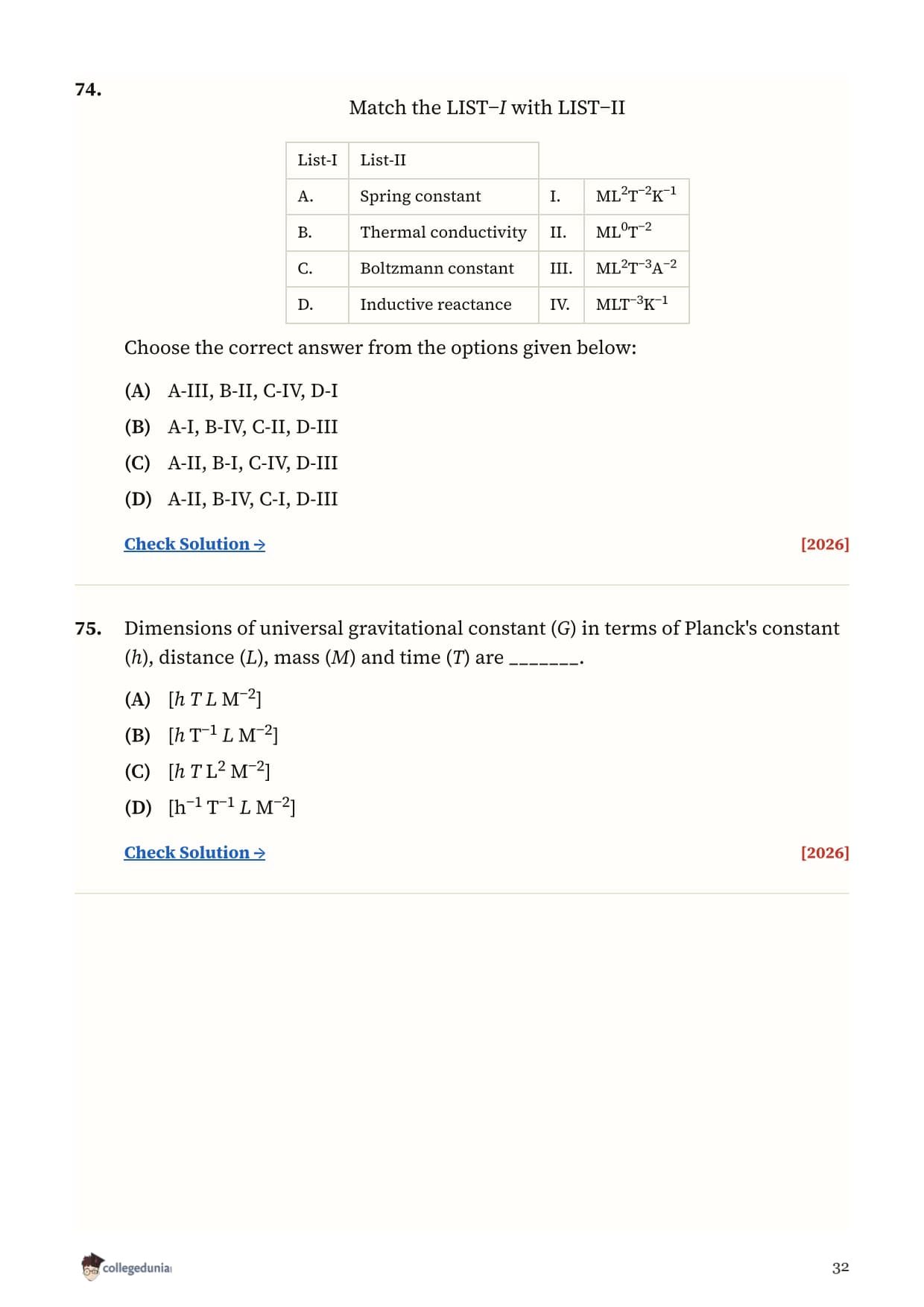
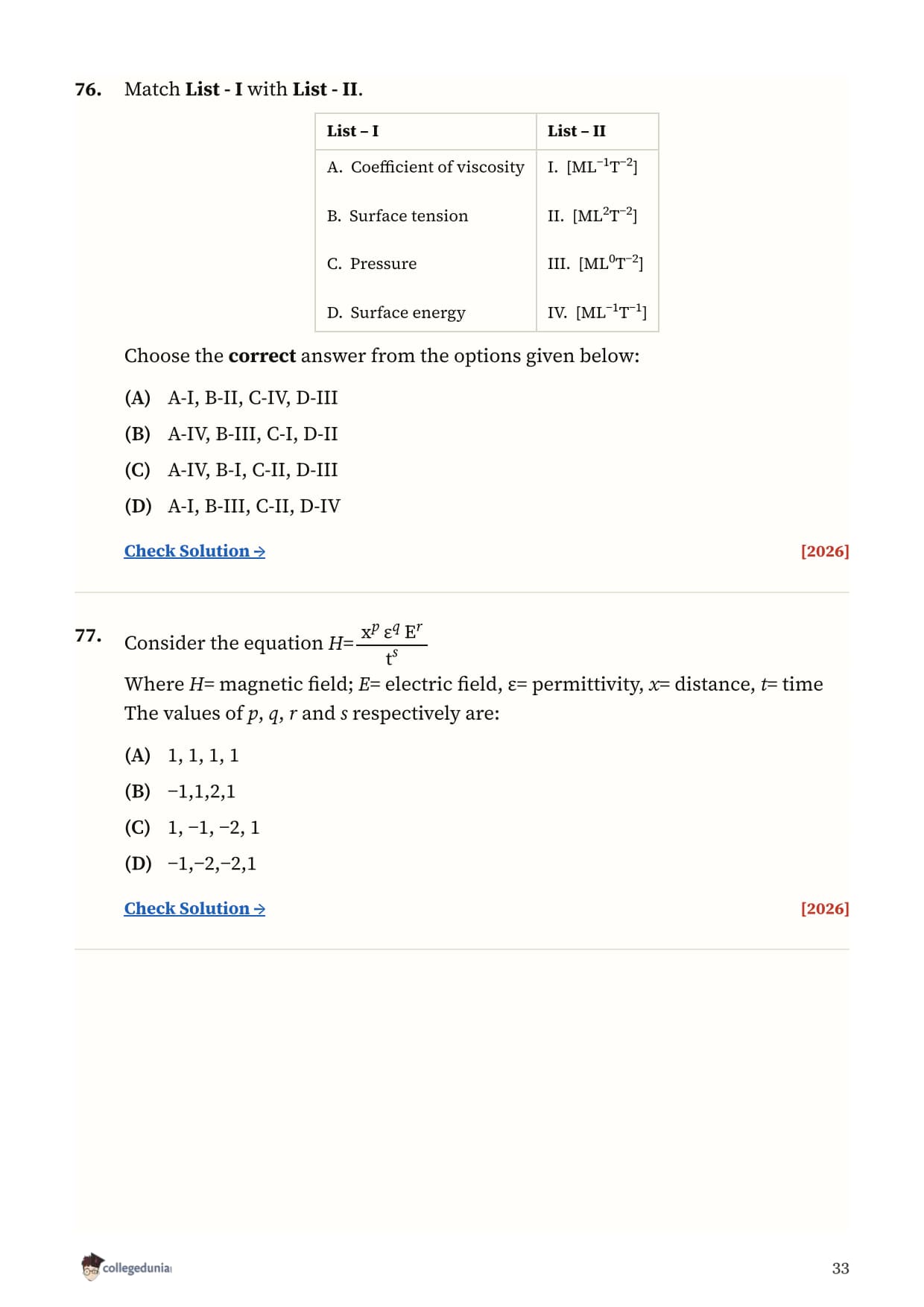
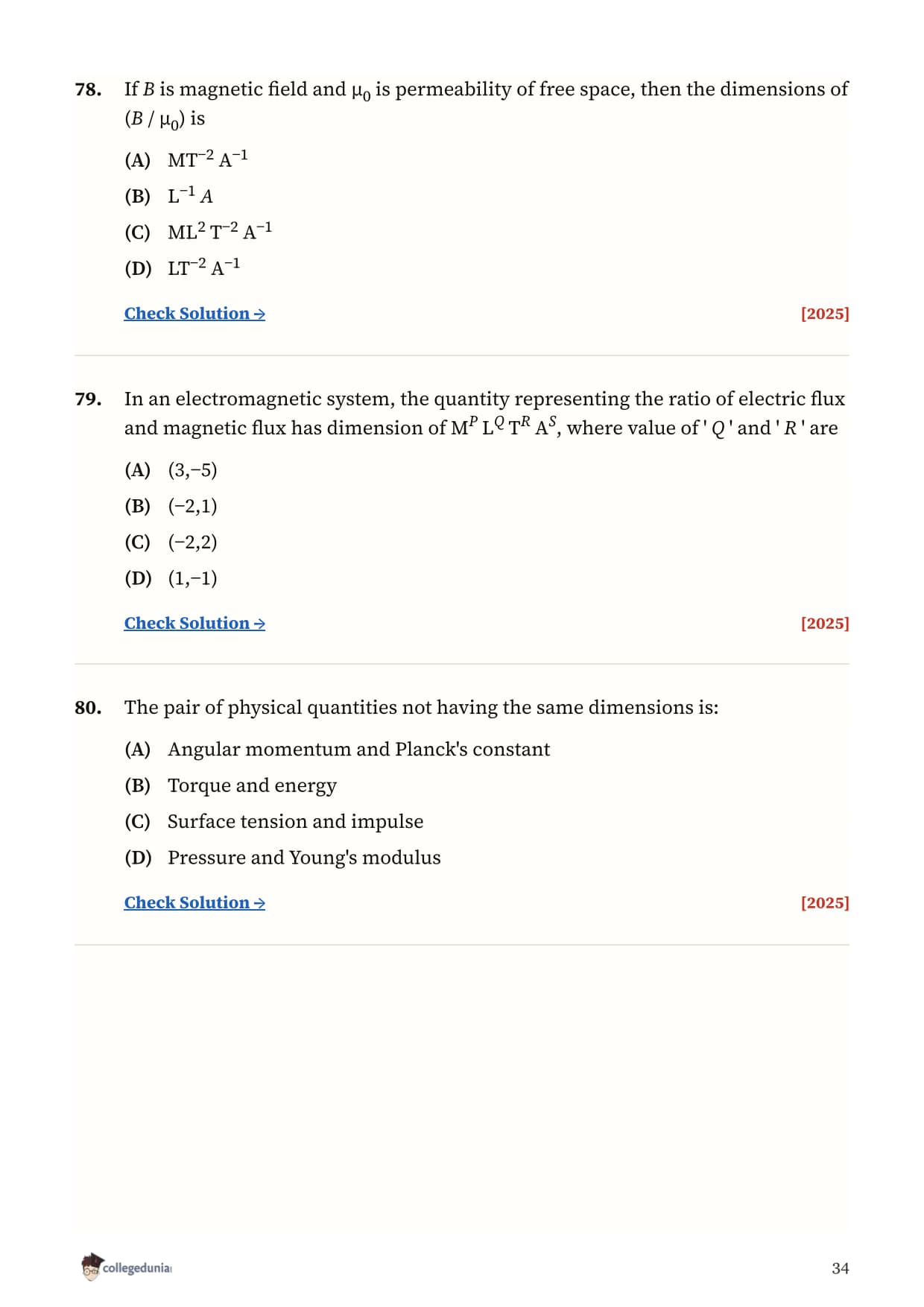
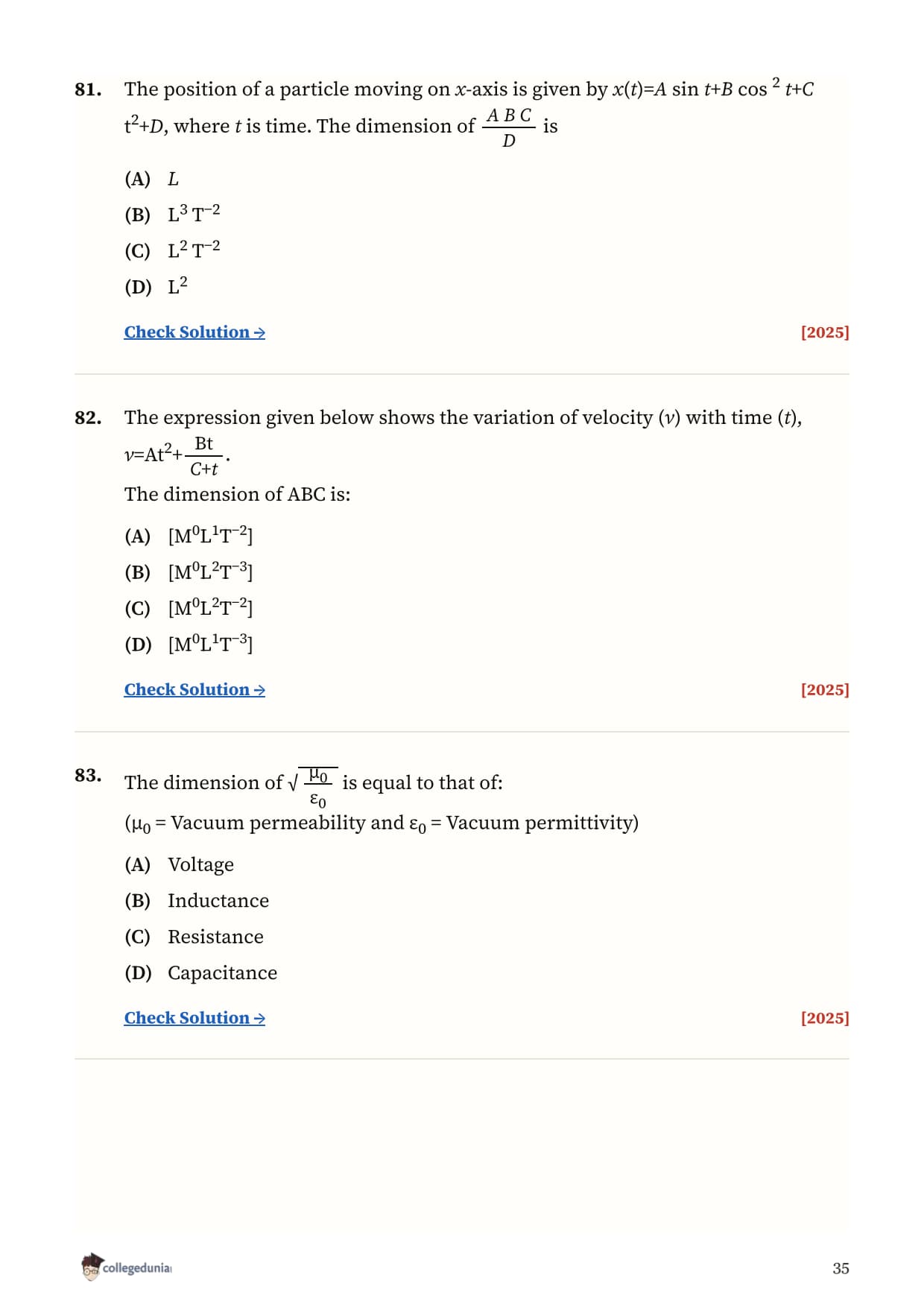
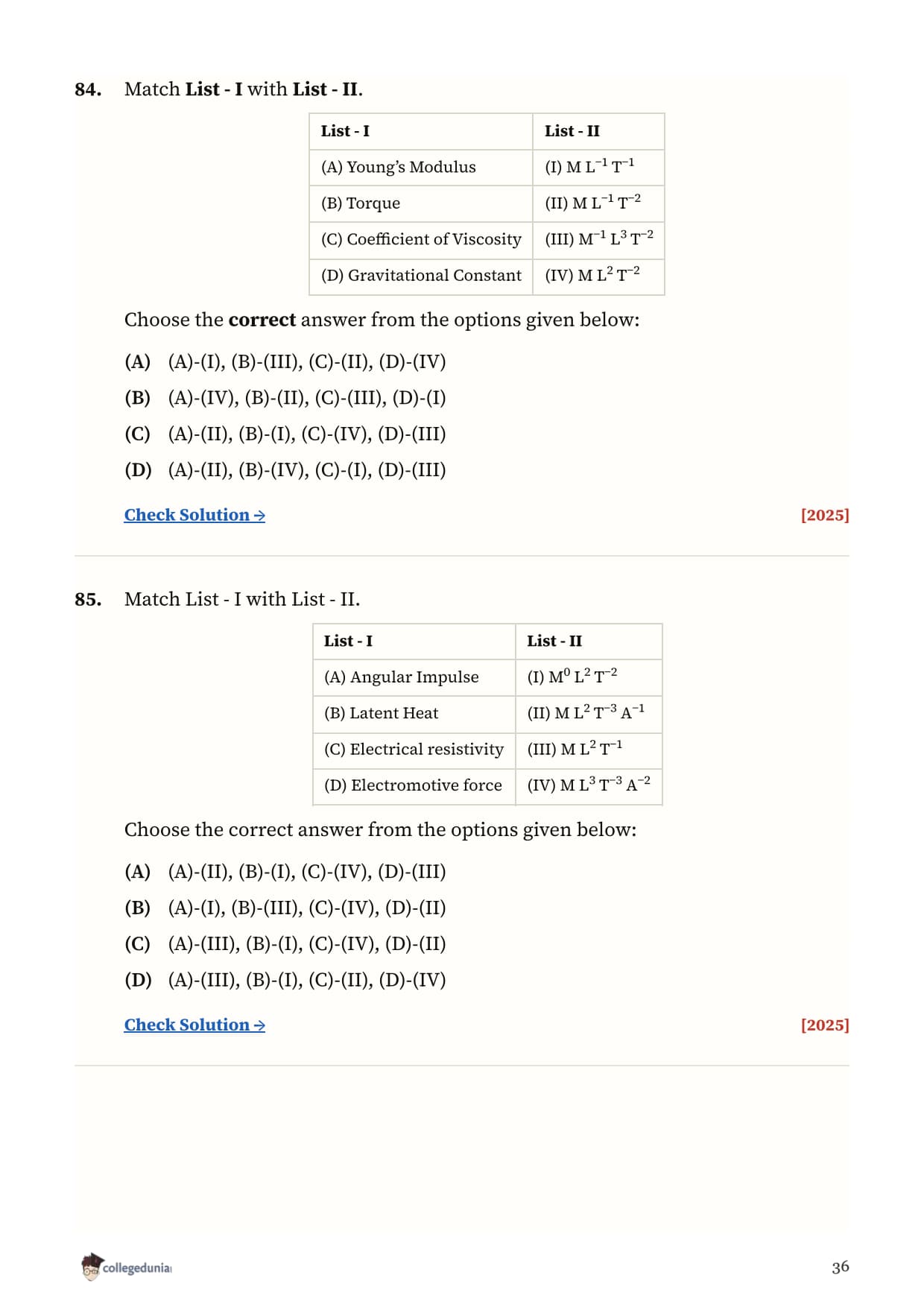
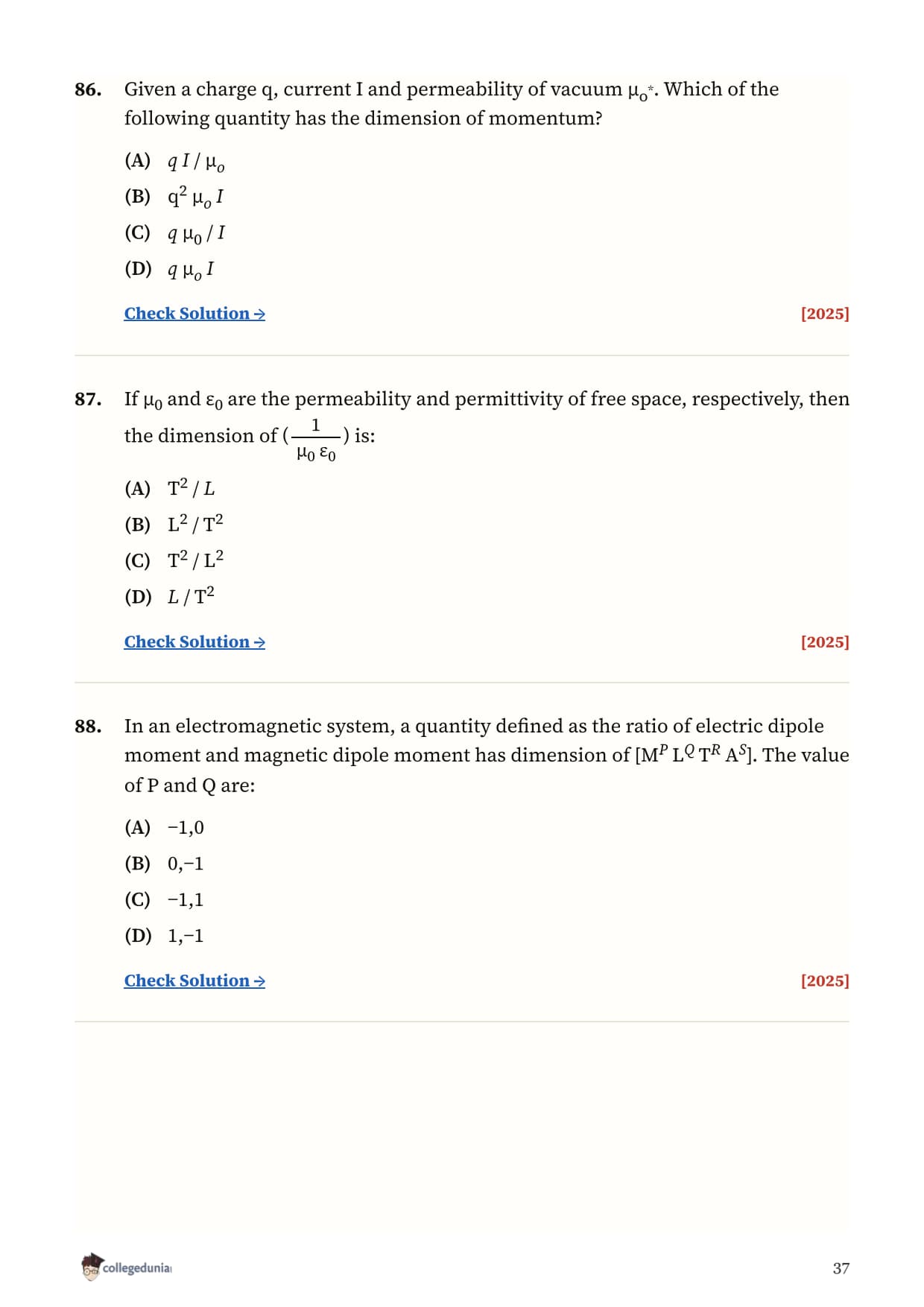
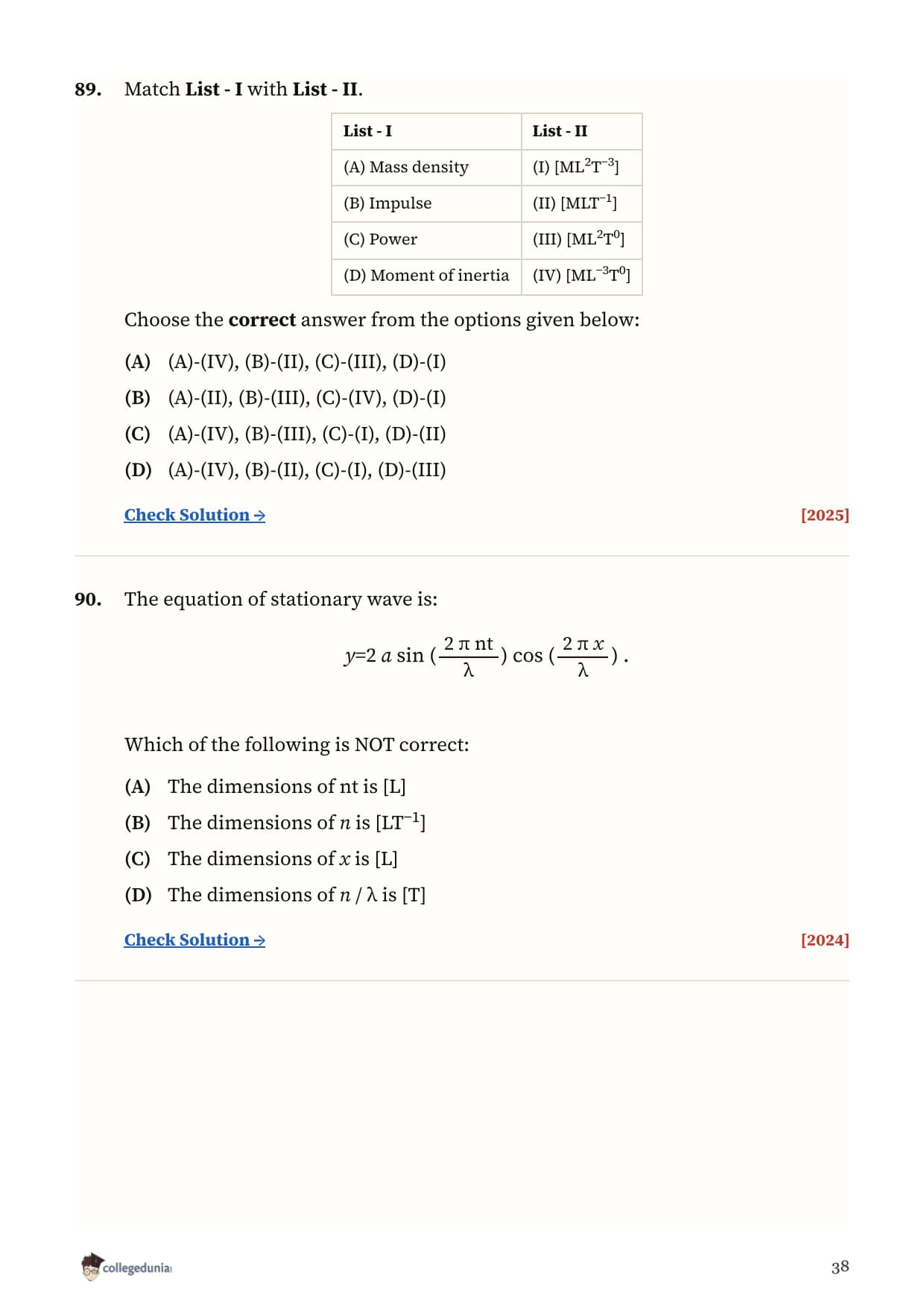
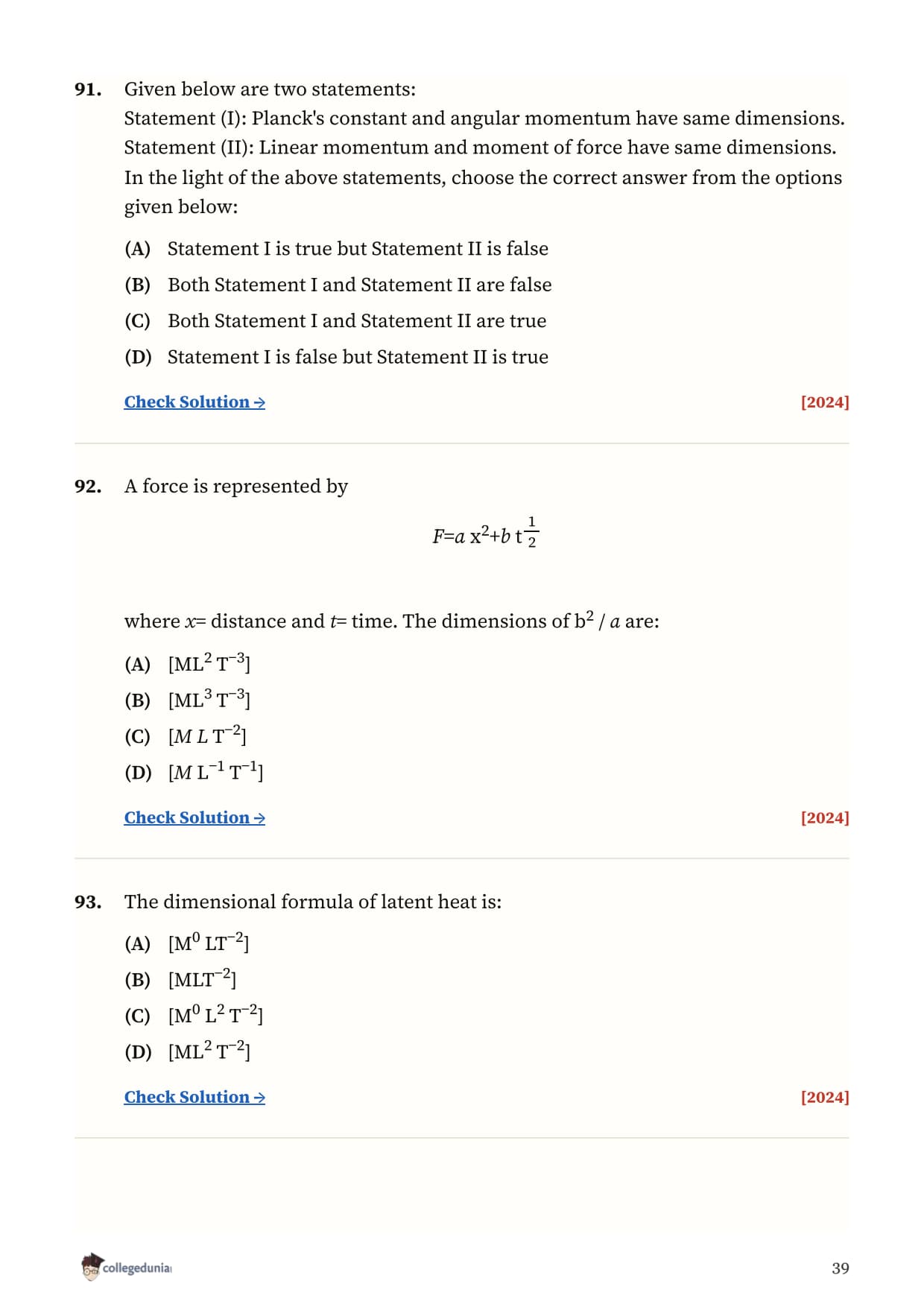
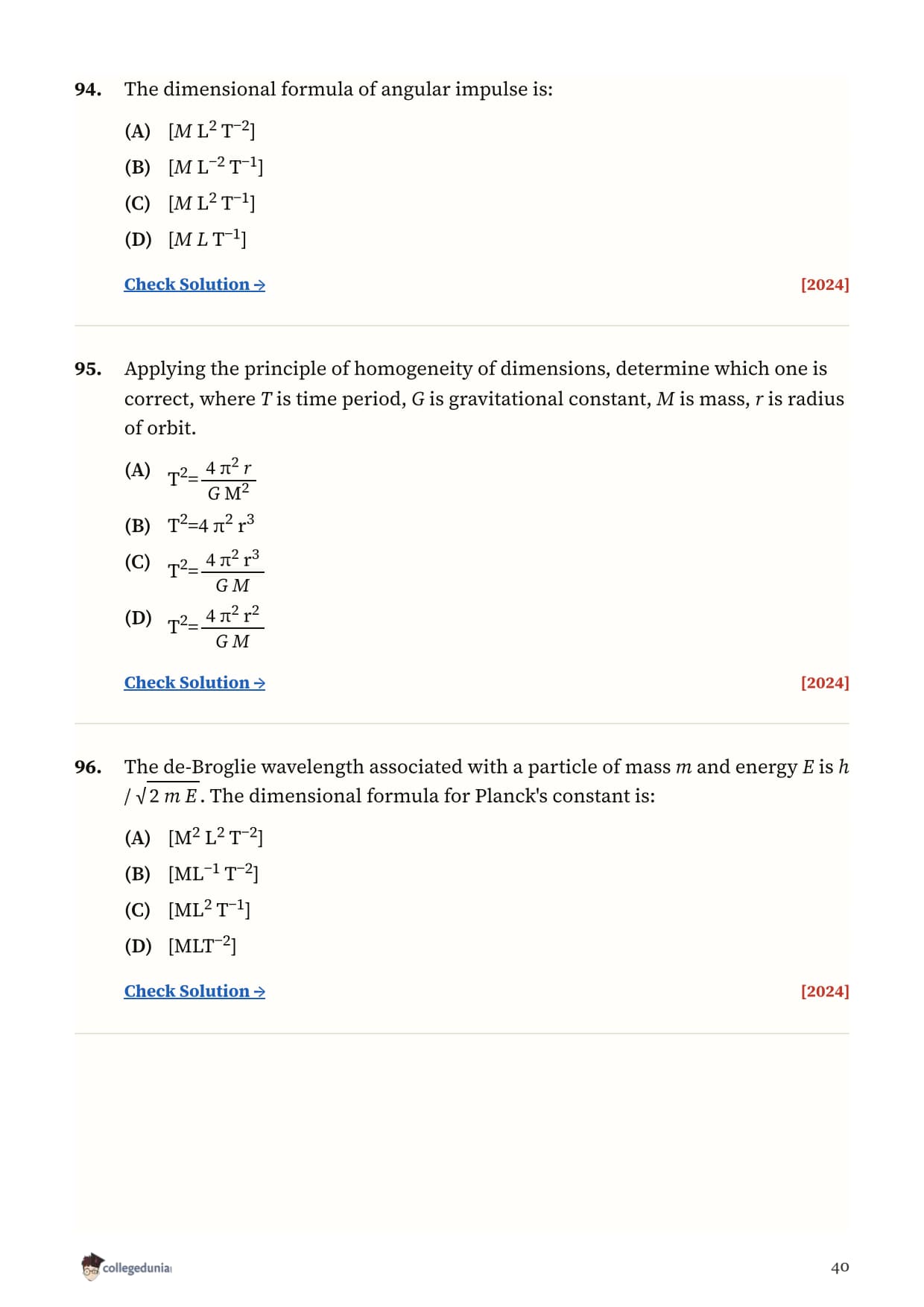
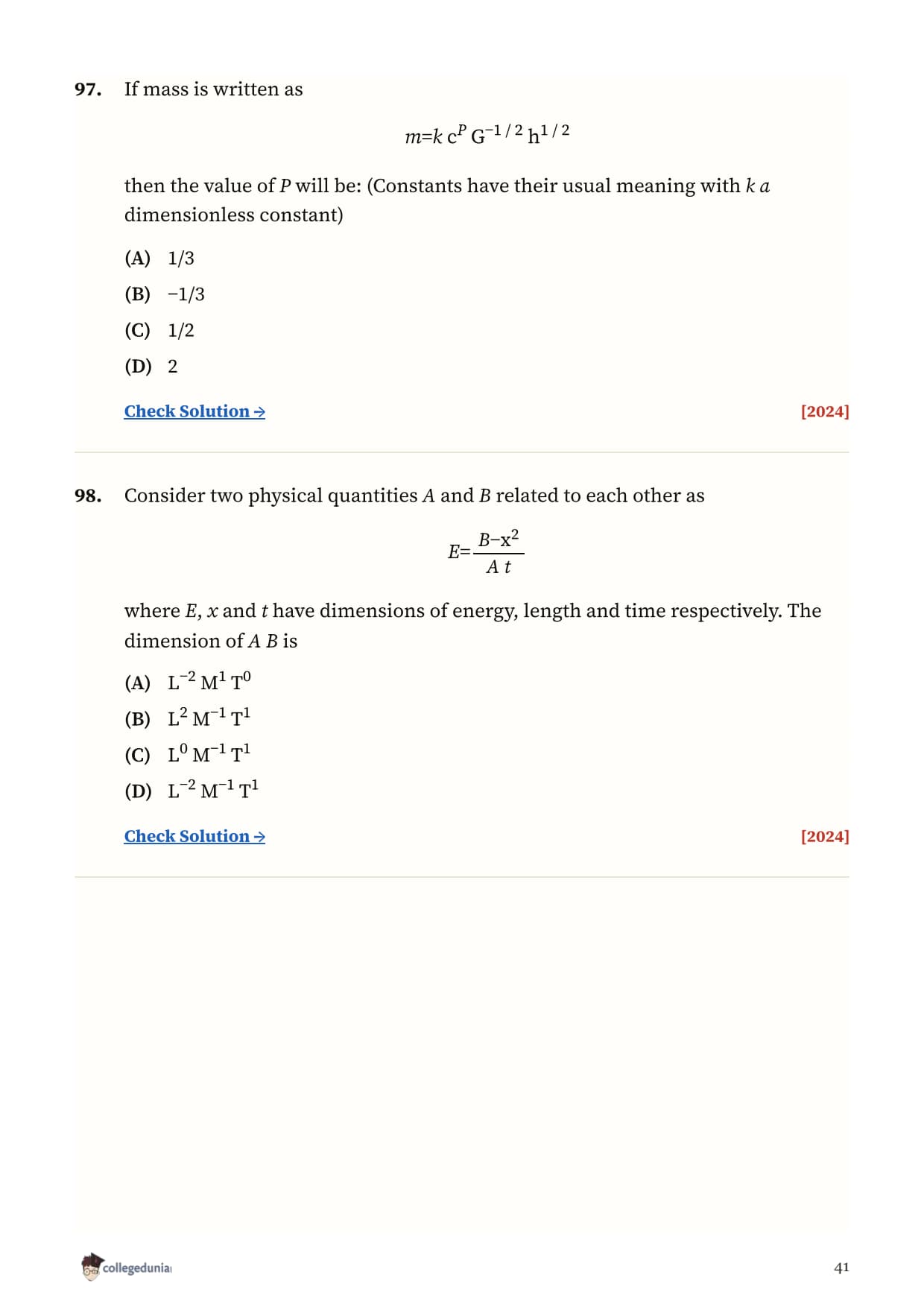
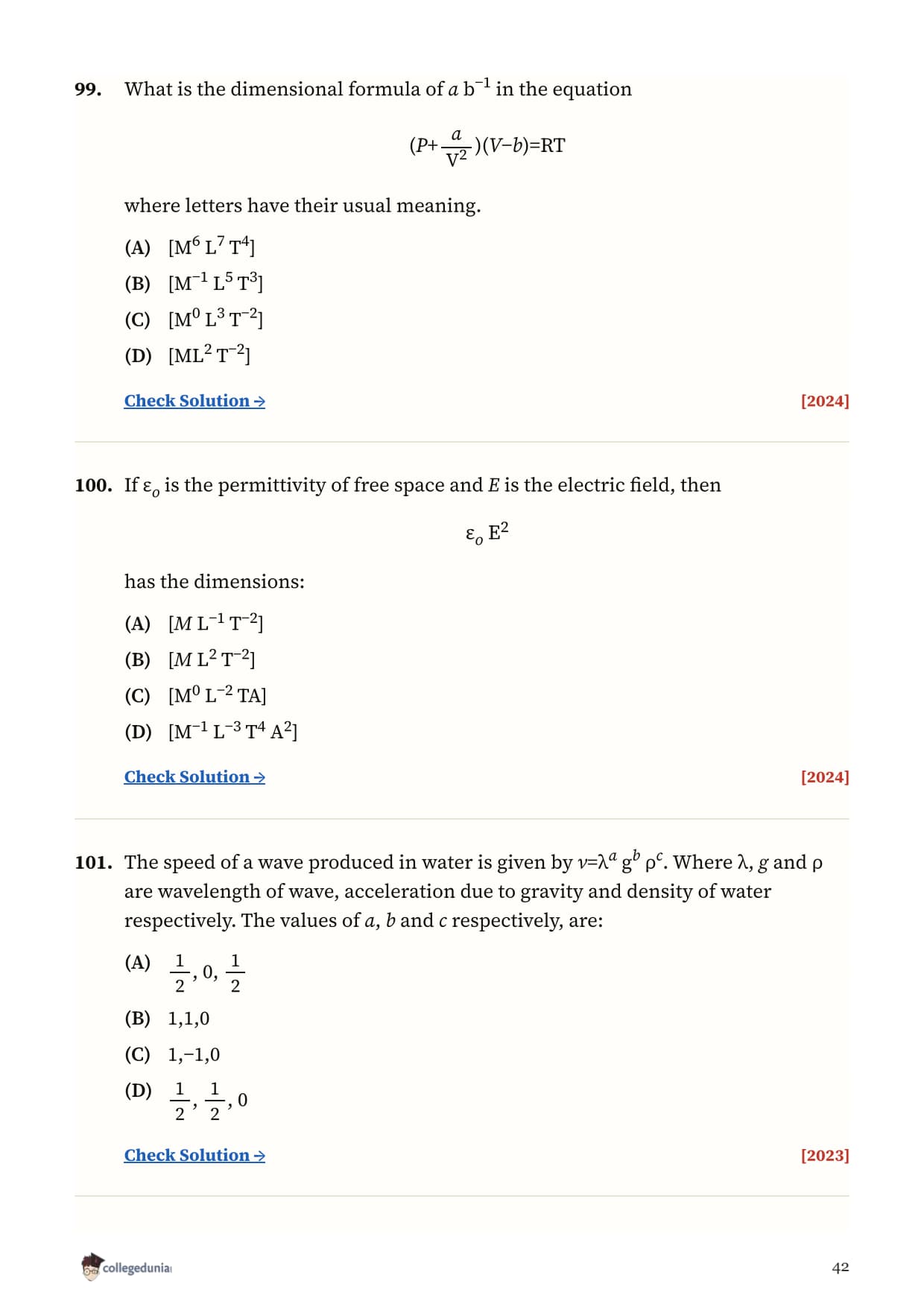
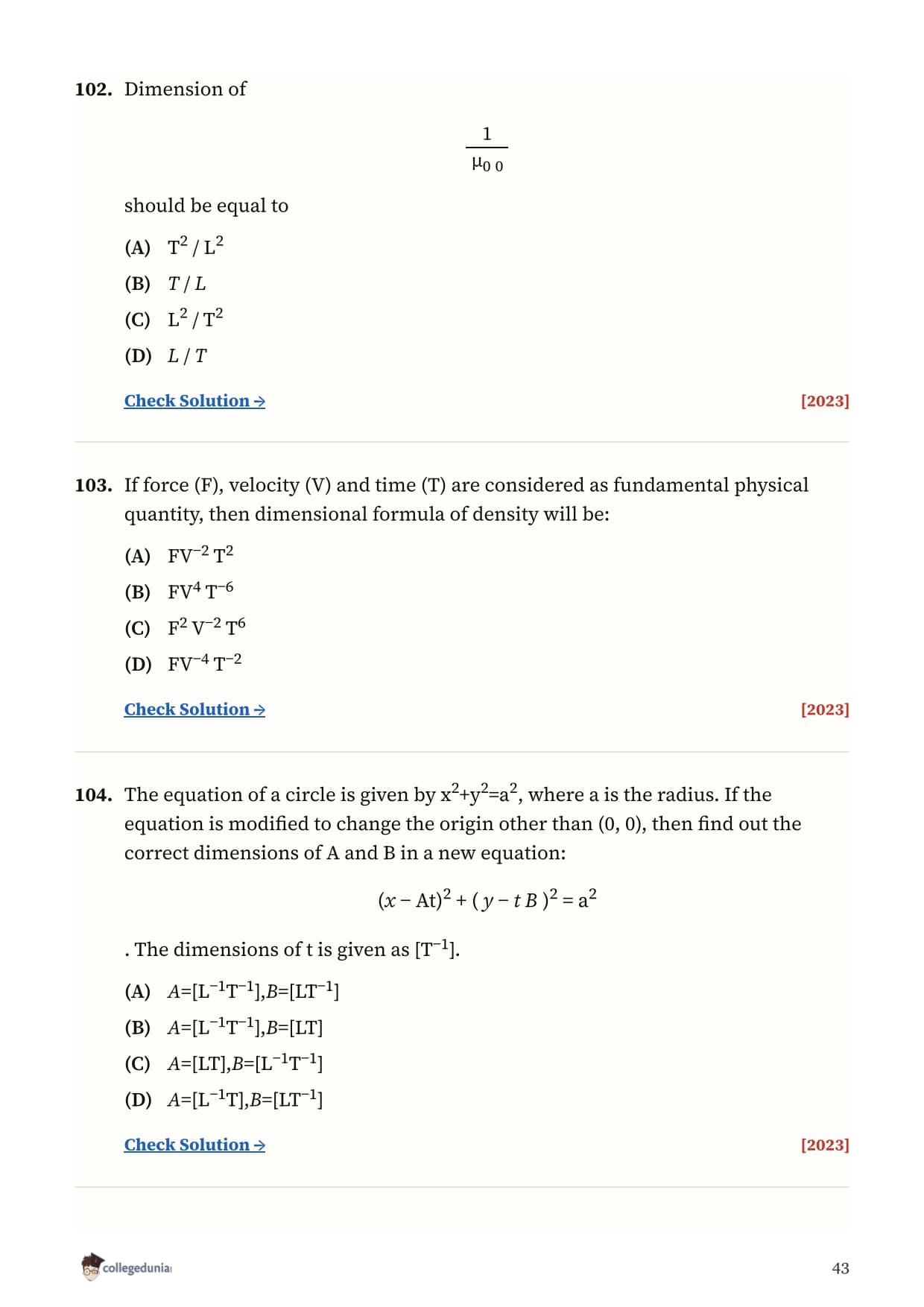
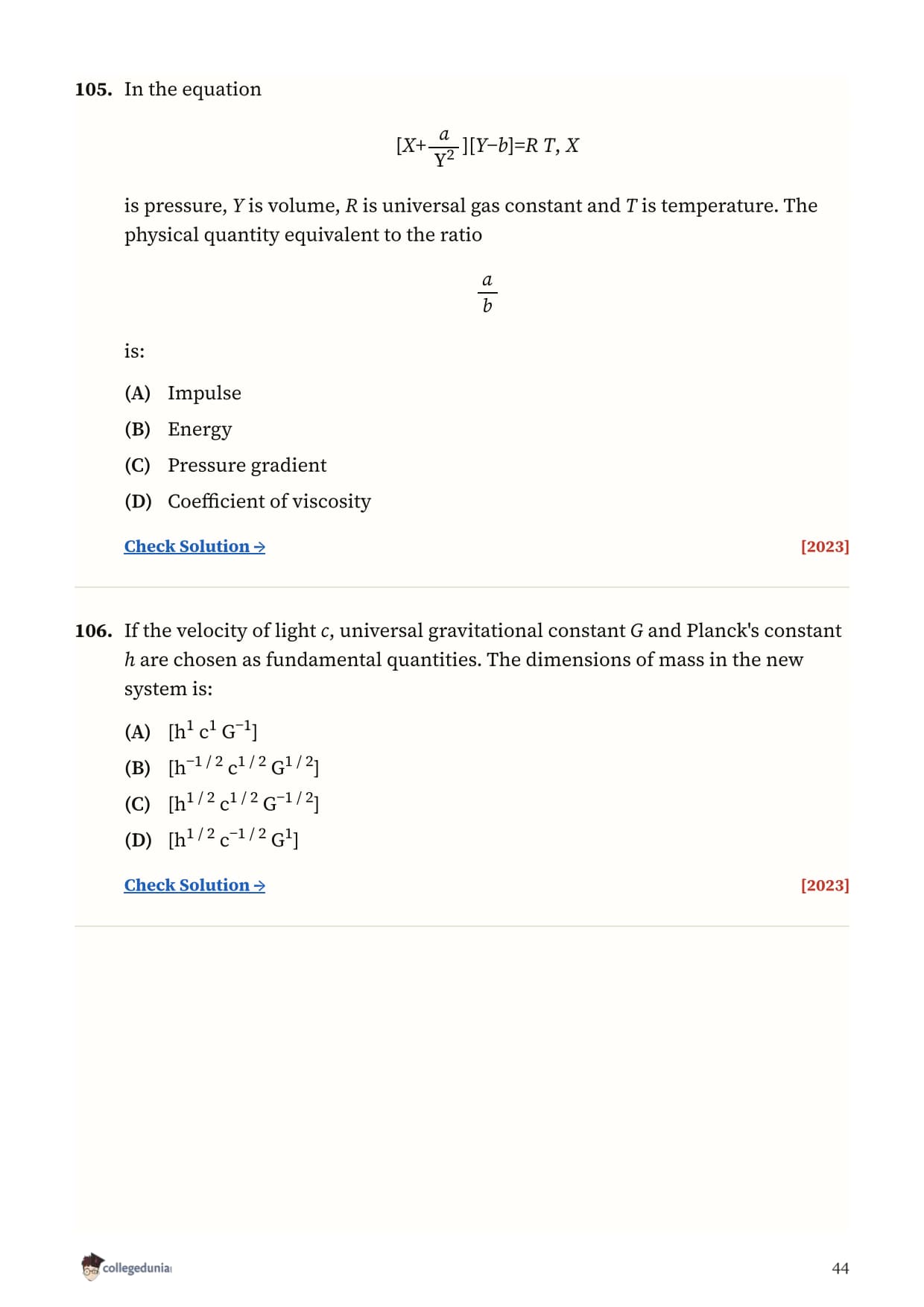
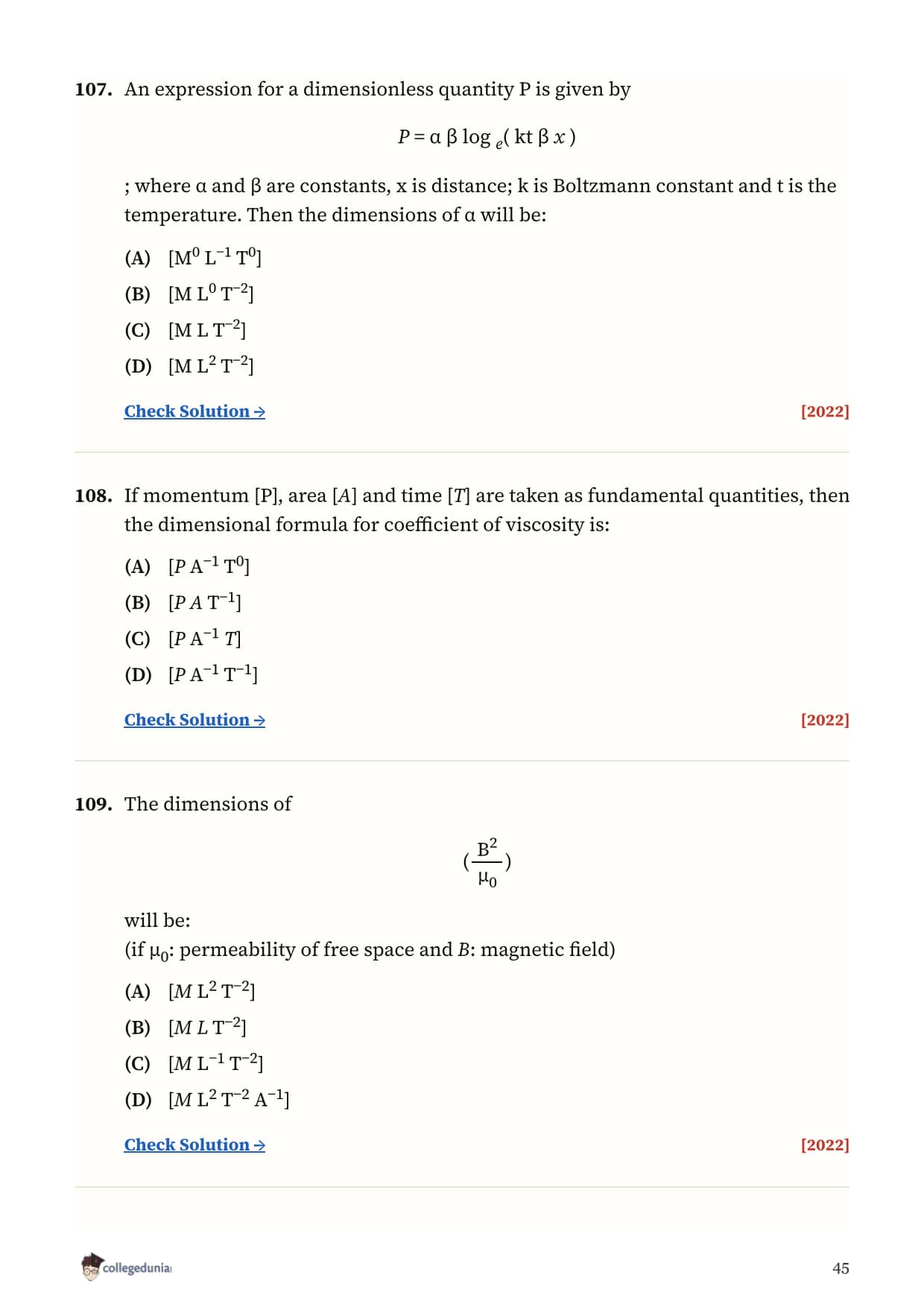
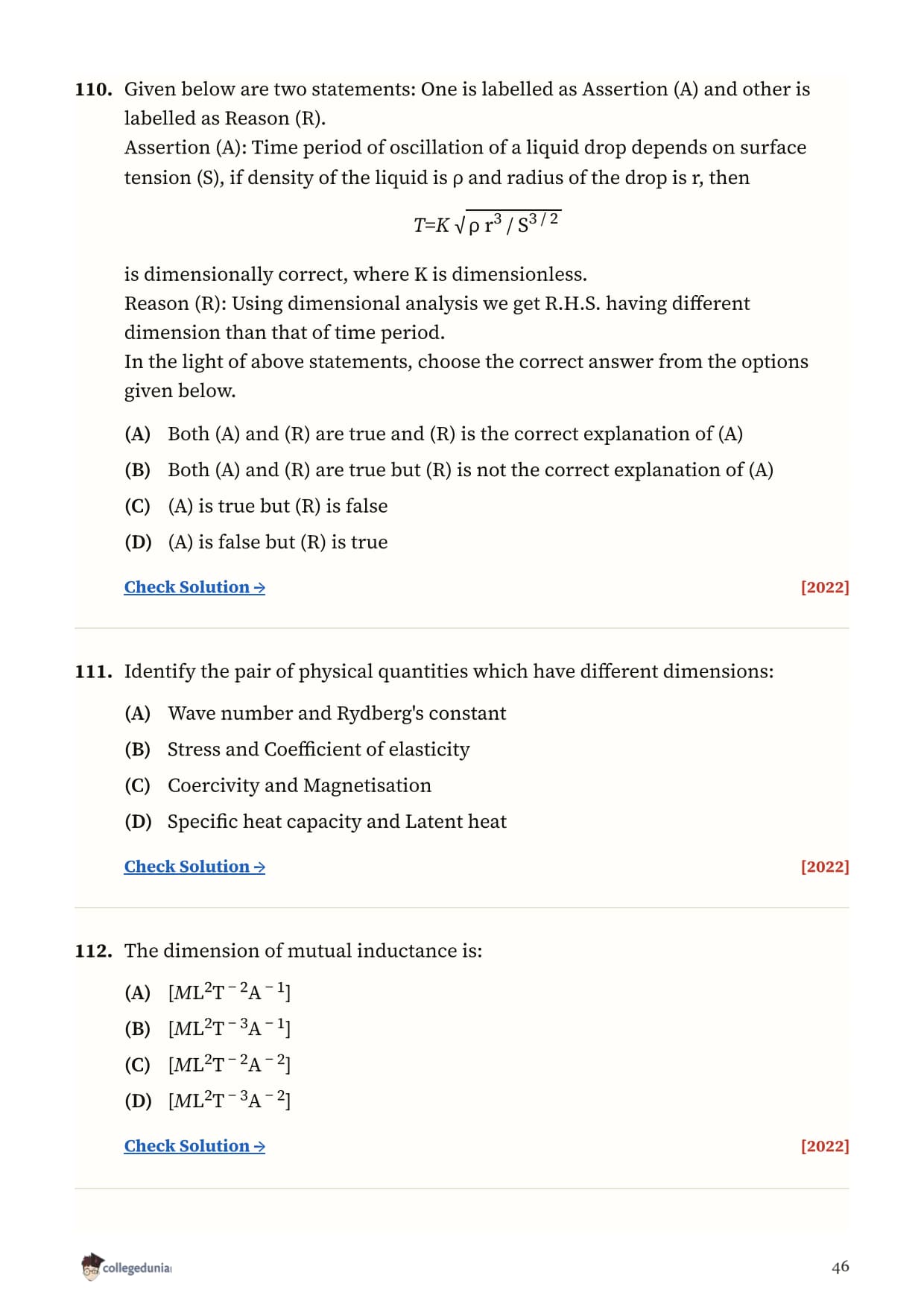
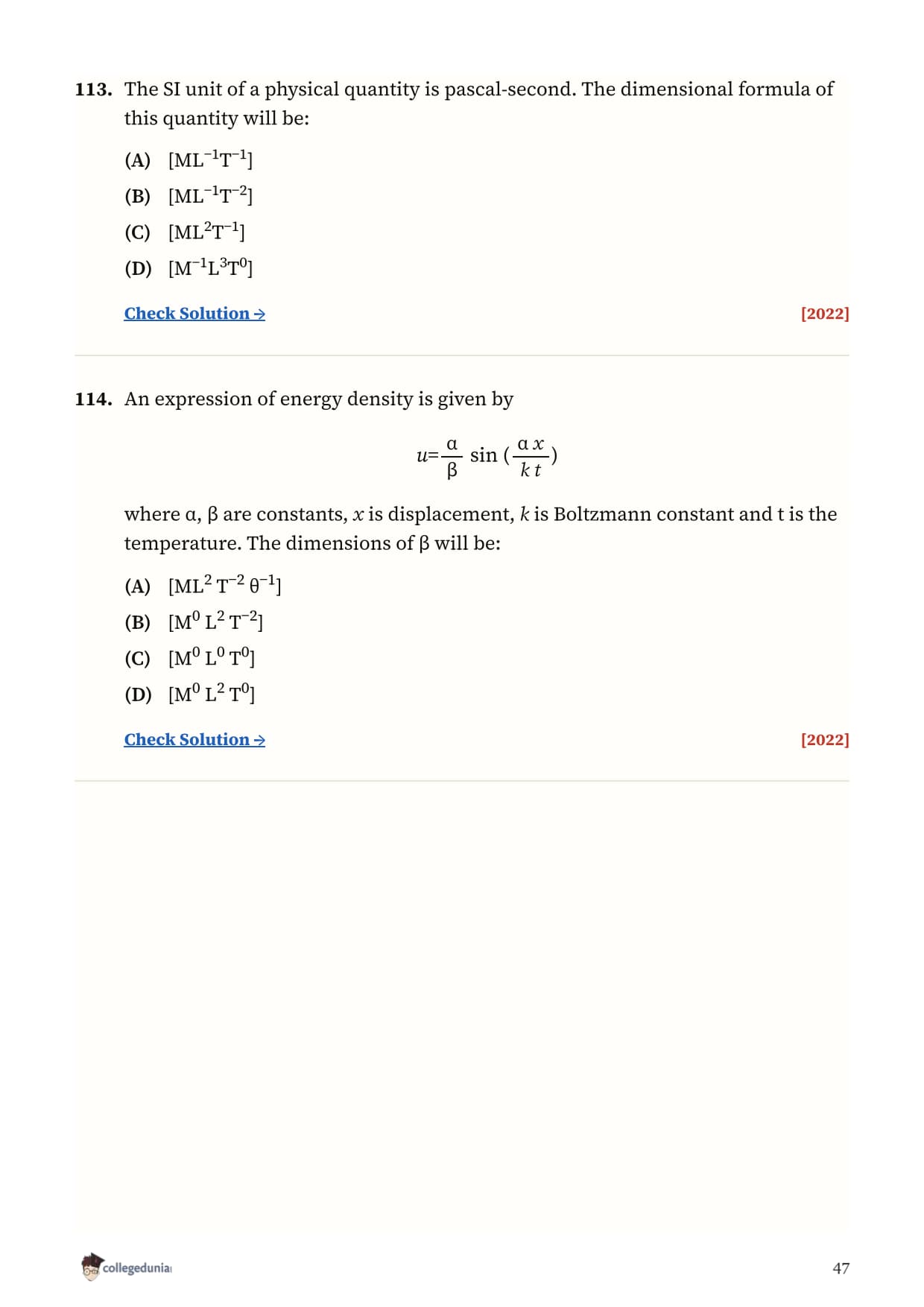
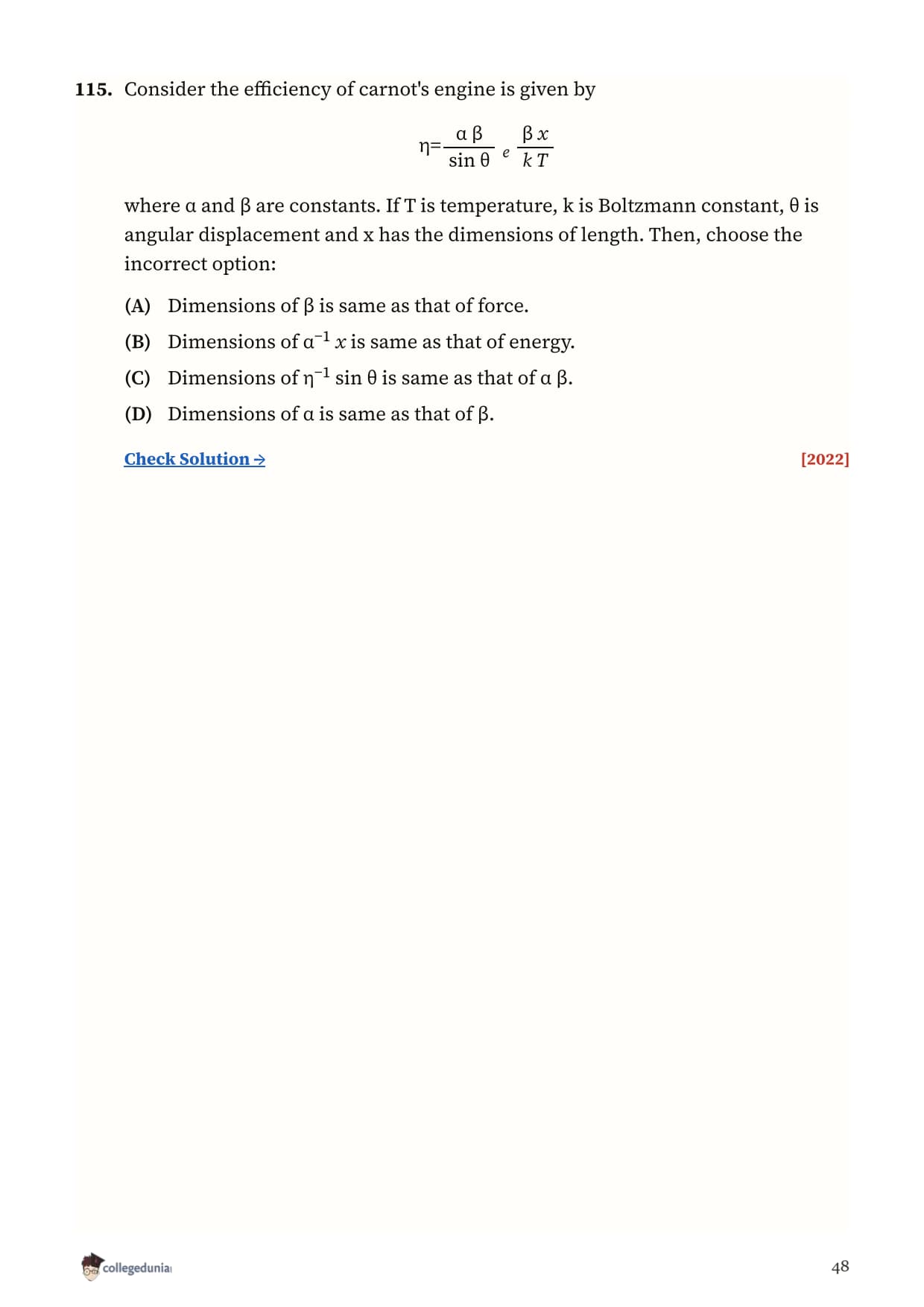
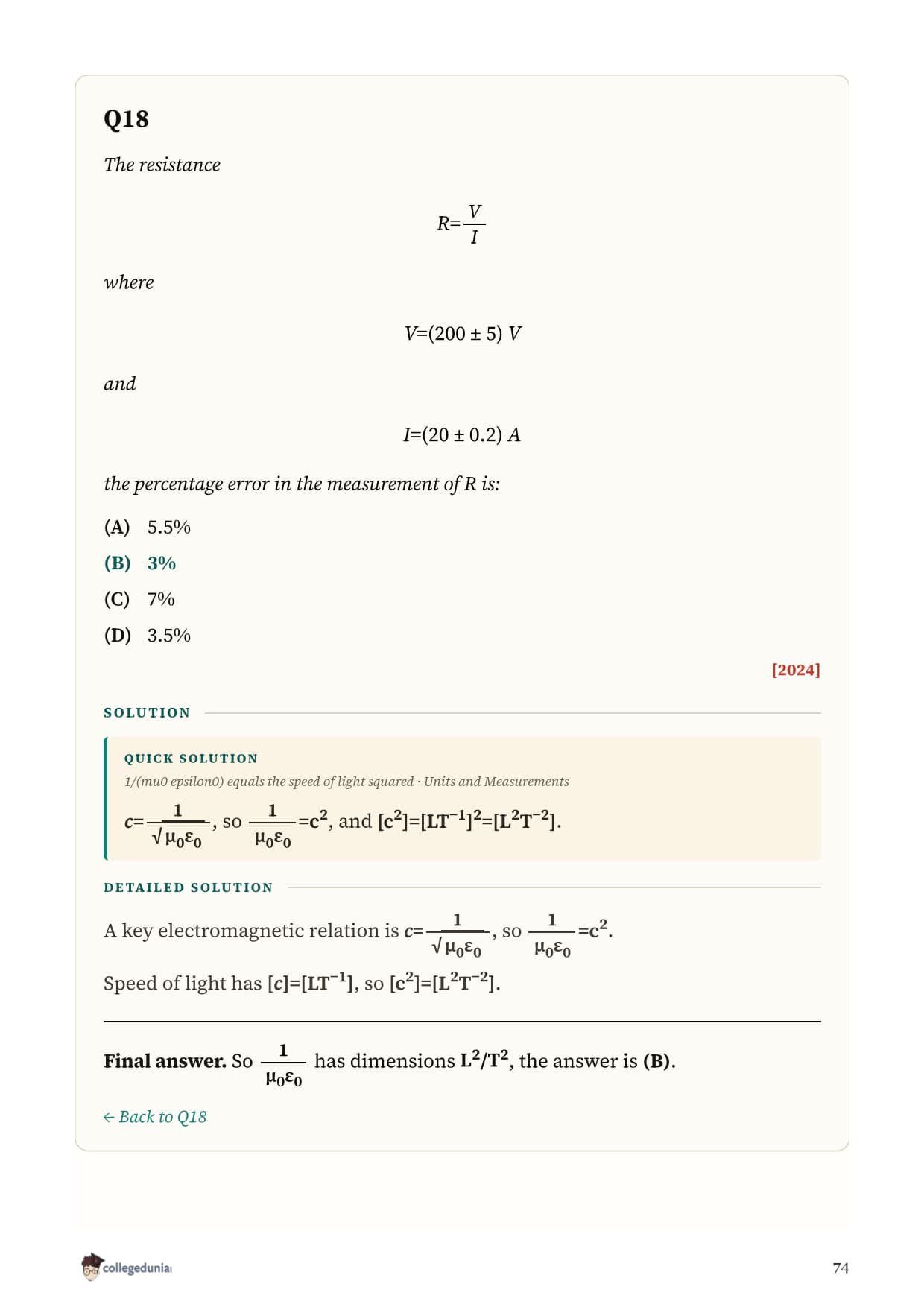
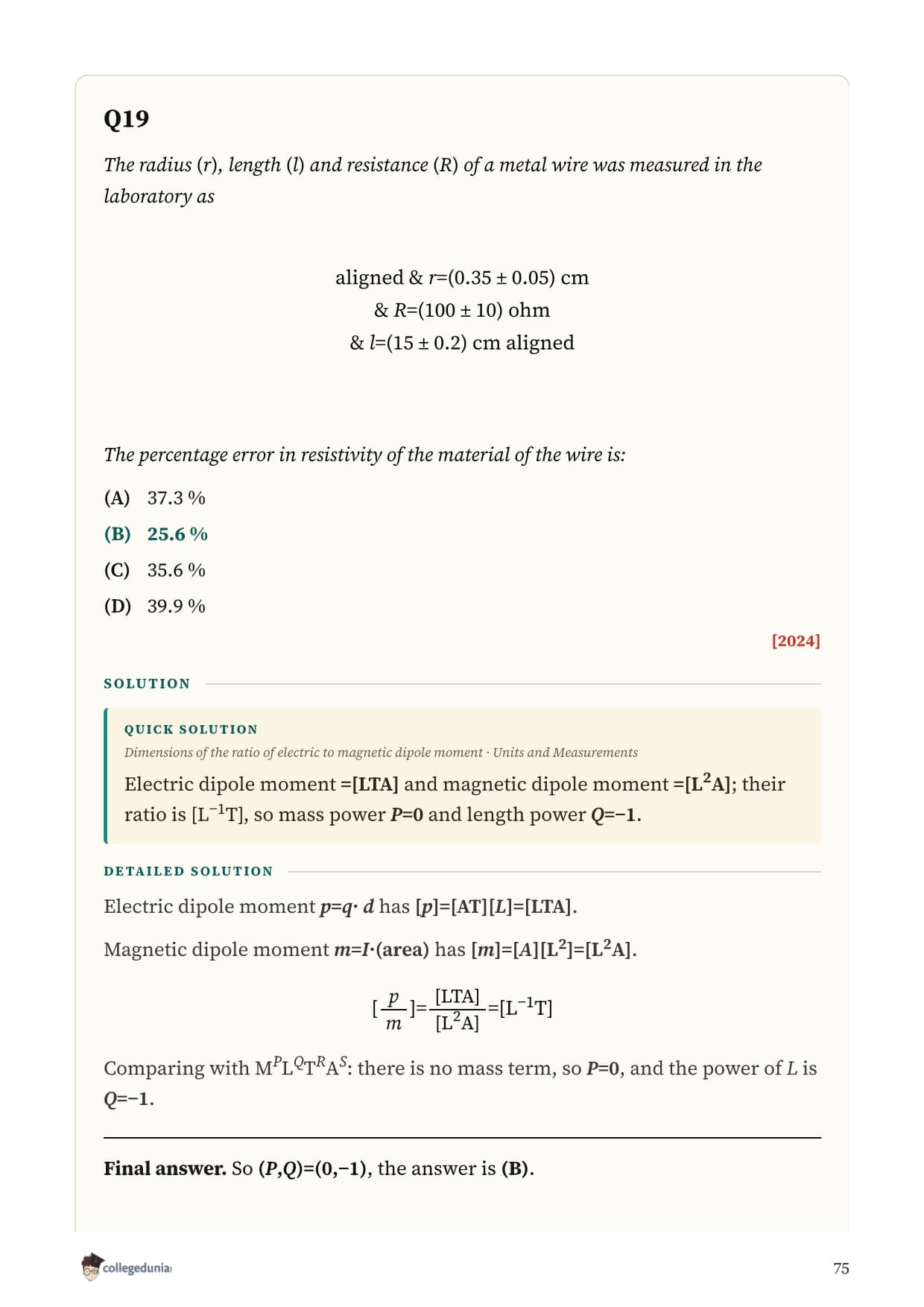
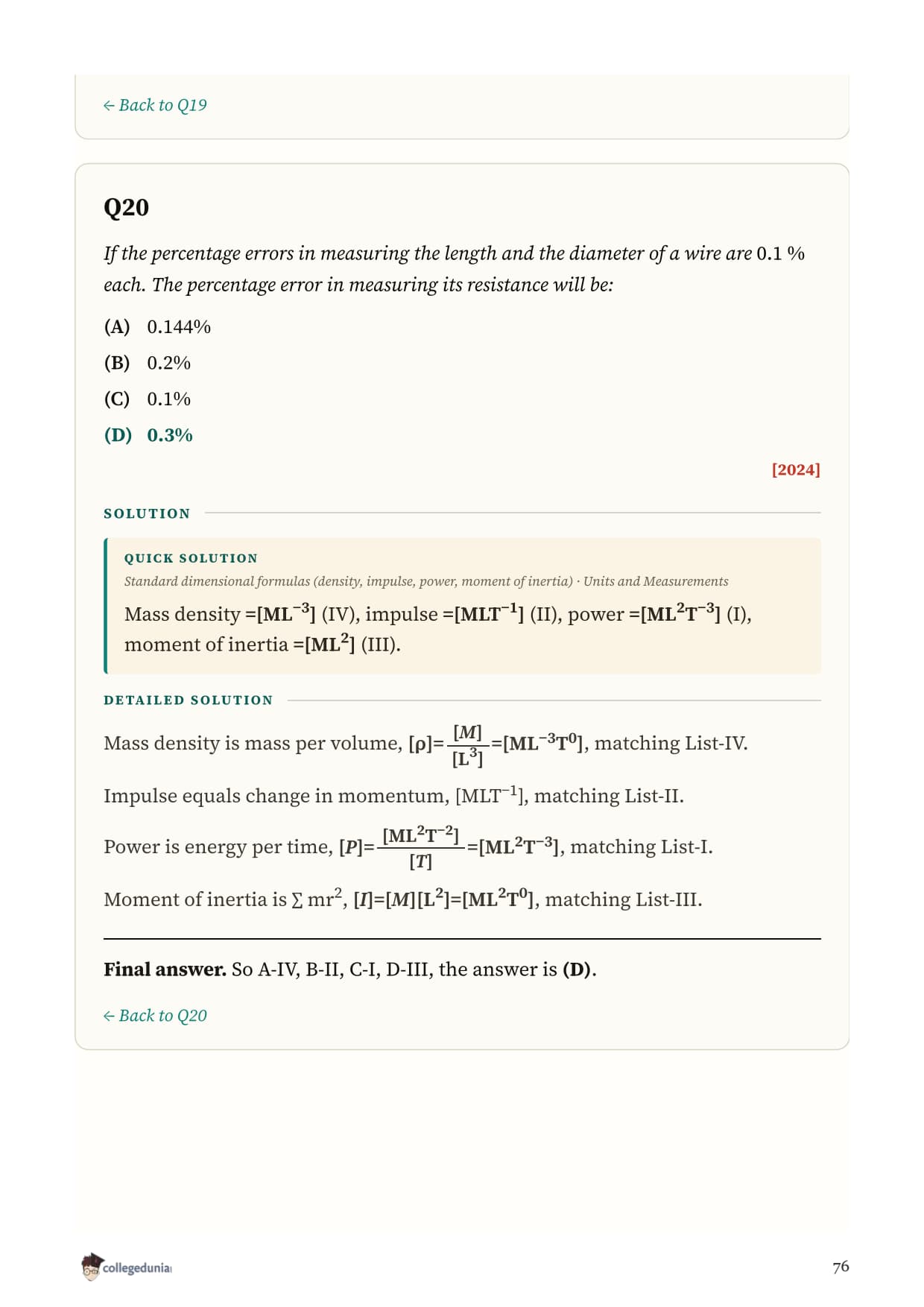
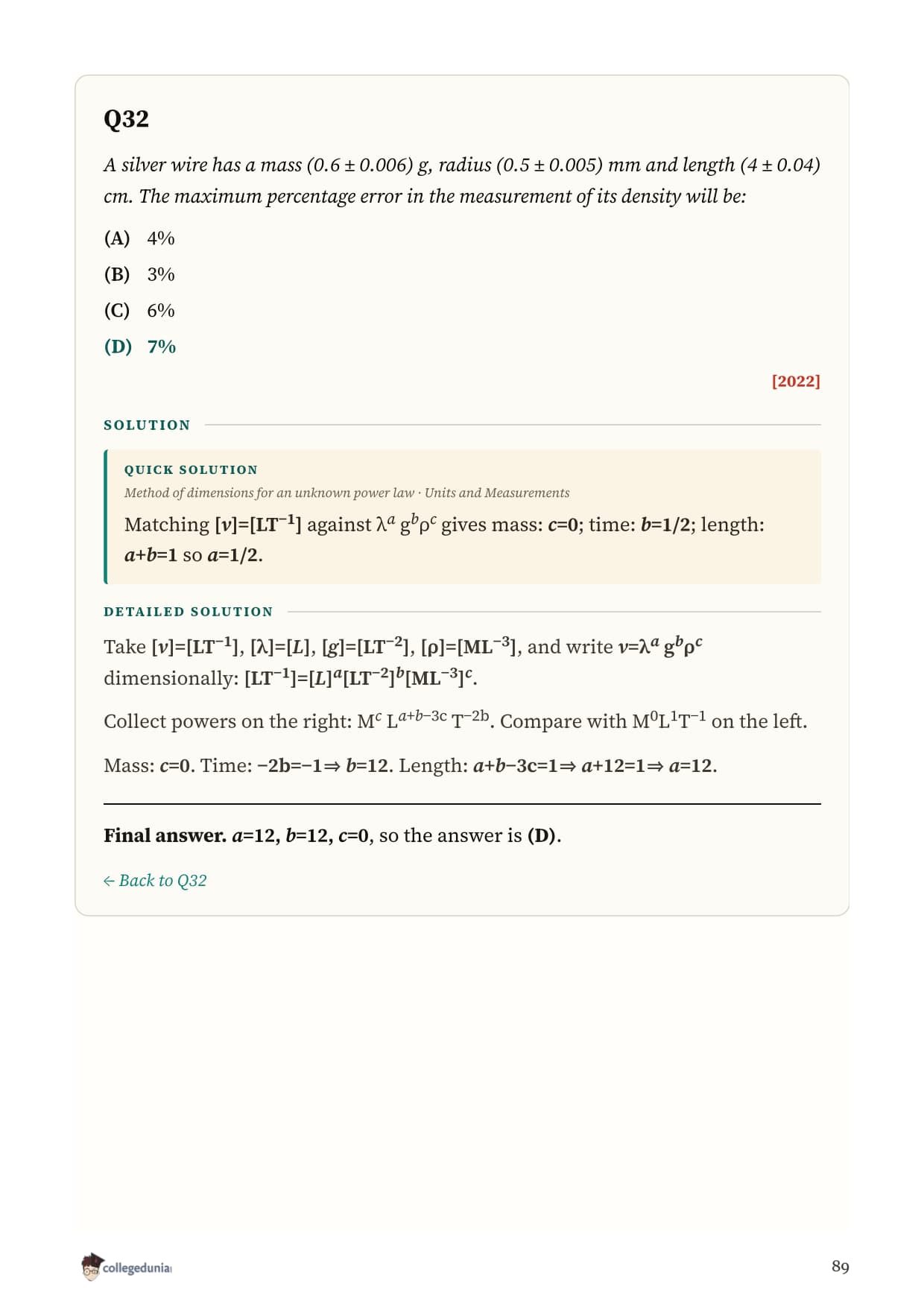
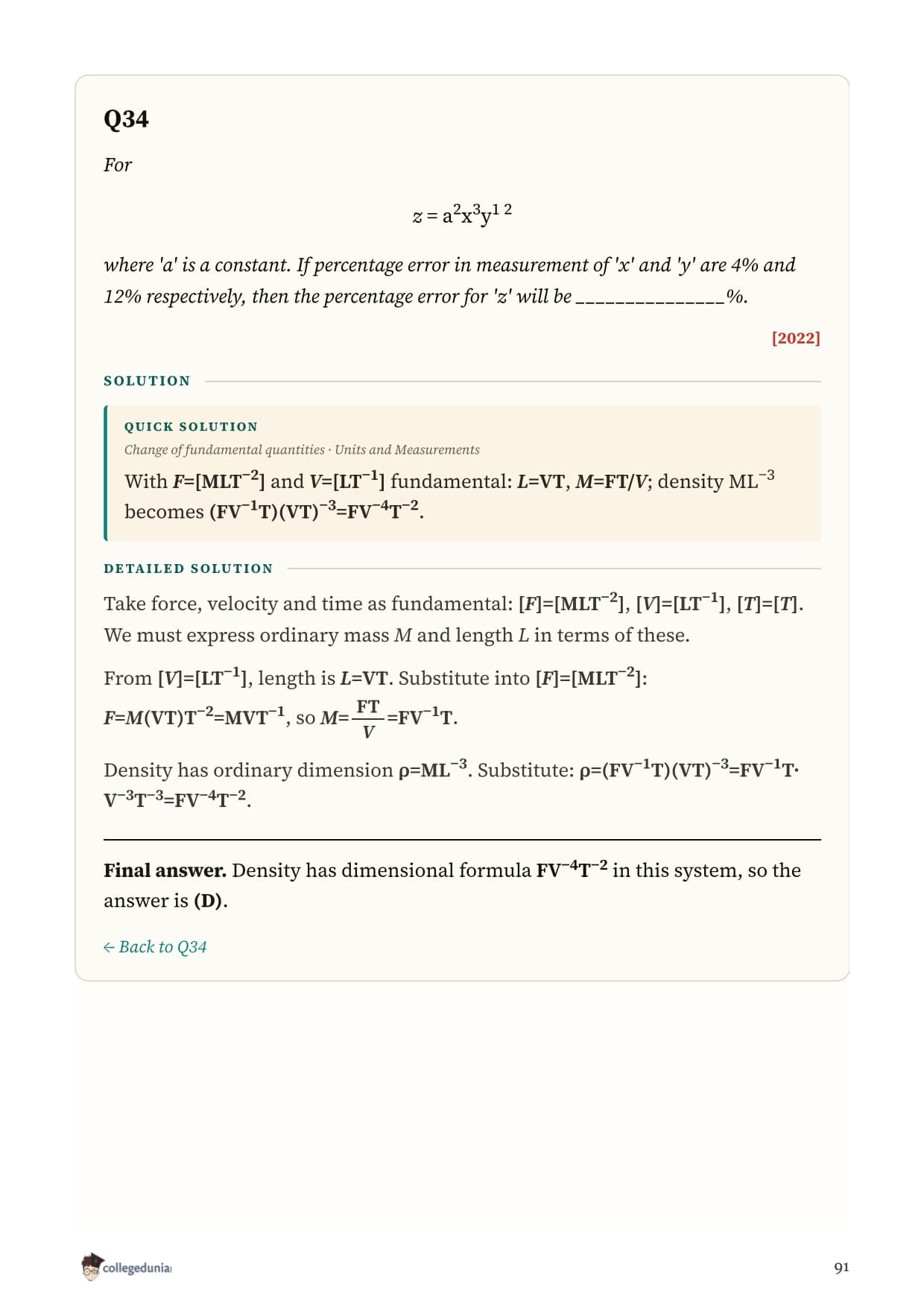
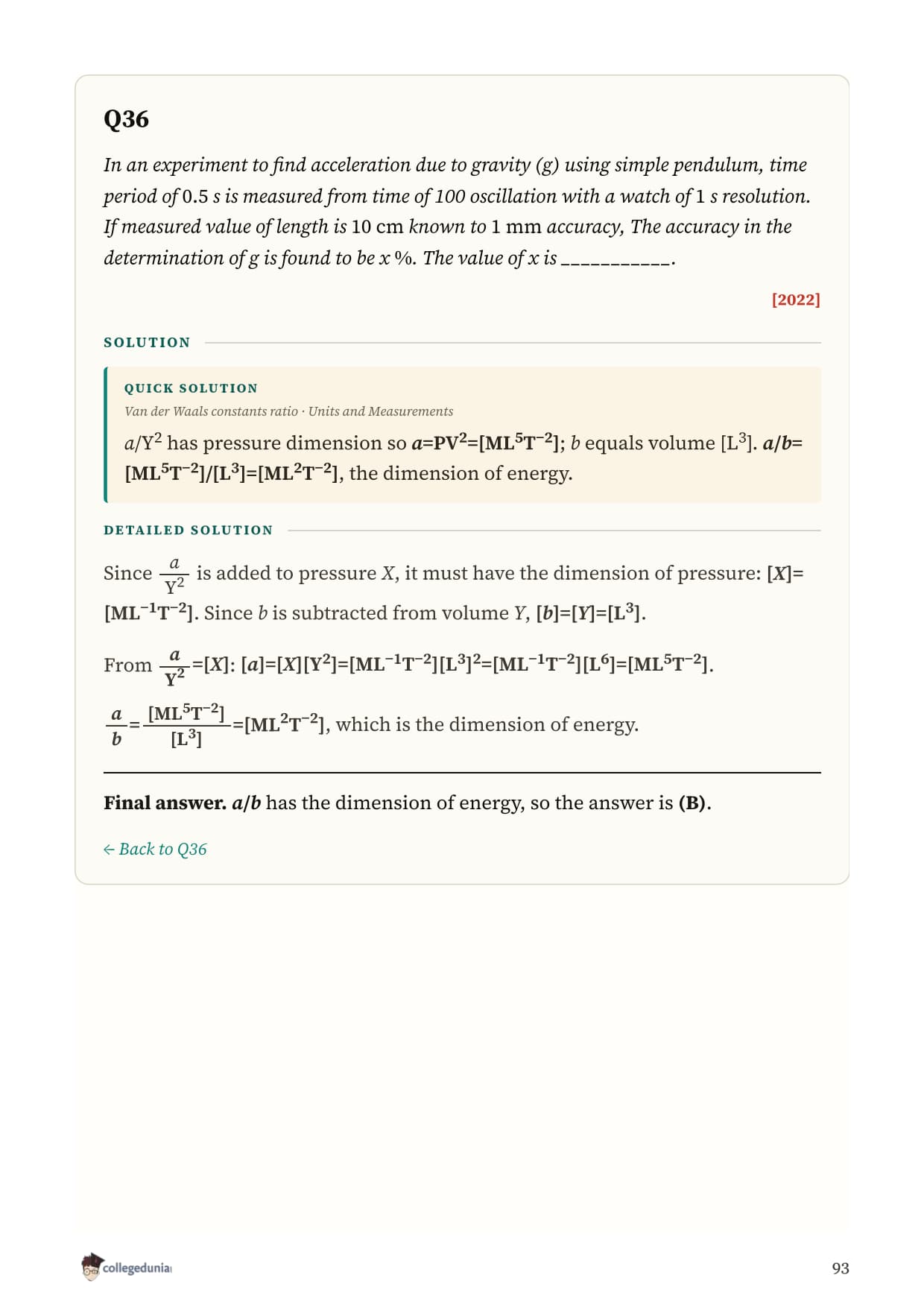
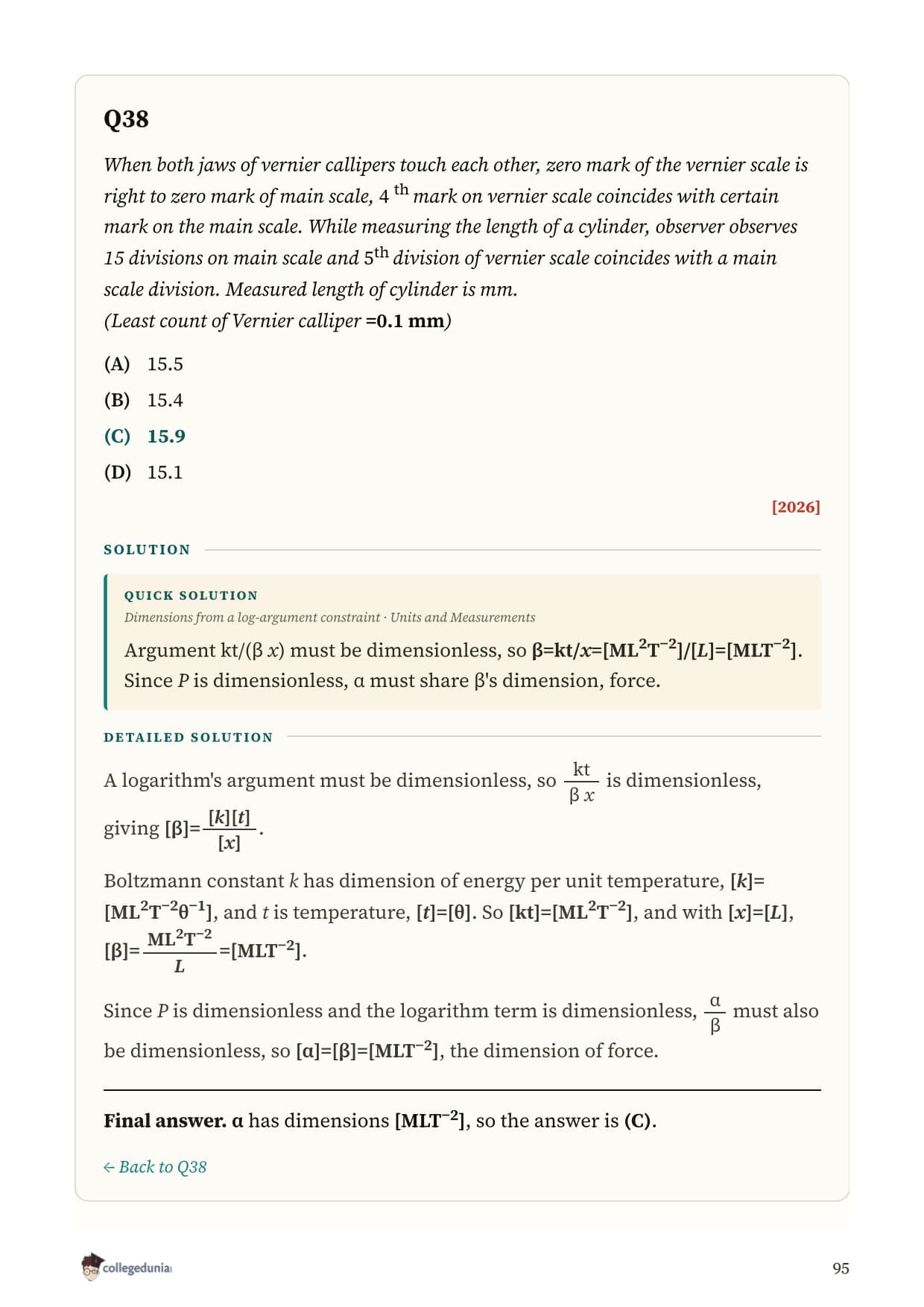
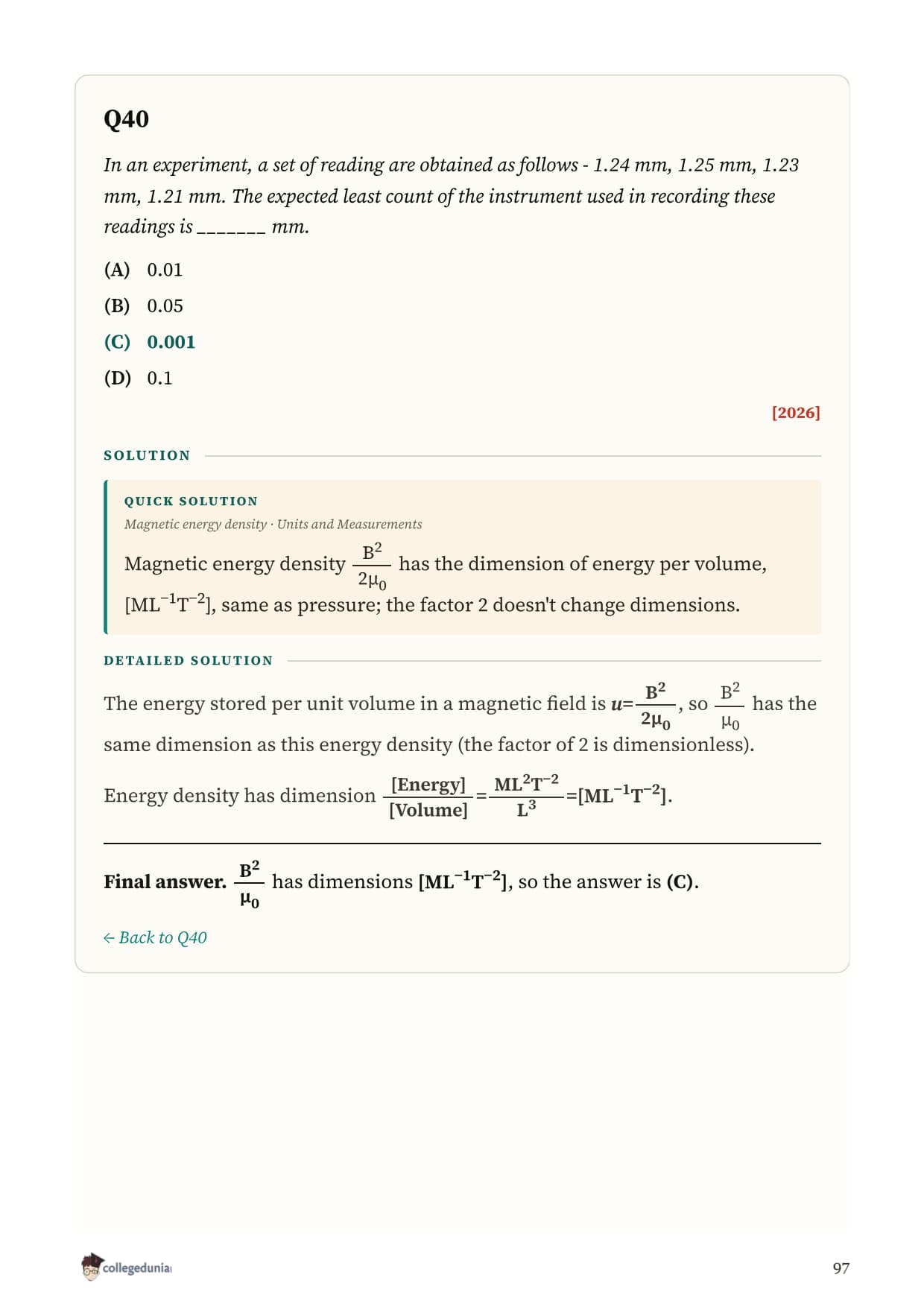
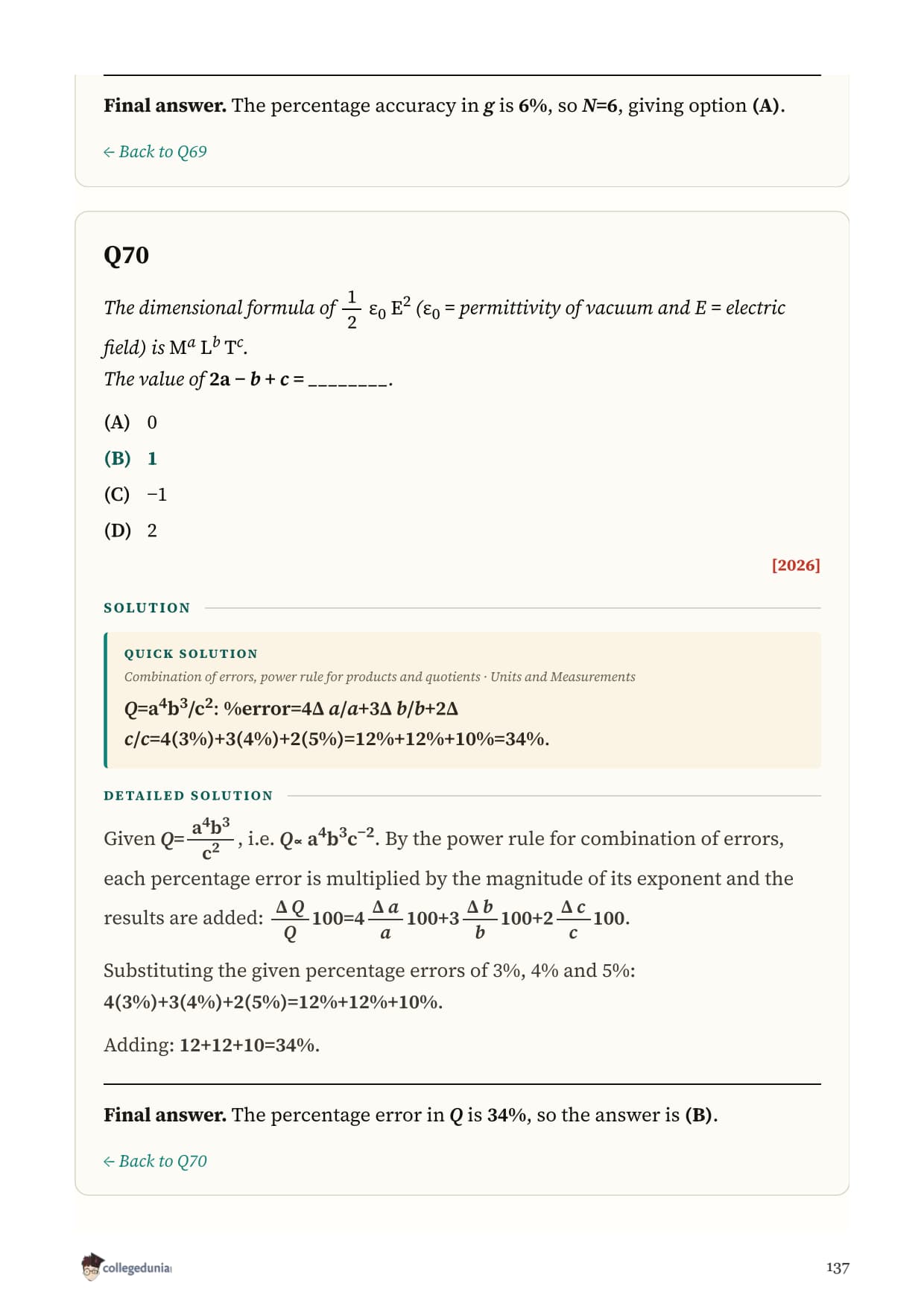
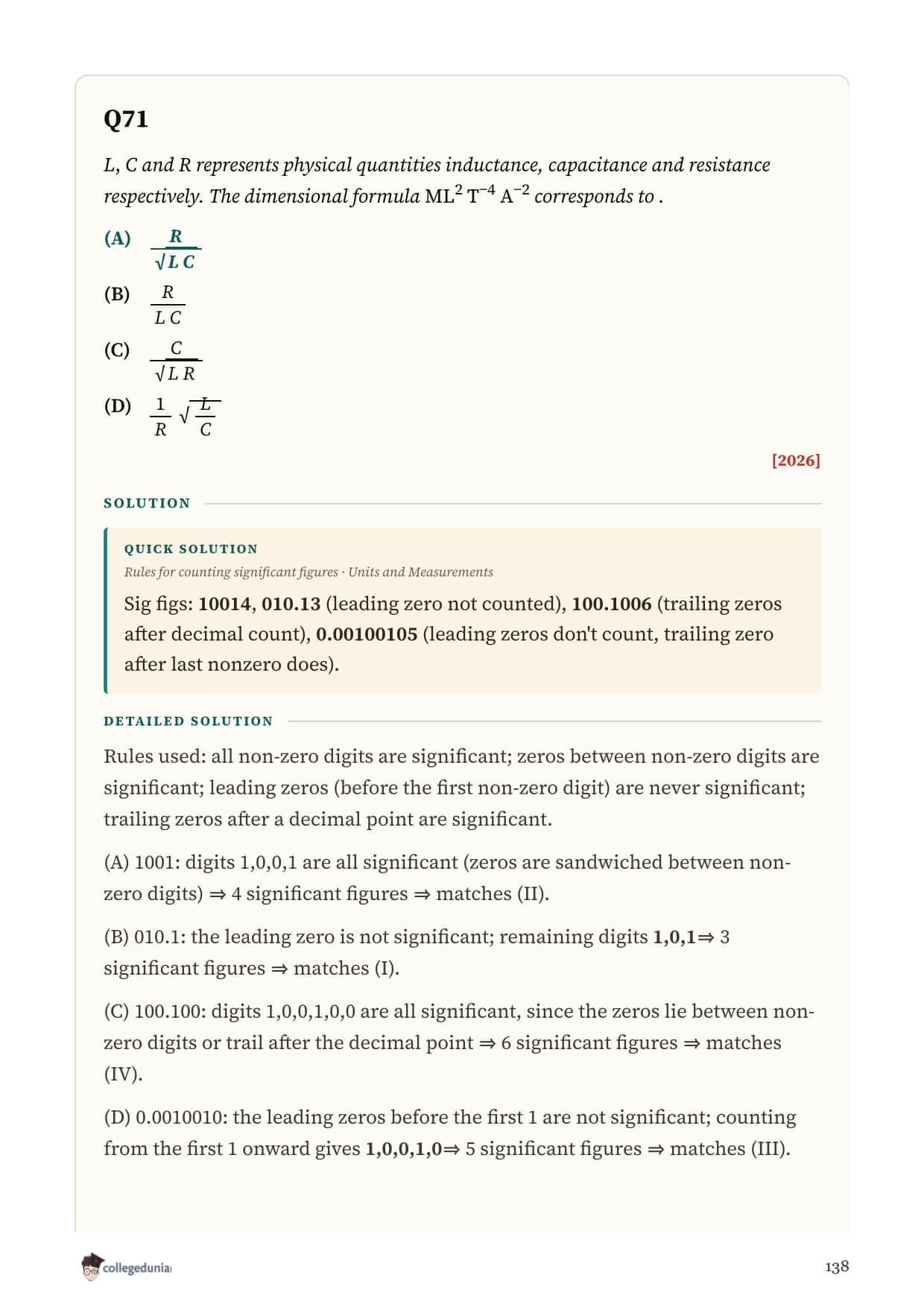
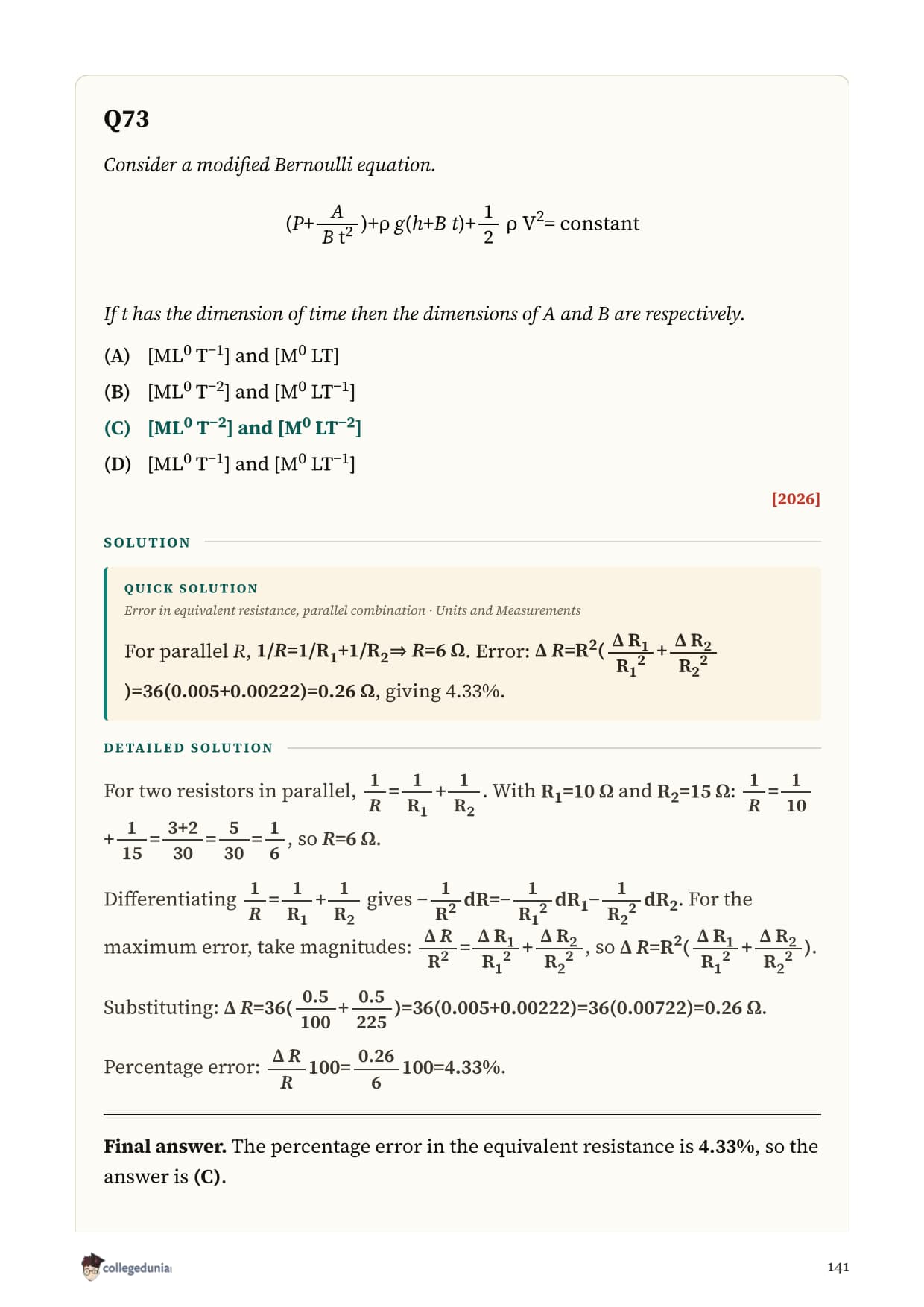
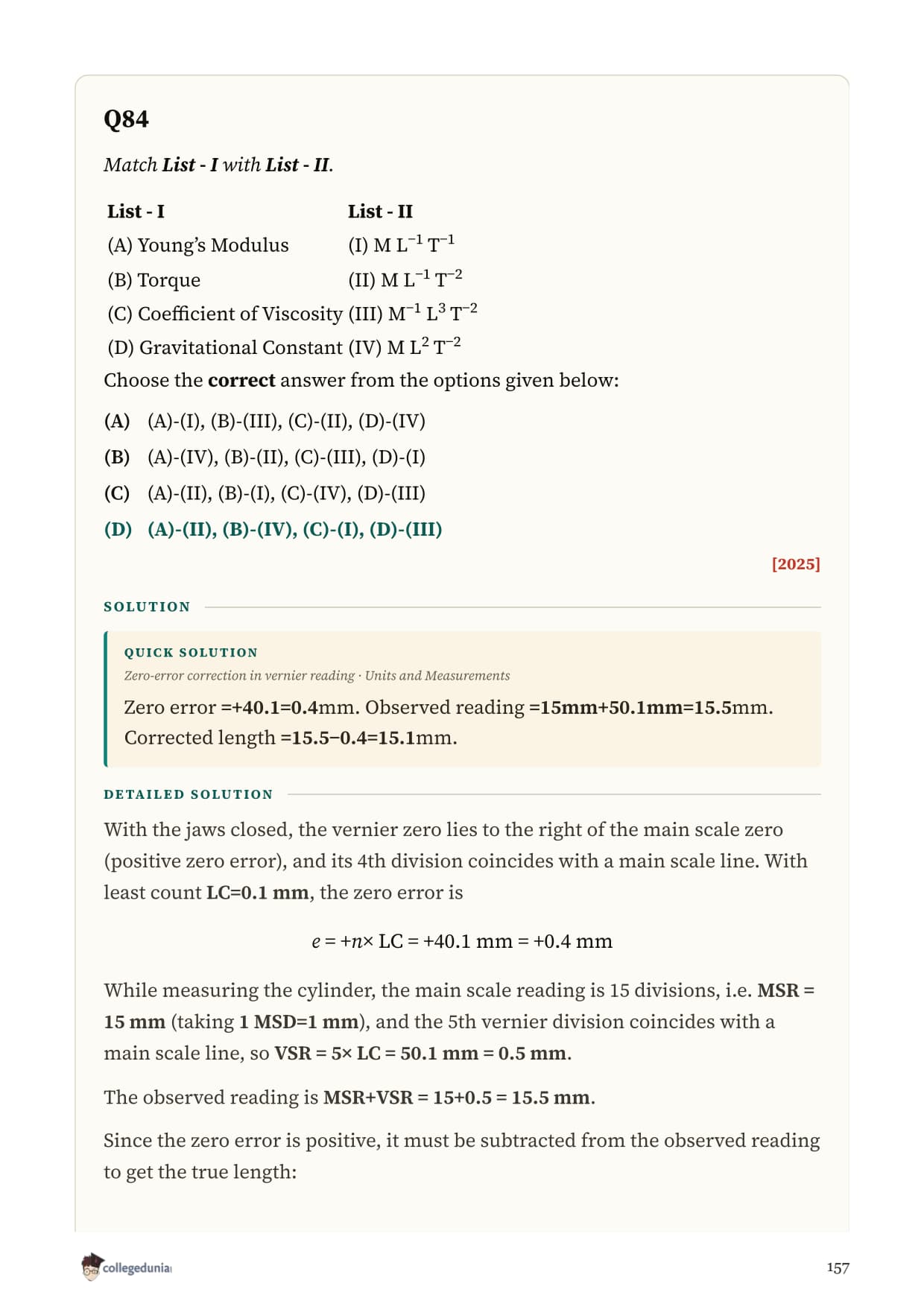
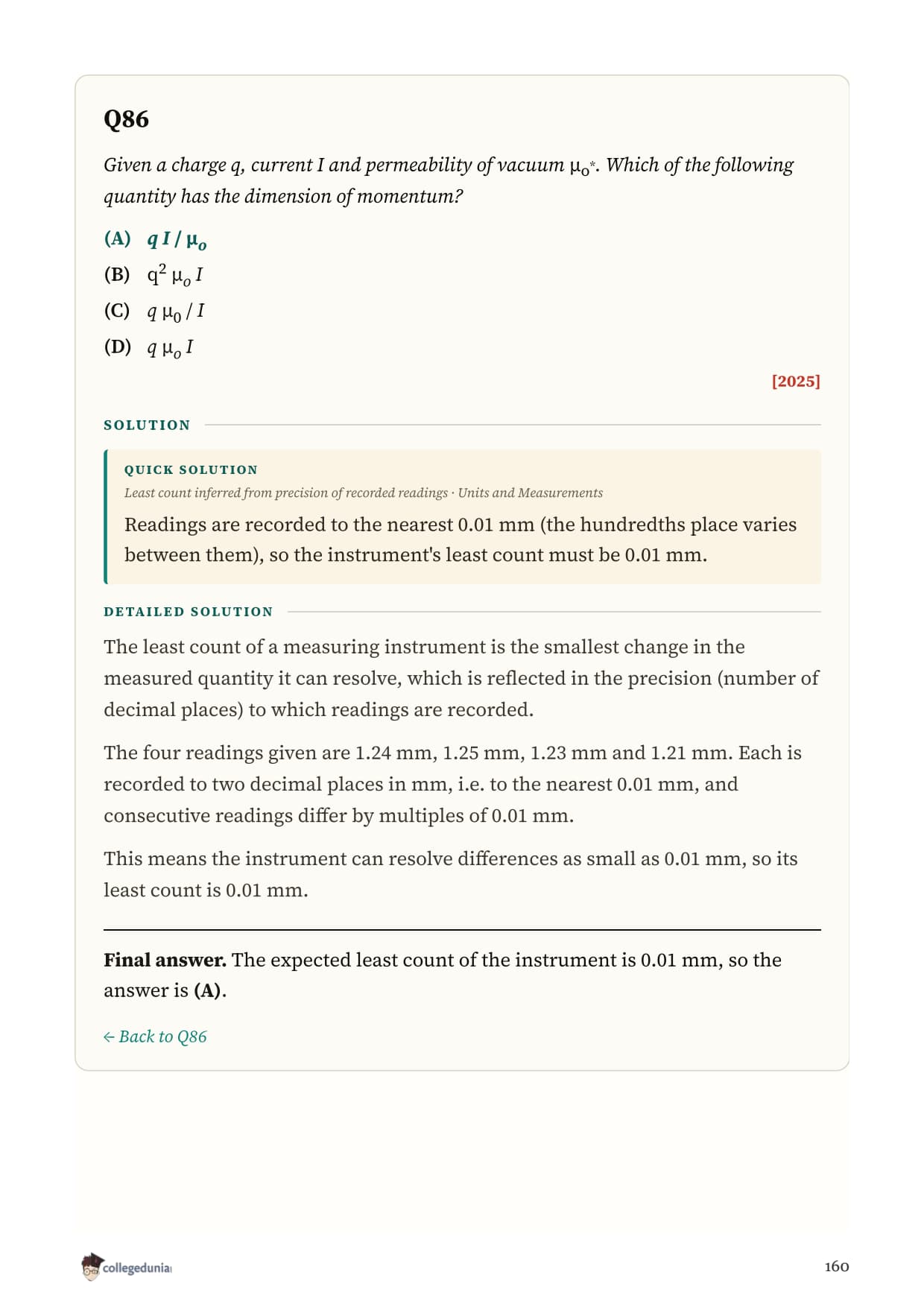
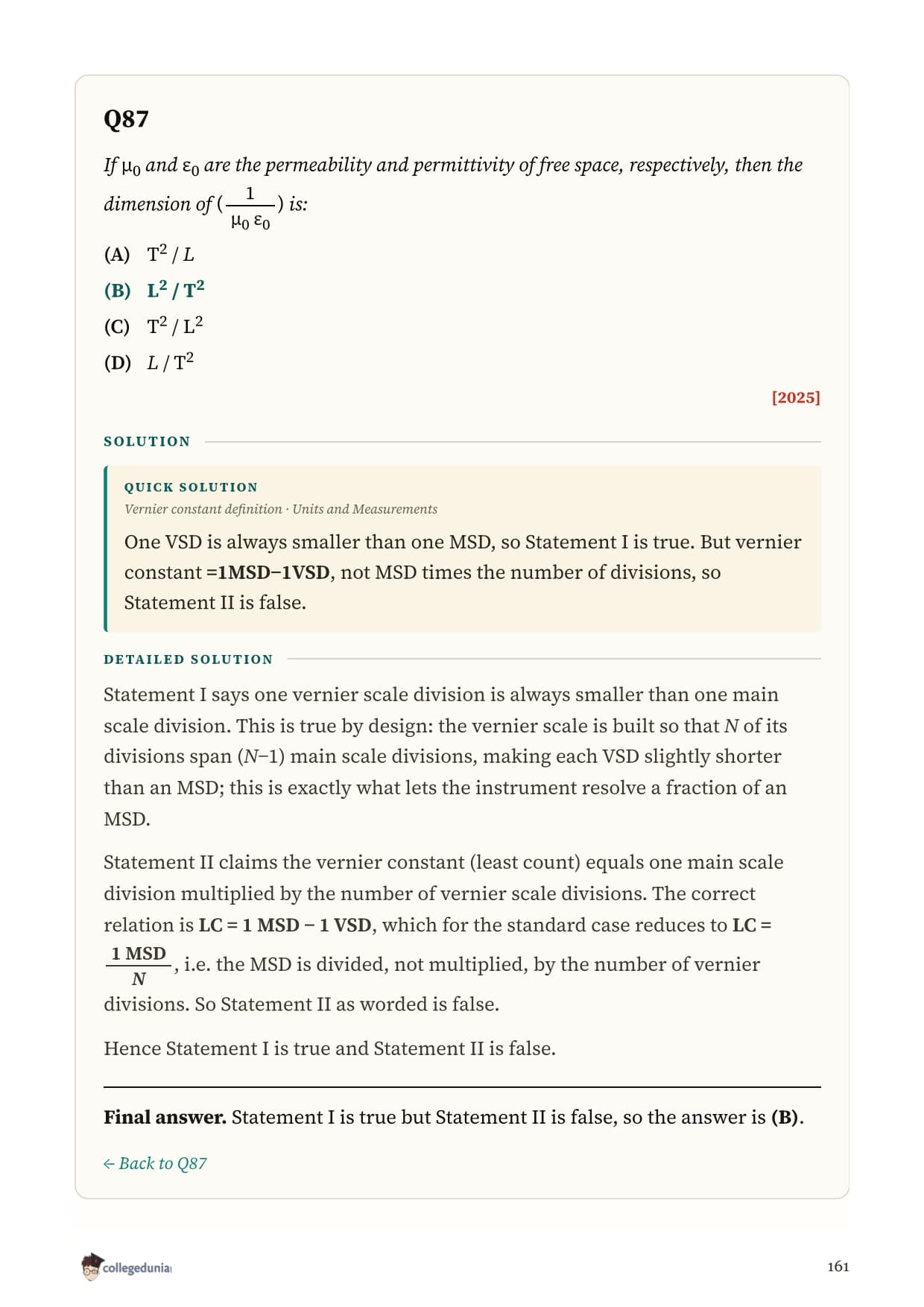
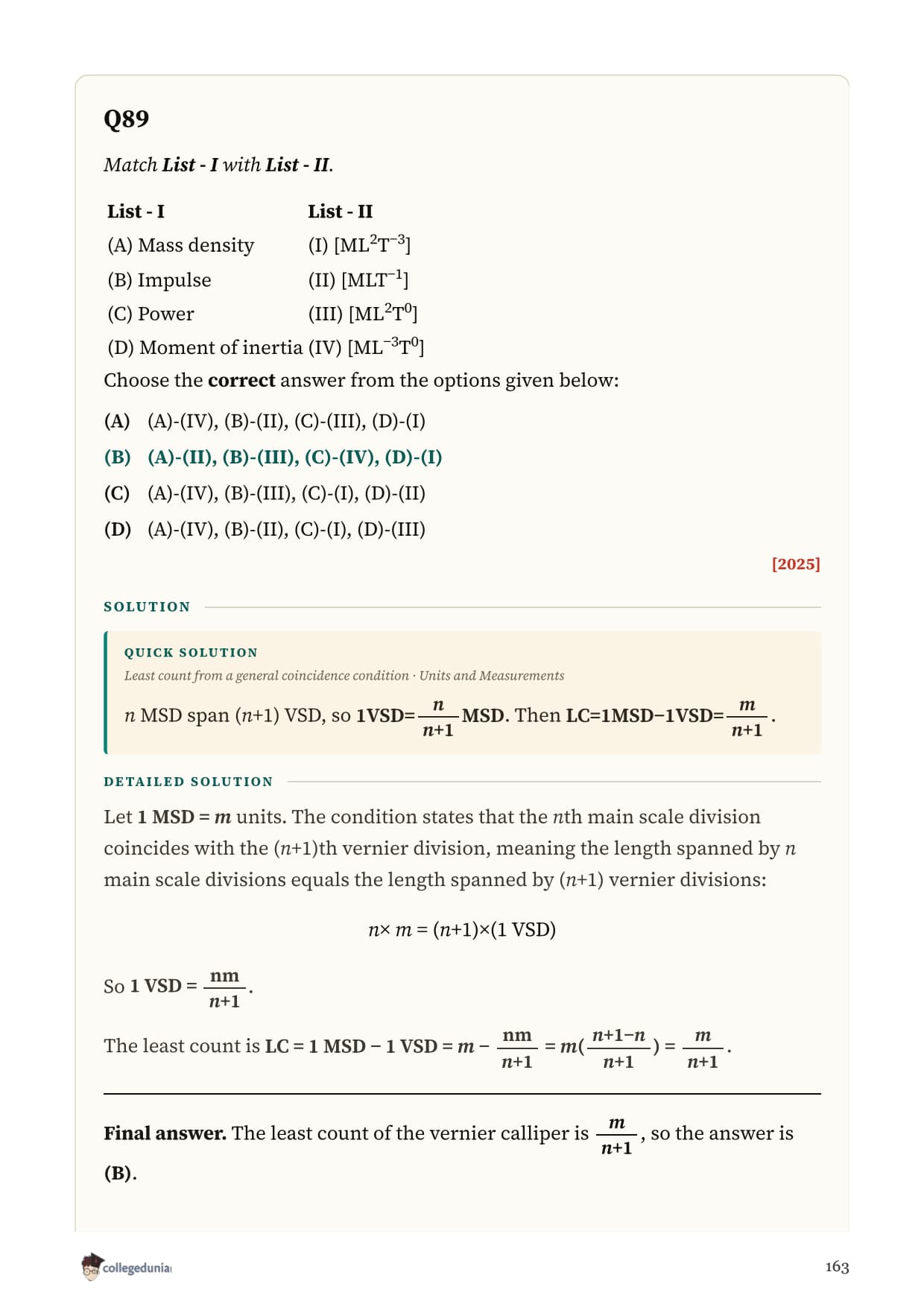
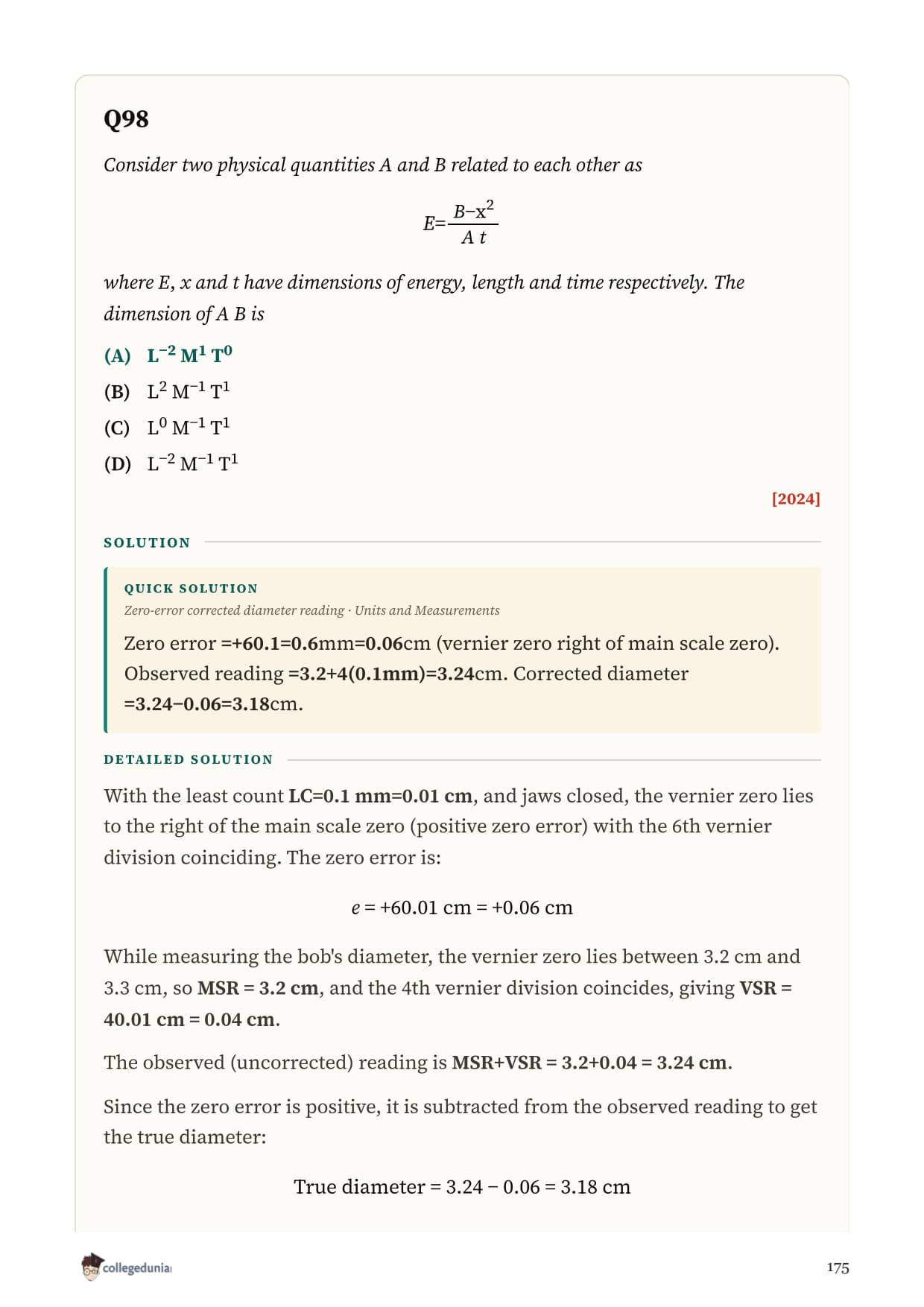
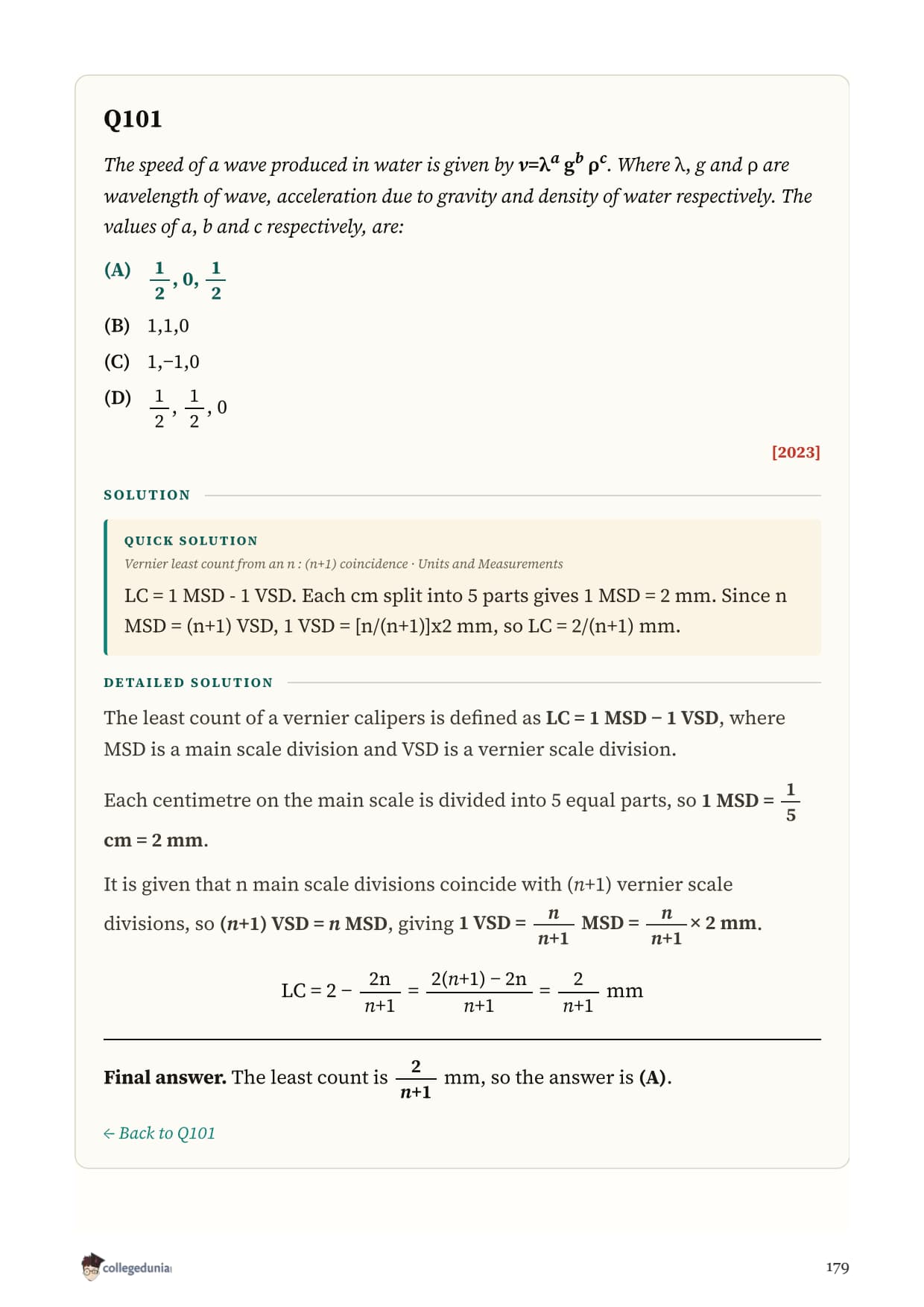
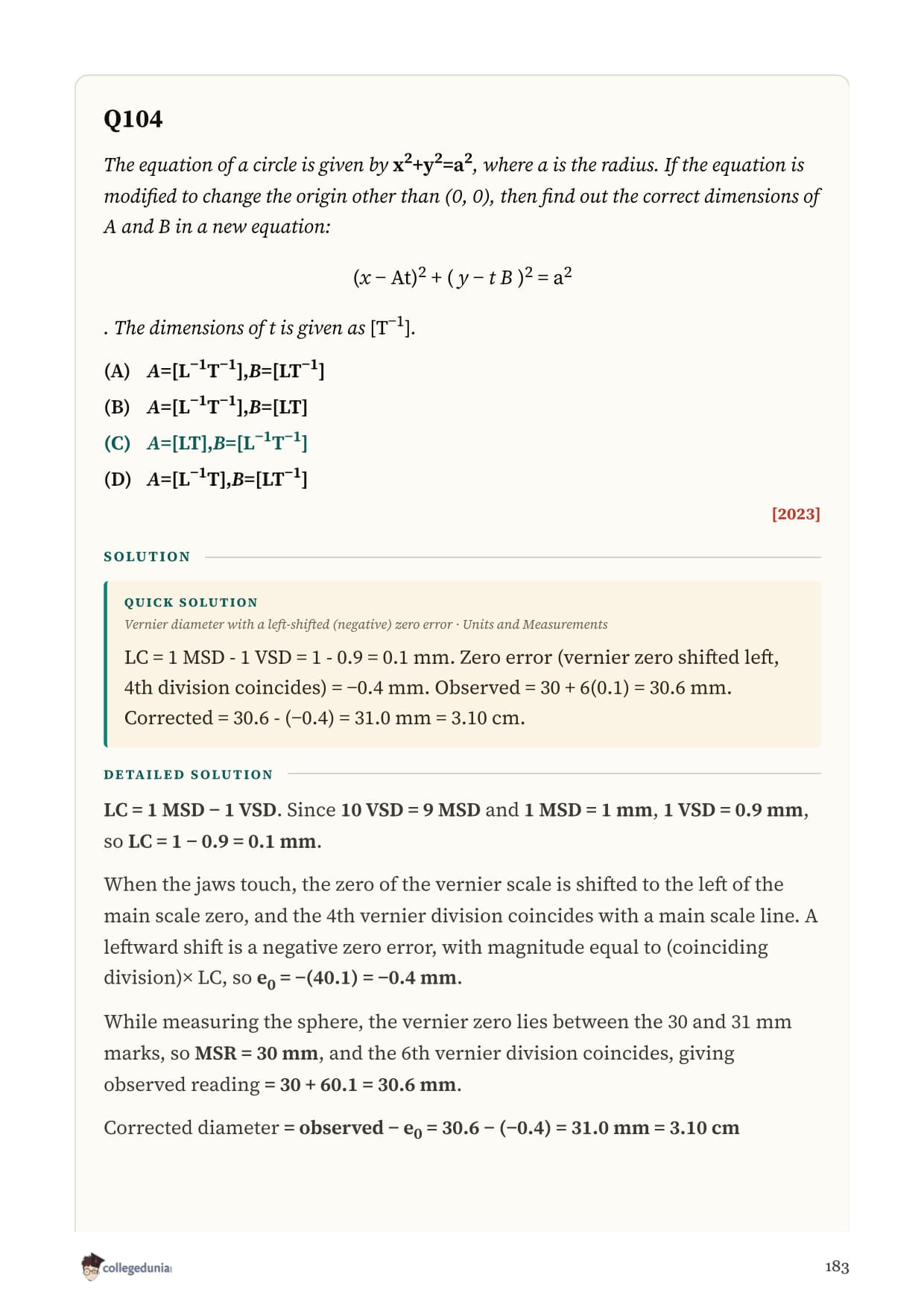
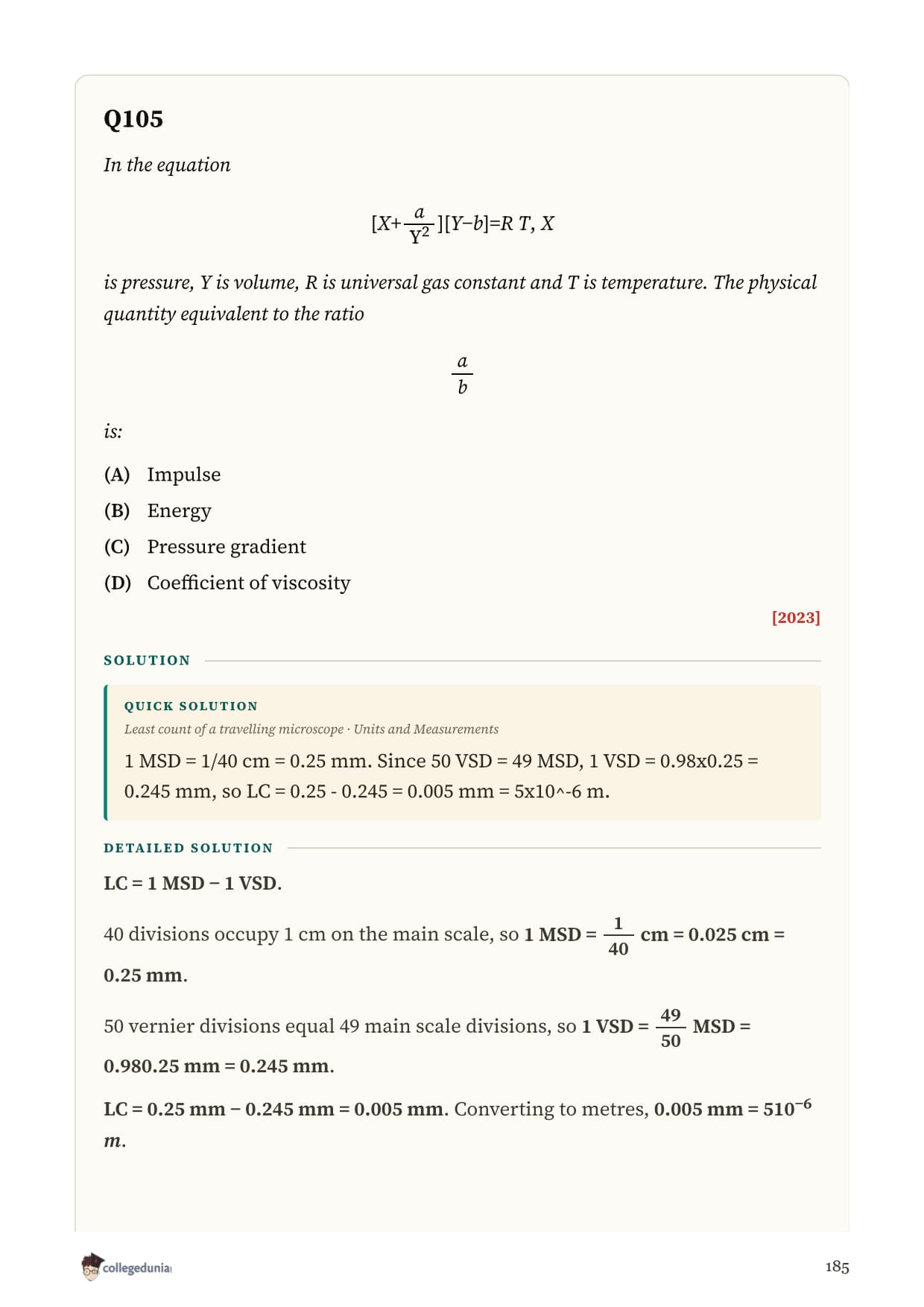
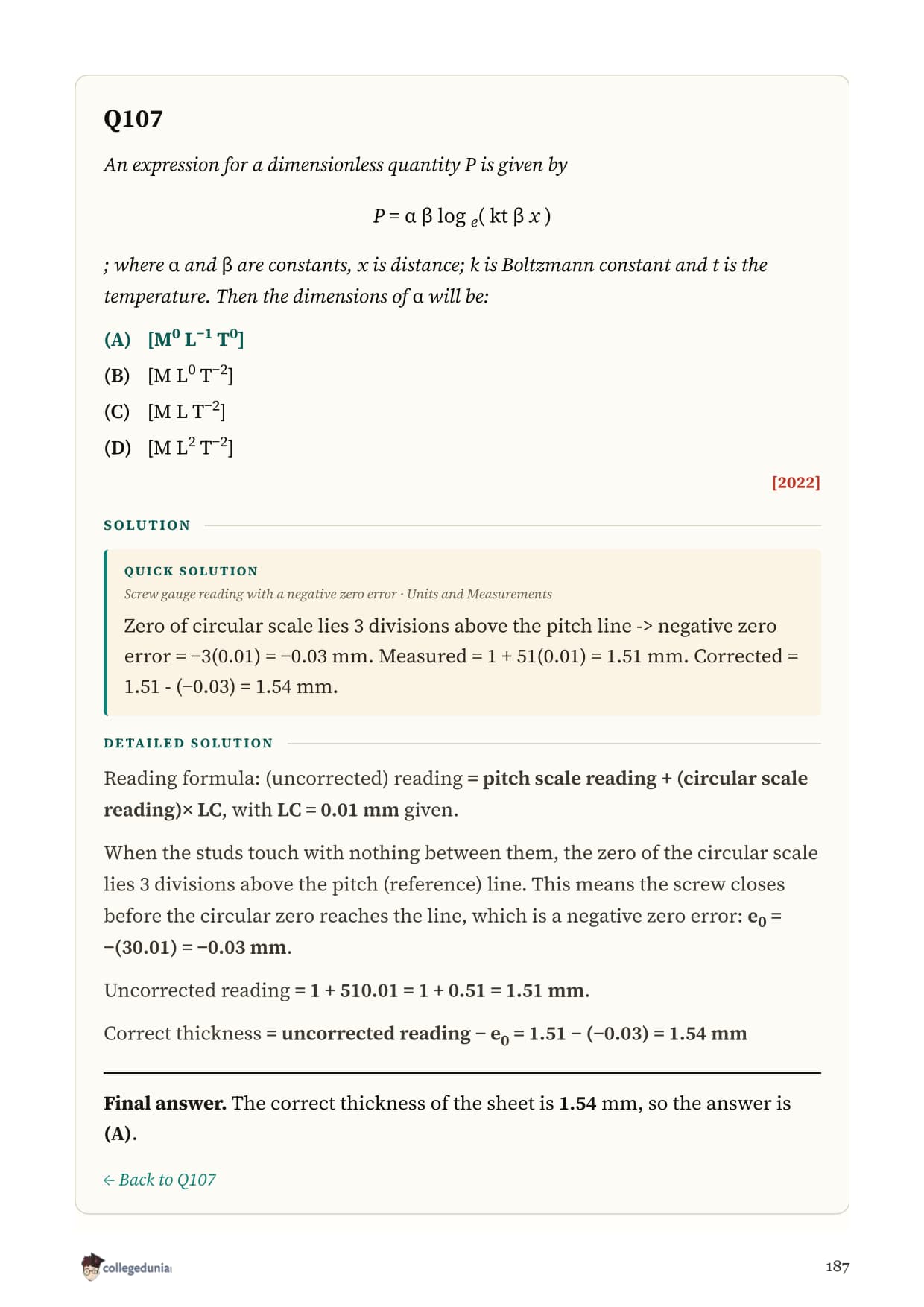
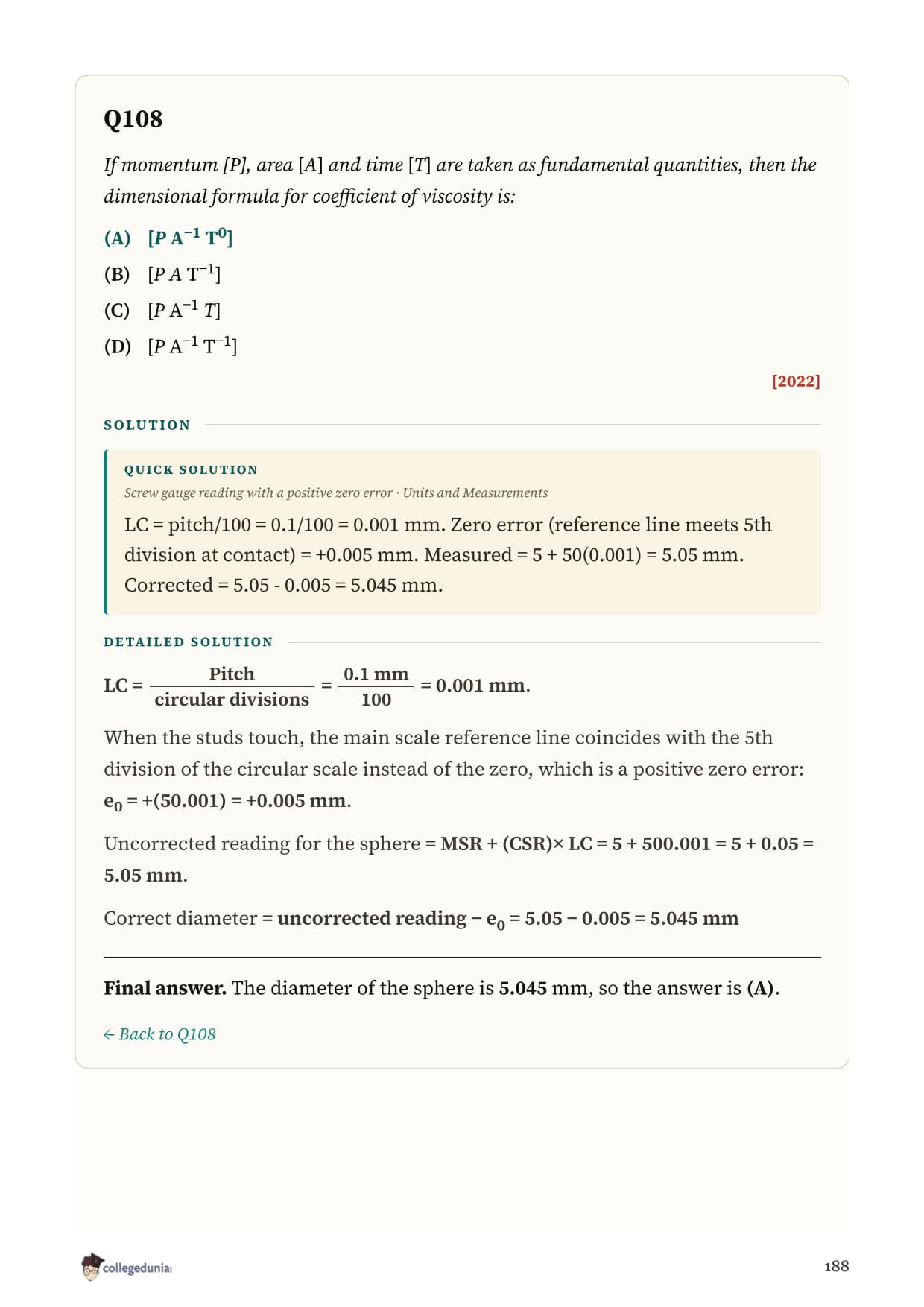
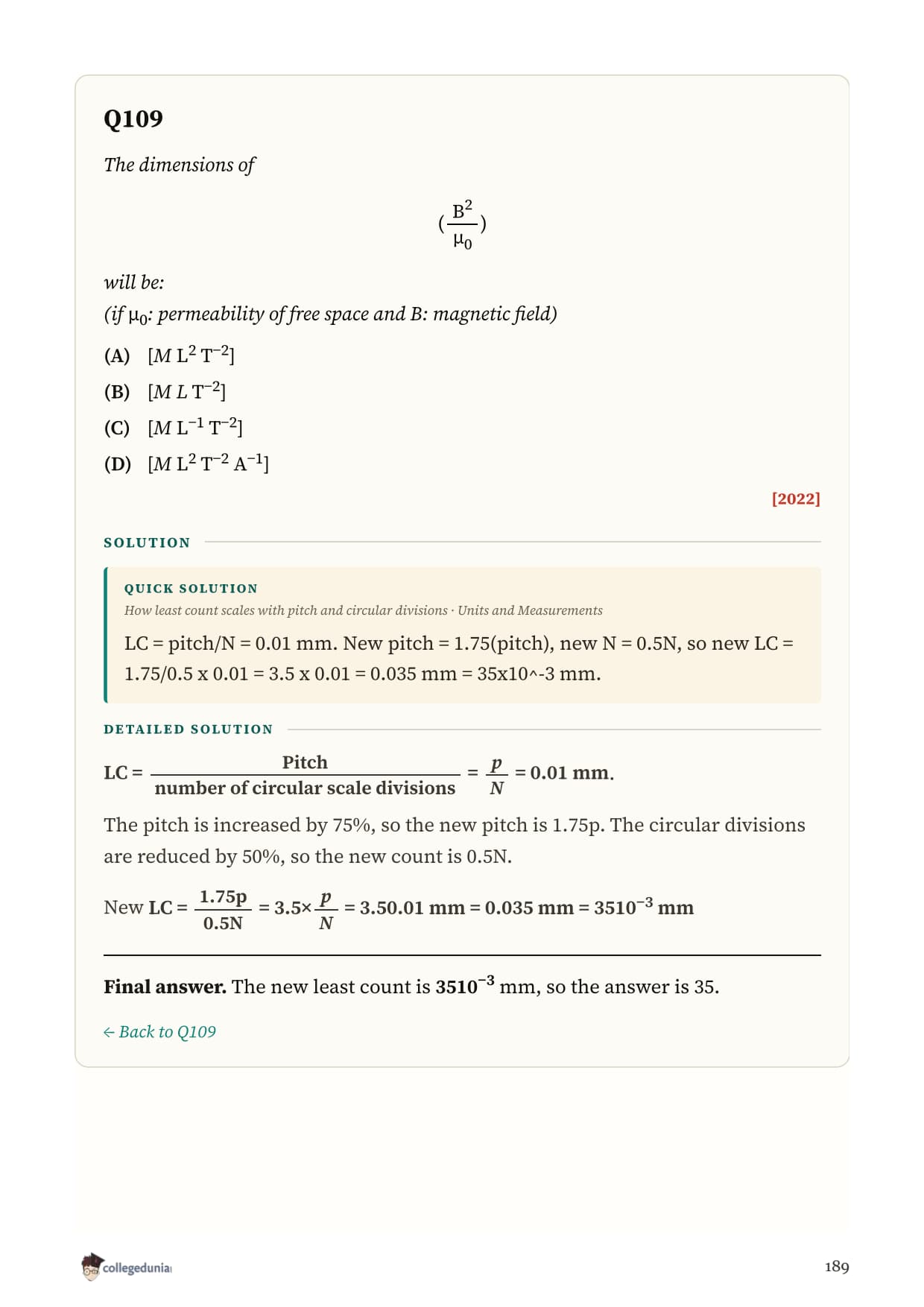
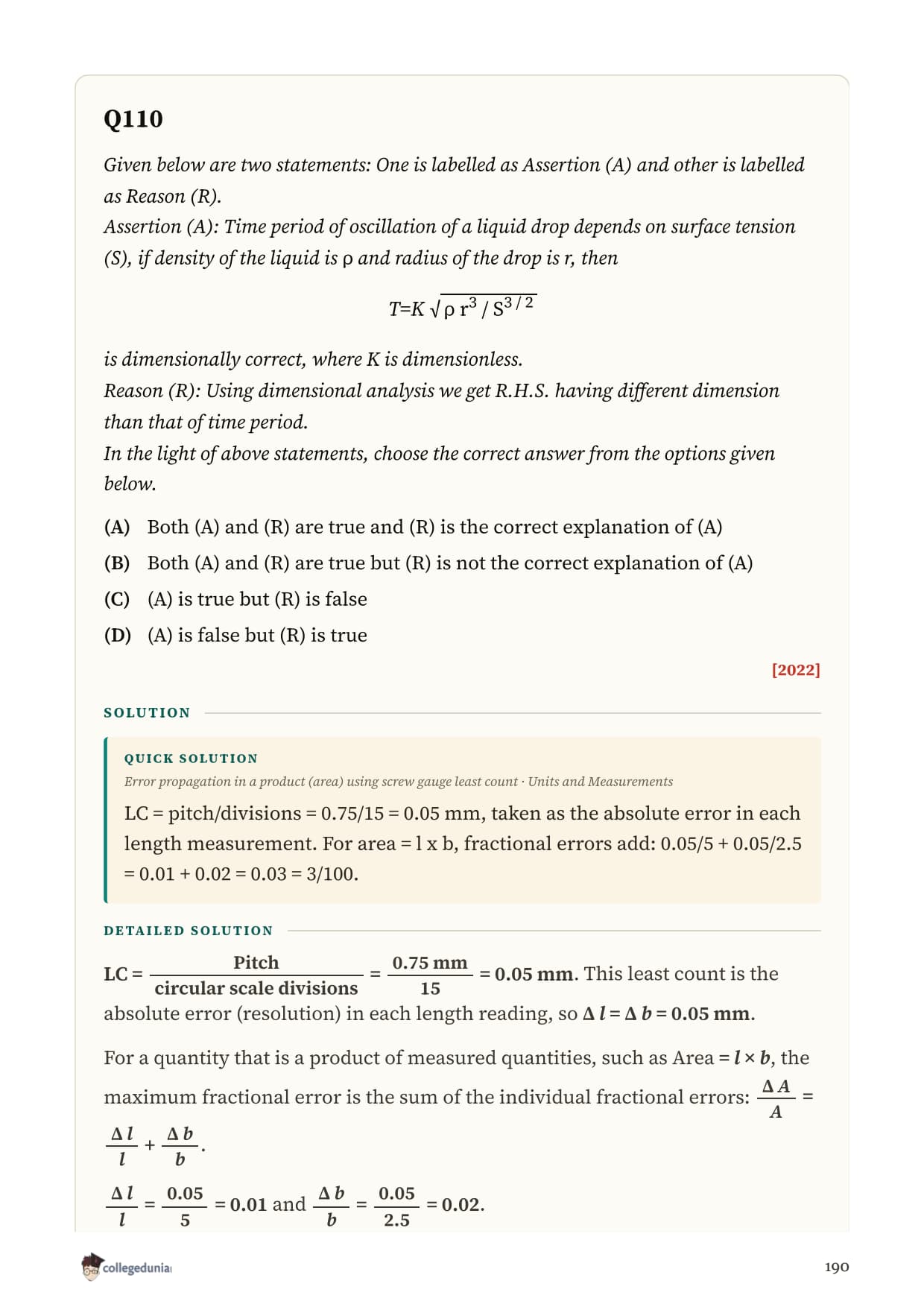
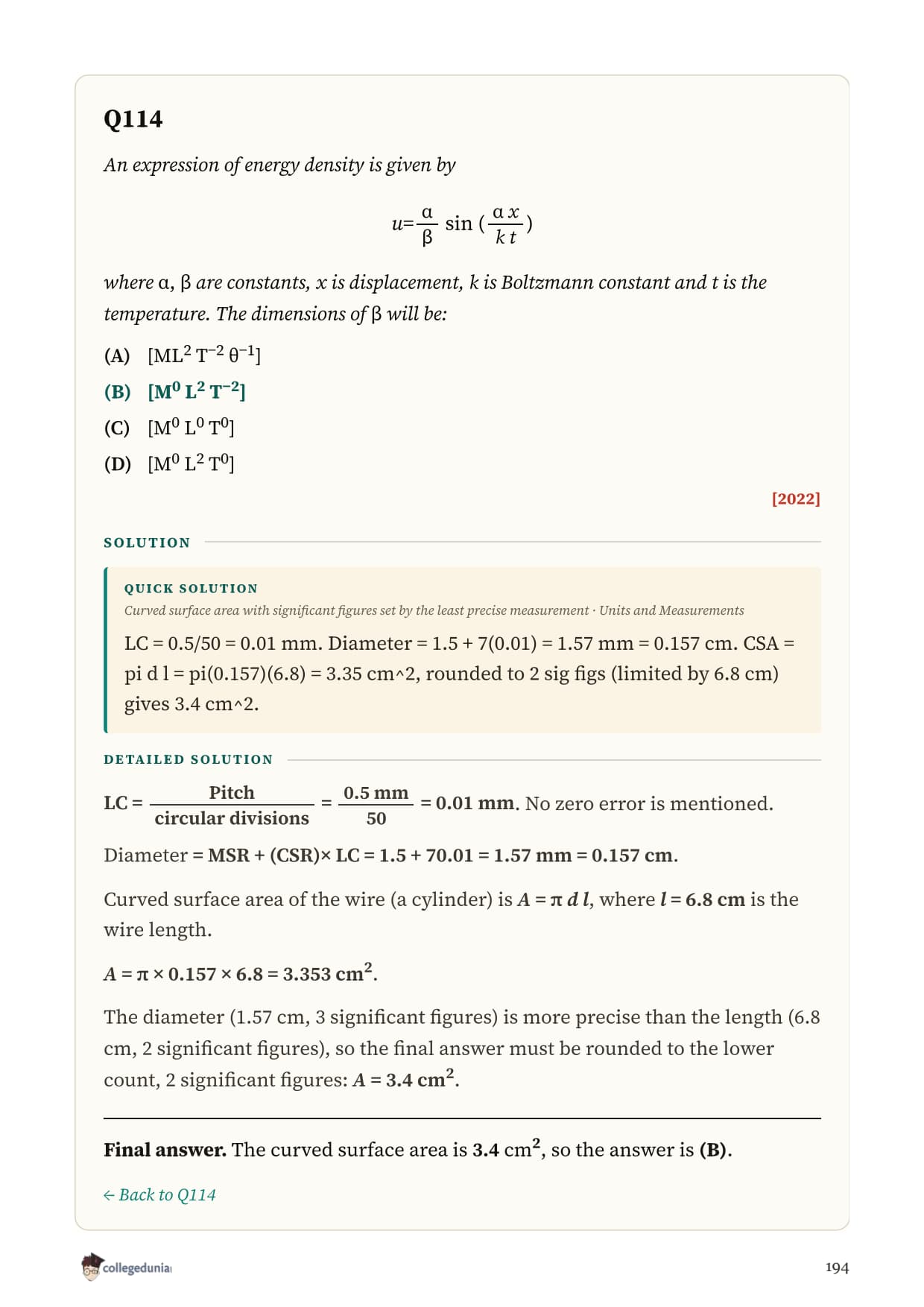
- Dimensions of physical quantities, the largest block, covering dimensional formulae, homogeneity and quantities that share dimensions.
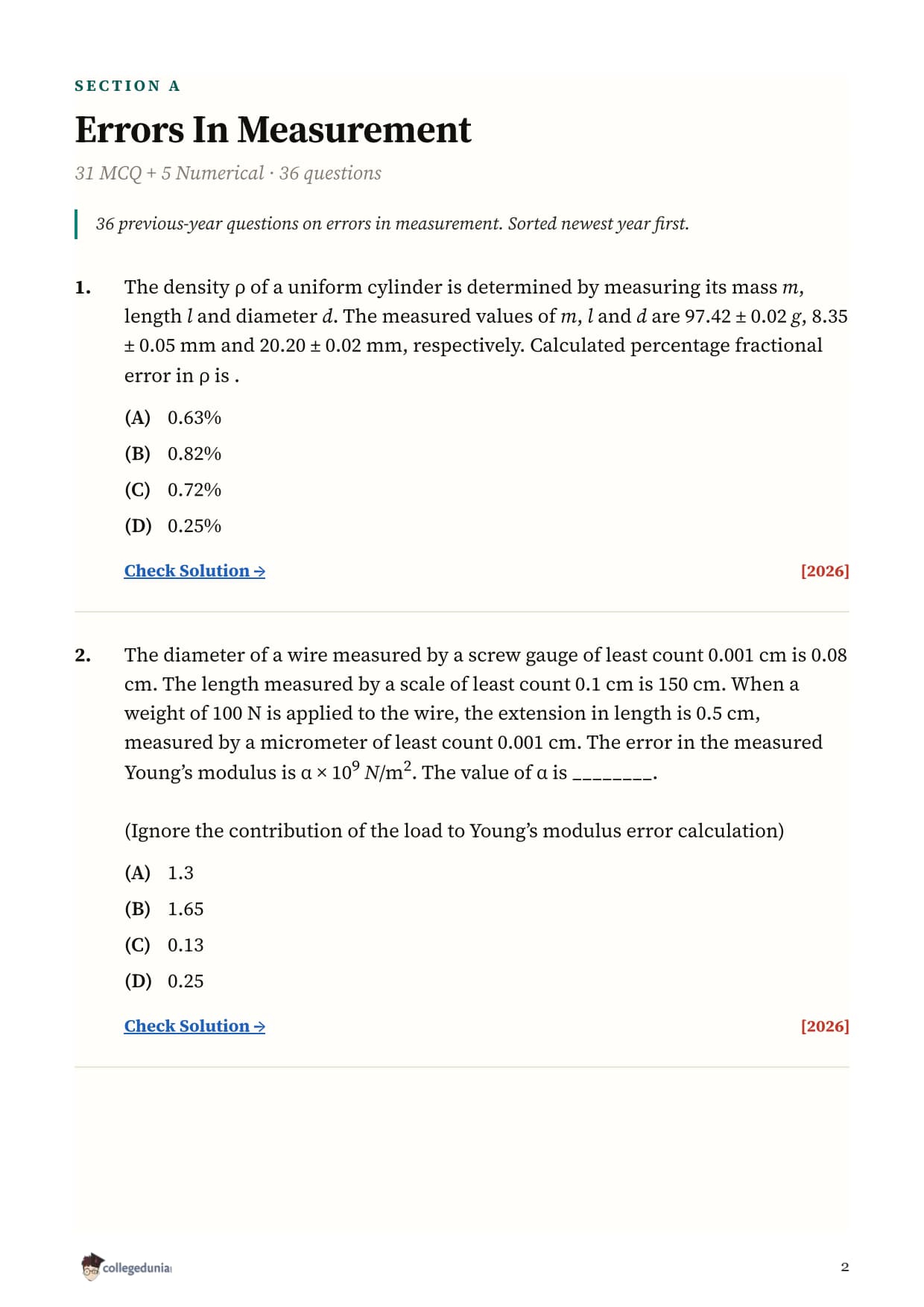
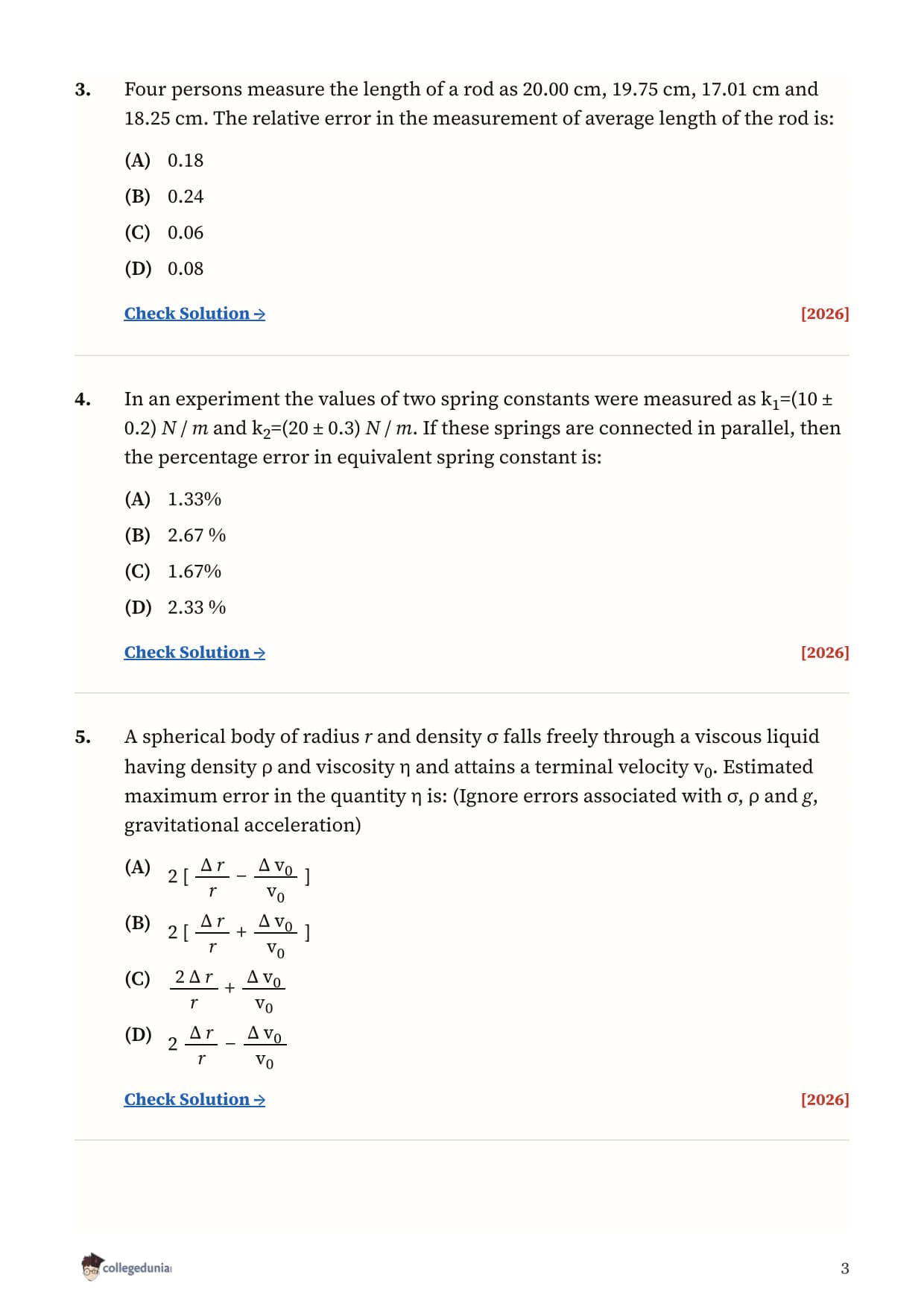
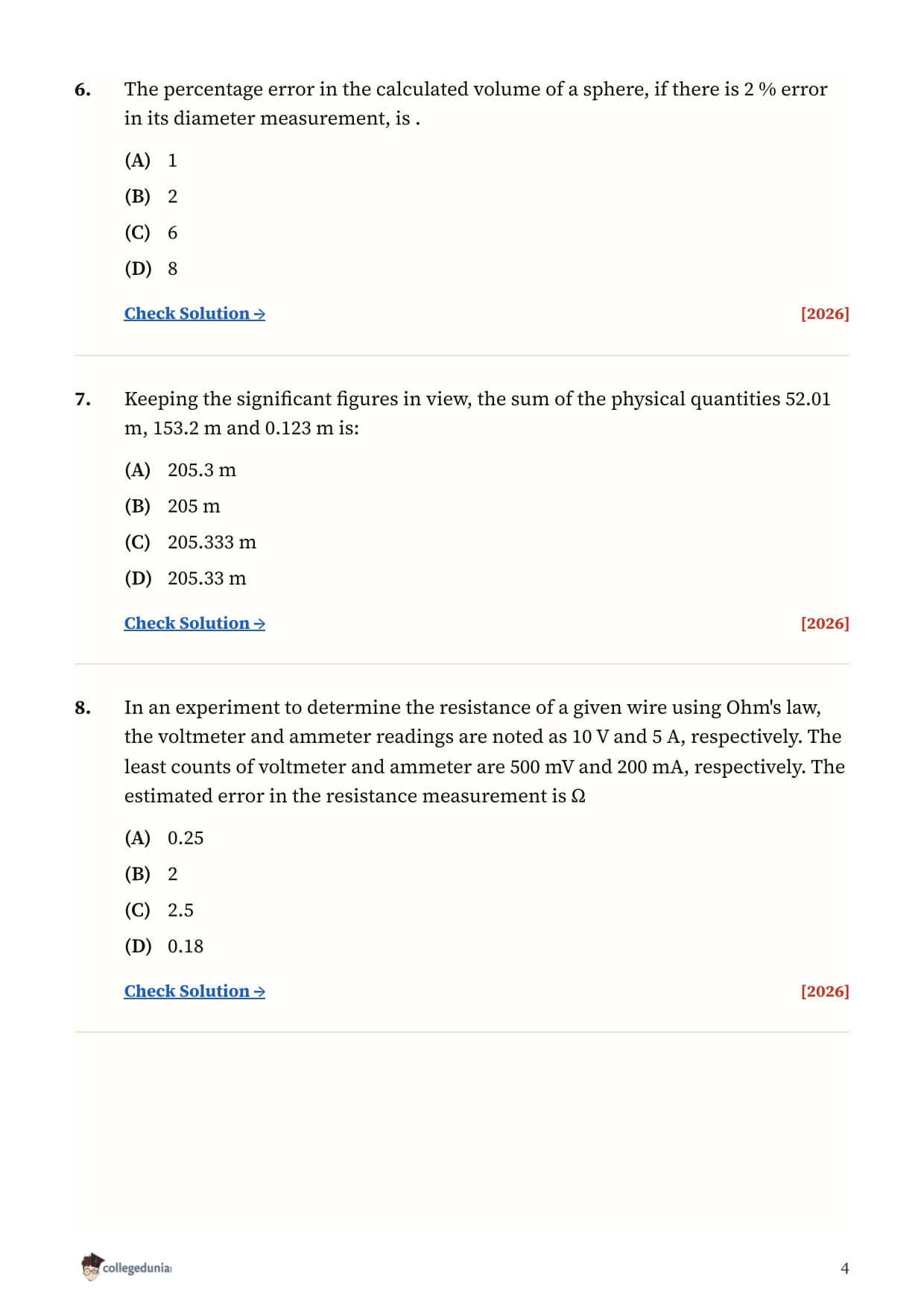
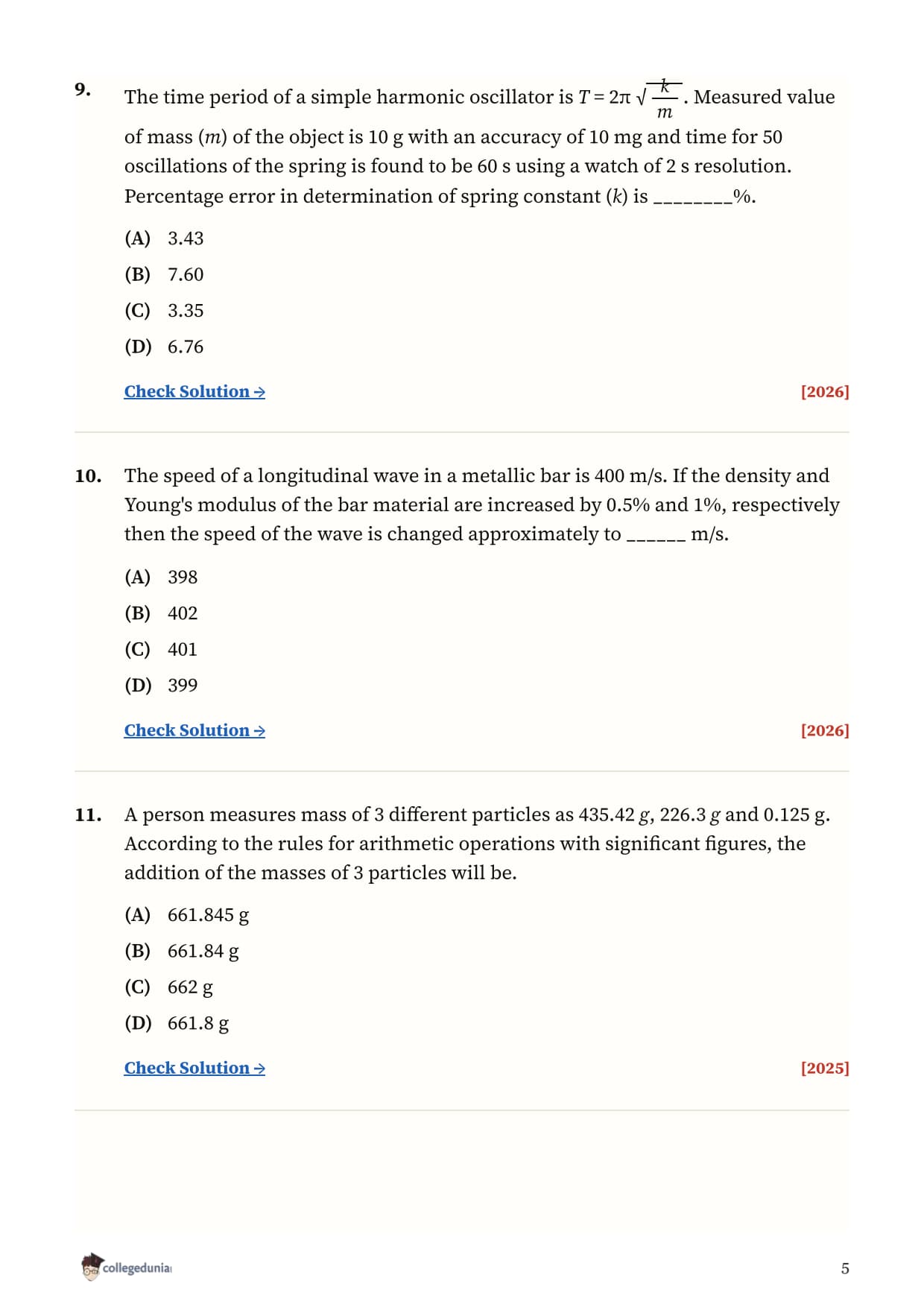
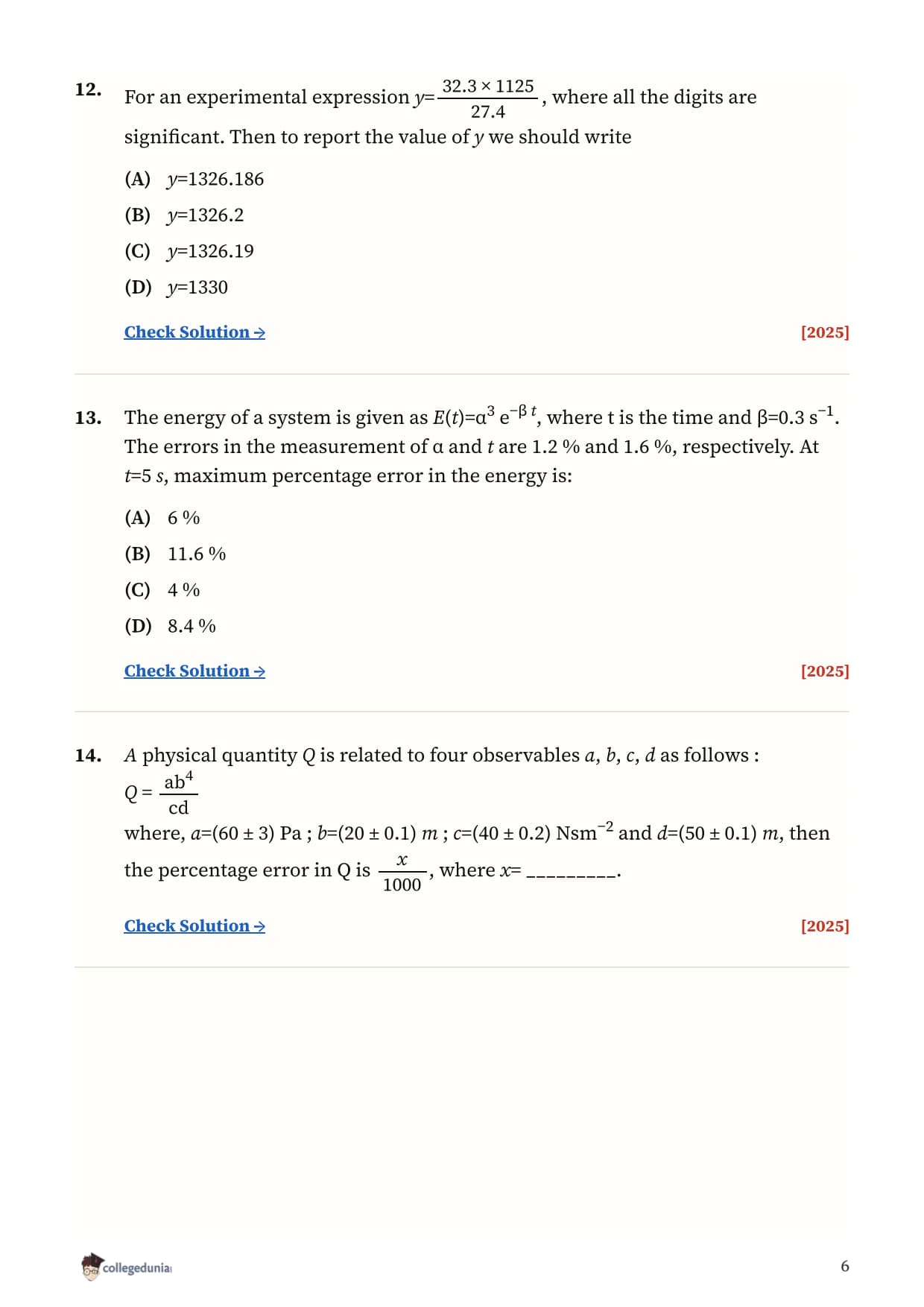
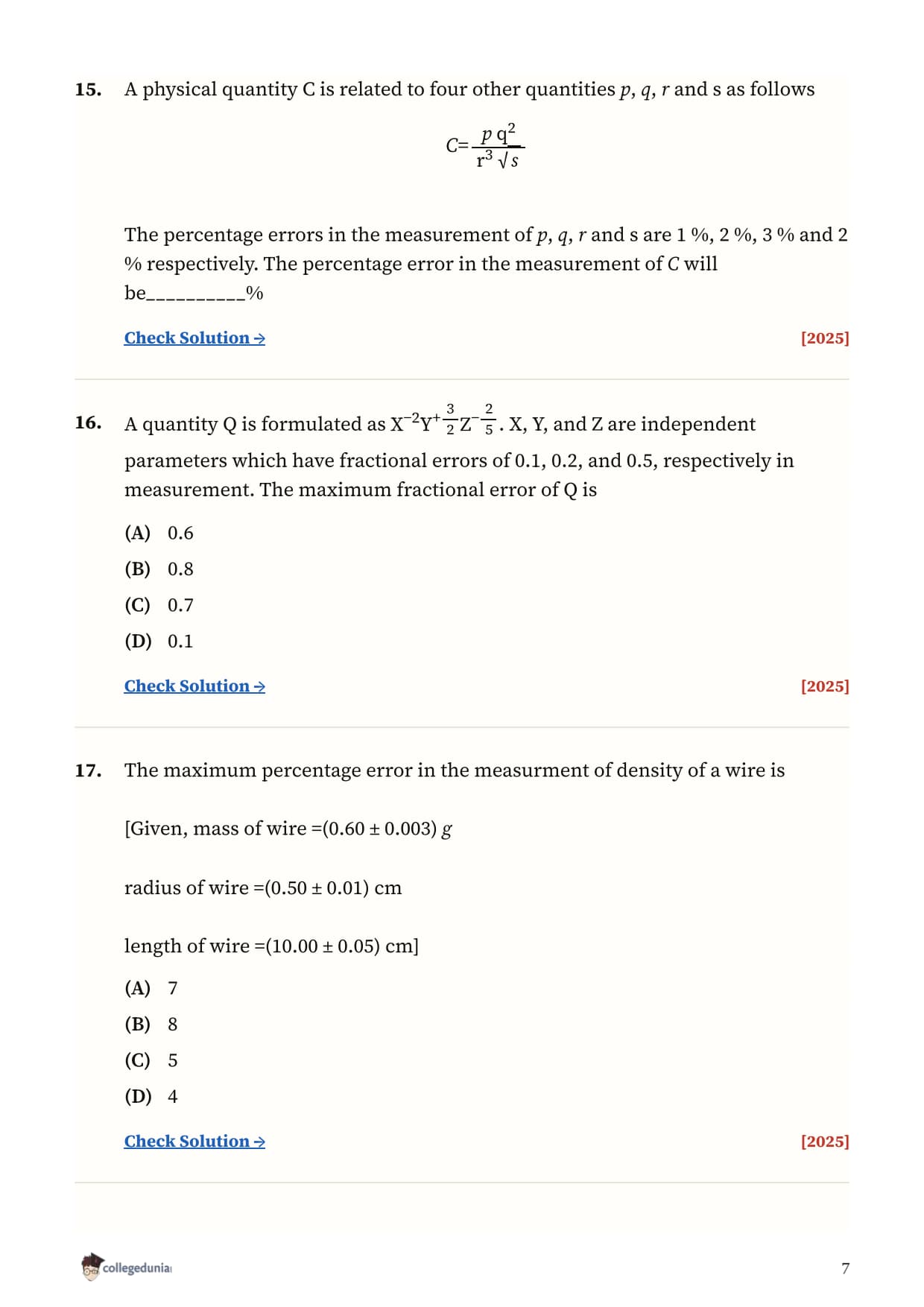
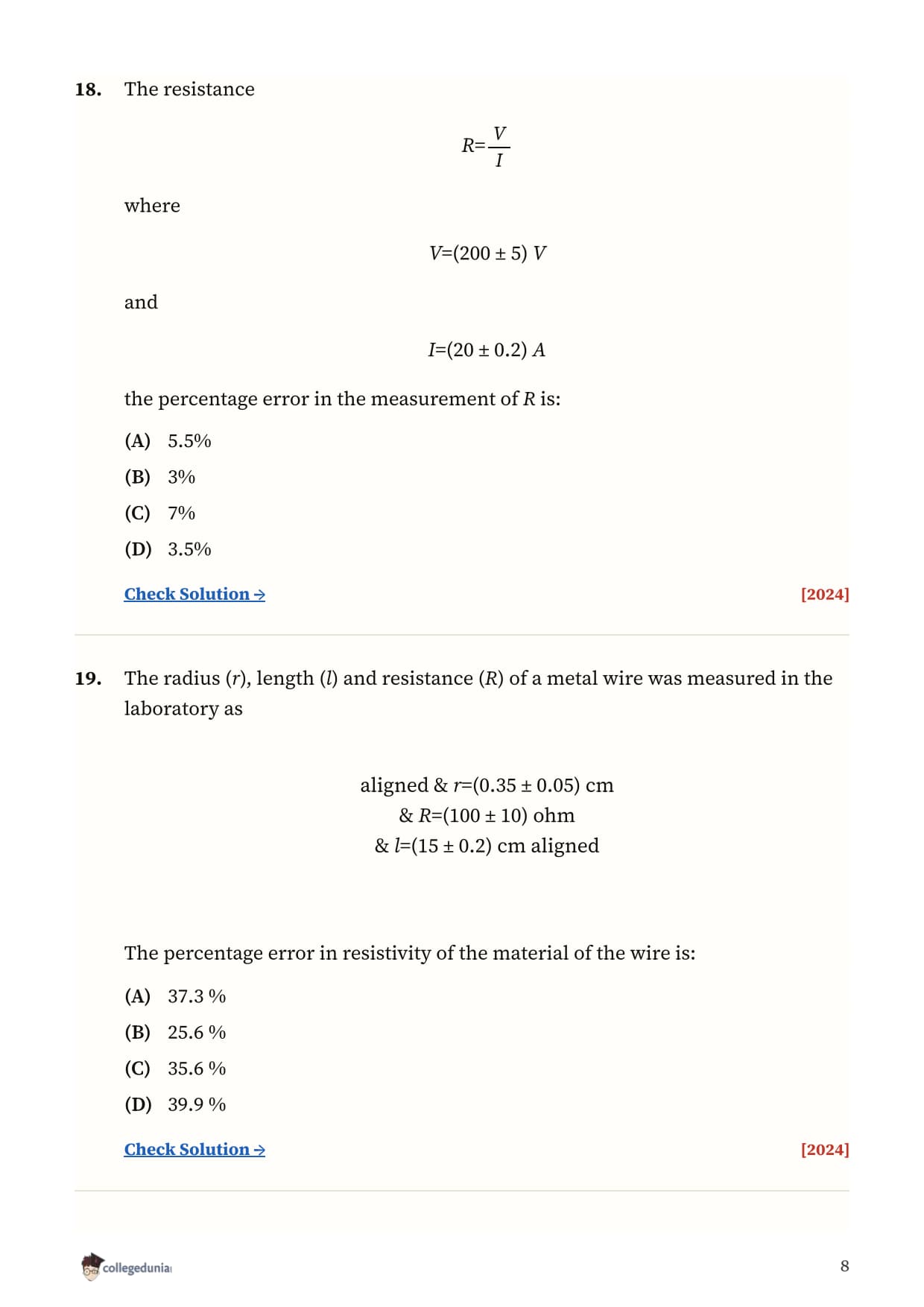
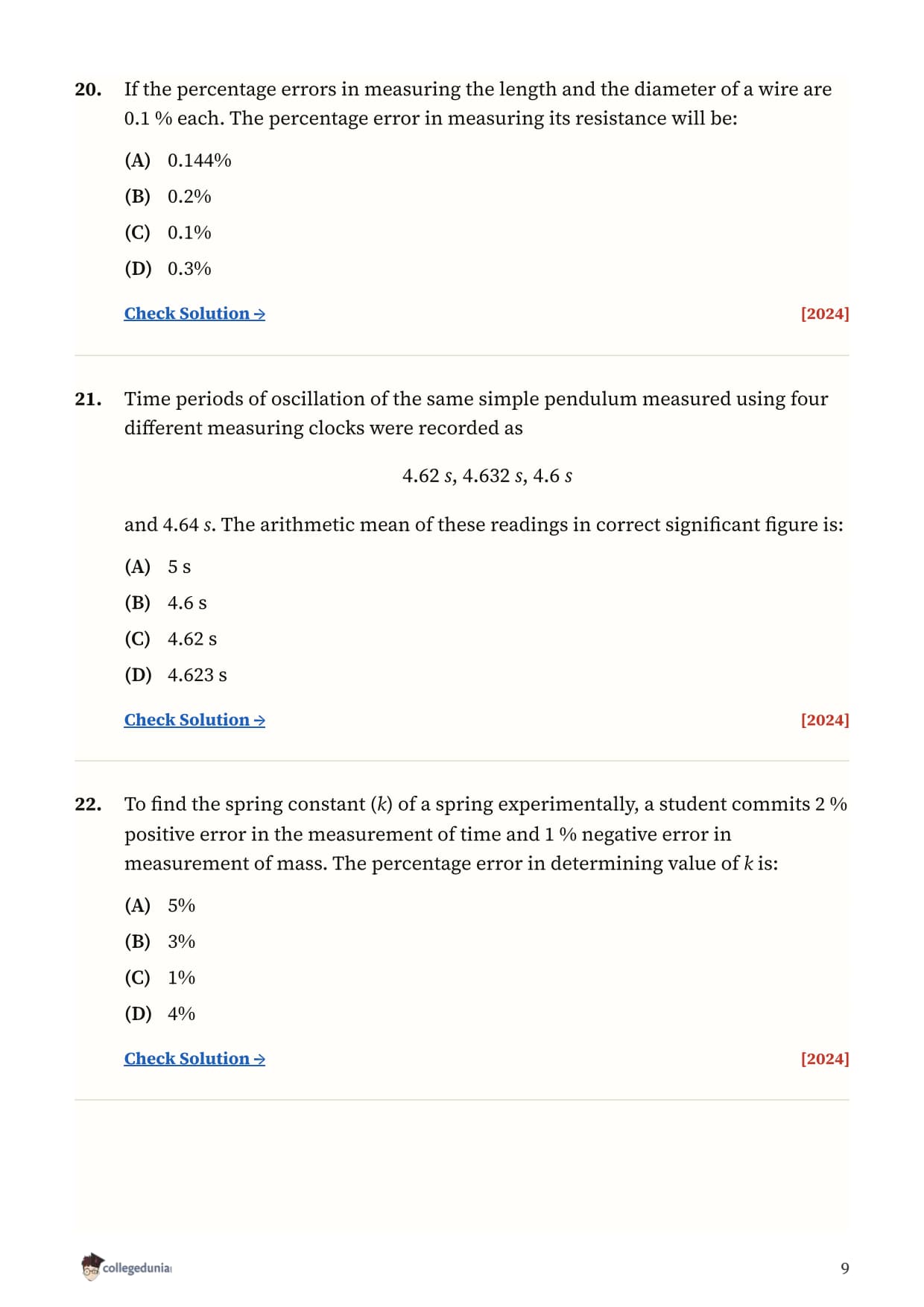
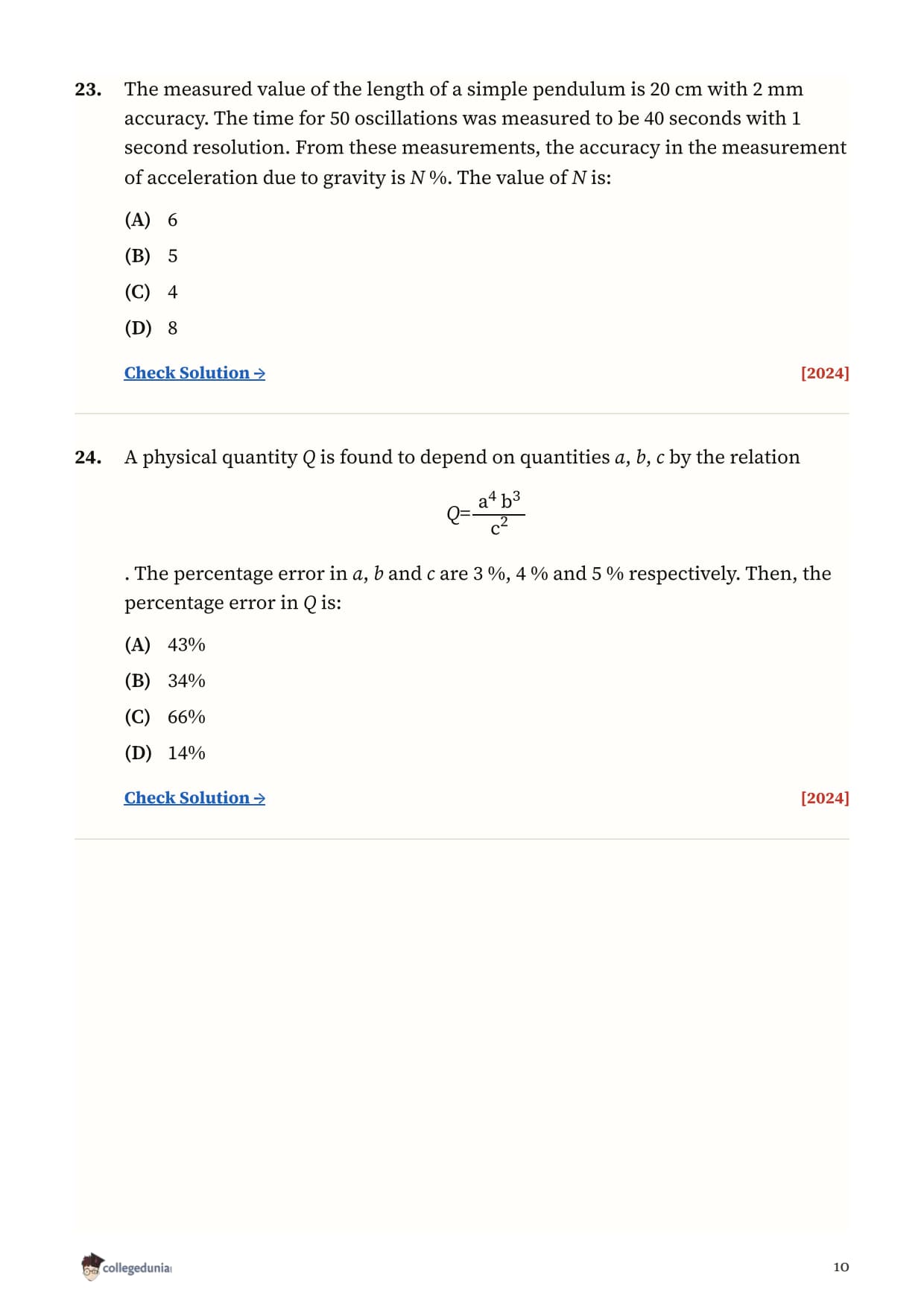
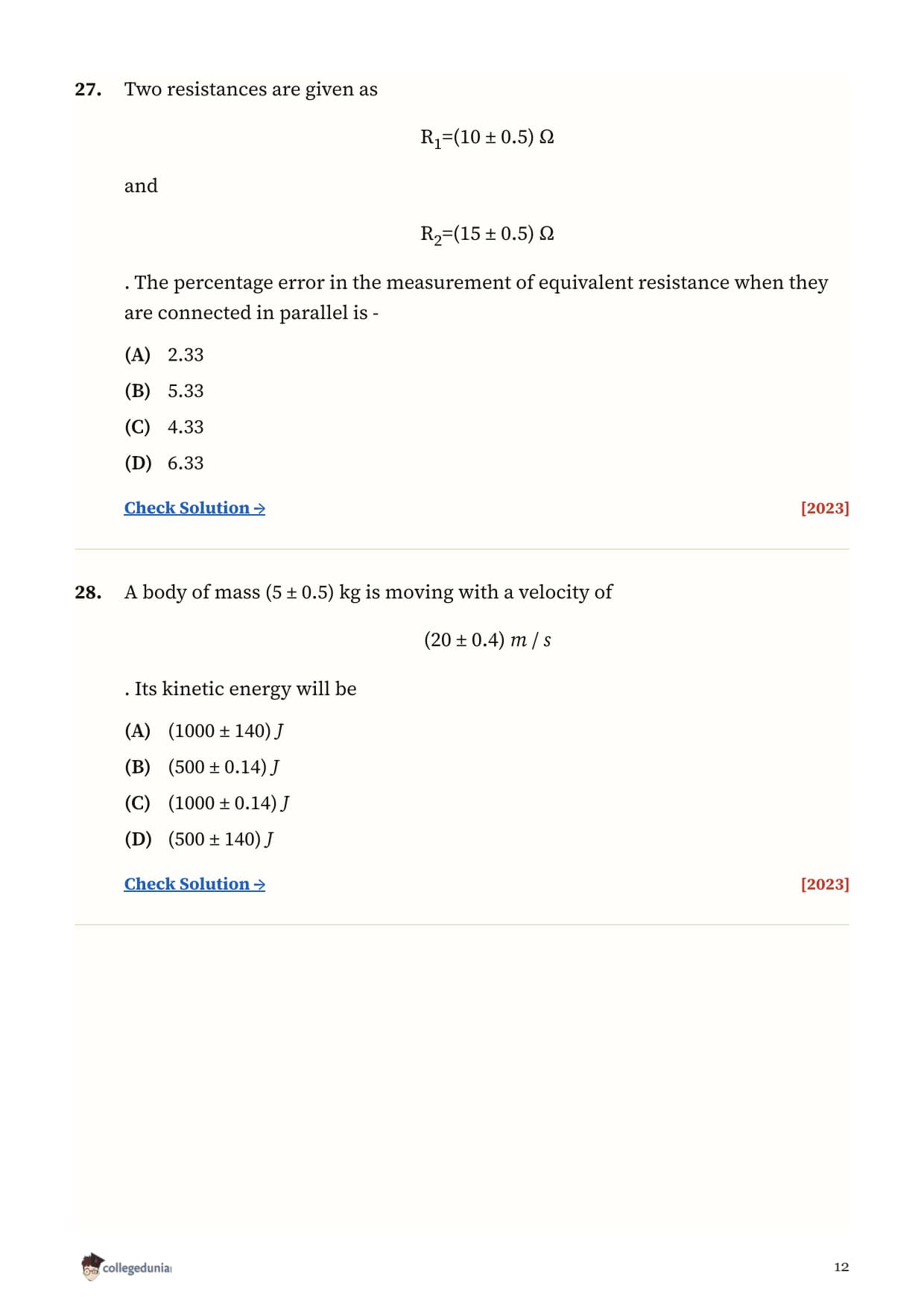
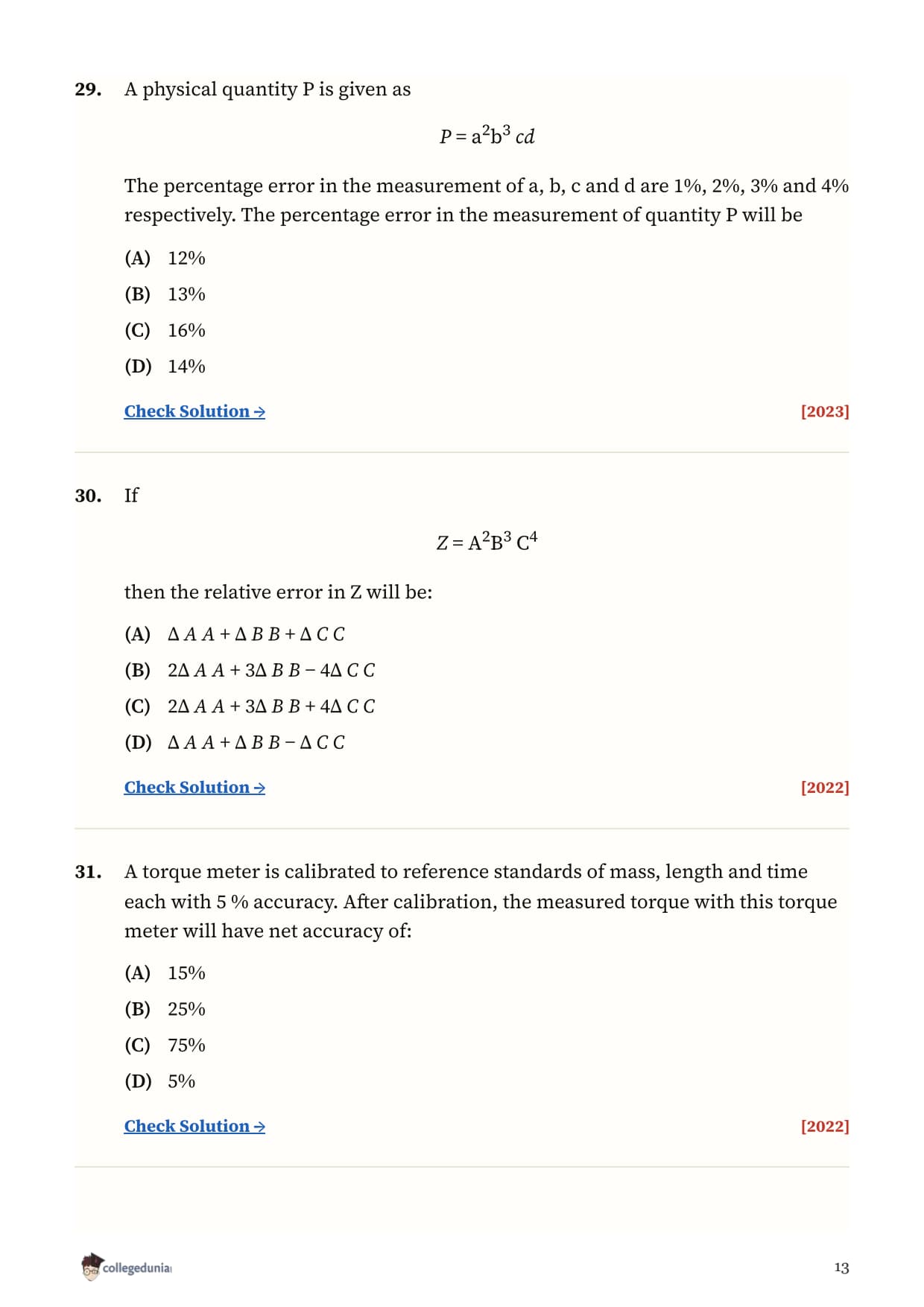
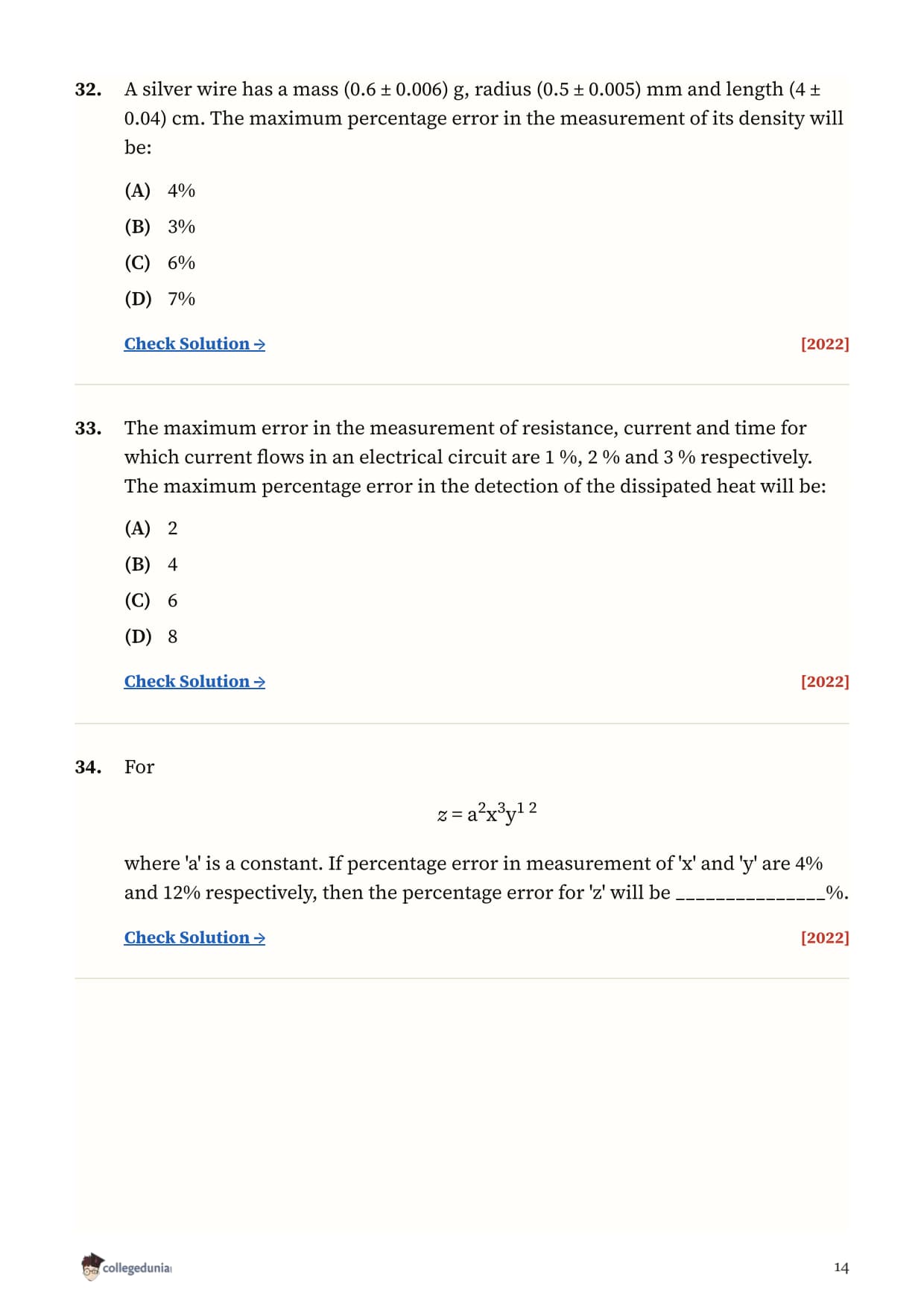
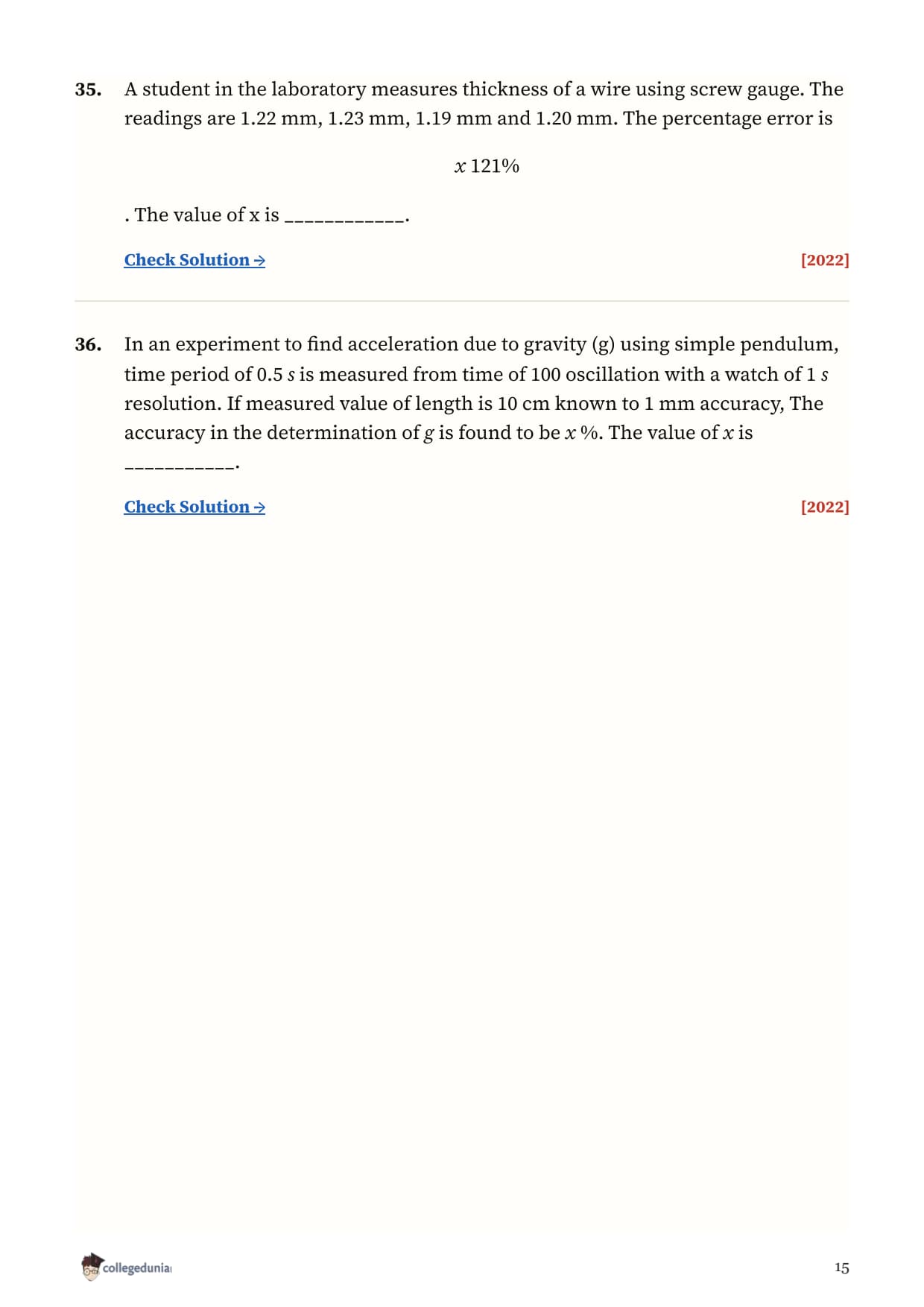
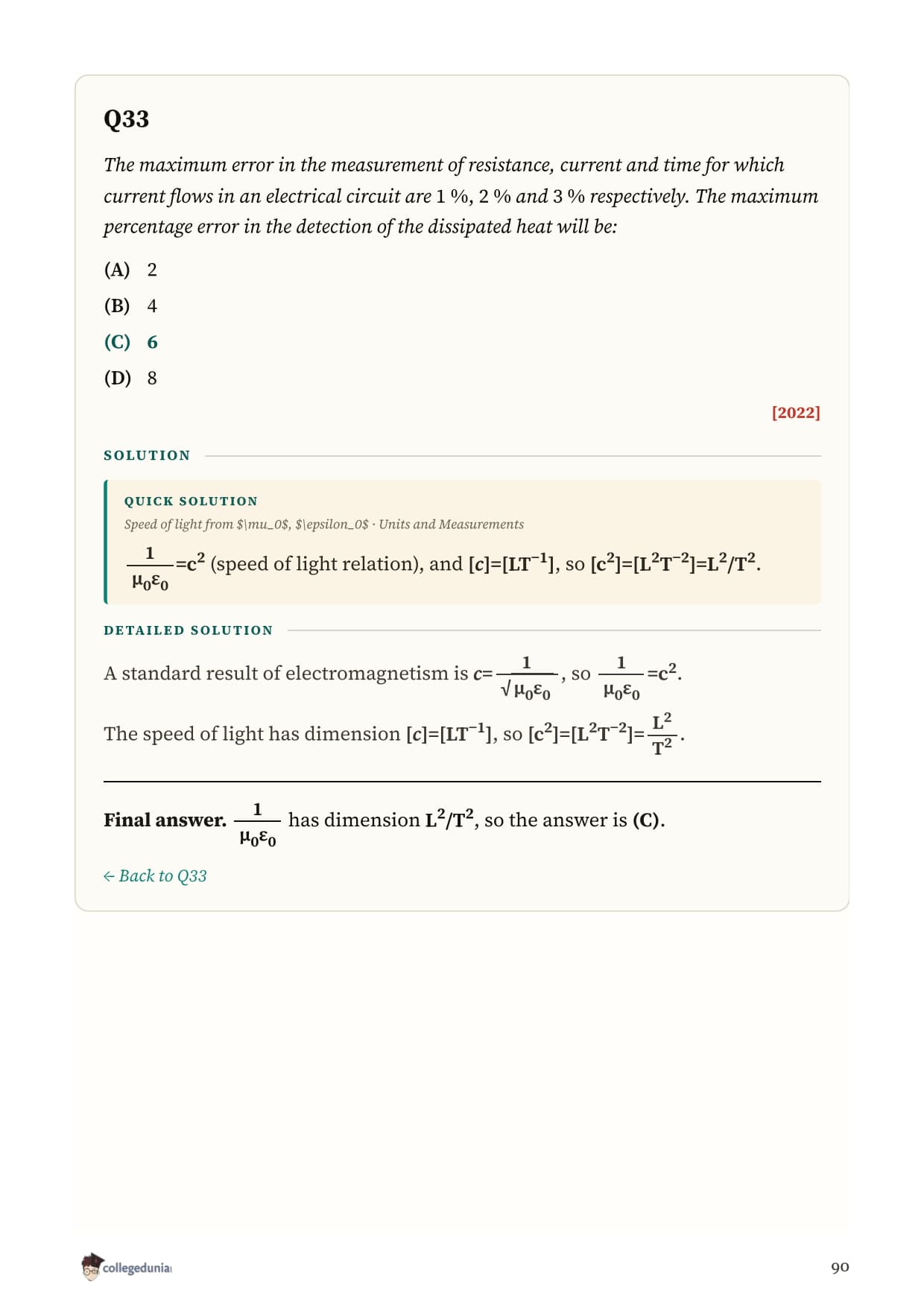
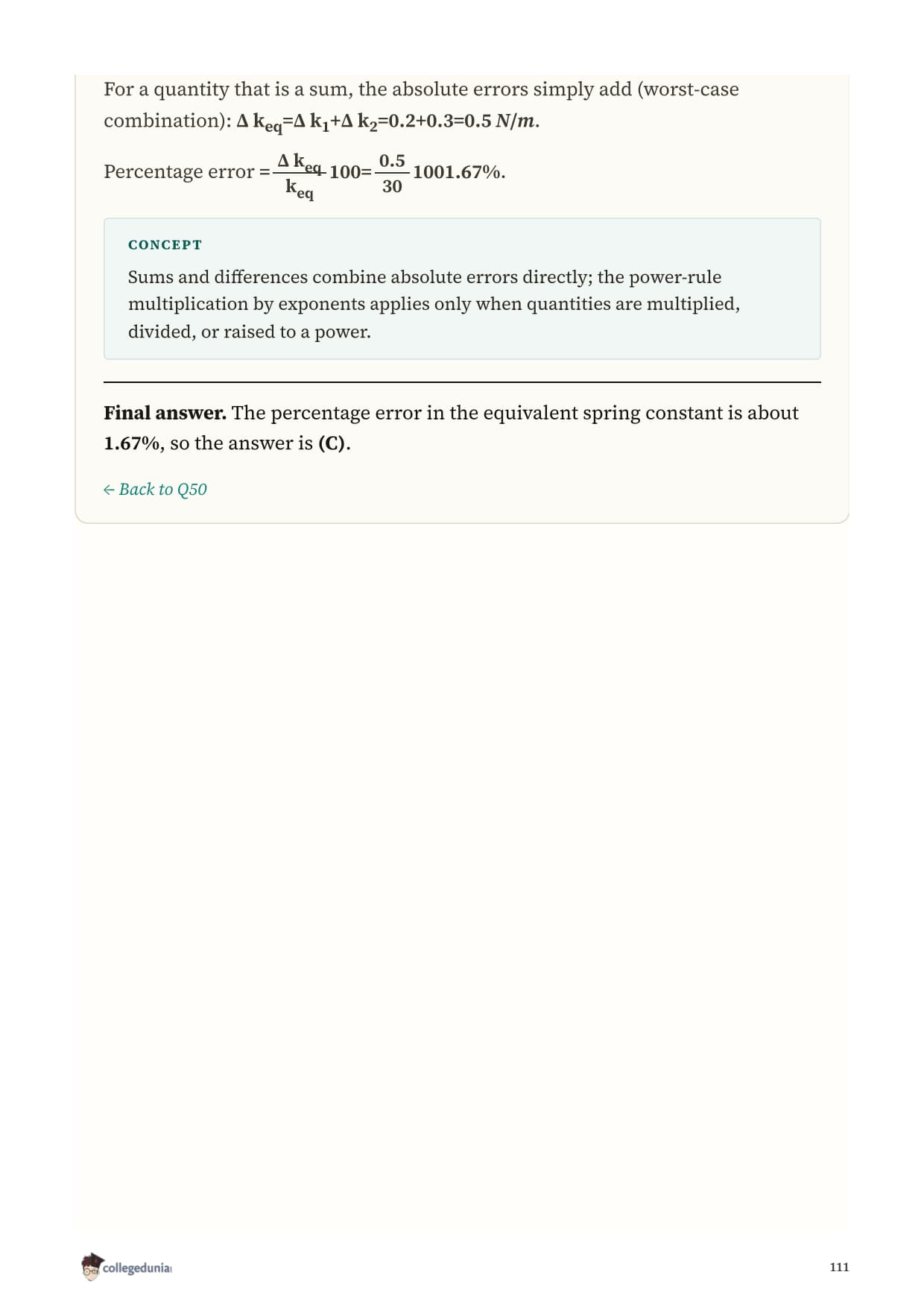
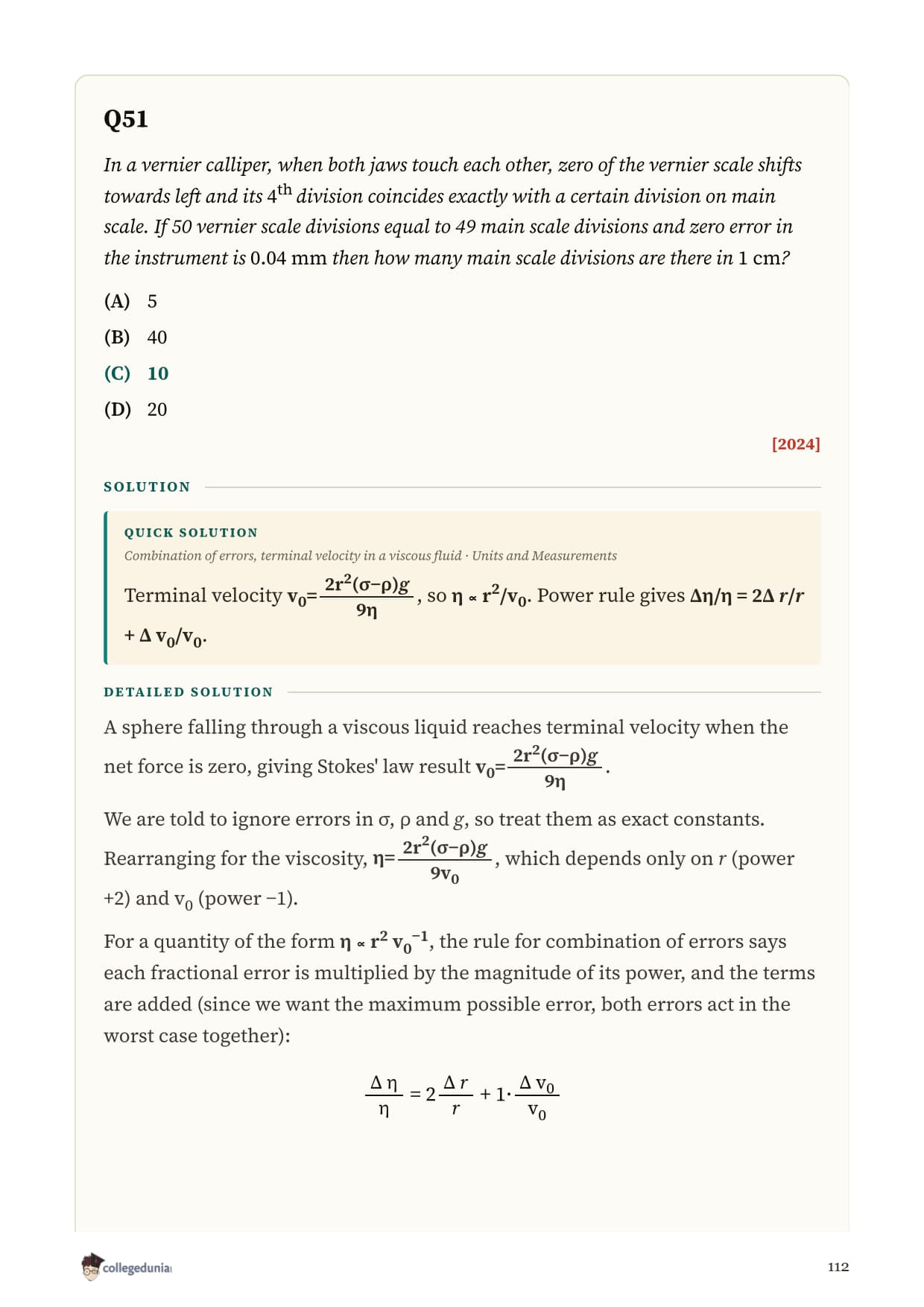
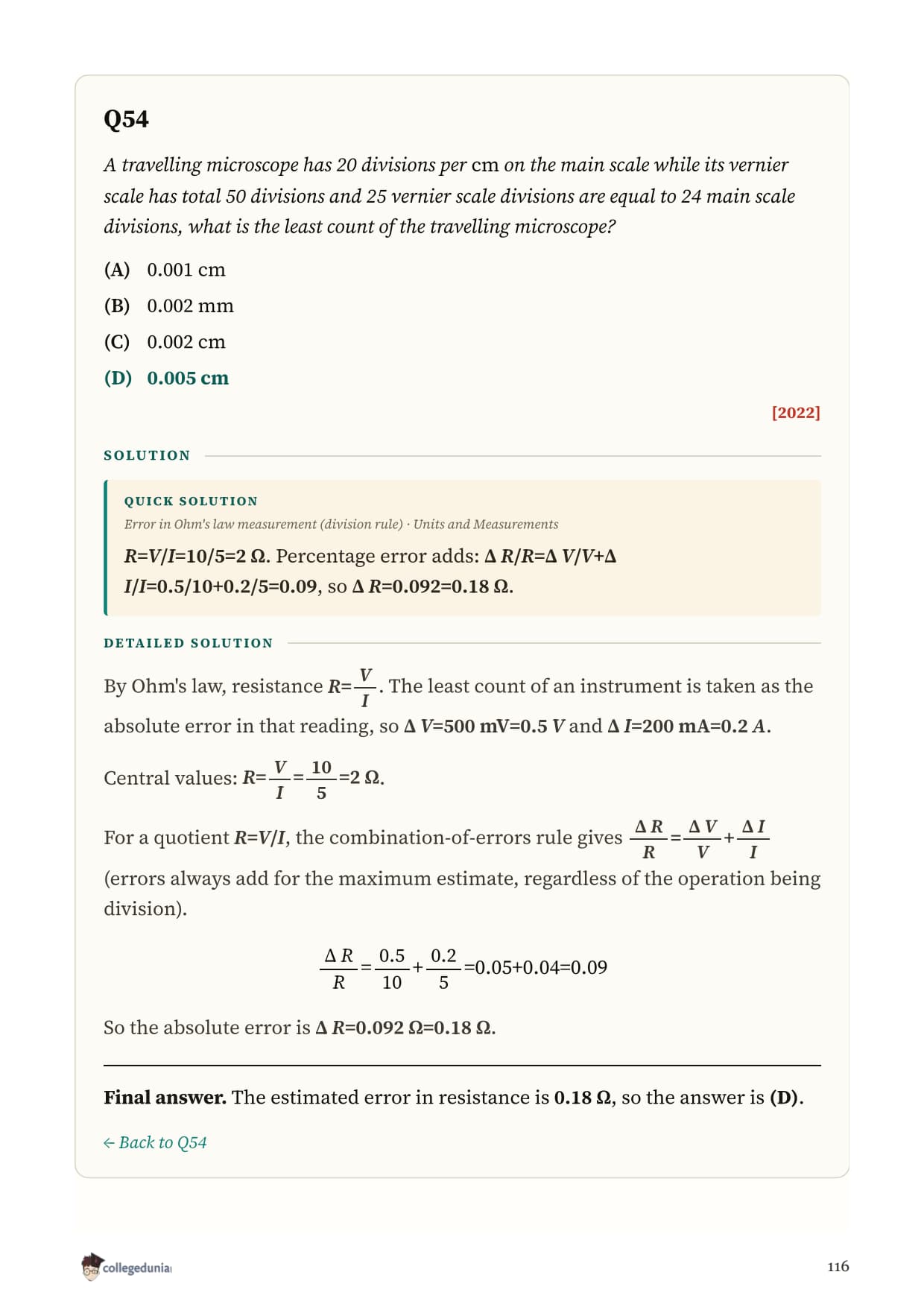
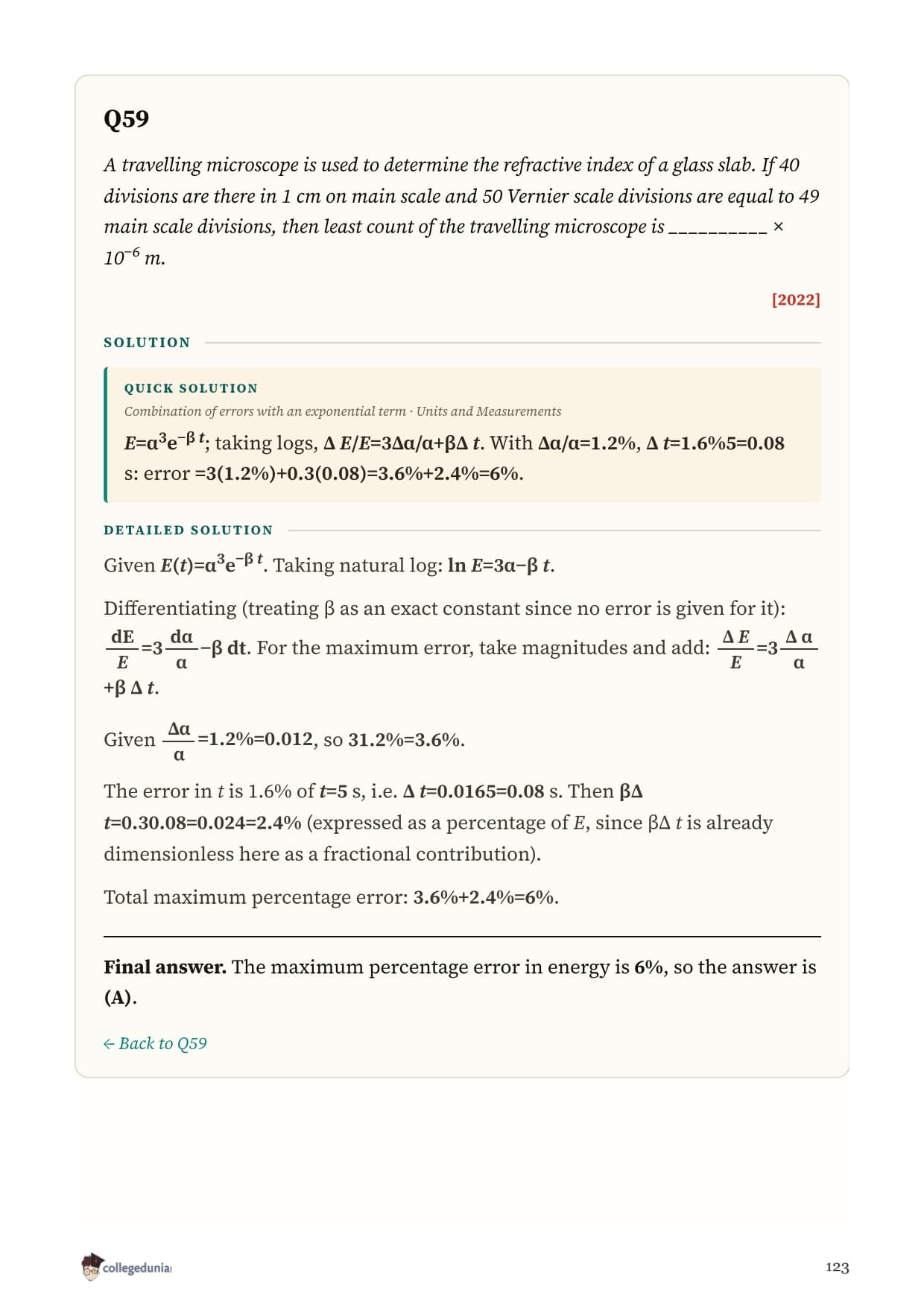
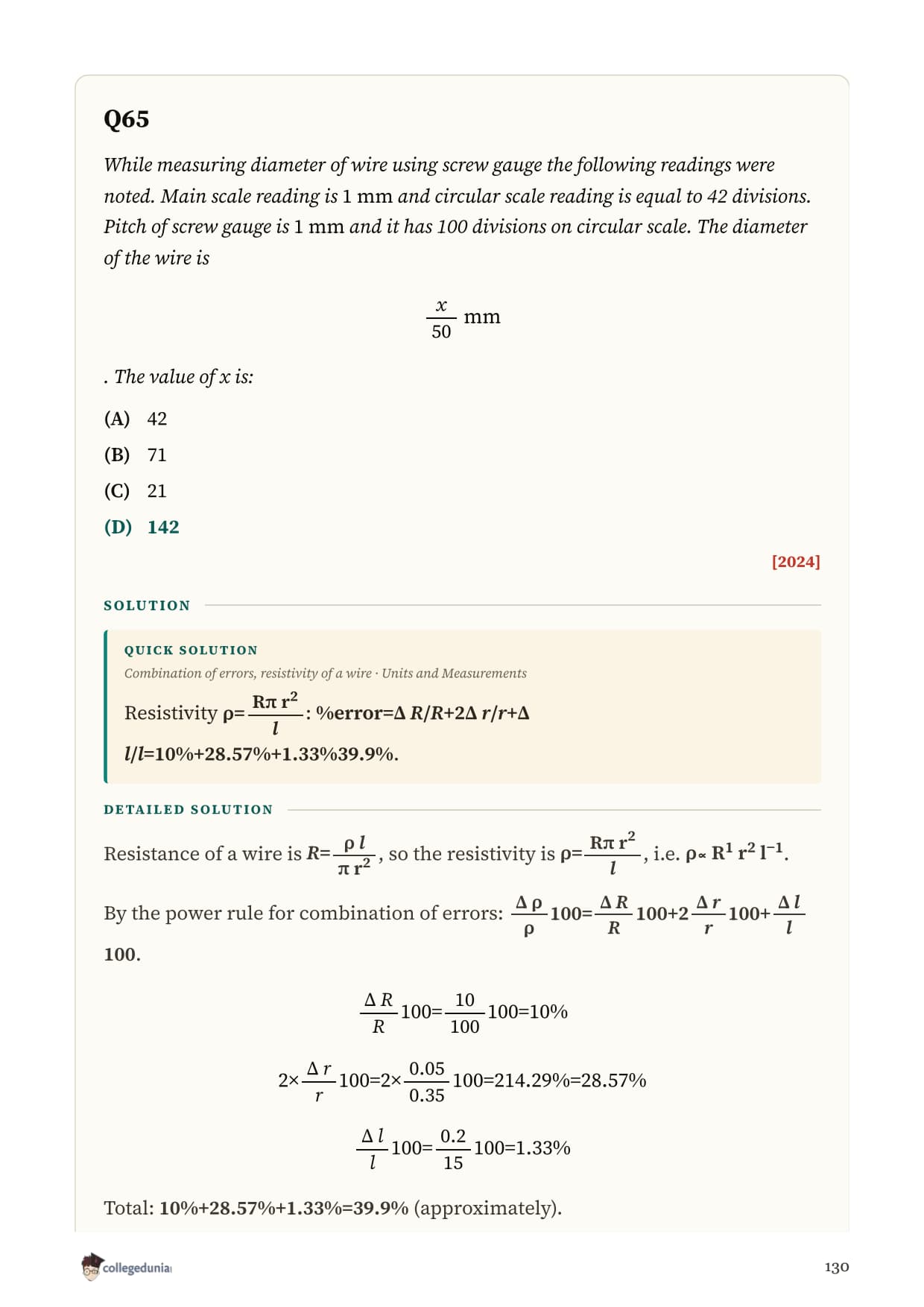
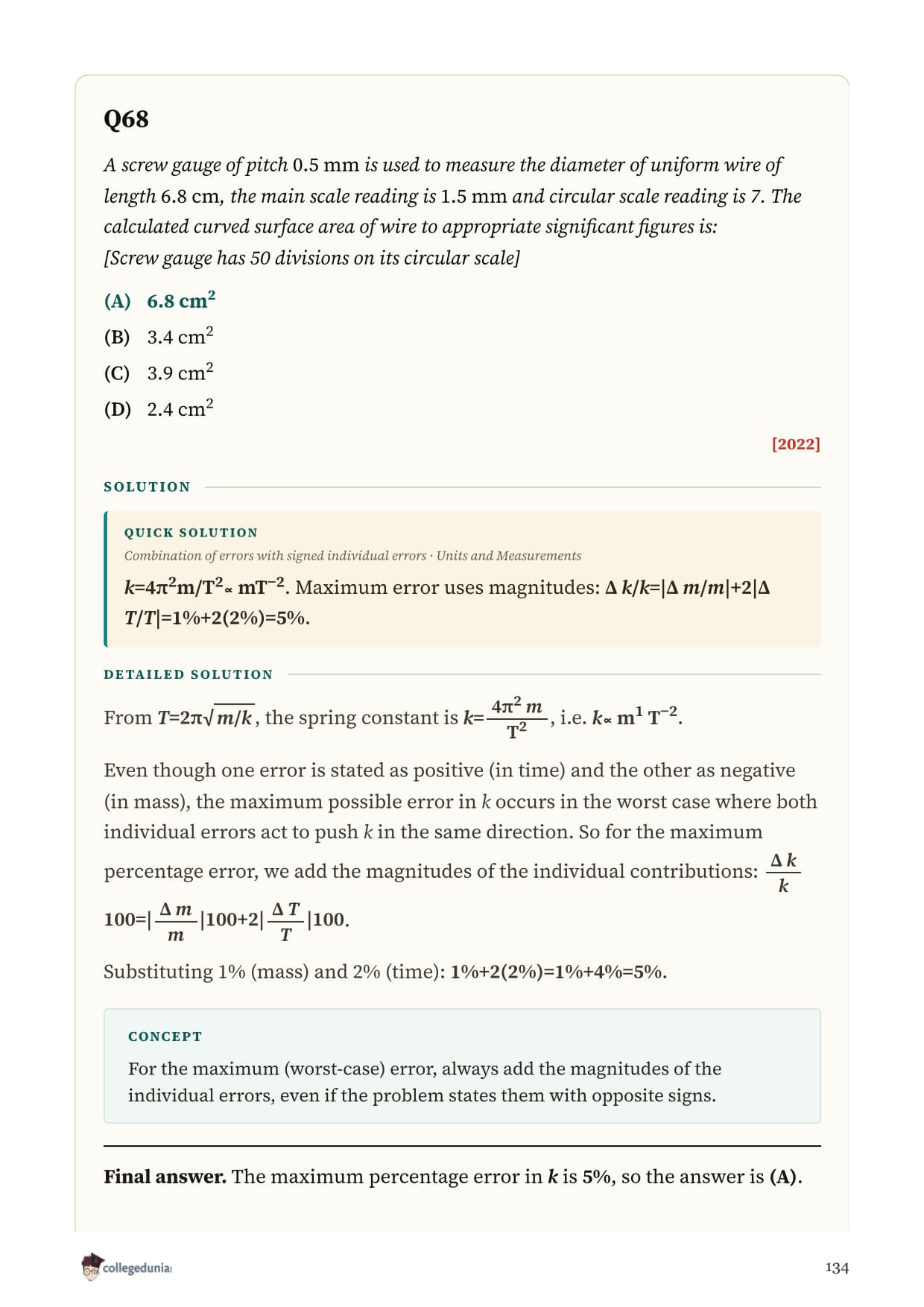
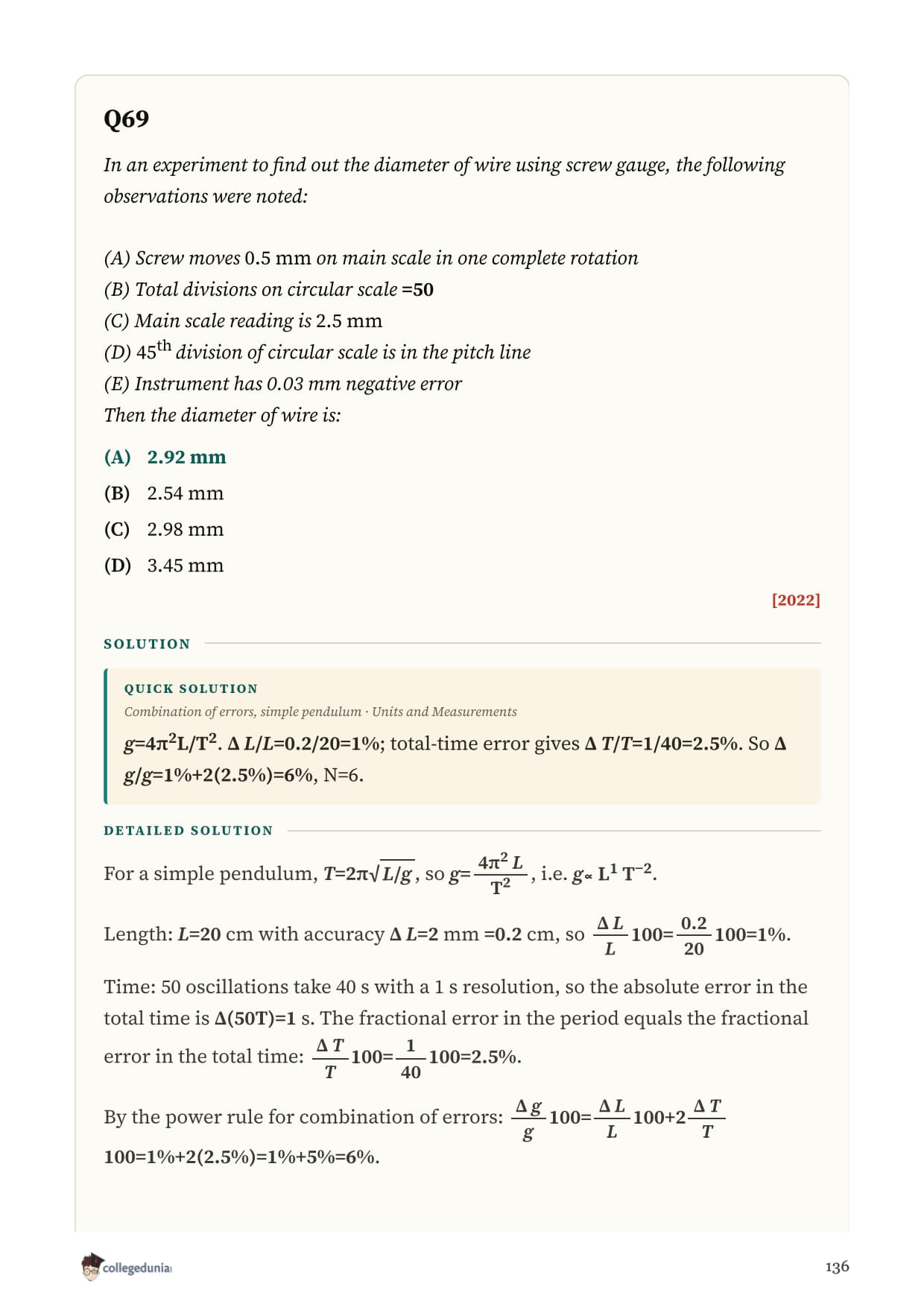
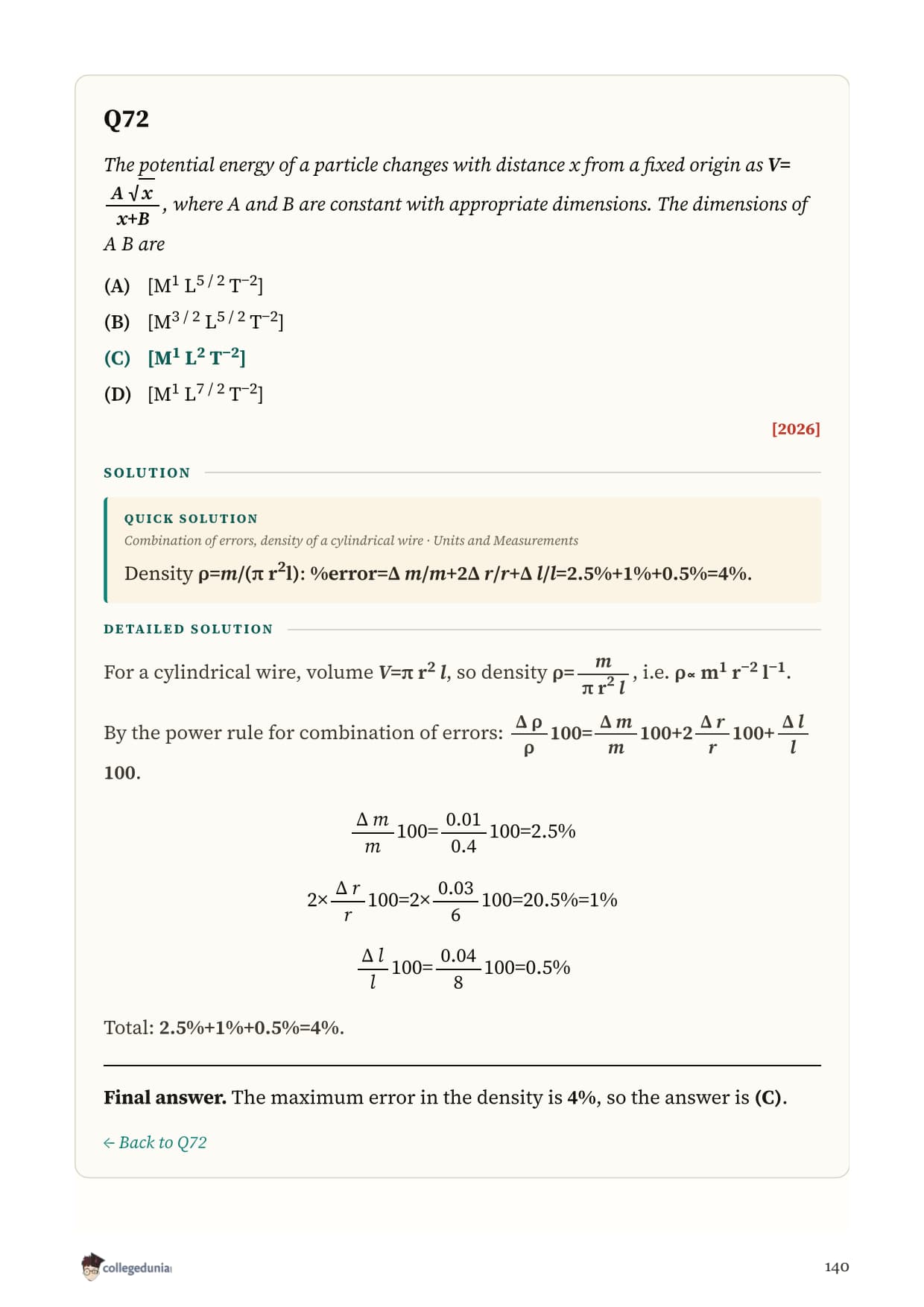
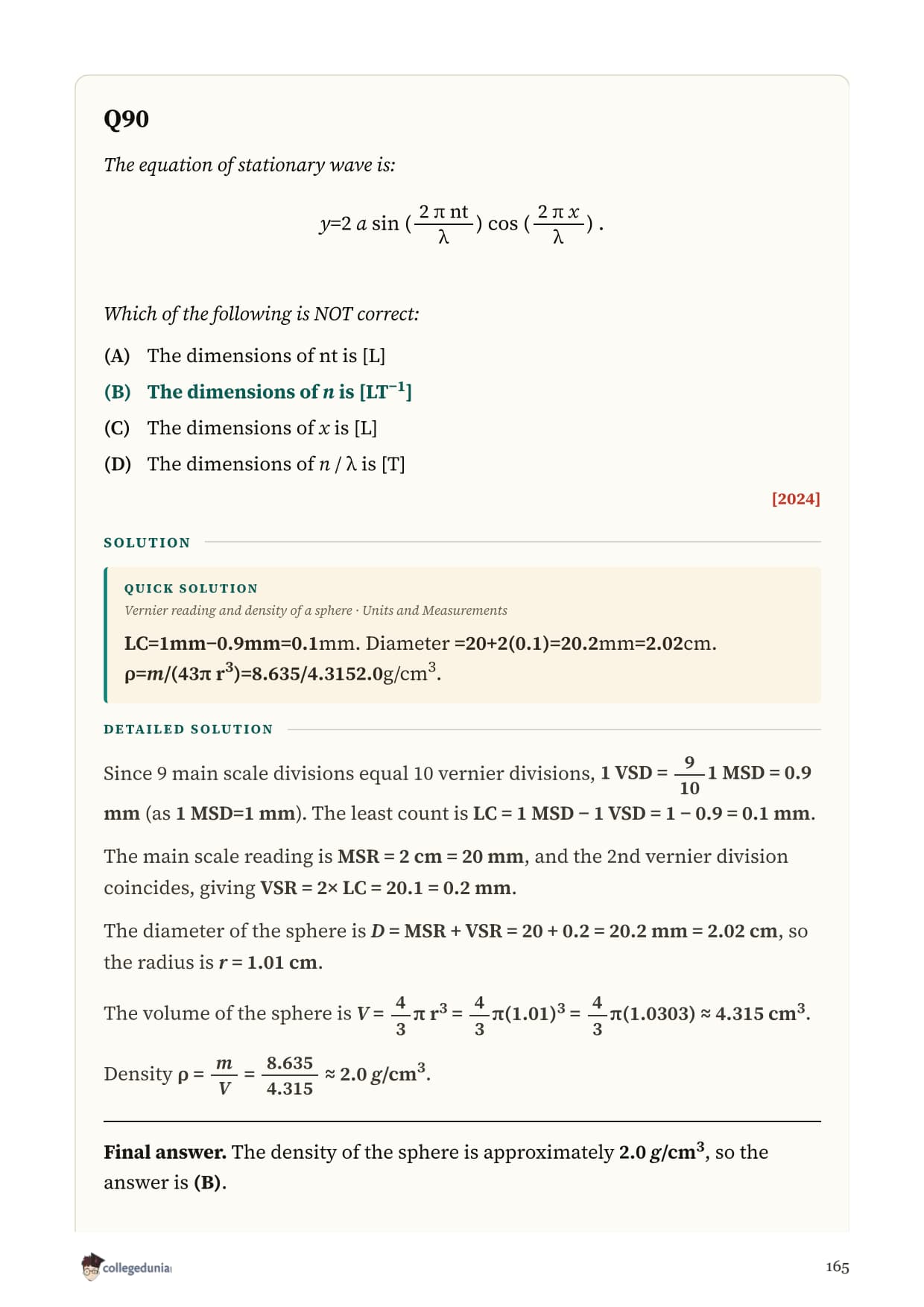
- Errors in measurement, including the combination rules for sums, products and powers.
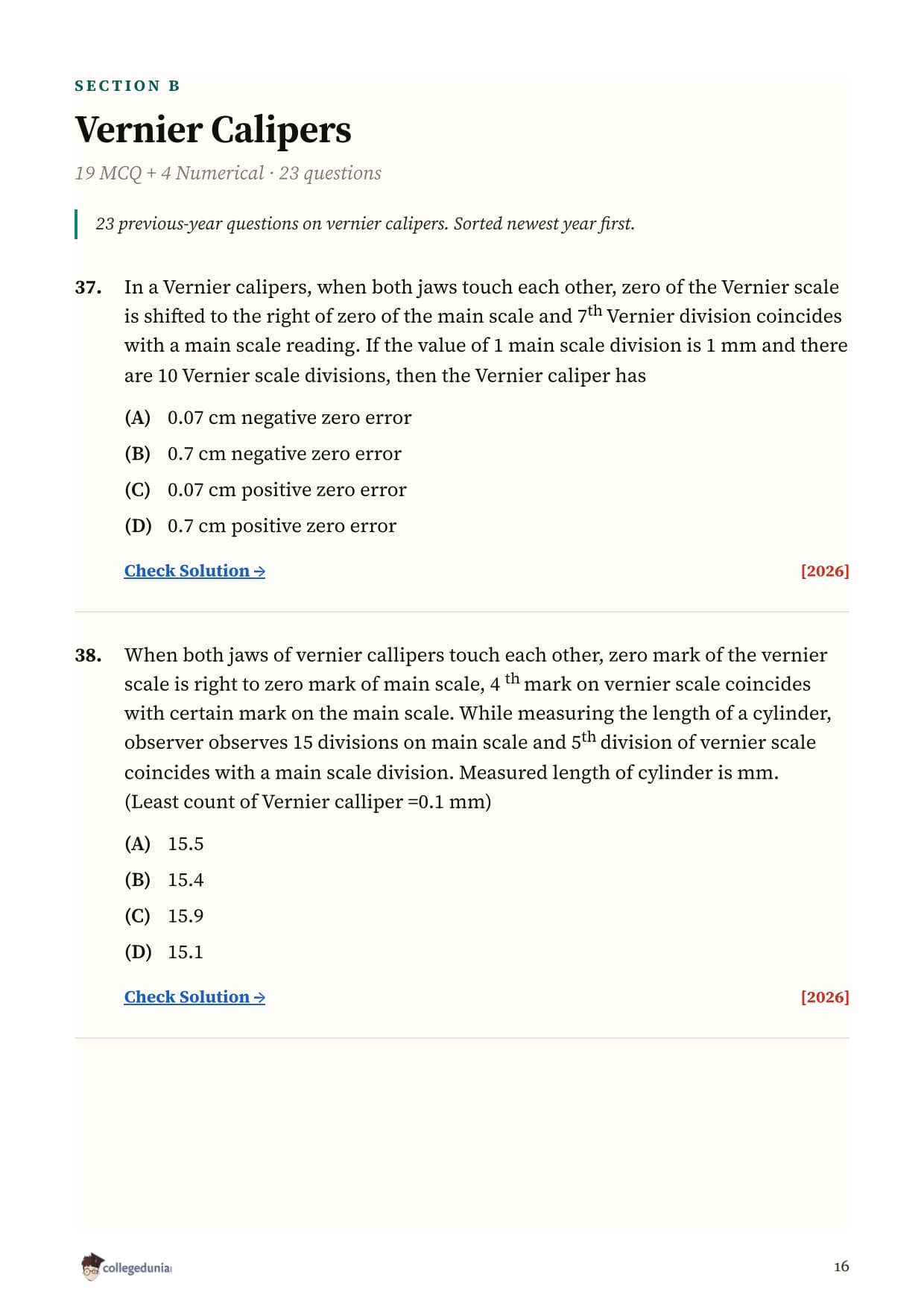
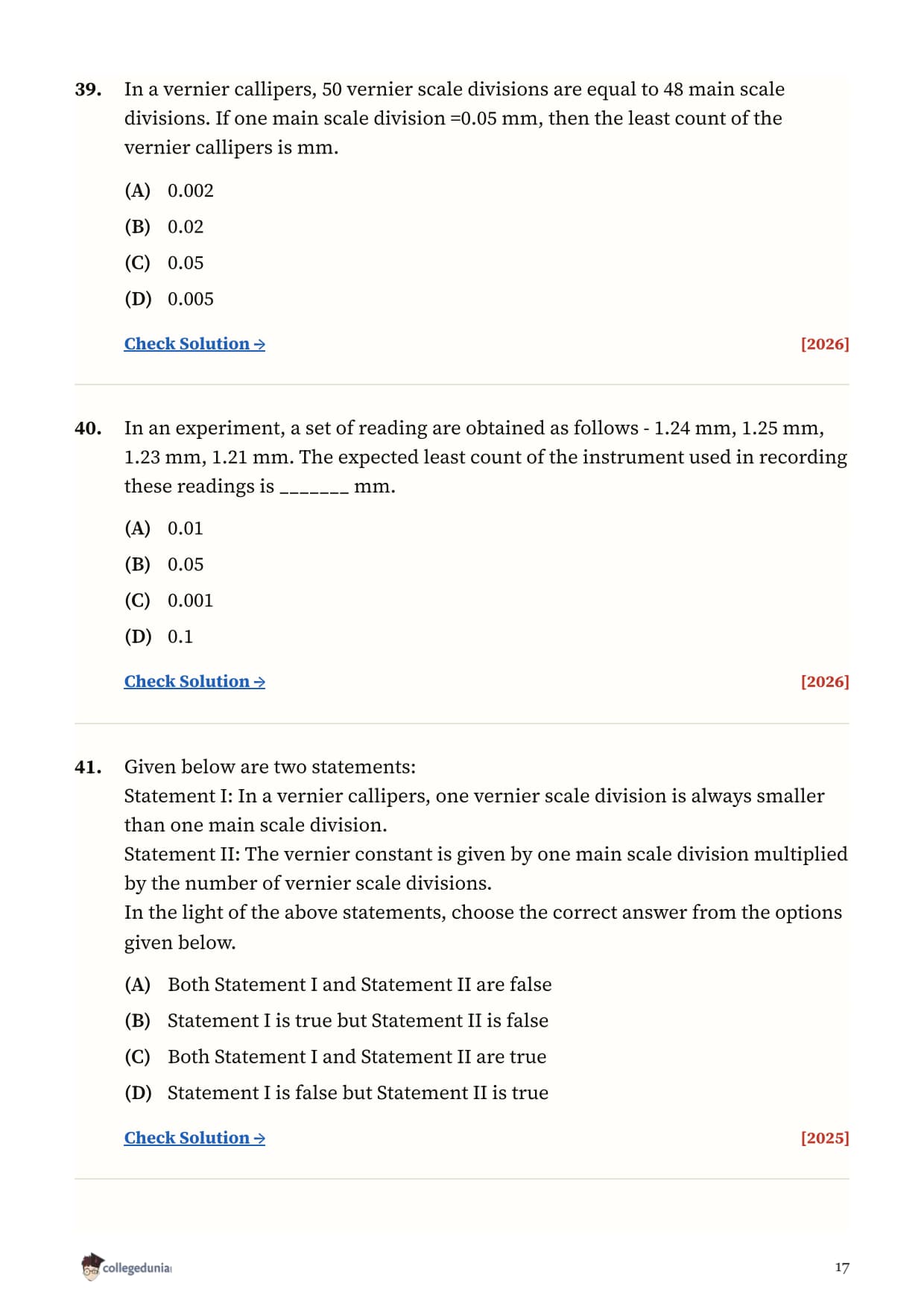
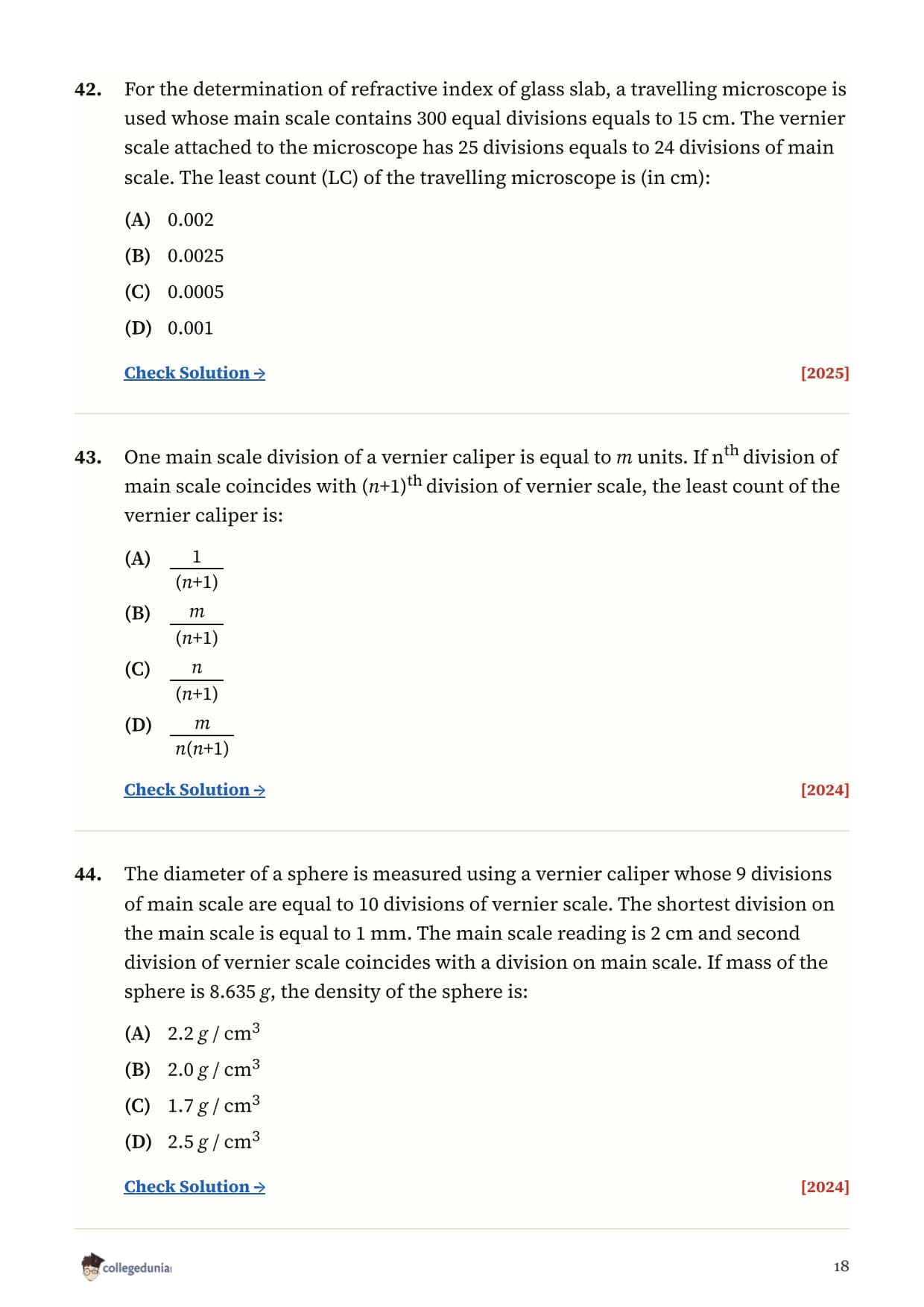
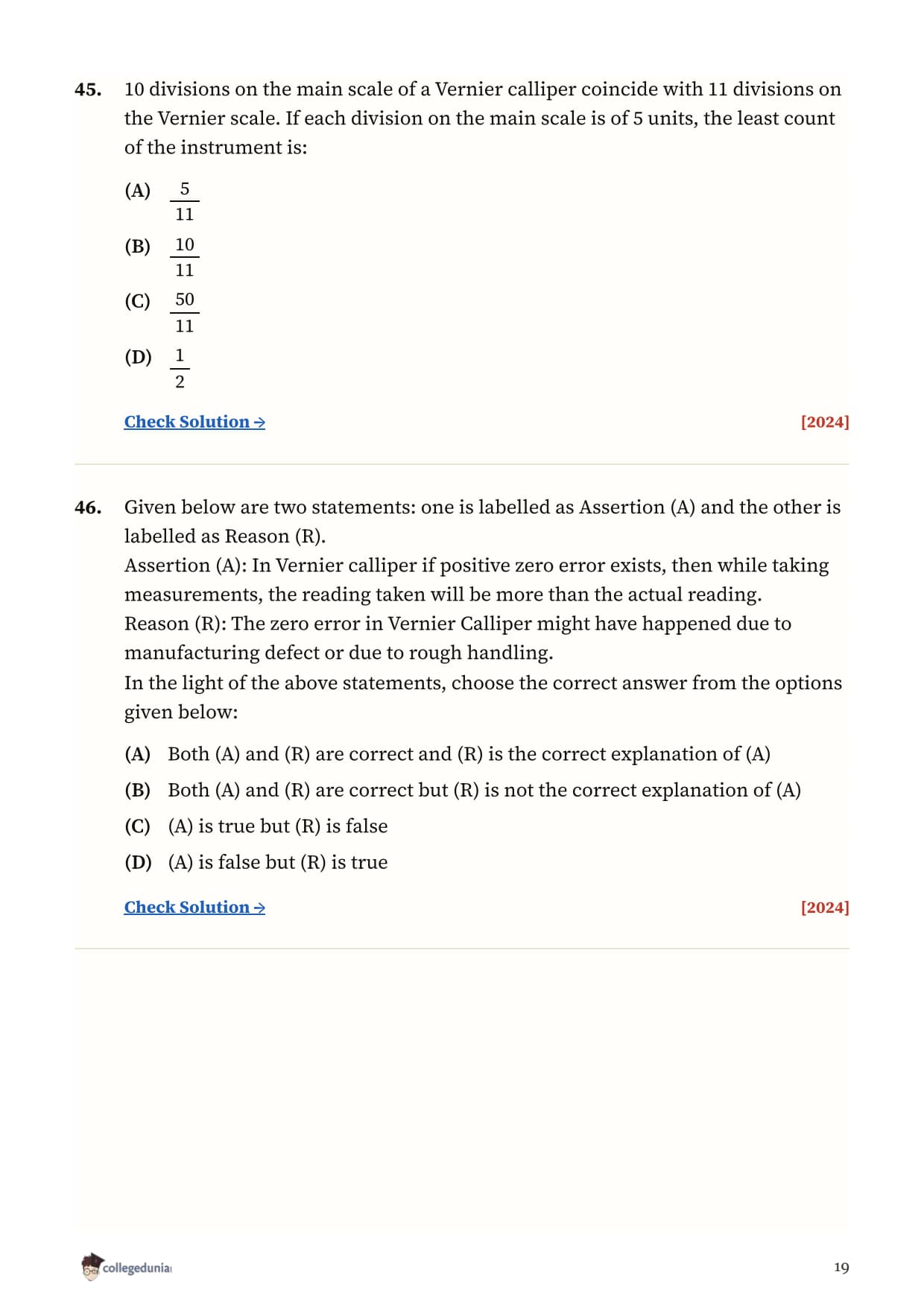
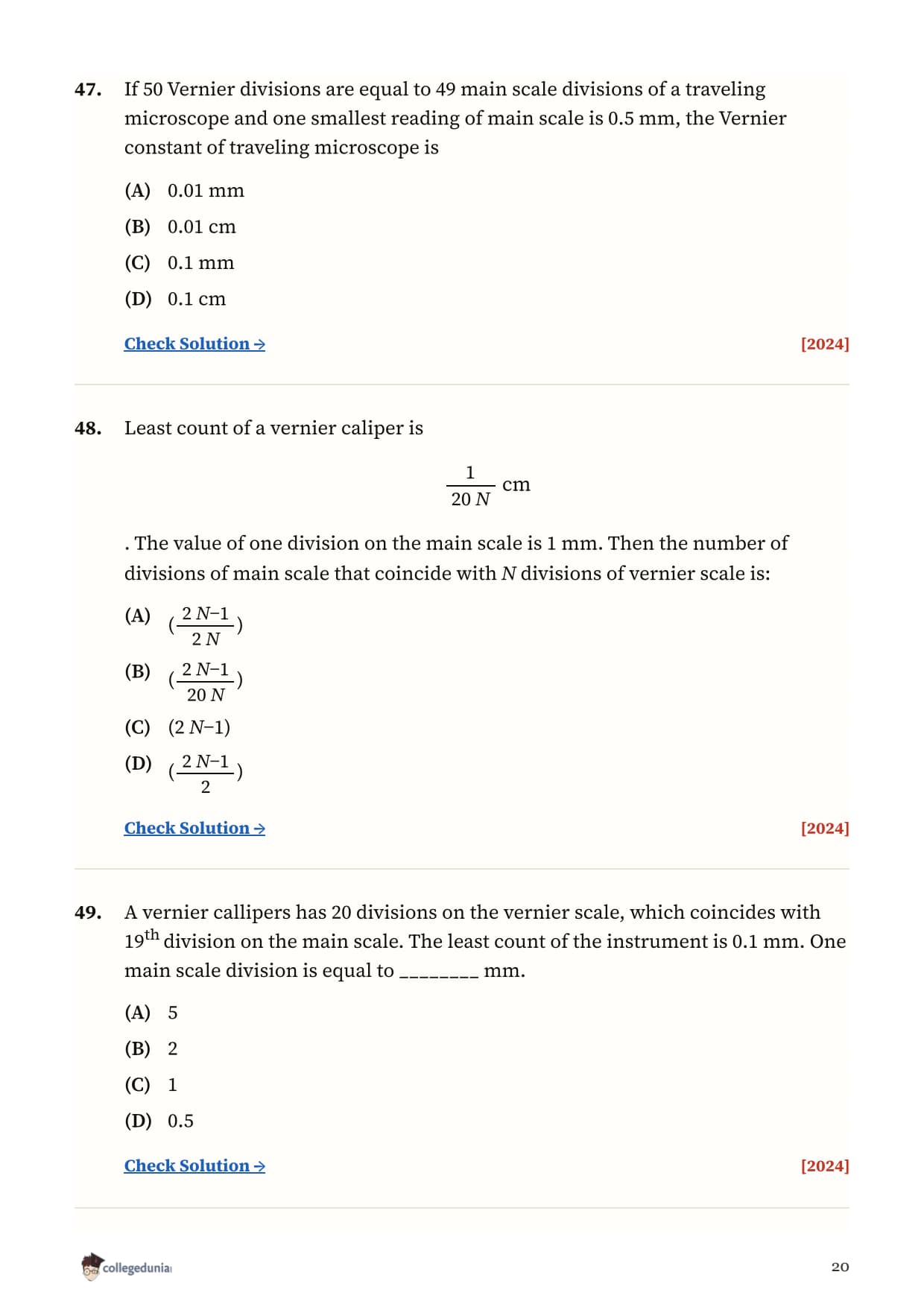
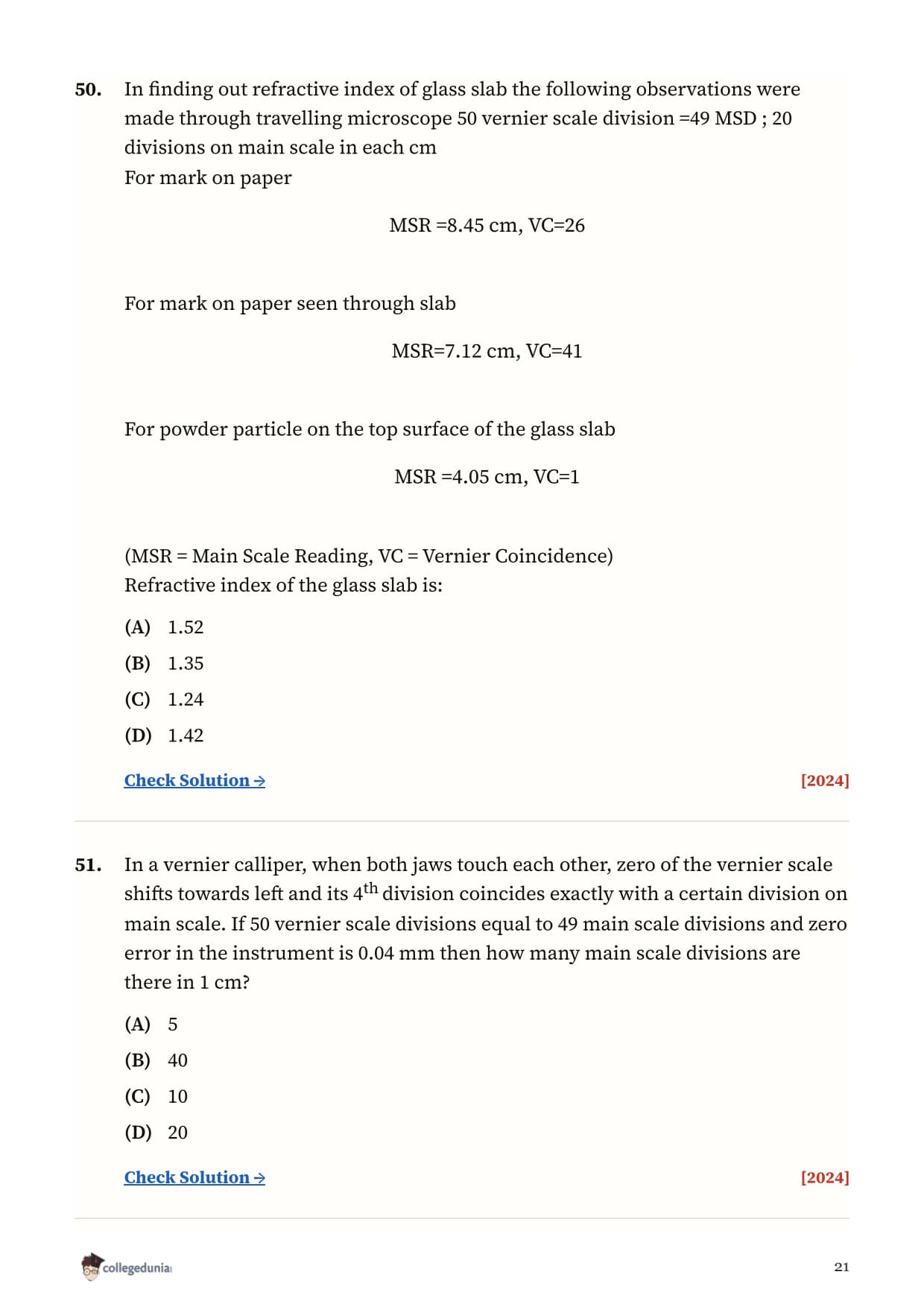
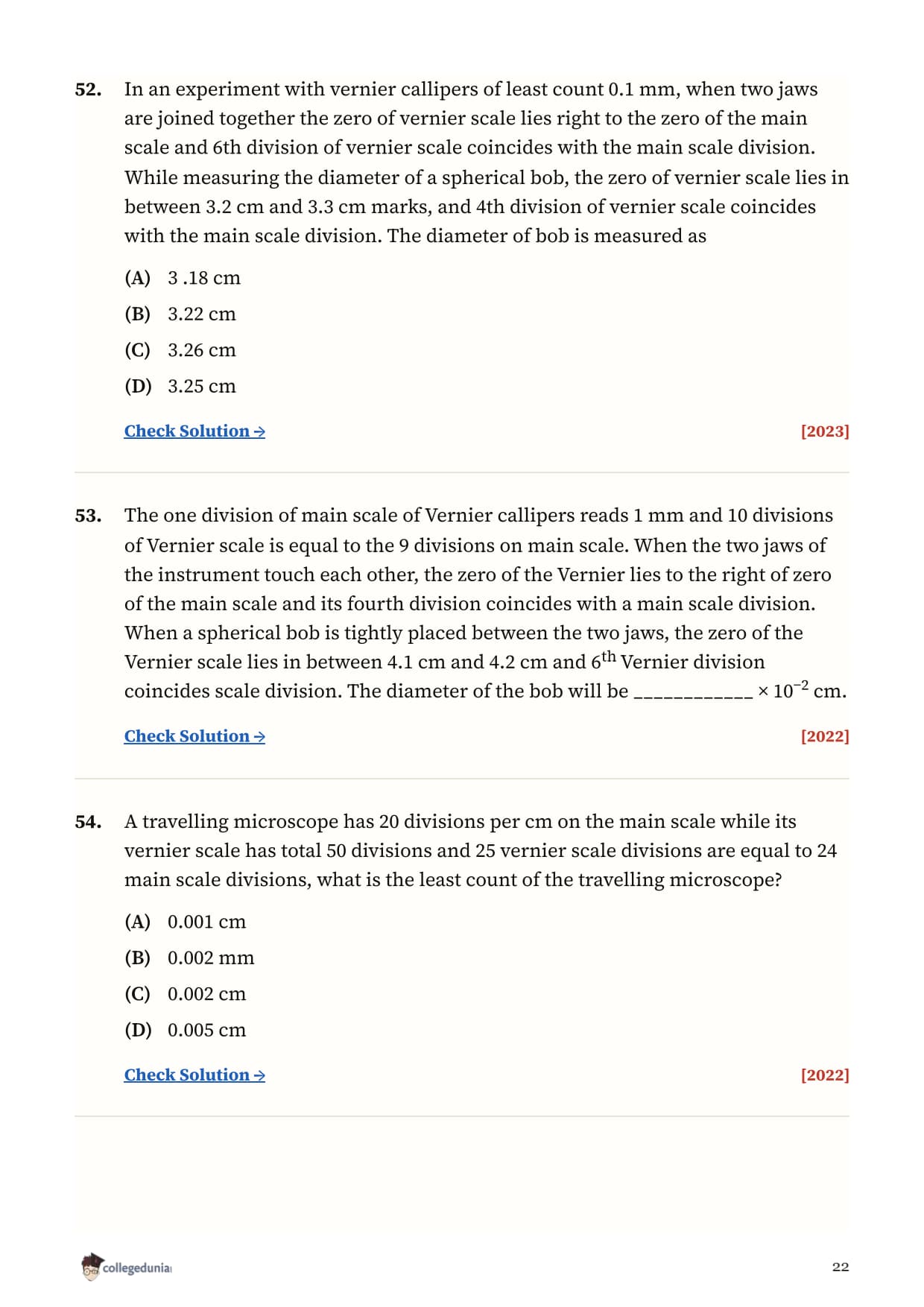
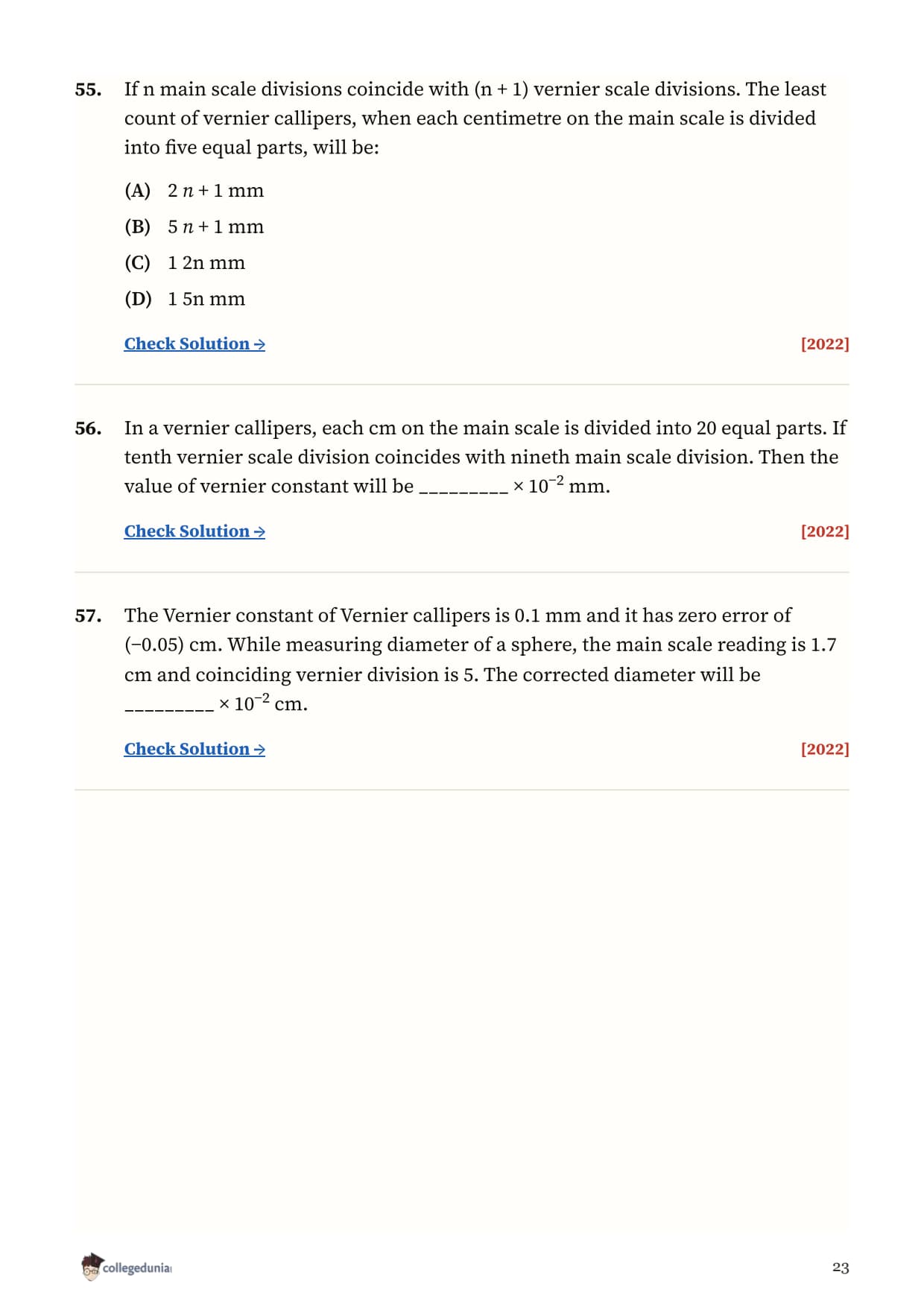
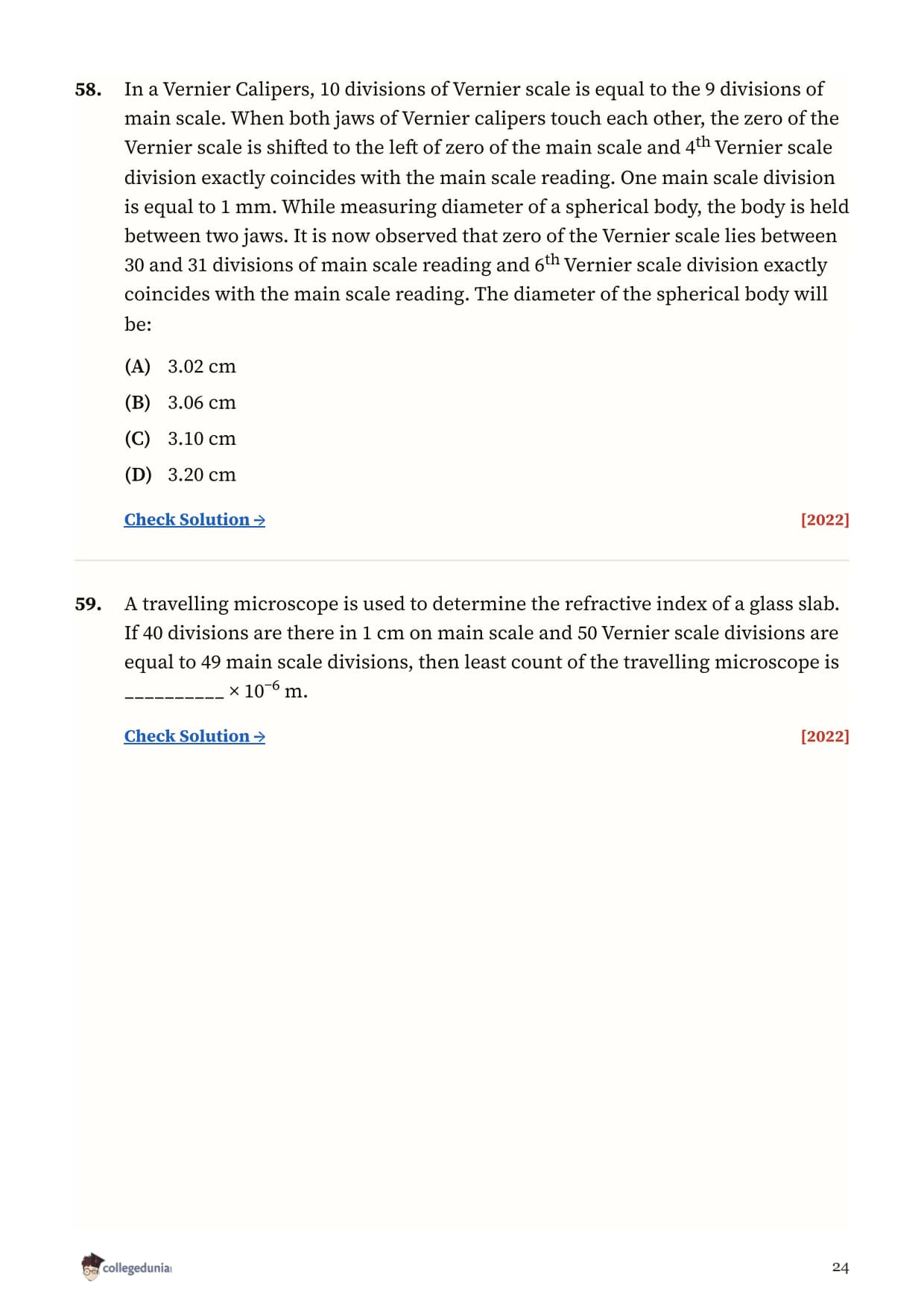
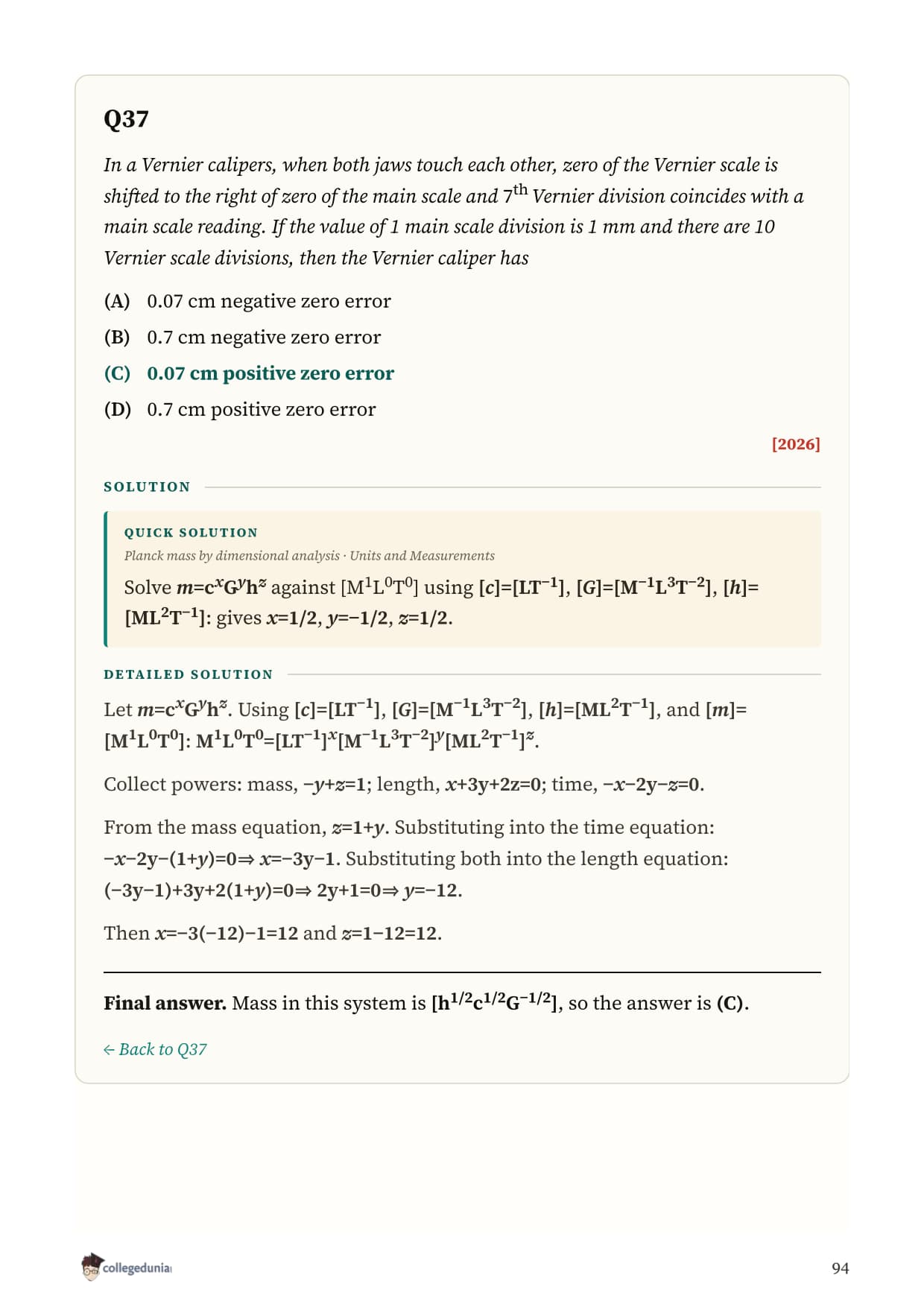
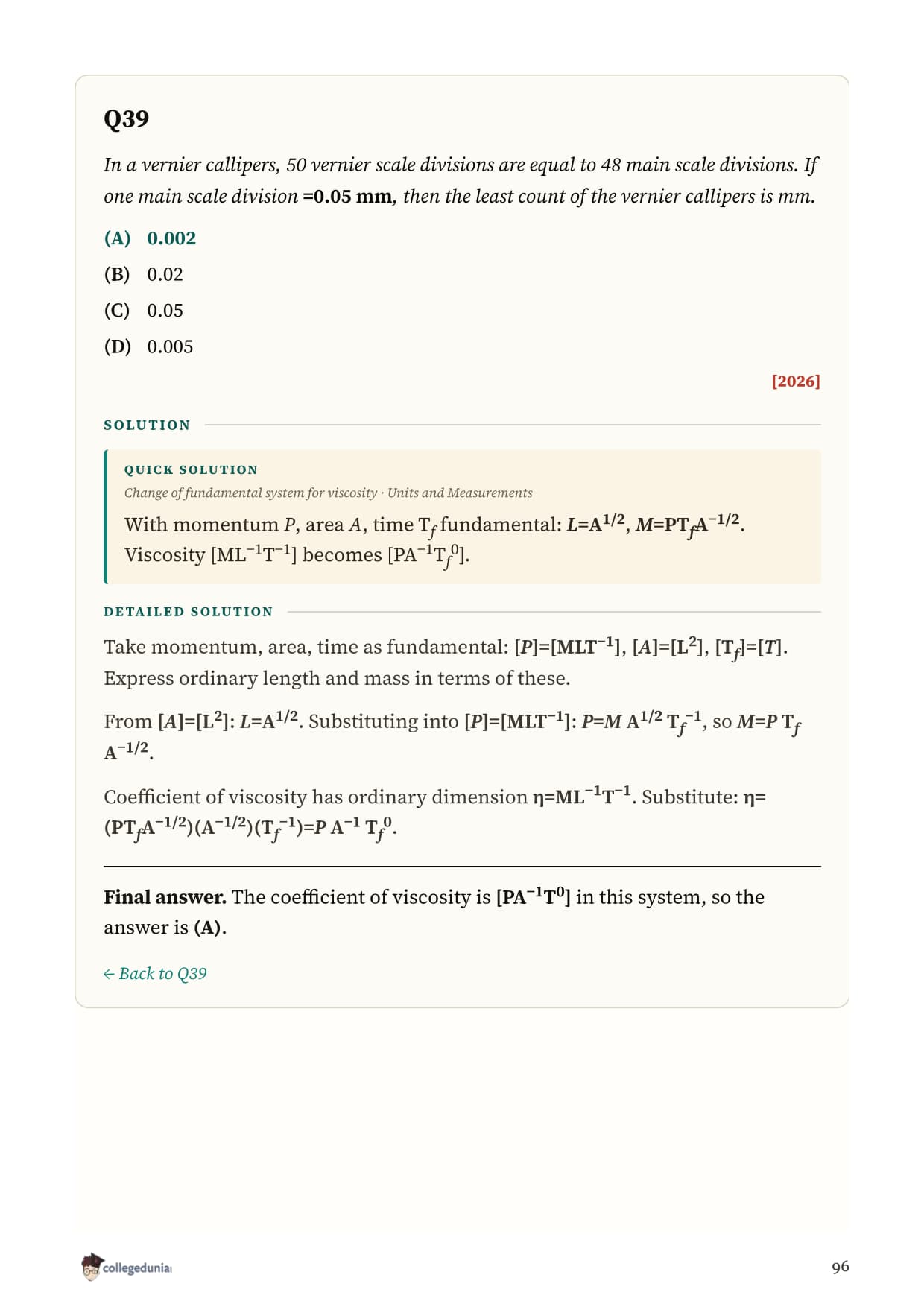
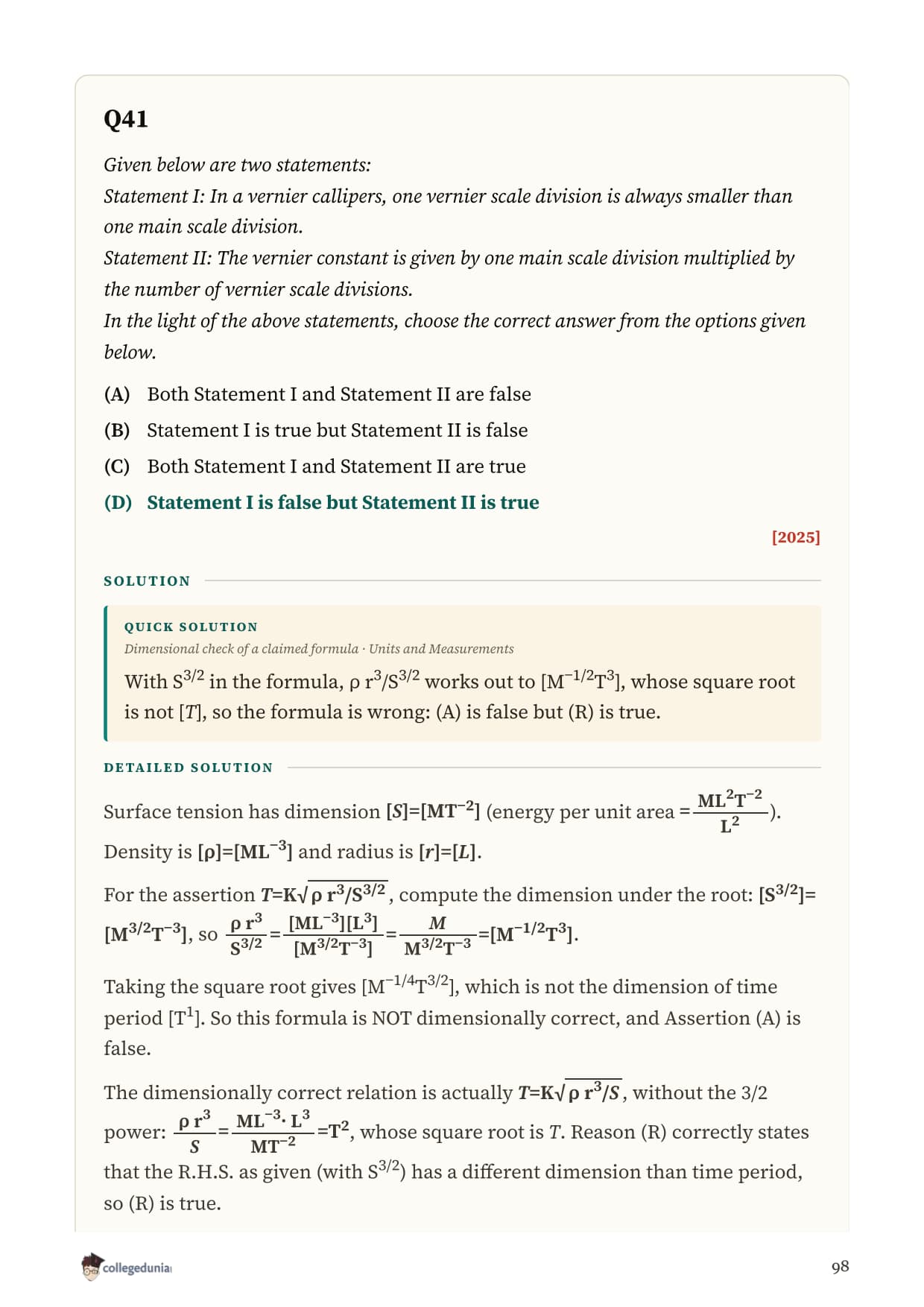
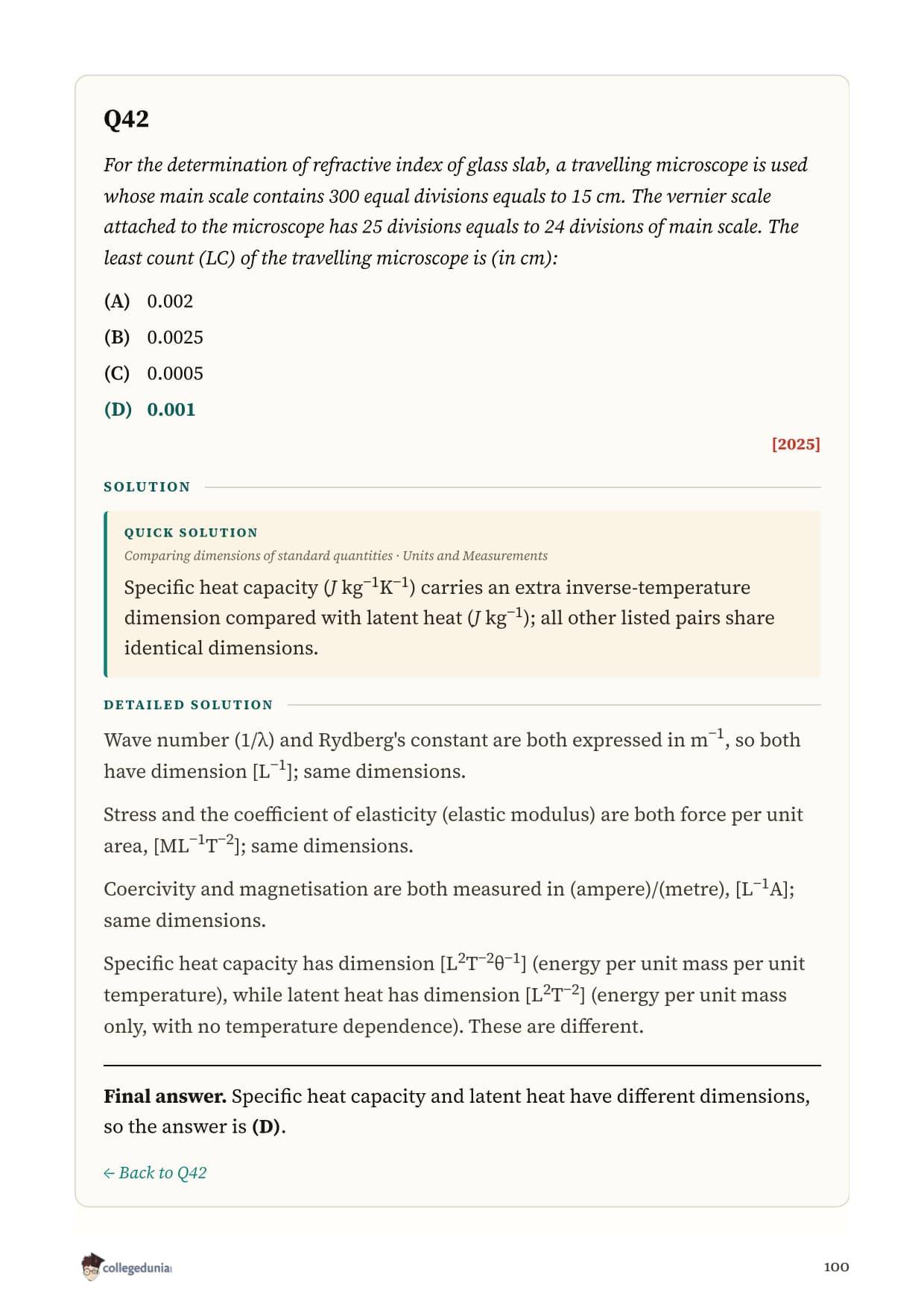
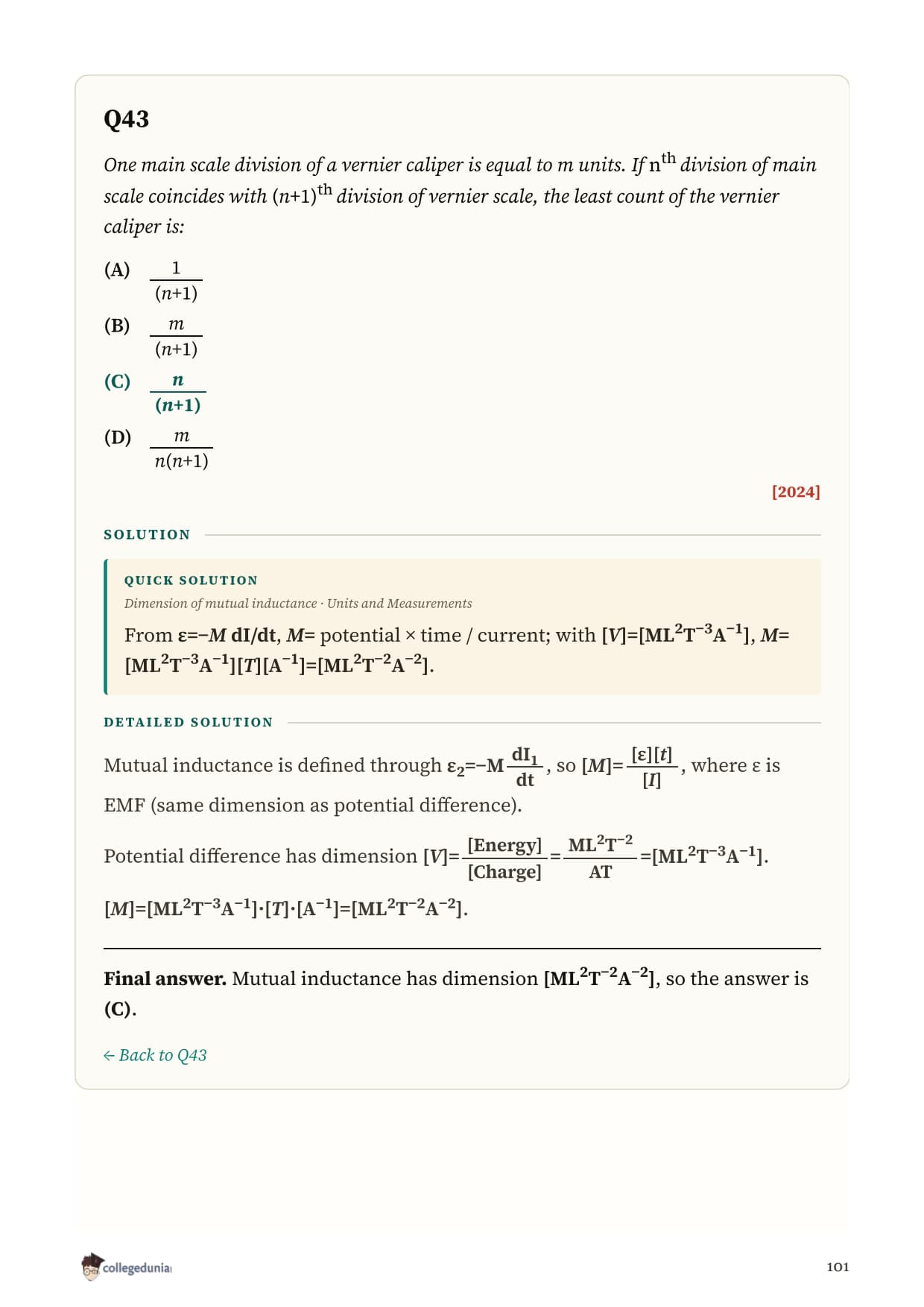
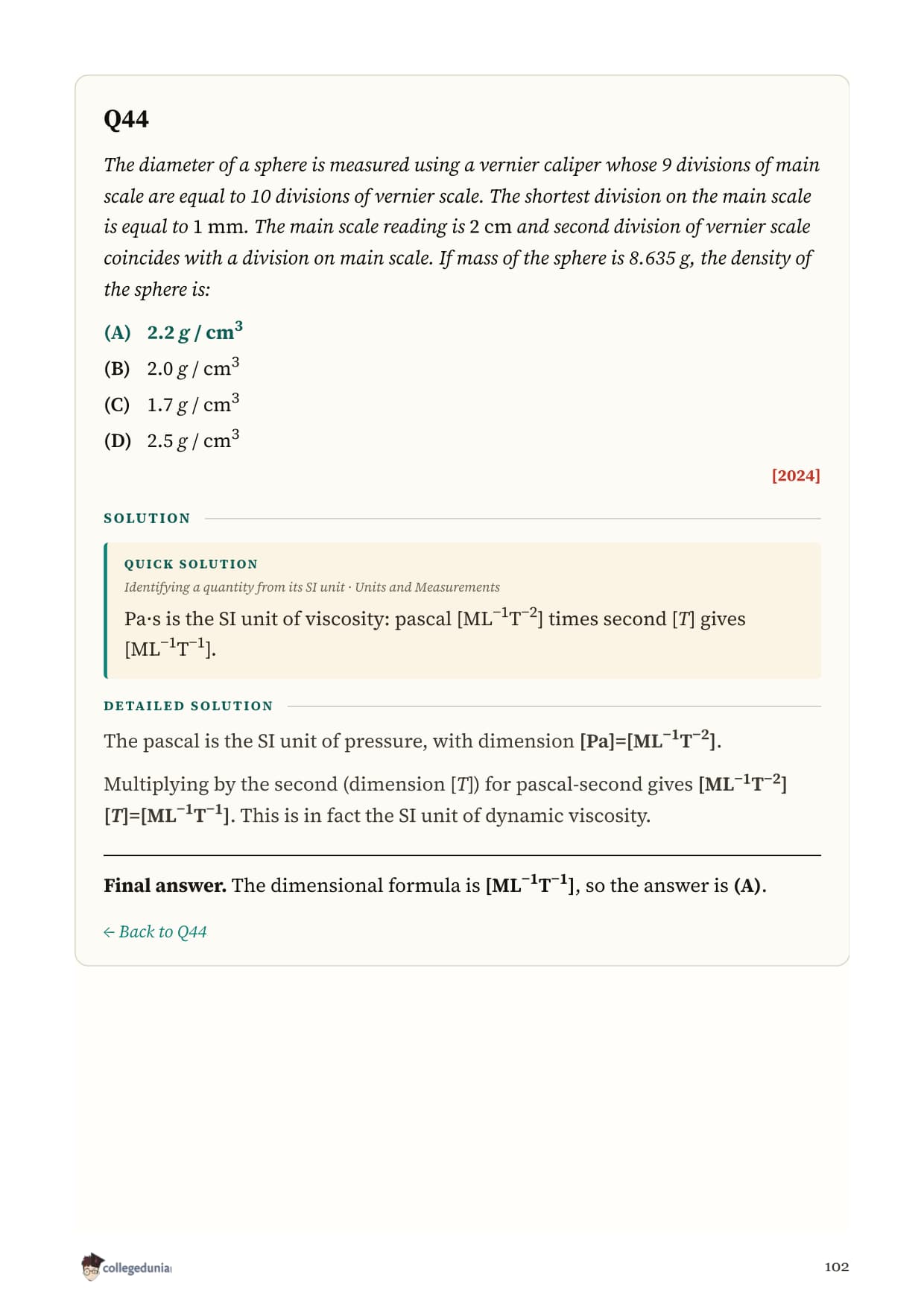
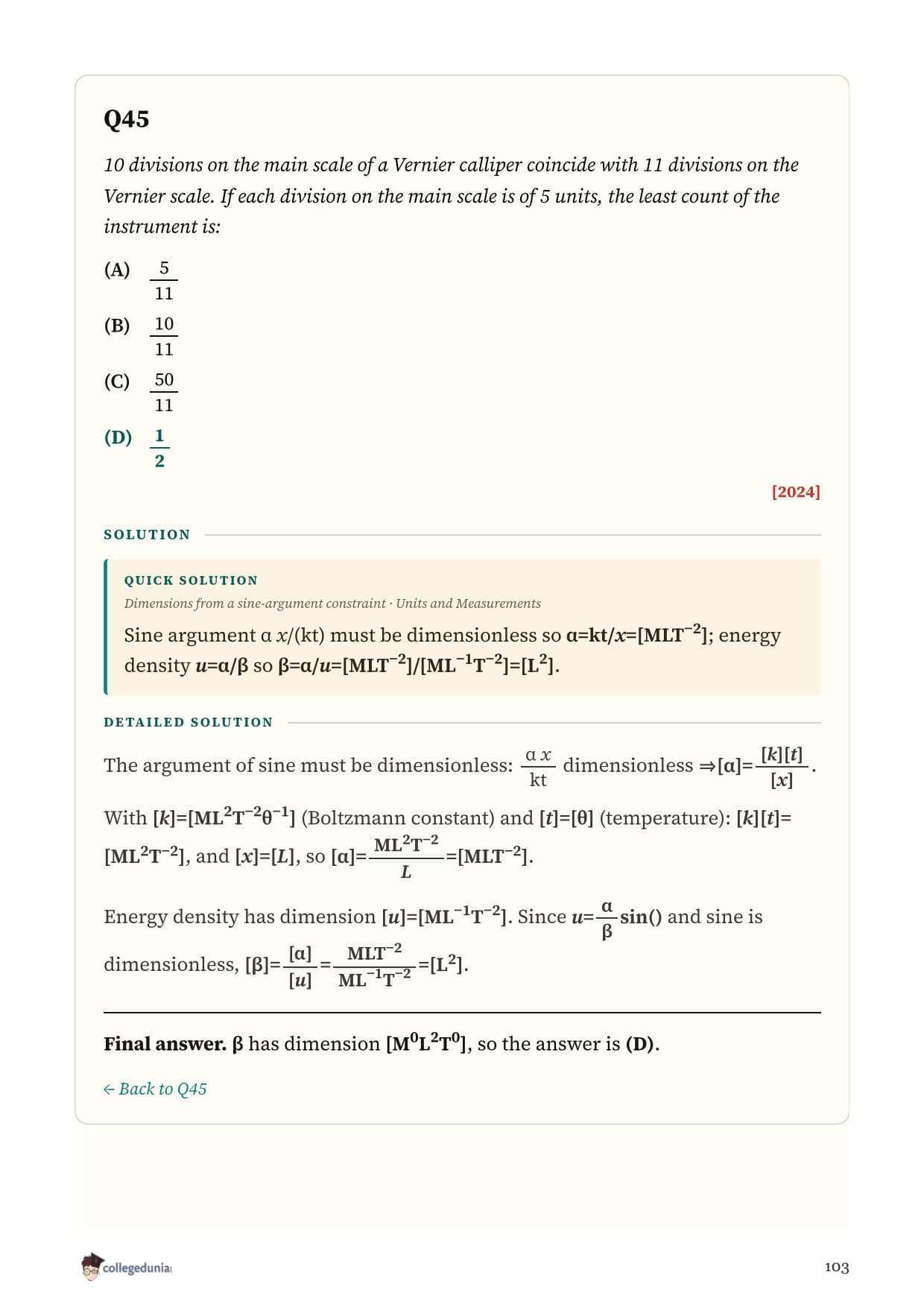
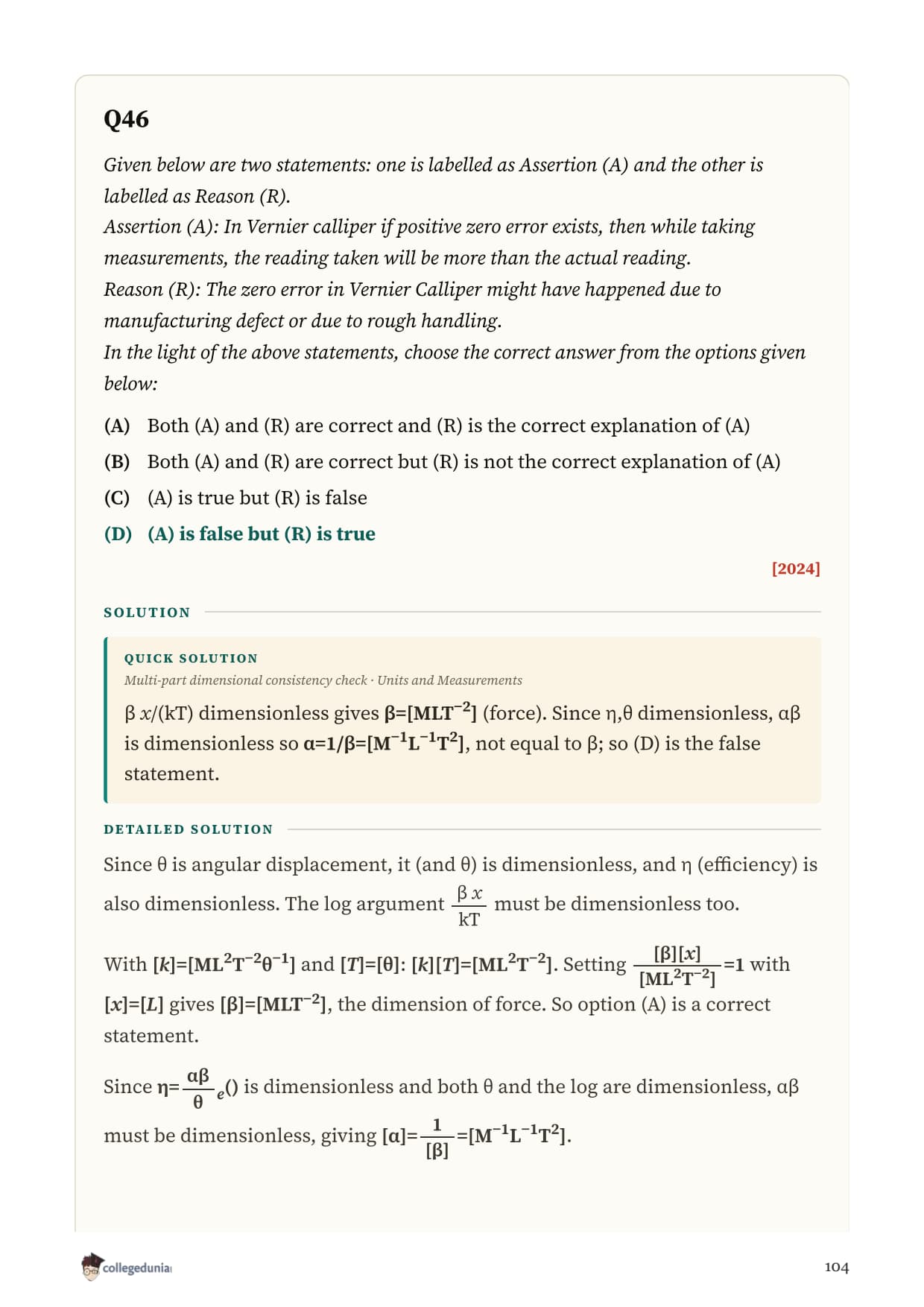
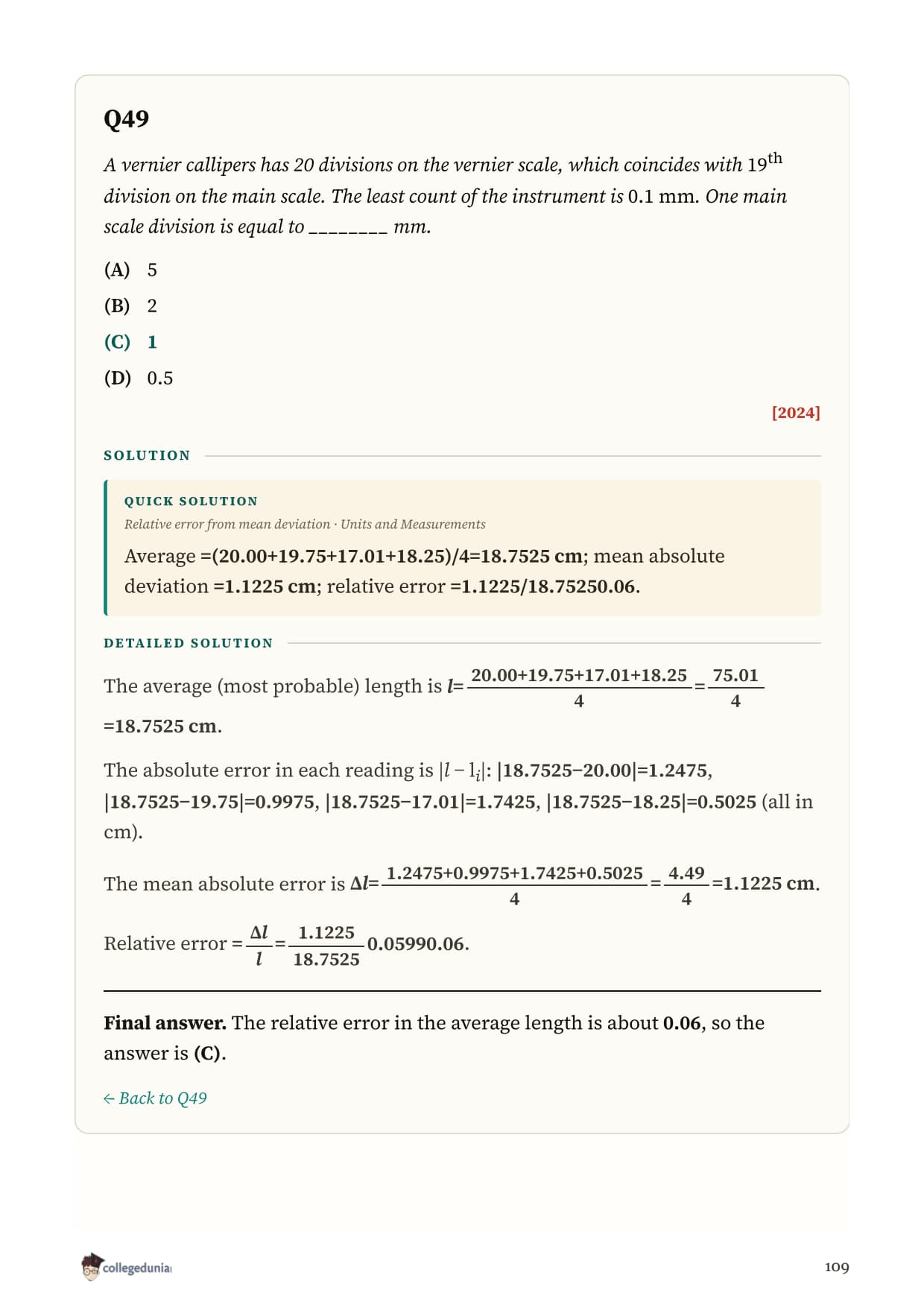
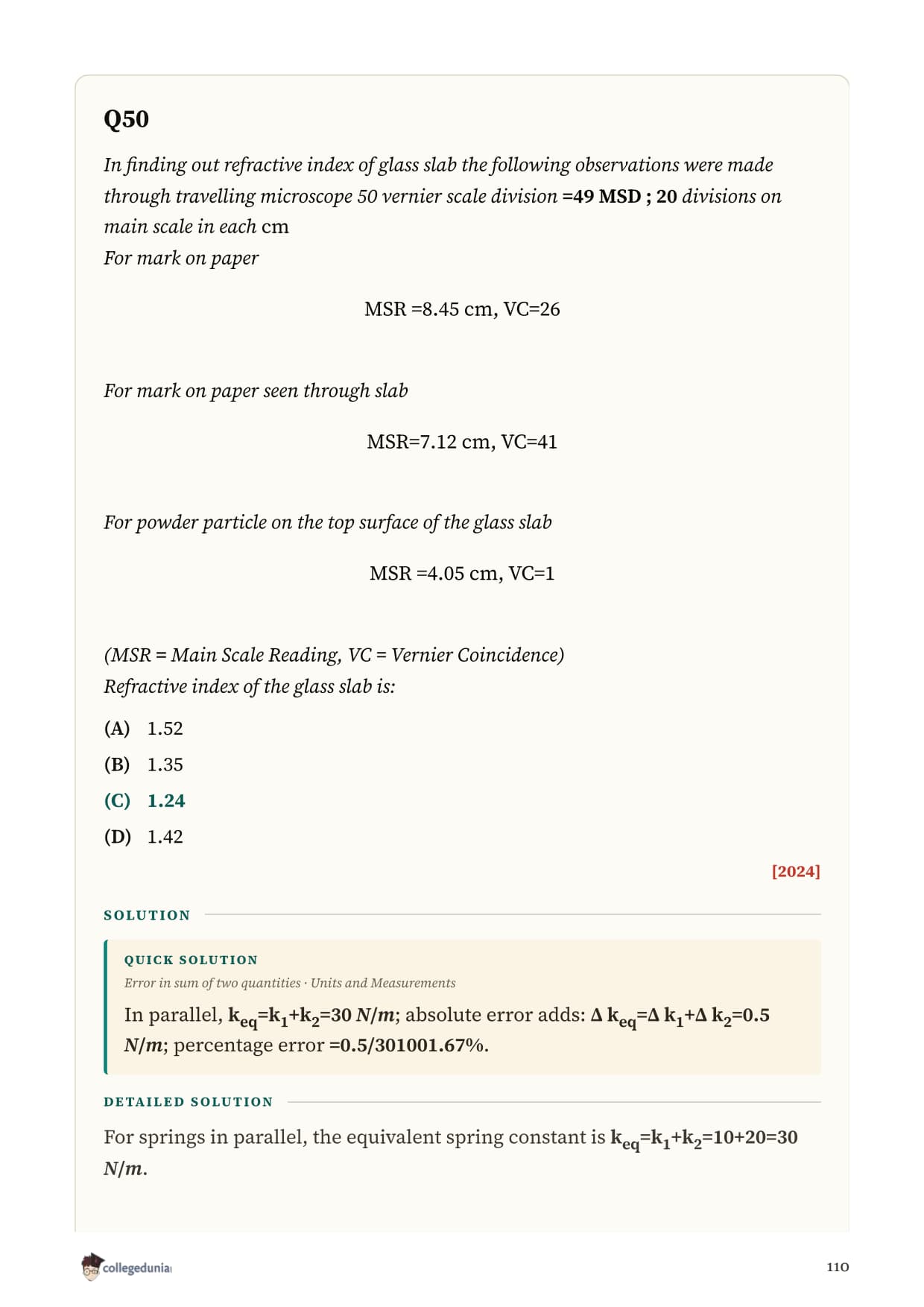
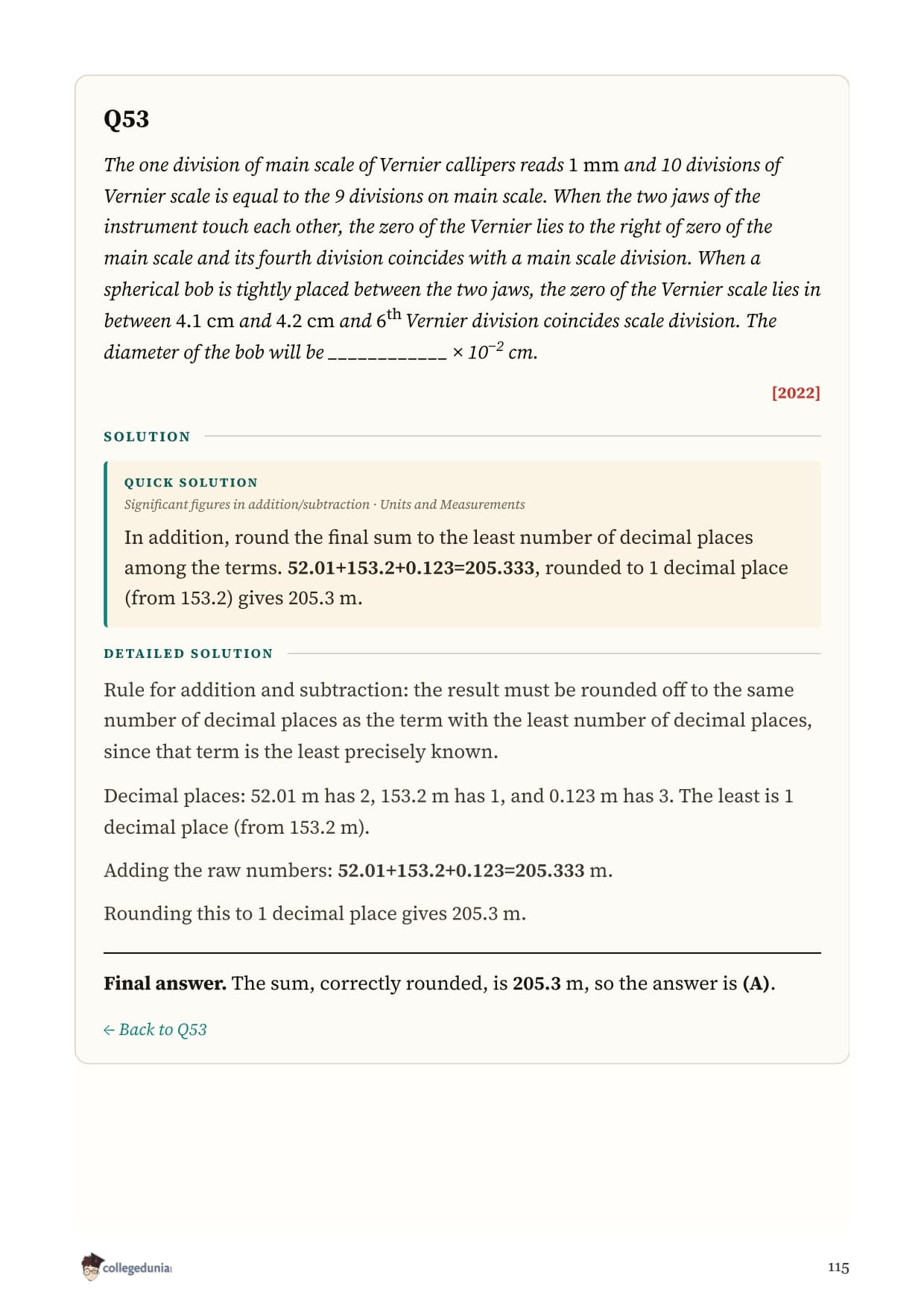
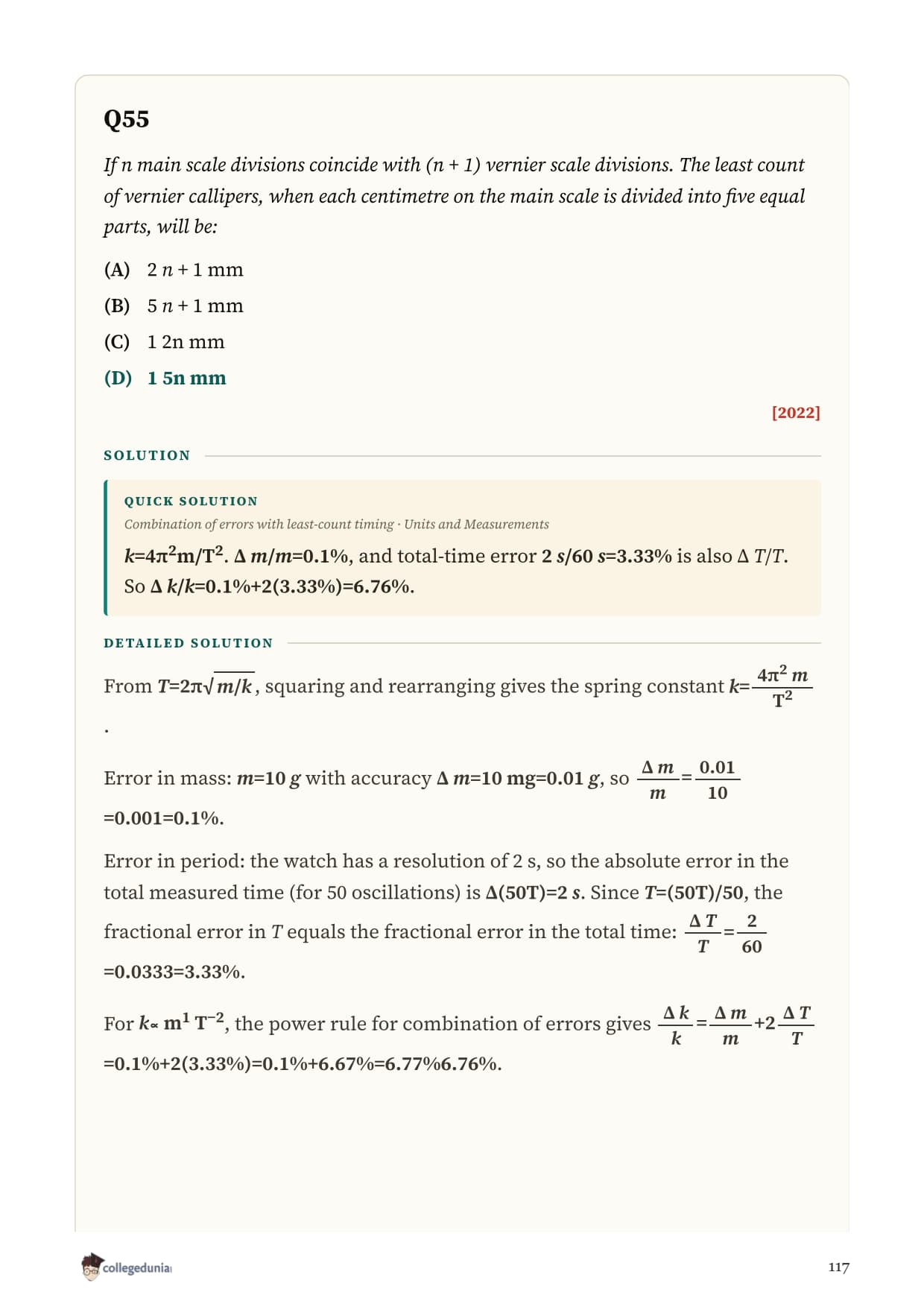
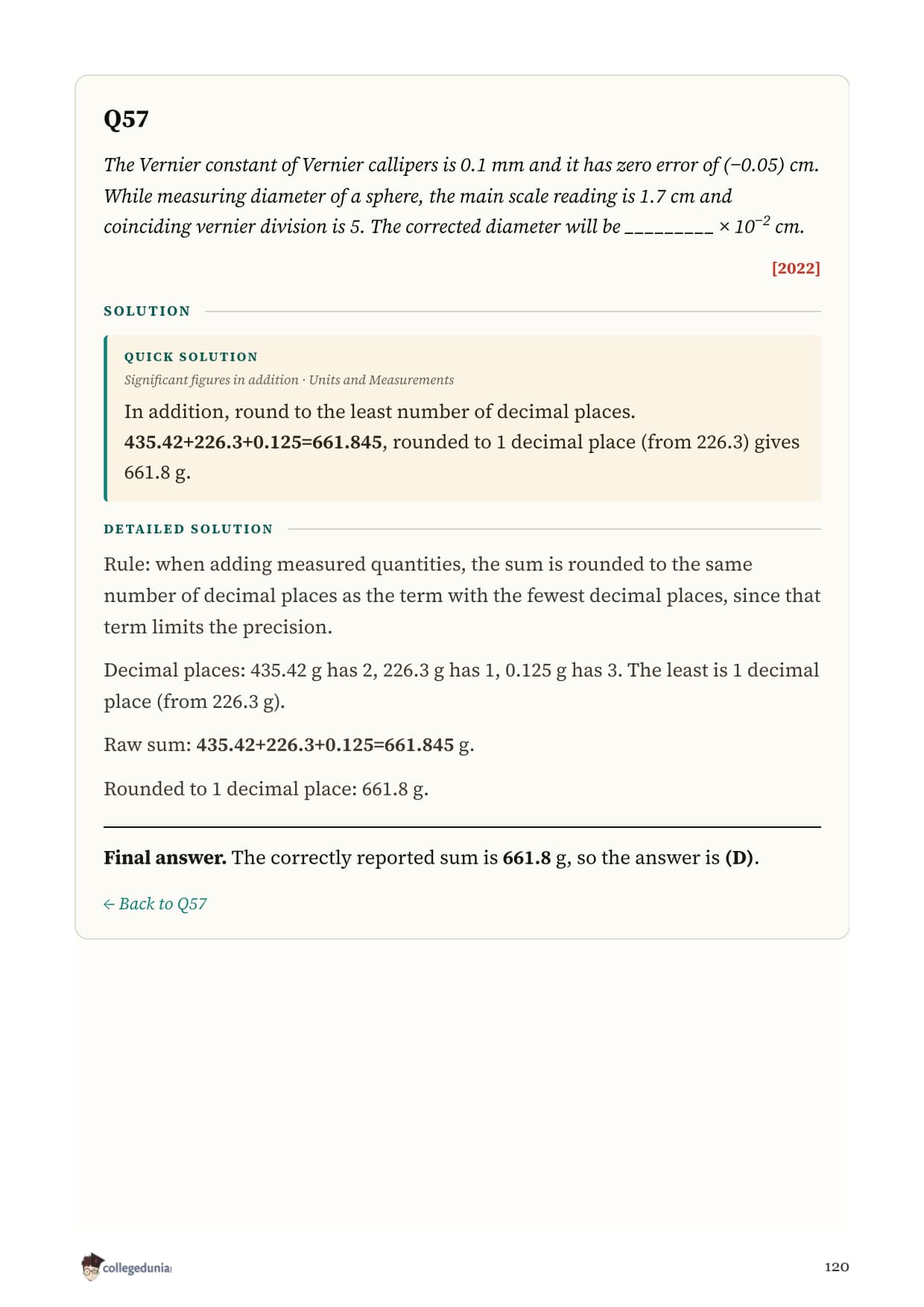
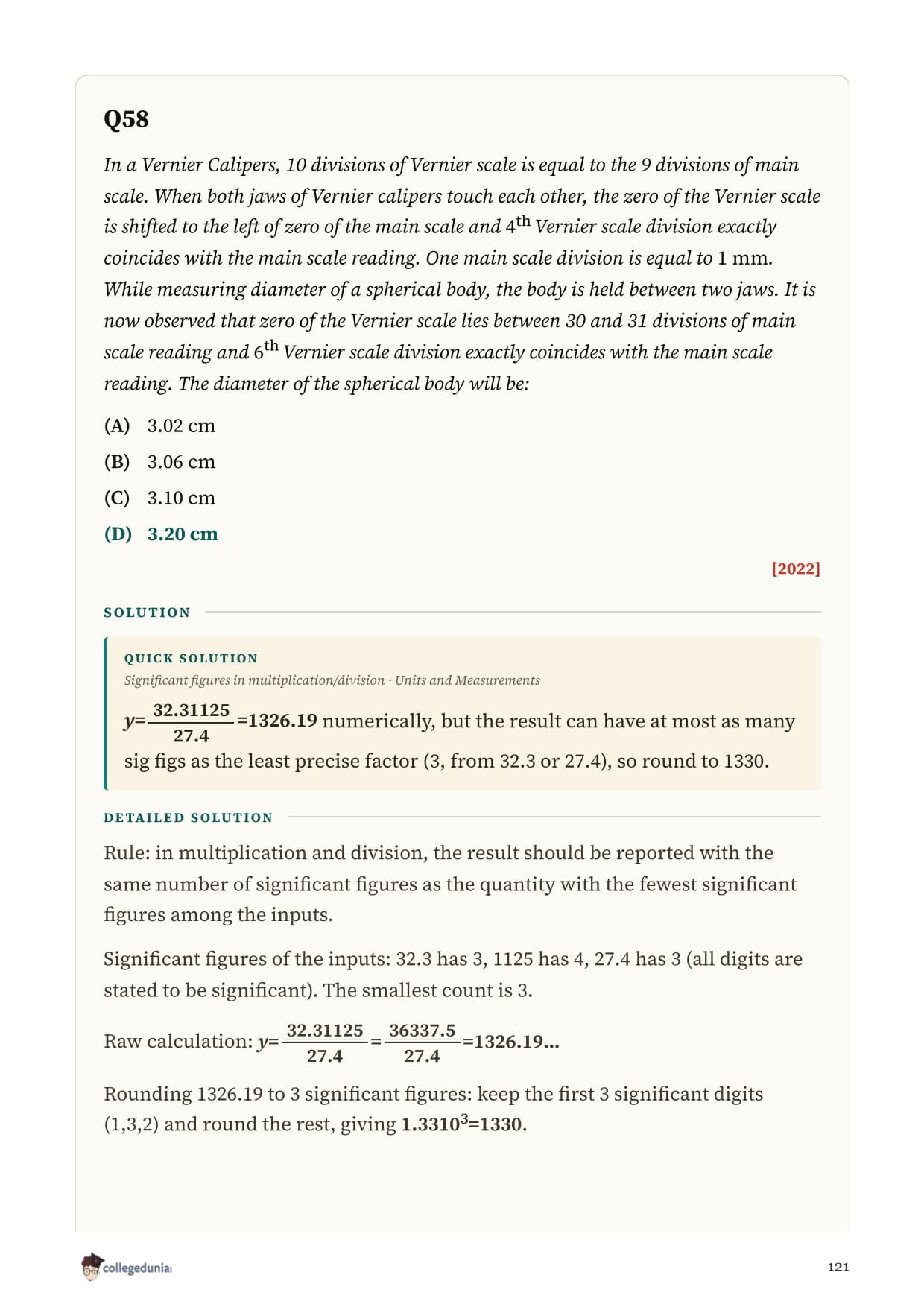
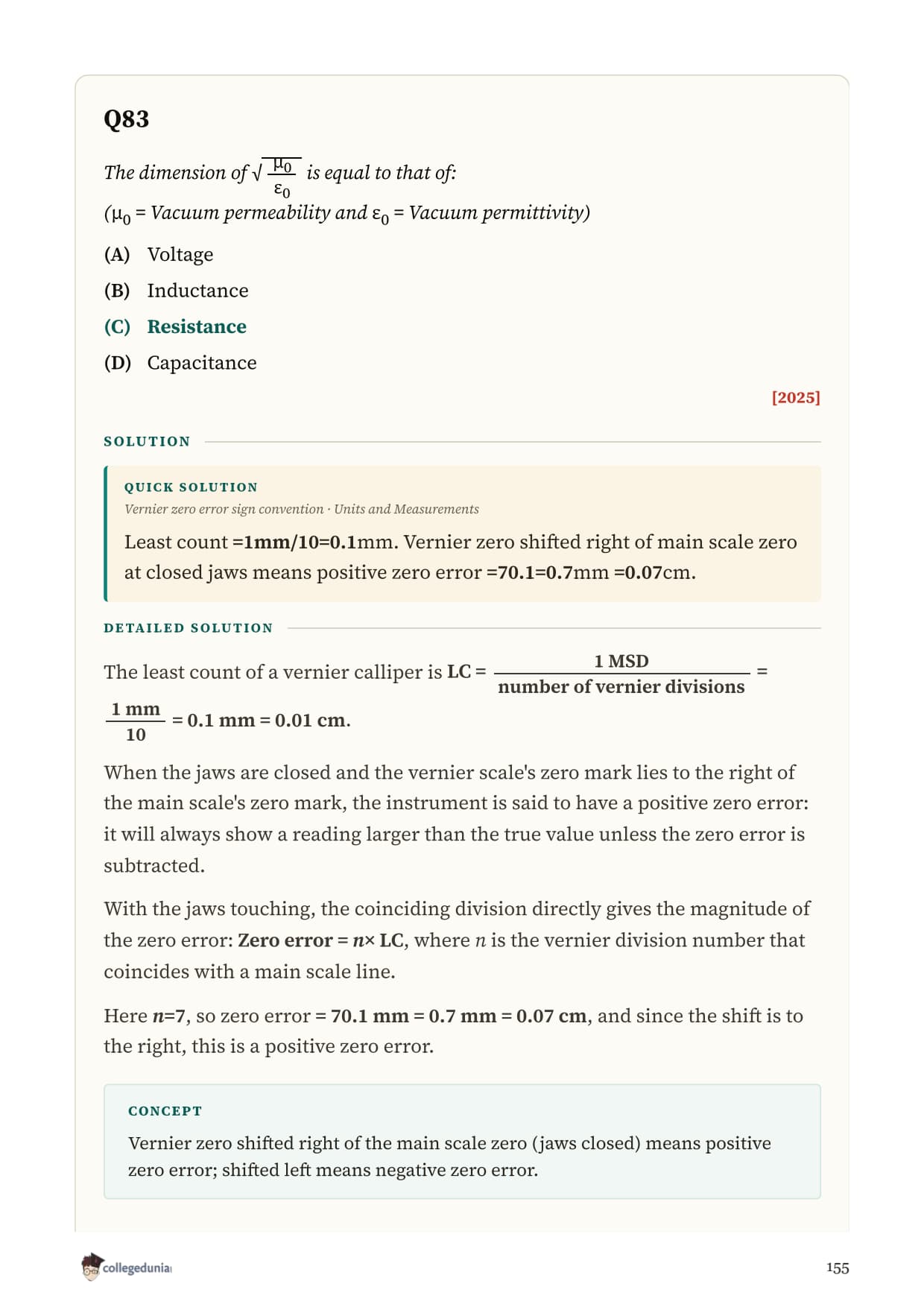
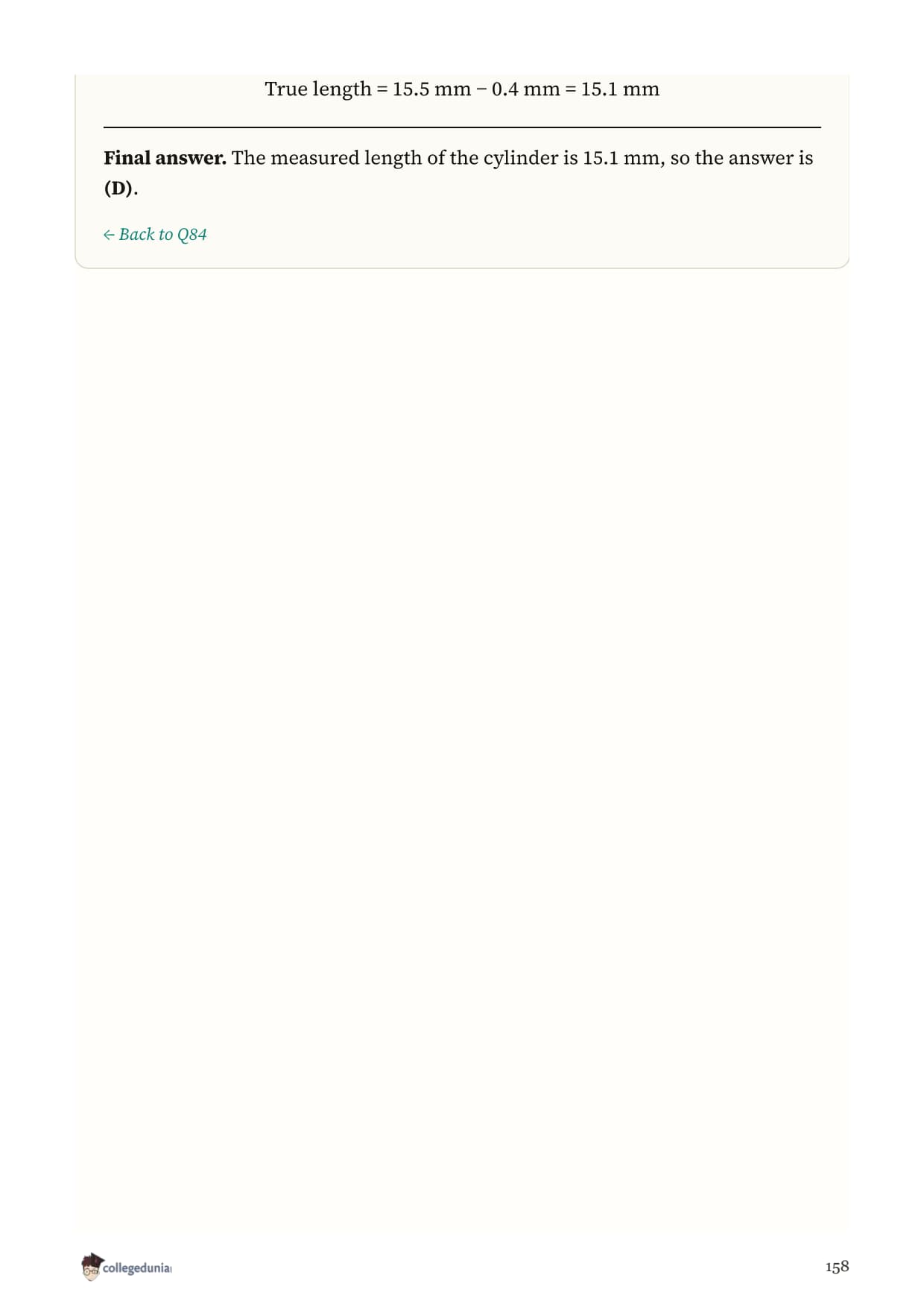
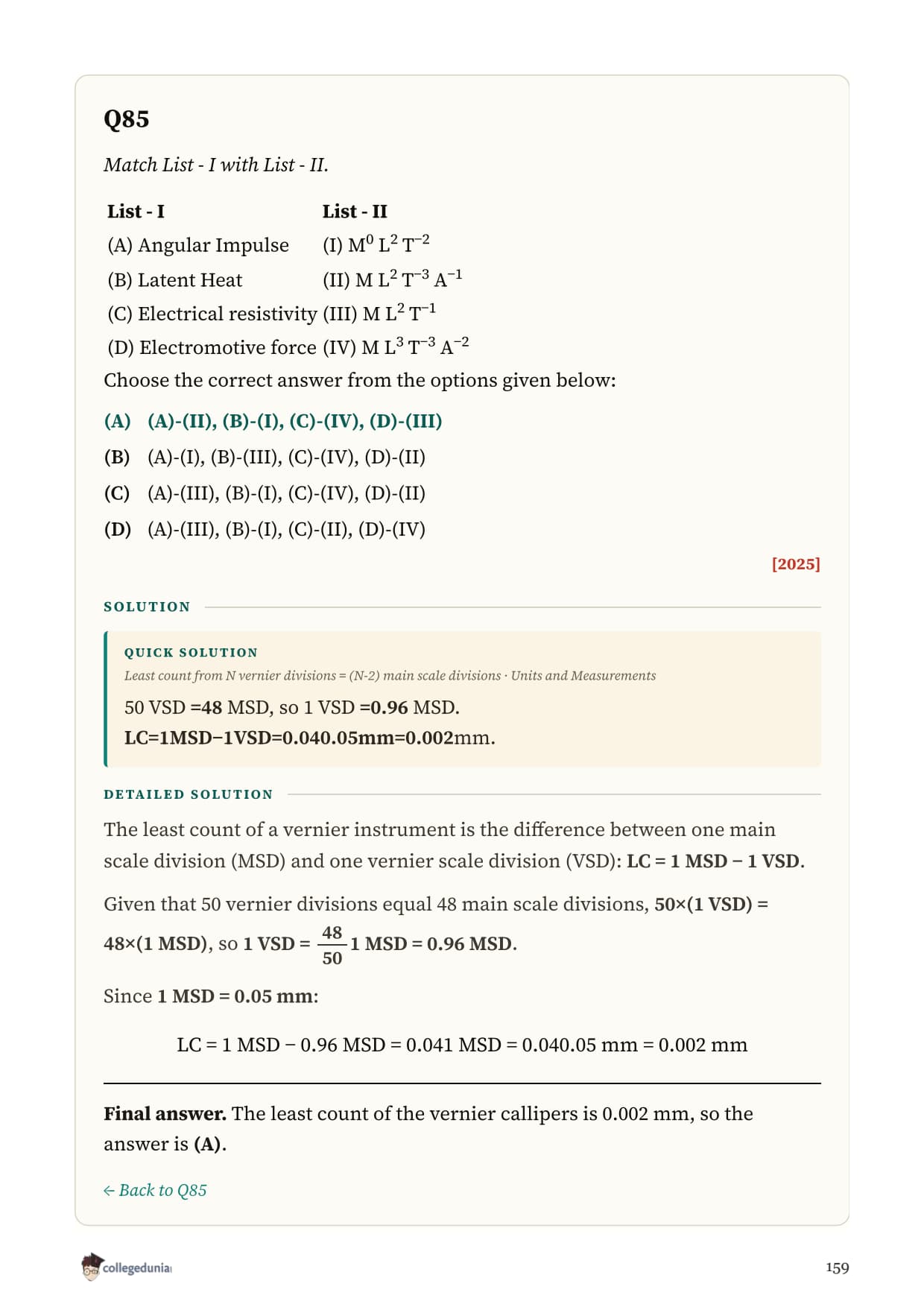
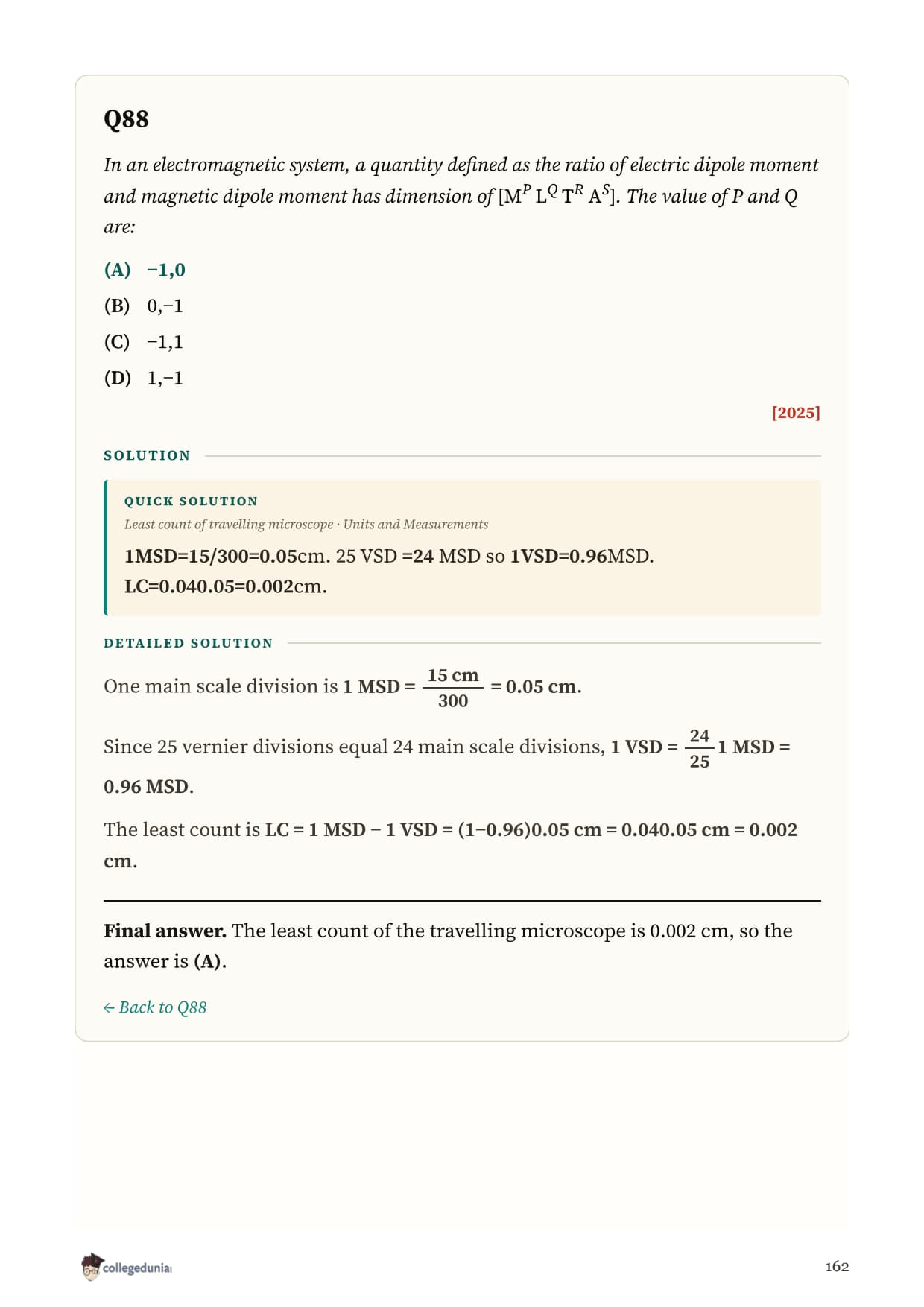
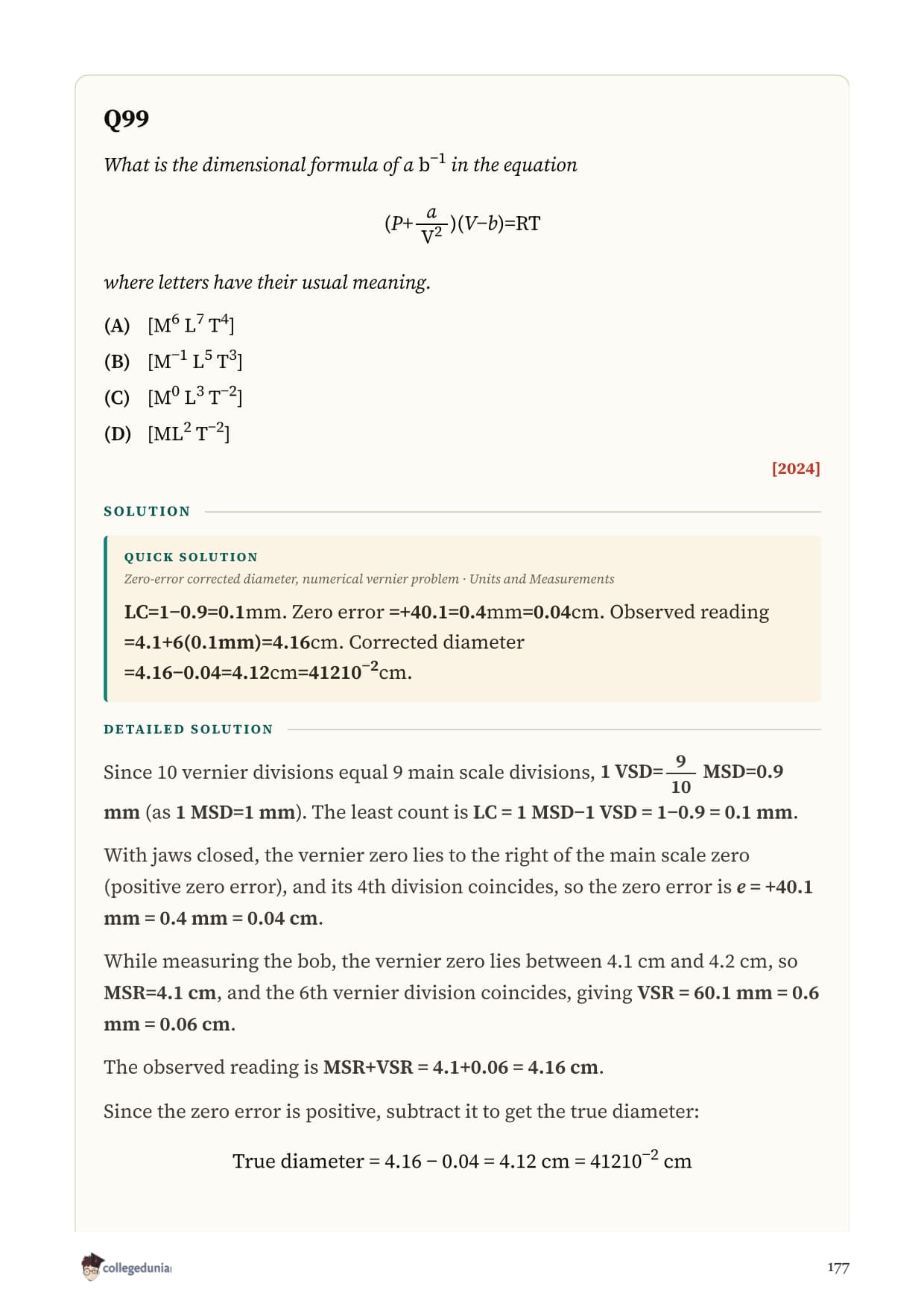
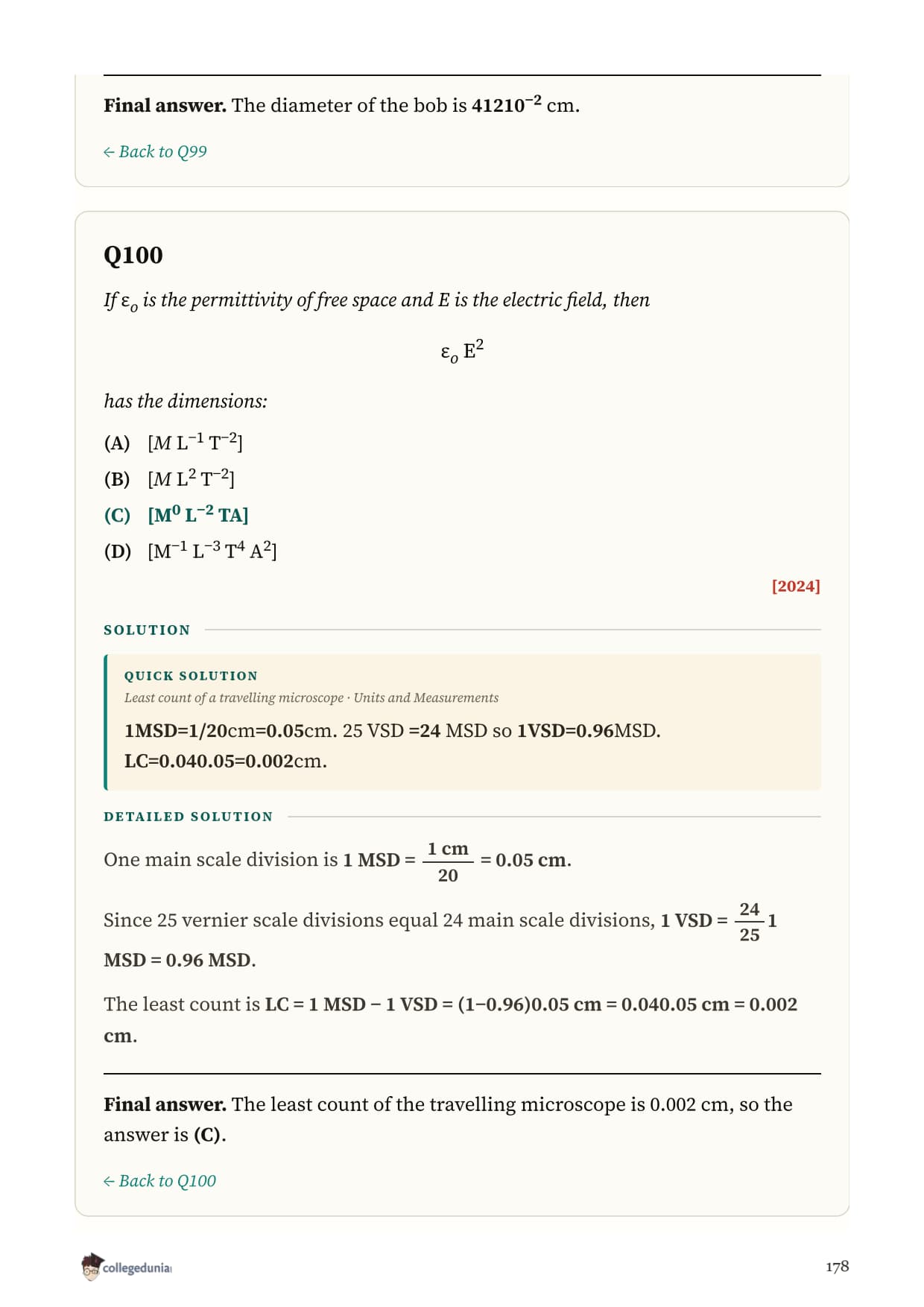
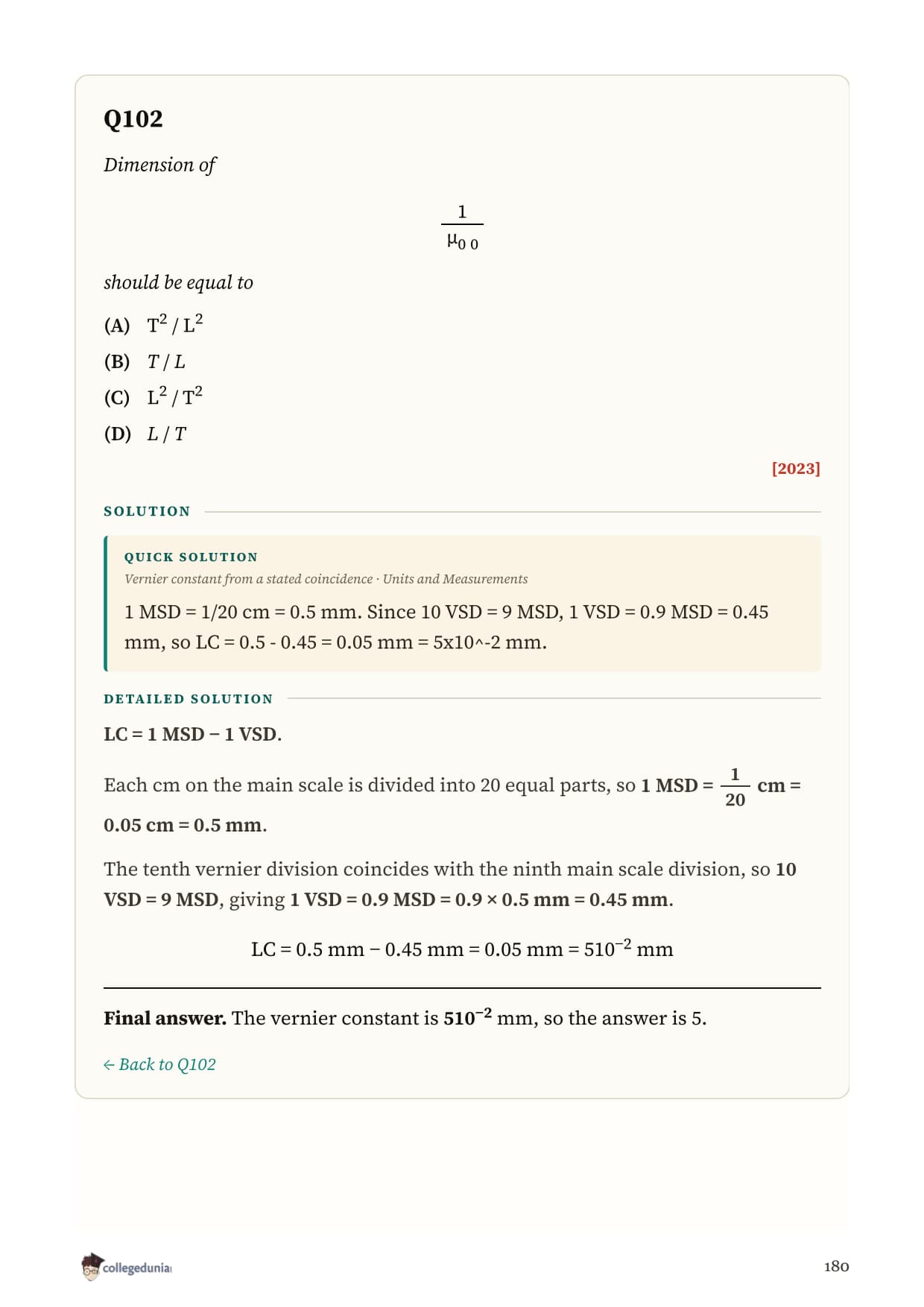
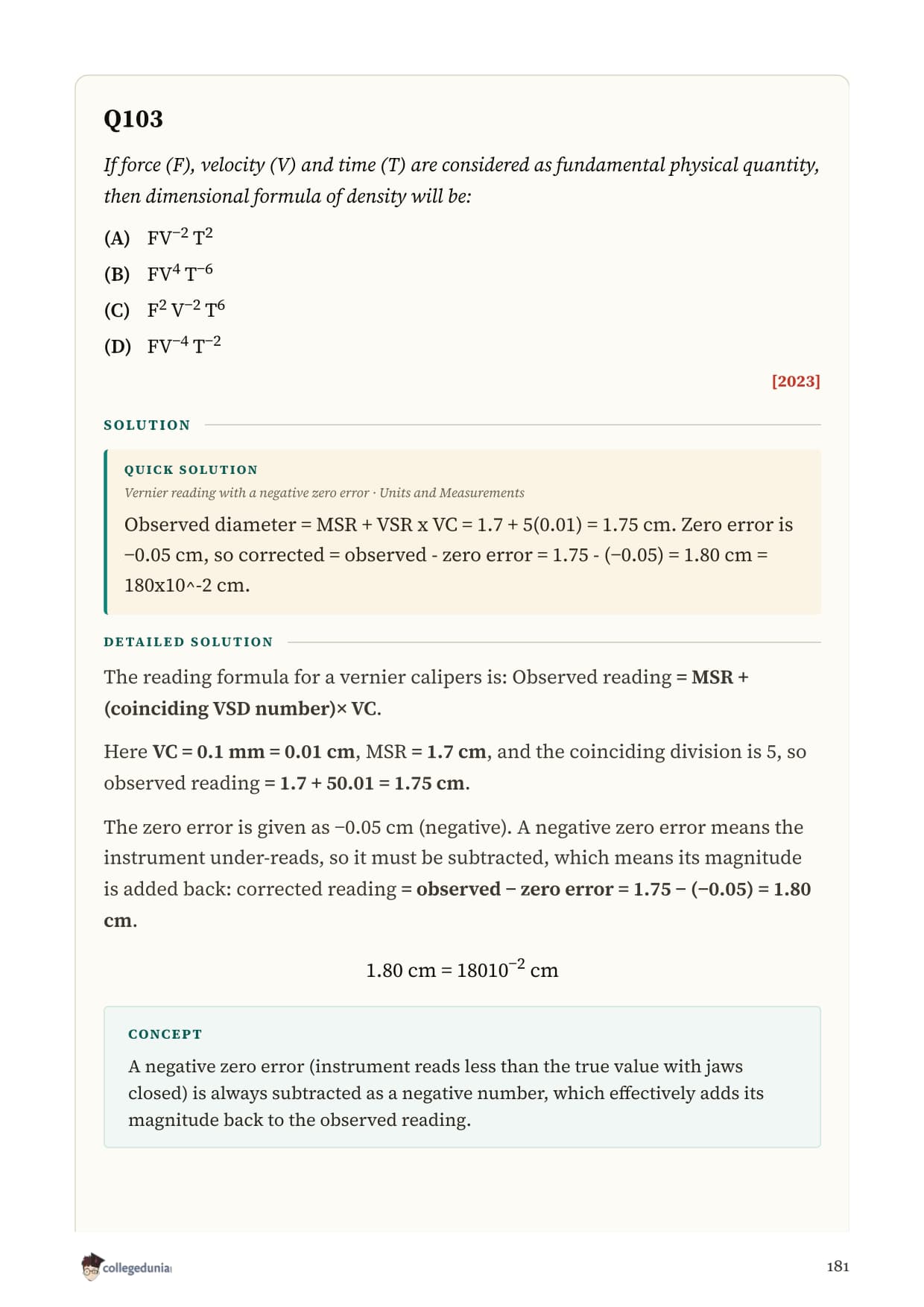
- Vernier callipers, least count and zero error in both directions.
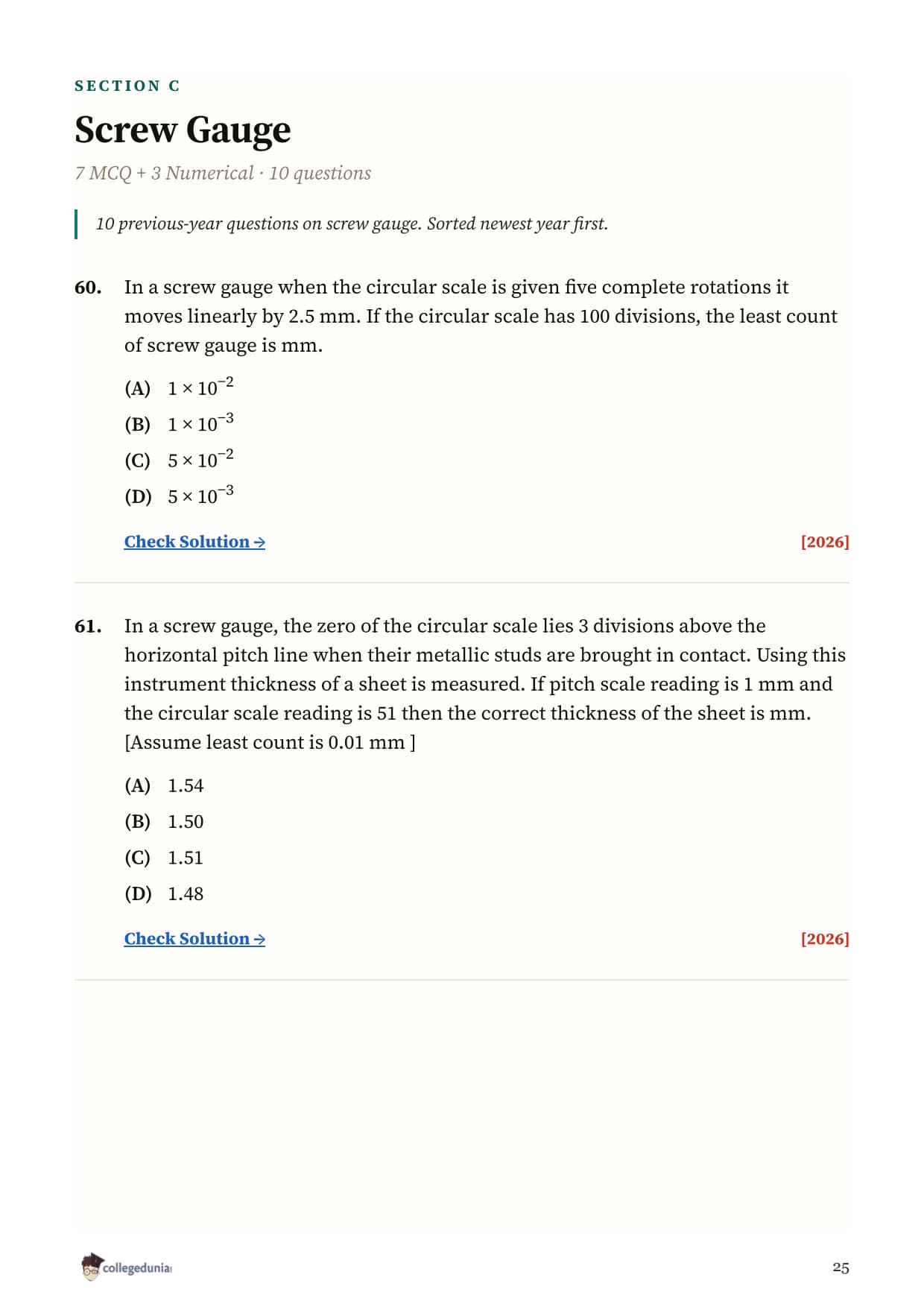
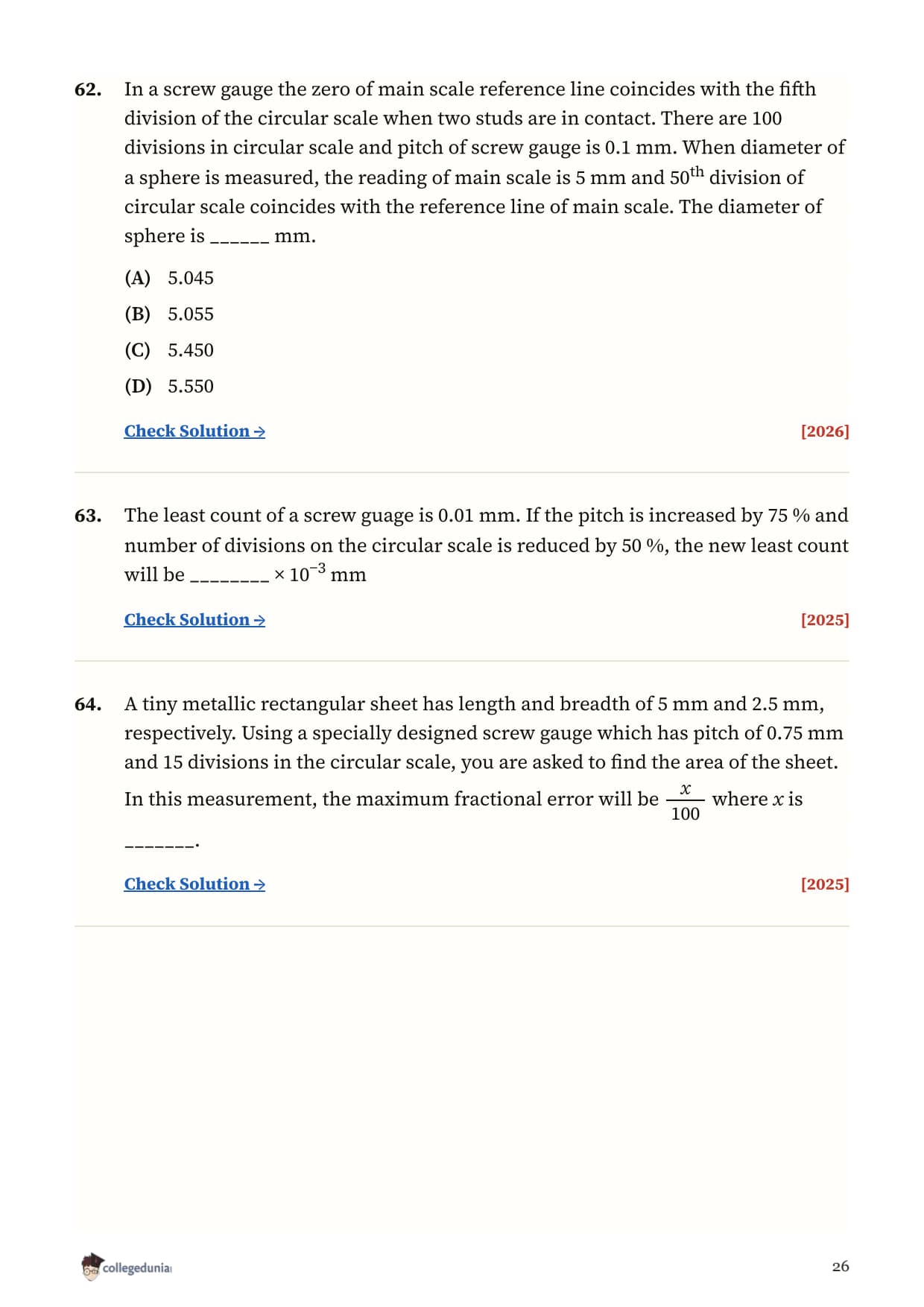
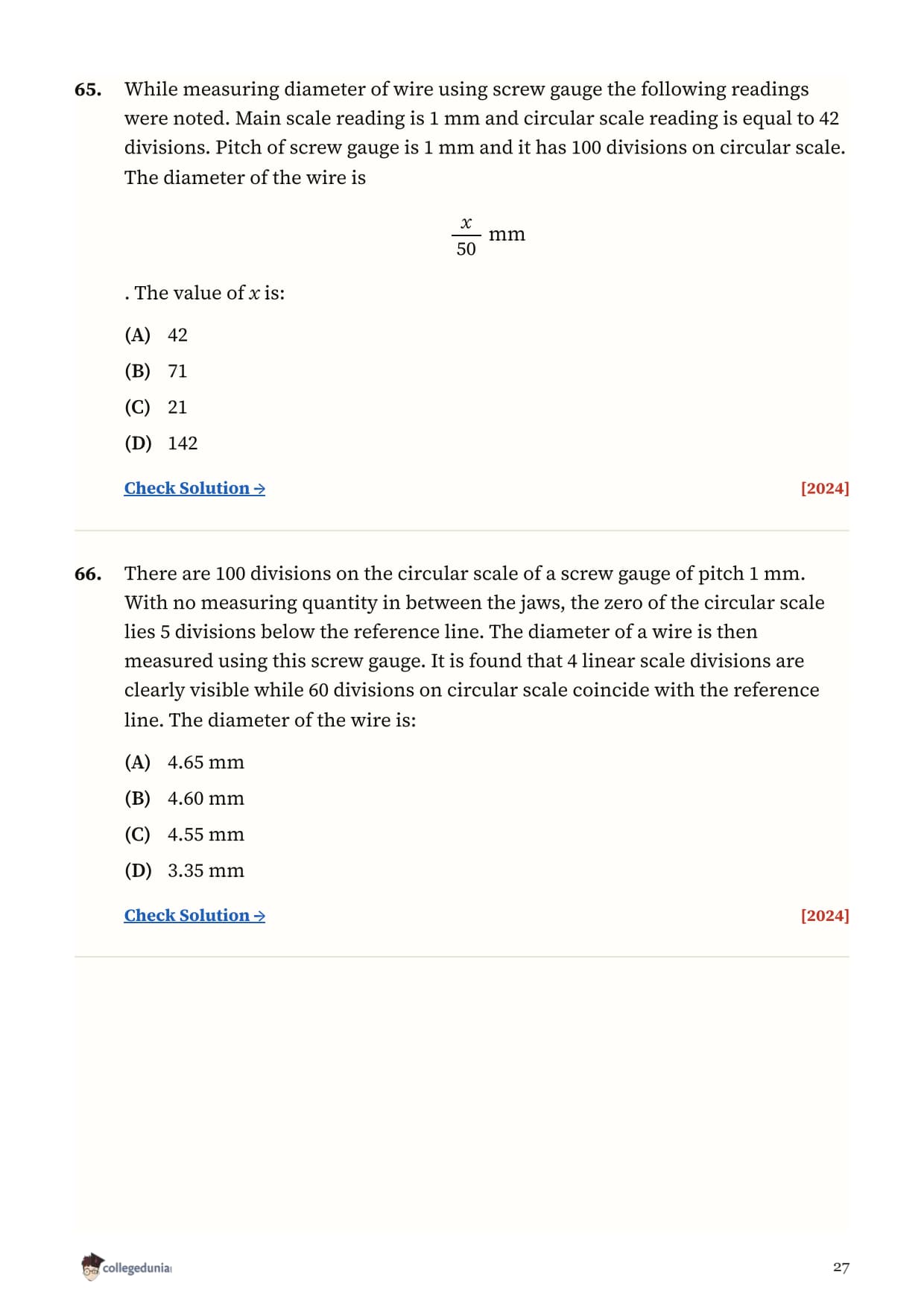
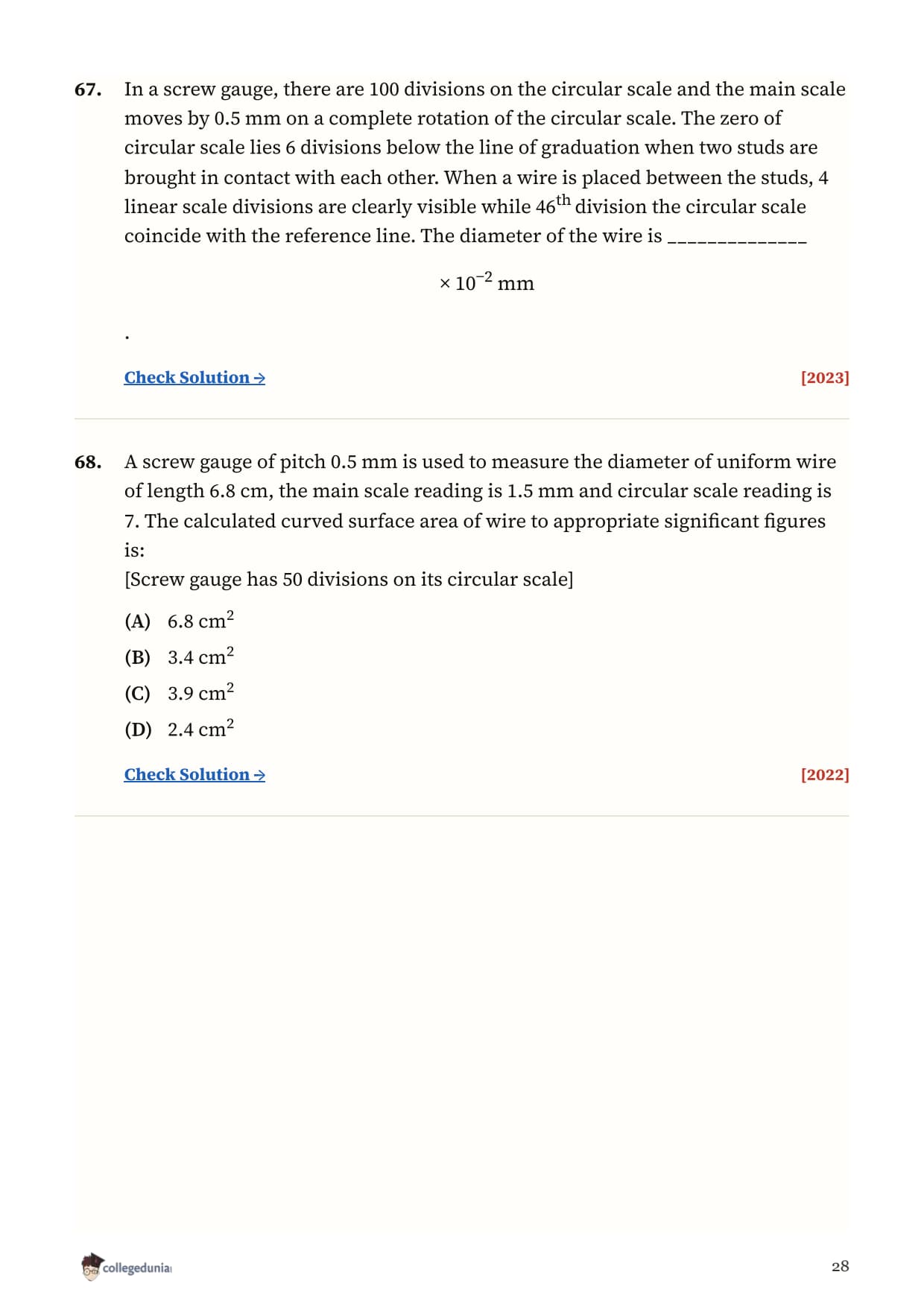
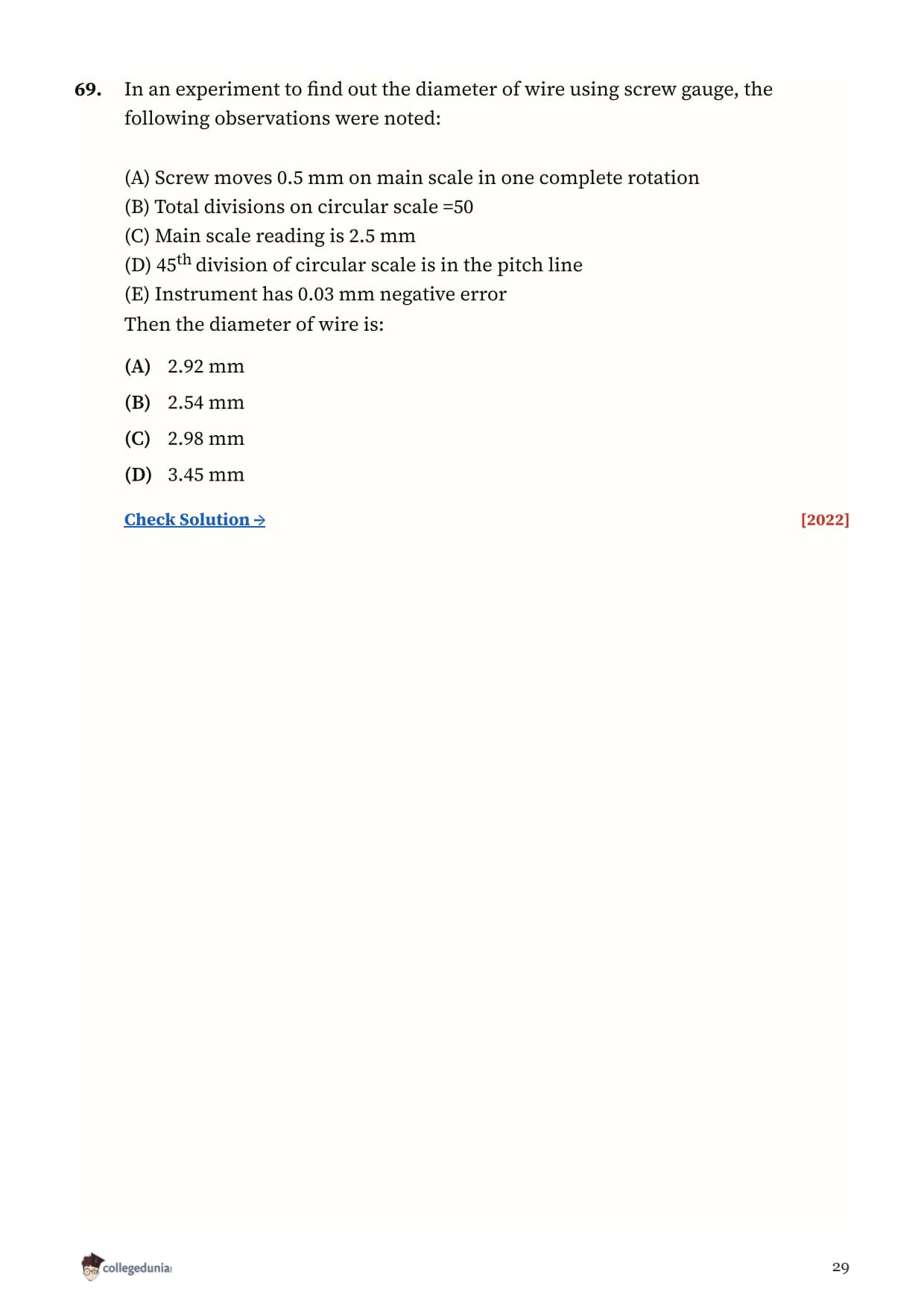
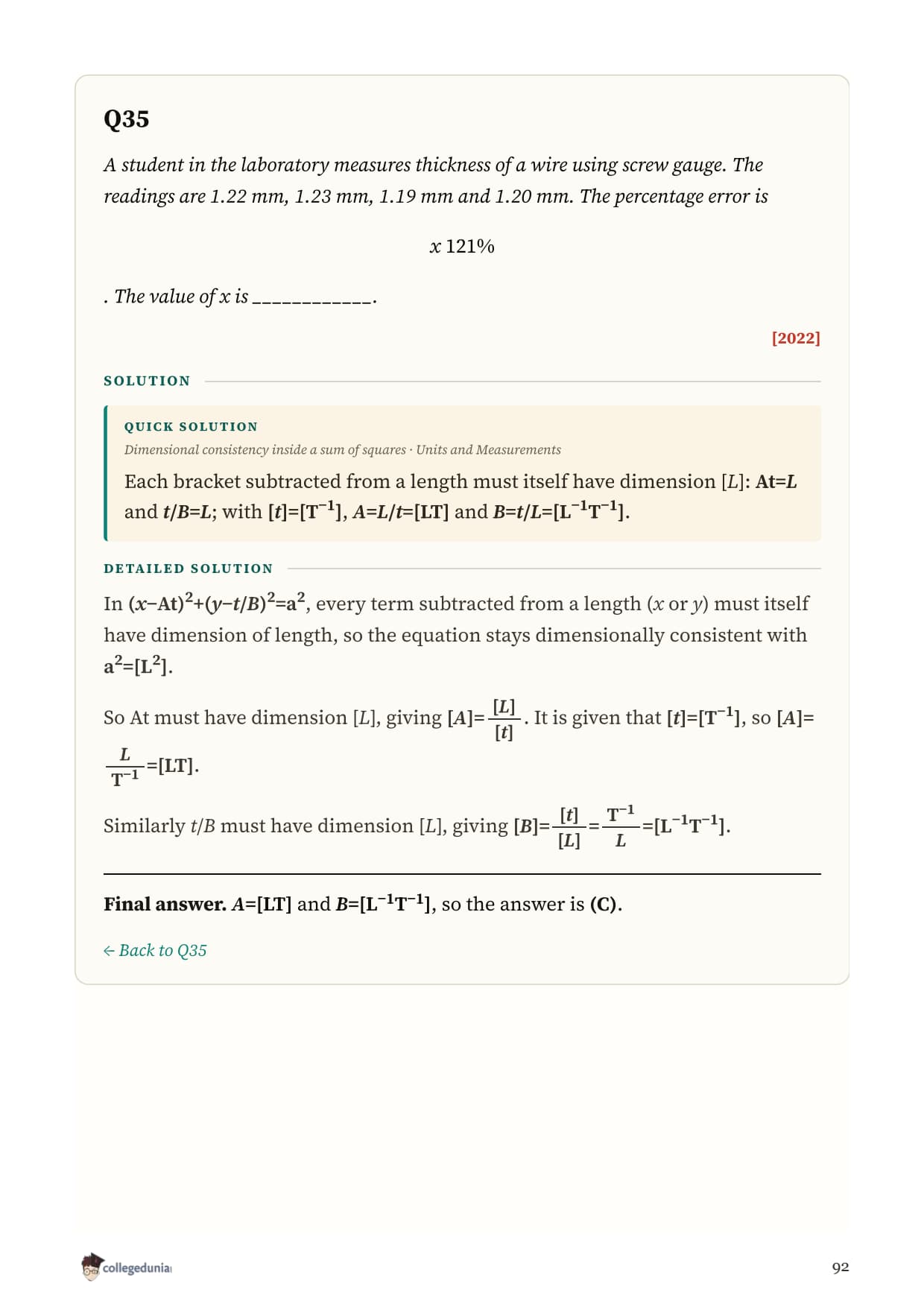
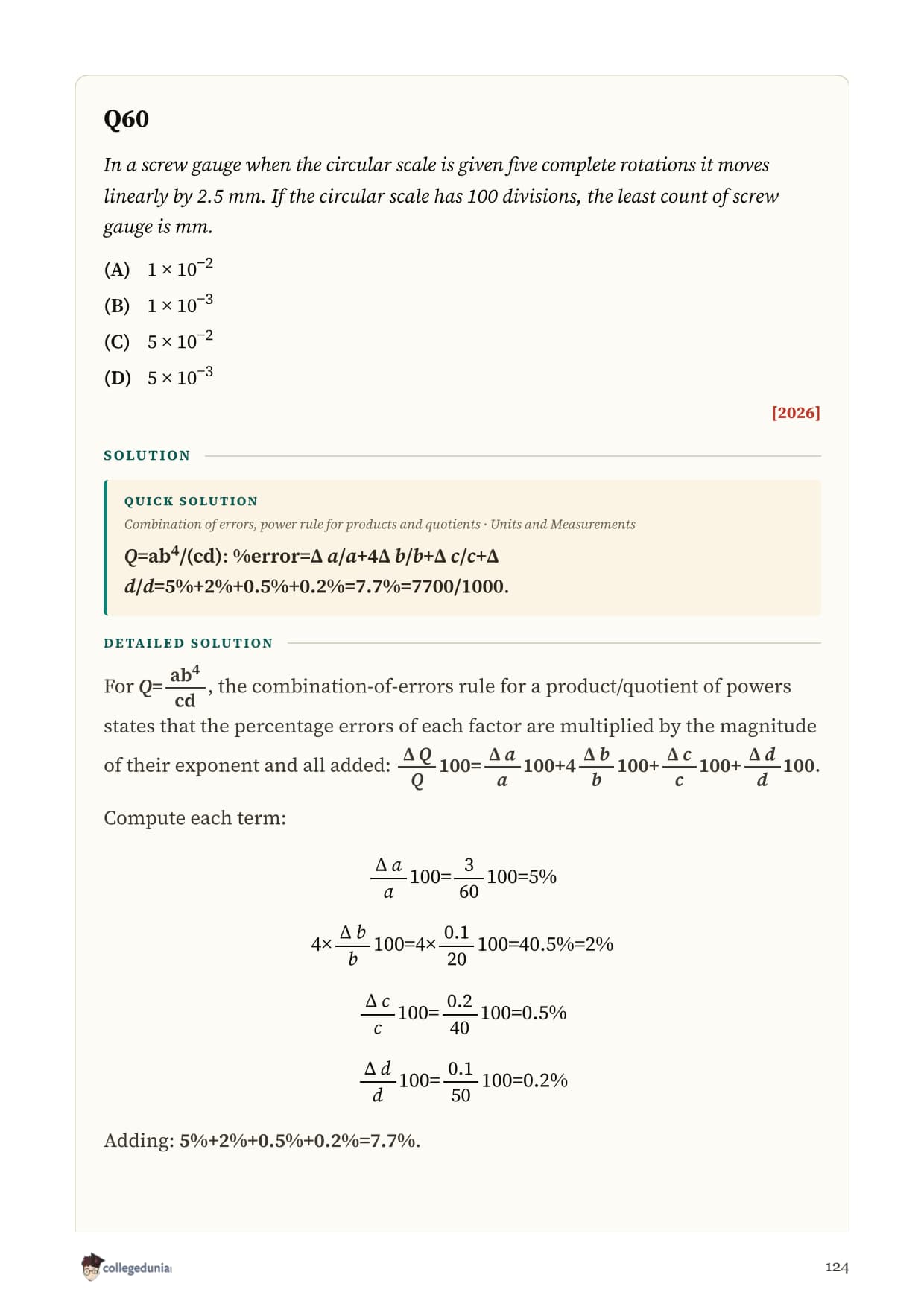
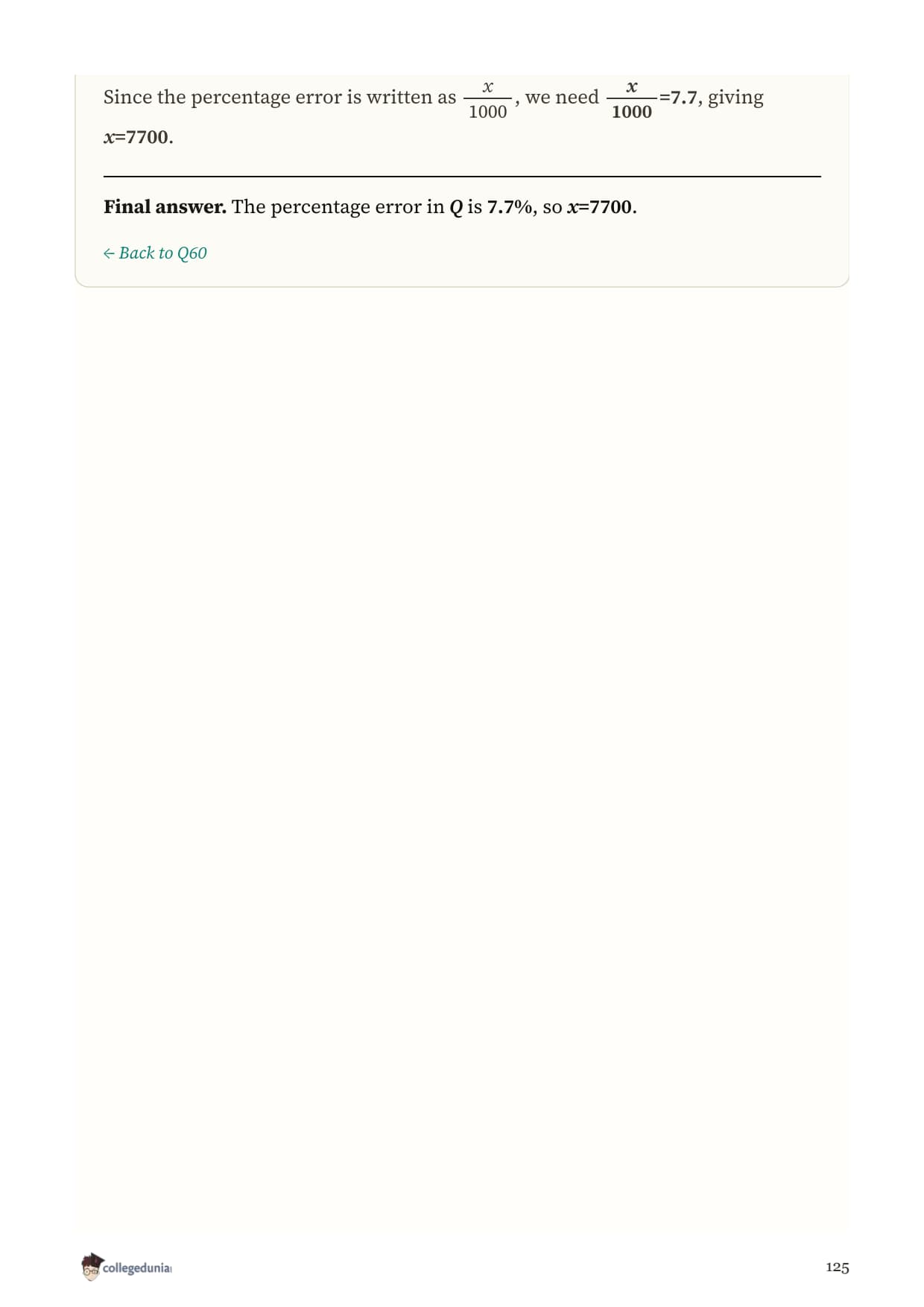
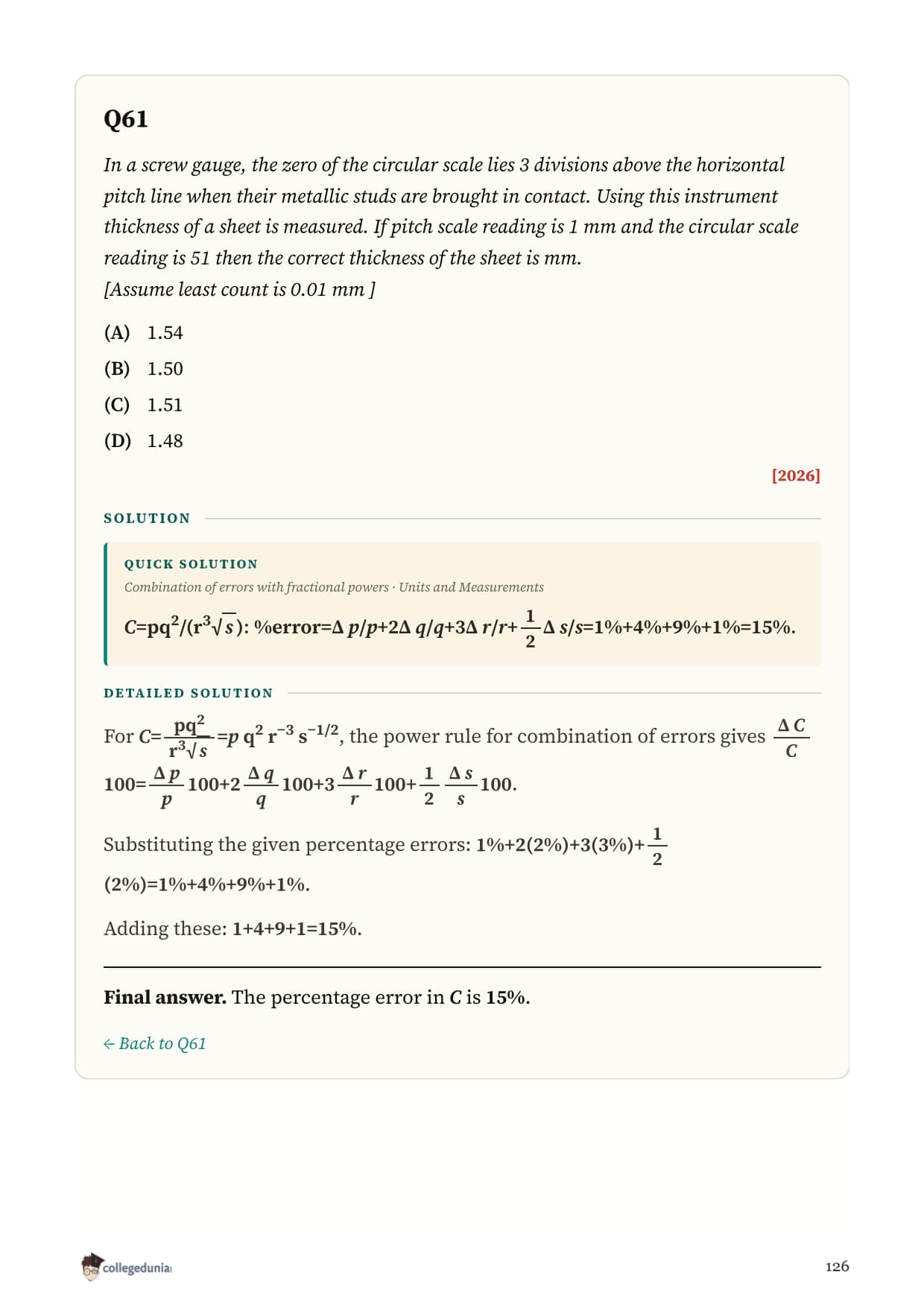
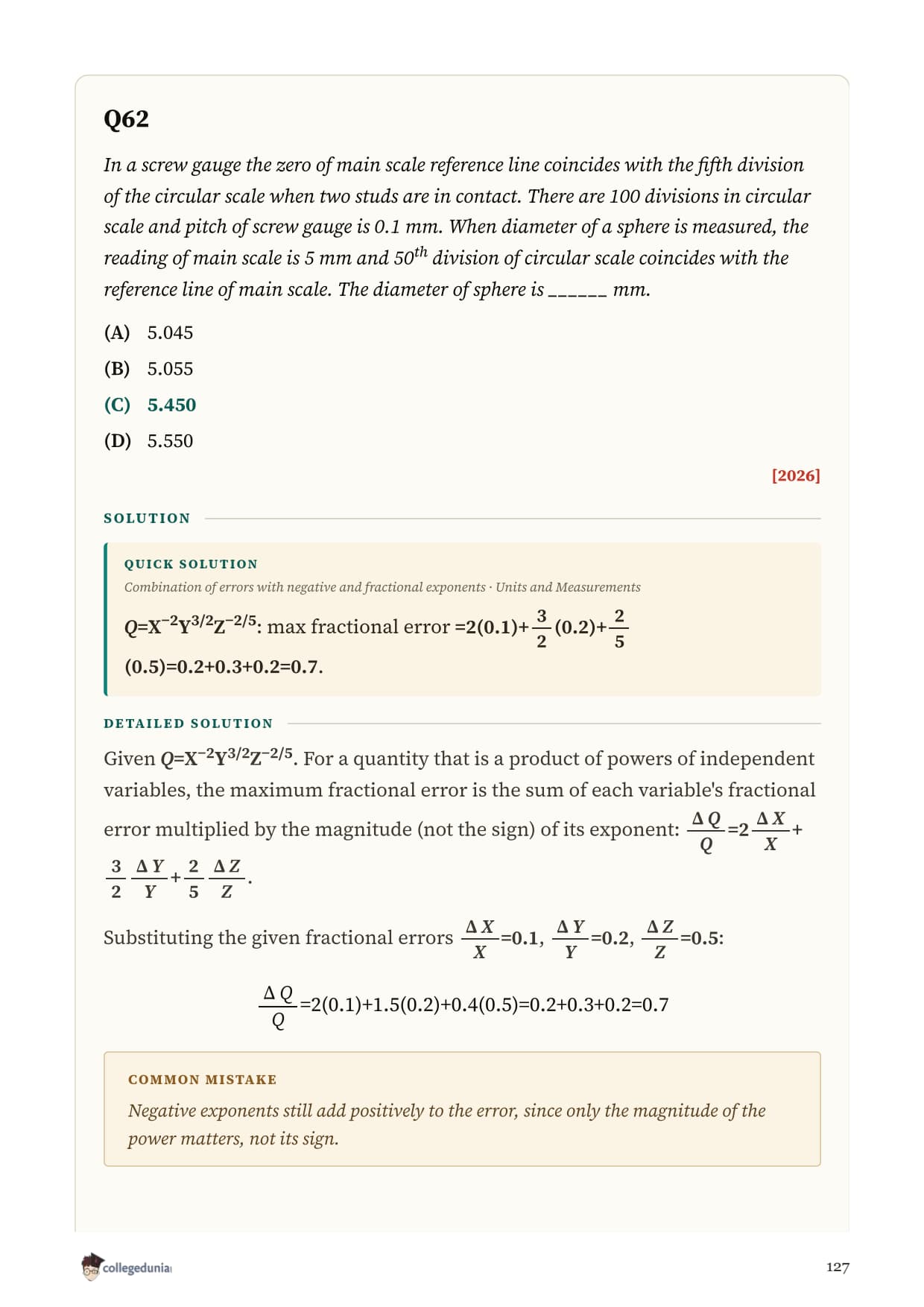
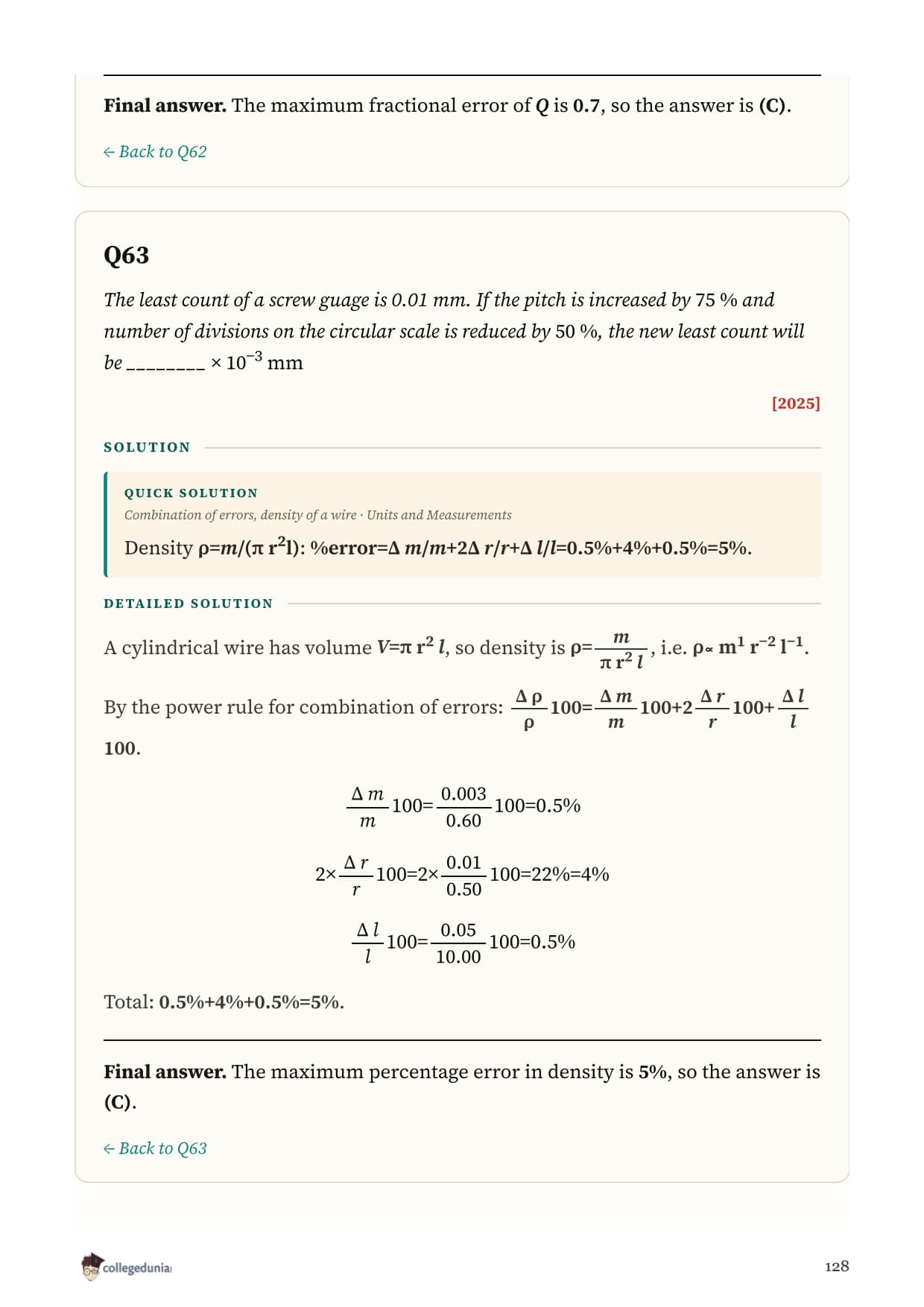
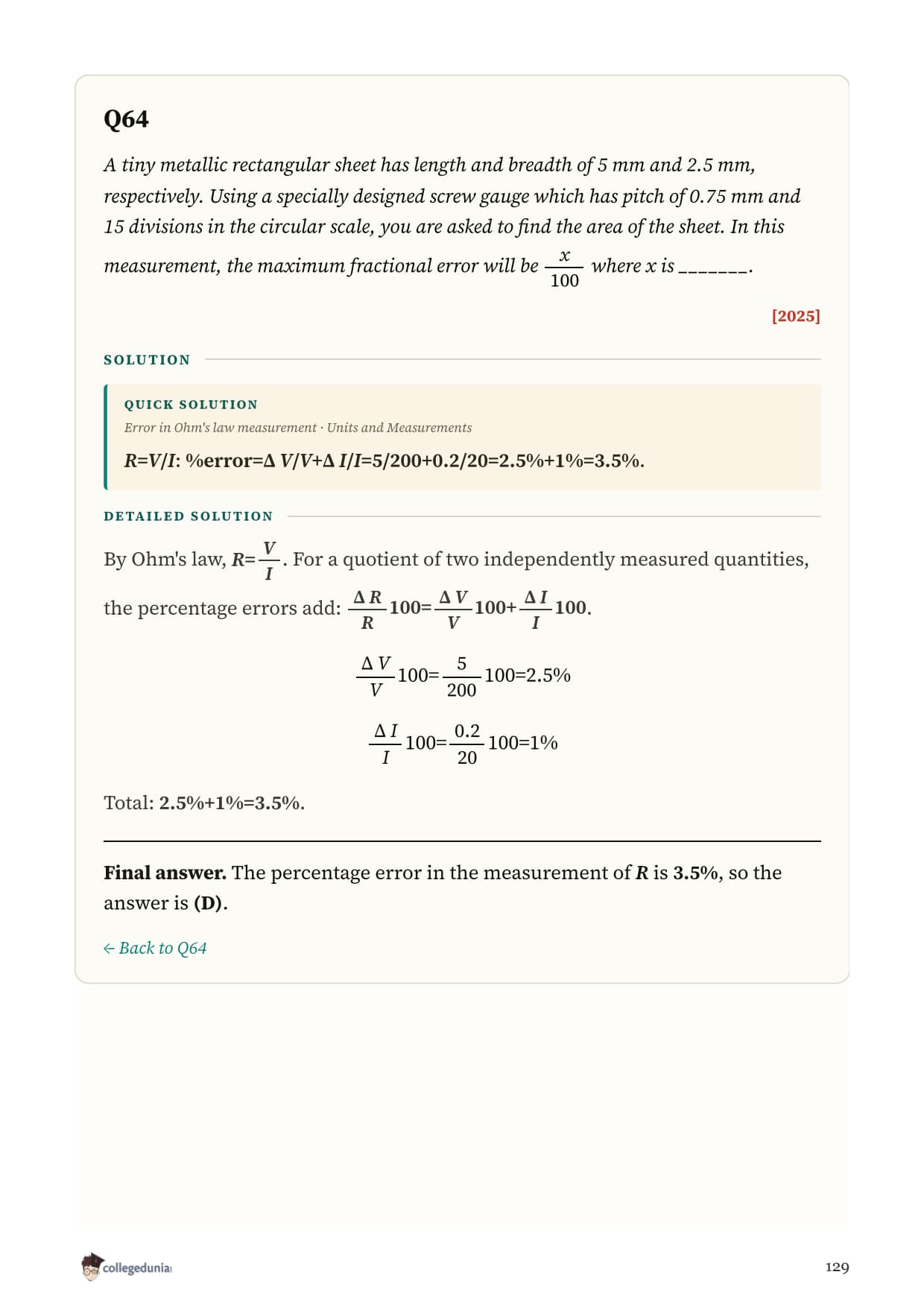
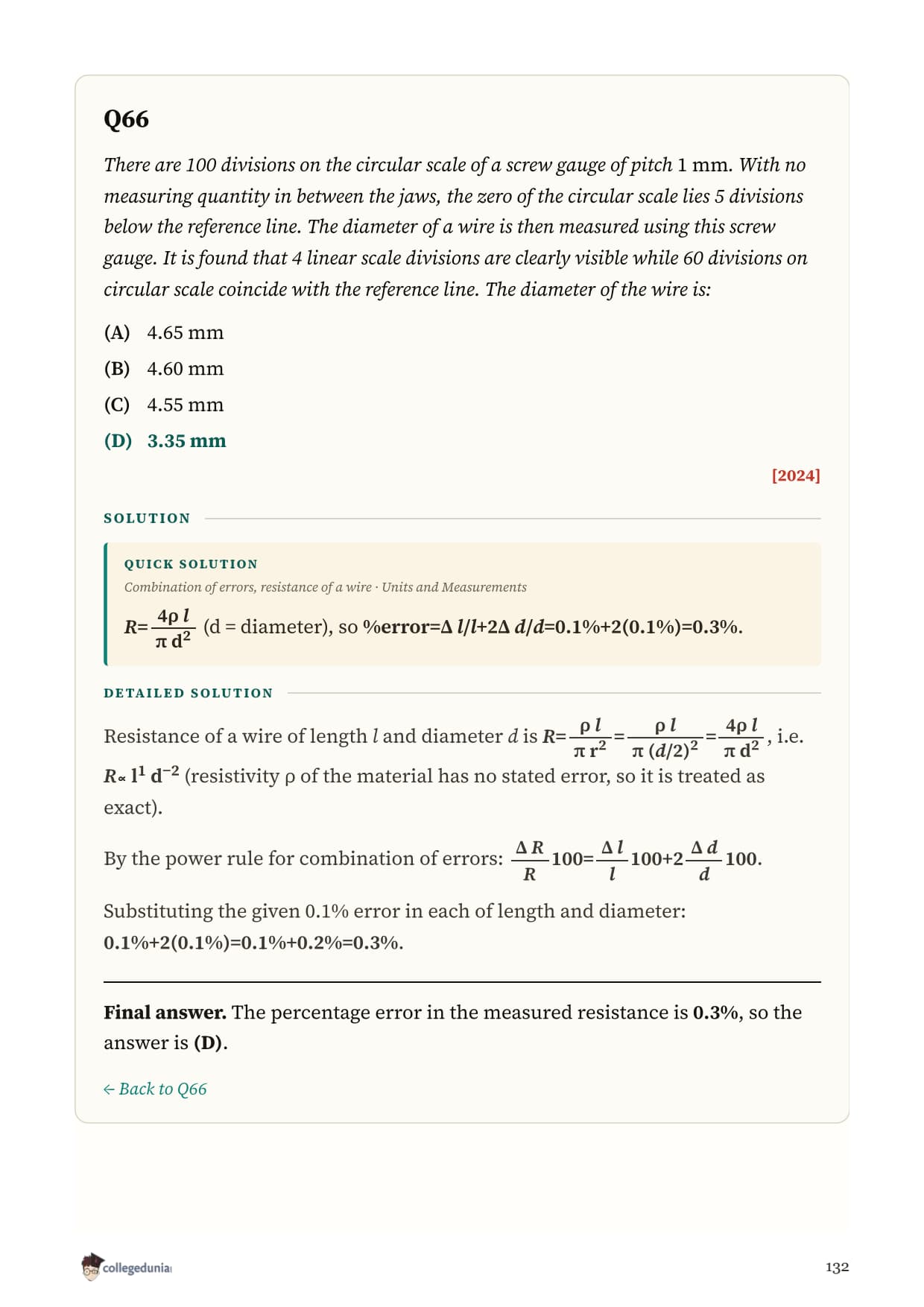
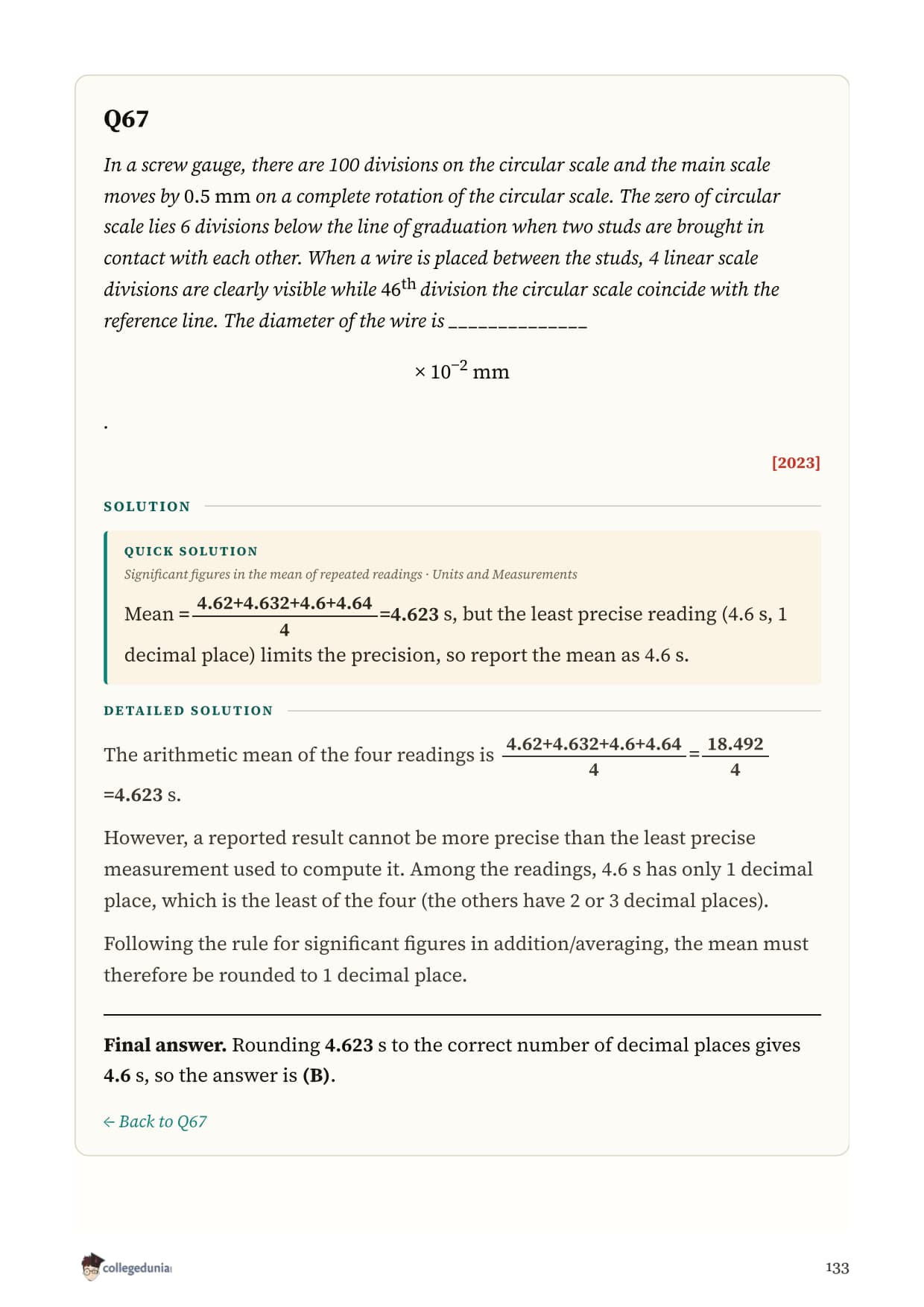
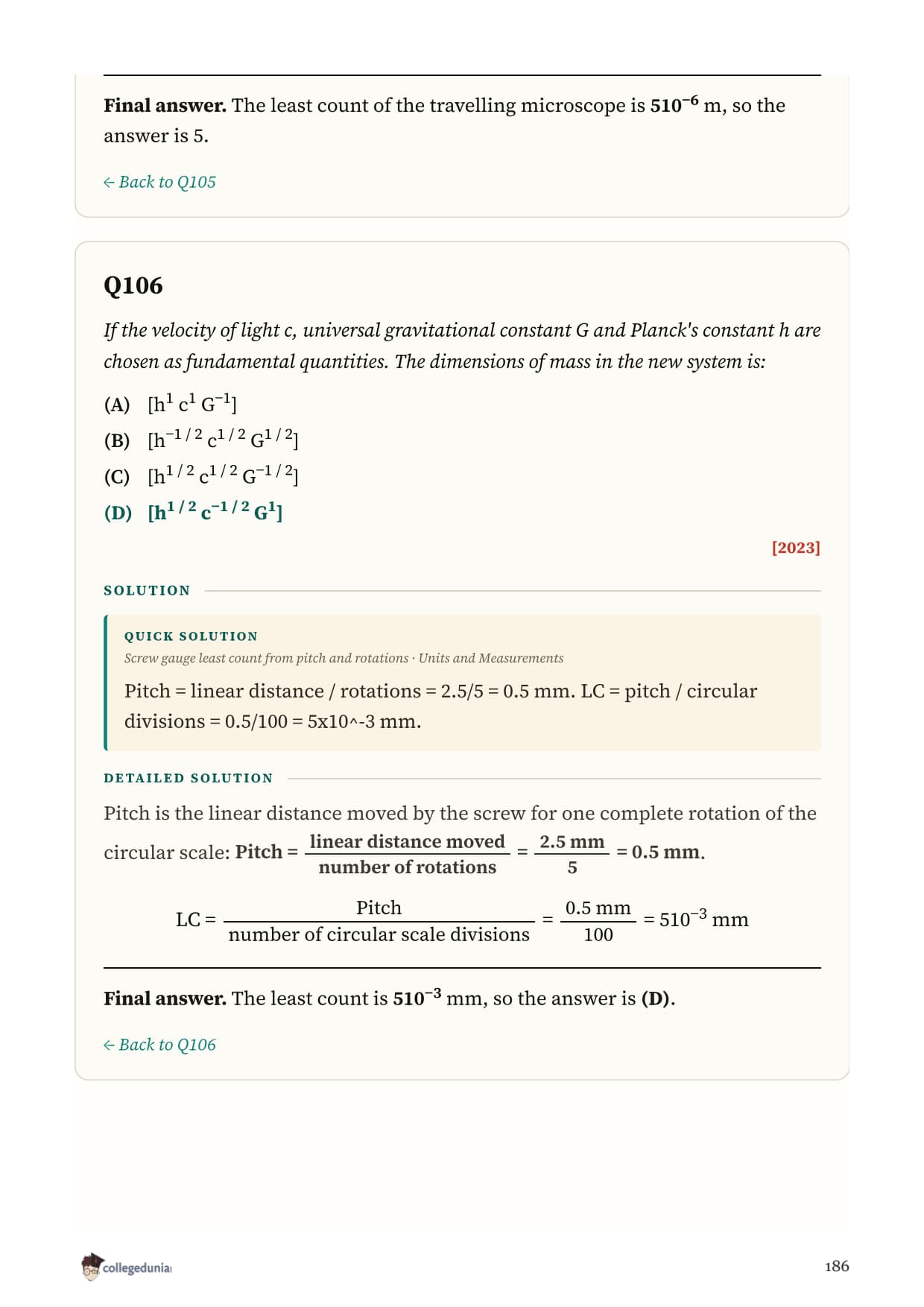
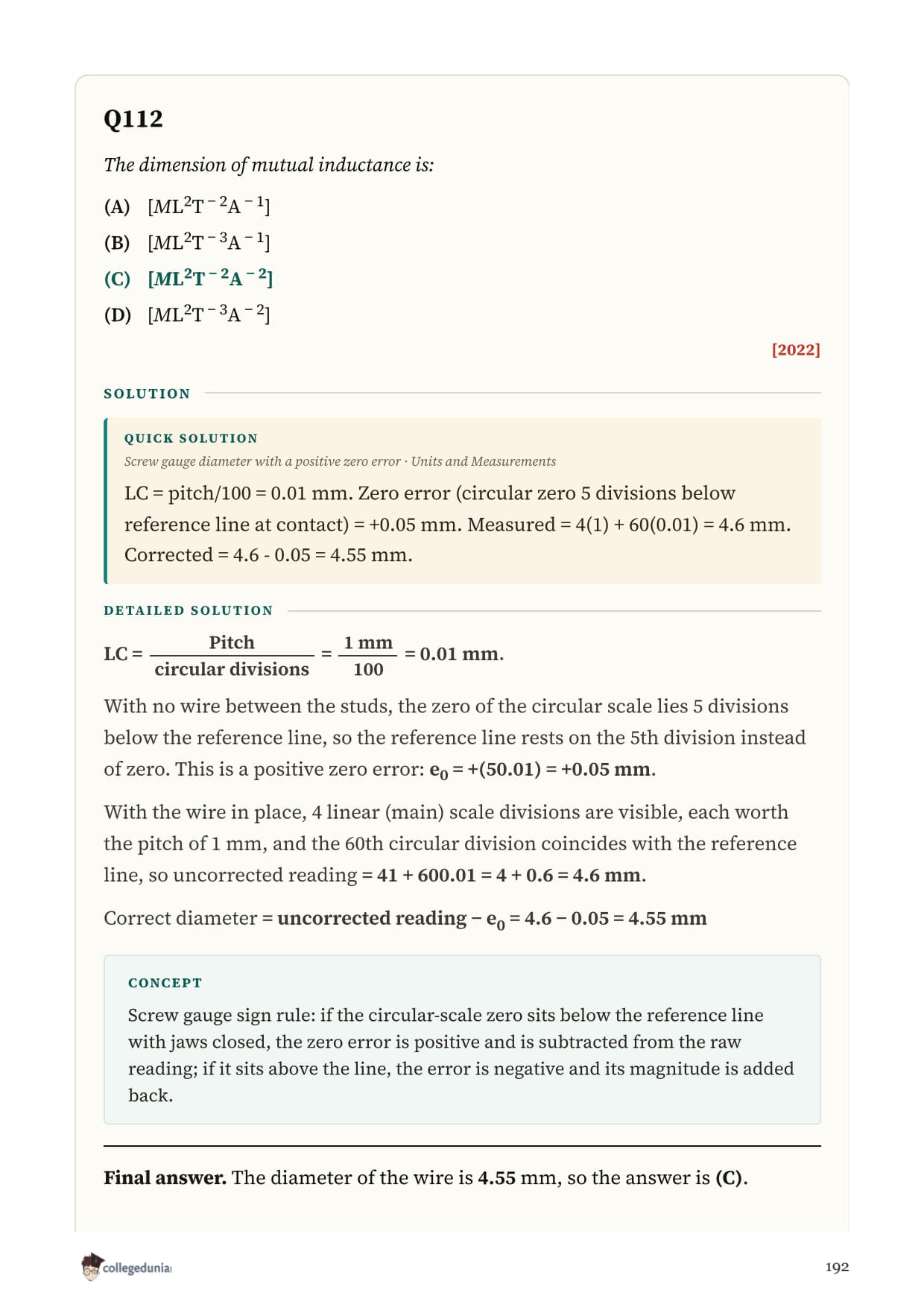
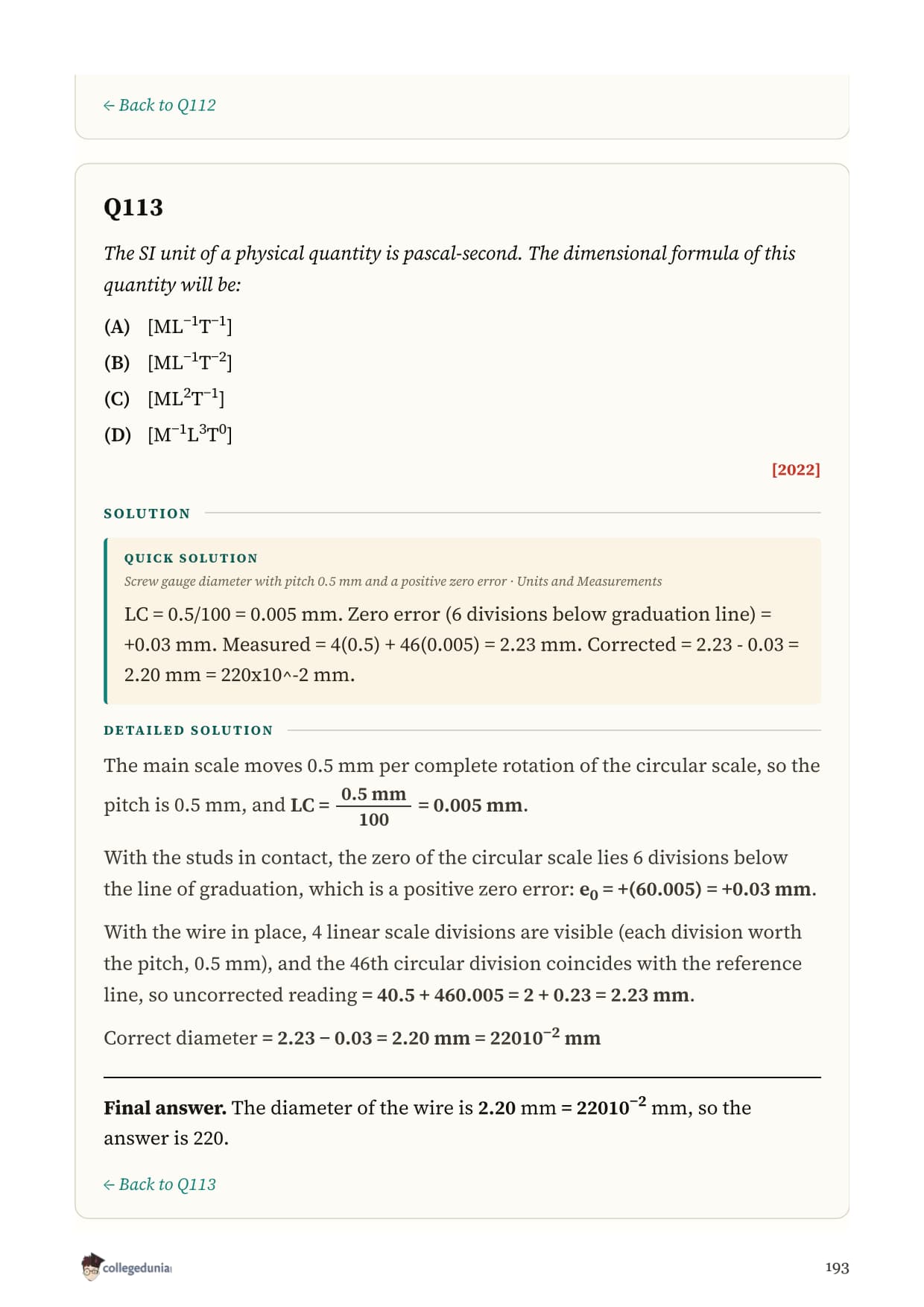
- Screw gauge, pitch, circular scale and zero correction.
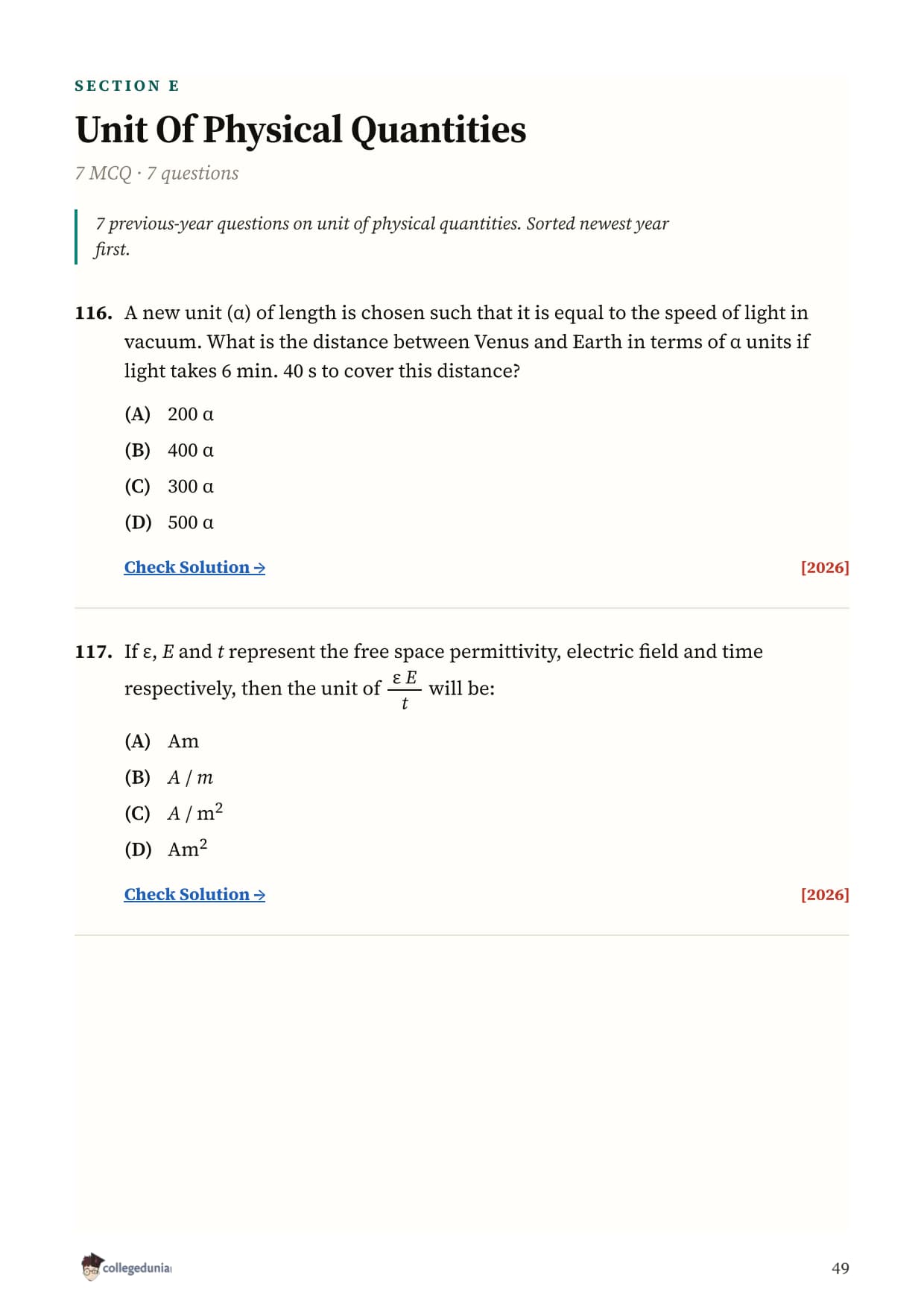
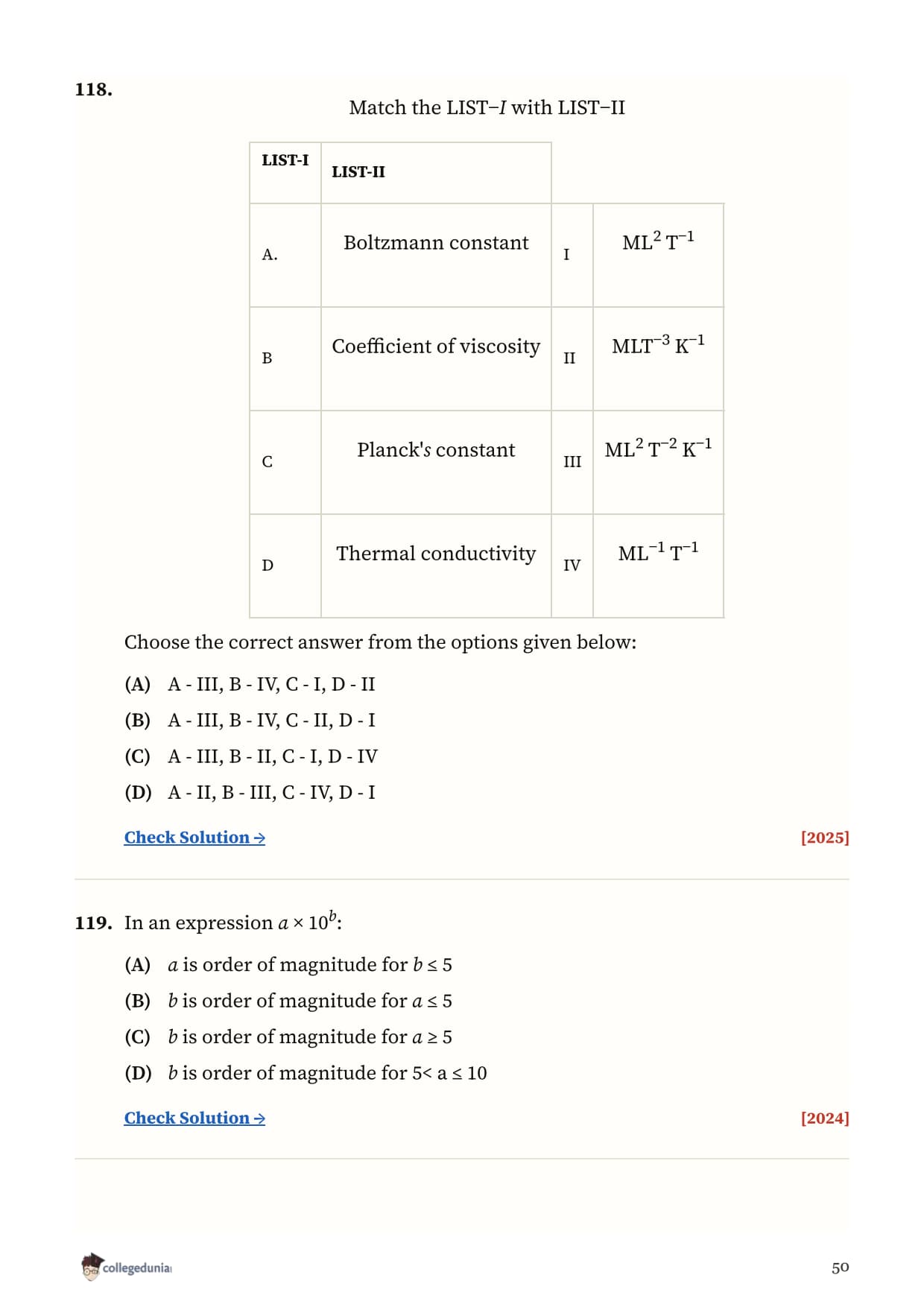
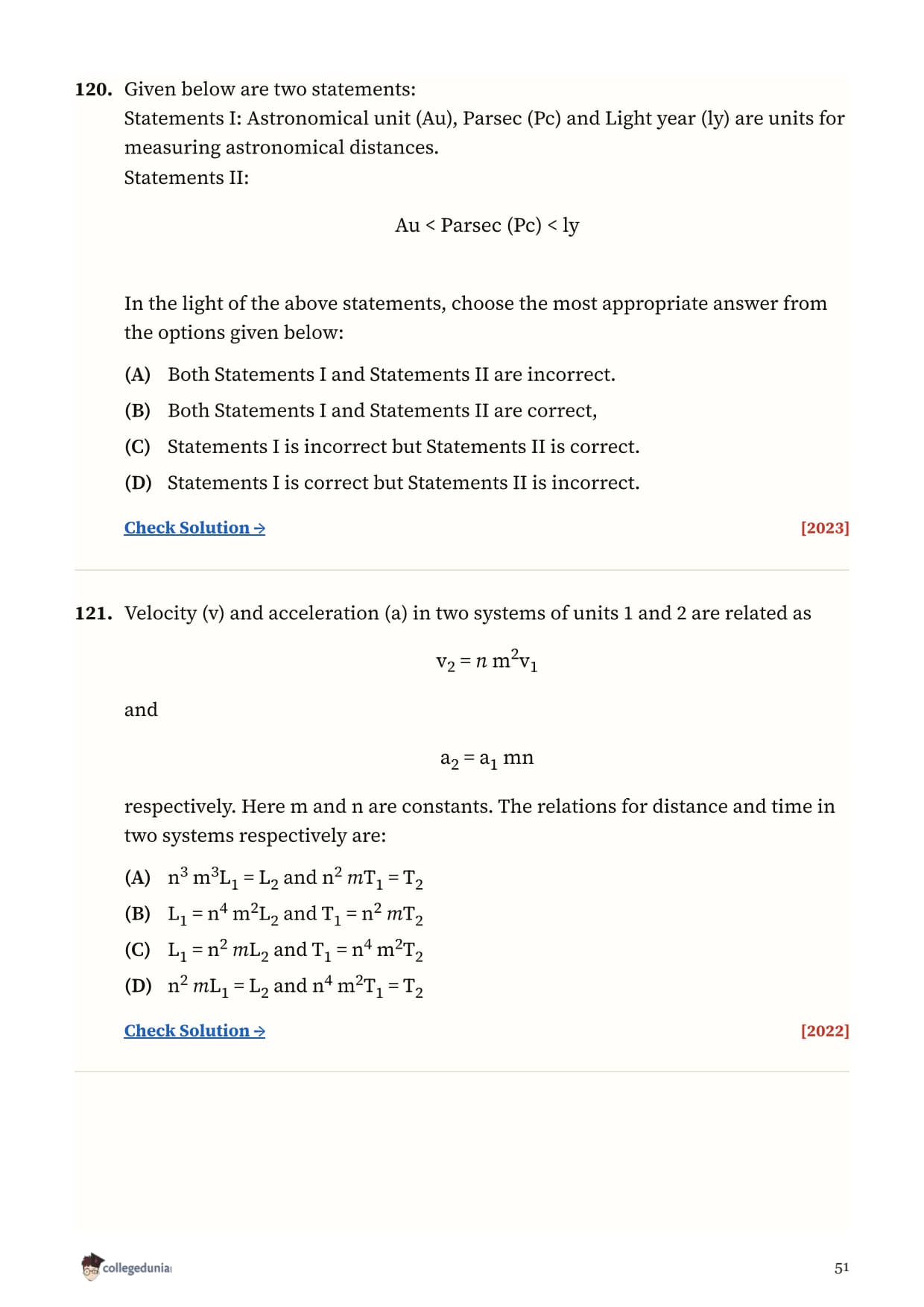
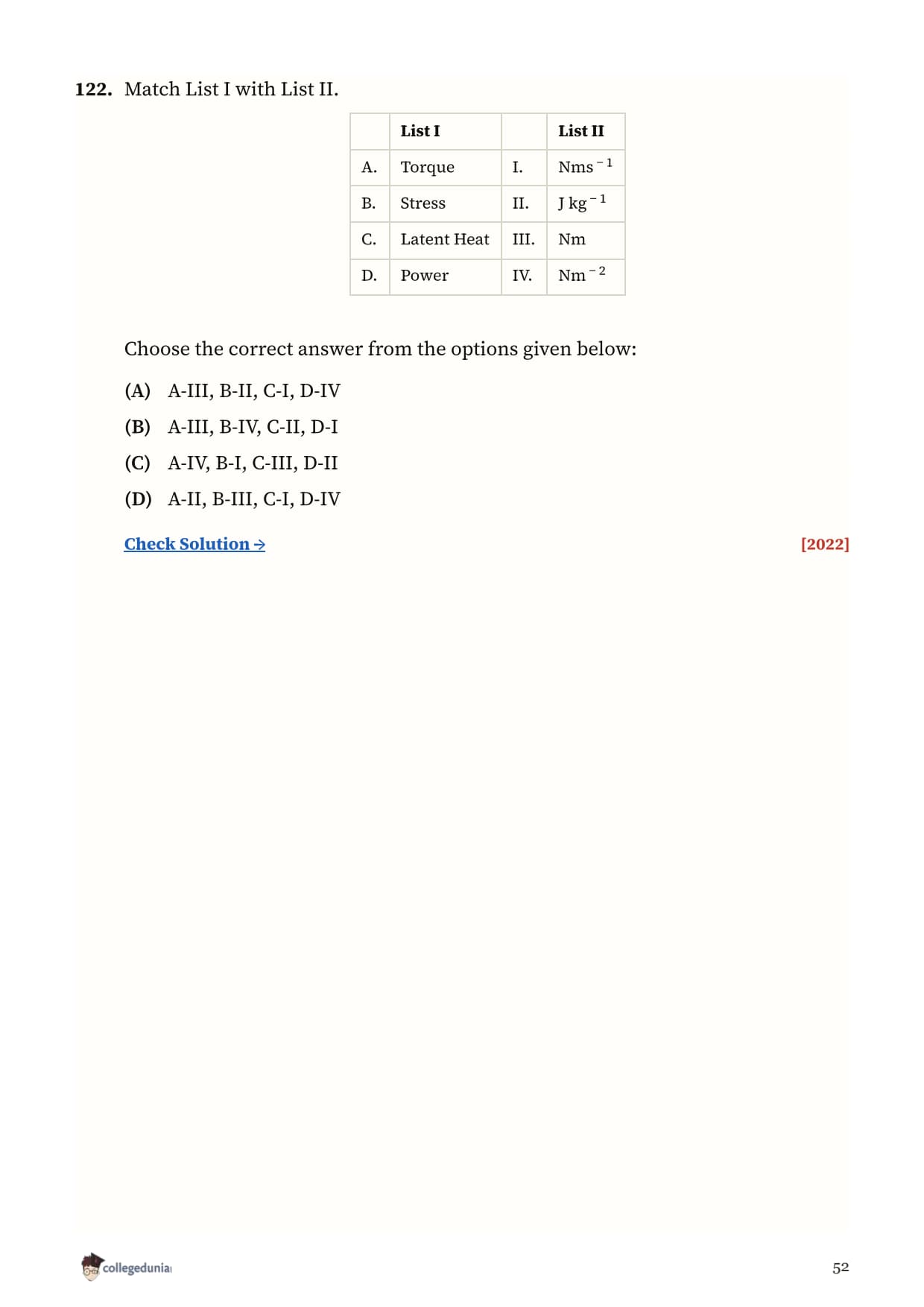
- Units of physical quantities, SI definitions and unit conversion between systems.
Why This Unit Repays the Time
NTA has set at least one question from this unit in nearly every recent shift. The questions are short and formula driven, which makes them among the fastest marks in the paper.
The year spread in this file is deliberate: 30 questions from 2026, 33 from 2024 and 28 from 2022, so the recent pattern is well represented without losing the older classics that keep reappearing.
The Two Mistakes That Cost the Most Marks
Two errors show up again and again across these 122 solutions.
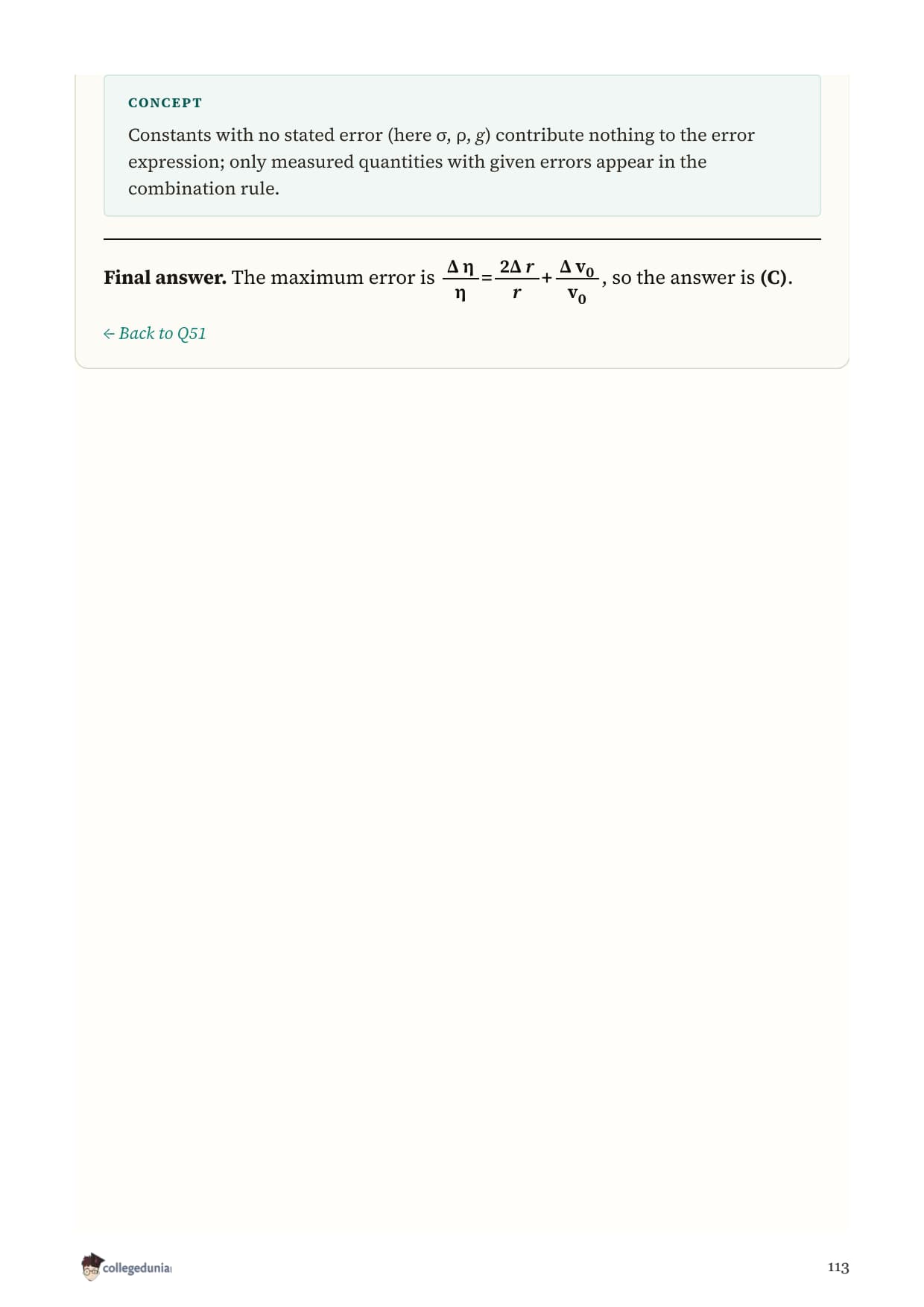
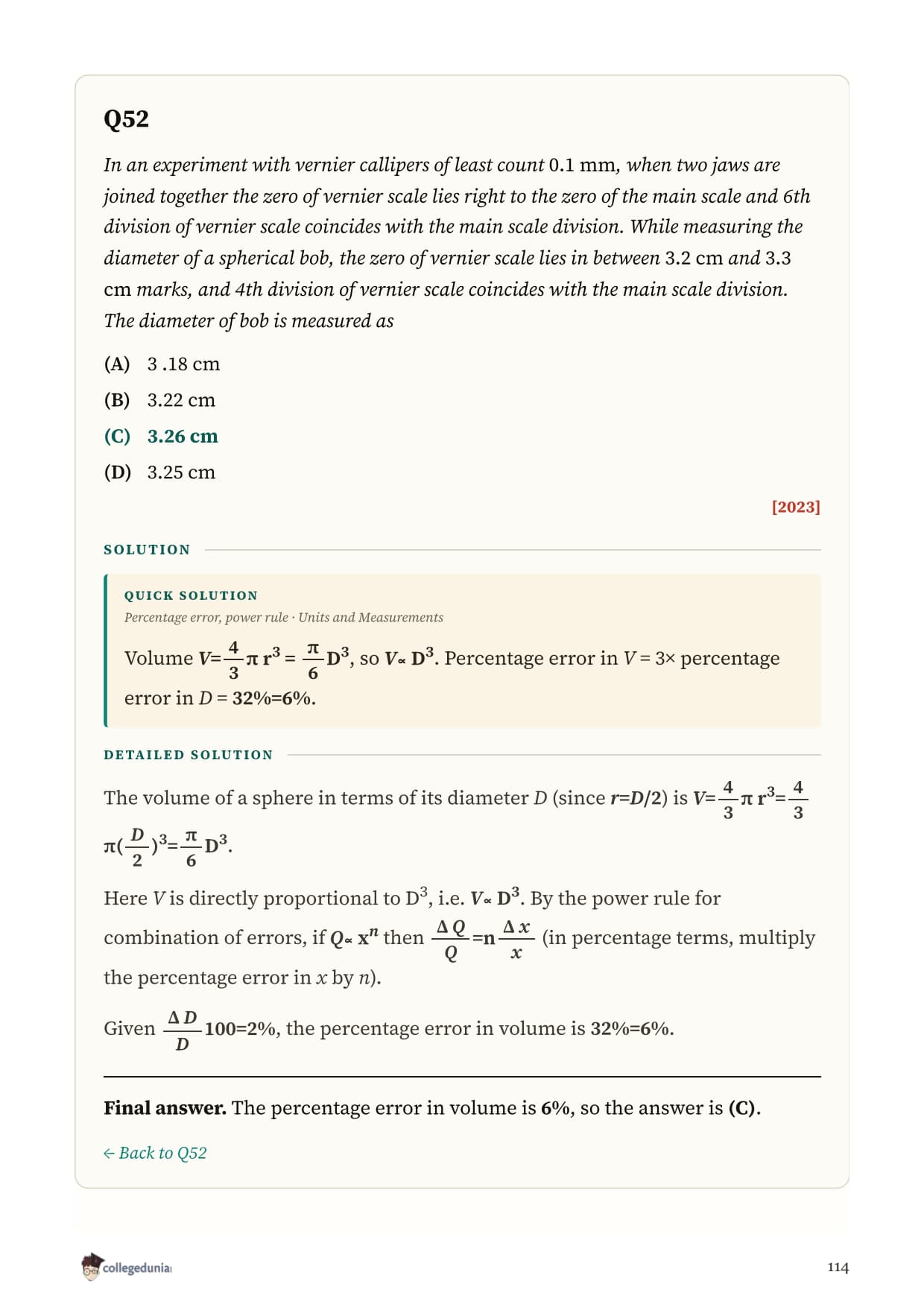
- Forgetting the power rule. When a quantity is raised to an exponent, its relative error is multiplied by that exponent. A squared term contributes double its percentage error, and adding the errors unscaled is the single most common slip.
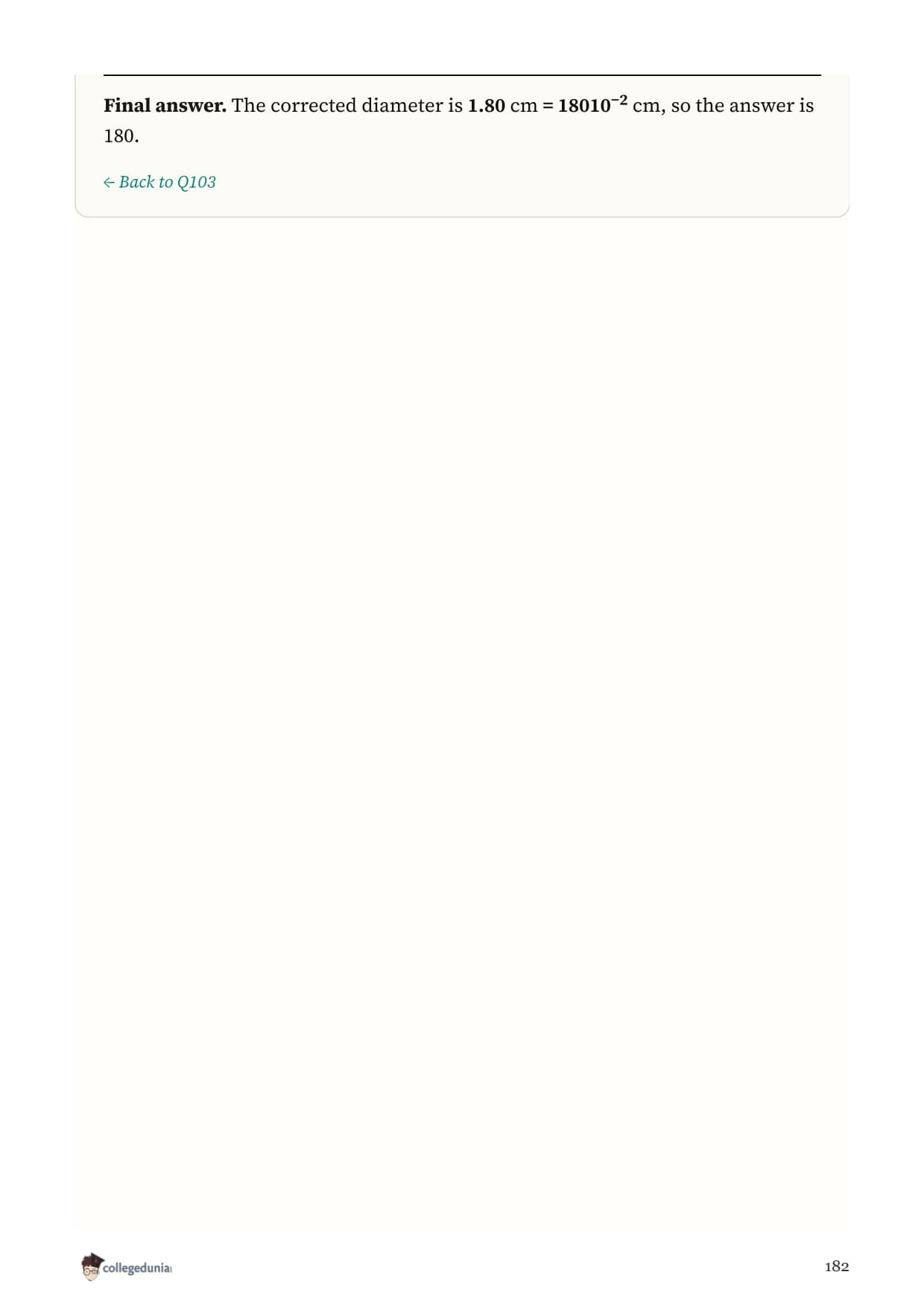
- Mishandling zero error. A negative zero error is added back to the reading, not subtracted. Several vernier and screw gauge questions turn entirely on that sign.
How to Work Through the Bank
Attempt a topic section cold, without looking at the solutions. Mark what you got wrong, then read only the Quick Solution first and see whether that is enough to spot your error. Open the full derivation only if it is not.
Students who read solutions before attempting the question tend to feel confident and still lose the marks in the exam, because recognition is not the same as recall.
Revise the Whole Unit First
Source: JEE Wallah
JEE Main Units and Dimensions PYQ FAQs
Ques. What is the weightage of Units and Dimensions in JEE Main?
Ans. It is 2 to 3 percent of the full paper, which is 1 or 2 questions and about 4 marks. Across the 2022 to 2026 shifts collected in this bank the chapter averages close to one question per Physics paper, and it has appeared in effectively every shift.
Ques. Which topics repeat the most?
Ans. Dimensional analysis and error measurement. Of the 122 questions in this bank, 46 are on dimensional formulae and 36 on errors in measurement, so the two together are 67 percent of everything asked. Vernier callipers and the screw gauge supply most of the rest.
Ques. Is Units and Dimensions an easy chapter to score in?
Ans. Yes. It needs no long derivations, the formulae are short, and most questions are one or two steps. A student who has learnt the dimensional formulae and the error combination rules can usually finish these questions in under two minutes each.
Ques. How long does it take to prepare this chapter?
Ans. Four to six days is enough for a first pass, including practice. The chapter is small, but the dimensional formulae need repeated revision because they are reused in fluids, thermodynamics and electromagnetism later.
Ques. Are numerical questions asked from this chapter?
Ans. Yes, though fewer than in most chapters. Twelve of the 122 questions here are integer type, and all of them fall in error measurement, vernier callipers and the screw gauge. Dimensional analysis is set almost entirely as multiple choice.
Ques. Are the answers in this PDF verified?
Ans. Yes. Every one of the 122 solutions was derived independently and then checked against the official answer for that paper, and any disagreement was re-derived rather than adjusted to fit.



Comments