




JEE Main 2023 11 April Shift 2 Question Paper is here. NTA conducted JEE Main 2023 11 April Shift 2 from 3 PM to 6 PM. Candidates can download the official JEE Main 2023 Question Paper PDF with Solution and Answer Key for 11 April Shift 2 using the link below.
Related Links:
- Download JEE Main Previous Year Question Papers PDF with Solutions
- Download JEE Main 2025 Question Paper for all Shifts
Also Check: JEE Main 2024 Question Paper with Solution PDF Download
JEE Main 2023 11 April Shift 2 Question Paper with Solutions and Answer Key PDF
| JEE Main 2023 11th April Shift 2 Question Paper with Solution PDF |  Download Download |
Check Solution |

JEE Main 2023 11th April Shift 2 Question Paper with Solution
The angle of elevation of the top \(P\) of a tower from the feet of one person standing due South of the tower is \(45^\circ\) and from the feet of another person standing due West of the tower is \(30^\circ\). If the height of the tower is 5 meters, then the distance (in meters) between the two persons is equal to:
View Solution
Let \(a\), \(b\), \(c\), and \(d\) be positive real numbers such that \(a + b + c + d = 11\). If the maximum value of \(a^5 b^3 c^2 d\) is \(3750\beta\), then the value of \(\beta\) is:
View Solution
If \(f : \mathbb{R} \to \mathbb{R}\) is a continuous function satisfying
\[ \int_{0}^{\frac{\pi}{2}} f(\sin 2x) \sin x \, dx + \alpha \int_{0}^{\frac{\pi}{4}} f(\cos 2x) \cos x \, dx = 0, \]
then the value of \(\alpha\) is:
View Solution
Let \(f\) and \(g\) be two functions defined by:
\[ f(x) = \begin{cases} x + 1, & x < 0
|x - 1|, & x \geq 0 \end{cases}, \quad g(x) = \begin{cases} x + 1, & x < 0
1, & x \geq 0 \end{cases}. \]
Then \((g \circ f)(x)\) is:
View Solution
If the radius of the largest circle with centre \((2, 0)\) inscribed in the ellipse \(x^2 + 4y^2 = 36\) is \(r\), then \(12r^2\) is equal to:
View Solution
Let the mean of 6 observations \(1, 2, 4, 5, x,\) and \(y\) and their variance be 10. Then their mean deviation about the mean is equal to:
View Solution
Let \( A = \{1, 3, 4, 6, 9\} \) and \( B = \{2, 4, 5, 8, 10\} \). Let \( R \) be a relation defined on \( A \times B \) such that \( R = \{((a_1, b_1), (a_2, b_2)): a_1 \leq b_2 and b_1 \leq a_2\} \). Then the number of elements in the set \( R \) is:
View Solution
Let \( P \) be the plane passing through the points \( (5, 3, 0) \), \( (13, 3, -2) \), and \( (1, 6, 2) \). For \( \alpha \in \mathbb{N} \), if the distances of the points \( A(3, 4, \alpha) \) and \( B(2, \alpha, a) \) from the plane \( P \) are \( 2 \) and \( 3 \) respectively, then the positive value of \( a \) is:
View Solution
If the letters of the word MATHS are permuted and all possible words so formed are arranged as in a dictionary with serial number, then the serial number of the word THAMS is:
View Solution
If four distinct points with position vectors \(\vec{a}, \vec{b}, \vec{c}, and \; \vec{d}\) are coplanar, then \([\vec{a}\vec{b}\vec{c}]\) is equal to:
View Solution
The sum of the coefficients of three consecutive terms in the binomial expansion of \((1 + x)^{n+2}\), which are in the ratio \(1 : 3 : 5\), is equal to:
View Solution
Let \(y = y(x)\) be the solution of the differential equation \(\frac{dy}{dx} + \frac{5}{x(x^5 + 1)}y = \frac{(x^5 + 1)^2}{x^7}, \, x > 0.\) If \(y(1) = 2\), then \(y(2)\) is equal to:
View Solution
The converse of \(((\sim p) \land q) \Rightarrow r\) is:
View Solution
If the 1011th term from the end in the binomial expansion of \(\left(\frac{4x}{5} - \frac{5}{2x}\right)^{2022}\) is 1024 times the 1011th term from the beginning, the \(|x|\) is equal to:
View Solution
If the system of linear equations:
\[ 7x + 11y + \alpha z = 13, \quad 5x + 4y + 7z = \beta, \quad 175x + 194y + 57z = 361, \]
has infinitely many solutions, then \(\alpha + \beta + 2\) is equal to:
View Solution
Let the line passing through the point \(P(2, -1, 2)\) and \(Q(5, 3, 4)\) meet the plane \(x - y + z = 4\) at the point \(T\). Then the distance of the point \(R\) from the plane \(x + 2y + 3z + 2 = 0\), measured parallel to the line \(\frac{x - 7}{2} = \frac{y + 3}{2} = \frac{z - 2}{1}\), is equal to:
View Solution
Let the function \(f : [0, 2] \to \mathbb{R}\) be defined as:
\[ f(x) = \begin{cases} e^{\min\{x^2, x - \lfloor x \rfloor\}}, & x \in [0, 1),
e^{x - \log_e x}, & x \in [1, 2), \end{cases} \]
where \(\lfloor t \rfloor\) denotes the greatest integer less than or equal to \(t\).
Then the value of the integral \(\int_0^2 x f(x) \, dx\) is:
View Solution
For \(a \in \mathbb{C}\), let:
\[ A = \{ z \in \mathbb{C} : Re(a + \overline{z}) > Im(\overline{a} + z) \}, \textbf{and} \quad B = \{ z \in \mathbb{C} : Re(a + \overline{z}) < Im(\overline{a} + z) \}. \]
Among the two statements:
(S1): If \(Re(a), Im(a) > 0\), then the set \(A\) contains all the real numbers.
(S2): If \(Re(a), Im(a) < 0\), then the set \(B\) contains all the real numbers.
View Solution
If:
\[ \begin{vmatrix} x + 1 & x & x
x & x + \lambda & x
x & x & x + \lambda^2 \end{vmatrix} = \frac{9}{8}(103x + 81), \]
then \(\lambda, \frac{\lambda}{3}\) are the roots of the equation:
View Solution
The domain of the function \(f(x) = \frac{1}{\sqrt{\lfloor x \rfloor^2 - 3\lfloor x \rfloor - 10}}\), where \(\lfloor x \rfloor\) denotes the greatest integer less than or equal to \(x\), is:
View Solution
If \(A\) is the area in the first quadrant enclosed by the curve \(C : 2x^2 - y + 1 = 0\), the tangent to \(C\) at the point \((1, 3)\), and the line \(x + y = 1\), then the value of \(60A\) is _____:
View Solution
Let \(A = \{1, 2, 3, 4, 5\}\) and \(B = \{1, 2, 3, 4, 5, 6\}\). Then the number of functions \(f : A \to B\) satisfying \(f(1) + f(2) = f(4) - 1\) is equal to ____.
View Solution
Let the tangent to the parabola \(y^2 = 12x\) at the point \((3, \alpha)\) be perpendicular to the line \(2x + 2y = 3\). Then the square of the distance of the point \((6, -4)\) from the normal to the hyperbola \(\alpha^2 x^2 - 9y^2 = 9\alpha^2\) at its point \((\alpha - 1, \alpha + 2)\) is equal to _____.
View Solution
For \(k \in \mathbb{N}\), if the sum of the series \(1 + \frac{4}{k} + \frac{8}{k^2} + \frac{13}{k^3} + \frac{19}{k^4} + \ldots\) is 10, then the value of \(k\) is _____.
View Solution
Let the line \(\ell : x = \frac{1 - y}{-2} = \frac{z - 3}{\lambda}, \, \lambda \in \mathbb{R}\) meet the plane \(P : x + 2y + 3z = 4\) at the point \((\alpha, \beta, \gamma)\). If the angle between the line \(\ell\) and the plane \(P\) is \(\cos^{-1}\left(\frac{\sqrt{5}}{\sqrt{14}}\right)\), then \(\alpha + 2\beta + 6\gamma\) is equal to ____.
View Solution
The number of points where the curve \(f(x) = e^{8x} - e^{6x} - 3e^{4x} - e^{2x} + 1, x \in \mathbb{R}\) cuts the \(x\)-axis, is equal to ____.
View Solution
If the line \(l_1 : 3y - 2x = 3\) is the angular bisector of the line \(l_2 : x - y + 1 = 0\) and \(l_3 : \alpha x + \beta y + 17 = 0\), then \(\alpha^2 + \beta^2 - \alpha - \beta\) is equal to _____.
View Solution
Let the probability of getting a head for a biased coin be \(\frac{1}{4}\). It is tossed repeatedly until a head appears. Let \(N\) be the number of tosses required. If the probability that the equation \(64x^2 + 5Nx + 1 = 0\) has no real root is \(\frac{p}{q}\), where \(p\) and \(q\) are co-prime, then \(q - p\) is equal to ____.
View Solution
Let \(\vec{a} = \hat{i} + 2\hat{j} + 3\hat{k}\) and \(\vec{b} = \hat{i} + \hat{j} - \hat{k}\). If \(\vec{c}\) is a vector such that \(\vec{a} \cdot \vec{c} = 11\), \(\vec{b} \cdot (\vec{a} \times \vec{c}) = 27\) and \(\vec{b} \cdot \vec{c} = -\sqrt{3}|\vec{b}|\), then \(|\vec{a} \times \vec{c}|^2\) is equal to ____:
View Solution
Let \(S = \left\{z \in \mathbb{C} - \{i, 2i\}: \frac{z^2 + 8iz - 15}{z^2 - 3iz - 2} \in \mathbb{R} \right\}\). If \(\alpha - \frac{13}{11}i \in S\), \(\alpha \in \mathbb{R} - \{0\}\), then \(242\alpha^2\) is equal to ________.
View Solution
Eight equal drops of water are falling through air with a steady speed of 10 cm/s. If the drops collapse, the new velocity is :-
View Solution
Provided that below are two statements : One is labelled as Assertion A and the other is labelled as Reason R.
Assertion A: A bar magnet dropped through a metallic cylindrical pipe takes more time to come down compared to a non-magnetic bar with same geometry and mass.
Reason R: For the magnetic bar, Eddy currents are produced in the metallic pipe which oppose the motion of the magnetic bar.
In the light of the above statements, choose the correct answer from the options Provided that below:
(1) A is true but R is false
(2) Both A and R are true but R is NOT the correct explanation of A
(3) A is false but R is true
(4) Both A and R are true and R is the correct explanation of A
View Solution
A space ship of mass \(2 \times 10^4\) kg is launched into a circular orbit close to the earth surface. The additional velocity to be imparted to the space ship in the orbit to overcome the gravitational pull will be (if \(g = 10\) m/s\(^2\) and radius of earth = 6400 km):
View Solution
A projectile is projected at \(30^\circ\) from horizontal with initial velocity \(40 ms^{-1}\). The velocity of the projectile at \(t=2\) s from the start will be :
(Provided that \(g = 10 m/s^2\))
View Solution
Step 1: Initial velocity components.
The initial velocity of the projectile is \(u = 40 \, ms^{-1}\), and the angle of projection is \(30^\circ\).
1. Horizontal velocity component (\(U_x\)): \[ U_x = u \cos 30^\circ = 40 \cdot \cos 30^\circ = 40 \cdot \frac{\sqrt{3}}{2} = 20\sqrt{3} \, ms^{-1}. \]
2. Vertical velocity component (\(U_y\)): \[ U_y = u \sin 30^\circ = 40 \cdot \sin 30^\circ = 40 \cdot \frac{1}{2} = 20 \, ms^{-1}. \]
Step 2: Velocity after \(t = 2 \, s\).
1. Horizontal velocity (\(V_x\)) remains constant because there is no horizontal acceleration: \[ V_x = U_x = 20\sqrt{3} \, ms^{-1}. \]
2. Vertical velocity (\(V_y\)) is affected by gravity (\(g = 10 \, ms^{-2}\)): \[ V_y = U_y - gt = 20 - 10 \cdot 2 = 20 - 20 = 0 \, ms^{-1}. \]
Step 3: Resultant velocity (\(V\)).
The resultant velocity is the vector sum of \(V_x\) and \(V_y\): \[ V = \sqrt{V_x^2 + V_y^2}. \]
Substitute the values: \[ V = \sqrt{(20\sqrt{3})^2 + (0)^2} = \sqrt{400 \cdot 3} = \sqrt{1200} = 20\sqrt{3} \, ms^{-1}. \]
Conclusive Answer: The velocity of the projectile after \(t = 2 \, s\) is \(20\sqrt{3} \, ms^{-1}\). Quick Tip: In projectile motion, the horizontal component of velocity remains constant, while the vertical component changes due to gravity.
A plane electromagnetic wave of frequency 20 MHz propagates in free space along x-direction. At a particular space and time, \(\vec{E} = 6.6 \hat{j}\) v/m. What is \(\vec{B}\) at this point?
View Solution
A car P travelling at \(20 ms^{-1}\) sounds its horn at a frequency of 400 Hz. Another car Q is travelling behind the first car in the same direction with a velocity \(40 ms^{-1}\). The frequency heard by the passenger of the car Q is approximately [Take, velocity of sound \(= 360 ms^{-1}\)]
View Solution
A body of mass 500 g moves along x-axis such that its velocity varies with displacement x according to the calculation \(v = 10\sqrt{x}\) m/s the force acting on the body is :-
View Solution
The ratio of the de-Broglie wavelengths of proton and electron having same Kinetic energy:
(\( Assume m_p = m_e \times 1840 \))
View Solution
If force (F), velocity (V) and time (T) are considered as fundamental physical quantity, then dimensional formula of density will be :-
View Solution
An electron is allowed to move with constant velocity along the axis of current carrying straight solenoid.
A. The electron will experience magnetic force along the axis of the solenoid.
B. The electron will not experience magnetic force.
C. The electron will continue to move along the axis of the solenoid.
D. The electron will be accelerated along the axis of the solenoid.
E. The electron will follow parabolic path inside the solenoid.
Choose the correct answer from the options Provided that below:
View Solution
The Thermodynamic process, in which internal energy of the system remains constant is
View Solution
In satellite communication, the uplink frequency band used is:
View Solution
The logic operations performed by the Provided that digital circuit is equivalent to:
View Solution
The current flowing through \(R_2\) is:
View Solution
When vector \(\vec{A} = 2\hat{i} + 3\hat{j} + 2\hat{k}\) is subtracted from vector \(\vec{B}\), it gives a vector equal to \(2\hat{j}\). Then the magnitude of vector \(\hat{B}\) will be:
View Solution
If V is the gravitational potential due to sphere of uniform density on it's surface, then it's value at the center of sphere will be:-
View Solution
The root mean square speed of molecules of nitrogen gas at \(27^\circ\)C is approximately : (Provided that mass of a nitrogen molecule \(= 4.6 \times 10^{-26}\) kg and take Boltzmann constant \(k_B = 1.4 \times 10^{-23} JK^{-1}\))
View Solution
The energy of He\(^{+}\) ion in its first excited state is, (The ground state energy for the Hydrogen atom is \(-13.6\) eV):
View Solution
When one light ray is reflected from a plane mirror with \(30^\circ\) angle of reflection, the angle of deviation of the ray after reflection is:
View Solution
A capacitor of capacitance C is charge to a potential V. The flux of the electric field through a closed surface enclosing the positive plate of the capacitor is :
View Solution
A coil has an inductance of 2H and resistance of \(4 \Omega\). A 10 V is applied across the coil. The energy stored in the magnetic field after the current has built up to its equilibrium value will be ____ \(\times 10^{-2}\) J.
View Solution
A metallic cube of side 15 cm moving along y-axis at a uniform velocity of 2 ms\(^{-1}\). In a region of uniform magnetic field of magnitude 0.5T directed along z-axis. In equilibrium the potential difference between the faces of higher and lower potential developed because of the motion through the field will be _____ mV.
View Solution
In the Provided that circuit, \(C_1 = 2\) \(\mu\)F, \(C_2 = 0.2\) \(\mu\)F, \(C_3 = 2\) \(\mu\)F, \(C_4 = 4\) \(\mu\)F, \(C_5 = 2\) \(\mu\)F, \(C_6 = 2\) \(\mu\)F. The charge stored on capacitor \(C_4\) is ____ \(\mu\)C.
View Solution
A nucleus disintegrates into two nuclear parts, in such a way that ratio of their nuclear sizes is \(1 : 2^{1/3}\). Their respective speed have a ratio of n : 1. The value of n is ____.
View Solution
The surface tension of soap solution is \(3.5 \times 10^{-2}\) Nm\(^{-1}\). The amount of work done required to increase the radius of soap bubble from 10 cm to 20 cm is ____ \(\times 10^{-4}\) J. \quad (take \(\pi = 22/7\))
View Solution
A circular plate is rotating horizontal plane, about an axis passing through its center perpendicular to the plate, with an angular velocity \(\omega\). A person sits at the center having two dumbbells in his hands. When he stretches out his hands, the moment of inertia of the system becomes triple. If E be the initial Kinetic energy of the system, then final Kinetic energy will be \(\frac{E}{x}\). The value of x is _____.
View Solution
A block of mass 5 kg starting from rest pulled up on a smooth incline plane making an angle of \(30^\circ\) with horizontal with an affective acceleration of 1 ms\(^{-2}\). The power delivered by the pulling force at \(t = 10\) s from the starts is _____ W. \quad [use \(g = 10\) ms\(^{-2}\)] (Evaluate the nearest integer value)
View Solution
As shown in the figure, a plane mirror is fixed at a height of 50 cm from the bottom of tank containing water \(\left(\mu = \frac{4}{3}\right)\). The height of water in the tank is 8 cm. A small bulb is placed at the bottom of the water tank. The distance of image of the bulb formed by mirror from the bottom of the tank is _____ cm.
View Solution
Two identical cells each of emf 1.5 V are connected in series across a \(10 \ \Omega\) resistance. An ideal voltmeter connected across \(10 \ \Omega\) resistance reads 1.5 V. The internal resistance of each cell is ____ \(\Omega\).
View Solution
A wire of density \(8 \times 10^3\) kg/m\(^3\) is stretched between two clamps 0.5 m apart. The extension developed in the wire is \(3.2 \times 10^{-4}\) m. If \(Y = 8 \times 10^{10}\) N/m\(^2\), the fundamental frequency of vibration in the wire will be _____ Hz.
View Solution
The magnetic moment is measured in Bohr Magneton (BM). Spin only magnetic moment of Fe in \([Fe(H_2O)_6]^{3+}\) and \([Fe(CN)_6]^{3-}\) complexes respectively is:
View Solution
Which one of the following pairs is an example of polar molecular solids?
View Solution
Match List I with List II
List I & & List II
Complex & & Colour
A. & Mg(NH\(_4\))PO\(_4\) & I. & Brown
B. & K\(_3\)[Co(NO\(_2\))\(_6\)] & II. & White
C. & MnO(OH)\(_2\) & III. & Yellow
D. & Fe\(_4\)[Fe(CN)\(_6\)]\(_3\) & IV. & blue
Choose the correct answer from the options Provided that below:
View Solution
A solution is prepared by adding 2 g of "X" to 1 mole of water. Mass percent of "X" in the solution is ____.
View Solution
If Ni\(^{2+}\) is replaced by Pt\(^{2+}\) in the complex \([NiCl_2Br_2]^{2-}\), which of the following properties are expected to get changed?
A. Geometry
B. Geometrical isomerism
C. Optical isomerism
D. Magnetic properties
View Solution
Provided that below are two statements :
Statement I: In the metallurgy process, sulphide ore is converted to oxide before reduction.
Statement II: Oxide ores in general are easier to reduce.
In the light of the above statements, choose the most appropriate answer from the options Provided that below:
View Solution
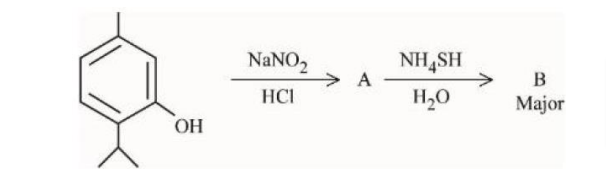
Product [X] formed in the above reaction is:
View Solution
Provided that below are two statements :
Statement I : Ethene at 333 to 343 K and 6-7 atm pressure in the presence of AlEt\(_3\) and TiCl\(_4\) undergoes addition polymerization to give LDP.
Statement II : Caprolactam at 533-543 K in H\(_2\)O through step growth polymerizes to give Nylon 6.
In the light of the above statements, choose the correct answer from the options Provided that below:
View Solution
For a chemical reaction A + B \(\rightarrow\) Product, the order is 1 with respect to A and B.
Rate & [A] & [B]
molL\(^{-1}\)S\(^{-1}\) & molL\(^{-1}\) & molL\(^{-1}\)
0.10 & 20 & 0.5
0.40 & x & 0.5
0.80 & 40 & Y
What is the value of x and y?
View Solution
Which of the following compounds is an example of Freon?
View Solution
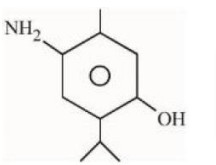
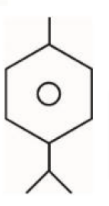
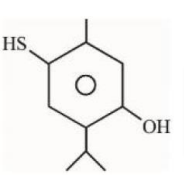

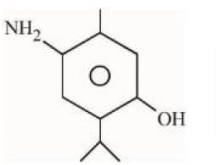
Provided that below are two statements, one is labelled as Assertion A and the other is labelled as Reason R.
Assertion A:
\chemfig{C(=[2]O)-C(-[6]Cl) can be subjected to Wolff-Kishner reduction to give \chemfig{CH_2-C(-[6]Cl)(-H)(-H)
Reason R: Wolff-Kishner reduction is used to convert \chemfig{C(=[2]O) into \chemfig{CH_2
In the light of the above statements, choose the correct answer from the options Provided that below:
View Solution
Provided that below are two statements, one is labelled as Assertion A and the other is labelled as Reason R.
Assertion A : \([CoCl(NH_3)_5]^{2+}\) absorbs at lower wavelength of light wrt- \([CoCl(NH_3)_5(H_2O)]^{3+}\)
Reason R : It is because the wavelength of the light absorbed depends on the oxidation state of the metal ion.
In the light of the above statements, choose the correct answer from the options Provided that below:
View Solution
Compound from the following that will not produce precipitate on reaction with AgNO\(_3\) is:
- (1)
![]()
- (2)
![]()
- (3)
![]()
- (4)
![]()
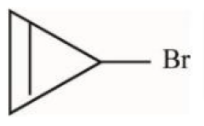
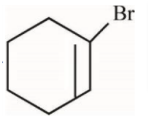
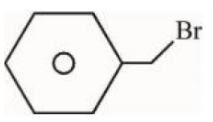
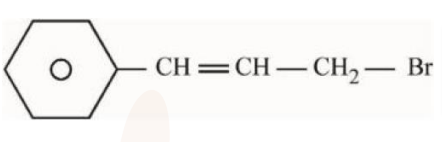
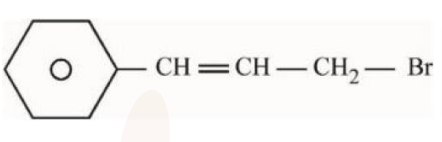
Provided that below are two statements, one is labelled as Assertion A and the other is labelled as Reason R.
Assertion A : A solution of the product obtained by heating a mole of glycine with a mole of chlorine in presence of red phosphorous generates chiral carbon atom.
Reason R : A molecule with 2 chiral carbons is always optically active.
In the light of the above statements, choose the correct answer from the options Provided that below:
View Solution
Alkali metal from the following with least melting point is:
View Solution
Which hydride among the following is less stable?
View Solution
The major product formed in the following reaction is _____.
View Solution
One mole of P\(_4\) reacts with 8 moles SOCl\(_2\) to give 4 moles of A, x mole of SO\(_2\) and 2 moles of B. A, B and x respectively are _____.
View Solution
What weight of glucose must be dissolved in 100 g of water to lower the vapour pressure by 0.20 mmHg?
(Assume dilute solution is being formed)
Provided that : Vapour pressure of pure water is 54.2 mmHg at room temperature. Molar mass of glucose is 180g mol\(^{-1}\)
View Solution
The total number of intensive properties from the following is _____.
Mole, Volume, Molar heat capacity, Molarity, E° cell, Gibbs free energy change, Molar mass, Mole
View Solution
The volume of hydrogen liberated at STP by treating 2.4 g of magnesium with excess of hydrochloric acid is _____ \(\times 10^{-2}\) L.
Provided that: Molar volume of gas is 22.4 L at STP. Molar mass of magnesium is 24 g mol\(^{-1}\)
View Solution
The number of correct statements about modern adsorption theory of heterogeneous catalysis from the following is ____.
A. The catalyst is diffused over the surface of reactants.
B. Reactants are adsorbed on the surface of the catalyst.
C. Occurrence of chemical reaction on the catalyst's surface through formation of an intermediate.
D. It is a combination of intermediate compound formation theory and the old adsorption theory.
E. It explains the action of the catalyst as well as those of catalytic promoters and poisons.
View Solution
The number of correct statements from the following is _____.
A. For 1 s orbital, the probability density is maximum at the nucleus
B. For 2 s orbital, the probability density first increases to maximum and then decreases sharply to zero.
C. Boundary surface diagrams of the orbitals encloses a region of 100% probability of finding the electron.
D. p and d-orbitals have 1 and 2 angular nodes respectively
E. probability density of p-orbital is zero at the nucleus
View Solution
The number of correct statements from the following is _____.
A. \(E_{cell}\) is an intensive parameter
B. A negative E° means that the redox couple is a stronger reducing agent than the H\(^+\)/H\(_2\) couple.
C. The amount of electricity required for oxidation or reduction depends on the stoichiometry of the electrode reaction.
D. The amount of chemical reaction which occurs at any electrode during electrolysis by a current is proportional to the quantity of electricity passed through the electrolyte.
View Solution
Mg(NO\(_3\))\(_2\)·XH\(_2\)O and Ba(NO\(_3\))\(_2\)·YH\(_2\)O, represent formula of the crystalline forms of nitrate salts. Sum of X and Y is _____.
View Solution
The number of possible isomeric products formed when 3-chloro-1-butene reacts with HCl through carbocation formation is _____.
View Solution
4.5 moles each of hydrogen and iodine is heated in a sealed ten litre vessel. At equilibrium, 3 moles of HI were found. The equilibrium constant for \(H_2(g)+I_2(g) \rightleftharpoons 2HI(g)\) is _____.
View Solution
Number of compounds from the following which will not produce orange red precipitate with Benedict solution is ______.
Glucose, maltose, sucrose, ribose, 2-deoxyribose, amylose, lactose
View Solution
The maximum number of lone pairs of electrons on the central atom from the following species is _____.
ClO\(_3^-\), XeF\(_4\), SF\(_4\), and I\(_3^-\)
View Solution


Also Check:
JEE Main 11 April 2023 Shift 2 Question Paper with Answer Key: Coaching Institute PDF
| Coaching Institutes | Question Paper with Answer Key PDF |
|---|---|
| Aakash BYJUs | Check Here |
| Resonance | Physics Chemistry Mathematics |
| Vedantu | Check Here |
JEE Main 2023 Paper Analysis April 11 Shift 2
JEE Main 2023 Paper Analysis for the exam conducted on April 11 Shift 2 is available here. Candidates can check subject-wise paper analysis for the exam conducted on April 11 Shift 2 here along with the topics with the highest weightage.
Also Check:
JEE Main 2023 Question Paper Session 1 (January)
JEE Main aspirants can practice and check their exam prep level by attempting the question papers from the January Session. The table below shows JEE Main 2023 Question Paper PDF for Session 1 to practice.
JEE Main Previous Year Question Paper
| JEE Main 2022 Question Paper | JEE Main 2021 Question Paper | JEE Main 2020 Question Paper |
| JEE Main 2019 Question Paper | JEE Main 2018 Question Paper | JEE Main 2017 Question Paper |



Comments