




JEE Main Gravitation Handwritten Notes, free to download as a 20-page PDF. The topic is worth about 4 to 8 marks and takes roughly half a day to learn, so treat it as one short revision sitting.
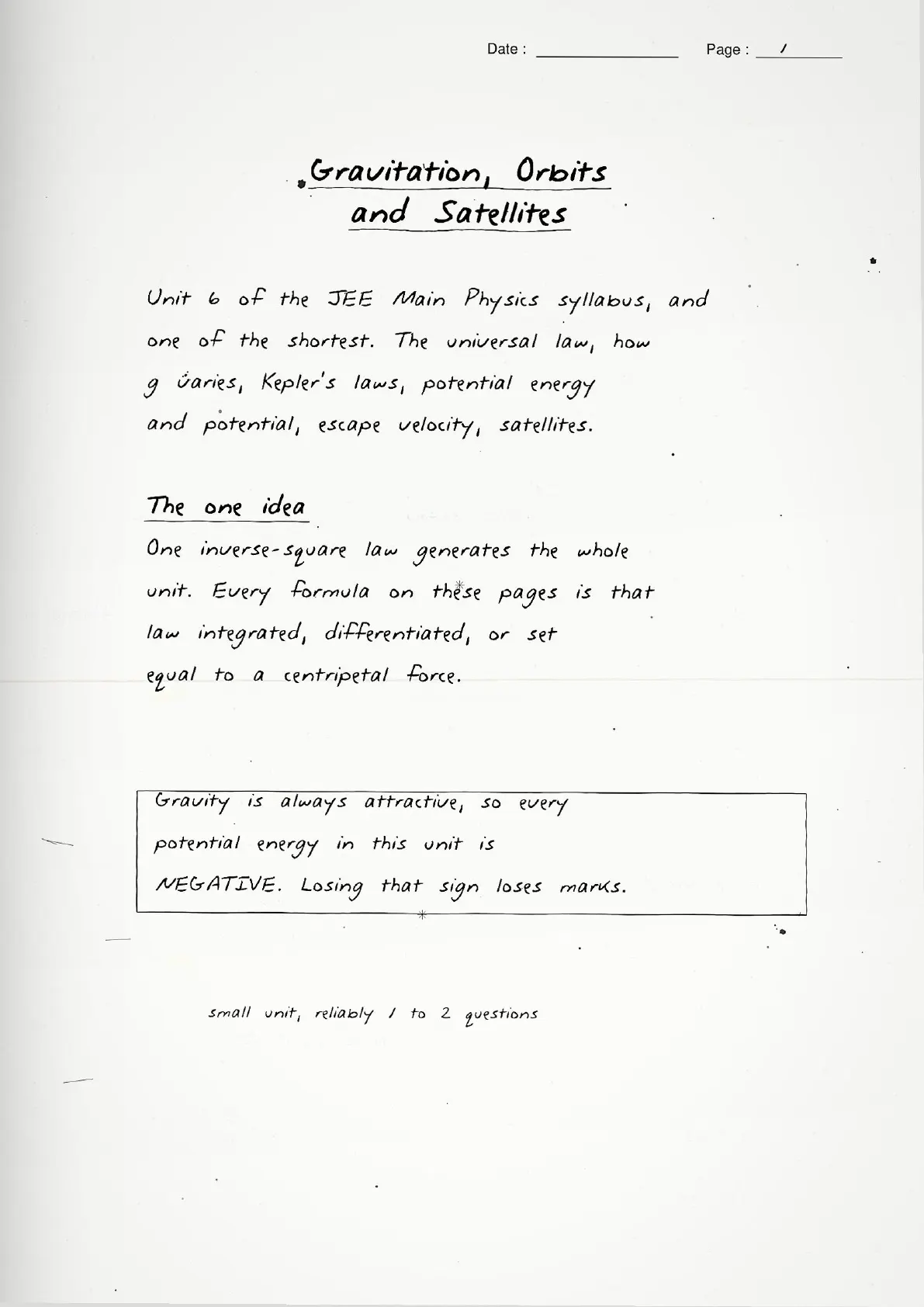
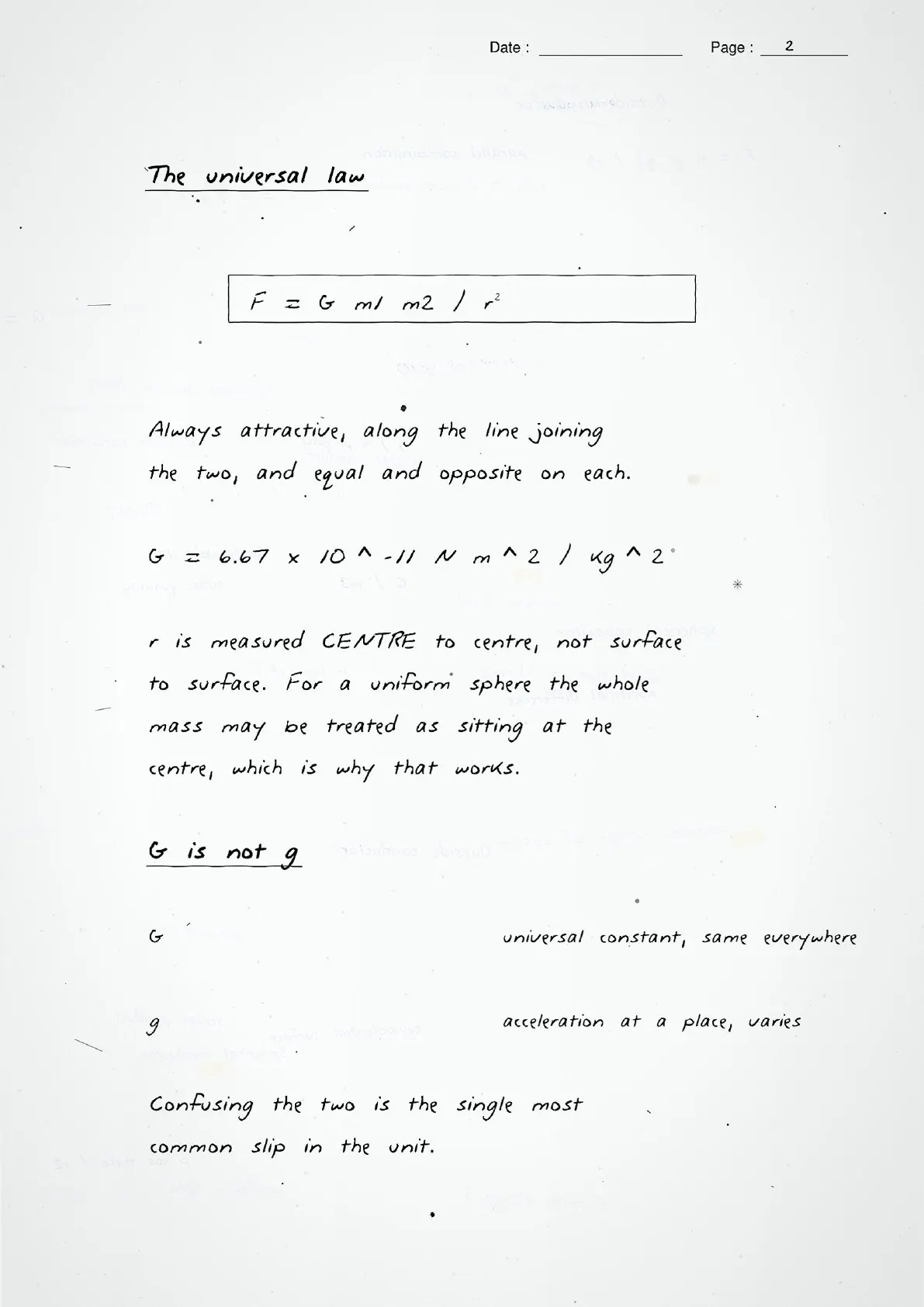
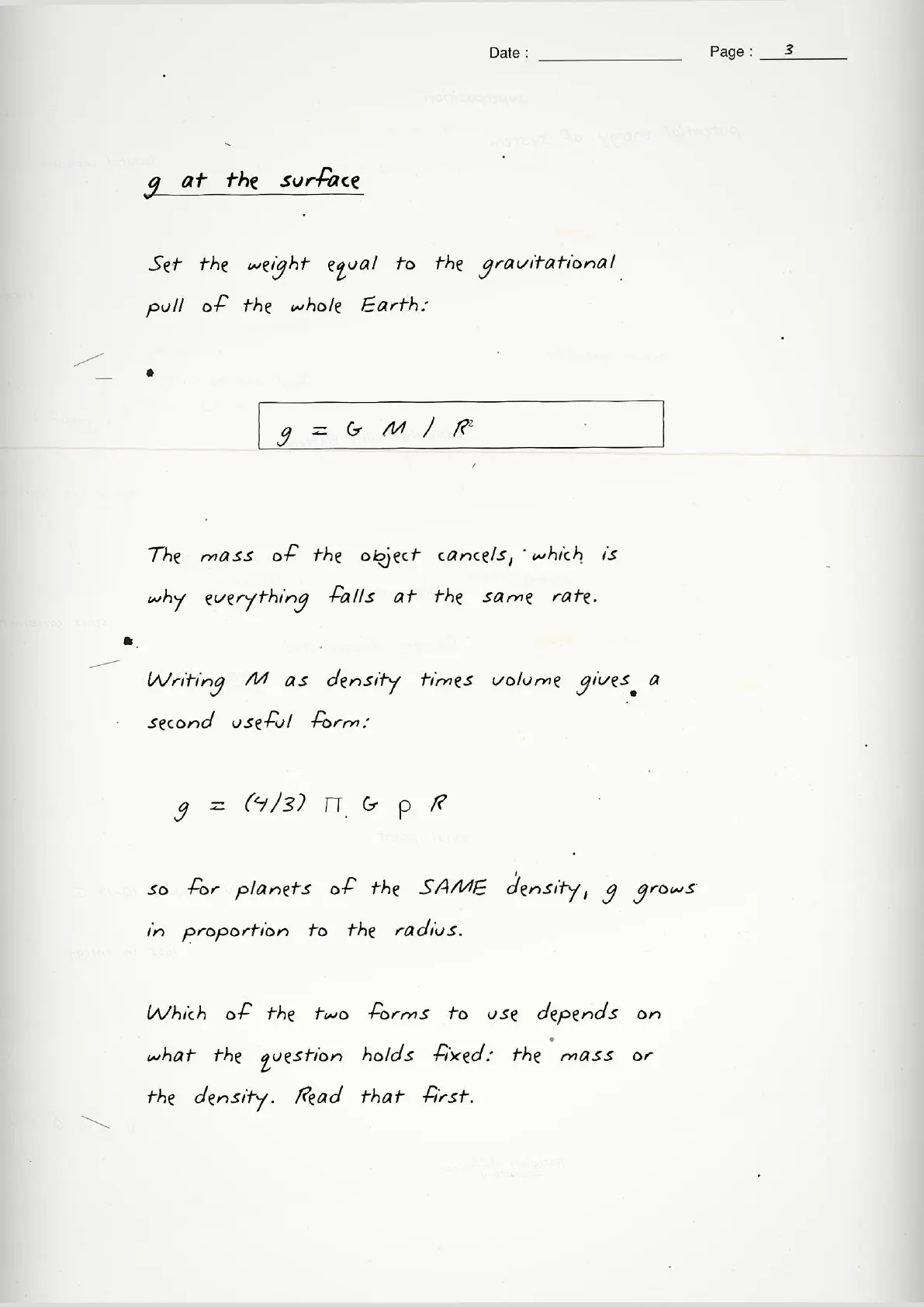
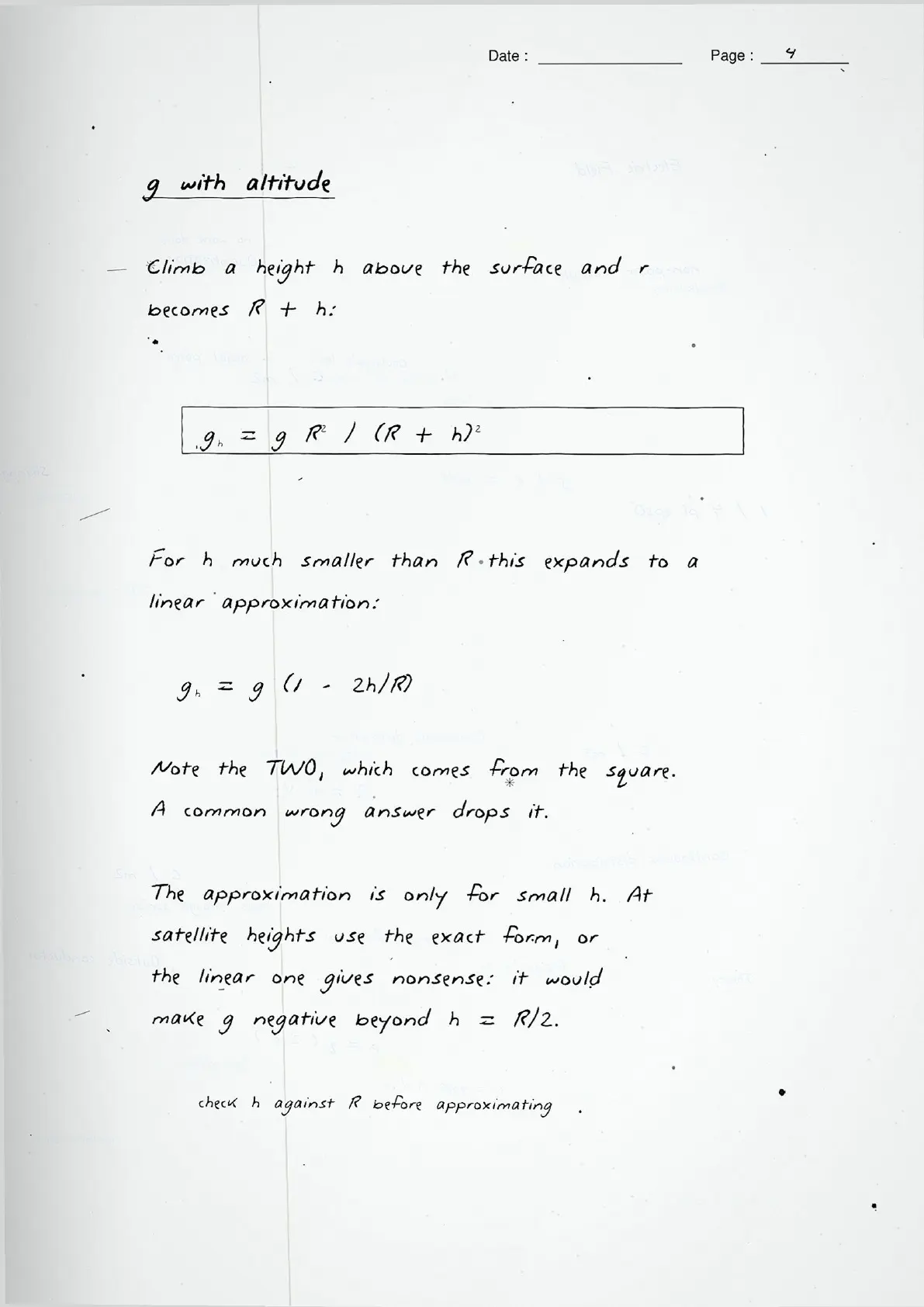
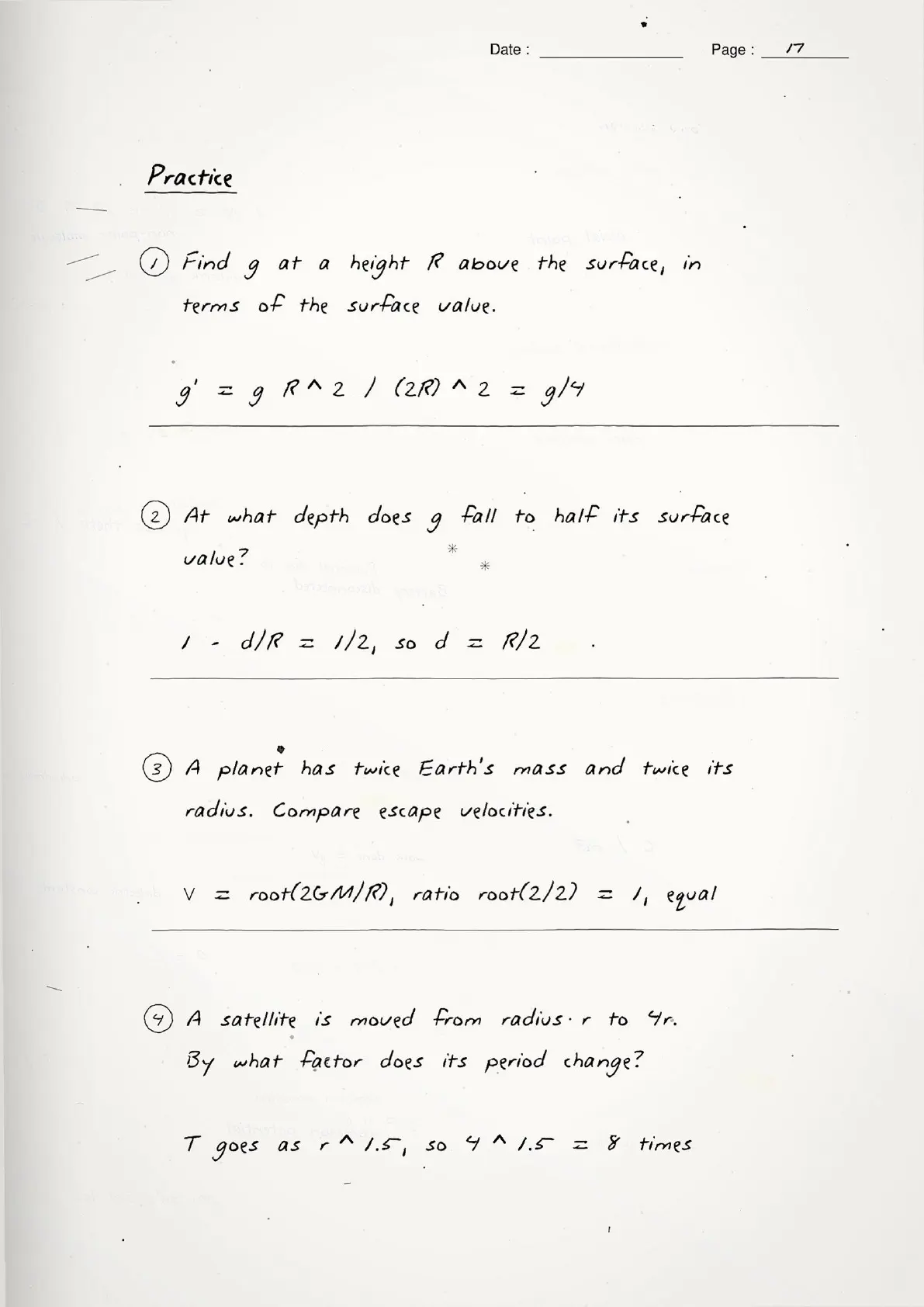
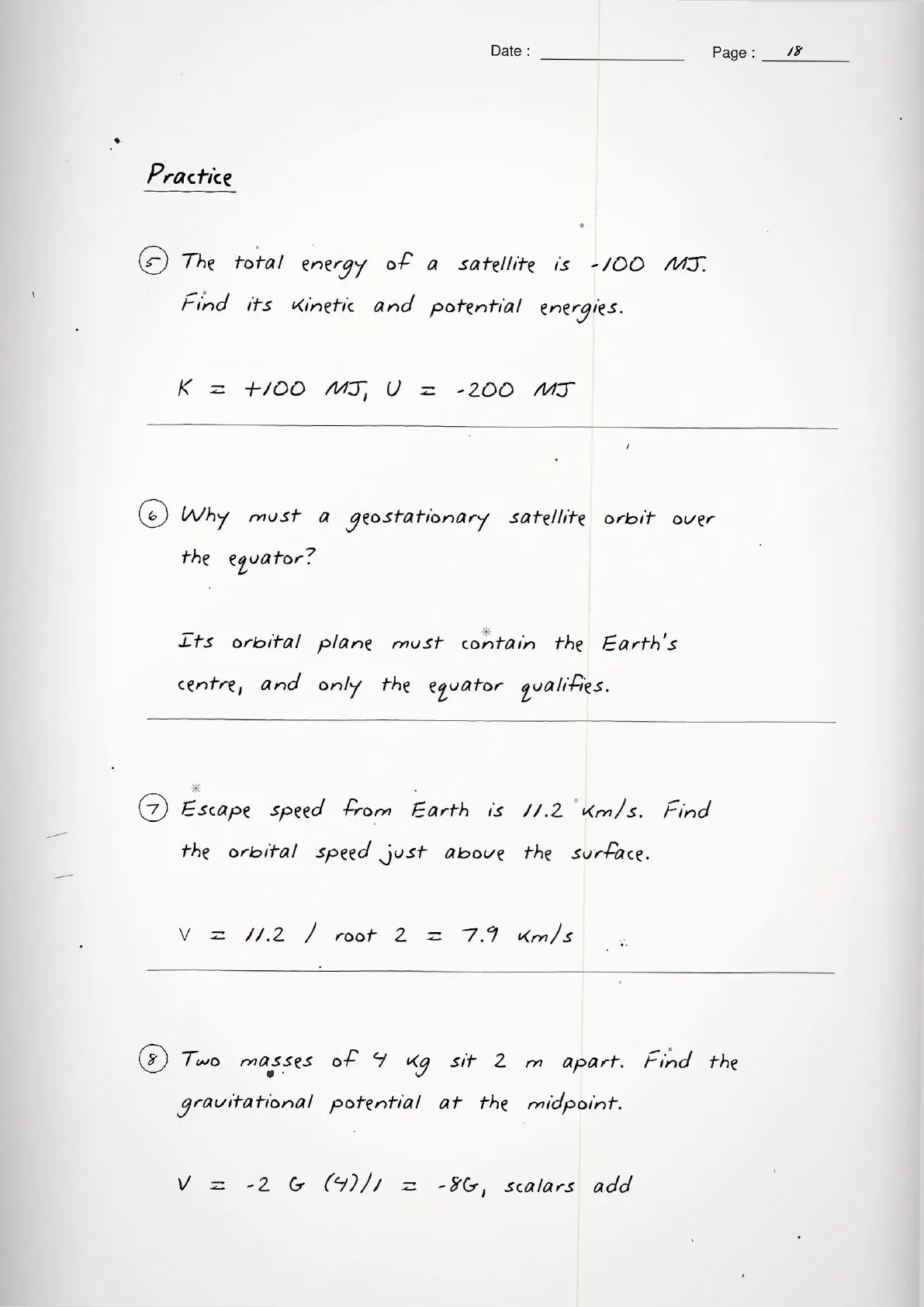
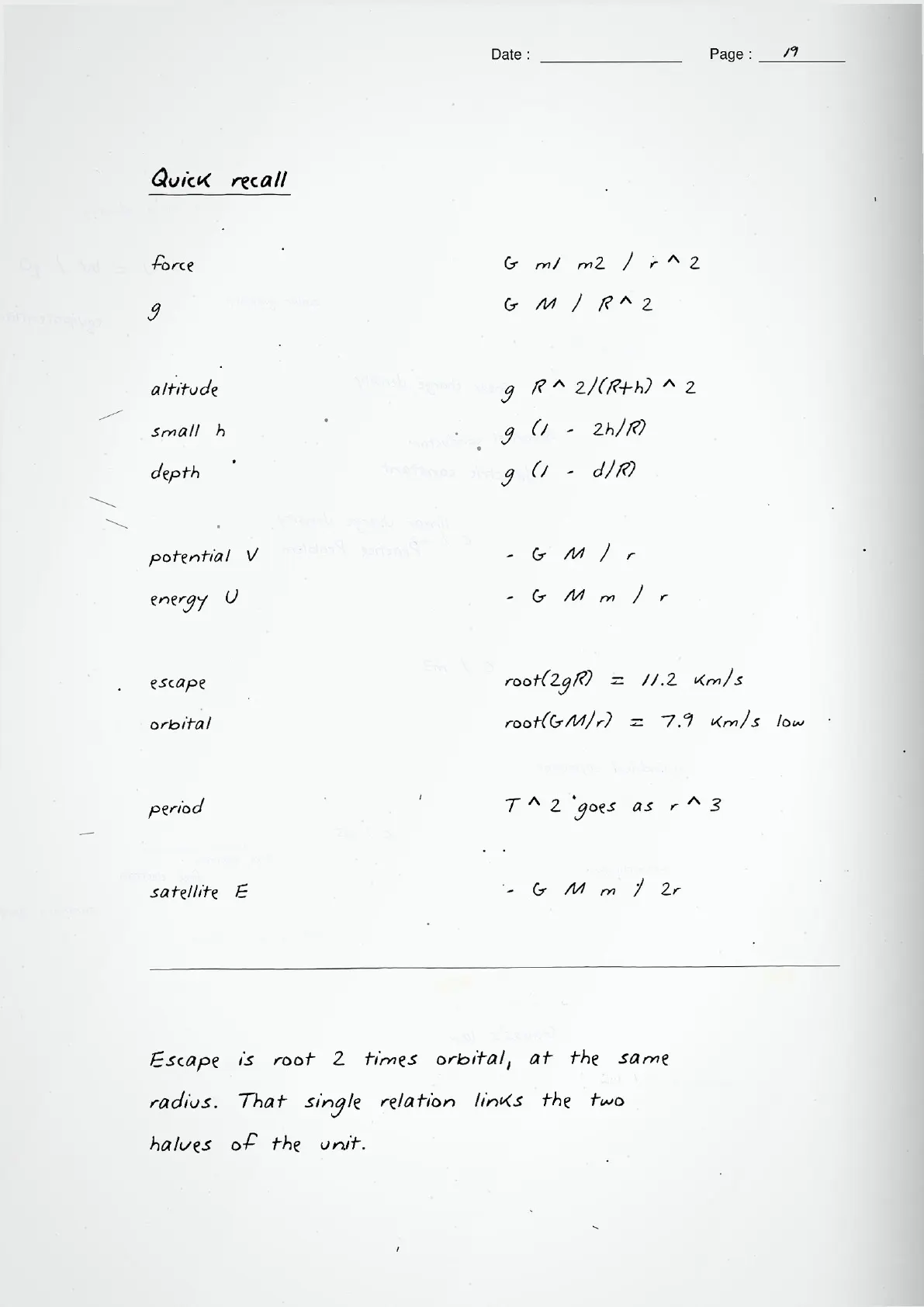
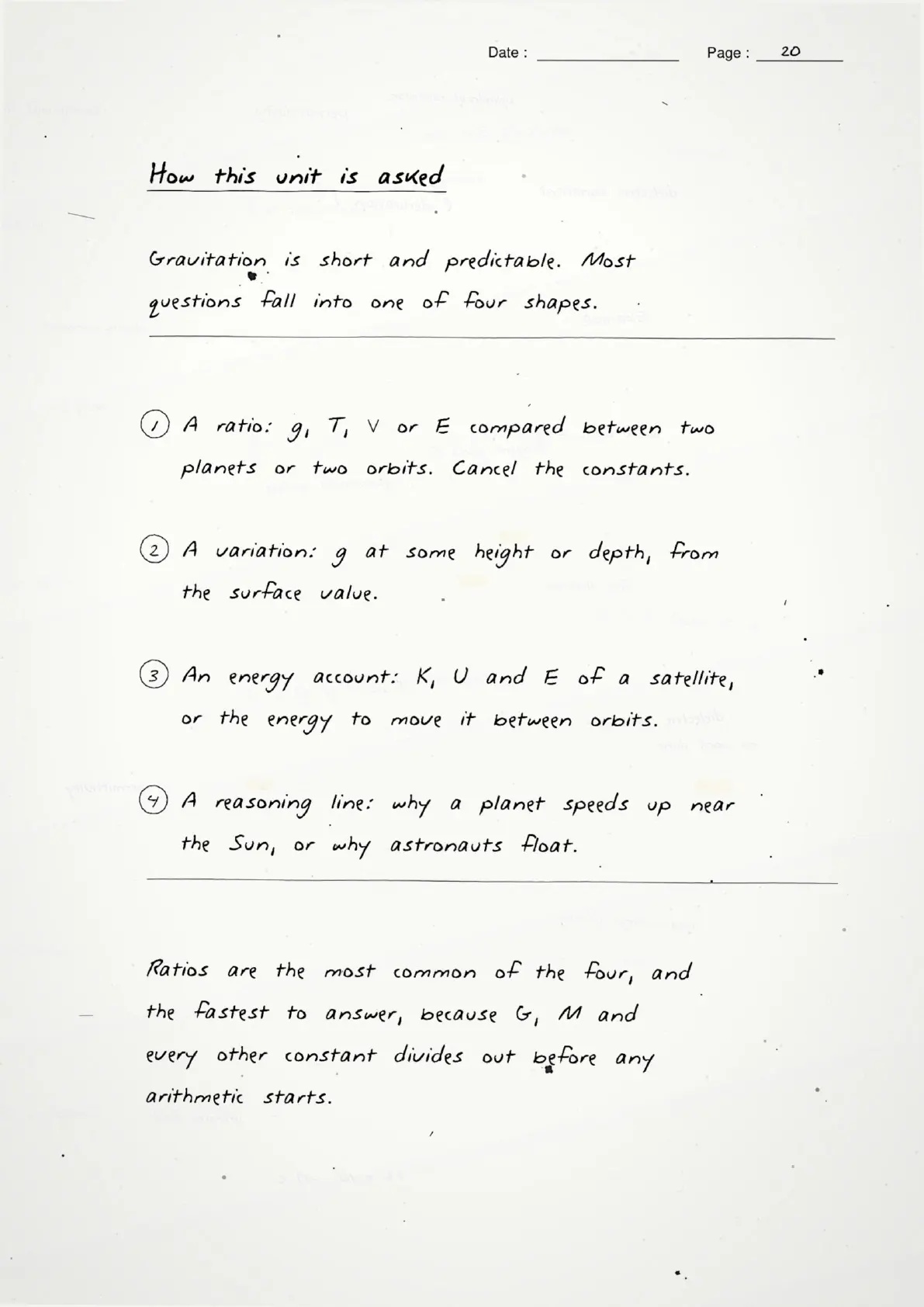
The notes are scans of a real notebook, so they read the way a topper's own pages do: short lines, boxed formulas, and a margin note where something is easy to get wrong.
JEE Main Gravitation Weightage
Unit 6 is one of the shortest in the physics syllabus and one of the most predictable, giving one question in most sessions. It repays preparation time better than almost anything else in the paper.
| Pages | What is on them |
|---|---|
| 2 to 3 | The universal law, and g at the surface |
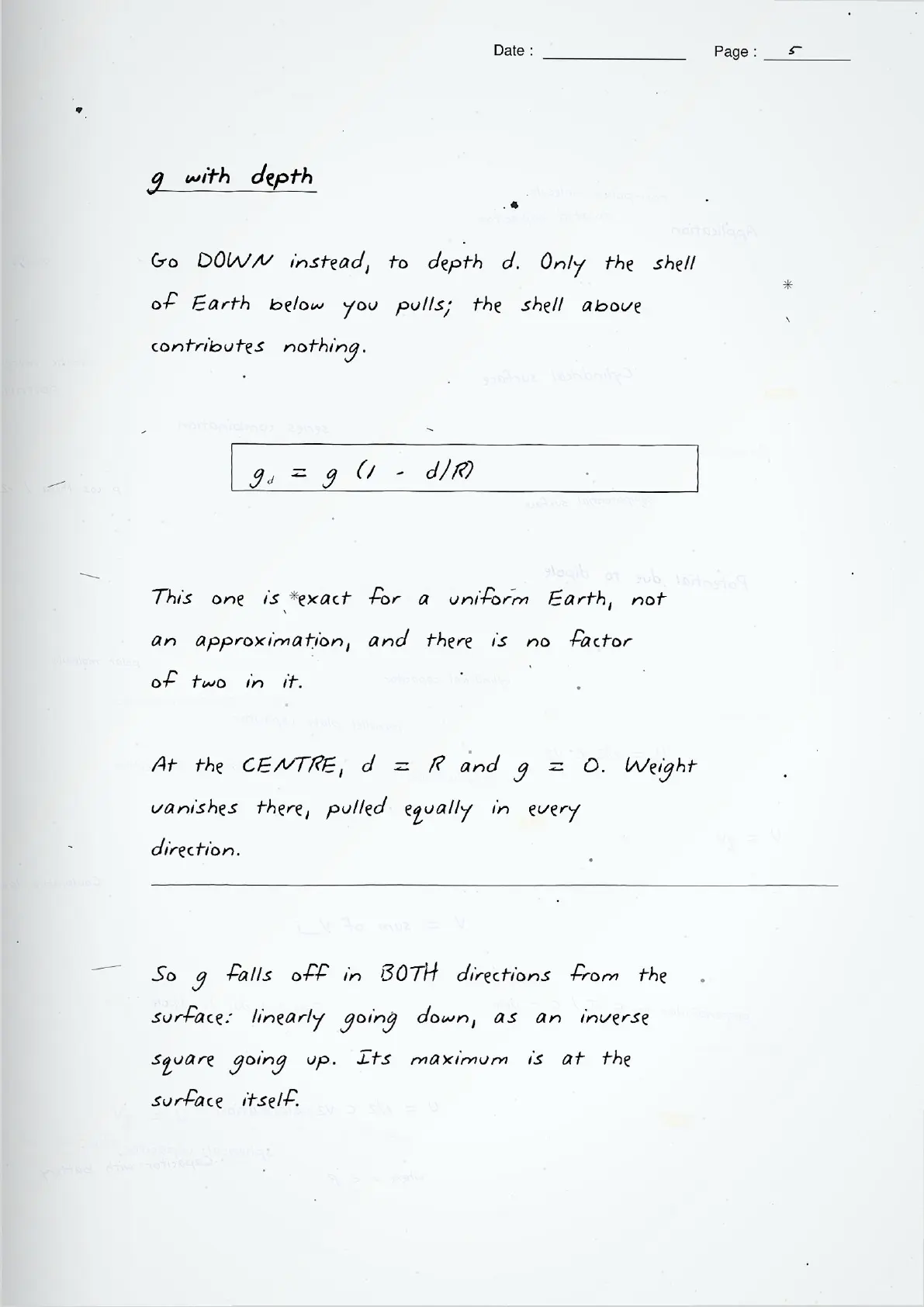
| 4 to 5 | Variation of g with altitude and with depth |
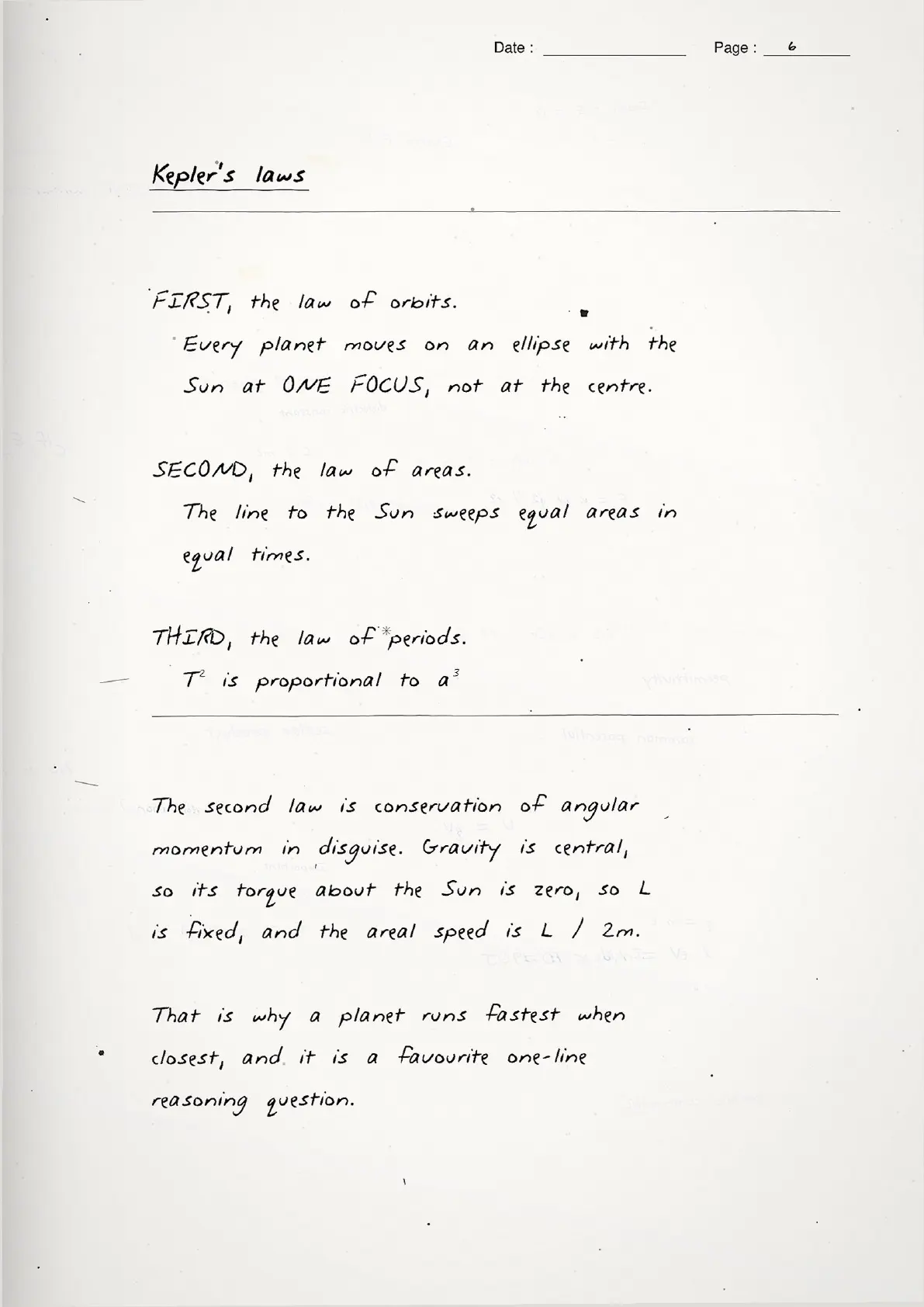
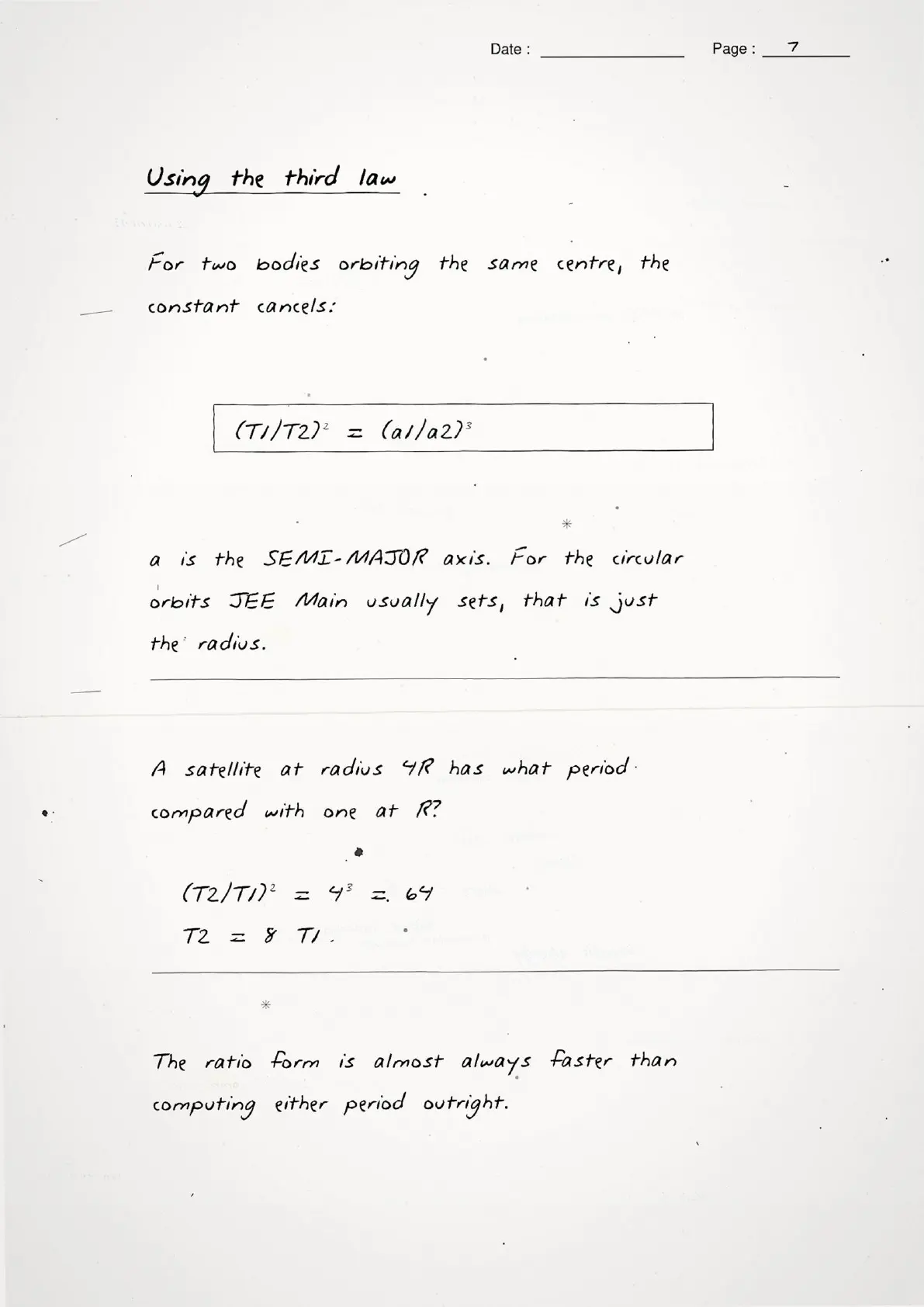
| 6 to 7 | Kepler's three laws, and using the third |
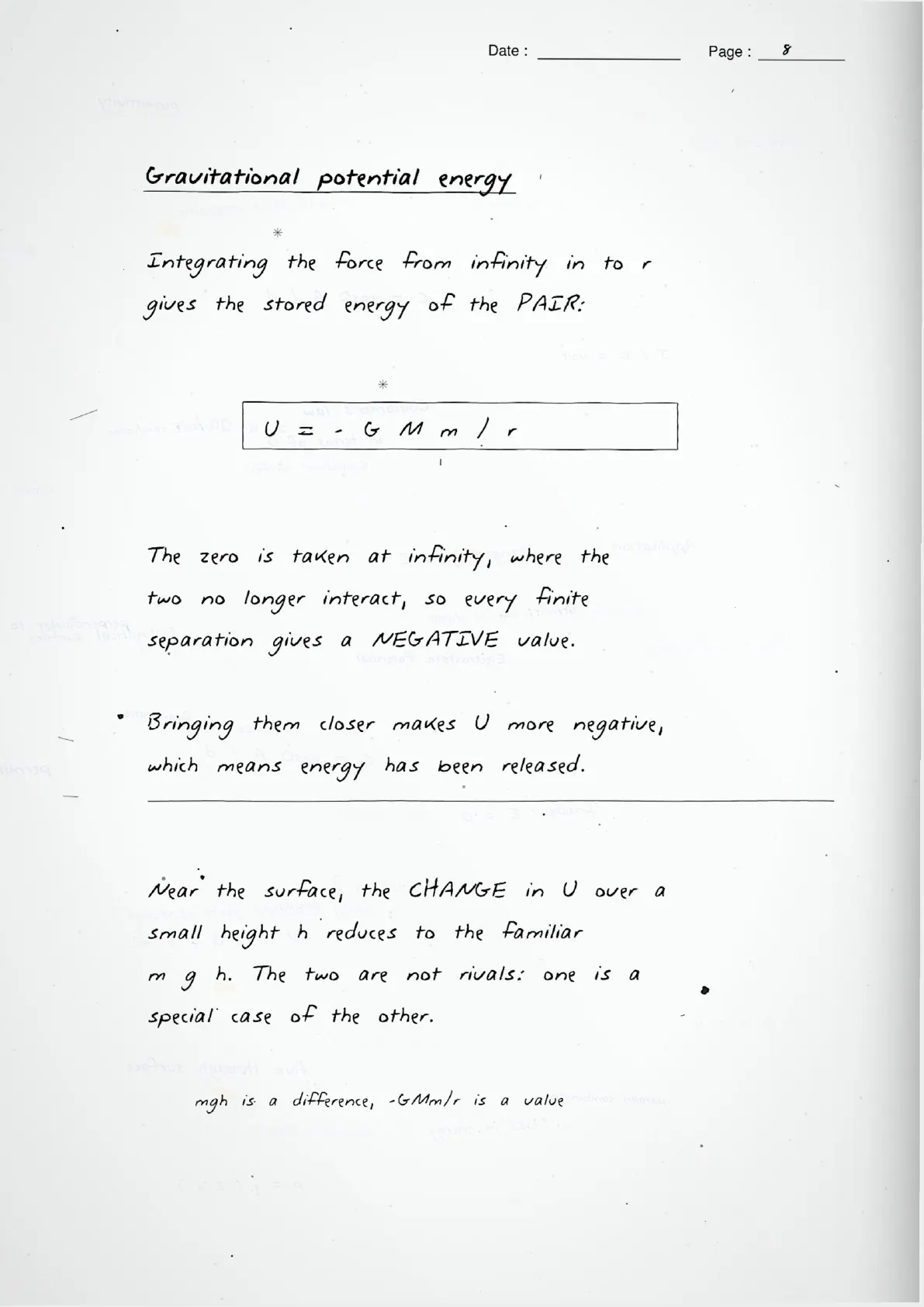
| 8 to 9 | Gravitational potential energy and potential |
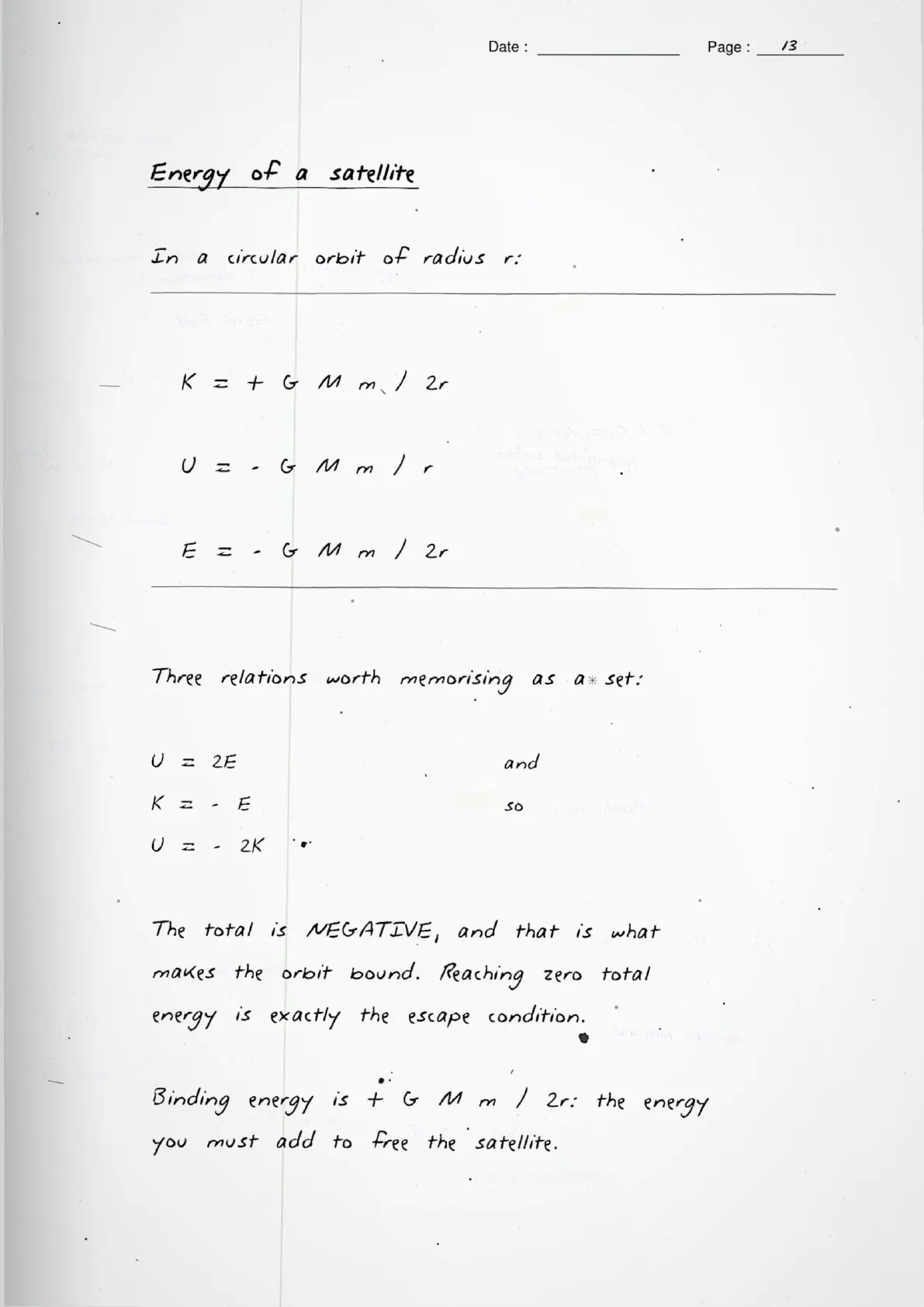
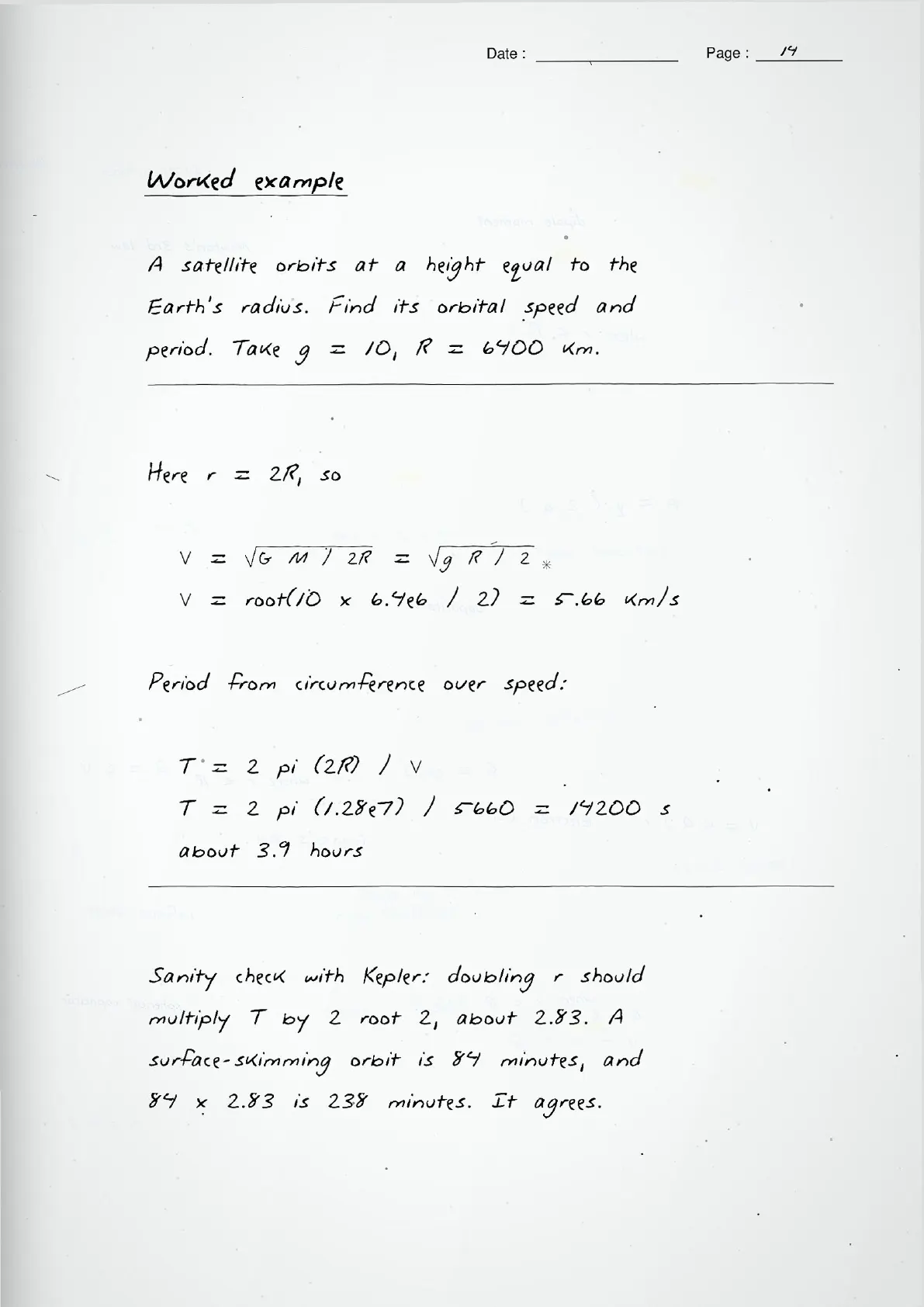
| 10 to 13 | Escape velocity, orbital velocity, period, energy |
| 14 to 20 | Worked examples, weightlessness, practice |
What the Notes Cover
- The universal law of gravitation, and why G is not g
- g at the surface, in both the mass form and the density form
- How g varies with altitude, exactly and approximately
- How g varies with depth, and why it is zero at the centre
- Kepler's three laws, and the angular-momentum reason behind the second
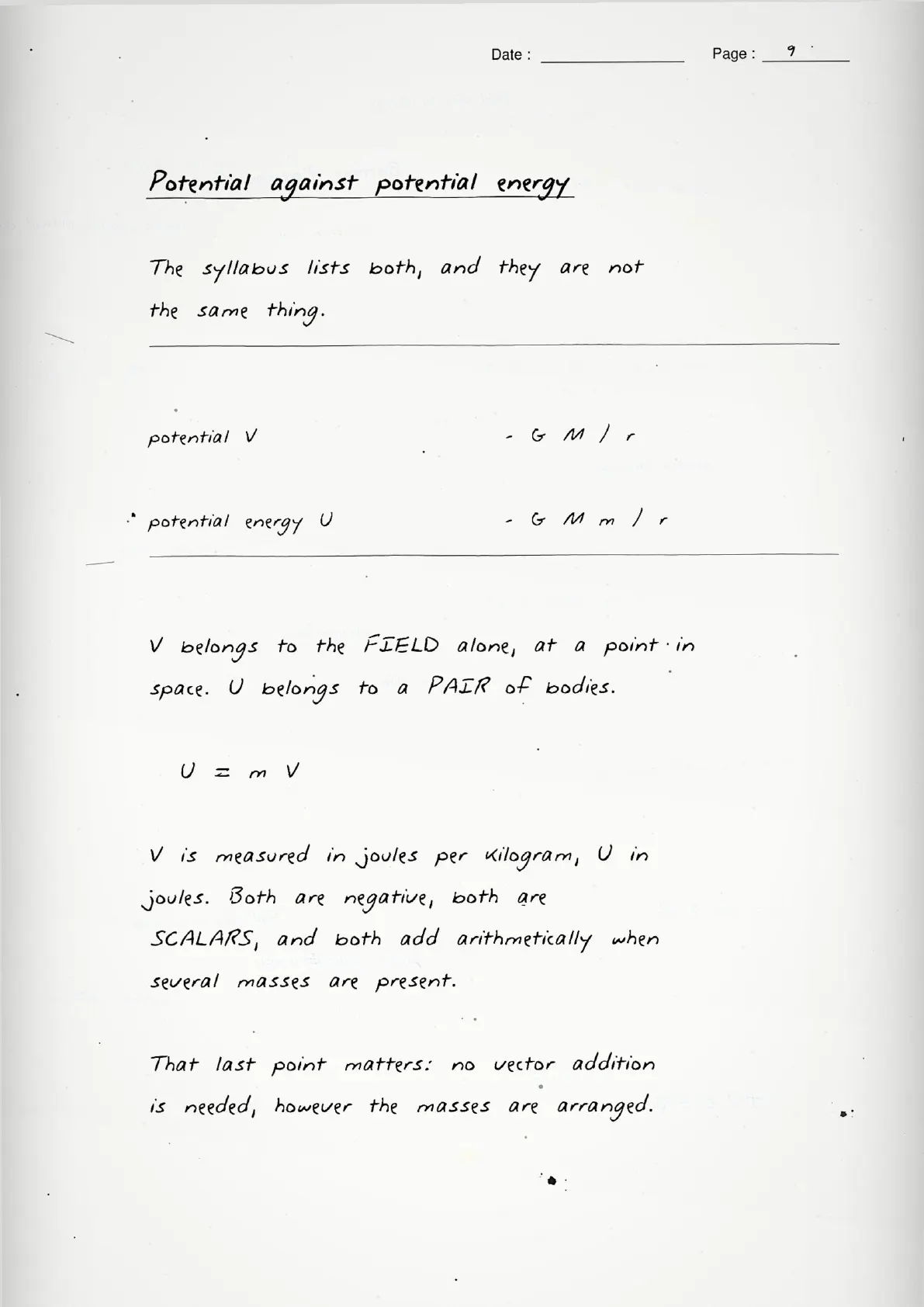
- Gravitational potential energy and gravitational potential, kept apart
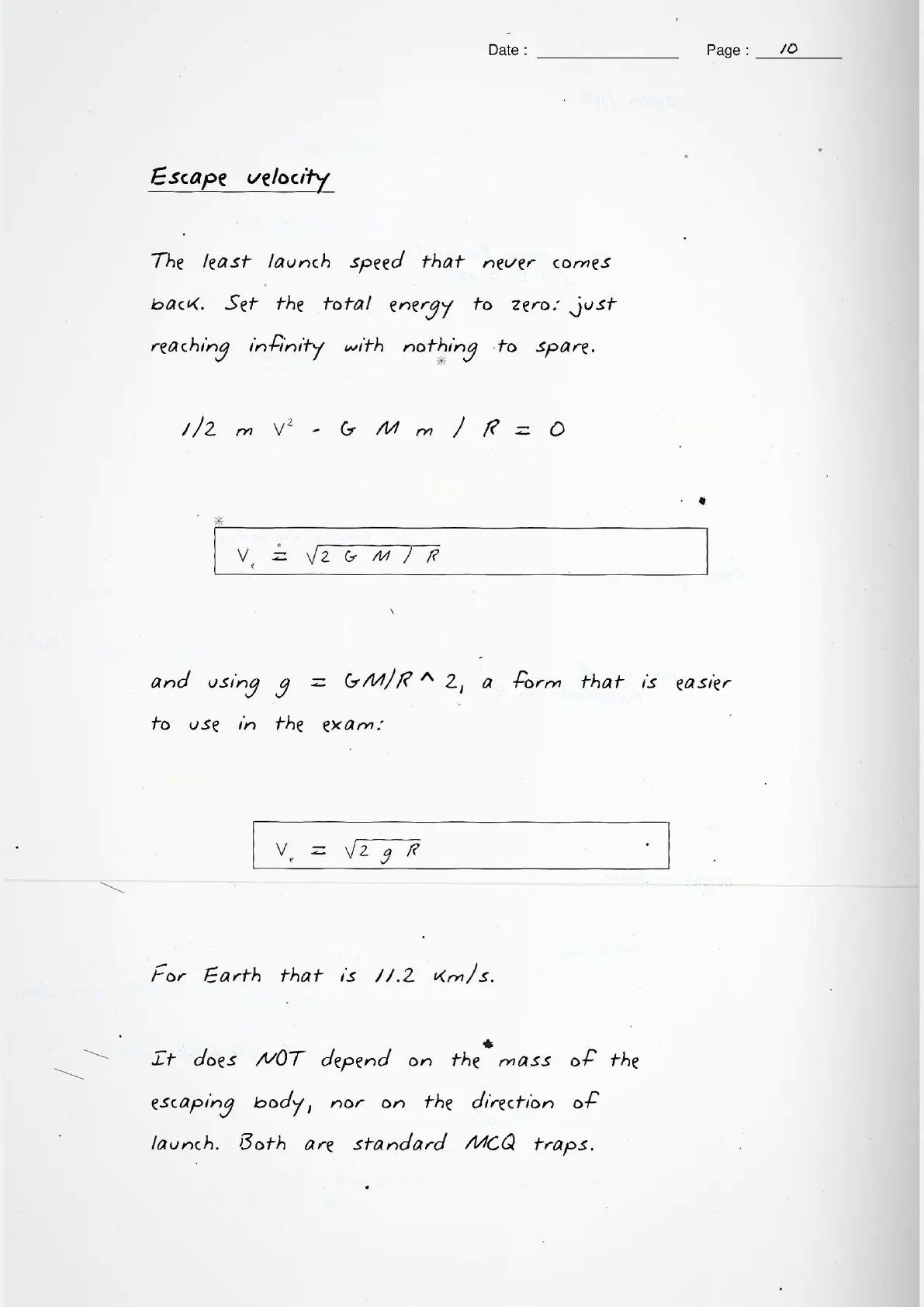
- Escape velocity, and why it does not depend on the mass launched
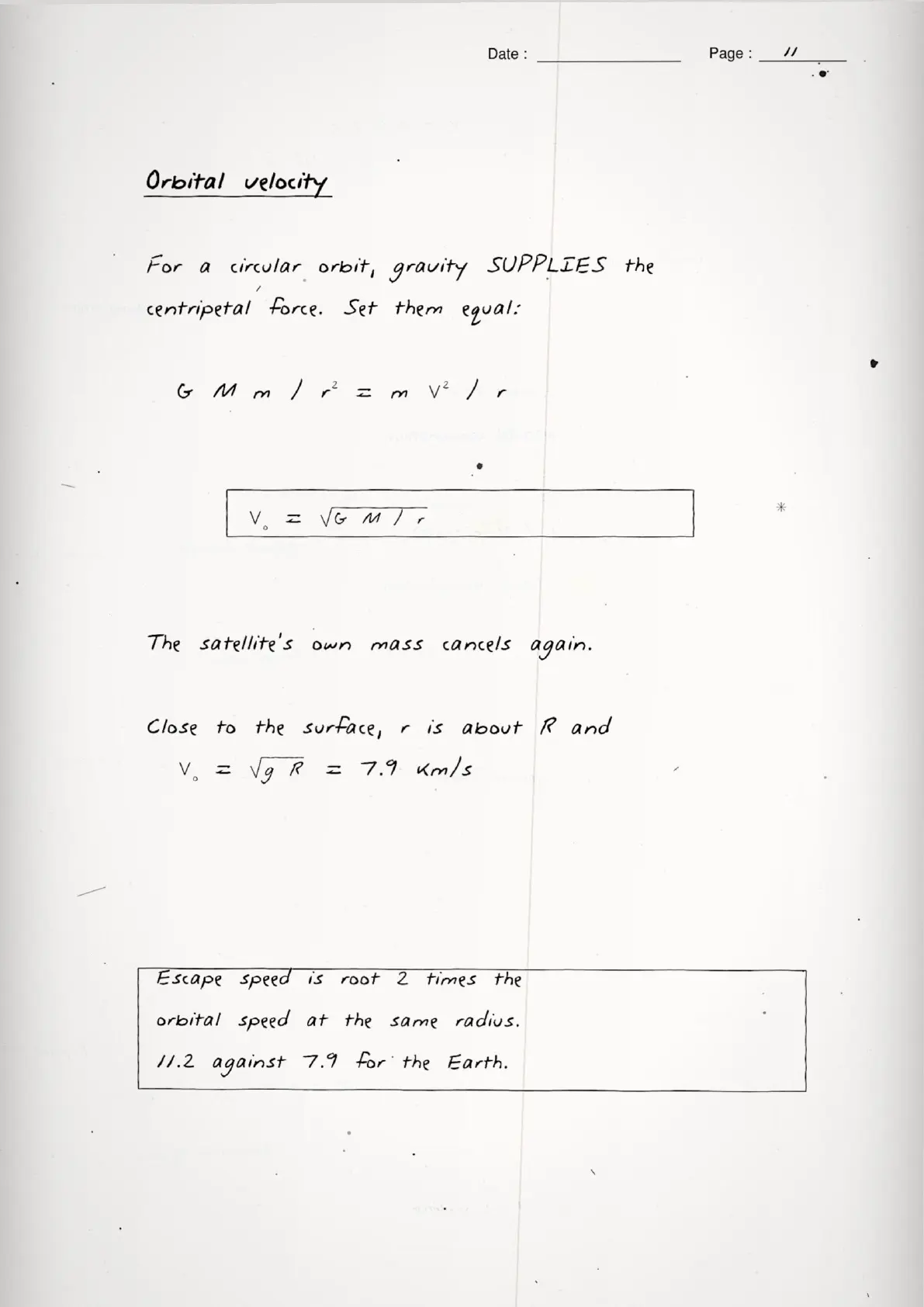
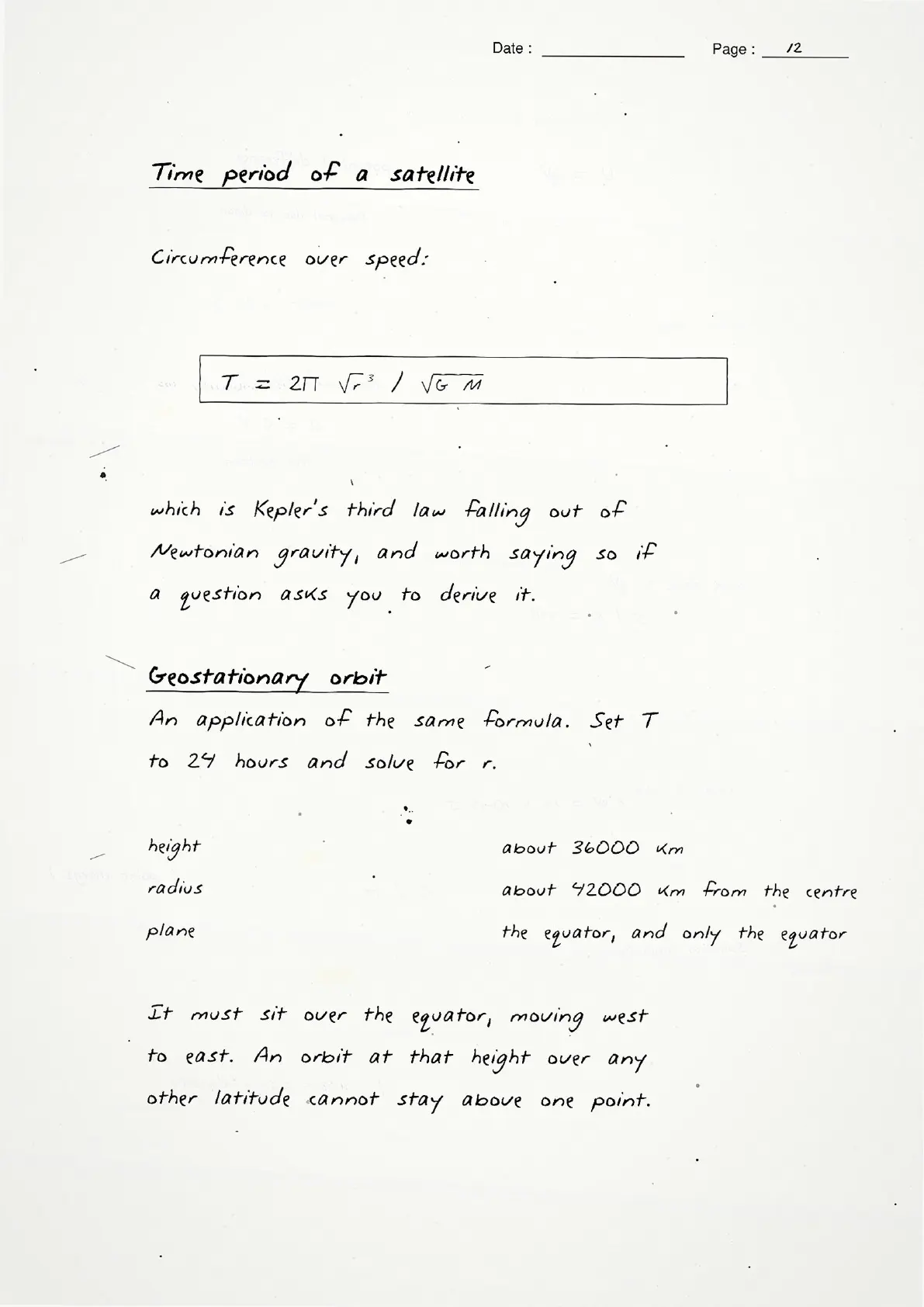
- Orbital velocity, time period, and the energy of a satellite
How to Approach the Chapter
Most questions in this unit are ratios: g, T, v or E compared between two planets or two orbits. Because G, M and every other constant divides out, they are the fastest marks in the paper once you spot the shape.
Keep the two potential quantities apart. Potential V belongs to the field at a point and is measured in joules per kilogram; potential energy U belongs to a pair of bodies and is measured in joules. Both are negative, and both are scalars, so several masses add arithmetically with no vector work.
One relation ties the unit together: escape speed is root two times the orbital speed at the same radius. That is 11.2 against 7.9 kilometres per second for the Earth.
Common Mistakes
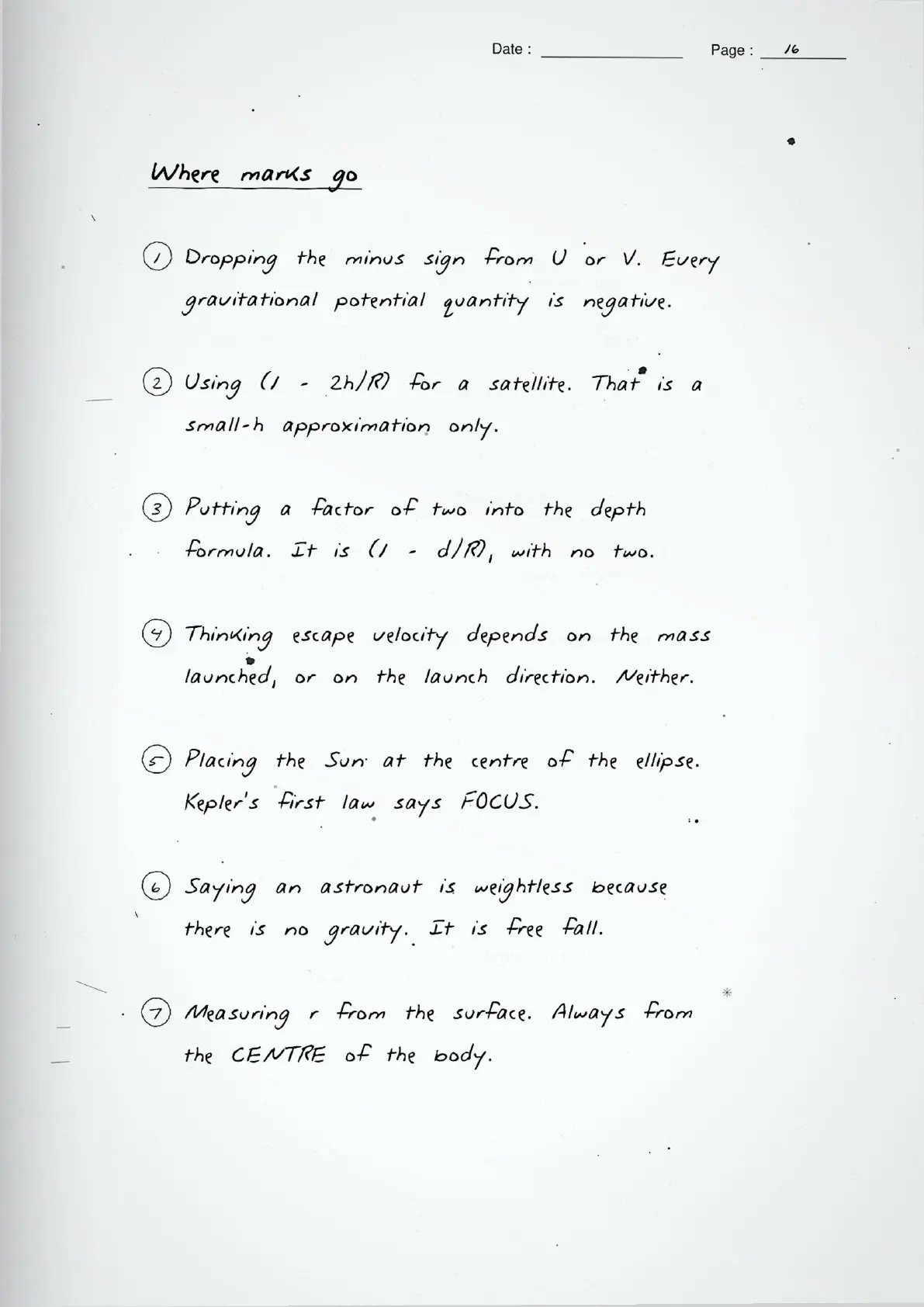
- Dropping the minus sign from U or V. Every gravitational potential quantity is negative
- Using the small-height approximation for a satellite
- Putting a factor of two into the depth formula. It is (1 minus d over R)
- Thinking escape velocity depends on the mass launched, or the launch direction
- Placing the Sun at the centre of the ellipse rather than at a focus
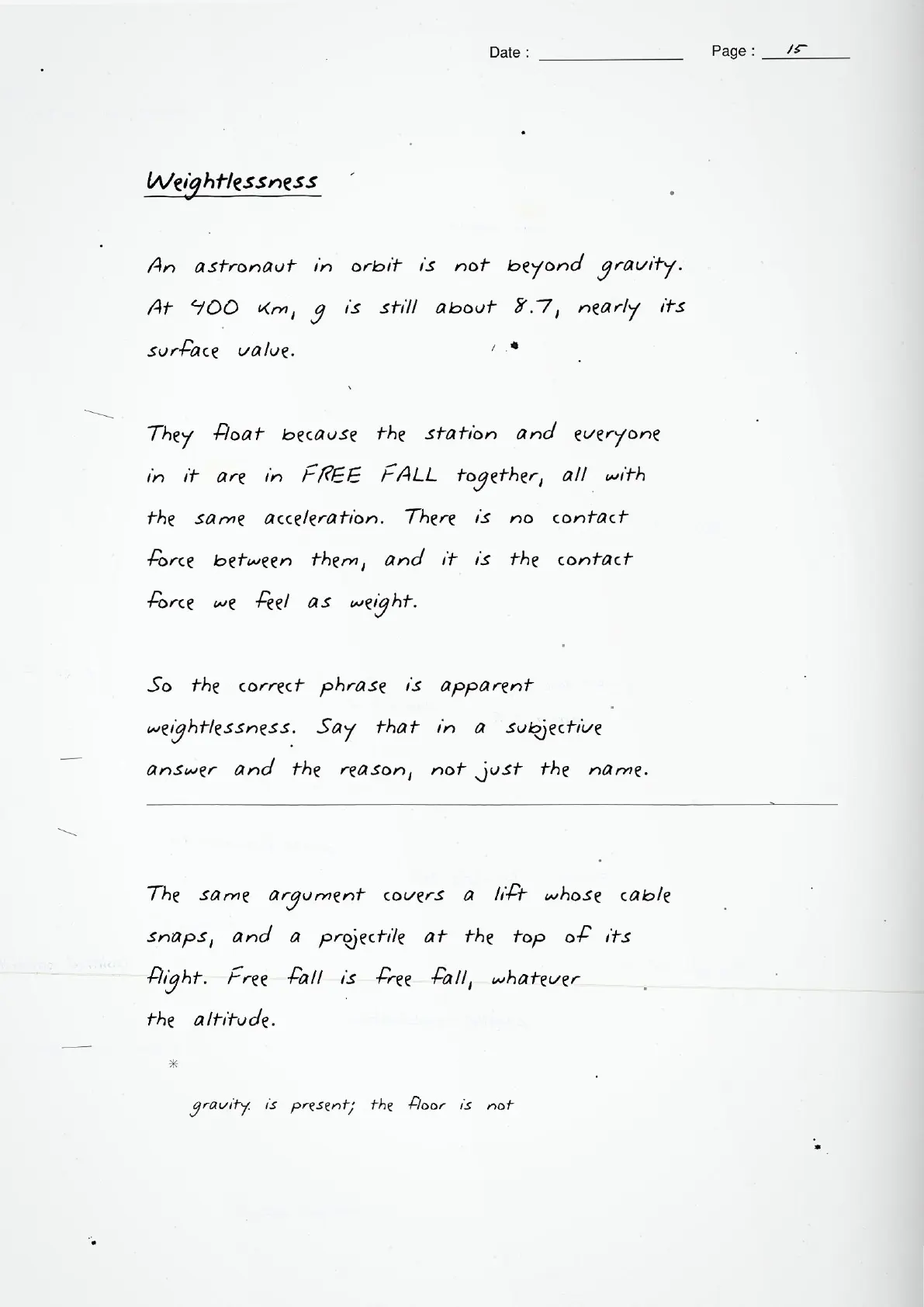
- Saying an astronaut is weightless because there is no gravity. It is free fall
- Measuring r from the surface instead of from the centre
Video Revision
Source: JEE Wallah
How to Use These Notes
Page 19 is a single recall grid holding every formula in the unit. For a chapter this size that page alone is a workable revision, and the rest is there for when a formula stops making sense.
Page 20 sorts the whole unit into the four question shapes it is actually asked in, which is worth reading before attempting any paper.
The preceding units in this series cover work, energy and power and the two halves of rotational motion.
JEE Main Gravitation Notes FAQs
Ques. How many questions come from gravitation in JEE Main?
Ans. Usually one per session. Unit 6 is one of the shortest in the syllabus, which makes it one of the best returns on preparation time in the whole paper.
Ques. What does NTA include in this unit?
Ans. The universal law of gravitation, acceleration due to gravity and its variation with altitude and depth, Kepler's laws, gravitational potential energy and potential, escape velocity, and the motion, orbital velocity, time period and energy of a satellite.
Ques. What is the difference between gravitational potential and potential energy?
Ans. Potential belongs to the field at a point and is measured in joules per kilogram. Potential energy belongs to a pair of bodies and is measured in joules. They are related by U equals m V, and both are negative.
Ques. Why do astronauts float if gravity is still acting?
Ans. Because the station and everyone in it are in free fall together with the same acceleration, so there is no contact force between them. It is the contact force we feel as weight, which is why the correct term is apparent weightlessness.
Ques. Can the notes be downloaded free?
Ans. Yes. All 20 pages can be read on this page and downloaded at no cost.



Comments