




Organic Chemistry Reagent and Reaction Map is a last-stage revision resource for GATE Chemistry, not a fresh topic to learn. It pulls the whole Organic Chemistry section into one reaction map that links each reagent to the product it forms. Use it to connect named reactions, functional group conversions, and mechanism cues when your study time is short and you want fast recall in the final days before the exam.
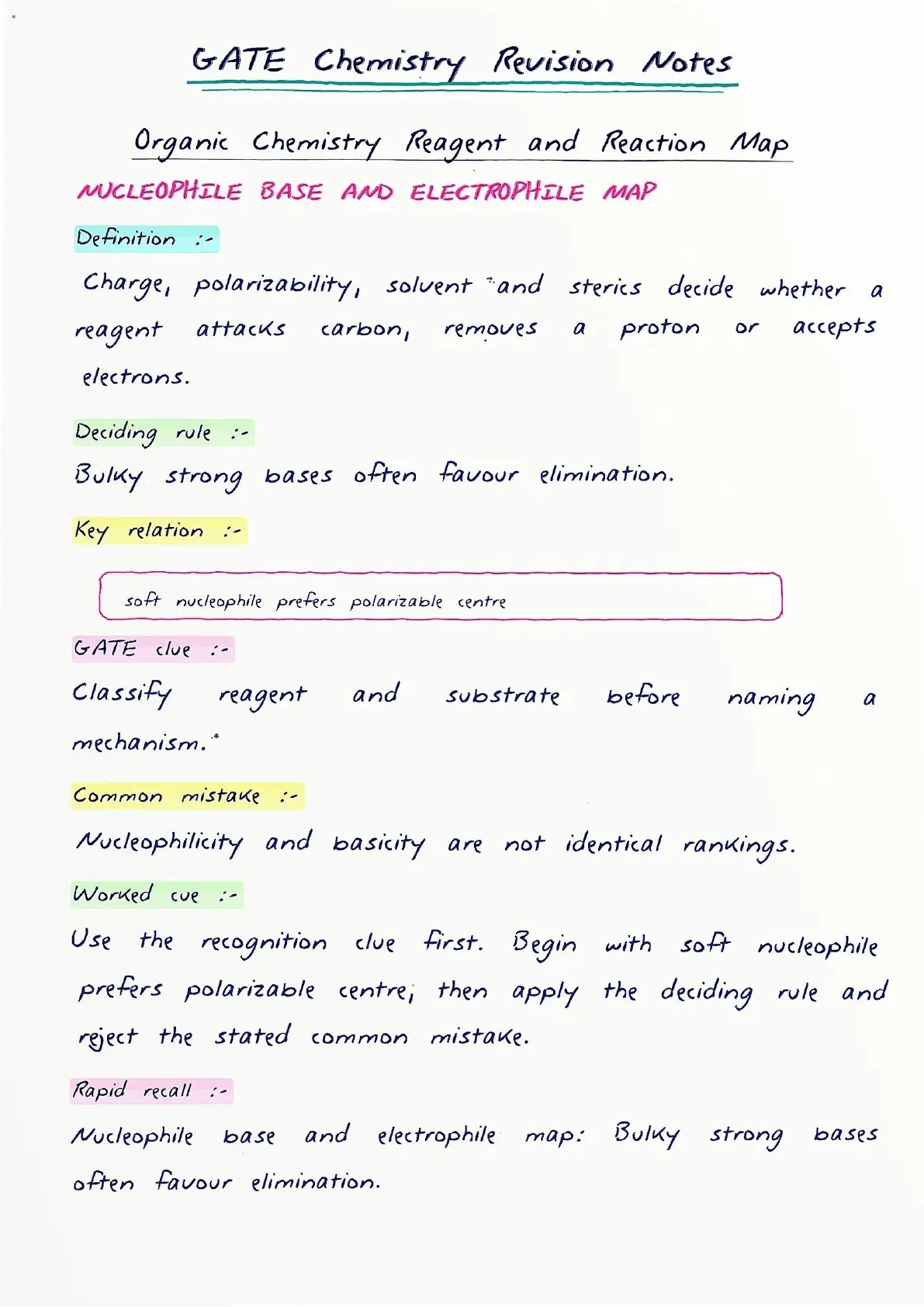
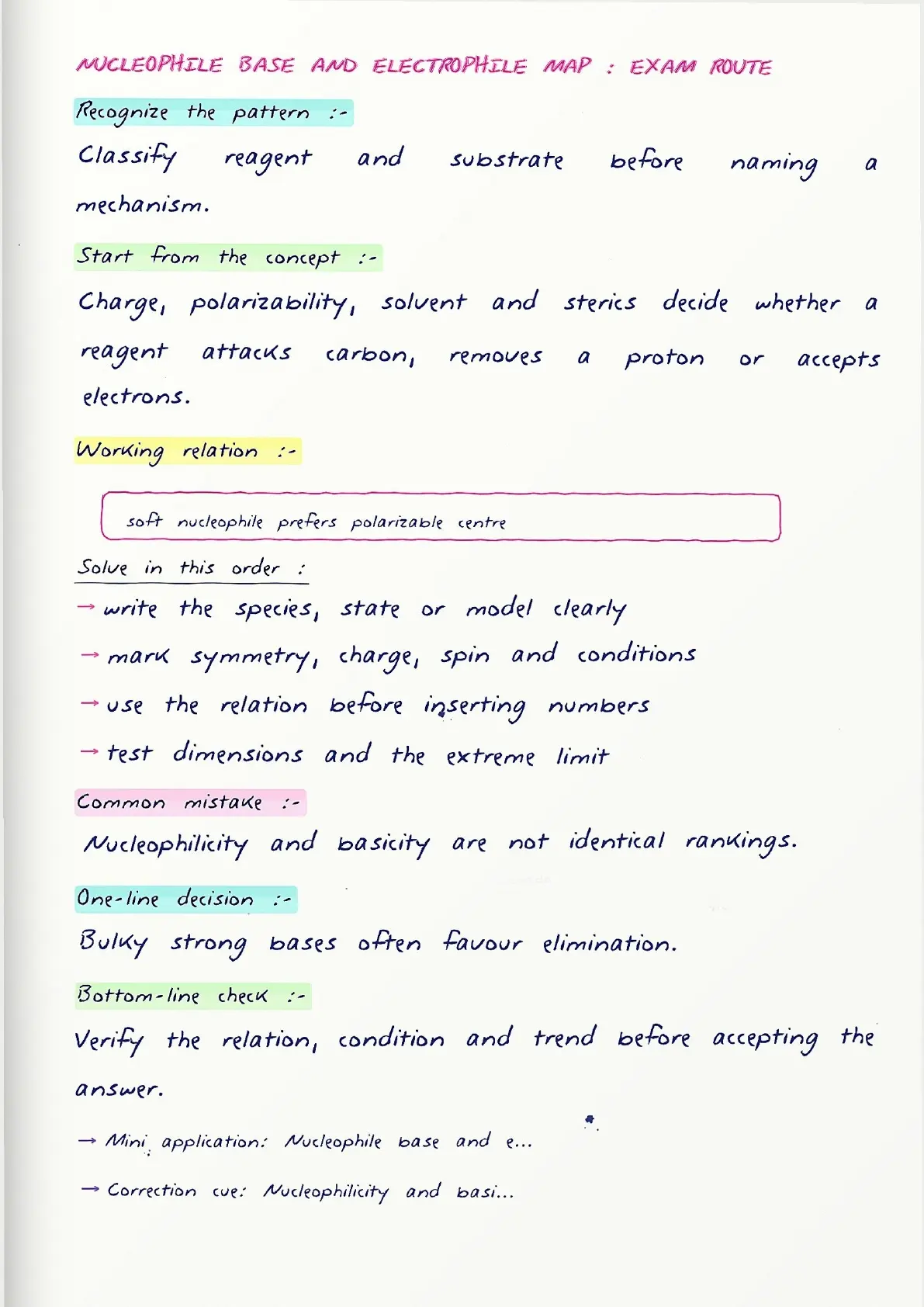
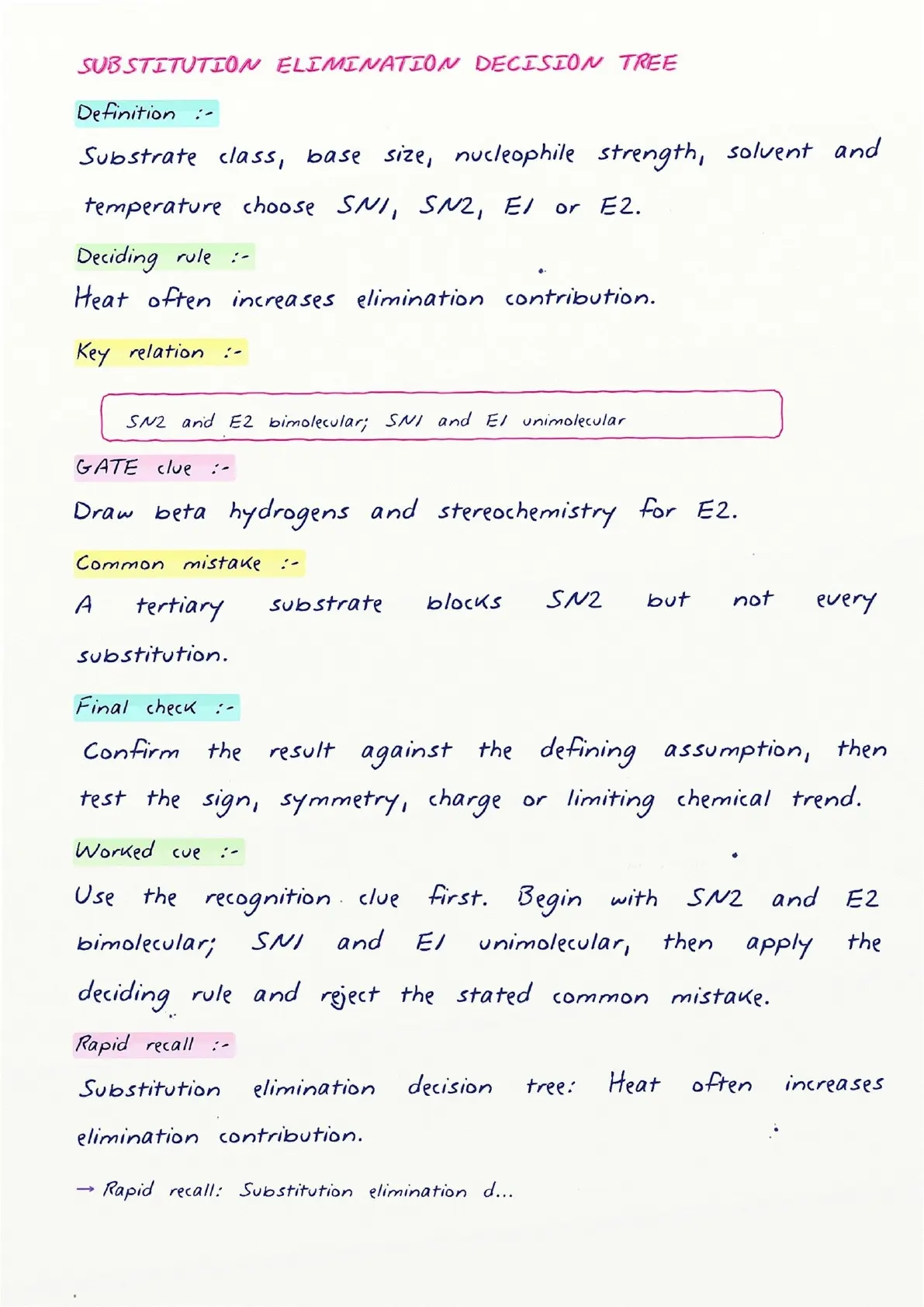
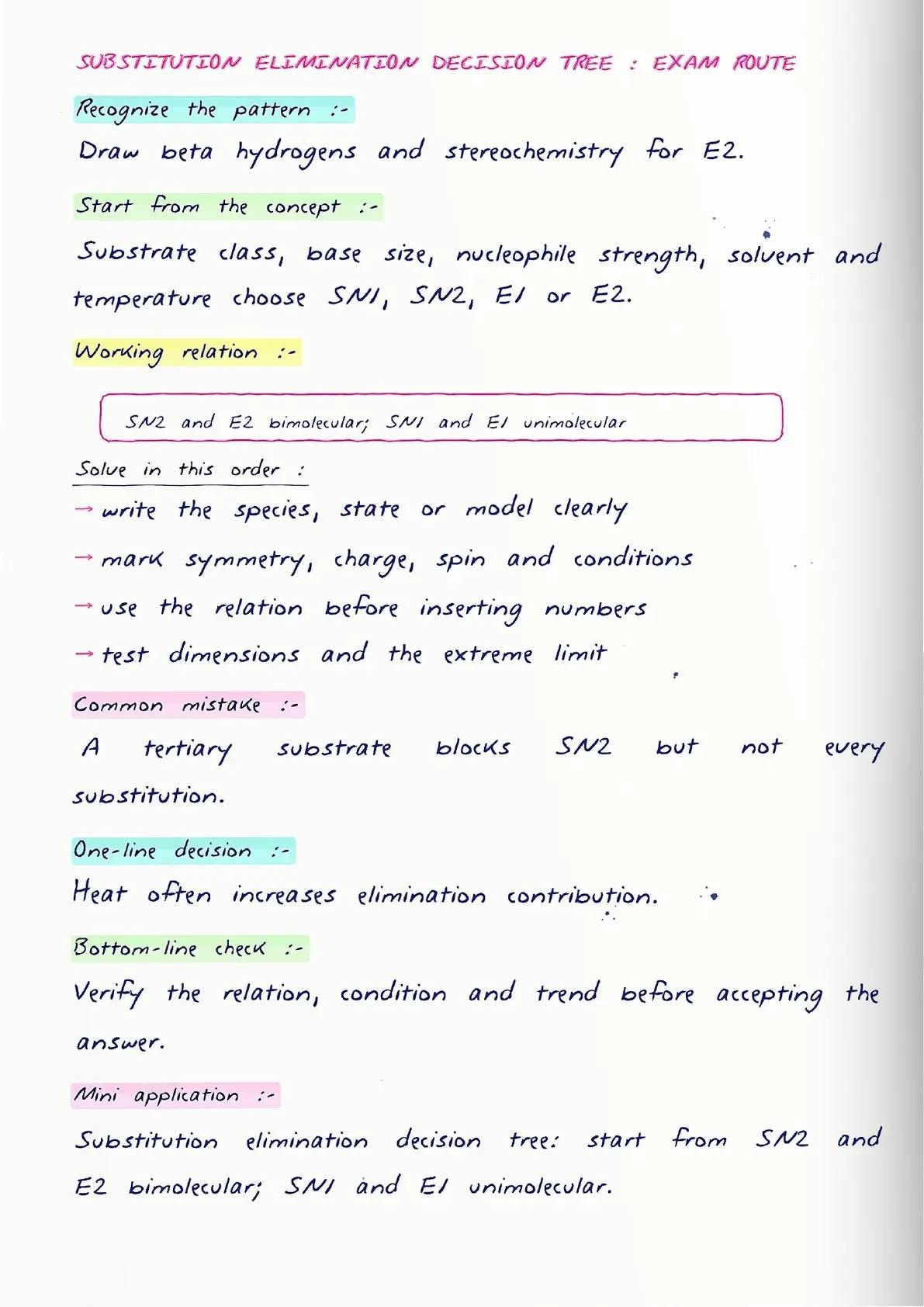
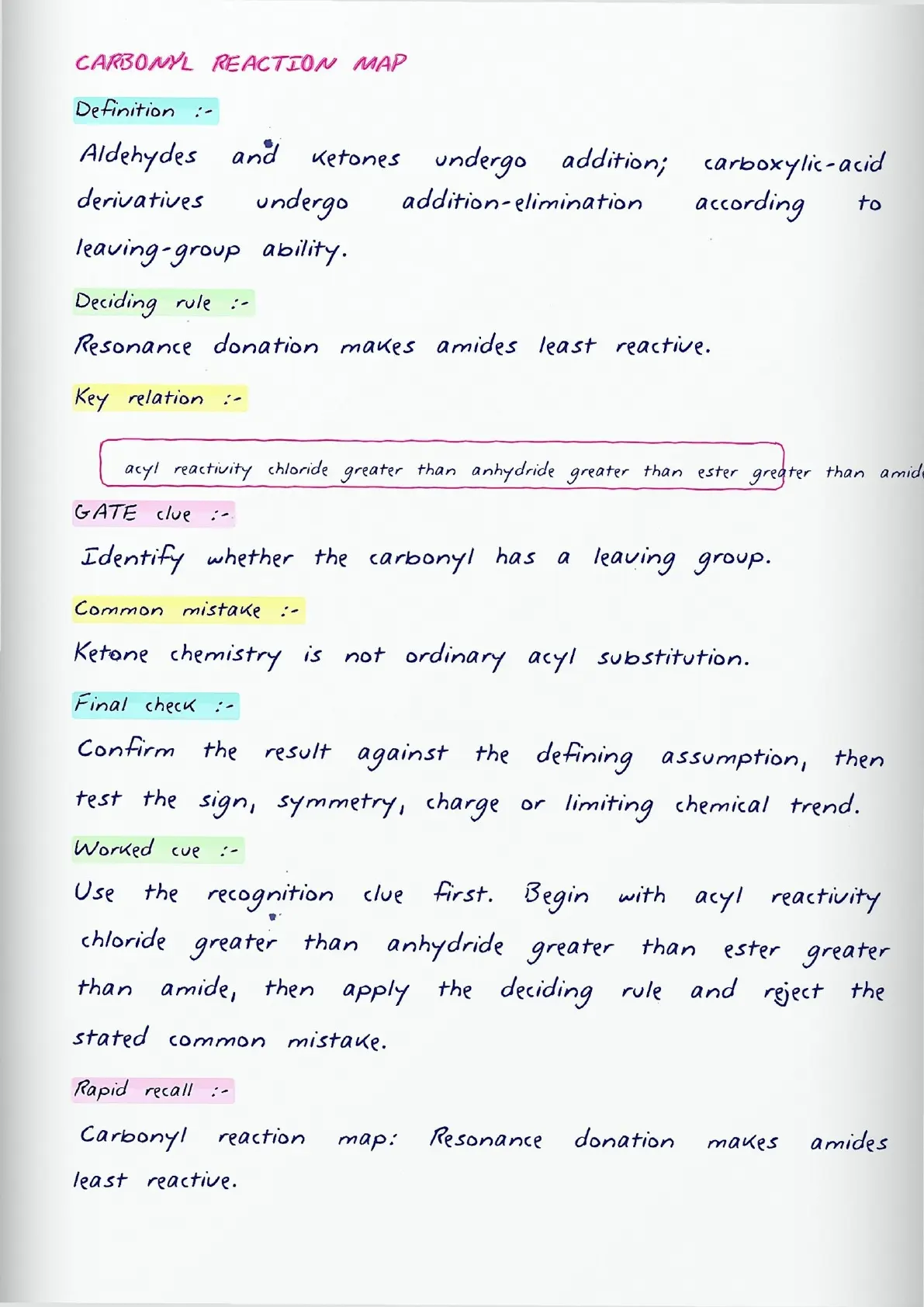
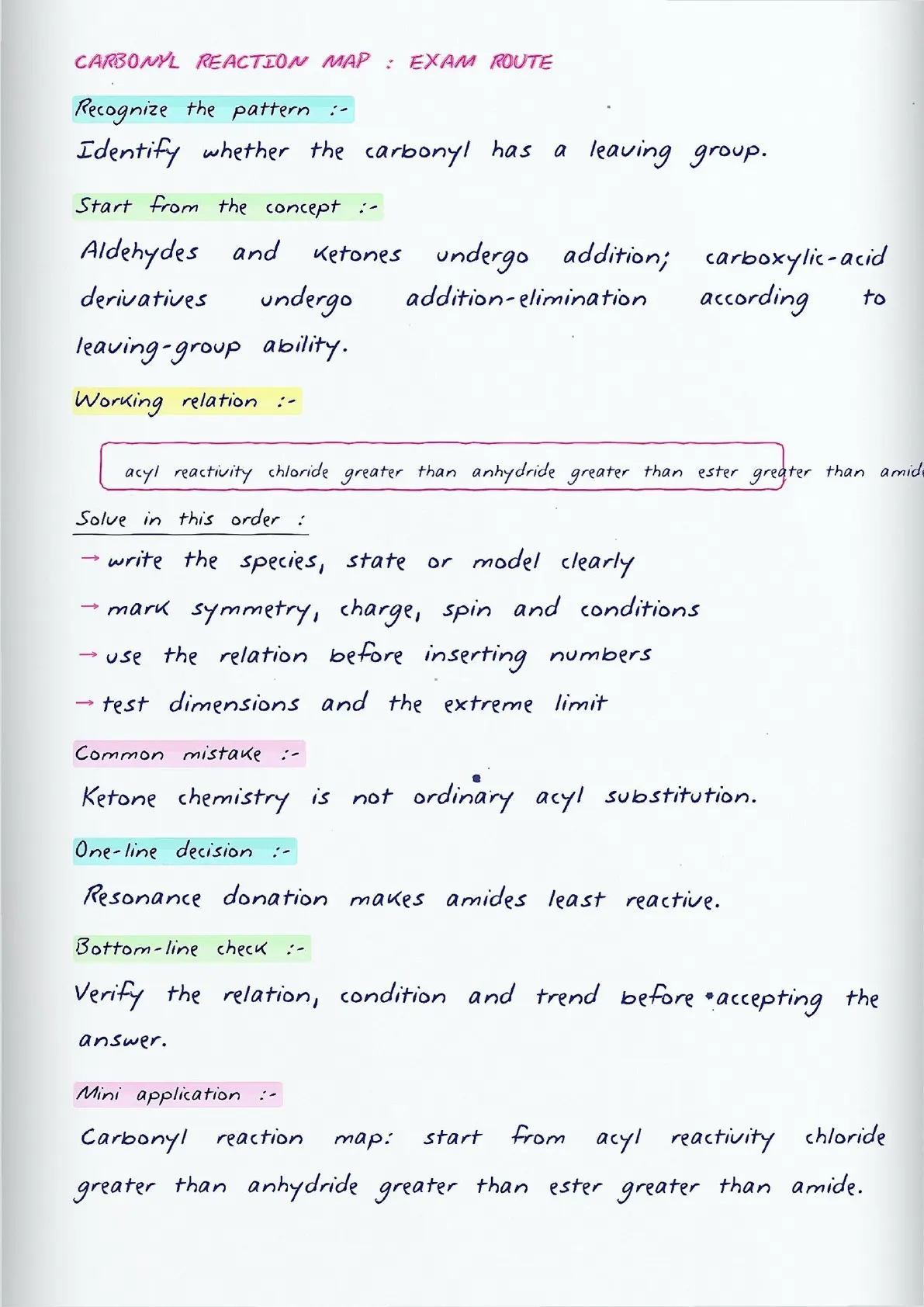
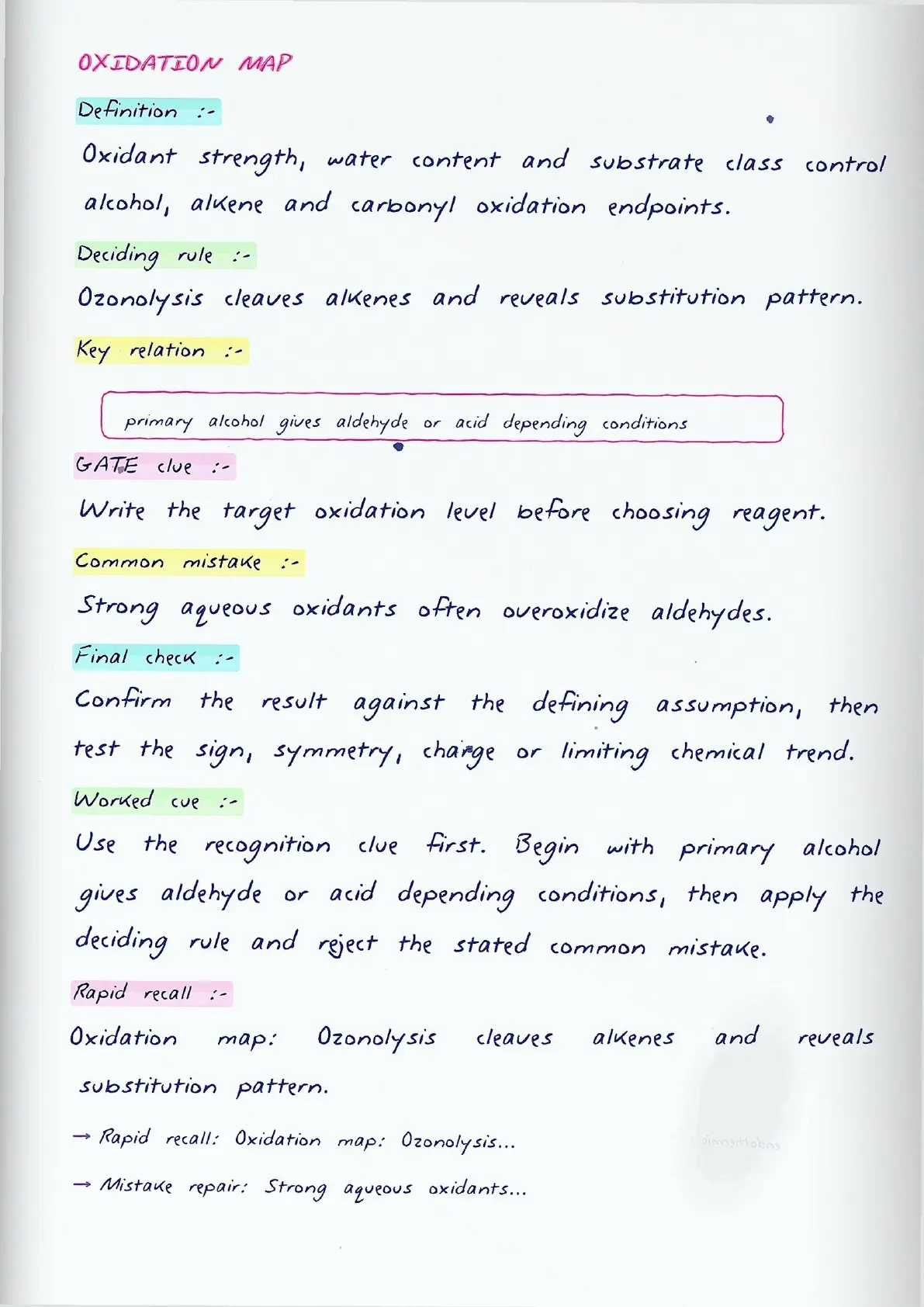
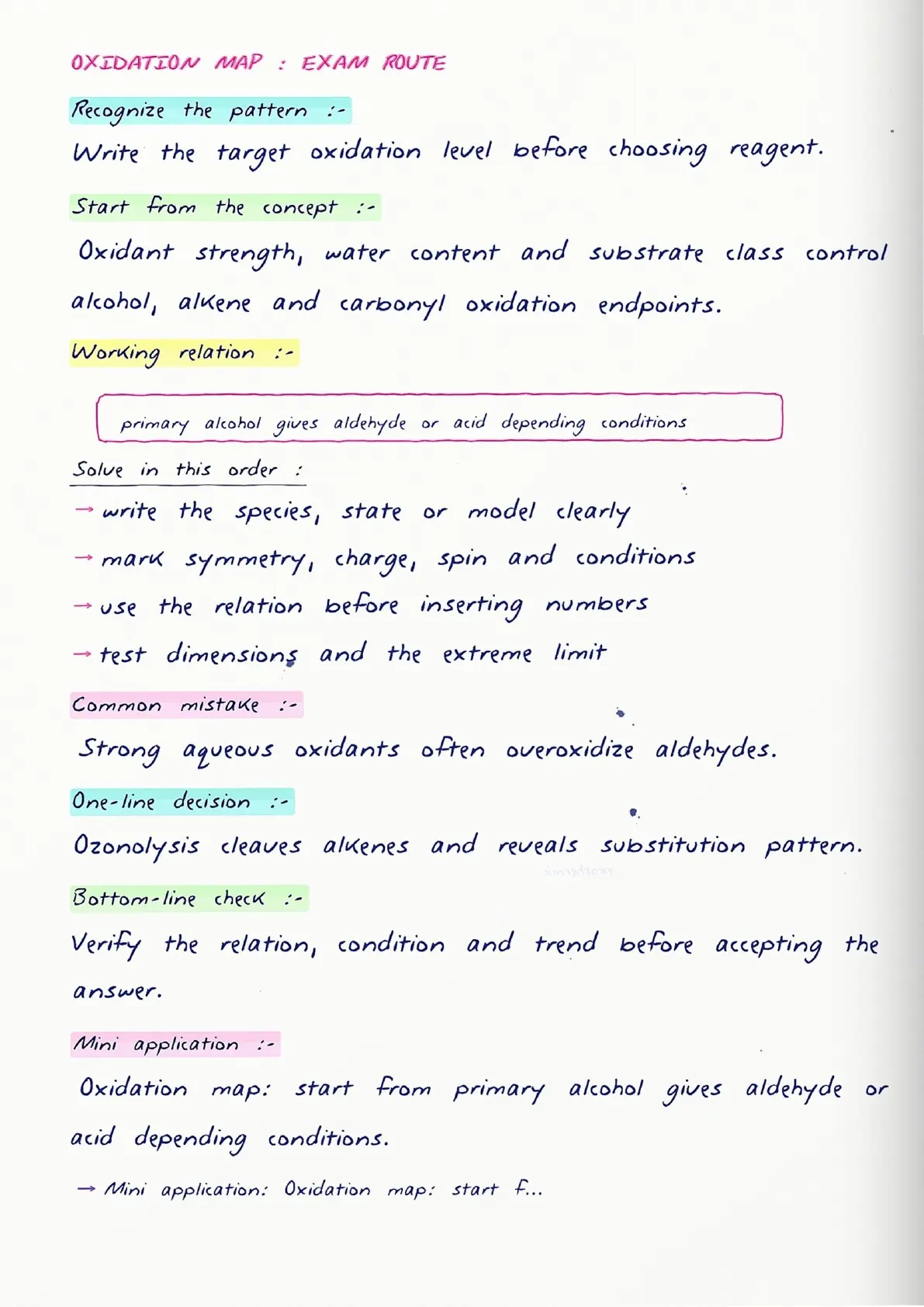
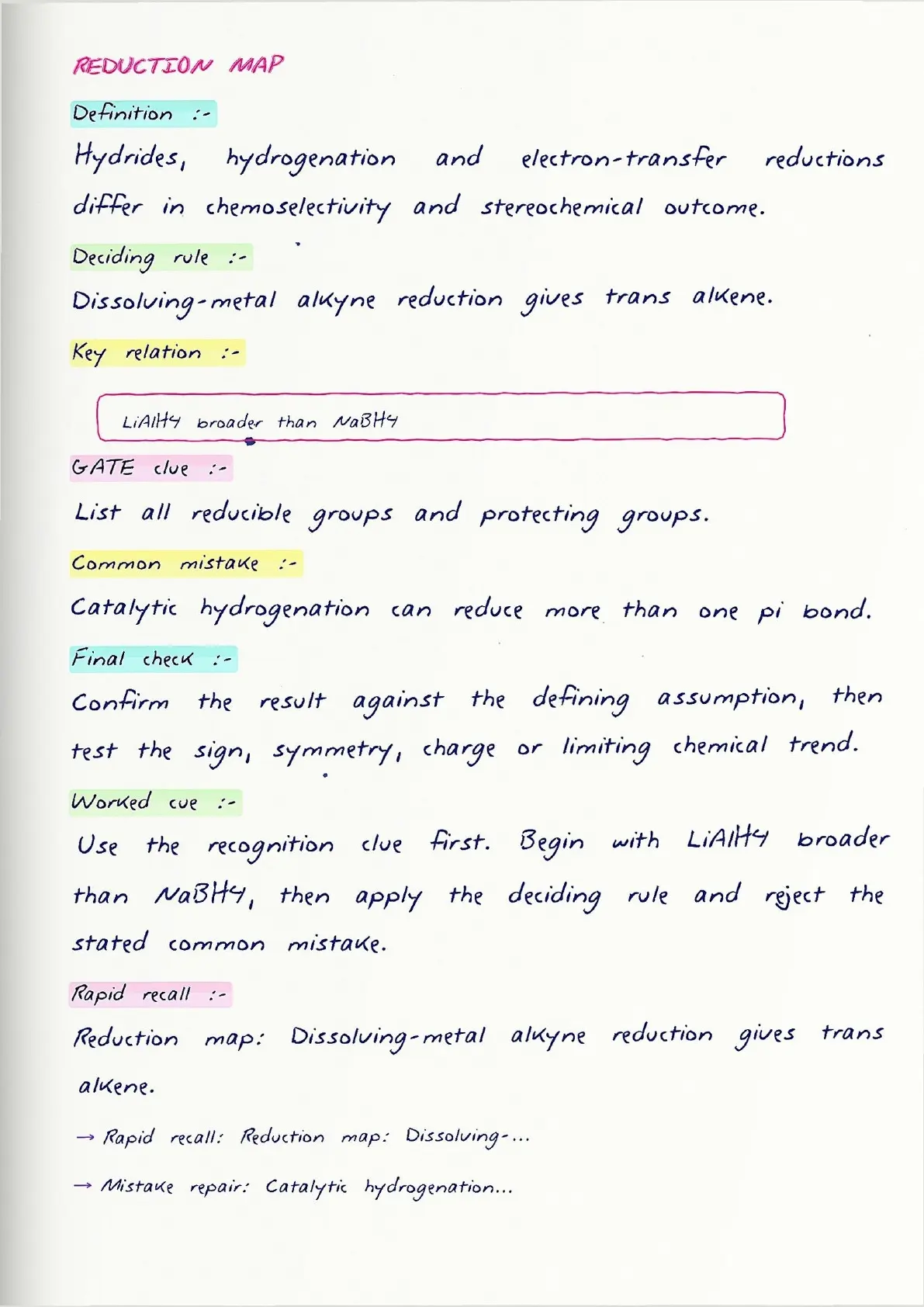
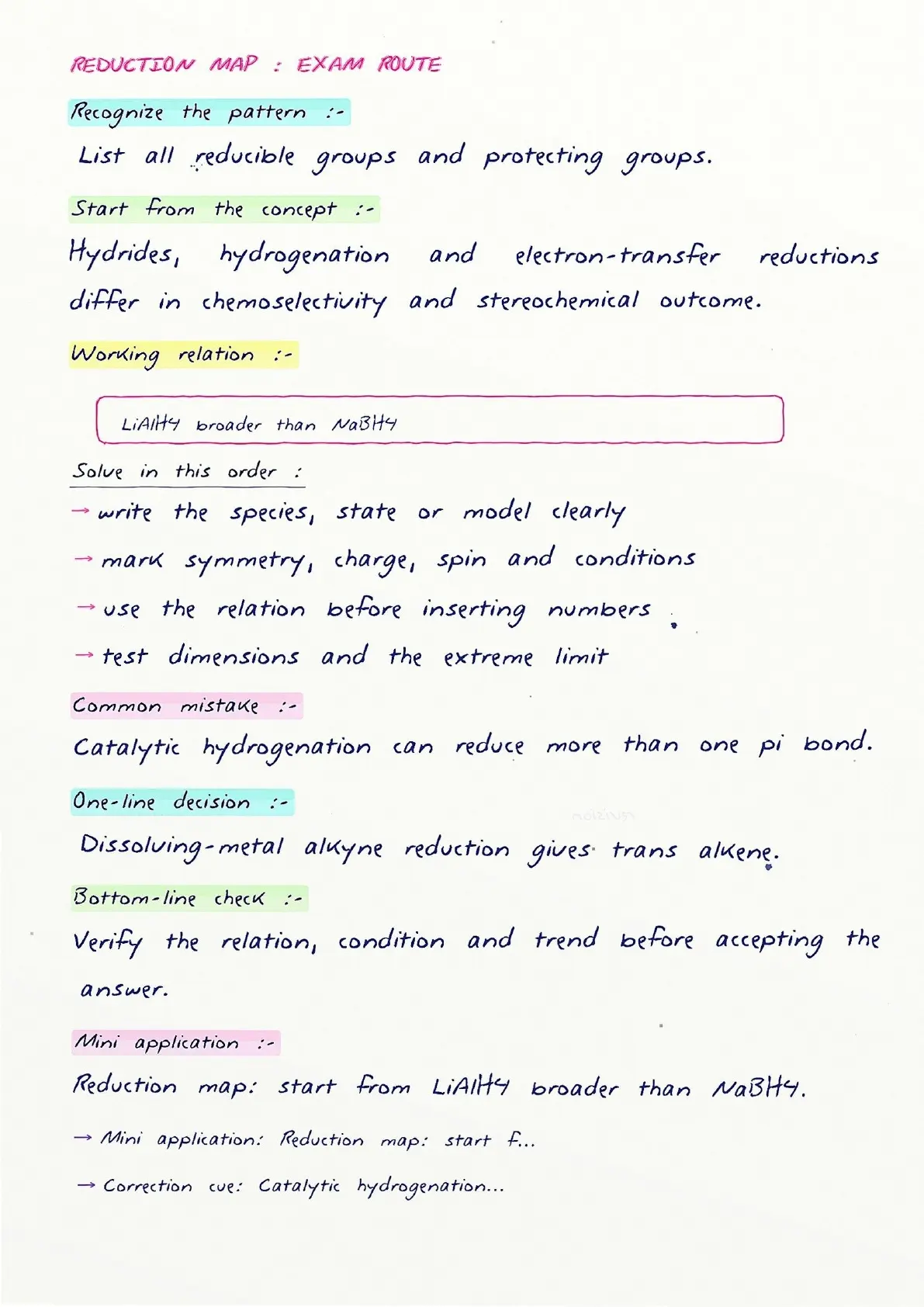
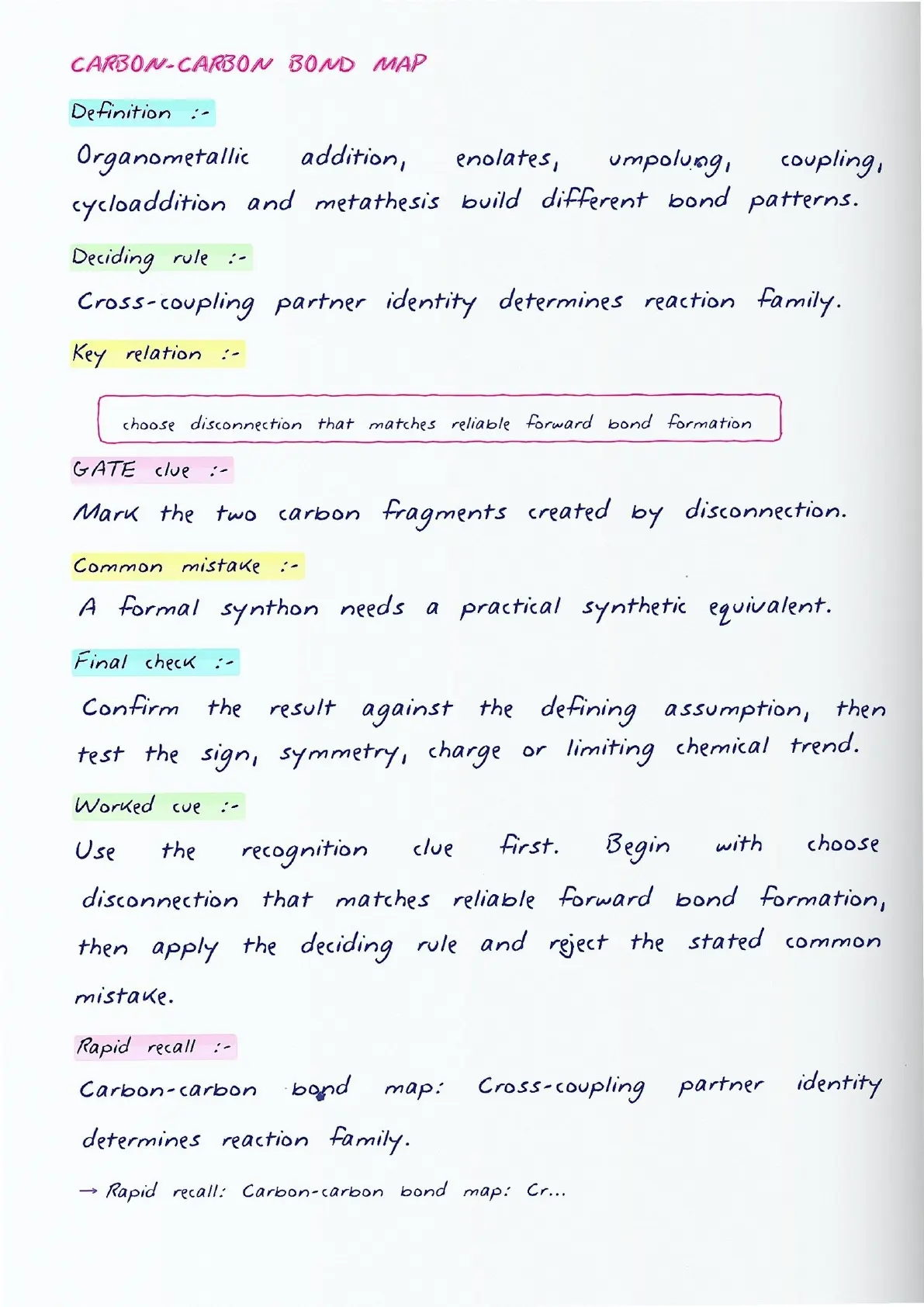
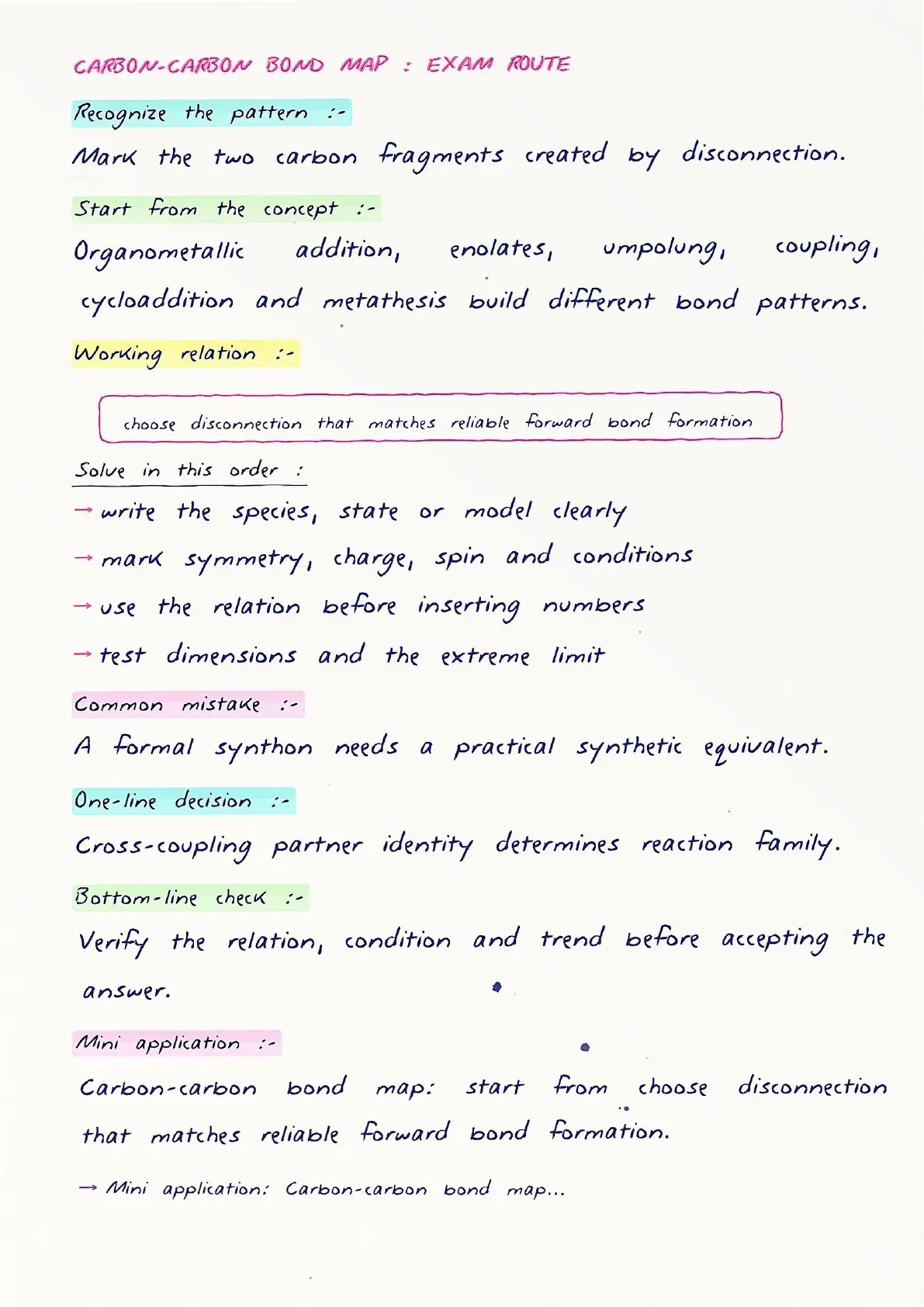
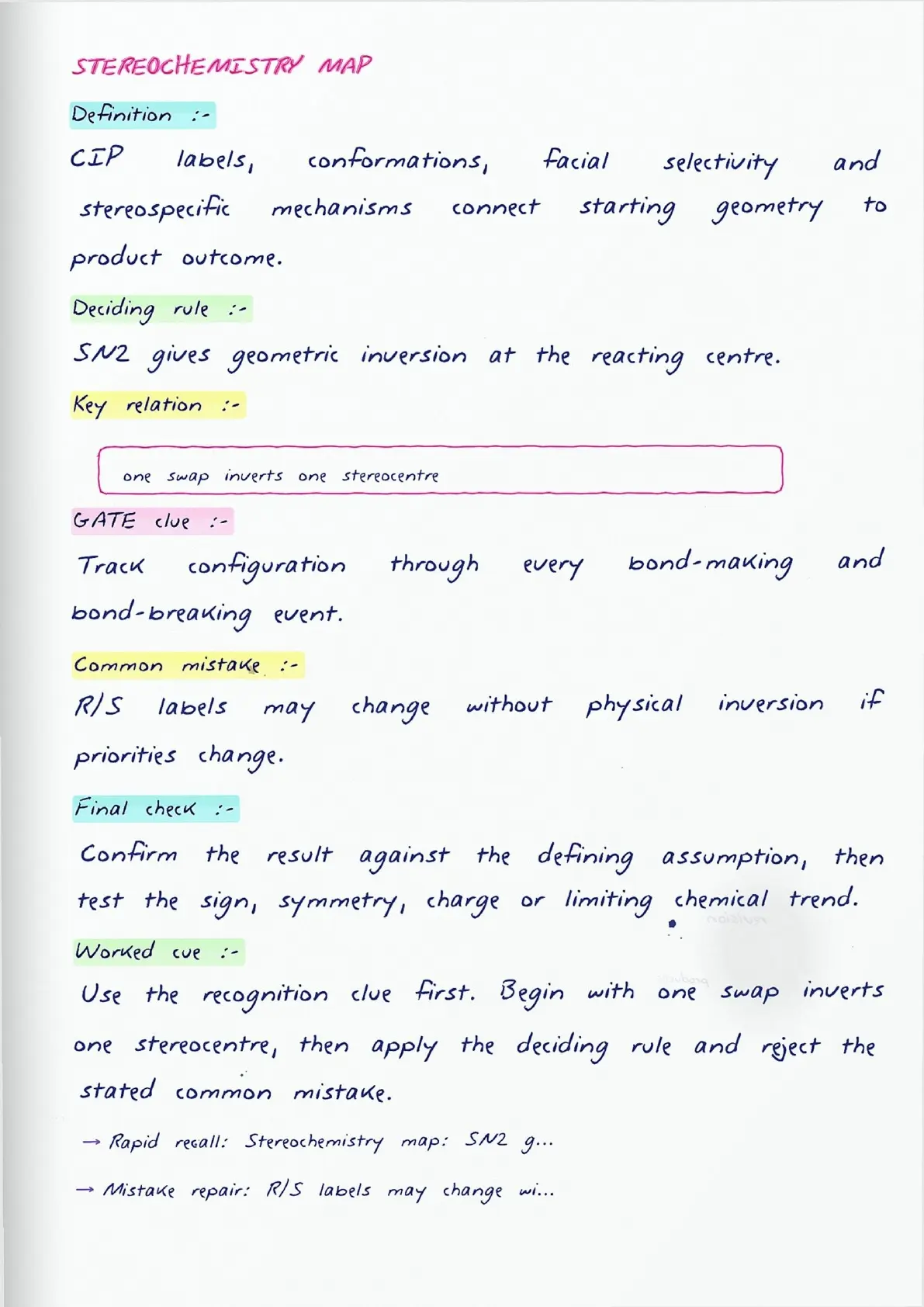
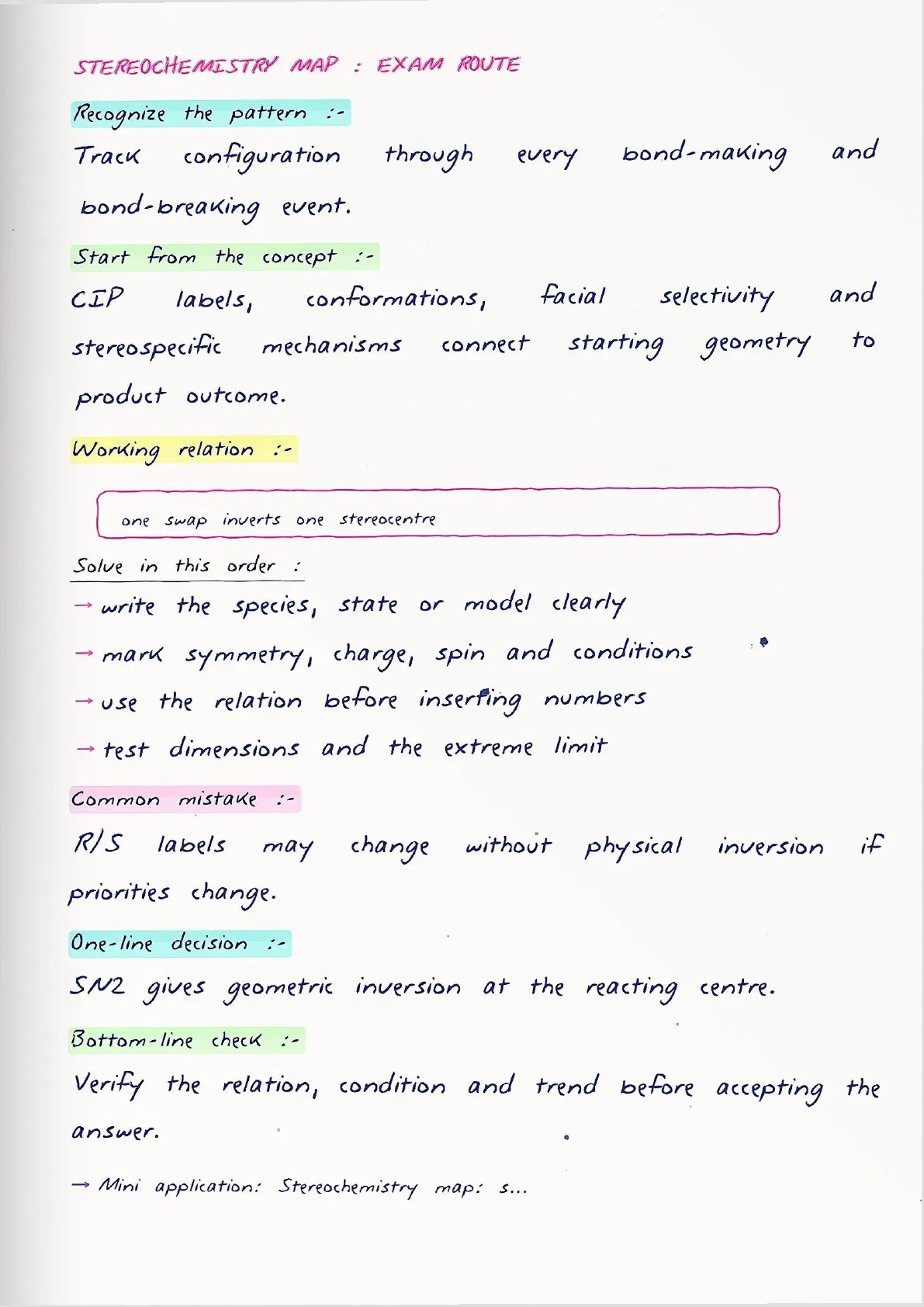
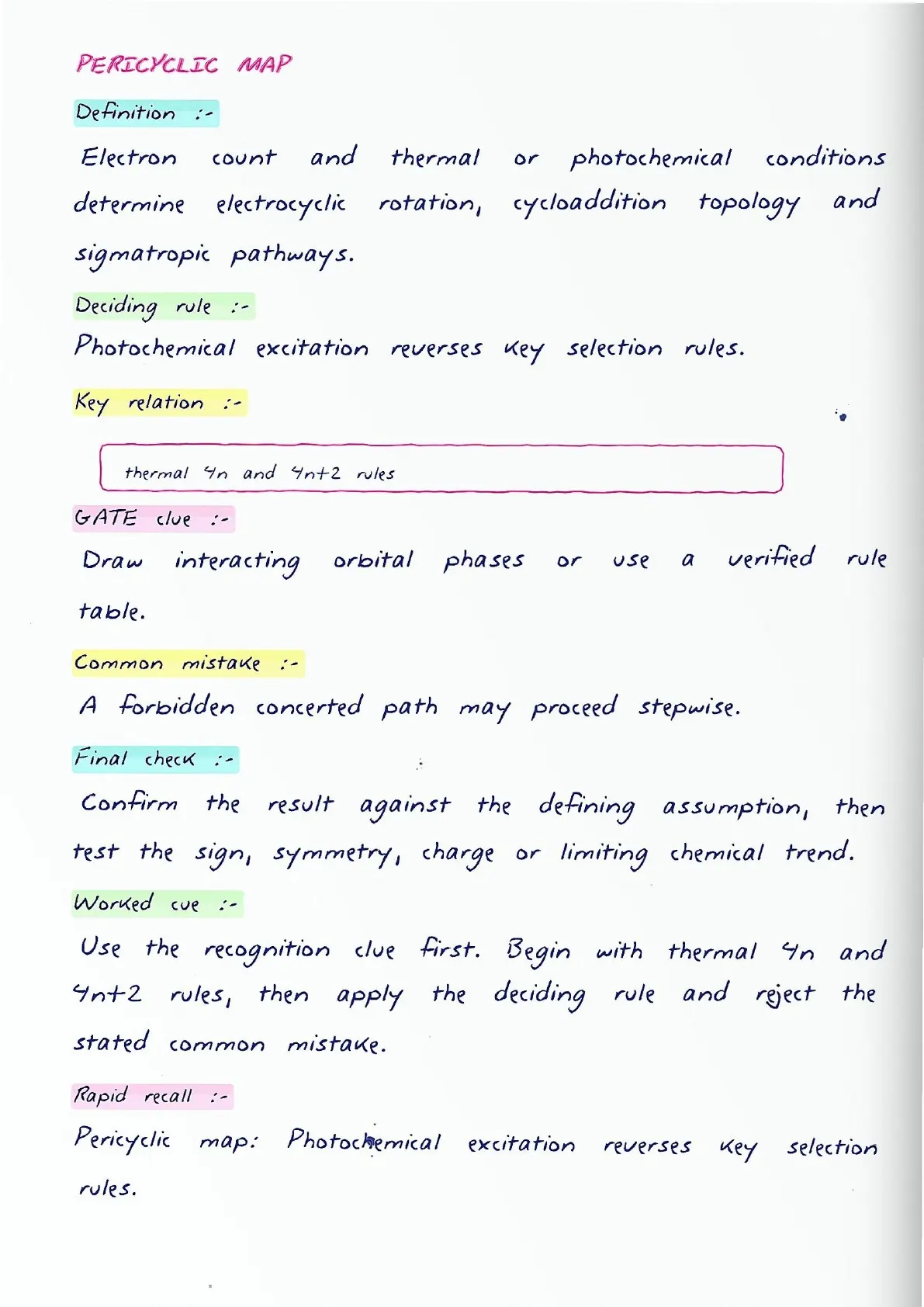
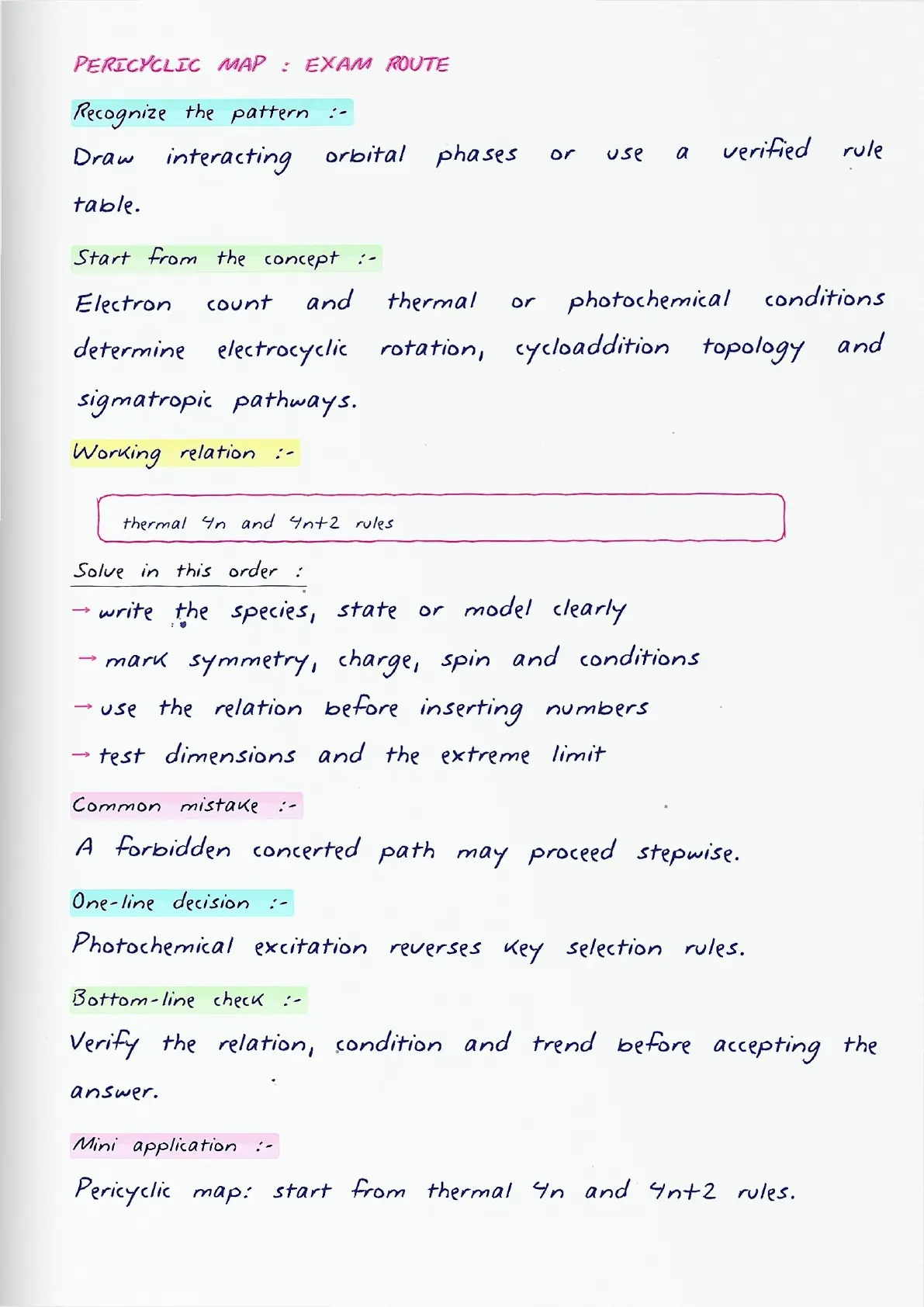
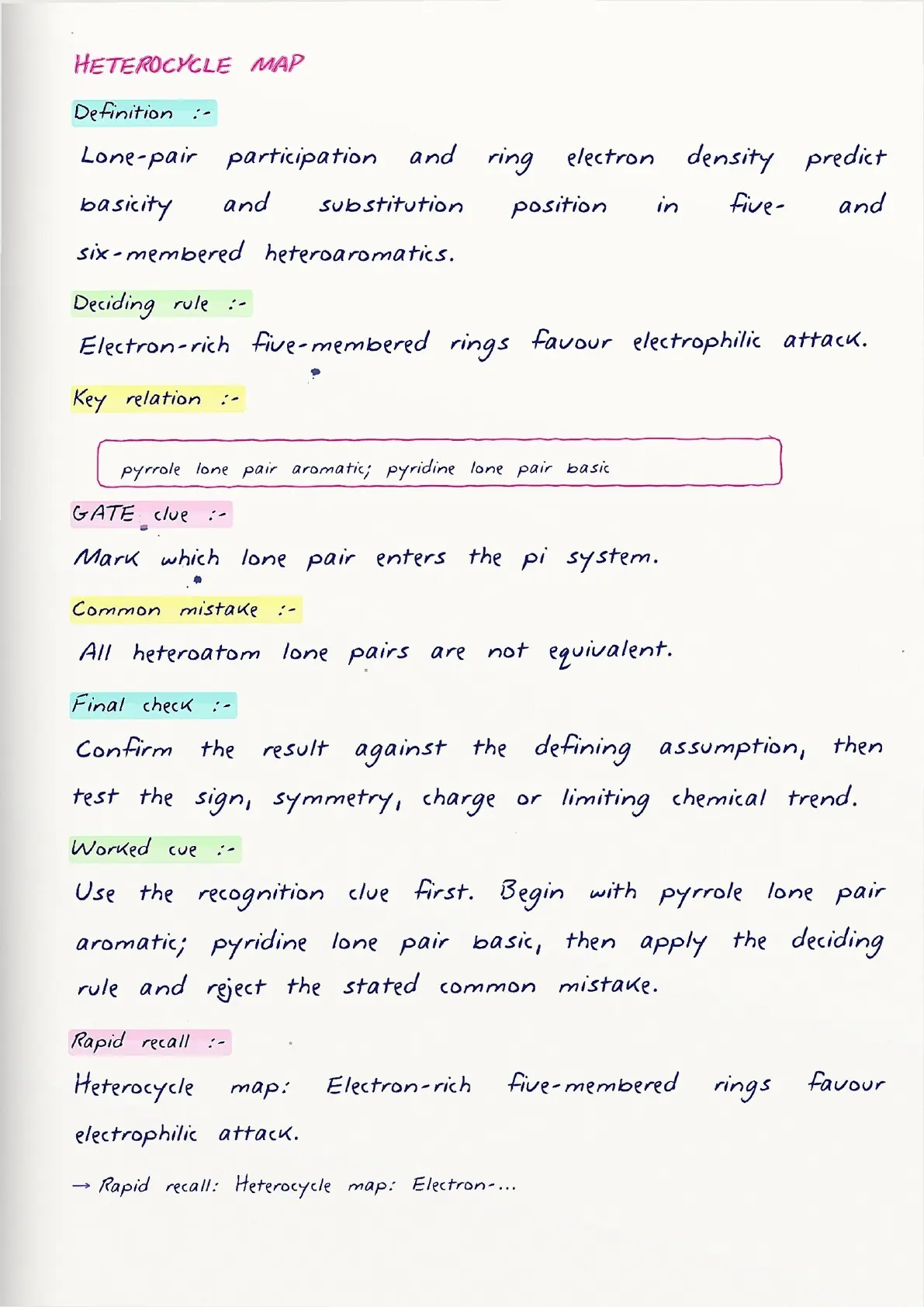
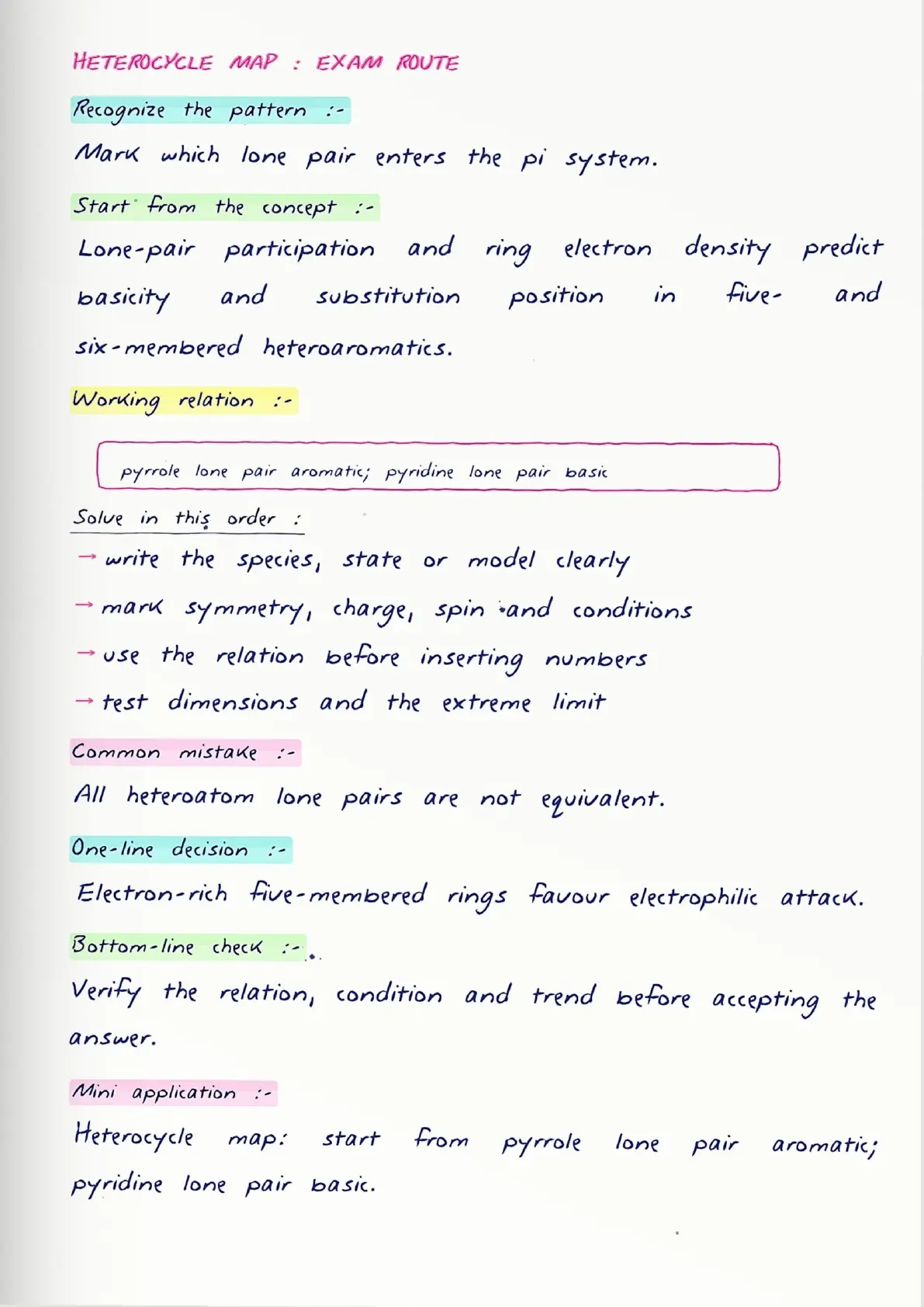
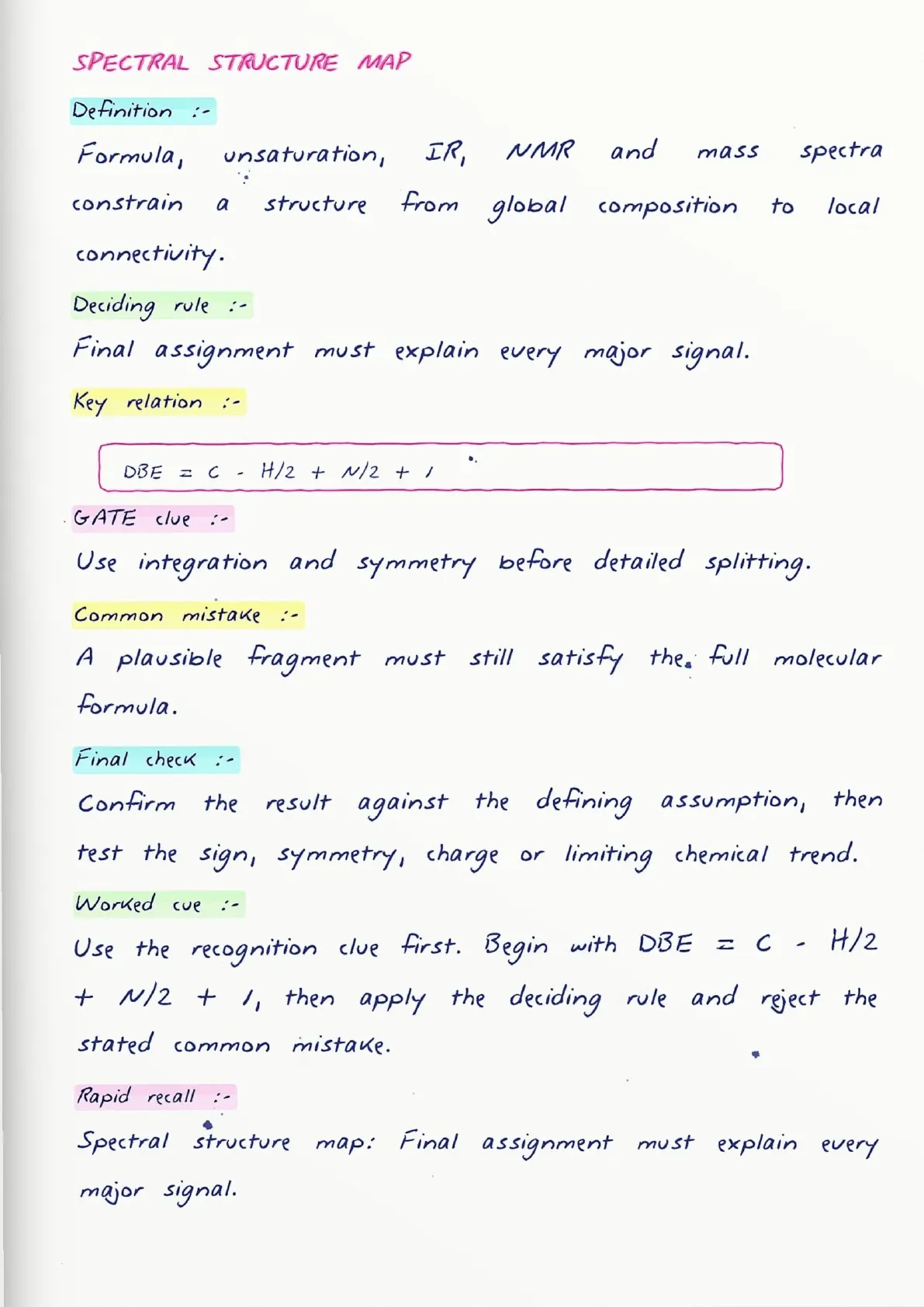
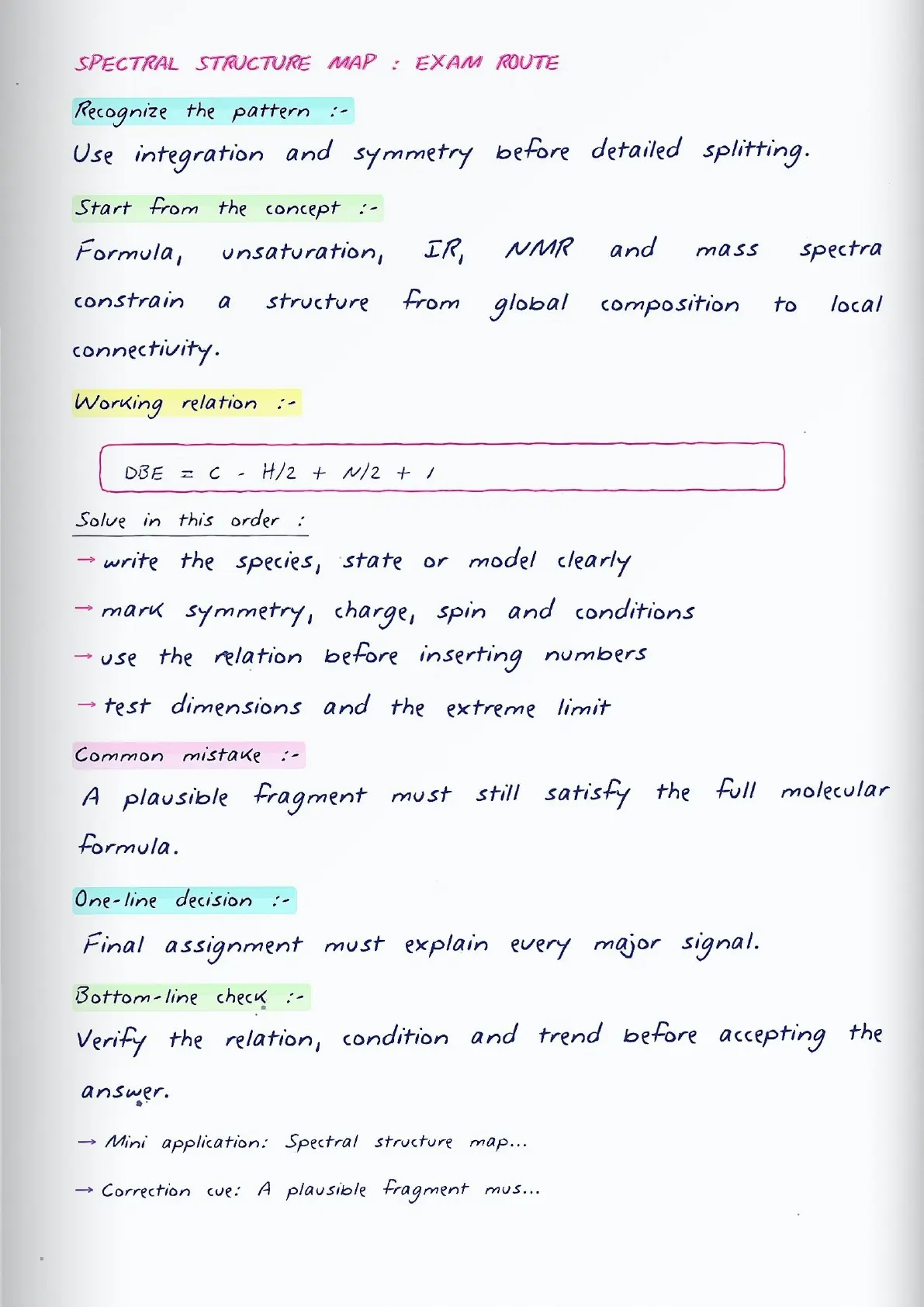
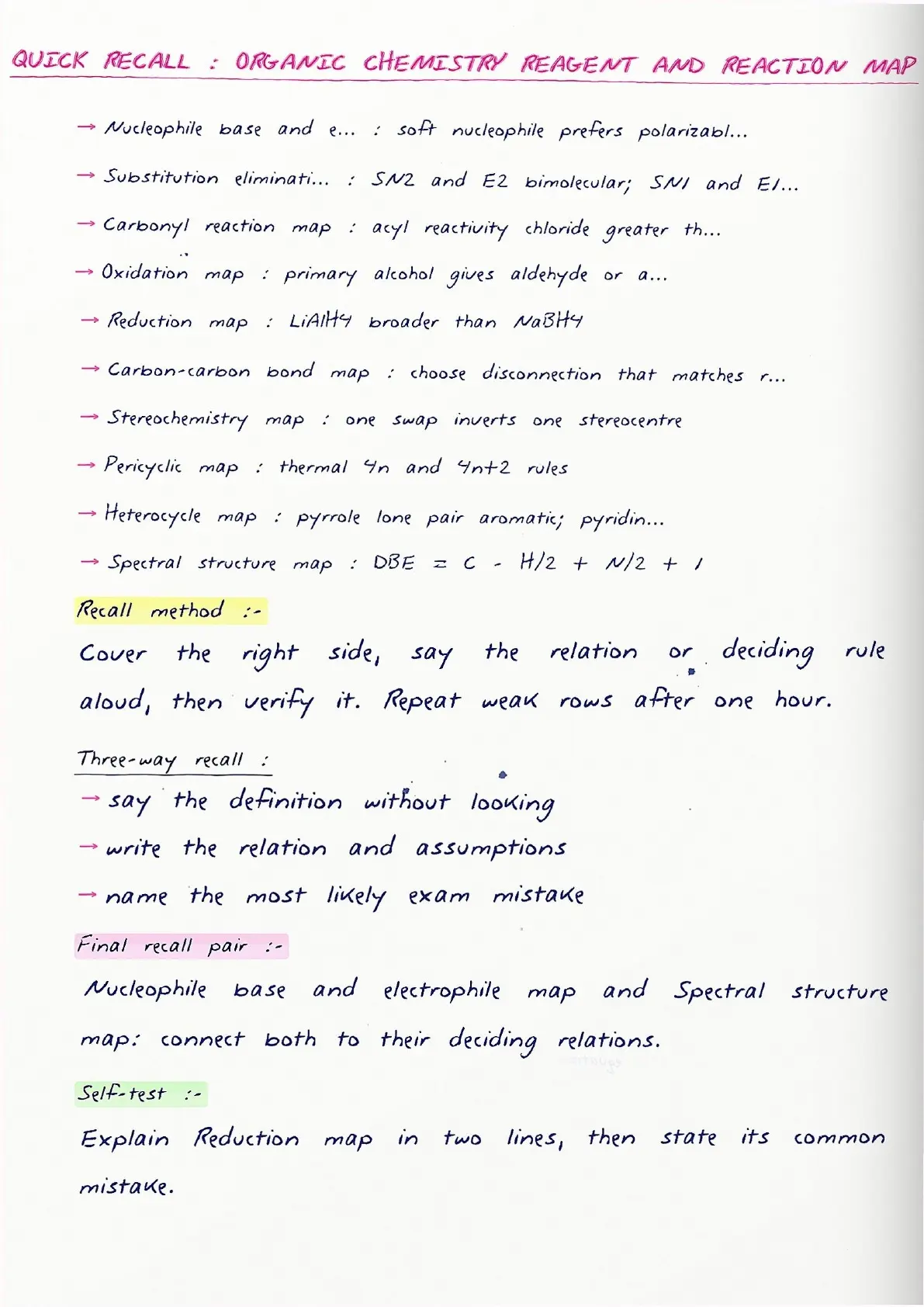
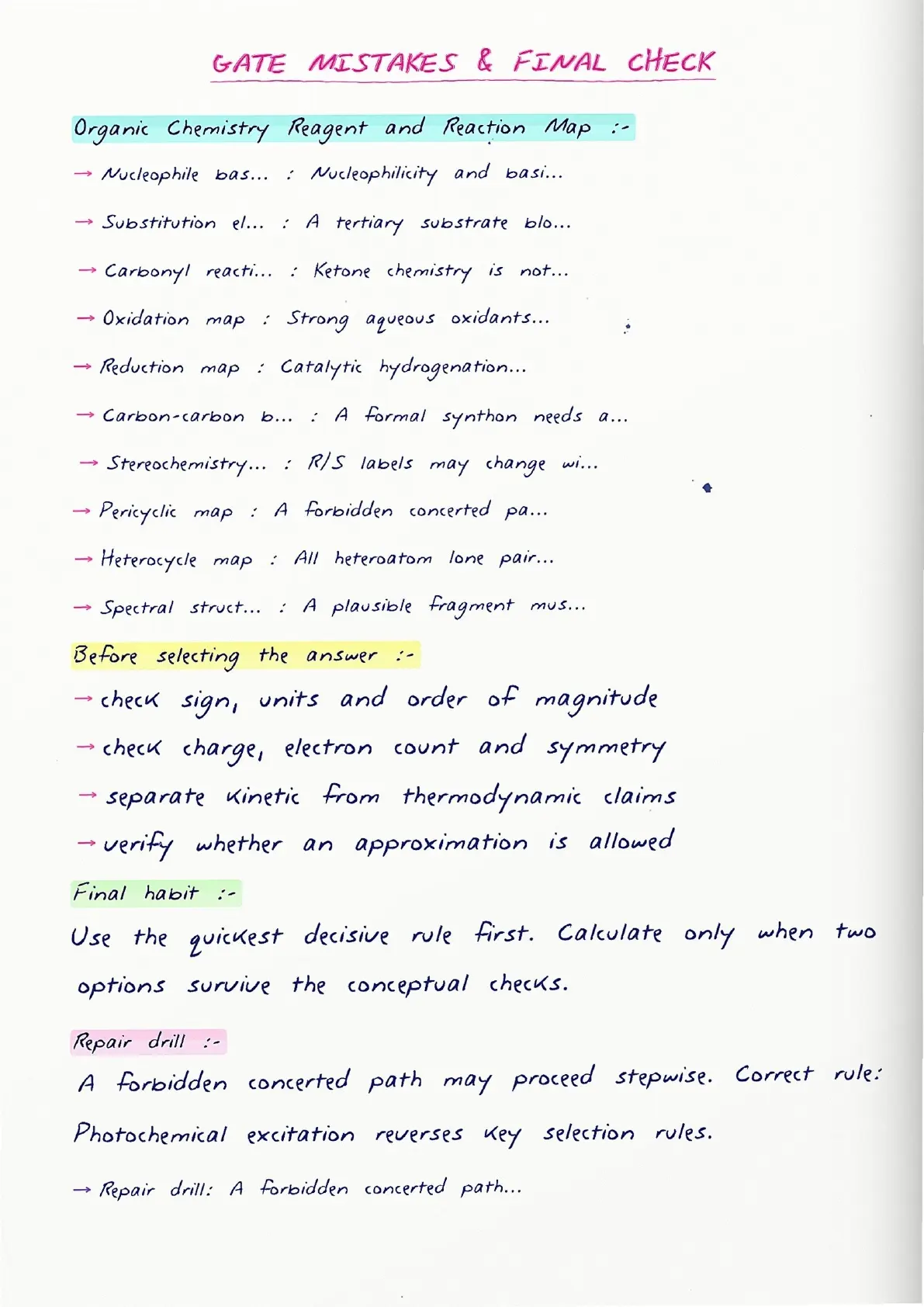
The map carries hand-drawn reaction-flow charts, colour-coded functional group conversion tables, and boxed reagent notes, along with a quick-revision sheet for the last few days. Every conversion is explained step by step, so you see why a reagent gives that product instead of memorising a bare arrow.
- Whole Organic Chemistry section pulled into one reaction map PDF.
- Named reactions and reagents grouped by the change they carry out.
- Hand-drawn charts and a revision sheet for fast last-day recall.
What These GATE Organic Reaction Map Notes Cover
The reaction map gathers the reagents, conversions, and named reactions spread across the GATE Chemistry organic syllabus into one view. It shows how a starting material moves to its product and which reagent drives that step. The aim is quick linking of ideas you have already read, not first-time learning.
- Reagent-to-product links laid out as a single connected chart.
- Named reactions placed next to the change they perform.
- Colour-coded functional group conversions for each family.
- Short mechanism cues that hint at why a step works.
GATE Organic Reaction Map Quick Revision
Source: PW JEE on YouTube
Topics Covered in GATE Organic Reaction Map
The map consolidates the full organic syllabus, so it draws from every reactive family rather than one chapter. It groups reagents by the job they do, which makes similar conversions easy to compare side by side. The list below shows the main threads the map ties together.
- A reagent-to-product map that links each reagent to its result.
- Named reactions such as Aldol, Cannizzaro, and Wittig, placed in context.
- Functional group conversions among alcohols, aldehydes, acids, and amines.
- Oxidation and reduction routes with the reagent that decides the outcome.
- Mechanism cues for substitution, addition, and elimination steps.
- Links across aromatic, carbonyl, and amine chemistry in one flow.
How the Notes Are Organised
The map is built around change rather than chapters, so reagents that do the same job stand together. You can trace one starting compound outward to all the products it can form, or read backward from a product to the reagents that reach it. This layout makes the whole section feel connected.
Because each branch is short and boxed, you can open just the family you are revising that day and skip the rest until you need it.
How GATE Organic Reaction Map Links to Other Topics
The reaction map is a bridge across the whole Organic Chemistry section, so it pulls threads from every organic area of the GATE Chemistry paper. Revising it well strengthens recall in each of the topics it draws from, since the same reagents keep returning.
- Draws on hydrocarbons and aromatic chemistry for substitution routes.
- Ties in alcohols, phenols, and ethers through common conversions.
- Connects aldehydes, ketones, and carboxylic acids by shared reagents.
- Links amines and nitrogen compounds into the same product web.
Important Topics in GATE Organic Reaction Map
Some branches of the map repay revision more than others because their reagents and named reactions appear again and again in the paper. If your time is short, fix these first so you can name the product and the mechanism cue without pausing.
- Carbonyl named reactions like Aldol, Cannizzaro, and Wittig.
- Selective oxidation and reduction, where the reagent sets the product.
- Substitution and elimination cues that decide SN1, SN2, E1, or E2.
- Common traps: a mild reagent stops at the aldehyde, a strong one goes further.
How to Prepare GATE Organic Reaction Map with Handwritten Notes
Treat the map as a revision layer over topics you have already studied, not a first read. Open it after a chapter, trace the reagents you just met, then solve a few previous year questions that use them. Return to the map before mock tests to refresh the links quickly.
- First pass: read the whole map once to see how the branches join.
- Second pass: drill carbonyl reactions, oxidation, reduction, and substitution.
- Test yourself by naming the product for a reagent with the chart covered.
- Final week: revise the map and the quick-revision sheet together.
Why These Notes Help You Score Better
A single connected map is quicker to scan than many separate chapters, which is why it works so well for revision under exam pressure. When reagents sit next to the changes they cause, students recall the product and the mechanism cue faster, and that speed turns into marks on reasoning and conversion questions.
GATE Chemistry Organic Reaction Map Handwritten Notes FAQs
Ques. What is the Organic Chemistry reagent and reaction map?
Ans. It is a revision map that links every reagent to its product across the organic syllabus, pulling named reactions, conversions, and mechanism cues into one connected chart.
Ques. Is this a topic to learn or a revision aid?
Ans. It is a last-stage revision aid. It gathers organic chemistry you have already studied into one map so you can refresh reagents and reactions quickly before the exam.
Ques. Which organic areas does the reaction map draw from?
Ans. It draws from hydrocarbons, aromatic chemistry, alcohols and phenols, aldehydes, ketones, carboxylic acids, and amines, tying their shared reagents into a single flow.
Ques. How should I use the map for GATE Chemistry revision?
Ans. Open it after each chapter, trace the reagents you met, solve related previous year questions, and revise the full map with the quick-revision sheet in the final week.



Comments