




The Physical Chemistry Formula and Problem Solving Book is a last-stage revision resource that pulls the whole Physical Chemistry section of the GATE Chemistry paper into one place. It works as a formula book with solved numerical problems, so you can revise every key result fast in the final days. Instead of a fresh chapter set, it gives you the formulas and shortcuts you need right before the exam, ready for quick practice.
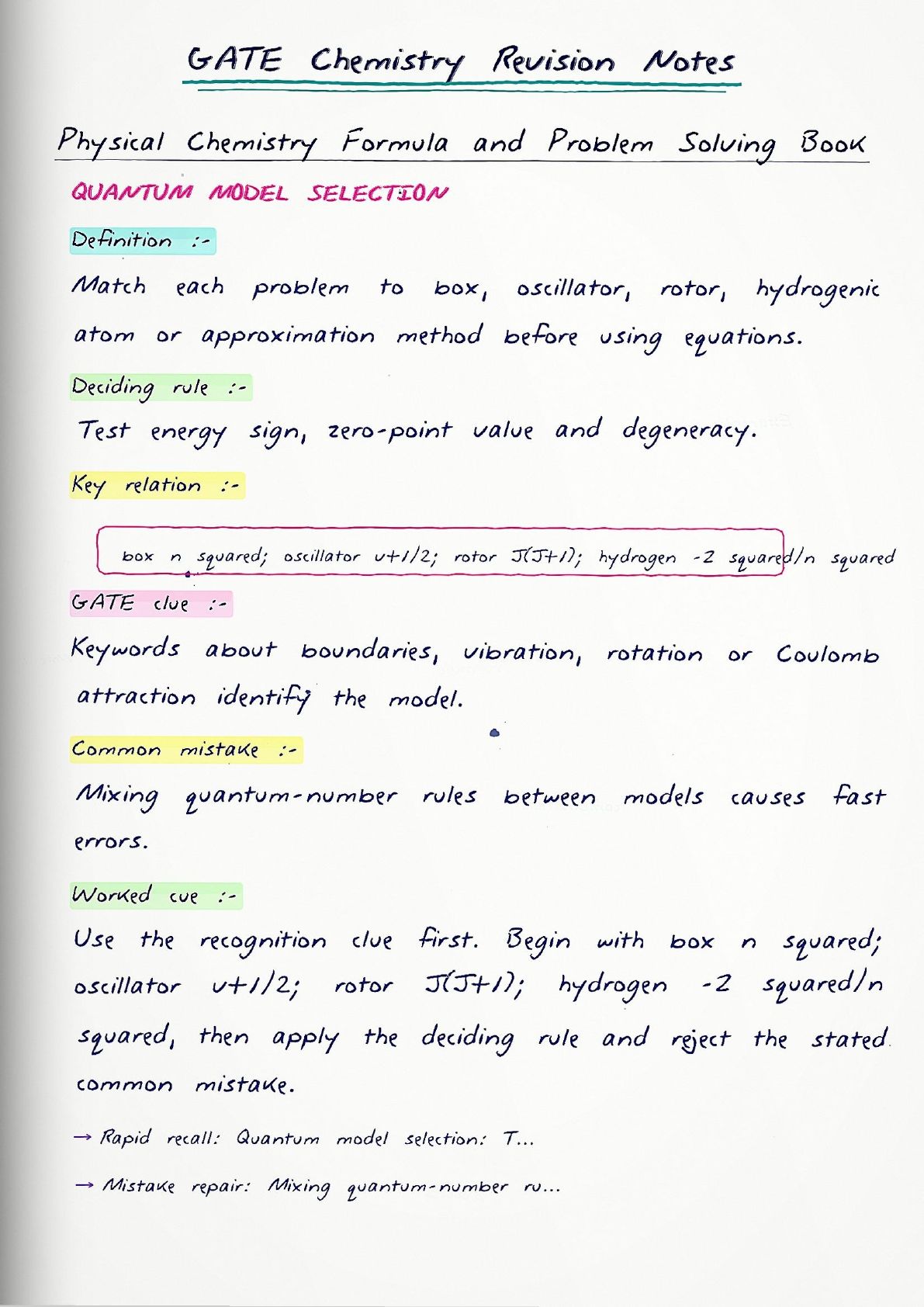

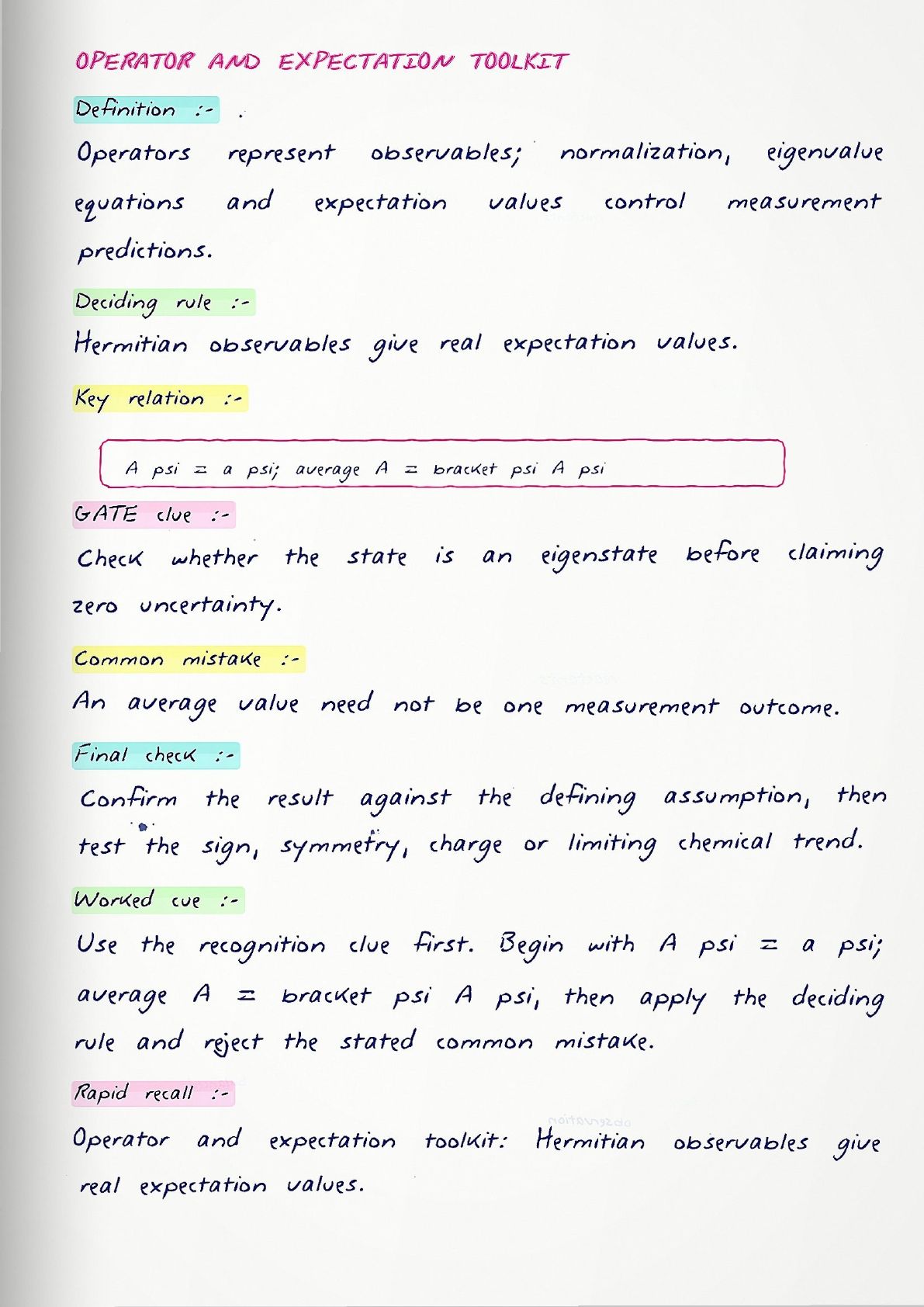
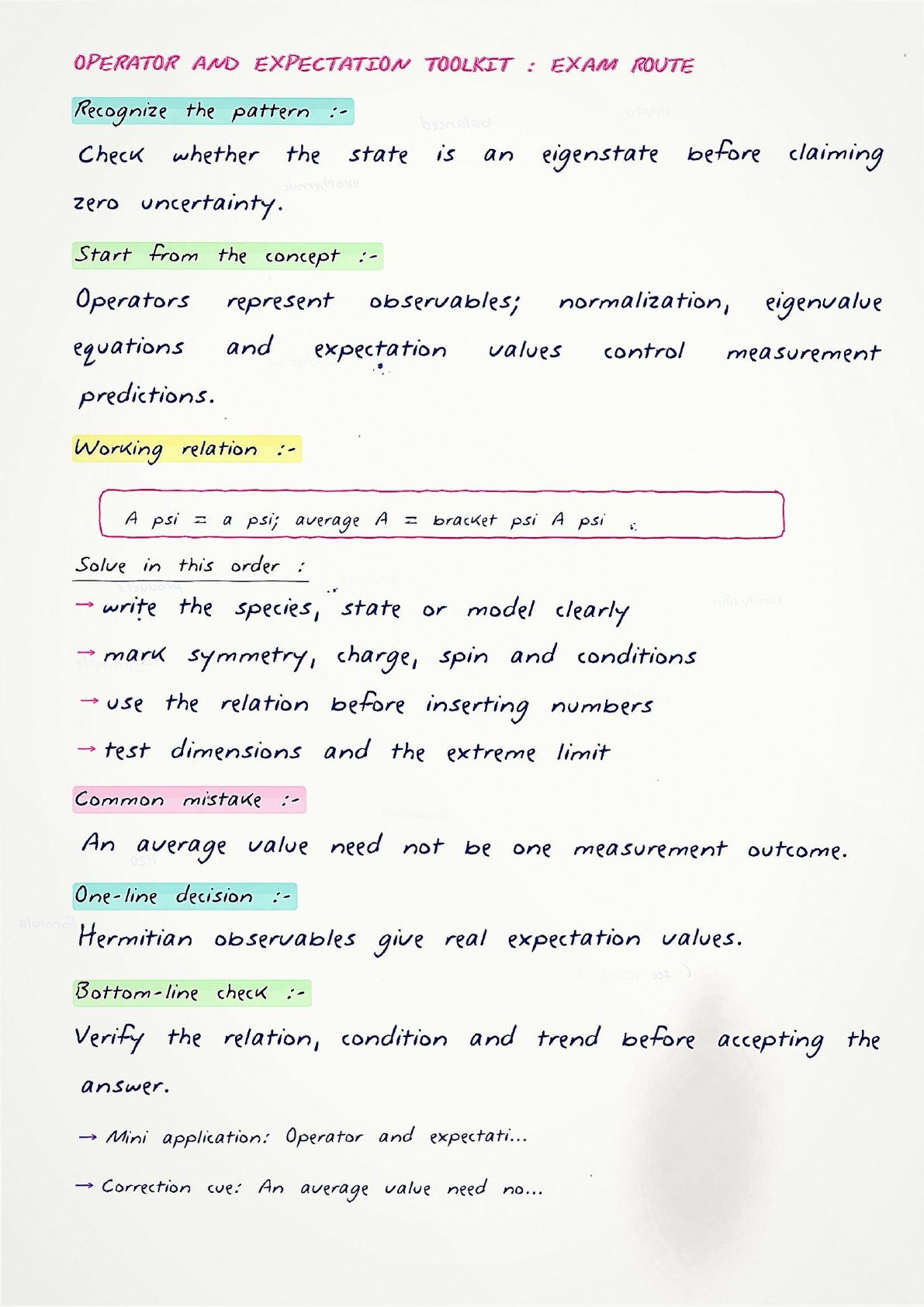
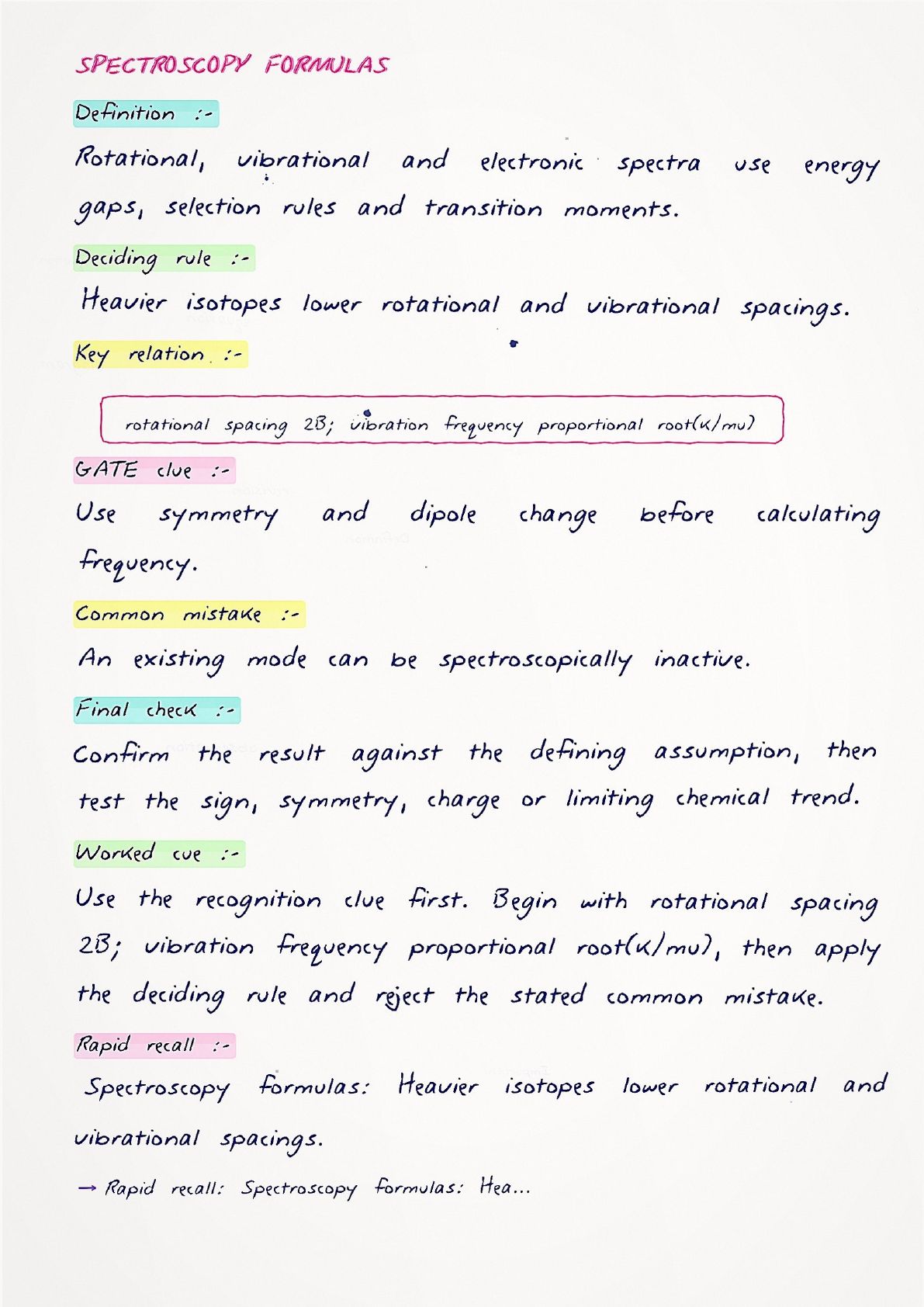
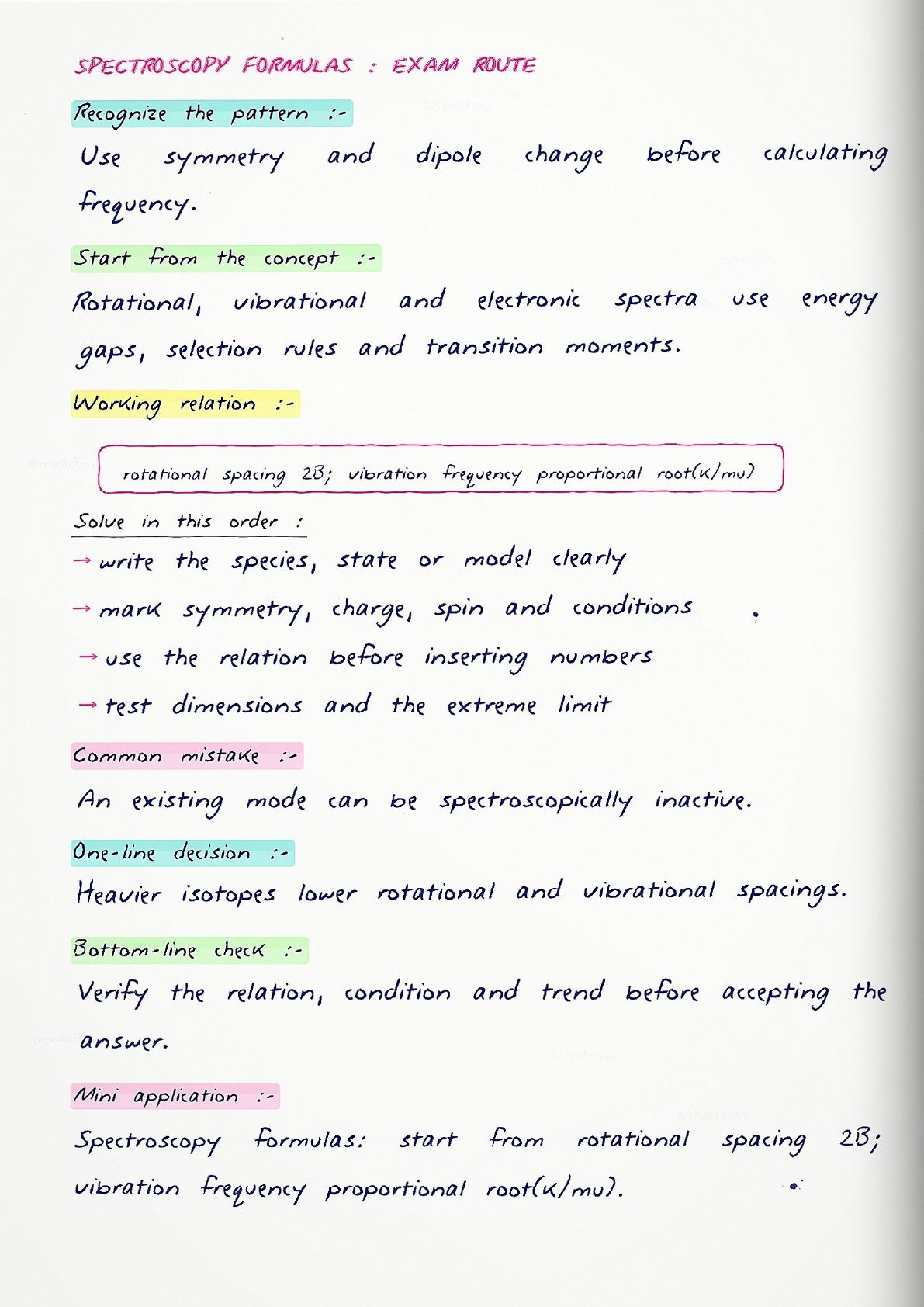
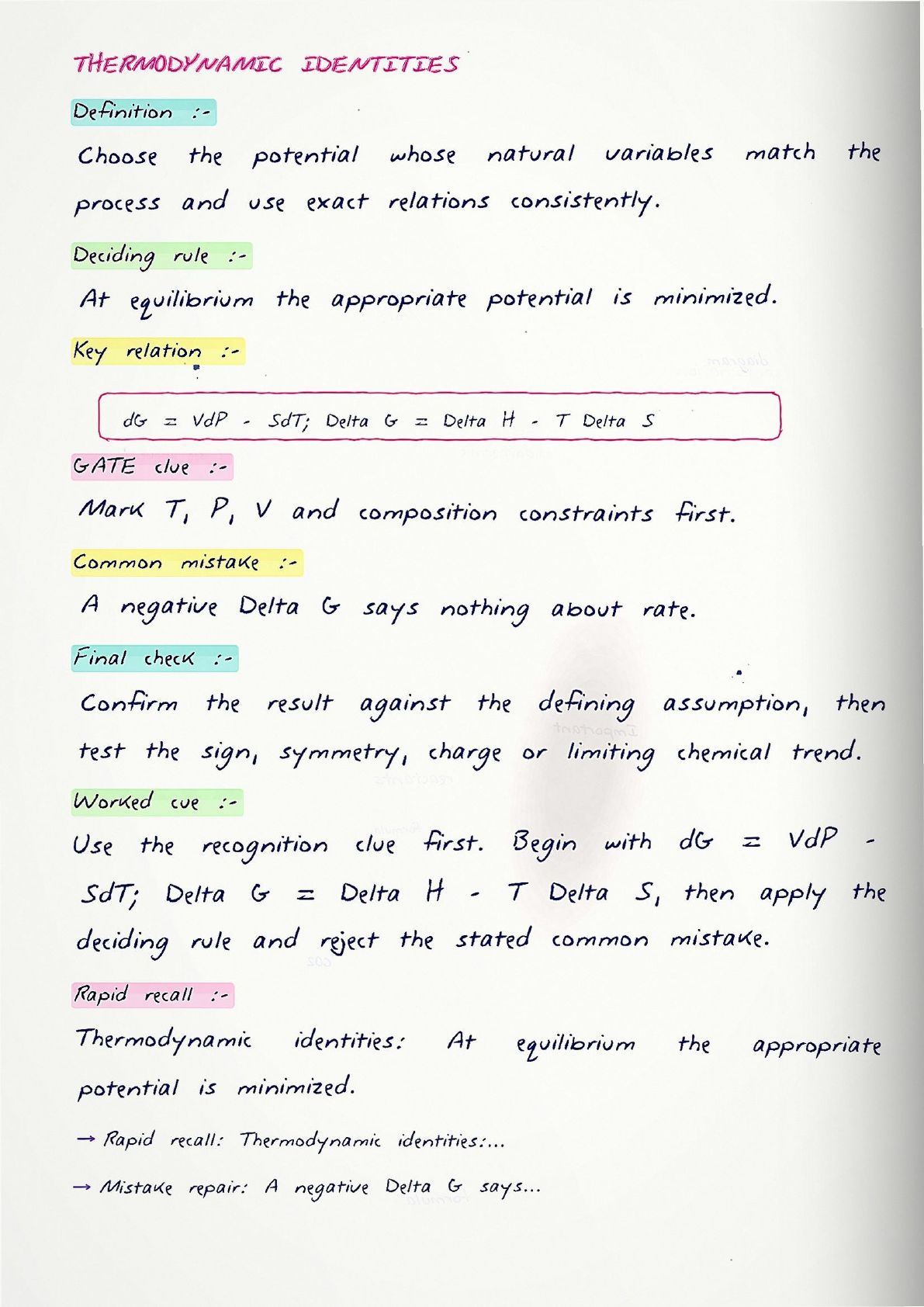
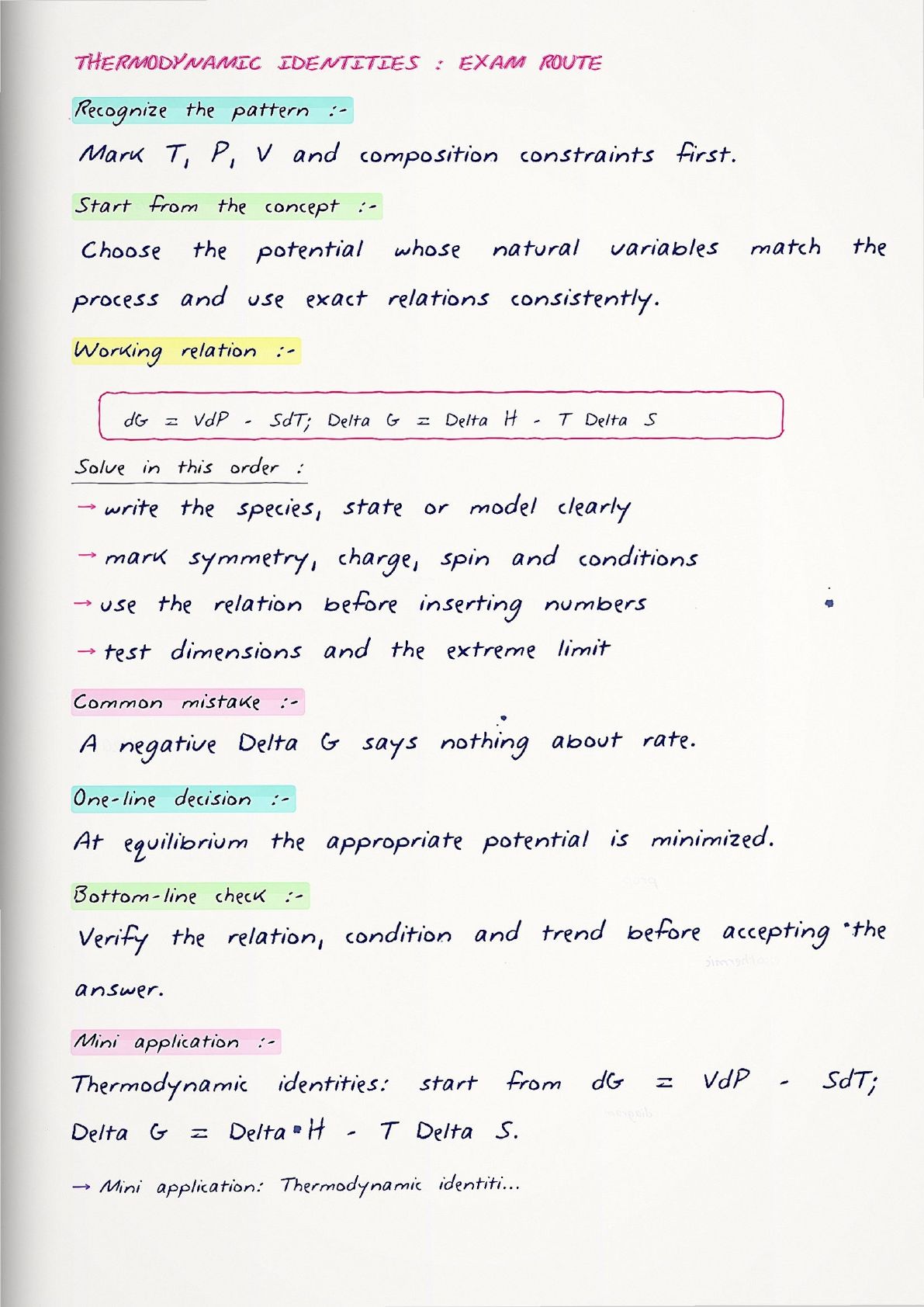
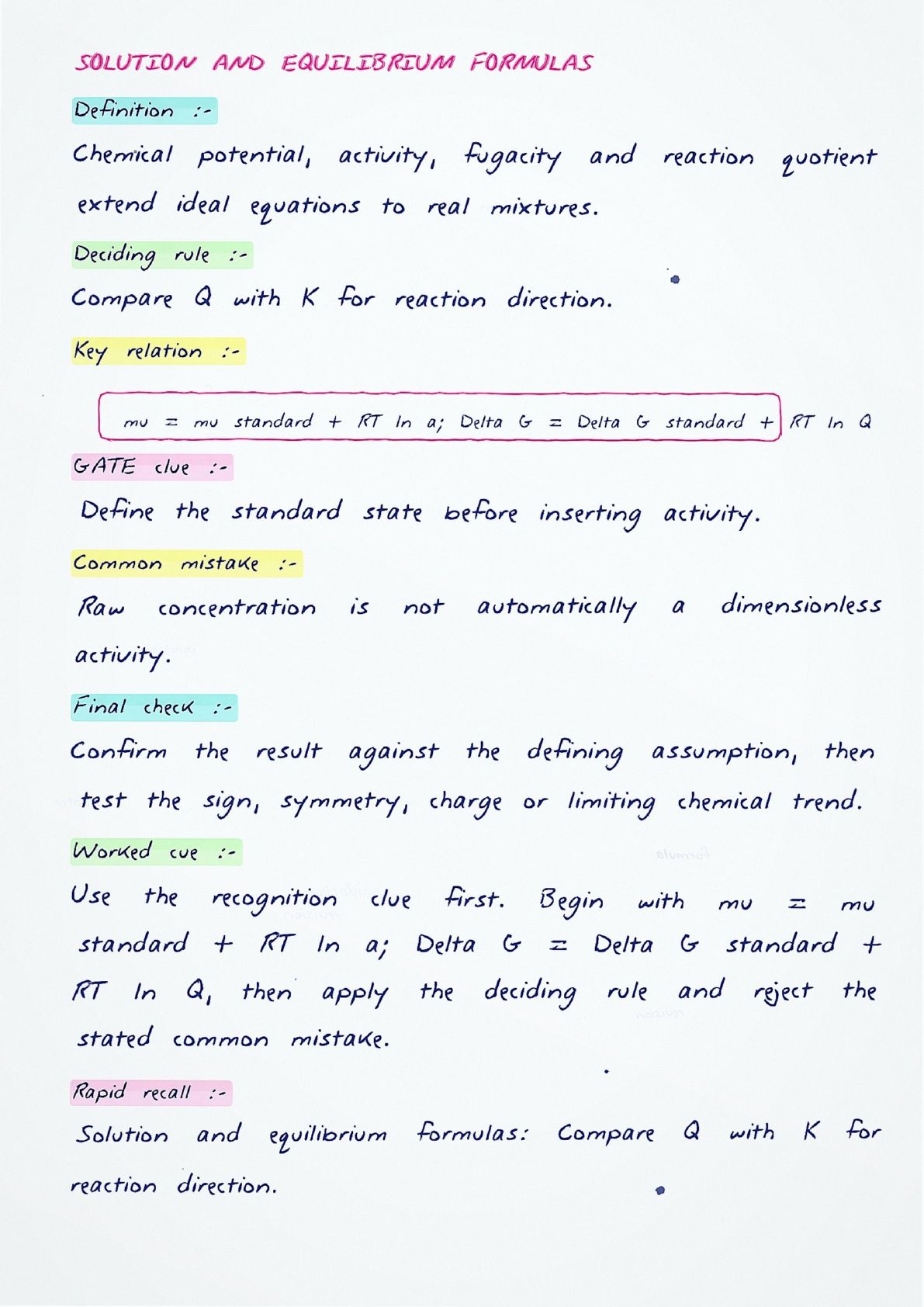
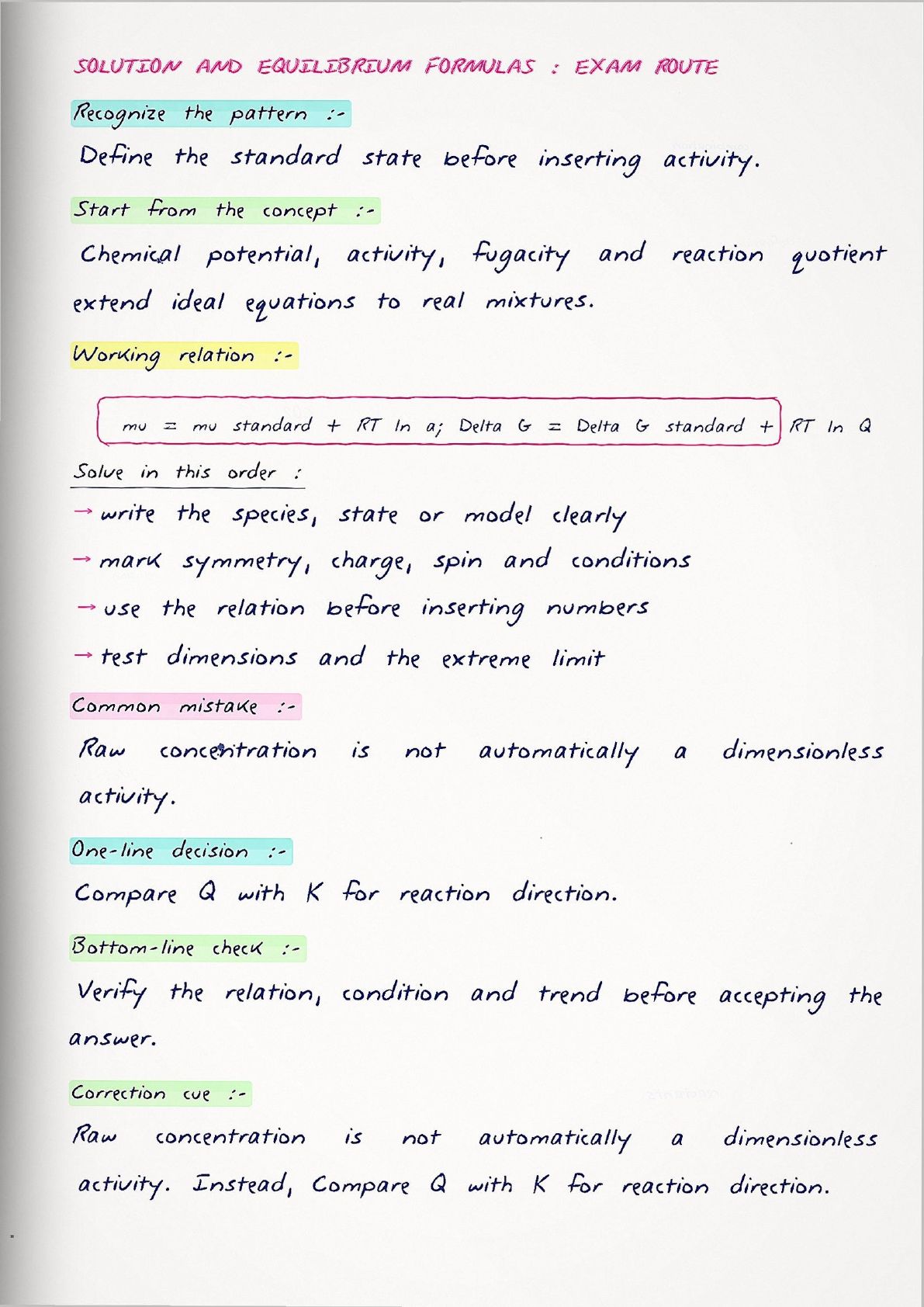
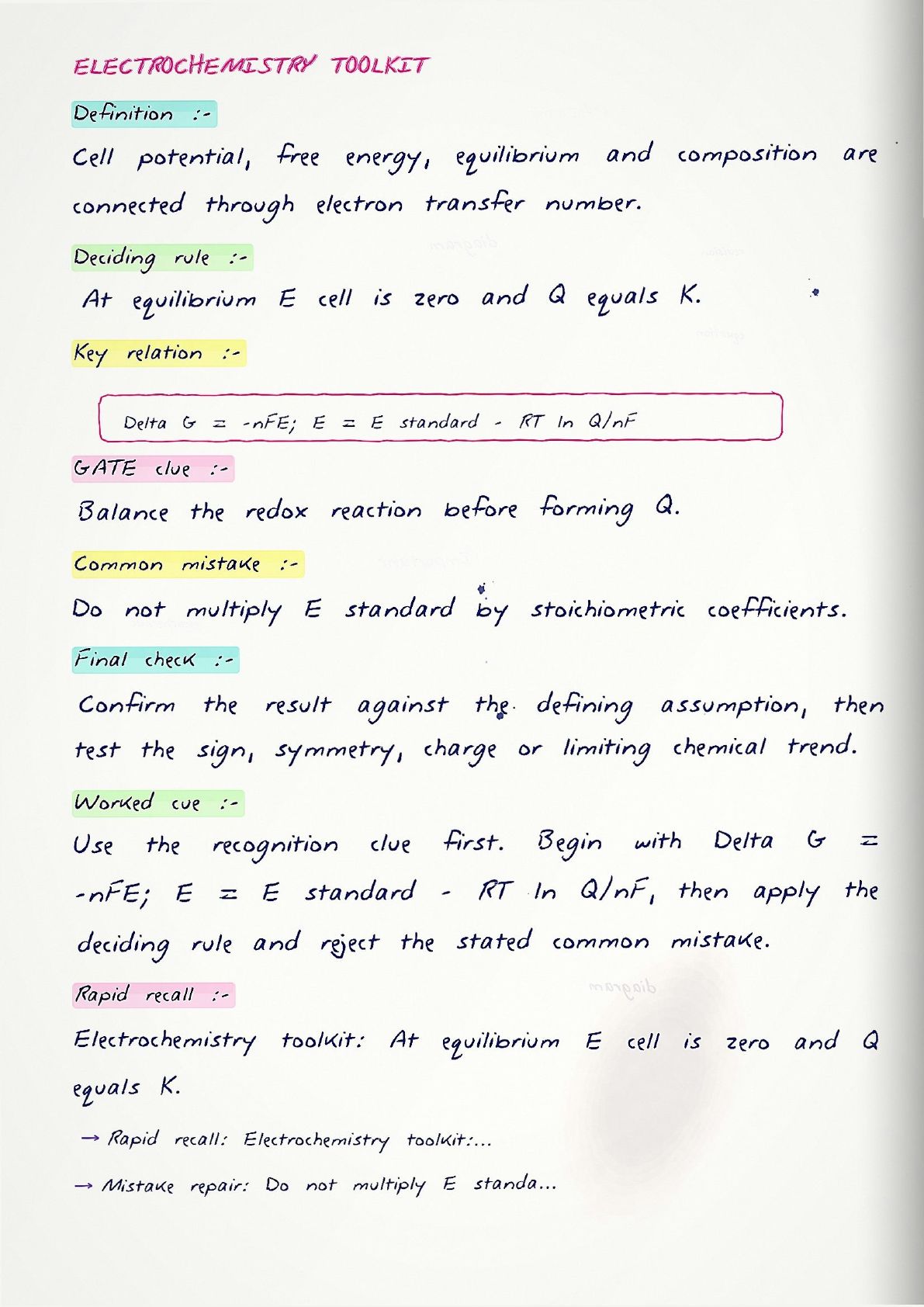
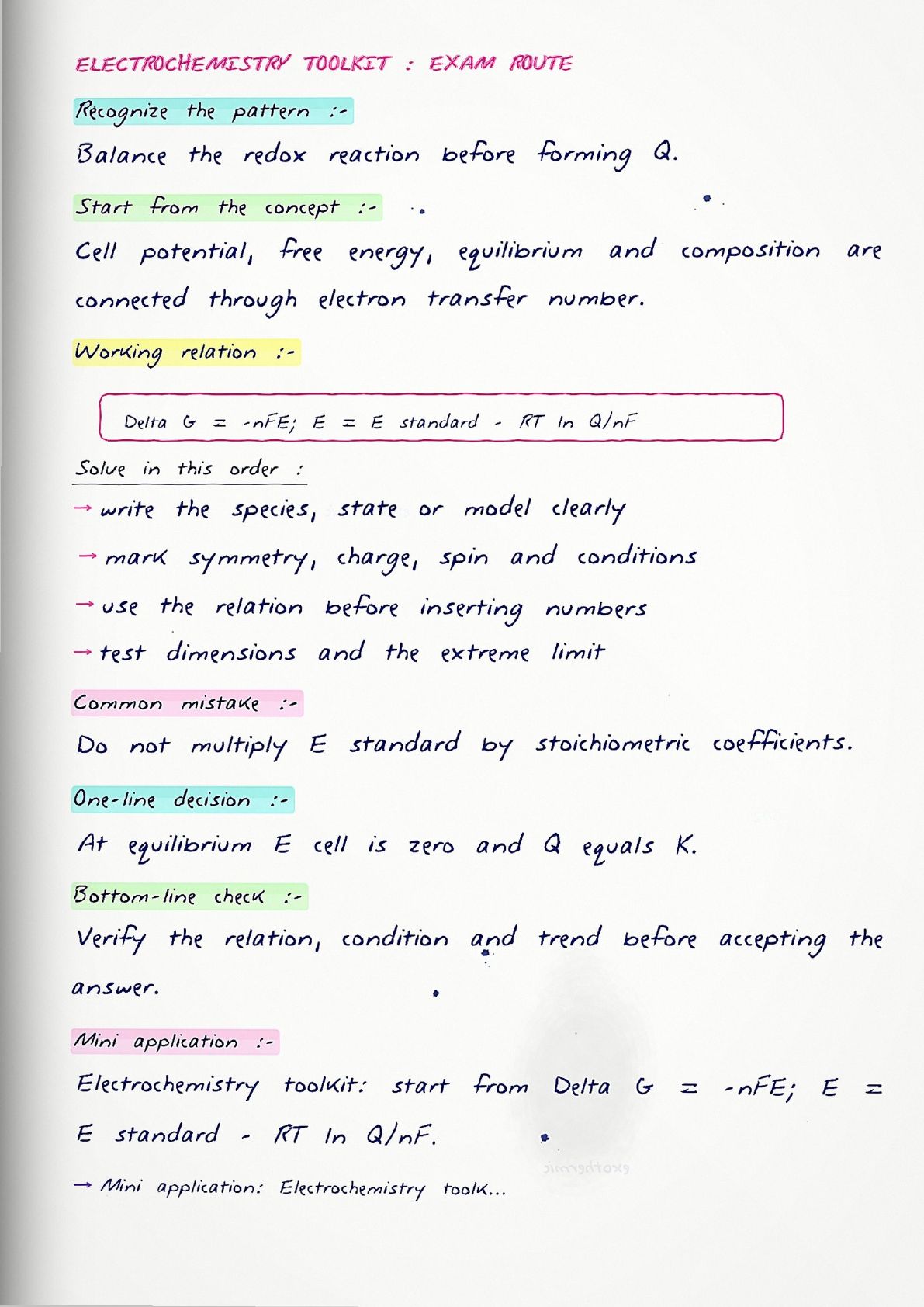
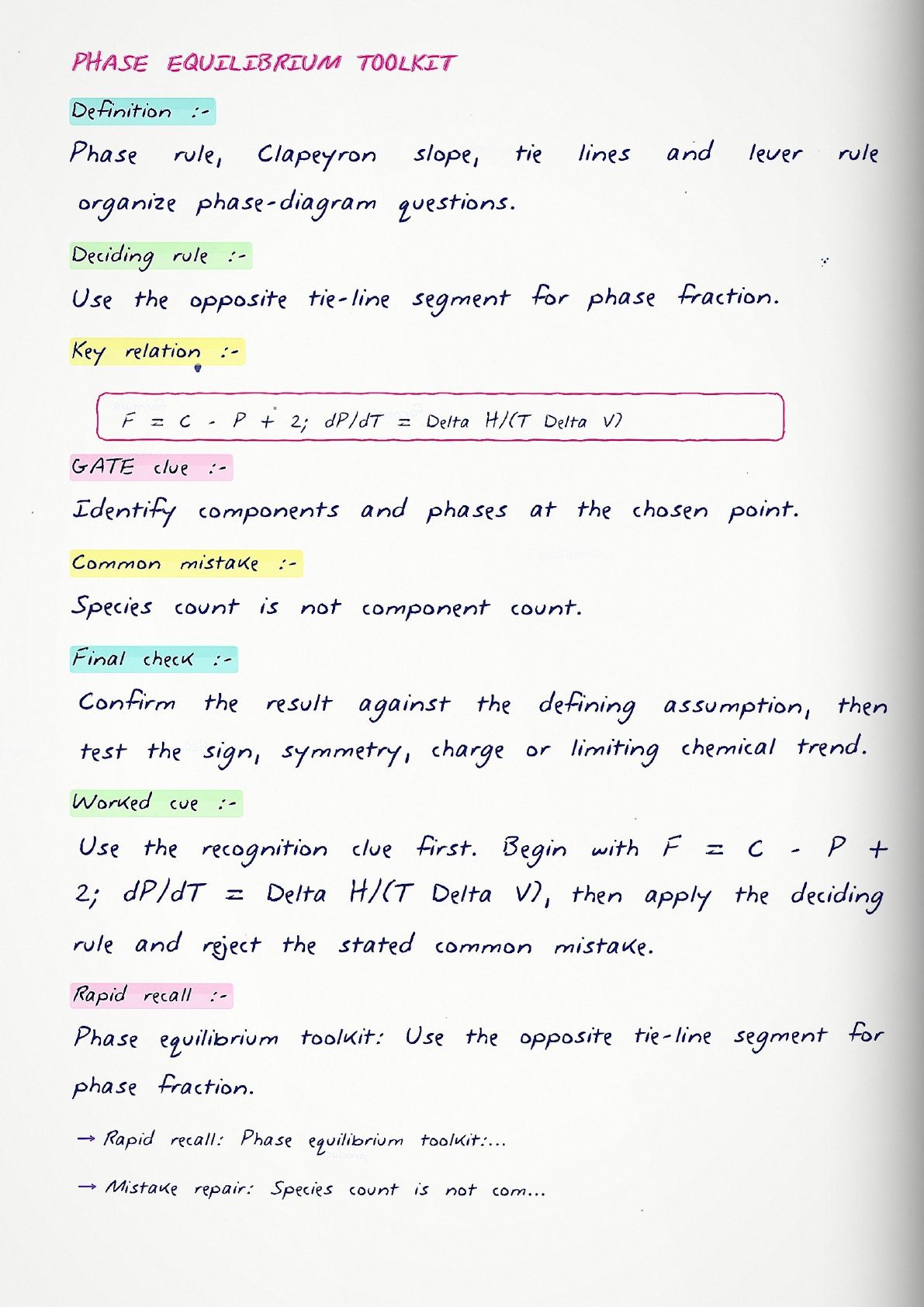
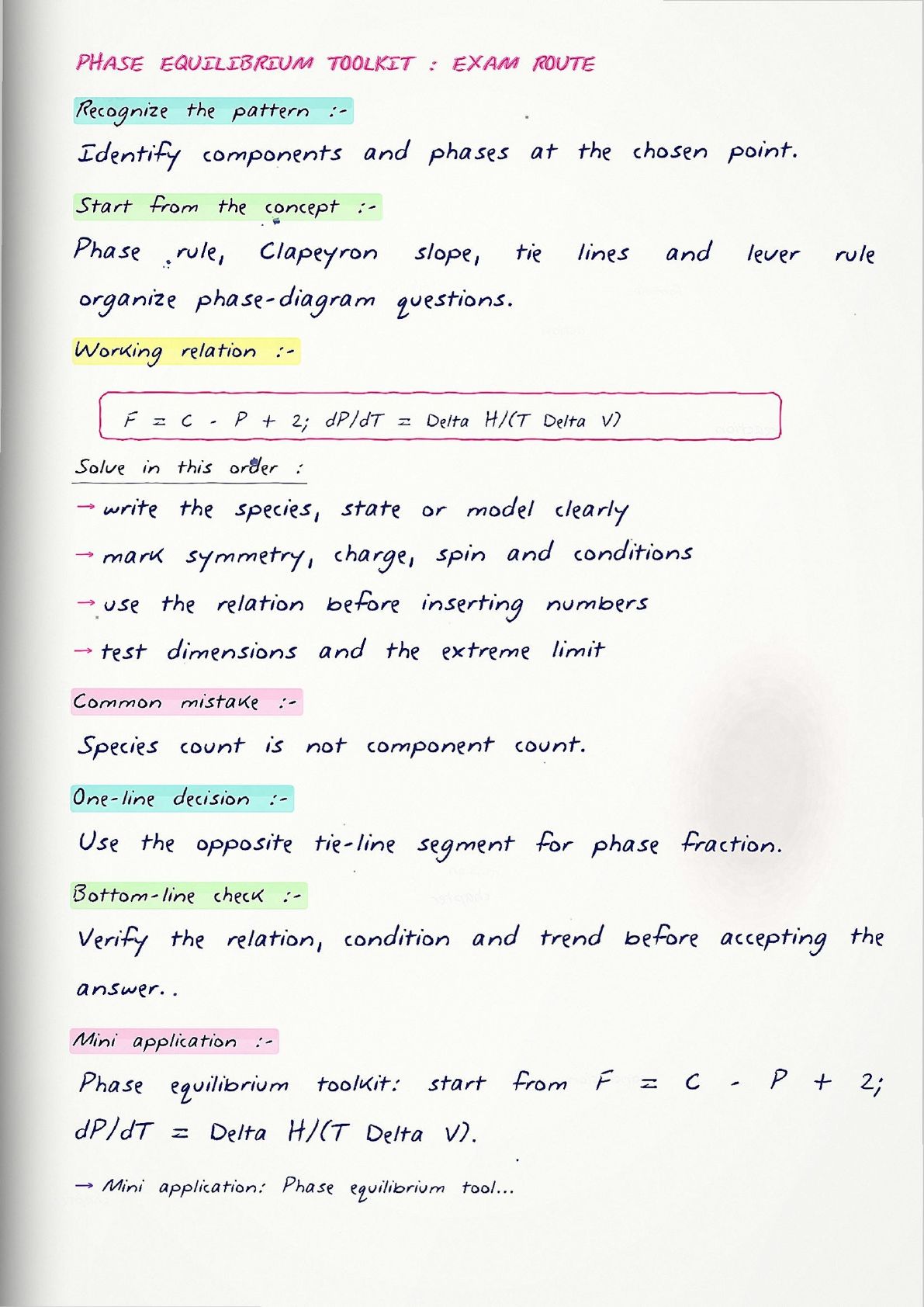
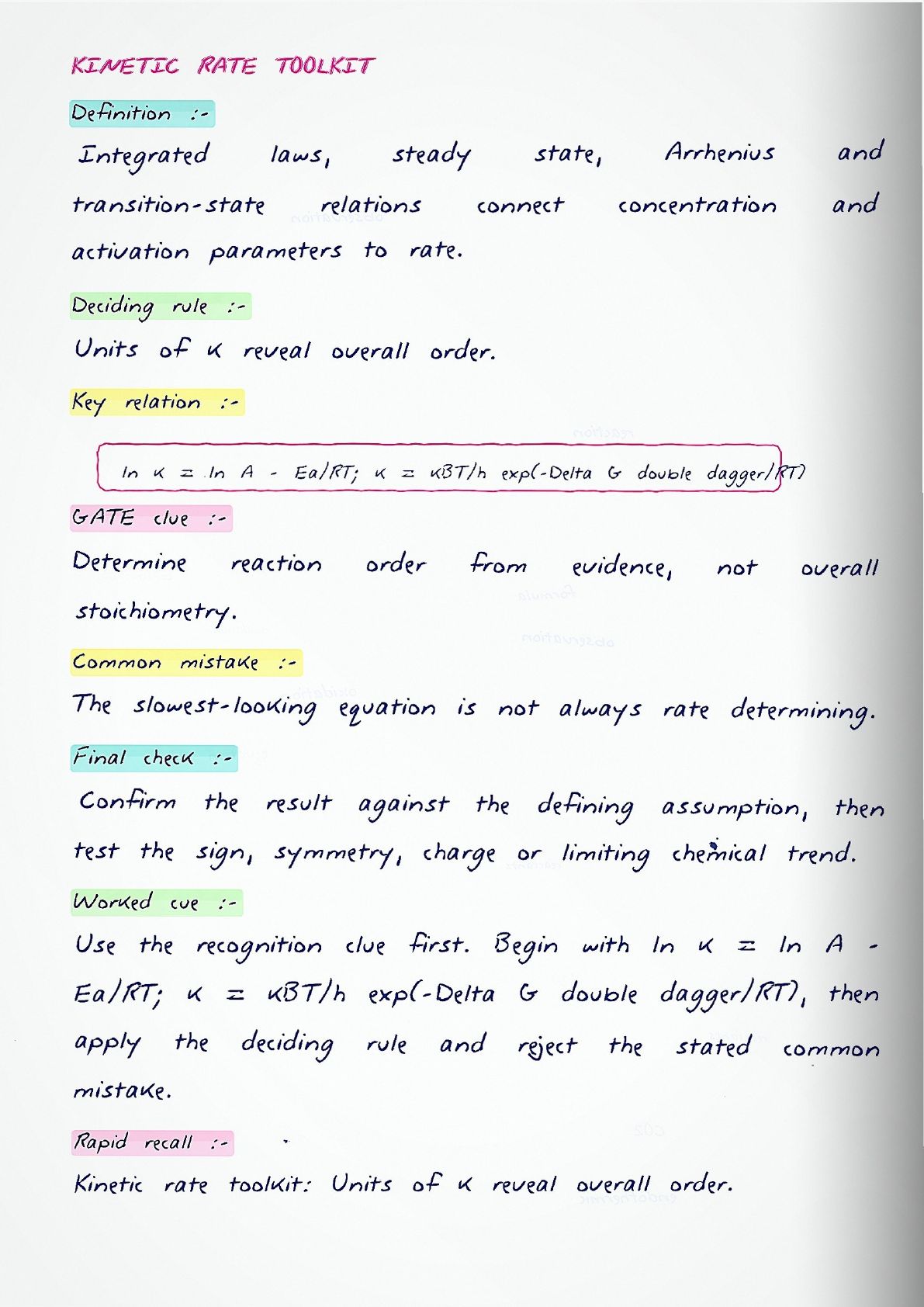
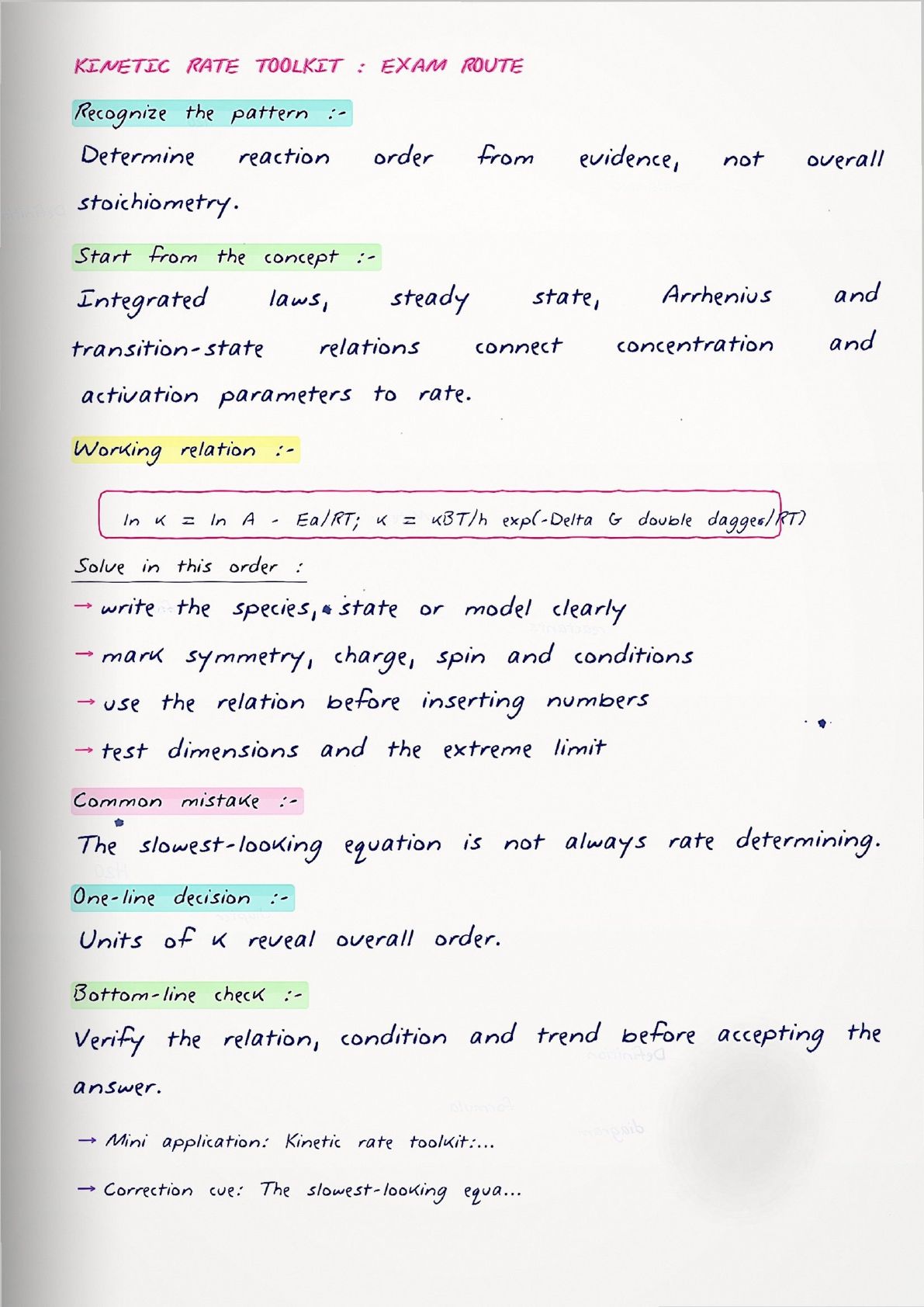
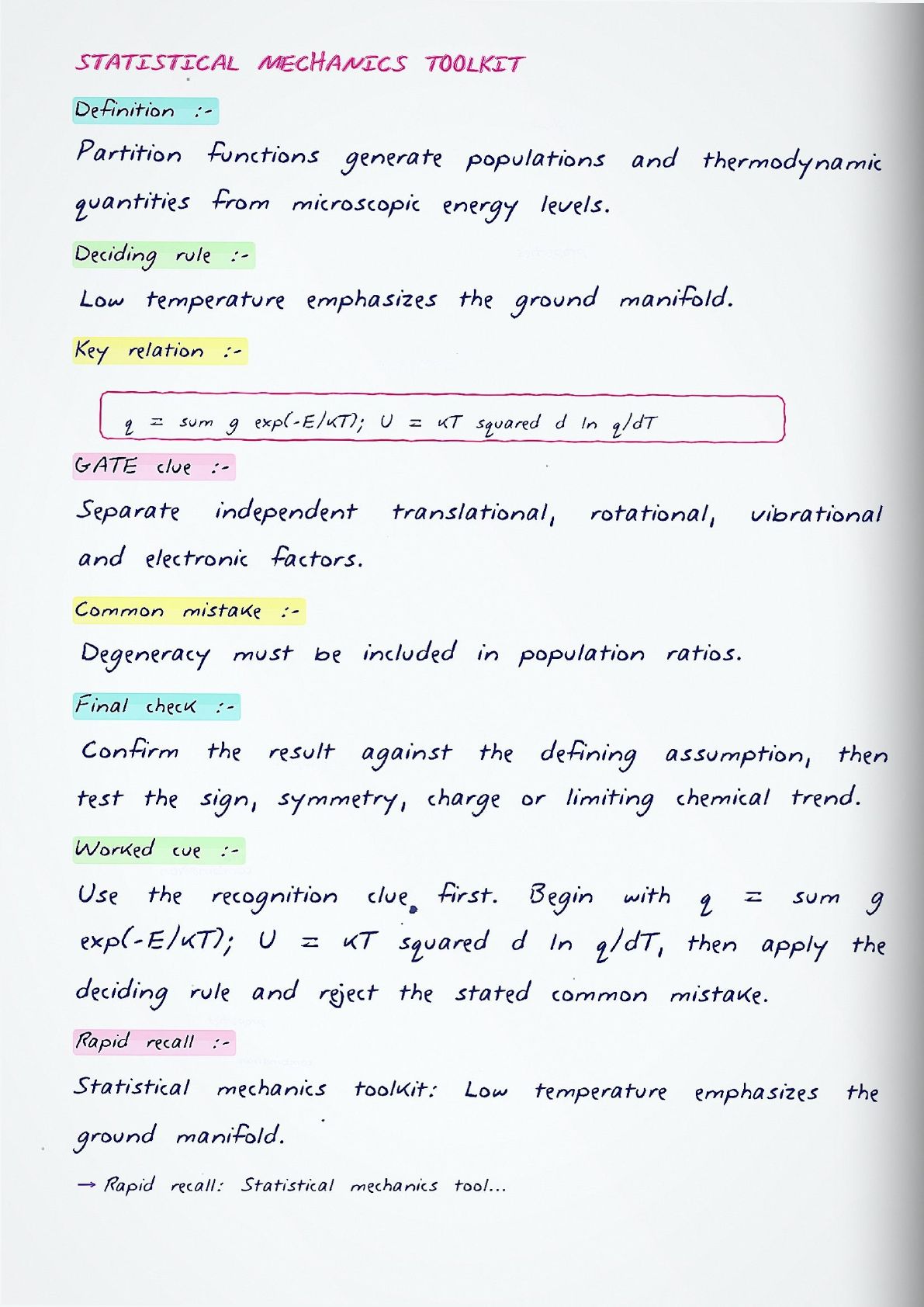
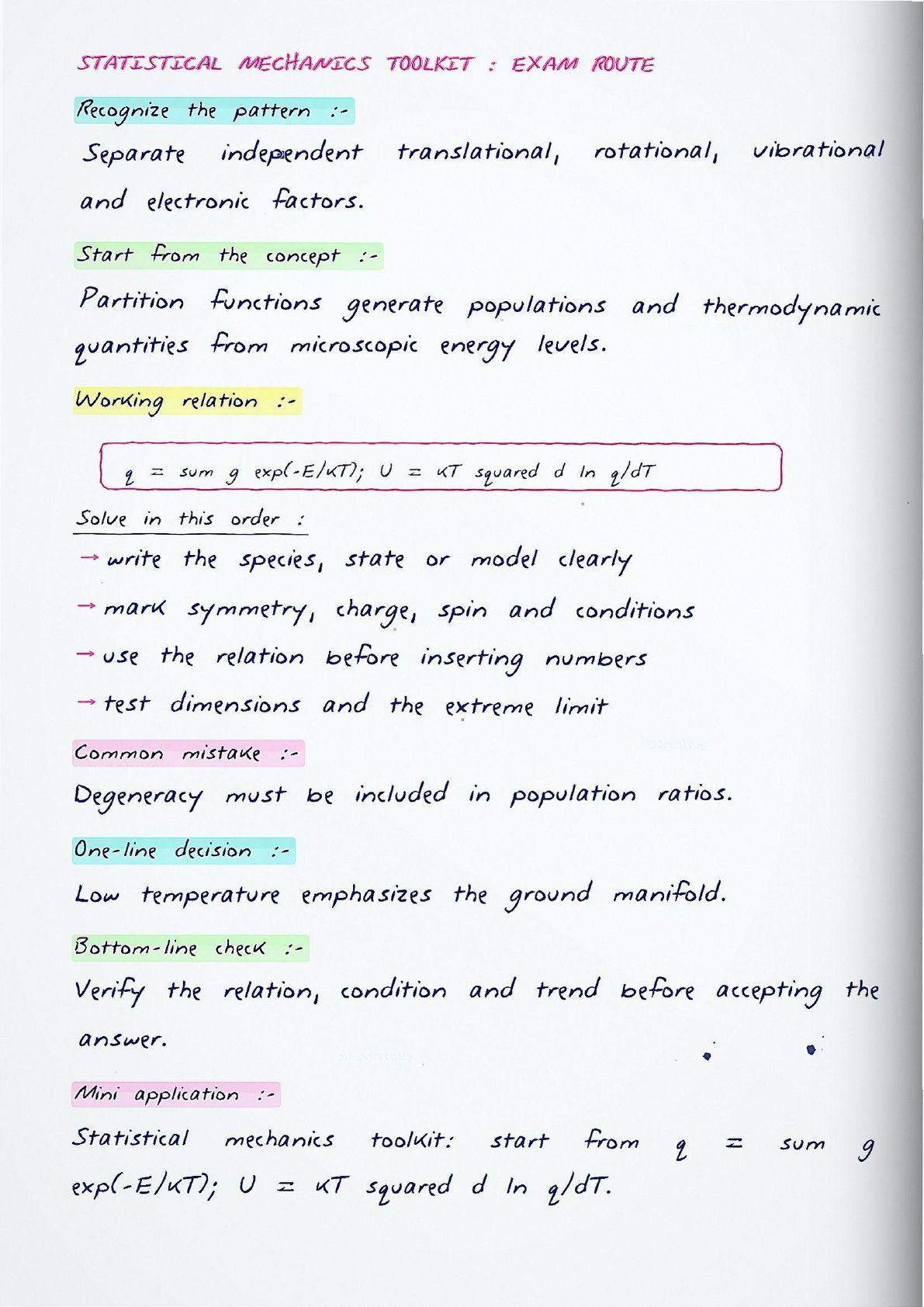
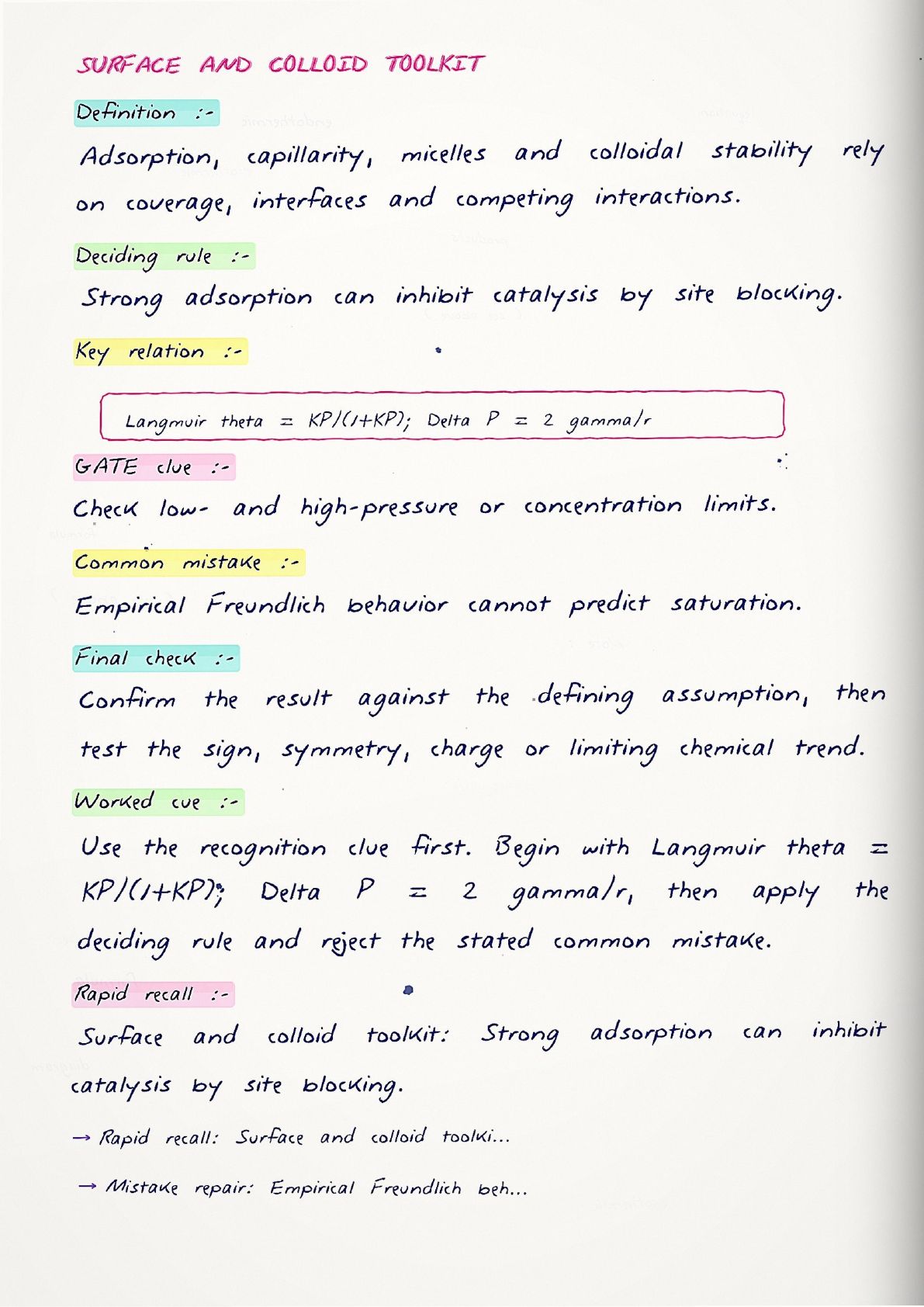
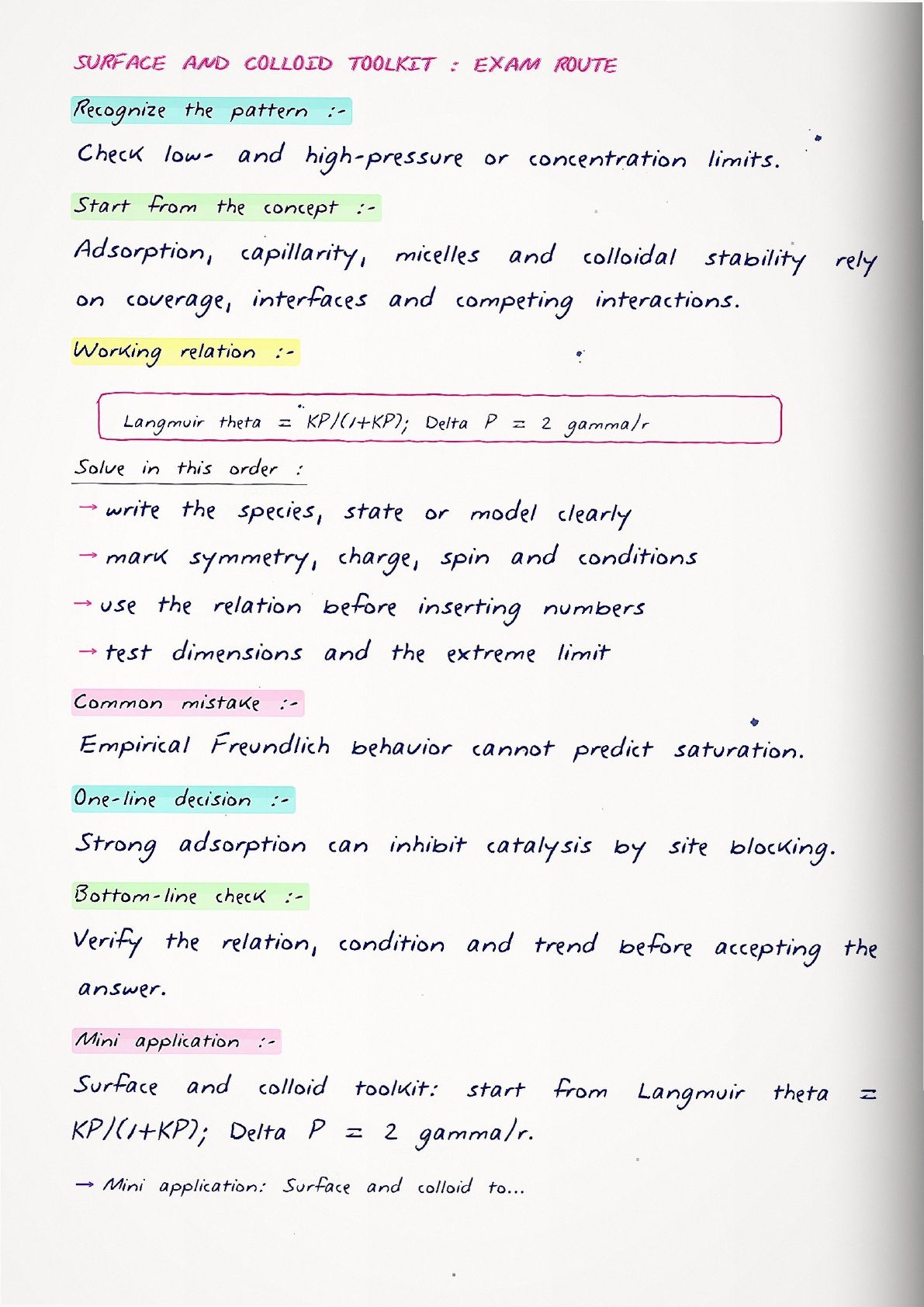
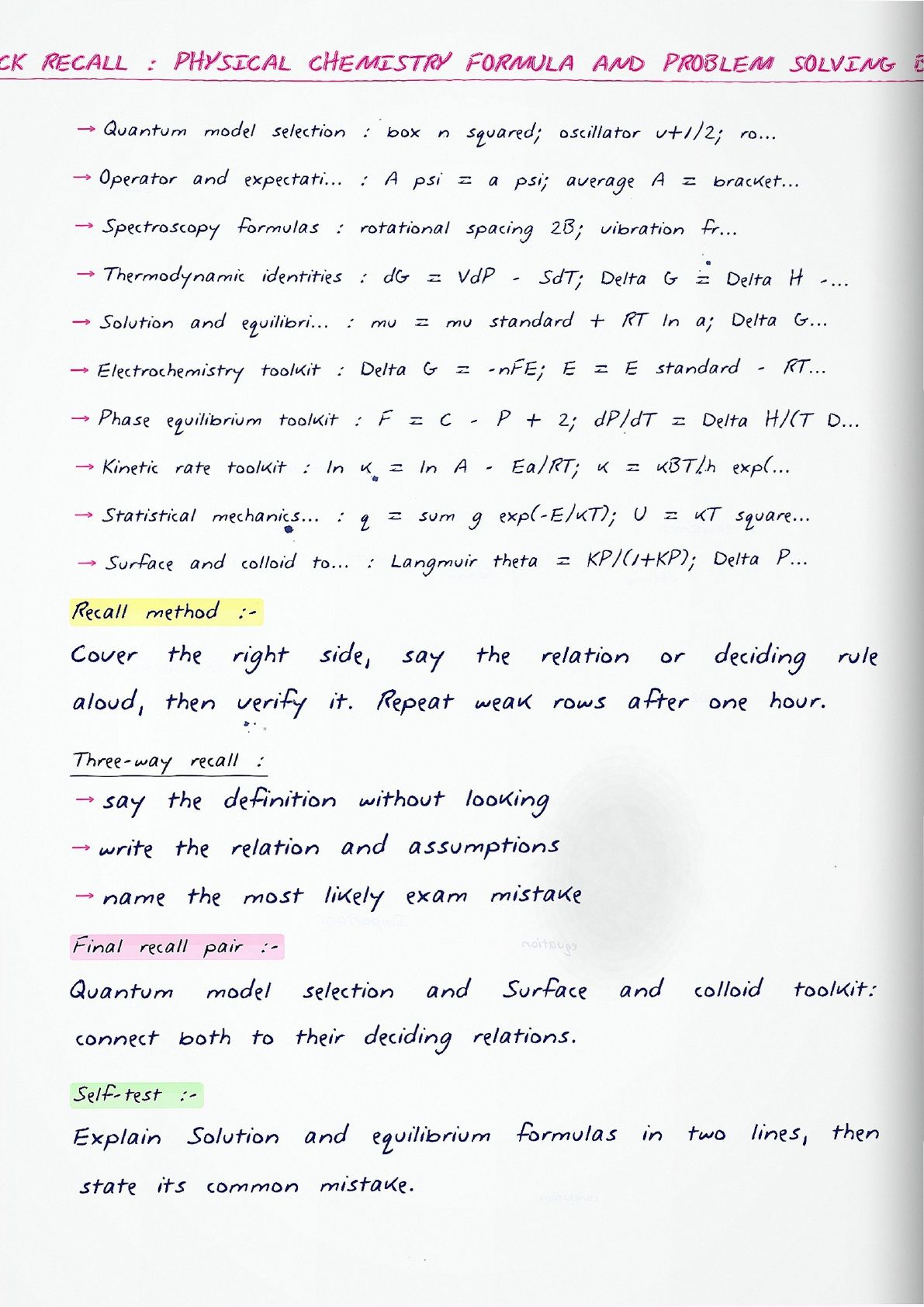
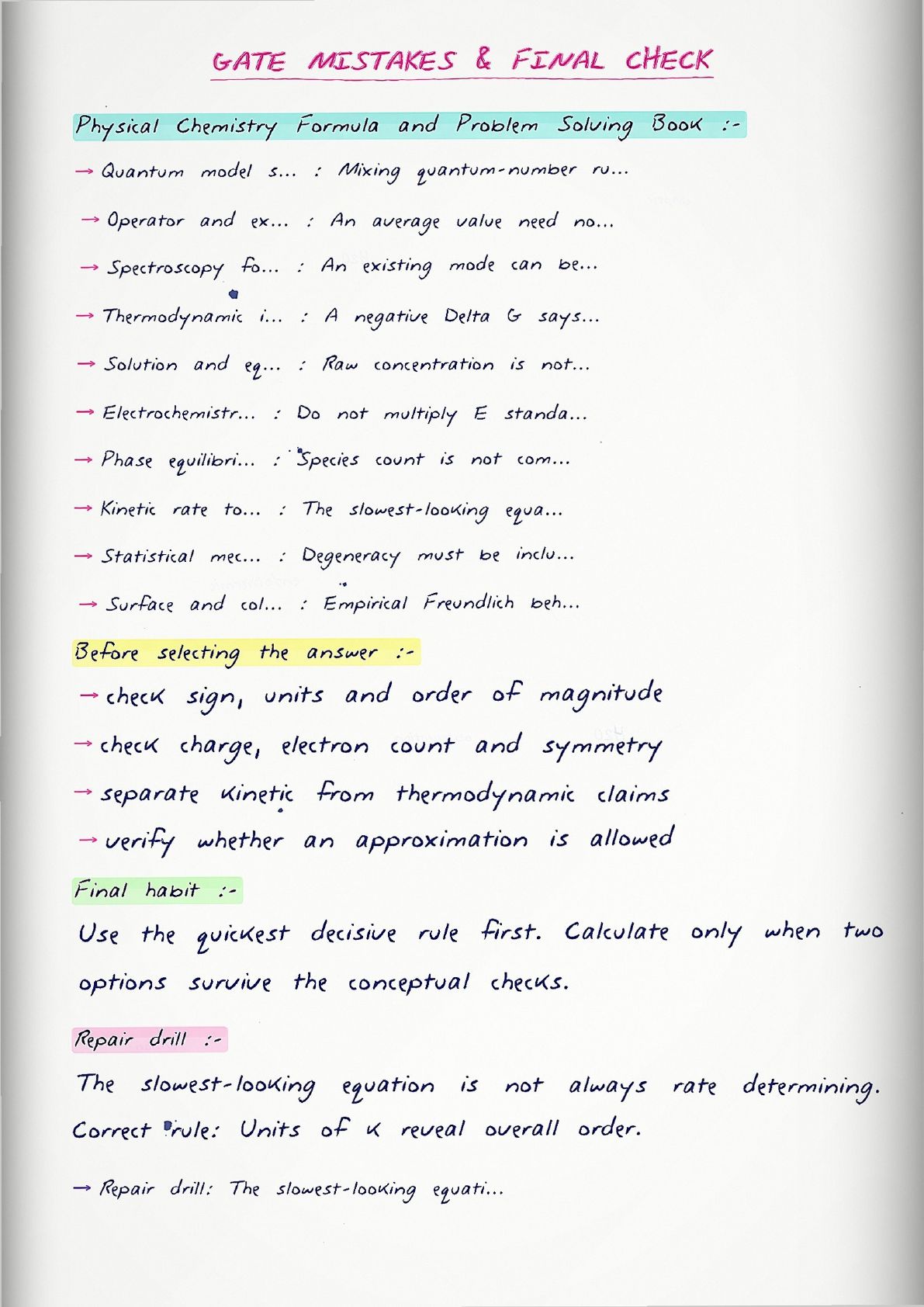
The book carries hand-drawn energy diagrams, colour-coded tables for constants and units, reaction-coordinate sketches for kinetics, and boxed formulas for each Physical Chemistry area. Every result comes with a solved numerical problem that is explained step by step, so you see how the formula is applied and not just how it is written.
- Whole Physical Chemistry section gathered into one revision PDF.
- Key formulas for each area, each with a solved numerical problem.
- Hand-drawn diagrams and a formula sheet for fast last-day revision.
What These GATE Physical Chemistry Formula Book Notes Cover
This is a revision book, not a first-reading set. It collects the formulas, constants, and standard problems from every Physical Chemistry topic and keeps them on quick-scan pages. Each formula stays next to a solved problem, so you revise the idea and the method together.
- Every core formula boxed with its symbols and units.
- A solved numerical problem beside each result to show its use.
- Colour-coded tables for constants and common values.
- A single formula sheet that holds the whole section together.
GATE Physical Chemistry Formula Book Quick Revision
Source: Physics Wallah - Alakh Pandey on YouTube
Topics Covered in GATE Physical Chemistry Formula Book
The book pulls the key formulas from every part of Physical Chemistry and pairs each with a solved numerical problem. It follows the standard GATE Chemistry order, so the areas build on one another. The list below shows what the book gathers together.
- Quantum chemistry formulas for particle-in-a-box, the hydrogen atom, and operators.
- Thermodynamics relations, free energy, and the criteria for equilibrium.
- Electrochemistry results, including the Nernst equation and cell potential.
- Chemical kinetics rate laws, order, and the Arrhenius equation.
- Spectroscopy selection rules and energy-level spacing for each region.
- Solved numerical problems for every formula, worked step by step.
How the Notes Are Organised
The book runs area by area, from quantum chemistry through thermodynamics, electrochemistry, kinetics, and spectroscopy. Each page keeps the formula, its meaning, and one solved problem close together, so you can open a single area and revise only that part.
Because the areas are separate, you can match the book to whatever you are practising that day. A formula sheet at the end brings the main results into one final-revision page.
How GATE Physical Chemistry Formula Book Links to Other Topics
The book gathers results from every Physical Chemistry topic, so it connects straight back to each of them for fast revision. Use it as the bridge between your detailed notes and your problem practice. The links below show which areas it draws from.
- Quantum chemistry and spectroscopy, which share energy-level ideas.
- Thermodynamics and electrochemistry, linked through free energy and cell potential.
- Chemical kinetics, tied to rate laws and reaction energy.
- Group theory basics, which support the spectroscopy selection rules.
Important Topics in GATE Physical Chemistry Formula Book
Some Physical Chemistry areas carry more marks in GATE Chemistry almost every year. The book highlights their formulas so you can revise the high-yield ones first. If your time is short, make sure you can solve these quickly and without slips.
- Thermodynamics and equilibrium, a steady source of marks each year.
- Electrochemistry, with the Nernst equation and cell reactions.
- Chemical kinetics, order of reaction, and the Arrhenius equation.
- Quantum chemistry results for simple model systems.
- Common slips: watch the sign in free energy and the units in rate constants.
How to Prepare GATE Physical Chemistry Formula Book with Handwritten Notes
This book rewards steady practice more than reading, so keep it open beside your problem sets. Pick a formula, read its solved problem, then solve a few previous year questions on the same idea. Return to the formula sheet before every mock test for a quick refresh.
- First pass: scan every area once so the formulas feel familiar.
- Second pass: focus on thermodynamics, electrochemistry, and kinetics.
- Solve previous year questions area by area beside each solved problem.
- Final week: revise only the formula sheet and the common-slip notes.
Why These Notes Help You Score Better
A formula book is quick to scan and easy to recall under exam pressure, which is why it works well in the final weeks. Each formula stays next to a solved problem, so the method is clear the moment you read it. That link between result and use saves time and cuts silly errors for students in the exam hall.
GATE Chemistry Physical Chemistry Formula Book Handwritten Notes FAQs
Ques. What does the Physical Chemistry Formula Book cover?
Ans. It gathers the key formulas from quantum chemistry, thermodynamics, electrochemistry, kinetics, and spectroscopy, with a solved numerical problem beside each result for fast revision.
Ques. Is this book meant for first reading or for revision?
Ans. It is a revision resource. It pulls the whole Physical Chemistry section into one place, so use it beside your detailed notes and problem practice, not as your first study of a topic.
Ques. Does each formula come with a solved problem?
Ans. Yes. Every formula is paired with a solved numerical problem that is explained step by step, so you see how the result is applied and not just how it is written.
Ques. Is the formula book good for last-minute revision?
Ans. Yes. The quick-scan pages and the final formula sheet are made for the days before the exam, when you need to refresh every Physical Chemistry result fast.



Comments