




Geomatics Engineering is one of the most scoring and formula-driven subjects in GATE Civil Engineering, usually worth about 4 to 6 marks in the paper. It forms its own Geomatics Engineering section and supports road alignment and canal levelling work in other parts of the syllabus. These handwritten notes cover the full GATE syllabus in a compact, exam-focused form.
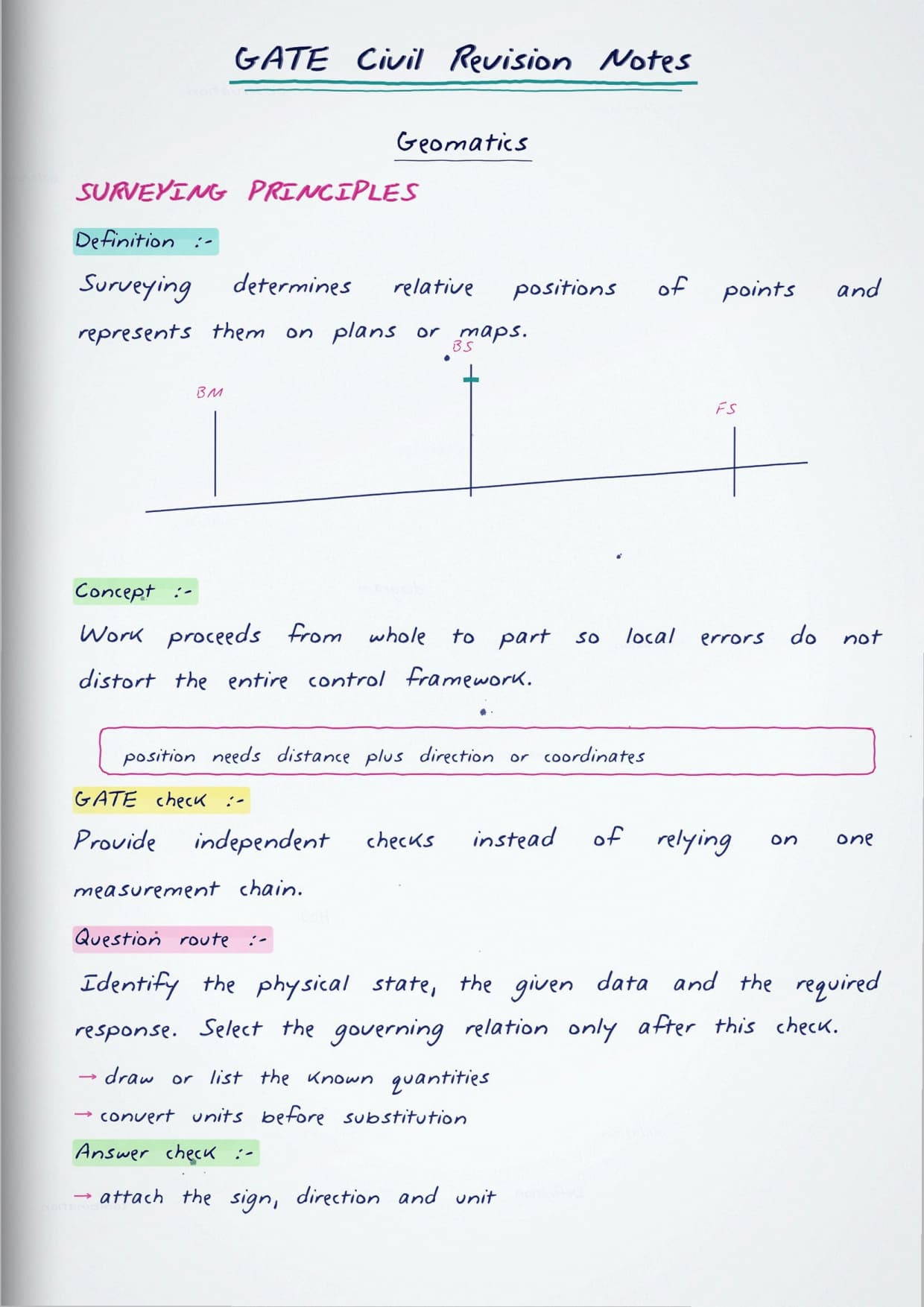
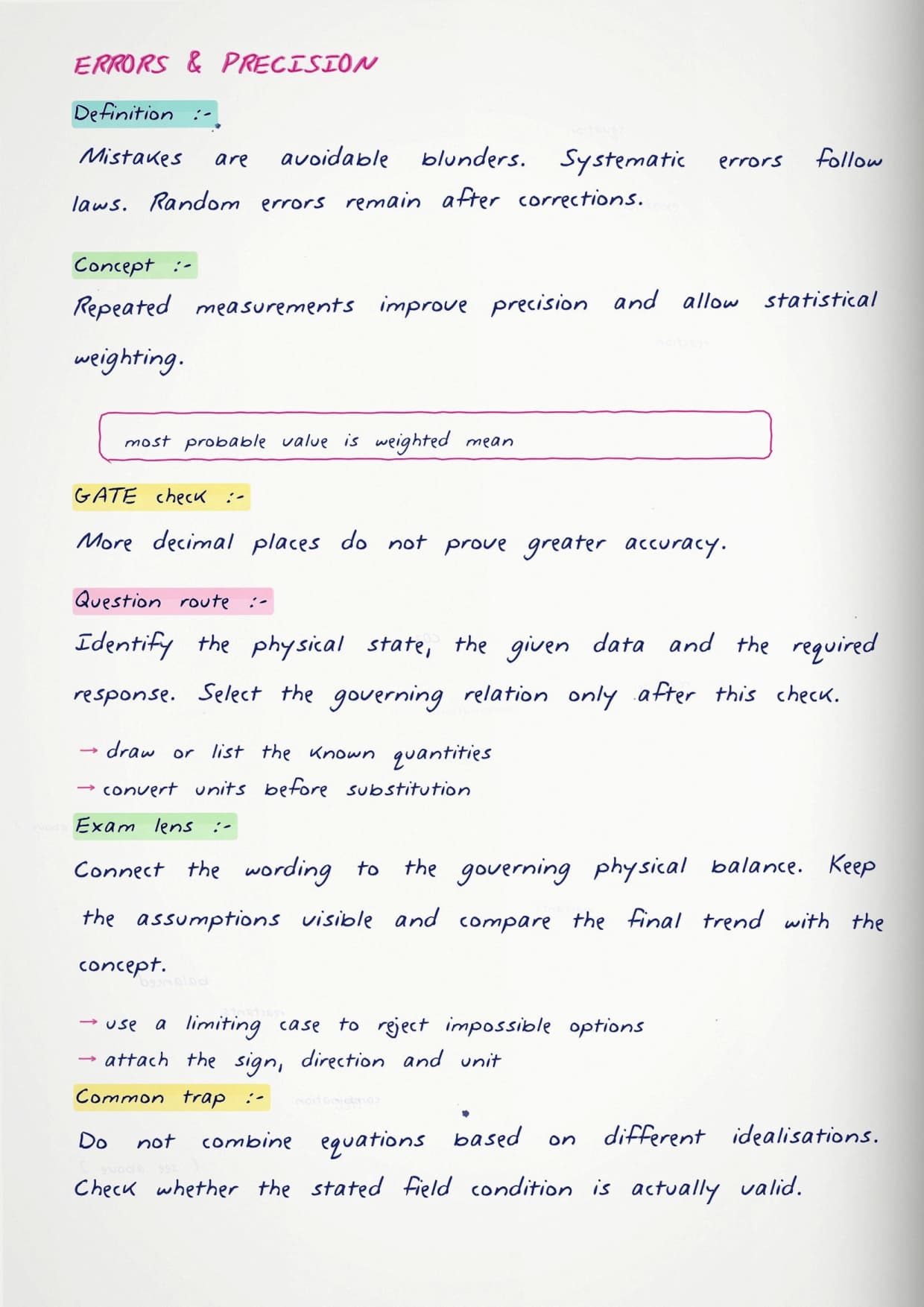
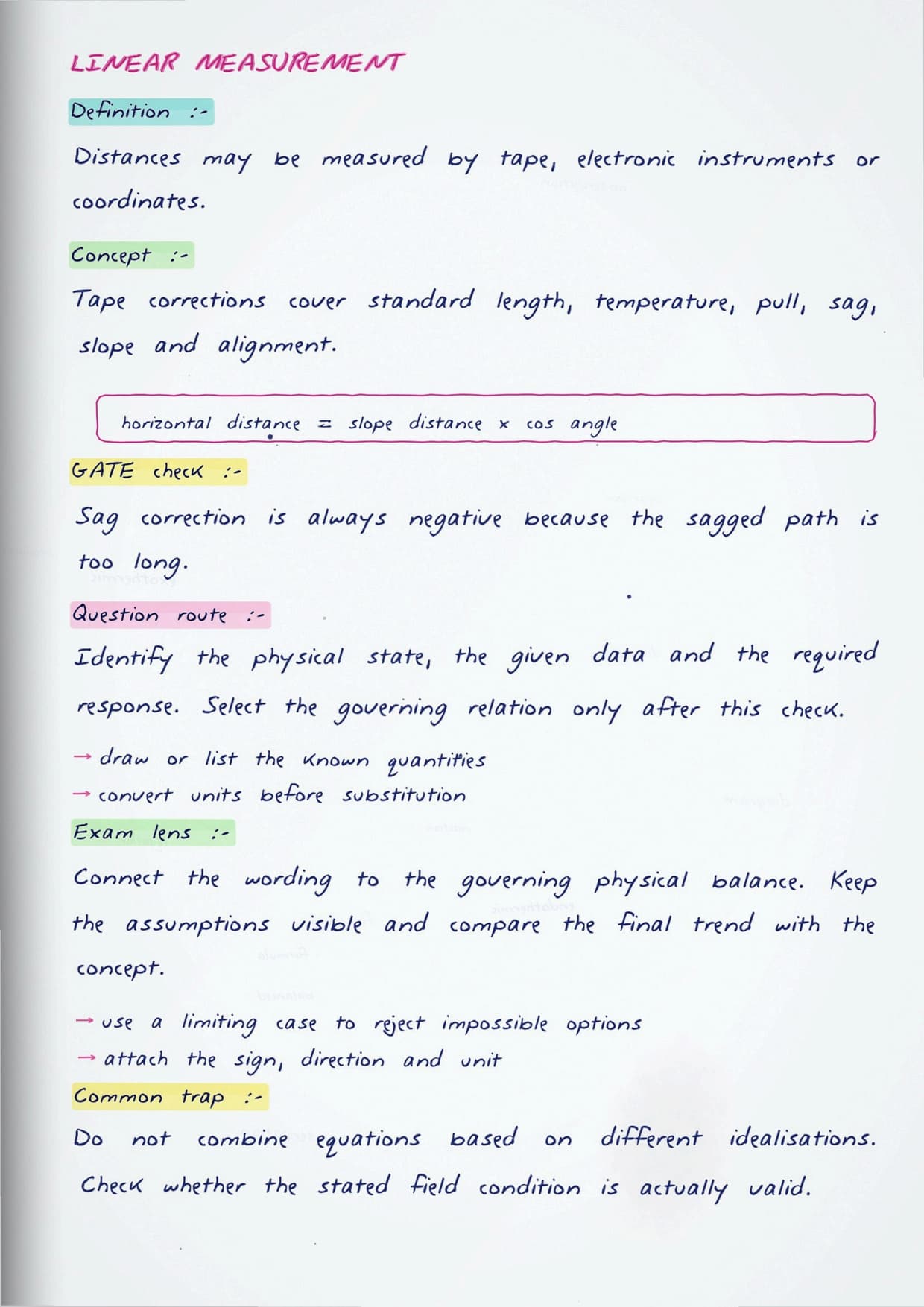
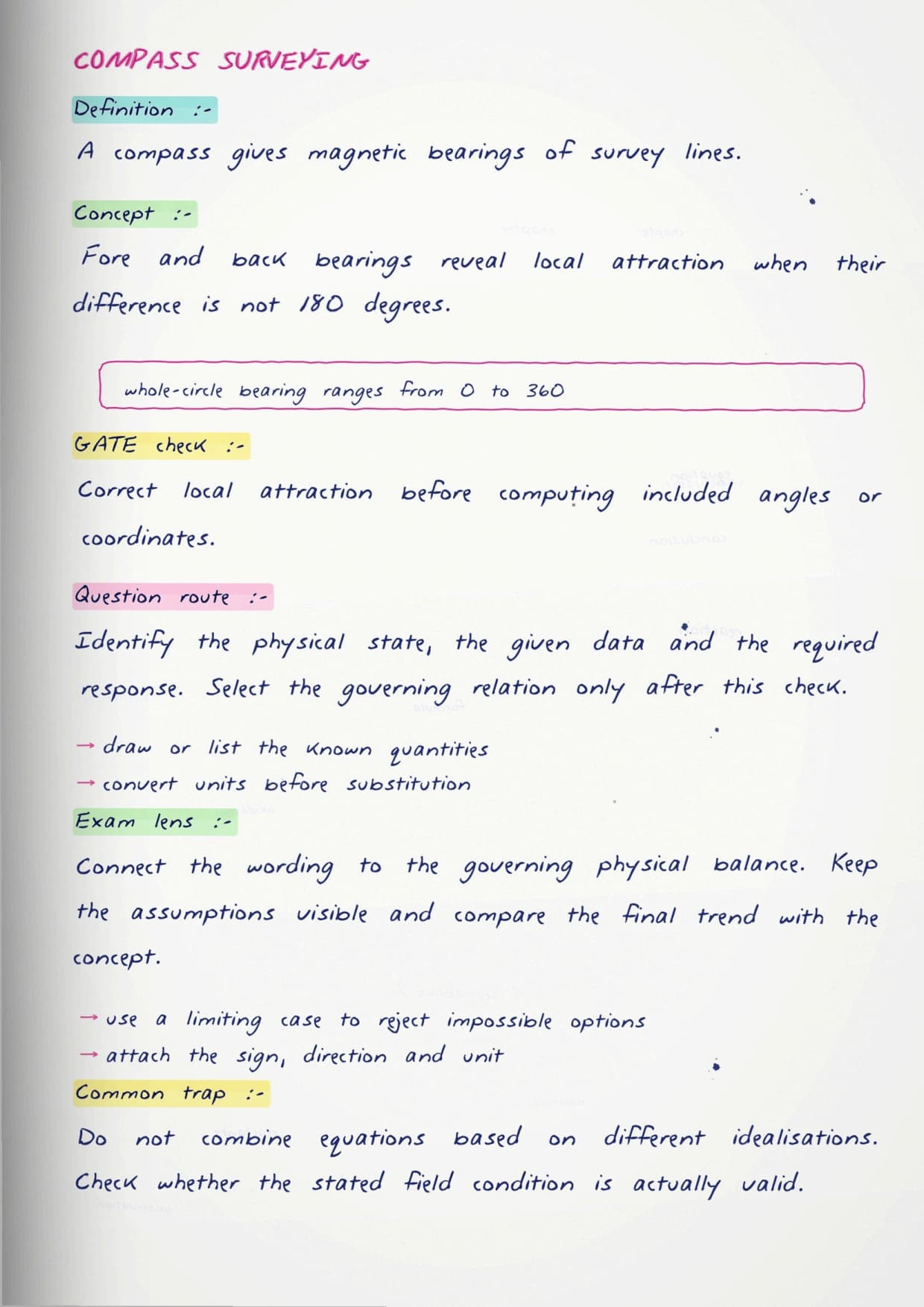
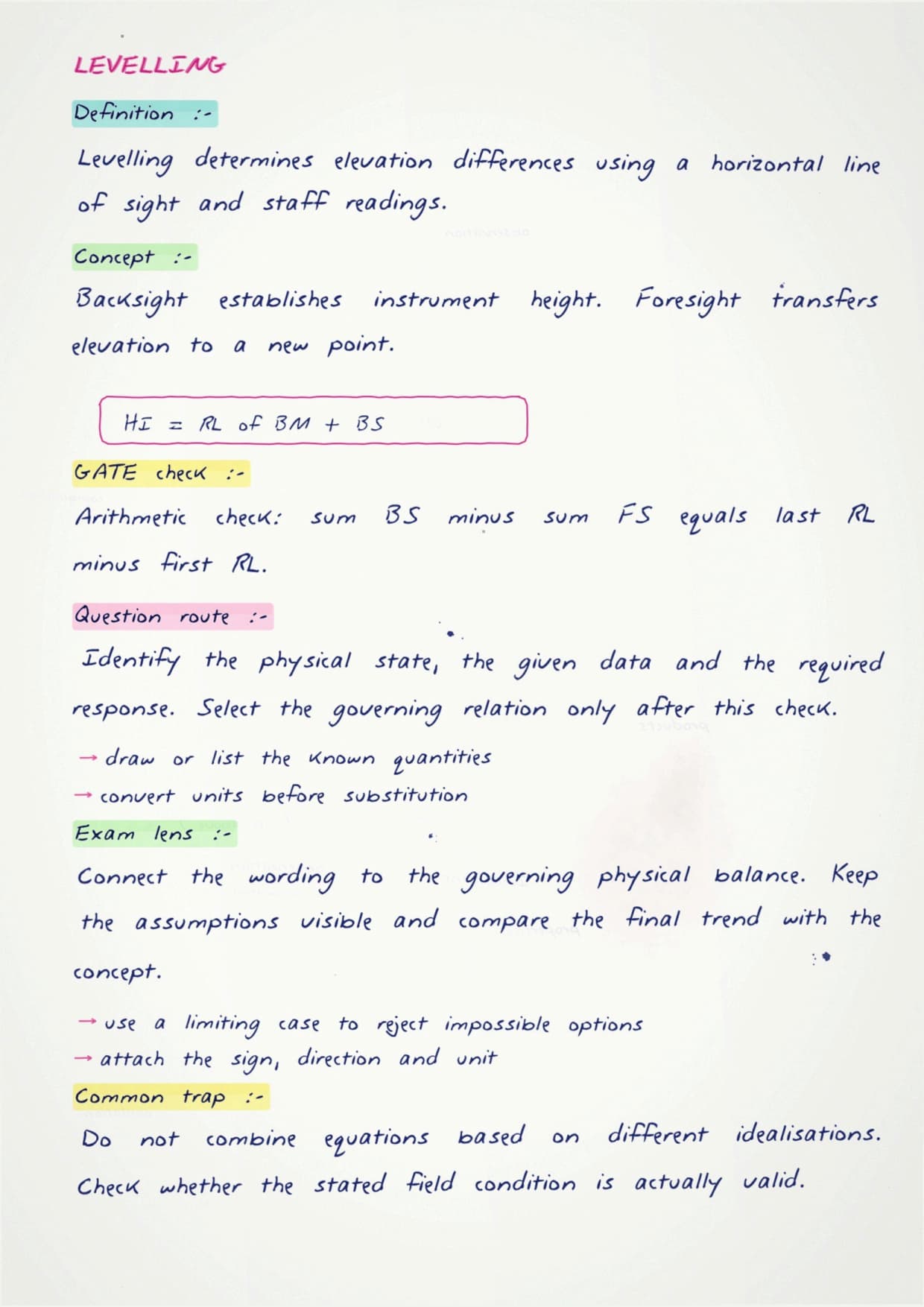
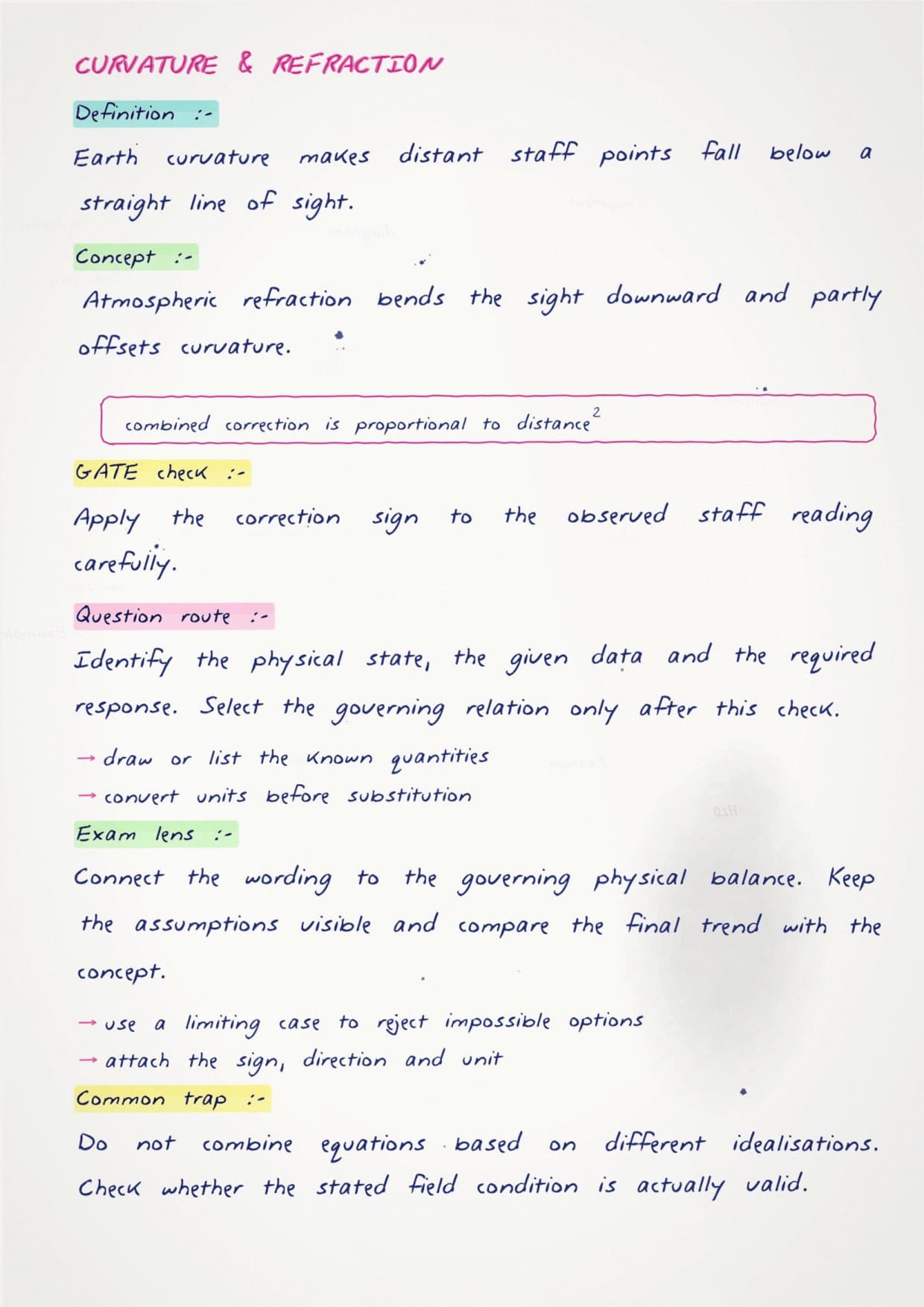
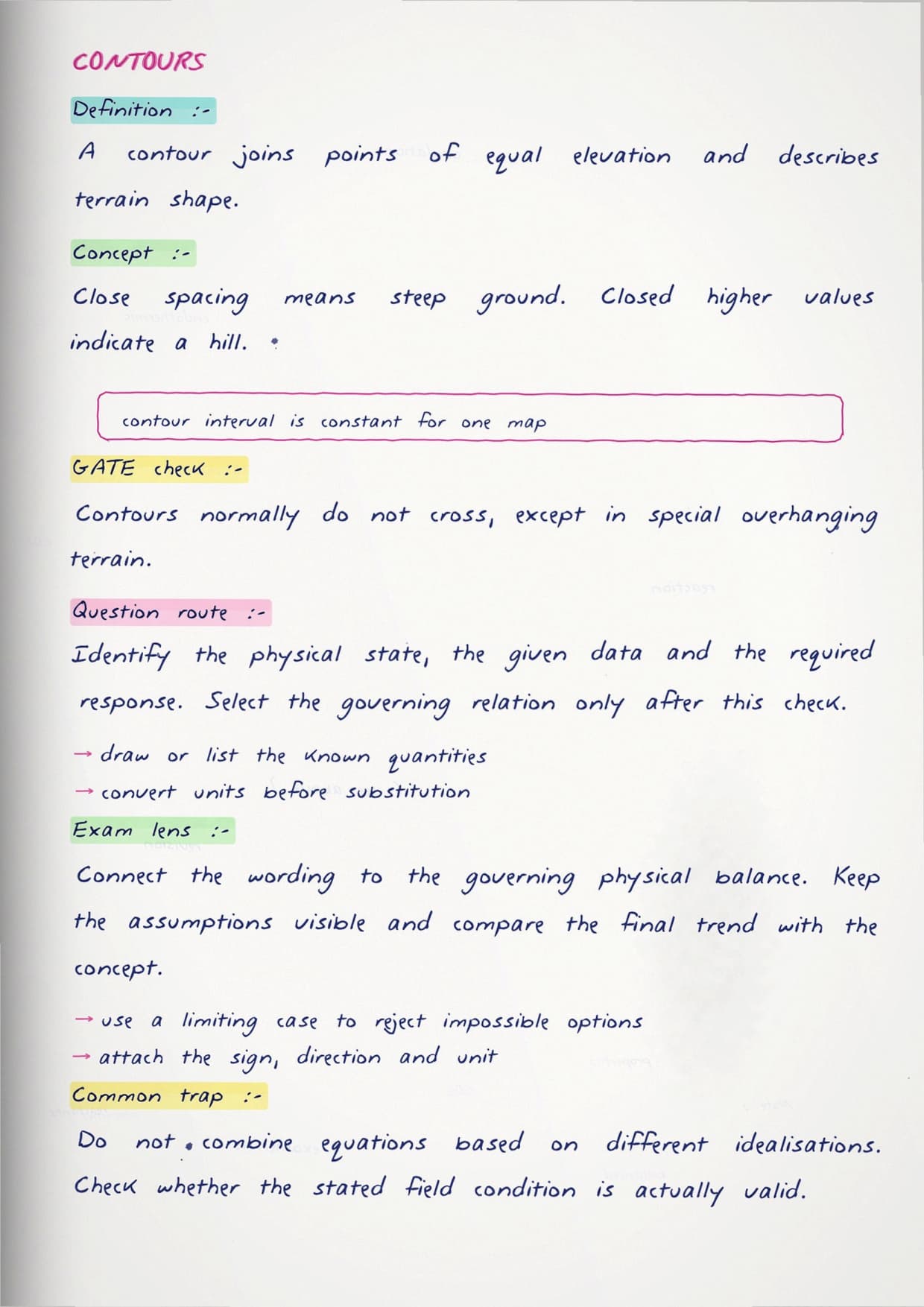
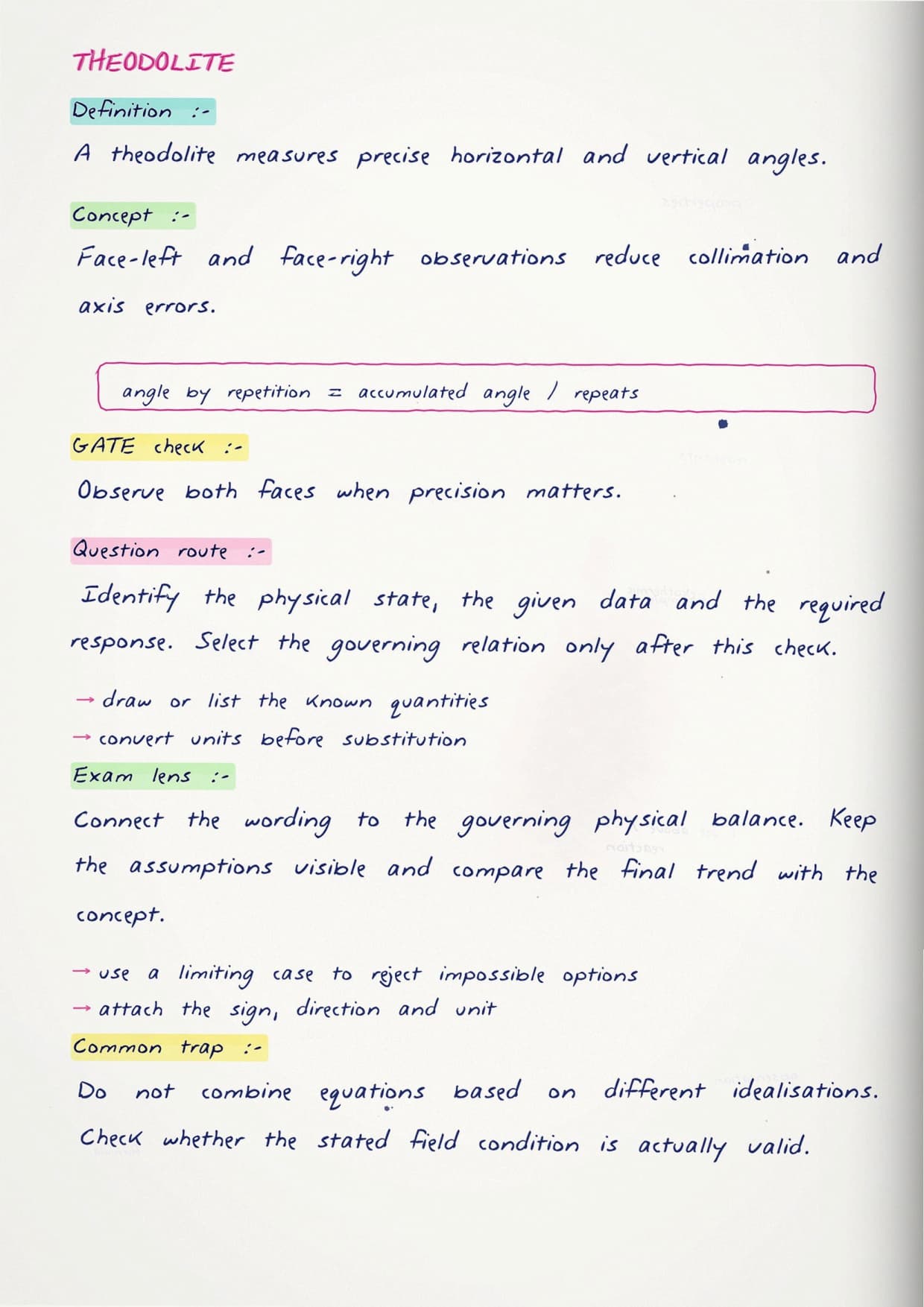
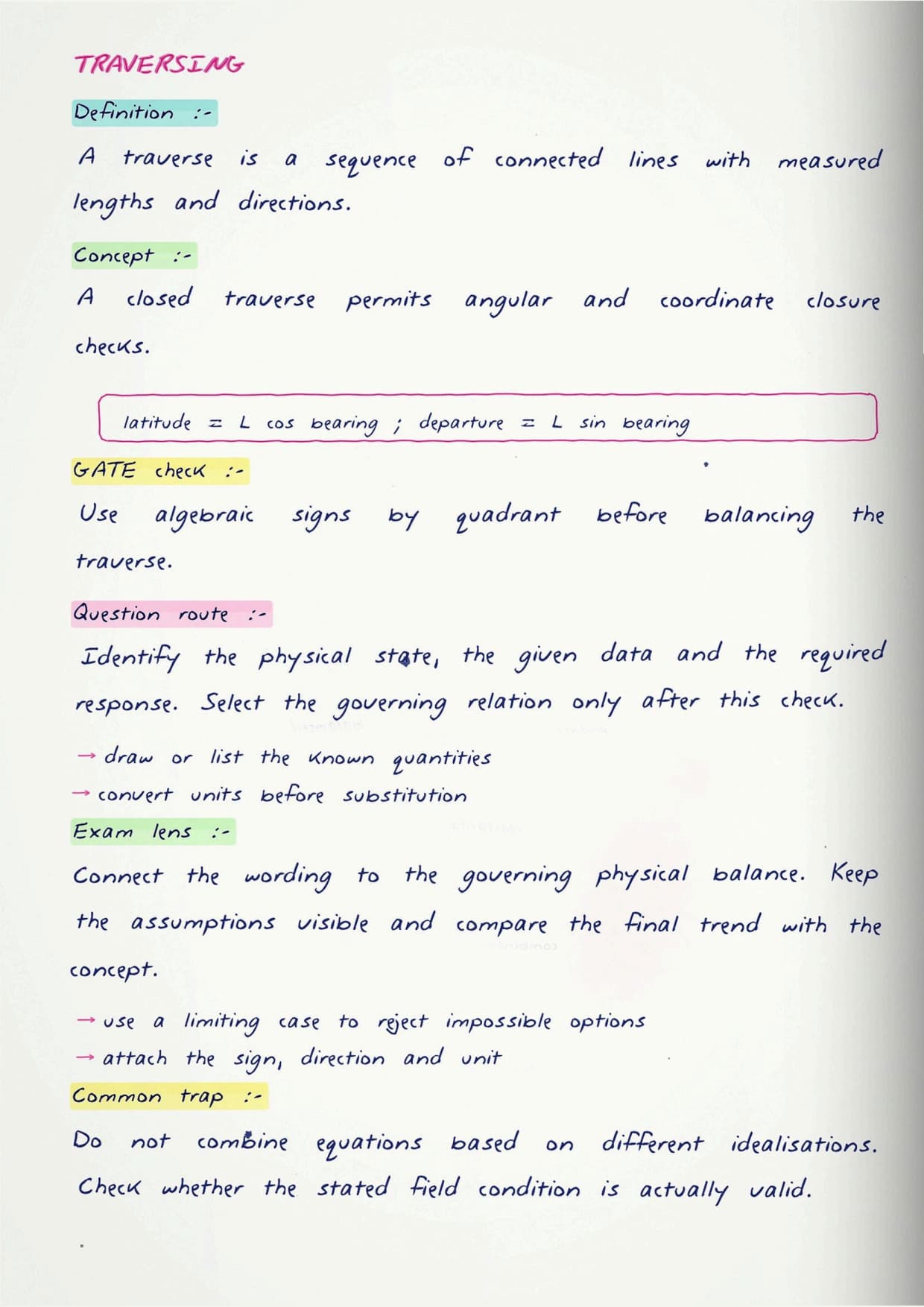
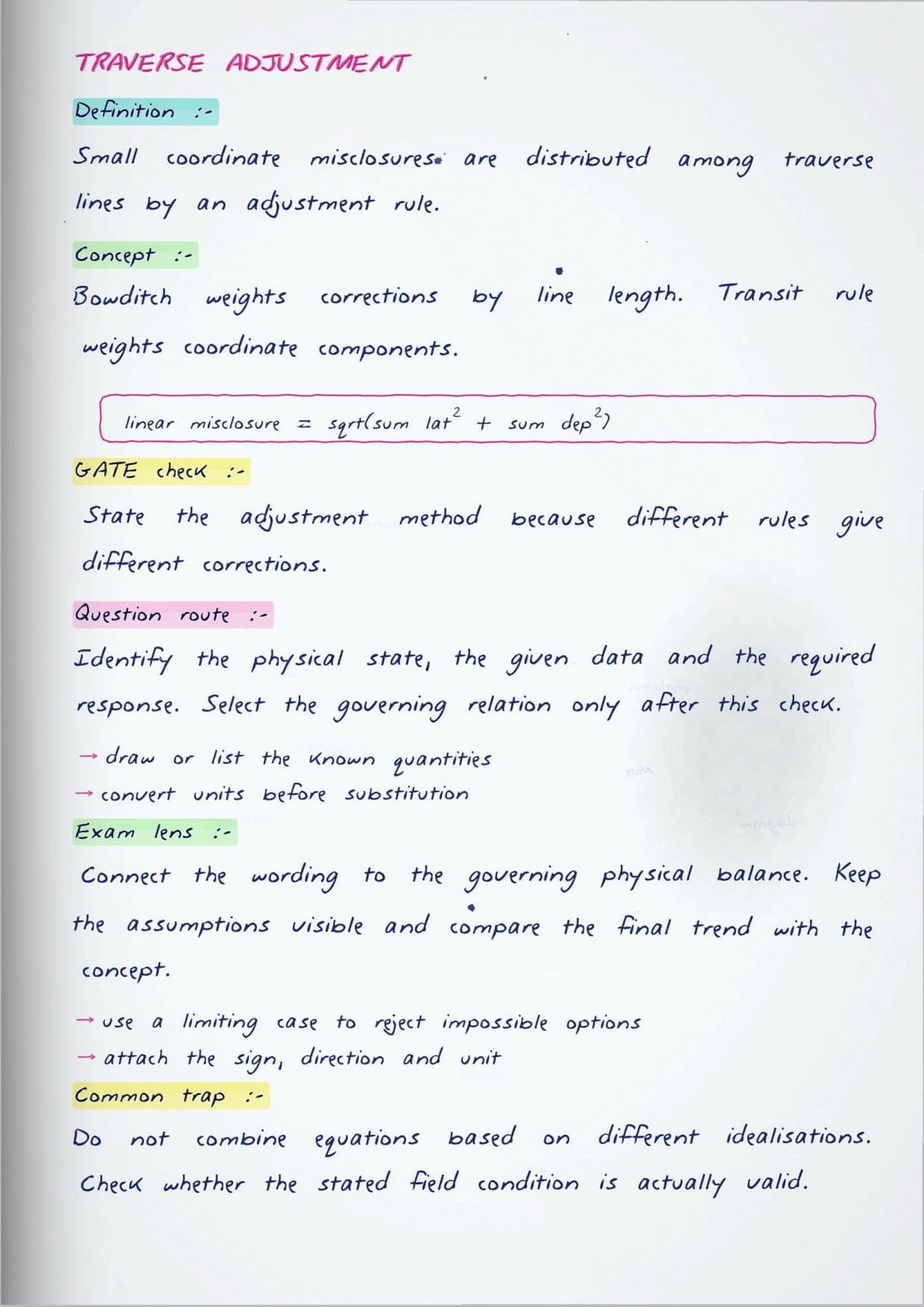
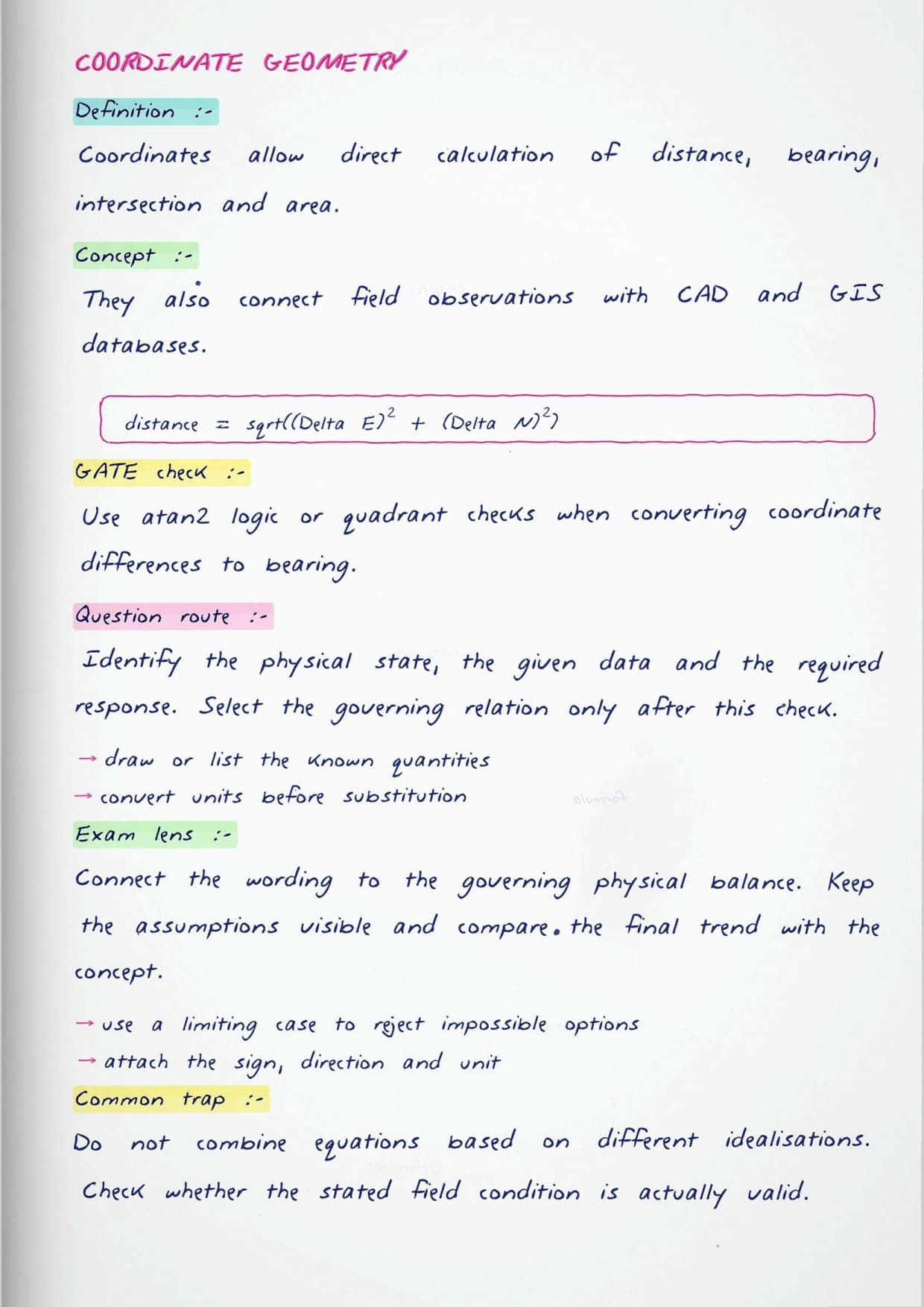
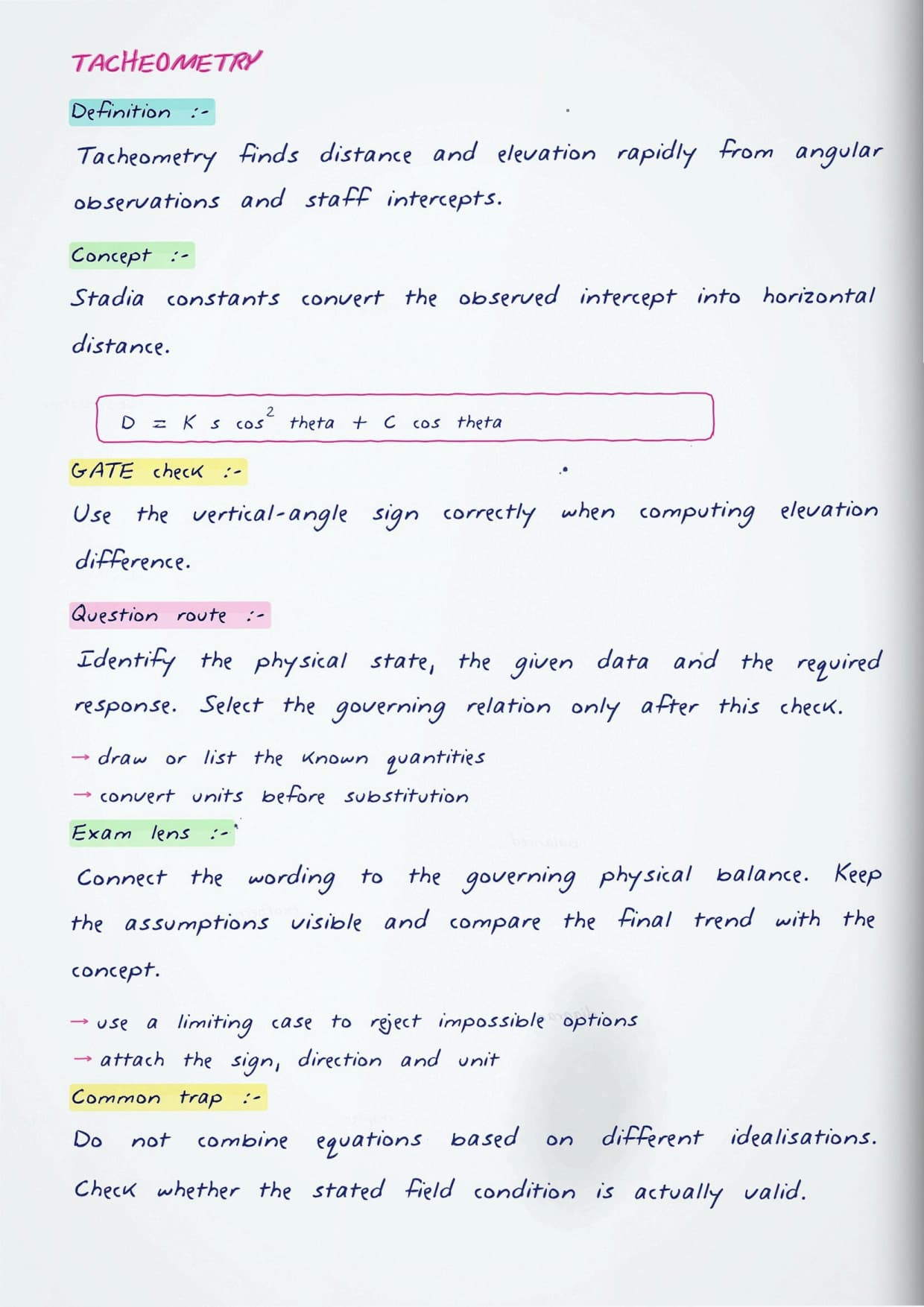
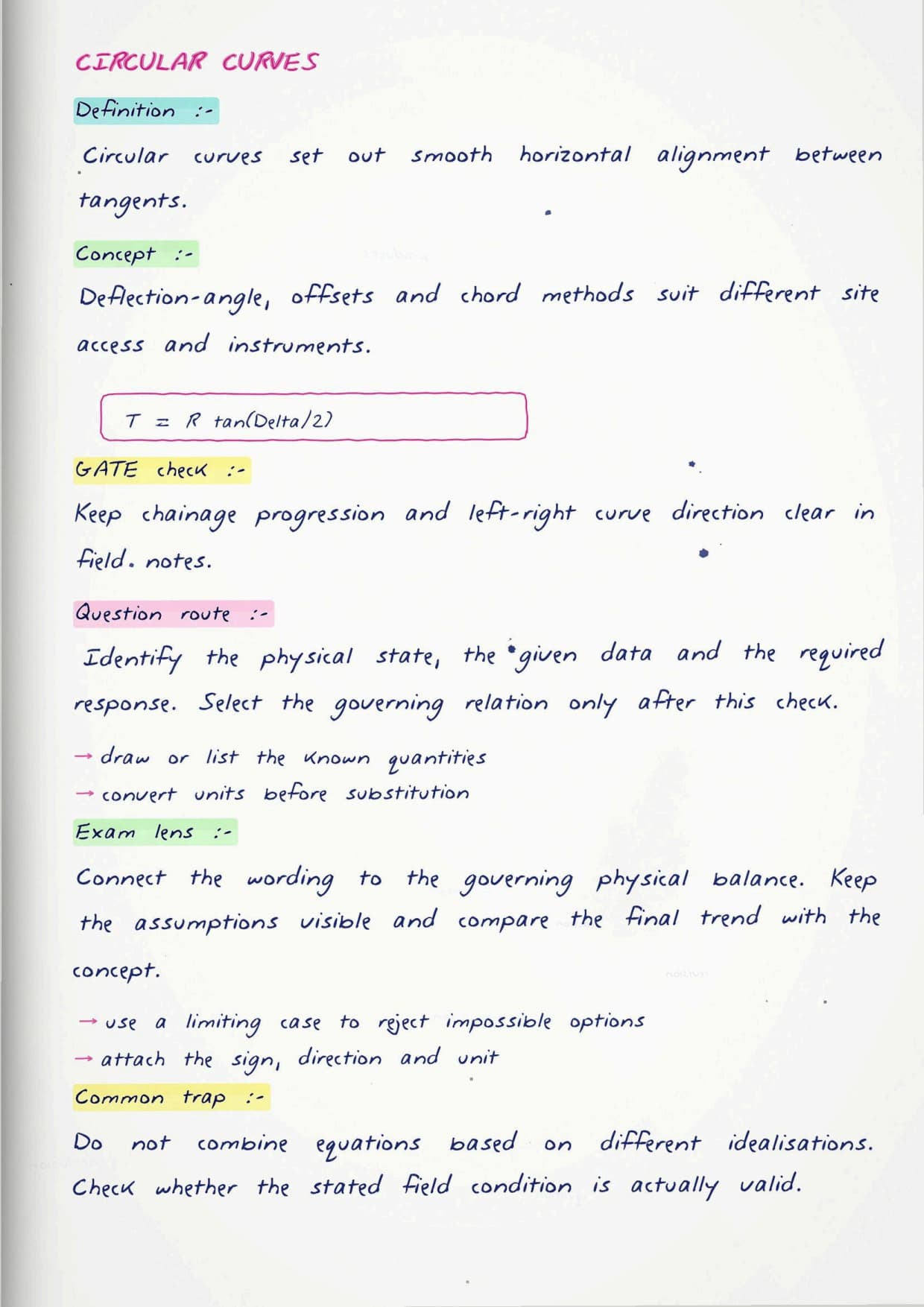
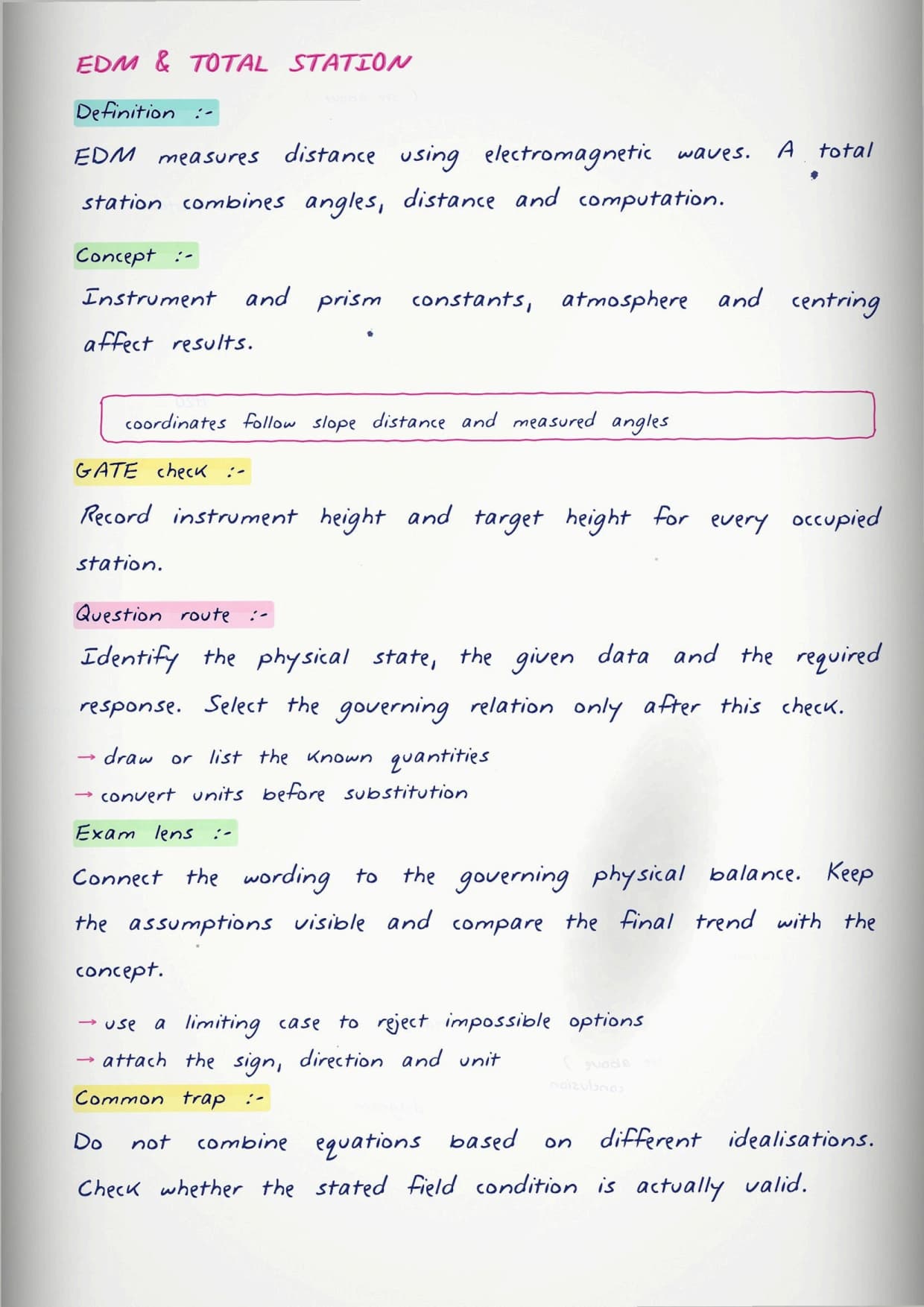
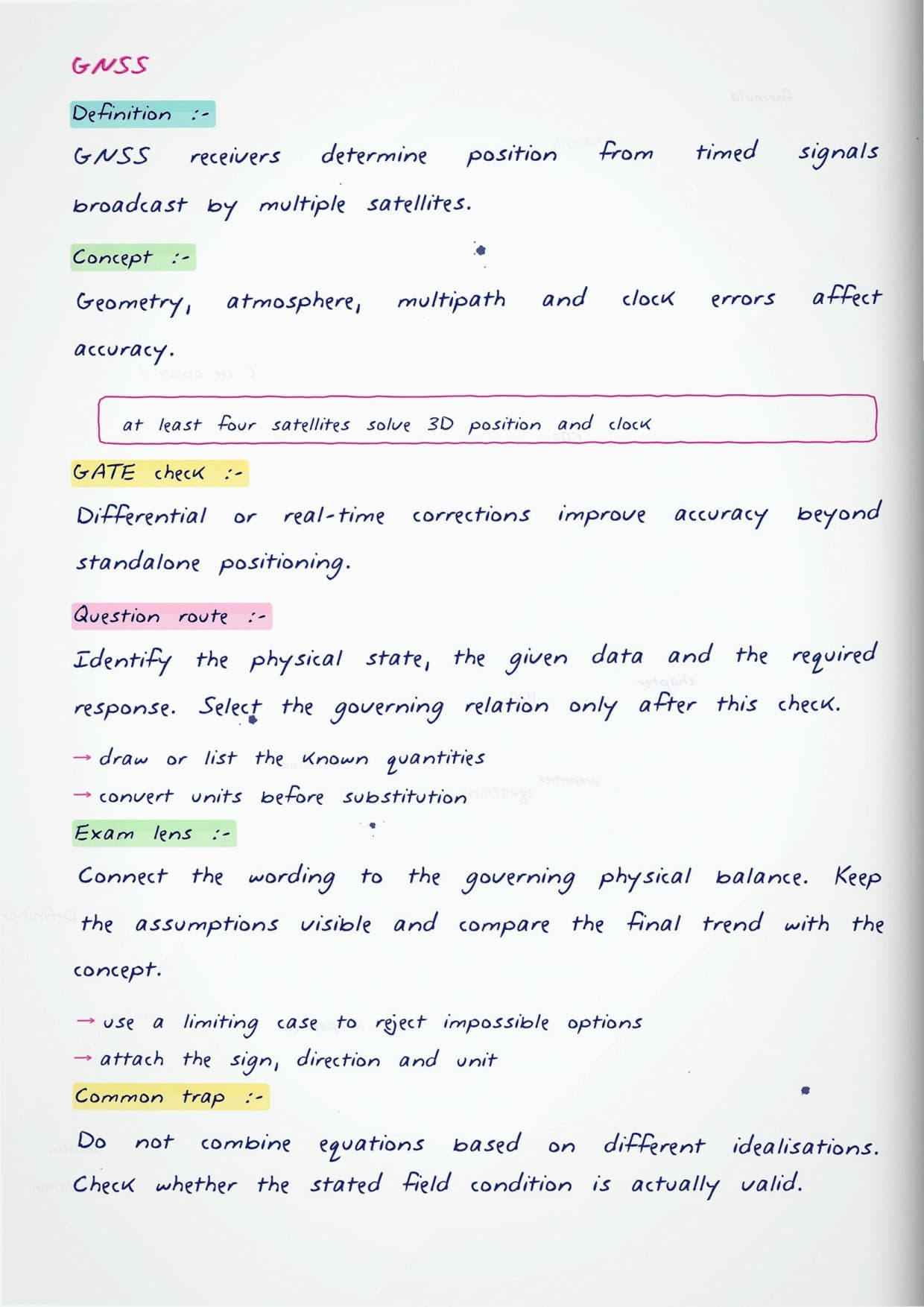
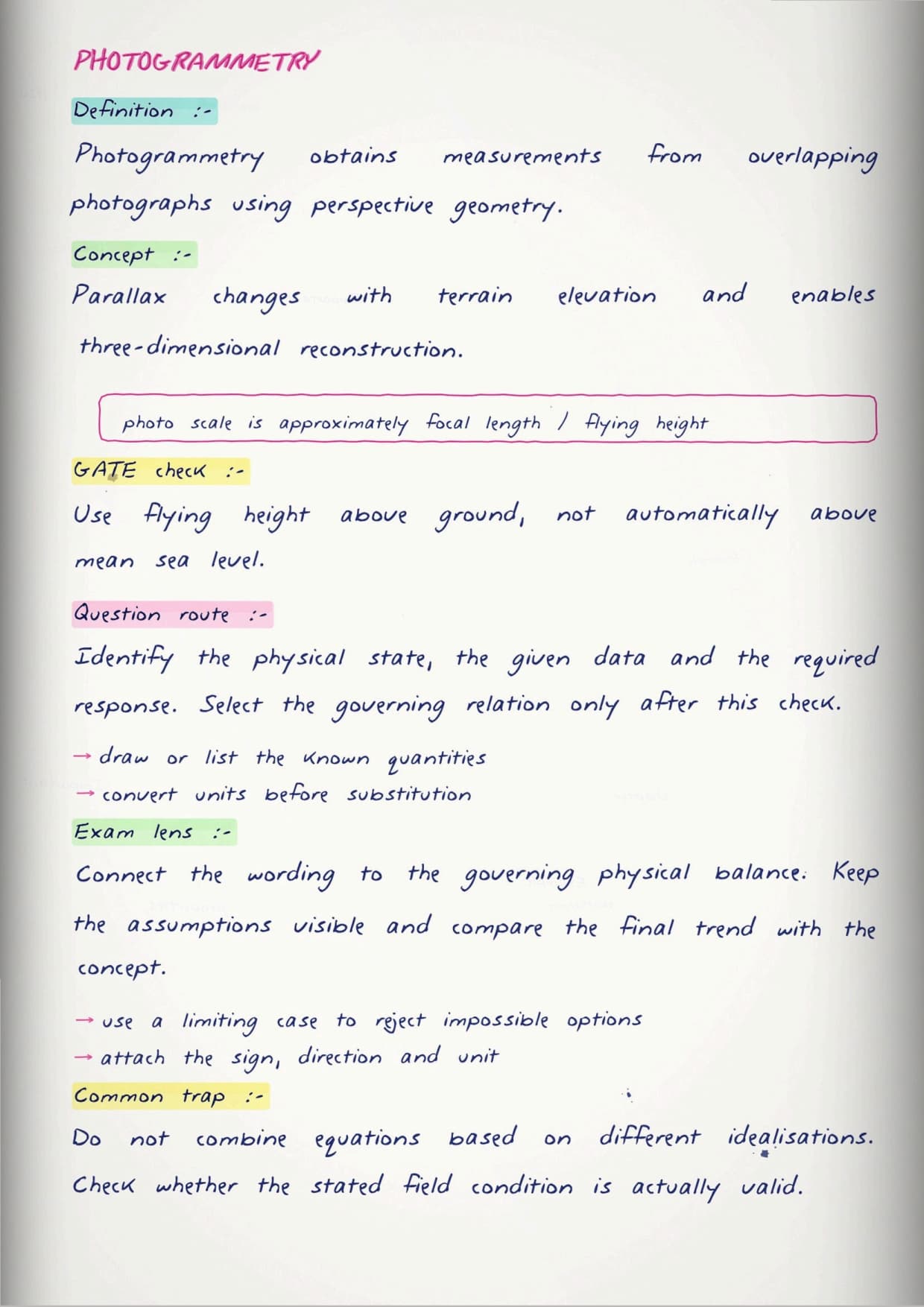
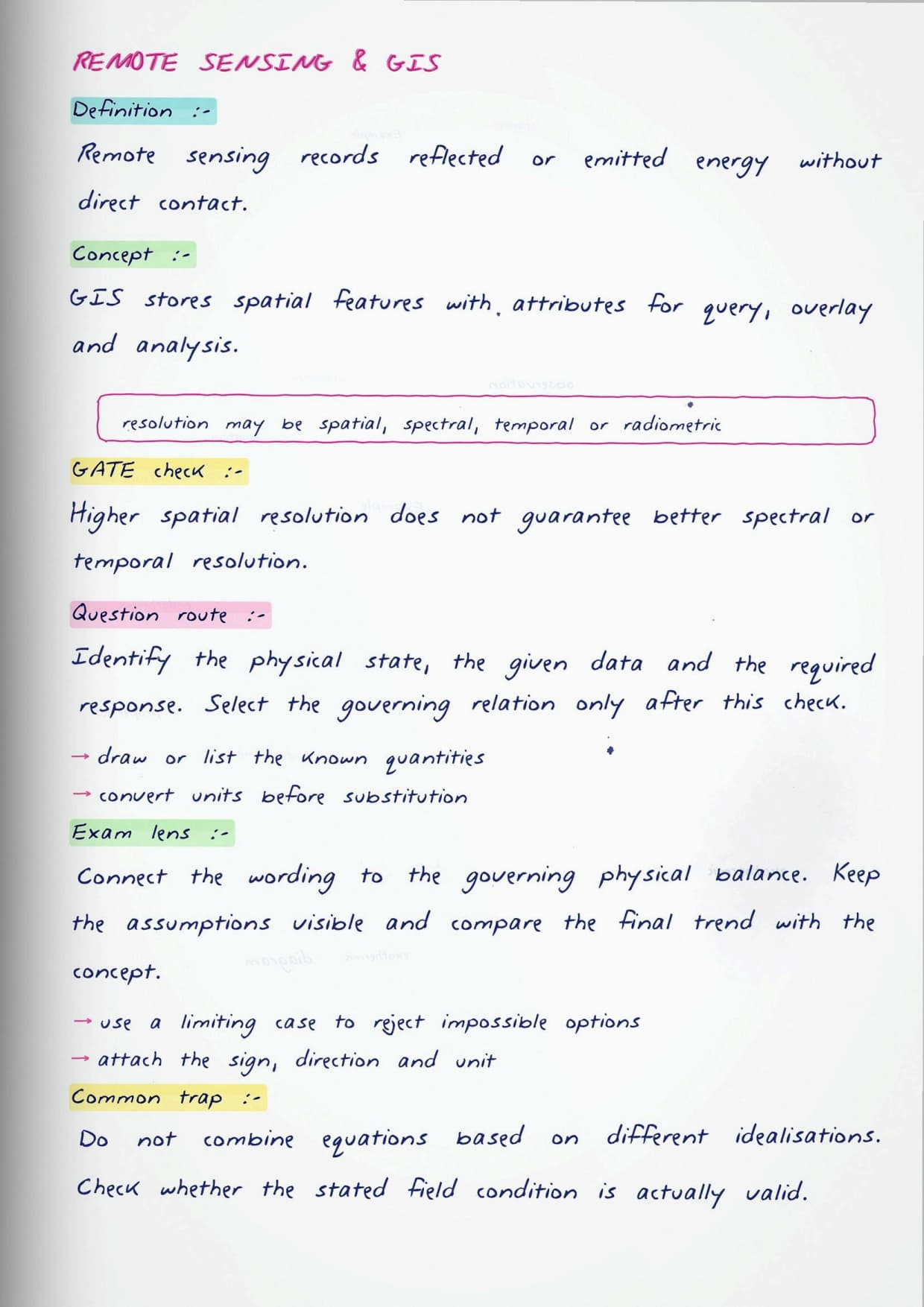
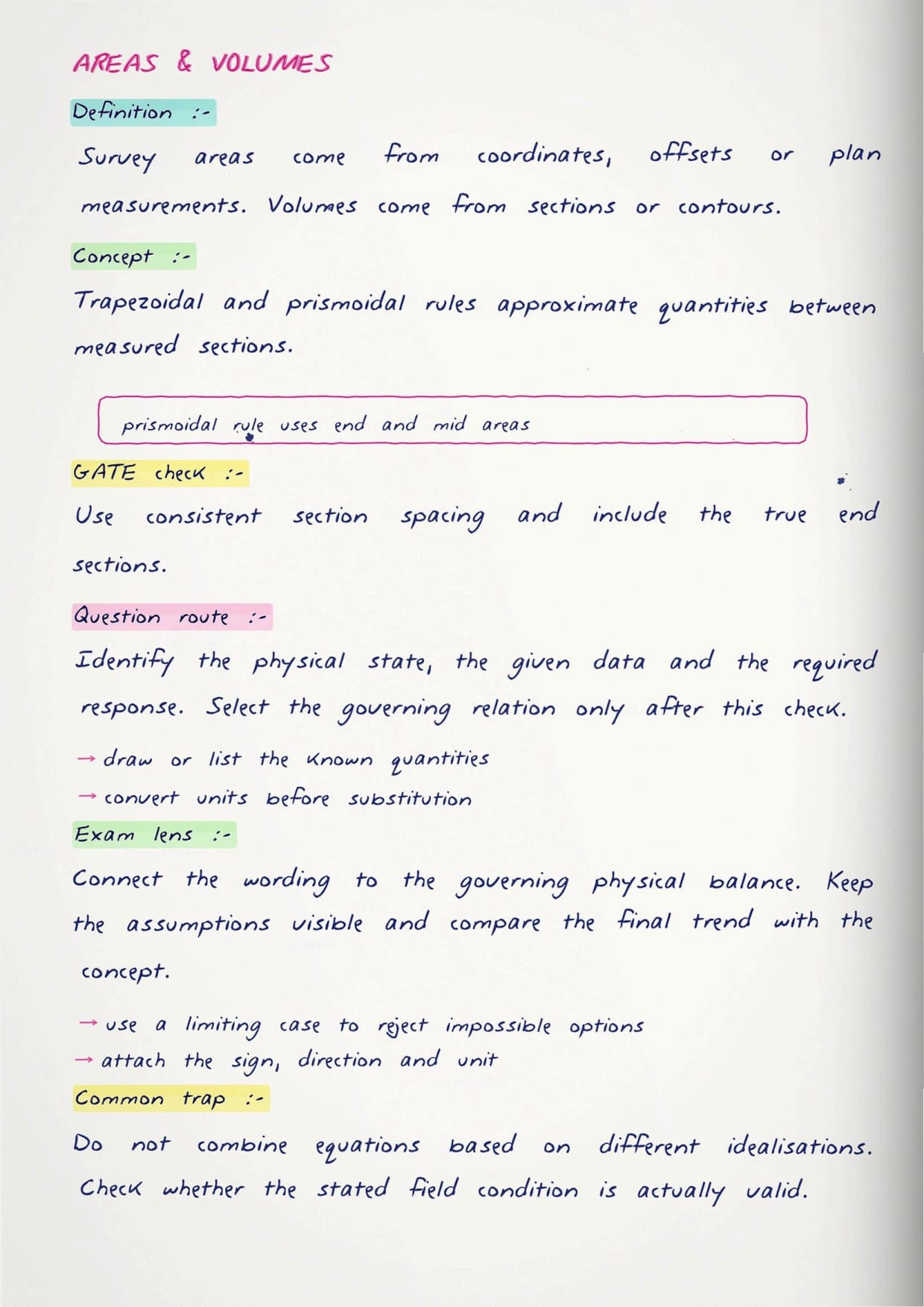
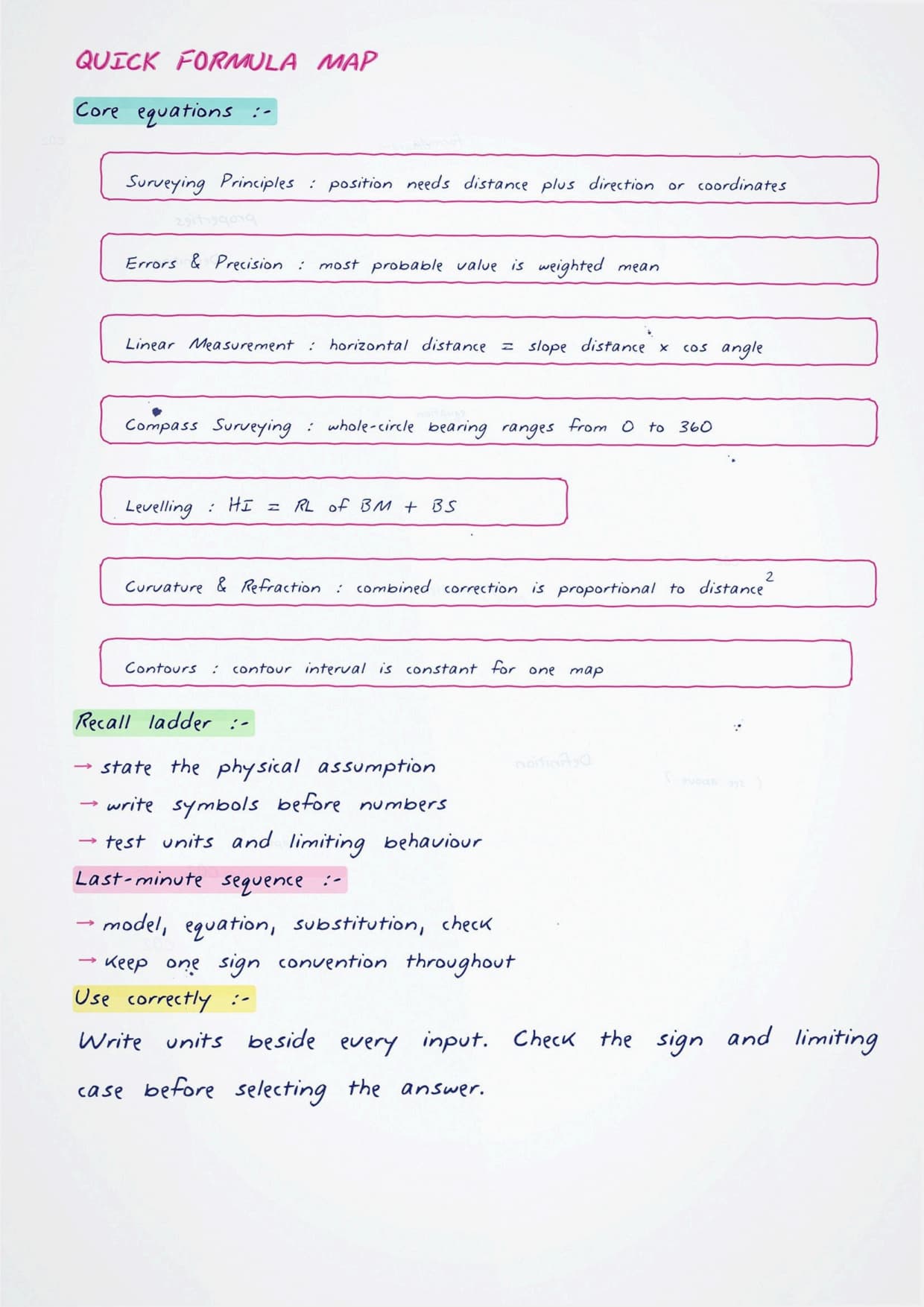
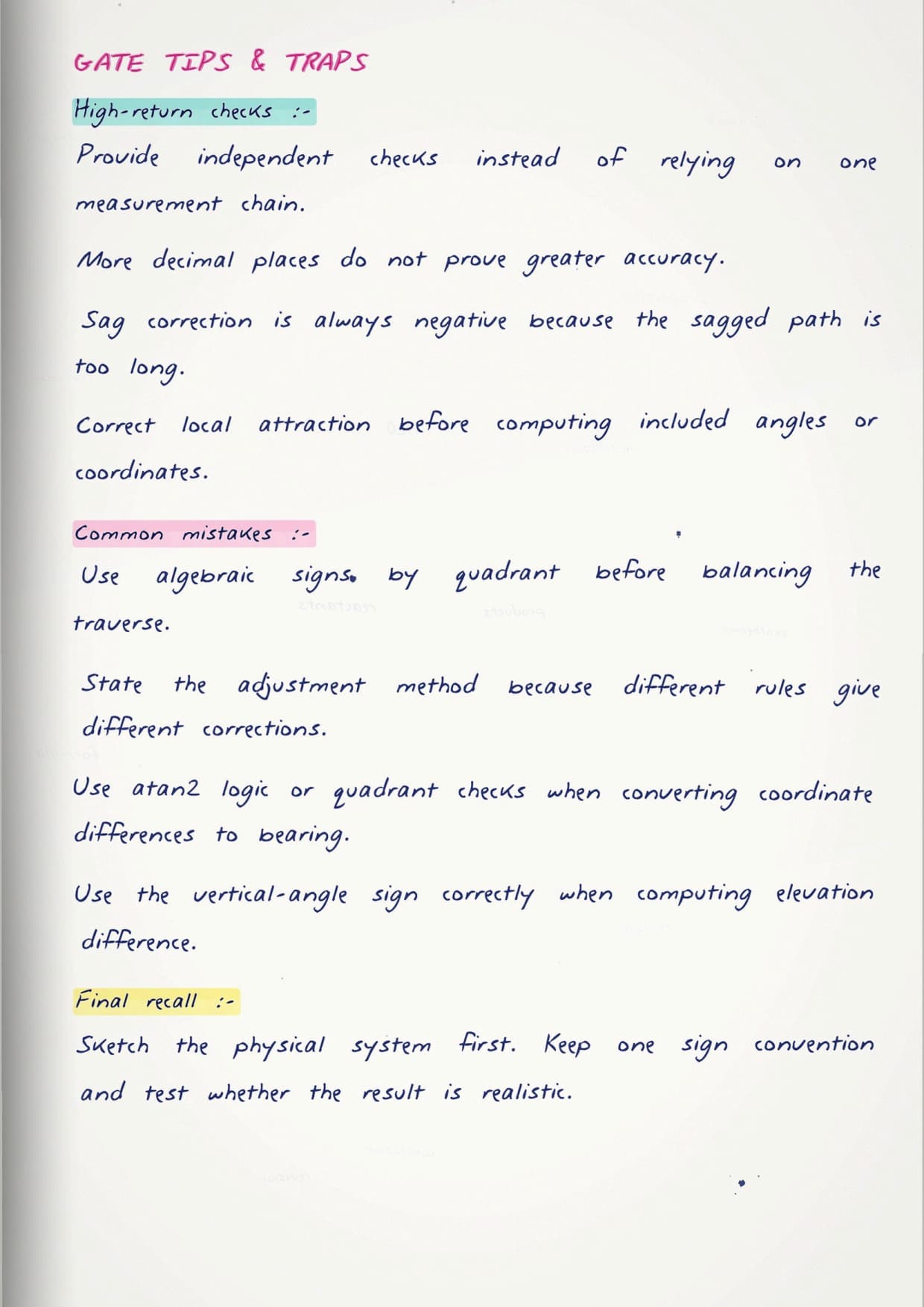
The notes carry hand-drawn diagrams for levelling staff readings, traverse sketches, and curve setting-out, along with a formula sheet you can revise in the last few days before the exam. Every result, from a rise and fall table to a curve deflection angle, is solved step by step so you follow the logic instead of memorising a formula on its own.
- Full Geomatics Engineering syllabus in one PDF, in the standard GATE order.
- Key formulas for every topic, with the rules and corrections behind them.
- Hand-drawn diagrams and a formula sheet for fast last-day revision.
What These GATE Geomatics Notes Cover
Geomatics deals with measuring positions, distances, angles, and heights on the ground, and turning them into maps and alignments. The notes explain each method in plain language and then give the formula and correction you apply in the exam. They stay close to the GATE Civil syllabus, so nothing extra is added and nothing important is left out.
- Clear meaning of each survey term, with the formula that follows from it.
- Key formulas for levelling, tacheometry, and curves, with their limits of use.
- Hand-drawn figures for levelling, traversing, and curve setting-out.
- A formula sheet that collects every result in one place.
GATE Geomatics Quick Revision
Source: GATE Wallah - ME, CE, XE, CH, PI & ES on YouTube
Topics Covered in GATE Geomatics
The notes follow the standard GATE Civil order, starting from the basics of surveying and building up to modern tools like remote sensing and GPS. Each topic connects to the one before it, so the subject reads as a single flow rather than a set of separate methods. The full list below matches the official syllabus.
- Principles of surveying, including chaining, ranging, and scales.
- Levelling, with the height of instrument and rise and fall methods.
- Theodolite and traversing, plus the checks on a closed traverse.
- Tacheometry, with the stadia and tangential systems.
- Horizontal and vertical curves, and their setting-out.
- Photogrammetry, including scale and relief displacement.
- Remote sensing, with resolution and the basics of imagery.
- GIS and GPS with the total station in modern survey work.
How the Notes Are Organised
The material runs from the fundamentals to the newer tools, so you can read it straight through or open a single page for a quick recap. Simpler topics such as surveying principles and levelling come first, while curves, photogrammetry, and remote sensing come later once the basics are in place. A formula sheet near the end brings the key results together for revision.
Because each topic stands on its own, you can match it to whatever you are practising that day and revise only the part you need before an attempt.
How GATE Geomatics Links to Other Subjects
Geomatics does not stand alone in the GATE Civil paper. The same measurement and levelling ideas return in road and water work, so revising it well earns marks in more than one place. The notes point out these links as they come up.
- Curve and alignment methods support Transportation Engineering.
- Levelling is used to fix canal and catchment grades in Water Resources.
- Contouring and area work feed earthwork and reservoir capacity sums.
- Traversing and coordinates support project layout across sites.
Important Topics in GATE Geomatics
A few topics appear in the GATE paper almost every year and carry most of the subject's marks. If your time is short, revise these first and make sure you can solve them quickly and without mistakes, since they are the surest source of marks.
- Levelling and the rise and fall table, near-certain every year.
- Theodolite traversing and closing error corrections.
- Tacheometry with stadia readings and the constants.
- Curve setting-out, degree of curve, and deflection angles.
- Common traps: check the sign of a correction and confirm the bearing convention before you compute.
How to Prepare GATE Geomatics with Handwritten Notes
Geomatics rewards clean calculation more than reading, so use the notes as a theory and formula base beside daily practice. Read a topic, note its formula and correction, then solve a few previous year questions on it before you move on. Return to the notes before mock tests to refresh the methods quickly.
- First read: cover every topic once to build the base.
- Second pass: focus on levelling, traversing, tacheometry, and curves.
- Solve previous year questions topic by topic beside the notes.
- Final week: revise the formula sheet and the corrections page.
Why These Notes Help You Score Better
Handwritten notes are quick to scan and easy to recall under exam pressure, which is why they work well for revision in the final weeks. A short, visual page is faster to go through than a full textbook chapter, and each diagram is right next to the result it explains, so the link stays clear for students.
GATE Civil Geomatics Handwritten Notes FAQs
Ques. Do these notes cover the full GATE Civil Geomatics syllabus?
Ans. Yes. They cover every topic in the official syllabus, from the principles of surveying through to GIS and GPS, in the standard GATE order.
Ques. How much weightage does Geomatics carry in GATE Civil?
Ans. It is usually worth about 4 to 6 marks, and its levelling and alignment ideas also support questions in Transportation and Water Resources Engineering.
Ques. Can I rely only on these notes for Geomatics?
Ans. Use them as your theory and formula base, but pair them with regular numerical practice and previous year papers for the best result.
Ques. Are the notes useful for last-minute revision?
Ans. Yes. The topic-wise pages and the formula sheet are made for quick revision in the days before the exam.



Comments