




Network Theorems, Transients, Resonance and Two Port Networks is a consistently rewarding topic in GATE Electrical, usually worth about 6 to 9 marks in the paper. It belongs to the Electric Circuits and Fields section, and its ideas return in Control Systems, Signals and Systems, and Power Systems. These handwritten notes cover the full topic in a compact, exam-focused form.
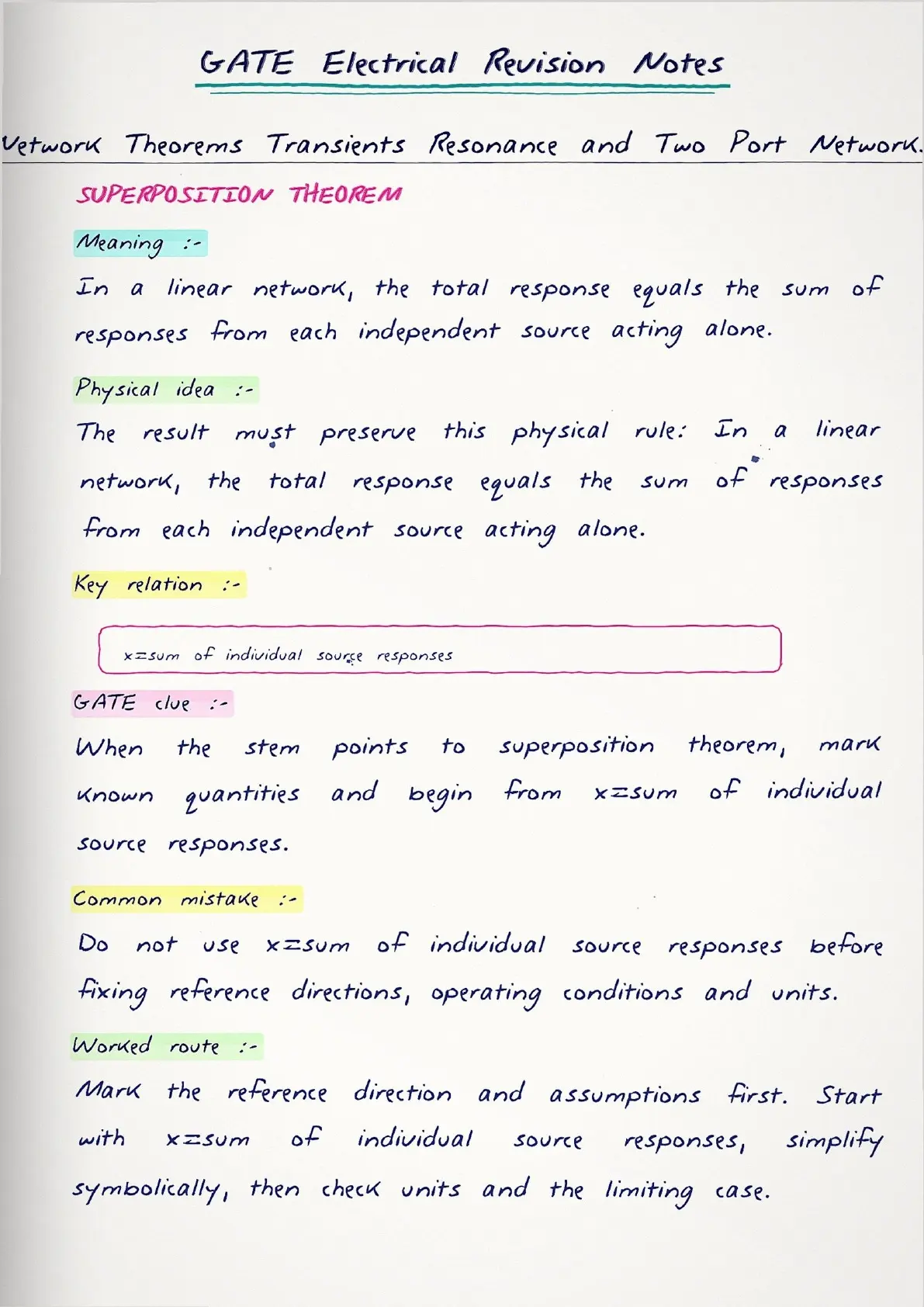
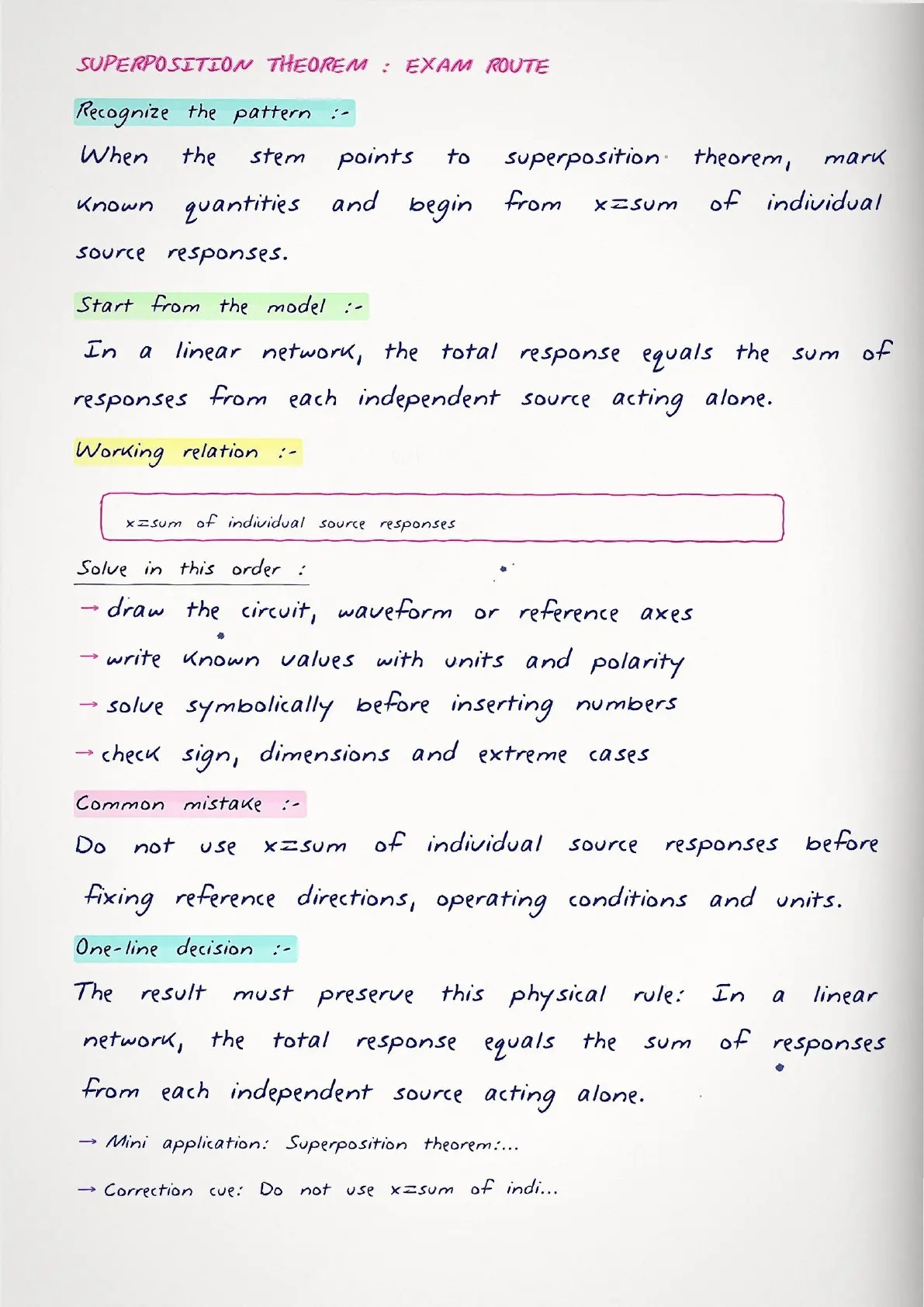
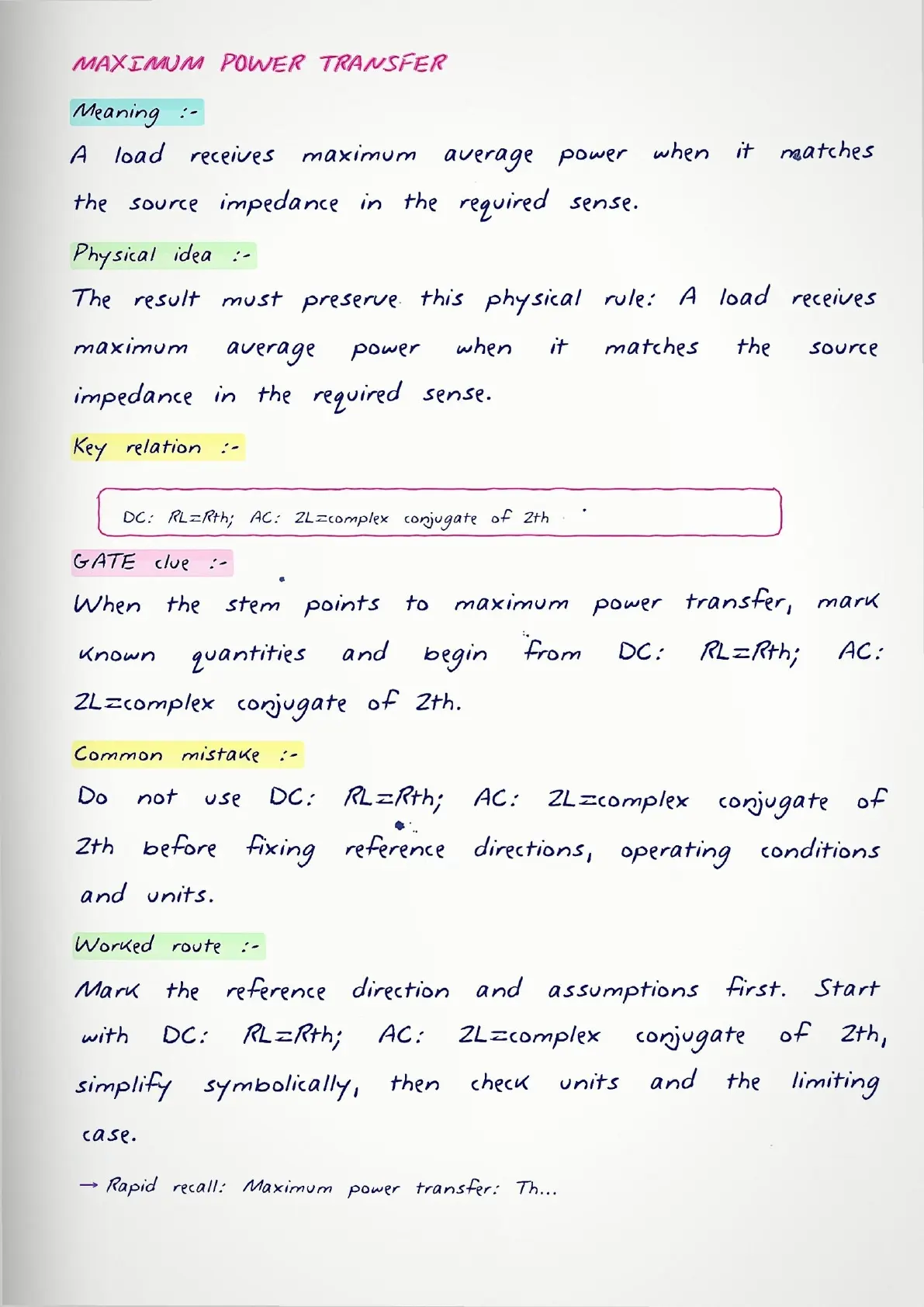
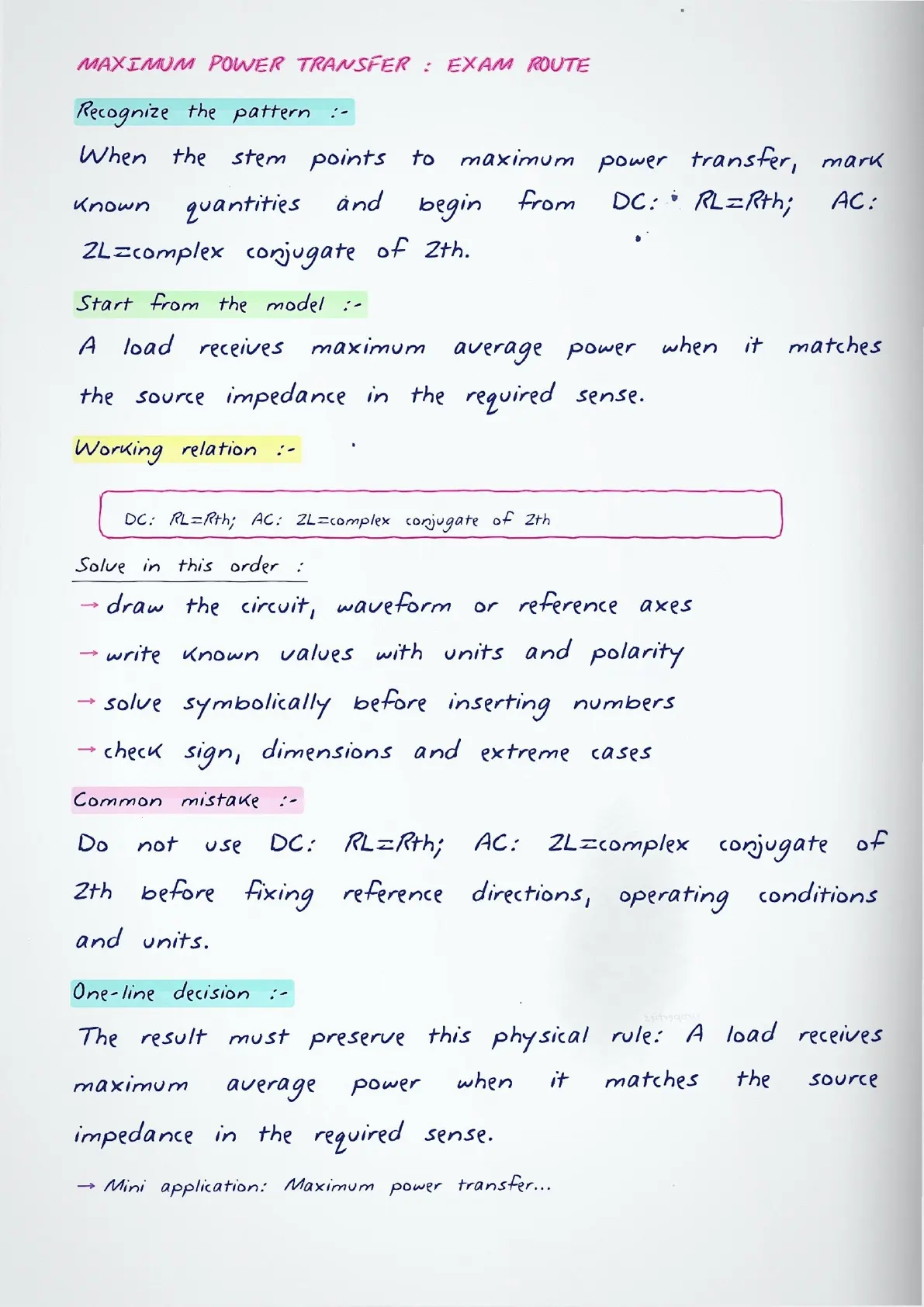
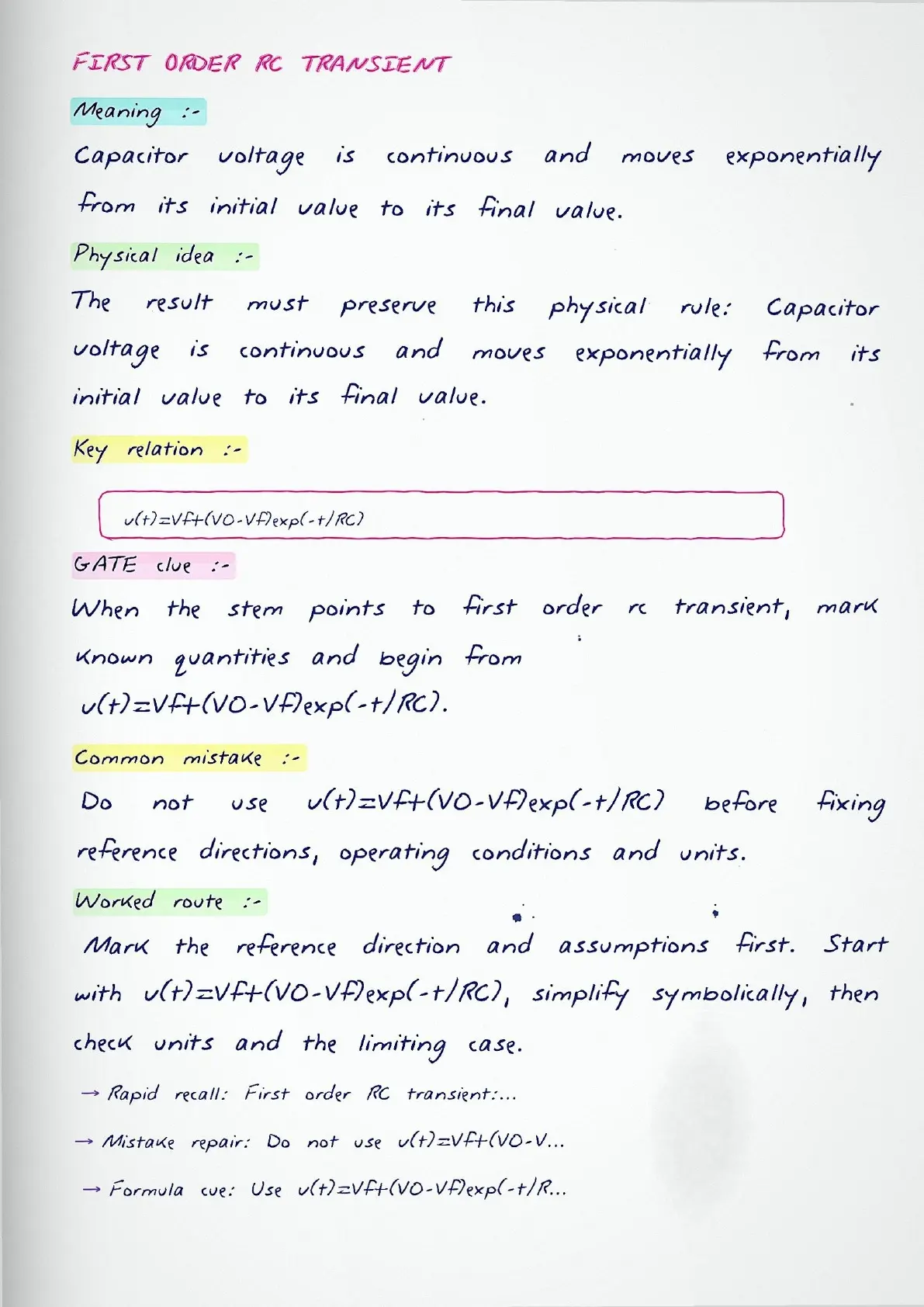
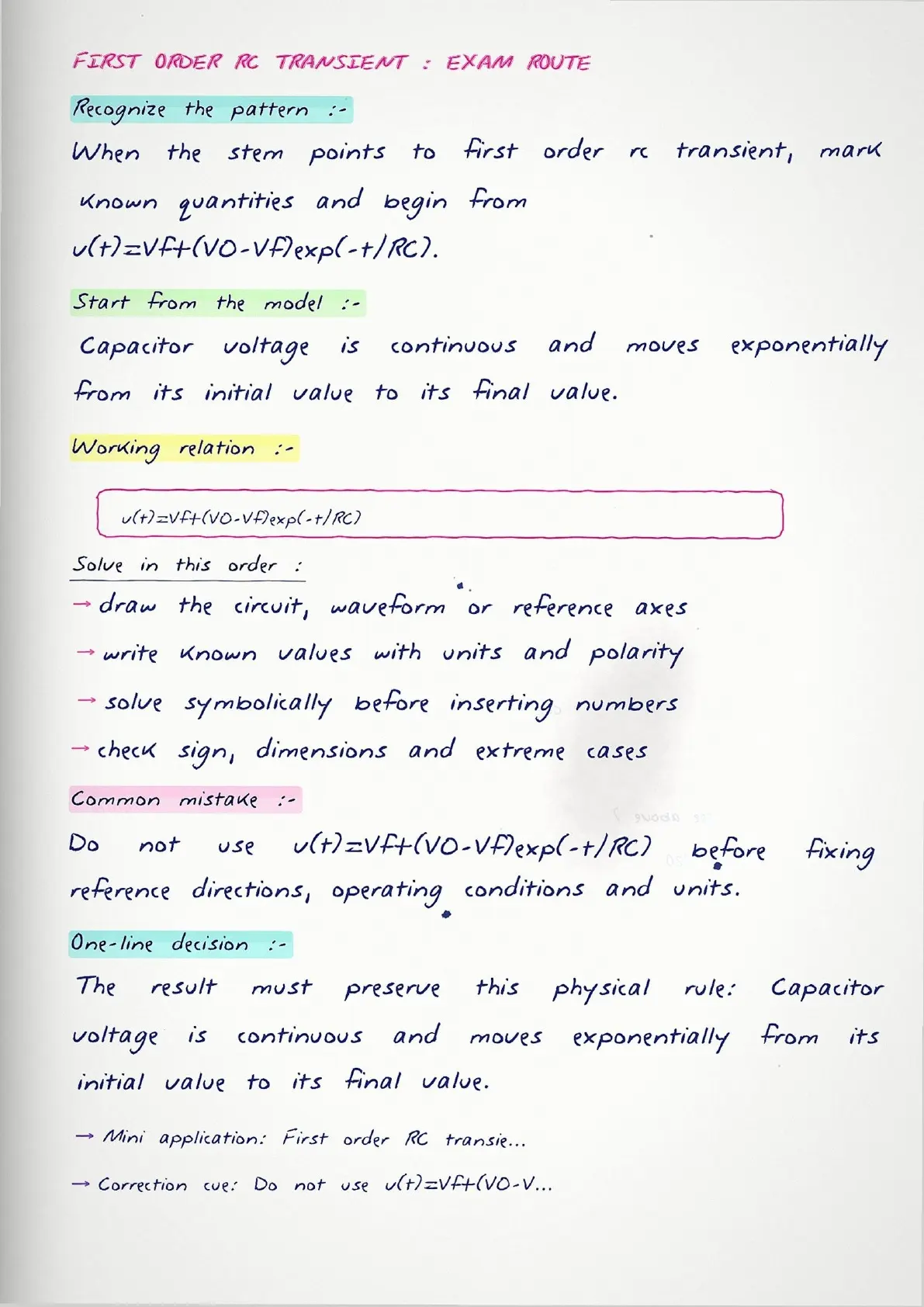
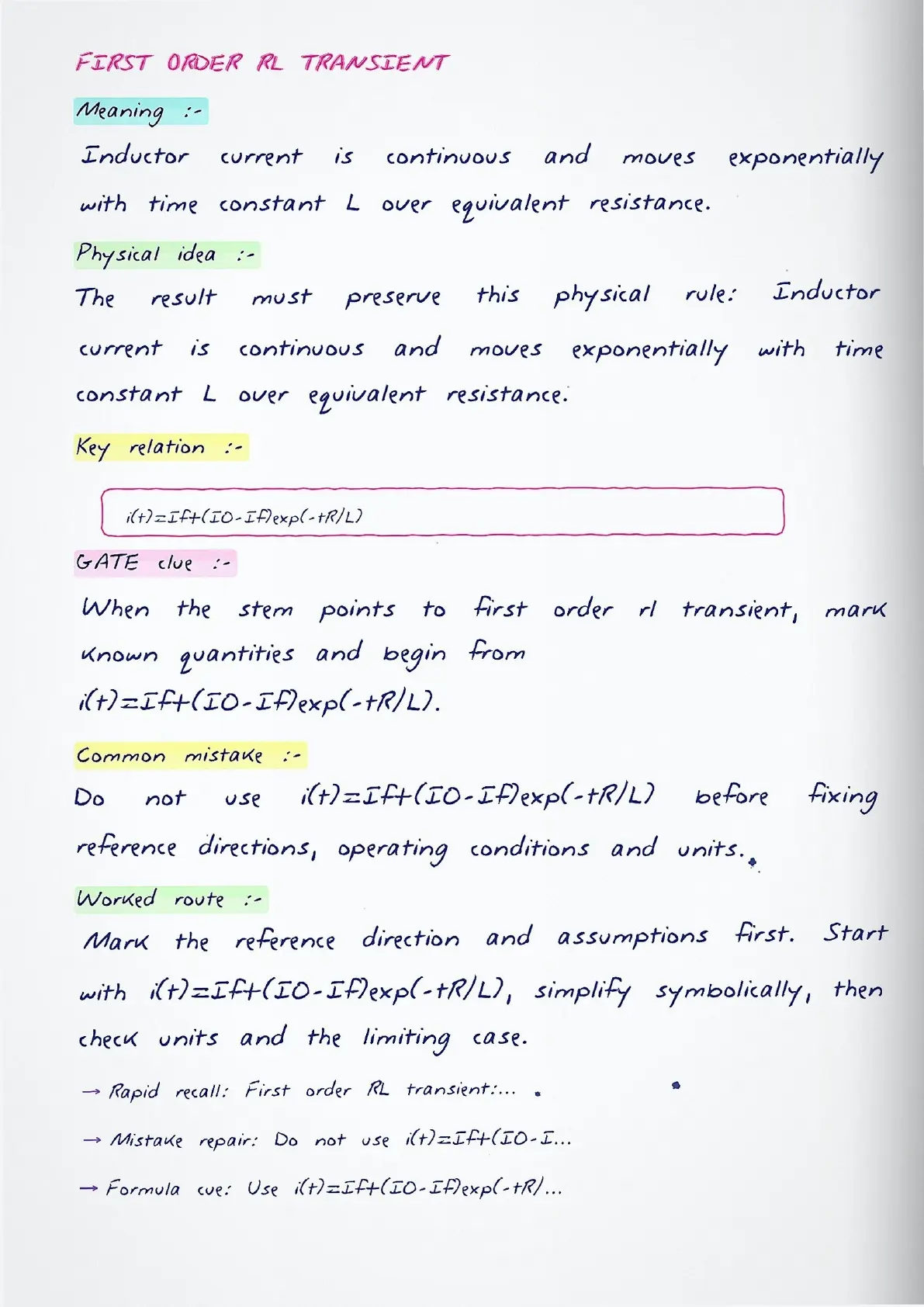
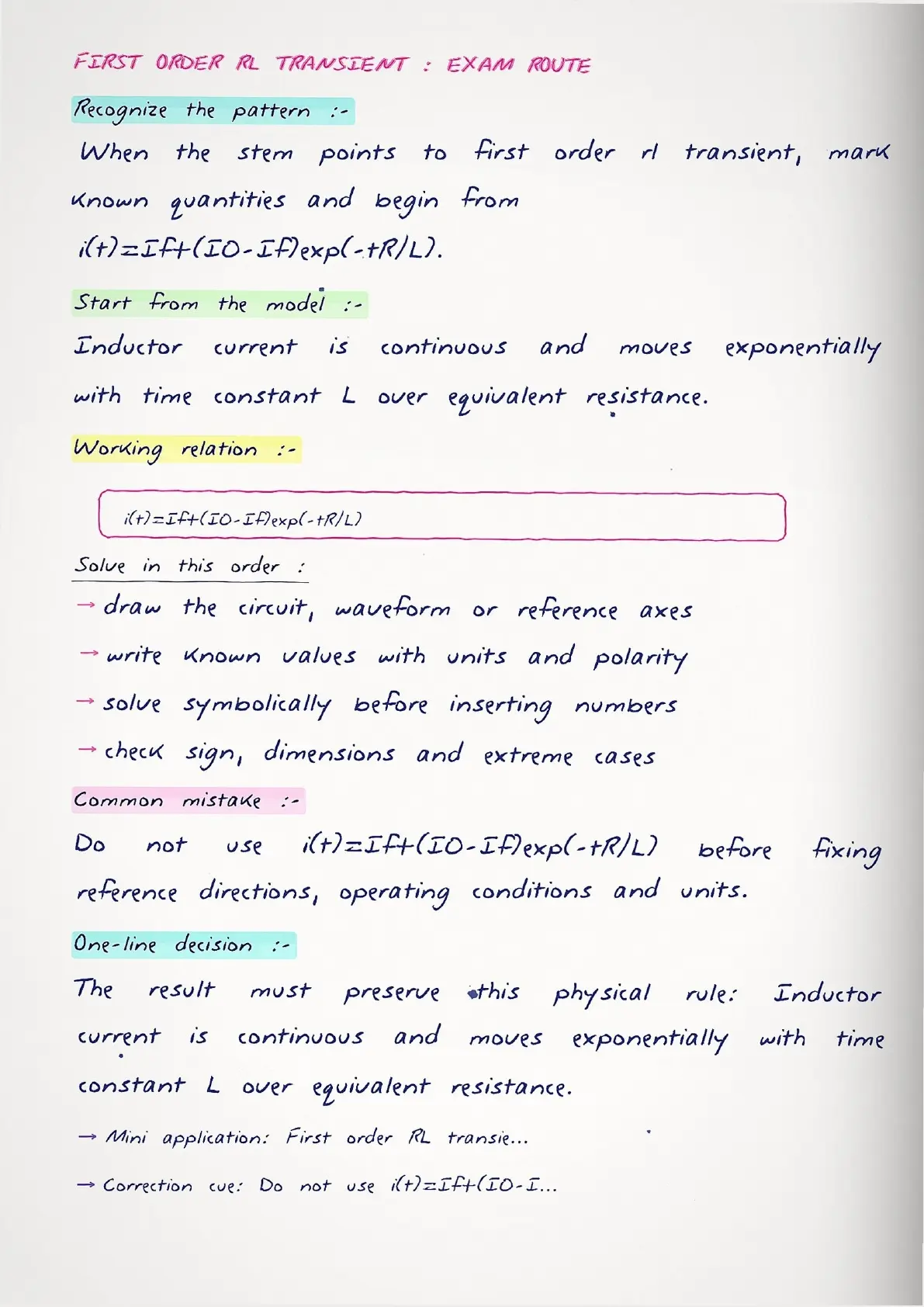
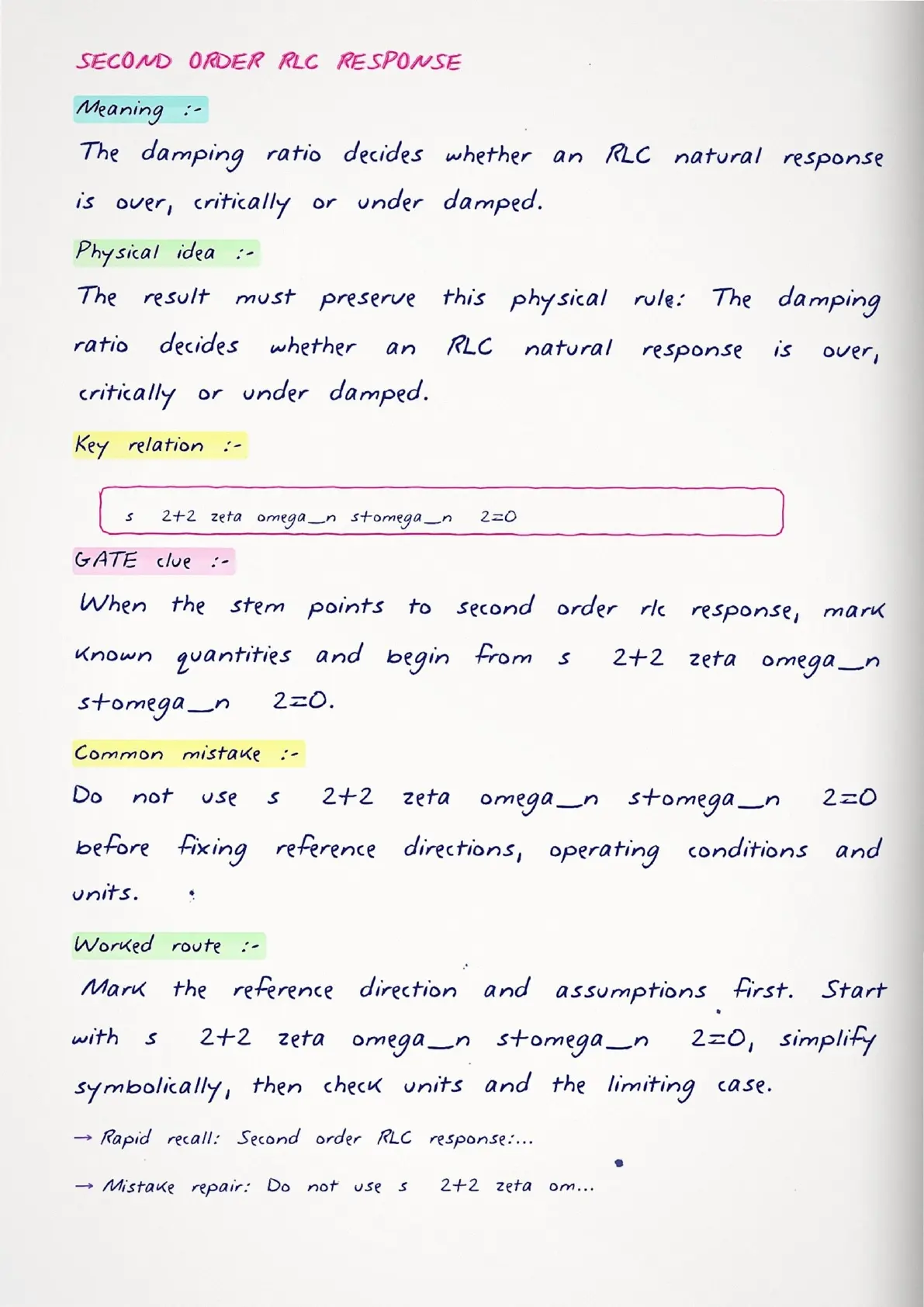
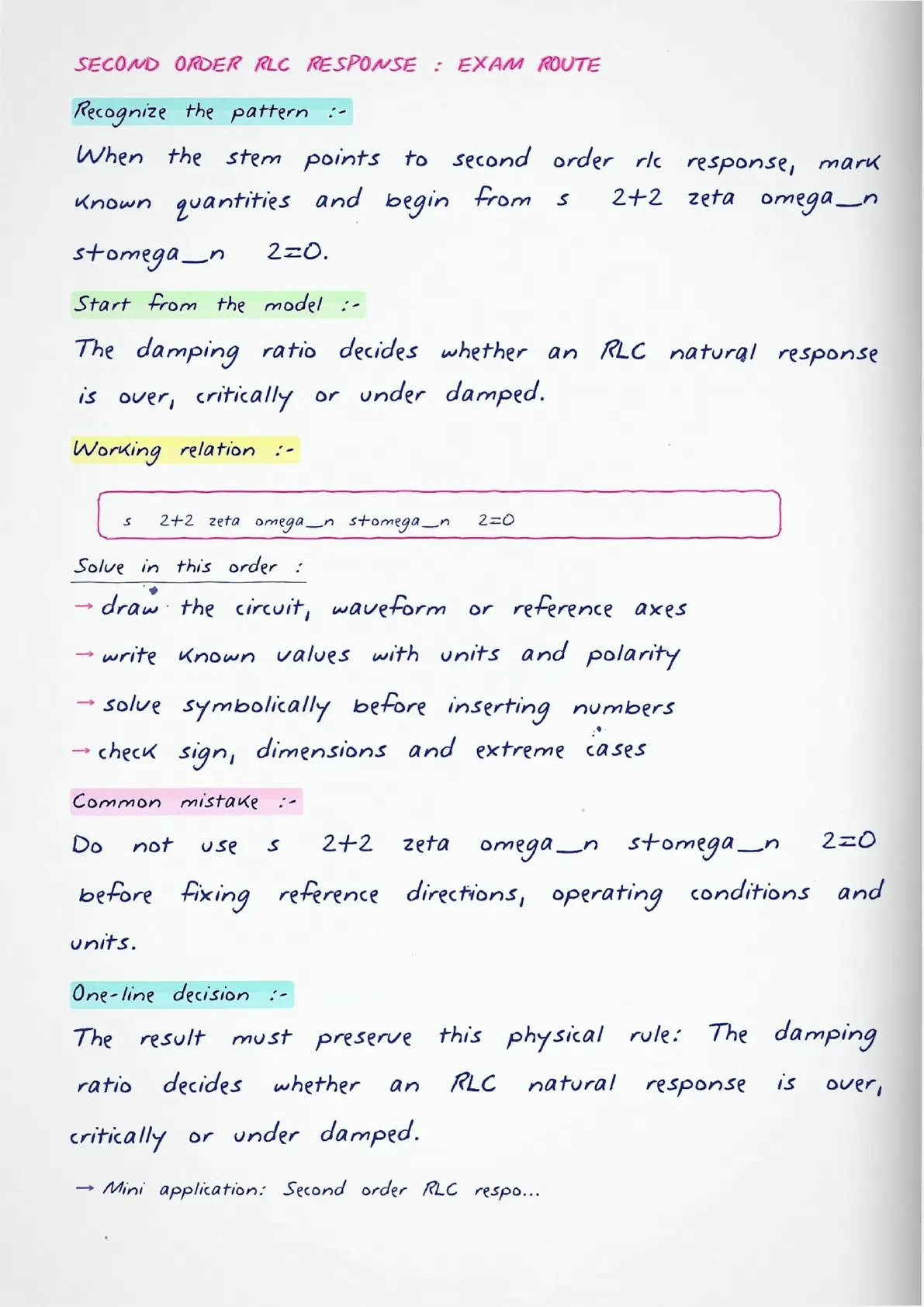
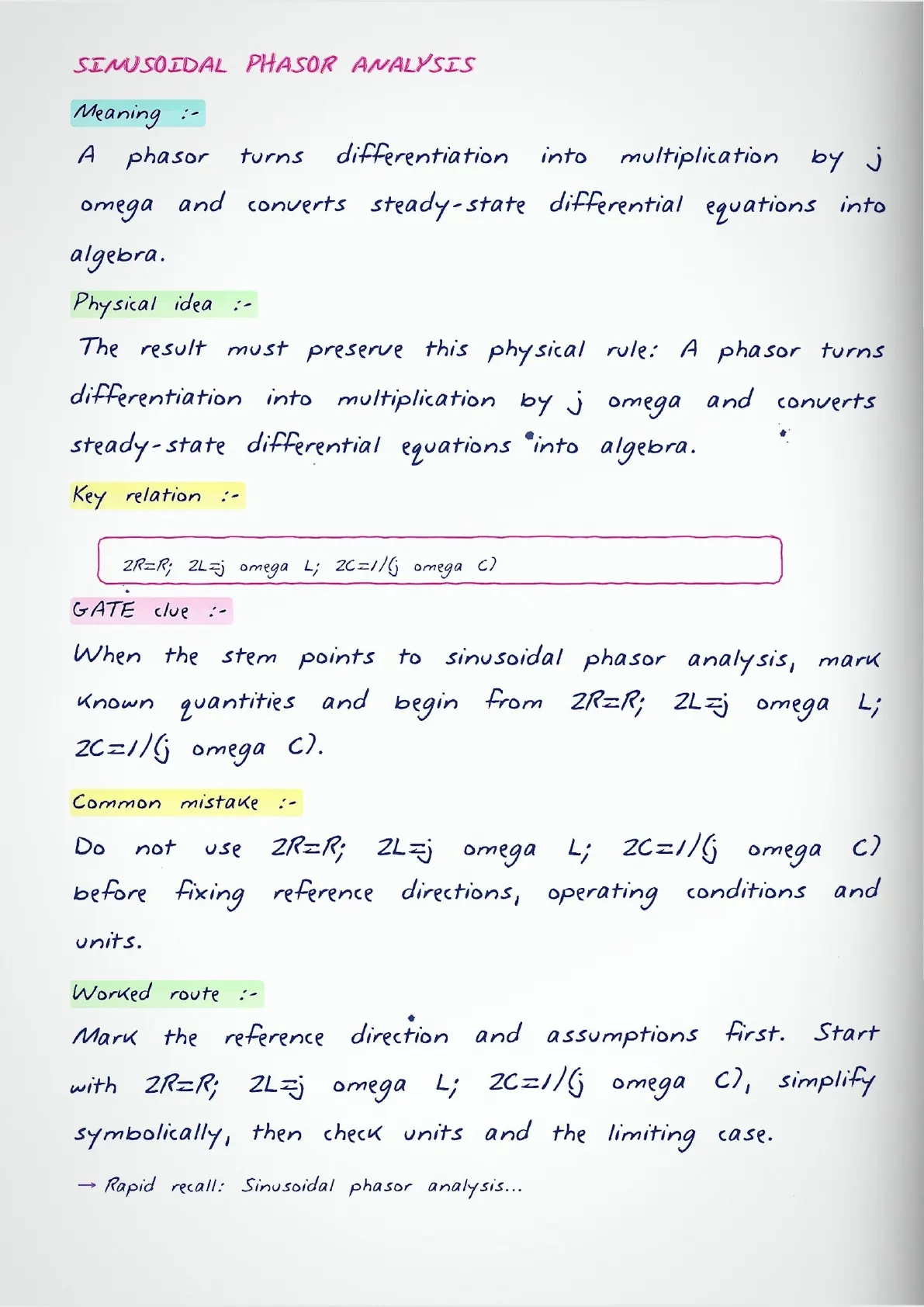
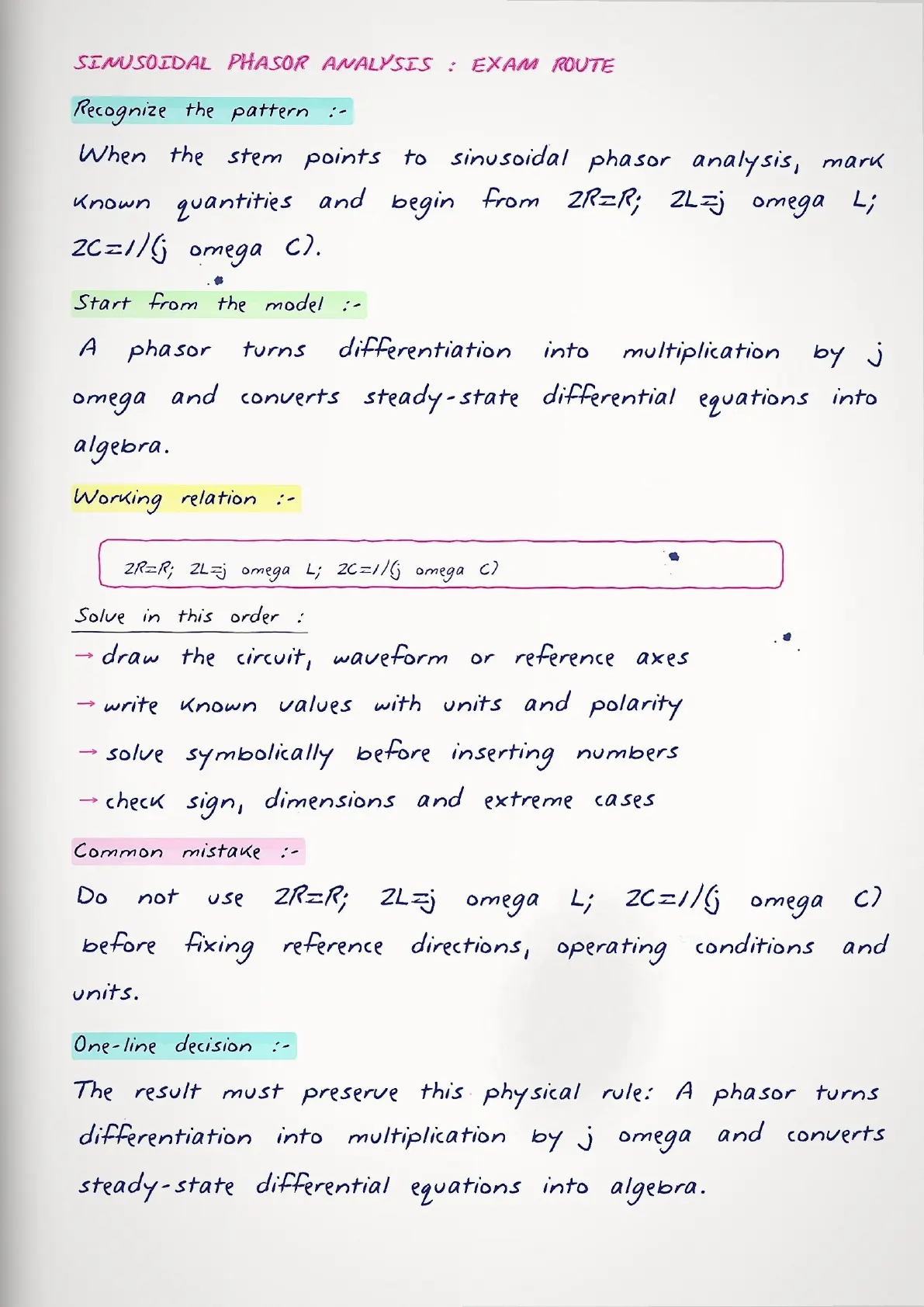
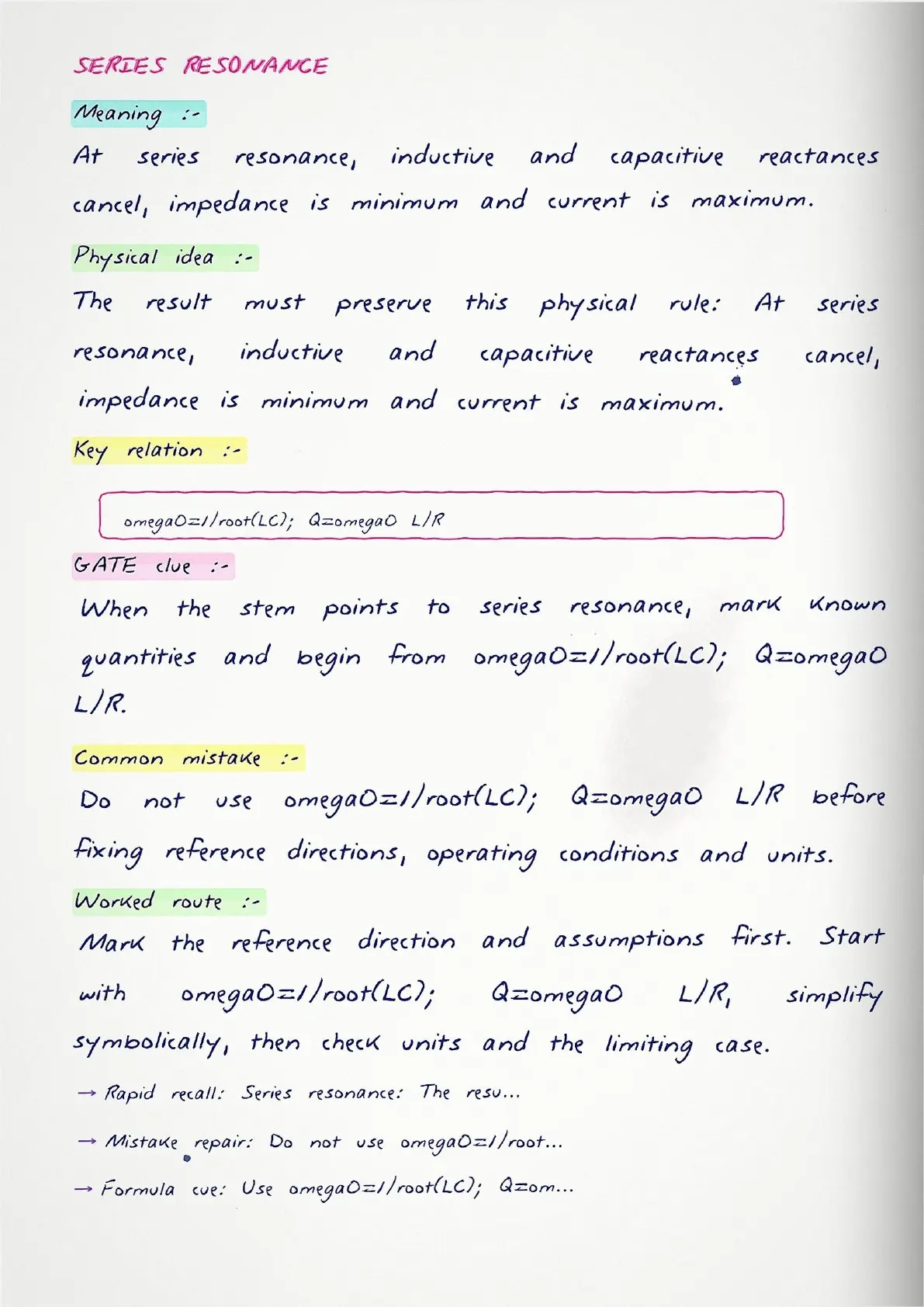
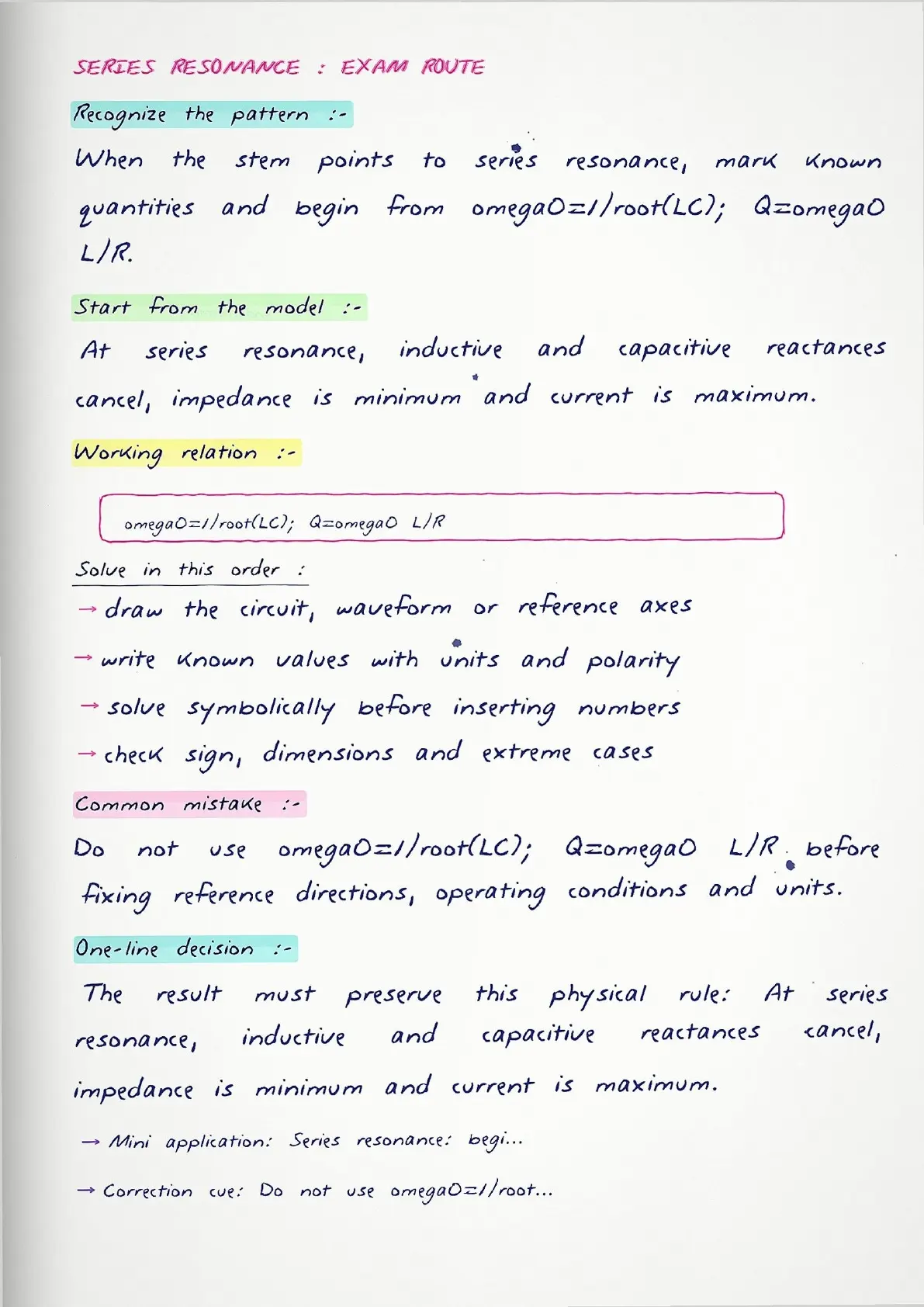
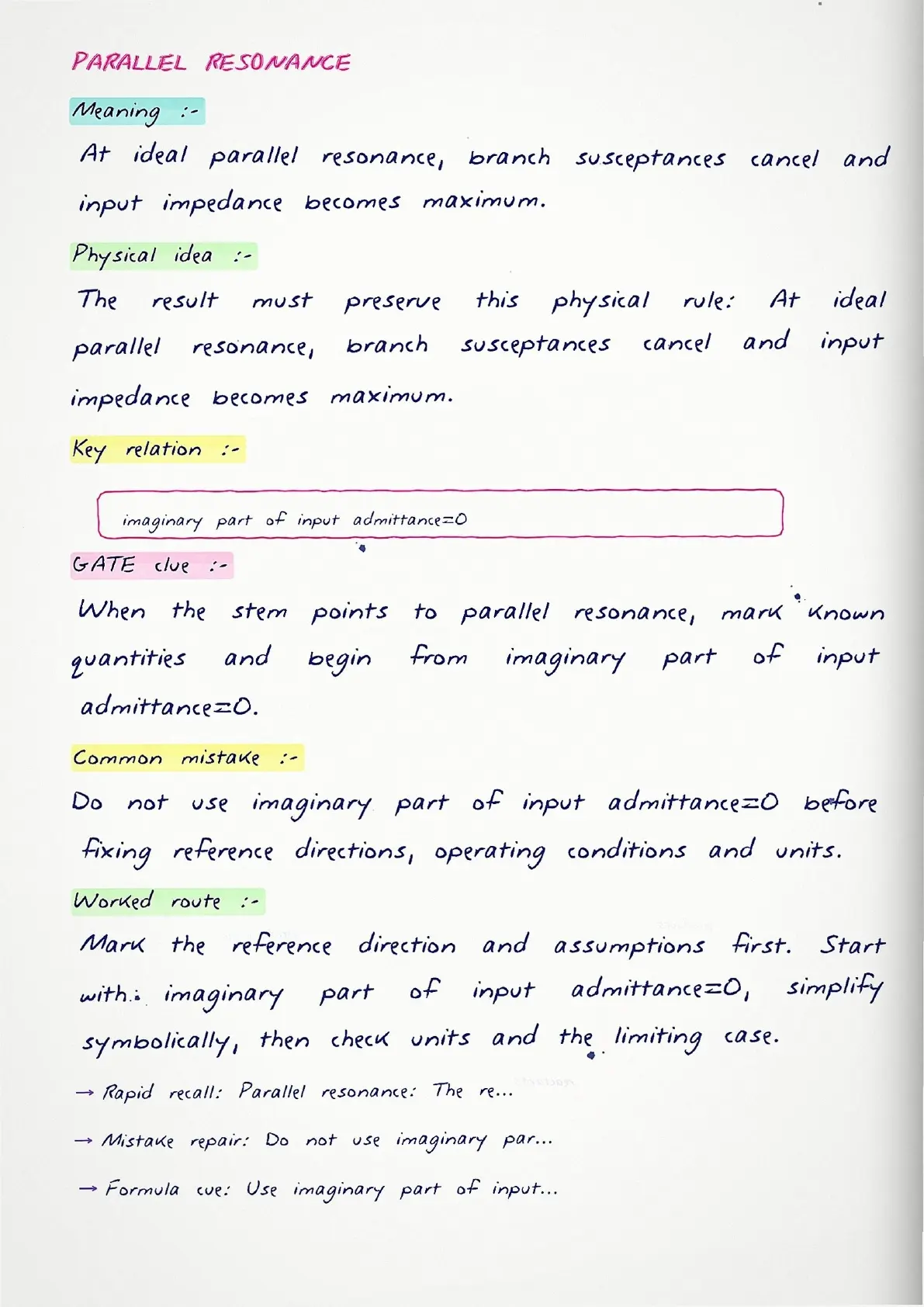
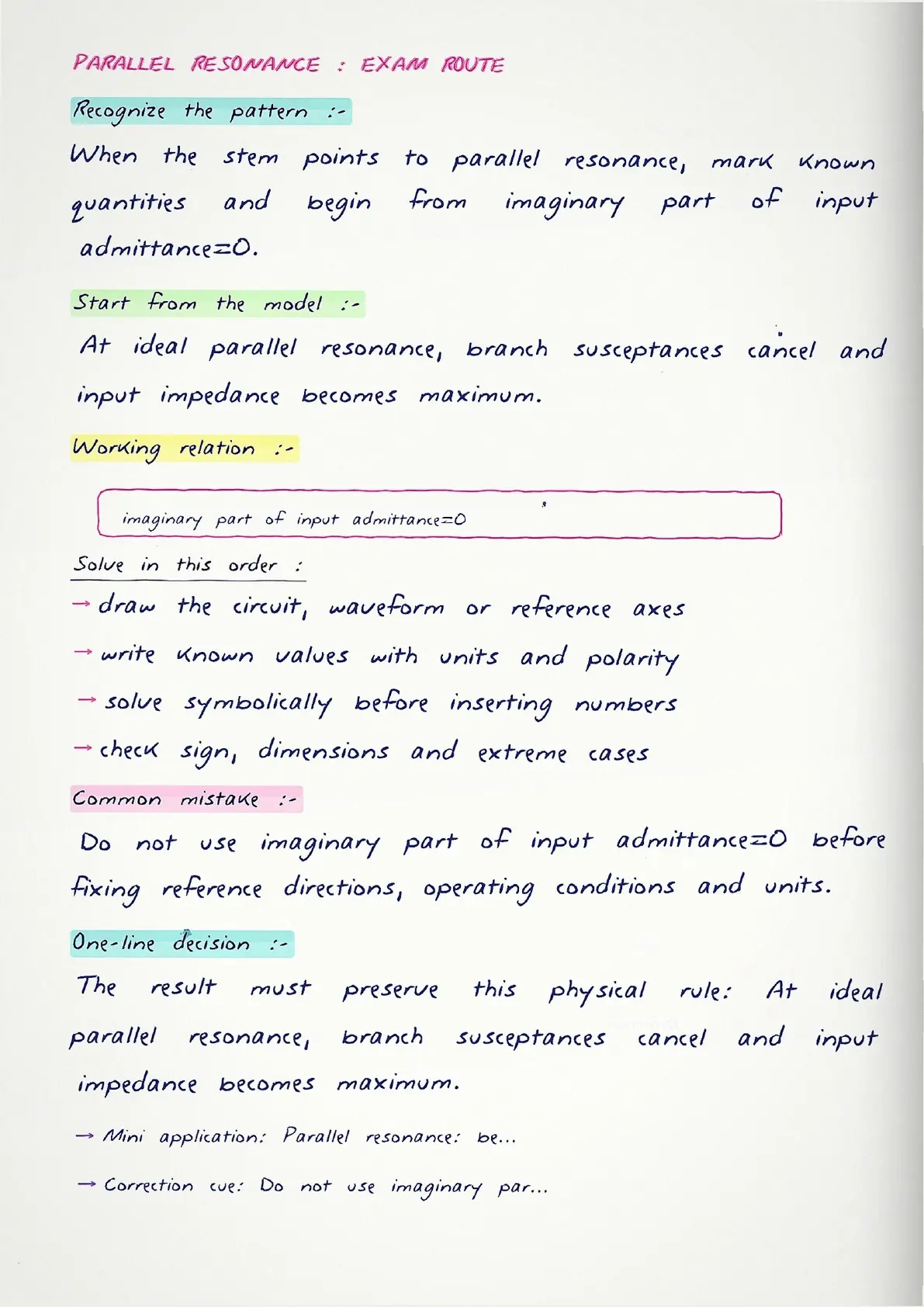
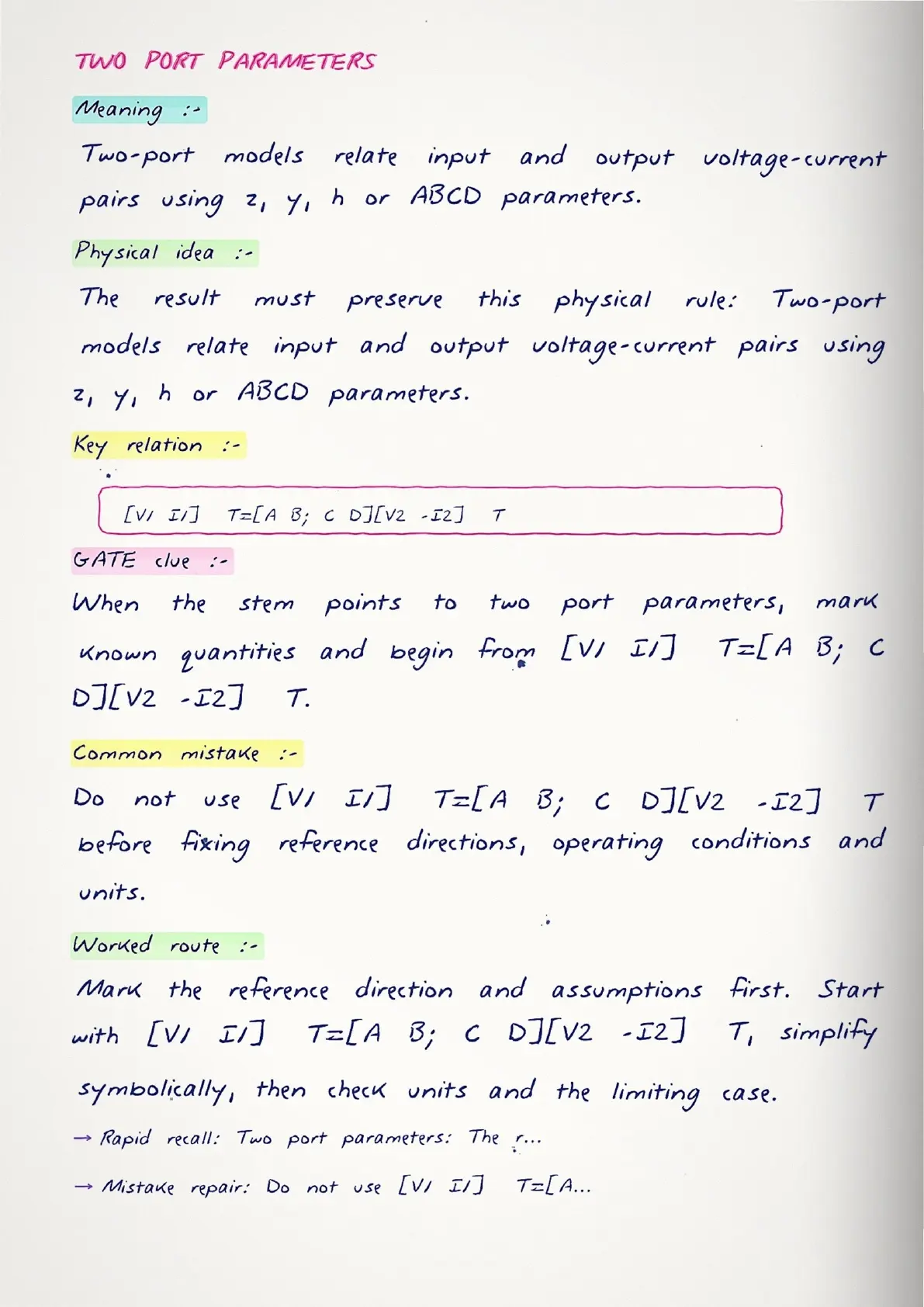
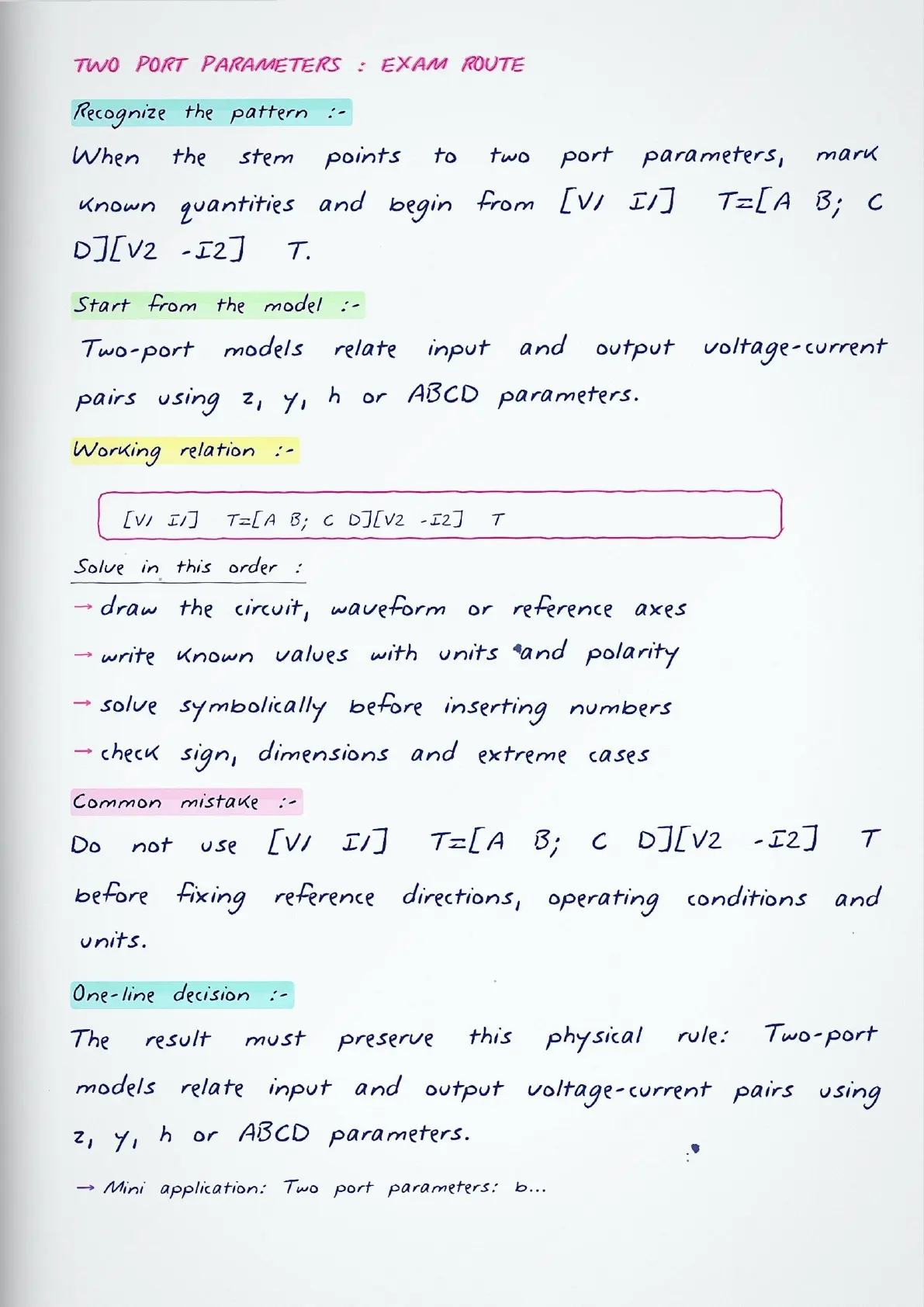
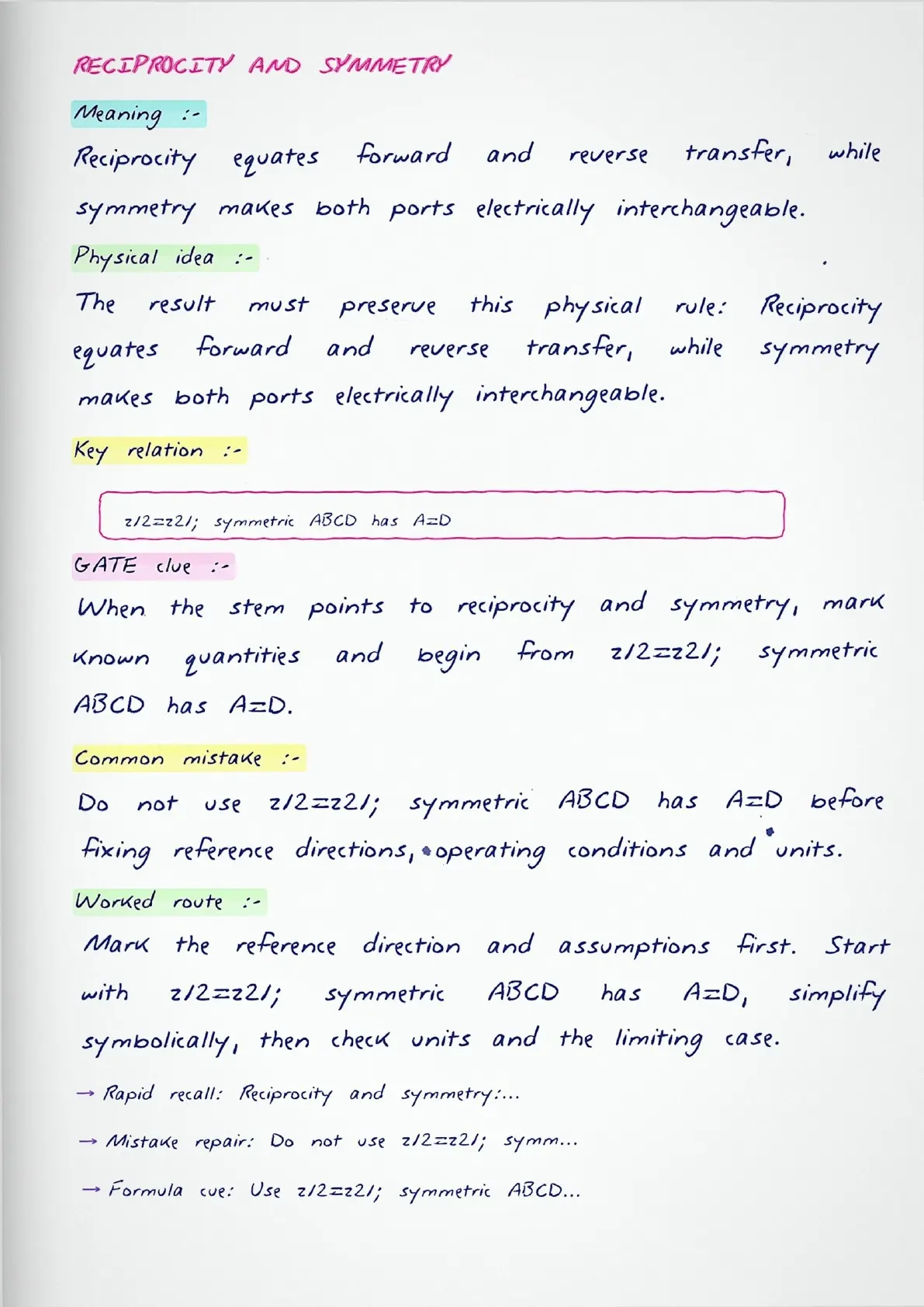
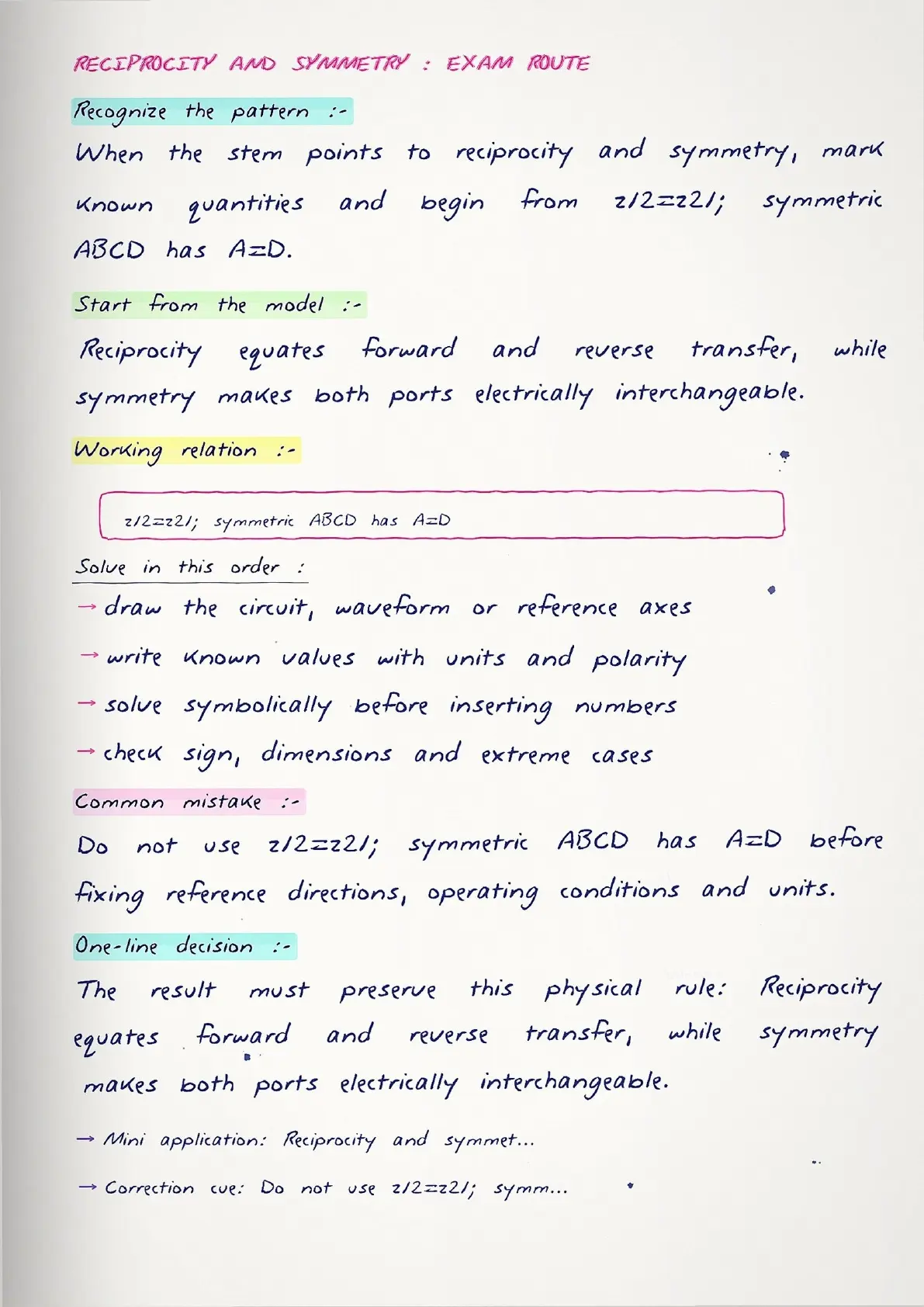
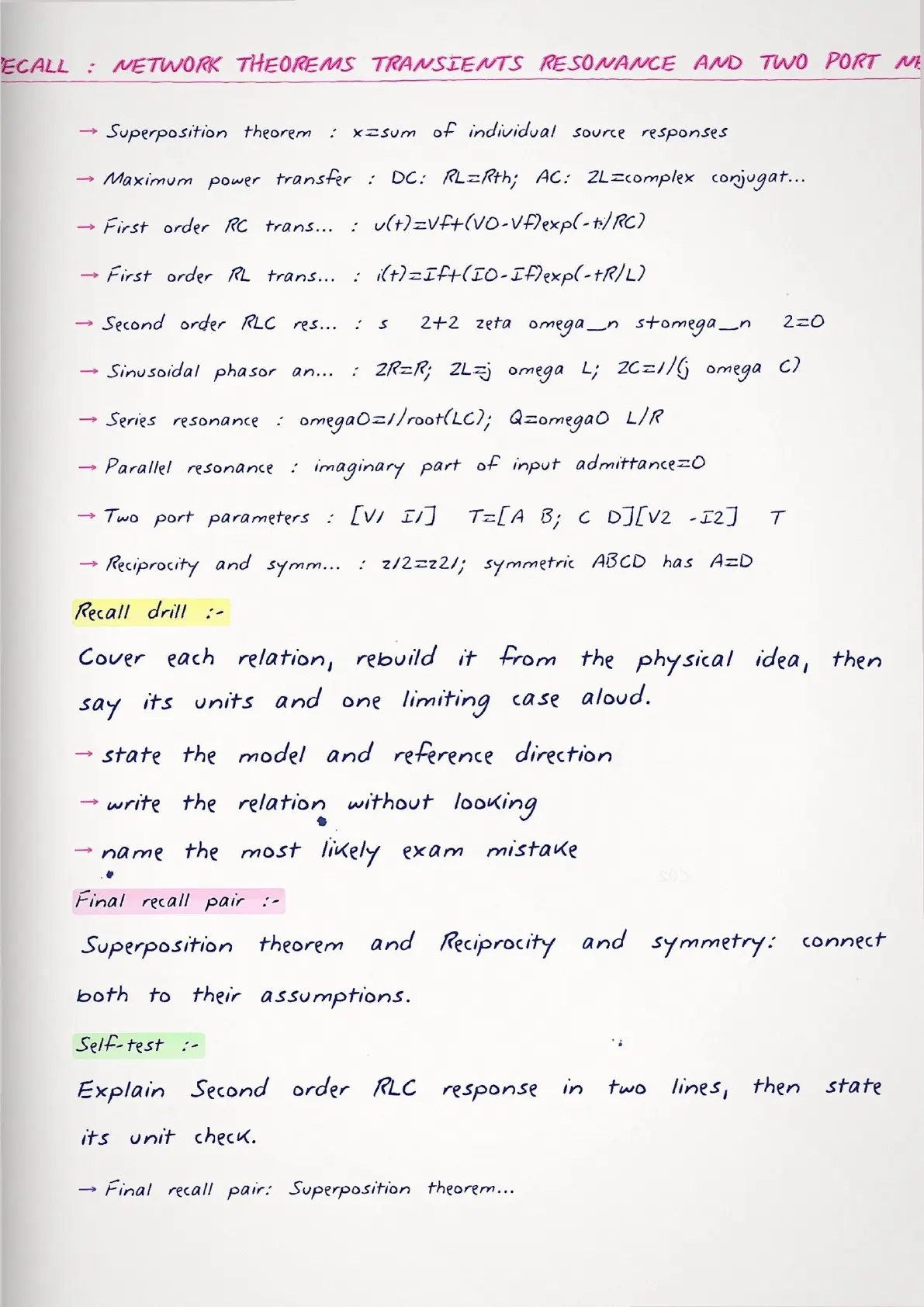
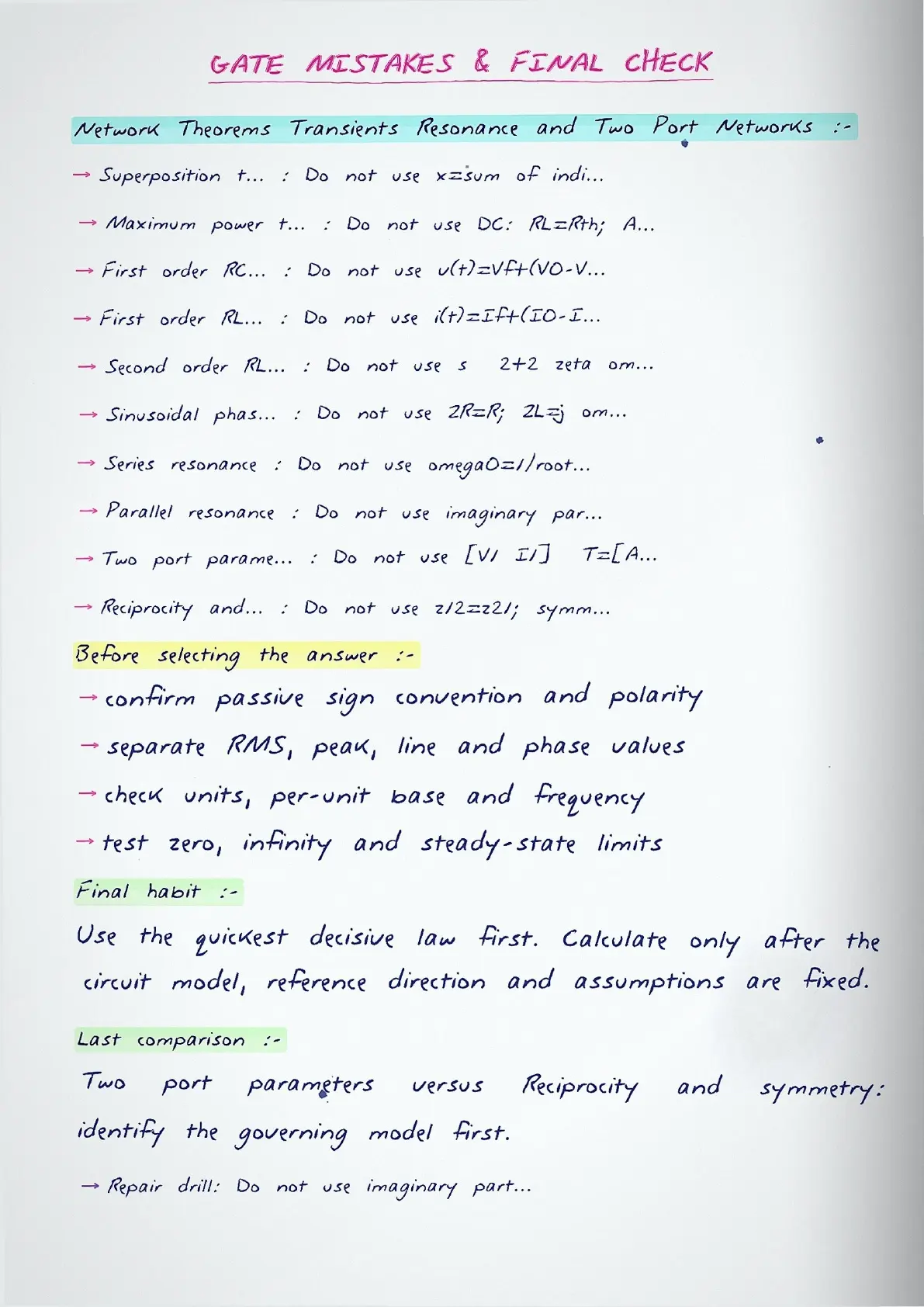
The notes open with hand-drawn circuit sketches for each theorem, then walk through the source-transformation and reduction steps in a student's own handwriting. Transient responses are plotted by hand so students can see how the current settles, and a tidy formula sheet gathers the time-constant and resonance relations on one page.
- Hand-labelled circuits for Thevenin, Norton, and Maximum Power Transfer with each reduction step shown.
- Sketched first-order and second-order transient curves that mark the initial and final values clearly.
- A one-page formula card for resonance, quality factor, bandwidth, and two-port parameter conversions.
What These GATE Network Theorems Notes Cover
The notes take students from the basic laws of circuit analysis to the trickier two-port conversions in a single flow. Every idea is tied to the kind of numerical GATE actually asks, so nothing feels like theory for its own sake. Where a result usually confuses students, a short handwritten margin note explains the reasoning instead of just stating the answer.
- Superposition, reciprocity, and Millman's theorem with worked mesh and nodal setups.
- Thevenin and Norton equivalents including dependent-source handling.
- RL, RC, and RLC transients using initial conditions and the time constant.
- Series and parallel resonance plus Z, Y, h, and ABCD two-port parameters.
GATE Network Theorems Quick Revision
Source: GeeksforGeeks- EC, EE & IN on YouTube
Topics Covered in GATE Network Theorems
The coverage follows the official GATE Electrical syllabus for network analysis, so nothing tested in recent papers is left out. Students can revise theorem by theorem and then move to the response and two-port blocks.
- Mesh and nodal analysis with dependent sources.
- Superposition and source transformation.
- Thevenin, Norton, and Maximum Power Transfer theorems.
- Reciprocity, substitution, and Millman's theorems.
- Transient response of RL, RC, and RLC circuits.
- Series and parallel resonance, quality factor, and bandwidth.
- Two-port parameters and their interconnections.
- Steady-state sinusoidal and phasor analysis.
How the Notes Are Organised
The reading order runs from theorems to transients to resonance and finally to two-port networks, which is the same order in which the concepts build on each other. Each theorem sits on its own page with the statement at the top, a circuit below it, and the shortcut for GATE at the bottom.
Transients and resonance follow, because they reuse the equivalent circuits students just practised. Two-port networks close the set, tying the parameter tables back to the earlier ladder and bridge circuits.
How GATE Network Theorems Links to Other Topics
Circuit analysis is the language the rest of the paper speaks, so a firm grip here pays off across several subjects. The notes flag these links wherever a formula reappears.
- Control Systems, where transfer functions grow out of two-port and impedance ideas.
- Signals and Systems, which reuses the same transient and steady-state responses.
- Power Systems, where ABCD parameters model transmission lines.
- Electromagnetic Fields, which supplies the capacitance and inductance values circuits use.
Important Topics in GATE Network Theorems
A few areas repeat almost every year, and the notes mark them with quick cautions on where students slip. Focusing revision here gives the best return for the hours spent. Past papers show that the same three or four ideas carry most of the marks, so the notes deliberately give them more space than the rest.
- Maximum Power Transfer, watching the difference between matched resistance and matched impedance.
- Second-order RLC transients, correctly identifying over, under, and critically damped cases.
- Resonance, keeping series and parallel formulas for quality factor separate.
- Two-port conversions, remembering the sign rules when swapping parameter sets.
- Thevenin with dependent sources, using the test-source method rather than open-circuit alone.
How to Prepare GATE Network Theorems with Handwritten Notes
A short, repeated cycle works better than one long sitting for this topic. The notes are built so each pass takes less time than the one before, which keeps revision from feeling heavy. Students who follow the four steps below tend to reach a point where they can name the theorem to use the moment they see the circuit.
- First read: follow every hand-drawn reduction and copy one circuit yourself.
- Second pass: recite each theorem from the statement page without looking at the steps.
- PYQ stage: solve past GATE numericals on transients and two-port parameters against the clock.
- Final week: revise only the formula card and the marked traps.
Why These Notes Help You Score Better
Because every theorem is drawn out by hand and paired with a shortcut, students stop re-deriving circuits under exam pressure and start recognising the standard forms instantly. The compact formula sheet turns a normally lengthy topic into a fast final revision. That speed is exactly what wins the extra marks in circuits, and it is why these notes suit students aiming for a top rank.
GATE Electrical Network Theorems Handwritten Notes FAQs
Ques. How many marks does network analysis carry in GATE Electrical?
Ans. Network theorems, transients, resonance, and two-port networks together usually contribute about 6 to 9 marks, making this one of the steadier scoring areas in the paper.
Ques. Are these handwritten notes enough to revise the whole topic?
Ans. Yes, the notes cover every syllabus point from mesh and nodal analysis to two-port parameters, with hand-drawn circuits and a formula card, so students can use them as a complete revision set alongside past papers.
Ques. Which part of this topic is asked most often?
Ans. Maximum Power Transfer, second-order transients, and two-port parameter conversions appear frequently, so students should give these the most practice time.
Ques. Do the notes include worked steps or only formulas?
Ans. They include both. Each theorem shows the reduction steps in handwriting, and a separate sheet lists the key formulas for quick last-minute recall.



Comments