




Synchronous Machines and Electromechanical Energy Conversion is a high-yield topic in GATE Electrical, usually worth about 5 to 8 marks in the paper. It belongs to the Electrical Machines section, and its ideas return in Power Systems, Induction Machines, and Control Systems. These handwritten notes cover the full topic in a compact, exam-focused form.
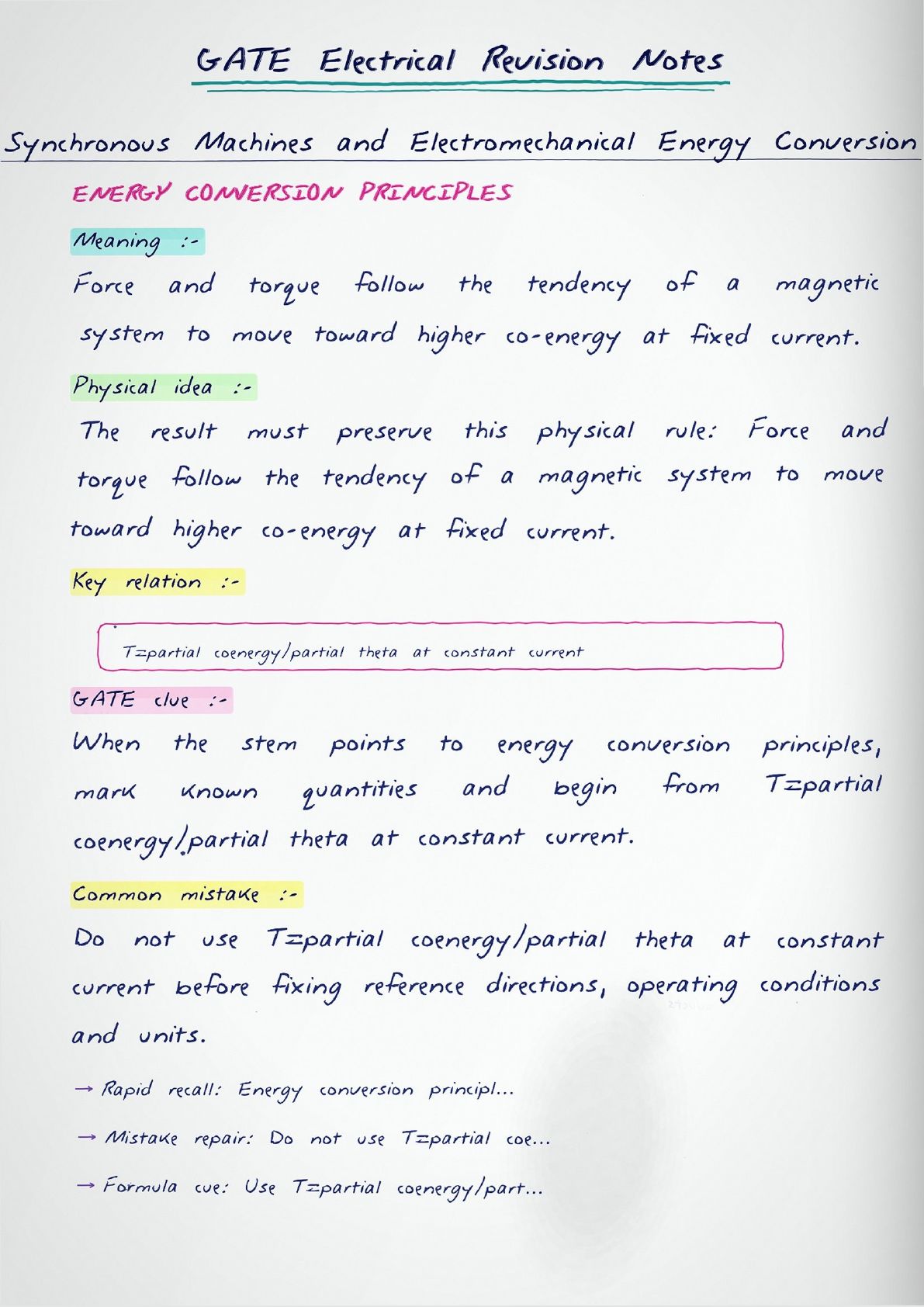
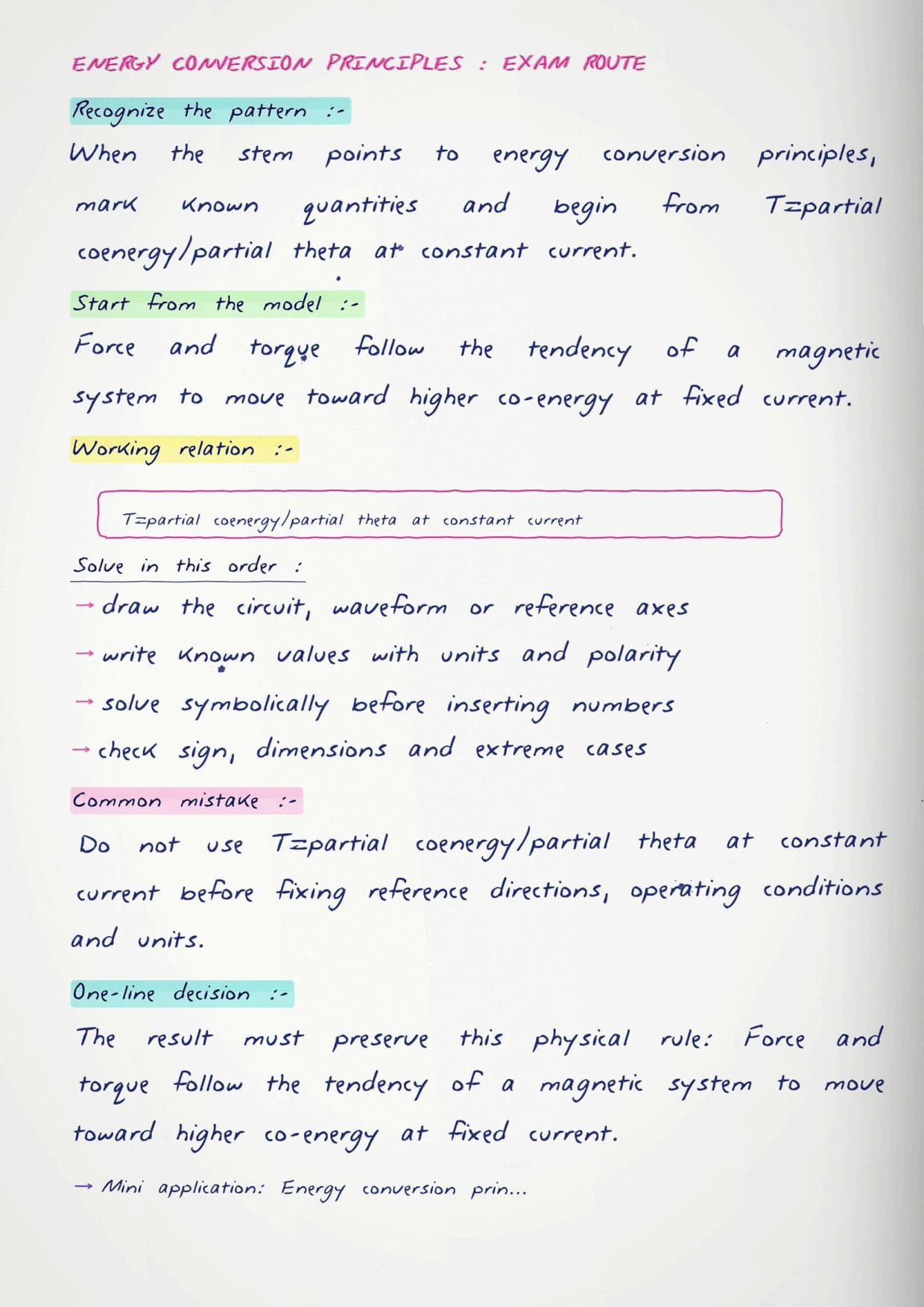
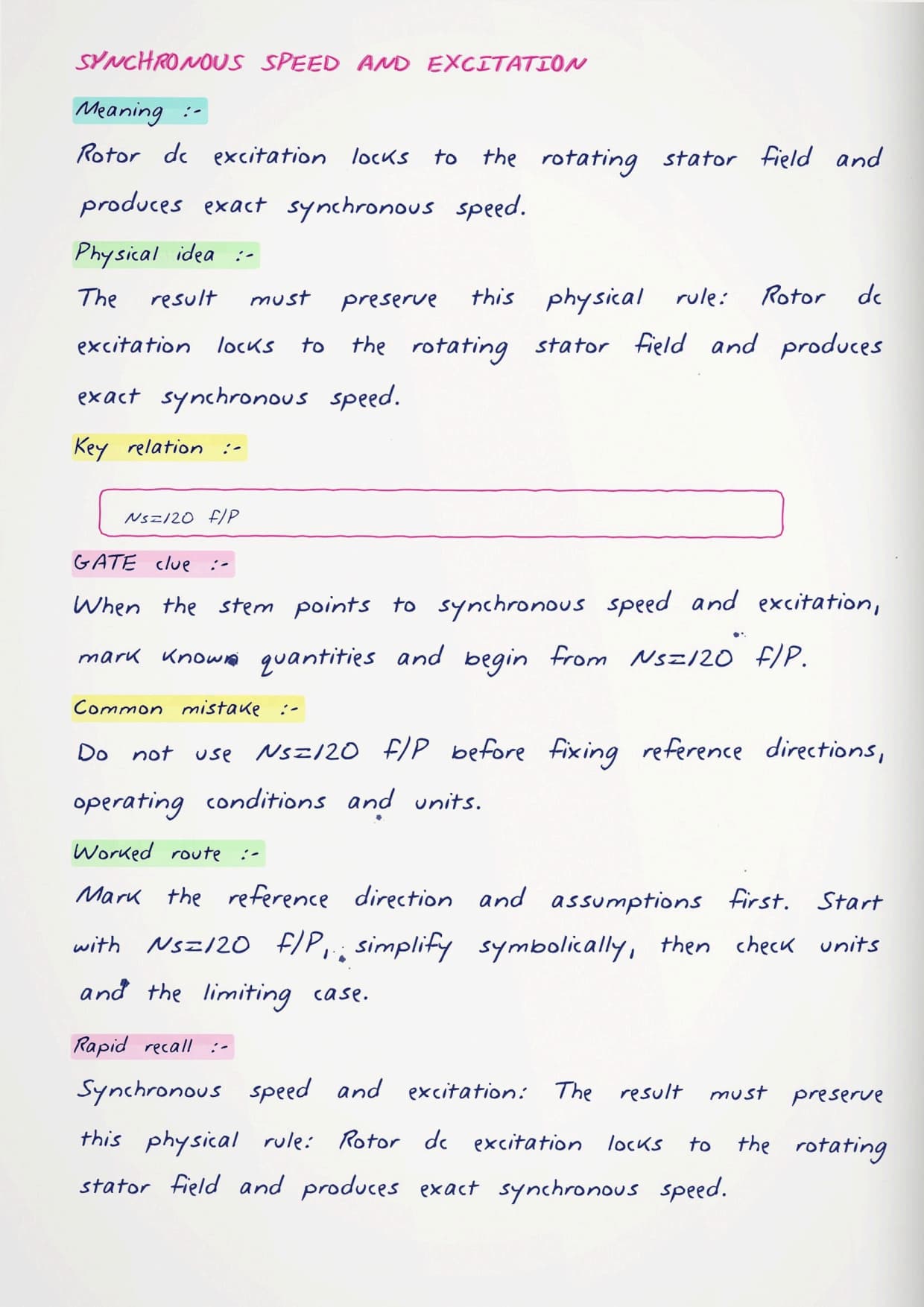
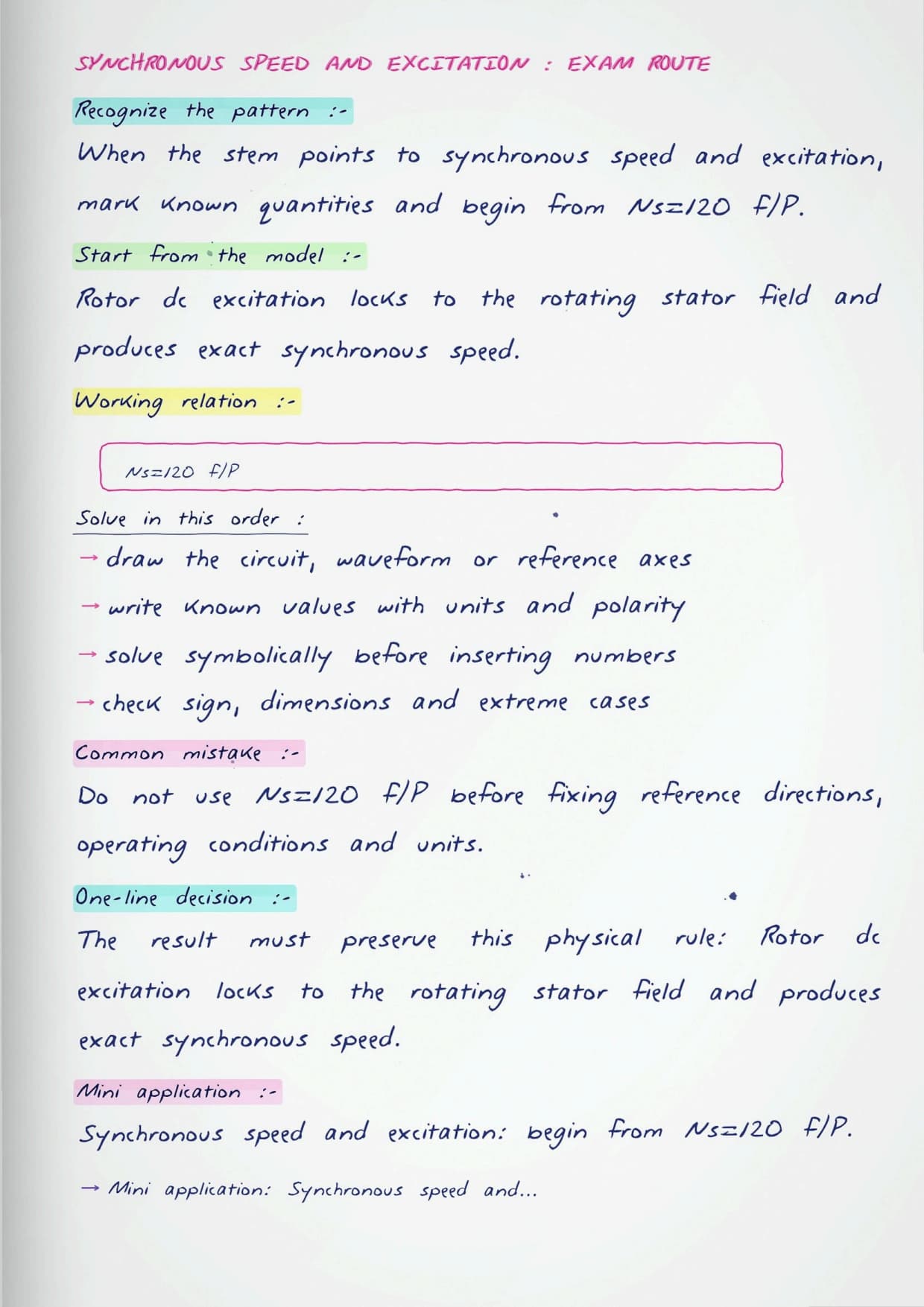
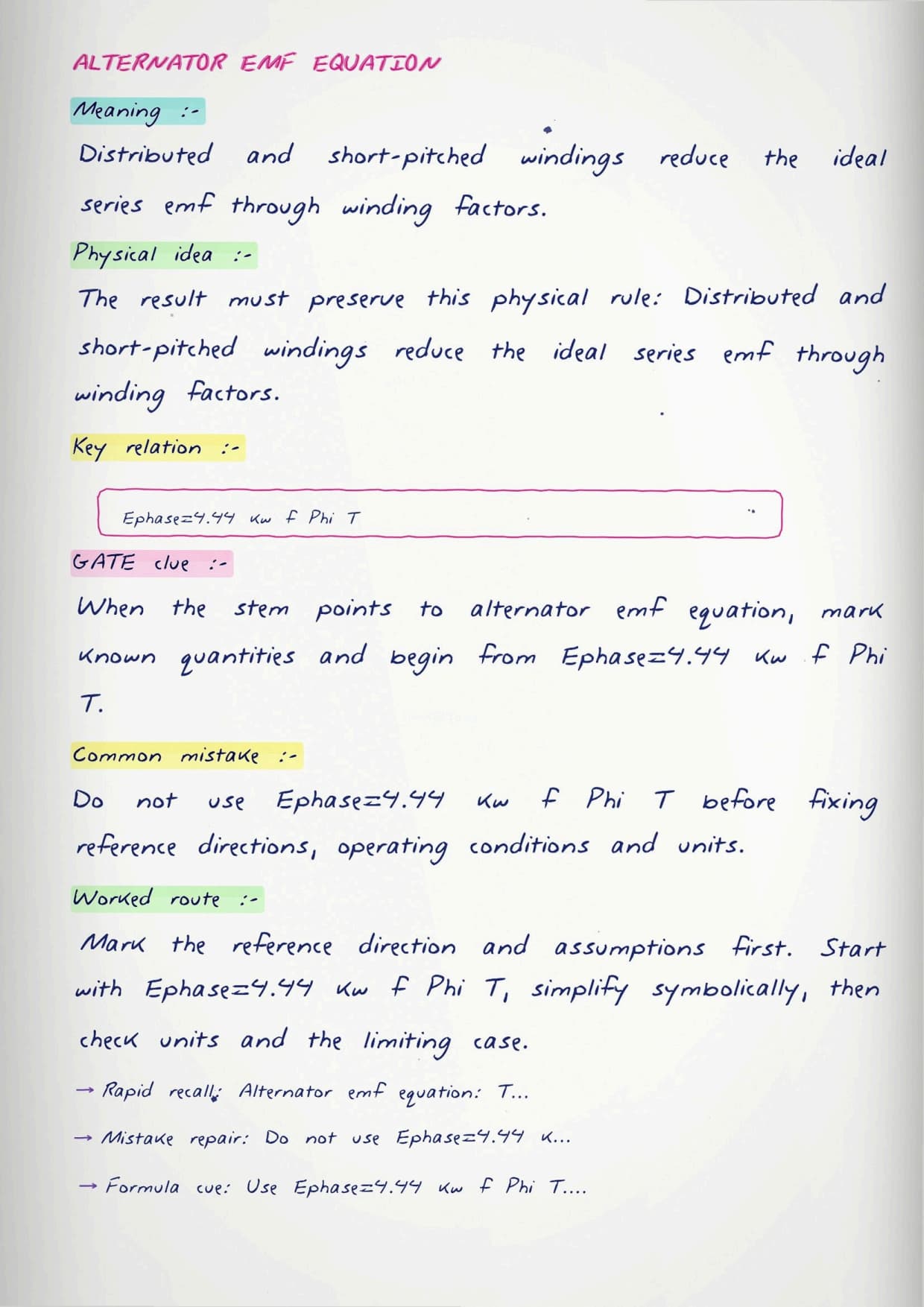
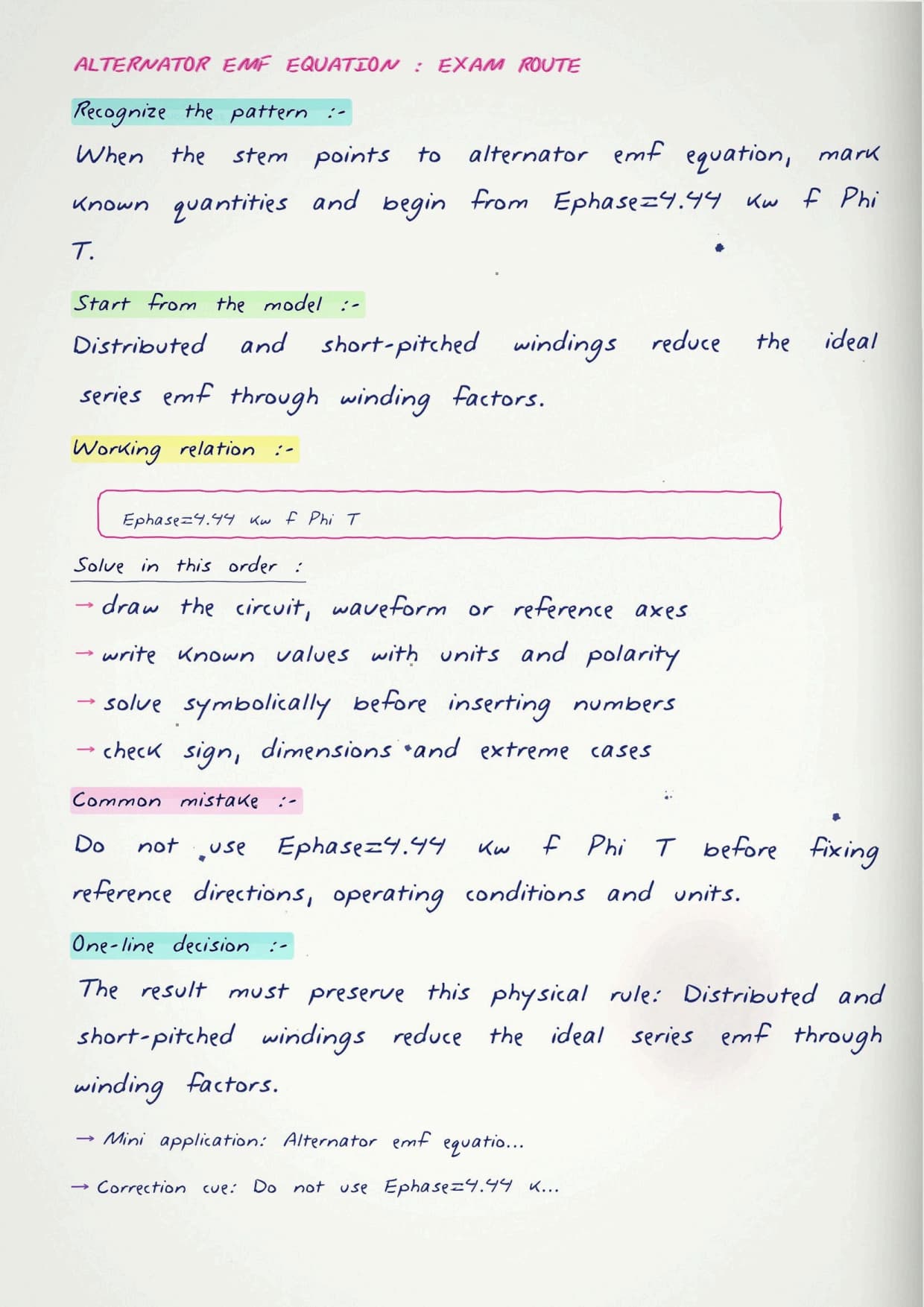
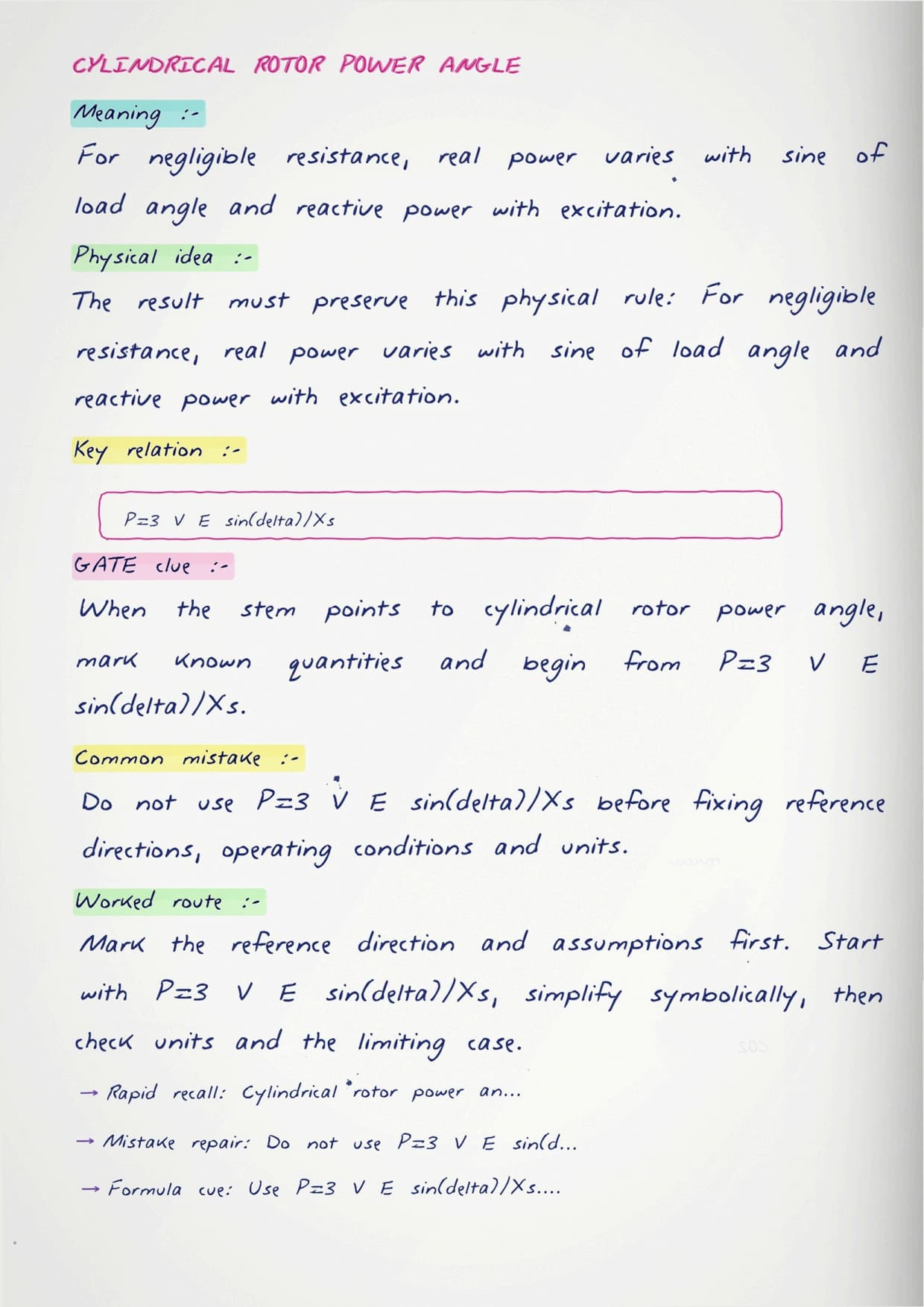
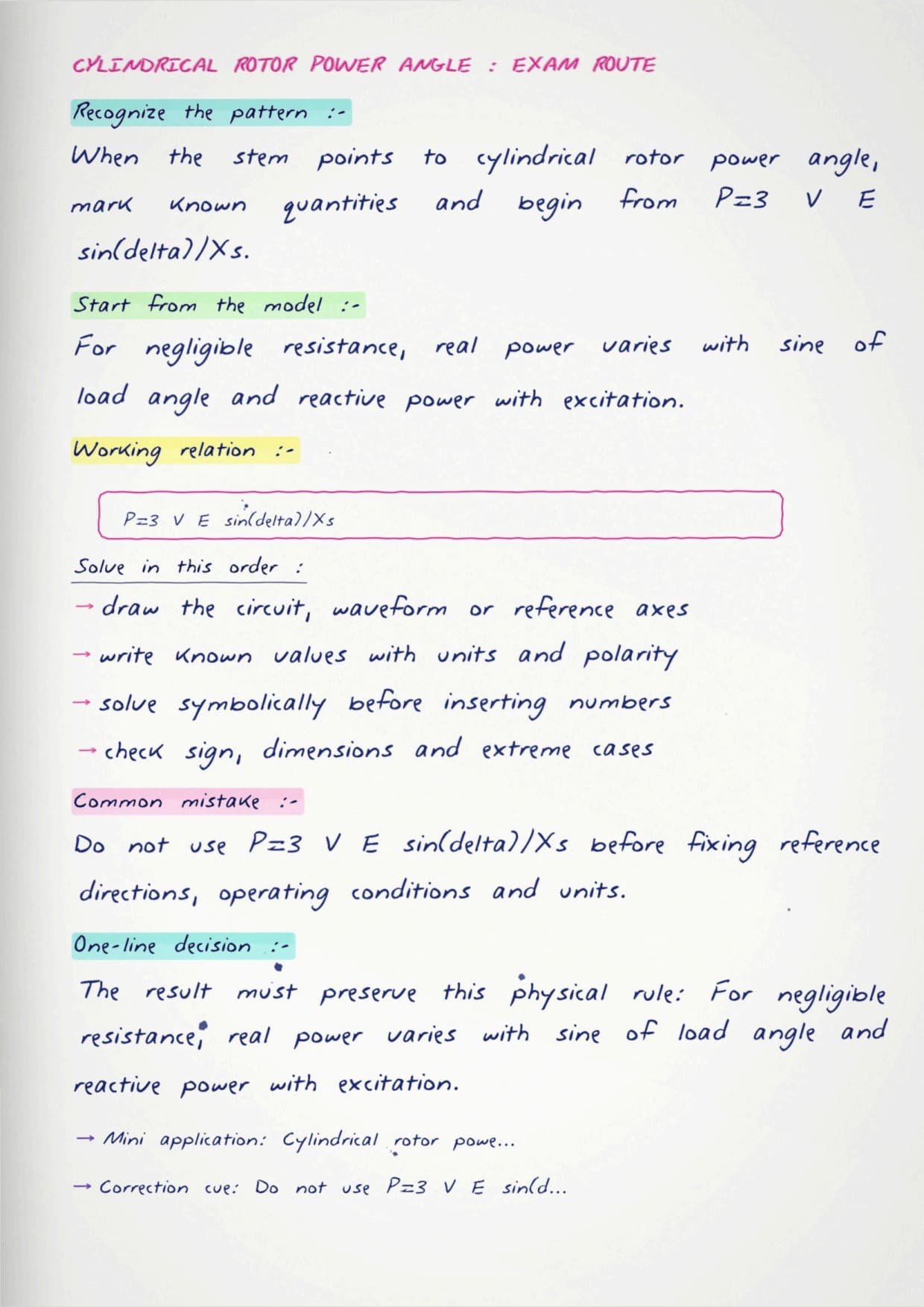
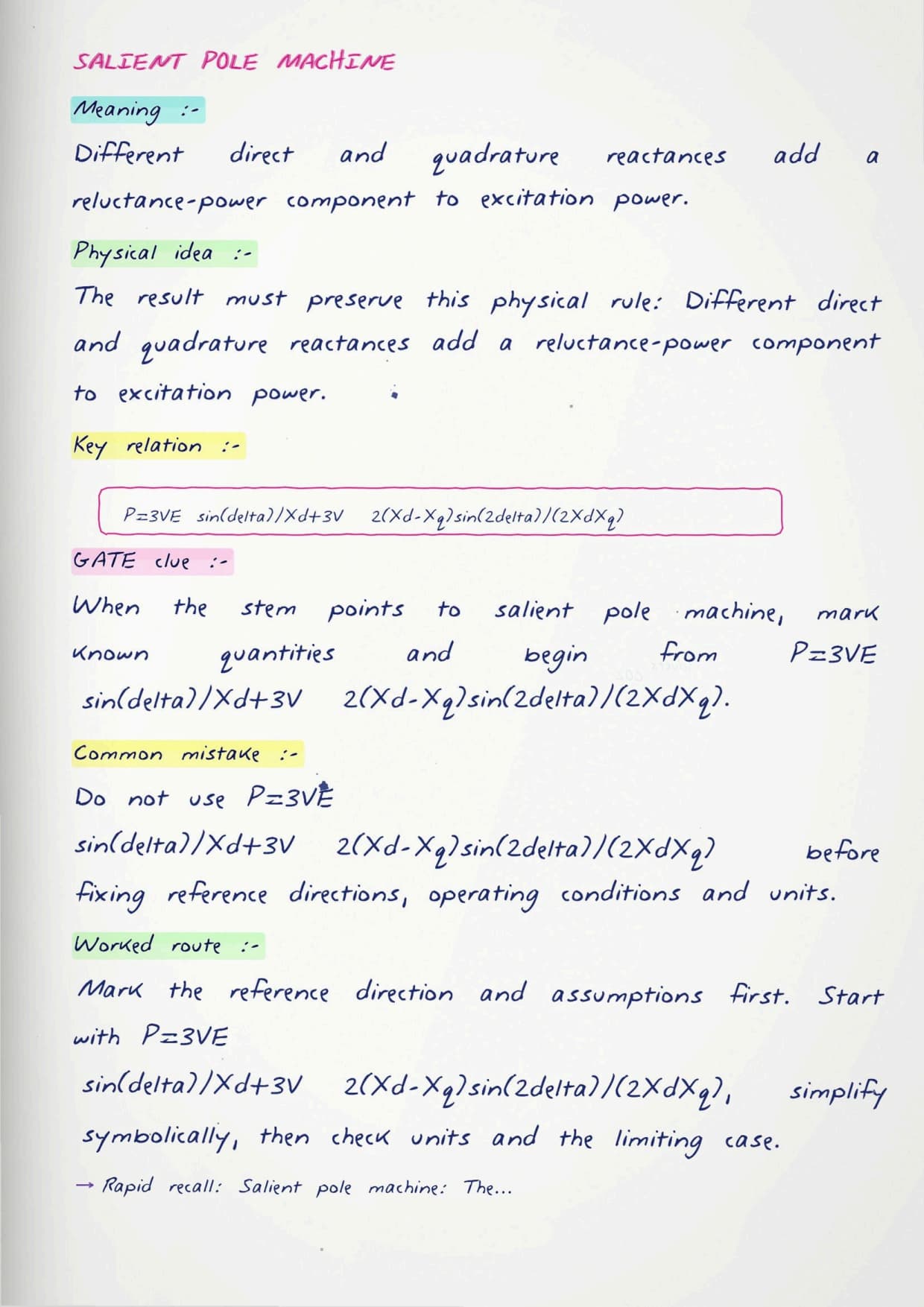
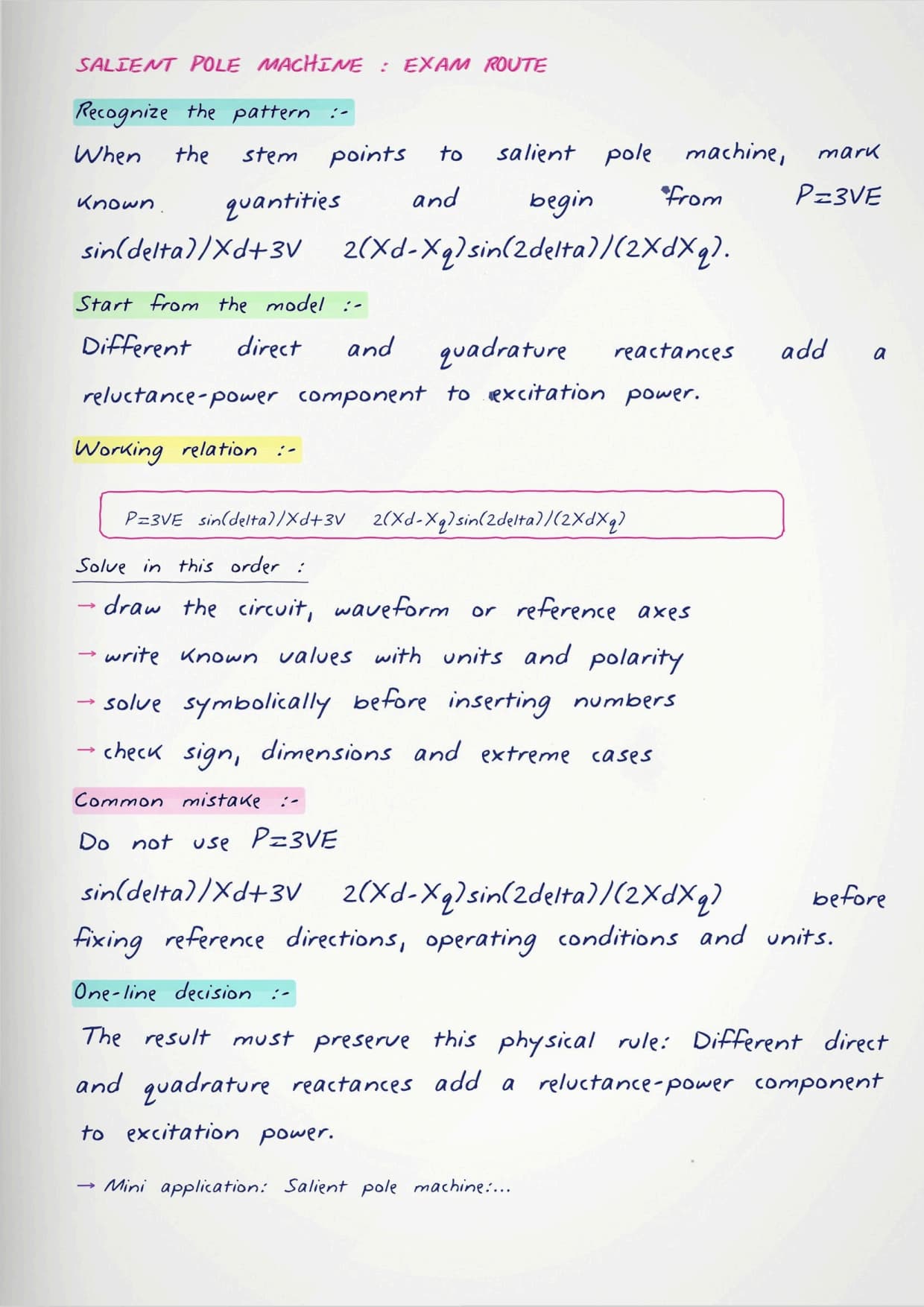

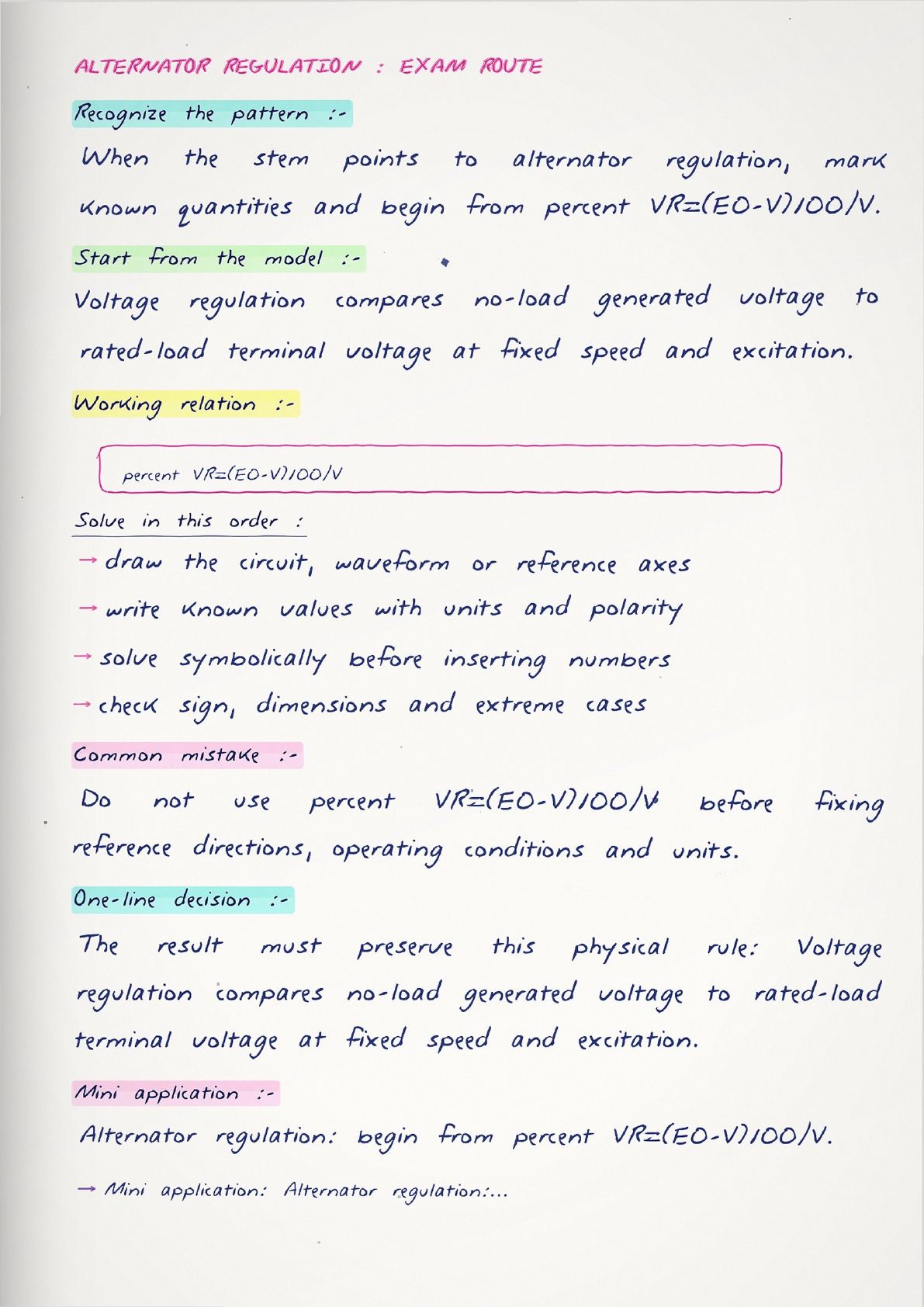
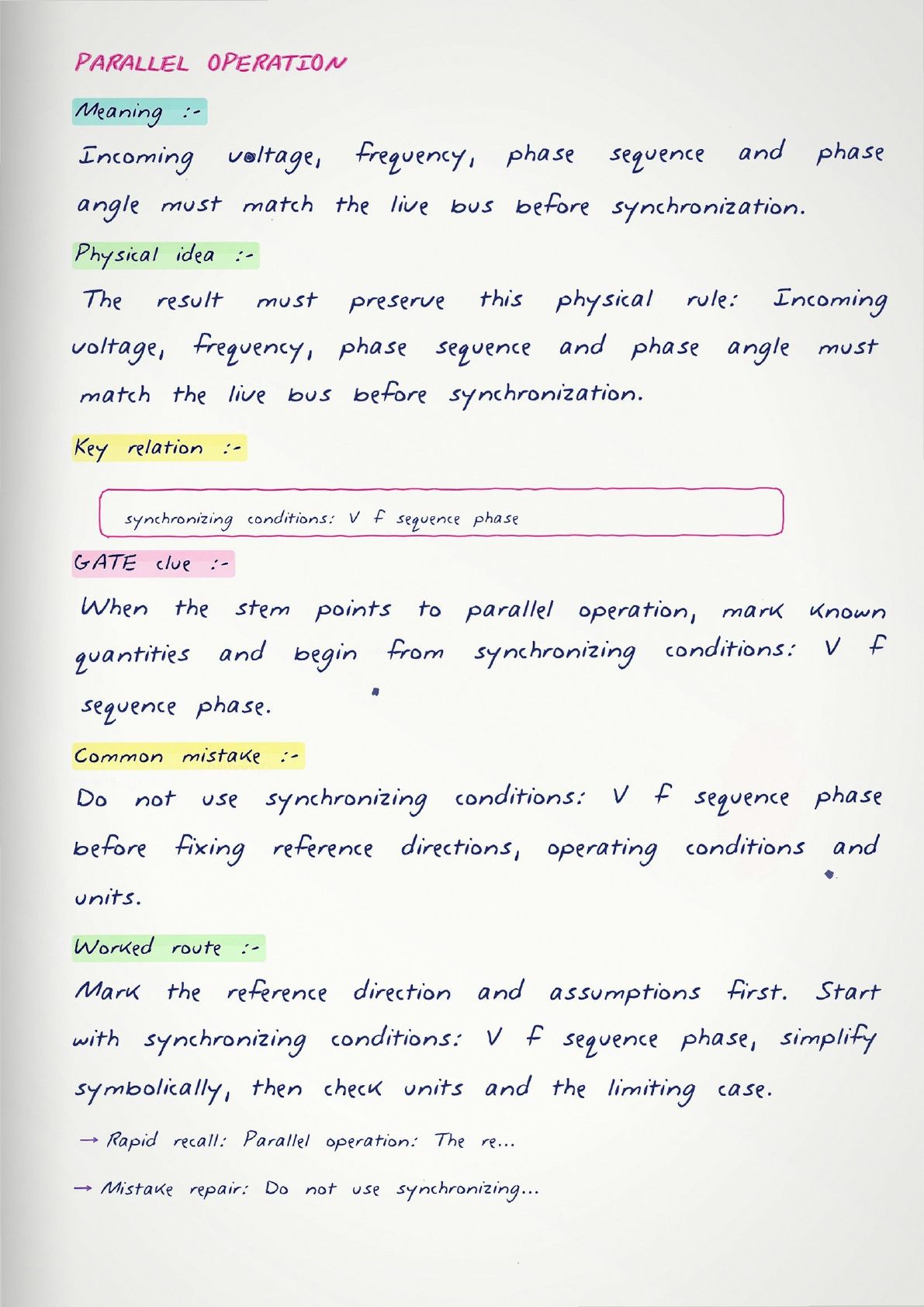
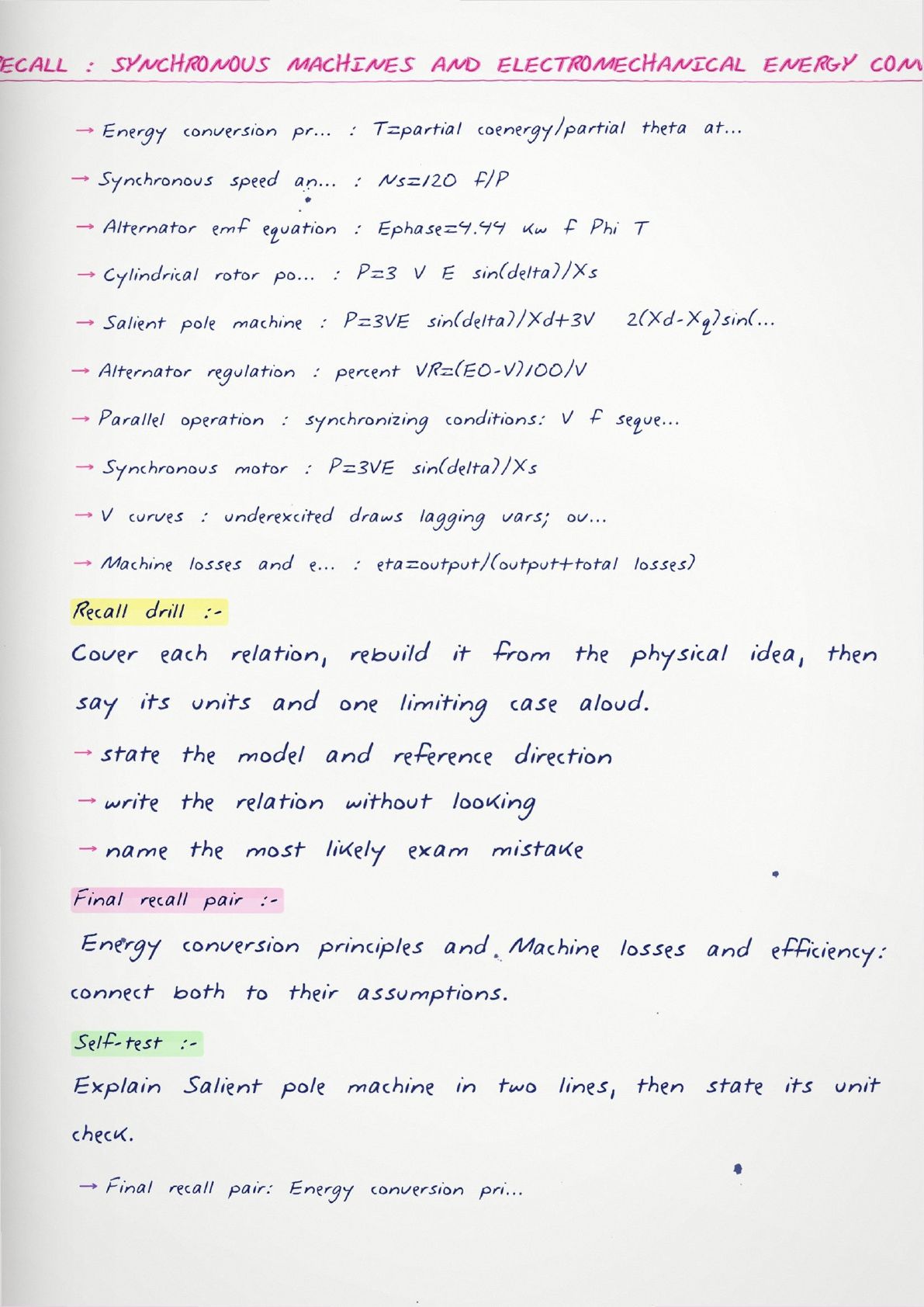
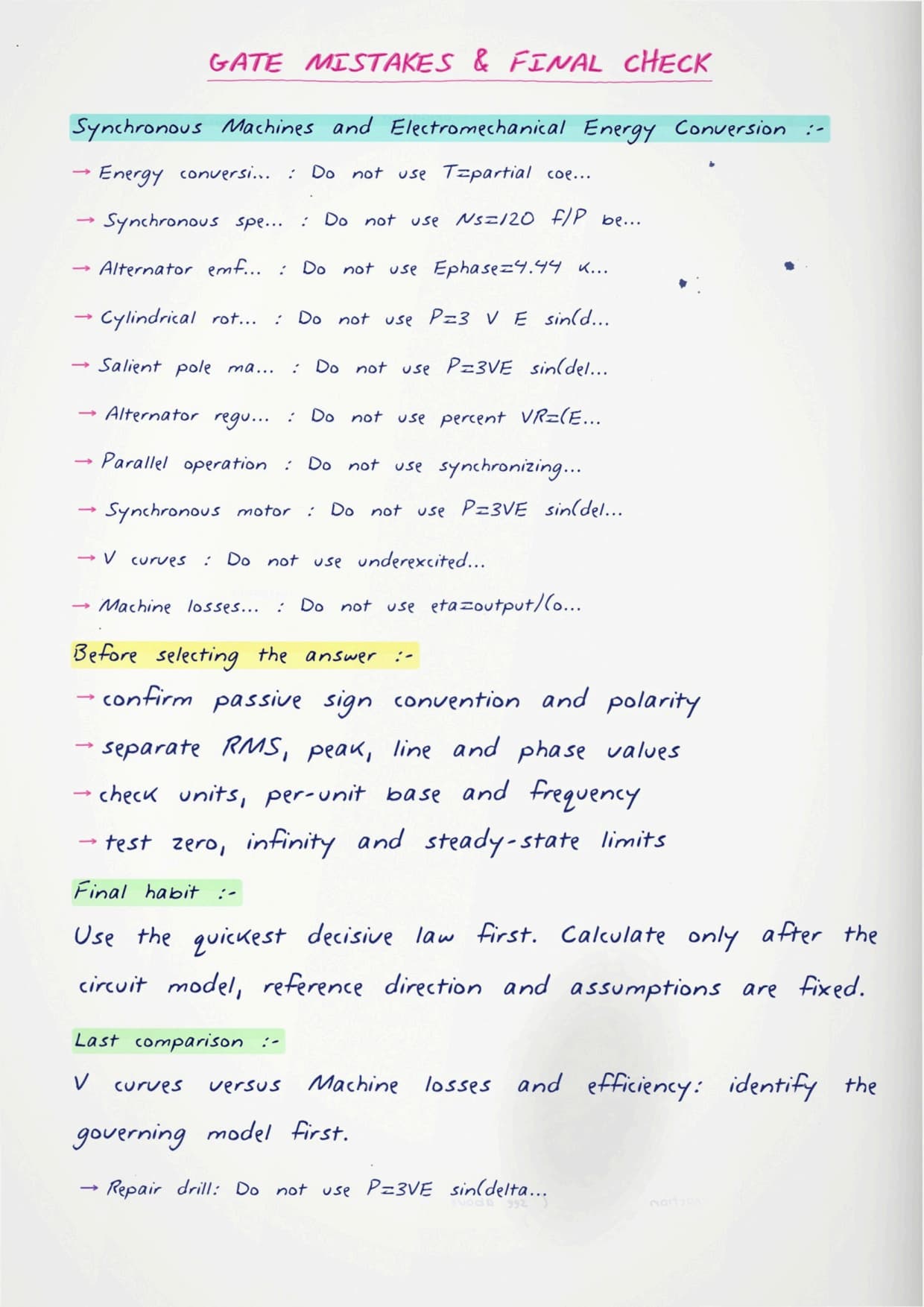
The pages begin with a hand-drawn phasor diagram of a synchronous generator and build the voltage equation term by term. Torque and energy-conversion ideas are sketched from the field picture, and a clean formula sheet collects the regulation, power-angle, and torque relations that GATE tests every year. The open-circuit and short-circuit characteristics are drawn on the same axes, which is exactly how students are expected to read the synchronous impedance in the exam.
- Hand-drawn phasor diagrams for lagging, unity, and leading power factor loads.
- Step-by-step voltage regulation by the EMF, MMF, and ZPF methods.
- A field-energy sketch that leads into the reluctance and excitation torque split.
What These GATE Synchronous Machines Notes Cover
The notes move from the physical construction of the machine to its steady-state behaviour and then to the energy-conversion theory that underpins it. Each result is linked to a typical GATE numerical, so students always know why a formula matters before they memorise it. The salient-pole and cylindrical-rotor cases are kept side by side on facing pages, which makes the differences easy to recall under exam conditions.
- Construction, cylindrical and salient-pole rotors, and their differences.
- EMF equation, winding factors, and armature reaction.
- Voltage regulation and the power-angle characteristic.
- Electromechanical energy conversion, singly and doubly excited systems.
GATE Synchronous Machines Quick Revision
Source: EXAM DOST - Ankit Goyal on YouTube
Topics Covered in GATE Synchronous Machines
The coverage tracks the official GATE Electrical syllabus for synchronous machines and energy conversion, so students revise generator, motor, and theory sections in one place. The order matches the way marks are usually distributed, with the heavily tested generator ideas given room to breathe. Each entry below appears in the notes with at least one solved figure or short numerical beside it.
- EMF equation, distribution and pitch factors.
- Armature reaction and synchronous reactance.
- Voltage regulation by EMF, MMF, and ZPF methods.
- Power-angle characteristic and steady-state stability limit.
- Salient-pole two-reaction theory.
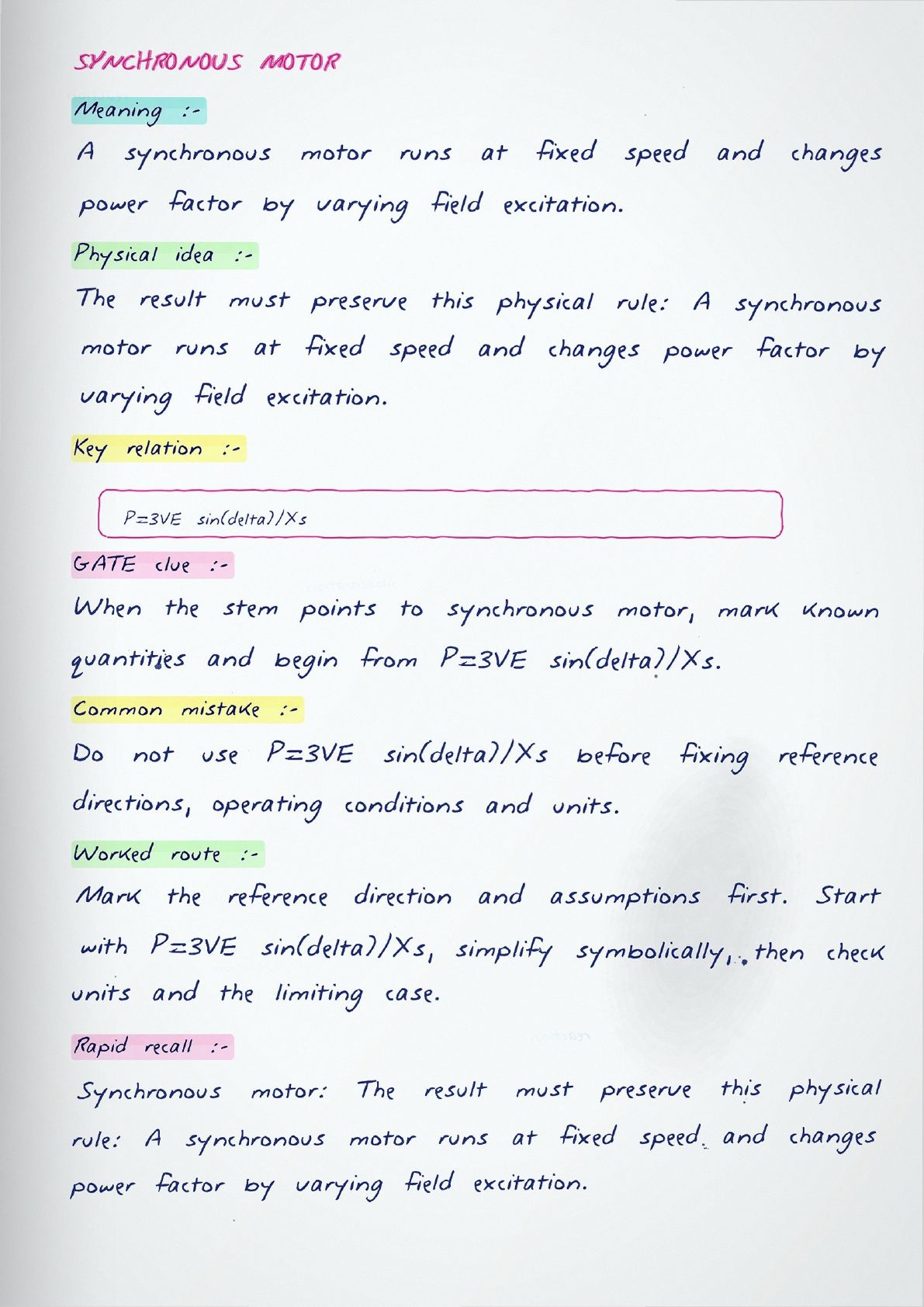
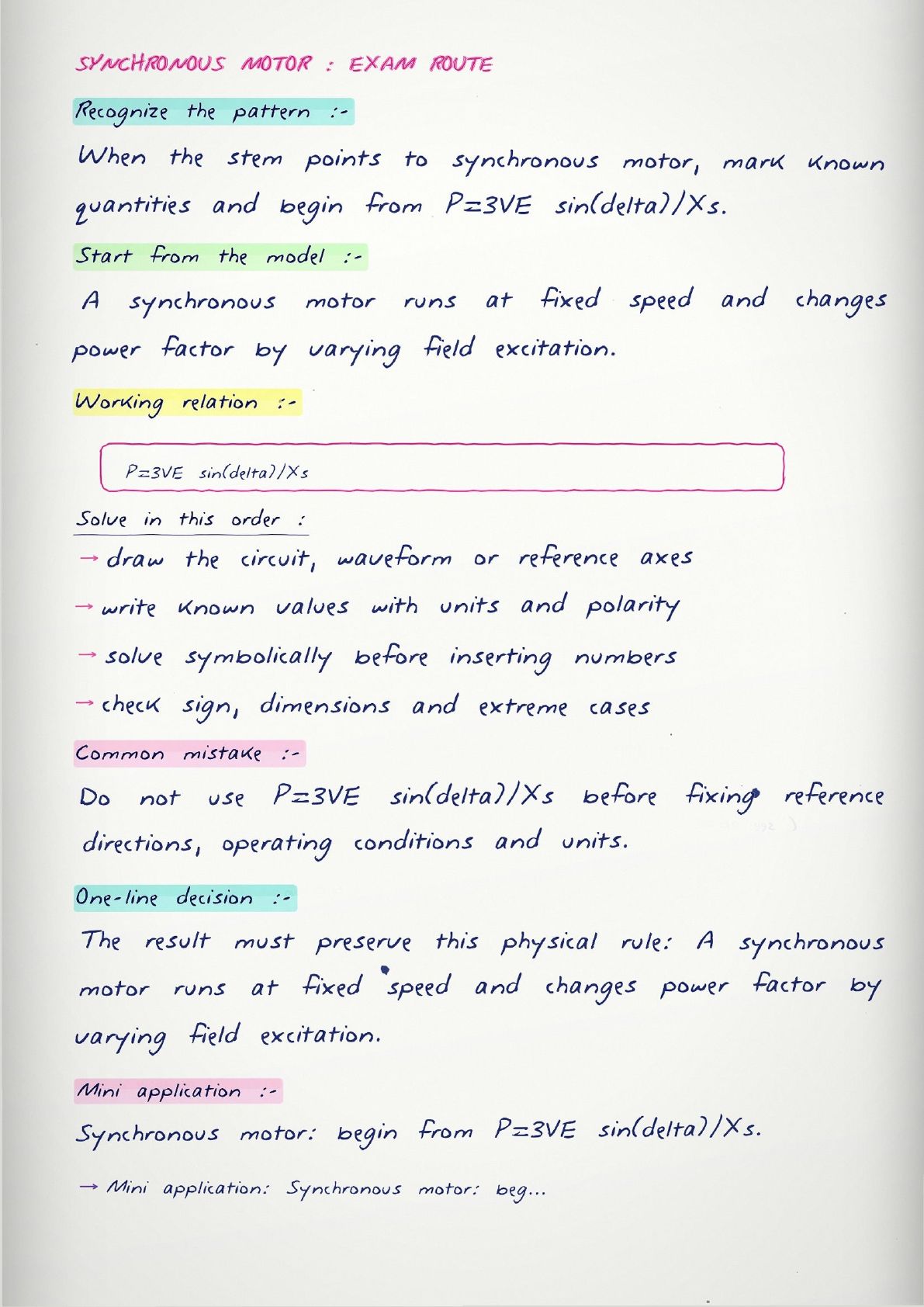
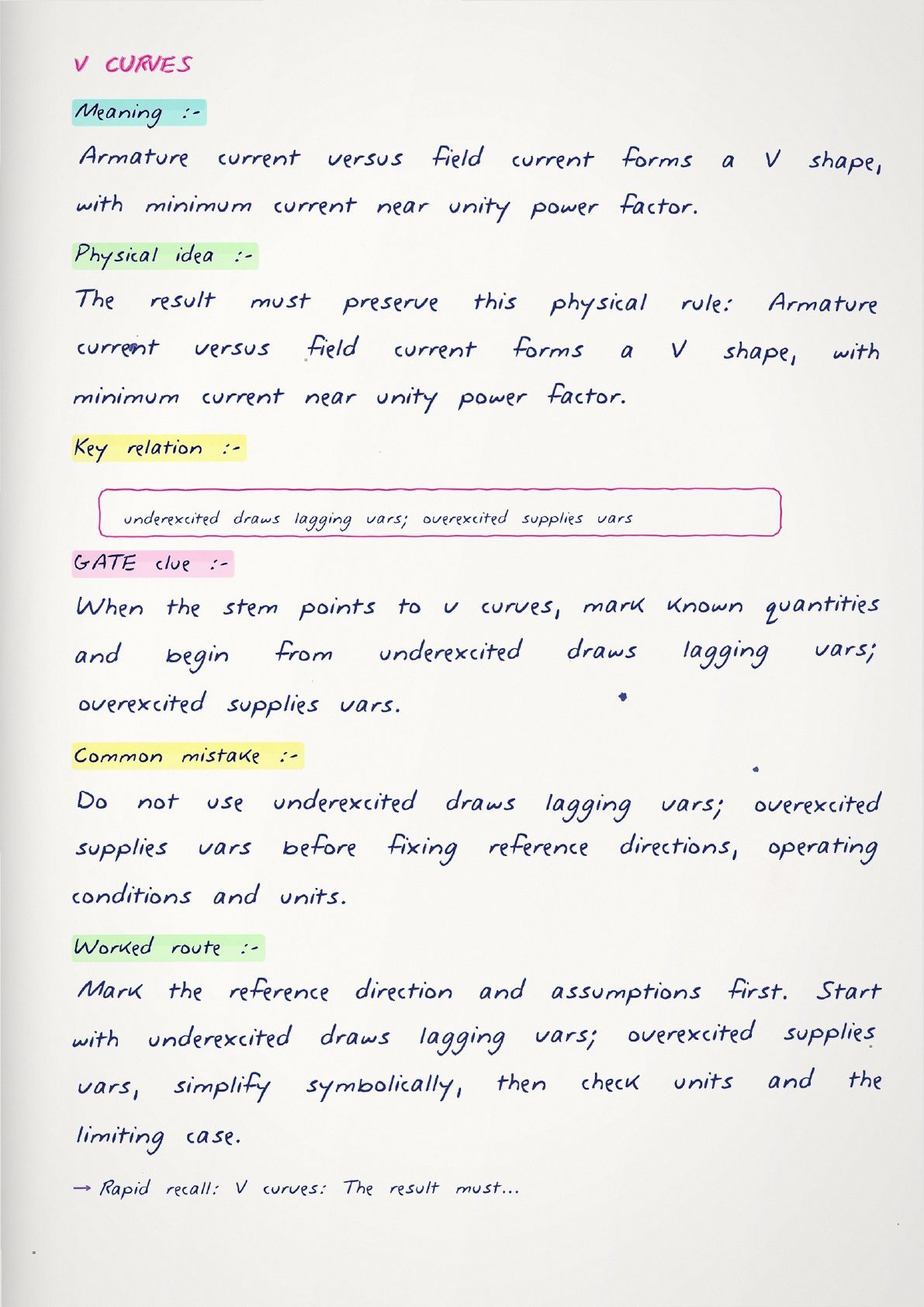
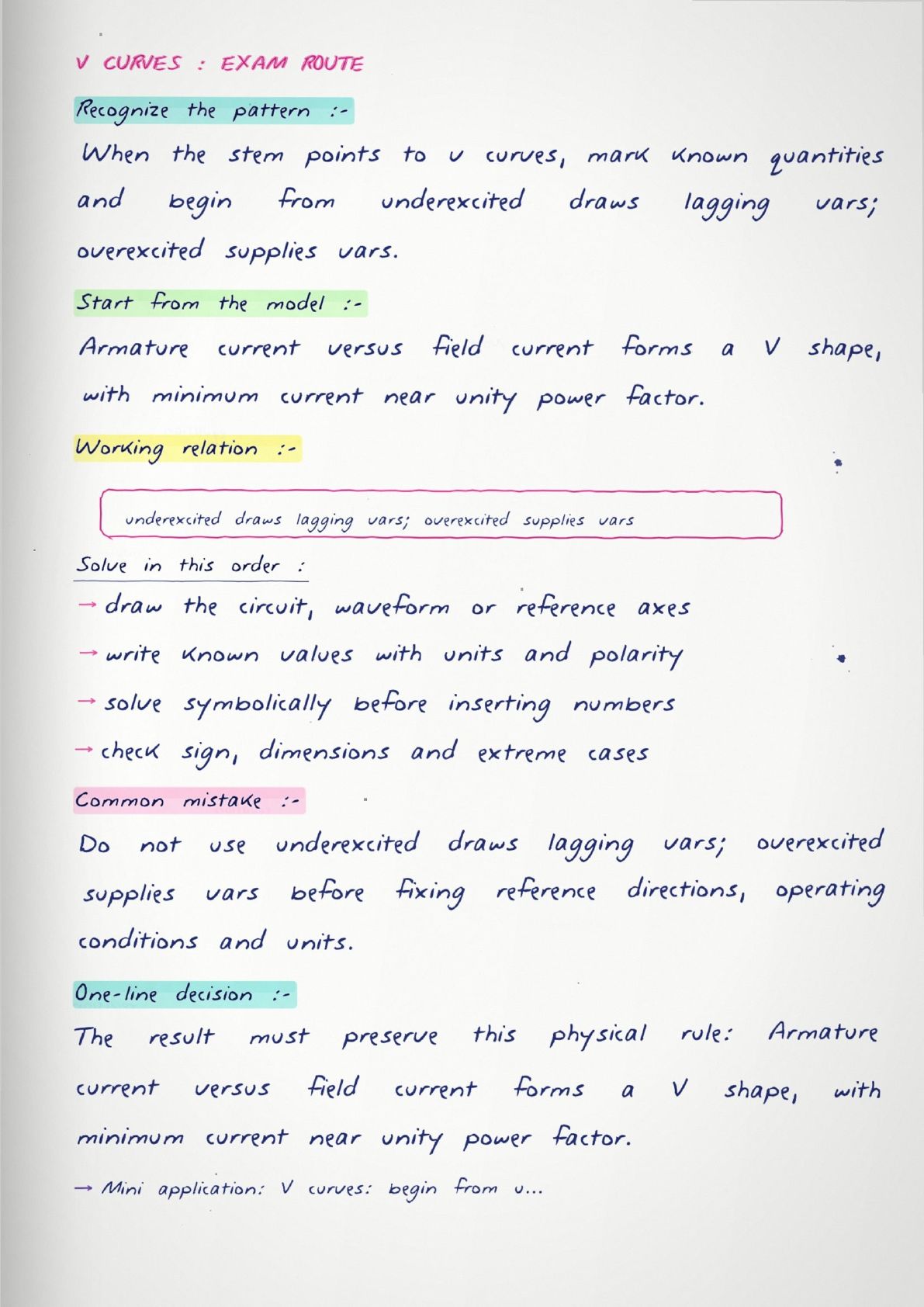
- Synchronous motor operation and V-curves.
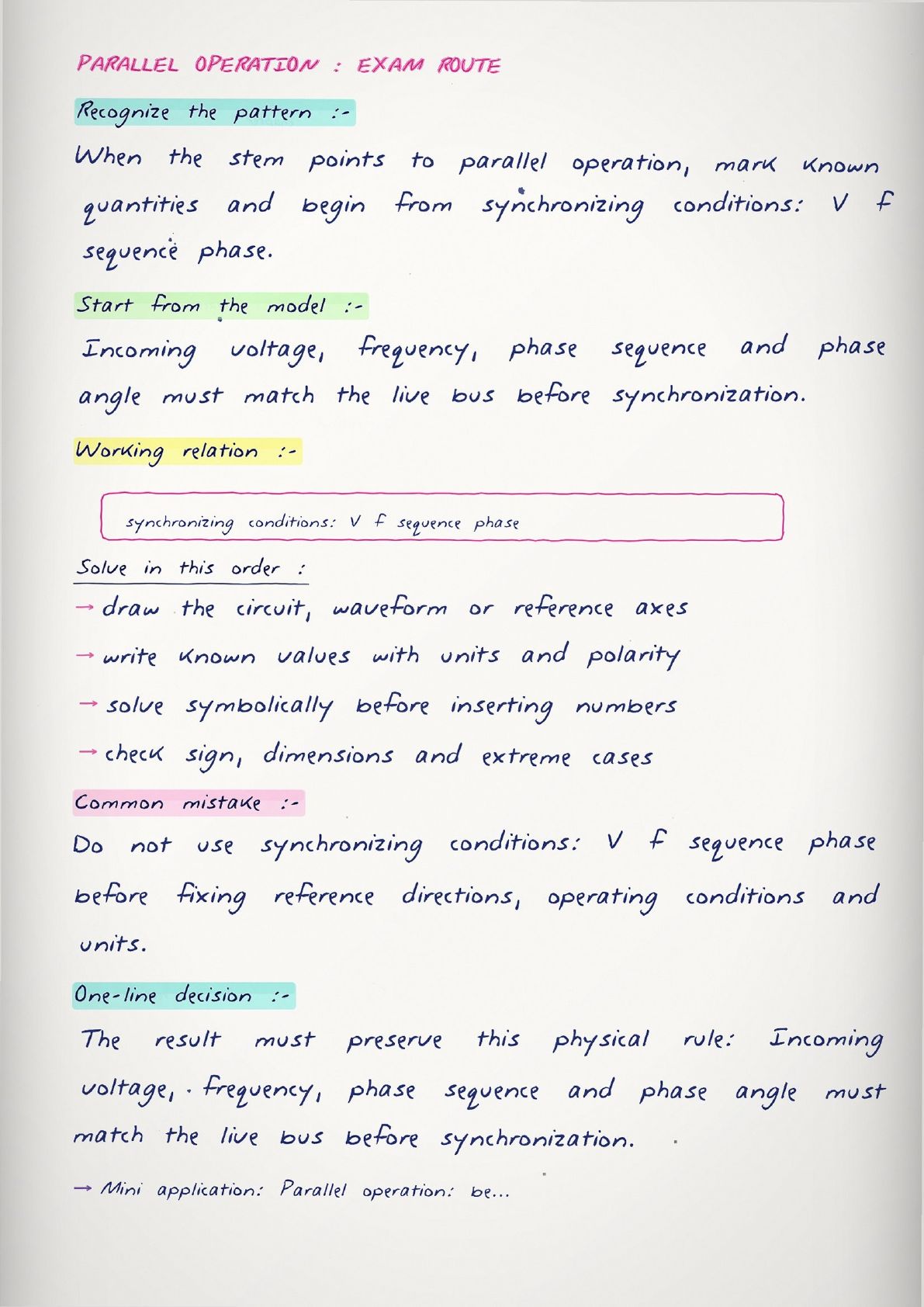
- Parallel operation and synchronisation.
- Singly and doubly excited energy-conversion systems and torque.
How the Notes Are Organised
The reading order starts with the generator, since its EMF and reactance ideas are reused everywhere else in the topic. Regulation and the power-angle curve come next, followed by the synchronous motor and its excitation control.
Energy conversion sits at the end as the unifying theory, showing where the torque expressions actually come from. This lets students first get comfortable with the machine and then see the field-energy reasoning behind it, which is the order most find easiest to hold in memory during the exam.
How GATE Synchronous Machines Links to Other Topics
Synchronous machines sit at the meeting point of machines and power systems, so the topic connects outward in several directions. The notes point to these links where a formula carries over, which helps students see the paper as one connected whole rather than separate silos.
- Power Systems, where generator reactance sets fault levels and stability.
- Induction Machines, which share the rotating-field and winding-factor ideas.
- Control Systems, where the swing equation models machine dynamics.
- Electromagnetic Fields, which supplies the energy-in-field basis for torque.
Important Topics in GATE Synchronous Machines
Certain results are near-certain to appear, and the notes highlight the common errors around each. Students should anchor their revision on these before spreading time to the lighter areas. The margin cautions come from mistakes seen again and again in past-paper attempts, so they warn students before a slip, not after.
- Voltage regulation methods, choosing EMF, MMF, or ZPF correctly for the given data.
- Power-angle characteristic, keeping the maximum-power condition clear.
- Two-reaction theory, separating direct and quadrature axis reactances.
- Synchronous motor V-curves, linking excitation to power factor.
- Doubly excited torque, treating the mutual-inductance term carefully.
How to Prepare GATE Synchronous Machines with Handwritten Notes
Machines reward students who can draw the phasor diagram quickly and read values off it. The notes train exactly that habit across a few passes.
- First read: redraw one phasor diagram for each power-factor case yourself.
- Second pass: recall the regulation and power-angle formulas without the derivation.
- PYQ stage: solve past GATE questions on regulation and two-reaction theory under time.
- Final week: revise only the formula sheet and the marked traps.
Why These Notes Help You Score Better
Machines questions are usually multi-step, and the biggest time loss comes from re-drawing diagrams under stress. Because these notes fix the phasor pictures and torque expressions in one place, students reach the numerical part of a question faster and with fewer sign mistakes. That reliability turns a heavy topic into dependable marks, and it is what students chasing a strong rank need from their revision.
GATE Electrical Synchronous Machines Handwritten Notes FAQs
Ques. How important are synchronous machines for GATE Electrical?
Ans. The topic is high-yield, usually worth about 5 to 8 marks, and it also feeds into power systems, so time spent here helps across the paper.
Ques. Do these notes cover both the machine and the energy-conversion theory?
Ans. Yes, they run from construction and EMF through voltage regulation and the power-angle curve, and finish with singly and doubly excited energy-conversion systems and torque.
Ques. Which method of voltage regulation should students focus on?
Ans. Students should be fluent in the EMF, MMF, and ZPF methods and know from the given data which one to apply, since GATE varies the setup each year.
Ques. Are the phasor diagrams drawn out in the notes?
Ans. They are drawn by hand for lagging, unity, and leading power factor, with each phasor labelled so students can reproduce them quickly in the exam.



Comments