




Robot Perception, Computer Vision and 3D Geometry turns a stream of raw pixels into a usable 3D understanding of the world, and it is one of the most tested areas in any robotics course.
From Raw Pixels to a 3D Map: The Perception Pipeline
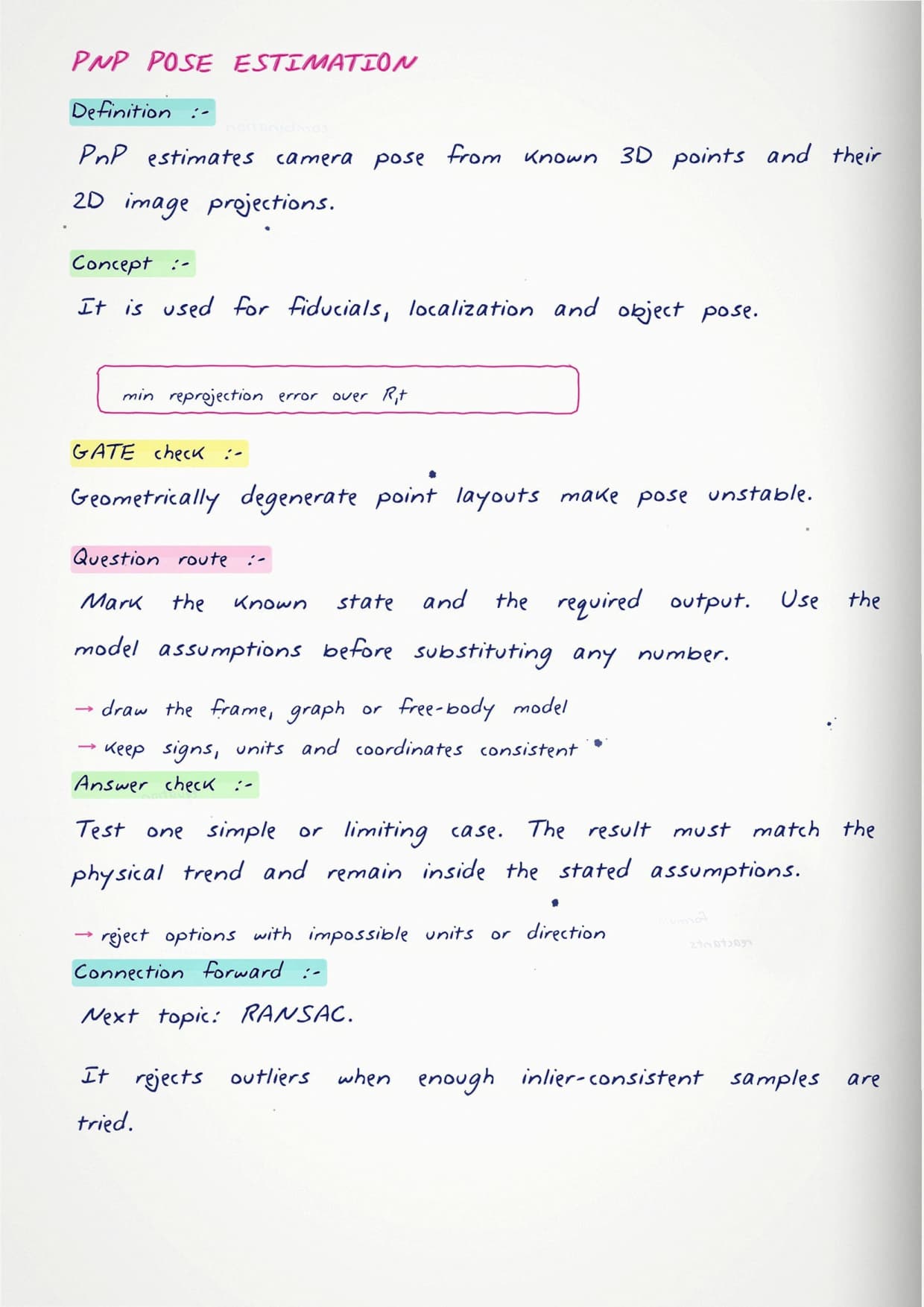
Perception is best understood as a pipeline. Light hits a camera, numbers come out, and a series of steps turns them into shapes, distances, and finally a map the robot can act on.
These notes follow that flow one stage at a time, so students always know which stage they are looking at. The geometry and estimation ideas also reach into GATE-relevant linear algebra and probability.
Stage One: Capturing and Cleaning the Image
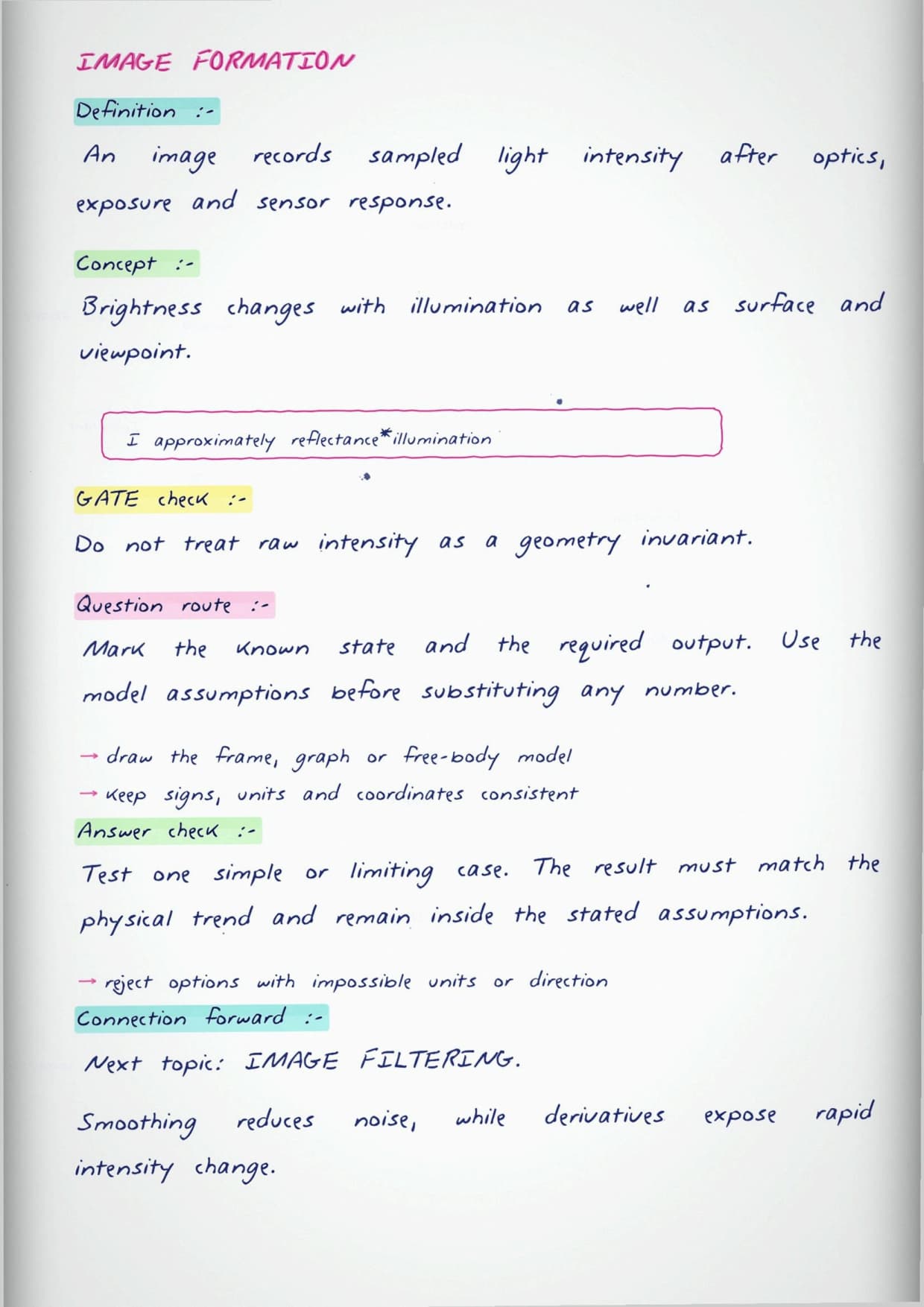
Everything begins with the raw image, and raw images are messy. Getting clean data here quietly decides how well every later stage performs.
- How a picture is stored as a grid of intensity values, and why noise creeps in.
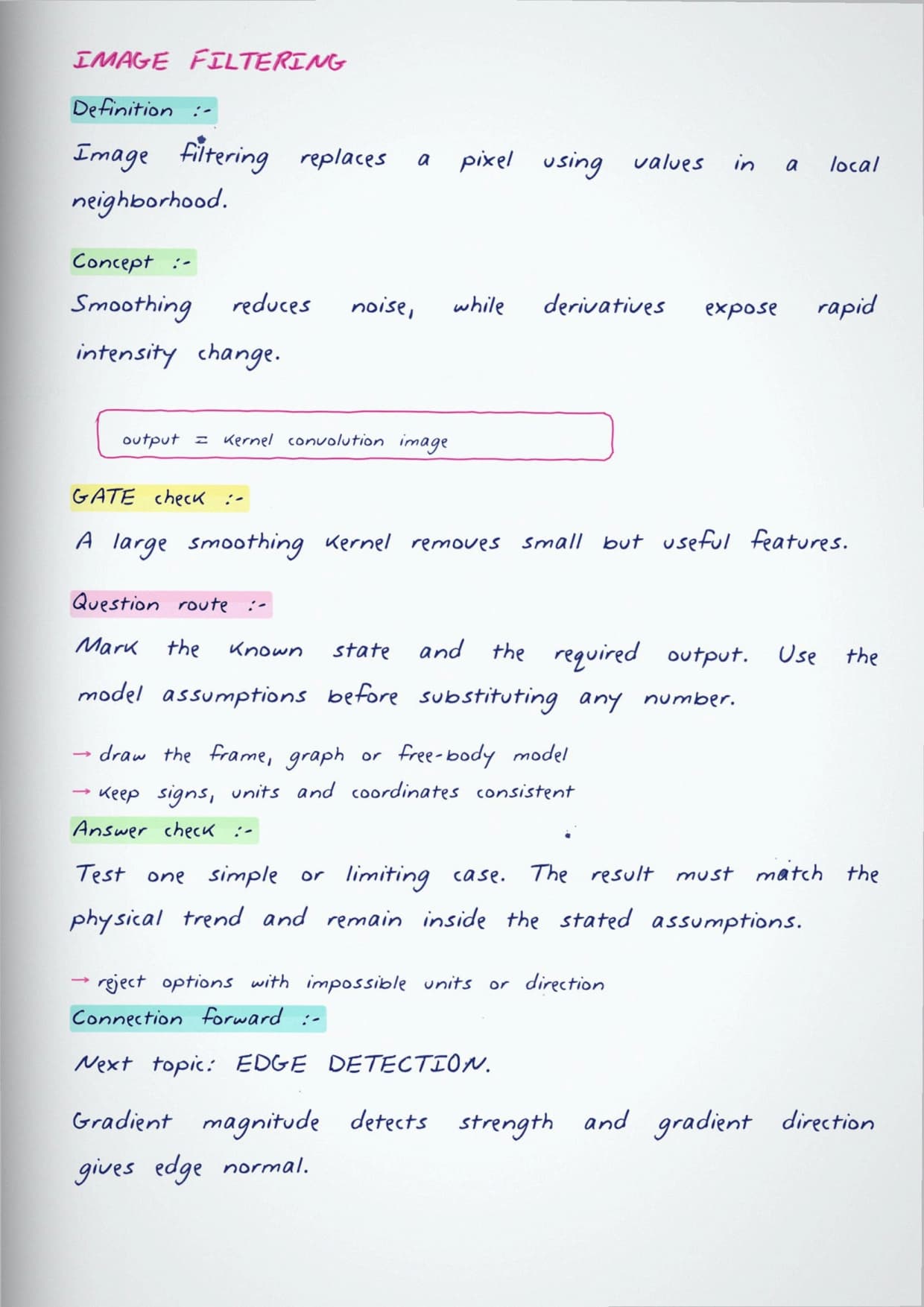
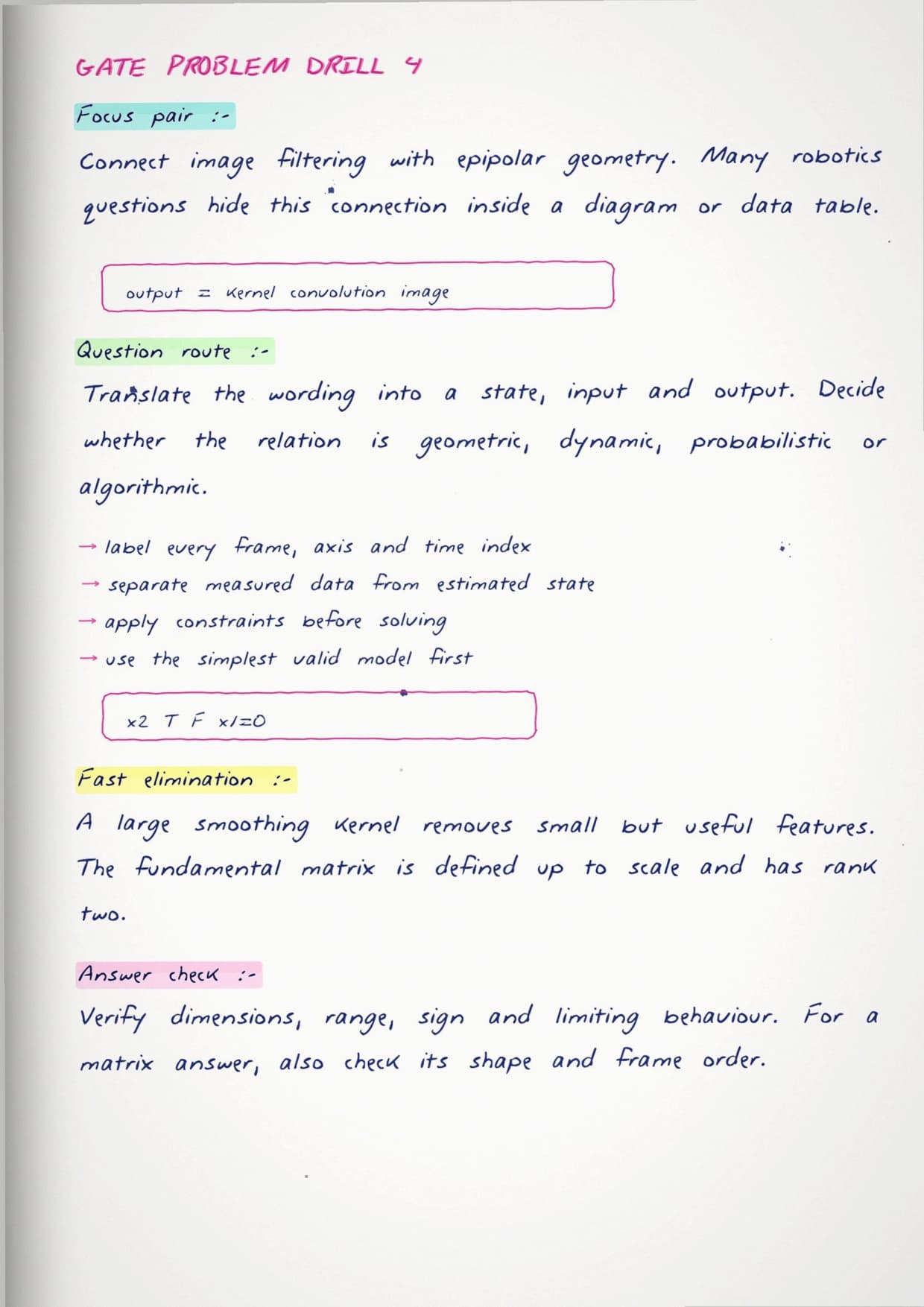
- Filtering and convolution, the sliding-window operation behind blurring and sharpening.
- Histograms and basic thresholding to separate an object from its background.
Stage Two: Finding Features That Matter
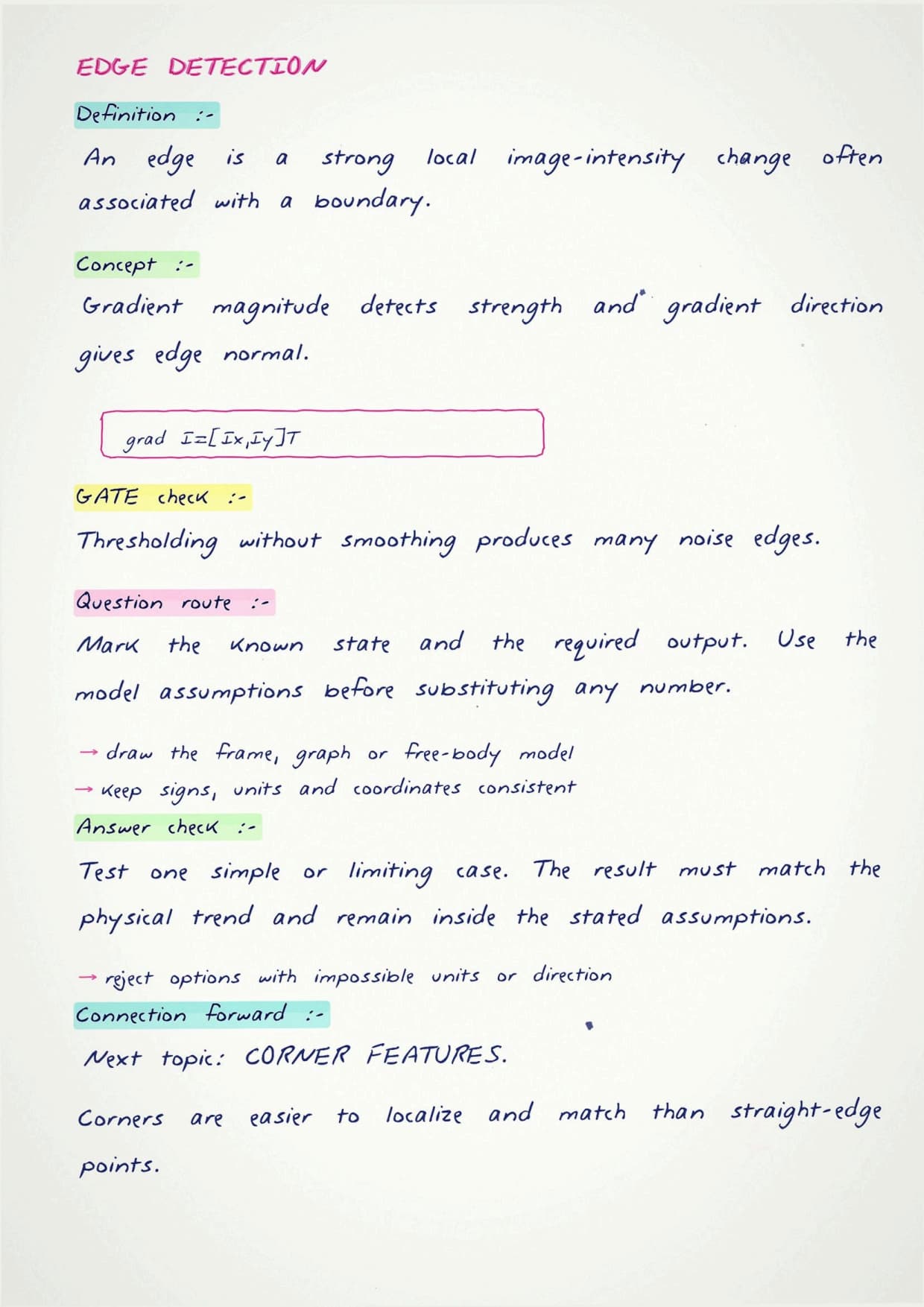
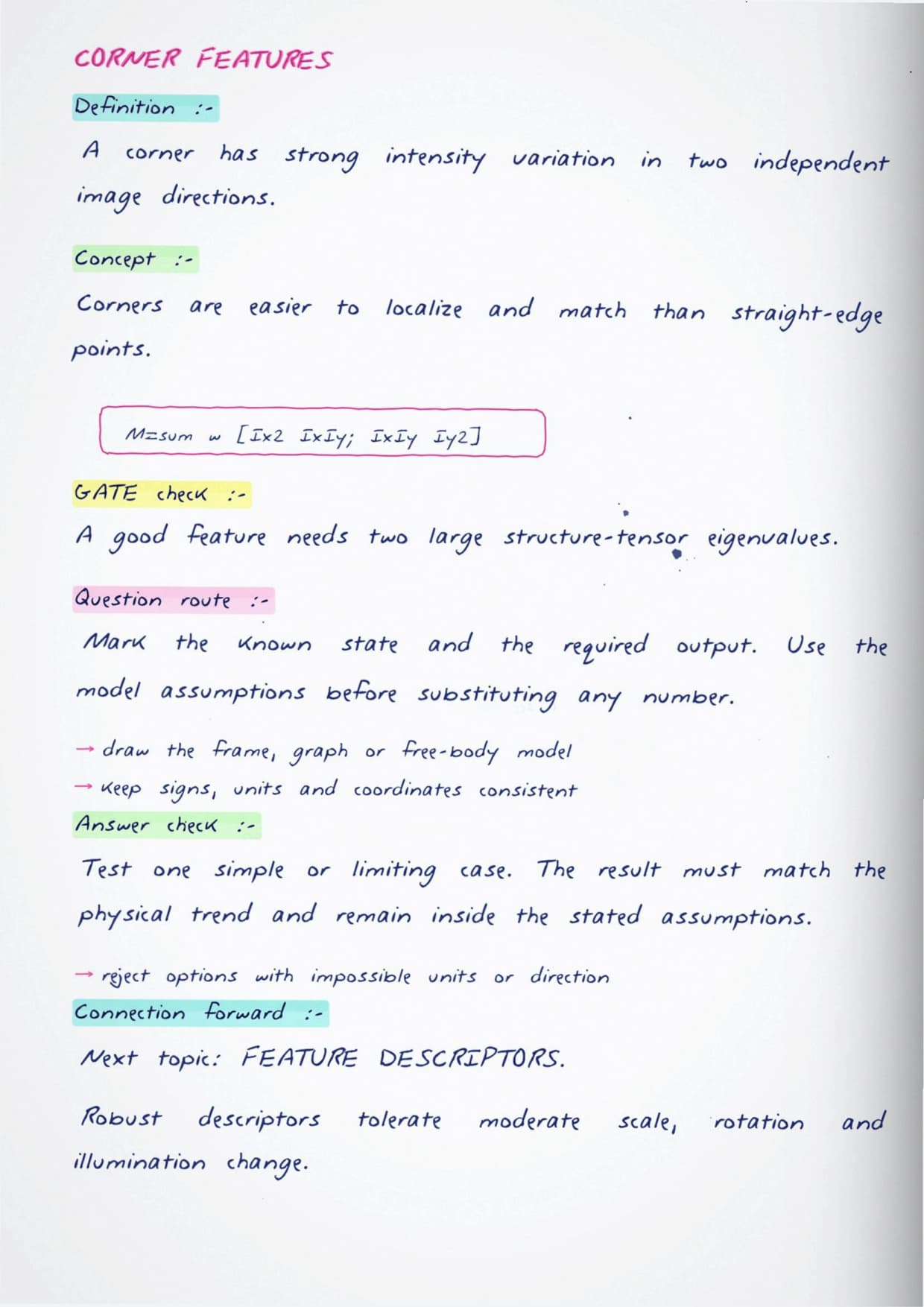
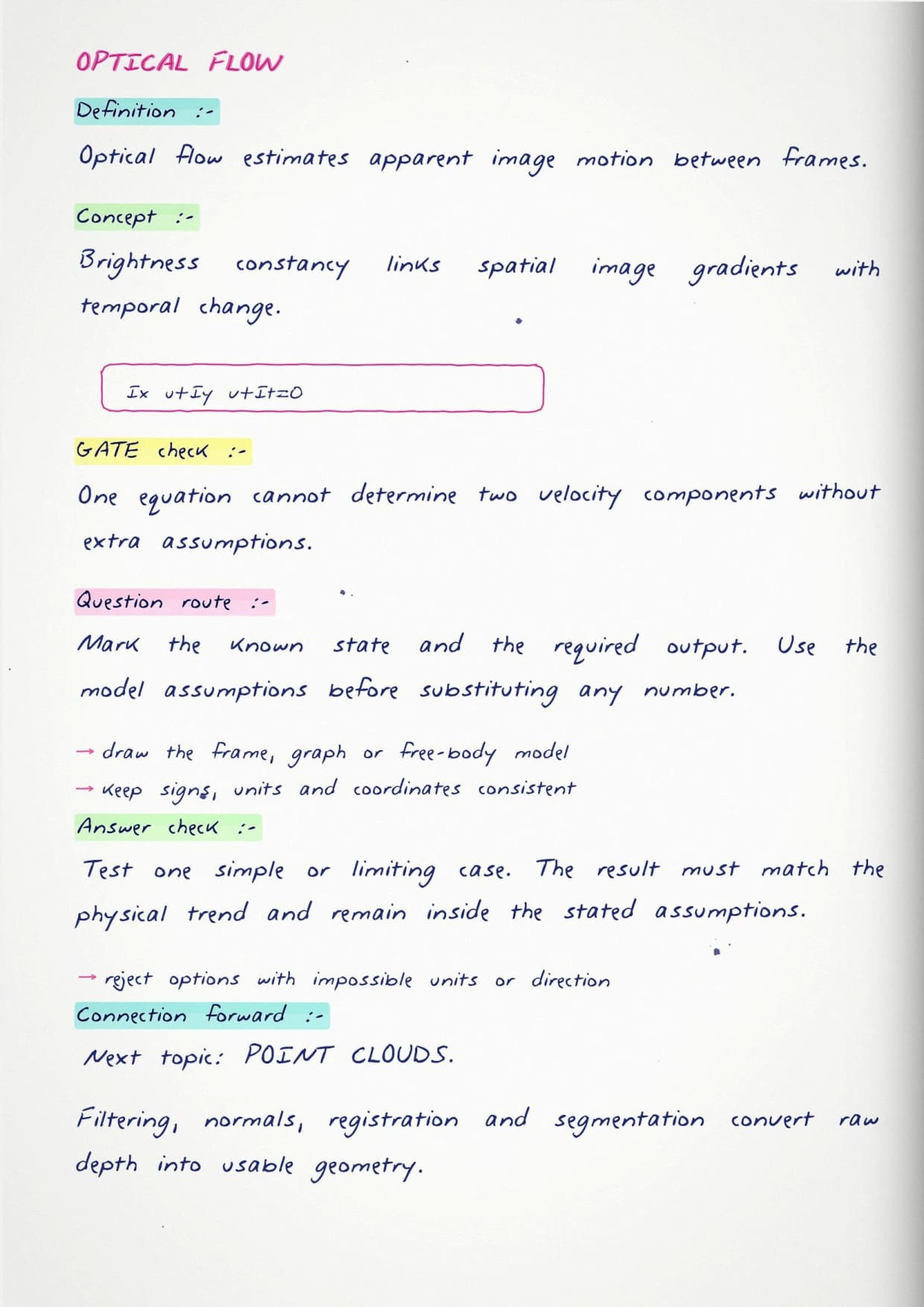
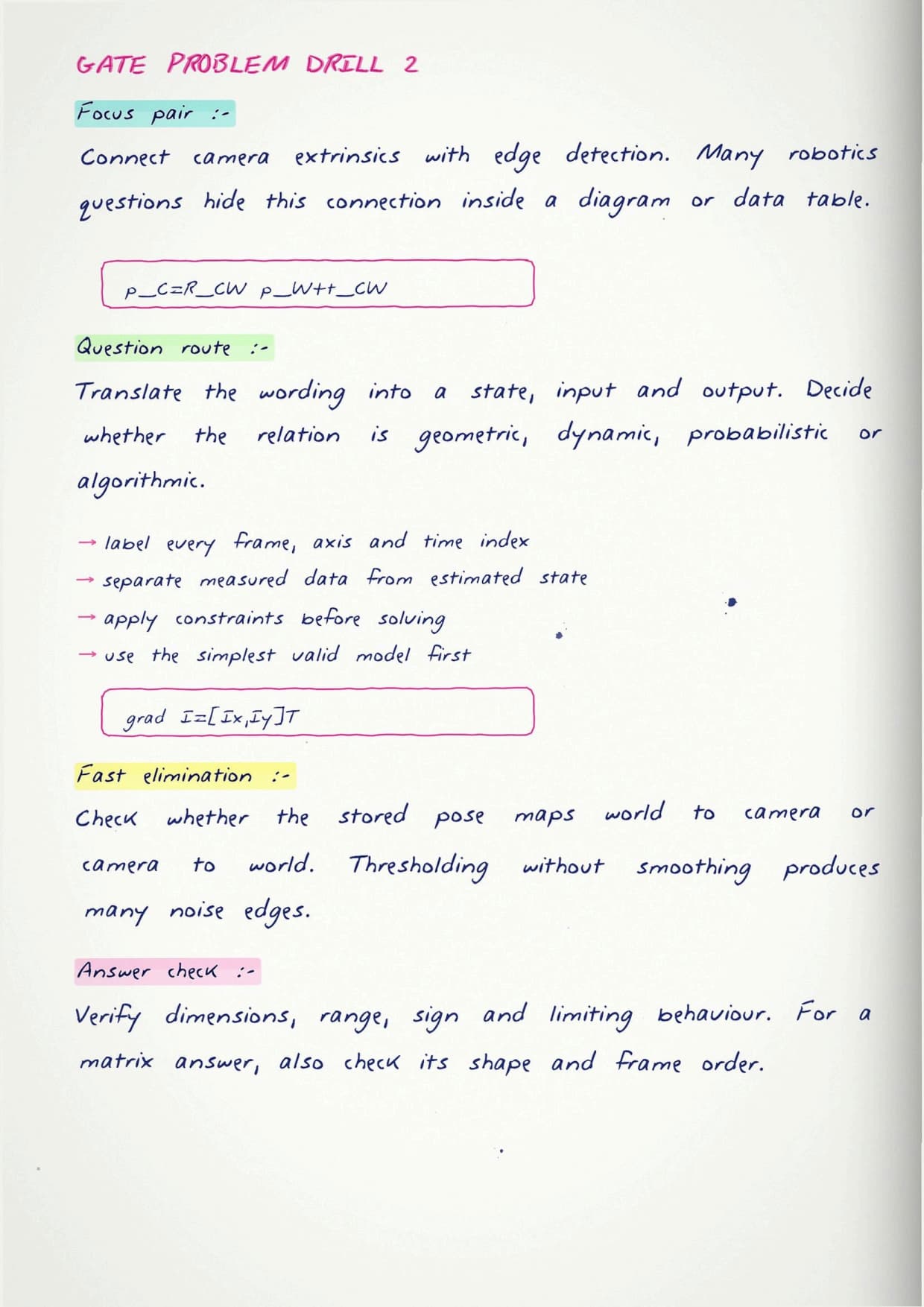
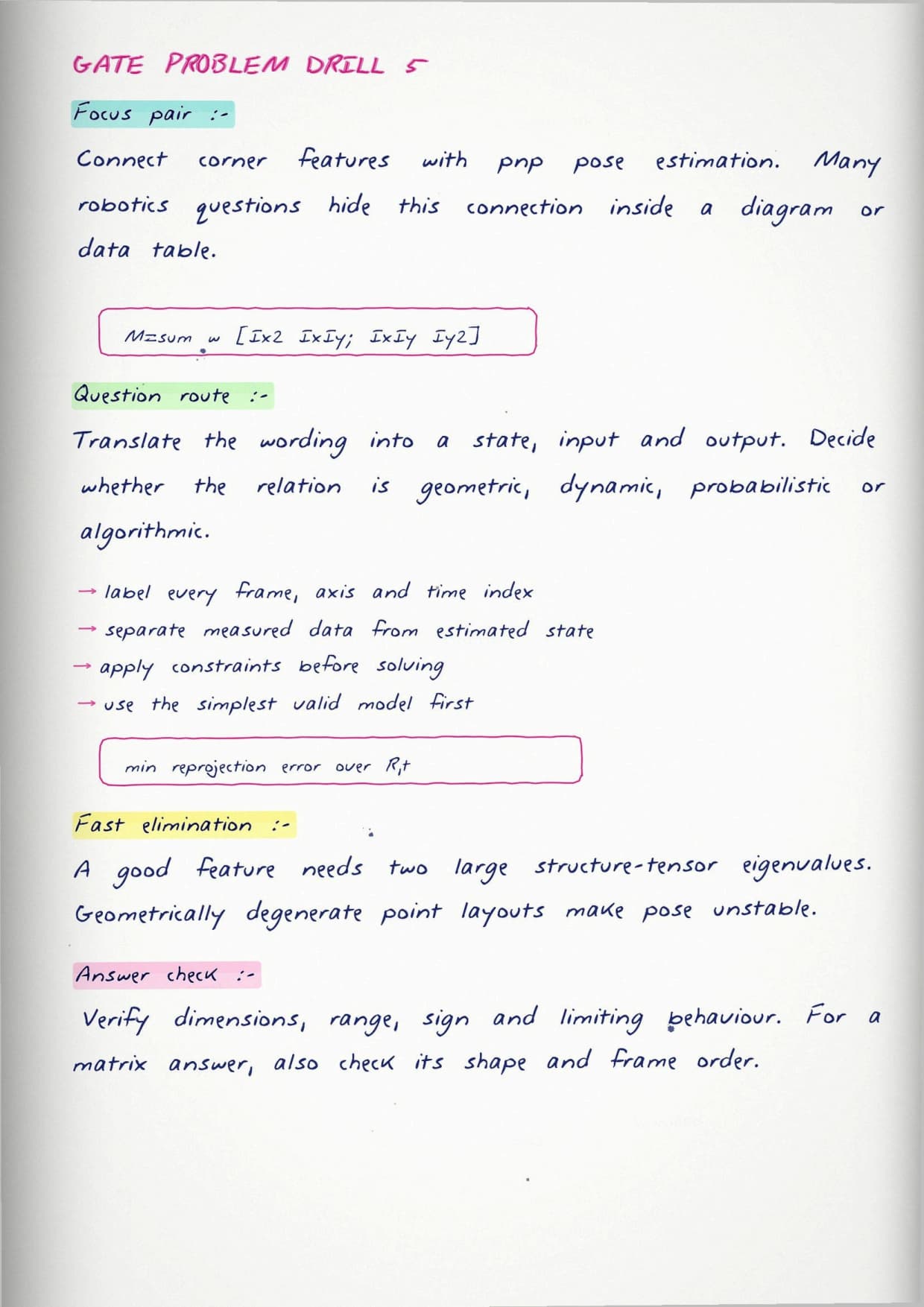
A robot cannot compare millions of pixels directly, so it looks for a few reliable landmarks. This stage explains edges and corners, why corners make good anchors, and how gradient information reveals them.
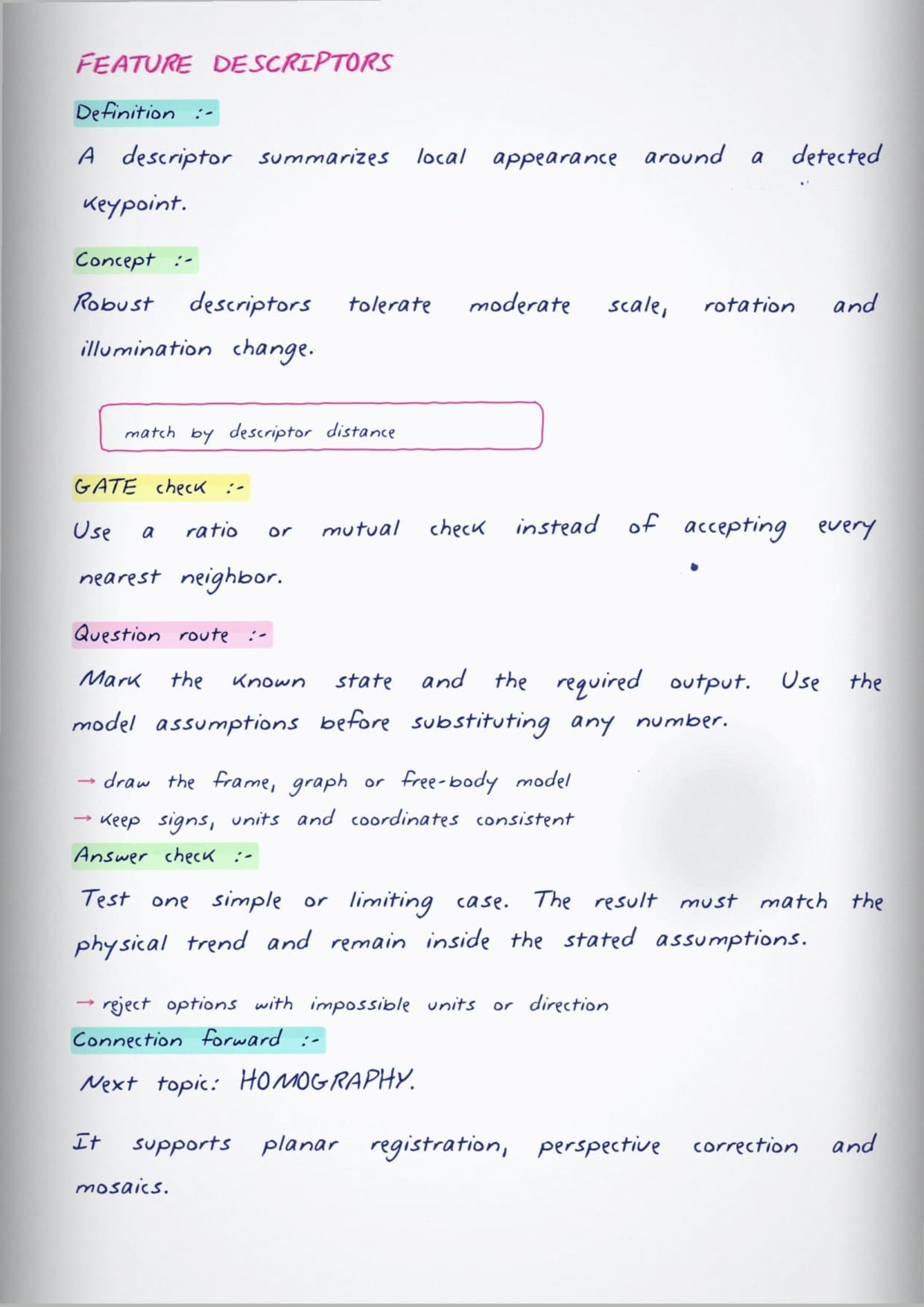
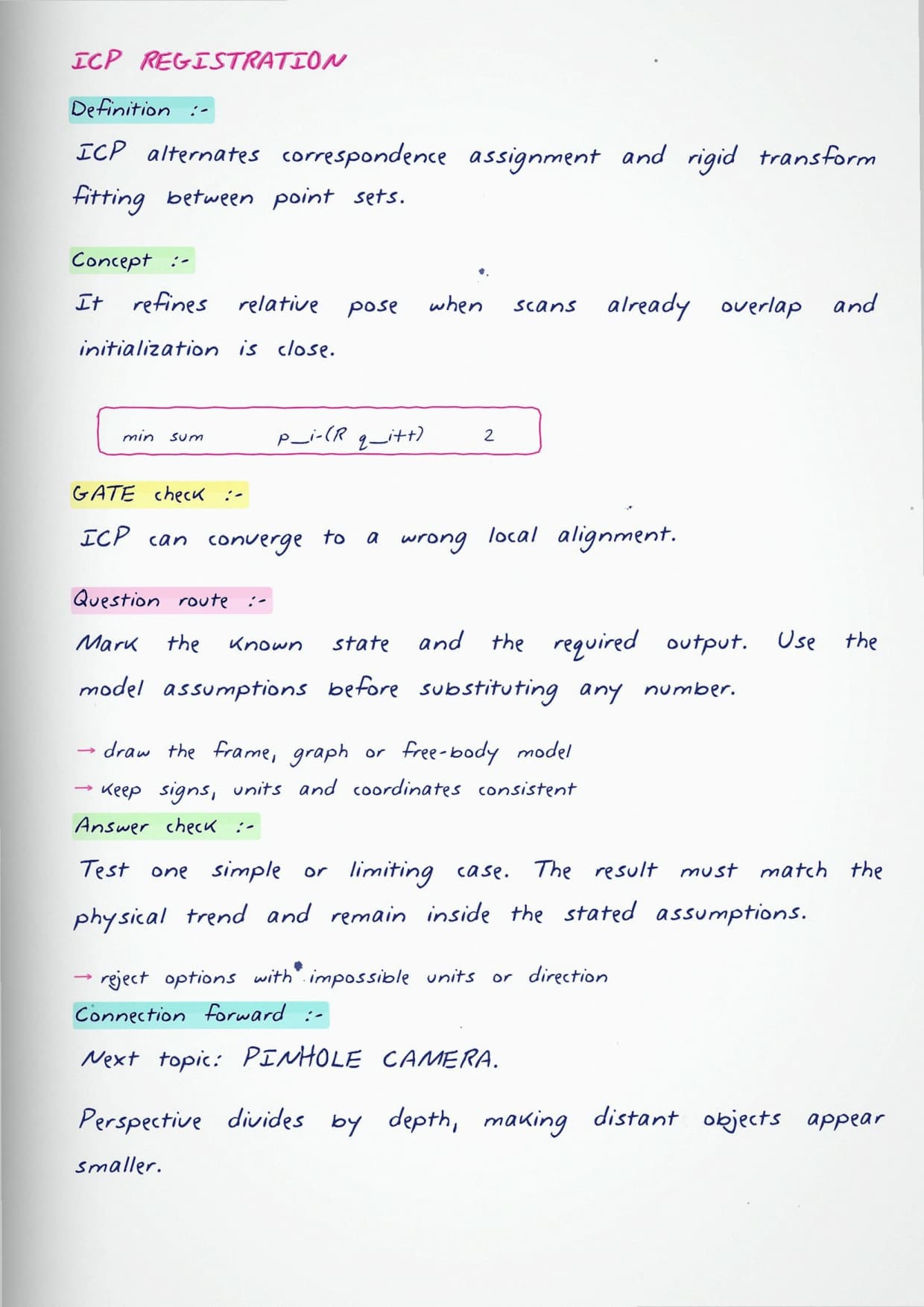
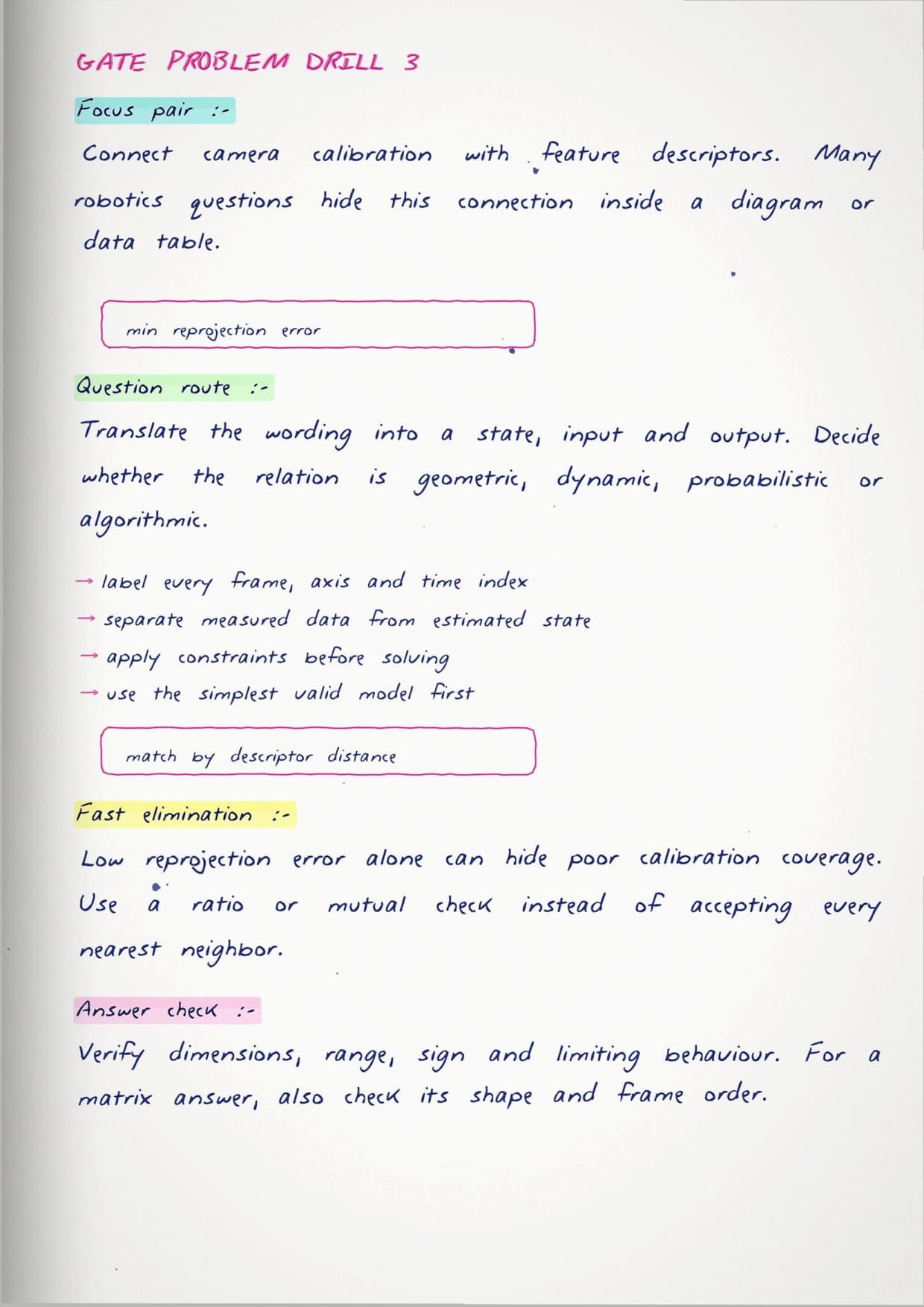
The notes summarise feature detectors and descriptors that stay stable as the view or lighting changes. Feature matching then recognises the same point across two images, the hinge the geometry stages depend on.
Stage Three: Camera Models and the Geometry of Projection
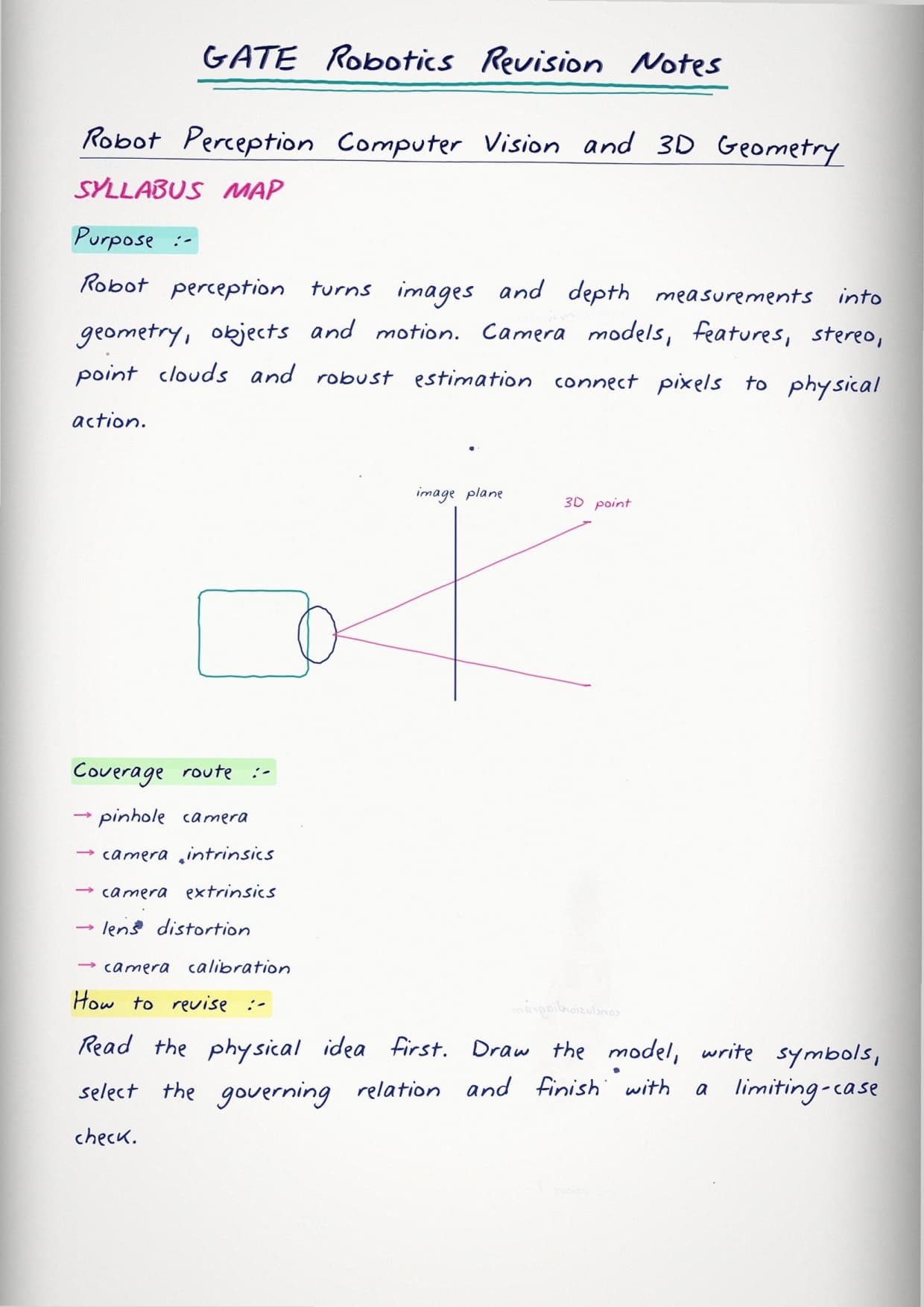
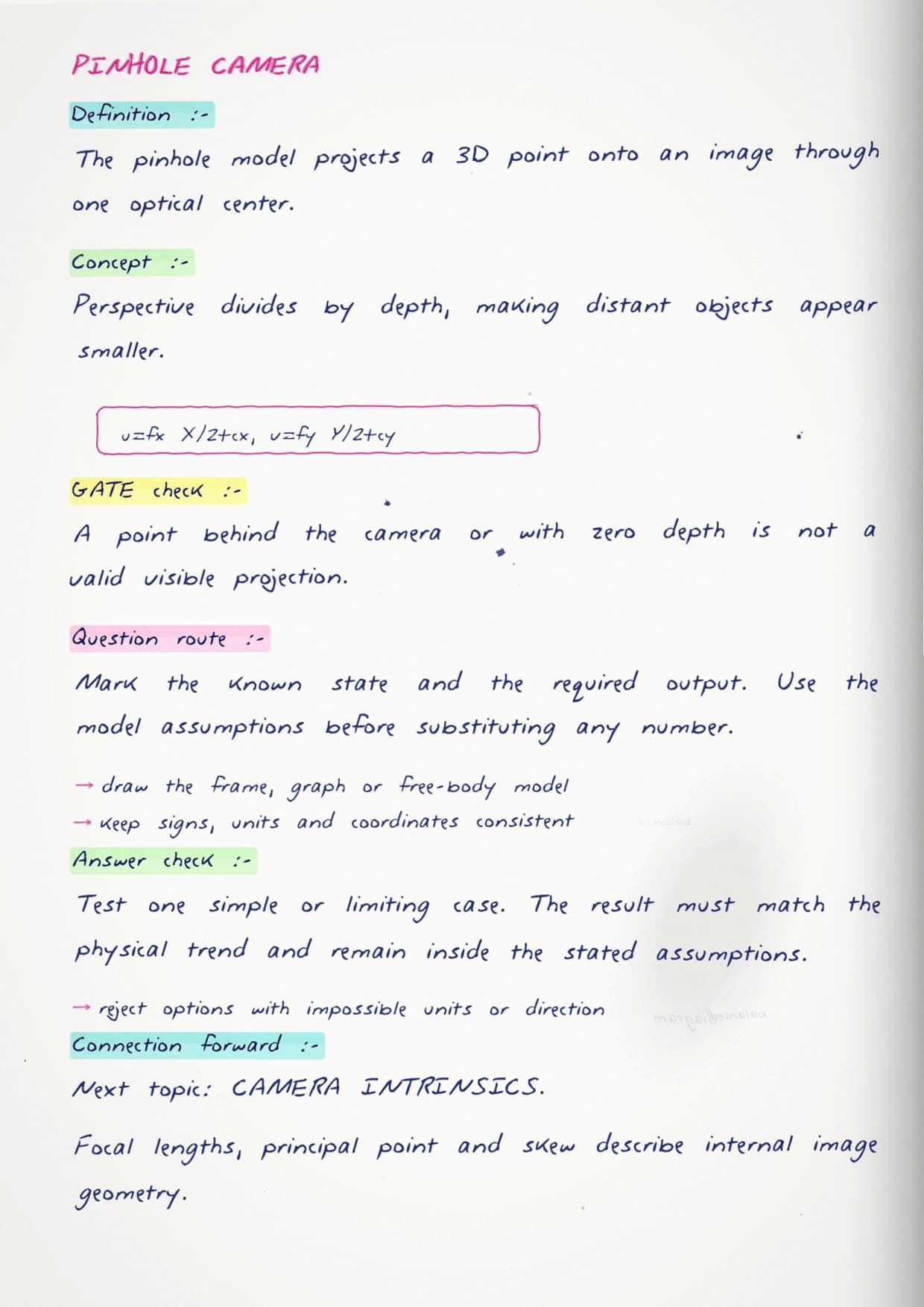
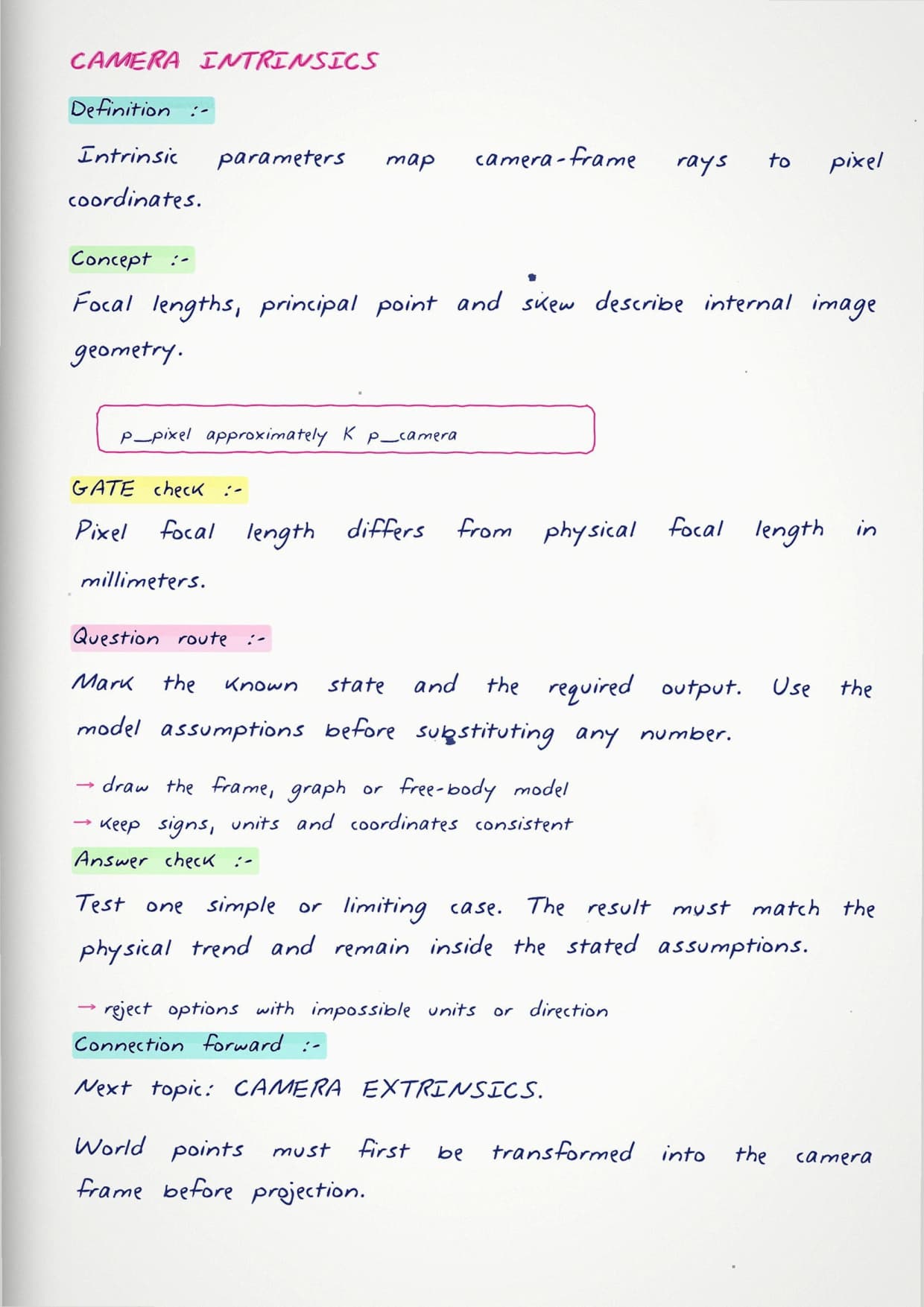
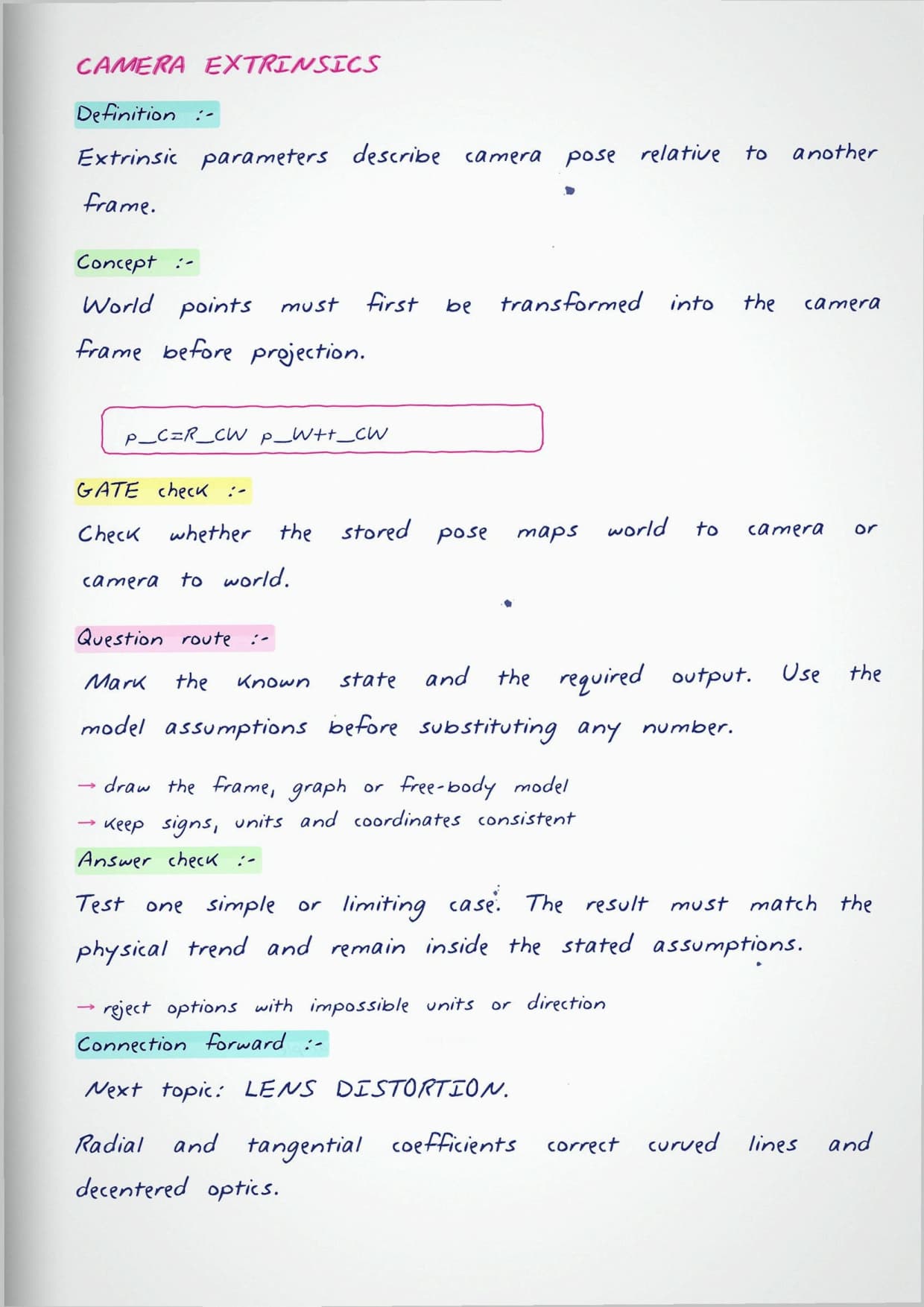
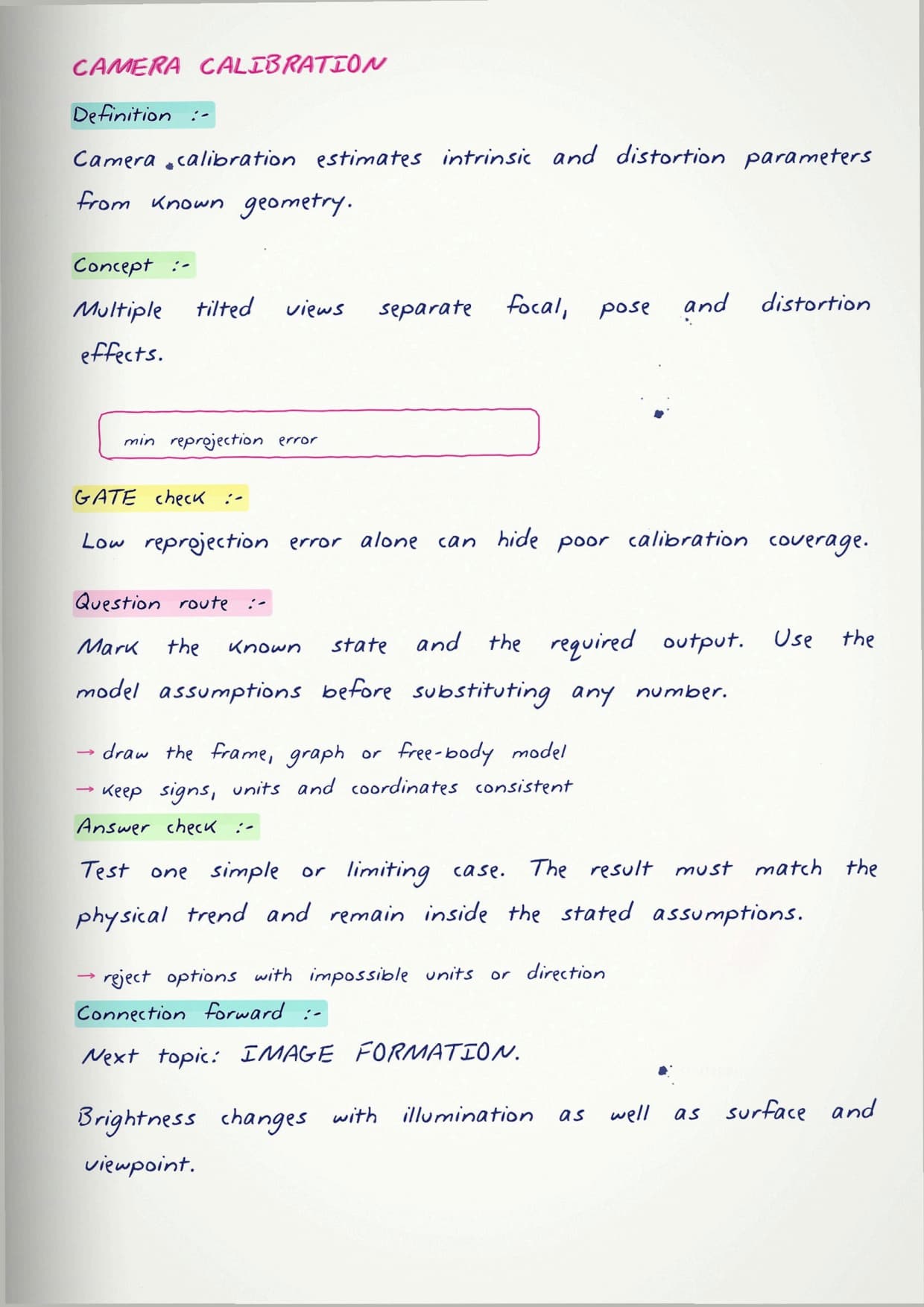
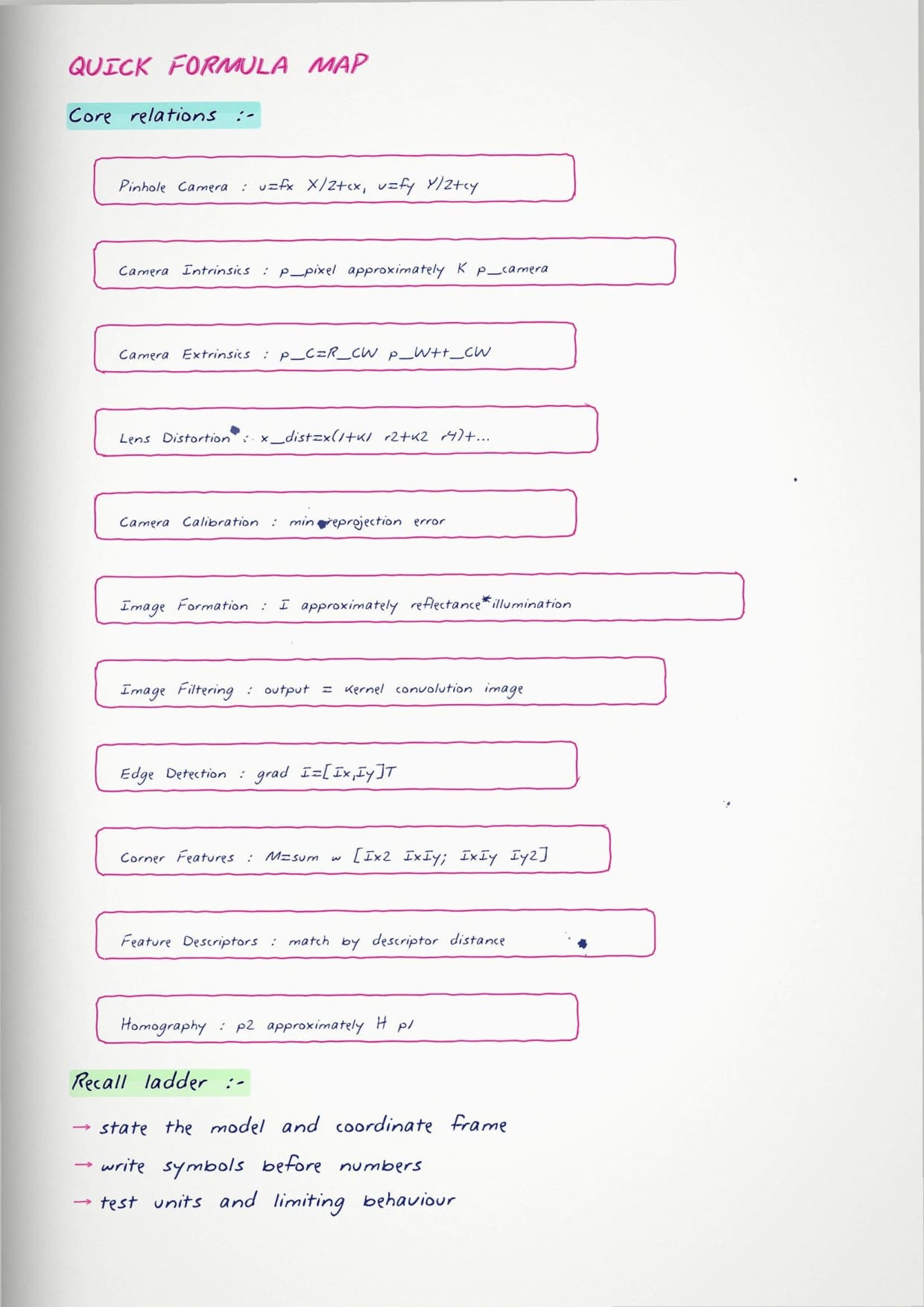
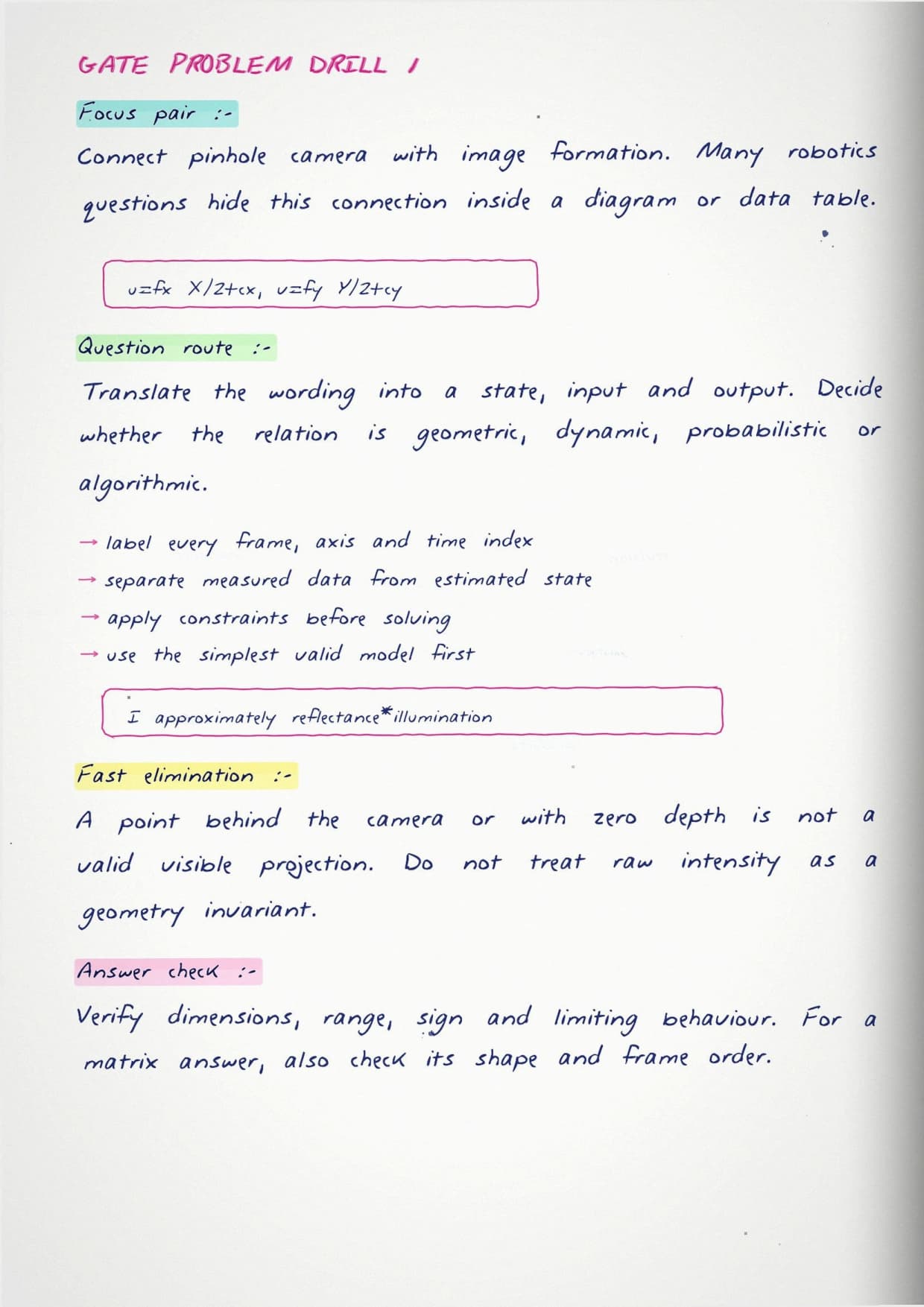
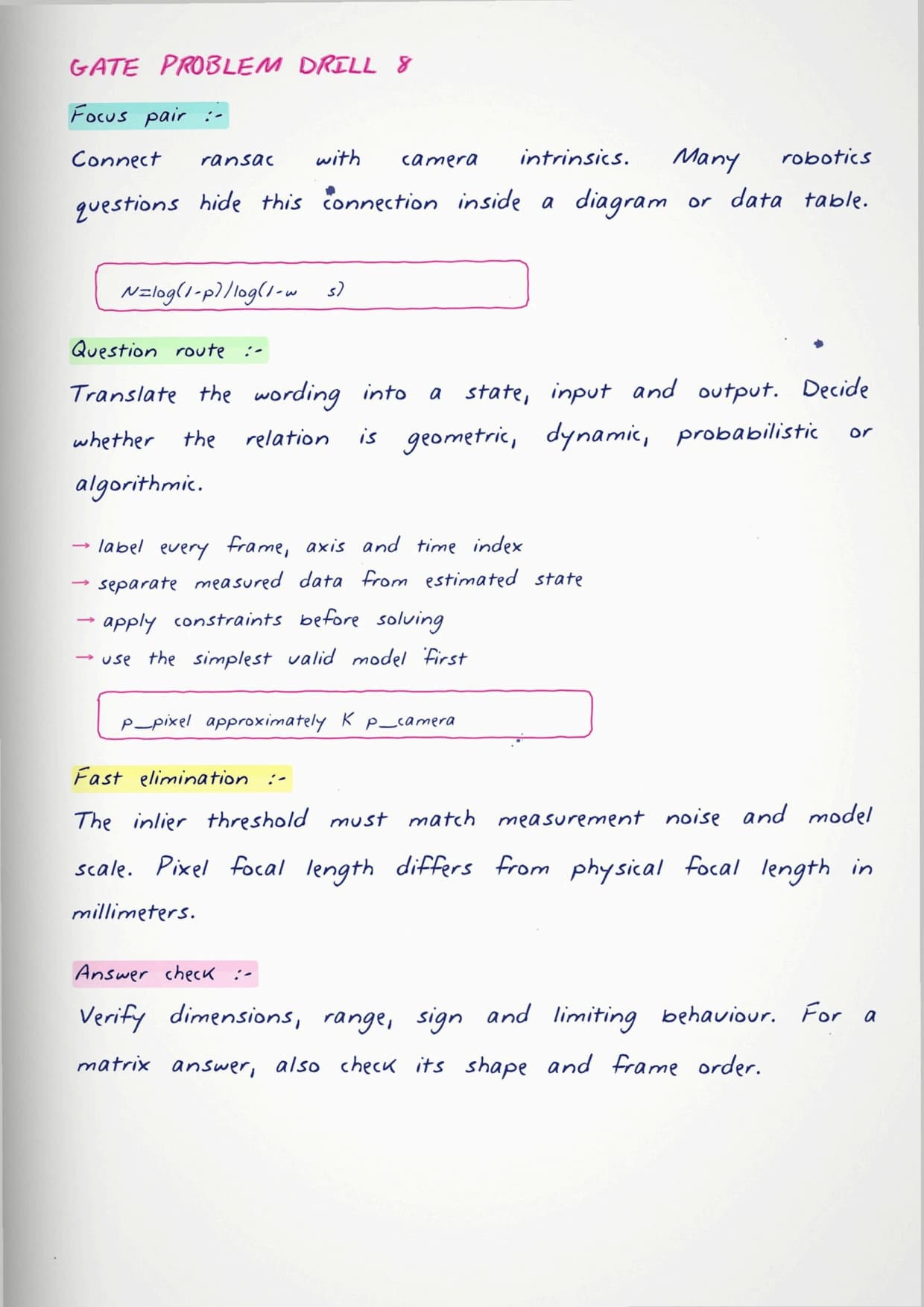
Here the maths gets serious. A camera flattens a 3D world onto a 2D sensor, and this stage models exactly how. The notes build the pinhole camera model and split its parameters into intrinsics and extrinsics.
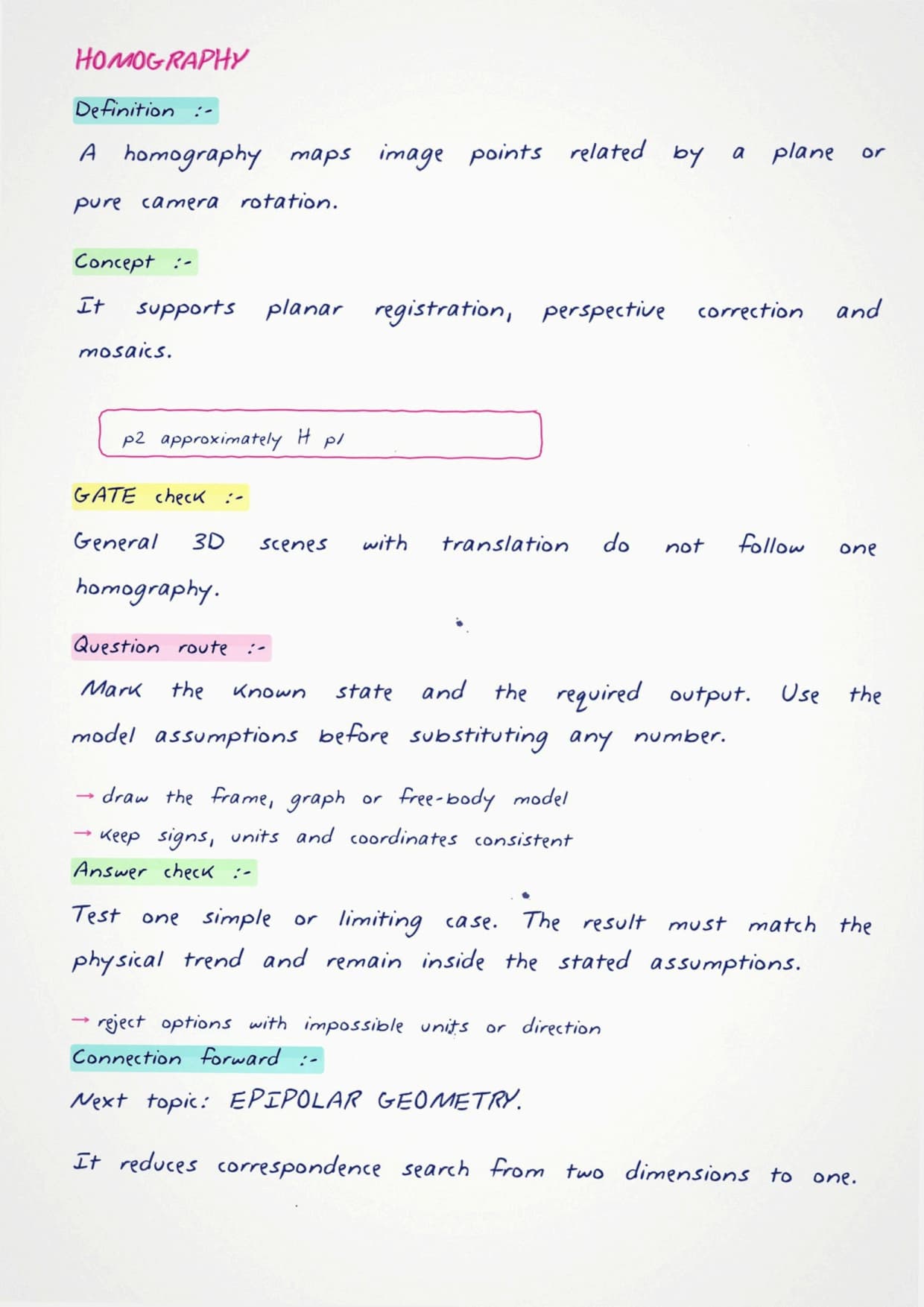
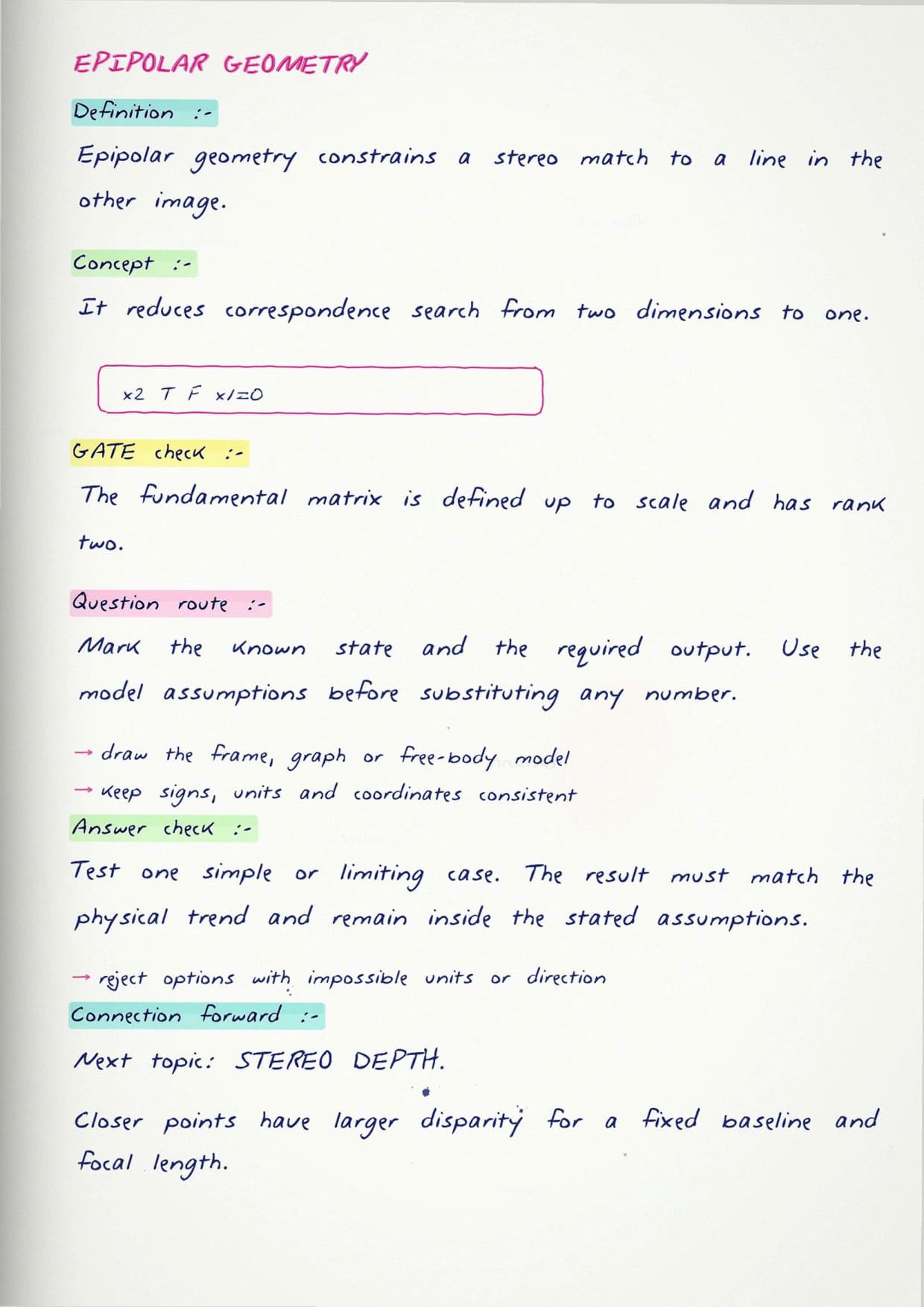
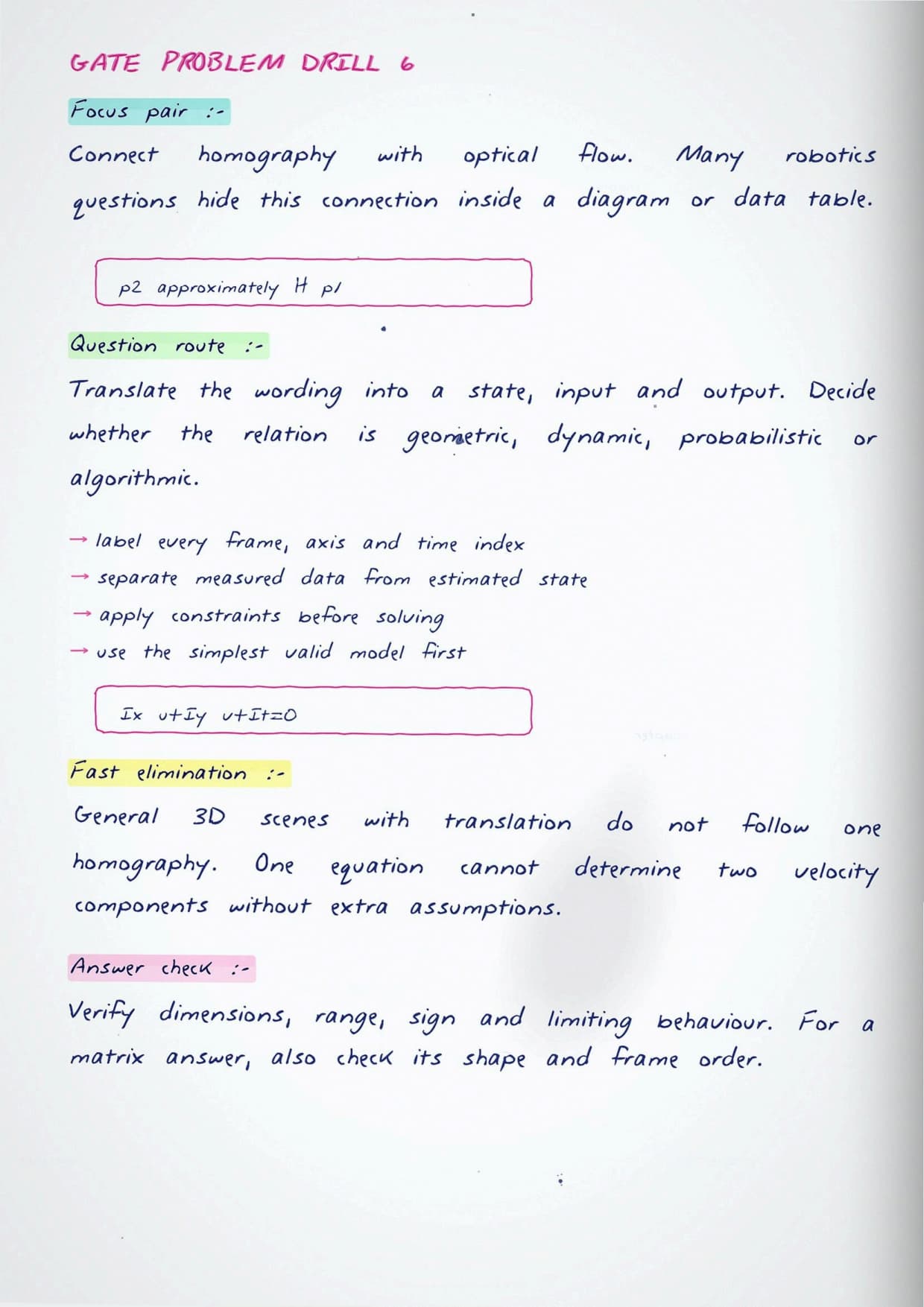
Homogeneous coordinates turn a projection into one matrix product. Students then meet the epipolar constraint, where two views of a scene are geometrically linked, the foundation for recovering depth.
Stage Four: Recovering Depth and 3D Structure
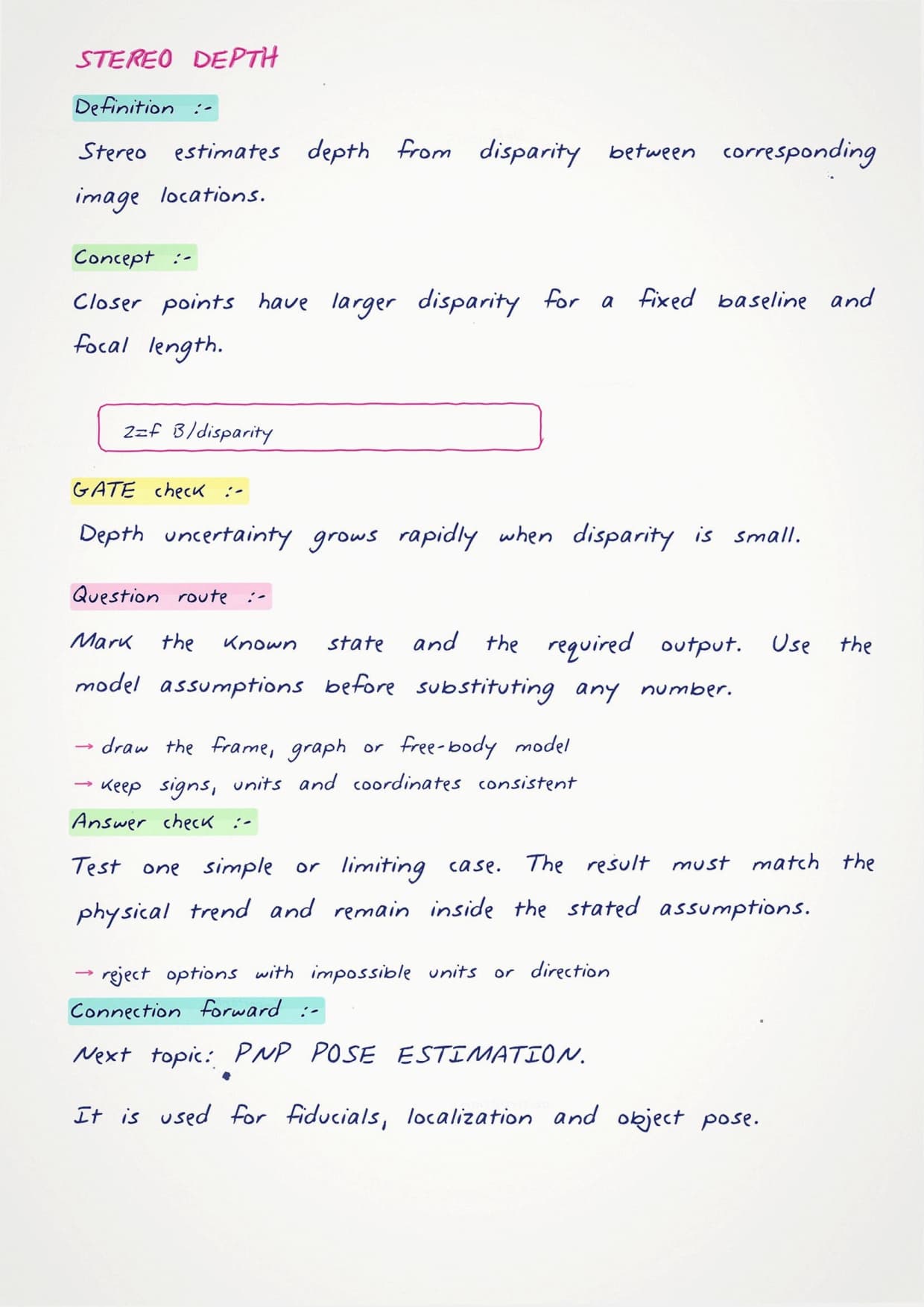
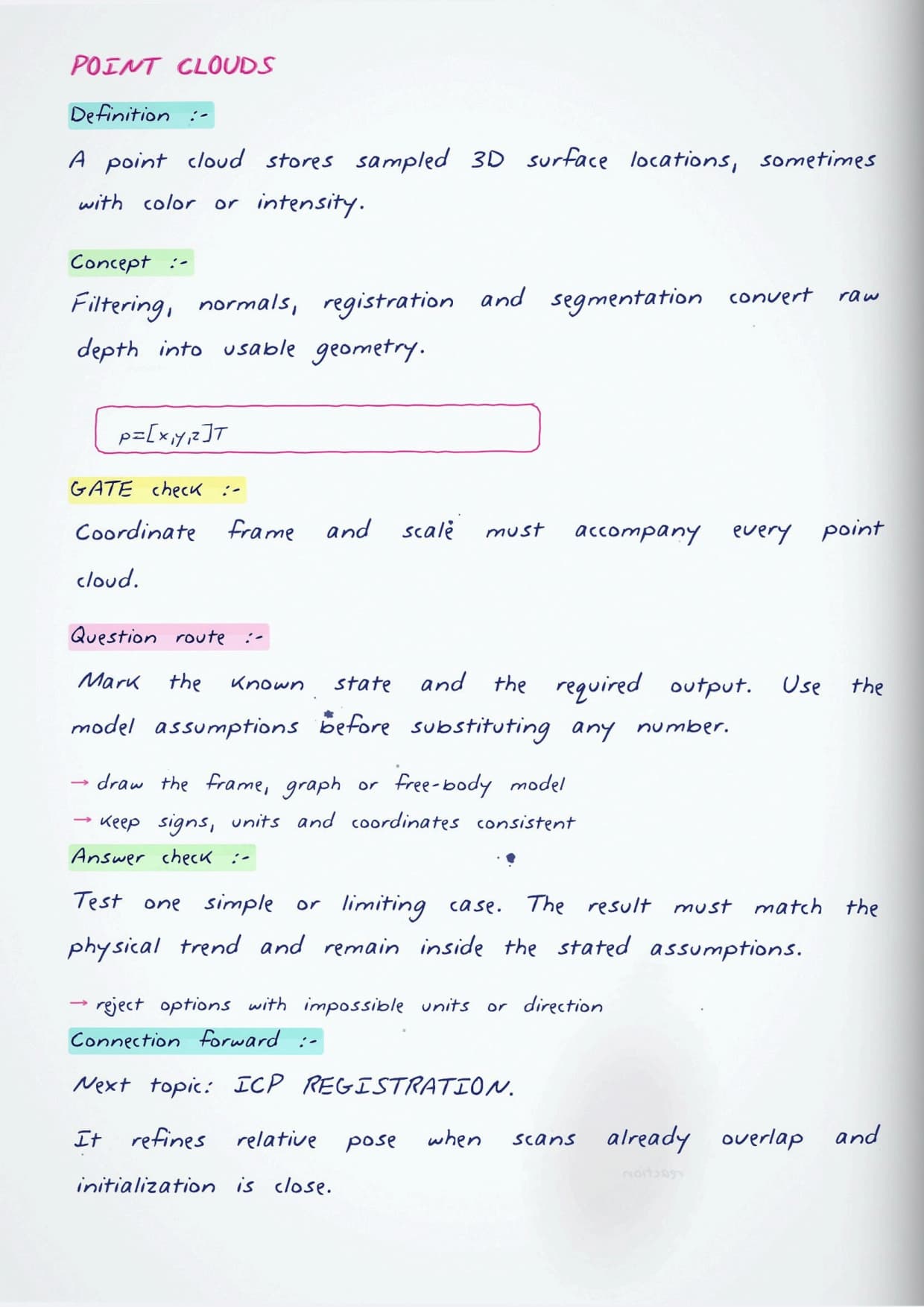
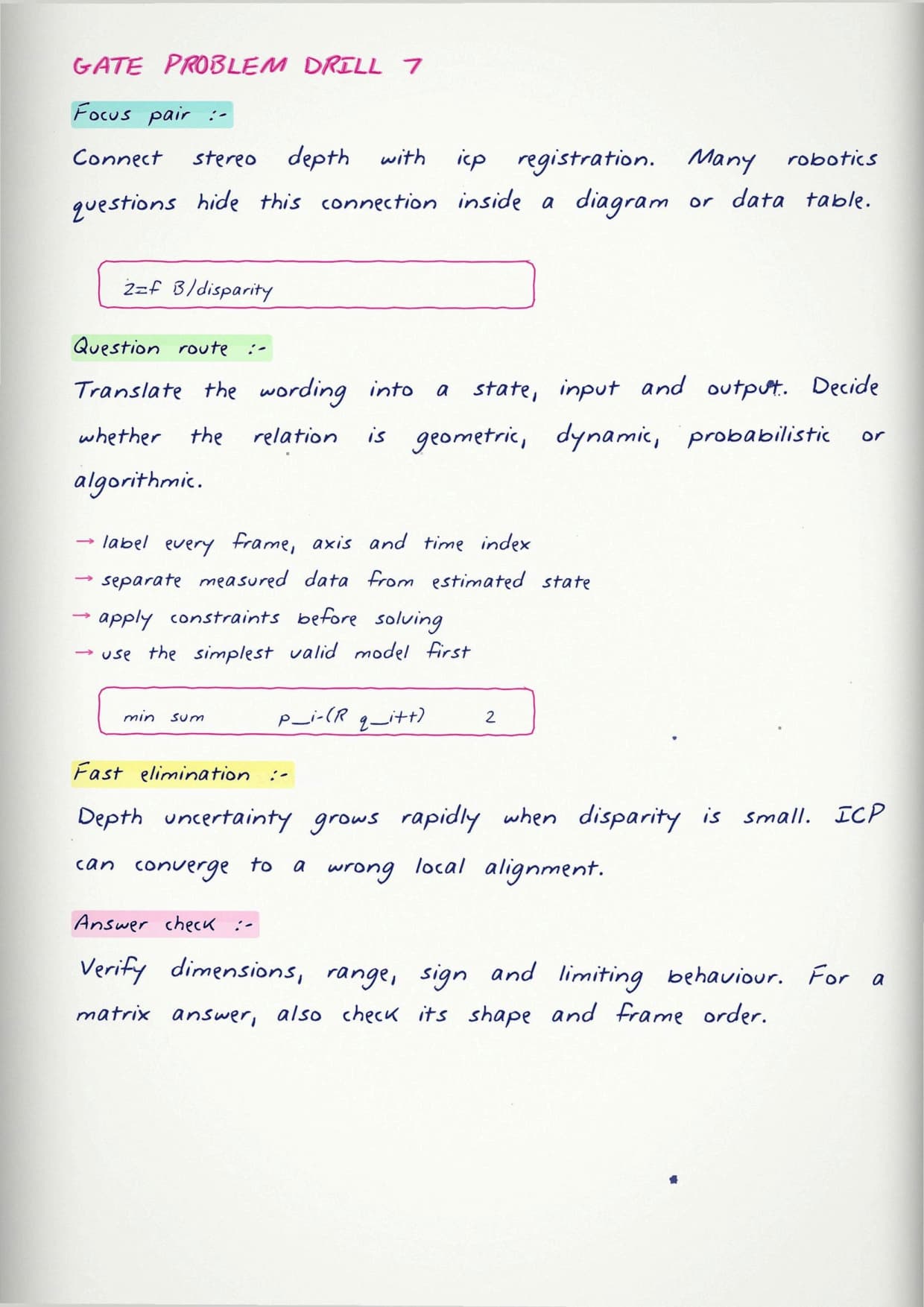
The final stage answers the depth question the flat image threw away. Using two or more views, stereo geometry and triangulation pin down how far each matched point sits from the camera.
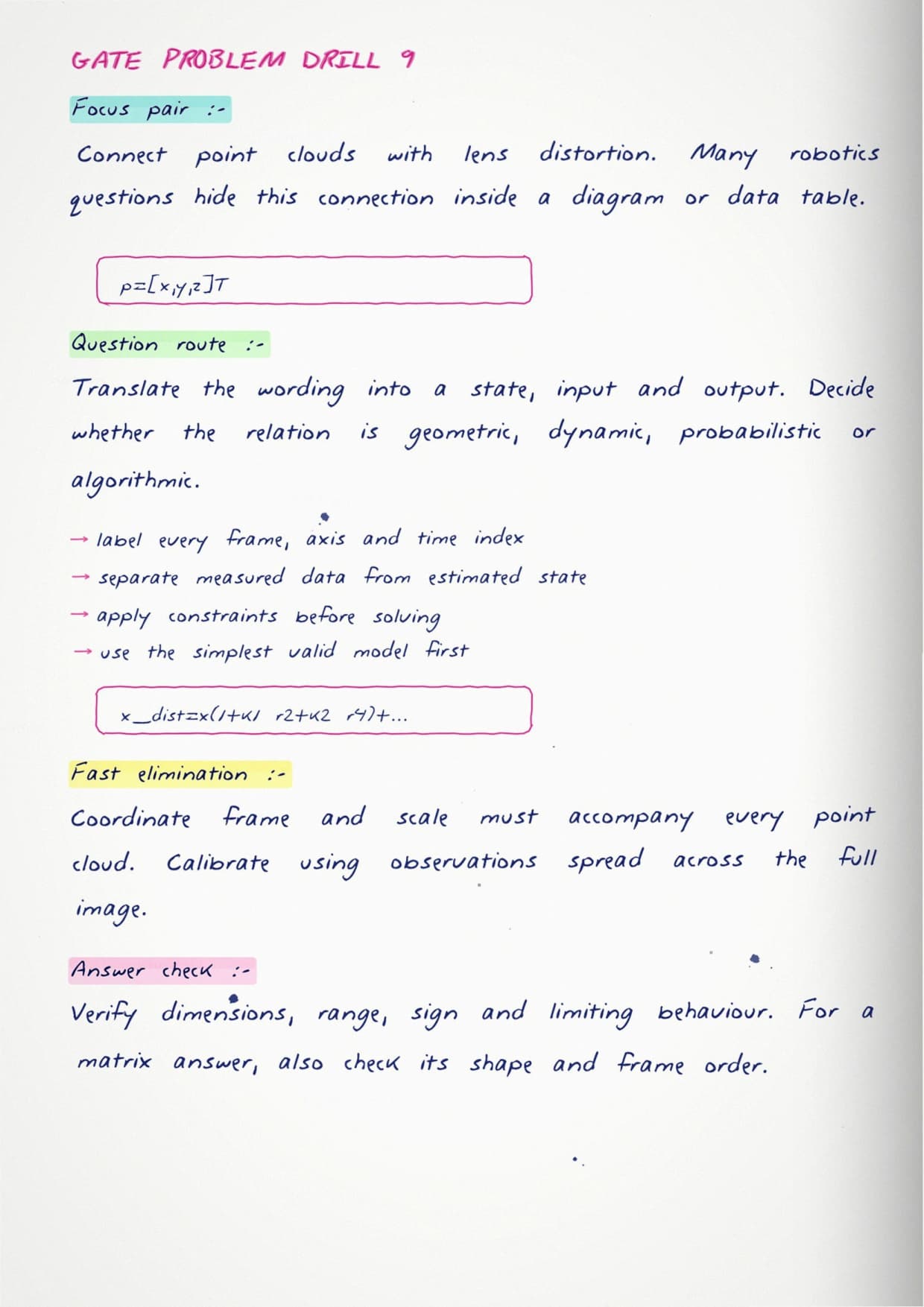
The notes connect this to point clouds and to rebuilding a scene, the reasoning behind structure from motion. By the end the pipeline closes: pixels have become measured 3D points a robot can plan around.
See the Full Pipeline in Action
Source: Cyrill Stachniss
Where Perception Problems Get Tricky
Certain points reliably cause trouble, and the notes call them out so students slow down at the right moments.
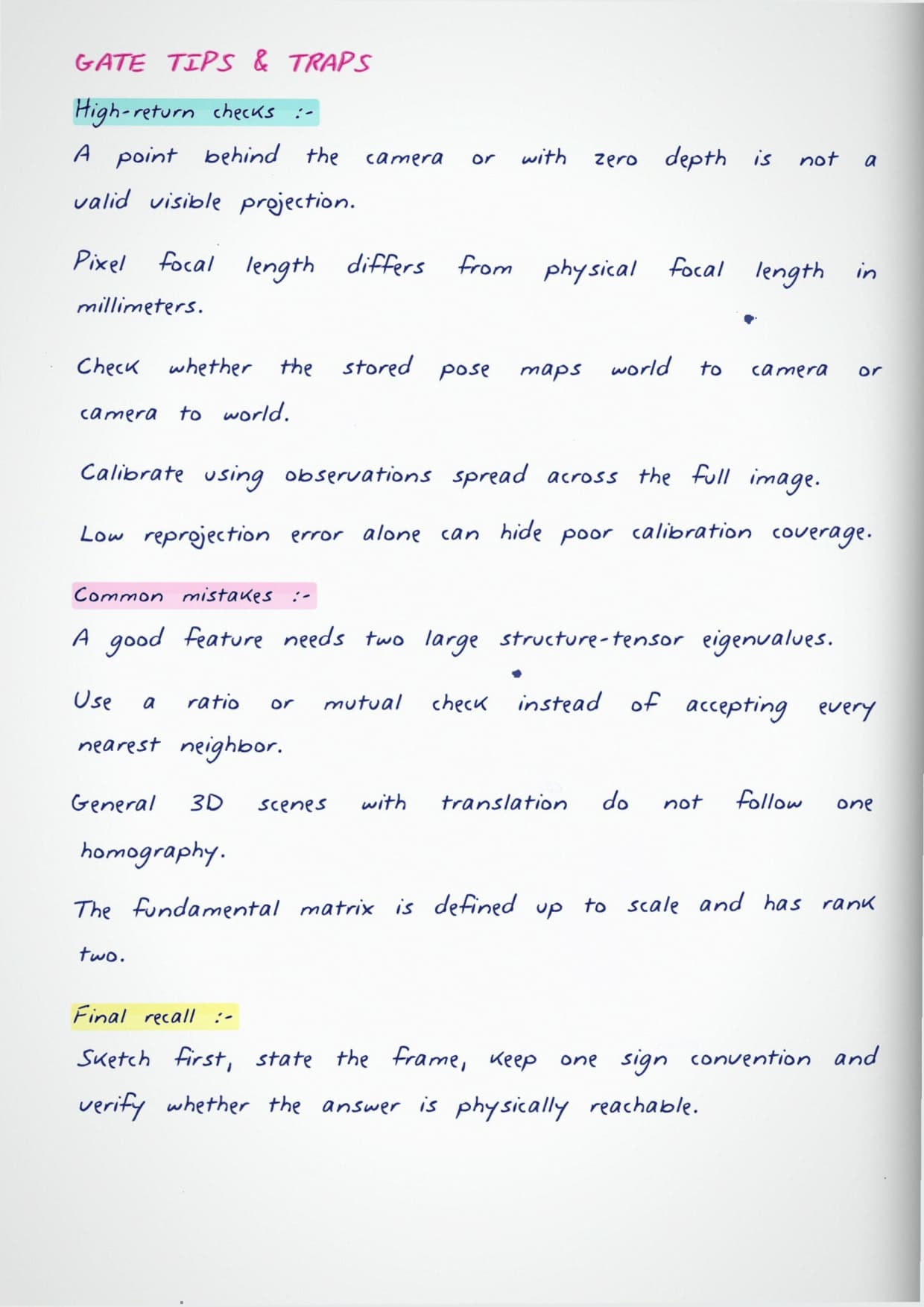
- Confusing intrinsic and extrinsic parameters, which scrambles a projection.
- Forgetting to switch to homogeneous coordinates before multiplying.
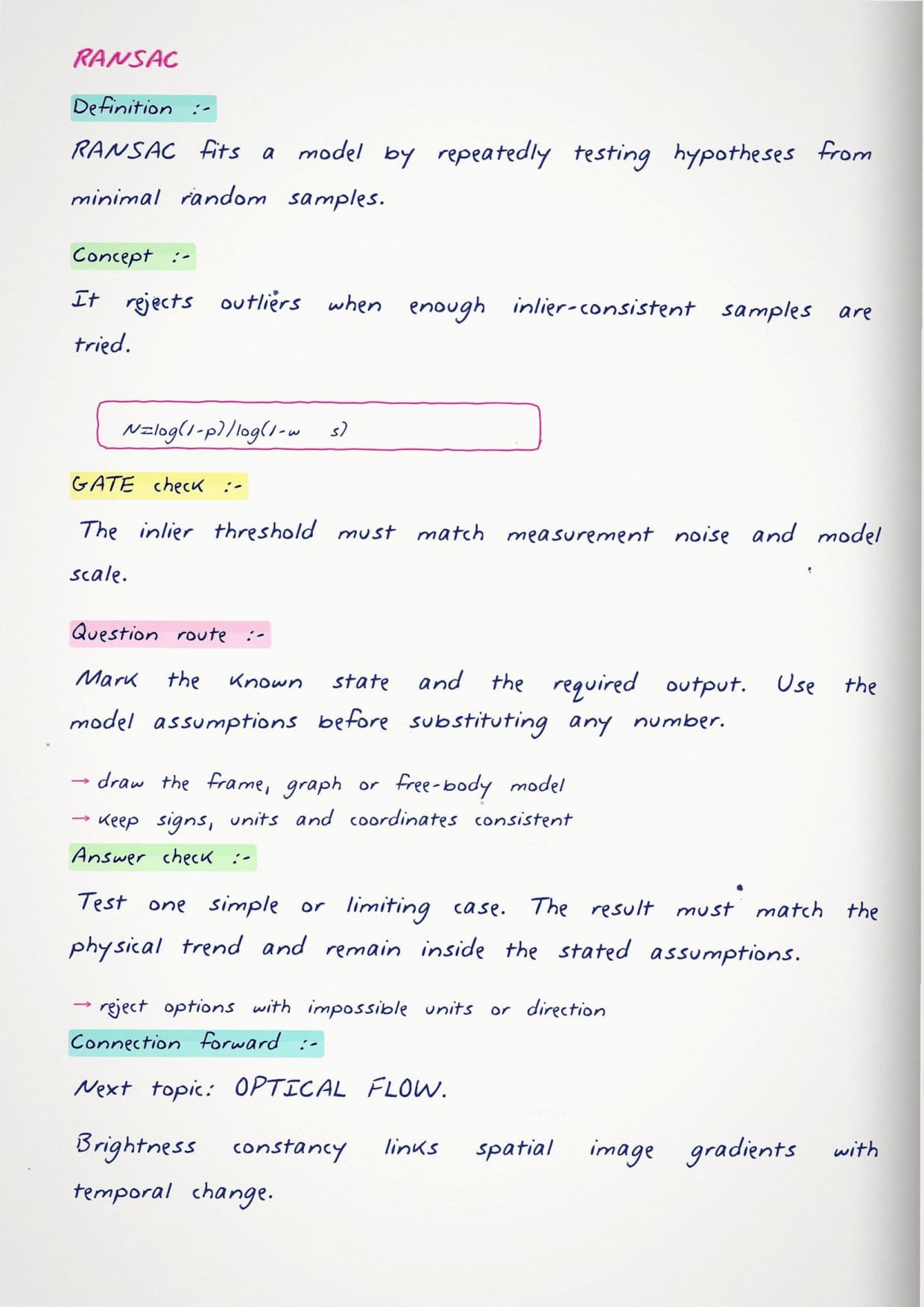
- Trusting feature matches that are actually wrong, which poisons the geometry.
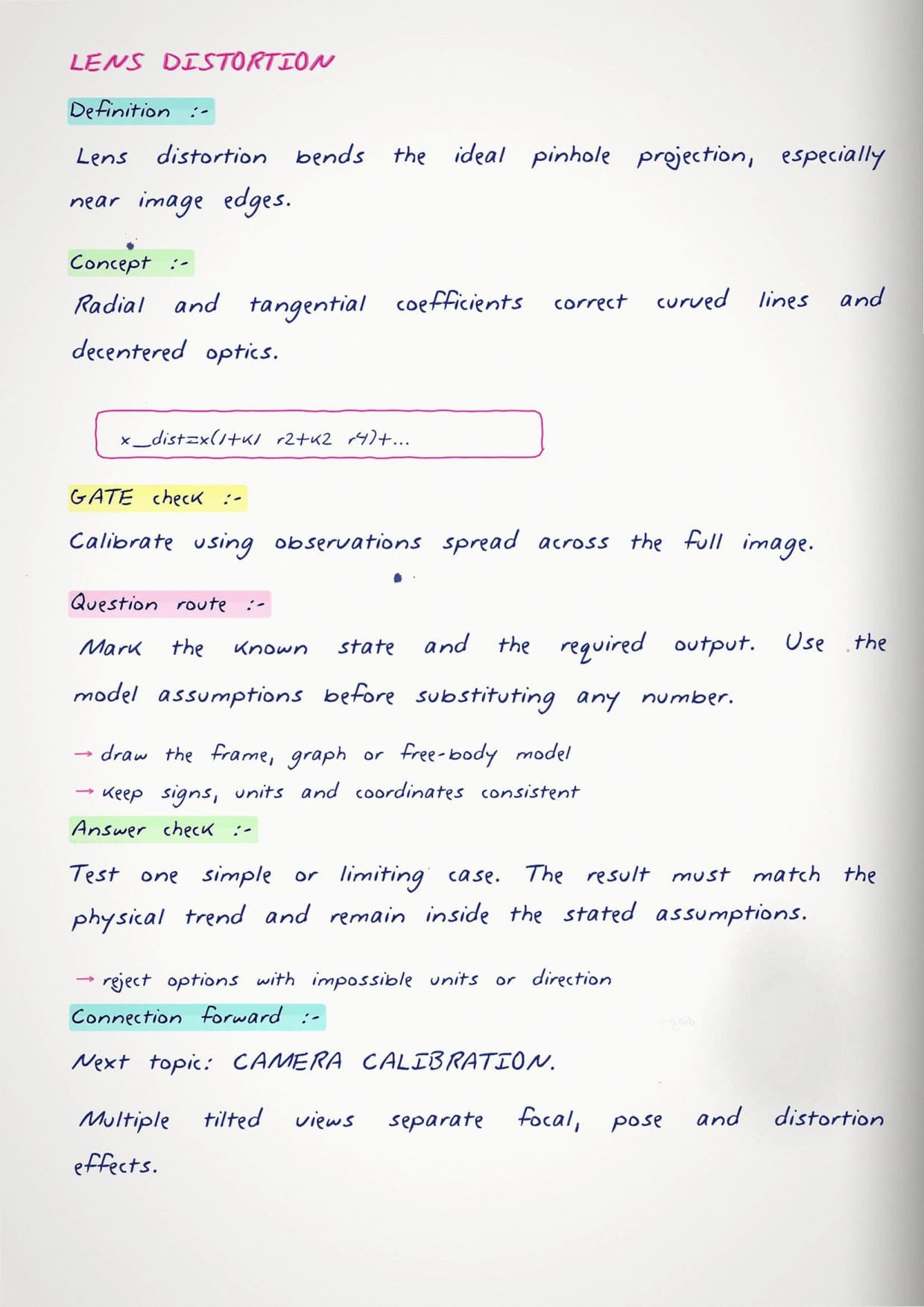
- Ignoring lens distortion, so straight edges bend and depth drifts.
The Maths You Need Before You Start
Perception rests on a small stack of prerequisites, and the notes remind students of each. Comfort with these makes the pipeline read smoothly, which is why the topic pairs well with an Engineering Mathematics revision set.
- Linear algebra carries the projections and transforms.
- Probability handles uncertain matches and noisy pixels.
- A little calculus explains gradients and edges.
Robot Perception FAQs
Ques. What does robot perception actually mean?
Ans. It is the process a robot uses to turn sensor data, usually camera images, into an understanding of what and where things are. These notes follow that as a pipeline, from raw pixels to measured 3D points.
Ques. Why do the notes rely so much on the pinhole camera model?
Ans. The pinhole model is the simplest way to describe how a 3D world projects onto a 2D image. Once students understand its intrinsic and extrinsic parameters, almost every geometry step in perception becomes a matrix operation.
Ques. How is depth recovered from flat images?
Ans. By using two or more views. Matching the same point across images and applying stereo geometry and triangulation lets the robot compute how far that point is, which the notes cover in the final stage.
Ques. What maths should I revise before using these notes?
Ans. Mainly linear algebra for transforms and projections, probability for handling noise and uncertain matches, and a little calculus for gradients and edges. A basic engineering mathematics foundation makes the pipeline much easier to follow.
Ques. Is perception a high-value topic for robotics exams?
Ans. Yes. It is one of the most tested and most applied areas in robotics, and its geometry and estimation ideas overlap directly with GATE-relevant linear algebra and probability.



Comments