




Common Mistakes Shortcuts and Exam Hooks is a final-revision resource for GATE Chemistry, not a single topic. It pulls together the frequent errors, time-saving shortcuts, and quick exam hooks from all three sections, Physical, Inorganic, and Organic Chemistry. These handwritten notes are built for fast last-stage revision, so you fix silly slips and recall tricks quickly in the days before the exam.
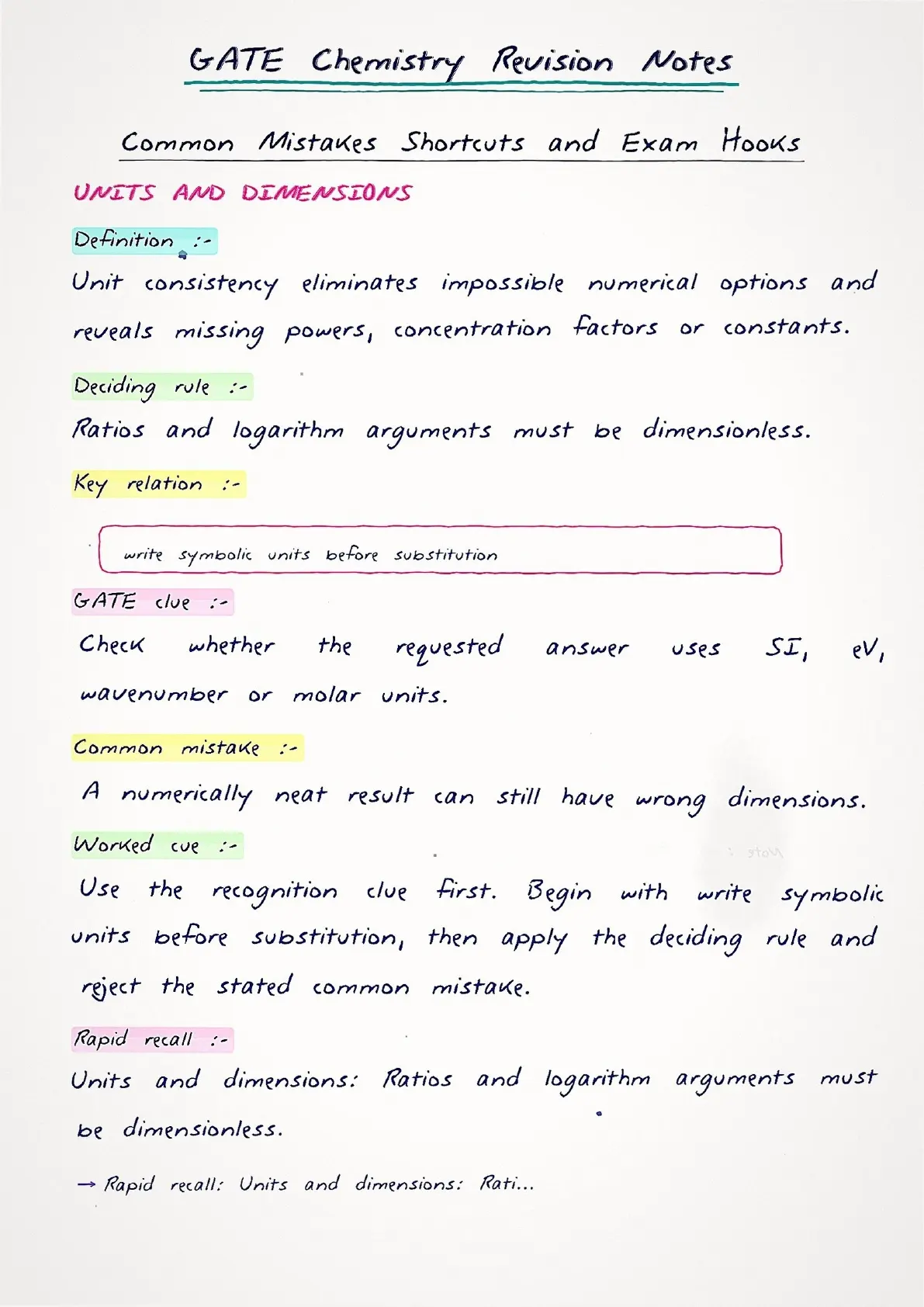
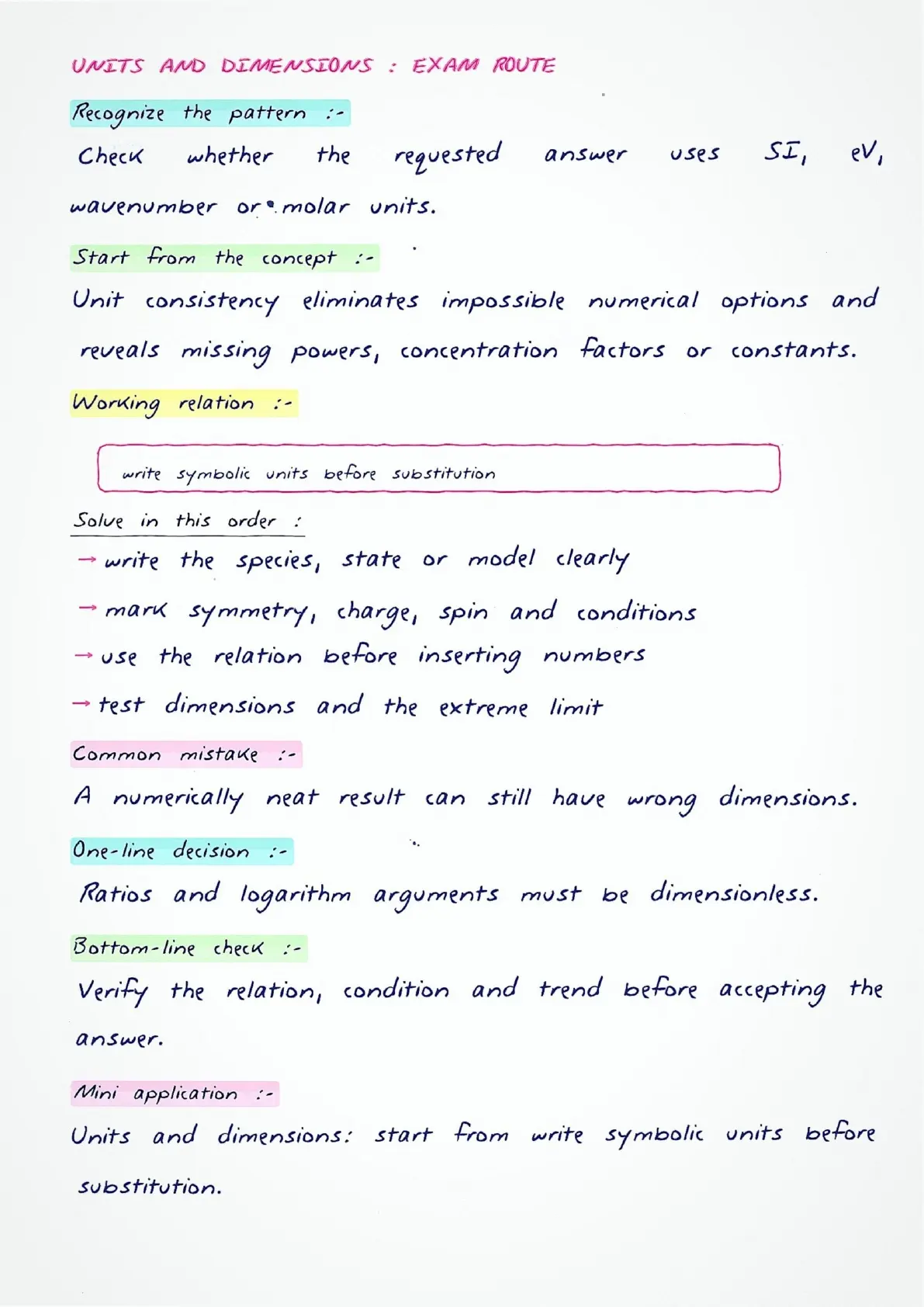
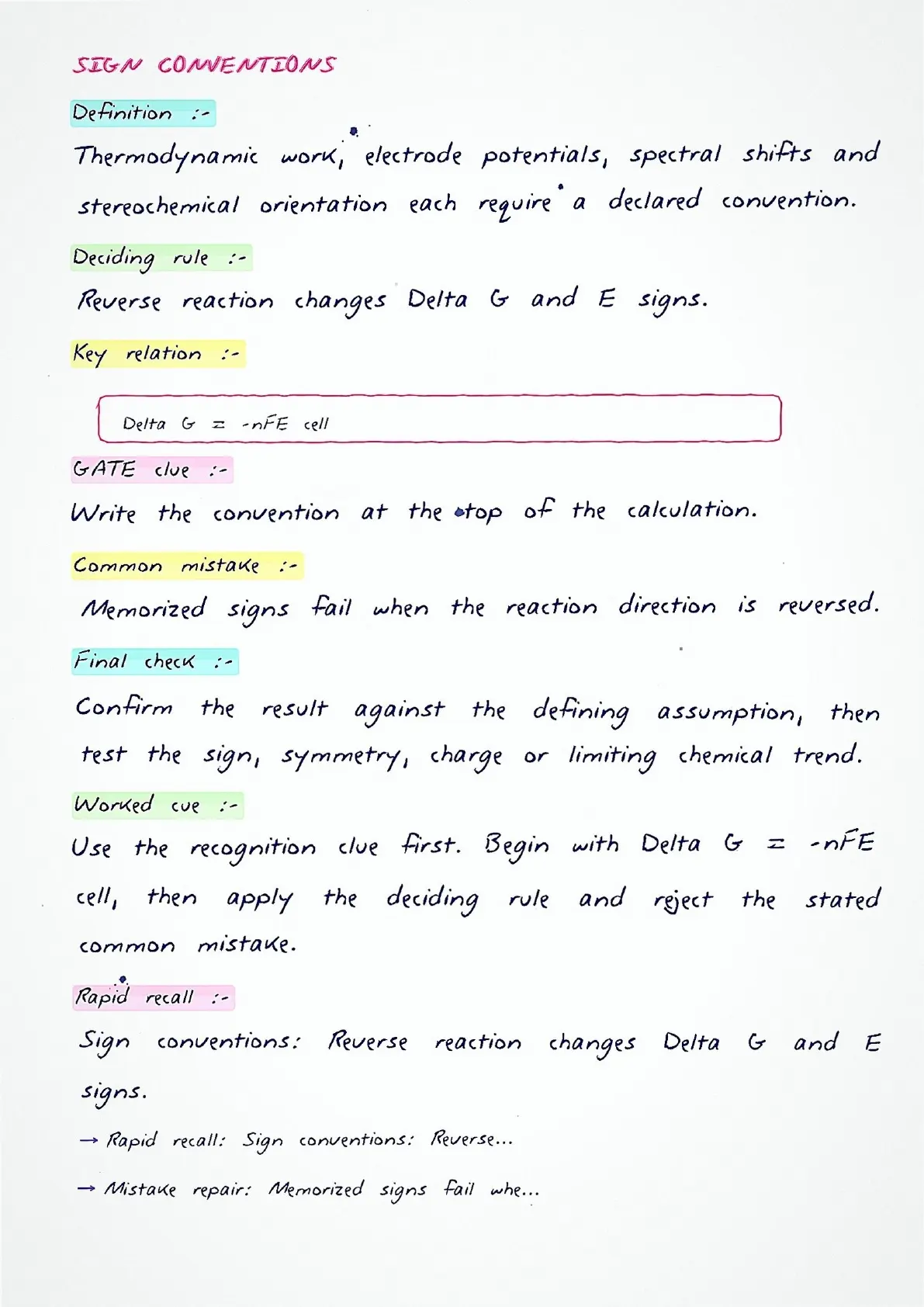
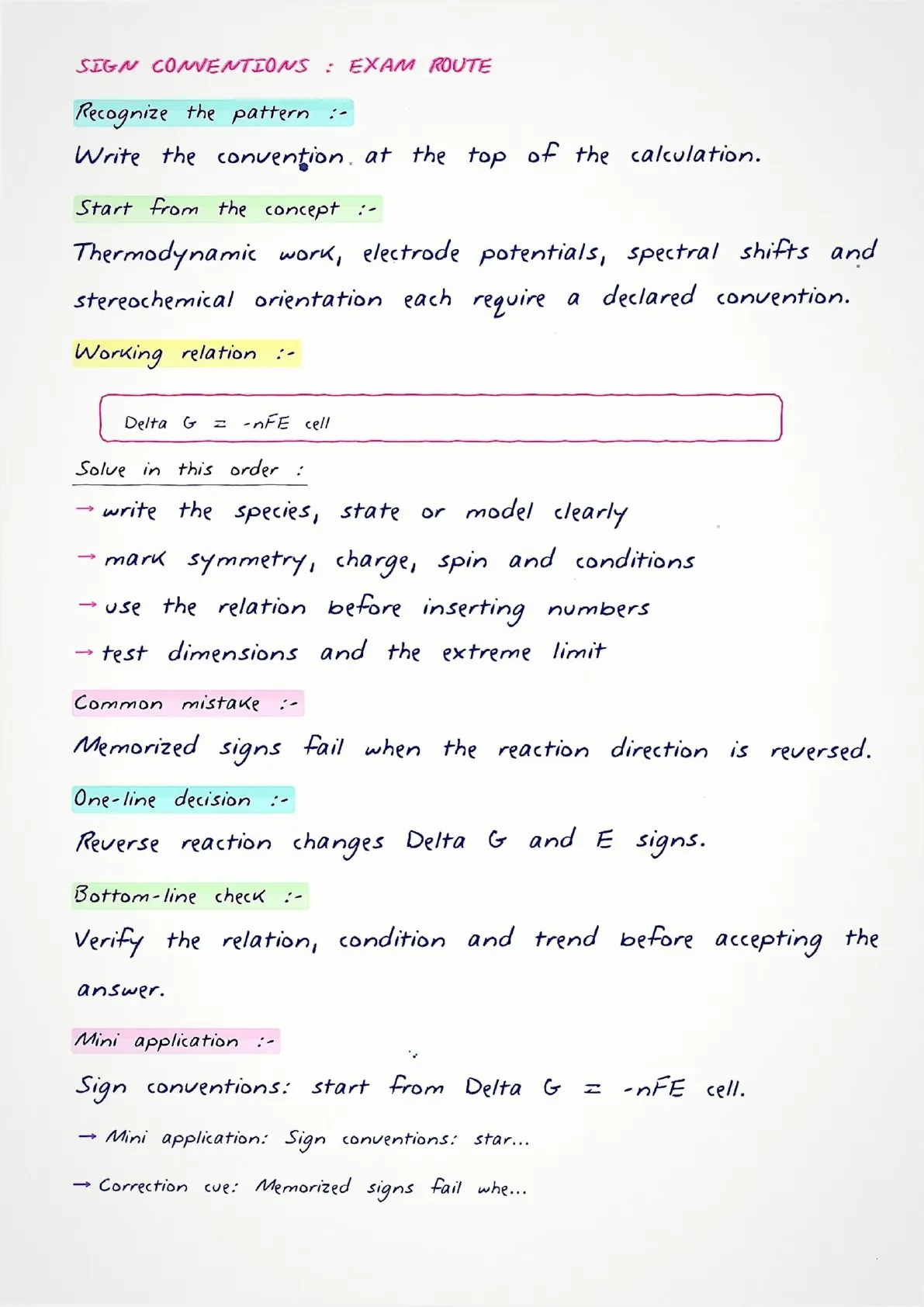
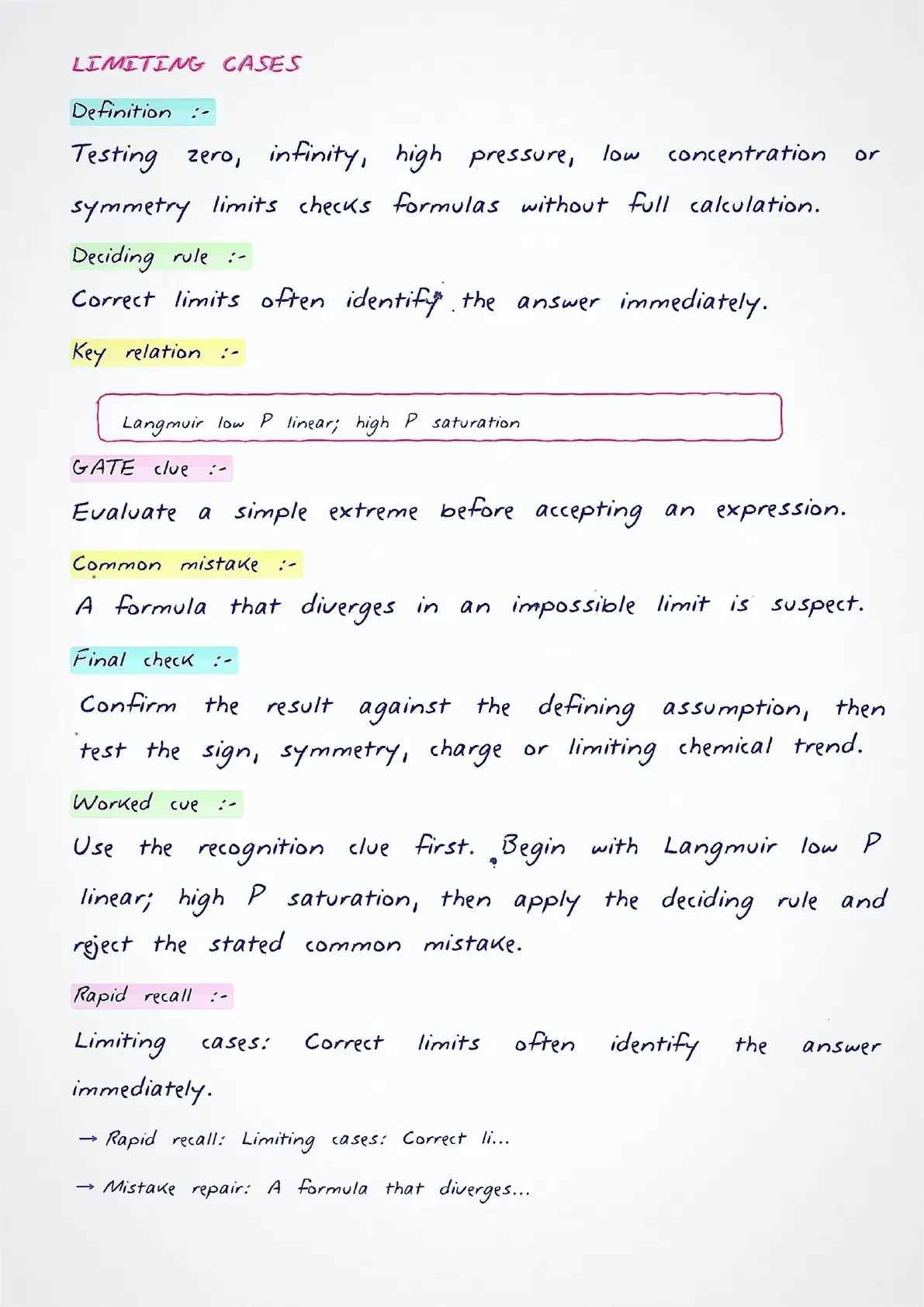
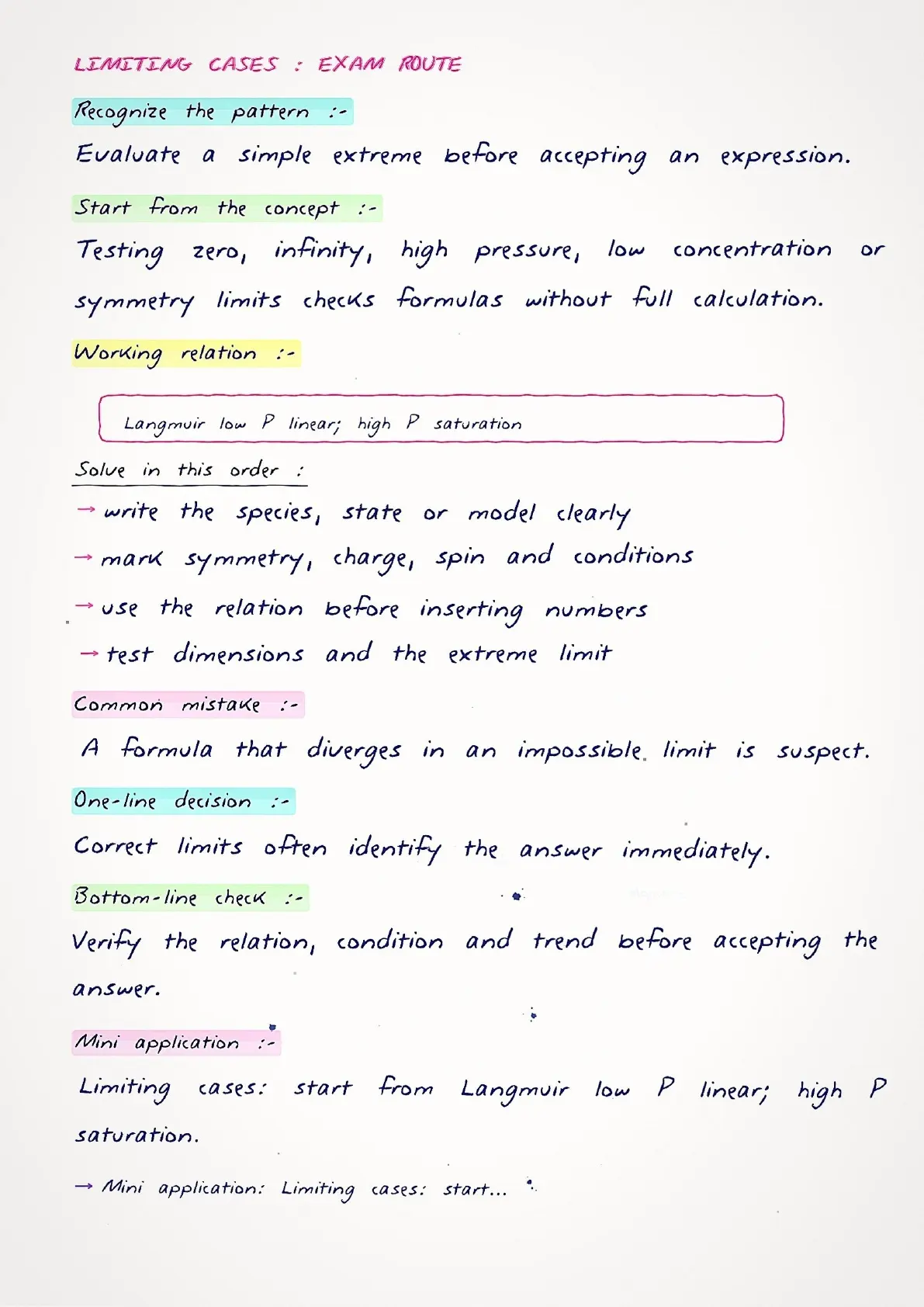
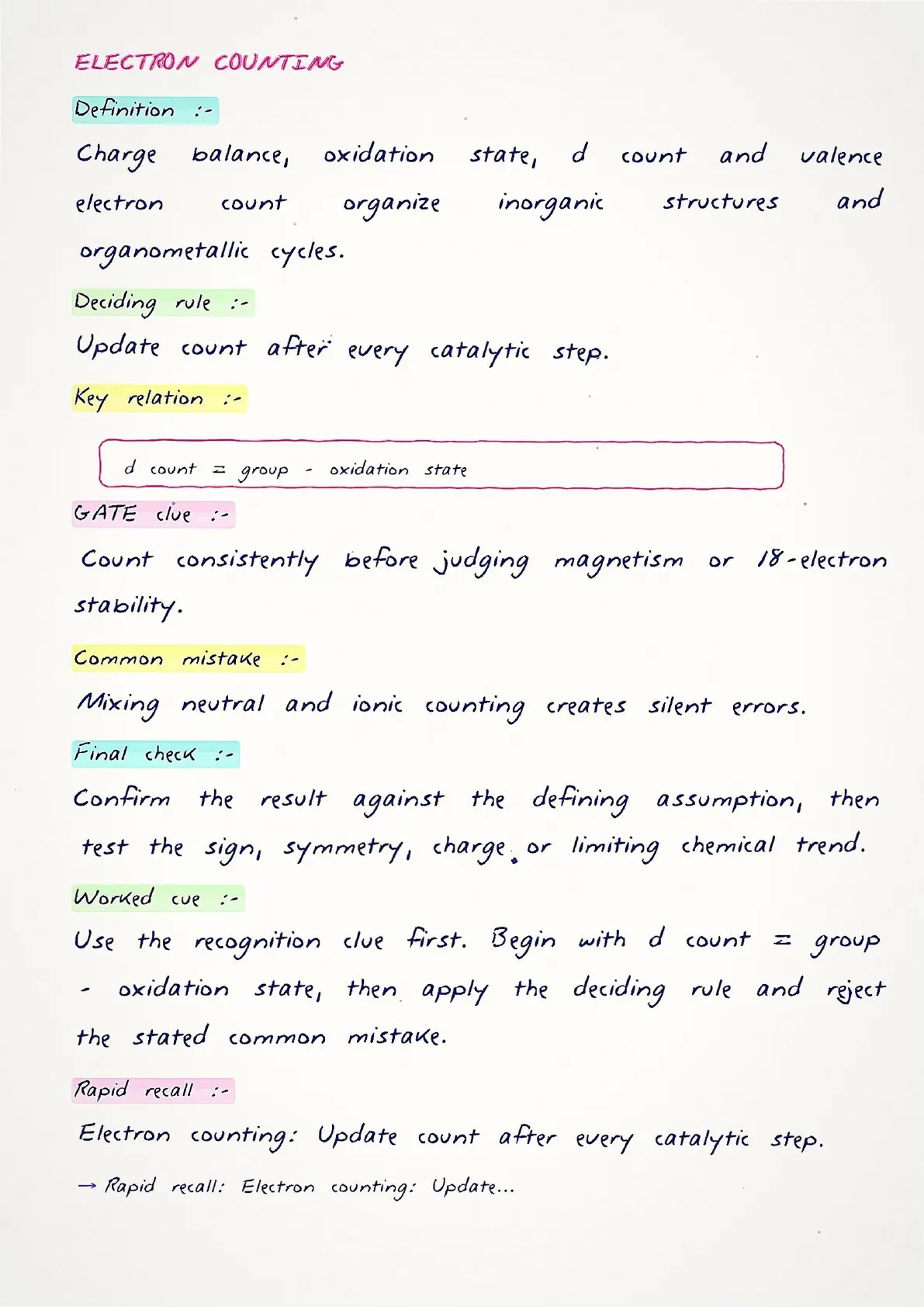
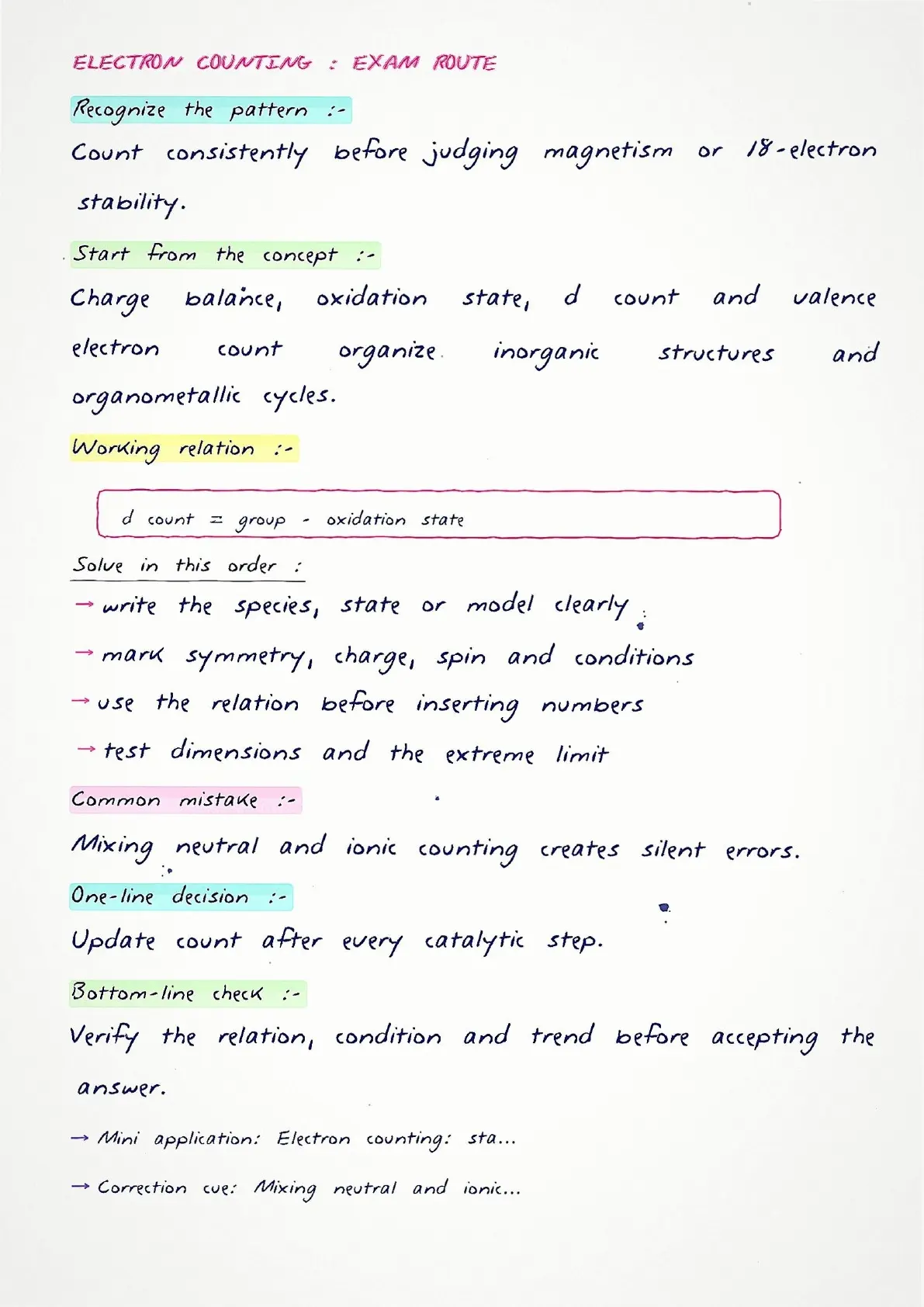
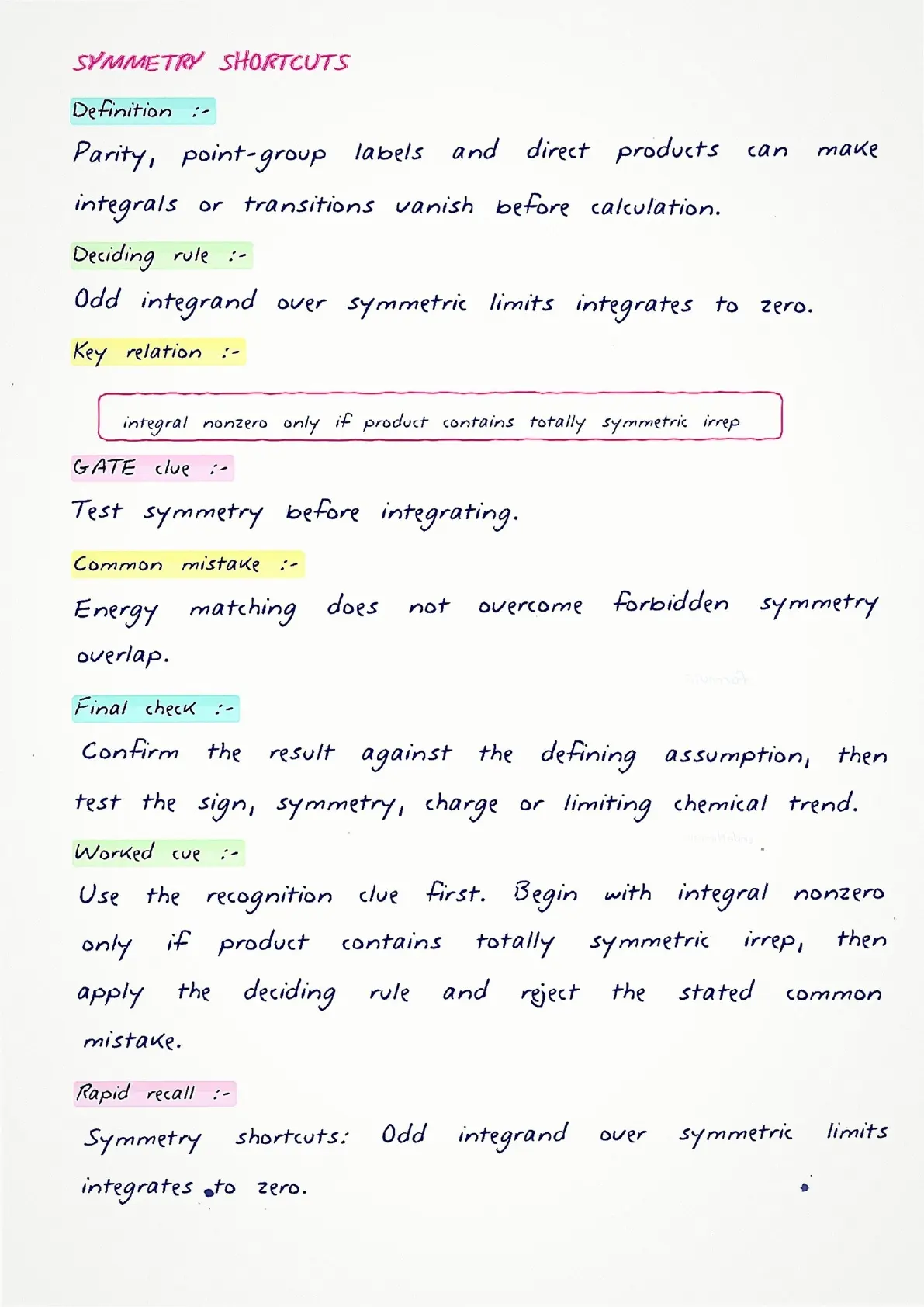
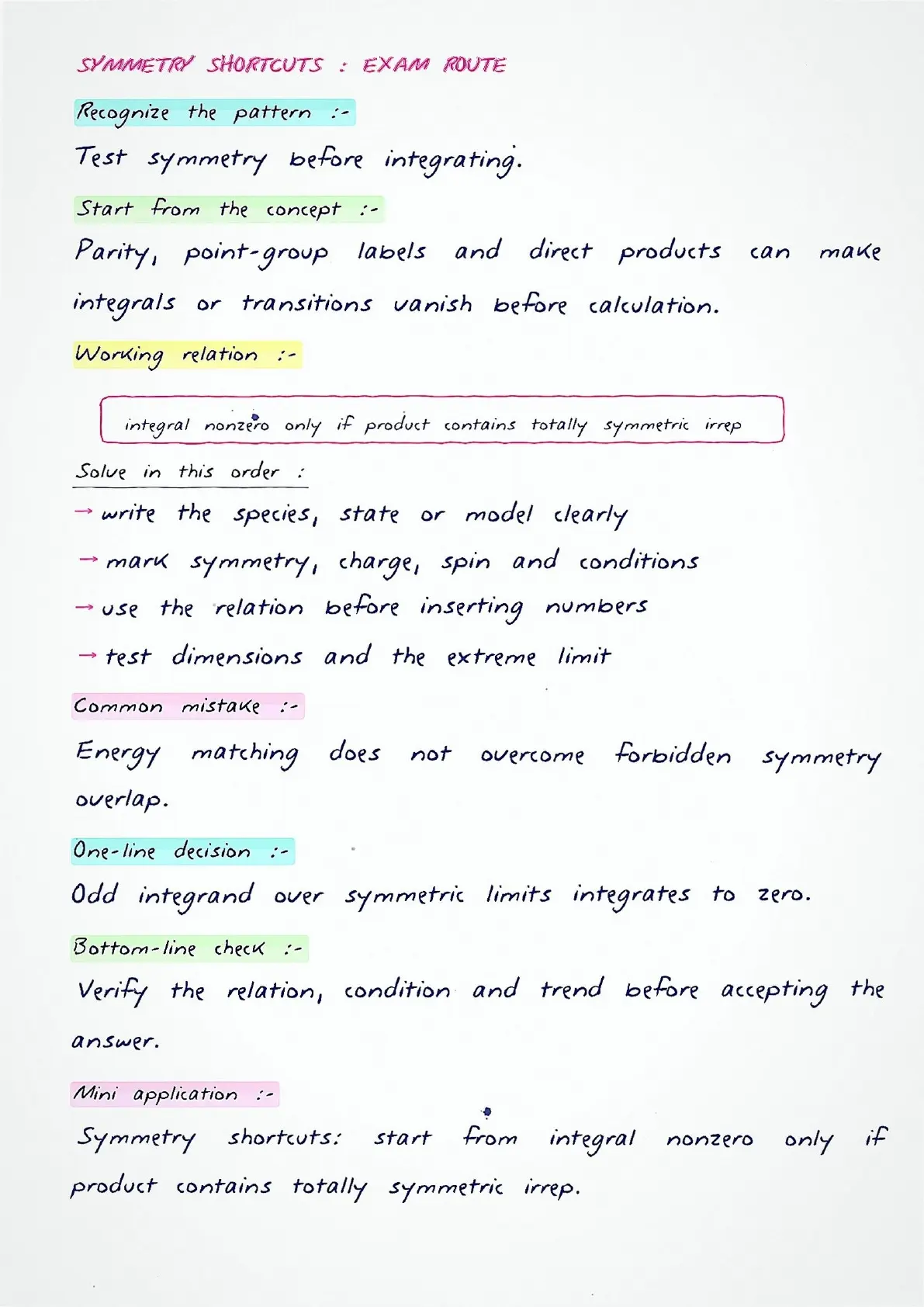
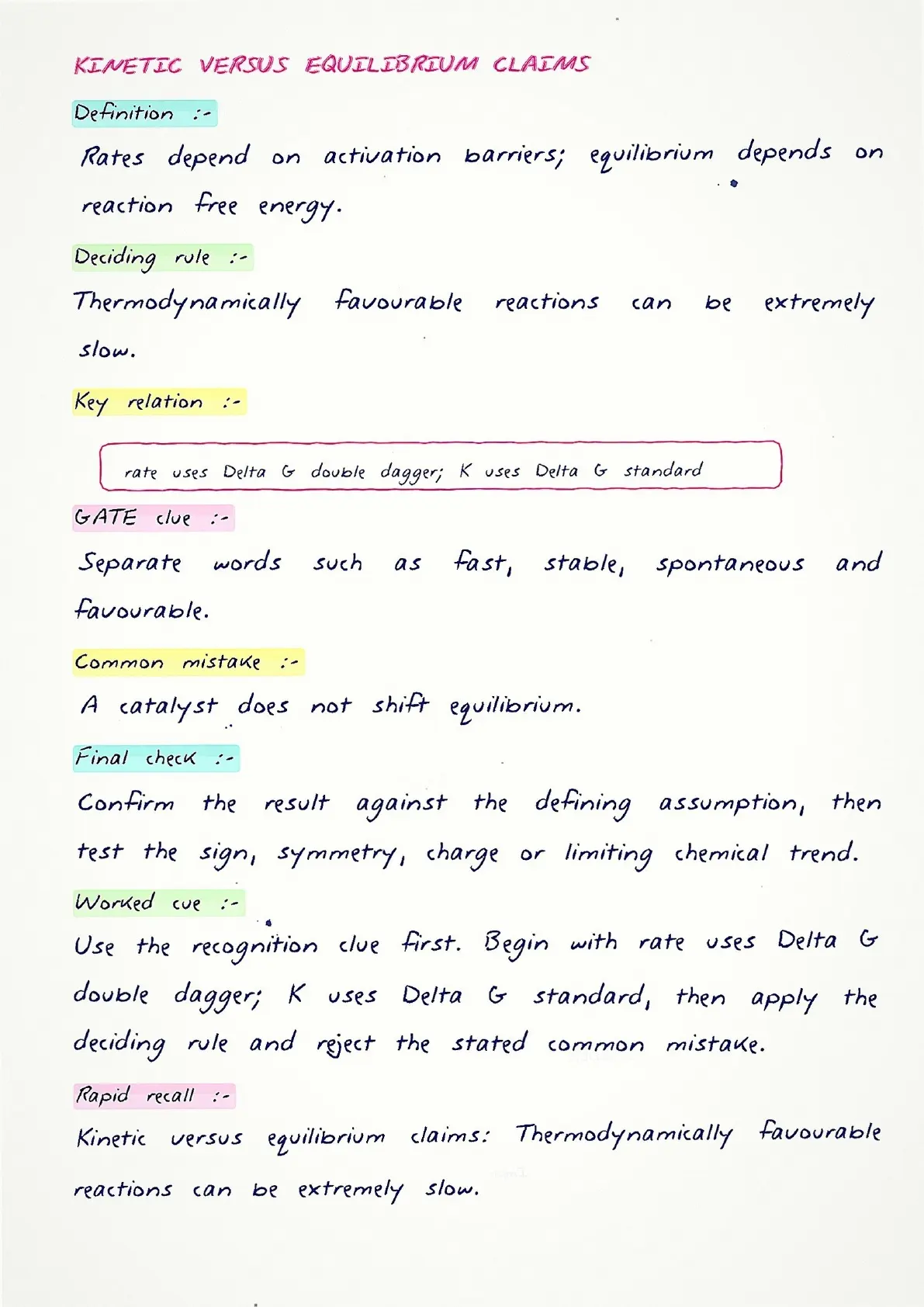
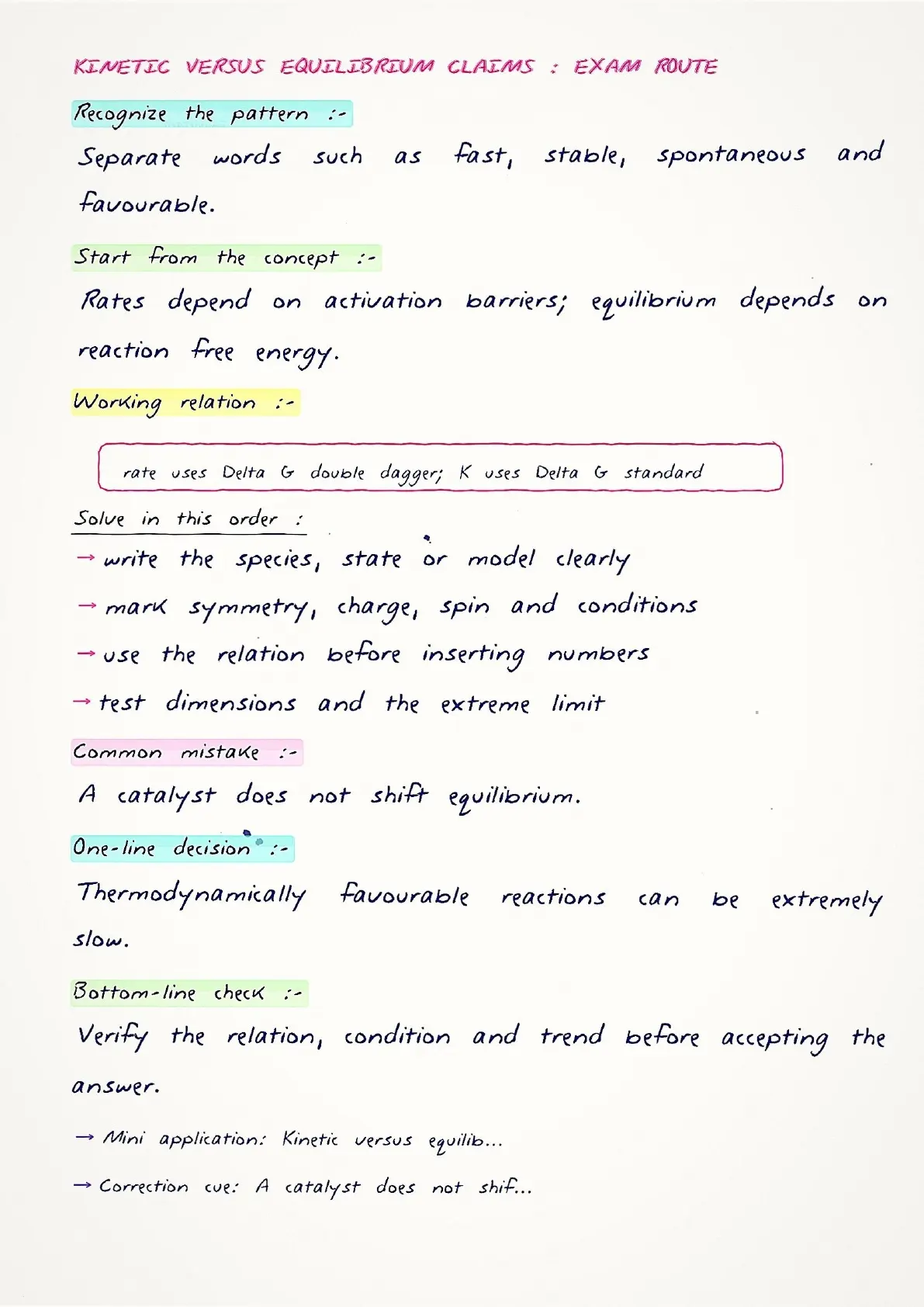
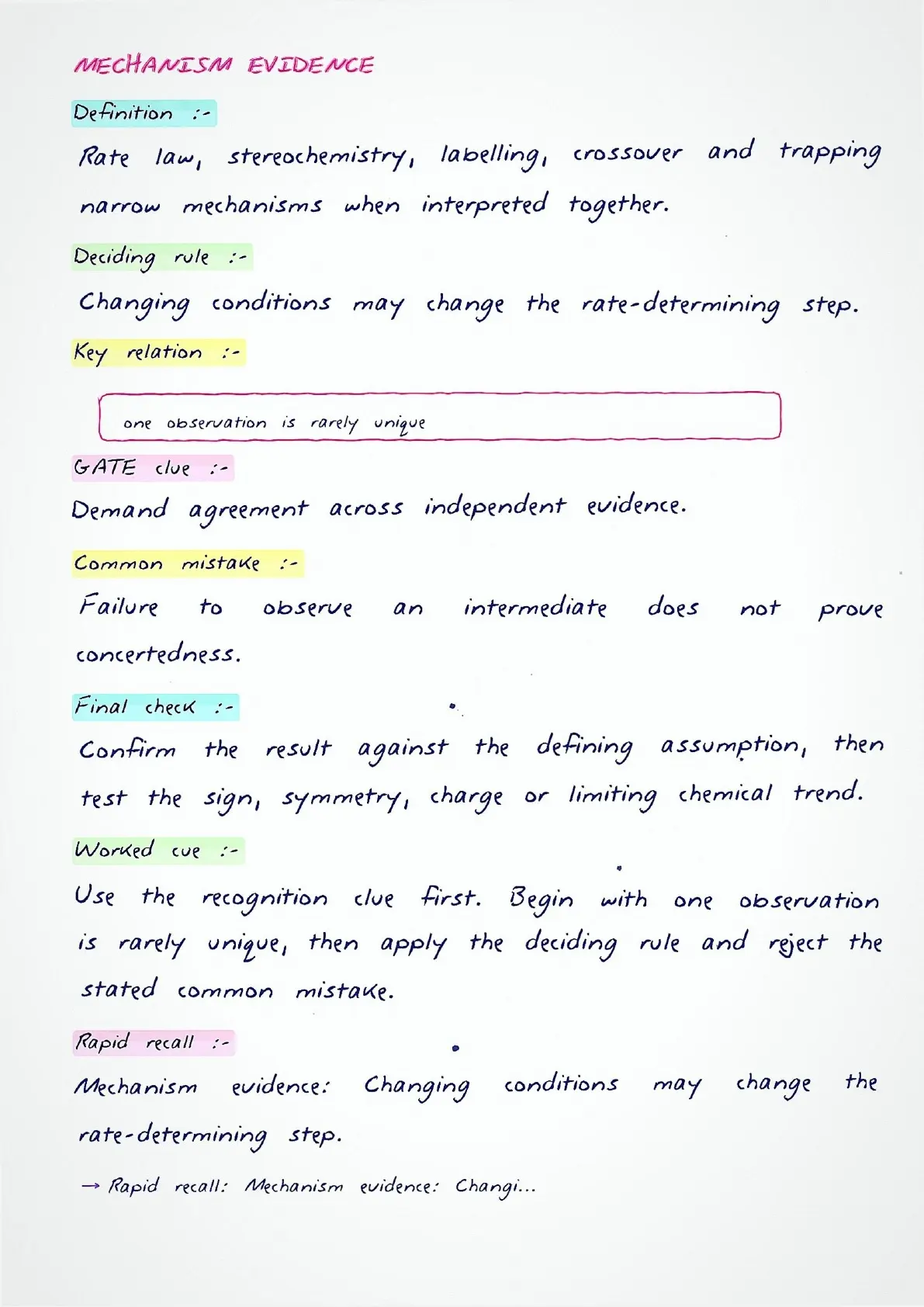
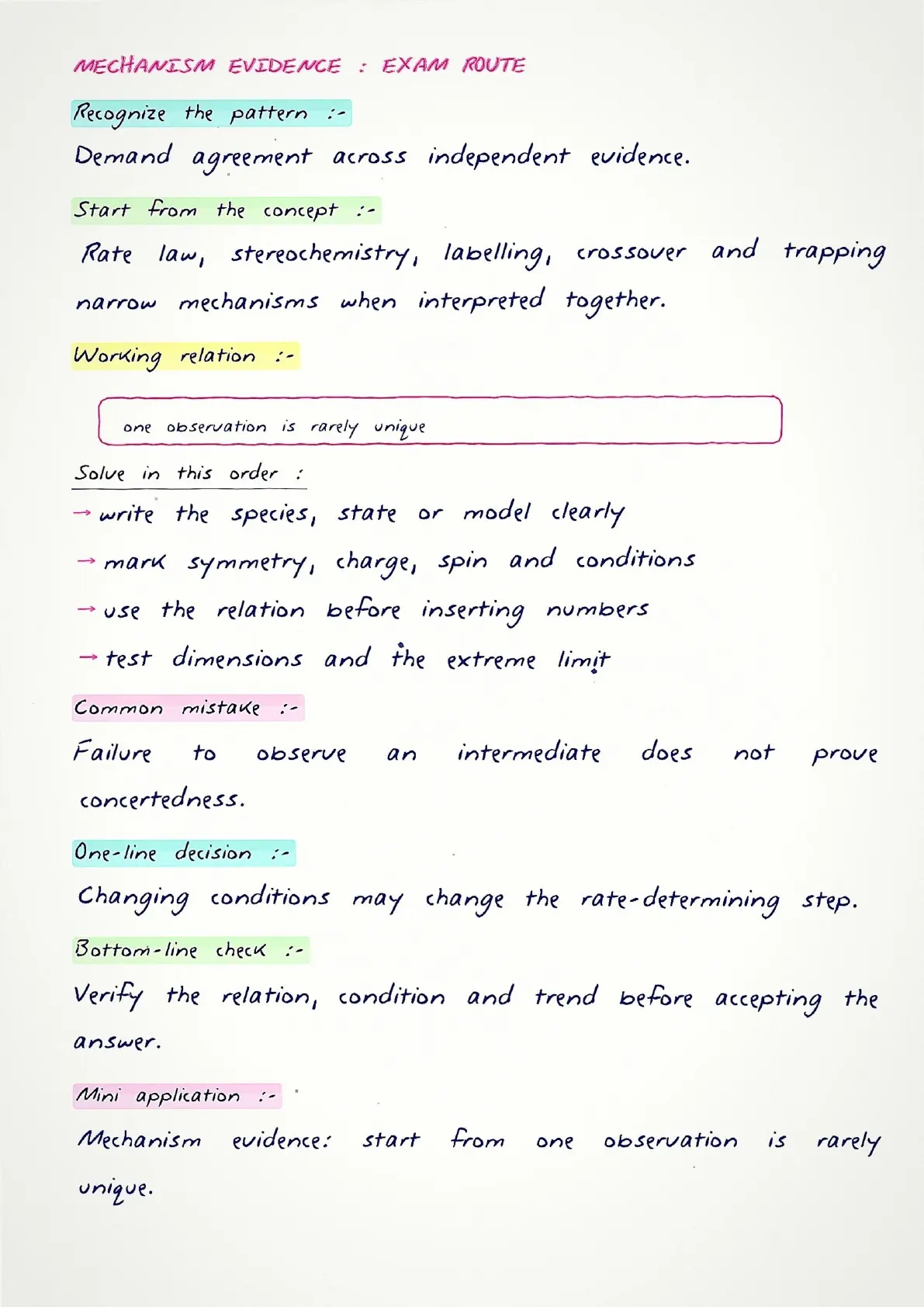
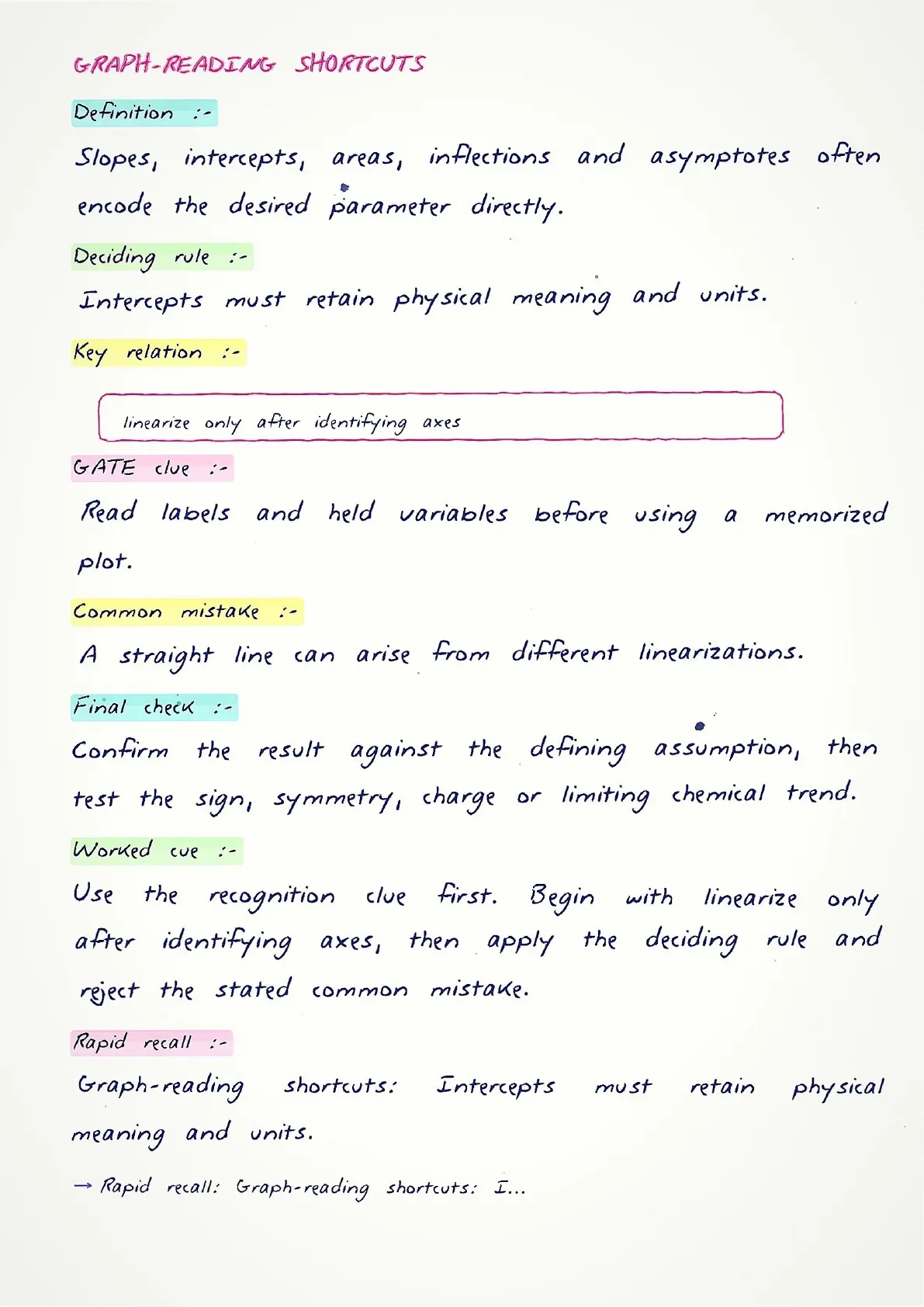
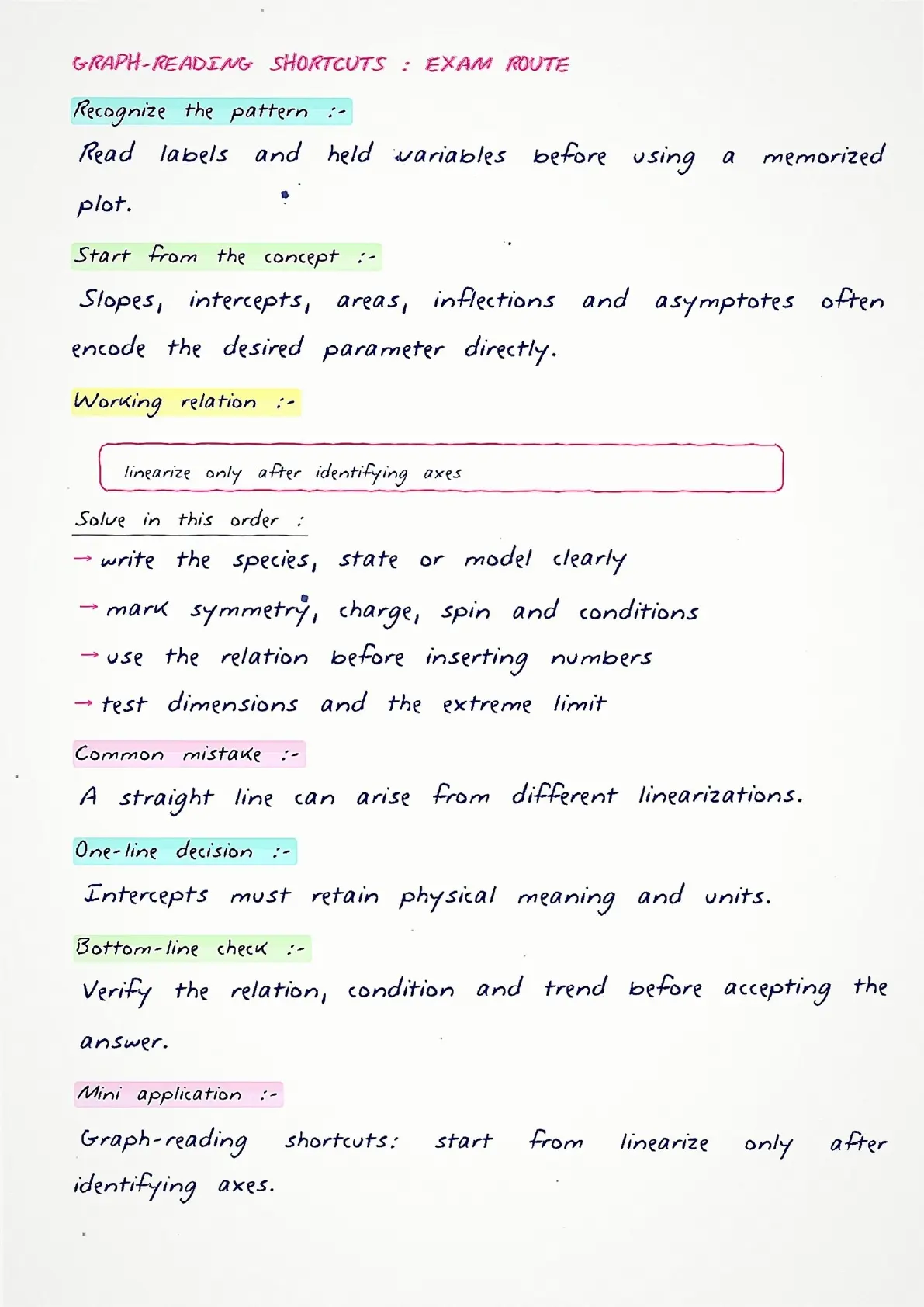
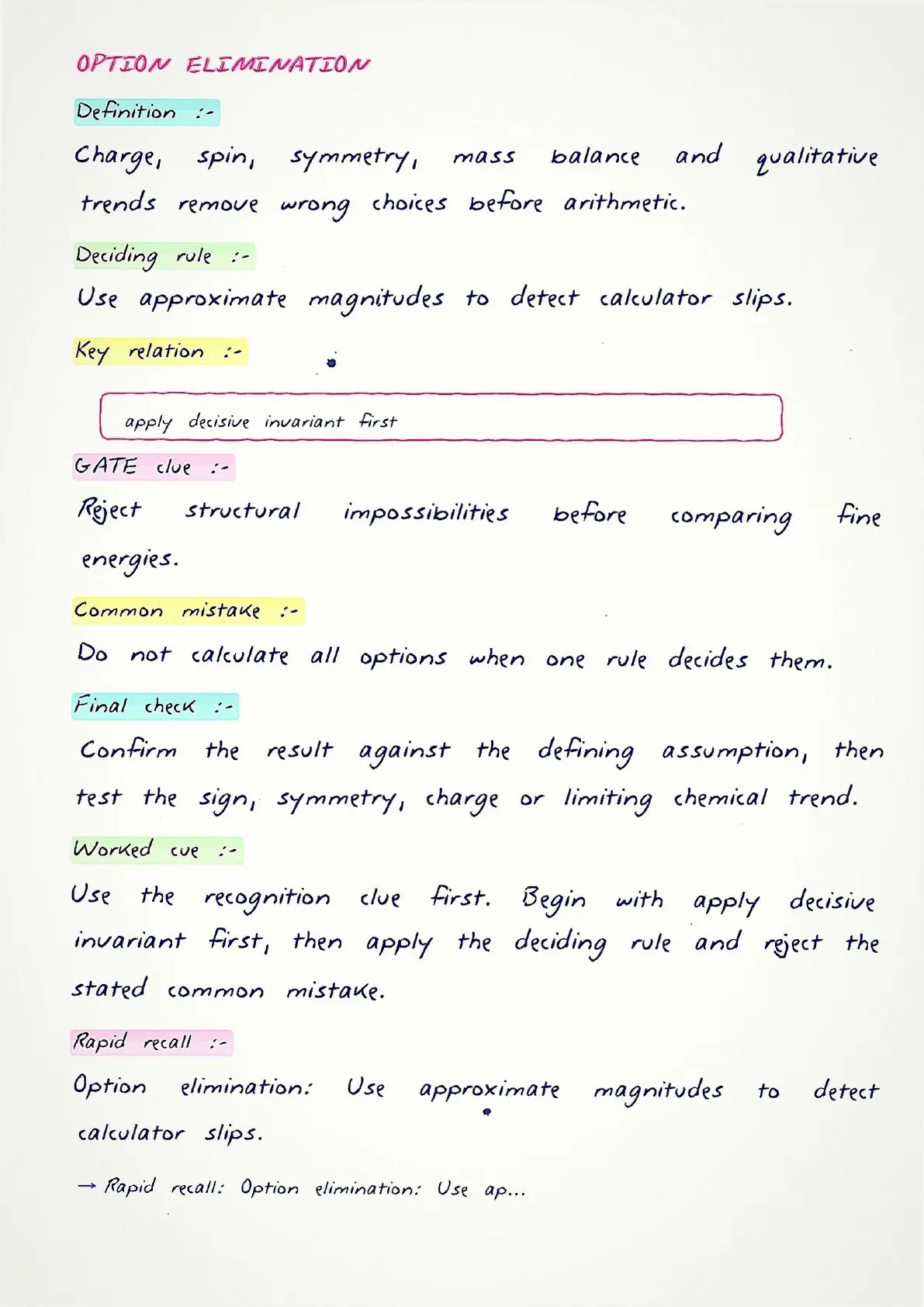
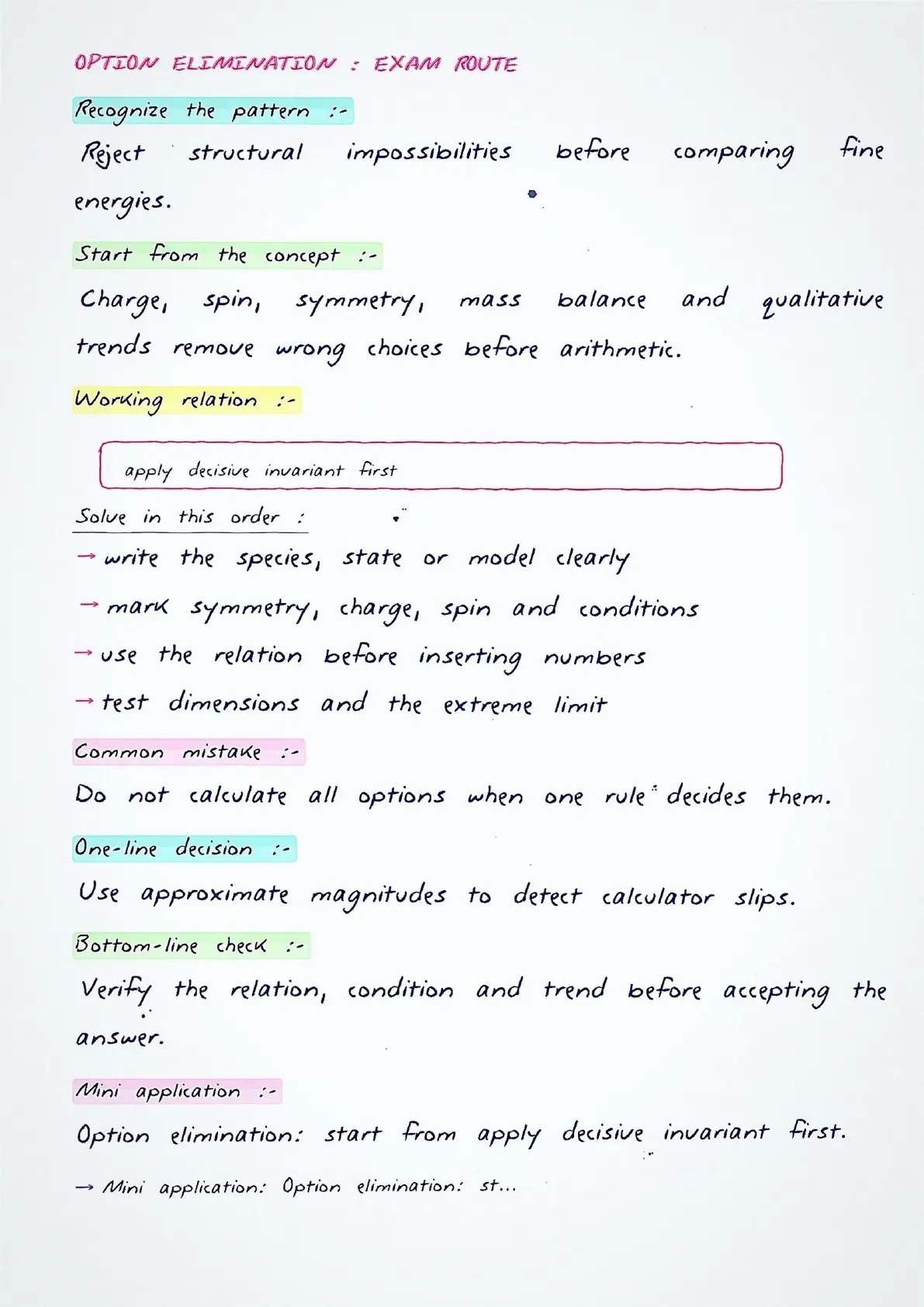
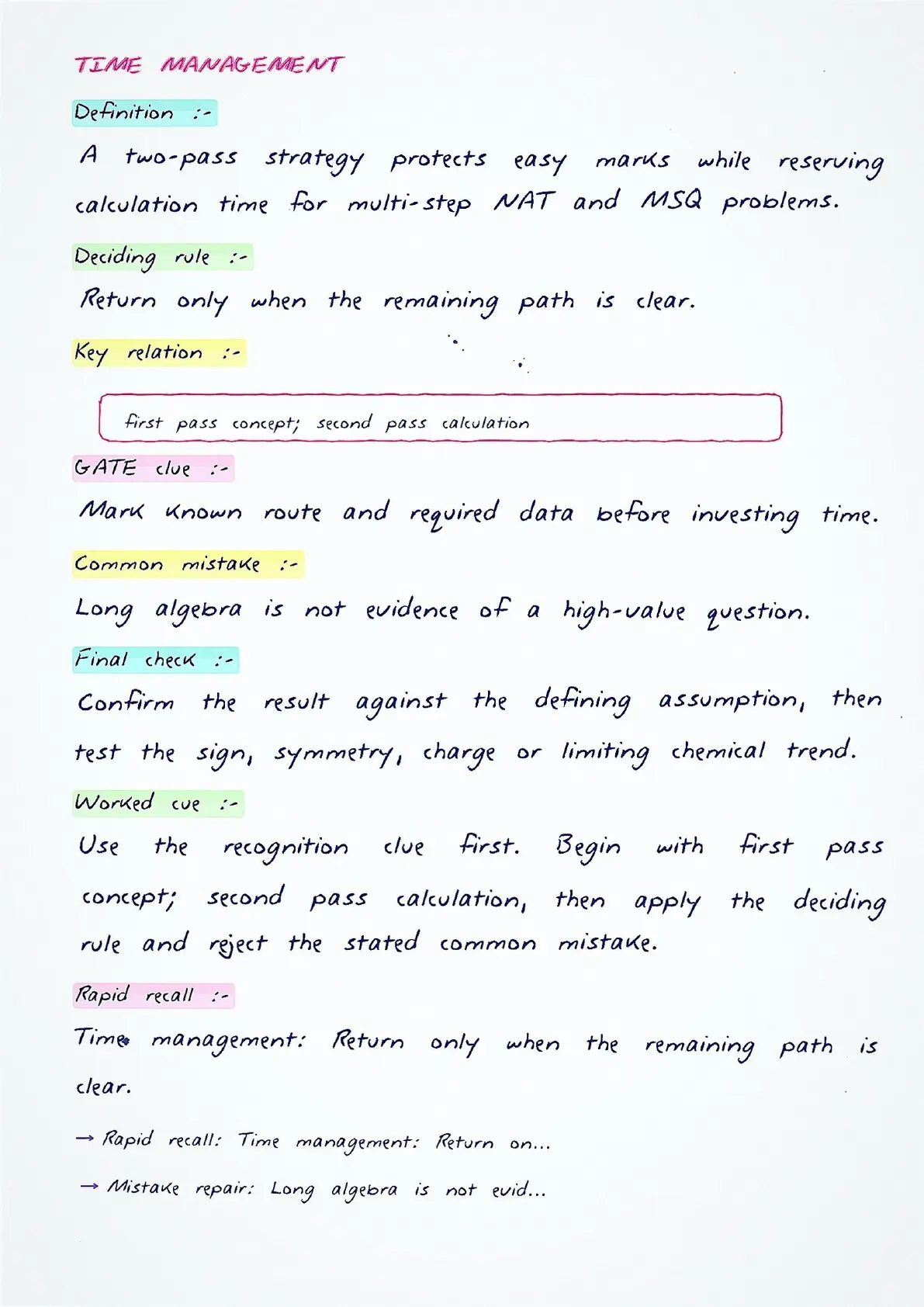
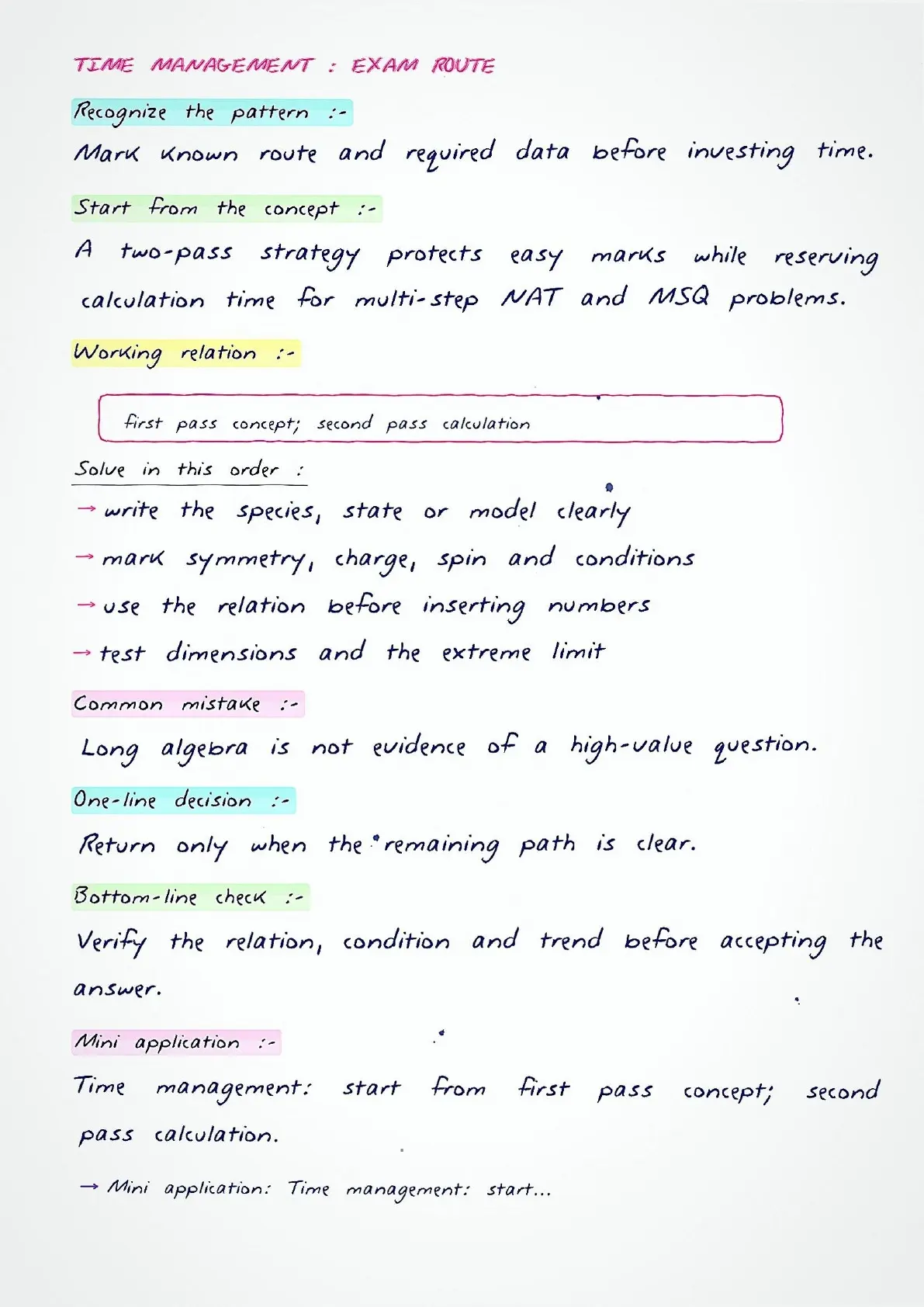
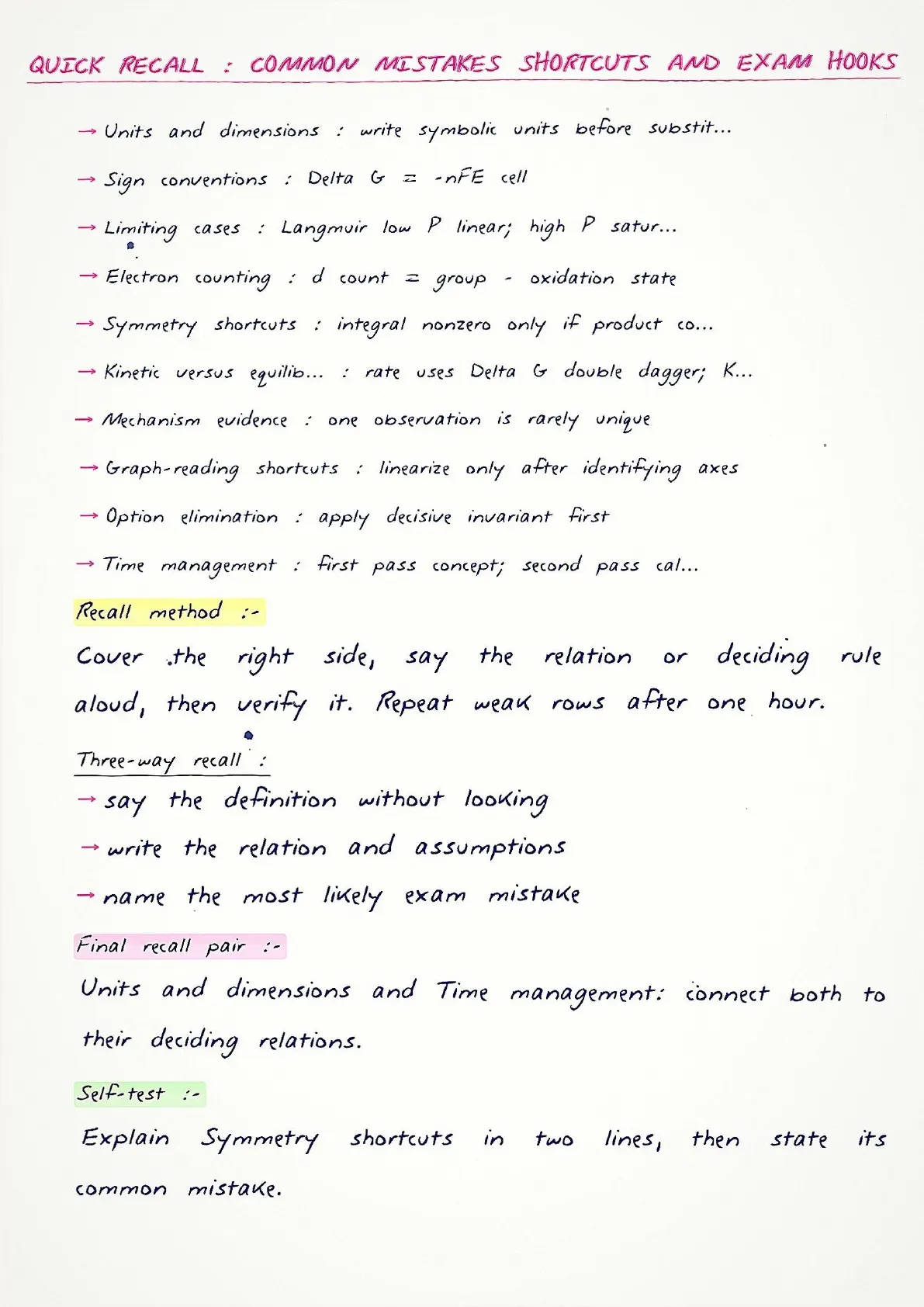
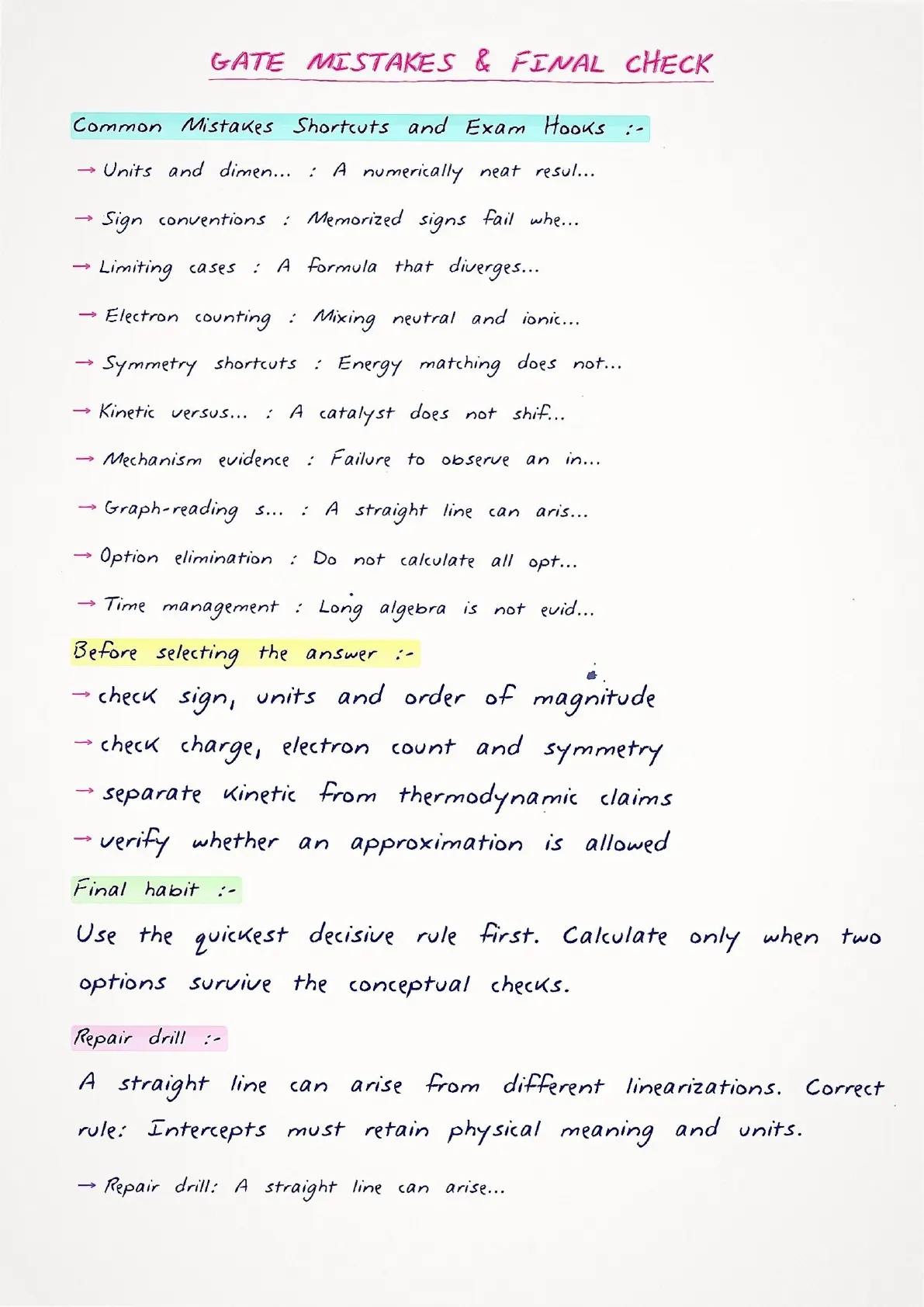
The notes carry hand-drawn error-alert cards, colour-coded sign-and-unit tables, small reaction-map margins, and boxed shortcut formulas you can scan fast. A quick-revision sheet gathers every trap and trick in one place, and each fix is explained step by step so the reason stays clear.
- Full mistakes-and-shortcuts set across all three sections in one PDF.
- Key traps, sign and unit fixes, and shortcut reactions per section.
- Hand-drawn alert cards and a revision sheet for fast last-day revision.
What These GATE Common Mistakes and Shortcuts Notes Cover
This set gathers the errors students repeat in GATE Chemistry and the shortcuts that save time. It covers slips in Physical Chemistry maths, Inorganic trends, and Organic mechanisms. Each note states the trap in plain words and then gives the safe way to handle it.
- Common sign and unit errors in thermodynamics and electrochemistry.
- Quick shortcuts for stoichiometry, equilibrium, and rate problems.
- Frequent mix-ups in periodic trends and coordination chemistry.
- Reaction and stereochemistry hooks that decide close organic questions.
GATE Common Mistakes and Shortcuts Quick Revision
Source: Chemistry - CSIR NET, GATE & SET: IFAS on YouTube
Topics Covered in GATE Common Mistakes and Shortcuts
The set is arranged by the kind of mistake, not by chapter, so you can target weak habits fast. It moves from calculation slips to concept mix-ups to reasoning traps. The list below shows what each part collects.
- Frequent errors students repeat in numerical and theory questions.
- Quick shortcuts that cut steps in physical and organic problems.
- Sign and unit traps in thermodynamics, kinetics, and electrochemistry.
- Exam hooks that show up across all three chemistry sections.
How the Notes Are Organised
The material runs from simple calculation slips to deeper concept traps, so you can read it straight through or open one card for a quick check. Physical Chemistry fixes come first, then Inorganic trends, then Organic reasoning.
Because each card stands on its own, you can match it to the topic you are revising that day. A revision sheet near the end brings the top traps and shortcuts together.
How GATE Common Mistakes and Shortcuts Links to Other Topics
This set does not replace the topic notes; it draws from all of them. Every trap here comes from a real GATE Chemistry subject, so revising it sharpens your work across the paper.
- Physical Chemistry traps from thermodynamics, kinetics, and electrochemistry.
- Inorganic hooks from periodic trends and coordination chemistry.
- Organic shortcuts from reaction mechanisms and stereochemistry.
- Unit and aptitude checks that support every numerical section.
Important Topics in GATE Common Mistakes and Shortcuts
A few traps cost students marks almost every year. Fix these first, since avoiding a known slip is the easiest mark you can earn. The revision sheet lists them together for a final pass.
- Sign errors in enthalpy, entropy, and cell potential.
- Unit slips between joules and kilojoules or moles and millimoles.
- Wrong periodic trend calls made under time pressure.
- Missed stereochemistry and major-product hooks in organic questions.
How to Prepare GATE Common Mistakes and Shortcuts with Handwritten Notes
Use this set beside your topic notes, not instead of them. Read a card, then solve a few previous year questions where that trap appears. Return to the sheet before mock tests so the fixes stay fresh.
- First read: go through every trap and shortcut once.
- Mark the mistakes you actually make and revisit them often.
- Solve previous year questions and check each answer against these cards.
- Final week: revise the shortcut and trap sheet before each mock.
Why These Notes Help You Score Better
Handwritten cards are quick to scan and easy to recall under exam pressure, which is why they work well in the final weeks. A short alert card is faster to read than a full chapter, and each fix stays next to the mistake it prevents, so students stop losing marks to avoidable slips.
GATE Chemistry Common Mistakes and Shortcuts Handwritten Notes FAQs
Ques. Do these notes cover mistakes from the full GATE Chemistry syllabus?
Ans. Yes. They collect common errors, shortcuts, and exam hooks from all three sections, Physical, Inorganic, and Organic Chemistry.
Ques. Are these notes a replacement for topic-wise chemistry notes?
Ans. No. They work as a final-revision aid beside your topic notes, fixing the slips and adding the shortcuts you need under time pressure.
Ques. What kind of mistakes do the notes focus on?
Ans. Mainly sign and unit errors, wrong periodic-trend calls, and missed stereochemistry or major-product hooks, plus quick shortcuts for common problem types.
Ques. Are the notes useful for last-minute revision?
Ans. Yes. The alert cards and the trap-and-shortcut sheet are made for a fast final pass in the days before the exam.



Comments